I had run across this story a while back from a website called "Navy General Board", and it has a lot of historical stuff from the age of sail to present that Old AFSarge would like and old NFO has experienced. It has been in draft form for a while, I decided to dust it off, I am working on another blogpost but it ain't ready and I already had a couple of days of no posting on my blog because real life has kept me really busy, So with out further Ado....
What was the last naval battle of World War II? When was the last
battle between sailing ships? When was the last time that the United
States boarded an enemy ship in combat? Would you be surprised if all
three of those things occurred simultaneously? In today’s article, we
look at one of the most bizarre naval battles of all time.
Navy Lieutenants Livingston Swentzel Haimen and Stuart Pittman were
traveling to Shanghai, China from Haimen, China. They were each in
command of a Chinese junk. All together, the ships were manned by seven
Americans and twenty Chinese soldiers.
A typical Junk . The basic design has remained largely unchanged for hundreds of years.
The journey was largely uneventful until August 21, 1945 when they
spotted another junk off in the distance. Upon noticing the American
ships, the mystery Junk immediately came about and opened fire. This
junk was crewed by five Japanese officers and seventy-eight enlisted
men. It was also heavily armed with a 75mm pack howitzer, six machine
guns, and over one hundred rifles. The Japanese opened fire with the
howitzer first and then followed up with machine gun fire.
The first howitzer round struck Swentzel’s junk, cutting down its
foremast. The crew began to panic, but Swentzel took over the helm and
rallied his men. Both of the American junks had radio equipment and
Swentzel was able to coordinate with the other junk and prepare for a
counterattack. Luckily, the American ships were armed as well. Between
the two ships, they had two bazookas, one .50 caliber heavy machine gun,
one .30 caliber light machine gun, several rifles, and grenades.
A standard M1 Bazooka of the United States Military. This was the heaviest weapon available to the crews of the Allied Junks.
An American soldier using a Bazooka on a firing range. The weapon had
a 3.5lb warhead and a range of about 400 yards (Effective range: 150
yards) at best.
Running up the American flag, Swentzel was able to bring his ships
within 100 meters of the Japanese junk. Pressing the attack, the
Americans opened fire with their bazookas while the Japanese returned
fire with their howitzer. As the ranges decreased, the machine guns also
opened fire. Within forty-five minutes, the Americans had exhausted all
of their bazooka ammunition, but managed to silence the Japanese
howitzer. Machine gun ammunition was also running low. After considering
his options, Swentzel brought his junk alongside the Japanese junk and
gave the order, “Prepare to board!”
A Japanese Type 1935 75mm mountain gun. This was likely the type of weapon used by the Japanese junk.
As the American junk closed with the Japanese junk, the Americans and
Chinese tossed several hand grenades on the enemy ship’s deck. The
blasts cut down any remaining Japanese soldiers, leaving only the
wounded behind. The junks finally came alongside one another and allied
boarders leapt aboard armed with rifles, knives, and any other tools
available. They quickly subdued the remaining Japanese solders on deck
and moved to secure the rest of the ship.Japanese soldiers were still
resisting below decks. Several more hand grenades were tossed into the
hatches. This appears to have finally convinced the Japanese holdouts to
surrender.
When the smoke cleared, the Japanese ship was littered with the dead
and wounded. Of the eighty-three Japanese crewmembers, forty-four were
killed and another thirty-five were wounded. The Allies fared much
better. Of Swentzel’s crew, only four lost their lives and six were
wounded.
The American and Chinese took over the ship. The Japanese survivors were
treated and secured. The American ships decided to return to Haimen to
turn the Japanese prisoners over to the Chinese authorities.
Swentzel was later awarded the Navy Cross for relentlessly pressing
the attack against overwhelming odds. His actions were in accordance to
the highest traditions of the United States Navy. Between combat by
sailing ships and the boarding of a hostile vessel, Swentzel’s actions
likely mirrored the traditions of the Navy at its founding. The last
naval battle of World War II was in many ways its most remarkable
Every country has one airline that is the "State" airline that has government support. Except the United States, we didn't have a "State Airline", but if we did it would have been PAN AM, it was the closest thing to a state sponsored airline that the United States had, the airline was legendary. It was commonplace to see the "Blue Meatball" wherever you went on ads and on airplanes...even in movies of the future.
2001 A Space Odyssey
The Rise and Fall of PAN-AM was legendary, how a company that had everything crashed. I heard things from excessive gate cost to high union cost, to inefficient routing. The people that were running PAN-AM at the end seemed to be coasting on the laurels of the company's reputation.
Last month marked 93 years since Pan American World Airways was first founded. The airline would go on to shake up the global aviation industry, leaving a legacy that is still talked about today. However, despite being a cultural icon for much of the 20th century, the carrier’s life was eventually cut short before it could celebrate its 65th birthday.
The Pan Am 747 is one of the most recognizable planes of the 20th century. Photo: Getty Images
Pan Am’s story began on March 14th, 1927, when it was founded by US Air Corps majors Henry H. “Hap” Arnold, Carl A. Spaatz and John Jouett. The three men were looking to provide a counterbalance to SCATDA, a German-owned Colombian outfit, which went on to become part of Avianca.
Before taking people to the skies, Pan Am operated mail services. The Chicago Tribune reports that the first of these flights started on October 28th, 1927, with a scheduled operation between Key West and Havana. According to the New York Times, this was the first-ever scheduled flight performed by a United States-based airline. The Fokker F-VII crossed the Straits of Florida to land in the Cuban capital.
These progressive beginnings quickly gave the firm the confidence to venture into passenger services. Therefore, on January 16th, 1928, the operator served its first flight to Cuba with its paying passengers.
By the end of the month, 71 customers handed over around $50 ($2,500 today) each for the privilege to be flown 90 miles away. Advertising partnerships with Bacardi highlighted Cuba’s exotic offerings, attracting tourists from the US.
Some of Pan Am’s early passengers leaving for Havana. Photo: State Library and Archives of Florida via Wikimedia CommonsEven though the three Army officers founded the airline, it was the leadership of entrepreneur Juan Trippe that helped transform it into an aviation powerhouse. Then known as Aviation Corporation of the Americas, it combined with the Grace Shipping Company in 1928 to form Panagra.
Over the next few years, the outfit flew across Latin America with its fleet of seaplanes, which were useful at a time when runways weren’t so prominent. Business Insider highlights that because the pilots were operating vehicles that took off on water, they wore sea captain uniforms. Even today, the design of most crew member outfits can be traced back to this decision.
At the turn of the 1930s, a secret deal gave Pan Am 84.4 percent of SCADTA’s capital. This move effectively made it the Colombian arm of the US airline’s services.
Pan Am’s expansion across the Americas was supported by Herbert Hoover, the president of the United States at the time. He became concerned about Germany’s foothold in South America so his administration helped to subsidize the airline’s expenses.
Pan Am soon diverted its attention to Europe. On March 30th, 1939, a Boeing 314 was piloted by Harold E. Gray to perform the carrier’s first-ever transatlantic passenger flight. The plane left Baltimore for the Horta in the Azores before performing a second leg to Lisbon.
After World War II, Pan Am took advantage of new technologies that had emerged such as the jet engine. It officially changed its name to the familiar title of Pan Am American World Airways in 1950. Thereafter, in October 1955, Trippe ordered 45 jetliners to help his company venture across the Atlantic.
These planes included 20 Boeing 707s and 25 Douglas DC-8s. A New York-London route operated by a 707 began on October 26th, 1958. This service saw a record of 111 passengers on the flight. This was the highest number of travelers ever to board on a single flight of regularly scheduled service.
The growth of Pan Am also saw the birth of other revolutionary national icons. The increase in demand for longer-distance operations during the 1960s meant that larger aircraft were needed.
Trippe initially planned for a double-deck version of the single-aisle 707. However, Boeing managed to swing the direction of the design to give birth to the first-ever widebody in the form of the legendary 747. Its vertical sidewalks and high ceiling gave an abundance of space for passengers following its introduction in January 1970.
Economy class on a Pan Am 747 during the 1970s. Photo: Getty Images
With Pan Am’s vision and the Queen of the Skies’ abilities, the partnership was a match made in heaven. Over 300 passengers could now fly on once service, lowering operational costs and thus making it cheaper to fly for the general public.
This gave way to a whole new generation of fliers, with new passenger segments heading for the air for the first time. During the year that followed the jumbo’s launch, Pan Am served 11 million passengers to 86 different countries.
The 747 towered over its predecessor, the 707. Photo: Getty Images
This progress also sparked an overhaul for airports across the globe. In order to facilitate hundreds of travelers arriving and departing at a time, hubs upgraded their lounges, check-in counters, and terminals in the succeeding decades.
This prosperity eventually led to developments that would turn out to be critical for Pan Am. several firms wanted to get a slice of the aviation market success. However, existing laws made it hard for new companies to break into the industry. President Jimmy Carter tackled this issue by introducing the Airline Deregulation Act in 1978. This removed federalcontrol over many aspects of the market.
Therefore, Pan Am found it hard to keep up with its new rivals. Rising fuel costs also placed further financial burdens on the firm forcing it into a downward spiral during the 1980s.
The 1988Lockerbie disaster was the final straw for the airline. Not only was it a PR disaster, but it led to a $300 million lawsuit, along with an additional fine from the Federal Aviation Authority due to 19 security failings.
Subsequently, Pan Am filed for bankruptcy protection in January 1991. Delta Air Lines claims that the firm was losing $3 million per day during the latter part of that year. It also required $25 million just to keep flying for another week. Despite revival attempts, the airline was shut down once and for all on December 4th, with around 7,500 employees instantly losing their jobs.
Even though Pan Am’s story didn’t last as long as the likes of KLM or even its counterpart Avianca, it wrote its own, colorful tale for over six decades.
Images of Pan Am’s first class would go on to become time capsules of an exciting era of aviation. Photo: Getty Images
It also wasn’t the only airline to be affected during the 1980s, with other major carriers such as Braniff International Airways, Capitol Air, Frontier Airlines, Eastern Air Lines and Pacific South West Airlines all suffering as a result of deregulation.
Altogether, Pam Am shaped the course of the industry in a multitude of ways. From its ambitious routes to its game-changing aircraft, Pan Am’s legacy will continue to live on.
I was surfing on Sunday catching my breath, I have been working like crazy on the house and so I haven't posted like I like to. Well anyway I was surfing rolling through my blogroll like I do every morning and I got to my online friend AFSarge, really good guy, more hardcore into history than I am and that says something, I will give an example on the dedication. I had at work 11 years ago one of my "work-withs", out of the blue asked me "Quick overview of Operation Barbarossa", Well I replied " June 1942, Well it was a 3 prong attack with 3 Army groups , One headed to the Caucauses, One headed to the center and Moscow and the 3rd was headed toward Leningrad", Old AFSarge would have had the breakdown of each unit and each group commander memorized. Old AFSarge is a good guy and he has been around a long time, Old NFO taught him how to fly. Well what prompted this blogpost was a posting AFSarge had on Easter and he mentioned his Easter Church activity in Basic and it reminded me of mine so I decided to post the story of my adventure.
I had joined the U.S. Army in 1985 and for my troubles, got sent to Fort Leonard Wood in Missouri (Fort Lost in the Woods in Misery) A.K.A. "Little Korea", apparently the weather was either hot as hell or as cold as sh*t as the term went. Great place for an Army post, smack dab in the middle of nowhere...at least from where I could tell back then. We were in if memory recalls, "Blue phase" the 3rd phase of basic training. Until my cycle went through, basic was 8 weeks long, mine was longer because they had added bayonet to my cycle, I had Blogged about it. Well anyway it was on a Saturday afternoon formation and the senior drill sergeant would give some administrative announcements as is standard, then he mentioned that "Tomorrow is Sunday and if any Privates(They always referred to us in the 3rd persons) would like to go to a church off post (Off Post? What?? Not be around the company area cleaning....Really!!!! Sign us up!!!) to have lunch with the congregation and attend a service.(Food that ain't from a mess hall!!!!!! YAHOO!!!!!!!!) Now if any privates are interested, let your chain of command know about it and they will let you privates know where you you have to congregate at. Now a word of advice to you privates, you privates will be representing the United States Army, and if any privates gets dumb as privates tend to get, then the private will belong to us." an inward shudder ran through us because we have seen some of the "smoke sessions" and they are legendary.
The next day most of the company dressed in our class A uniform with just our last name and our marksmanship badge(apparently everyone had the same idea) meet at the messhall and get on the big green Army bus and ride off post(The Air of Freedom!!) and the bus drives and drives into the Missouri Ozarks until we get to a church where we get off the bus and we are talking amongst ourselves and we had noticed no drill sergeants(Yay Freedom!!) and we are escorted into a hall where there is food and it is good church food, where I hear the term"Gospel Bird" or Fried Chicken for the first time and the people were really nice and we eat a lot and we for the first time didn't rush through a meal. After the meal, we are told that service will be in 10 minutes...we go to the bathroom, those that smoke, went and smoked and things of that nature. Well we then go into the the church. First off I notice that it is a bit different...Now a bit of background here...I am an Army Brat, and I was raised Catholic and the masses were on post and back then were in Latin, remember that is my total experience, even in basic when I went to service it was on post and it was in Latin. Well like I said, it was set up differently and the service started and the priest, preacher,reverent,pastor started his sermon...first off it was in English...ok, no biggie, second he started preaching...ok...no biggie....then the choir would sing, while they were singing, we were looking with rapt attention at the choir ladies...Hey we were guys, young guys and they looked pretty, well anyway..the preacher I will settle for that word, started preaching and mentioning hellfire and damnation and started thumping the Bible on the pulpit...(Say what??) remember the restrained church services that I mentioned....I really was outside of my comfort zone... Well the Preacher continues in the best style of the Pentecostal preacher preaching total hellfire and damnation upon the world unless everyone repents of their sins right now!
I am using a Charlie Brown Pentecostal as the pattern the Preacher used....
Well anyway the guy was on a roll and people were starting to speak in tongues...and thrash in the aisles....I am really freaked out at this point....Remember.....Restrained Latin Catholic services...to this? Well anyway there was more to come....What could beat this?
You betcha....On top of Priest,Pastor,preacher,reverend, also snake wrangler is part of his repertoire, I heard the term "Praise the Lord and Pass the Reptile" for the first time and the snake started making the rounds....And as the snake was making the rounds, I know what a rattlesnake looks like, I am a boy scout you know....Well anyway the snake is making the round and I hear "If you are not saved, you will taste the fangs of the serpent for the serpent represents the devil and the devil knows his own and you need to be saved right now and to be saved NOW or the fangs of the serpent will know your flesh..for you ARE A SINNER IN THE EYES OF THE LORD!!!" Right now I am looking for exits, I am freaking out, this is so outside of my comfort zone it has completed a circle almost. I look around and I see GI's at the pulpit crying and repenting with their arms in the air begging for forgiviness for whatever sins they might have I am quickly scanning and spot an exit and make a beeline for the exit, but there are 2 guys there and they tell me, "Go back to your seat, the service isn't over." I look at both of them and think quickly"Look, I gotta pee and I don't want to go in the uniform, I will catch hell when go back to post from the drill sergeants. "They told me"go back to your seat.." looked each of them dead in the eye and said "Look I gotta pee, and I ain't gonna pee in the uniform, I will whip it out and piss on your shoes..." they look at each other and they open the door and let me out. I head to the bathroom, go to the bathroom, then find the bus and get into the bus and crouch kinda low where I can't really be seen from the church and get the shakes really bad. Man talk about being freaked about. When we got back, I asked the few people that stayed behind what did they do...and they told us, "we just laid around, went to Church then Lunch, the Drill Sergeants left us alone today." Say What?.......
The end results are several. I have more tolerances for church services, I can go from restrained ALMOST to snake handling and not be bothered. Big Plus mind you, also part of being in the service is have a cool story to tell your friend.and you hear the inevitable "aw that is bullshit" comment that you get. but you know what you know and you tell it that people know that you tell the truth. And finally I annoy the spousal unit when I bring it out during gatherings and go into my "Snake handling preacher routine " that I have and am pretty good at and embarrasses her, but it is the joys of marriage.
I have been busy working the house for the past few days so I was unable to post, I had enough time to read my blogroll in the morning as I drank my coffee, before I started working on the house.
I have been enjoying the run of songs, I never had a theme last this
long, and I am really enjoying it in a weird sort of way, I have
several more weeks in mind, perhaps longer. As long as I can flog er
work the muse, I will,
I am continuing my string of "bugaloo" songs. This discussion was
started in the "Monster Hunter Nation, Hunters Unite", back in December? it is a facebook
group with enthusiast of the ILOH "International Lord of Hate" A.K.A Larry Correia.
We were talking about what song would we use if we looked out of our
window or glanced at our security camera and saw this.....
One of the alphabet bois lining up to take down your house...What would
be your "Valhalla" song and you would set it up to play as you load up
magazines and prepare yourself.
I figured it would scar the alphabet boys if they come busting in and
hearing a song that is related to Disco and Porn in the 1970's. What
can I say, My humor is warped....just a bit. Next week will be "Disco Duck" by Rick Dee's Now that should really cause some psych evals., hehehe
I have always liked the "O"jays", they and a lot of the acts during the
time epitomized the "Sound of Motown", it had a bit of rock, soul,
R&B and blues. Something that is uniquely American. I don't know
if that kind of music would survive in today's music environment.
"Love Train" is a hit single by The O'Jays, written by Kenny Gamble and Leon Huff. Released in 1972, it reached number one on both the R&B Singles and the Billboard Hot 100, in February and March 1973 respectively, and was certified gold by the RIAA.
It was The O'Jays' first and only number-one record on the U.S. pop
chart. "Love Train" entered the Hot 100's top 40 on 27 January 1973. The
song's lyrics of unity mention a number of countries, including England, Russia, China, Egypt and Israel, as well as the continent of Africa.
Recorded at Philadelphia's Sigma Sound Studios, the house band MFSB provided the backing. Besides its release as a single, "Love Train" was the last song on The O'Jays' album Back Stabbers.
The music video shows a group of people forming a chain near a railroad
station, while at the same time, some railroad cars are shown in motion.
Throughout the video, more people join in the chain, which they call
the "Love Train" The clip interposes various cultural or popular references from Chevy Chase, Thomas the Train, PeeWee Herman and the Beatles with many others, I thought it was pretty cool.
This actual clip was from the O'jays in the early 1970's I try to find the period music to accompany the music. Back then finding video is a hit or miss proposition, many artist didn't see the value of music video's or even taping their performances.
I had watched this movie a couple of years ago and on a spur decided to look it up and watched it again. Sure the force was South Korean but the American influence was unmistakable in the uniform and the equipment. I do know from what my Dad told me from Vietnam, the Koreans were not to be trifled with. I had hoped to do a tour in Korea after my time in Germany was up, then return to Germany or Turkey and basically stay overseas except for service schools because in my MOS unless I was overseas, or stuck near D.C, I would be painting rocks. But I wasn't expecting the Soviet Union to go belly up either, Oh Well. It is on my Bucket List to go to Korea and be a tourist. through.
Most people in the West probably haven't heard of the Second
Battle of Yeonpyeong, a maritime incident of war that took place between
North and South Korea in The Yellow Sea in 2002. The so called
'Northern Limit Line' is a maritime boundary that sets the national
borders between the two countries and both North and South Korea have
different ideas of exactly where is starts and ends. The North has a
history of testing the South and making frequent incursions over the
boundary with its navy, presumably to test the resolve and readiness of
the The South Korean Navy. One such incident involved 2 North Korean
Warships which were challenged by 2 South Korean Warships. Just as it
looked like North Korea was retreating it opened fire and thus began the
above named battle.
The film tells the story primarily from the
perspective of the crew members of South Korean patrol boat PKM 357.
It's Captain, Lt. Cmdr. Yoon Young-ha (A superb performance from Mu-Yeol
Kim) and several of the other crew who bore the brunt of the fighting
during the incident. The film establishes the background of many of
these key characters including in some cases their relationships outside
of work, their families, partners and so on. These crucial scenes
create the very humanity of each character so you feel fully connected
to them emotionally when the events unfold further on. The film also
gives some considerable screen time towards outlining the complex nature
of the rules of engagement that the South Korean Navy have to tread on a
daily basis. The film also covers a number of mistakes made in the lead
up to the incident, including the failure to detain a North Korean
intelligence officer who was disguised as a fisherman and passed on
information about South Korean ship movements. The film is all the more
poignant when one see's the real footage of the memorials of those who
died at the end of the movie. Reminding us very firmly that this is not
fiction and war causes pain and misery for all concerned.
The South Koreans recently raised the sunk Patrol boat in question in 2015. Here is a video clip of the raising of the ship.
I ran across this description of the battle of the JAVA Sea, and how roughly the Allies were handled by the Japanese. After Reading this, I can see why. And Our torpedo's really sucked and I keep wondering how those turds were ever foisted on the Naval services, both the Submarines, Planes and Ship torpedo's were garbage, now the Japanese Torpedo's worked exceedingly well. I now know more about the battle of the Java Sea.
The ships left just before sunset on February 26,
1942, passing out of a harbor jammed with wreckage, battered docks,
fires, the stench of burning oil, and Dutch women, children, and old
men—most of them relatives of the crews heading out—waving their men
goodbye and good luck. On the outgoing ships, there were answers back,
American sailors cheering, Dutch sailors playing bugles, British and
Australian warships hoisting their immense battle White Ensigns fore and
aft, the heavy cruiser HMS Exeter’s loudspeaker system blaring a
familiar song: “A-Hunting We Will Go.”
A combined force of American, Australian, British, and
Dutch warships was heading out to sea from Surabaya Harbor in the Dutch
East Indies to stop a massive Japanese force from invading the capital
island of the 300-year-old Dutch possession. On this motley collection
of warships stood all hope of stopping the Japanese advance.
Since the outbreak of war in the Pacific, Japan’s
forces had proved virtually invincible. From Hawaii to Singapore, the
emperor’s men had crushed all their opponents, conquering Hong Kong,
Malaya, Wake Island, Guam, and most of the Philippines. Now, like a
giant octopus, their tentacles were spreading to surround Java, the
administrative headquarters of the Dutch East Indies, their primary
target in the invasion of Southeast Asia. Two prongs of Japanese
warships, transports loaded with seasoned soldiers and powerful
aircraft, were headed for Java’s opposing ends.
As Japan’s swords swung down on Java, the Allies had
created their first joint command, called ABDA, for the American,
British, Dutch, and Australian forces involved. This attempt at a
unified command turned out to be a disaster from the start because of
its improvised nature, the lack of Allied forces, and the onrushing
Japanese. British Field Marshal Sir Archibald Wavell, commanding ABDA
from Java, could only helplessly watch Japanese troops storm into
Singapore, Sumatra, the Celebes, Borneo, and Timor before admitting that
the idea was a failure. He fled to Ceylon, leaving Dutch Admiral C.E.L.
Helfrich in charge of a dwindling and poorly equipped band of British,
Dutch, American, and Australian troops, airmen, and sailors.
There were good reasons for that. The Dutch troops in
the Indies were among their best, the King’s Netherlands Indies Legion, a
veteran force that had policed the colony for centuries, battling
native uprisings. And while the Dutch airmen flew poor aircraft like
Brewster F2A Buffalo fighters that were easy meat for Japan’s nimble
Mitsubishi Zero fighters, their long-service sailors manned modern
destroyers, highly effective submarines with torpedoes that worked
(unlike their American counterparts), and two tough light cruisers, the
East Indies fleet flagship De Ruyter and her older sister Java.
TOP:
The Japanese heavy cruiser Haguro steams at high speed. Haguro was one
of the cruisers engaged at the Battle of the Java Sea guarding
transports and firing its heavy guns and torpedoes. ABOVE: The Japanese
heavy cruiser Nachi was heavily engaged at the Battle of the Java Sea as
the Imperial Japanese Navy inflicted a stinging defeat on ABDA naval
forces.
Equipped with two seaplanes, depth charge launchers,
torpedoes, and the sophisticated Hazemeyer fire control system for her
seven 5.9-inch guns and her 10 40mm antiaircraft guns, De Ruyter was
built specifically for East Indies service.
Now De Ruyter’s hour had come. She would not be the
only defense of Java. The surviving ships of Britain’s Far Eastern
Fleet, Australian warships, and the U.S. Asiatic Fleet had been
ordered under Dutch command into “ABDA Float,” which
created additional punch. Among the ships was the heavy cruiser USS
Houston, the Asiatic Fleet’s longtime flagship, distinctive by her tall
foremast, and HMS Exeter, which had run the German pocket battleship
Graf Spee into Montevideo in 1939. The British provided the light
cruisers Danae, Dragon, and Durban, Australia the more modern light
cruisers Hobart and Perth, and the Americans the old light cruiser
Marblehead and new Boise. The British, Americans, and Dutch also offered
a collection of destroyers.
But there were still numerous weaknesses. The British
and Dutch destroyers were fairly modern ships. The three elderly British
light cruisers were withdrawn. USS Boise ran aground on an uncharted
reef, tore up her keel, and had to be sent home, taking her radar with
her. Marblehead endured numerous bomb hits and had to depart as well.
When the Japanese attacked Houston with medium bombers, the American
cruiser’s crewmen discovered that most of her antiaircraft shells were
duds. Before Boise headed for stateside yards, she handed over all her
AA ammunition to Houston.
The
Australian cruiser HMAS Perth was a survivor of the disaster at the
Battle of the Java Sea but was lost in action at the Battle of Sunda
Strait a month later.
The heavy cruiser badly needed it—she had seen endless
action in the weeks since Pearl Harbor. Worse, a Japanese bomb had
slammed through her quarterdeck and exploded in the base of her aft
8-inch turret. Quick work by a veteran crew prevented a fire that would
have sunk the ship, but the three aft 8-inch guns were put out of
action, and Java lacked any facilities to repair them.
To make matters worse for the four navies concerned,
they had no common ammunition, language, communications, or procedures.
While the British and Australians shared the same procedures, and the
Americans, Australians, and British the same language, there were still
great differences. Rear Admiral Karel Doorman, who commanded the surface
naval forces of ABDA, had to use simple flag or radio signals to
communicate with his ships’ captains. Doorman could signal by blinker
light in plain English, but in battle, with smoke and confusion, that
was dangerous. He would then relay his orders by high-frequency radio to
Houston, where a Dutch liaison officer would translate them to
Houston’s skipper, Captain Albert Rooks. He in turn could relay them by
American “Talk-Between Ships” short-range radio to other American
vessels, but that did not help the British or Australians, whose flag
signals were different from those of the Dutch and the Americans. An
American officer called the communications situation “farcical.”
Lieutenant Harold Hamlin of Houston put it bluntly:
“Everyone knows you cannot assemble 11 football players who have never
seen each other before and go out and beat Notre Dame. Two hours after
it assembled, it was out on patrol.”
But that was all the Allies had, and they defied
Japanese strength and odds. In January, four ancient American four-stack
destroyers swooped in on a collection of Japanese transports anchored
off Balikpapan and sank three of them, a morale-boosting victory.
American and Dutch submarines knocked off the occasional freighter, and
Admiral Doorman himself led a night strike in Badung Strait on Japanese
shipping on February 19.
Doorman, 53, a Utrecht native, had been a naval
officer since 1910 and a pilot since 1915; he was one of the Dutch
Navy’s first flying instructors. In 1938, he headed the Dutch Navy’s air
arm. In 1940, he was promoted to rear admiral and assigned to command
the fleet forces in the East Indies. An experienced deck sailor, he had a
logical and sound approach to problems and understood the value and
impact of airpower in the modern age.
He led his ships to Badung Strait in three packets,
relying on darkness to cover his advance, attack, and retreat. Chaos
reigned from the start. A Dutch destroyer ran aground. The three packets
could not communicate with each other. Allies and Japanese hurled
broadsides and torpedoes back and forth, but the only result was the
damaging of a Japanese destroyer, the same to the American destroyer
Stewart, and the sinking of the Dutch destroyer Piet Hein. Doorman took
his ships home to Java’s main naval base, Tjilatjap, and Stewart was
placed in a 15,000-ton floating drydock where she promptly rolled over
on her port side, taking the destroyer and the drydock out of the game.
The Japanese captured Stewart after conquering Java and use her for the
rest of the war as a patrol ship.
TOP:
The cruiser USS Houston sustained damage at the Battle of the Java Sea
but was later sunk at Sunda Strait. ABOVE: The Dutch cruiser De Ruyter
was a casualty of the Battle of the Java Sea, sunk by enemy gunfire and
effective Long Lance torpedoes.
The remaining vessels prepared for the next round, but
it was difficult. American destroyers’ numbers were being whittled
down: Stewart was gone, Whipple was out of action from a collision,
Pillsbury and Parrott were out of torpedoes and needed overhaul, and
Pope had developed feed-water leaks—she was losing more water from her
condensers than they could take in. The Americans could only marshal
four destroyers, all “flush-deckers” from the 1920s: Ford, Edwards,
Alden, and Paul Jones. They lacked an elevated forecastle, so they could
not fire their forward 4-inch gun in rough seas or at top speed. On
Houston, engineers shoved the wrecked after 8-inch turret into normal
position and slapped a steel roof over it, hoping to fool the Japanese
into believing it was operational.
Meanwhile, the Japanese forces descended on Java. From
the west came 56 transports and freighters guarded by four heavy
cruisers, two light cruisers, and a light aircraft carrier. From the
east came 41 transports covered by two heavy cruisers, one light
cruiser, and seven destroyers, under Rear Admiral Takeo Takagi, a fairly
routine officer by Japanese standards.
Behind this power, as deep cover, was even more power:
the mighty carriers that had shattered the American battle line at
Pearl Harbor, a battleship, and nine more heavy cruisers.
Takagi’s force got down to business on February 26,
forming a two-column convoy with ships a mile apart, the convoy 20 miles
long. The merchant ships were handled poorly by ill-trained civilian
crews, and Japanese destroyers struggled to keep order.
Dutch
Admiral Karel Doorman, photographed in 1930, was killed in action while
commanding ABDA naval forces at the Battle of the Java Sea.
Among the tin cans shepherding these vessels was the
Amatsukaze, under Commander Tameichi Hara, who was annoyed at the
merchant vessels’ lack of discipline. They emitted huge clouds of black
smoke, ignored blackout regulations, and defied rules on radio silence.
“The weather was beautiful; sparkling sun by day, and
bright moonlight silvered the sea every night. Even at night, trained
eyes could span the length of the entire force. Five Allied submarines
had been observed by our reconnaissance planes, but none menaced our
ships. To this day, I do not understand why enemy submarines failed to
come out,” Hara wrote later.
Actually, there was a good reason. The American
submarines’ torpedoes stubbornly refused to work, so the sub skippers
were reduced to reporting on the Japanese movements, which were
confirmed by British codebreaking teams operating in Ceylon and London.
With this information in hand, Doorman could prepare.
He recalled Exeter, Perth, and three destroyers from Tandjong Priok in
western Java to Surabaya, and crewmen on Pope, watching the
Anglo-Australian ships steam in, their White Ensigns flying, let out
hearty cheers.
When Exeter tied up and shifted colors, her skipper,
Captain Oliver Gordon, was summoned with his Perth counterpart, Captain
Hector “Hec” Waller, to meet with Doorman and the other senior officers
at Dutch naval headquarters, the requisitioned Netherlands Indies
Electricity company building. All hands showed up in proper uniform,
befitting long-service officers.
Doorman shook hands with every ship captain. He gave
the briefing in English, but there was not much to say. He intended to
leave harbor and attack the enemy convoy southwest of the Celebes. With
Houston’s after gun turret knocked out, she would not be the last ship
in line. With the Dutch destroyer Kortenaer suffering leaking boilers,
the whole fleet’s top speed would be 25 knots.
On the evening of the 26th, Doorman’s Combined
Striking Force sailed from Surabaya, battle flags streaming. Chaos
reigned again as De Ruyter collided with a tug and water barge in the
harbor, sinking both, but doing no damage to the flagship. They found no
enemy forces, and by noon the destroyers were short of fuel. He headed
back to Surabaya to refuel, dodging Japanese bomber aircraft on the way
home. Houston’s new AA gun load helped fend off the Japanese.
When Doorman reached port, there were messages from
Helfrich ordering him back to sea as soon as fueling could be
completed. The Japanese were definitely on their way.
Doorman signaled back: “This day the personnel reached
the limit of endurance. Tomorrow the limit will be exceeded.” But at
2:27 pm on February 27, the Combined Striking Force headed for sea once
again, following a contact report that put the Japanese convoy just 90
miles to the north. Doorman signaled his ships in a plain English
semaphore: “Am proceeding to intercept enemy unit, follow me, details
later.”
The Striking Force formed up into two columns—one led
by Doorman on De Ruyter, with Exeter, Houston, Perth, and Java trailing.
The British destroyers steamed ahead of De Ruyter as a screening force,
while the American and Dutch destroyers were a separate column on the
cruisers’ rear and port quarter, held back by their older engines and
kept back because of their weak armor, which made them susceptible to
enemy fire. The American four-pipe destroyers coughed up black smoke.
On the other side, Japanese reconnaissance planes were
hard at work searching for Doorman’s force. Takagi had issues of his
own. His combat group consisted of heavy cruisers Nachi and Haguro, the
light cruiser Jintsu, and eight destroyers, including Hara’s Amatsukaze.
The two forces were evenly matched, but Takagi had the burden of
escorting 41 transports and freighters.
A
depiction of the action at the Battle of the Java Sea
Takagi followed Doorman’s movements closely, mystified by his slow advance (12 knots) and odd courses.
There was reason for that. As the afternoon wore on
and the Allies lost touch with the Japanese, Doorman was concerned that
his battered ships and exhausted men might simply get ambushed. He
decided to head back yet again for Surabaya and refuel and take on more
ammunition.
At 3 pm, Doorman stood on his flagship’s bridge,
heading into Surabaya’s outer harbor. At that moment, he received a
signal from Helfrich. The Japanese Eastern Force had been sighted north
of Surabaya near Bawean Island. Helfrich was ordering Doorman to attack
immediately.
Despite his fatigue and that of everyone else in the
fleet Doorman followed orders, signaling, “Follow me. The enemy is 90
miles away.” The ships turned back into the preset formation and
shuffled north without refueling.
As Doorman’s ships headed north, the Japanese had
their eye on them. One of Nachi’s scout planes reported to Takagi: “The
enemy fleet has turned around again. The double column formation is now
shifting to single column. The enemy is gaining speed and is headed on a
course of 20 degrees.” A signal 10 minutes later confirmed the Allied
speed: 22 knots.
Takagi reacted immediately. He shot off his cruisers’
remaining observation planes, ordered his minesweepers and patrol craft
to herd the transports into order and away from the Allied fleet, and
formed battle line: Rear Admiral Raizo Tanaka’s light cruiser Jintsu
heading the eight destroyers, behind that another flotilla headed by the
light cruiser Naka with six more destroyers under Rear Admiral Shoji
Nishimura, Nachi and Haguro behind them.
Next, the human preparations: sailors put on working
uniforms and helmets, officers white dress uniforms; many men went to
their ship’s shrines for a quick prayer and to don hachimaki headbands,
and finally, immense Rising Sun battle ensigns were broken from every
masthead.
At 3:30 pm, the visibility was perfect, the sea was
calm, and the two forces pounded toward each other, heading into the
biggest surface action since the Battle of Jutland in 1916.
At first the officers on Exeter thought they had
spotted the invasion convoy and not its screen, but then Electra
reported at 4:12 pm: “One cruiser, unknown number large destroyers
bearing 330 degrees, speed 18, course 220 degrees.” Electra had spotted
Jintsu and Amatsukaze.
On Amatsukaze, Warrant Officer Shigeru Iwata, one of
Hara’s top lookouts, yelled “Enemy ship!” and everyone trained their
binoculars to the south. Hara recognized the lead cruiser from his
recognition books as De Ruyter, and Iwata confirmed it: “De Ruyter is
28,000 meters [20 miles]. Closing rapidly.”
In
defense of the damaged cruiser HMS Exeter, the British destroyers
Encounter, Jupiter, and Electra dash toward the enemy amid a smokescreen
at the Battle of the Java Sea. Painting by John Hamilton.
Hara yelled, “Gunners and torpedomen, get ready. Our
target is the lead cruiser in the enemy column!” Hara realized he was
heading into his first major sea battle.
At 4:14 Electra reported: “Two battleships, one
cruiser, six destroyers.” Before the various officers had time to react,
Electra amended the report: “Two heavy cruisers.”
Heavy cruisers they were. At that moment, Nachi and
Haguro entered gun range, and at 4:16 pm both cruisers opened a full
broadside with a combined 20 8-inch guns at a range of 28,000 yards. The
Allied ships answered back, with Houston’s after turret silenced by
damage and Exeter’s simply unable to train on the Japanese, who were
trying to cross Doorman’s “T,” the oldest naval maneuver to gain
tactical supremacy since the invention of gunpowder.
Now the problems of communication came in. In the
Royal Navy, ships did not open fire until the senior officer gave the
word, and Doorman had not done so yet. On Exeter, Gordon puzzled over
what to do. “Had we been in company with a British Senior Officer, I
could and probably would, have hoisted a very brief flag signal—if I had
received no order—asking permission to open fire but in this case I
knew the limitations of inter-ship communication.”
The first Japanese 8-inch shells fell short at 30,000
yards. The Japanese gunners were too excited. This was their first
surface action.
Doorman ordered course 20 degrees left to parallel the
Japanese ships, putting the three leading British destroyers on the
cruisers’ starboard bow. The Japanese hurled shells at Electra, and
Doorman ordered the destroyers to head to the Allied column’s port side
to await their moment with their torpedoes. He also sent a radio message
to Surabaya for air support, but the few bombers the Dutch and
Americans had on Java headed straight for the transports.
Now Doorman gave the order, and the two Allied heavy
cruisers opened fire. Houston’s shells had a crimson dye to assist
spotting, and the blood-red geysers of her first short shots frightened
some Japanese officers on Nachi. The concussion of Houston’s guns
opening fire hurled Winslow against a bulkhead and ripped his
“soup-bowl” steel helmet from his head. Winslow, shaking with
excitement, recovered his tin hat and realized that his tension of
waiting for battle had ended.
On the Japanese side, Jintsu led her column directly
toward Electra. At 18,000 yards, her group opened fire and straddled the
British destroyer. Electra and Jupiter opened up at 16,000 yards and
straddled the Japanese.
The last ship to open fire was Perth, at the tail of
the Allied line, equipped with 6-inch guns. Captain Waller told an
officer on the bridge that waiting for his moment to open fire in a
surface engagement was more terrifying than enduring the Luftwaffe’s
bombing in the Mediterranean.
After eight minutes, Doorman changed course at 4:29 pm
to 248 degrees, so that both columns were parallel and the Allied light
cruisers could open fire. All of the ships were being straddled. Nobody
was scoring any hits yet.
At 4:31, the Japanese scored a hit; an 8-inch shell
slammed into De Ruyter’s armored deck and down into her auxiliary engine
room where it failed to explode. Four minutes later, Doorman closed the
range on a course of 267 degrees, at which point Nishimura, aboard the
light cruiser Naka, ordered his seven destroyers forward to unleash 43
“Long Lance” torpedoes at the enemy. The rest of the fleet joined in as
well, except Nachi, whose crew had left the stop valve on their
compressed oxygen system open too long by accident.
Houston had a reputation as one of the U.S. Navy’s
best gunnery ships, but her rangefinders were outdated by World War II’s
rapidly advancing standards. She lacked radar and remote-control servo
motors to enable crews to train and elevate guns without using sweat and
muscle. Ranges were triangulated visually. In the overheated gun houses
in the dim red light, 70 gunners cranked wheels to train guns, open
breeches, and stuff shells and powder bags.
On the fifth salvo, a fuse box was jarred loose from
the Turret One bulkhead, disabling the electro-hydraulic ramming
mechanism. The crew now had to load and ram the breech by hand, an
almost impossible task in peacetime. But they accomplished it in
wartime, almost keeping pace with Turret Two, for 65 salvos until
repairs were accomplished.
Up above, Lieutenant Winslow watched the shellfire and
saw the dull red glow of exploding shells. Convinced Houston had beaten
up the enemy, he yelled down a voice-tube into the turrets, “We’ve just
kicked hell out of a 10-gun Jap cruiser.” The men cheered back. One of
the enemy cruisers seemed to withdraw.
But then, a frayed electrical lead in the forward main
gun director, abetted by the whipping back and forth of the towering
foremast housing, caused problems with gunnery deflection adjustments.
Houston’s rangefinders and gunners no longer knew where their shells
would land. While this went on, a Japanese shell hit Houston’s main deck
aft of the anchor windlass, zoomed through the second deck, and out the
starboard side above the waterline without exploding. Another hit
ruptured an oil tank on Houston’s port side after, but it failed to
explode. The Americans wondered if the Japanese suffered from dud
shells, too.
“Salvo after salvo exploded into the sea around us,”
Lieutenant Winslow wrote. “I was mesmerized by the savage flashes of
enemy guns, and the sigh of their deadly shells flying toward us like
giant blackbirds.”
The
Dutch destroyer Kortenaer was among the ABDA ships sunk in a hail of
Japanese shells and torpedoes during the night Battle of the Java Sea in
February 1942.
Meanwhile, Exeter took 12 salvos to get a straddle.
Then Gordon saw the orange flash of a shell bursting on a cruiser’s
superstructure. He yelled, “That’s a hit!” It sure looked like one to
everyone, but it wasn’t … the Japanese cruisers suffered no damage in
the action. The destroyer Asagumo did—an Allied shell hit her, killing
five and wounding 19, disabling her engine.
Exeter, on the other hand, did take hits. At 5:07 pm, a
shell passed through the S2 4-inch gun shield and killed the four
members of the gun crew. The shell kept going and entered the No. 1
boiler room ventilator and exploded in the boiler room, killing all 10
of its crewmen. Steam vented through the waste pipe, and Exeter began
losing speed. It felt like “a mighty can-opener being driven into the
ship.”
Six of Exeter’s eight boilers were put out of action.
Electrical power failed, and the cruiser’s speed fell to 11 knots.
Damage control parties moved in, but the great heat from the explosion
and superheated steam made it impossible to enter the boiler room until
the next day.
Gordon realized his ship could not hold its place in
line at 11 knots, and he altered course to port to get out of the battle
line and avoid collision. Unfortunately, the shellfire and concussion
had knocked out Houston’s TBS radio and damaged her signal lights. Heavy
smoke obscured her alphabet flags and halyards, as well as the Aldis
lamps used for signaling. Commander Henry E. Eccles, skipper of the
destroyer Edwards, wrote, “From then on, all communication was by
flashing lights obscured by gun smoke, smoke screens, and hampered by
rapid movements.”
Not knowing what was going on, thinking he had missed
an order from Doorman, Rooks followed Exeter in column, turning to port.
As Houston turned, the ship had to check fire. On Perth, Waller, seeing
the two cruisers ahead of him maneuver and Exeter blow off steam,
headed in a counterclockwise loop to the north to cover the heavy
cruisers’ retreat with a 30-foot wall of smoke that gave them a
reprieve, while Java followed Houston.
Doorman, sailing off without a column behind him,
heeled De Ruyter over to port and closed Exeter, signaling, “What is
your damage?”
Gordon flagged back: “Hit in one boiler room. Maximum
speed 15 knots.” Doorman ordered Exeter to head for Surabaya and
reformed the other cruisers on a northeasterly course.
Before anyone had much time to react, smoke, squalls,
and fog came down on the action. Doorman retired at 5:20, trying to
regroup. Nobody on the Allied side seemed to know what was going on.
Eccles wrote later, “The crystal ball was our only method of
anticipating the intention of Commander Combined Striking Force.”
Tanaka, however, took advantage of the squalls and
Allied confusion, ordering eight destroyers to “to close and charge the
enemy” behind his cruiser Jintsu to hurl torpedoes and shells at the
nearest Allied ships, the American destroyers.
The Allied ships opened fire at 7,000 meters, and in
seconds everybody was covered in smoke—American smoke screens on their
side, missed Allied shells on the Japanese side. The Japanese closed to
6,000 meters, then 5,000 meters, and a tense Hara gripped the rail of
his bridge, sweat streaming down his face, his knees trembling.
At 5:27, Tanaka ordered his ships to open fire. Hara
yelled “Fire torpedoes!” As the Long Lances swished through the water,
the Allied ships turned to the west.
The Japanese torpedo salvo finally closed its targets,
and at least one smacked home, blasting the Dutch destroyer Kortenaer.
The 1928-built destroyer jackknifed in two and sank almost immediately,
scattering survivors—including her skipper—across the water. It was the
first time the Allies had met up with the Japanese Long Lance torpedo in
a surface action, and all hands were stunned.
The
5-inch antiaircraft gun crews of the cruiser USS Houston dash to their
posts during a firing exercise. The Houston was reported sunk several
times before the ship was actually lost at Sunda Strait.
On Houston, Ensign Smith watched Kortenaer’s two split
sections slide into the water, looking like the twin towers of a
cathedral.“There was only 15 or 20 feet separating her bow from the
stern,” he said later. Another seaman next to Winslow yelled, “Jesus
Christ, look at that!” Winslow saw a tremendous geyser of water rising
100 feet into the air.
Lieutenant Commander A. Kroese, commanding Kortenaer,
reported later, “On the stern the doctor was sitting, dressed in a khaki
suit, life belt and steel helmet. As a result of the explosion, the
smoke apparatus had begun to work and heavy white clouds were rising
from the ship. The doctor sat in the midst of it all like some kind of
fire-god.
“After a short time the stern turned over on its side,
and those who were still clinging to it jumped hastily into the sea.
Soon half of the Kortenaer sank from sight, but the bows of the ship
floated for a long time sticking straight up in the air.
“After the ship had gone down, a number of rafts,
sufficient to support all the survivors, began to float up. The
Commander gave orders to tie the rafts together so that we would form a
group easily visible to a rescuer…. Our situation was far from
comfortable, for much of the surface of the water was covered with a
heavy film of black fuel oil from the ship’s bunkers.”
With Kortenaer sunk and Exeter severely damaged,
Doorman’s battle plan and fleet were in serious trouble, even though the
Japanese had scored only one hit out of 64 torpedoes launched. Doorman
turned his flagship to join his other ships and regroup. Everybody on
the Allied ships wondered how they could have been torpedoed at such an
incredible distance from the Japanese warships. Not knowing about the
Long Lance, the Allied skippers presumed there were Japanese submarines
in the neighborhood.
Splashes
from Japanese shells bracket the Dutch cruiser Java during the Battle
of the Java Sea. The ship fell victim to enemy torpedoes and sank during
the February 1942 fight.
On the other side, Nishimura’s 4th Destroyer Flotilla
maneuvered to port to link back up with Tanaka’s ships for another
attack. Doorman responded by ordering his ships to follow him southeast
and then northeast, spewing smoke to cover his moves, to put his main
force between the enemy and the battered Exeter, giving that cruiser a
chance to escape. As the Japanese regrouped, Doorman realized he had to
strike first, sending in his three British destroyers, Electra,
Encounter, and Jupiter, to make independent attacks. After doing so,
they would join the Dutch destroyer Witte de With and escort Exeter to
Surabaya.
On Electra, Commander C.W. May told his men on the
main loudspeaker at 5:25, “The Japanese are mounting a strong torpedo
attack against the Exeter. So we are going through the smoke to
counterattack.” While this went on, Exeter’s crew restored power to the
guns and steam to 15 knots. With that, her guns opened fire on Jintsu,
which made smoke and maneuvered away from Exeter’s 8-inch shells.
Electra, ahead of her sisters, sprinted forward to the
northwest, into the smoke, and emerged through the murk and gloom to
find the pagoda-like superstructure and bulbous funnel tops of Jintsu
leading six destroyers toward her. Gunner Cain felt naked to the enemy.
The Japanese opened up with dozens of shells, most of
which were near misses that rocked the destroyer. Electra returned the
fire, gun crews doing so with veteran experience. But a Jintsu shell hit
below the bridge, followed by more that broke the after boiler room
mains, and Electra slowed to a halt. A Japanese destroyer blazed away at
the immobile British ship, but Electra fired torpedoes back—to no
avail. All of them missed.
Jintsu poured more shells into Electra, and Gunner
Cain fired his turret under local control. Soon the guns were out: A
Turret knocked out … B Turret evacuated when a fire started beneath it …
the searchlight platforms demolished … a fire started aft that blocked
ammunition supply to the X and Y Turrets … the ship’s whaler and motor
boat smashed. Commander May ordered “Abandon ship.”
Electra’s self-sacrifice saved Exeter and scored a
single hit on Jintsu that killed one man and injured four, and also
bought time for Encounter and Jupiter to pop through the smoke and hurl
torpedoes at the Japanese. Encounter’s skipper, Lt. Cmdr. Morgan, saw
the hordes of Japanese ships and heeled his destroyer hard over after
launching torpedoes, followed by Jupiter and Witte de With. The three
tin cans formed up around Exeter to escort the battered cruiser out of
harm’s way. On the way, Witte de With was damaged when one of her depth
charges broke loose in the maneuvering, fell overboard, exploded abaft,
and shook the ship like a hammer blow.
Up on De Ruyter’s flag bridge, Doorman faced more
impending disaster. As Exeter steamed off, she took six 8-inch guns,
half of Doorman’s such armament. With Electra and Kortenaer sunk,
Doorman was down to six destroyers.
Doorman reformed his line to find himself on the
Japanese side of the smoke screen, parallel to the heavy cruisers Nachi
and Haguro. The Japanese cruisers closed the range and opened fire,
aiming at Houston.
Now it was the American ship’s turn to be in trouble,
as she was running short on ammunition. Houston had sortied without time
to rebunker her magazines, and now had fired off 303 rounds per turret,
leaving only 50 rounds per gun. Most importantly, the remaining shells
were in the aft magazine for the useless No. 3 Turret. Chief Petty
Officer Otto Schwarz and his shipmates hauled greasy shells out of
storage racks abaft and hand carried the 260-pound projectiles in slings
through the narrow passageways and up ladders, across decks, and into
the two forward handling rooms. In addition, the life of an 8-inch gun
of the time was about 30 rounds. That level had been exceeded, and the
liners of the gun barrels had crept out of the guns an inch or more. The
gun casings were so hot it would be hours before they could be touched.
Doorman would not give up. Neither would the Japanese.
The Japanese ordered their transports to turn south and head for Java’s
beaches while the combatant ships polished off the Allied Striking
Force.
Crewmen
of the cruiser USS Marblehead view damage from a Japanese bomb hit.
Marblehead managed to limp into port after sustaining the damage.
At 6 pm De Ruyter’s after port lookouts spotted
Jintsu. The Dutch cruiser opened fire, but the gathering dusk and smoke
obscured the Japanese. The Japanese closed to 4,400 yards of the Allied
ships and launched torpedoes. The Japanese ships heeled over to avoid
the shells that their officers knew would be returned. Doorman,
realizing the danger, ordered his ships to turn south, and the torpedoes
shot harmlessly past his ships.
At 6:21, the sun set on the battle, but the fighting
went on through twilight. In the dark, Allied communications
worsened—signal lights were broken from shellfire damage, and flags were
useless. At 6:06, De Ruyter signaled Edwards with her signal lamps to
“Counterattack.” Moments after Edwards acknowledged the order, De Ruyter
flashed “Cancel counterattack,” followed by “Make smoke.”
Commander Binford of Edwards was baffled. As leader of
the American destroyers, he had taken them on the requested
counterattack course. Then came a last signal: “Cover my retirement.”
Binford was even more puzzled. Did that mean make smoke? Steam
protectively across Java’s stern as it turned away? Binford decided that
the only way to cover a cruiser column’s retirement was with the
greatest U.S. Navy tradition: attack, even though his ships were 32
years old.
Binford’s tin cans charged toward two ships visible in
the dusk to the northwest—the cruisers Nachi and Haguro, which were
guarding the invading transports. On the U.S. destroyer Alden’s bridge, a
sailor said, “I always knew these old four-pipers would have to go in
and save the day.”
Up on Nachi’s bridge, Takagi saw the American
destroyers advance. He could also see Surabaya’s lighthouse in the
distance, its glass windows reflecting in the sunset.
Binford ordered his destroyers by flag signal to make a
torpedo attack. The tin cans raced through the smoke, nearly colliding.
They sprinted through and cracked on top speed, set up for broadside
torpedo attack on the Japanese cruisers to starboard, and Binford
ordered the fusillade of fish. Then Binford’s destroyers changed course
180 degrees, maintaining full speed to fire their port tubes at the
Japanese.
Wounded
crewmen of the cruiser USS Marblehead are removed from the ship after
coming into port in Java. The elderly Marblehead was an obsolete design
at the beginning of World War II.
Incredibly, all the American torpedoes missed. The
Japanese changed course to “comb” the American torpedo tracks and
avoided damage.
Binford ordered his ships to full speed to clear the
area, steaming off at 32 knots into the darkness toward Doorman. As the
destroyers closed with Doorman, Binford saw a new signal from the Dutch
admiral: “Follow me.” Binford was happy to comply but wondered what was
going on now.
The American torpedo attack had accomplished little
materially but put a little fear into Takagi. The American counterthrust
had not damaged any of his ships but showed that they were still
fighting and could inflict more damage. They were not routed.
Takagi tried to figure out what Doorman would do next:
he might break off and head for Surabaya for fuel and ammunition or
head around to the north and attack the transports. Worrying about the
latter possibility, Takagi broke off the action and turned away to guard
his transports.
Doorman saw Nachi and Haguro turn back and at 6:30
radioed Helfrich at Lembang: “Enemy retreating west. Where is convoy?”
Helfrich radioed that he had no current information.
Across the water, the Japanese were confused, too.
Amatsukaze’s skipper, Tameichi Hara, wrote, “Almost every man in
Tanaka’s Destroyer Squadron 2 was disgruntled at the order to break off
action. Our ships had not expended as much ammunition as the others and I
also felt that we had forfeited a chance of giving hot pursuit and
finishing off the enemy.”
Even so, Takagi took advantage of the break to recover
his five seaplanes—a difficult task in peacetime, let alone
wartime—which left them nearly immobile when Doorman’s force reappeared.
At first, Takagi and his crews thought the approaching
ships were the Japanese battleships Haruna and Kirishima of Battleship
Division 3, which had been in the Indian Ocean only two days before. It
was unlikely such ships, no matter how powerful their engines, could
have reached the Java Sea in such time.
On Nachi’s bridge, an officer asked that very
question, and Commander Ishikawa screamed in rage, “Damn! Those are
enemy ships, and four of them are heading toward us. They are only
12,000 meters away.”
Takagi’s men were no longer at action stations, and it
took him three minutes to realize the situation. Biting his lip, Takagi
ordered his men back to action stations. Bugles and loudspeakers gave
the order, warship engines cranked up to battle speed, and the heavy
cruisers made smoke to hide their movements. It took three minutes for
the fleet to haul in the last seaplane and power its engines up. With
only two cruisers against four Allied cruisers, Takagi knew he was
outnumbered. And the enemy might be headed for his transports.
Doorman had set off to the northeast, then to the
northwest, groping in the dark to find the enemy. He had no idea
Takagi’s ships were sitting there, recovering aircraft. He was down to
four cruisers and the British destroyer Jupiter in column; Exeter and
her two escorts were headed for Surabaya. The four American destroyers
were in a separate column, trying to keep up, lacking torpedoes and
running short of fuel.
The new skirmish broke out when Jintsu dropped a flare
to illuminate the target. At 7:33 PM, Perth and Houston opened fire,
but their shells fell short.
The Japanese hit back with star shells to further
illuminate their target. On Perth, Waller saw the flashes in the enemy
column and assumed they were torpedoes. He ordered a harsh turn to
starboard, and all the Allied ships did the same. Both sides checked
fire. On Houston, Winslow and his shipmates saw the flares burst over
their heads with an eerie, greenish light. “Helpless as pinioned ducks
in a shooting gallery, we stood by, fearful that the enemy was closing
in for the kill,” he wrote later.
Doorman, it is thought, was influenced by his lack of
information about the location of the Japanese convoy, so he feared that
the convoy would head southward and make landfall. He chose to reverse
course and head for the Java coast to be in a better position to
intercept the convoy.
At 7:55, the Allied force swung south to the coast of
Java amid increasing moonlight. At about 9 pm, the force turned to
starboard to parallel the coast. Behind Doorman’s column of cruisers,
Binford’s four American destroyers puffed along, gulping fuel. Binford
told the officer of the deck on Edwards, “I’m not going in there after
Doorman. That Dutchman has more guts than brains.” He ordered his ships
to head for Surabaya to refuel and reload ammunition. Unable to contact
Doorman directly, he radioed the shore bases and asked them to relay the
message to Doorman. They didn’t. So Doorman steamed along, unaware that
four of his destroyers were no longer under his command.
With that going on, the night was rent at 9:25 pm when
a gigantic explosion tore into the hull of Jupiter, the destroyer at
the tail of Doorman’s column, sending fire and smoke into the air.
Jupiter’s skipper signaled: “I am torpedoed.” Actually, Jupiter wasn’t.
The destroyer had smacked into a stray Dutch mine, part of a field laid
only that day, which had blasted open her forward bulkhead in the engine
room and sent water gushing in. Damage control parties kept the
destroyer afloat for four hours. That enabled Jupiter’s crew to abandon
ship properly, using lifeboat davits and Carley floats. Some 78 members
of her crew survived the sinking and piloted their boats to the nearby
Java coast.
TOP:
HMS Exeter is fatally struck by the guns of four Japanese cruisers on
March 1, 1942. Exeter was a veteran of the sinking of the German pocket
battleship Graf Spee. ABOVE: The Japanese heavy cruiser Myoko fires on
the cruiser HMS Exeter at the Second Battle of the Java Sea on March 1,
1942.
Doorman received this latest piece of bad news and
altered course north, entering an area littered with life rafts from the
earlier losses at 10:17. On Houston, Winslow had been relieved as
officer of the deck and had gone to the forward AA director tower in the
mainmast to take a few minutes’ nap before the next stage of the
battle. He had just closed his eyes when he heard shrill whistles and
shouting to starboard. He leaped to his feet and saw groups of men in
the drink, yelling in Dutch.
Doorman ordered Encounter to release itself from
escorting Exeter and race back to the scene to pick up survivors.
Houston fired off flares to mark the area, and Encounter found 113
survivors of Kortenaer, including their commanding officer, Lt. Cmdr. A.
Kroese.
Back in Surabaya, Exeter and Witte de With arrived by
11 pm and began repairs and refueling. Binford and his four ships were
about to enter the harbor when he received a message from Doorman
through the complex communications chain to head for Tanjong Priok to
refuel and rearm. Binford turned about and then realized the futility of
such action. He conferred with his other skippers, and they agreed that
racing to Batavia in the face of Japanese ships and planes without
ammunition and fuel would lead to disaster. He ordered his ships into
Surabaya to refuel and rebunker and then head south out of the Java Sea.
Back on De Ruyter, Doorman was headed for the last and
most dramatic hour of the battle and his life. Lacking destroyer
protection, short on ships and ammunition, the Allied force was steaming
north on a slight zigzag course. Headed on a slightly converging course
but southerly direction was Takagi, still trying to keep between the
Allied ships and the transports. Nobody knew where the other side was,
as both sides lacked radar and reconnaissance planes.
At 11 pm, both sides sighted each other, with Nachi
and Haguro heading south, De Ruyter, Perth, Houston, and Java headed
north, in order. Bright moonlight illuminated the battle, and both sides
opened fire at extreme range. After a full afternoon of combat action
and steaming, neither side’s gun crews were effective. Both sides closed
the range to 8,000 yards.
At 11:22 pm, Nachi launched eight torpedoes and Haguro
hurled four at the Allied column. One of them hit De Ruyter a few
minutes after 11:30 pm and set off an explosion that enveloped the
flagship’s stern in a sea of flame. The fire hit the pyrotechnics locker
and sent flares and rockets flying into the night sky in a garish and
ghastly fireworks display. De Ruyter’s crew raced to their ship’s bow to
flee the explosion.
De Ruyter “blew up with an appalling explosion and
settled aft, heavily afire,” Waller observed. “It happened with the
suddenness and completeness that one sees in the functioning of a good
cigarette lighter—a snap and a burst of flame.” A Perth sailor said, “I
thought it would fry us. It was so close you could smell burning paint
and a horrible stink like burning bodies.”
On Perth, behind De Ruyter, Paymaster Commander Owen
watched the fire before him and thought it was the most fearsome thing
he had ever seen. On Perth’s bridge, Waller threw his cruiser into a
tight turn to avoid colliding with De Ruyter, which threw Owen off his
feet. Perth barely missed smacking into the flagship. On Houston, Rooks
took evasive action as well.
As the two cruisers maneuvered, another Japanese
torpedo hit Java, setting off a massive fire in the other Dutch cruiser.
Crewmen on Perth felt the heat. Java slid to a halt, and Captain P.B.M.
Van Staelen ordered his men to abandon ship. Water flooded Java’s
compartments, and the cruiser rose up almost vertically. Dutch sailors
scrambled and leaped over the sides and into the water as the cruiser
went to the bottom.
More than 500 sailors survived Java’s sinking and the
oil-soaked waters, giving three cheers for their ship and Queen
Wilhelmina.
On De Ruyter another massive explosion rocked the
cruiser, and the ship’s distinctive superstructure vanished. The ship’s
40mm antiaircraft ammunition started exploding, and a senior officer
ordered the crew to abandon ship. As De Ruyter sank, Doorman sent off
one last signal: all ships were not to stand by but to leave survivors
and make for Batavia. Admiral Karel Doorman then joined 344 officers and
men of the Royal Netherlands Navy and U.S. Navy Lieutenant Otto F. Kolb
of his staff at the bottom of the Java Sea. Another American sailor was
luckier. Signalman First Class Marvin E. Sholar slid into the water and
was pulled from the drink by the U.S. submarine S-37, which was
returning from a patrol.
On Perth Waller realized he was now senior officer
present afloat and in the best traditions of the Royal and Royal
Australian Navies took decisive action. He ordered Perth and Houston to
break off action, feint southeast, and then steam at high speed to
Tanjong Priok for fuel, ammunition, and orders.
Winslow wrote, “The Houston and Perth raced on into
the night. Behind us blazed the funeral pyres of our comrades-in-arms,
whom we deeply mourned.”
The Battle of the Java Sea, the biggest surface naval
battle since Jutland, was over. The Japanese had won easily; their
invasion of Java had been delayed by exactly one day. And now there was
no longer any Allied naval force capable of contesting the Japanese
invasion of Java.
Soon there would no longer be any Allied naval force.
With ammunition and fuel running short, leadership gone, and two
cruisers badly damaged, it was time to flee.
Perth and Houston left first, fueling at Tandjong
Priok on February 28 and heading out that afternoon, trying to slip
through the Sunda Strait by darkness. Instead they met up with a
Japanese force invading Java from the west and blazed away in a doomed
“Fireaway-Flanagan” for nearly two hours. The Allied cruisers damaged
three destroyers while sinking a minesweeper and a transport and forcing
three transports to beach themselves. But a broadside of Japanese guns
and torpedoes tore apart Perth and Houston, sinking both. A total of 307
Perth men and 368 Houston men survived to endure the horror of Japanese
POW camps.
At Surabaya, Exeter refueled and repaired. Joined by
Encounter and Pope, which still had a full torpedo load, having missed
the Java Sea battle, Exeter sailed late on February 28. She headed
northeast and then west, hoping also slip through Sunda Strait. The
three ships never got there. Four Japanese cruisers ambushed the ships
and overwhelmed all three. Only 800 men survived the two British ships,
and 149 men from Pope survived.
Binford’s four American destroyers had a better fate.
They left Surabaya late on February 28, and sailed through the Bali
Strait eastward and reached Fremantle in Australia on March 4. All four
ships spent the rest of the war on convoy duties in the Pacific and
Atlantic.
On the night of February 28, Japanese troops landed on
Java and began moving on their objectives. Despite the best efforts of
American artillery, British tanks, and Australian and Dutch troops, the
defenses collapsed. On March 9, the Dutch East Indies surrendered. The
Japanese had expected to conquer the oil- and resource-rich archipelago
in six months. They did it in three.
Many things contributed to the failure of the Allies
at the Battle of the Java Sea. Foremost was the inferiority of Allied
numbers and power to the Japanese force. The Japanese vessels were
modern, equipped with powerful torpedoes, and had crews well trained in
using them. The Allied sailors were long-service veterans, but they had
not trained or worked together for any length of time and were operating
elderly ships with inefficient weapons. The American destroyers dated
back to 1916, and their torpedoes did not detonate.
Most importantly, the command structure in the Dutch
East Indies was the first such attempt by the Allies to create a unified
multinational force. It lacked unity, cohesion, common communications
procedures, and clear chains of command and authority. Later in the war,
when multinational Allied forces invaded Sicily, Italy, France, Burma,
and Germany, the command procedures were more authoritative and clear,
weaponry and communications unified, tactics simplified. The
multinational Allied fleet that returned to Java to bombard and shell
Japanese installations and oil fields in 1944 would bear little
resemblance to the fleet that went down at the Java Sea beyond the
national flags that flew over the attacking warships.
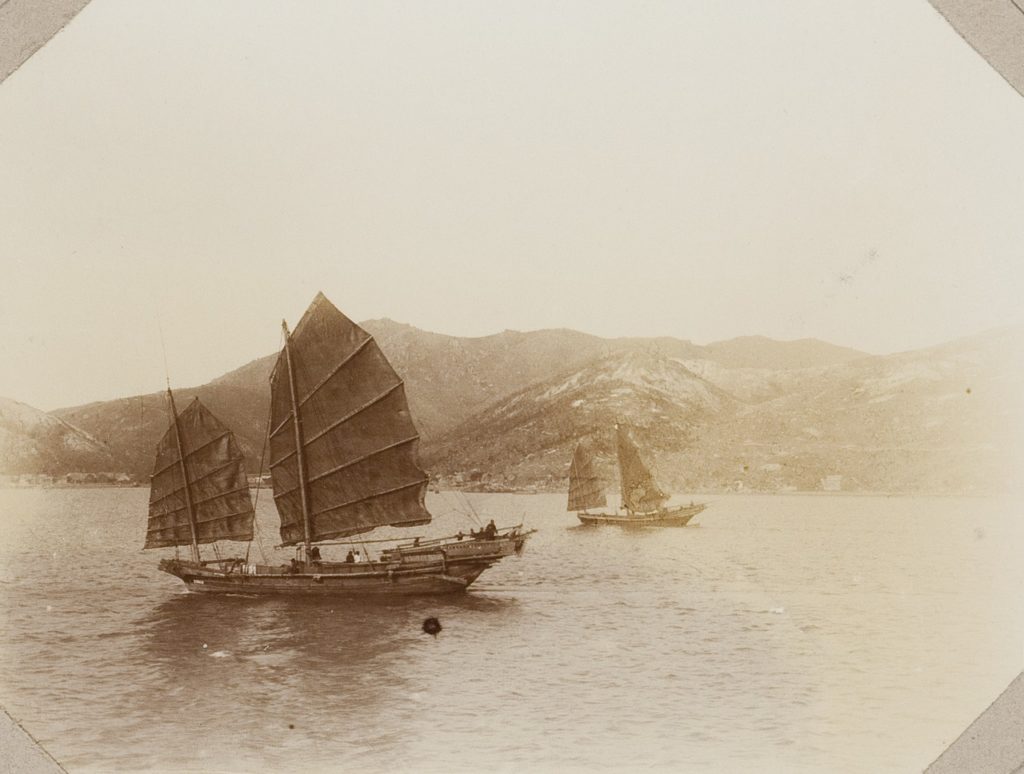 The journey was largely uneventful until August 21, 1945 when they
spotted another junk off in the distance. Upon noticing the American
ships, the mystery Junk immediately came about and opened fire. This
junk was crewed by five Japanese officers and seventy-eight enlisted
men. It was also heavily armed with a 75mm pack howitzer, six machine
guns, and over one hundred rifles. The Japanese opened fire with the
howitzer first and then followed up with machine gun fire.
The journey was largely uneventful until August 21, 1945 when they
spotted another junk off in the distance. Upon noticing the American
ships, the mystery Junk immediately came about and opened fire. This
junk was crewed by five Japanese officers and seventy-eight enlisted
men. It was also heavily armed with a 75mm pack howitzer, six machine
guns, and over one hundred rifles. The Japanese opened fire with the
howitzer first and then followed up with machine gun fire.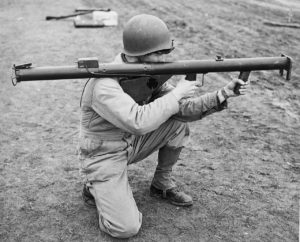 An American soldier using a Bazooka on a firing range. The weapon had
a 3.5lb warhead and a range of about 400 yards (Effective range: 150
yards) at best.
An American soldier using a Bazooka on a firing range. The weapon had
a 3.5lb warhead and a range of about 400 yards (Effective range: 150
yards) at best.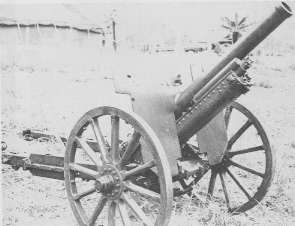


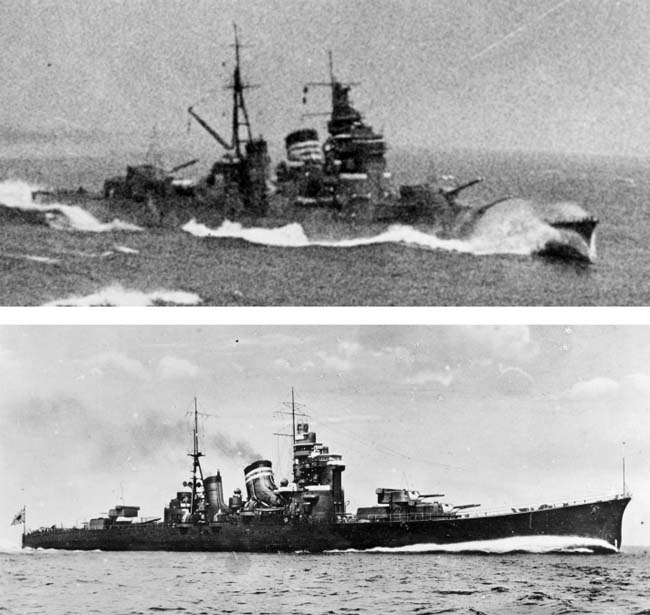
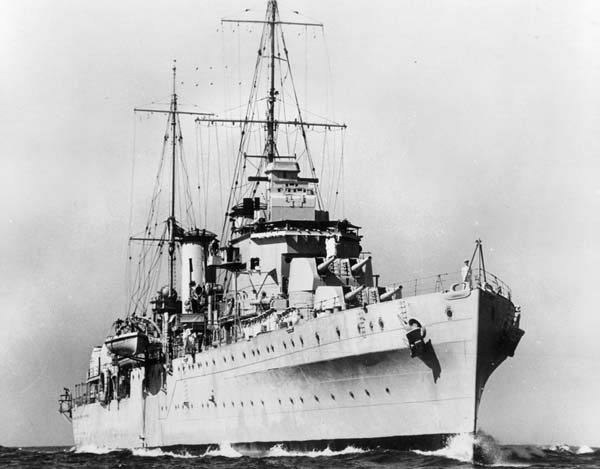
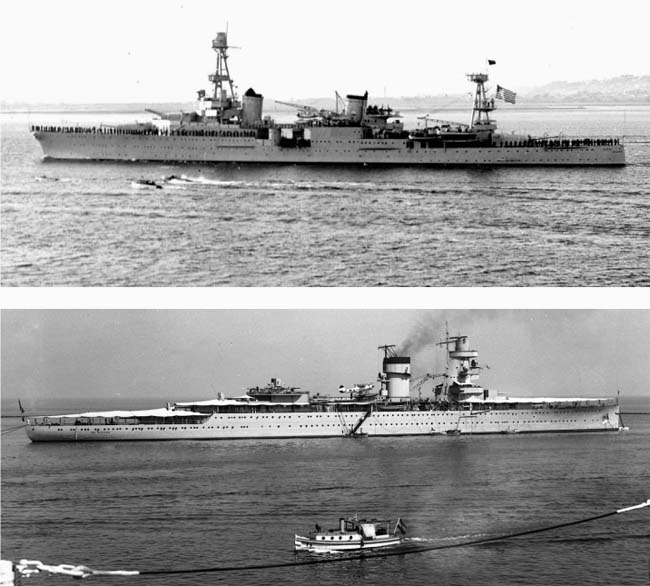
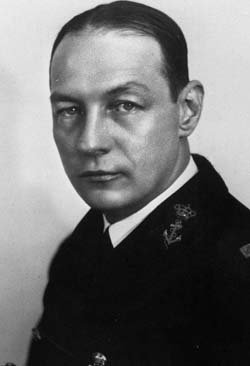
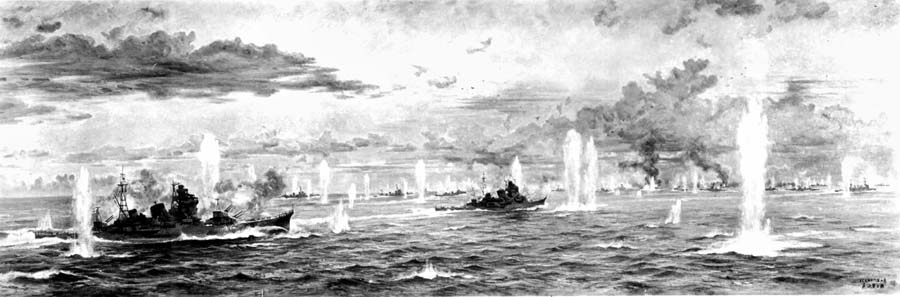
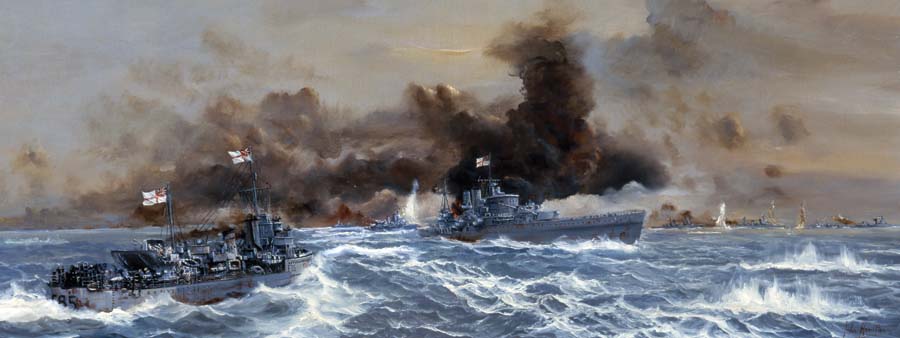
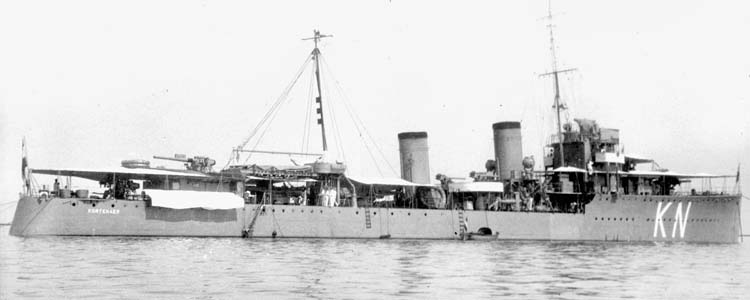
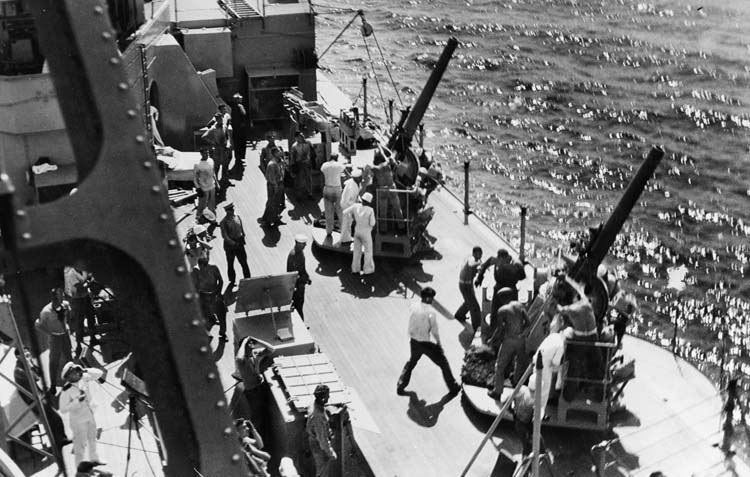
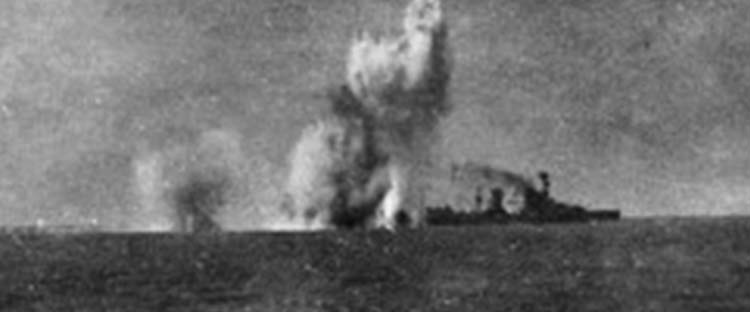
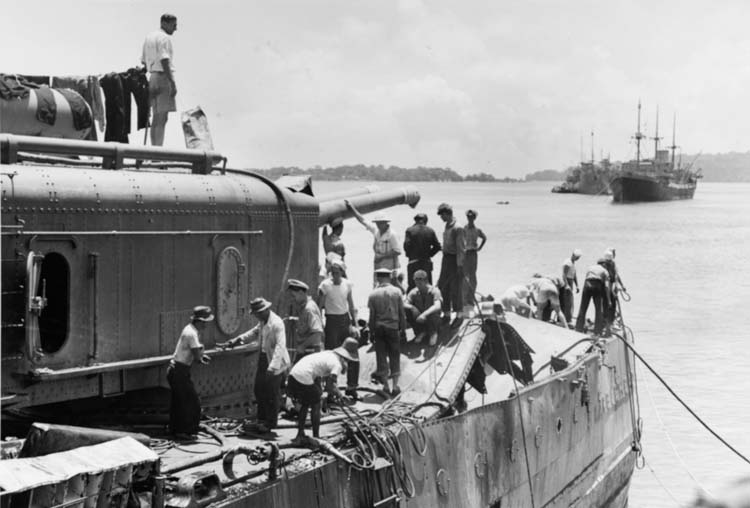
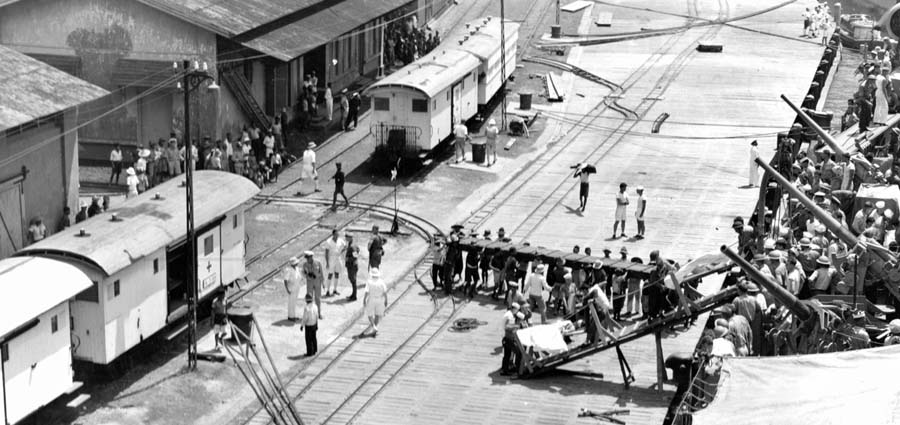
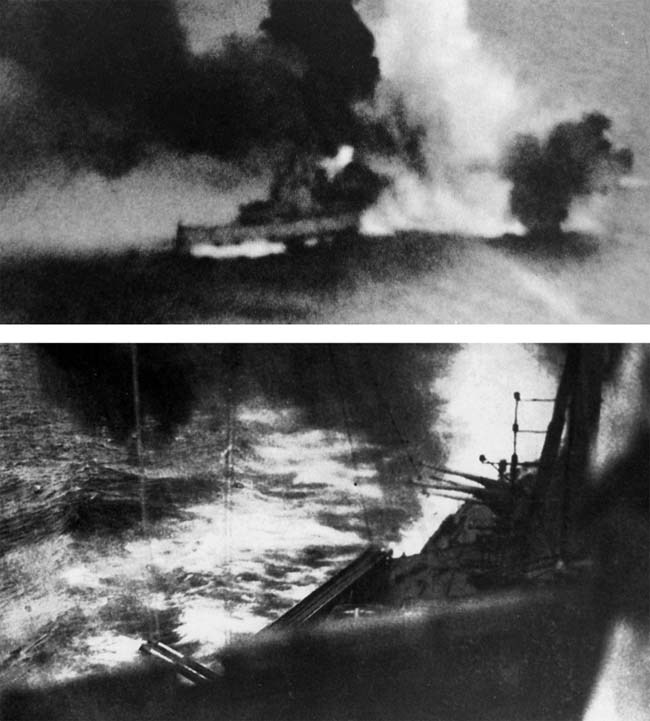
.jpg)

.jpg)