Webster

The Constitution was made to guard the people against the dangers of good intentions." --American Statesman Daniel Webster (1782-1852)


Showing posts with label Historical Gear. Show all posts

Wednesday, April 5, 2023

5 WWI Machine Guns that Changed Warfare Forever.

 I saw this article and snagged it while reading another one.  I will post that one tomorrow.  


   I used the "Sand Pebbles" image, besides using The Sand Pebbles image, I loved that movie.  I had adopted a quote from that movie The "Cup of Rice" explanation, you have to watch the movie to understand the reference.  but I remember Steve McQueen's character using the "BAR" like a bad ass.

 At the outbreak of the First World War, most of the machine guns employed by the major powers were large and heavy. Ideally suited to defense, few were actually light enough to be used in an offensive advance.

The weight of such small arms, and the fact that many were water-cooled to keep the barrel from overheating, made these impractical in an assault. However, military planners quickly considered ways to provide greater mobility along with sustained fire.

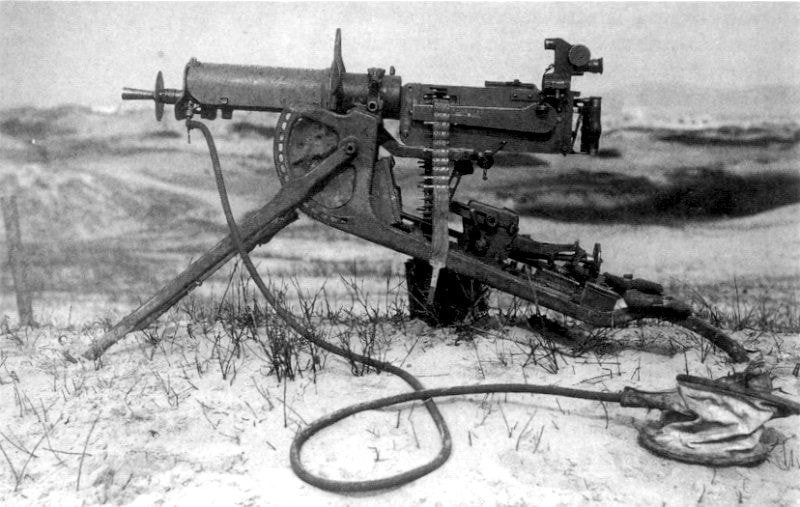
Germany: MG08/15 Machine Gun

Image: Creative Commons.

The Germans saw the effectiveness of their MG08 machine gun and in 1915 developed a version for offensive use. The MG08/15 replaced the rear spade grips with a pistol grip and wooden buttstock. It also featured a short bipod rather than the heavy four-legged sled mount. However, it retained the bulky water jacket, which resulted in a weapon that weighed nearly 40 pounds and that was without water in the jacket or ammunition.

While it wouldn’t be considered “lightweight” it did provide far greater mobility than the MG08. It first saw widespread use during the Second Battle of Aisne in April 1917.


Despite its shortcomings, it was the most common German machine gun deployed during the war with more than four times the number of MG08/15s than the original MG08. An air-cooled version was tested during the final months of the war, but because the barrel couldn’t be quick-changed it overheated quickly.

Germany: Bergmann MP18


Image: Creative Commons.

It took until the final months of the war for Germany to actually introduce a more compact weapon, but in the process the Germans also created a new category of small arm: the submachine gun. Designed by noted firearms pioneer Theodor Bergmann, the Maschinenpistole 18/I fired the 9x19mm Parabellum pistol round, originally from a 32 round Luger drum magazine. It had a rate of fire from 350-500 round per minute, making it an ideal weapon for trench assaults.

The weapon proved ideal for the Germany’s late war strategy, which sought to break the enemy lines. The MP18 was widely employed in the Kaiserschlacht offensive. More than 25,000 were produced and most were issued to the newly formed companies of “Sturmtruppen” (“Storm Troopers”), who were charged with smashing an enemy position to allow the regular infantry to then overwhelm the defenders.

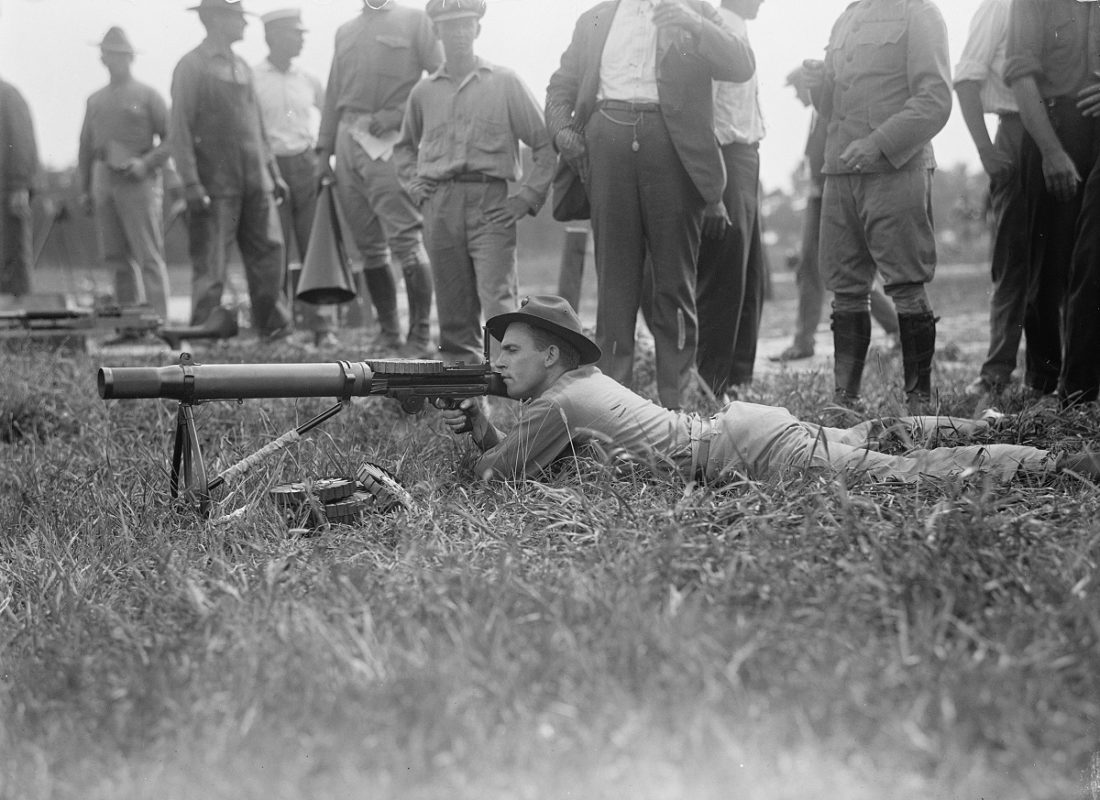
Great Britain: Lewis Gun


Star Wars Guns

U.S. Marines field tested the Lewis machine gun in 1917.

The Lewis Gun has become an almost iconic British machine gun, which is actually a bit ironic as it was designed by the United States before the war broke out. It was passed over by the U.S. Army largely for political reasons, but the U.S. Army’s loss was a gain for the British, which saw the potential with the portable machine gun.

The gas-operated machine gun features the unique “pan” magazine mounted on the top, and was able to maintain a sustained rate of fire of 500-600 rounds per minute. The Lewis Gun had an effective range of up to 800 meters and a maximum range of 3,200 meters. At 28 pounds it was a bit lighter than the German MG08/15. One reason for the lighter weight is that didn’t feature a water jacket – rather the barrel-shroud was designed to draw in air while radial fins acted as a heat sink.

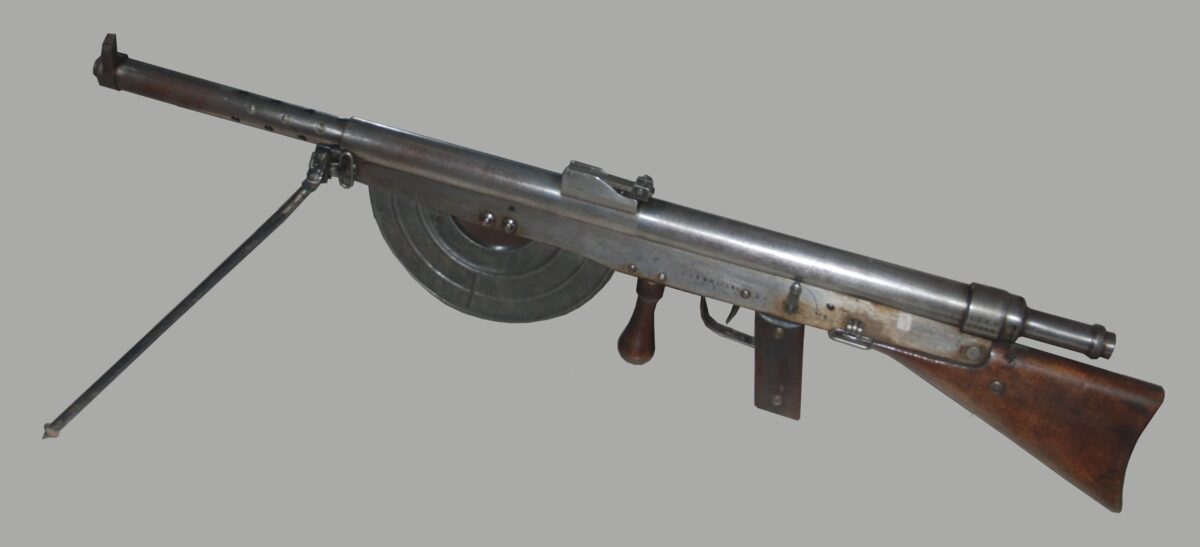
France: Fusil Mitrailleur Modele 1915 CSRG – Chauchat

Image: Creative Commons.

This weapon has earned the reputation of being “the worst machine gun ever made,” but its critics typically highlight the weapon’s shortcomings and overlook its innovative features. When it was introduced in 1915 it became the first successful squad automatic rifle, and provided a rate of fire of 240 rounds per minute while it weighed in at just over 20 pounds. It was among the first automatic weapons to utilize a pistol grip and forward grip – features now common in modern assault rifles. If anything the Chauchat was a bit ahead of its time, and a weapon that needed a bit more refinement.

Likewise, it is true the open magazine allowed dirt and grime to foul the action, but this was common with many belt-fed weapons. The assessment that it was a bad design may be owned to American soldiers who criticized the weapon, but this was due in part to the fact that the version adopted by the U.S. military was chambered for the.30-06 cartridge, which caused performance issues.

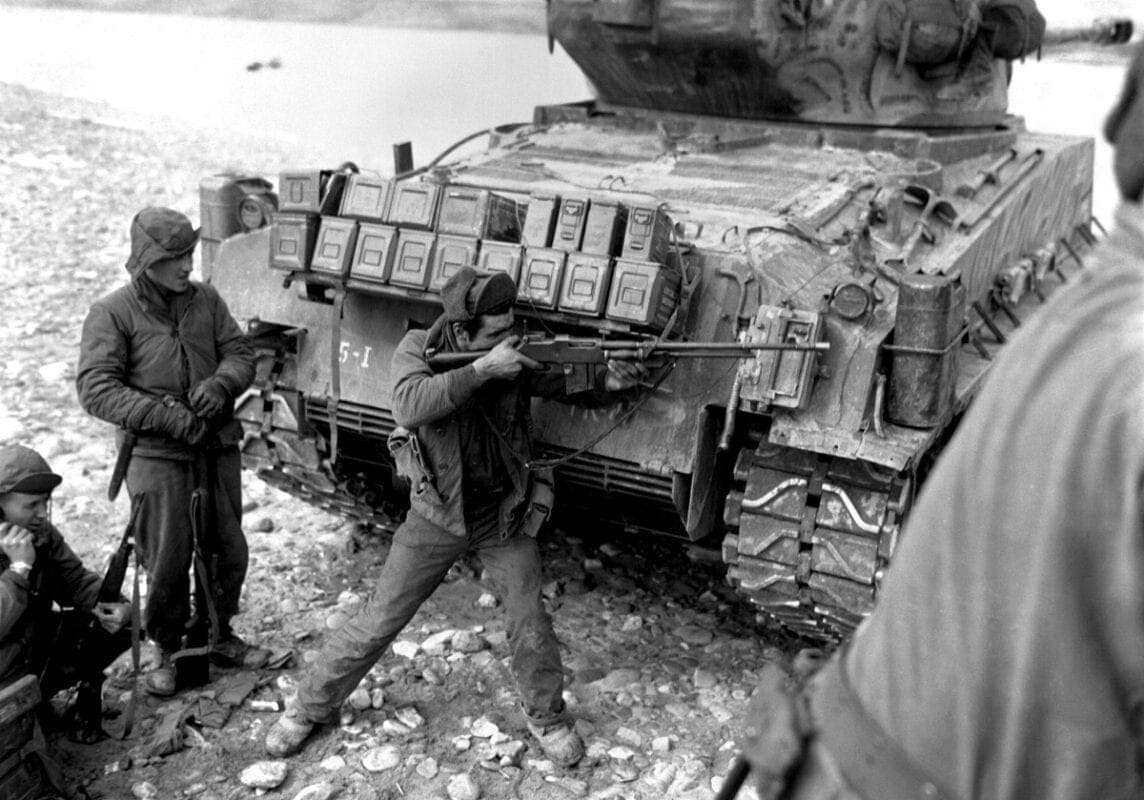
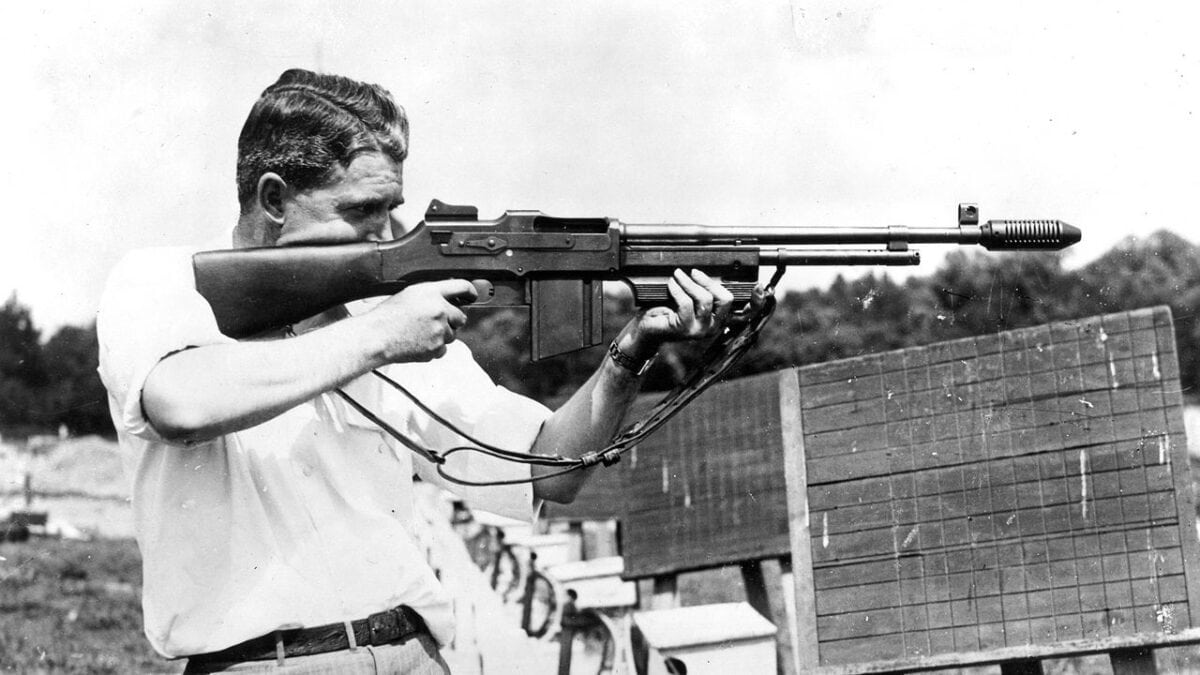
United States: M1918 Browning Automatic Rifle


Taking cover behind their tank escort, one man of this ranger patrol of the 5th RCT, U.S. 24th Infantry Division, uses his BAR to return the heavy Chinese Communist small arms and mortar fire which has them pinned down on the bank of the Han River. At left another soldier uses a field radio to report the situation to headquarters. NARA FILE#: 111-SC-358782

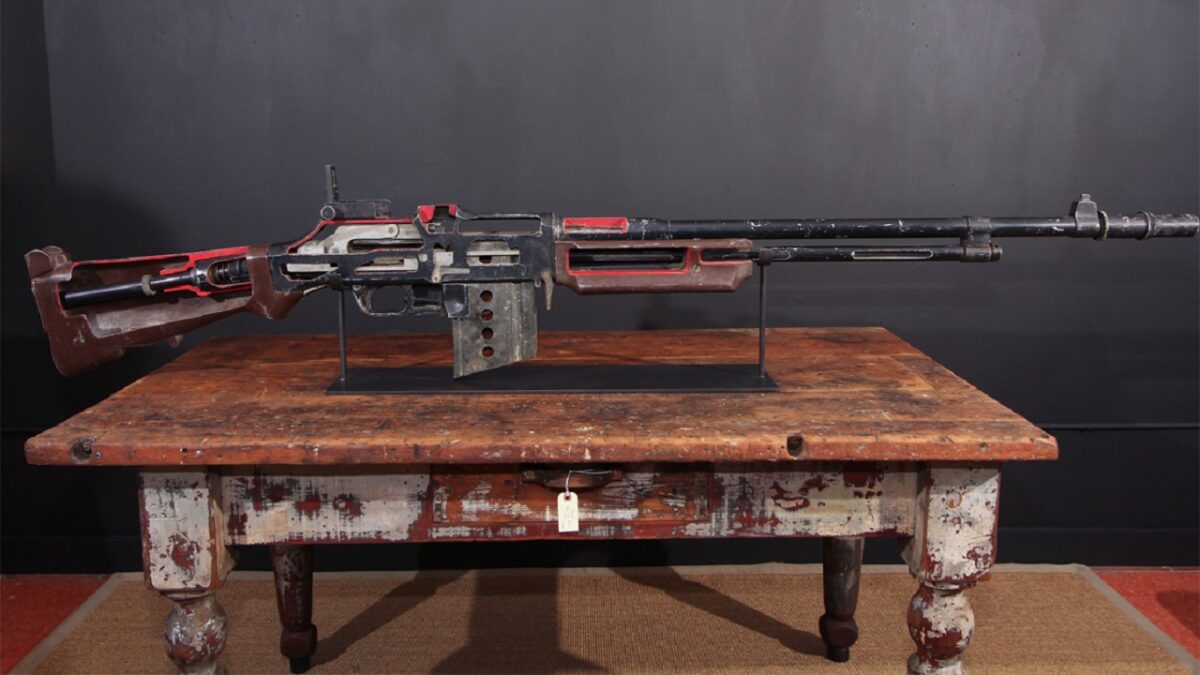
In addition to designing the M1917 machine gun, which greatly improved upon the Maxim design, prolific firearms designer John Browning also created what was arguably the best automatic rifle of the era, the BAR or Browning Automatic Rifle.

An American civilian wanting to own a genuine full-auto Browning Automatic Rifle will have to bring a bankbook to purchase one

An American civilian wanting to own a genuine full-auto Browning Automatic Rifle will have to

 bring a bankbook to purchase one.

Browning Automatic Rifle

Browning Automatic Rifle. Image Credit: Creative Commons.

It successfully provided an infantryman with walking fire during an assault and it was considered so revolutionary that the American military actually held back its use in fears that the Germans might capture one and copy it. For that reason, the BAR didn’t become standard issue until 1938 when it was issued as a portable light machine gun.

The gas operated automatic rifle could provide a rate of fire of 500-600 rounds per minute and had an effective range of 1,300 meters. Had the First World War dragged out into 1919 and beyond there is little doubt the U.S. military would have deemed it necessary to bring the BAR to the front in mass. There were almost 52,000 BARs on hand for the spring offensive that never came, but the BAR went on to serve in World War II, the Korean War and even the early stages of the war in Vietnam.


Wednesday, December 2, 2020

When WWII ended, What happened to the weapons?

 I know several people including myself that owned WWII era weapons, 

,  I find it interesting to hold a piece of history in my hands and wonder if those rifles could talk, what kind of story could they tell.  I also owned a wartime Nagant made in the Izhevsk arsenal made in 1942 right after they moved it across the Ural mountains to keep it from getting captured by the Fascisti invaders 

and of course a Garand....until that tragic Kayak and canoe accidents *sniff*

World War II ended 75 years ago – so what happened to the hundreds of millions of weapons that were made for it?

World War II was like no other war: it was warfare on an epic and global scale.

War Production 1939 to 1945 (estimated)

Major weapons groups & System Total

  • Tanks, self-propelled artillery, vehicles: 6 million
  • Artillery, mortars, anti-tank guns: 8 million
  • Aircraft: 850,000
  • Missiles: 45,000
  • Ships: 55,500
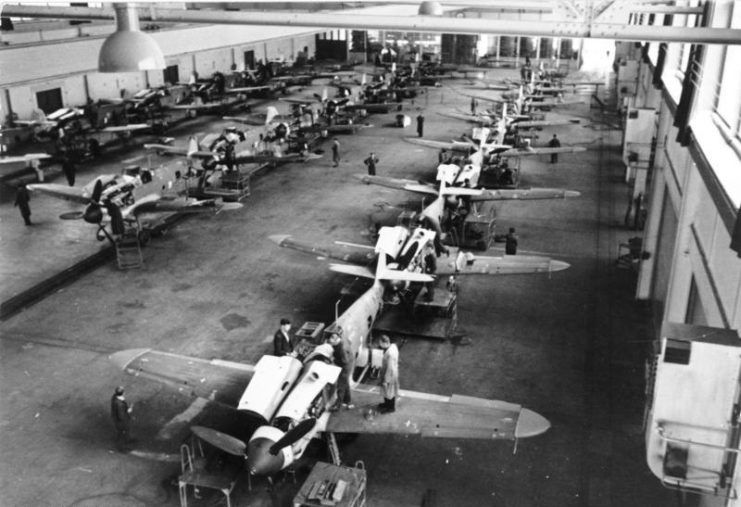
Assembly line of Messerschmitt Bf 109G-6s fighters in a German aircraft factory. By Bundesarchiv – CC BY-SA 3.0 de
Assembly line of Messerschmitt Bf 109G-6s fighters in a German aircraft factory. By Bundesarchiv –

What probably set this war apart from other conflicts was the rapid pace at which technology progressed throughout it.

For instance, at the start of the war, most sides were using prop-driven fighter aircraft such as the French De.520 monoplane.


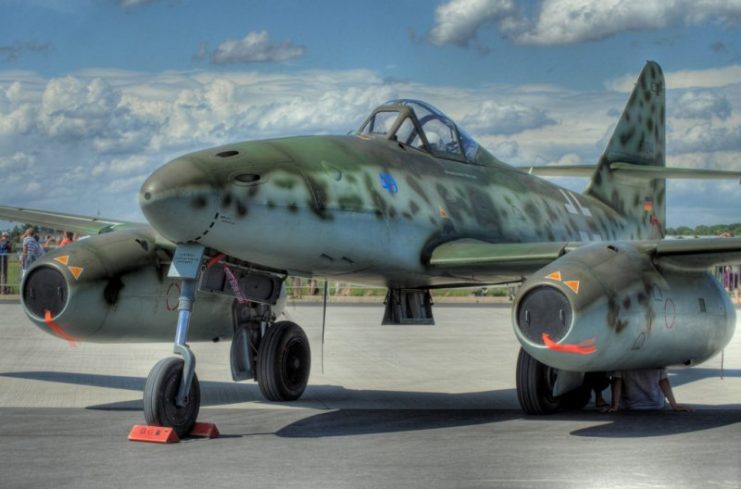
Dewoitine D.520. Photo: PpPachy / CC BY-SA 3.0But by the end of the conflict, aircraft such as the jet-powered German Me 262 and British Gloster Meteor were entering service and becoming the norm, thus hailing in the postwar dominance of jet propulsion in air warfare.

Messerschmitt Me 262 B1-A.Photo gravitat-OFF CC BY 2.0
Messerschmitt Me 262 B1

Dewoitine De.520 C.1 compared to the Me 262 A-1a [Percentage Increase]

Maximum speed: 347 mph (560 km/h) 559 mph (900 km/h ) +61%

Rate of climb: 2,820 ft/min (853 m/min) 3,900 ft/min (1,200 m/min ) +38%

Service ceiling: 33,000 ft (10,000 m) 37,565 ft (11,450 m ) +14%

Range: 777 mi (1,250 km) 652 mi (1,050 km) -16%

What actually happened to all this weaponry after the war? Well, the answer is not as straightforward as you might think.

Many of the new types of weaponry which appeared during the war were produced to meet varying needs and specifications. Because they’d been built to such specialist requirements, they rapidly became outdated. This resulted in a huge amount of equipment being scrapped when the fighting was done.


German equipment destroyed in the Mont Ormel area, waiting to be scrapped near the Dives River-Valley

Many vehicles, aircraft, and ships were sold for scrap, being stripped of valuable parts and being melted down as metals like aluminum could be re-used.

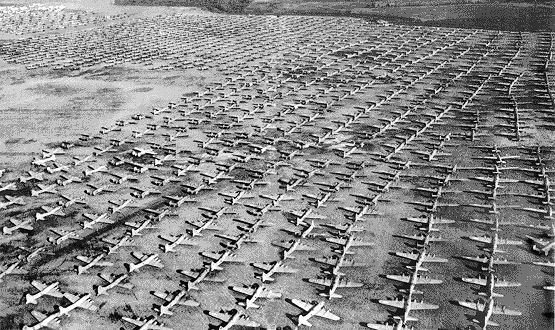
The numbers involved were truly staggering. Between 1945 to 1946, around 5,500 aircraft were scrapped at Kingman Air Force Base in Arizona alone.

Acres of World War II aircraft in storage, awaiting their fate at Kingman, 1946.

In Germany, the scale of the scrapping was on a similar if not a more intense scale as the ravaged economy was in desperate need of raw materials.

German military aircraft in the yard of a German aluminum works at Grevenbrioch. The wrecked planes will be broken up for scrap.

In addition, a lot of the Allied weaponry was scattered around the world and it was simply too expensive to ship it all home.

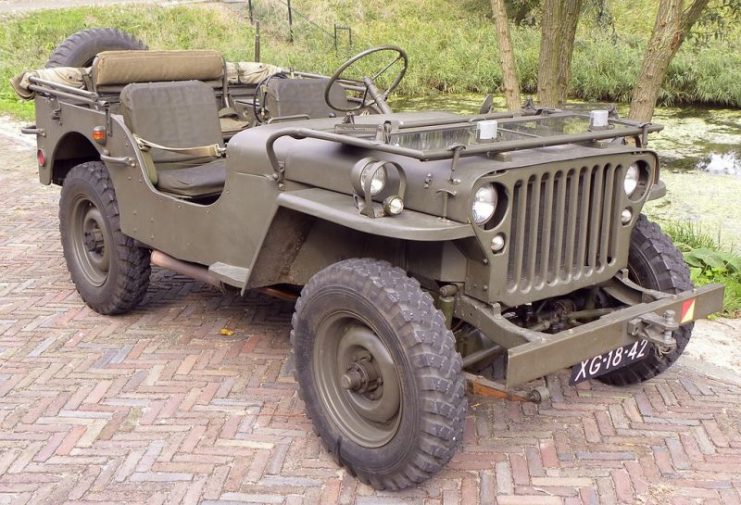
A 1943 Willys Jeep, the basis for the design of jeepneys. Photo: Joost J. Bakker / CC BY 2.0
A 1943 Willys Jeep, the basis for the design of jeepneys. 

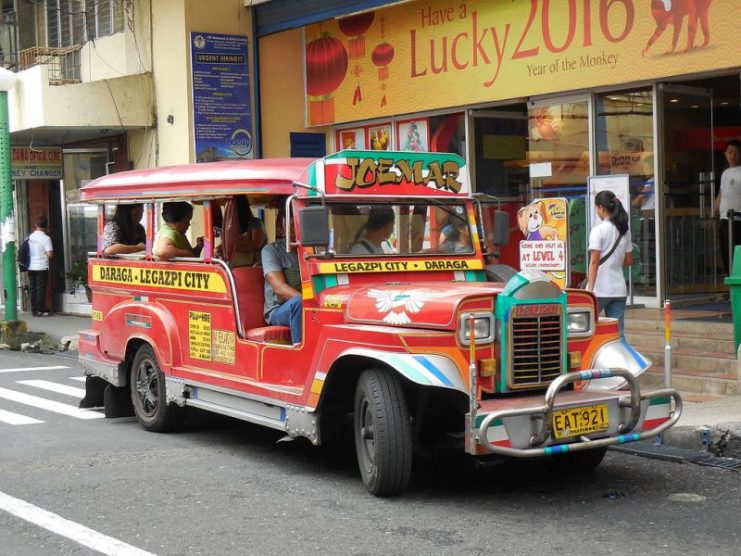
Such a large number of American Jeeps were left behind in the Philippines that a whole new type of public transport was created by converting them into small buses called ‘Jeepneys.’ I'm sure that OldNFO among others have seen those vehicles in their travels.

A typical jeepney. Photo: Lawrence Ruiz – CC BY-SA 4.0
A typical jeepney. 

In the case of Libya and Tunisia, there were so many military vehicles left abandoned on the battlefield that recovering them as scrap actually helped the economies of these countries to recover after the war.

Most often, a lot of the equipment used in battle had been destroyed beyond repair. Ships and aircraft were particularly prone to this. A ship sinking a thousand feet to the seabed or an aircraft crashing into the ground at 400 miles per hour was normally completely useless.

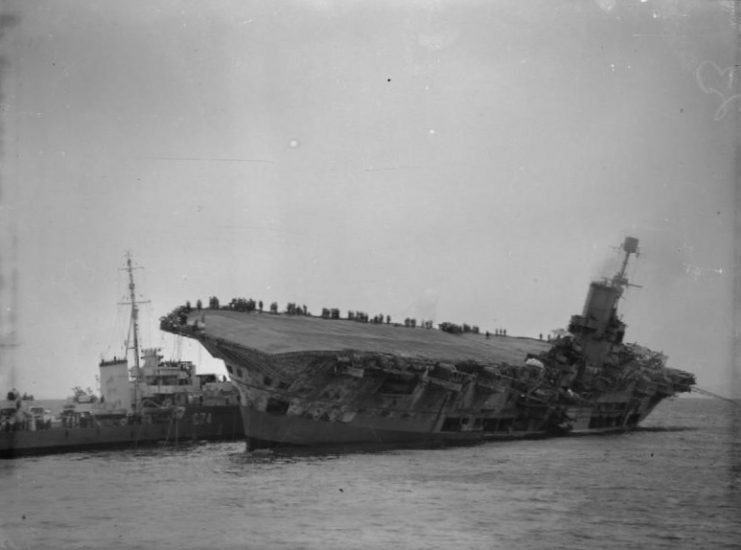
The HMS Ark Royal, a British Aircraft Carrier, was torpedoed off Gibraltar by the Germans in 1941. It now rests on the seabed at a depth of around 3,300 ft (1,000 meters).

Legion moving alongside the damaged and listing Ark Royal to take off survivors

Tanks were a different matter altogether. They could often be recovered from the battlefield, repaired and put back into service quickly. However, by the end of the war, most of these tanks were thoroughly worn out and nearly unserviceable.

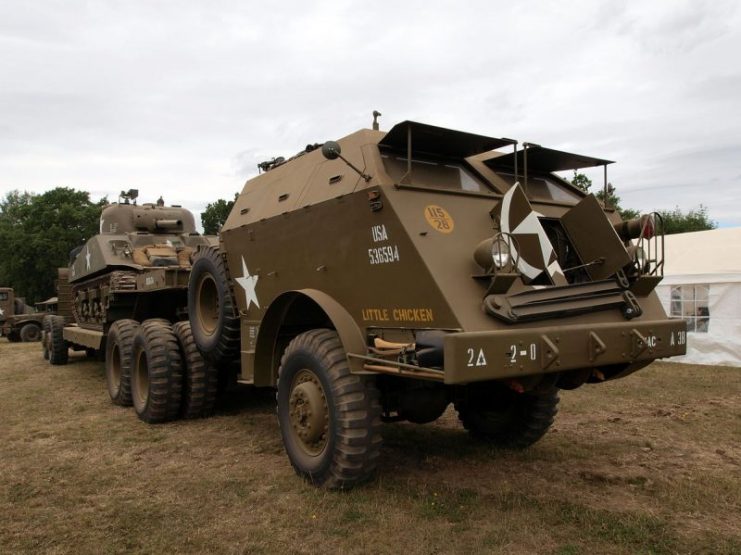
M25 Tank Transporter Dragon Wagon.

There was also a common problem in that production of many World War II designs had stopped years ago. So vehicles, ships, and aircraft were either getting too old to be adequately maintained, or were no longer effective in a fast-evolving battlefield.

Type 3 Chi-Nu tanks of the 4th Tank Division, with a few Type 3 Ho-Ni III self-propelled guns among them.

This was particularly true of the German and Japanese equipment, as most of their production capability and infrastructure had been destroyed by the mass bombing campaigns of World War II. This rendered most of their military equipment impractical to use after the war.

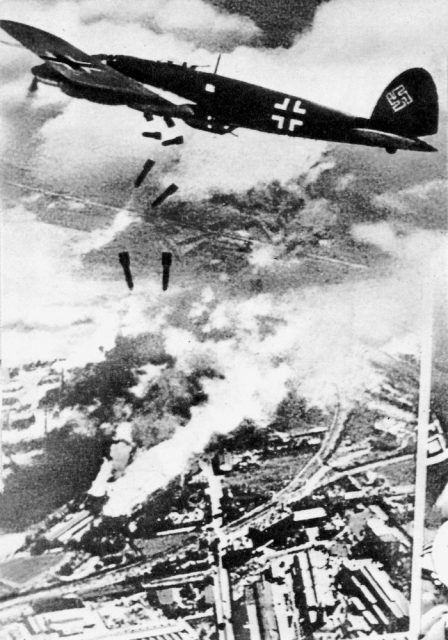
German Heinkel He 111 planes bombing Warsaw, Sep 1939.

At the end of the war, most German aircraft had been destroyed, were in a bad state of repair, or had been deliberately disabled by their crew. There was also a reluctance by countries to use Axis equipment as such weapons were seen as former tools of oppression and hatred.

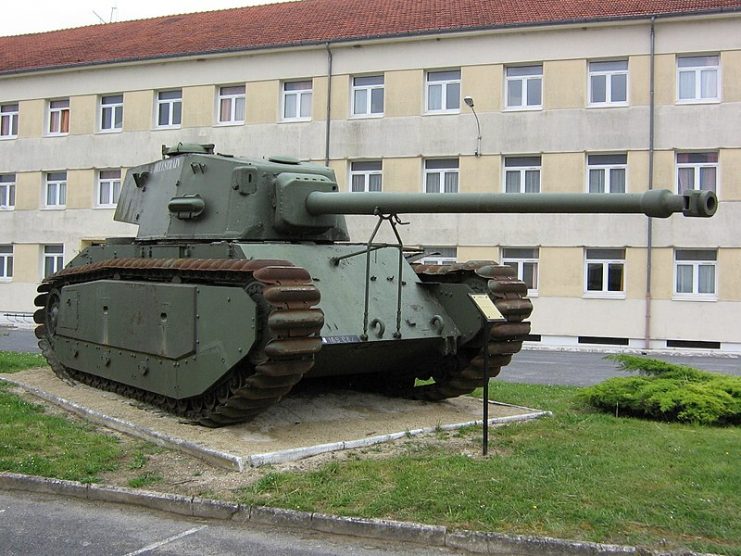
Despite that, there were instances where Axis equipment was used out of necessity or desperation. The French used a number of German Panther tanks from the end of the war until 1949, at which point the much delayed (and ultimately very unsuccessful) home-produced ARL-44 heavy tank replaced them.

ARL 44 at Mourmelon-le-Grand. By The shadock – CC BY-SA 3.0
ARL 44 at Mourmelon-le-Grand. 

The Lebanese brought a handful of Italian SM 79 medium bombers due to their ties with Italy and the fact they were inexpensive to buy after the war. But the aircraft quickly fell into disuse as they were old and poorly maintained.

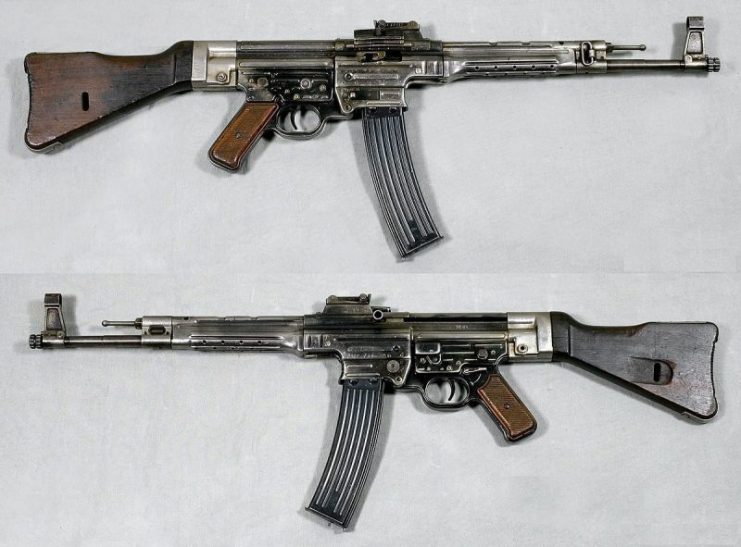
The Sturmgewehr 44 Assault rifle was a ground-breaking German design. It arose out of a war-time need for an infantry rifle that was more compact, semi-automatic, and with a large magazine capacity at the expense of a lesser range. The weapon later went on to have a significant influence on the development of the Russian AK-47 assault rifle.

The Sturmgewehr 44 Assault rifle. A soldier demonstrates the transitional MP 43/1 variant. By Bundesarchiv – CC BY-SA 3.0 de
The Sturmgewehr 44 Assault rifle. A soldier demonstrates the transitional MP 43/1 variant. By Bundesarchiv 

Few survived the war as only a limited number were made and the 7.92×33mm caliber made it impractical for widespread post-war military service. But it was used for a number of years afterward by the East German Paramilitary Police.

The STG 44 was also used by the East German Paramilitary Police Force until 1962. However, such uses of Axis weaponry was the exception rather than the rule.

Often the method to prolong the use of World War II munitions was to upgrade them so that they remained relevant and effective.

MP44 (Sturmgewehr 44), Germany.

Many armored fighting vehicles proved to have very adaptable designs. They were often modified or upgraded to give them a second life and extend their usefulness.

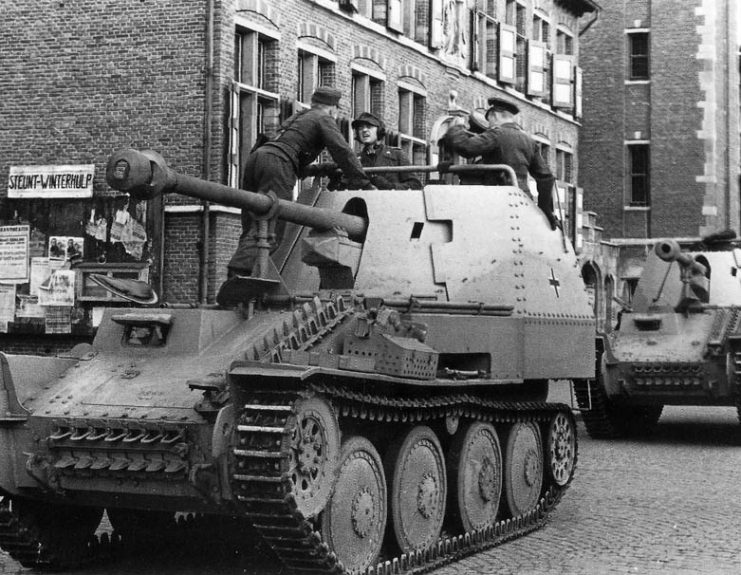
This trend started during World War II, and a good example was the Czech-supplied Panzer 38(t) which was later rebuilt and turned into the German Tank Destroyer Marder III. The modifications extended its useful service life for another few years although, like many designs, the Marder III had reached the limit of its potential by the end of World War II.

Marder III Ausf. M tank destroyer.Photo: Bundesarchiv, Bild 101I-297-1729-23 / Kurth / CC-BY-SA 3.0
Marder III Ausf. M tank destroyer

A precedent had been set, and some weaponry proved to have such great potential that it was continually upgraded, often reaching the pinnacle of its design potential long after the war years.

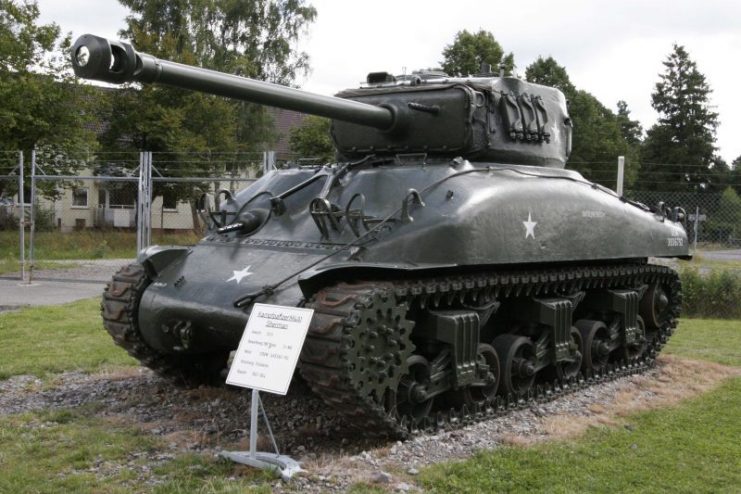
A prime example of this was the American M4 Sherman tank, which was still being upgraded decades after it was first produced.

Sherman M4A1(76). Photo: Baku 13 / CC By-SA 3.0
Sherman M4A1(76). 

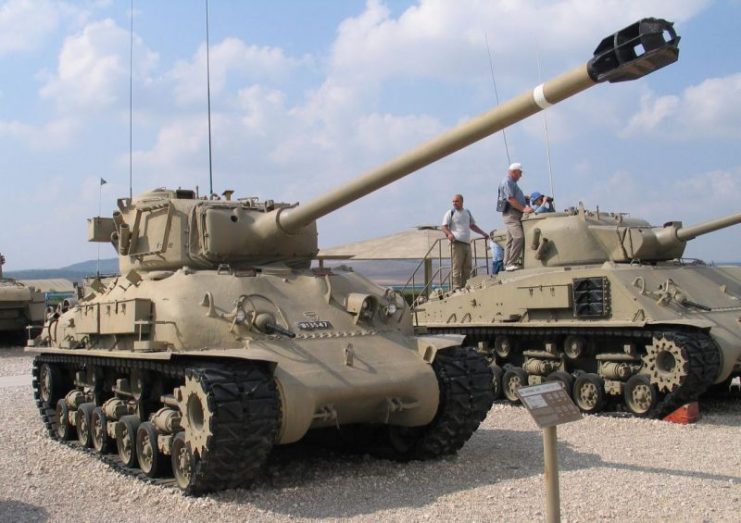
Even as late as the early 1960s the tank was being modified by the Israelis, who upgraded 180 surplus American Sherman M4A1s. They added a shortened version of the powerful French 105 mm F1 gun, as well as giving it a new, improved suspension and engine.

Sherman M-51. Photo: Bukvoed / CC BY 2.5
Sherman M-51. 

The new tank was given the designation M-51 and nicknamed the “Super Sherman.” It proved highly effective against the more modern Soviet-built T-54, T-55, and T-62 tanks the Arab army was using.

The M-51 was eventually phased out of Israeli service in the 1980s. They sold 100 to the Chilean army who used them until 1999 when they were replaced by Leopard 1s.


Some designs were so good and well made that they soldiered on for years to come with few, if any, modifications. The classic Russian T-34/85 medium tank and the F-4U Corsair naval fighter airplane fell into this category.

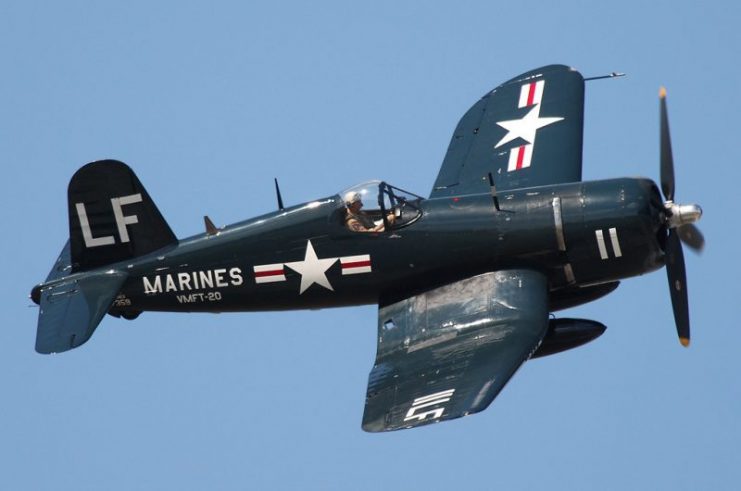
The F-4U Corsair was still being produced for years after the war, with production only ending in 1953. After that, the aircraft was slowly phased out of military service until 1976 when the El Salvador Air Force completely replaced it.


Vought F4U Corsair. Photo: Gerry Metzler / CC BY-SA 2.0
Vought F4U Corsair.

As ships were both costly and time-consuming to build, as well as being very labor intensive to run, many were disregarded after the war. However, some ships, like the USS Iowa, were maintained.

The Iowa was a 58,400 ton American Battleship which was continually updated and kept in service on and off until 1990 before entering the naval reserve and, eventually, in 2011, becoming an official Museum ship.

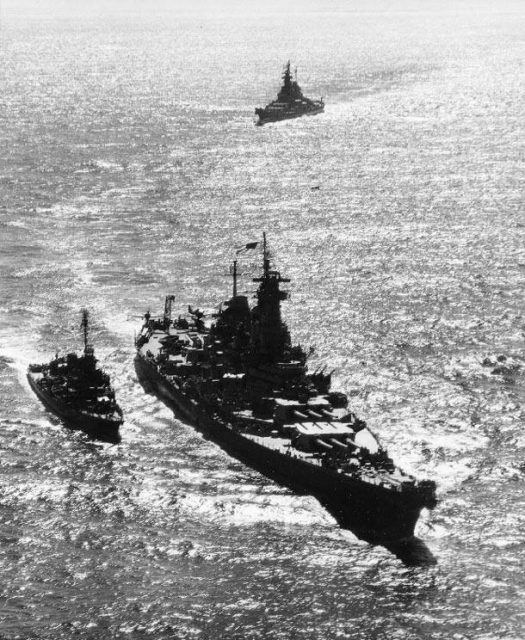
USS Missouri leading USS Iowa into Tokyo Bay, Japan, 30 August 1945. Note destroyer USS Nicholas in escort.

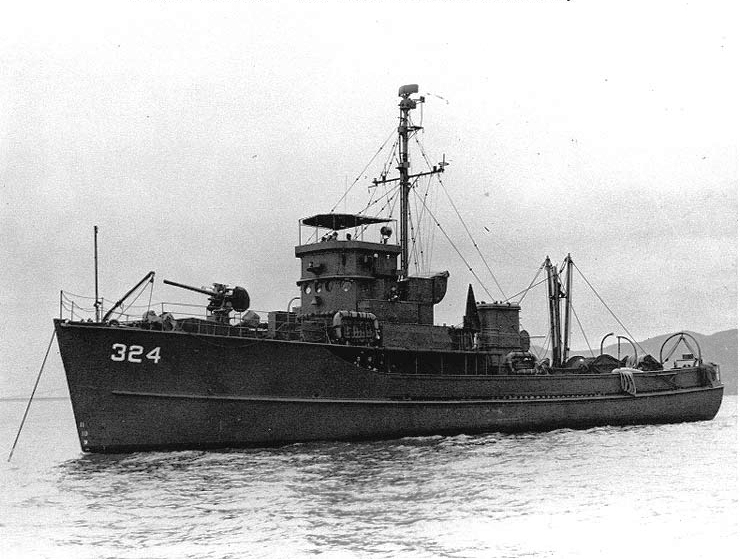
Very few military boats were sold to private individuals, but it is interesting to note that actor, John Wayne, bought a former World War II American YMS-1-class. It was a 136 ft long Yard Mine Sweeper and he ran it for the last 17 years of his life.

It was said that the ship was so expensive to run that it nearly bankrupted him several times and he had to take on extra movies to be able to pay to keep it running.

USS YMS-324 in San Francisco Bay, c. 1945–46

On the other hand, many weapons were so badly designed in the first place that they were scrapped as soon as possible and were never used post-war.

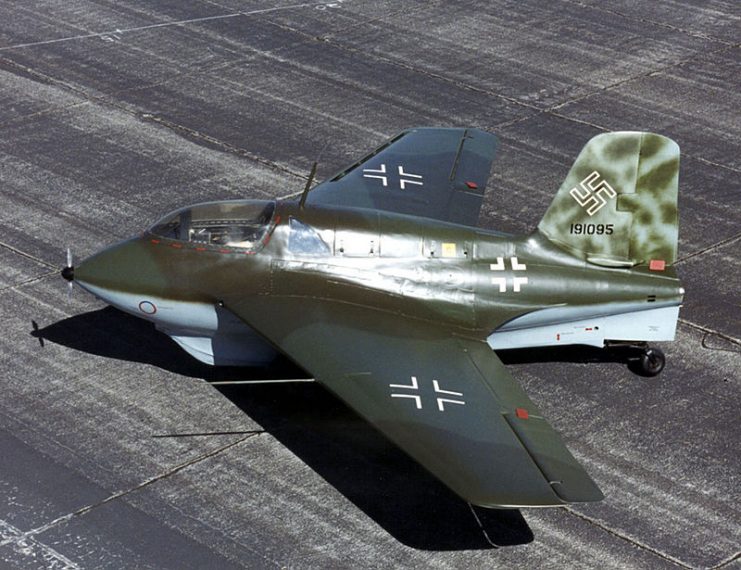
This was the case for both the German Me 163 Komet Jet Interceptor and the Italian Breda 6.5mm Model 30 light machine gun. This gun was prone to over-heating and jamming as well as having no carrying handle, a small magazine capacity, and a barrel changing issue.

A German Messerschmitt Me 163B Komet rocket-propelled fighter (s/n 191095) at the National Museum of the United States Air Force, Dayton, Ohio (USA).

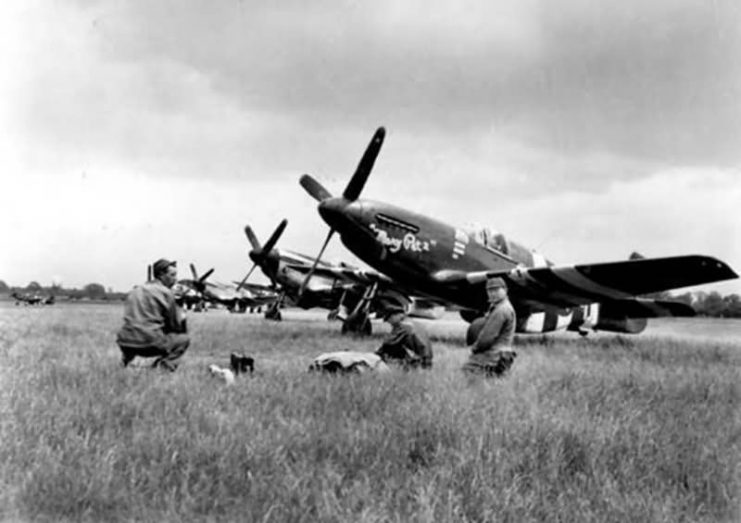
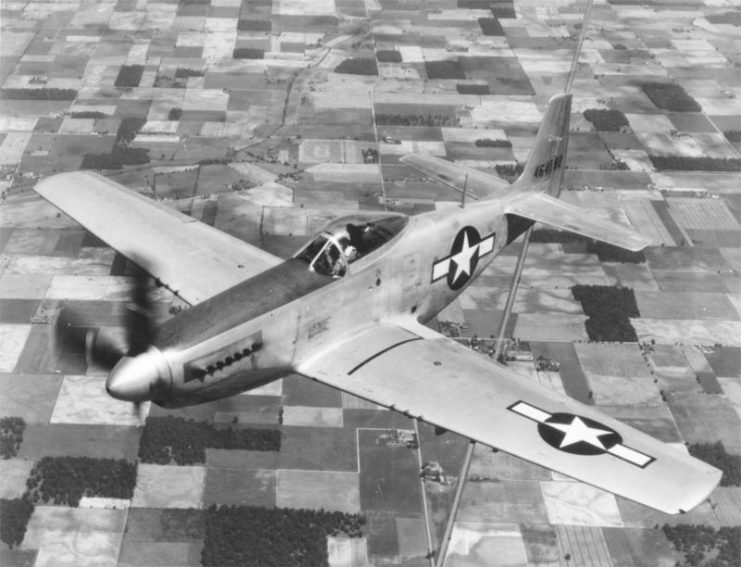
Some World War II surplus stock was very attractive to buy as it was in plentiful supply and the designs were combat proven. Such stock had the added bonus of being readily available and often at very affordable prices. For instance, a lot of third world countries bought World War II aircraft like the American P-51 Mustang for counter-insurgency duties.

North American P-51 Mustang of 354th Fighter Group D-Day 1944.

Such surplus stock could even be cannibalized for spare parts to keep a weapon that was out of production running for years.

A lot of small arms were so robustly built for the demanding environment of the battlefields that they were able to be kept in use for a very long time. They also proved popular on the civilian market because they often were extremely simple to operate – they were designed to be so because mostly they were used by conscripts or poorly trained troops.

Mustang P-51H
Mustang P-51H

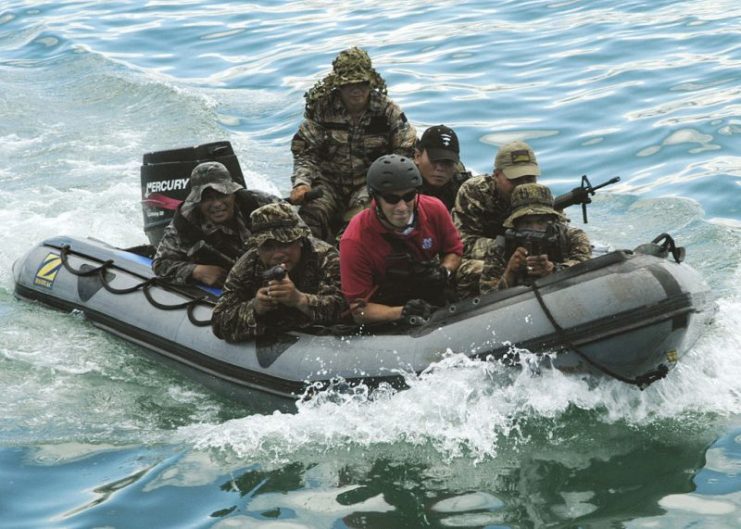
As such, a lot of the small arms from World War II had long military careers after the war. The American M3 sub-machine gun was used until recently by the Philippine Army, and the British Bren light machine gun was only finally phased out of service from the Irish Army Reserves in 2006.

Philippine Naval Special Warfare Group members. Two of them are armed with M3.

Some weapons are just so well designed or eminently suitable for updating that they have stayed in service up to the present day. The M1 Garand rifle and the Colt M1911A1 automatic handgun are two excellent examples.

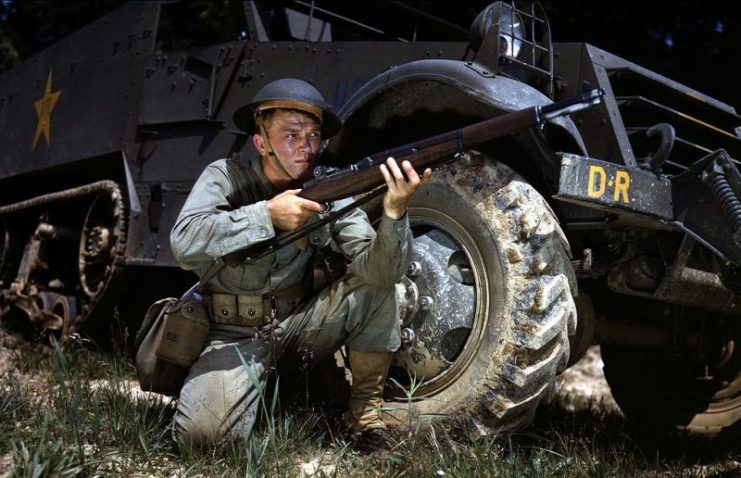
One firearm which provided itself to be exceptional was the American M1 Garand .30 caliber semi-automatic rifle.

World War II Infantryman, kneeling in front of M3 Half-track, holds and sights an M1 Garand rifle. Fort Knox, Kentucky, June 1942.
World War II Infantryman, kneeling in front of M3 Half-track, holds and sights an M1 Garand rifle. Fort Knox, Kentucky, June 1942. Posed Propaganda shot for the studios and Life Magazine.

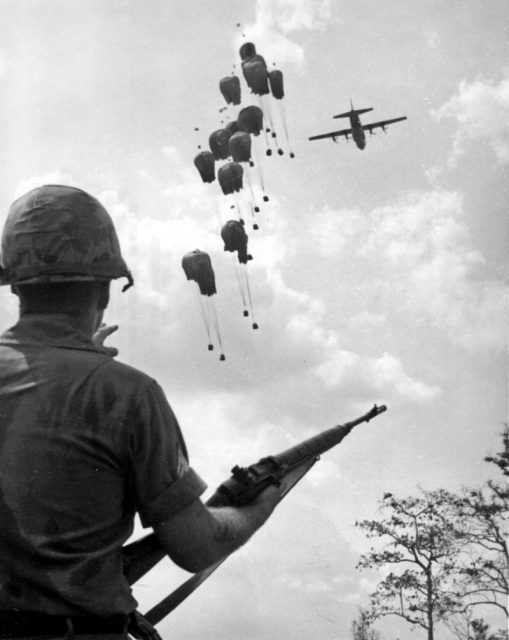
After the war, it found a new market, at first in its original form before continuing in front-line service after being modified to become the M14 rifle 7.62 mm, selective fire automatic rifle. This gun stayed in the American Army and Marine Corp service until 1964, when it began to be replaced by the M-16 5.56mm automatic rifle.

A U.S. soldier with an M14 watches as supplies are dropped in 1967 during the Vietnam War.

World War II second-hand small arms were popular for decades. It is a sad fact that the weapon used by Lee Harvey Oswald in 1963 to kill the American President, JFK, was a war surplus Italian Carcano Model 91/38 rifle, that he had bought by mail order for just $12.98 ($299 at Classic Firearms.com at present time and eligible for C&R.)

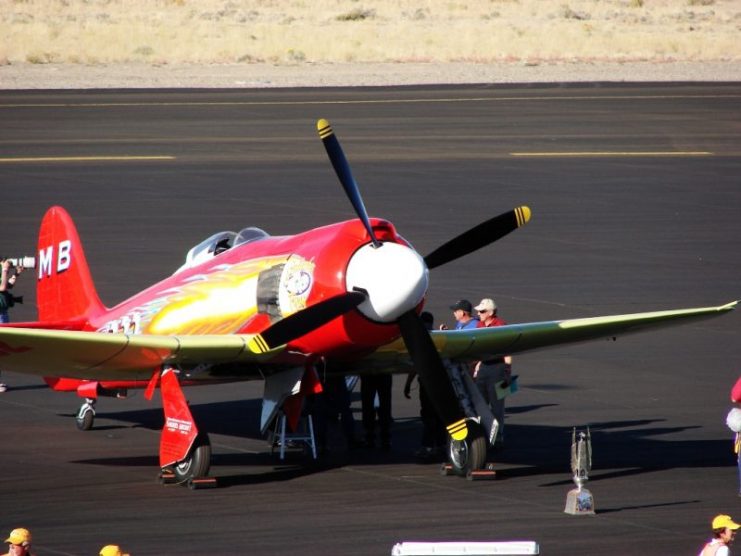
Some of the ex-military equipment of World War II was put to more unusual but still practical use. For instance, since 1964, the now world famous Reno Air Races in Nevada, United States, has included a category called “Unlimited Gold” which is solely for World War II aircraft.


Hawker Sea Fury. September Fury at the Reno races. Photo: Calyponte / CC BY-SA 3.0
Hawker Sea Fury. September Fury at the Reno races.

The 2018 winner of this class was a British TMK 20 Sea Fury which had a course average speed of 418 mph (over 673 kph). Other participants were F-8F Bearcats and P-51D Mustangs.

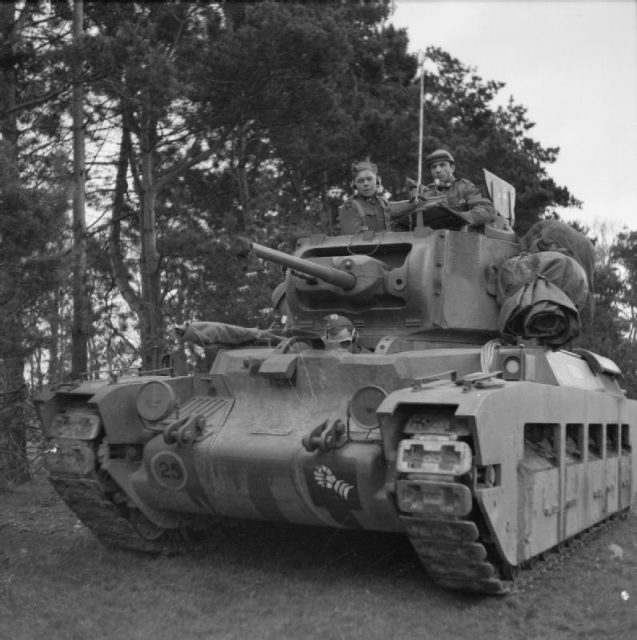
Some military vehicles were converted to agricultural use. This was particularly the case in Australia. The turrets were taken off British Matilda tanks and bulldozer blades were added, while Sherman tanks were used to help plow fields.

British Matilda II tank.

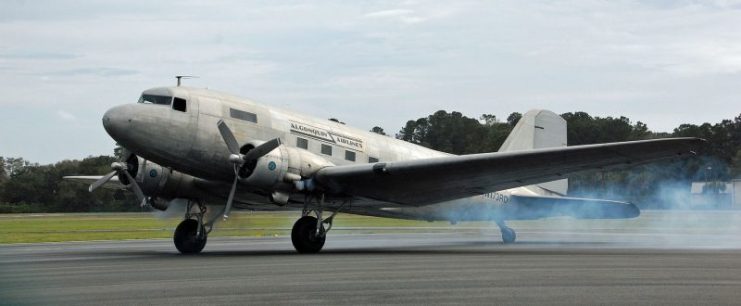
While many aircraft found new leases of life well into the 1950s and 60s as trainers, target tugs, or transporters, the American DC3 Dakota military transporter is still used today as a cargo carrier in some South American countries.

A 1944 Douglas DC-3C (2015). Photo: Bubba73 (Jud McCranie) / CC BY-SA 4.0
A 1944 Douglas DC-3C (2015).

The Canadian naval World War II cargo ship, the Cromwell Park, was subsequently used to create an artificial reef in Rivera Beach, Florida. The ship had been sold for commercial shipping in 1946 and renamed the Harmac Vancouver. Later, it was sold on again, this time to a Greek company where it was renamed Amaryllis.

In 1965, the ship was trying to take shelter from a hurricane when it ran aground on the East Coast of Florida in the United States. In 1968, the ship was towed to a spot that was 85 feet (almost 26 meters) deep and sunk to make a permanent artificial reef.

An M22 Locust, American light tank at Bovington Tank Museum in the UK.

Over 70 years later, these weapons are still around is a testimony to their enduring design and ingenuity.


Tuesday, October 6, 2020

The "crappy" Mark 14 Torpedo and the effect it had on the American Sub Force.

.This was supposed to drop this morning, but I got the date wrong.

I had ran across this article on the internet doing research on something else, it discussed the torpedo debacle that the American Submarines had and to a lesser extent, the American Torpedo planes had because they basically were using the same technology and systems.   It was very enlightening to see the bureaucratic  stalling and shafting the sub crews and skippers who tried to tell BuOrd that their torpedoes sucked, whereas the Japanese had the awesome Long Lance torpedoes and their air arm had their own effective air dropped version.                                                                                            The Pics are complements of "Google".    


Fizzling fish, wrong tactics and incompetent commanders -- ingredients for disaster simmering below the waves aboard American submarines -- how many years did they add to World War II?

A strong case has been made, by authors as varied as Jim Dunnigan, John Keegan and George Friedman, that the leading cause of the eventual defeat of the Japanese in World War II was the choke hold on its commercial shipping achieved by the Allies. Friedman, in his thought provoking if flawed The Coming War With Japan, argues that aerial strategic bombing had little effect on Japanese production capacity. But production capacity is useless without raw materials. US submarines, ranging on the north-south routes from the Indies and along the Japanese coast, systematically interdicted the flow of strategic materials. By the end of the war Japanese imports of bulk commodities such as iron ore and oil had plunged almost 90% from prewar levels. Unable to get the supplies it needed to maintain its armed forces the Japanese were forced to submit to the demand for unconditional surrender. As Friedman points out, the lesson was driven home -- the bulk of modern Japan's Maritime Self Defense Force is devoted to antisubmarine warfare.

For World War II's submariners it was not a one-sided battle. While American submarines claimed 201 Japanese warships and 1013 merchant vessels (roughly 55% of all tonnage sunk), fifty four American submarines made their final dive to the floor of the Pacific, taking 3500 sailors to a watery grave. The loss rate -- 22% -- suffered by the Submarine Service was the highest experienced by any force of their size in the war. But the blood and iron lost in the shallows and deeps of the Pacific destroyed Japanese war making ability. It almost didn't happen that way.

Run Silent, Run Deep

While salvage crews rescued what they could from the twisted wreckage of the Pacific Fleet in the aftermath of the raid on Pearl Harbor, the American Navy scrambled to strike back. Chief of Naval Operations, Admiral Ernest J. King turned to the only branch of the service with the ability to damage the Japanese without risking the few precious carriers -- the submarine service.

Before December was out, American submarines had struck back with a ferocity born out of desperation and a grim sense of revenge. One boat alone carried out attacks on six Japanese ships putting 13 "fish" (naval slang for torpedoes) in the water. Overall there were forty-six separate attacks on Japanese shipping, both civilian and military, involving the launching of 96 torpedoes. The scope and number of operations were a tribute to the determination and hunting skills of the submariners. The one problem, from the naval warfare point of view, was that all this activity resulted in the loss of exactly five freighters. Ironically, at the same time the Atlantic German submarine commander Grand Admiral Karl Doenitz was complaining to his captains that it took them took 816 torpedoes to sink 404 ships. Something was terribly wrong in the Pacific.

Commanders, Tactics & Torpedoes

As 1941 faded into 1942, then 1943, three things became obvious: American submarines in the Pacific were commanded by unsuitable commanders utilizing inappropriate tactics and armed with useless torpedoes.

It is axiomatic that those who rise to high command in peacetime are frequently ill-equipped to handle the rigors of battle. Peacetime is a period when competency is judged on skill at personal relationships, office politics and ballroom dancing rather than aggressiveness, battle experience or drive. At the start of the war, many submarine commanders were too old, too poorly trained and unready for the tasks they faced. In one noted instance a sub captain, assigned to his first combat patrol, turned the conn over to his Executive officer and locked himself in the cabin until it returned to port. The Navy recognized the problem and conducted a house cleaning -- in 1942 thirty percent of submarine captains were relieved of their commands as unfit for duty. Their places were taken by men with more fire in their bowels.

Tactics were just as poor. Prior to the war American submarine doctrine saw the submarine as a forward scout responsible for the protection of battleships. Combat tactics called for submarines to attack fully submerged using sound rather than their periscopes to attack. It was unrealistic and what was worse, completely oblivious to the lessons of World War I and the naval war to that date. German submarines, employing much more aggressive tactics were on the verge of strangling Great Britain. Before Pearl Harbor the efficiency of the German U-boats had forced President Franklin D. Roosevelt to move warships from the Pacific to the Atlantic and use American vessels to protect British convoys.

The Germans understood the purpose and strengths of submarine warfare. Submarines operate best as aggressive attackers. Like sharks they are efficient killing machines that need to hunt. The role of scout is as poor a one for a submarine as passenger plane is for an F-15.

The American Navy learned quickly. Commanders were replaced and tactics altered. But still the number of Japanese ships sunk was embarrassingly low. Through 1943 the navy expended 14,748 torpedoes against 4,112 Japanese ships -- sinking 1,305. At the same time Doenitz was complaining about using two torpedoes to sink a ship, American submarines were expending 11.3 per target sunk.

Torpedo Tribulations

The third problem lies with the submarine's main weapon -- its torpedoes. To start with, there weren't that many around. The navy had started the war with a few hundred torpedoes; nearly half of which (233) were lost when the Philippines fell and the stockpiles there abandoned. Submarine torpedo production was all of 60 per month at the beginning of 1942. Submarines went to sea with two thirds of their optimum content with orders not to waste them. Ironically, in the middle of a war, submarine commanders were praised for not expending their ammunition on the enemy. The shortage might actually have been a blessing in disguise. There were some problems with the main torpedoes.

American submarines were equipped with two types of torpedoes. The older Mark 10, and the fifteen-years-in-development, top secret Mark 14. The Mark 10 was an adequate torpedo but outdated and not particularly powerful. Only the older S-boats were outfitted with them. The navy had been replacing it with the ultra-modern Mark 14.

Mark 14 Mayhem

The Mark 14 had three separate and distinct glitches. It ran 11 feet deeper than its setting, it had a faulty magnetic detonator which caused premature detonation, and the contact detonator was incredibly fragile. Compounding matters was the attitude of the Navy. Replacing incompetent commanders was done as soon as the problem was noted. Tactics and doctrine were revised when they proved untenable. But the torpedo problem would haunt the submariners for two years before the three problems were admitted to and solved by a hidebound Navy bureaucracy.

Design of the Decade?

The major difference in the models lay in their respective methods of detonation. The Mark 10 torpedo detonation design was as straightforward as a sledge hammer -- it hit its target and exploded, opening a hole in the hull at or below the waterline. The Mark 14 was designed to explode while passing under the target's keel, thus breaking the back of the ship. The magnetic detonator was supposed to explode the device at the exact place it would do the most damage. In theory it was a great idea. The reality was different.


The Mark 14 torpedo looked as if it had been designed by Rube Goldberg in a particularly creative mood. Its 92 pound Mark 6 detonator was a complicated affair complete with chains, spinners and a compass needle. It had poor structural strength and as fragile as a glass watch. To make matters worse the Navy had never really put the Mark 14 through any testing.


Mark VI Exploder Version 1

In the interwar years of severe budgetary restrictions cash for testing was given a low priority. The Bureau of Ordnance (BuOrd) convinced itself that at $10,000 a piece, the Mark 14 was just too expensive to blow up during testing. So the warhead was filled with water and deliberately set to pass under the under the target to preserve both for reuse. A test firing was deemed successful if the exhaust bubbles passed under the target ship. Not a one was ever actually exploded. In the words of the Submarine Operational History: "The war began with an entire generation of submarine personnel none of whom had ever seen or heard the detonation of a submarine torpedo."


Firing Failures

Seven days after Pearl Harbor the Navy should have recognized they had problems with their torpedoes. An American submarine found a Japanese tanker, put it in its sights and let fly one of the state of the art Mark 14 fish. The torpedo, fired from a range of 1000 yards, sped along straight and true then detonated 450 yards from the target.

The submarine commander, who had done previous service with BuOrd knew as much about the Mark 14 torpedo as anyone commanding a boat. Suspecting the problem might be the magnetic detonator he deactivated them on his Mark 14 torpedoes. Continuing his patrol he fired a total of 13 torpedoes at six different targets without a hit.


Duds

Once Nimitz' subs stopped using the magnetic detonating feature it became obvious that most of the torpedoes were duds. One sub reported firing 15 fish at an anchored Japanese Whale Factory. Eleven torpedoes failed to explode though they hit their target. Lockwood ordered more tests, this time of the contact detonators. Mark 14s were fired at a cliff and dropped from a crane in an effort to get to the bottom of the problem.

By September the tests had proven that the Mark 14 contact firing pin was unfit for combat. The pin was so delicate that it would crush without detonating the torpedo on an optimal hit of 90 degrees relative to the target. At 45 degrees, 50% of the torpedoes failed. Lockwood ordered the submariners to target glancing shots at enemy vessels. Yes, he admitted, they were more difficult to make, but they had a chance of being successful while the problem was corrected

Totally frustrated the captain informed the Commander, Submarines, Southwest Pacific1 (COMSUBSOWESPAC) that he had disobeyed orders by disarming the magnetic detonator. Regrettably, he added, even this did not seem to help. He opined that the torpedoes were either running significantly deeper than their setting or the contact detonators were not functioning or both. Aware they had been only tested using a water filled warhead he hypothesized that the actual Torpex explosive, being significantly heavier, was carrying the torpedoes down to a lower depth. He requested that he be allowed to conduct test firings at a fish net to check the depth setting on the torpedo. His request earned him a reprimand and a visit from a BuOrd officer. This officer, after reviewing crew procedures and conducting an inspection of the ship's remaining torpedoes, placed the blame squarely on the crew.

Still the problem continued. On April 1, 1942 USS Scuplin fired a spread of three Mark 14s at an unescorted cargo ship at 1,000 yards. The captain of the Scuplin was the only thing that exploded as he watched the torpedoes pass harmlessly under the target. By July 5th 1942 Scuplin had fired 45 torpedoes damaging all of seven ships.

Over the next months the misses mounted. USS Spearfish fired and missed with four torpedoes at a Japanese cruiser. USS Skipjack targeted two on a seaplane tender with no hits. Scuplin spent another six days missing three Japanese freighters with nine Mark 14 torpedoes.

Henry Bruton, commander of USS Greenling, fired four Mark 14 torpedoes at a Japanese freighter after a textbook approach. All of them missed. Bruton went ballistic. Ordering the sub to the surface he passed the Japanese ship, setting up for another attack at 1,350 yards. Two fish sped toward the helpless freighter in the bright moonlight. Bruton watched as they missed. Again Bruton ordered Greenling to the surface to set up for a third attack. By now the Greenling had been spotted by the target. During the ensuing battle Bruton fired two more torpedoes. One was clean miss, the other exploded -- 500 yards short of the target.

In the late summer of 1942 USS Seawolf ended her sixth patrol having fired 17 Mark 14s to sink two ships. Freddy Warder, Seawolf 's captain then loaded his submarine with a combination of the old Mark 10 "sledgehammer simple" and the newer Mark 14 torpedoes. Finding a 8,000 ton transport at anchor with no tide or current he conducted a test. At 1,400 yards he fired 4 Mark 14 torpedoes. The first, set at 18 feet, ran under the target exploding on the beach. The second, set at eight feet, appeared to detonate on the transport's side while the other two, set at four feet, failed to explode. Warder, with Japanese shells exploding around his periscope, withdrew, reloaded his tubes with Mark 10s and attacked again. Both ran "hot and true" and sank the transport.

Captains complained, but no one seemed to be listening. A number of senior officers had their suspicions but they ran into brick walls.

Lockwood


In June 1942, Rear Admiral Charles Lockwood became COMSUBSOWESPAC. After reading the war diaries of his submariners he became convinced that poor torpedo performance was the root cause of fleet's poor sub kill rate. Lockwood asked BuOrd if they had recently tested the Mark 14. The answer was a curt "No." Lockwood then purchased a 500 foot long fish net and tested the Mark 14 himself. The results were no surprise to the submarine captains. One torpedo, set at 10 feet, ran through the net at 25 feet, another with the same depth setting passed through at 18 feet. Another, set to ride on the surface, went through the net at 11 feet.

Lockwood notified BuOrd of his results and was told that no reliable conclusions could be drawn from his test. Lockwood then repeated the test with another submarine. Three torpedoes, each set at 10 feet, cut the net at 21 feet. In July, informed of Lockwood's tests, King, ordered BuOrd to test the Mark 14. In August of 1942 the Bureau completed its tests and formally declared the Mark 14 ran 11 feet deeper than set.

Premature Explosions

Even after this problem was "solved" complaints on torpedo performance continued. Most concerned the issue of premature explosions. Lockwood endorsed these reports and sent them to Washington. Rear Admiral Ralph Waldo Christie, the BuOrd officer largely responsible for the development of the Mark 14 and Mark 6 magnetic detonator, then entered the fray.

When the failure of the attack was blamed on his beloved detonators and torpedoes. Christie wrote Lockwood: "It is not defective torpedoes nor exploders causing the dearth of sunken Japanese ships. It is ineffective submarine crews... and by the way stop your negative reports about the torpedoes.” Lockwood replied, "From the amount of belly-aching it (Lockwood's note) contains, I assume that your breakfast coffee was scorched or perhaps it was a bad egg. You boys may figure the problem out to suit your favorite theories but the fact remains that we have now lost six valuable targets due to prematures so close to that the skipper thought they were hits."

Lockwood made his feelings plain at a conference in Washington DC. He ripped into the BuOrd declaring "If the Bureau of Ordnance can't provide us with torpedoes that will hit and explode, then for God's sake get the Bureau of Ships to design a boat hook with which we can rip plates off a target's sides."

Lockwood was immediately confronted by an old friend, Rear Admiral WHP "Spike" Blandy, the BuOrd Chief. "I don't know whether it's part of your mission to discredit the Bureau of Ordnance, but you seem to be doing a pretty good job of it."

"Well, Spike," Lockwood retorted, "if anything I have said will get the bureau off its duff and get some action, I will feel that my trip has not been wasted."

Christie Checks


In early 1943 the submarine command structure changed. Lockwood moved from being COMSUBSOWESPAC to COMSUBPAC at Pearl Harbor under Admiral Chester Nimitz, the Commander In Chief, Pacific Fleet (CINCPAC). Christie was named COMSUBSOWESPAC. Far from bowing to the obvious, Christie conducted a vendetta against skippers who slurred his torpedo. When two of his captains questioned the reliability of the Mark 14 they were transferred out. Word spread that to question the Mark 14 in Christie's command was a sure way of being assigned shore duty.

To forestall criticism, Christie actually went on patrol with his most successful captain in order to observe the Mark 14 in action. Of three fired in the first attack, the first torpedo broke to the surface zigzagged and passed in front of the target while the other two hit and sank the ship. During the second attack on this cruise Christie watched as 18 torpedoes were fired at one ship. Only five hit but none of the blows was a killing one and the Japanese ship steamed off. Christie deemed the operation a success.

Nimitz Takes Action

The missed opportunities continued to mount. In April 1943 the USS Tunny had worked herself into the center of a Japanese carrier formation near Truk. On one side loomed a fleet carrier, on the other two smaller ones. Tunny launched four aft torpedoes at the small carrier and six at the big one at a range of 850 yards. Despite the spread and position only one of the small carriers was damaged while most of the other torpedoes detonated prematurely. Tunny had to flee for her life with little to show for her efforts.

On June 11, 1943 US submarines entered Tokyo Harbor, one of the war's most daring feats. Salvo after salvo failed to sink any fleet units in the harbor's confined spaces.

This and other failed attacks were enough for Nimitz. In June 1943, CINCPAC ordered the deactivation of the magnetic warheads on his submarines. Christie, still maintaining his faith in the magnetic detonator, continued their use in his fleet.

A Matter of Physics

Nimitz was right, Christie was wrong. The magnetic detonator on the Mark 6 was not working. After much investigation, it turned out to be a matter of physics. Every steel bottomed ship was encased in a magnetic field that radiated in all directions. Designers presumed that this field extended an equal distance in all directions, forming a perfect hemisphere under the bottom of the ship. But there was flaw in the reasoning. What was not understood (by anyone in the world) was that the magnetic field encasing a ship varied in shape depending in circumstances. Near the equator, this magnetic envelope flattened out until it resembled a thick disk more than a hemisphere. Since the torpedo would enter the magnetic field some distance from the ship it would explode harmlessly.


Drawing of the Mark VI Trigger operation.
The war was now eighteen months old. The Navy had already discovered that its state of the art torpedo was running eleven feet lower than its setting and that the magnetic detonator wasn't working. What else could go wrong?


Admiral Kincaid

In November 1943 Christie was given a direct order by Vice Admiral Thomas Kinkaid, Commander of the Seventh Fleet to disarm all the magnetic detonators. It was a bitter blow and he refused to accept its logic. "Today," he wrote in his diary, "the long hard battle on the Mark 6 magnetic feature ends with defeat. I am forced to inactivate all magnetic exploders. We are licked."

During the same month a fix for the contact pin problem was introduced. Now when the submarines pulled out of port they were finally able to hunt and kill, not shoot fizzling fish.