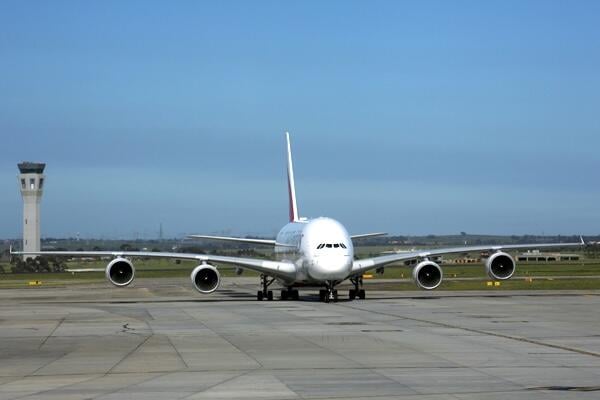
I have "Blogged a bit about the A380" including the Wing box problems. That is partially why most airlines are retiring them early. Also the plane is maintenance intensive, so unless your airline is supported by your government which a lot of them are, but the American carriers aren't although "Pan Am" was the closest to a "Flag Carrier" the United States had.
LYON—The European Union Aviation Safety Agency (EASA) has published another airworthiness directive (AD) aimed at the wing spars on some Airbus A380s, this time expanding the number of aircraft that need urgent checks.
The AD is the latest in a series that began in 2023 and later extended inspection requirements to the entire fleet, before making them more urgent and detailed on a limited number of aircraft. At issue is the structural integrity of the wing. As a starting point, a phenomenon called hydrogen embrittlement was identified as the cause of accelerated crack development in certain wing spars of A380s that had been stored for extended periods of time.
Since the previous AD, released in June, EASA determined that eight additional aircraft may be affected by the same potential unsafe condition, hence the updated inspection requirements. In the new AD, EASA lists a total of 24 A380s—22 operated by Emirates, one by Etihad Airways and one by Qantas, according to Aviation Week Fleet Discovery.
The new AD, effective Nov. 18, supersedes the June AD and is an interim action, EASA says. Depending on the serial number, checks must be conducted before the next flight, within 25 flight cycles or, for the eight additional aircraft, before Jan. 31, 2027. The inspections are focused on the wing mid spars.
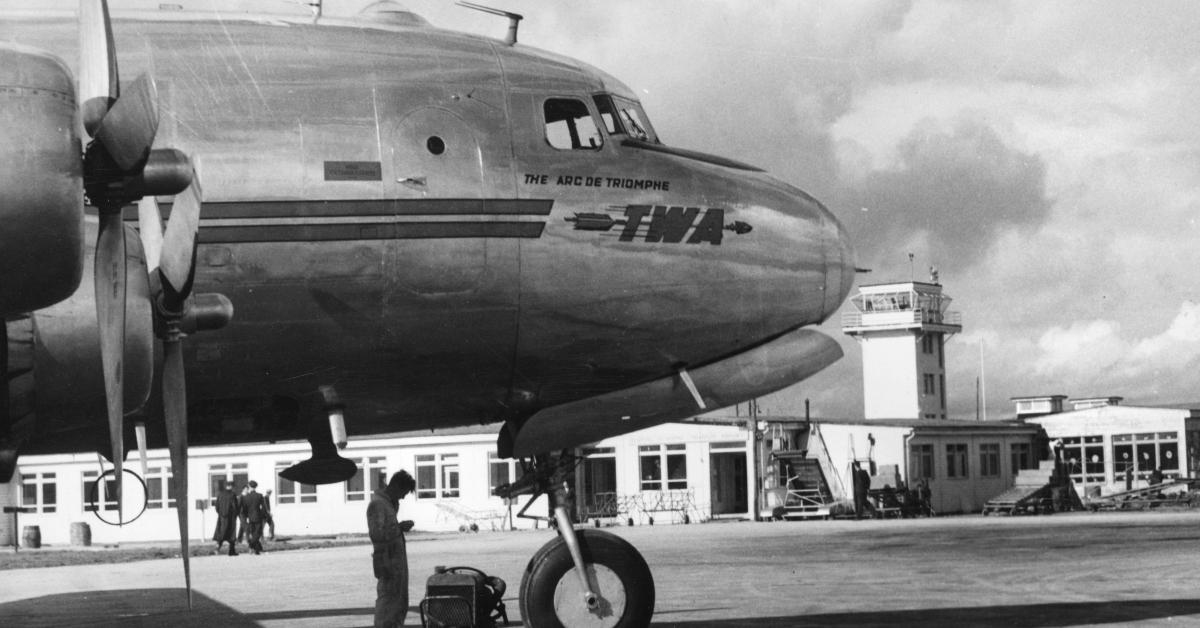
What prompted this post? Well Yesterday I was part of an "Honor Guard" my employer does for all Veteran remains that transition at the ATL hub. we render honors, it is a respect thing, I have been doing this for about 6 years now. Well anyway, we were on the tarmac and I happen to see this "Taxi" by...
It caught my by surprise, and I quickly whipped out my camera/phone and took a picture of her. I thought it was really neat from a nostalgia standpoint. And yes I did a bit of research, American bought out TWA assets during her last bankruptcy.
Trans World Airlines (TWA) used to be one of the largest airlines in the country and a pioneer in commercial passenger travel. What happened to TWA?
Deregulation of the airline industry, several accidents, shoddy management, and three bankruptcies led to the demise of TWA. The airline was sold to American Airlines in January 2001, after filing for its third bankruptcy, and eventually dissolved.
Source: Getty Images
Billionaire Howard Hughes used to own TWA.
TWA got its start in 1930 with the merger of mail carrier airlines Transcontinental Air Transport and Western Air Express. The airline's original name was Transcontinental & Western Air, and it changed to Trans World Airlines in 1950.
In 1939, eccentric billionaire Howard Hughes bought TWA. Hughes owned the airline for 27 years, and he's credited with expanding TWA's international service into Europe, the Middle East, and Asia.
Despite Hughes' wealth, TWA struggled financially because banks wouldn't lend to the airline while Hughes was at the helm. In 1960, when TWA was facing bankruptcy, Hughes gave up control of the airline. A few years after Hughes' departure, TWA went from reporting a net loss of $38.7 million in 1961 to a net profit of over $50 million in 1965.
TWA grew in the 1960s.
The 1960s were a good time for TWA. It became the first airline to introduce in-flight movies and acquired the Hilton hotel chain and Century 21 real estate company. By 1969, TWA became the top transatlantic airline globally and beat out rival Pan Am.
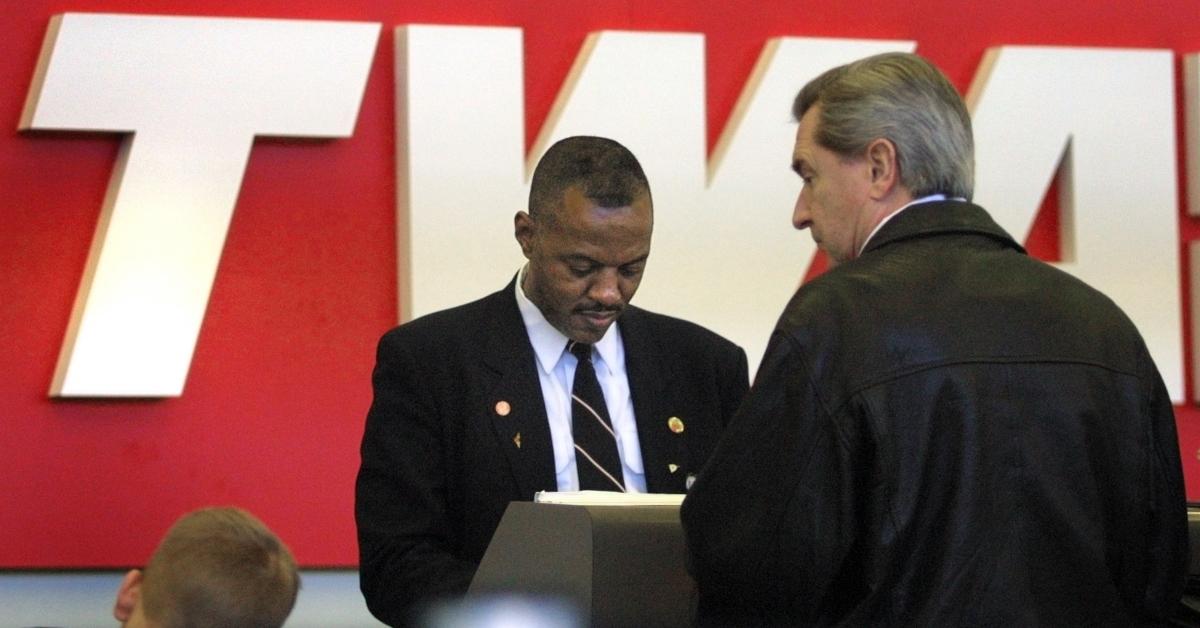
Deregulation hit the airline industry hard.
TWA was on a high when the 1978 Airline Deregulation Act threatened to put a dent in the airline's success. Deregulation in the airline industry caused TWA to consolidate its routes around its largest hub at St. Louis Lambert International Airport.
"Deregulation set fire to the industry," former TWA executive Jerry Cosley told St. Louis Magazine in 2006. "Every carrier had the same problem then as now, and nobody in the industry has yet solved the riddle: How do you compete while effectively managing your costs? The fixed-cost burden—labor, leases, fuel, all variables that management cannot control—ate us alive."
Source: Getty Images
A corporate takeover was the beginning of the end for TWA.
Many people think that TWA's real downfall can be attributed to the corporate takeover by financier Carl Icahn in 1985. Icahn was able to gain majority control over the airline after TWA employees objected to a sale to Texas Air Corporation, whose owner was a known union buster.
Icahn had a reputation for buying and breaking up companies, which he eventually did with TWA. The first nail Icahn put in the coffin for TWA was taking the company private in 1988. Then, in 1991, he sold TWA's London routes to American Airlines for $445 million.
"It became more and more apparent that Carl was not interested in growing the airline but in using TWA as a financial vehicle to acquire wealth for himself," former TWA pilot Jeff Darnall told St. Louis Magazine.
In 1992, TWA was forced to file for bankruptcy and Icahn was ousted from the airline a year later. However, he wasn't done damaging TWA. When Icahn left, he arranged to have the airline give his company, Karabu Corp., tickets at a 45 percent discount off regular fares. The "Karabu deal" reportedly cost TWA an estimated $150 million annually. In 1995, the airline filed for bankruptcy a second time.
TWA had 84 accidents over the years.
TWA's history of accidents and incidents also played a part in the airline's demise. Over the years it was in business, TWA aircraft were involved in about 84 incidents. The first airline accident to gain media coverage was the 1942 crash of a plane carrying actress Carole Lombard. Lombard, her mother, and 20 other passengers were killed.
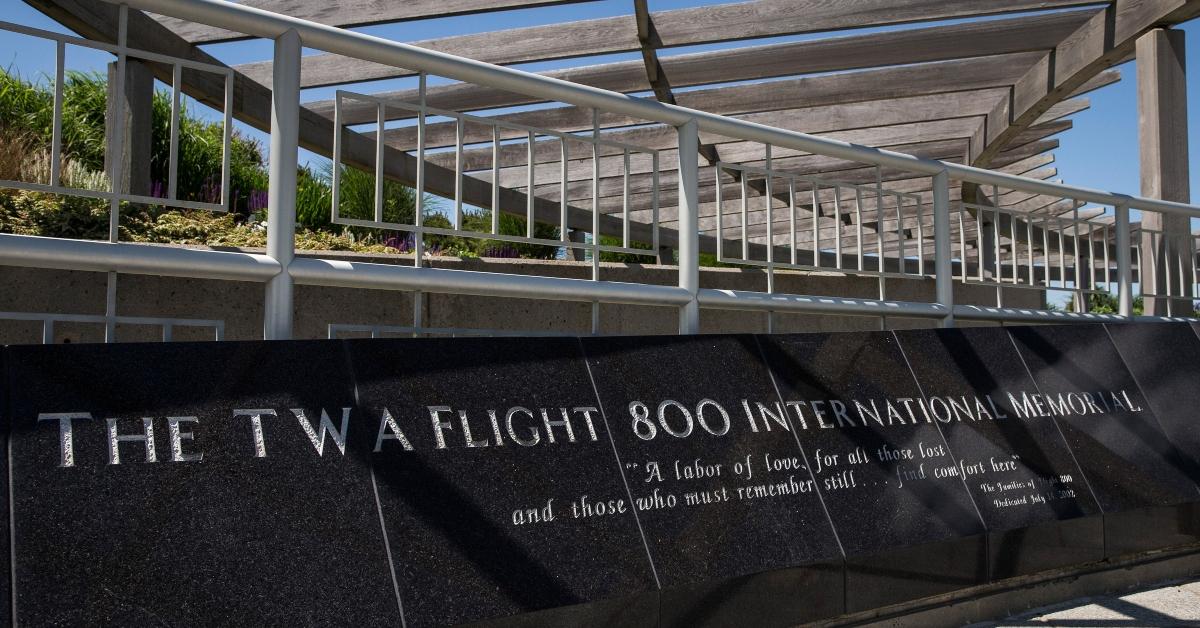
The worst accident was in 1996 when Flight 800 exploded over the Atlantic Ocean on a flight to Paris. All 230 people on board were killed in the explosion, which was caused by a spark from exposed wiring. TWA was scrutinized for having one of the oldest fleets in the airline industry.
Source: Getty Images
TWA's last flight was in December 2001.
TWA never fully recovered from the negative attention after the Flight 800 accident. In January 2001, the airline filed for bankruptcy again. American Airlines bought TWA and continued to operate it under its existing name for a while. However, the Sept. 11 terrorist attacks in 2001 hit the airline industry hard and TWA officially dissolved. TWA's last official flight was in December 2001.
I get reports of incidents of Commercial Aircraft incidents and accidents from 3rd party sources, I believe English from the spelling and the sentence structure. But this one raised eyebrows. I betcha the Iranians are behind this one hoping the snare a airliner full of Israeli's, can you imagine the propaganda value, but of course it wouldn't be the Iranians, it would be the "rebels" in Somalia or the Houthi's with their "QUD's" advisors. They would use them to try to get Bebi to back off the Gaza operation, especially since most of the hostages they seized in October 7th that are still in the hands of Hamas are most likely dead and Israel is after vengeance, and a whole new set of hostages would change the dynamics. This is why most of the western based airlines are avoiding the area because of crap like this, and the American carriers won't go anywhere near this area.
An El Al Boeing 787-9, registration 4X-EDJ performing flight LY-88 from Phuket (Thailand) to Tel Aviv (Israel), was enroute at FL400 over Somalia when the crew received instructions via ATC frequency that were in conflict with the flight plan. The crew ignored the instructions, switched to a different communication method and continued to Tel Aviv for a safe landing about 3.5 hours later.
The airline reported a "hostile elements" attempted to take over communication with the aircraft on Saturday (Feb 17th) night and divert it from its destination. This had been the second such incident in the area. Crews have been informed about frequent communication interruptions in that area and frequency and have received instructions of how to handle the flight professionally when this happens.
The four US majors—American Airlines, Delta Air Lines, United Airlines and Southwest Airlines—continue to dominate the world’s airline rankings by fleet size. Only China Eastern comes closest to these four but is still a distant fifth with 581 aircraft in service versus American’s 1,157.
American’s huge size comprises well over 250 regional aircraft, but also very large numbers of narrowbodies and over 100 widebodies, making it also the most diversified fleet.
Looking ahead via the number of aircraft on order gives a glimpse into how this size-by-fleet dynamic could change over the next 10 to 20 years. US orders will mostly be about replacement, while airlines in emerging and fast-growing markets like India have recently placed very large orders that are pegged against growth
Page 1
American Airlines
Aircraft
In service
Not in service
On order
A319-100
125
8
A320-200
44
4
A321-200
209
8
A321-200neo
69
1
54
A330-200
15
737 MAX 8
42
0
88
737-800
284
20
757-200
6
777-200ER
44
3
777-300ER
18
2
787-8
31
3
3
787-9
20
2
30
CRJ700
38
23
CRJ900
67
6
E170
10
4
E175
92
3
ERJ145
64
43
MD-83
24
TOTAL
1157
175
175
Delta Air Lines
Aircraft
In service
Not in service
On order
A220-100
43
2
A220-300
15
59
A319-100
54
3
A320-200
58
3
A321-200
125
2
A321-200neo
26
129
A330-200
9
2
A330-300
27
4
A330-900
20
1
17
A350-900
23
5
16
717-200
62
20
737 MAX 10
100
737-800
73
4
737-900ER
141
22
757-200
90
21
757-300
15
1
767-300ER
42
3
767-400ER
20
1
CRJ200
6
41
CRJ700
8
10
CRJ900
112
15
Total
969
160
321
United Airlines
Aircraft
In service
Not in service
On order
A319-100
71
12
A320-200
90
9
A321-200neo
120
A350-900
45
737 MAX 8
46
87
737 MAX 9
55
1
28
737 MAX 10
294
737-700
37
3
737-800
131
10
737-900
12
737-900ER
125
11
757-200
31
9
757-300
17
4
767-300ER
31
6
767-400ER
10
6
777-200
16
3
777-200ER
49
6
777-300ER
18
4
787-8
12
787-9
35
3
100
787-10
20
1
7
CRJ700
7
Total
806
95
681
Fleet data current as of April 21, 2023
Source: Aviation Week Intelligence Network and Fleet Data Services
Southwest Airlines
Aircraft
In service
Not in service
On order
737 MAX 7
230
737 MAX 8
167
3
173
737-700
390
26
10
737-800
200
7
1
Total
757
36
414
China Eastern Airlines
Aircraft
In service
Not in service
On order
A319-100
33
2
A320-200
162
17
A320-200neo
91
4
33
A321-200
72
5
A321-200neo
68
A330-200
27
3
A330-300
21
2
A350-900
15
1
4
737 MAX 8
1
2
7
737-700
33
2
737-800
104
4
777-300ER
19
1
787-9
3
1
ARJ21
18
C919
1
4
Total
581
44
135
Fleet data current as of April 21, 2023
Source: Aviation Week Intelligence Network Fleet Data Services