I remembered watching this movie for the first time in the barracks in Germany where I was stationed. It was 1988 and someone had gone to the Video store near Nellingen Barracks and rented this movie. We were blown away by the portrayal of the sub. It was totally different than the movies we had seen before. The movies we had seen were American movies and they were based in the pacific and they were made during the war and shortly afterwards.
My Copy of the movie in DVD.
The only movie that I like better was "The Enemy Below" but that is another story.
“We all wanted the boat to be successful and to sink as much as possible, regardless of our losses,”
The myth of U-96 lives on to this day. Only a single living
witness knows the truth of what happened, such was the danger of life on
a Nazi submarine during the Second World War. At 103 years old,
Friedrich Grade is the last living survivor of the crew of this
legendary submarine.
His experience would have been useful material for the traveling war correspondent Lothar-Günther Buchheim’s novel Das Boot that was published in 1973 and which inspired Wolfgang Petersen’s feature film bearing the same name in 1981. Caption:
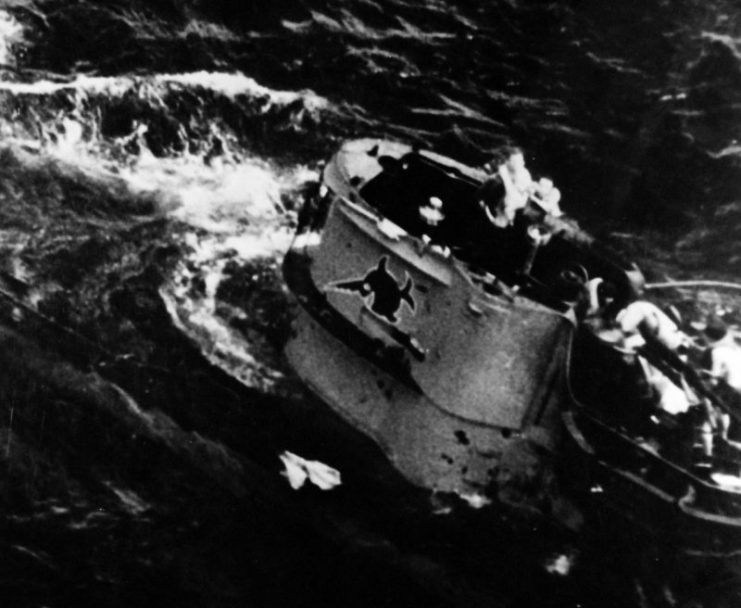
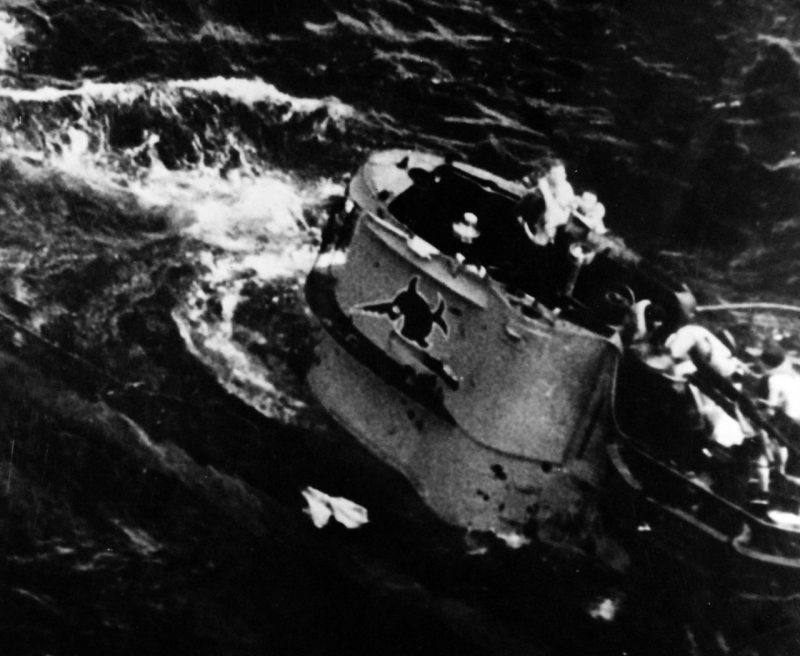
Air Attacks on German U-boats, WWII. Crew of German U-boat, U-664,
prepare to go over side of ship during attack by two Avenger aircraft
from USS Card (CVE-11), August 9, 1943. Note, the laughing sawfish
insignia on the conning tower of the 9th U-boat Flotilla. Incident
#3992. Official U.S. Navy Photograph, now in the collections of the
National Archives. (2015/8/18
Grade was offered a role in the making of the movie, but instead, he
chose to stay on the sidelines. His valuable knowledge, and, more
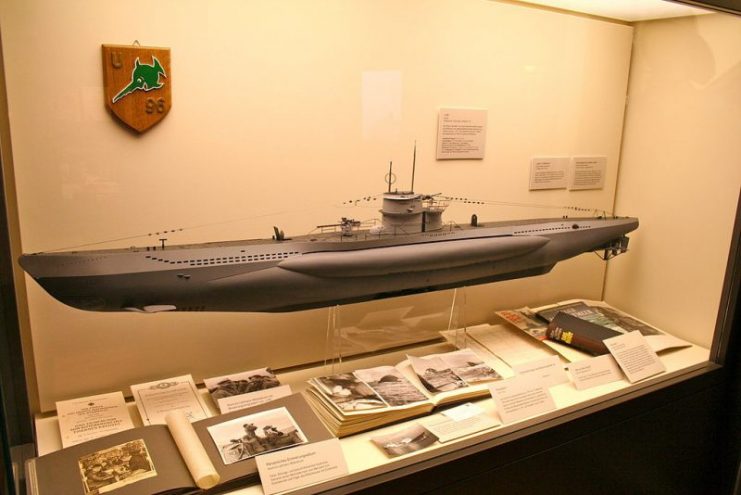
importantly, his journal, would remain a secret for many more years. Scale model of U-96.
In the early years of WW2, the success of German U-boats was initially very impressive.
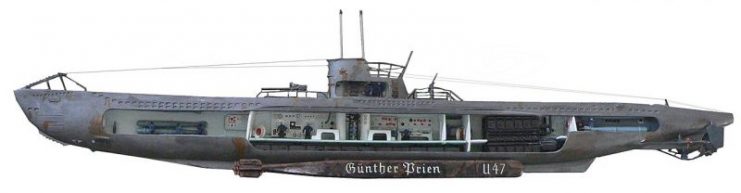
One example is that of U-47, under the command of Günther
Prien. The sub stealthily penetrated the British naval base at Scapa
Flow during the night of October 13/14, 1939. It launched a torpedo,
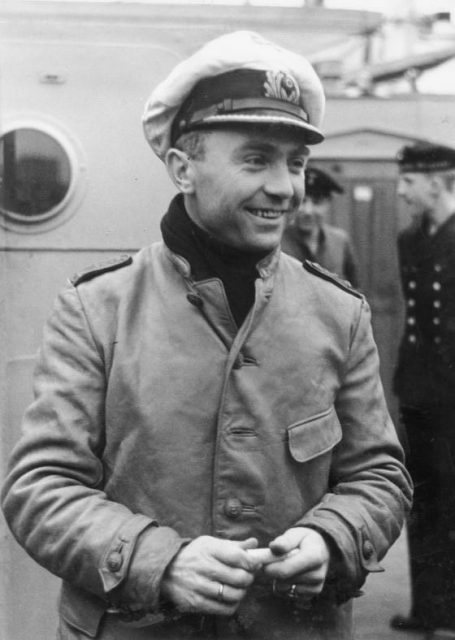
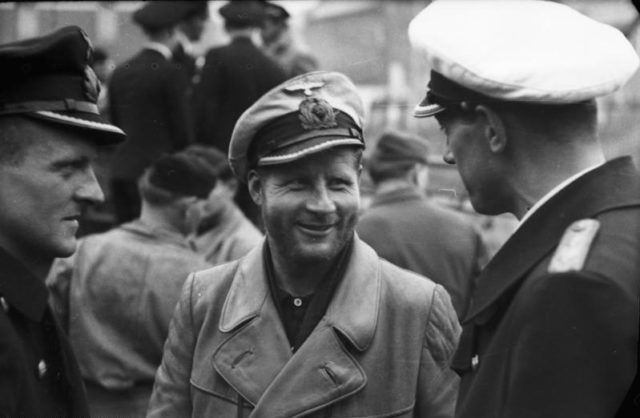
sinking the British battleship Royal Oak, then left the port unmolested. Kriegsmarine U-boat commander Günther Prien.
HMS Royal Oak floundered, and 833 crew members perished.
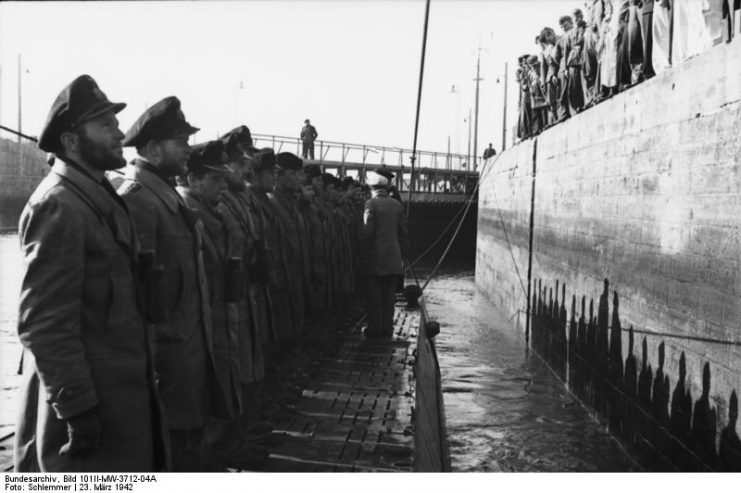
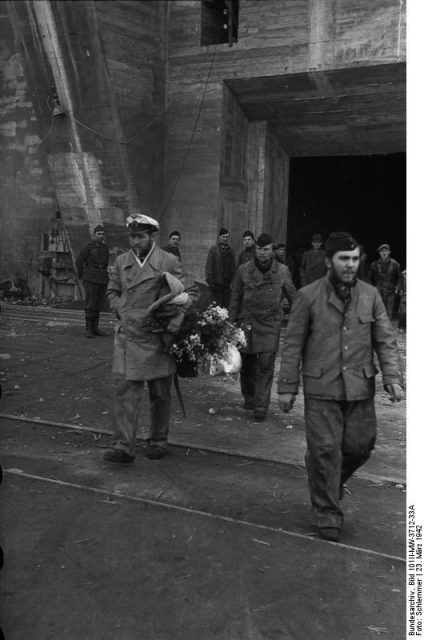
Prien and his crew were celebrated as heroes by Nazi propaganda.
HMS Royal Oak
Prien
even spoke at the Berlin Sports Palace and was photographed with Adolf
Hitler. Magazines printed stories with the families of the German
submarine commanders.
Actually, the Kriegsmarine (German Navy) had very little to oppose
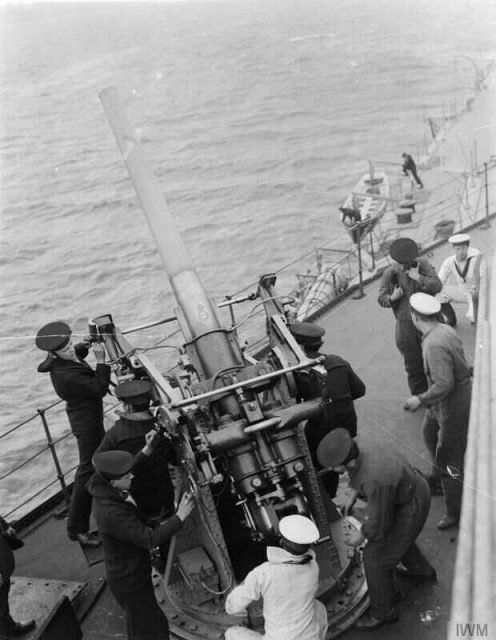
the formidable Royal Navy, but their U-boats were enormously successful. A 3 inch anti-aircraft gun in action on board the British battleship HMS Royal Oak
Massive submarine bunkers popped up all along the Norwegian and
French coasts. In a short time, the submarine fleet had sunk Allied
merchant ships amounting to 4.5 million gross registered tons. Great
Britain’s supply of military equipment and raw materials was at the
mercy of these Nazi Wolf Packs. A model of German Submarine U-47 viewed from the side.
U-96 entered service in September 1940. In December of that same
year, Friedrich Grade joined the crew as Chief Engineer. The famed
U-Boat departed on 11 missions, sinking at least 28 ships and causing
about 1,300 fatalities until early 1943.
“An indescribably beautiful feeling, from a distance three torpedoes = three hits,” Grade noted on April 28, 1941, in his diary. U-96 entering St. Nazaire, crew on deck.
If these words had been discovered, it would have been the end for
Grade for breach of secrecy. However, not even Grade’s wife knew about
his journal. It remained hidden in the attic for 75 years, collecting
dust.
That day, U-96 sank two tankers and a steamer, causing 60
fatalities. “We all wanted the boat to be successful and to sink as much
as possible, regardless of our losses,” said Grade in a TV interview.
Nevertheless, he emphasized: “We were not animated by heroism or any
other strange thoughts.” Captain Heinrich Lehmann-Willenbrock, commander of U-96.Photo:
Grade also explained in his journal what it was like to live on U-96
where there were 45 men crowded into confined spaces and the hygienic
conditions were catastrophic. “The air stinks of diesel and is
alternately hot, cold and damp. Clothes are almost always stuck to the
body.” Positiv: “St. Nazaire”, März 1942, U 96, Kptlt. Lehmann-Willenbrock.
"Das Boot" the convoy hunt
Klaus Wennemann acts as the nameless chief engineer (“LI” for short)
in Wolfgang Petersen’s movie. It was Wennemann’s breakthrough role as an
actor. Grade thought that the resemblance with himself was excellent. Film set of Das Boot at the Bavaria Film Studios
Only the vulgar tone between the protagonists as portrayed by the
author Buchheim, who passed away in 2007, bothered Grade. He never liked
the man, who joined the crew of U-96 in the autumn of 1941 to take photographs of the U-boat in action. Film set of Das Boot at the Bavaria Film Studios.Photo:
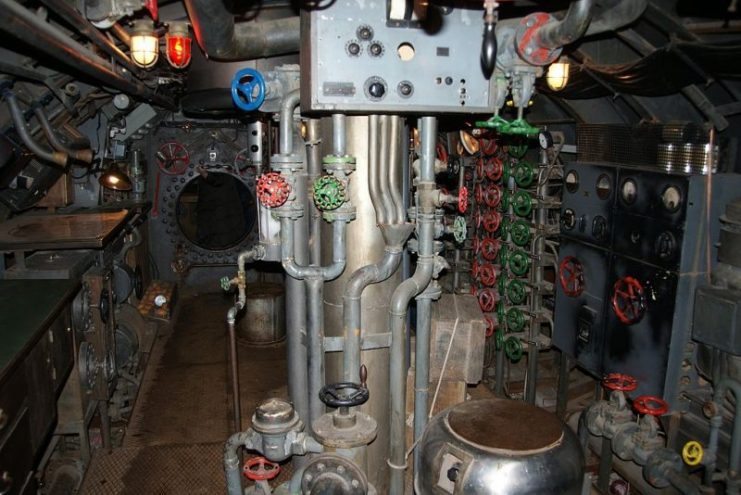
The movie does an outstanding job of showing the grubbiness of the
men’s attire and appearance. Seeing Jürgen Prochnow, the German actor
playing the submarine commandant, with his greasy dark beard and dirty
shirt is an excellent portrayal of what the crew might have looked like. Film set of Das Boot at the Bavaria Film Studios.Photo:
Having said that, the film mainly focuses on scenes that involve
action. Like, for example, the torpedoing of a merchant ship and the
ensuing flight from the escort destroyer. It is a scene that lasts for
many minutes and illustrates the sheer fright of the crew suffering
under a heavy barrage of depth charges. Film set of Das Boot at the Bavaria Film Studios.Photo:
The audience cannot help but empathize with the crew of U-96
when the submarine shudders at every explosion. The destroyer is
relentless. It never stops its search, harassing the Germans that are
the heroes of the film in this particular moment.
Then comes the silence when the explosions stop. Water is leaking
from up above, the sonar pings that had harassed the submarine are no
more. The men of U-96 wait and wait until they finally surface, revealing an empty sea. They have survived. Film set of Das Boot at the Bavaria Film Studios.Photo:
But life on a German U-boat during the Second World War was not all about the relentless pursuit of enemy destroyers. Film set of Das Boot at the Bavaria Film Studios.Photo:
For the most part, the crew pursued a life of extreme monotony
consisting of equipment maintenance, checking the torpedo weaponry,
general upkeep activities, and other essential functions that maintained
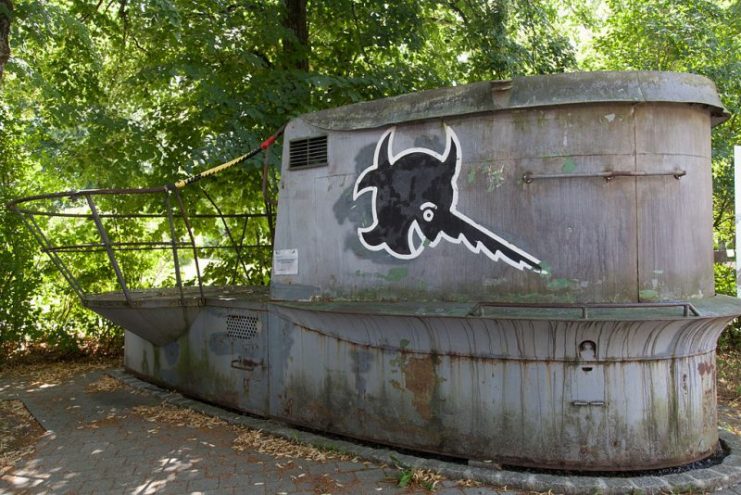
discipline and kept the men alive for as long as possible. Bavaria Filmstadt, Munich, Bavaria, Germany.
In the end, Das Boot was nominated for six Academy Awards
with the director, Wolfgang Petersen, winning the accolade as Best
Director and Best Adapted Screenplay. The movie was an excellent effort,
to say the least. Das Boot – submarine turret, Bavaria Filmstadt
A new German TV series produced for Sky Atlantic which is based on the book and the movie was released in November 2018.
Even though the series portrays the heroes of U-96 as more
refined and cleaner, it is still an entertaining take on this famous
story. Besides, it would be almost impossible to recreate Wolfgang
Petersen’s unnerving and grimy ambiance.
I had to delete and repost this..Apparently I had a problem with script or something....
This
blogpost started when I happened to catch a yahoo article on
Submarines....I started digging into it and I learned a lot. Now I want
to plan a trip to Bremerhaven in Germany and check the sub out. I got the photo's from "Google" and Wiki was very helpful.
On
May 4, 1945 one of the most advanced submarines in the world crept up
to a British Royal Navy cruiser. U-2511 was one of Germany’s new Type
XXI-class “wonder” submarines, and she was hunting for Allied ships.
She also represented one of the Third Reich’s biggest failures.
More
than 250 feet long and displacing 1,620 tons, the Type XXI packed six
hydraulically-reloaded torpedo tubes capable of firing more than 23
stored torpedoes. This arsenal could turn a convoy into sinking, burning
wreckage.
But
the real improvement lay deep inside the U-boat’s bowels. There rested
an advanced electric-drive engine that allowed the submersible to travel
underwater at significantly higher speeds—and for longer periods—than
any submarine that came before.
It
was perhaps the world’s first truly modern undersea warship. The
engine, which was radical for its time, allowed the boat to operate
primarily submerged. This is in contrast to other war-era submersibles,
which operated mainly on the surface and dived for short periods to
attack or escape.
But
for the fortunate crew of that British cruiser, the war in Europe had
just ended. Adolf Hitler shot himself on April 30. Word of the European
ceasefire had also just reached U-2511. The submarine did not fire its
torpedoes at the cruiser, instead merely carrying out a mock practice
attack.
Neither
U-2511 nor its sister ship U-3008 ever fired a torpedo in anger during
the war. But the Kriegsmarine—the Nazi navy—had put its hopes in winning
the naval war on these Type XXI U-boats.
Now in a recent article
for the quarterly Naval War College Review, Marcus Jones—an associate
professor at the U.S. Naval Academy—describes the submarine as one of
the preeminent examples of Germany’s “irrational faith in technology to
prevail in operationally or strategically complex and desperate
situations.”
Desperation fuels innovation
The
Type XXI project dates to 1943. Germany was well into a submarine war
in the Atlantic, and aimed to choke and starve the United Kingdom from
its colonies.
Germany’s
goal was to surround the British isles with hundreds of submarines,
preventing anything from getting in or out. Initially, this was
successful. In October 1942 alone, U-boats sank 56 ships … and that was
just in the passage between Iceland and Greenland.
But
these successes turned badly against Germany—and fast. By 1943, new
convoy tactics, radar and anti-submarine patrol planes caused serious
problems with Germany’s predominantly Type VII submarines.
Germany’s
existing submarines were now vulnerable to being detected and sunk in
huge numbers. Their electric engines—used when underwater and recharged
with diesel on the surface—were not capable of holding a charge lasting
more than a few hours.
And
they were slow. Really slow. Many convoys could simply outrun them. If
the Allies detected a sub lurking underwater, they could simply wait it
out. In May 1943 alone, the Allies destroyed 43 U-boats, or 25 percent
of Germany’s entire operational submarine strength.
At
this point, Hitler and Germany’s senior military commanders realized
that “no amount of willpower or doctrinal ingenuity on the basis of
existing boat types could overcome the collective effects of the
countermeasures the Allies employed so well by 1943,” Jones writes.
The result was building a new kind of submarine that—in theory—would fundamentally change the nature of the war at sea.
Designed
by propulsion engineer Helmuth Walter, the Type XXI had a unique
figure-eight interior which allowed for a significantly larger electric
battery. It only had to surface rarely surface and recharge its battery
with conventional diesel fuel.
It
was also fast enough to keep up with convoys. It could run silent for
60 hours at five knots. It could also pick up the pace, traveling for an
hour and a half at a breakneck speed of 18 knots. By contrast the Type
VII could not travel faster than eight knots underwater—and then only
for short periods.
As
Jones points out, the new design also included “sensors,
countermeasures, and other devices understood to be indispensable in the
commerce war.” These devices included active radar and sonar and a more
advanced passive sonar to pick up the sounds of enemy ships.
But everything about the Type XXI was a mistake.
To
put it simply, it wasn’t a war-winning weapon. Worse for Germany, it
didn’t really do anything … and arguably hastened the Third Reich’s
defeat.
For
one, the submarines—only two were ever operational—suffered from
several technical problems that forced engineers to work overtime to
resolve. The hydraulic torpedo loading systems didn’t work at first. The
engines and steering systems were defective. This made the submarines
“decidedly less of a threat than originally foreseen,” Jones writes.
Germany
largely ironed out these problems. But even if the submarines had
worked perfectly at the outset, it’s unlikely they would have had much
of an effect on the outcome of the war.
This is because the submarines were tied to a losing strategy. And in 1945, German naval strategy was a hopeless cause.
Navies
expect their submarine commanders to operate independently. But a
mission as huge as stopping shipping across the Atlantic takes much more
than submarines. The Germans had a severe shortage of both maritime
patrol planes and air bases. In the harsh, rough seas and stormy weather
of the North Atlantic, this meant the Germans were limited by what they
could hear and see from their U-boats.
By comparison, Allied patrol planes were hunting them.
While
technologically advanced for its time, the Type XXI still existed
before the age of nuclear submarines, cruise missiles and nuclear-tipped
ballistic missiles.
These
strategic weapons turned Cold War submarines into the truly decisive
platforms they are today. Submarines during World War II were used
mainly for defending friendly coastlines, harassing enemy warships and
interdicting enemy convoys. The Type XXI was meant to carry out these
same missions, but simply more effectively.
But
in all three areas, Germany had already lost. Germany’s coastlines were
under regular attack by Allied bombers. Allied ground armies were
already closing in on the Rhine. And Allied convoys were so numerous,
Germany would have to build its new submarines by the hundreds to make
much of a dent. This was not physically possible.
As
Germany’s ports were no longer secure, engineers had to construct the
submarines in sections and transport them on a complex system of cranes
and barges to their launch points. This made fixing problems—expected on
new ship designs—much harder to fix.
Another
problem is that putting too much emphasis on wonder weapons distracts
from practical war efforts. In terms of steel committed to the project,
“the program cost the war effort some five thousand tanks, a very
consequential figure, and could be said to have hastened the defeat of
Germany on the Eastern Front,” Jones writes.
This mentality amounted to a “disease”
in German war planning, Jones argues. From V1 and V2 rockets,
super-heavy Tiger II tanks and jet fighters, Germany built radical
weapons that would fail to turn the tide against an inevitable defeat
brought about by larger economic, political and technological
disadvantages.
As
the war turned against Berlin, the Nazi commanders accelerated
development of new weapons, which distracted from other areas. Then the
war worsened, accelerating new weapon development further in a
perverted, vicious cycle.
However,
the Type XXI would last through the Cold War. Some were used for target
practice. Others were captured and commissioned into the Soviet and
French navies. The only surviving vessel of its class today is the
Wilhelm Bauer, which the modern Germany navy converted into a research
vessel. It’s now a museum ship in Bremerhaven.
But
mainly, the Type XXI provides several lessons in how technology—while
important—doesn’t alone win wars. It’s also a lesson in how the
fanatical pursuit of advanced weapons can make winning wars a lot
harder.
This was the first U-boat to be constructed of modular components to
allow for the manufacture of the various components in different
factories and subsequent assembly at the shipyard.
Between 1943 and 1945, 118 boats were assembled by Blohm & Voss of Hamburg, AG Weser of Bremen and Schichau-Werke of Danzig.
Each hull was constructed from nine prefabricated sections with final
assembly at the shipyards. This new method allowed for a hypothetical
construction time of less than six months per vessel, but in practice
all the assembled U-boats were plagued with severe quality problems that
required extensive post-production work and time to rectify.
One of the reasons for these shortcomings was that sections were made
by companies having little experience with shipbuilding, after a
decision by Albert Speer.
As a result, of 118 Type XXIs constructed, only four were fit for
combat before the Second World War ended in Europe. Of these, only two
conducted combat patrols and neither sank any Allied ships It was planned that final assembly of Type XXI boats would eventually be carried out in the Valentin submarine pens, a massive, bomb–hardened concrete bunker built at the small port of Farge,
near Bremen.
The pens were constructed between 1943 and 1945, using about 10,000
concentration camp prisoners and prisoners of war as forced labor The
facility was 90% completed when, during March 1945, it was heavily
damaged by Allied bombing with Grand Slam "earthquake" bombs and abandoned. A few weeks later the area was captured by the British Army. The Type XXI design directly influenced advanced post-war submarines,the Greater Underwater Propulsion Power Program (GUPPY) improvements to the United StatesGato, Balao, and Tench-class submarines, and the Soviet submarine projects designated Whiskey, Zuluand Romeo by NATO. The Chinese built Romeo-class submarines, and subsequent Ming class, were based on Soviet blueprints.
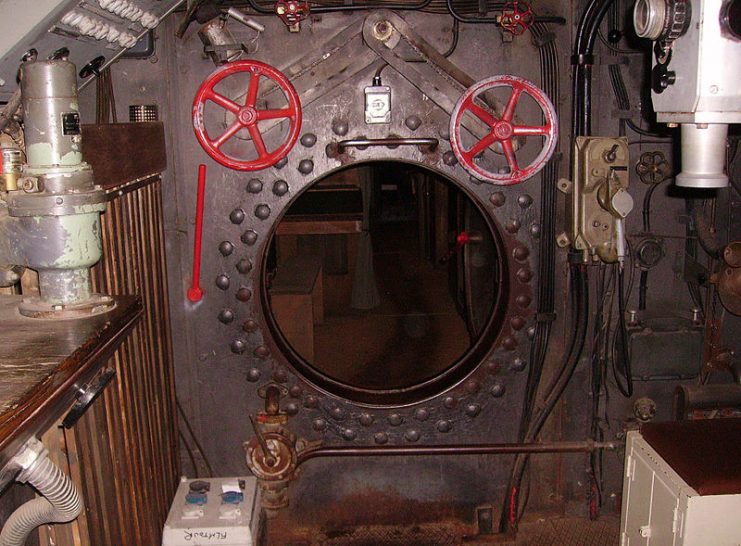
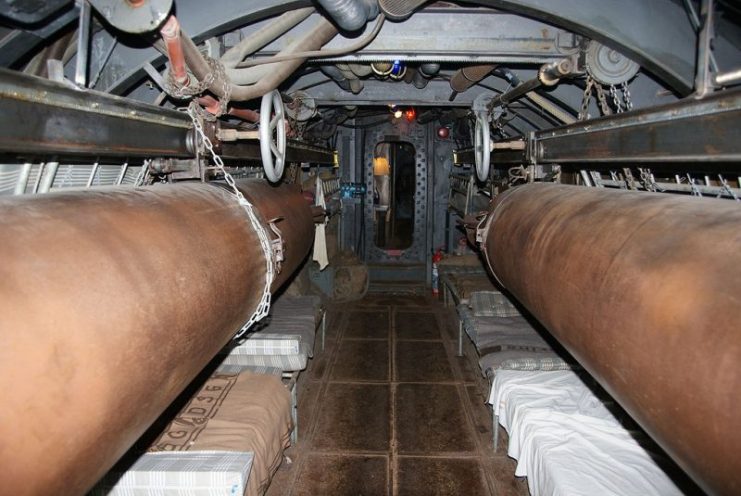
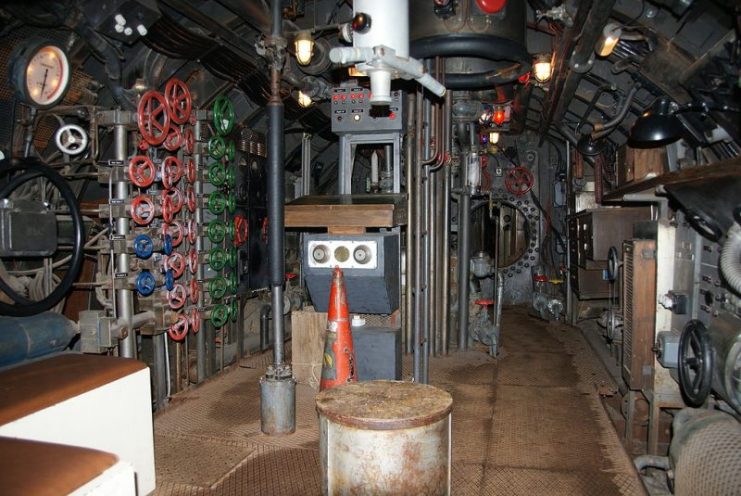
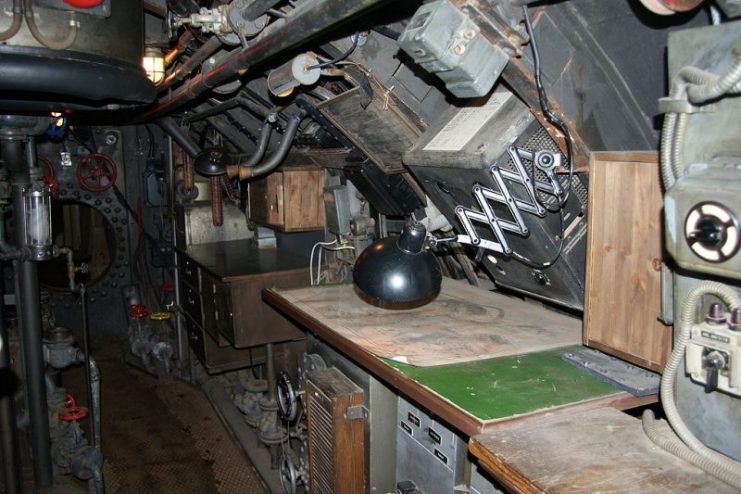
The only boat to survive intact is Wilhelm Bauer (ex-U-2540).
Records indicate that this sub was scuttled by the crew in 1945,
salvaged in 1957 and refurbished for use by the West German Bundesmarine
until retirement in 1983. It was then modified to appear in wartime
configuration for exhibit purposes.
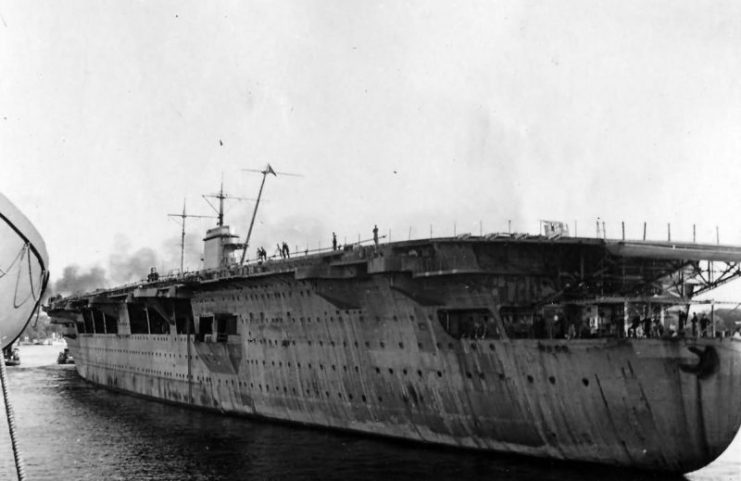
I have posted before about WWII Germany's only Aircraft Carrier. I had blogged about that carrier back in 2016. Now this is a "What if" if Germany had gotten their carriers into the war especially after seeing the effect that carriers were having on the war in the Pacific.
It might be easy to throw out a discernible “no” when asking such a
historical “what if” given that we know the real outcome. What if the
Germans developed the atomic bomb? What if America was ready for Pearl
Harbor? What if the D-Day landings had failed? Yet, military history
captures the imagination in part, in that we get to live out events
beyond our own time in history.
The German military was feared for
many reasons in the 1930’s and 40’s, but the might of their aircraft
carriers was not one of them. Germany would produce only 2 aircraft
carriers, if you could actually call either a full production. Both
remained in port and neither would see service. Stern View of the Graf Zeppelin German Aircraft Carrier.Given
that we know the outcome without the carriers in action and that
outcome was less than favorable to the Germans, let’s consider the
alternative. Could Germany have won the battle of the Atlantic with
momentum on it’s side had the aircraft carriers been pressed into
service? Would allied shipping already in a state of fear over the
dreaded U-boat have been given more problems than they could solve with
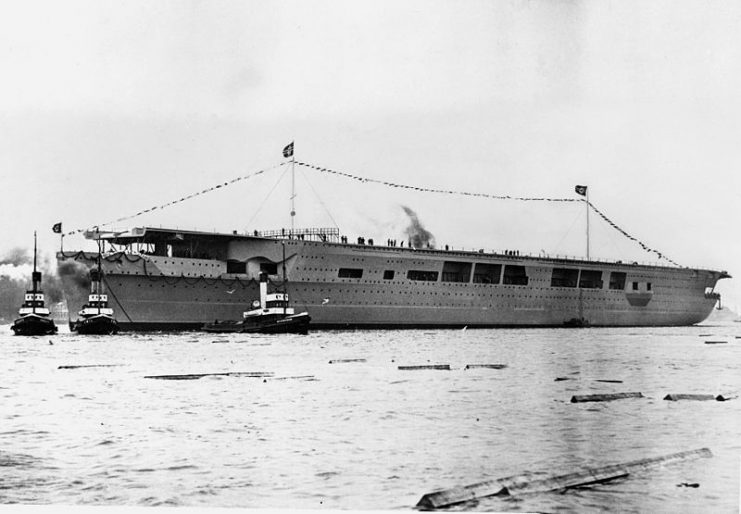
the addition of air power at sea? Graf Zeppelin at her launch December 1938It
can be said of war that the military leadership’s primary mission is to
give the enemy more problems than they can solve. It is the premise
behind combined arms exercises that bring to bear the full spectrum of
military power. Air, land, and sea converge to create these myriads of
problems for the enemy.
In that sense, it would be a discernible
yes that the presence of German aircraft carriers in the Atlantic would
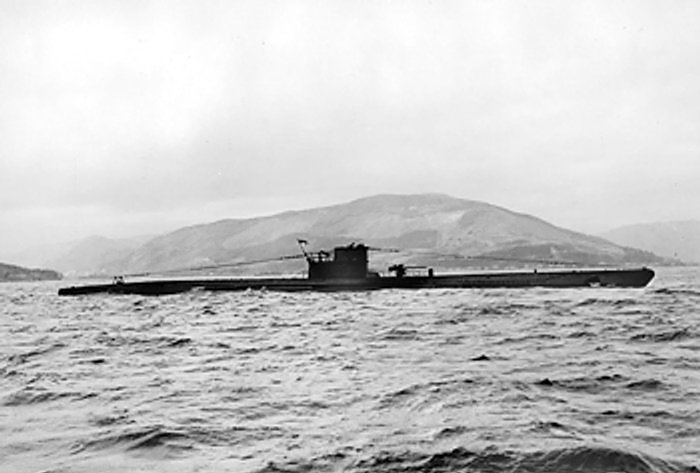
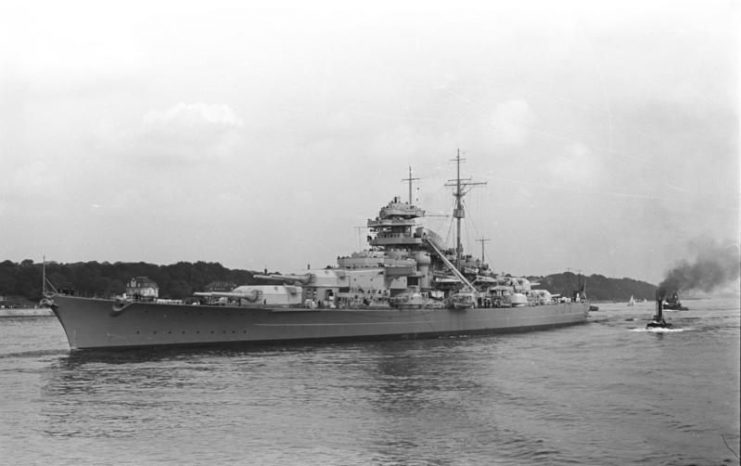
have created another problem for the allies. U-570 scourge of the sea to the allies during WW2Ponder the Bismarck roaming the open seas among herds of wolfpack U-boats and the aircraft of the Graf Zeppelin soaring overhead. The Allied “problems” would now exist under, on the surface and above the sea.
The importance of aircraft carriers in the Pacific proved their
strategic and tactical value. It demonstrates with certainty that
Germany would have gained some strategic and tactical value had they put
completed carriers to sea. Would it have been enough to win the Battle
of the Atlantic? Bismarck in 1940. By Bundesarchiv, To
answer this question, one needs to discover the reason Germany decided
to forgo the full production of aircraft carriers in the first place. In
the 1930’s Germany did indeed put out a call for two aircraft carriers
the first of which would be the Graf Zeppelin launched on December 8, 1938.
The 2nd designated Flugzeugtrager B
would follow but would quickly find itself scrapped. Neither saw
functional service and the reason boiled down to a limit in resources
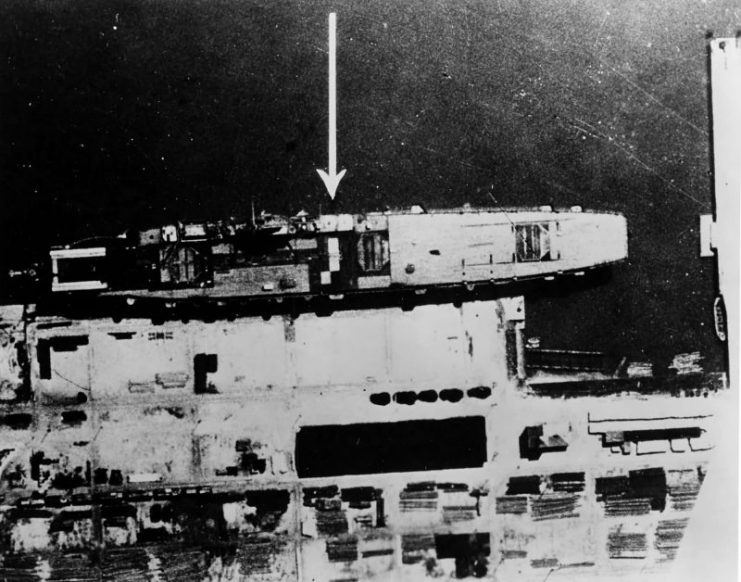
and a change in priorities. RAF reconnaissance photo showing Graf Zeppelin at Gotenhafen – 6 February 1942With Germany’s rapid advance on the ground throughout Europe there
was an emphasis placed on coastal guns and shore defenses. Moreover,
there was a reported shortage of anti-aircraft guns that would be
necessary to defend the ship.
As the war pressed on, a shortage of
pilots further stretched resources to the limits and by 1943 the new
head of the Kriegsmarine, Karl Donitz, ordered the program scrapped.
Whereas the presence of aircraft carriers in the Atlantic would have
indeed created a new problem for the Allies to solve, it would have most
certainly pulled resources from other parts of Germany’s losing war
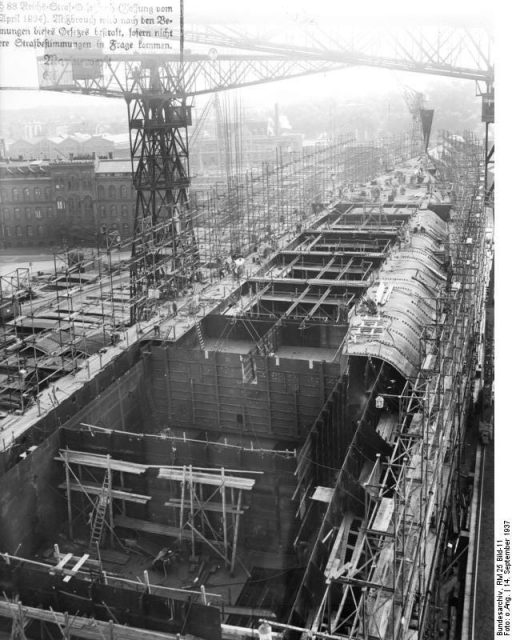
effort. Flugzeugträger B under construction. By Bundesarchiv
In the end, the quality of both the Graf Zeppelin and the Flugzeugtrager B
would have fallen far behind that of the Allied Navies. Unless one
hopes to imagine a fantastic scenario where Germany would have produced 5
to 8 carriers in a world where they lacked the resources to produce 2,
the point seems moot. By 1942, the Americans and Japanese were far ahead of the Germans in quality of their carriers and the numbers.
German aircraft carriers roaming the
Atlantic would have most certainly caused problems and won its fair
share of victories, but the fate of the war itself would have been
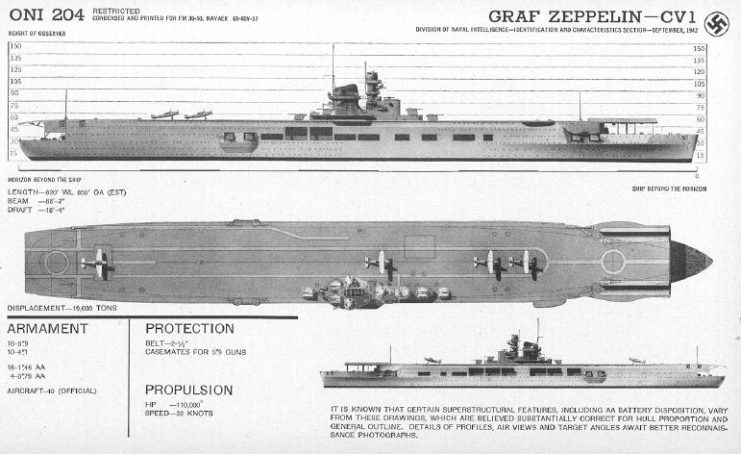
sealed. Drawing depicting the Graf ZeppelinIn the end, the Graf Zeppelin and the Flugzeugtrager B would have found companionship at the bottom of the Atlantic with the famed Bismarck.
To have won a battle is not to have won the war. When one considers the
Battle of the Atlantic as the sum of events from 1939 to 1945, it
doesn’t appear that the outcome would have been any different If Germany had hoped to compete in the Atlantic with carriers, 1938 was
far too late to have launched its first. The victory in this scenario
again goes to the Allies and modern divers would have two new ghost
ships in the Atlantic in which to explore
I know, I know...Why is an Army guy into Naval History, I don't know except it is an interest that I have had since Elementary school. Last year in August I had posted about the only German Aircraft carrier the DKM Graf Zeppelinand the fate of that ship. I honestly believed that if Hitler had waited until 1945, the Germans would have had a fleet to rival what Britain had, but Hitler rushed to war before the Wehrmacht was ready, due to luck and poor Alllied planning, the Germans were successful in the beginning.
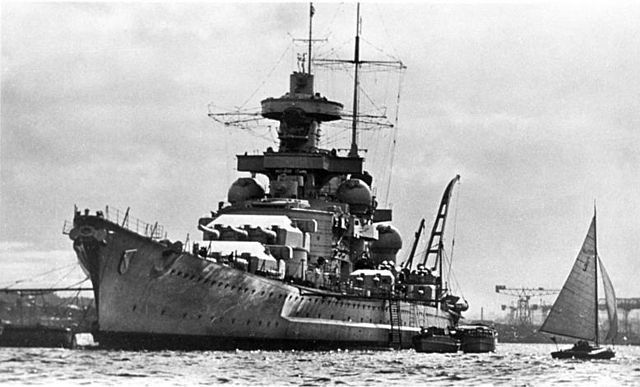
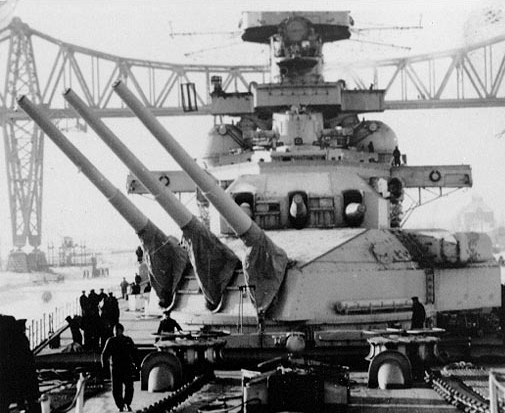
Scharnhorst and Gneisenau operated together for much of the early portion of World War II, including sorties into the Atlantic to raid British merchant shipping. During her first operation, Scharnhorst sank the auxiliary cruiser HMS Rawalpindi in a short engagement (November 1939). Scharnhorst and Gneisenau participated in Operation Weserübung (April–June 1940), the German invasion of Norway. During operations off Norway, the two ships engaged the battlecruiser S
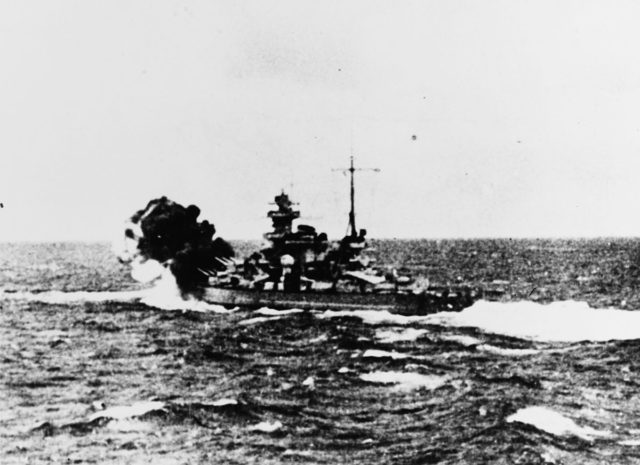
Scharnhorst firing against HMS Glorious.
HMS Renown and sank the aircraft carrierHMS Glorious as well as her escort destroyers Acasta and Ardent. In that engagement Scharnhorst achieved one of the longest-range naval gunfire hits in history.
It was wholly dark. In the sea north of Tromsø in Norway, the great German battleship Scharnhorst was on a mission to sink an Allied supply convoy bound for Russia.
Unknown
to the German command, the convoy’s British escort, led by Admiral Sir
Robert Burnett and Admiral Bruce Fraser, had successfully intercepted
the Scharnhorst’s radio communications. They were fully aware of the Scharnhorst’s plan to sink the convoy.
It
was the day after Christmas. On the north sea, December 26th, total
darkness reigned for most of the day. The British Admiral Fraser
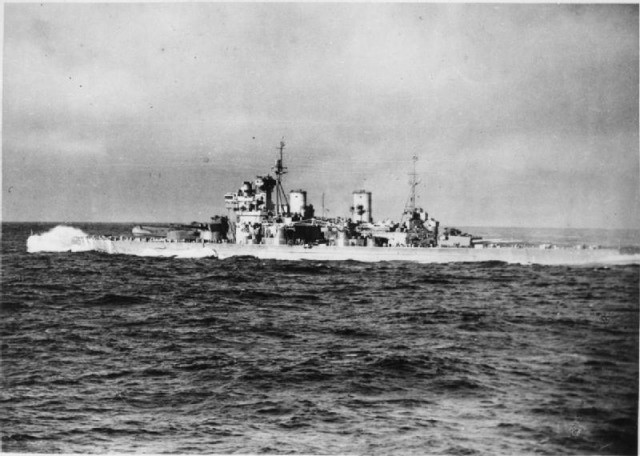
commanded from the HMS Duke of York, a powerful and heavily armed battleship. Supporting the Duke of York were the Cruiser Jamaica and four destroyers.
Admiral Burnett had three cruisers under his command, HMS Sheffield, HMS Belfast, and HMS Norfolk.
In preparation for the attack, Scharnhorst
had been placed in a position of readiness, on the path of the convoy.
Admiral Burnett was aware of her position and put his three ships
between the convoy and the expected direction of attack. Admiral Fraser,
meanwhile, maneuvered his command to the southwest of Scharnhorst’s position, to block her escape.
The Scharnhorst had was accompanied by five destroyers. Her commander, Konteradmiral Erich Bey, now arrayed these in a line in front of Scharnhorst, screening her as he prepared to engage the convoy. The order to go to battle stations barked out over the Scharnhorst’s loudspeakers, and her crew of almost two thousand men prepared for the assault.
Scharnhorst in port. Bundesarchiv – CC BY-SA 3.0 de
The
German command was completely unaware of the presence of the British
fleet. In an attempt to avoid detection, the radar systems on the Scharnhorst had been turned off. When the thunder of the Belfast’s first salvo tore through the darkness, it was a complete surprise. Minutes later, the Norfolk engaged. In this initial engagement, the Scharnhorst suffered two direct hits.
She
returns fire from the hindmost of her three massive gun turrets, but
with little effect. Her forward radar capability had been destroyed, and
she immediately increased her speed and attempted to disengage from the
British cruisers.
Scharnhorst in port during the winter of 1939–1940.
The
maneuver failed. British radar capability was well advanced in
comparison to Germany, and an hour after the first exchange of fire the Belfast had picked up Scharnhorst in a position to the northwest of the convoy. The three cruisers immediately closed with the Scharnhorst and began to fire.
Scharnhorst
had been equipped with two radar systems, one fore, one aft. The
forward radar was in pieces, but the aft radar picked up the British
ships, and Scharnhorst returned fire at their position from all three of her gun batteries. In the darkness, the cruiser Norfolk took two direct hits.
Another turn, another increase in speed. The Scharnhorst,
still intent on her mission, attempted again to escape the destroyers
and find the convoy. Admiral Burnett backed off with his damaged
cruisers but kept the Scharnhorst in the sights of his radar. Admiral Fraser began to move toward the rest of the fleet with the HMS Duke of York.
After some time searching unsuccessfully for her target, the Scharnhorst gave up the chase. The screen of destroyers was dismissed, and the Scharnhorst set course for her base in occupied Norway. But the British were not so easily put off.
Duke of York in the Arctic escorting a convoy.HMS Duke of York picked up the Scharnhorst on radar and began to follow her. Half an hour later Belfast
came within range and lit up the darkness with a volley of star shells.
Their glaring light showed up the great bulk of the German battleship,
alone now that her screen of destroyers had been sent back to port, and
the Duke of York immediately began the bombardment.
Within ten minutes of opening fire, the Scharnhorst’s forward gun turret was completely disabled. Within half an hour, the turret had taken two more direct hits. The Scharnhorst
was on fire, and the crew were forced to flood the forward magazine in a
desperate attempt to avoid a crippling explosion. The next hit punched
through the Scharnhorst on her starboard side and exploded in
the foremost of her three boiler rooms. Her engines now crippled and her
forward gun turret destroyed, the Scharnhorst began to flee.
In
the damaged boiler room, the crew worked frantically to repair the
damage. The repairs allowed her to increase her speed somewhat, and she
rained shell fire on the Duke of York from her aft gun battery as she made haste to escape the battle. The Duke of York‘s firing radar was damaged, and Admiral Fraser pulled his damaged ship back and gave the order to cease fire.
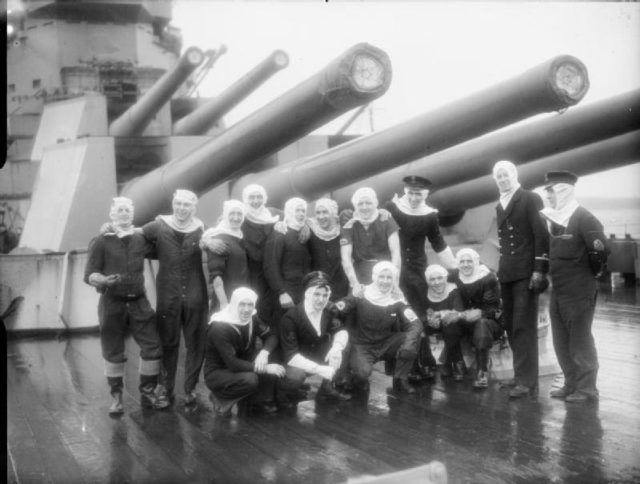
Members of HMS Duke of York‘s gun crews at Scapa Flow after the Battle of North Cape.Two
of Fraser’s four destroyers were ordered to close in for the kill, and
they did so, firing a volley of torpedoes after the limping Scharnhorst.
She took four direct hits along her length, and slowed to only twelve
knots, a fraction of her normal speed. She had put some distance between
her and the Duke of York, but seeing how the Scharnhorst was now placed, Admiral Fraser gave the order for his Battleship to close in again.
On the Scharnhorst,
the remaining crew were ordered to attempt the retrieval of ammunition
from the crippled forward turrets. There was an air of terror and
desperation as they ran back and forth, the aft gun turret being now
their only hope of self-defence against the onslaught of the British.
Their efforts were in vain. The cruisers Jamaica and Belfast closed ahead of the Duke of York, and their torpedoes had little difficulty finding their mark.
The Scharnhorst began to list to starboard. Admiral Fraser gave the order to withdraw some short distance, and at 19.45 hours the Scharnhorst’s
bows sank under the water. Steam and smoke gushed from the holes in her
armor as the freezing north sea poured in to claim her. She disappeared
under the waves.
In the darkness, the British ships moved in to attempt a rescue, but in all, less than forty of the Scharnhorst’s crew of 1968 were saved that night from the cold, black waters of the North Sea
HMS Belfast moored at the River Thames in London, she is a museum ship








 S