I have a book in my collection called The Pentovsky Papers , In this book the person had a low opinion of Nikita Khrushchev, as I recall it, he used the words "Wore the uniform as a potato sack". Nikita Khrushchev was sent to Stalingrad where Colonel Penkovsky was a Lt of mortermen at the time and Khrushchev was a political commissar who enforced Stalins order Order Number 227 of "no Retreat" and was quite brutal about it according to Lt Pentovsky.

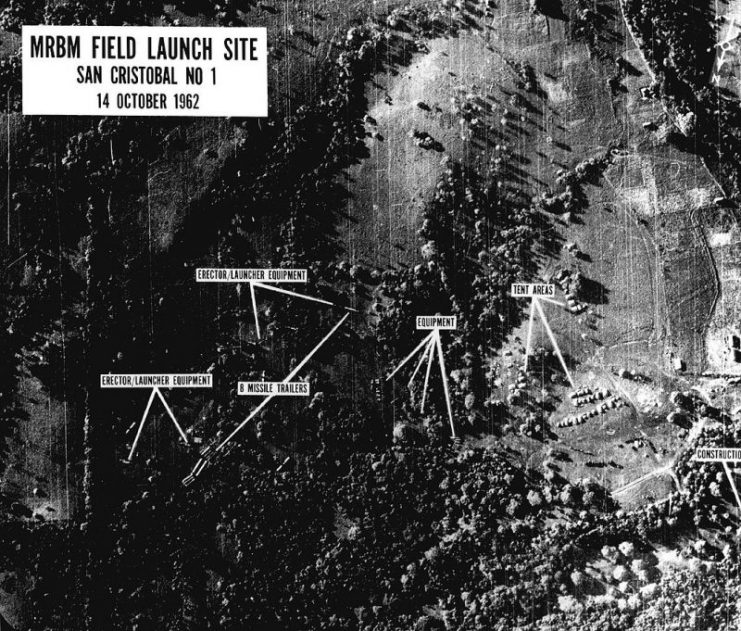
On a routine U-2 reconnaissance flight over Cuba, to see what sort of mischief Fidel Castro was up to, the plane’s cameras caught images of the construction of missile launch pads for offensive missiles.
In October of 1962, the world held its breath as two nuclear superpowers squared off. Was this going to be the beginning of World War three and a nuclear nightmare? Did Khrushchev really have the nuclear capability that Tass claimed he had, or was it just a bluff? Fortunately, through many backdoor meetings, the issue was resolved without a missile being launched.
There have been many books, articles and narratives that have been written that describe the events and the backdoor negotiations that resolved the issue. What was at issue was that Soviet Premier Nikita Khrushchev feared that the United States had a commanding arsenal of nuclear tipped missiles aimed at the Soviet Union. To even the odds Khrushchev developed a plan to place Soviet offensive missiles and technical support soldiers in Cuba.
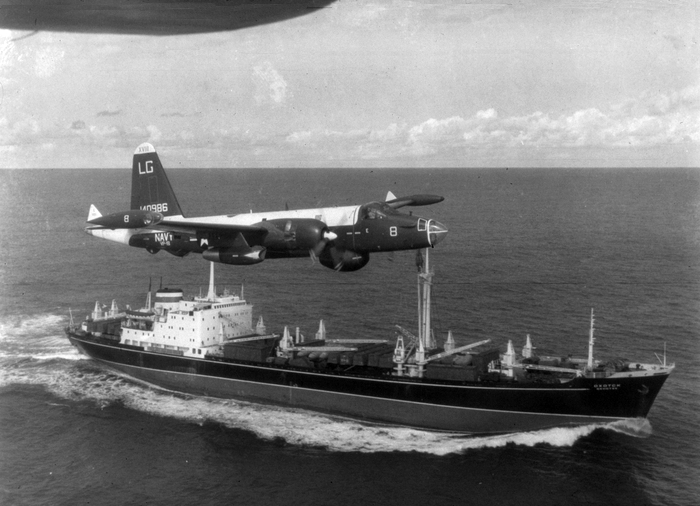
The ships that brought the weapons and support equipment carried false shipping documents of the cargo they carried which enable the Soviet and Cuban soldiers to get a jump start that would have in place alongside their defensive missiles offensive missiles all aimed at the United States.
Through many backdoor communications between Attorney General Robert Kennedy and Soviet Ambassador Anatoly Dobrynin, an agreement was forged to remove the Soviet missiles from Cuba and the United States at some future date would remove the 30 Jupiter-C missiles from Italy and the 15 Jupiter-C missiles from Turkey.
Khrushchev appeared too easily to back down and give up an advantage he supposedly had. If the Soviet Union was producing nuclear tipped missiles “like sausages” then he should have had a better bargaining chip. Only a few weeks earlier Tass reported that the Soviet Union had sufficient powerful rockets carrying nuclear warheads based within the Soviet Union that it did not need to search for sites beyond their borders. If the Soviet Union had such nuclear capability why did Khrushchev back down?

During World War Two, Joseph Stalin was anxious to get his hands on western weapons technology. His numerous T-34 tanks were winning the battlefield. But in aircraft the West’s technology was leaving the Soviet Union far behind. The incident that gave him any hope to catching up with western technology was the arrival of three B-29 bombers that had diverted to Vladivostok because of battle damage after a raid on Japan. Here was the golden opportunity to reverse engineer the planes and create the Soviet Union’s own version.
The first flight of the Tupolev TU-4 was on May 19, 1947. While Stalin now had a heavy bomber to carry the nuclear weapons that were being developed, he was still far behind the curve. The United States rolled out the massive intercontinental heavy bomber, the XB-36, on September 8, 1945. First flight was August 8, 1946, about ten months before the TU-4 flew. And while the TU-4 would have been classified as a heavy bomber in World War Two, its normal bomb load was usually 6 – 2205 lbs (13,230 lbs.) general-purpose bombs. In comparison the B-36 bomb load was 76,000 pounds. Stalin had a bomber that could possibly dominate Western Europe, but the TU-4 was becoming obsolete in comparison to the B-36. And any bombing mission against the United States would be a one-way trip since the TU-4 did not have the fuel capacity for a round trip and the Soviet Union did not have a long-range fighter escort to protect the bombers from American defensive fighters. The vaunted Mig-15 was a short-range defensive fighter only.
More ominous was the all jet powered XB-47, which rolled out of the factory on September 12, 1947, with its maiden flight on December 17, 1947, just 7 months after the first flight of the TU-4. Beginning in 1953 the reconnaissance version RB-47B’s routinely overflew western Soviet airspace taking pictures of airfields and other military installations. Also Great Britain’s Royal Air Force would routinely “borrow” thèse reconnaissance planes for its flights over the western territories of the Soviet Union as far as Moscow. At first these flights were uncontested, since the Soviet Air Force’s Mig-15 could not operate effectively at the higher altitudes. However, with the appearance of the Mig-17 in 1953, the Soviet Air Force could operate at such altitudes and routinely shot at and even downed an RB-47.
With Stalin’s death in March of 1953, Nikita Khrushchev came to power. The West knew very little about Khrushchev other than he was short, portly and wore ill-fitting suits. Likewise, Khrushchev knew very little about the United States and President Eisenhower.

His first face-to-face meeting with a representative of the American government was on July 24, 1959 at an exhibit put on by the American Consulate in Moscow, on the modern American Kitchen. There he squared off against Vice President Richard Nixon. In the ensuing “The Great Kitchen Debate”, Khrushchev and Nixon discussed the relative merits of America’s technology to create a modern kitchen, which would ease the burden on American housewives. Khrushchev countered by saying that the Soviet kitchens were built to last and don’t need to be continuously upgraded.
His second meeting was in September 15 – 27, 1959, when he invited himself and his son, Sergei, to visit the United States and meet with President Eisenhower. While in America, he was again escorted by Richard Nixon. While he was able to visit Hollywood (but not Disneyland) and would have loved to tour a defense plant, his greatest discoveries were at Iowa State University test farms. There he saw professors working directly with farmers to improve their crops. His attempt to create a similar program in the Soviet Union failed due to the professors wanting to stay at their desks in the comfort of the universities and not go into the field and get their hands dirty working with the farmers.
With John F. Kennedy’s defeat of Richard Nixon in the 1960 presidential race, Khrushchev now had to become familiar with a new president.
On October 4, 1957, the Soviet Union launched Sputnik 1 into orbit around the earth. This was the first manmade object to be placed into orbit around the earth. Khrushchev hailed this as the technological superiority of the Soviet Union over the United States. He followed up Sputnik 1 with Sputnik 2 on November 3, 1957.
America’s answer to Sputnik 1 was spectacular launch failures of the US Navy’s Vanguard on December 6, 1957 and on February 5, 1958. The Vanguard rocket was developed from a research rocket giving the illusion that the satellite was to be used for peaceful purposes. With the Navy’s failure to launch Vanguard into orbit President Eisenhower authorized the US Army to use the Redstone/Jupiter-C missile to launch Explorer 1 into orbit on January 31, 1958. Finally, Vanguard made a successful launch on St. Patrick’s Day, March 17, 1958. Vanguard has the last laugh since it was able to transmit data for 5 years and is still in orbit while the Sputniks and Explorers have long since burned up upon re-entry into the atmosphere.
In a further embarrassment to the United States, the Soviet Union using an R-7 missile launched Cosmonaut Yuri Gagarin into earth orbit on April 12, 1961. Once again Khrushchev proved to the world the technological lead the Soviet Union had over the United States.
In response to these Soviet achievements the fear of a missile gap existed between the United States and the Soviet Union. President Eisenhower convened a committee chaired by Ford Foundation Chairman H. Rowan Gaither. The Gaither Report of November 7, 1957, stated that the United States was in danger of falling behind the Soviet Union and suggested that the United States begin a massive investment in strategic weapons, early warning radars ands civil defense measures. The report stated that the Soviet Union “will probably achieve a significant ICBM delivery capability with megaton warheads by 1959”.
A CIA document “Special National Intelligence Estimate, Number 11-10-57, The Soviet ICBM Production” estimated that the Soviet Union would have at least ten ICBMs available between mid-1958 to mid-1959, with 100 more ICBMs by 1960 or 1961 with 500 available by 1962. In comparison by the end of 1960 the United States had 97 Atlas Missiles, 54 Titan 1 missiles, and 30 Snark missiles deployed.
| Soviet Missiles |
The missiles available to Khrushchev were the R-7 (SS-6, Sapwood), R-12 (SS-4, Sandal) and the R-14 (SS-5, Skean). Only the R-7 could be based in the Soviet Union. The R-12 and R14 were intermediate range ballistic missiles and were to be based in Cuba.
R-7 Missile (SS-6 Sapwood)
The R-7 missile was a first generation ballistic missile. It had a range of approximately 9,000 miles and could carry a 3-5 megaton nuclear warhead. As a first generation missile, it took 22-24 hours to prep a cold missile before it could be fired. Because of the caustic nature of its fuel, it could only be held on the launch pad for 24 hours. After 24 hours the missile would have to be refurbished mostly with new seals that were damaged by the caustic nature of the fuel. If an attempt were made to launch a missile that had been sitting on the launch pad longer than 24 hours there would be a good chance of a spectacular failure, contaminating the area with nuclear materials from the warhead.
Sources differ on the number of launch pads available to launch an attack against the United States. Thirty launch pads were planned but only 5 were ever constructed.
R-12 (SS-4 Sandal) and R-14 (SS-5 Skean) Missiles
The R-12 and R-14 were liquid fueled, intermediate range, ballistic missiles. They had a range of 1200 miles for the R-12 and 2700 miles for the R-14. The R-12 carried a one-megaton warhead and the R-14 a two-megaton warhead. It took one to three hours to prep a cold missile. These missiles based in Cuba could target almost anywhere in the United States. Forty launchers were planned – 24 for the R-12 and 16 for the R-14. These missiles, so close to home, posed a real threat to the United States.
| United States Missiles |
The missiles available to the United States were the Jupiter-C, Thor, Atlas, Titan and Polaris. The SM-62 Snark had been removed from service.
SM-78 Jupiter-C Missile
The Jupiter-C missile was a liquid fueled, intermediate range ballistic missile with a range of about 1850 miles carrying a one-megaton nuclear warhead. The missiles were somewhat portable in that it was possible to move to them to different prepared sites. There were 15 of these missiles deployed in Turkey and 30 were deployed in Italy.
SM-75 Thor Missile
Like the Jupiter-C missile the Thor missile was a liquid fueled intermediate range ballistic missile with a range of about 2000 miles. It carried a 1.44-megaton warhead. Under Project Emily, 84 of these missiles were based at Royal Air Force bases in Great Britain in semi harden sites. These missiles could be launched in 15 minutes. During the Cuban Missile Crisis, 59 missiles were ready to be launched by Royal Air Force crews.
SM-65 Atlas Missile
The Atlas missile was America’s first intercontinental ballistic missile, a slightly improved first generation missile over the Russian R-7. It was liquid fueled and had a range of 5500 miles carrying a nuclear warhead. It was stored in a semi protective coffin and the last models could be ready to be raised and fired in 15 minutes. There were 139 Atlas missiles available.
SM-68A Titan 1 Missile
The Titan 1 missile was America’s second intercontinental ballistic missile. It was built as a backup to the Atlas missile and like the Atlas it was liquid fueled and had a range of 5500 miles with a nuclear warhead. It was housed in an underground silo, but had to be raised to the surface to launch. During the Cuban Missile Crisis there were 45 Titan 1 missiles aimed at the Soviet Union.
UGM-27 Polaris Missile
The UGM-27 Polaris missile was a submarine-launched nuclear ballistic missile. This was a second-generation ballistic missile. It used solid fuel making it safer to handle and did not need to be fueled prior to launch. It had a range of 1000 miles and carried a 600-kiloton nuclear warhead. One notable characteristic of the missile was that it could be launched while the submarine was submerged. Sixteen missiles were carried in specially built submarines of the George Washington class. There were five submarines in this class
The Polaris A1 missile was succeeded by the Polaris A2 missile, similar to the A1 but with a range of 1500 miles. Sixteen of these missiles were carried in the new Ethan Allen class submarines. At the time of the Cuban Missile Crisis four of these submarines were available.
These submarines could hide anywhere in the vast oceans. There were a total of 144 Polaris missiles available.
Soviet Union: 45 (not all deployed)
United States (and Great Britain) 432
Perhaps this was the major reason he chose to end the crisis. Khrushchev was trying to bluff Kennedy and the world but had to back down due to the simple fact he did not have sufficient missiles that could target North America versus the massive firepower that could be brought to bear against the Soviet Union. His earlier bluffs and posturing gave the world an image of the Soviet Union’s over whelming technology lead over the United States and Western Europe. But when Kennedy called his bluff he had to back down.

Within two years, Khrushchev was out of power, when on October 14, 1964, the Presidium and the Central Committee each voted to accept Khrushchev’s “voluntary “ retirement from his offices. Brezhnev was elected First Secretary