I never knew of such a thing until I started reading "Tom Clancy" and the book "Prodigal Soldiers" and yes you can find that book on amazon. Well anyway when I was reading about the activation of a "Civil Reserve Air Fleet" and that it was activated for Desert Storm for the first time. and fictitiously in Tom Clancy books. They say that Amateurs talk tactics, and professionals talk logistics. and nobody does it like we can.
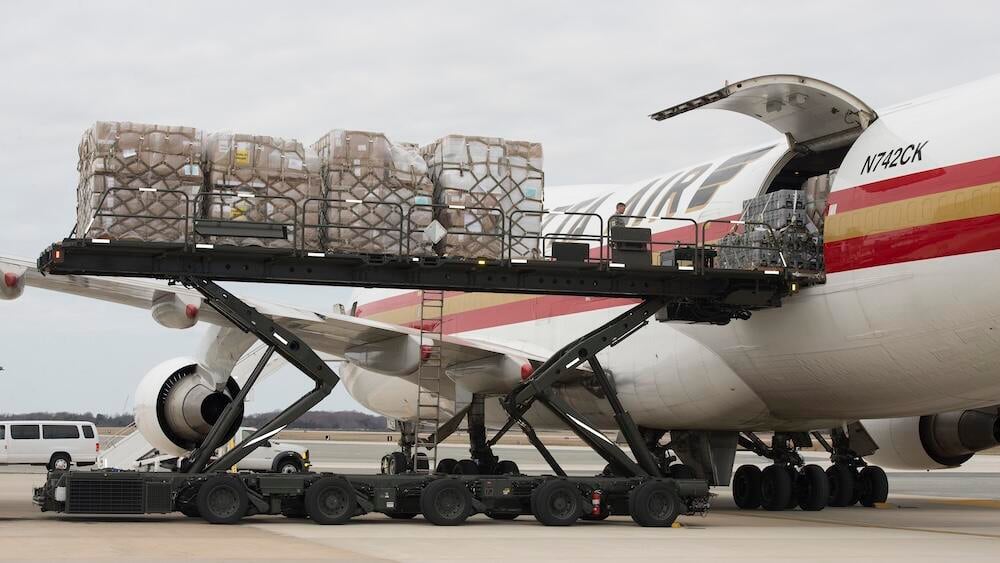
Kaletta's 747 are one of many wide bodies available to the "Civil Air Reserve Fleet"
KISSIMMEE, Florida–The aircraft industry’s inability to meet growing demand for widebodies could, in the long term, hurt the U.S. military’s ability to rely on the nation’s civil reserve air fleet (CRAF) if needed, the Air Force’s mobility boss warned.
A long-term forecast of commercial wide-body production will present a“strategic challenge that we don’t fully appreciate yet,” Air Mobility Command (AMC) leader Lt. Gen. Daniel Tulley said at the Airlift/Tanker Association Symposium here.
Airbus and Boeing build relatively few widebodies, with the existing fleet already so large, but approximately 3% of those aircraft age out each year, Tulley said, citing a briefing he received at a recent National Defense Transportation Association event. Over the next 10 years, requirements will outpace production, he warned.
“The CRAF depends on commercial widebody capability and capacity for a number of things,” Tulley said in a Nov. 7 interview at the symposium. “There’s the passenger-hauling portion of the CRAF, but we find great value in the cargo haulers that help us out through [U.S. Transportation Command]. If those aircraft are not available when we need them, that’s something we should pay attention to.”
While the CRAF can currently meet the military’s needs, it could be a problem further out. In an April discussion with the Mitchell Institute for Aerospace Studies, former AMC Deputy Commander Lt. Gen. Rebecca Sonkiss highlighted the November 2025 crash of the UPS Airlines MD-11 aircraft as something that affected a “significant capacity” of the CRAF fleet. The crash came as airframers no longer produce major four-engine aircraft and are instead shifting more to underbody cargo, she said.
Tulley highlighted newcomers like JetZero’s Z4 blended wing body design and Radia’s Windrunner cargo aircraft as welcome developments. But these designs are still in work and rely on Pentagon interest and funding.
“It’s great that American industry is bringing that type of innovation forward,” he said. “It’d be great if industry built those things without requiring the Air Force to build them.”
Under the typical model, the military leads development, and commercial industry leverages it—not the other way around.
“I really hope that this is something that our economy and our innovative defense industrial base can get,” Tulley said.
damm, forgot to put a title on this one.....was rushed.
Some Background, the "ATR Series" of aircraft is a regional turboprop built in France/Italy and utilized around the world for regional service and has a good reputation for reliability and safety.
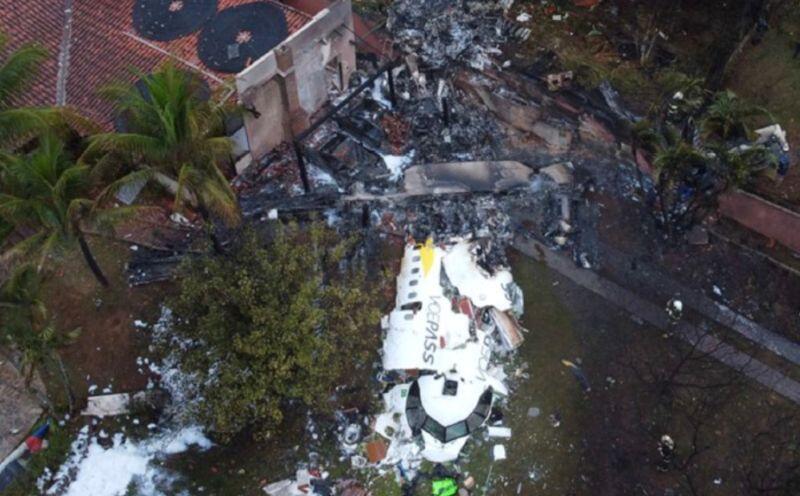
Here is the "WIKI" details on the flight in question."VOEPASS Flight 2283" We in the aviation industry study all accidents to ensure that the accidents and incidents improve the industry and makes it more difficult for the next accident to happen. The statistics bear it out. Flying is safer than driving.
Credit: CENIPA
LYON—All 62 occupants of a Voepass Linhas Aereas-operated ATR 72-500 died on Aug. 9, 2024, because of reckless behavior by the carrier’s managers, maintenance technicians and pilots, Brazil’s air accident investigation bureau has determined.
In its final report on the accident, Brazil’s Aeronautical Accidents Investigation and Prevention Center (CENIPA) found abundant evidence of safety lapses within the company, which it described as contrary to the safety standards upheld by the air transport industry.
Brazil’s national civil aviation agency (ANAC) suspended Voepass’ operations in March 2025, after it noted persistent problems at the regional turboprop operator. ANAC permanently revoked Voepass’ air operator certificate in June 2025. CENIPA’s recommendations target ANAC, as the supervising body for air transport in Brazil, and the European Union Aviation Safety Agency (EASA), and suggests improvements to ATR aircraft.
The final report says the crew knowingly flew the aircraft into severe icing conditions, although it was not certified for such circumstances and the airframe deicing system was inoperative. The resulting ice accretion increased drag, triggered alerts and eventually caused a stall. Voepass Flight 2283 originated in Cascavel, in the state of Parana, and was bound for Guarulhos, in the state of Sao Paulo. The crash took place in Vinhedo, in Sao Paulo state. None of the four crew members or 58 passengers survived.
The report describes the widespread violations of safety rules and common-sense obligations in maintenance activities as “jaw-dropping” for a company that operated 15 commercial turboprops.
“At some secondary bases, limitations in maintenance resources were identified, as well as ... restrictions on access to the aerodrome apron due to the lack of airport credentials,” CENIPA says, noting the mechanics had only a few hours, usually during the night-shift period, to perform corrective and preventive maintenance on the aircraft.
CENIPA says technicians performed maintenance in a superficial manner, without completing the required documentation and delegating critical activities to assistants without proper oversight. Some of them did not have the right qualifications to understand a manual’s content, the report says.
Standard Practices
Aircraft may be dispatched with inoperative systems, as long as they comply with their minimum equipment list (MEL). CENIPA points out that at Voepass, this was standard practice, not the exception, adding that some malfunctions were recorded as resolved, without the corrective action being performed.
“There was also the practice of replacing an inoperative component with another known to be malfunctioning and dispatching the aircraft for flight,” CENIPA’s investigators said. “As a consequence, a new malfunction entry would be recorded on the subsequent flight, allowing a new dispatch based on the MEL.”
The investigation found deficiencies in flight crew and managerial behaviors in which pilots routinely did not report malfunctions in the technical logbook, a deviation encouraged by the company. That was the case with the accident aircraft’s airframe deicing system, the investigators noted. Pilots and maintenance technicians just communicated verbally—another aspect of an organizational culture the investigators describe as permissive.
Between 2022-24, ANAC issued notices of irregular condition to Voepass and suspended several aircraft from flight. CENIPA investigators determined ANAC’s risk management process was insufficient for the strategic decisions that would have been necessary, and the agency’s report recommends a revision of ANAC’s methods.
The CENIPA report also says Voepass’ managers, including those in charge of safety, failed to use flight data monitoring. The ATR 72’s aircraft performance monitoring (APM) system issues three levels of advisories when it detects the effects of icing: Cruise Speed Low, Degraded Performance and Increase Speed. Those alerts indicate a performance degradation due to ice accumulation on the aircraft’s surfaces. CENIPA compared Voepass’ data with that of five other ATR 72 operators and found Voepass had significantly more frequent occurrences of such alerts than its counterparts. Pilots did not always activate protection systems after ice was detected, they add.
The day before the crash, the aircraft’s airframe deicing system malfunctioned and the crew attempted three resets, without success. “After the first system reset and the occurrence of a new failure, the flight crew should have followed the deicing airframe fault procedure, which instructed the crew to exit icing conditions, avoid them and turn off the system,” CENIPA investigators said. The pilots informed the maintenance team verbally, which did not check or repair the system.
Accident Sequence
The system failed again on the day of the accident, during the two flights that preceded the accident. Fault messages were displayed accordingly. The crews, including the one operating the accident flight, did not follow the deicing airframe fault procedure. Faced with speed alerts (Degraded Performance and Increase Speed), the crew who would later operate the accident flight only requested a descent to FL140 (approximately 14,000 ft.), from FL160. Air traffic control approved the request, and the speed alert warnings eventually disappeared. The crew’s response, however, did not comply with the standard procedure, which includes increasing airspeed, the report says.
Before the accident, the flight crew and Voepass’ operations control center had access to a weather forecast of severe icing along the planned flight route. They took off despite the predicted conditions and the airframe deicing system’s known malfunction, which stemmed from the right wing boots. During the climb, crossing FL130, the aircraft’s electronic ice detector indicated ice accumulation. The pilots did not follow the prescribed procedures for the deicing system’s fault or the three successive speed alerts from the APM system. The recommendation was to exit the likely severe icing conditions immediately, since aircraft performance and maneuverability would be severely affected after only a few minutes of exposure. After a stall warning, the crew did not follow the stall recovery procedure and lost control.
CENIPA recommends that EASA engage with ATR and consider an improvement in the Degraded Performance speed alert procedure. Speed should be increased by a greater margin above the minimum maneuvering speed in icing conditions. Moreover, ATR could extend the use of the Low Bank mode, which prevents the increase in stall speed due to aircraft bank angle, the investigators suggest. The flight data recorder should register more parameters, including deicing system failure. The Increase Speed alert should be upgraded to a Warning message, up from Caution, the investigators add.
Since the accident, ATR has designed a new version of the APM system software, which EASA certified in June 2025. Speed alerts are now based on the airspeed margins relative to the minimum maneuvering speed in icing conditions, rather than the theoretical airspeed values, CENIPA says. In a simulation, the last Degraded Performance alert was activated 31 seconds earlier than in the accident flight.
I pulled this off Aviation Week Magazine. As soon as I saw the accident, I figured it was fatigue cracks around the lugs on the pylon. especially with the age of the aircraft. With aviation every accident is reviewed and new processes are implimented and it makes the industry safer.
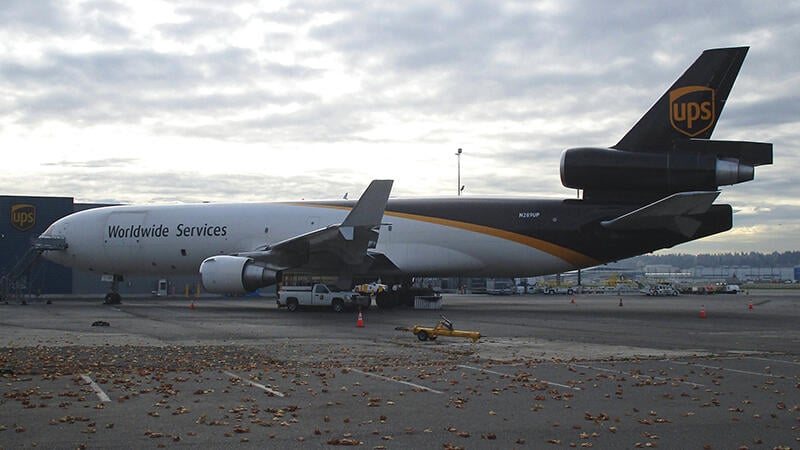
UPS Retires its fleet of 26 MD-11 Freighters following the November 2025 accident.
Boeing’s flawed analysis of a 2002 in-service incident masked the significance of nine subsequent occurrences before a 10th led to the fatal crash of UPS Airlines Flight 2976 in November 2025, details released during an NTSB hearing as part of the safety agency’s probe reveal. The troubling chain of events raises concerns about foundational industry processes meant to improve in-service fleet safety through hazard identification and risk analysis.
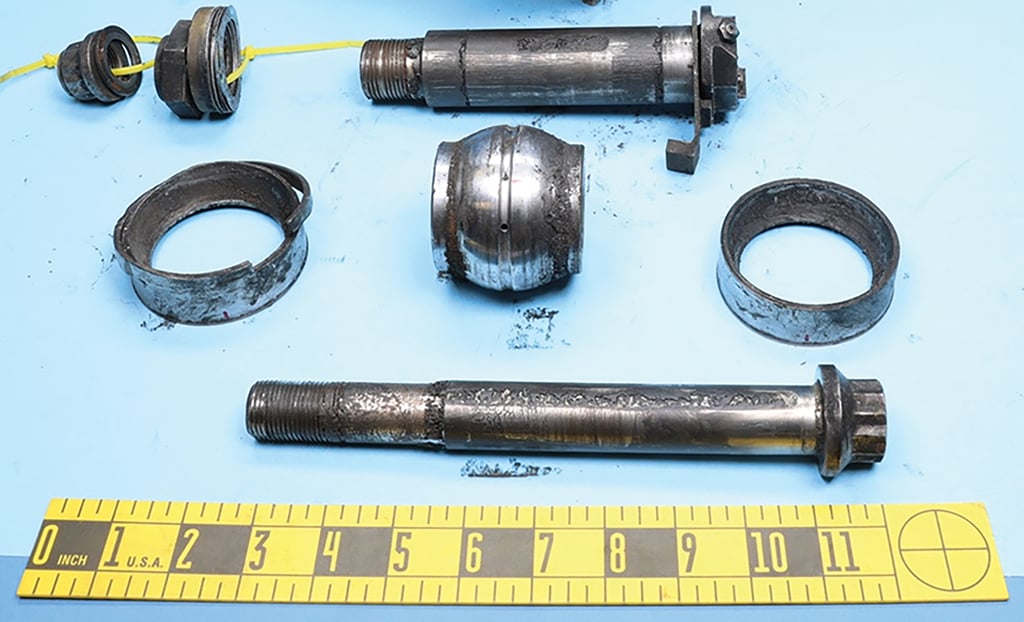
Testimony and documents made public during the 1.5-day hearing held May 19-20 in Washington show the accident was caused by fatigue cracking that originated in a lubrication channel inside a part within the MD-11’s No. 1 (left) engine pylon. The channel runs along the inside circumference of a collar, or race, that forms part of a steel spherical bearing. The bearing rests within two lug holes, or bores, and houses a bolt that attaches the lugs to a wing clevis, providing one of the two engine attachment points on each wing.
Boeing understood from previous incidents that the race was susceptible to cracking. Several incidents also demonstrated that race damage could affect load distribution across the lugs, causing cracks or deformation.
But Boeing’s analysis concluded that if one lug failed, the second would hold, keeping the engine and pylon attached to the wing. As Flight 2976 proved, Boeing was wrong.
The MD-11’s left engine and pylon tore away from its wing right after rotation, when tension on the cracked lug was highest. Fatigue cracks in the lug bores gave way and both lugs fractured. The engine—its pylon still attached—pivoted forward and up, broke away from the wing, and passed over the MD-11’s rear fuselage.
The stricken widebody lifted off but could not maintain altitude. It went down 4,200 ft. from the end of Louisville International Airport’s Runway 17 Right, in an industrial area. Its maximum recorded radio altitude during the 22-sec. flight was 29 ft. All three UPS pilots onboard and 12 people on the ground were killed.
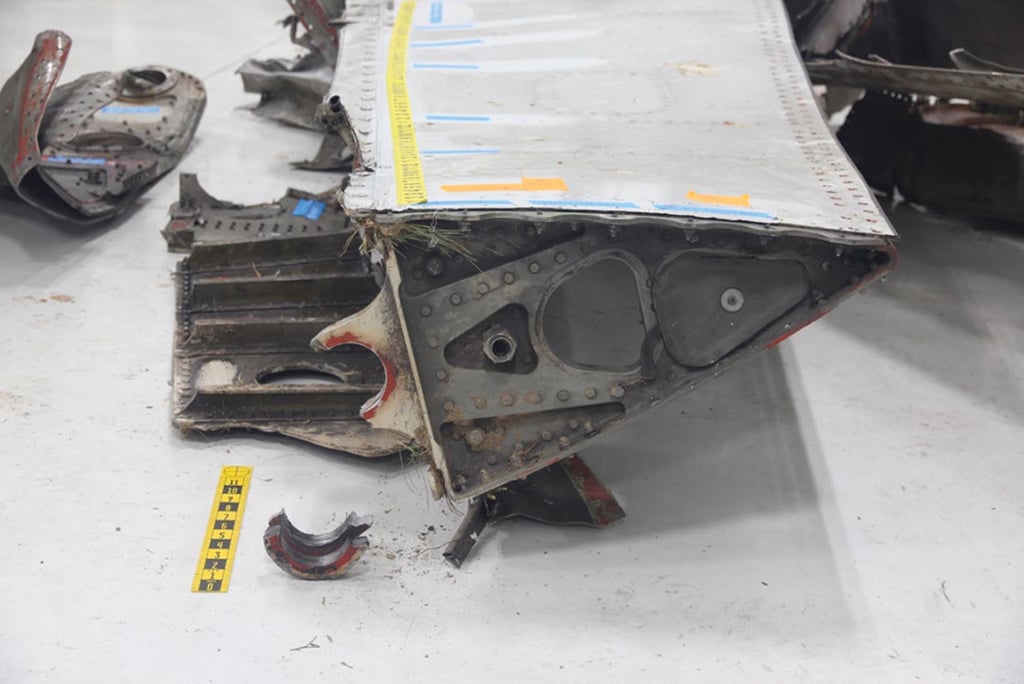
Fractured pieces of both lugs (next to ruler) and the aft pylon with bulkhead still attached were evidence proving Boeing’s analysis wrong. Credit: NTSBA fractured spherical bearing race (center, on either side of monoball) began the chain of events that caused UPS 2976 to lose its left engine. Credit: NTSB
The accident happened 23 years after Boeing received its initial report of a failed MD-11 aft pylon spherical bearing from an unidentified operator. The bearing’s race broke in half, and the forward lug was bent, leaving a gap of 0.032 in. between the two lug tops. Boeing recommended replacing the bearing immediately and the entire bulkhead at the next heavy maintenance visit.
Investigators found no evidence Boeing reviewed the issue under its continued operational safety (COS) process. COS events go before an internal safety review board and are reported to the FAA.
Agency regulations require type certificate holders to report certain specific events. Among them: “A significant aircraft primary structural defect or failure caused by any autogenous condition (fatigue, understrength, corrosion, etc.).”
MD-11 pylon supplier Rohr conducted an FAA-required damage tolerance analysis on the structure during the aircraft’s development. Rohr determined the lugs are principal structural elements (PSE) under FAA regulations, but the spherical bearings are not. A PSE’s failure “could result in catastrophic failure of the aircraft,” Federal Aviation Regulation 29.751 states.
In August 2007, FedEx filed a service difficulty report with the FAA, detailing a fractured outer race. Boeing approved the bearing’s replacement as a major repair, but there is no evidence that the manufacturer knew the original bearing had broken.
A month later, a maintenance, repair and overhaul provider working on a second unnamed operator’s MD-11 discovered a fractured race and cracked lug. Boeing determined the crack was too large to blend out, so it recommended replacing the entire bulkhead. The aircraft had 6,058 cycles.
Boeing, which signed a formal COS program (COSP) agreement with the FAA in 2005, classified the incident as a COS event. Its internal safety review board concluded the problem was “not a safety issue” because “this bearing failure will not cause the lug joint failure,” the manufacturer told the FAA, documents provided to the NTSB show. Boeing’s rationale: The lug crack analysis “shows practically no growth,” and the lug assembly would hold if one of two lugs failed. The manufacturer also referenced required general visual inspections (GVI) and detailed visual inspections (DVI) every 60 months on alternating schedules, meaning trained mechanics reviewed the assembly every 30 months and would find any problems.
The 2007 COS event and earlier incidents prompted Boeing to redesign the spherical bearing and remove the 0.25-in. lubrication groove where the cracks formed. The airframer also updated the GVI and DVI language to call out signs of “migrated” races protruding from lug bores, signifying bearing damage.
Boeing, which bought MD-11 designer McDonnell-Douglas in 1997, issued a May 2008 service letter recommending operators install the new bearings and update MD-11 manuals. Both its classification and content proved critical.
While service bulletins and alert service bulletins signify notable or potentially critical safety issues, service letters are typically used for informational updates. The 2008 letter discussed a single in-service incident—the 2007 issue flagged as a COS event—and did not reference lug cracking. It also said the current inspections “are sufficient” to detect a complete bearing race failure. UPS evaluated the letter and concluded no action was needed.
Within nine months, Boeing had three more reports of MD-11 spherical bearing issues. One, involving a UPS aircraft, was flagged for COS review as an extension of the 2007 case—not a new event. A second event involving an unidentified operator included lug deformation that left a 0.027-in. gap between the two lugs. An eddy current inspection turned up no lug cracking.
Boeing updated its service letter in February 2011 based on the latest events; it did not mention lug damage. UPS, relying on the airframer’s disclosures and evaluation of the issues, reviewed the 2011 letter and came to the same conclusion as in 2008.
“We’re relying on the data that’s out there and what kind of determination is made on whether it was [safety-critical] or it’s not [safety-critical],” David Springer, senior director of engineering at UPS, testified during the recent NTSB hearing. “The issue was the outer race fractures were causing damage to the forward and aft lug halves. That propagated into what caused our accident. . . . Not only was it a bearing issue, it was the collateral damage that was happening to the lugs.”
The NTSB’s investigation turned up 10 additional in-service incidents of aft mount spherical bearing failures, including three since June 2020. Seven were reported to Boeing and four to the FAA. Only two were reported to both organizations, and one—the most recent, in December 2022 on a FedEx aircraft—was not reported to either.
The incidents prompted one COSP case covering two events. Permissible under the COSP agreement in place in 2007, similar occurrences would result in multiple cases under the current-day process, which could prompt a proactive FAA review.
The November 2025 accident grounded the global MD-11 fleet. UPS inspected its 26 aircraft soon after and found fractured races on three. The carrier retired its MD-11 fleet before the FAA’s early May clearance allowed the model to fly again, provided it has new spherical bearings and undergoes more frequent inspections.
Witnesses repeatedly flagged Boeing’s categorization of the early events as the catalyst in what became a systemic failure.
“There was a misunderstanding initially . . . about the severity of the event that might result from failure of this bearing,” said Melanie Violette, an FAA continued operational safety technical advisor. “There was information on [the September 2007] event that did not make its way into the COSP process—that there was an actual crack in the lug.
“Had that information come to light at the time, the determination might very well have been different,” she added at the NTSB hearing.
Shannon Deckard, director of quality assurance at UPS, said more awareness would have brought the issues to the forefront sooner. “Had we been aware of additional associated hazards, such as the [damage] caused to the lug bore or the lug itself, it would have heightened” the airline’s concerns, Deckard added. “Had we known more, we could have done more with this.”
Boeing does not have complete records of all seven incidents it knew about. Notably, the company does not have the analysis done on the critical first report. The lack of documentation means its representatives cannot explain why only some of the incidents were deemed COSP-reportable.
“I don’t understand the decision protocol that they used,” said Scott Hirsch, Boeing Commercial Airplanes senior director of fleet operations, when asked about the incidents that prompted the updated service letter. “I don’t know how they made their evaluation. I don’t have information that would explain their determination. But sitting here today, they would be COSP-reportable.”
Boeing submits about 4,000 COSP reports annually, said Brian Knaup, FAA continued operational safety branch manager. About half are categorized as potential safety issues. Of these, 50-100 result in airworthiness directives. The reports also feed into the agency’s Monitor Safety/Analyze Data process used to spot fleet trends.
In 2014, Boeing applied to extend Airworthiness Limitation Instruction (ALI) structural inspection program thresholds on 104 MD-11 PSEs, including the lugs. The FAA’s ALI adjustment review process leans heavily on the applicant’s analysis, which factors in certification testing and in-service data, including COSP reports.
The original threshold for the advanced, nondestructive checks was 19,900 cycles. Boeing’s MD-11 package used certification data from an analytical fatigue life calculation to justify a new proposed initial threshold of 29,260 cycles—23,202 more than the MD-11 with the lug crack discovered in September 2007.
Those of y'all that know me know that I am in the aviation business as a chemtrail technician, and I was a Atlanta Assembly Ford Motor Company employee, if I had stayed with Ford, I would have transferred to Louisville Assembly or Kentucky Truck. A lot of my Ford peeps filled the Atlanta Assembly farcebook feed with pics of the smoke and flames, apparently it wasn't far from the assembly plant. My heart goes out to the families involved, and being in the aviation field, I keep wondering if it was a fatigue cracks around the engine mounts. That is what happened to the "El Al Flight 1862" I figure that the FAA will ground all MD11 variants until they inspect all engine mounts. Just a guess on my part mind you.
More information will come out in the coming days.
Credit: Stephen Cohen/Getty Images
The UPS Boeing MD-11 that crashed while taking off from Louisville International Airport Nov. 4 lost its No. 1 engine before the aircraft cleared the airport perimeter, the NTSB said in its first briefing on the accident.
“We have viewed airport CCTV security coverage, which shows the left engine detaching from the wing during the takeoff roll,” NTSB Board Member Todd Inman told reporters during a Nov. 5 briefing.
Photos of the airfield taken after the accident scene show what appear to be a heavily damaged GE Aerospace CF6-80C2 engine. Parts of the nacelle, including the inlet and fan cowl, are also visible in photos and appear to have detached during the accident sequence.
“We do believe that that is the engine from the left side of the plane,” Inman said. “It is actually on the airfield, so it’s not off the airport property.”
The engine appears to have come to rest on the right side of Runway 17 Right (17R), the aircraft’s departure runway, and an adjacent taxiway. The engine is about 8,700 ft. from the Runway 17R departure end, Aviation Week analysis of publicly shared images show.
“That correlates with the video that we’ve seen of it detaching from the airplane while it is in flight,” Inman added. “We also know that fire was occurring during that time, so we’re analyzing that.”
Security footage and witness videos show the aircraft, Flight 2976 en route to Honolulu, on fire as it accelerated down Louisville’s Runway 17 Right (17R). As the aircraft rotated, fire is seen streaming over the freighter’s left wing, from the engine location to the fuselage.
The aircraft “lifted off and gained enough altitude to clear the fence at the end of Runway 17R,’ Inman said. “Shortly after clearing that fence, it made impact with structures and the terrain off of the airport.”
A large fire ensued, destroying most of the fuselage and damaging several buildings. Inman estimated the off-airport accident scene covers about 0.5 mi.
Officials confirmed nine fatalities and 15 injuries but have not provided details. Three crew members were onboard the MD-11. Local reports count the UPS pilots among the fatalities, but officials had not confirmed this as of late Nov. 4.
While investigators acknowledge the No. 1 engine separation, they have not revealed any facts that would explain the sequence of events. Still unclear is the extent of any engine failure and if either of the trijet’s other two engines were affected.
The NTSB expects to glean key details from the flight data and cockpit voice recorders in the coming days. Both devices have been located and are expected to be transported to the NTSB’s lab in Washington, D.C., as soon as possible. The devices “suffered some heat [damage],” Inman said, adding it was not “intrusion, but heat around” the devices. “These recorders are built for that,” he continued.
“We feel comfortable once we get these to our lab in D.C., that we will be able to get a good readout of the applicable data,” he added.
A 28-person NTSB team traveled to Louisville to conduct the probe’s on-site phase. Chihoon Shin is serving as the board’s investigator in charge. The on-site portion of the probe is expected to last about a week, Inman said.
The board is gathering recent history of the airframe involved, including engine-related maintenance work. Aviation Week’s Tracked Aircraft Utilization data shows the aircraft, which carried registration N259UP and was McDonnell Douglas serial no. 48417 and line no. 467, was on the ground in San Antonio from Sept. 3 to Oct. 19. It is not clear whether the aircraft or its engines were undergoing maintenance.
FlightAware data show the aircraft operated 28 cycles between its maintenance visit and the fatal accident.
The 34-year old airframe was delivered to Thai Airways in July 1991 as a passenger aircraft, Aviation Week Fleet Discovery data shows. UPS acquired it in 2006. The most recent flight data show the aircraft had 58,584 hours and 10,597 cycles.
I ran across this on Quora and read this and it was a good article by a gentlemen named "Marko Savic" and decided to add it to my post then I remembered that I did a post on the Zero in question so I went looking for it. and "Viola" as the French say
Originally Answered: How important to the Allied war effort against Japan was the US finding a downed Zero fighter in the Aleutians to study? How much did that help the Allies know how to fight the Zero?
Basically, what they knew from pilots' reports was:
a zero will kill you no matter what
a zero will outturn you with ease no matter what
a zero will outclumb you no matter what
a zero will kill you no matter what
a zero will outturn you no matter what
a zero will outlast you no matter what
oh, and, don't forget, a zero will outturn and kill you no matter what
now, once they had one to study, they found out the compromises the japanese made to get it to perform like it did:
extremely lighweight, it could turn on a dime, indeed… but to do so, they used a magnesium alloy (burning easily and with extreme heat) to build it, had no armor nor self sealing tanks - first lesson: use incendiary bullets, and a single hit will put it on fire 99% of the time
being very lightweight, it was extremely maneuverable at low speed, but as the speed increased, the controls became stiffer and stiffer, to the point it required a huge effort to move the stick around, which reduced significantly its agility, especially in roll. second lesson: keep your speed high and, if attacked by a zero, don't turn but rather statt scissors (left-right-left…) - it won't be able to follow
its armament was quite lousy, with the cannons in the wings that had such a low muzzle velocity and carried in such lightly built wings, that when firing, especially in maneuvers, they'd spray projectiles everywhere except on the target unless it is extremely close: third lesson: keep your speed high (again) and if you need to disengage, no need for hard evasive maneuvering.. as soon as you managed a few hundreds of metres separation, you are pretty much safe. A slight jinking suffice to remain in one piece
It could be added that the teamwork was emphasized as the one with a zero on his tail usually could withstand sufficient damage for the buddies to have time to come and help him.
From there, a US Navy pilot Jimmy Thach invented a tactic that proved to be extremely deadly for the zeros… the attacked aircraft would keep his speed and weave left-right with the zero following him. His wingman would weave as well, crossing his path back and forth behind him. On each crossing, he will fire a quick burst on the zero crossing his aim… in a couple of waves, at most, the zero was burning
I had published my post back in 2018 and to me it was worthy of reposting.
The Akutan Zero, also known as Koga's Zero and the Aleutian Zero, was a type 0 model 21 Mitsubishi A6M Zero Japanese fighter aircraft that crash-landed on Akutan Island, Alaska Territory, during World War II. It was found intact by the Americans in July 1942 and became the first flyable Zero acquired by the United States during the war.It was repaired and flown by American test pilots. As a result of information gained from these tests, American tacticians were able to devise ways to defeat the Zero, which was the Imperial Japanese Navy's primary fighter plane throughout the war. The Akutan Zero has been described as "a prize almost beyond value to the United States", and "probably one of the greatest prizes of the Pacific War". Japanese historian Masatake Okumiya stated that the acquisition of the Akutan Zero "was no less serious" than the Japanese defeat at the Battle of Midway, and that it "did much to hasten Japan's final defeat". On the other hand, John Lundstrom is among those who challenge "the contention that it took dissection of Koga's Zero to create tactics that beat the fabled airplane". The Akutan Zero was destroyed in a training accident in 1945. Parts of it are preserved in several museums in the United States.
The Second Sino-Japanese War began in 1937. Attacks by Chinese fighter planes on Japanese bombers caused the Japanese to develop the concept of fighter escorts. The limited range of the Mitsubishi A5M "Claude" fighter used to escort the bombers caused the Japanese Navy Air staff to commission the Mitsubishi A6M Zero as a long-range land- and carrier-based fighter. The Zero, which first flew in 1939, was exceedingly agile and lightweight, with maneuverability and range superior to any other fighter in the world at that time. The Zero was superior to any Allied fighter it would encounter for the first two years of the war. To achieve this, however, Japanese engineers had traded off durability. The Zero was very lightly built; it had no armor and no self-sealing fuel tanks. According to American author Jim Rearden, "The Zero was probably the easiest fighter of any in World War II to bring down when hit ... The Japanese ... were not prepared to or weren't capable of building more advanced fighters in the numbers needed to cope with increasing numbers and quality of American fighters". The Zero was the primary Japanese Navy fighter throughout the war. During the war, the Japanese manufactured roughly 10,500 Zeros. In 1940 Claire Lee Chennault, leader of the Flying Tigers, wrote a report on the Zero's performance. However, United States Department of War analysts rejected it as "arrant nonsense" and concluded the performance attributed to the Zero was an aerodynamic impossibility. According to American flying aceWilliam N. Leonard, "In these early encounters and on our own we were learning the folly of dogfighting with the Zero". During the attack on Pearl Harbor, nine Zeros were shot down. From these wrecks, the Allies learned that the Zero lacked armor and self-sealing fuel tanks, but little else about its capabilities. The Zero's flight performance characteristics—crucial to devising tactics and machinery to combat it—remained a mystery. Prior to recovery of the Akutan Zero, technical information from three other downed Zeros was available to the Allies. One Zero (serial number 5349), piloted by Hajime Toyoshima, crashed on Melville Island in Australia following the bombing of Darwin. The Zero was heavily damaged, and Toyoshima became Australia's first Japanese prisoner of the Pacific war. Another Zero, piloted by Yoshimitsu Maeda, crashed near Cape Rodney, New Guinea. The team sent to recover the plane erred when they chopped off the wings, severing the wing spars and rendering the hulk unflyable. The third came from China, where Gerhard Neumann was able to reconstruct a working Zero. He used a partly intact Zero (serial number 3372) that had landed in Chinese territory, repaired with salvaged pieces from other downed Zeros. However, bad conditions and the long delivery time from China prevented Neumann's Zero from reaching the United States for testing until after the recovery of the Akutan Zero.
In June 1942, as part of the Japanese Midway operation, the Japanese attacked the Aleutian islands, off the south coast of Alaska. A Japanese task force led by Admiral Kakuji Kakutabombed Dutch Harbor on Unalaska Island twice, once on June 3 and again the following day. Tadayoshi Koga, a 19-year-old flight petty officer first class, was launched from the Japanese aircraft carrier Ryūjō as part of the June 4 raid. Koga was part of a three-plane section; his wingmen were Chief Petty Officer Makoto Endo and Petty Officer Tsuguo Shikada. Koga and his comrades attacked Dutch Harbor, shooting down an American PBY-5A Catalina flying boat piloted by Bud Mitchell and strafing its survivors in the water. In the process, Koga's plane (serial number 4593) was damaged by small arms fire. Tsuguo Shikada, one of Koga's wingmen, published an account in 1984 in which he claimed the damage to Koga's plane occurred while his section was making an attack against two American Catalinas anchored in the bay. This account omits any mention of shooting down Mitchell's PBY. Both American and Japanese records contradict his claims; there were no PBYs in the bay that day. However, his claims do match American records from the attack against Dutch Harbor the previous day (June 3). Rearden noted, "It seems likely that in the near half-century after the event Shikada's memory confused the raids of June 3 and June 4 ... It also seems likely that in his interview, Shikada employed selective memory in not mentioning shooting down Mitchell's PBY and then machine-gunning the crew on the water". It is not known who fired the shot that brought down Koga's plane, though numerous individuals have claimed credit. Photographic evidence strongly suggests it was hit by ground fire. Members of the 206th Coast Artillery Regiment, which had both 3-inch anti-aircraft guns and .50 caliber machine guns in position defending Dutch Harbor, claimed credit, in addition to claims made by United States Navy ships that were present. Physical inspection of the plane revealed it was hit with small arms fire — .50 caliber bullet holes and smaller, from both above and below.
The fatal shot severed the return oil line, and Koga's plane immediately began trailing oil. Koga reduced speed to keep the engine from seizing as long as possible.
The three Zeros flew to Akutan Island, 25 miles east of Dutch Harbor, which had been designated for emergency landings. Waiting near the island was a Japanese submarine assigned to pick up downed pilots. At Akutan, the three Zeros circled a grassy flat half a mile inland from Broad Bight. Shikada thought the ground was firm beneath the grass, but in his second pass he noticed water glistening. He suddenly realized Koga should make a belly landing. But by then Koga had lowered his landing gear and was almost down.
The plane's landing gear mired in the water and mud, causing the plane to flip upside down and skid to a stop. Although the aircraft survived the landing nearly intact, Petty Officer Koga died instantly on impact, probably from a broken neck or a blunt-force blow to his head. Koga's wingmen, circling above, had orders to destroy any Zeros that crash-landed in enemy territory, but as they did not know if Koga was still alive, they could not bring themselves to strafe his plane. They decided to leave without firing on it. The Japanese submarine stationed off Akutan Island to pick up pilots searched for Koga in vain before being driven off by the destroyer USS Williamson.
The crash site, which was out of sight of standard flight lanes and not visible by ship, remained undetected and undisturbed for over a month. On July 10, 1942, an American PBY Catalina piloted by Lieutenant William "Bill" Thies spotted the wreckage. Thies's Catalina had been patrolling by dead reckoning and had become lost. On spotting the Shumagin Islands, he reoriented his plane and began to return to Dutch Harbor by the most direct course—over Akutan Island. Machinist Mate Albert Knack, who was the plane captain (note: the term "plane captain" in US Navy usage refers to an aircraft's assigned maintenance crew chief, not the pilot-in-command), spotted Koga's wreck. Thies's plane circled the crash site for several minutes, noted its position on the map, and returned to Dutch Harbor to report it. Thies convinced his commanding officer, Paul Foley, to let him return with a salvage team. The next day (July 11), the team flew out to inspect the wreck. Navy photographer's mate Arthur W. Bauman took pictures as they worked. Thies's team extracted Koga's body from the plane by having Knack (the smallest crew member) crawl up inside the plane and cut his safety harness with a knife. They searched it for anything with intelligence value, and buried Koga in a shallow grave near the crash site. Thies returned with his team to Dutch Harbor, where he reported the plane as salvageable. The next day (July 12), a salvage team under Lieutenant Robert Kirmse was dispatched to Akutan. This team gave Koga a Christian burial in a nearby knoll and set about recovering the plane, but the lack of heavy equipment (which they had been unable to unload after the delivery ship lost two anchors) meant their efforts failed. On July 15, a third recovery team was dispatched. This time, with proper heavy equipment, the team was able to free the Zero from the mud and hauled it overland to a nearby barge, without further damaging it. The Zero was taken to Dutch Harbor, turned right-side up, and cleaned.
Loading of Akutan Zero on barge.
The Akutan Zero was loaded into the USS St. Mihiel and transported to Seattle, arriving on August 1. From there, it was transported by barge to Naval Air Station North Island near San Diego where repairs were carefully carried out. These repairs "consisted mostly of straightening the vertical stabilizer, rudder, wing tips, flaps, and canopy. The sheared-off landing struts needed more extensive work. The three-blade Sumitomo propeller was dressed and re-used." The Zero's red Hinomaruroundel was repainted with the American blue circle-white star insignia. The whole time, the plane was kept under 24-hour military police guard in order to deter would-be souvenir hunters from damaging the plane. The Zero was fit to fly again on September 20.
Data from the captured Zero had been transmitted to the U.S. Navy's Bureau of Aeronautics (BuAer) and Grumman Aircraft. After careful study, Roy Grumman decided that he could match or surpass the Zero in most respects, except in range, without sacrificing pilot armor, self-sealing tanks and fuselage structure. The new F6F Hellcat would compensate for the extra weight with additional power.
On September 20, 1942, two months after the Zero's capture, Lieutenant Commander Eddie R. Sanders took the Akutan Zero up for its first test flight. He would make 24 test flights between September 20 and October 15. According to Sanders' report:
These flights covered performance tests such as we do on planes undergoing Navy tests. The very first flight exposed weaknesses of the Zero which our pilots could exploit with proper tactics ... immediately apparent was the fact that the ailerons froze up at speeds above 200 knots so that rolling maneuvers at those speeds were slow and required much force on the control stick. It rolled to the left much easier than to the right. Also, its engine cut out under negative acceleration due to its float-type carburetor. We now had the answer for our pilots who were being outmaneuvered and unable to escape a pursuing Zero: Go into a vertical power dive, using negative acceleration if possible to open the range while the Zero's engine was stopped by the acceleration. At about 200 knots, roll hard right before the Zero pilot could get his sights lined up.
In early 1943, the Zero was transferred from Naval Air Station North Island to Anacostia Naval Air Station. The Navy wished to make use of the expertise of the NACALangley Research Center in flight instrumentation, and it was flown to Langley on March 5th 1943 for the installation of the instrumentation. While there, it underwent aerodynamic tests in the Full-Scale Wind Tunnel under conditions of strict secrecy. This work included wake surveys to determine the drag of aircraft components; tunnel scale measurements of lift, drag, control effectiveness; and sideslip tests. After its return to the Navy, it was flight tested by Frederick M. Trapnell, the Anacostia Naval Air Station director of flight testing. He flew the Akutan Zero in performance while Sanders simultaneously flew American planes performing identical maneuvers, simulating aerial combat. Following these, USN test pilot Lieutenant Melvin C. "Boogey" Hoffman conducted more dogfighting tests between himself flying the Akutan Zero and recently commissioned USN pilots flying newer Navy aircraft. Later in 1943, the aircraft was displayed at Washington National Airport as a war prize.In 1944, it was recalled to North Island for use as a training plane for rookie pilots being sent to the Pacific. A model 52 Zero, captured during the liberation of Guam, was later used as well. Data and conclusions from these tests were published in Informational Intelligence Summary 59, Technical Aviation Intelligence Brief #3, Tactical and Technical Trends #5 (published prior to the first test flight), and Informational Intelligence Summary 85. These results tend to somewhat understate the Zero's capabilities
F6F Hellcat (1943)
Data from the captured aircraft were submitted to the BuAer and Grumman for study in 1942.The U.S. carrier-borne fighter plane that succeeded the Grumman F4F Wildcat, the F6F, would be tested in its first experimental mode as the XF6F-1 prototype with an under-powered Wright R-2600Twin Cyclone 14-cylinder, two-row radial engine on 26 June 1942.Shortly before the XF6F-1's first flight, and based on combat accounts of encounters between the F4F Wildcat and A6M Zero, on 26 April 1942, BuAer directed Grumman to install the more powerful 18-cylinder Pratt & Whitney R-2800 Double Wasp radial engine — already powering Chance Vought's Corsair design since its beginnings in 1940 — in the second XF6F-1 prototype. Grumman complied by redesigning and strengthening the F6F airframe to incorporate the 2,000 hp (1,500 kW) R-2800-10 engine, driving a three-bladed Hamilton Standard propeller. With this combination Grumman estimated the XF6F-3's performance would increase by 25% over that of the XF6F-1.This first Double Wasp-equipped Hellcat airframe, bearing BuAer serial number 02982, first flew on 30 July 1942. The F6F-3 subtype had been designed with specific "Wildcat vs Zero" input from Battle of the Coral Sea and Battle of Midway veteran F4F pilots such as Jim Flatley and Jimmy Thach, respectively, among several others, obtained during a meeting with Grumman Vice President Jake Swirbul at Pearl Harbor on 23 June 1942, with the first production F6F-3 making its first flight just over three months later, on October 3, 1942. While the captured Zero's tests did not drastically influence the Hellcat's design, they did give knowledge of the Zero's handling characteristics, including its limitations in rolling right and diving. That information, together with the improved capabilities of the Hellcat, were credited with helping American pilots "tip the balance in the Pacific".American aces Kenneth A. Walsh and R. Robert Porter, among others, credited tactics derived from this knowledge with saving their lives. James Sargent Russell, who commanded the PBY Catalina squadron that discovered the Zero and later rose to the rank of admiral, noted that Koga's Zero was "of tremendous historical significance." William N. Leonard concurred, describing it thus: "The captured Zero was a treasure. To my knowledge, no other captured machine has ever unlocked so many secrets at a time when the need was so great." Some historians dispute the degree to which the Akutan Zero influenced the outcome of the air war in the Pacific. For example, the Thach Weave, a tactic created by John Thach and used with great success by American airmen against the Zero, was devised by Thach prior to the attack on Pearl Harbor, based on intelligence reports on the Zero's performance in China
However, nine wrecked Mitsubishi A6M Zeros were recovered from Pearl Harbor shortly after the attack in December 1941, and United States Office of Naval Intelligence, along with BuAer had them studied, and then shipped to the Experimental Engineering Department at Dayton, Ohio in 1942. It was noted that the experimental Grumman XF6F-1s then under-going testing in June 1942 and the Zero had "wings integrated with the fuselage," a design feature not normally practiced in American aircraft production at that time.
SB2C HellDiver
The Akutan Zero was destroyed during a training accident in February 1945. While the Zero was taxiing for a take-off, a Curtiss SB2C Helldiver lost control and rammed into it. The Helldiver's propeller sliced the Zero into pieces. From the wreckage, William N. Leonard salvaged several gauges, which he donated to the National Museum of the United States Navy. The Alaska Heritage Museum and the SmithsonianNational Air and Space Museum also have small pieces of the Zero. In an attempt to repatriate Koga's body, American author Jim Rearden led a search on Akutan in 1988. He located Koga's grave, but found it empty. Rearden and Japanese businessman Minoru Kawamoto conducted a records search. They found that in 1947 Koga's body was exhumed by an American Graves Registration Service team and re-buried on Adak Island, further down the Aleutian chain. The team, unaware of Koga's identity, marked his body as unidentified. The Adak cemetery was excavated in 1953, and 236 bodies were returned to Japan. The body buried next to Koga (Shigeyoshi Shindo) was one of 13 identified; the remaining 223 unidentified remains were re-interred in Chidorigafuchi National Cemetery in Japan. It is probable that Koga was one of them. Rearden later wrote the definitive account of the Akutan Zero.