I am a contributor on Quora and I had posted this several years ago and it keeps getting "Uplikes", I am in the 4 digits now. I am one of the contributors for the "Grand Review of Armies", something I do enjoy because of the history aspect of it. That being said, there is a lot of dumbassery on it, especially on politics. it can be fun troll stomping but I do try to avoid it, nobody enjoys it except the troll.
As far as this comment goes, I have mostly "attaboys" and they picked up after the invasion of the Ukraine and a few positive criticism and a few butthurt people that are fanboys of the Russians and believe that the Russians are the 2nd coming. I surmise that they are people either college students that have an affinity for communism and any criticism of their "client" state is a de-facto criticism of who they are or people that actually live there and take umbrage to what I have said. Truth be told , what I have said was accurate to 1991, how the Russians fight now I don't know, and it looks like they have lost a lot of tactical knowledge since the cold war. I can't crow about that, I was speaking to my brother and who said that it is the same with us, we have spent 20 years fighting "Hajj" and have forgotten how to prepare the battlefield against a peer and a near peer force. he had told me that this was driven home during a briefing when the squadron commander was asking questions that only the old warrants that have been around in the back of the room knew the answer to, the younger guys and gals had no clue. We also have lost a lot of institutional knowledge. I had commented before that we are not the lean mean green machine that destroyed the Iraqi's in 1991 and 2003. We were trained by the people that survived Vietnam and 20 years of getting our doctrine tuned and flush with cash from the Reagan years. we did what they said couldn't be done.
One of my specialties or discipline in the service was "The Soviet Army"
and how they fight. What doctrine they use in the attack.
Basically
they would use a 3 layer approach, the initial group that would be
considered class "A" divisions, would attack the FEBA(Forward edge
battle area) look for any weak points, then once they find it, the
second echelon which would have their latest equipment and best trained
units would move up, attack the weak points and force a breakthrough
then run into the rear of the opposing formation and the 3rd echelon
which was comprised with "class B and some class"C or V"units would
provide security for the operations. This is the doctrine developed by Georgy Zhukov
and it worked well against the Germans in WWII. The Soviets still
trained on the same model. Casualties were of no concern to the
leadership, That was one of the big differences between " us" and "
them".
I will give an example...If one of our units ran into trouble, we
would call for arty or air support. It is part of our doctrine to do
this. Part of the combined arms training that we do. Well the Soviets
would NOT do that...The Soviets would doctrinally refuse such a request
especially in the initial assaults, they wanted to save the combat power
for the break through, and not "waste" it on small actions. That is why
most of the artillery and free rockets were assigned directly to the Soviet Army or
Front Commander, to save the resources.
We developed "airland battle"
our doctrine in the late 70's to disrupt the echelon attacks that the
Soviets would do in case of an attack. Our Apache helicopters and A-10's
reflected this doctrine. That is what we used in Desert Storm. the
Iraqi's were trained and equipped according to Soviet doctrine. We knew
that we couldn't go toe to toe in an slugging match with the Soviets,
they still outnumbered us in men and tanks. I think Stalin said
"Quantity has a quality all its own". So we had to be "smarter" then
they were. They had a lot of top down management, whereas we trained
individual initiative in our soldiers. I don’t know How the Russians do
now, Their doctrine is sound and their equipment is better than it was
10 years ago. I don’t know how they “do” it anymore, I am no longer “In
the Know”
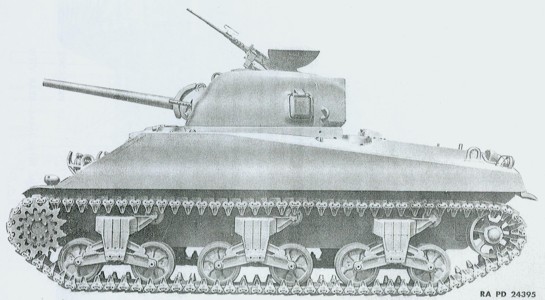
I knew that the Soviets got the Shermans during WWII because of "Lend-Lease", and I recall that they liked the Sherman a lot. I was surprised that they didn't use them in Korea in a false flag incident or something because the Soviets don't throw nothing away. They still had equipment from WWII in warehouses in Siberia at the fall of the Soviet Union. I ran across this article on "Quora" where I am a contributor and I thought it was "Pretty Neat".
Soviet Shermans: The USSR Was a Big Sherman User, and They Liked it
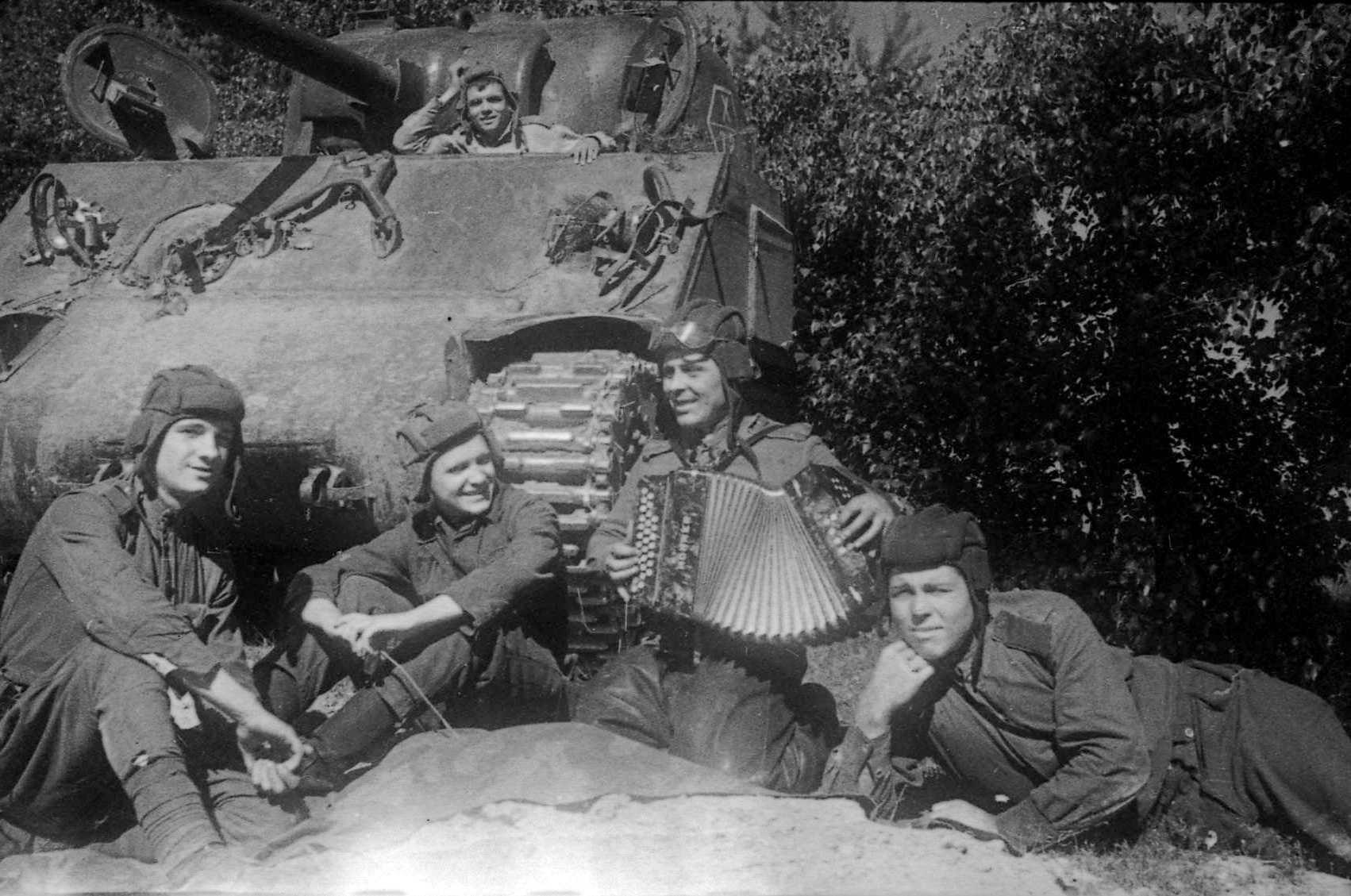
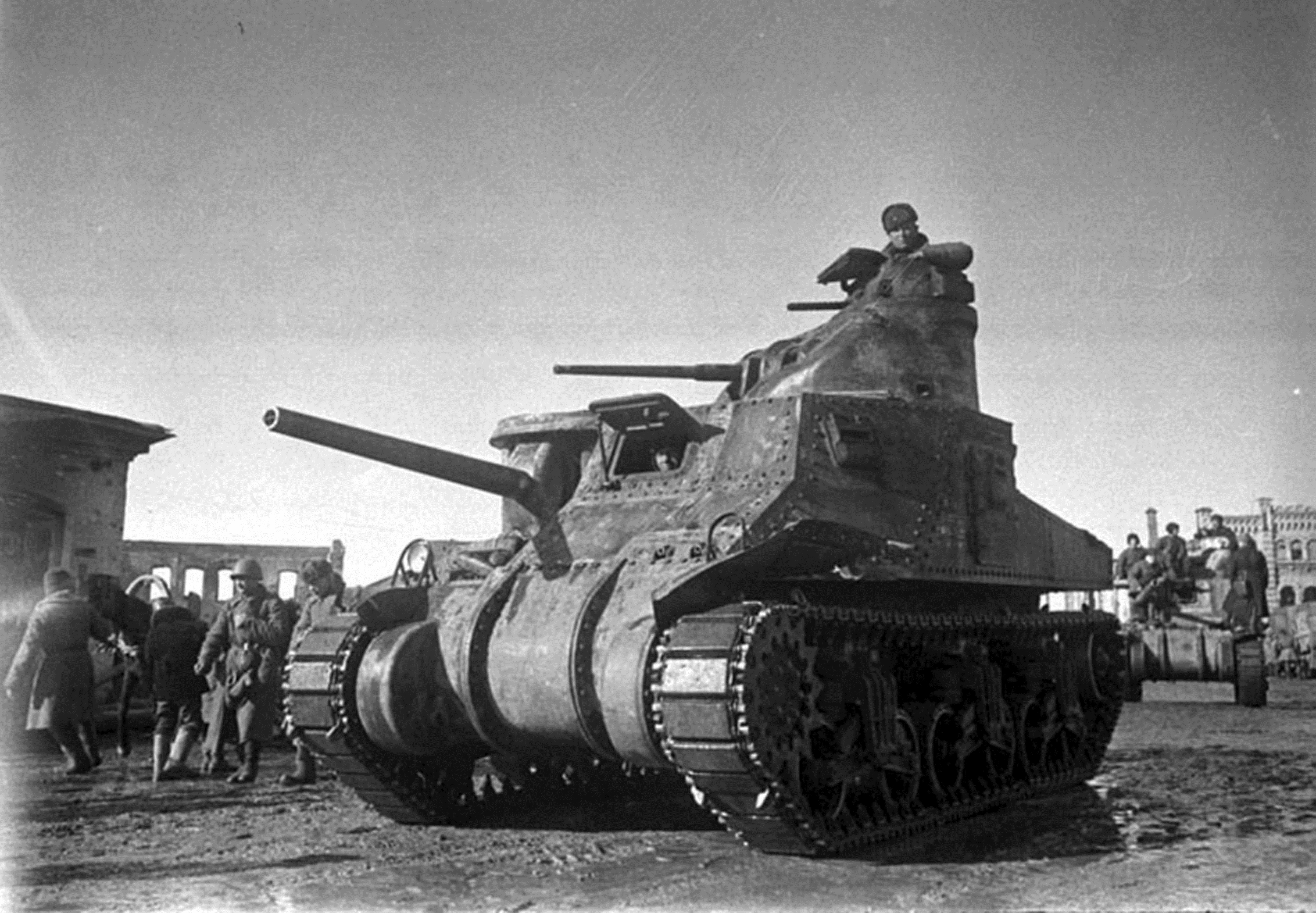
Soviet crew posing in front of their large hatch hull, M4A2 75 dry, tank.
The Soviet Union received three American Medium tank
types in large numbers. They received the Lee, and M4A2 75 and 76
tanks. Only the UK would use more M4A2 tanks, though they received only
five armed with the 76mm gun, they got far more of the 75mm armed M4A2s.
The Soviets also received a pair of M4A4 tanks for evaluation but
rejected them because of the motor. My impression from the things I’ve
read says, they liked the all of them, well not the A4, but liked the
Shermans more than the Lee.
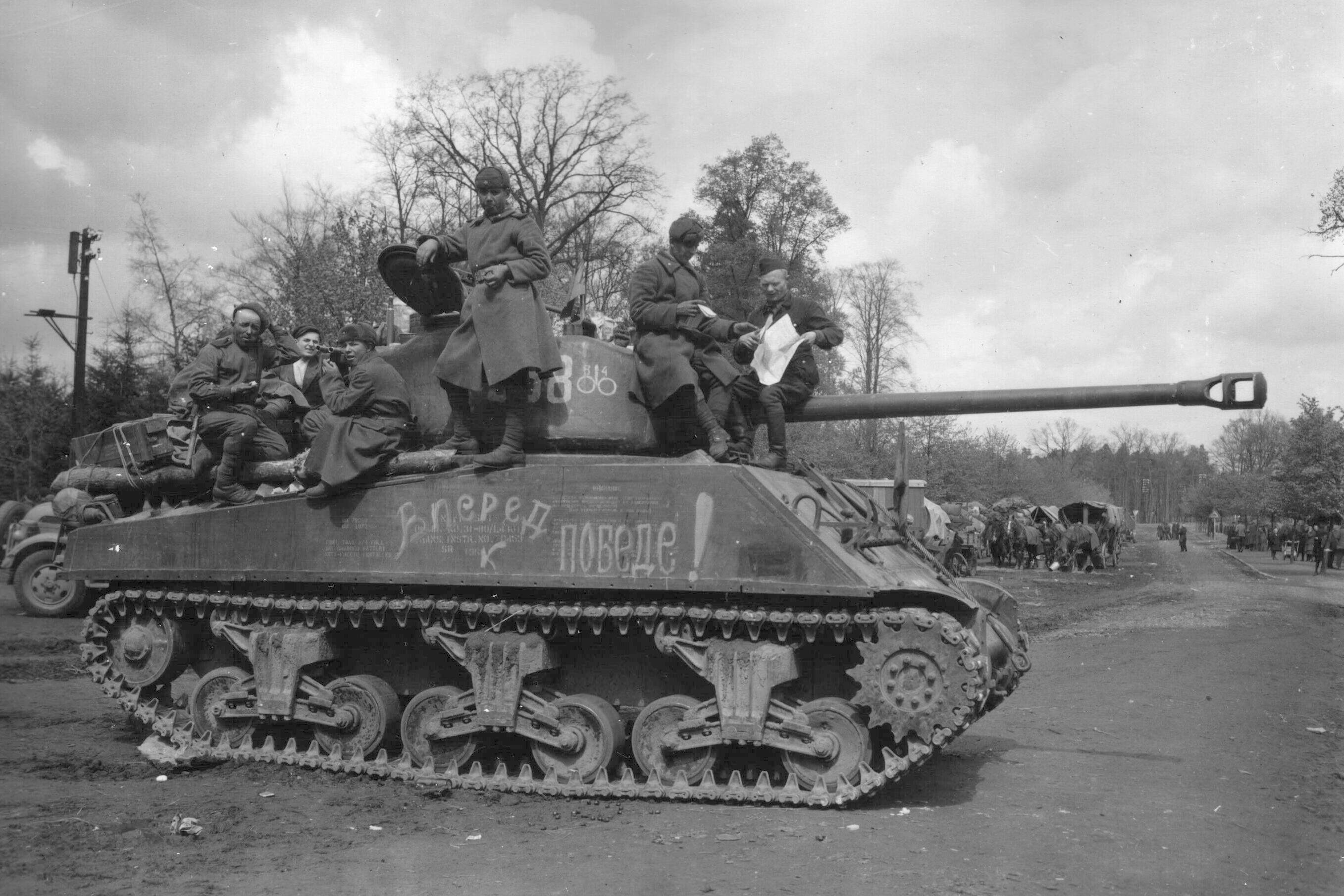
M4A2 76w, late production, with an M1A2 gun.
Now let’s cover each tank model.
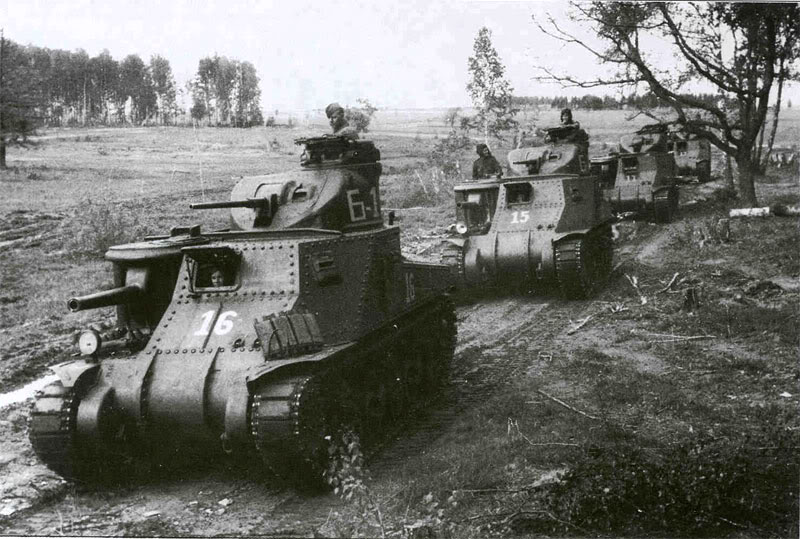
M3 Lee: The Basic Lee
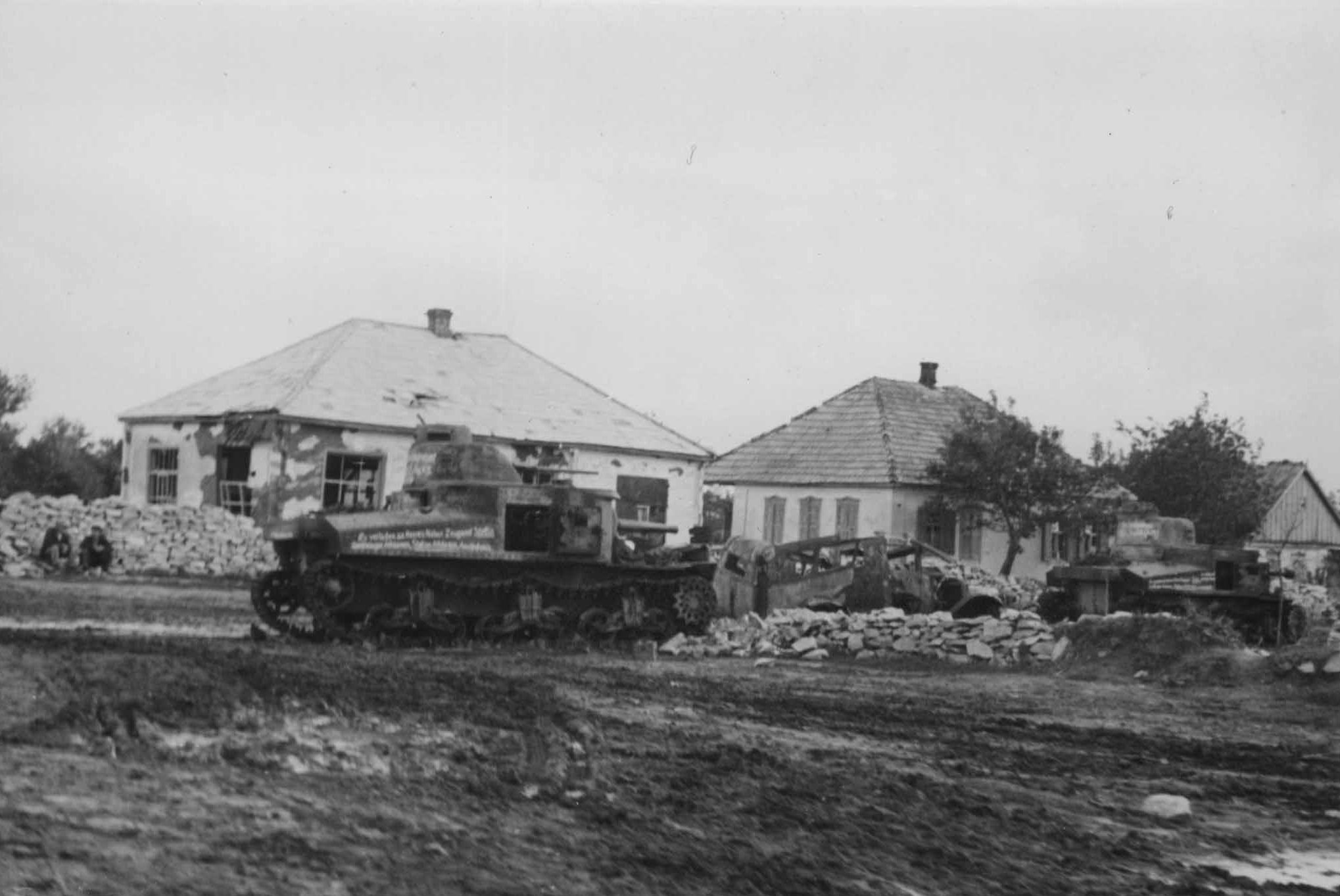
Knocked out Soviet M3 Lee tanks
The Lee was not considered a very good design by the Soviet Union, you can read their evaluation here, on Archive Awareness,
but it was not all negative. They liked the transmission, differential
and final drives, and in particular the steering and brake mechanism.
They felt the R975 air-cooled motor was not a great fit for tanks, for
all the reasons they are not fit for tanks, mainly the size limitations
they put on the tank, and as gasoline AC engines, they don’t have good
low-end torque, make driving harder. They disliked the position of the
75mm gun, and lack of sites on the machine guns.
Soviet M3 Lee, If you look closely you can see grousers installed on the tracks
One thing I found very interesting, is in the
summer, they could pack up to 10 SMG infantry into the Lee, along with
the regular 7 man crew, making it into a makeshift APC. The thing would
be packed full of people though. The report says all weapons could be
fired on the tank while those 10 men were stuffed in, so I guess the US
Army or Brits didn’t try this because they liked comfort or something.
A column of Soviet M3 Lee tanks.
The Lee did not fare well against the upgraded
Panzer IV with long 75, and they lost a lot of them, but they never
stopped using them, they just did what the British did and sent them off
to secondary theaters, where tanks were still useful, and no enemy
tanks were around. Against poorly equipped, in AT weapon, Infantry, the
M3 Lee was a monster of a tank. The 75mm had a great HE round, it was
packed with machine guns, and had a 37mm that could sling canister. The
Soviets received 1386 M3 Lee tanks.
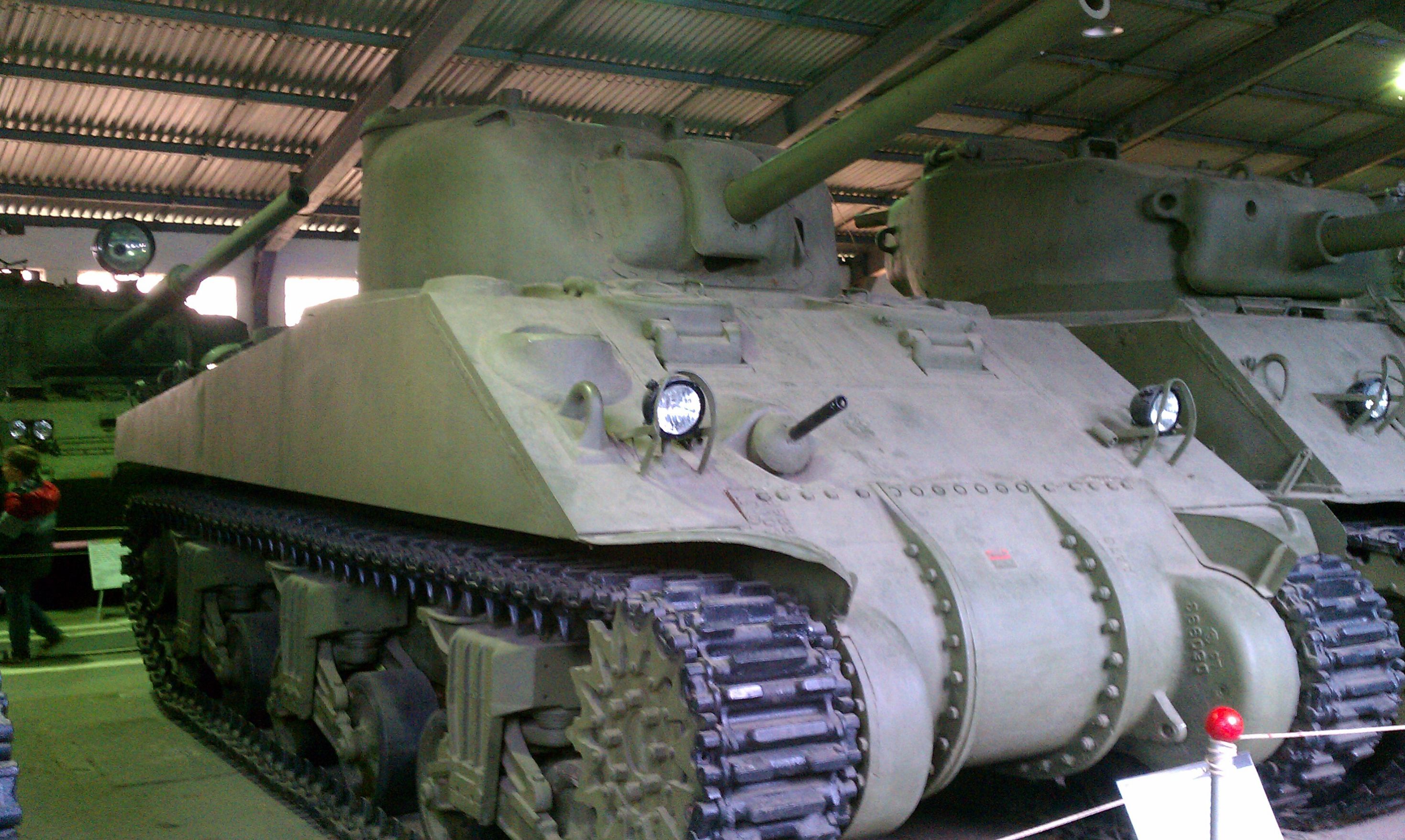
M4A2 75 dry: Early Small Hatch 75mm Shermans with Drivers Hoods
Early M4A4 with DV ports in Russian Museum. One of two sent to the USSR for testing.
The Soviets received 1990 M3 75mm gun armed M4A2
Shermans. I don’t have a list of who made the early M4A2 tanks they got.
They were competing with the Marine Corps and the French and Brits on
priority for these tanks, and most went to the Brits. I’ve looked
through a lot of pictures of Soviet M4 tanks, or “Emcha” as they seemed
to call them, the small hatch 75 tanks seem rarer than the large hatch
75 and 76 tanks.
This Post on Archive Awareness indicates,
they received several hundred very early M4A2 tanks. One of the big
indicators of this is the section where they talk about the suspension
having the Lee style top mounted return roller, which could be jammed
with mud, but then they received later models, where this return roller
was moved to bracket mounted to the side of the suspension unit.
Another interesting part of that document is the
problems they had with injectors and lubrication problems with the
pistons. The Army reported similar problems with early model M4A2s,
with the Air cleaners, cooling system, and clutches, but nothing about
the injectors. This post on AA
also indicates injector issues but was overall positive on the M4A2.
Maybe the Soviets used low-quality diesel and the injectors didn’t like
it. At any rate, these issues would have been worked out by the time
they started getting improved models.
M4A2 large hatch Dry: Late Model 75mm, 47-degree Large Hatch Hulls, but with Dry Ammo Racks
M4A2 75 dry large hatch tanks in action
By late 1943 a new version of the M4A2 was going
into production, and it had the improved 47-degree, single piece front
armor plate, with large driver and co-drivers hatches. These would be
the first tanks to get this improvement. By the time this model went
into production, priority for diesel-powered Shermans was going to the
Soviets, since that was the only model they wanted, and the Brits would
take the M4A4.
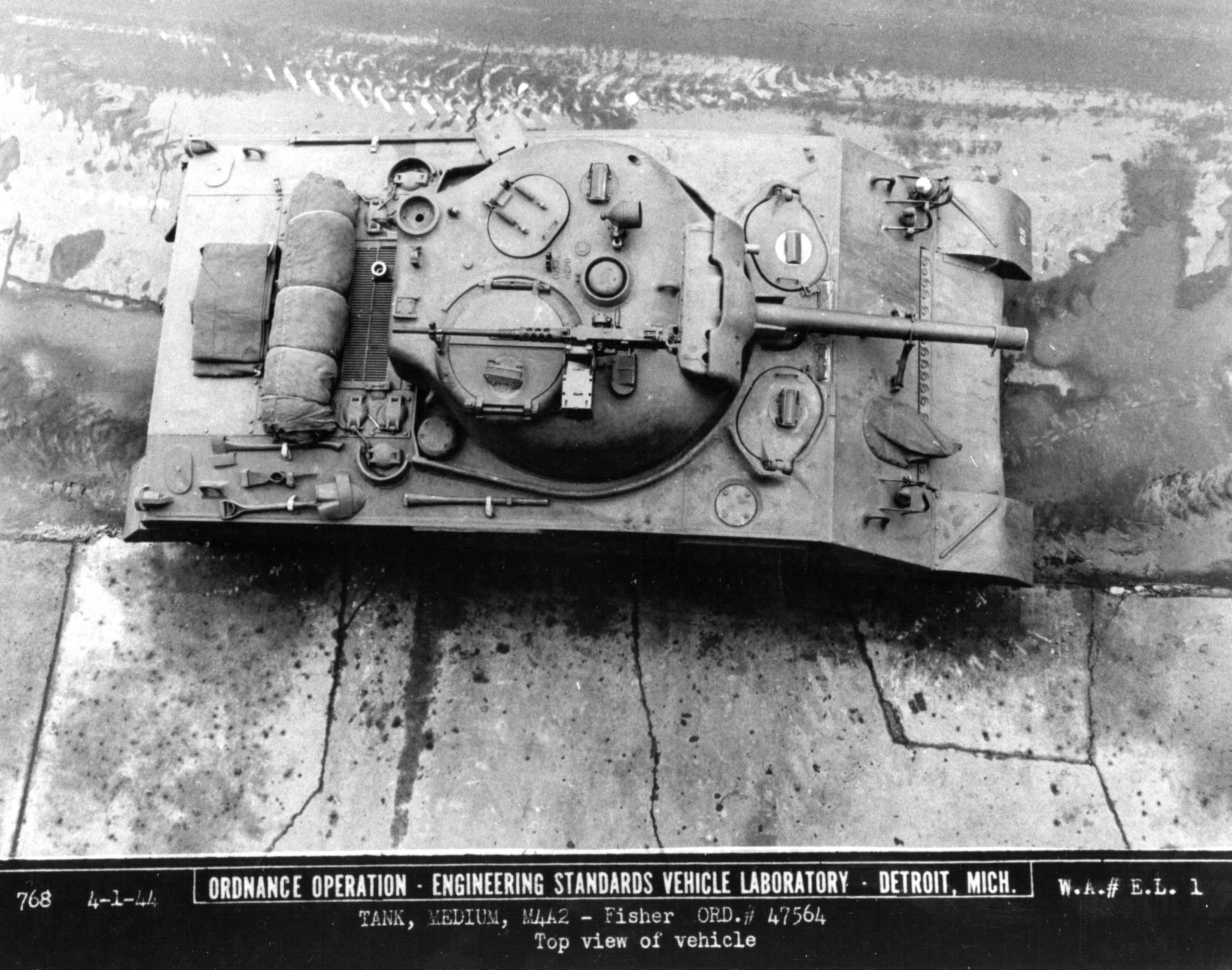
An final production M4A2 75 dry tank
These improved large hatch hulls still used the dry
ammunition rack setup of the early small hatch hulls, but they had the
applique armor applied at the factory, and the 75mm turrets had an
improved casting thickening the area that had required welded on
additional armor on the older turrets. The Turrets had a oval loaders
hatch and a pistol port as well, though the commander still got the
older split hatch cupola with the 50 caliber mount built into it.
These tanks seemed to have been photographed much
more than the small hatch 75 tanks, but I do not have a lot of photos of
either. By the time these tanks were being produced, all the major
reliability issues would have been worked out.
M4A2 76W: The Soviets were the Second Biggest User of 76mm Shermans
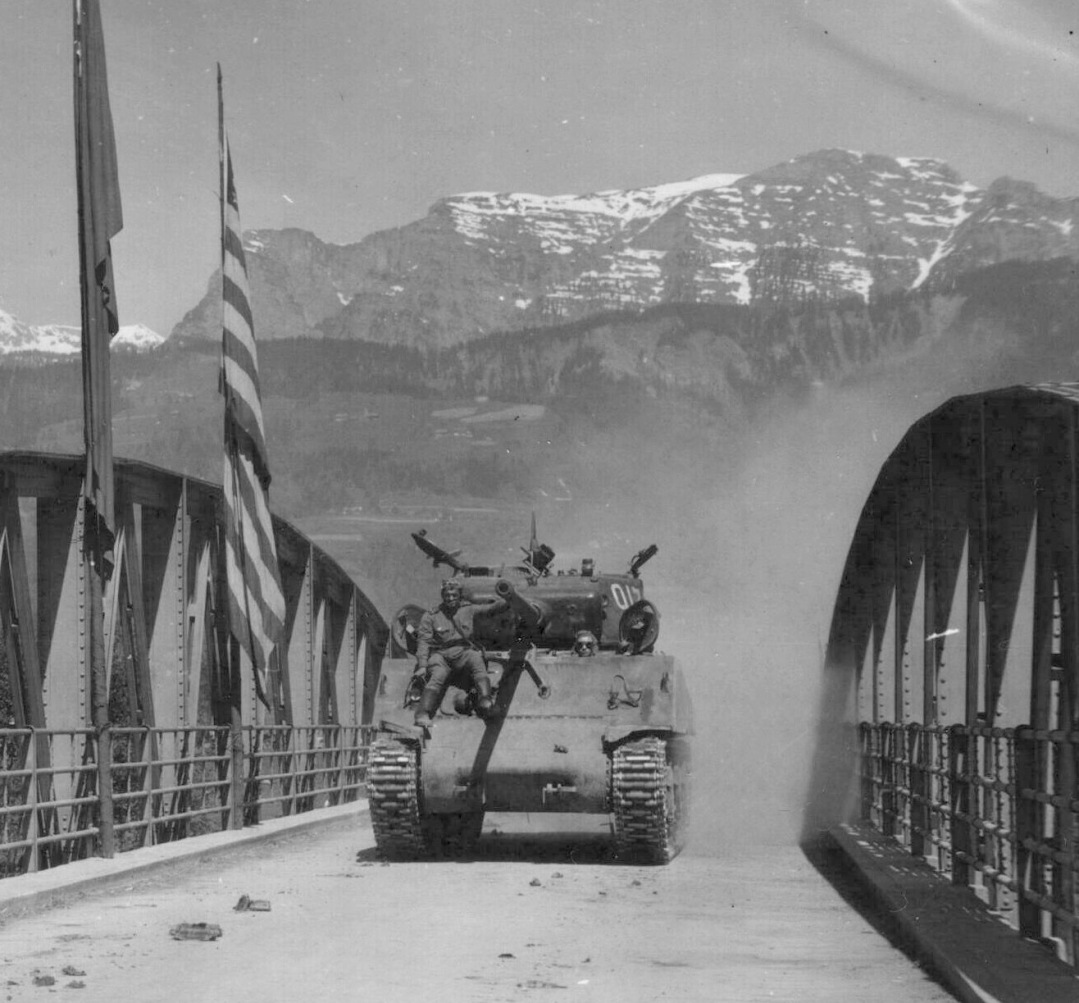
Soviet M4A2 76w with a split loaders hatch somewhere in Germany or Austria
Production of the 75mm armed Sherman was reduced, as Sherman
production was streamlined down from the 10 factories that were
producing it, to the three that would finish it off, Fisher, Chrysler,
and Pressed Steel Car. The Soviet Union received 2073 M4A2 tanks with
the 76mm M1A1 gun. This was just about Fishers whole production run on
the 76mm armed M4A2.
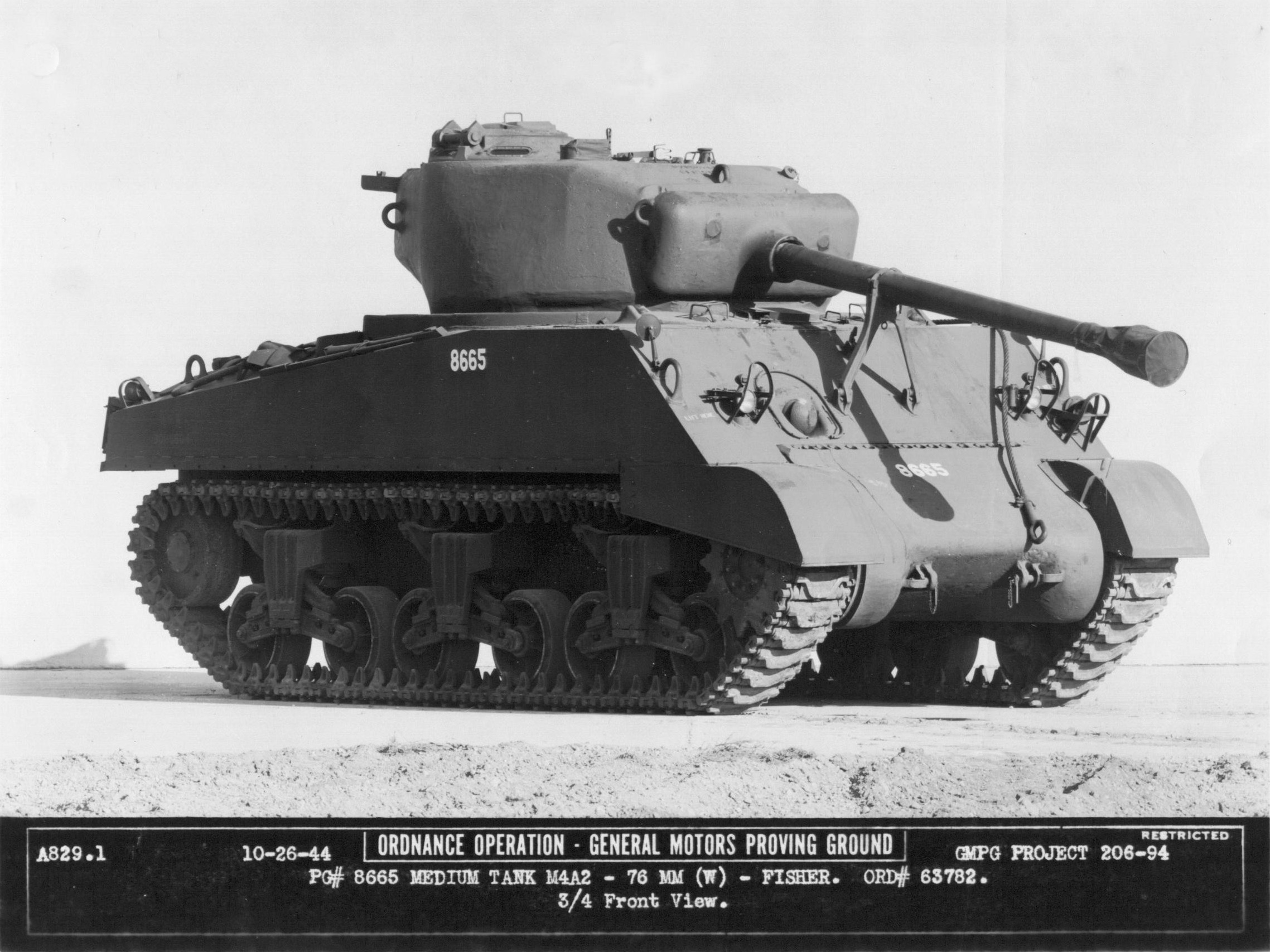
Shot of a factory fresh M4A2 76w tank at the General Motors Proving Ground
These tanks would have started out with wet racks, all around vision
cupolas, a split loaders hatch and an M1A1 76mm gun without a barrel
threaded for a muzzle brake. A few may have even had T23 turrets
without the ventilator on the rear. These would quickly be replaced with
M1A1C guns with threaded barrels with a protective cap over the
threads, and the split loaders hatch would be replaced with the smaller
oval hatch. These tanks would eventually be produced in the “Ultimate”
configuration, with the M1A2 gun, and HVSS suspension.
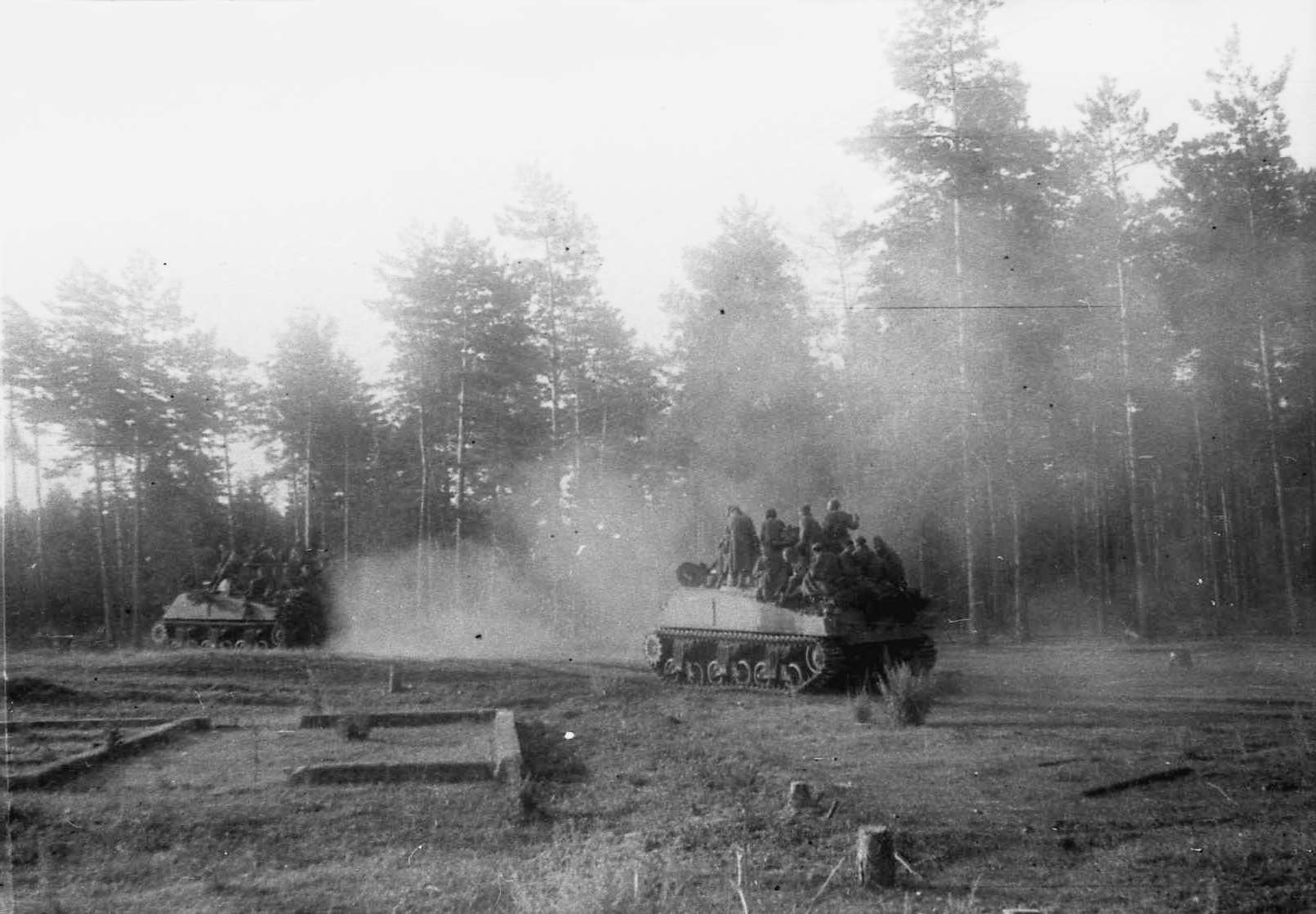
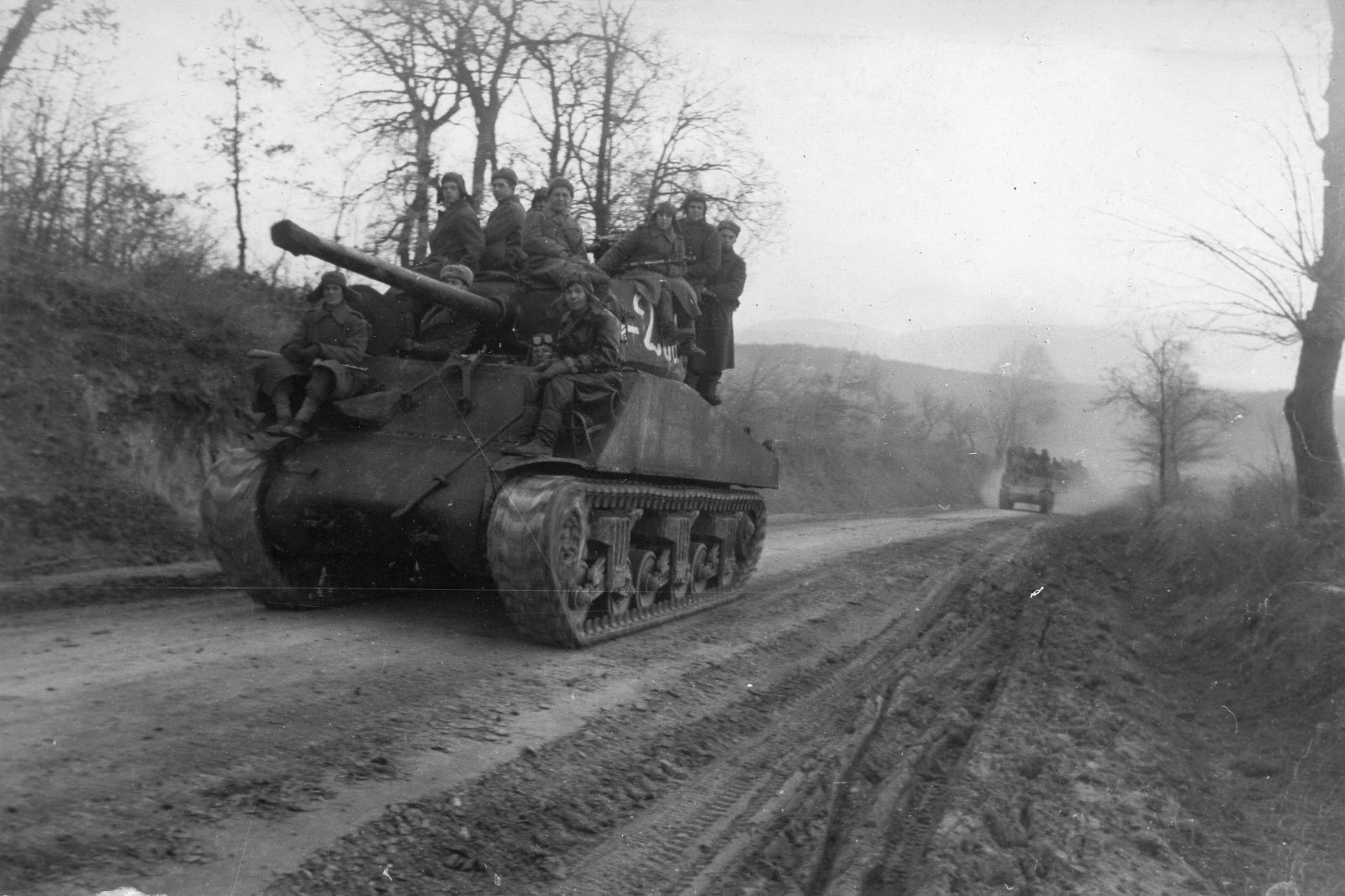
M4A2 76w with Russian Infantry loaded aboard.
These thanks saw extensive combat use with the Soviet Union, use with
Guards units. My understanding is the Russians liked the M4A2 76w tanks
just fine, and used them in elite units, but this has no reflection on
their feelings about the tank compared to their own T-34-85 tanks. T-34s were used in Guards units as well, and some units had both, as we can see from this AA post. By that point in the war the Sherman and T-34 were pretty close in abilities.
M4A4: They Received Two, and that was Enough to Convince them, They Wanted No More
After being given a chance to drive the M4A4 on the proving grounds
and being given lectures and demonstrations of its A57 gas motor, the
Soviets decided that the M4A4 was better than the M3 Lee, but inferior
to the M4A2 with GM Diesel they were already receiving through lend
lease. They decided the factory was impressive, but really not producing
a very good tank.
Even though the Soviets showed little interest in the M4A4 tanks, two were sent to them for evaluation anyway. You can read their impressions here, but as before when they tested it in the US, they felt the motor was to complicated to be reliable.
Dmitriy Fedorovich, on which American tanks did you fight?
On Shermans. We called them “Emchas”, from M4 [in Russian, em
chetyrye]. Initially they had the short main gun, and later they began
to arrive with the long gun and muzzle brake. On the front slope armor
there was a travel lock for securing the barrel during road marches. The
main gun was quite long. Overall, this was a good vehicle but, as with
any tank, it had its pluses and minuses. When someone says to me that
this was a bad tank, I respond, “Excuse me!” One cannot say that this
was a bad tank. Bad as compared to what?
Dmitriy Fedorovich, did you have just American tanks in your unit?
Our 6th Guards Tank Army (yes, we had six of them) fought in
Ukraine, Romania, Hungary, Czechoslovakia, and Austria. We ended the war
for us in Czechoslovakia. Then they rushed us to the Far East and we
fought against Japan. I briefly remind you that the army consisted of
two corps: 5th Guards Tank Stalingrad Corps on our own T-34s and 5th
Mechanized Corps, in which I fought. For the first time this corps had
British Matildas, Valentines, and Churchills.
They delivered the Churchill later.
Yes, a bit later. After 1943 we largely declined British tanks
because they had significant deficiencies. In particular, they had 12-14
h.p. per ton of weight at a time when good tanks had 18-20 h.p. per
ton. Of these three British tanks, the best was the Valentine produced
in Canada. Its armor was streamlined but more importantly, it featured a
long-barreled 57mm main gun. My unit switched over to American Shermans
at the end of 1943. After the Kishinev Operation our corps became the
9th Guards Mechanized Corps. I missed to tell you that every corps
consisted of four brigades. Our mechanized corps had three mechanized
brigades and one tank brigade, in which I fought. A tank corps had three
tank brigades and one mechanized brigade. Yes, we had Shermans in our
brigade at the end of 1943.
But the British tanks were
not withdrawn from service, so they fought until they were gone. Wasn’t
there a period when your corps had a mixture of tanks, both American
and British? Were there any problems associated with the presence of
such a broad variety of vehicles from different countries? For example,
with supply and maintenance?
Well, there were always problems. In general, the Matilda was an
unbelievably worthless tank! I will tell you about one of the Matilda’s
deficiencies that caused us a great deal of trouble. Some fool in the
General Staff planned an operation and sent our corps to the area of
Yelnya, Smolensk, and Roslavl. The terrain there was forested swamp. The
Matilda had skirts along the sides. The tank was developed primarily
for operations in the desert. These skirts worked well in the desert-the
sand passed through the rectangular slots in them. But in the forested
swamps of Russia the mud packed into the space between the tracks and
these side skirts. The Matilda transmission had a servomechanism for
ease of shifting. In our conditions this component was weak, constantly
overheated, and then failed. This was fine for the British. By 1943 they
had developed a replacement unit that could be installed simply by
unscrewing four mounting bolts, pulling out the old unit, and installing
the new unit. It did not always work this way for us. In my battalion
we had Senior Sergeant (Starshina) Nesterov, a former kolkhoz tractor
driver (Kolkhoz is sort of farm – Valeri), in the position of battalion
mechanic. In general each of our tank companies had a mechanic and
Nesterov was it for the battalion. At our corps level we had a
representative (whose name I have forgotten) of the British firm that
produced these tanks. At one time I had it written down, but when my
tank was hit everything I had in it burned up -photographs, documents,
and notebook. We were forbidden to keep notes at the front, but I did it
on the sly. Anyway, this British representative constantly interfered
with our efforts to repair separate components of the tank. He said,
“This has a factory seal. You should not tinker with it!” We were
supposed to take out a component and install a new one. Nesterov made a
simple repair to all these transmissions. One time the British
representative came up to Nesterov and asked him, “At which university
did you study?” And Nesterov replied, “At the kolkhoz!”
The Sherman was light years better in this regard.
Did you know that one of the designers of the Sherman was a Russian
engineer named Timoshenko? He was some shirt tail relative of Marshal S.
K. Timoshenko.
The Sherman had its weaknesses, the greatest of which was its
high center of gravity. The tank frequently tipped over on its side,
like a Matryoshka doll (a wooden stacking doll). But I am alive today
thanks to this deficiency. We were fighting in Hungary in December 1944.
I was leading the battalion and on a turn my driver-mechanic clipped a
curb. My tank went over on its side. We were thrown around, of course,
but we survived the experience. Meanwhile the other four of my tanks
went ahead and drove into an ambush. They were all destroyed.
Dmitriy Fedorovich, the
Sherman had a rubber-coated metal track. Some contemporary authors point
to this as a deficiency, since in combat the rubber might be set on
fire. With the track thus stripped bare, the tank is disabled. What can
you say in this regard?
On the one hand this rubber-coated track was a big plus. In the
first place, this track had a service life approximately twice that of
steel track. I might be mistaken, but I believe that the service life of
the T-34 track was 2500 kilometers. The service life of the Sherman
track was in excess of 5000 kilometers. Secondly, The Sherman drove like
a car on hard surfaces, and our T-34 made so much noise that only the
devil knows how many kilometers away it could be heard. What was the bad
side of the Sherman track? In my book, Commanding the Red Army’s
Sherman Tanks, there is a chapter entitled “Barefooted”. There I wrote
about an incident that occurred in August 1944 in Romania, during the
Jassy-Kishinev Operation. The heat was fearsome, somewhere around 30° C.
We had driven approximately 100 km along a highway in a single day. The
rubber linings on our support rollers got so hot that the rubber
separated and peeled off in long pieces. Our corps paused not far from
Bucharest. The rubber was flying around, the rollers had begun to jam
up, the noise was terrible, and in the end we had been stopped. This was
immediately reported to Moscow. Was this some kind of joke, an entire
corps had halted? To our surprise, they brought new support rollers to
us quickly and we spent three days installing them. I still don’t know
where they found so many support rollers in such a short time. There was
yet another minus of rubber track. Even on a slightly icy surface the
tank slid around like a fat cow. When this happened we had to tie barbed
wire around the track or make grousers out of chains or bolts, anything
to give us traction. But this was with the first shipment of tanks.
Having seen this, the American representative reported to his company
and the next shipment of tanks was accompanied by additional track
blocks with grousers and spikes. If I recall, there were up to seven
blocks for each track, for a total of fourteen per tank. We carried them
in our parts bin. In general the American representative worked
efficiently. Any deficiency that he observed and reported was quickly
and effectively corrected.
One more shortcoming of the Sherman was the construction of the
driver’s hatch. The hatch on the first shipment of Shermans was located
in the roof of the hull and simply opened upward. Frequently the
driver-mechanic opened it and raised his head in order to see better.
There were several occasions when during the rotation of the turret the
main gun struck this hatch and knocked it into the driver’s head. We had
this happen once or twice in my own unit. Later the Americans corrected
this deficiency. Now the hatch rose up and simply moved to the side,
like on modern tanks.
Still one great plus of the Sherman was in the charging of its
batteries. On our T-34 it was necessary to run the engine, all 500
horsepower of it, in order to charge batteries. In the crew compartment
of the Sherman was an auxiliary gasoline engine, small like a
motorcycle’s one. Start it up and it charged the batteries. This was a
big deal to us!
For a long time after the war I sought an answer to one question.
If a T-34 started burning, we tried to get as far away from it as
possible, even though this was forbidden. The on-board ammunition
exploded. For a brief period of time, perhaps six weeks, I fought on a
T-34 around Smolensk. The commander of one of our companies was hit in
his tank. The crew jumped out of the tank but were unable to run away
from it because the Germans were pinning them down with machine gun
fire. They lay there in the wheat field as the tank burned and blew up.
By evening, when the battle had waned, we went to them. I found the
company commander lying on the ground with a large piece of armor
sticking out of his head. When a Sherman burned, the main gun ammunition
did not explode. Why was this?
Such a case occurred once in Ukraine. Our tank was hit. We jumped
out of it but the Germans were dropping mortar rounds around us. We lay
under the tank as it burned. We laid there a long time with nowhere to
go. The Germans were covering the empty field around the tank with
machine gun and mortar fires. We lay there. The uniform on my back was
beginning heating up from the burning tank. We thought we were finished!
We would hear a big bang and it would all be over! A brother’s grave!
We heard many loud thumps coming from the turret. This was the
armor-piercing rounds being blown out of their cases. Next the fire
would reach the high explosive rounds and all hell would break loose!
But nothing happened. Why not? Because our high explosive rounds
detonated and the American rounds did not? In the end it was because the
American ammunition had more refined explosives. Ours was some kind of
component that increased the force of the explosion one and one-half
times, at the same time increasing the risk of detonation of the
ammunition.
It is considered noteworthy that the Sherman was very well appointed on the inside. Was this true?
It was true. These are not just words! They were beautiful! For
us then this was something. As they say now, “Euro-repair”! This was
some kind of European picture! In the first place, it was painted
beautifully. Secondly, the seats were comfortable, covered with some
kind of remarkable special artificial leather. If a tank was knocked out
or damaged, then if it was left unguarded literally for just several
minutes the infantry would strip out all this upholstery. It made
excellent boots! Simply beautiful!
In your book “Commanding
the Red Army’s Sherman Tanks” you wrote that the 233rd Tank Brigade’s
M4A2 Shermans were armed not with the short-barreled 75mm but the
long-barreled 76mm main gun in January 1944. Wasn’t this a bit early?
Didn’t these tanks appear later? Explain one more time which main guns
were mounted on the Shermans of the 233rd Tank Brigade.
Hmm, I don’t know. We had very few Shermans with the
short-barreled main gun. On the whole, ours had long-barrels. Not just
our brigade fought on Shermans. Perhaps these were in other brigades.
Somewhere in the corps I saw such tanks, but we had the tanks with the
long barrels.
Dmitriy Fedorovich, there
were personal weapons in each Sherman that arrived in the USSR, Thompson
submachine guns (also known as the Tommy gun). I read that rear area
personnel stole these weapons and that few tanks arrived in units still
equipped with them. What kind of weapons did you have, American or
Soviet?
Each Sherman came with two Thompson submachine guns, in caliber
11.43mm (.45 cal), a healthy cartridge indeed! But the submachine gun
was worthless. We had several bad experiences with it. A few of our men
who got into an argument were wearing padded jackets. It turned out that
they fired at each other and the bullet buried itself in the padded
jacket. So much for the worthless submachine gun. Take a German
submachine gun with folding stock (MP-40 SMG by Erma -Valeri). We loved
it for its compactness. The Thompson was big. You couldn’t turn around
in the tank holding it.
The Sherman had an antiaircraft machine gun Browning M2 .50 caliber. Did you use it often?
I don’t know why, but one shipment of tanks arrived with machine
guns, and another without them. We used this machine gun against both
aircraft and ground targets. We used it less frequently against air
targets because the Germans were not fools. They bombed either from
altitude or from a steep dive. The machine gun was good to 400-600
meters in the vertical. The Germans would drop their bombs from say, 800
meters or higher. He dropped his bomb and departed quickly. Try to
shoot the bastard down! So yes, we used it, but it was not very
effective. We even used our main gun against aircraft. We placed the
tank on the upslope of a hill and fired. But our general impression of
the machine gun was good. These machine guns were of great use to us in
the war with Japan, against kamikazes. We fired them so much that they
got red hot and began to cook off. To this day I have a piece of
shrapnel in my head from an antiaircraft machine gun.
Did German aircraft inflict significant losses on your equipment? In particular, what can you say about the Henschel Hs-129?
Not every time, but it did happen. I don’t remember the Henschel;
perhaps there was such an airplane. Sometimes we were able to avoid
bombs. You could see them coming at you, you know. We opened our
hatches, stuck out our heads, and instructed our drivers over the
intercom: “The bomb will fall in front of us”. But in general there were
cases when tanks were hit and set on fire. Losses from these attacks
did not exceed 3-5 tanks in the battalion. It was more common for a
single tank to be damaged or destroyed. We faced much greater danger
from panzerfaust gunners in built-up areas. In Hungary I recall that I
was so tired that I told my deputy to lead the battalion while I slept. I
went to sleep right there in the fighting compartment of my Sherman.
Around Beltsy they had dropped ammunition to us by parachute. We took
one parachute for ourselves. I used this parachute for my pillow. The
parachute was made from silk and didn’t let the lice in. And I was sound
asleep! Suddenly I woke up. Why? I awoke from the silence. Why the
silence? It turns out that attacking aircraft had set two tanks on fire.
During the march many things were piled up on the tanks: crates,
tarpaulin. The battalion had halted, shut off engines, and it had become
silent. And I woke up.
Did you lock your hatches during combat in built-up areas?
We absolutely locked our hatches from the inside. In my own
experience, when we burst into Vienna, they were throwing grenades at us
from the upper floors of buildings. I ordered all the tanks to be
parked under the archways of buildings and bridges. From time to time I
had to pull my tank out into the open to extend a whip antenna and send
and receive communications from my higher commander. On one occasion, a
radio operator and driver-mechanic were doing something inside their
tank and left the hatch open. Someone dropped a grenade through the
hatch from above. It struck the back of the radio operator and
detonated. Both were killed. Thus we most certainly locked our hatches
when we were in built-up areas.
The primary defeating
mechanism of HEAT (hollow-charge) ammunition, of which the panzerfaust
was one type, is the high pressure in the tank, which disables the crew.
If the hatches were kept slightly open, would this not provide some
degree of protection? A special order was issued before our forces
entered Germany.
This is true, but just the same we kept our hatches locked. It
might have been different in other units. The panzerfaust gunners most
often fired at the engine compartment. If they were able to set the tank
on fire, like it or not the crew had to get out. And then the Germans
shot at the crew with a machine gun.
What were the chances of survival if your tank was hit?
My tank was hit on 19 April 1945 in Austria. A Tiger put a round
straight through us. The projectile passed through the entire fighting
compartment and then the engine compartment. There were three officers
in the tank: I as the battalion commander, the company commander Sasha
Ionov (whose own tank had already been hit), and the tank commander.
Three officers, a driver-mechanic, and a radio operator. When the Tiger
hit us, the driver-mechanic was killed outright. My entire left leg was
wounded; to my right, Sasha Ionov suffered a traumatic amputation of his
right leg. The tank commander was wounded, and below me sat the gunner,
Lesha Romashkin. Both of his legs were blown off. A short time before
this battle, we were sitting around at a meal and Lesha said to me, “If I
lose my legs I will shoot myself. Who will need me?” He was an orphan
and had no known relatives. In a strange twist of fate, this is what
happened to him. We pulled Sasha out of the tank and then Lesha, and
were beginning to assist in the evacuation of the others. At this moment
Lesha shot himself.
In general, one or two men were always wounded or killed. It depended where the shell struck.
How did you co-operate with the infantry during combat?
By TOE the tank brigade had three tank battalions of 21 tanks
each and a battalion of submachine gunners. A submachine gun battalion
had three companies, one for each tank battalion. We had this
three-battalion structure only in late 1943 and early 1944. All the rest
of the time we had two tank battalions in the brigade. Our submachine
gunners were like brothers to us. On the march they sat on our tanks.
They kept warm there, dried their things, and slept. We drove along and
then stopped somewhere. The tankers could sleep and our submachine
gunners protected our tanks and us. Over the course of time many
submachine gunners became members of our crews, initially as loaders and
later as radio operators. We divided our trophies equally: they with us
and we with them. Therefore they had an easier time of it than ordinary
infantrymen.
During combat they sat on the tanks until the firing started. As
soon as the Germans opened fire on our tanks, they jumped off and ran
behind the tanks, frequently protected by its armor from enemy light
machine gun fire.
If it happened that the tanks were limited in maneuver and speed, did you maneuver your infantry or halt them?
Nothing like that. We did not pay any attention to them. We
maneuvered and they maneuvered themselves behind us. There were no
problems. It would have been worse for them if we had been knocked out,
so let them run behind us.
Was the tank’s speed limited in the attack? By what?
Of course! We must been fire!
How did you fire, from short halts or on the move?
Both ways. If we fired on the move, the speed of the tank did not
exceed 12 km/h. But we rarely fired on the move, only in order to
incite panic in the enemy ranks. Primarily we fired from short halts. We
rushed into a position, stopped for a second, fired, and moved ahead.
What would you like to say about the German Tiger?
It was an extremely heavy vehicle. The Sherman could never defeat
a Tiger with a frontal shot. We had to force the Tiger to expose its
flank. If we were defending and the Germans were attacking, we had a
special tactic. Two Shermans were designated for each Tiger. The first
Sherman fired at the track and broke it. For a brief space of time the
heavy vehicle still moved forward on one track, which caused it to turn.
At this moment the second Sherman shot it in the side, trying to hit
the fuel cell. This is how we did it. One German tank was defeated by
two of ours, therefore the victory was credited to both crews. There is a
story about this entitled “Hunting With Borzois” in my book.
The muzzle brake has one
significant shortcoming: a cloud of dust is raised during firing from a
weapon thus equipped, giving away one’s position. Some artillerymen
attempted to counter this, for example, by wetting down the ground in
front of their cannons. What countermeasures did you employ?
You’re correct! We might have packed the ground and covered it with our tarpaulins. I don’t recall any special problems.
Were your tank sights blinded by dust, dirt, or snow?
There were no special difficulties. Snow, of course, could blind
us. But not dust. The sight on the Sherman did not protrude. On the
contrary, it was recessed into the turret. Therefore it was well
protected against the elements.
Dmitriy Fedorovich, our
tankers who fought on the British Churchills pointed out the weak heater
in the crew compartment as a deficiency. The standard electric heater
was inadequate for the conditions of the Russian winter. How was the
Sherman equipped in this regard?
The Sherman had two engines connected by a coupling joint. This
was both good and bad. There were cases when one of these motors was
disabled in battle. Then the coupling joint could be disengaged from the
crew compartment and the tank could crawl away from the fight on one
engine. On the other hand, there were powerful fans located above both
engines. We used to say, “Open your mouth and the wind came out your
ass!” How the hell could we get warm? There were such strong drafts of
air! Perhaps there was heat coming from the engines, but I will not tell
you that it was warm. When we halted, we immediately covered the engine
compartment with our tarpaulin. Then it stayed warm in the tank for
several hours; we slept in the tank. Not for nothing did the Americans
give us fleece-lined coveralls.
Were there norms of ammunition consumption for the tank?
Yes there were. In the first place, we took one basic load (BK
-boekomplekt -a full set of ammo. For example the IS-2’s BK = 28 shells.
-Valeri) with us going into battle. We took an additional BK on the
outside of our tanks during long raids. When I raced into Vienna, for
example, my commander personally ordered us to take two BK: the normal
load inside and the second on the armor. In addition, we carried up to
two cases of trophy chocolate on each tank and found additional
provisions for ourselves. We were “on our own”, so to speak. This meant
that if we had to conduct a raid somewhere deep in the rear, we
offloaded rations and in their place took ammunition. All of our wheeled
supply vehicles were American 2 ?-ton Studebakers. They always brought
the ammunition forward to the battalion.
There is one other thing I want to say. How did we preserve our
(Soviet) ammunition? Several rounds covered by a thin layer of grease,
in wooden crates. One had to sit for hours and clean this grease off the
rounds. American ammunition was packed in cardboard tube containers,
three rounds banded together. The rounds were shiny clean inside their
protective tubes! We took them out and immediately stowed them in the
tank.
What kind of rounds did you carry in the tank?
Armor-piercing and high explosive. There was nothing else. The ratio was approximately one-third HE and two-thirds AP.
Did the crew receive a concussion when a round hit the tank, even if it did not penetrate the armor?
Generally, no. It depended on where the round hit. Let’s say that
I was sitting in the left side of the turret and a round struck near
me. I heard this hit but it did not harm me. If it struck somewhere on
the hull, I might not hear it at all. This happened several times. We
would come out of an engagement and inspect the tank. In several places
the armor would show an impact, like a hot knife that had cut through
butter. But I did not hear the round impacts. Sometimes the driver would
shout, “They’re shooting from the left!” But there was no overwhelming
sound. Of course, if such a powerful gun as the JSU-152 hit you, you
heard it! And it would take off your head along with the turret.
I want also to add that the Sherman’s armor was tough. There were
cases on our T-34 when a round struck and did not penetrate. But the
crew was wounded because pieces of armor flew off the inside wall and
struck the crewmen in the hands and eyes. This never happened on the
Sherman.
What did you consider the most dangerous opponent? A cannon? A tank? An airplane?
They were all dangerous until the first round was fired. But in
general, the antitank cannons were the most dangerous. They were very
difficult to distinguish and defeat. The artillerymen dug them in so
that their barrels literally were laying on the ground. You could see
only several centimeters of their gun shield. The cannon fired. It was a
good thing if it had a muzzle brake and dust was kicked up! But if it
was winter or raining, what then?
Were there cases when you
did not see from your tank where the fire was coming from, but your SMG
infantry did see? How did they guide you to the source of the fire?
Sometimes they pounded on the turret and shouted. Sometimes they
began to fire in the direction with tracer bullets or fired a signal
rocket in that direction. And then, you know, when we went into the
attack, the commander often looked around from the turret. None of the
periscopes, even in the commander’s cupola, gave us good visibility.
How did you maintain communications with your commander and other tanks?
By radio. The Sherman had two radio sets, HF and UHF [high
frequency and ultra high frequency], of very good quality. We used the
HF for communications with our higher commander, with brigade, and the
UHF for communications within the company and battalion. For
conversation inside the tank we used the tank intercom system. It worked
great! But as soon as the tank was hit, the tankers first action was to
throw off his helmet and throat microphone. If he forgot and began to
jump out of the tank, he would get hung up.
I am still on Vacation, I preloaded this in my blog before I left,
When I was in the Gulf during Desert Storm, I had gone into a Bunker in Iraq and found a draganov and had every intention of taking the rifle home as a "War Prize" because it was semiauto and I figured it wouldn't be an issue, but when we were trying to clear customs in the Gulf to return back to Germany despite having documentation, damm MP's confiscated the rifle and I had no recourse, my unit wanted to return and if I stirred up a hornets nest, my unit would have been pushed back on the rotation so I ate my pride and to this day it still galls me, I think some asshole took my rifle home for himself.
I snagged this off "SOFREP"
Oh well.....*Mutters*
Soldier firing a standard-issue SVD Dragunov (U.S. Army photo by Sgt. Thomas Stubblefield/DVIDS).
Whether you’ve encountered the Dragunov in the field, a documentary, or even in theCall of Dutyvideogame franchise, it’s no secret that the semi-automatic Soviet-era rifle is one of the best firearms ever to be designed and produced by the Russians. From its natural appeal and aesthetic in its wooden stock to its reliable long-range accuracy, today, we’re going to discuss a bit of the historical context that went into designing this rifle!
In response to the rising usage of submachine guns on the battlefield, the Red Army thought they were losing important high ground leverage in engaging enemies long-range. While these submachine guns (SMGs) were definitely effective in close-range, trench combat, SMGs do not offer the same long-range cover fire infantry soldiers needed to push forward with gaining objectives.
Some of these SMGs included the infamous World War II PPsh-41 using the 7.62x25mm known as the “papasha” (daddy) gun, which uses the same rounds as the Tokarev pistol. Machine guns like the DP-28 and DS-39 were also standard, high rate firearms that could lay sufficient covering fire, however sacrificing accuracy for the rapid-fire rate.
The armies of the West had rifles that could shoot at ranges exceeding Soviet weapons, which meant Russian troops would have to advance over several hundred yards under accurate fire before their own weapons could be employed. In a close-in fight, like an urban environment, the AK had a distinct advantage in house-to-house fighting, but in closing in on that town or city, they faced getting shot to pieces by longer-ranged Western small arms.
So then, the Soviets faced a dilemma. How do they equip their infantry troops with both battle rifles and sufficient long-range cover fire to cover the advance of their troops across open ground? This is where the development of the Dragunov comes in.
From 1957 to 1963, a competition was held to develop a rifle that designated marksmen in the Soviet Army could use, that was cost-effective (meaning it was cheap enough to mass-produce), and could engage enemy targets faster than enemy riflers.
The answer to this problem was the first Dragunov rifle model 1963, designed by Yevgeny Dragunov, a man whose family line comprises gunsmiths. Mainly a sporting rifle designer, he was not a stranger to military service as he had served in the military in 1939. He defeated Sergey Simonov, the designer of the SKS carbine, and Aleksandr Konstantinov for the rifle competition. Mark the irony of a Communist country like the USSR holding a “competition” like free-market Capitalists.
The Dragunov rifle has a striking similarity to the AK47 cosmetically in its furniture placement and the pistol grip housing the trigger group, but, the AK-47 is a rugged, cheap to produce and operate assault rifle not meant to be a marksman’s rifle, while the Dragunov was made for precision(As the Soviets viewed it) marksmanship. You see, the average Russian soldier was not really trained as a marksman, he was expected to shower the enemy with rounds from his AK47 while pushing in as close to the enemy as possible. In contrast, the U.S. Army and especially the Marine Corps trained on and prized marksmanship at range. So in a sense, the Dragonuv was intended to give a Soviet soldier a rifle as capable as the M-1 Garand or M-14 was in the hands of Marine or Army GI trained to hit targets at distances of 600-800 yards
The U.S. and USSR looked at snipers in the post-WWII era very differently. America did not have specially trained snipers until after the Vietnam War. Believe it or not, snipers were widely disdained in both militaries because they killed at range and without warning to the other side. There was something about it that seemed unsporting somehow in war. In WWII, German snipers were especially hated by American GIs and were generally executed upon being captured. During the Normandy campaign, quite a few German paratroopers were executed by our troops because their camouflage smocks and unusual helmets marked them as snipers to American soldiers. Word was passed down to stop shooting paratroopers who surrendered to them, but they were not told to stop shooting snipers they caught red-handed. General Omar Bradley himself said that he didn’t mind if snipers were treated a bit more roughly than other prisoners were.
So while the Dragonuv is often called a Sniper Rifle, it really wasn’t designed to be one and Soviet units equipped with them did not employ them as such either. In the 1970s a Soviet rifleman equipped with the Dragunov would often find himself firing tracer and armor-piercing ammunition rather than the more precise 7N1 round. If you still doubt me, consider that the Dragonuv was equipped with a fitting for a bayonet and you wouldn’t expect a sniper in a carefully prepared concealed position to break cover to participate in a bayonet charge, would you? In proxy conflicts during the Cold War, it was used by troops in third world countries as a sniper rifle, not by design but by necessity as it was the only thing offered for sale by the Soviets that could come close to fulfilling that role.
The Dragunov was built to extend the range of an infantry squad or platoon on the assault and to serve as a defensive element when static. As a matter of standardization, it used the 7.62x54mmR rounds leftover from World War II but was pretty revolutionary in its design as a purpose build precision rifle. The Dragunov was semi-automatic rather than a bolt action and held 10 rounds with a bolt hold-open feature on the last round to make reloading faster. It was equipped with PSO-1 optical sights with an illuminated reticle with a rangefinder and could be adjusted for windage and elevation. Perhaps most innovative was the IR filter on the sights which could detect early versions of American infrared lanterns used on its own sniper rifles. The barrel at 620mm allows the cartridge propellant to burn properly, thus increasing projectile velocity and accuracy. It was found that the Dragonuv was actually a much better rifle than the standard ammunition it was made to shoot, so the Soviets created a special match-grade version of the 7.62.x54mm round in the 7N1 cartridge in 1967, the Dragunov could be very precise in the hands of a trained shooter who had the right ammunition for it,
The Dragunov could deliver accuracy out to 800 yards, the AK was good out to 330 yards to 350 yards.
Ever since the Warsaw Pact, the Dragunov has seen multiple wars wielded by different nationalities, mostly by former Soviet countries even till today. In fact, over the years, the Dragunov rifle has been subject to numerous upgrades as it is considered lightweight and highly effective in combat. It is also relatively cheap to make and care for in the field. In contrast to Western rifles that have to be kept spotlessly clean to shoot well, the Dragunov seemed made to be abused. The shooter could even select how much gas was used to cycle the piston with a setting for a dirty rifle, using low-powered rounds in very cold weather.
You may have seen the rifle in recent memory when it was fielded by the Afghan National Army and more notoriously by the Taliban. Saddam’s forces and Iraqi insurgents in the early 2000s saw a clone model of the gun named “Al-Qadissiya” heavily based on the Dragunov SVD and the Romanian designed PSL-54C. In fact, Saddam owned a gold-plated version of the cloned Dragunov. From 1955 to 1975, it was used by the Vietnamese People’s Army, and more so used by various nations today, including the Philippines, Russia, Senegal, and even China.
Few changes have been made to the original Dragunov of the 1950s. However, this doesn’t mean that countries have not been trying to improve it. The 2020 Russian upgrade, The SVDM is otherwise known as Snáyperskaya Vintóvka sistém’y Dragunóva Modernizirovannaya, features new muzzles and chrome-fitted barrels. The stock, handguard, and grips are now made with polymer, making it more lightweight than its original counterpart. Lastly, it also features a Picatinny rail and an adjustable rail to improve its sights.
Other weapon variants include the 1990 Snayperskaya Vintovka Dragunova Skladnaya (SVDS), also known as the sniper rifle version despite the fact that the Dragunov isnot a sniper rifle. This version has a folding stock, synthetic pistol grip, and a heavier barrel for more durability. Alongside this version is the SVDSN, or the night vision version for paratroopers.
The Russian SVU rifle is a shortened version of the Dragunov equipped especially for the Special Forces of the Russian Ministry of Internal Affairs. Another Russian variant would be the SVDK, which uses 9.3x64mm Brenneke cartridges.
Since 2016, there has been a talk ofreplacing the Dragunov riflewith theChukavin SVChor the SVK. Interestingly, the firearm is also designed by Kalashnikov Concern. How does it pose a threat to the legendary Dragunov? Well, for starters, it has a range of 1,600 yards and uses 7.62×51mm NATO, 7.62×54mmR, and .338 Lapua Magnum making it more versatile than the traditional Dragunov.
With various sight options, and multiple weight reductions, will this mark the end for the Dragunov, the weapon of choice for designated marksmen in the Red Army?
I have been super busy at work and unable to post on the blog,
I snagged this off "Sandboxx"
With tensions between the United States and Russia once again simmering to a boil, Russia’s massing of troops and hardware along Ukraine’s borders
have prompted a resurgence in concern about what a war between these
former Cold Warriors might look like. Russia has made a spectacle of
unveiling new and exotic weapon systems and combat platforms in recent
years, from stealth fighters to nuclear doomsday torpedoes and seemingly
everything in between.
But there’s a difference between developing a platform or
weapon and deriving any actual tactical or strategic value from it, and
while that idea is often lost in the sea of headline-grabbing buzzwords
like hypersonic, nuclear, and stealth, Russia has placed much more focus on the former than the latter in recent years.
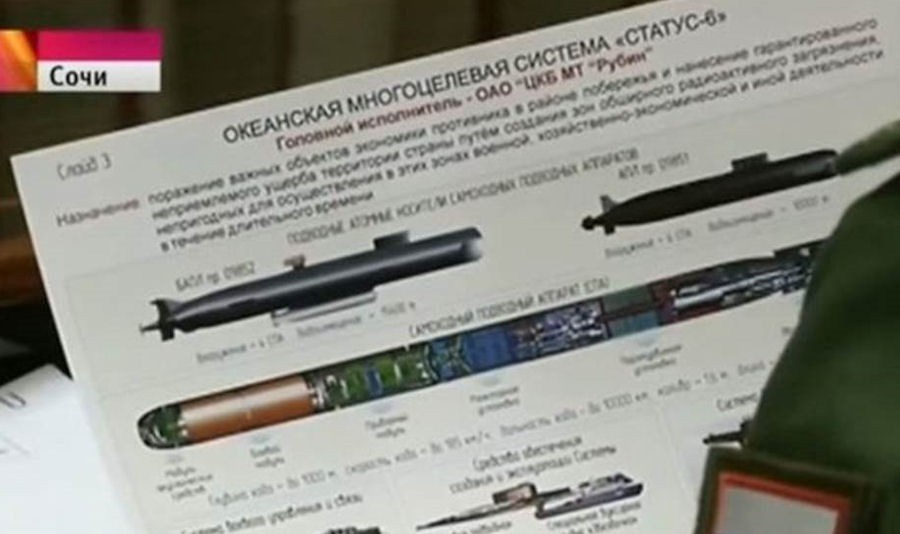
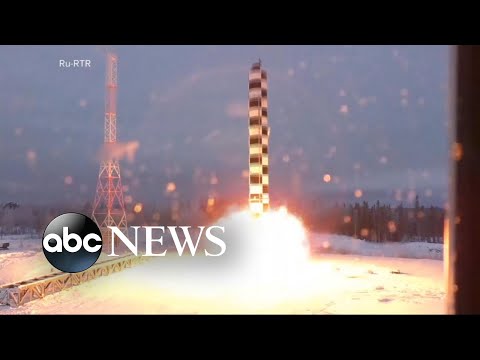
Russia’s 50 megaton “Status 6” drone torpedo
Let there be no doubt, a war between NATO and Russia would only end
one of two ways: With Russia eventually suffering a defeat because it
lacked the economic power it needed to sustain combat operations on such
a large scale… or with a nuclear exchange that would end our world as
we know it. As bad as the nuclear option may be, victory in a
conventional war likely wouldn’t be much to celebrate either. Russia and
its allies would all but certainly exact a punishing tole on American
and NATO forces, likely quickly capturing the Suwalki Gap and severing
the Baltics from the rest of Europe as the conflict ballooned away from
Ukraine and into what would have a strong likelihood of becoming a new
World War.
It’s clear, then, that war is an unacceptable outcome that leaders on both
sides of this conflict are likely hoping to avoid (while continuing to
pursue their own geopolitical interests, of course), but if a conflict
were to result, it’s important to have a clear-eyed perspective on just
how capable Russia’s advanced weapons, tanks, and aircraft really are.
Russia emphasizes hybrid warfare because it’s cost effective
During the Cold War, the United States and Soviet Union played the
roles of competing super powers, with each nation investing heavily into
new weapons technology they hoped would give them a decisive edge
against the competition. Of course, the Soviet Union fell in the early
1990s, leaving the Russian people to pick up the pieces and the United
States reigning as the world’s sole remaining super power.
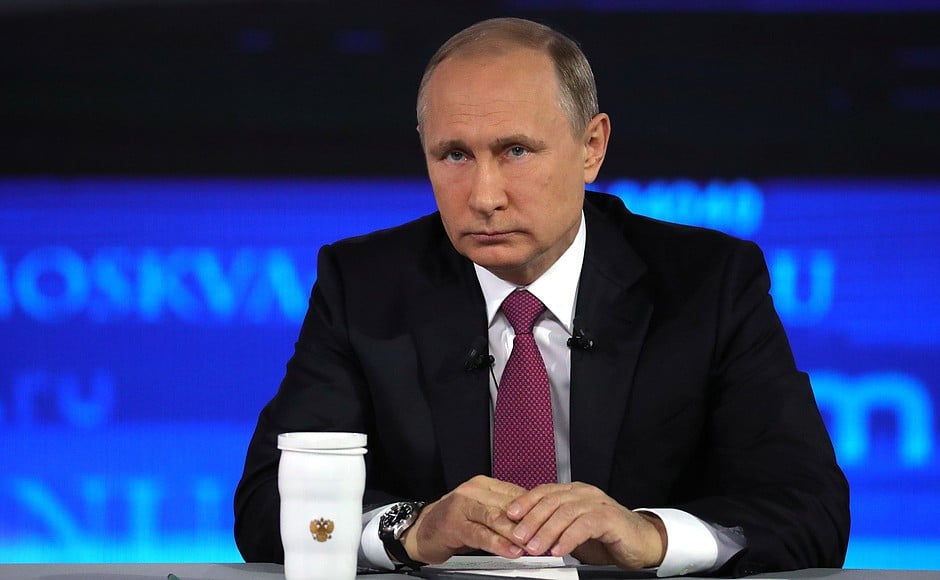
Less than a decade after the fall of the Soviet Union, Vladimir Putin
(a Russian politician and former KGB agent) rose to power, and although
he’s shuffled titles periodically to avoid term limits, the nation has
remained under his control in one form or another since 1999. Putin is a
popular figure among large portions of the Russian people (thanks in no
small part to a government-controlled media) but internationally, he’s
seen as an aggressive leader with few qualms about ending lives as he
pursues his vision of restoring his nation to its former Soviet glory.
Over the years, Putin has been tied to a number of public assassinations
and attempts, including the poisoning of a former Russian military
intelligence officer turned MI6 informant (Sergei Skripal) on English
soil in 2018.
Russian President Vladimir Putin (Courtesy of the Kremlin)
It’s because of Russia’s aggressive foreign policy that the nation’s
economy has struggled to find new footing since the end of the Soviet
glory days. Russia’s military annexation of Crimea from Ukraine in 2014
serves as one significant example of Russia’s knack for circumventing
international norms through the use of irregular warfare. Russia’s
attempts to influence foreign elections in Europe and the United States
serve as yet another.
Russia’s aggresive foreign policy has hindered military modernization
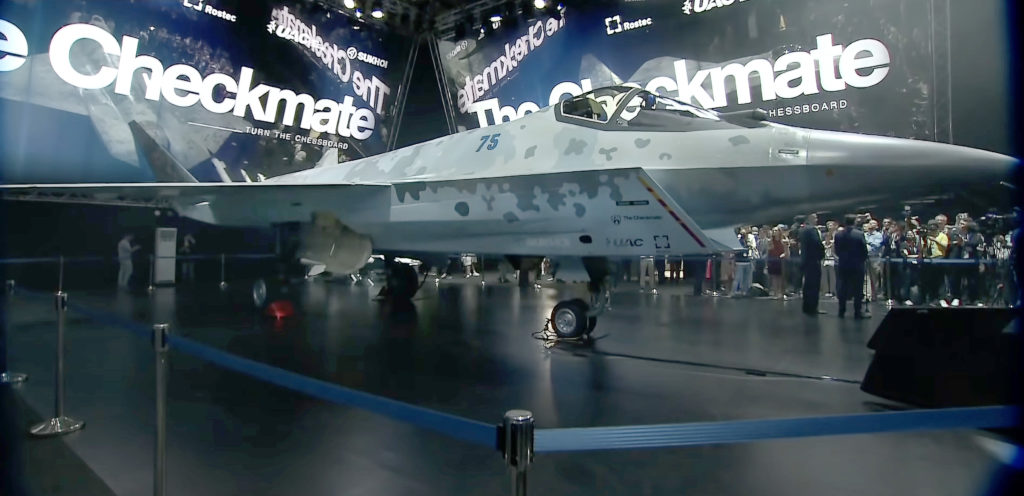
Su-75 Checkmate
Sanctions placed on Russia by the international community following
those and countless other incidents have left the Russian military with
an ever-shrinking pot of money to invest in Putin’s force-wide
modernization efforts. As a result, Moscow has adopted a “best bang for
their buck” mentality, with less emphasis placed on actual combat
operations, and far more placed on developing high profile weapons that
draw global attention. That attention helps Russia posture as though
they remain a potent global military threat, while also bolstering
foreign weapons sales—providing the nation’s military apparatus with a
much-needed injection of funds.
But not all of these “advanced” Russian weapons are quite what they
seem. In fact, many of Russia’s high profile technological leaps in
military prowess have since proven to be little more than publicity
stunts. The Su-57, Russia’s 5th-generation stealth fighter,
exists in too few numbers to matter even if it were as capable as they
claim. Expert assessments place their premier stealth fighter’s radar
cross-section as about comparable to that of America’s 4th generation
F/A-18 Super Hornet, and their recently unveiled Checkmate fighter, if it ever flies at all, will almost certainly be even less stealthy.
Likewise, Russia’s T-14 Armata main battle tank may also prove to be
among the best in the world, if only Russia could afford to build any.
Like the Su-57, Russia has been unable to produce the T-14 in any
appreciable numbers, with the most recent projections saying serial
production will begin sometime this year. It’s important to note that
the Su-57 may yet to prove highly capable at the sorts of missions it
was designed to fly, and the T-14 would offere a marked improvement over
Russia’s existing tank platforms… but a lack of funding has left these
points moot.
But while capable platforms like those wait patiently for enough
Rubles to kick-start production, these other headline-grabbing efforts
made a splash in the media in recent years, only to quietly fail once
the cameras were off.
The Uran-9 Infantry Drone
(WikiMedia Commons)
Back in 2018, Russia’s state-owned media outlets were aflutter with reports of the Russian military’s new advanced infantry
support drone dubbed the Uran-9. Shortly after the platform was
unveiled, Moscow announced that they were deploying the drone mini-tank
to Syria, where it would participate in combat operations in support of
Bashar Al Assad’s Russian-backed regime.
At first glance, the Uran-9 looked like something to behold. The
tread equipped mini-tank boasts a 30mm 2A72 autocannon as it’s primary
weapon, along with a 7.62-chambered PKTM machine gun, four anti-tank
missiles and 6 thermobaric rocket launchers. It was designed to work via
remote control and, according to Russian media, was built to withstand
heavy fighting in urban environments.
It wasn’t until a few months later that reports of just how poorly
the Uran-9 performed in combat started to bubble to the surface. In a
Russian Security Conference held later in 2018, A.P. Anisimov, a Senior
Research Officer from the 3rd Central Research Institute of the Russian
Defence Ministry, discussed a laundry list of issues the Uran-9 encountered before offering his final conclusion that the platform simply couldn’t do the tasks it was built to do.
Aside from lots of structural problems with the chassis and weapons
platforms, operators regularly lost control of the Uran-9 when
line-of-sight was obstructed. The platform also used a non-stabilized
video camera for targeting, which Anisimov described as making
identifying, tracking, or engaging any targets at any distance nearly impossible.
The Nuclear-Powered ‘Skyfall’ Cruise Missile
(DoD Image)
Vladimir Putin delivered a national address in March of 2018 that,
among other things, touted a number of new and highly advanced Russian
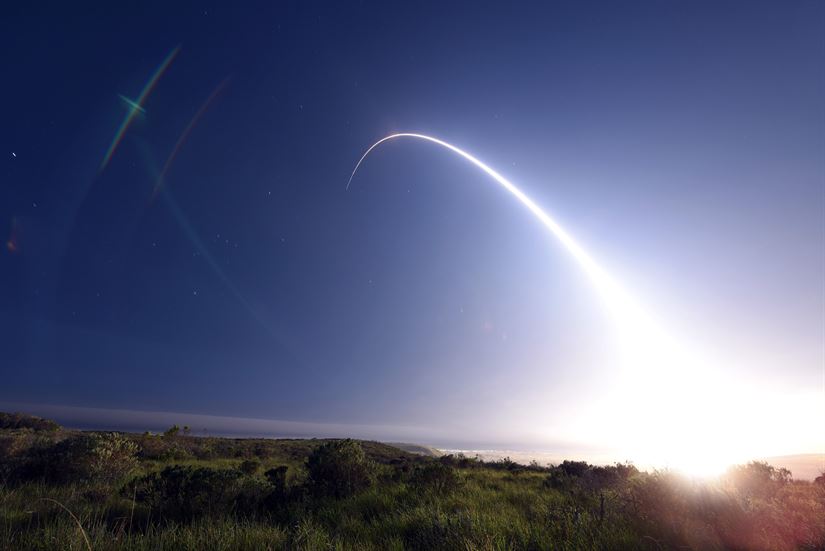
missile systems. Although he discussed a number of missiles, it was the nuclear-powered cruise missile NATO has dubbed the SSC-X-9 Skyfall (known in Russia as the 9M730 Burevestnick) that caught the most attention.
According to Putin, this new missile would have a near-unlimited
range thanks to its on-board nuclear reactor. That would theoretically
allow the missile to strike any target in the world, as well as allowing
for evasive maneuvers to avoid being intercepted by anti-missile
defense systems. As a result, Putin called it “invincible.”
The idea of a nuclear-powered cruise missile wasn’t particularly new. The United States experimented with nuclear propulsion systems
in the 1950s, but scrapped the effort out of concerns that the
nuclear-system could spread radiation on anything below its flight path.
Concerns about the safety of such a propulsion system were once again
brought to light after a Skyfall cruise missile went missing after its
nuclear engine failed to fire and the missile fell into the ocean.
Another explosion at Russia’s Nenoska test range was believed to have
involved the same missile. It reportedly killed five to seven scientists.
American intelligence agencies have spoken publicly about Putin’s
“invincible” missile, pointing out that thus far, the nuclear propulsion
system has failed to propel the missile in every test launch Russia has attempted.
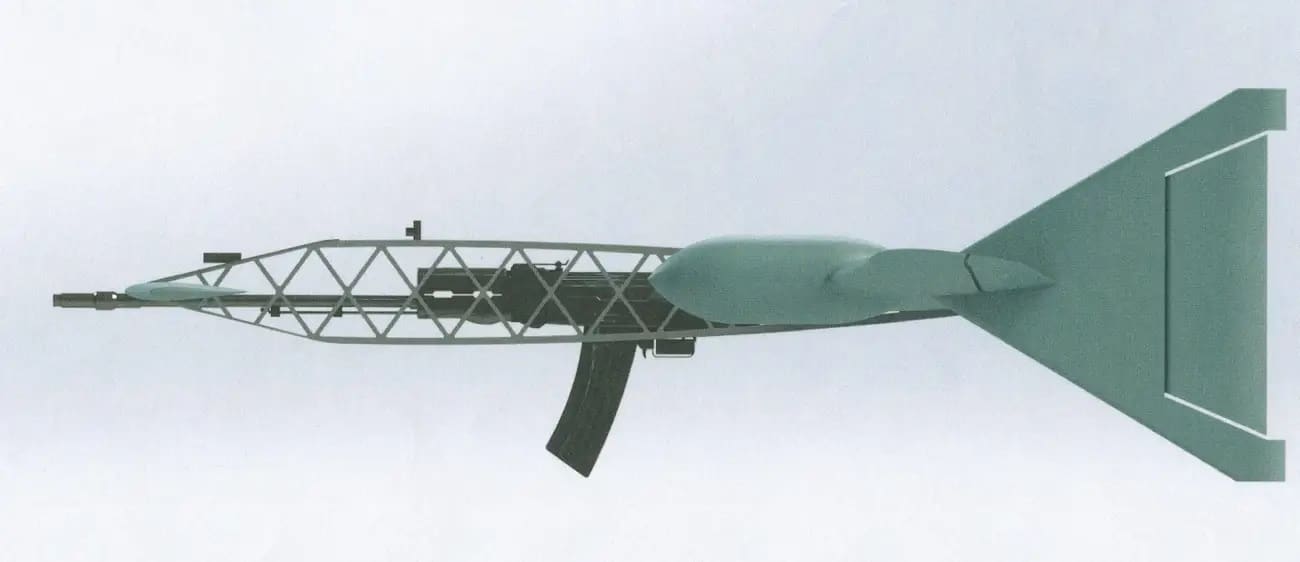
The Flying AK-47 (Shotgun Drone)
RU Patent (11) 113562 (Kremlin)
In 2019, Russian media unveiled what they claimed would be a
game-changing technology: a new drone that, at first glance, appeared to
be equipped with an AK-47, but that later turned out
to be intended for use with an AK-style Carbine Vepr-12 Hummer 12 gauge
shotgun. The small drone was reminiscent of a remote-controlled
airplane, with what looked like a standard issue rifle occupying the
majority of the fuselage. Of course, building an aircraft around a
weapons system worked for the A-10 Thunderbolt II, but a 12-gauge
shotgun is no GAU-8 Avenger.
At first glance, the drone seemed pretty cool, but the more you think
about it, the less effective a single flying shotgun with a 10-round
magazine could really be in practically all combat situations. Unlike
quad-rotor drones that can hover in place and take careful aim, this
drone has to maintain forward momentum to keep from crashing–which makes
it extremely difficult to level the weapon directly at a target. That
became even more apparent when video was released of the drone in
action.
This drone might seem like a whole lot of fun to operate, but it
certainly won’t tip the scales of any conflict in Russia’s favor.