Webster

The Constitution was made to guard the people against the dangers of good intentions." --American Statesman Daniel Webster (1782-1852)


Showing posts with label Allies. Show all posts

Wednesday, October 10, 2018

Allied made mistakes during WWII also......

I have posted in the past about various mistakes the Axis made during WWII, but the AAllies were not totally competant either, they also screwed up.  Such is the vagaries of War, you can't always expect the enemy to screw up, they are in it to win also.

When discussing the outcome of World War II, much is made of Axis mistakes. From Hitler’s launch of Operation Barbarossa to Japan’s failure to destroy the American carrier fleet, there were plenty to be had. But the Allies made plenty of military mistakes of their own.

The Winter War

Before it joined in fighting the Germans, the USSR used the chaos of war to achieve other aims. In November 1939, while the rest of the world was reeling from the invasion of Poland, the Soviets invaded Finland.
Ironically for a nation that had once been saved from an invasion by winter, the Soviets were woefully unprepared for the cold of Finland. Guns malfunctioned. Vehicles seized up. Men froze to death amid the ice and snow.

Their dark green uniforms, which would have disguised them in the forests further south, made them stand out against the snow. Meanwhile, the Finns used skis to swiftly cross the snow and saunas to create warm, safe medical stations.
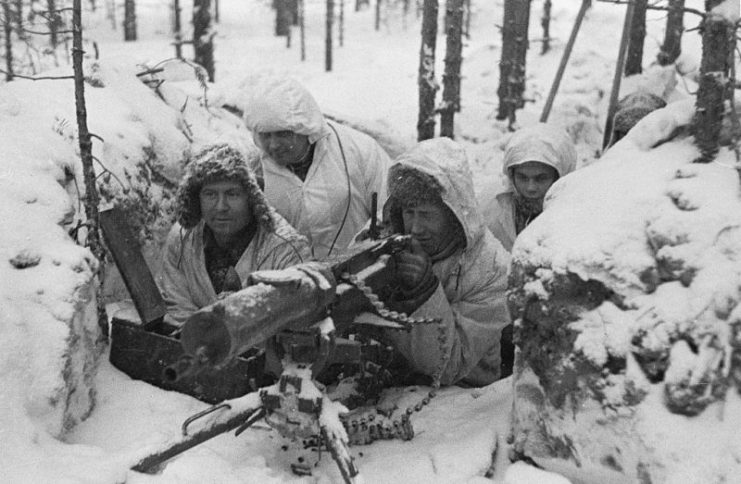
A group of Finnish soldiers in snowsuits manning a heavy machine gun in a foxhole.
Though vastly superior in numbers, the Soviets suffered huge casualties and international humiliation. When peace was made in March, they took control of 11% of Finland, but it had come at a terrible cost.
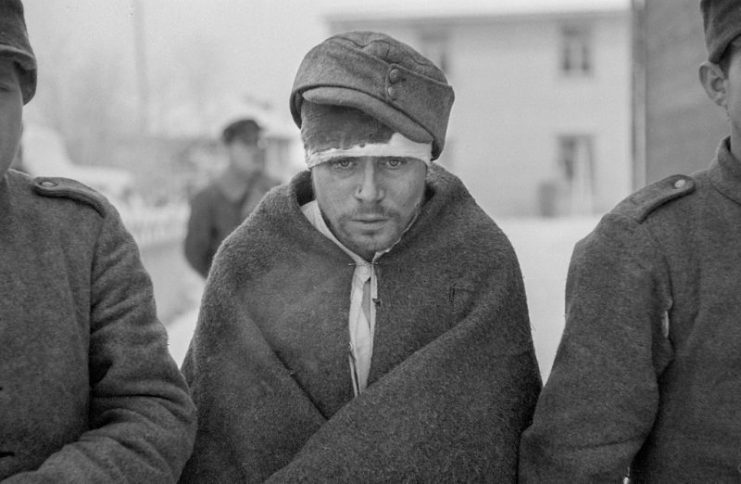
Soviet prisoners of war dressed with new clothes near the Arctic Circle at Rovaniemi in January 1940


Falling for the same trick twice is always embarrassing. In war, it can be fatal. That’s why the Allied attitude to the Ardennes Forest stands out.

 Ardennes

The Ardennes lay in the border region where Belgium, France, and Germany met. In May 1940, the French left this area weakly defended, believing it to be impassable to armored formations. Instead, they relied on the fortified Maginot Line to hold the Germans back.
The Maginot Line.Photo: Goran
The Germans proved the French wrong. Their tanks swept through the Ardennes, across previously neutral Belgium, and into France, completely ignoring the Maginot Line. France fell.
Four and a half years later, the same thing happened all over again. In his last great throw of the dice, Hitler launched an offensive through the Ardennes in December 1944. Once again, his men burst through weak Allied lines, though they were eventually thwarted by their limited resources.
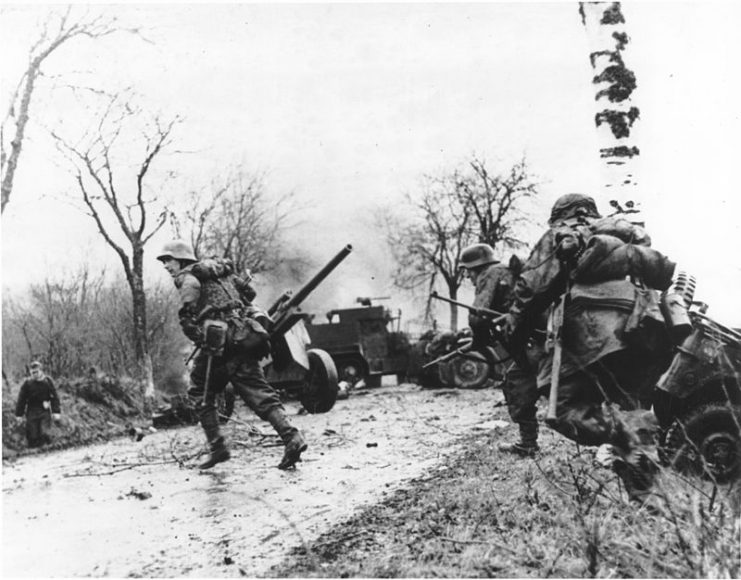
German troops advancing past abandoned American equipment.18 December 1944.
 
In General Eisenhower’s defense, it has been argued that this second time it was a trap, and that the American lines were deliberately weak to draw the Germans in. But if that was the case, Eisenhower never admitted to his own clever plan.
 
The Raid on Dieppe

On 19 August 1942, the Allies launched a raid in force on the French port of Dieppe. It was a British Army operation, but the troops involved were mostly Canadian.
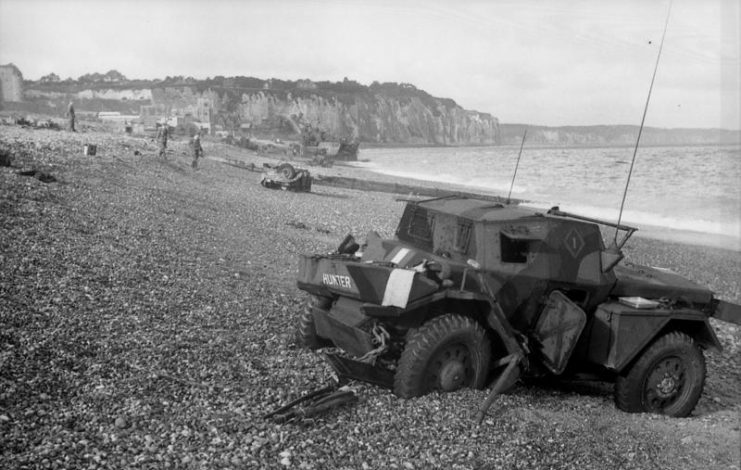
Dieppe’s chert beach and cliff immediately following the raid on 19 August 1942. A Dingo Scout Car has been abandoned.Photo: Bundesarchiv, Bild
The raid was meant to be a trial run for capturing a port by conducting an amphibious landing. It was a complete disaster.
Most of the troops became trapped on the beaches, where they were mercilessly battered by German machine guns and artillery. Even the tanks were mostly unable to get into town. Within a few hours, the withdrawal was called, and more men were lost getting out.
Over 4,000 Allied personnel were killed, wounded, or captured at Dieppe. It was a day that would forever color Canadian memories of the war.
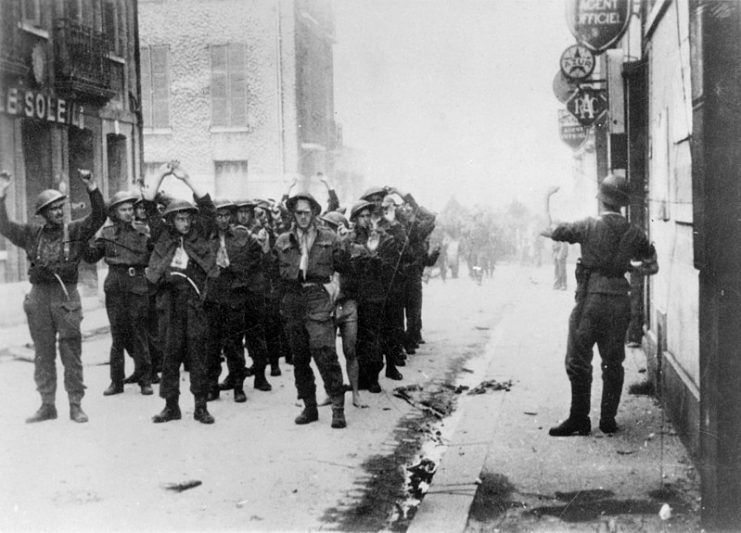
Canadian prisoners being led away through Dieppe after the raid.
 

Kasserine Pass

On 19 February 1943, German and Italian troops under General Rommel launched an attack against the Americans at the Kasserine Pass in Tunisia. It was an attack that proved just how unprepared the Americans were.
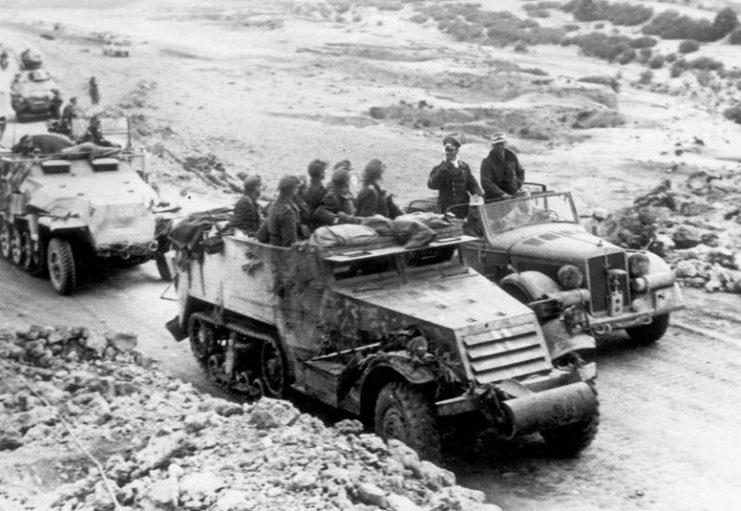
Rommel in Tunisia speaking with troops riding a captured American built M3 Half-track.Photo: Bundesarchiv, Bild 146-1990-071-31
As the Axis forces stormed forward, they caught the Americans by surprise. The Americans had faced little combat, while many of their opponents were veterans of the North African theater.
The Americans made basic mistakes such as not digging in properly, bunching together, and failing to properly position their troops. They courageously held out for the first day of fighting, but on the second day they fell into a disorderly retreat.
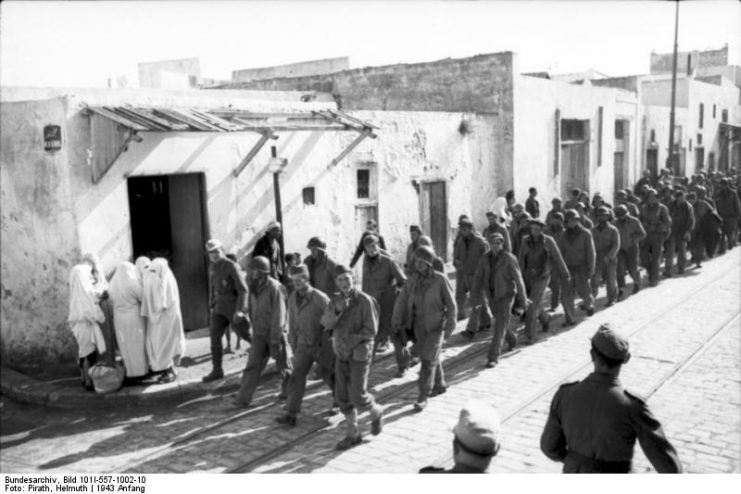
U.S. troops taken prisoner during the battle march through a Tunisian village.Photo: Bundesarchiv, Bild 101I-557-1002-10 /


Rommel achieved his tactical goal of breaking through the pass, but he was unable to make the strategic gains he had hoped for. British and American forces regrouped beyond the pass and held up his advance.
His aim of punching through the Allied lines and seizing their supplies never came to fruition. Not every failure turned into a disaster for the Allies.

Hurtgen Forest

At the time of the second Ardennes offensive, the Allies were already bogged down in one of their biggest mistakes – the Battle of Hurtgen Forest.
From September 1944 to February 1945, the Americans attacked German positions in the Hurtgen Forest, a wooded area around the border between Germany and Belgium. The Germans were well dug in amid the dense forest, making their lines almost impossible to break.
The Americans tried again and again in a series of bloody assaults. They lost nearly 30,000 men killed or injured and thousands more to combat exhaustion.
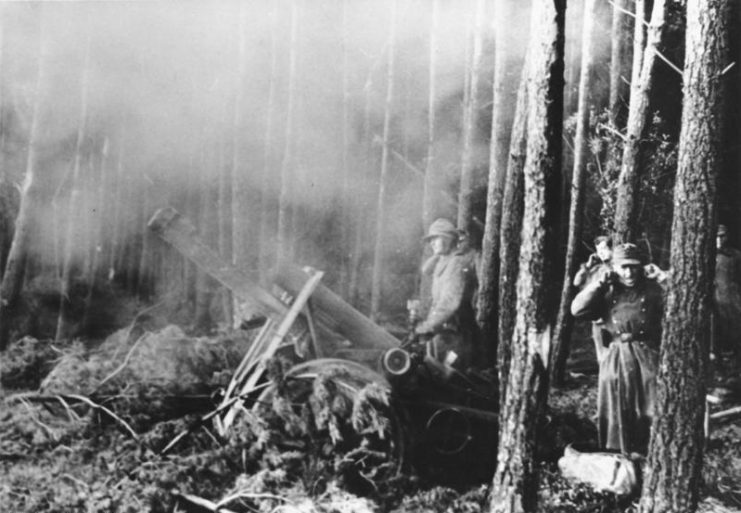
A German heavy mortar firing in defense against a U.S. attack on 22 November 1944 in the Hürtgen forest.Photo: Bundesarchiv, Bild
By the time they broke through, the Germans had opened the floodgates on industrial dams, something the battle had supposedly been launched to avoid. The war moved on thanks to real victories elsewhere, and the bloody waste in the Hurtgen was quietly ignored.

Operation Market Garden

One of the boldest ventures of the war, Operation Market Garden was launched by General Montgomery in September 1944. By landing paratroopers at a series of key bridges, he aimed to open a route across the Low Countries and into Germany. Conventional troops would follow before the Germans could counter-attack, ensuring victory.
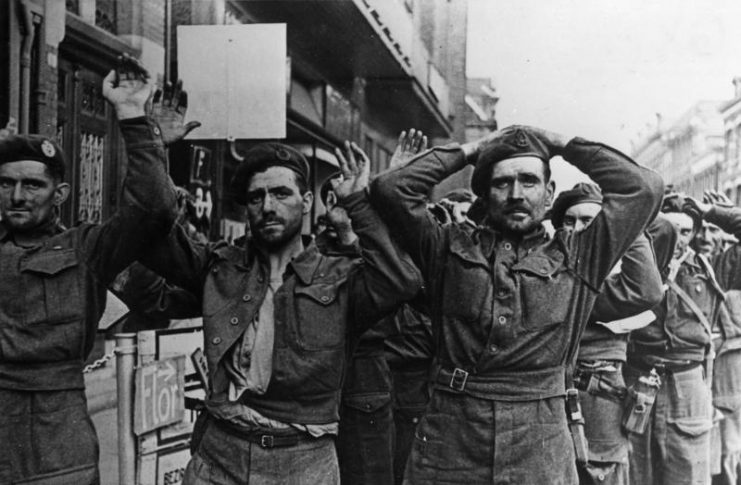
British POWs at Arnhem.Photo: Bundesarchiv, Bild 183-S73820 /
Unfortunately for the British and Polish paratroopers, Montgomery’s scheme proved too bold. The ground campaign didn’t advance as quickly as he had hoped. Allied paratroopers were trapped in the town of Arnhem for a week, taking heavy casualties at the hands of the Germans.
By the time they were withdrawn, 1,200 men had died. 6,600 more were left behind, injured, captured, or missing.


 I used the ending from the movie "A Bridge Too Far".  It is one of my favorite war movies and it was to me well done.
 

Wednesday, May 9, 2012

Spandau Prison

My son found my copy of "Inside the 3rd Reich" by Albert Speer and read it, impressive for a 9 year old boy I should say.  I remember reading my Dad's copy when I was 12.  It was an eyeopener and it explained how a 2nd rate street hustler named Adolph Hitler was able to ensnare an entire generation of Germans  I later purchased "Spandau" for my collection.
     What prompted this post was that my son was asking a lot of questions about the prison and i told him that I didn't know what happened after the last prisoner was released.  I figured that I would surf around.  Google and Wiki are good things;)

Spandau Prison


Coordinates: 52°31′16″N 13°11′07″E

Spandau Prison in 1951.
Spandau Prison was a prison situated in the borough of Spandau in western Berlin, constructed in 1876 and demolished in 1987 after the death of its last prisoner, Rudolf Hess, to prevent it from becoming a neo-Nazi shrine. In history, Spandau Prison succeeded as a prison to the Renaissance-era Spandau Citadel where Frederick II of Prussia had held captive the magistrates of the Prussian Kammergericht and the Spandau jail, where Carl Schurz had freed his friend Gottfried Kinkel in the aftermath of the 1848 German revolution.[1] The magistrates and Kinkel were held captive as Festungsgefangene (fortress prisoners), being privileged in detainment condition

The prison was built in 1876. It initially served as a military detention center. From 1919 it was also used for civilian inmates. It held up to 600 inmates at that time.
In the aftermath of the Reichstag Fire of 1933, opponents of Hitler and journalists such as Egon Kisch and Carl von Ossietzky were held there in so-called protective custody. Spandau Prison became a sort of predecessor of the Nazi concentration camps. While it was formally operated by the Prussian Ministry of Justice, the Gestapo tortured and abused its inmates, as Egon Erwin Kisch recalls in his memories of Spandau Prison. By the end of 1933 the first Nazi concentration camps had been erected (at Dachau, Osthofen, Oranienburg, Sonnenburg, Lichtenburg and the marshland camps around Esterwegen); all remaining prisoners who had been held in so-called protective custody in state prisons were transferred to these concentration camps.
After World War II it was operated by the Four-Power Authorities to house the Nazi war criminals sentenced to imprisonment at the Nuremberg Trials.
Only seven prisoners were finally imprisoned there. Arriving from Nuremberg on 18 July 1947, they were:
Prisoner Prisoner Number Sentence Released
Karl Dönitz 4 10 Years 30 Sep 1956
Konstantin von Neurath 3 15 years Nov 1954 (released early)
Baldur von Schirach 1 20 years 30 Sep 1966
Albert Speer 5 20 years 30 Sep 1966
Erich Raeder 2 Life 26 Sep 1955 (released early)
Walter Funk 6 Life 16 May 1957 (released early)
Rudolf Hess 7 Life Died 17 Aug 1987 in prison
Of the seven, only four fully served their sentences; the remaining three, Neurath, Raeder, and Funk, having been released earlier due to ill health. Between 1966 and 1987, Rudolf Hess was the only inmate in Spandau Prison. His only companion was the warden, Eugene K. Bird, who became a close friend. Bird wrote a book about Hess's imprisonment entitled The Loneliest Man in the World.
Spandau was one of only two Four-Power organizations to continue to operate after the breakdown of the Allied Control Council; the other being the Berlin Air Safety Center. The four occupying powers of Berlin would alternate control of the prison on a monthly basis, each having the responsibility for a total of three months out of the year. Observing the Four-Power flags that flew at the Allied Control Authority building could determine who controlled the prison.
The prison was demolished in 1987, largely to prevent it from becoming a Neo-Nazi shrine, after the death of its final remaining prisoner, Rudolf Hess, who had been the prison's sole occupant after the release of Speer and von Schirach in 1966. To further ensure its erasure, the site was made into a parking facility and a NAAFI shopping center, named The Britannia Centre Spandau and nicknamed Hessco's after a British supermarket chain of a similar name. All materials from the demolished prison were ground to powder and dispersed in the North Sea or buried at the former RAF Gatow airbase.
As of 2006, a Kaiser's Supermarket, ALDI, and a Media Markt consumer electronics store occupied the former prison grounds. In late 2008, Media Markt left the main shopping complex. The space lies now abandoned. In 2011 the new owner, a development company applied for permission to demolish the cinema complex of the Britannia Centre, which is used by ALDI. The contracts for both, the cinema complex and the shopping complex, with Kaiser's, were terminated.


Location

The compound was located on Wilhelmstraße in the district of Spandau.
Image showing the location of the Spandau Prison on Berlin map

Map

Map of the Spandau Prison.

Pre Occupation Forces History

The prison was built in 1876. It initially served as a military detention center. From 1919 it was also used for civilian inmates. It held up to 600 inmates at that time.

Occupation Forces History

On July 18, 1947 seven Nazi war criminals were brought to the Spandau Prison. They were sentenced at the Nürnberg Trials. Rudolf Hess, Walther Funk, and Erich Raeder faced life sentences. Albert Speer and Baldur von Schirach faced a 20 year sentence while Konstantin von Neurath had to serve 15 and Karl Dönitz 10 years in the prison.
Dönitz, Speer, and Schirach served their full sentences. Neurath, Raeder and Funk were released earlier due to their ill health.
From 1966 on Rudolf Hess remained the only prisoner at the Spandau Prison. The four powers took turns in guarding the prison. Despite the tensions between the Western Allies and the Soviets the guard duty at the Spandau Prison was never interrupted.
The guarding platoon, made up by 37 soldiers and one officer, changed monthly with a change of the guard ceremony in front of the prison:

FRUKUSSU
FebruaryJanuaryAprilMarch
JuneMayAugustJuly
OctoberSeptemberDecemberNovember
The sentries were manning six towers arround the prison.
Since the prison was located next to Smuts Barracks which housed the Berlin Armoured Squadron the Soviets were able to take a close look at the activities in the barracks.
The prison was funded by the Federal republic of Germany through the occupation budget and the budget of the justice department in West Berlin. According to a newspaper article the costs from 1970 until 1983 were about 20 million DM.
Until his death Germany and the Western Allies tried to release Hess for humanitarian reasons but the Soviets would not agree.
On August 17, 1987 Hess comitted suicide. However some people do not believe that he comitted suicide but have a controversial theory of the British SAS killing Hess.
The US guard detail which served at the prison during August was pulled out and British guards took over the compound.
In order to prevent the prison becoming a memorial for Neo-Nazis the prison was torn down in 1987. The rubble was spread in the North Sea.
A new NAAFI shopping centre was built on the former prison grounds.

Post Occupation Forces History

The shopping centre was turned over to German authorities in 1994.

Images


This picture was taken the morning after Hess died. The barriers were put up to keep sympathisers away