Webster

The Constitution was made to guard the people against the dangers of good intentions." --American Statesman Daniel Webster (1782-1852)


Showing posts with label Airlines. Show all posts

Wednesday, August 20, 2025

20 Years Later, the NWA/AMFA Strike

 We in the Airlines fall under the "National Railways Act", the airlines got added in 1936.  The airlines are considered part of the transportation link of the United States so the ability to strike is limited.  Before a strike, both parties have to go before a arbitration board to iron out the differences.  Most people fall under the "Fair Labor Standards Act", this is the one that gives you the 40 hours a week, the time and half after 40 and so forth, and the minimum wage comes from this one.  The Big Beautiful Bill No Tax on Overtime only affects the people under the "FLSA", so we airline people are exempt from that bennie.  Also a bit of info on that, the no tax only goes for anything after 40 hours until the cap of $25,000 if you are married(Yearly) after that, the tax goes back in.  and if you are single, it is $12,500.  I did a bit of research into it 'splaining it to my "workwiths", lol

      I know a few people from NWA that lost their jobs and now work for my employer, they are really good mechanics and are exceedingly bitter.  This is part of the reason that my employer is non-union with the exception of the Skykings, er Pilots.  They feel like they were betrayed by their union and sold down the river.  The union in their mind pushed for the strike, and when the company brought in "Scabs", the company basically fired the striking workers and the union organized the scabs.  so there is a lot of anger there.  The stories they talk about has warned a lot of impressionable younger mechanics that might be persuaded by the siren song of the unions that have tried twice to organize my employer and failed.  IAM and AMFA have tried, and so far have been unsuccessful.

    Just a bit of background.  And for those that don't know, I was a shop steward or union Rep for the UAW at Ford Motor Company, so I know a bit how unions work,  They have good and bad points.  I have "Talked" about that in the past.


   I got the article from "Aviation Week"


Striking mechanics
Credit: Jim West/Alamy Stock Photo

This year marks the 20th anniversary of an event that permanently affected aviation maintenance for airlines and yet was barely noticed by the flying public—the Northwest Airlines/Aircraft Mechanics Fraternal Association mechanics’ strike.

Like many legacy airlines in the early 2000s, the glory days of profitability from the previous decade(s) were a distant memory. The harsh economic environment forced the major airlines to cut costs to survive, while many smaller airlines folded.

At Northwest Airlines (NWA), all salaried and union employees had accepted concessionary compensation, with the exception of the Aircraft Mechanics Fraternal Association (AMFA). Prevailing speculation was that AMFA leadership eyed the larger membership representation votes at other majors and would not accept concessions, despite understanding NWA’s financial fragility. With negotiations continuing to deteriorate in 2004, the NWA leadership began planning to operate the airline in the event of an AMFA workforce strike.

AMFA represented more than 5,000 NWA employees, and replacing them in a single night was extremely challenging. Above all, an effective contingency plan had to have some critical deliverables:

• The airline’s operations would run at 100% and had to remain safe and compliant.

• The airline had to maintain the confidence of the aircraft crews, the FAA and the flying public.

• The whole team had to be committed to achieving the plan, and the CEO and the board had to believe the plan could be executed (since failure would have shut down the airline).

While the final plan was enormously detailed, the most critical task was sourcing and certifying replacement personnel and providers for:

• 1,500 line maintenance mechanics in 31 maintenance stations.

• All aircraft heavy maintenance.

• All engines and auxiliary power units.

• Aircraft cleaners in 12 station locations.

• Mechanics conducting aircraft pushbacks at 28 station locations.

• Ground radio technicians in one location.

• Plant and facilities technicians in 13 locations.

• Home for every part—source and certify component maintenance providers to support the repair of about 10,000 individual components.

• Almost 3,000 flight attendants in the event they conducted sympathy labor actions.

Preparing to replace this amount of work was difficult in itself, but the real challenge was time.

The airline estimated that the negotiations process would likely end in the late summer/early fall if AMFA were to strike. When a fully dedicated project team started detailed preparation, it was seven months before the airline had to be ready.

The airline’s managers collectively dedicated tens of thousands of extra hours to the preparation. Days flowed into nights, and many weekends were spent working on endless details. Training centers were set up in remote cities in just weeks. Approval processes were reduced from months to days and hours. Support groups like security, information technology and human resources were enormously responsive.

When AMFA called the strike on Aug. 20, 2005, the previous weeks’ operations had been burdened by a significant spike of deferred maintenance (minimum equipment lists items and nonessential equipment and furnishings), delays and out-of-service aircraft resulting from disruptive behavior. Despite this, the tech ops team was ready. The AMFA mechanics were escorted off the property, and execution of hundreds of detailed checklists began in every station and work area.

Everything was inspected for serviceability, including aircraft, vehicles, ground support equipment and computer and phone lines. Replacement personnel were bused in, issued toolboxes and began work.  Maintenance and cleaning providers entered facilities all over the country and began working.  Enhanced quality oversight began immediately.

By 7 a.m. the next day, the checklists were complete, and the airline was up and running. As the days went on, the operational burdens were significantly reduced, and the operation began to run at historically normal reliability but at much lower cost.

After 444 days, AMFA settled with the company, but, sadly, many good AMFA-represented employees had permanently lost their jobs due to the union’s decision to strike.

For the maintenance team that had shown that a workforce could be completely replaced at an airline, those tough days had bonded them together. They had been through the most intense period in their careers. They had built relationships with many new team members in different roles, and they had sacrificed a lot of time with their families. Today, many still proudly say they feel like they fought a war together.

Friday, December 22, 2023

Lufthansa buys the B737 after a 28-year Hiatus.

 I thought this was interesting because Germany being involved in Airbus, although they do have Boeing Wide bodies in their fleet.  I get the "Not putting all their eggs in one basket" philosophy and not being totally beholden to one manufacturer.  

     I remember being stationed in Stuttgart and seeing the Lufthanza 737's come screaming in because of the JT8D engines were not exactly quiet, LOL

  I see those pictures and I can still hear those engines screaming.........And another memory, The airport would hire "jaegars" or Hunters to cull the rabbit populations every once and a while  because those huge jackrabbits would FOD the hell out of a motor when one got ingested during a roll.
.


Boeing 737-100

Lufthansa was the launch customer for the 737-100, which made its first flight (pictured) in 1967 and entered service with the airline in 1968.

Credit: Boeing

Before Lufthansa finally signed an order for the Boeing 737-100 in early 1965, Boeing had to guarantee the airline that it would not cancel the program. Three years later, the 737 entered service with the German airline. Now, 58 years after its first order and 28 years after it last bought the type, Lufthansa is coming back to the aircraft.

The airline’s supervisory board on Dec. 19 approved of a firm order for 40 737 MAXs that could grow to 100 aircraft, including options. While Lufthansa has the flexibility to change to other versions closer to their delivery dates, the group’s priority is the 737-8. The carrier also ordered 40 Airbus A220-300s plus 20 options and secured 40 options for more A320neos. Deliveries are planned to start in 2026 and continue through 2032.

  • Aircraft likely to be flown by subsidiaries
  • The move should help negotiate pricing 

“With today’s aircraft order, we are accelerating the largest fleet modernization in our company’s history,” says Detlef Kayser, an executive board member responsible for fleet and technology. “This increases our order list of around 200 aircraft to 280—plus an additional 120 purchasing options for further state-of-the-art short- and medium-haul aircraft. We are pleased that both Airbus and Boeing were able to convince us on all commercial and technological aspects. In addition to this, the decision for the Boeing 737-8 will also give us more flexibility for the procurement of short- and medium-haul aircraft in the future.”

“Our relationship with the Lufthansa Group has led to a number of industry-changing achievements, and we are delighted to see the 737 return to an original launch customer’s fleet,” Boeing Commercial Airplanes CEO Stan Deal says.

Lufthansa bought its last 737-300 in 1995, after having ordered a total of 146 since the aircraft’s launch. The airline never went for the 737 Next Generation (737NG) and has so far stayed away from the 737 MAX. Its last 737-300 was retired in 2016. The group has since become an all-Airbus narrowbody operator across its various subsidiaries: Lufthansa, Swiss, Austrian Airlines, Brussels Airlines and Eurowings. ITA Airways, in which Lufthansa is seeking to acquire a 41% stake, is also an all-Airbus airline. SunExpress, a leisure carrier jointly owned with Turkish Airlines, is operating a mixed 737NG and MAX fleet and purchased a further 90 737 MAXs at the Dubai Airshow in November.

According to company sources, one major factor in the decision was for Lufthansa Group to become less dependent on Airbus as a sole-source supplier of narrowbodies. In future campaigns, Lufthansa can now more credibly stage competitions between the A320neo and 737 MAX and likely achieve better pricing. Airbus narrowbody slots are sold out until 2030, and the aircraft-maker currently has little incentive for big discounts unless a strategic customer needs to be retained at all costs.

Unlike its narrowbodies, Boeing’s widebodies have significant exposure at Lufthansa Group. Swiss operates Boeing 777-300ERs. Austrian’s long-haul fleet consists of Boeing 767s and 777s. Lufthansa Airlines is one of the few operators of the Boeing 747-8 and has also begun introducing the Boeing 787-9. Lufthansa Cargo operates an all-777F fleet. And Lufthansa was part of the launching customer group for the 777-9, the first of which is now expected to arrive in mid-2025.

Through November, Boeing had received firm orders for 686 737 MAXs this year. In the same period, Airbus sold 1,248 A320neo-family aircraft, showing how much of a prestige win Lufthansa’s order must be for Boeing.

It is still unclear which of the group’s airlines will operate the new 737s, although they will not be deployed to the main brand serving the Munich and Frank-furt hubs nor to Swiss in Zurich. The MAXs could end up being operated at Eurowings, Austrian or Brussels Airlines given the size of the order. Lufthansa says the decision will be made at a later stage. Eurowings has a fleet of about 100 aircraft and could move over to the MAX if all options are exercised.

The 40 A220-300s Lufthansa ordered are slated for its new City Airlines affiliate. Swiss is the only A220 operator in the group, with nine -100s and 21 -300s in service. ITA Airways committed to 22 of the aircraft, with seven coming from Airbus and 15 sourced through Air Lease Corp. Delta Air Lines is by far the aircraft’s largest customer with orders for 131, followed by JetBlue Airways with 100 units. AirBaltic and Breeze Airways have bought 80 aircraft each, and Air France and Air Canada have committed to 60 each.

The Lufthansa A220 deal is a particular blow for Embraer, which had pitched the E2 in the competition against the A220.

City Airlines is planned to start operating feeder services at the Frankfurt and Munich hubs beginning with ex-Lufthansa A319s in 2024. The new affiliate was set up because an agreement allowing the group’s existing regional airline, Lufthansa CityLine, to operate larger mainline aircraft expires in 2027.

The group operates Mitsubishi CRJ-900s and Embraer 190 and 195s at CityLine, Air Dolomiti and Austrian but says it has no plans to buy new aircraft to replace them.

Tuesday, January 31, 2023

Red Wings returning to Tupalov operation.

 I had done a "Post" a few days ago about Russia putting paper on the Airworthiness certifications on the leased Western planes that certain Russian airlines have, well "RedWings have gone to Topalov operations rather than dealing with the Western planes and the certification hassles.  It will be interesting to see how this plays out in the next few years. Russia had made huge strides in the safety of their airlines and their airplanes and using Western airplanes was a huge part of their safety record, now with some of the airplanes going back to Soviet and Russian metal, will this play havoc with the safety record of the Russian commercial aviation?, Well time will tell.

Tu-204


Red Wings was the last Russian airline to operate a passenger version of the Tu-204.

Russian airline Red Wings plans to expand its fleet with four Soviet-era Tupolev Tu-204/214 narrowbody airliners.

An airline representative confirmed to Aviation Daily that a preliminary agreement with Russia’s United Aircraft Corporation (UAC) will see one Tu-204 and one Tu-214 delivered in 2023. Two more Tupolev airliners will join the carrier’s fleet a year later.

Red Wings will take the aircraft from its owner Ilyushin Finance, which in turn is UAC’s leasing subsidiary. The exact airframes to be restored to airworthiness have not yet been chosen, a Red Wings representative says.

But there is a chance that the Tu-204 may have been previously operated by Red Wings, which was the last airline to operate a passenger version of the Tu-204 in Russia. It retired its last five Tu-204s at the end of 2018, replacing the Russian-made aircraft with Airbus A320 narrowbodies. Since Russia’s invasion of Ukraine in late February, the Western-made aircraft have been grounded.

As a result, Red Wings now has no medium-range narrowbody capacity; it is operating 17 Russian-made SSJ100 regional jets and three Boeing 777 widebodies. Two more Superjets are expected to arrive before the end of this year, the airline confirmed to Aviation Daily. The airline carried 2.99 million passengers in 2021, placing it 10th among Russia’s largest carriers.

The Tu-204 was certified in 1994 and is now being operated in Russia only in freight or government and corporate variants. The type is no longer in serial production, but UAC still assembles one or two Tu-214 airframes per year for government customers.

UAC plans to expand the assembly rate of the Tu-214 up to 10 aircraft annually from 2025 to satisfy demand from domestic carriers who have no access to foreign-made aircraft because of the Western sanctions imposed in response to Moscow’s invasion of Ukraine. The government expects UAC to roll out 70 newly assembled Tu-214s through 2030.

The Tu-214 variant was certified in 2000 and is assembled at UAC’s facility in Kazan. Two additional fuel tanks differentiate it from the Tu-204 and these extend its range, enabling it to carry up to 210 passengers for 6,500 km (3,500 nm).

In Russia the only Tu-214s regularly flying are for government air wings, in corporate, radio relay and airborne command modifications. However, Ilyushin Finance still has three stored Tu-214s in passenger configuration which were operated by airline Dalavia in the 2000s before its bankruptcy.

The Red Wings official adds that the airline’s strategy also calls for expanding the fleet with new Russian aircraft types like Superjet NEW jets and MC-21 narrowbody airliners. But the first commercial operator of these new types is likely to be Aeroflot subsidiary Rossiya Airlines.

MC-21

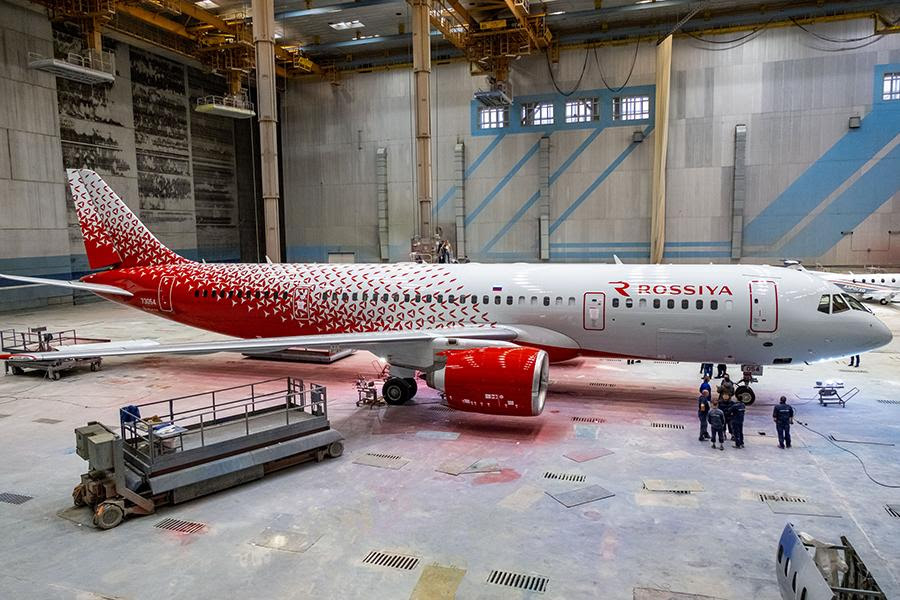
UAC rolled out its MC-21-300 flight prototype with registration number RA-73054 repainted in Rossiya livery on Nov. 24. This aircraft, equipped with Pratt & Whitney PW1400G engines and other Western components, will stay with UAC and be used for training, initially of Rossiya’s instructor pilots, the Russian manufacturer says. According to UAC, two more test aircraft are expected to get the Rossiya livery.

Rossiya tells Aviation Daily that details of the crew training program were being discussed with UAC now and the start date was yet to be decided. Rossiya has 210 aircraft of the type on order which will be delivered in the new MC-21-310RUS variant—stripped of all Western-made parts. The first six aircraft are expected to arrive in 2024.


Wednesday, January 25, 2023

Possible Labor unrest with the new Pilot contracts in the works.

  I have experiences with "Unions" especially as a "Union Rep" and it was a common union tactic to pick one company, get a contract or strike to get a more favorable labor agreement, then use the template to settle with the others. This normally worked with the big 3 automotive companies, but the airlines are a bit different, their debt to income is a lot different so the boilerplate contract that they get with one may not work with another so there is a possibility of labor unrest with a major carrier this spring or summer, something to think about in your travel plans.  Keep in mind that there is a huge demand for pilots, with a lot of the older ones that took "packages" during covid and the training standards are very strict for a Western based pilot, the FAA really oversees that pretty good and the companies don't want the FAA all in their business for hiring an incompetent pilot.   I don't mention who my employer is for obvious reasons, I do like my job and I don't want to get fired because someone gets offended by something I said when I do a rant and tries to get me cancelled....Yes, some of my former Ford Peeps had TDS(Trump Derangement Syndrome) and tried to get me canned from my present employer. plus I have heard in news reports of other people losing their jobs because some mob in social media gets spooled up and the modern left believe in punishing unbelievers, especially people like me that they believe left the democratic plantation especially with my union background.   

   I pulled this off a 3rd party source off my work email.


American Airlines pilots

                                                   Credit: American Airlines


Voting campaigns for new pilot collective bargaining agreements (CBA) are beginning to gain momentum at Delta Air Lines and Hawaiian Airlines

American Airlines and United Airlines are next, but all parties are bracing for increasingly bumpy labor talks.

On Jan. 18, the Delta Master Executive Council (MEC), represented by the Air Line Pilots Association, Int’l (ALPA), voted to send a new tentative agreement (TA)—Contract 2019—to Delta’s 15,000 pilots for ratification. Fourteen voted in favor and three against. Balloting for the new pilot working agreement (PWA) to be ratified opens Jan. 31 and closes March 1. The MEC is conducting a series of road shows at seven Delta bases beginning Jan. 23 in Salt Lake City.

The contract calls for baseline composite hourly pay increases of 18% retroactive to Jan. 1, 2023, with built in increases of 5%, 4%, and 5% on Jan. 1 of 2024, 2025, and 2026, respectively. Under terms of the new PWA, pilots will receive a one-time payment based on eligible earnings of 4% in calendar year (CY) CY2020, 4% of CY2021, and 14% of CY2022.

“I appreciate the magnitude of the decision facing each Delta pilot,” Delta Master Executive Council Darren Hartmann Chairman said in a letter to membership.

“While the Contract 2019 TA vote was not unanimous, a majority of the MEC believe the agreements contain significant value for the Delta pilots across-the-board. Delta is poised to be an industry-leader this year and the new PWA, if ratified, will be industry-leading,” Negotiations for Contract 2019 first commenced prior to the pandemic in April 2019. The talks eventually wound up in mediation in February 2020 but were put on hiatus due to the coronavirus pandemic. Talks for the new CBA resumed in January 2022.

Simultaneously, Delta’s MEC also voted to recommend a separate standalone clause letter of agreement on international “Global Scope” clause job protections to be put up for ratification. This covers Delta pilot flying “relating to profit/loss sharing agreements, equity investments, codeshare partners, interline agreement subsidiaries, fee-for-departure regional carriers, and affiliated operators.” With Delta’s ambitious joint ventures, alliances, and equity investments in foreign-domiciled carriers, this issue has gained even more traction for the attention of the union and its membership.

Hawaiian Airlines pilots are also considering a new four-year TA for its 1,000 pilots, with two weeks of voting set to begin Jan. 27. If ratified, what its MEC calls “an industry standard agreement” would take effect March 2. The agreement stipulates an average 32.9% pay increase plus a signing bonus, increased company retirement contributions, and quality of life enhancements. The union secured rates for Hawaiian’s future fleet of Airbus A330 freighters operating under the Amazon contract, that it termed “the highest in the industry, surpassing existing rates at cargo giants UPS and FedEx Express.” 

“Hard-fought negotiations between the Negotiating Committee and the company have now yielded what the MEC believes to be an agreement that accomplishes the goals our pilots set for us when we opened talks two years ago,” Hawaiian ALPA Master Executive Council (MEC) Chair Larry Payne said.

Contract Envy

The Delta agreement and strong earnings reports have added fuel to the fiery negotiations at Delta and Hawaiian’s two other U.S. legacy carrier peers. Hundreds of United Airlines pilots picketed at San Francisco International Airport (SFO) on Jan. 18 displaying their frustration with negotiations as United announced $843 million in fourth quarter net income.

Following United’s strong earnings results, acting United MEC chairman Capt. Mike Harrison said, “We are aware of management’s public comments about the impact of the Delta AIP, now a Tentative Agreement, and that they roughly know what a deal will look like. The company has said that there is no reason this new contract cannot be finished in a couple of weeks. The United MEC will send an industry-leading proposal that includes the concerns of our members and reflects the contract hard-working pilots of United Airlines deserve.”

American Airlines’ 15,000 Allied Pilots Association (APA)-represented pilots are in their fourth year of contract negotiations. Following better than expected earnings, American’s pilots leverage is only expected to increase. On Dec. 8, 2022, American’s APA board said, “American Airlines management has consistently shown an unwillingness to lead the industry, and ultimately an unwillingness to invest in one of their most important assets—our pilot group ... Delta Air Lines management has demonstrated a visionary understanding of the current state of the marketplace for professional pilots. Working with the Delta ALPA MEC, they have ushered in a new standard for pay, benefits, and work rules befitting of the pilots of the world’s safest and largest airlines.”

In an emailed statement on Jan. 20, American’s APA board said, “our Board of Directors and Negotiating Committee will meet next week to review the details of the tentative agreement approved by the Delta ALPA Master Executive Council.”

APA is also alleging American is now four weeks late in paying holiday premium pay over Thanksgiving. “It also appears they haven’t gotten their act together in time to properly account for Christmas and New Year’s,” said the APA’s Jan. 13th News Digest.

Spirit Airlines’ ALPA pilots voted Jan. 10 to ratify a new two-year TA representing an average 27% increase over the next two years, with zero concessions. Alaska’ Airlines’ ALPA-represented pilots secured a new three-year contract back in October 2022.

On Jan. 18, Southwest Airlines’ pilot union SWAPA issued a call for a Strike Authorization Vote from the membership. “This historic action on the part of the pilot union comes in the wake of Southwest’s largest meltdown and the utter lack of meaningful progress on a contract negotiation,” said SWAPA chairman Captain Casey Murray in a statement. “It was the lack of discussion or commitment by our leadership team to rectify these issues for our passengers and our pilots that drove us to make the decision to carry forward on this path,” Murray added. 

The vote will take place beginning on May 1 and will ultimately give the pilots the ability to strike once released under the Railway Labor Act.

In an effort to appease its pilots, the hobbled carrier on Jan. 20 announced it is giving what it is calling “gratitude pay”—bonuses to several workgroups affected by the meltdown, including the 10,000 strong pilot group. They will receive approximately $45 million in additional compensation equaling nearly $4,500 per pilot, on top of extra pay that was already awarded over the holidays. SWAPA voted to accept the pay bonus on Jan. 19. The bonuses should appear in Southwest employees’ paychecks starting in late February.

“We implemented gratitude pay for several workgroups during the operational disruptions in December and that ran through early January as SWAPA noted,” Southwest said in comments provided to Aviation Daily. “Salaries, wages and benefits expenses are recognized in the period incurred; therefore, we would have included our estimate for all gratitude pay through Dec. 31 in our financial impact estimate provided in our 8-K filing on Jan. 6. We will cover this in more detail as part of our upcoming financial results release and call on Jan. 26.”


Friday, January 6, 2023

European Airlines Fear the new regulations from Brussels


 This came across my email, I am posting this because what affect the European airlines, also affect the World carriers when they travel to Europe, when you travel there you already pay "extra Fees and Taxes" that are added to the cost of your ticket.  When I and my fellow employees, when we "Fly for Free, we are not charged to fly, except for the fees to get into the European Union, they access a fee for every seat on every plane and the airlines will pass that down to the customer, they ain't gonna eat that. and now the clowns in Brussels in the name of "Climate Change" are adding a slew of new fees and taxes the next few years to the travelers, and they don't care if it stifles travel, remember, we the great unwashed shouldn't be traveling far from home anyway, because we "Forget our place".  Flying is for the elitist and the the bureaucrats, not for the "Hoi Pelloi".  I am posting this because what is going on in Europe will eventually be tried in the United States, but China, India and Pakistan and other 3rd world countries will get a pass because of "Privilege".


KLM says national taxes threaten the level playing field for airlines.

After a 2022 marked by operational difficulties, KLM is looking ahead to a 2023 that may be equally complicated, but for different reasons: Dutch environmental legislation—both planned and implemented—will be in the spotlight.

While the Dutch carrier, part of the Air France-KLM group, may be the most affected by the measures being proposed or implemented in the Netherlands, other governments around the region also are taking matters into their own hands in a bid to reduce the environmental impact of aviation, even as Fit for 55 climate legislation moves toward definitive adoption in Brussels.

  • Netherlands government wants to cap flights at Schiphol from end-2023
  • Norway, Belgium also introducing new measures

Unsurprisingly, airlines are not 100% convinced of the benefits.

In June 2022, the Netherlands government put forward a proposal under which Amsterdam Airport Schiphol no longer would be allowed to exceed the established noise nuisance limits, effectively limiting flight movements to 440,000 a year. That cap, which compares to an existing limit of 500,000 and previous government plans to allow for growth to 540,000, could take effect in November 2023.

Announcing the move, the Netherlands said it was attempting to balance Schiphol’s role as an economic driver and provider of connectivity with the quality of life of those living nearby.   

In addition, a tax on passengers departing the Netherlands by air was set to triple to almost €30 ($32) starting Jan. 1 with the aim of encouraging travelers to opt for greener methods of transport.

The Dutch government is not the only one imposing mandates on commercial aviation. France put in place its own 1% sustainable aviation fuel (SAF) blending mandate in early 2022, ahead of the Europe-wide targets due to come into force under ReFuel EU legislation, following Norway and Sweden, which already have a SAF blending mandate.

Norway also has announced plans to increase the air passenger tax on flights to destinations outside Europe in the 2023 national budget. Long-haul carrier Norse Atlantic Airways said it is  “deeply concerned” about the move, which could affect its services to and from the region.

“Norse Atlantic Airways operates direct intercontinental point-to-point routes in a highly competitive and price-sensitive market,” the airline said in its December operational update. “This planned increase means that we may be forced to reassess our investment in direct routes to [and] from Norway, to the detriment of Norwegian businesses and passengers.”

Belgium also is planning to introduce changes to the tax regime at Brussels Airport on April 1, in a bid to tackle noise pollution. A new system of airport taxes on aircraft landings and takeoffs there will be calculated according to a formula that considers factors such as the time of day, levels of emissions and destination, as well as noise levels, which are currently the basis.

Flights shorter than 500 km (310 mi.) and those operated with older, noisier aircraft will incur higher charges.

France also has moved to ban domestic flights for which a rail alternative of under 2.5 hr. exists, a move that was found lawful by the European Commission in December.

That new law came about initially at the beginning of the COVID-19 pandemic, as one of its conditions for providing a state bailout for Air France. France, the home of the high-speed train, later decided to broaden the restriction.   

Airlines have sounded the alarm about these individual environmental measures, noting they run the risk of skewing the competitive balance in a global industry.

“Aviation is an international sector, we compete across borders. National taxes damage our level playing field,” a KLM representative told Aviation Week.

On the proposed flight-reduction plan, KLM says it is still in talks with the government.

“They will need to follow the EU’s balanced approach when it comes to noise-hindrance reduction. This EU procedure also obliges the government to first look at full-fledged alternatives before, if necessary, turning the volume knob of flight movements,” the representative said.

For now, KLM says it is too early to tell what effect, if any, the passenger tax increase is having on bookings, but it urges the government to make sure the proceeds are used productively.

KLM, along with the partners of the sustainable aviation table, believe it is very important that a substantial part of the money raised by the increase in the Dutch flight tax goes to more sustainable aviation. Otherwise, an air passenger tax will not help the environment,” the airline says.

The carrier notes its network is under pressure because of the Dutch government’s capacity plans.

For now, nothing is certain: the airline is still in talks with the government about the measure.

KLM says it shares the ministerial goal of reducing noise and CO2 emissions. However, the airline argues, “Reduced airport capacity will benefit neither travelers, nor the broader network nor the Netherlands in general. Moreover, it restricts the earning capacity of airlines wanting to invest in sustainability.”

Fleet renewal is a better solution than capacity reduction, KLM says.

Ryanair CEO Michael O’Leary has spoken out against short-flight bans, noting that while there are alternatives for traveling from cities such as Paris to Amsterdam, simple geography means citizens of some EU countries, including Ireland, have no viable choice but to fly.

Airlines also say introducing individual measures does not make sense when improving air traffic management with Single European Sky updates, long-stalled for political reasons, would have a huge impact on efficiency, bringing fuel savings of up to 10%.

At a media day in Geneva Dec. 7, Willie Walsh, director general of the International Air Transport Association (IATA) cited a Eurocontrol study that showed in 2019, the 24% of flights under 500 km accounted for only 3.8% of CO2 emissions, meaning short-haul routes represent a relatively small potential saving.

“We need to have this debate firmly anchored in data,” Walsh said. “And the data demonstrate that the greatest contribution politicians could make is to reform air traffic control in Europe.”


Sunday, October 9, 2022

Opinion: Farewell To Fast Air Travel Growth

 I clipped this from  my work email, What he commented on especially with the slowing or negative Chinese population growth of the Chinese is something to make note of and a lot of people are glossing over that, especially the CCP.  I thought  had blogged about the problems at some of the European airports especially AMS(Amsterdam) choking down passenger travel during the farmer protest earlier this year in the name of climate change and this is still an ongoing problem, because it causes ripples through the EU because it forces passengers to go to other airports then ride the rail to get to whatever they are going.  I discovered I never published that story, it was buried in my emails (Bad MrG, Bad, Bad, Bad) well anyway I saw this and this ties in with the other disruptions that our "betters" are trying to start foisting in on us in their attempts to "make us mind" and know our place.


Chinese airliner

Travel on Chinese airlines was slowing before the COVID-19 pandemic as its population declines.

Credit: joepriesaviation.net

A decade ago, my colleague Jonas Murby and I gave a speech with a contrarian argument that air travel (as measured by revenue passenger kilometers) could not grow at a 4-5% rate forever and eventually would slow. We argued that the imperative for emissions reduction, the growth of high-speed rail, infrastructure constraints, and air travel maturation in key markets would all contribute to the slowdown. The audience’s reaction to the speech was hardly enthusiastic.

While aviation focused on recovery from the COVID-19 pandemic and malfunctioning supply chains over the last several years, something significant occurred in industry’s long-term growth forecasts: they slowed considerably. Boeing’s 2019-41 forecast calls for 3.8% growth, while Airbus’ posits 3.6% growth. My company’s own forecast is also 3.6%. Why did this happen, and what does it mean for stakeholders?

Market maturity is an important factor. A good rule of thumb is that air travel grows at twice the rate of GDP in emerging economies and is closer to GDP growth in advanced countries. AeroDynamic Advisory forecasts 2.5% growth in North America, 2.3% in Europe, and just 1.5% in Northeast Asia for the 2019-39 time frame.

What has changed in recent years is the realization that the Chinese market is slowing. Air travel in China was slowing before the crisis. The country’s population is peaking and entering a period of long-term decline. A recent estimate by Wei Chen, a Chinese demographer, forecasts that it could lose 100 million people by 2050. The outlook for the economy also faces challenges as President Xi Jinping is making private companies subservient to the needs of the state and government-owned enterprises and vilifying private wealth. Economic decoupling from the West will not help either. Economists remind us that GDP growth is a function of two factors: population growth and productivity growth; in China, both are trending in the wrong direction. AeroDynamic’s 20-year growth forecast is 4.4%—a far cry from the double-digit growth of past years.

Another change is the effect of aviation’s zero-emissions imperative. Europe recently imposed mandates for sustainable aviation fuel (SAF) usage. Beginning in 2025, operators will be obligated to use 2% SAF, increasing to 5% by 2030, 32% by 2040, and 63% by 2050. The Biden administration is also pursuing a dramatic increase. With cost of SAF at least three times higher than kerosene, the price of aviation fuel—and air travel—will therefore increase in some regions. Airbus took regional variations in anticipated fuel and CO2 prices into account for the first time in its most recent forecast. Intra-Western Europe travel—the epicenter of sustainable aviation—will grow at a sluggish 1.6% rate.


Demand for New Aircraft

Image
 

Another type of mandate is emerging—airport capacity limits. The Dutch government recently announced annual movement limits at Amsterdam Schiphol Airport of 440,000 movements per year—well below the 500,000 movements each in 2018 and 2019. Aviation emissions reduction is a prime motivator for the new policy. While this type of draconian measure has yet to be implemented by other major hubs, it is a harbinger of what could unfold in Europe and parts of North America. There are also growing limits for short-haul European flights. Norway established a quixotic goal that all domestic flights must be electrified by 2040. In France, domestic flights that compete with high-speed rail are forbidden. As a result, European flights of less than 400 km (250 mi.) will likely decrease in the future.

These negative trends do not mean jetliner production will drop off a cliff anytime soon. On the contrary, the focus on emissions reduction means retirements will grow. Airbus projects demand for about 39,000 jetliners through 2041, with replacements for retiring jets comprising 40% of demand. Boeing believes retirements will drive nearly half its projected demand for about 40,000 jetliners from 2019-41. Traditionally retirements drove 30% of demand.

One point is abundantly clear: The days of easy, consistent 5% air travel growth are over. Aviation stakeholders—including governments, airports, airlines, suppliers and investors—would be wise to take note.

The views expressed are not necessarily those of Aviation Week.

Kevin Michaels

Contributing columnist Kevin Michaels is managing director of AeroDynamic Advisory in Ann Arbor, Michigan.


Friday, July 29, 2022

Vietnam building new MRO facilities

 This is interesting,Many Airlines send their widebodies to China and Singapore for overhaul, with the hostilities going on, I wonder if many airlines will switch over because of the Chinese being hostile to foreigners in their country, I do know that they don't like the FAA(Friends Against Aviation) going over there to observe the overhaul operations  and made it extremely difficult for them to enter the country to the point that the FAA has to inspect the aircraft after it leaves China.  I wonder if "EASA" deals with the same problems and I'm pretty sure they are similarly restricted because the Chinese are being obstinate.  I also am putting this out there because it shows that the Vietnamese are serious about becoming major players in the aviation world and build their homegrown industry. and they have no love of the Chinese.  


Long Thanh

Rendering of a proposed New Long Thahn Airport near Ho Chi Minh City(SGN)
 

SINGAPORE—The Vietnamese Transport Ministry has approved an investment of VND2.7 trillion ($118 million) to develop four MRO facilities at the new Long Thanh International Airport that will serve Ho Chi Minh City. 

The facilities will be able to support aircraft as large as Code F—Airbus A380s and Boeing 747-8s—and comply with FAA, EASA and Civil Aviation Authority of Vietnam regulatory standards. 

An initial investment of VND688 billion will be allocated to each of the four projects, which will have plots of around 45,500 m2 (490,000 ft.2). Under a public-private partnership scheme, the concession period for the facilities will be around 25 years. 

The four-runway Long Thanh airport is currently under construction and is expected to be completed in 2025, when it will replace Tan Son Nhat International Airport. Vietnam Airlines Engineering is the primary MRO provider at Tan Son Nhat, which also has a joint venture with Singapore’s ST Engineering operating as Vietnam Singapore Technologies Engineering Aerospace.

Thursday, July 21, 2022

Emirates Airlines is asking for larger widebody airplanes..


I saw this in my email.  Emirates is asking for a bigger plane and they are targeting Airbus.  Boeing just shut down the 747 line and Airbus quit making the A380 because it was a money loss for them.  Most airlines can't or won't afford super widebodies, the routes don't support them. Emirates and the other Middle Eastern Airlines are heavily subsidized by their host countries so they can afford to buy big airplanes whereas the United States and to a lesser extent the European airlines are not subsidized by their host countries nor the Asian Airlines.

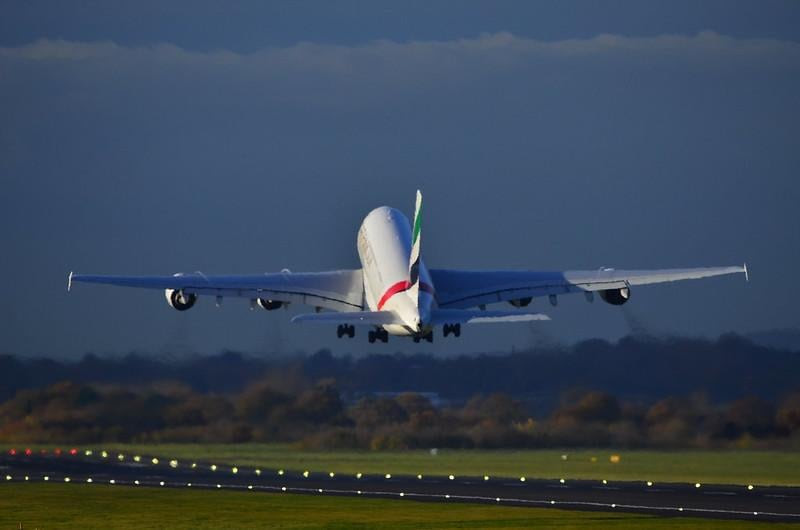
Emirates A380
Credit: Nigel Howarth / Aviation Week

FARNBOROUGH—Emirates president Tim Clark has again called on Airbus to develop an aircraft larger than the A350.

With large-capacity widebodies such as the A380A340-600 and Boeing 747-400 out of production, rising passenger numbers demand a new twin-aisle design, Clark said at the Airline Leaders Summit on the sidelines of the Farnborough Airshow.

“I’m hoping Airbus will be a little bit braver,” he said.

Airbus and Boeing seem largely focused on narrowbodies, to the exclusion of new widebody designs, he said. “To say it’s all about the A320/321 and the MAX, in my view, is not that smart.”

IATA director general Willie Walsh, who also spoke at the summit, agreed there were parts of the world where a 350-seat, four-class aircraft would be needed in future.

The two executives also took shots at Airbus and Boeing over how they leverage their duopoly.

“We’re customers, and I don’t feel we’re always treated as customers,” Walsh said, noting that Bombardier built “a good aeroplane” with the CSeries, but was unable to compete against Airbus and Boeing. Ultimately, Airbus bought the CSeries program and renamed the aircraft the A220, which is selling well as an Airbus.

Walsh said that China’s COMAC C919 would eventually become a competitor, “but I think it’s a long way away.” And while China could design airframes satisfactorily, engine development remained a problem, which meant that for the foreseeable future, China would continue to depend on western engine manufacturers.