Webster

The Constitution was made to guard the people against the dangers of good intentions." --American Statesman Daniel Webster (1782-1852)


Showing posts with label Historical guns. Show all posts

Tuesday, April 11, 2023

Guns of the Soviet Partisans in WWII

 This was a very good article and I with glee clipped it from "American Rifleman".  I have handled several of the weapons mentioned in this article and used to own a couple until that durn kayak accident *sniff*sniff*.    I do have a question, and this is a hypothetical question..."How Hard is it to make a PaPasha in 9mm?   They say that one can make a "Sten Gun" easily, but it is prone to failure from what I have heard and read.  This question is a hypothetical question made for entertainment value only.

Soviet Partisans Flag
Partisan bands had a rag-tag appearance at best. Note the SVT-40 (l.) semi-automatic rifle.
Author's collection

Germany’s conflict with the Soviet Union represented a level of brutality not seen in the other areas of Europe during World War II. Of all the German casualties suffered during the Second World War, nearly 65 percent came in the fight against Russia. Combat on the Eastern Front proved to be an unrelenting meat grinder of men and machines.

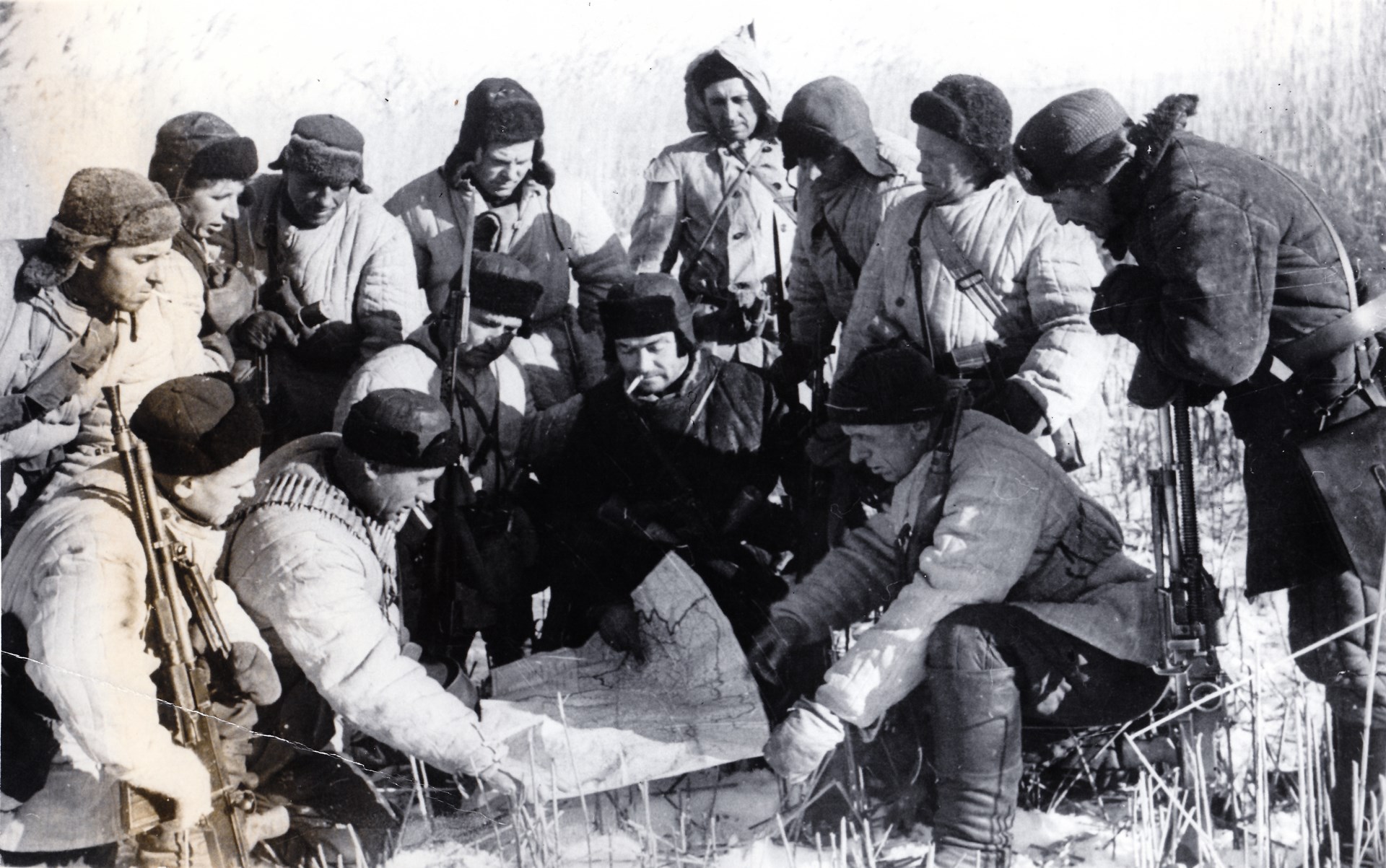
Just like every invader before them, the Germans found themselves swallowed up by the vastness of the Russian landscape. With every meter the Wehrmacht advanced, their supply lines seemed to grow exponentially longer. The Soviet partisan groups gained strength and efficiency; meanwhile, the Germans struggled to maintain security in their occupied territory.
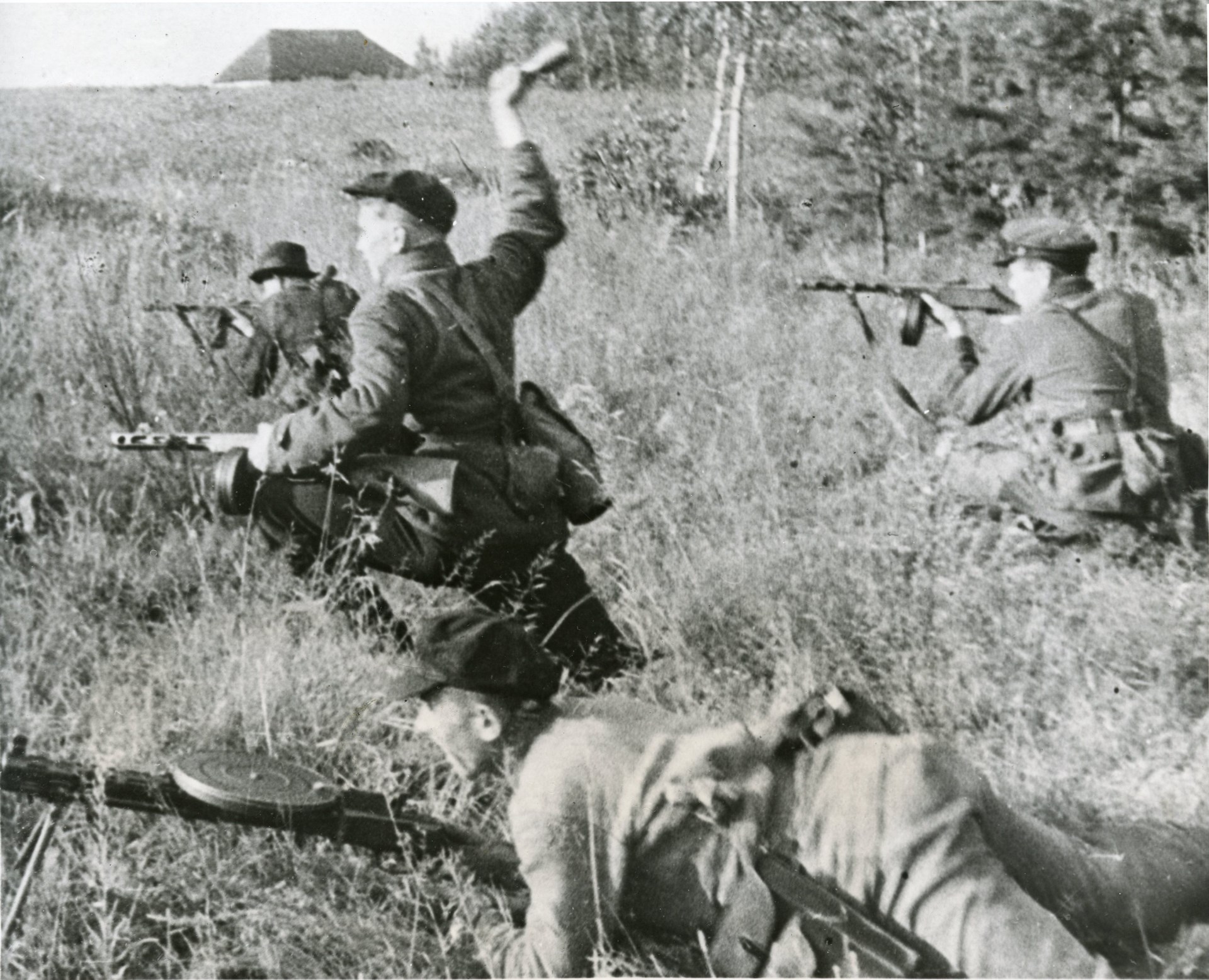
Soviet partisans with a DP-27 LMG and the ubiquitous PPSh-41 SMG. Author's collectionSoviet partisans with a DP-27 LMG and the ubiquitous PPSh-41 SMG. Author's collection

Planned Partisan Resistance
Although the Soviets never expected to suffer such losses in men, equipment and territory during the German invasion of June 1941, there were still plans in place to combat the Nazi advance with irregular groups of resistance fighters in the remote areas behind German lines. The partisan bands that formed in the early days of the invasion gathered their initial supply of small arms from the edges of the massive battlefields and from the Red Army stragglers who appeared in small groups. 

In the early days of the partisan war, most Soviet units used small arms typically found in Red Army service during 1941. Automatic guns were in short supply, and ammunition was always quite limited.
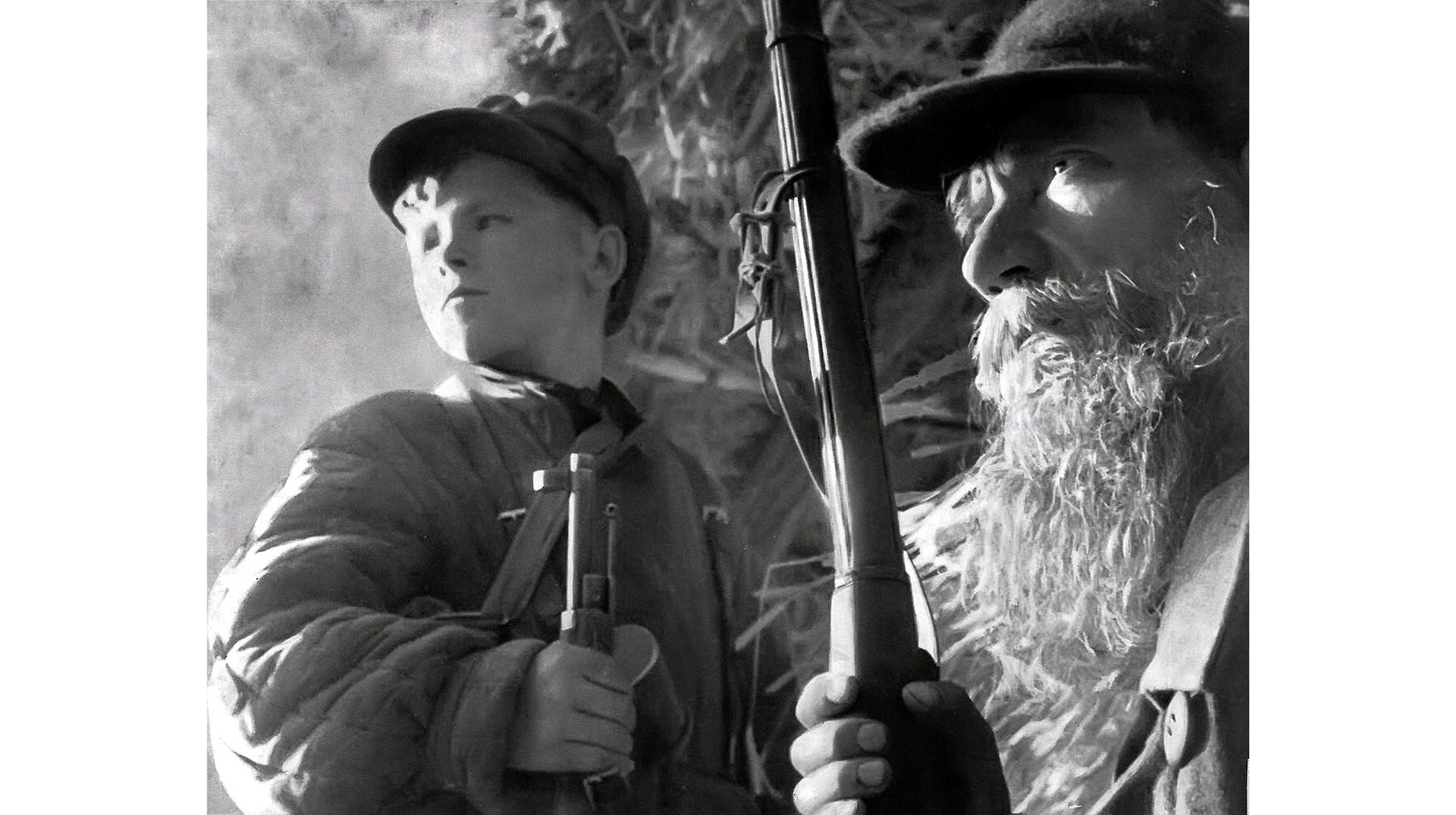
The People's War: The very old and the very young served in the Soviet resistance; many carried the M1891 Mosin-Nagant rifle. NARA

On some occasions, the larger partisan groups were headed by Soviet army officers. These units gained access to hidden firearms, ammunition and equipment that the Red Army had left behind. The 11th Kalinin Partisan Brigade is even said to have had several tanks that had been hidden in the forests east of the Latvian border. Heavy weapons could rarely be kept in action for long, though, as the partisans lacked fuel, spare parts and ammunition. Traditional Russian frugality meant that the partisans would dig up Soviet mines and re-use them in their intended role or strip out the explosives for other demolitions. Dud artillery rounds were also recovered and used for improvised mines.

In the first phase of the war in Russia, many of the partisan groups were simply fighting for their own survival. Almost 40 percent of the Soviet population lived in territory occupied by the Germans and, in many of these areas, the Soviet commissars had abused the local populations so badly that the people greeted the Germans as “liberators.” The German high command never understood or appreciated this early advantage. A 1956 U.S. Army study titled “The Soviet Partisan Movement 1941-1944” remarked:

… poor treatment of the Russian civilian population by German political leaders created resistance instead of maintaining and exploiting the advantage of the initial confidence displayed by many elements of the population.

Even so, during 1941-42, the eastern European population was generally unsympathetic to the Soviet partisan cause. The situation grew worse when partisans attempted to deprive locals of their limited food supplies.

German Brutality Drives Partisan Support
The Germans did not consider the Soviet partisan groups to be “military units.” Consequently, they were defined as “bandits” or “terrorists,” and no quarter was given to partisans or anyone believed to be helping them. This was an important turning point in the war in Russia. Hitler’s attitude towards the partisans, and most people in Eastern Europe, is summarized in this passage from “Primordial Violence: German War on Soviet Partisans” by Maj. Gus Costas, USMC (Ret.): “Hitler’s personal enmity and hatred were apparent when he declared that the anti-partisan effort was simply an opportunity ‘to eliminate anything that opposes us,’ and to ‘shoot dead anyone who even looks at us askance.’”
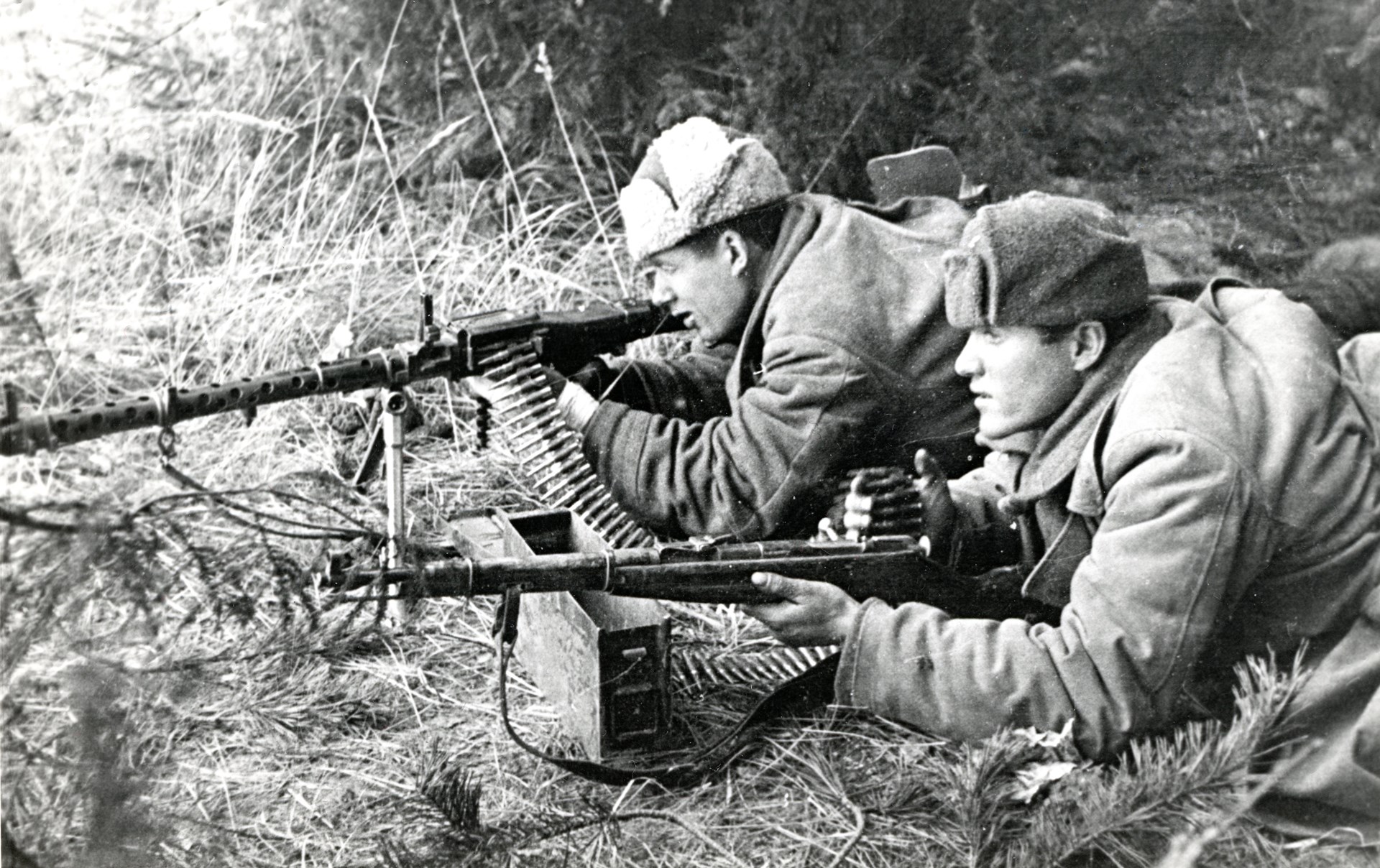
Captured firearms played an important role. Shown here, a German MG34 supports a partisan attack. The man alongside has a Mosin-Nagant Model 38 carbine. Author's collectionCaptured firearms played an important role. Shown here, a German MG34 supports a partisan attack. The man alongside has a Mosin-Nagant Model 38 carbine. Author's collection

Strength & Experience
The territory behind German lines represented a massive landmass, so the Soviets sought to create as great a disturbance as possible in the Nazi rear areas. In “The Soviet Partisan Movement 1941-1944” (DA-PAM 20-244, August 1956), Soviet “by-hook-or-by-crook” methods of recruiting members for partisan bands as war went on are described:

Manpower for the bands continued to be drawn from a variety of sources. Escaped prisoners of war still drifted into the partisan ranks, while German occupation policies caused many civilians to volunteer. But by and large, as the movement expanded, the larger proportion of the personnel was drafted from the native populace, forcibly when necessary. 

The Cen­tral Staff constantly advised the lower echelons to foster the best possible relations with the natives as a means of facilitating such recruiting. In some areas recruits were taken systematically by age groups, and at times even women were drafted.

Special attention was paid to recruiting members of the “Komsomolsk,” the communist youth organization. These young Bolsheviks were highly desirable as combat men or political activists because of their fanaticism.

In partisan-dominated areas recruits were put through a training course. Generally, they spent several weeks on probation to prevent escape or defection of those forcibly drafted and to give attached NKVD (precursor to the KGB) agents an opportunity to check their backgrounds against the possibility of infiltration of agents in German pay. Through informants within the units the commissars also kept a constant check on all personnel. Desertions of individual partisans were reported to the Central Staff, and their families, if they could be reached, were sent to labor camps in Siberia. If a defector was apprehended, the NKVD both passed and executed sentence. In a number of cases, the NKVD terrorized Ger­man collaborators into double-dealing by forcing them under threat of death to sign oaths of loyalty to the Soviet regime and then threatening to have the oath delivered to the occupation authorities should the in­dividual fail to cooperate with the partisans.
This partisan group appears to be made up of a more uniform Red Army unit. Note the Czech ZB26 LMGs (7.92x57 mm). NARAThis partisan group appears to be made up of a more uniform Red Army unit. Note the Czech ZB26 LMGs (7.92x57 mm). NARA

The Red Air Force
In 1962, the US Air Force Research Studies Historical Institute produced “Airpower and Russian Partisan Warfare” written by General der Flieger D. Karl Drum. General Drum had first-hand knowledge of the Soviets’ efforts to supply partisan bands by air. He describes the effectiveness of the Red Air Force in this role: 

Without the regular system of air transport established by the Red Air Force, the Soviet partisan bands could not have been organized, maintained, and controlled to any effective degree. 

The Germans, of course, became increasingly aware of the vital role of airpower in partisan operations. The German Air Force could not spare the necessary aircraft, nor did it possess on the Eastern Front sufficient warning and communications equipment to make its efforts effective. 

Without air transport, it would have been impossible for the Russians to supply the partisans with weapons and ammunition. Air lifting these items over the battle front was the primary mission of the air transport supply system. 

Communications was another critical component in the partisans’ success. General Drum continues: 

Along with the messenger service, radio equipment was indispensable for transmitting partisan intelligence information and orders both for intra-partisan liaison and with communication with the Central Command in Moscow. 

Electric power plants (for radios), batteries, receiving and sending equipment, and spare parts, could only be supplied in quantity from the Zone of the Interior by airlift. Often, specially trained radio operators were airlifted or parachuted into the partisan areas. 
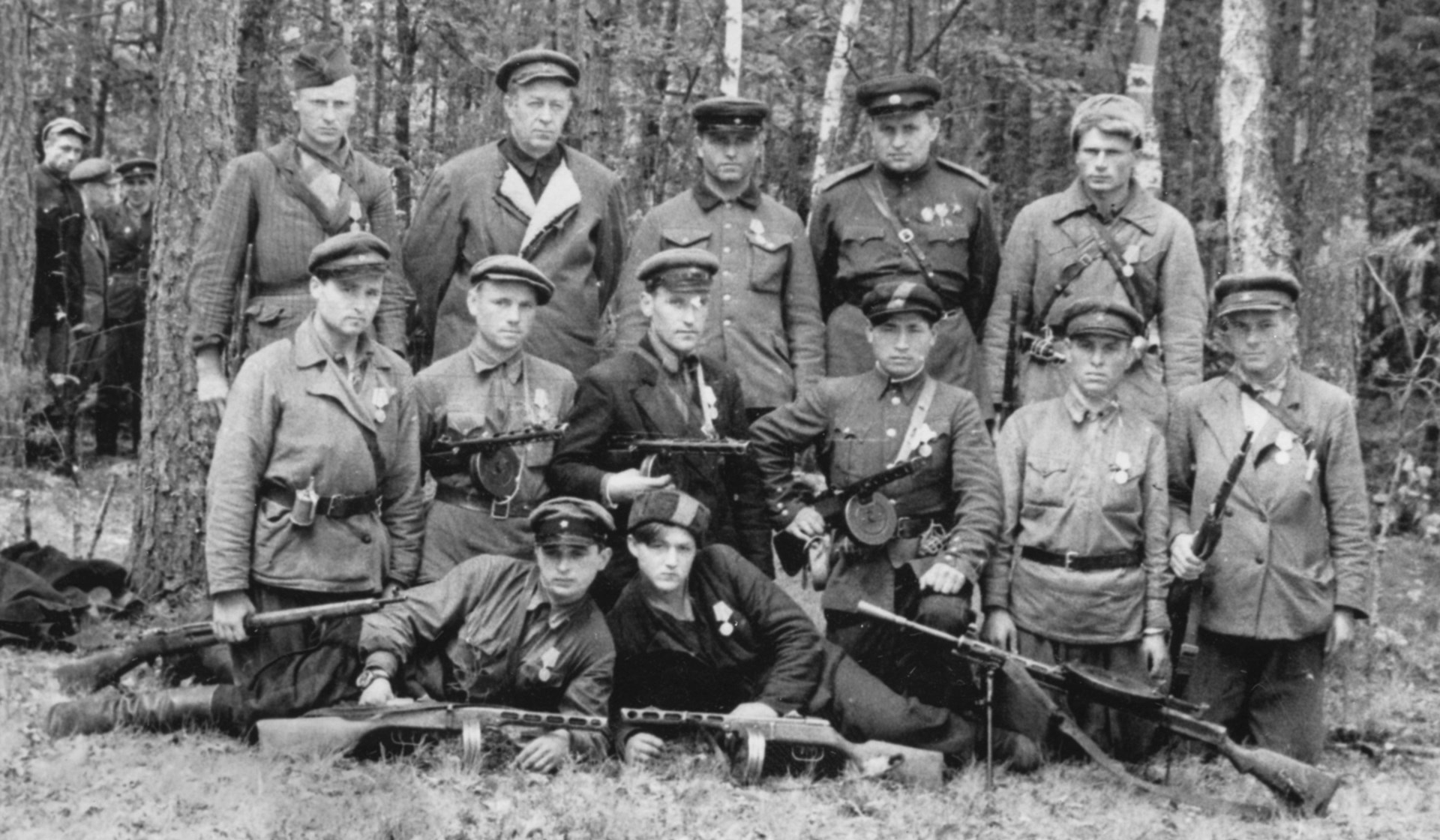
Likely another Red Army-partisan group operating behind the lines, equipped with M1891 rifles, PPSh-41 SMGs and a DP-27 LMG. Author's collection
Likely another Red Army-partisan group operating behind the lines, equipped with M1891 rifles, PPSh-41 SMGs and a DP-27 LMG. Author's collection

Partisan Targets
Beginning in 1943, there was far more coordination in the partisans’ efforts and more strategic direction in their attacks. The Soviet Central Staff issued a directive that designated the priority of partisan targets. Primary targets were rail lines and rolling stock, as well as road bridges and German transport vehicles. Additional targets were German communication lines and supply depots. It is important to note that Soviet partisans were directed to take aggressive action in force against German units only when the resistance groups had significant superiority in numbers. The partisans rarely had enough ammunition to remain competitive in an extended firefight.

The U.S. Army study titled “Rear Area Security in Russia: The Soviet Second Front behind the German Lines” (Department of the Army Pamphlet 20-240), described the progression of the armament of their supply troops as the war in the East progressed:

At the beginning of the Russian campaign the crews of Germans supply trucks had small arms, but no machine guns. Later on, after truck convoys had been helplessly exposed to surprise fire and partisan raids, they were issued machine guns which were mounted on the platform of one-half to one-ton trucks. At a still later stage of the campaign the trucks were lightly reinforced with armor plates. Shortage of personnel, however, precluded the use of special machine gun crews and placed an additional burden on the supply troops. On every trip the relief driver had to sit behind the machine gun, ready to fire, while the rest of the convoy personnel was constantly on the alert against surprise attacks. Soldiers returning from furlough were sometimes collected at security strong points along the roads and employed as escort personnel for supply convoys moving up to the front.
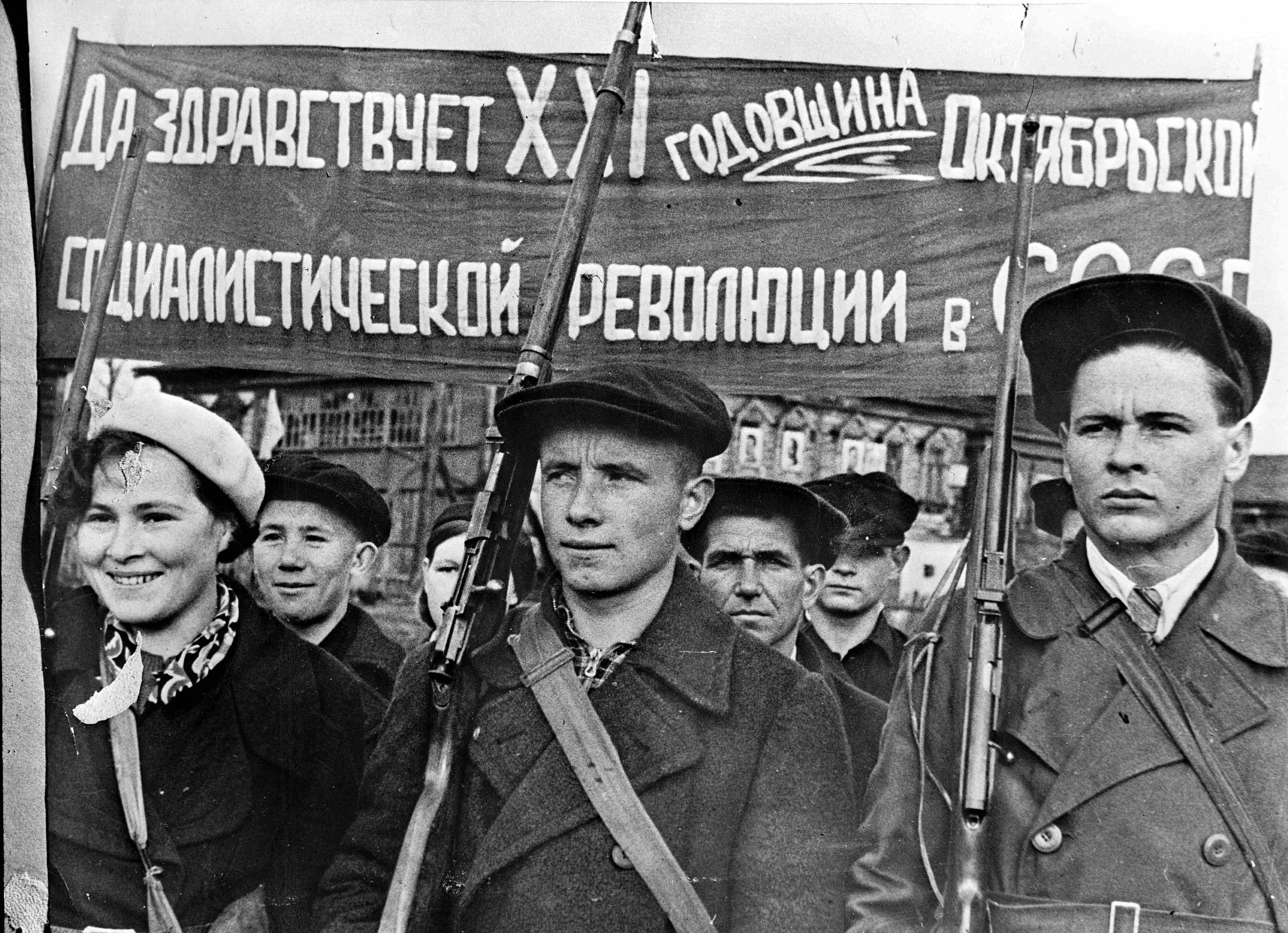
Resistance units sprang up in the country, in the towns and in the factories. Here, a man on the left carries a single-shot, .22-cal. TOZ-8 Cadet Rifle. NARA
Resistance units sprang up in the country, in the towns and in the factories. Here, a man on the right carries a single-shot, .22-cal. TOZ-8 Cadet Rifle. NARA

Arms Of The Partisans
While many photographs show Soviet partisans using captured German small arms (particularly the MP40), these images were often staged propaganda tools created at the direction of the Soviet Central Staff. The use of captured guns stressed the partisans’ logistics, demanding the stockpiling of enemy ammunition and spare parts. After 1942, the expanding size of the partisan groups ultimately required the use of Soviet-made small arms. Even so, captured arms like the MP40, the MG34, the Karabiner 98k rifle, and any type of German pistol were used to supplement partisan firepower.
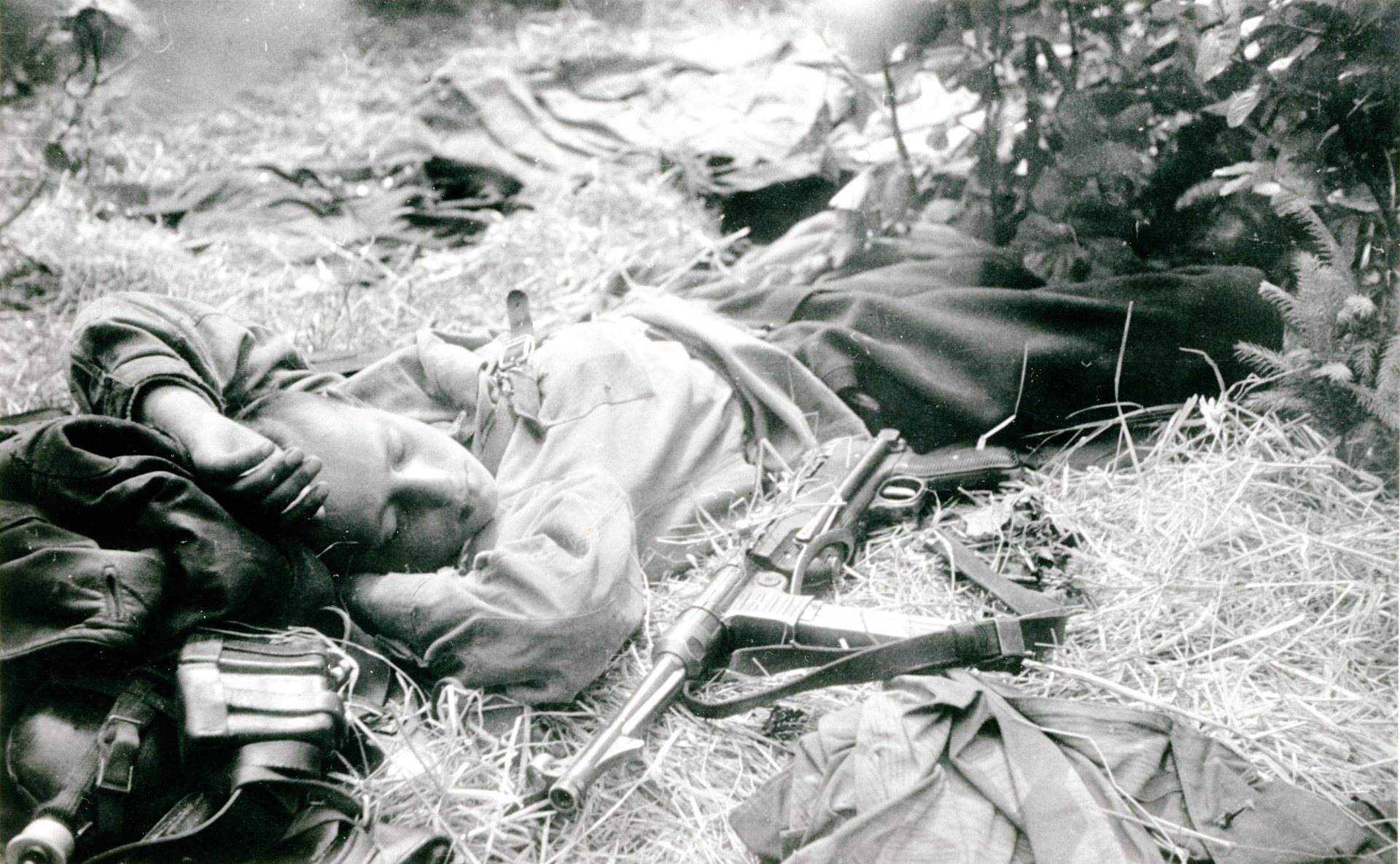
The German MP 40 9 mm SMG was a popular firearm in any resistance group in Europe. Author's collection
The German MP40 9 mm SMG was a popular firearm in any resistance group in Europe. Author's collection

PPSh-41
Like most resistance formations, Soviet partisans made extensive use of submachine guns (SMGs). Luckily for the Russians, they were armed with the PPSh-41 (7.62x25 mm Tokarev), easily one of the finest SMGs of the war. The fast-firing PPSh cycled at nearly 1,000 rounds per minute, providing the partisans with a distinct firepower advantage in close-range firefights. The PPSh-41, called “Papasha,” by fighters, used either a 71-round drum or a 35-round box magazine. Simple and sturdy, it became an icon of Soviet resistance in World War  II.
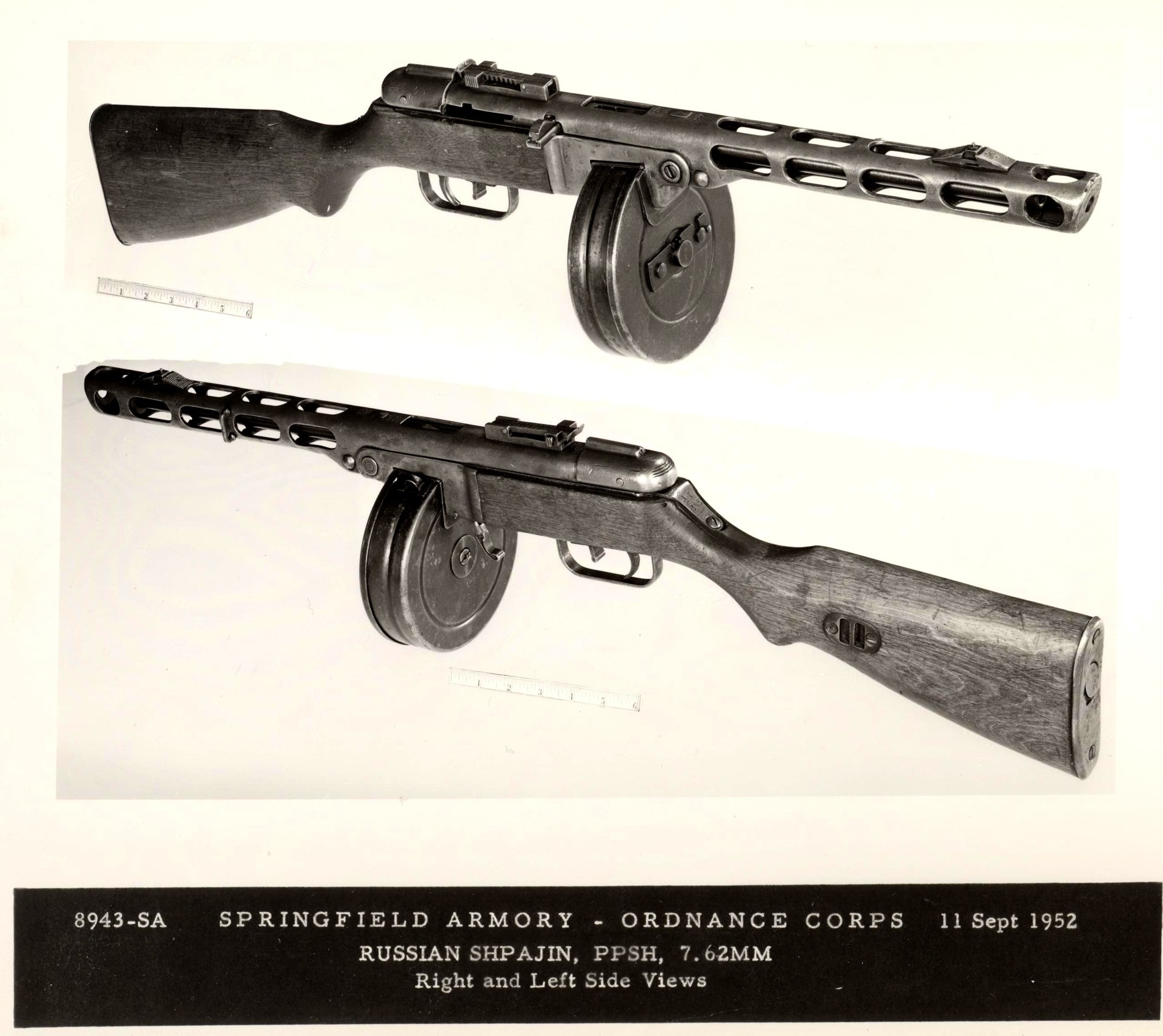
The partisan's best friend, the PPSh-41 SMG equipped with a 71-round drum magazine. The simple PPSh offered tremendous short-range firepower. Springfield ArmoryThe partisan's best friend, the PPSh-41 SMG equipped with a 71-round drum magazine. The simple PPSh offered tremendous short-range firepower. Springfield Armory

Mosin-Nagant Rifles
The venerable Mosin-Nagant M1891 (7.62x54 mm R) gave Soviet partisans a simple, reliable and accurate rifle for the light infantry makeup of their groups. One of the classic military bolt-action rifles, the M1891 served from before World War I, through both world wars, and even into the early years of the Cold War. From 1942, greater numbers of M91/30 sniper rifles became available, and Soviet marksmen used them to great effect. Equipped with a 3.5X PU scope, the M1891 was accurate out to nearly 900 yards, just right for a partisan sniper with his sights set on a German officer, truck driver or locomotive conductor.
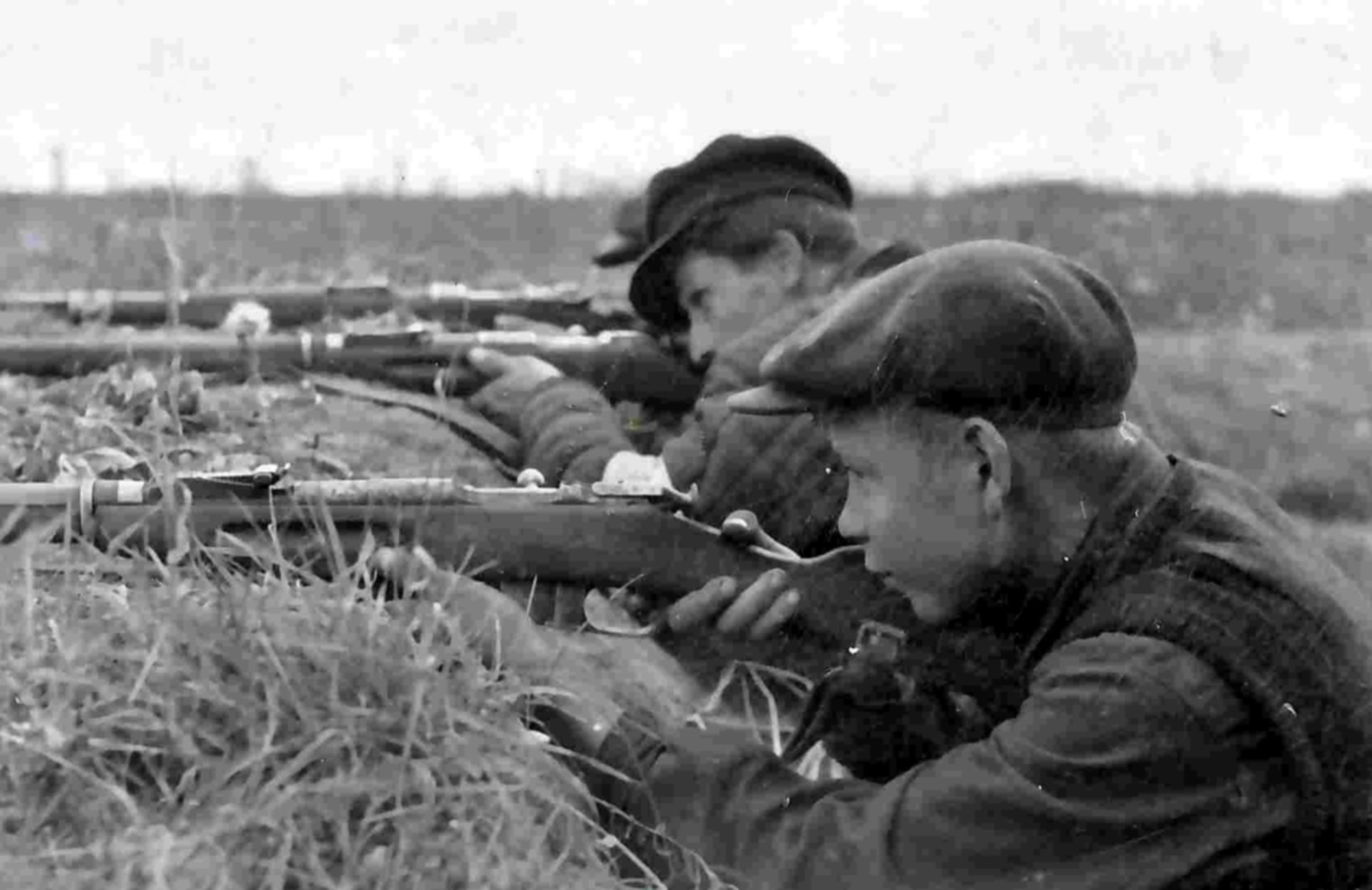
Total war on the Eastern Front knew no age limit. Shown here, a youthful partisan sights his M1891 Mosin-Nagant rifle. NARATotal war on the Eastern Front knew no age limit. Shown here, a youthful partisan sights his M1891 Mosin-Nagant rifle. NARA

The Degtyaryov DP-27
The gas-operated DP-27 (7.62x54 mm R) gave partisan groups an effective base of mobile firepower. With just about 80 parts, the DP light machine gun (LMG) was simple enough for quickly trained partisan gunners. The DP-27 weighed 25 lbs. loaded, featured a folding bipod and a built-in flash hider. Rugged and practical, the DP-27 offered a manageable cyclic rate at 550 rounds per minute and was considered highly reliable—earning the nickname “Record Player” for its unique 47-round pan-shaped magazine.
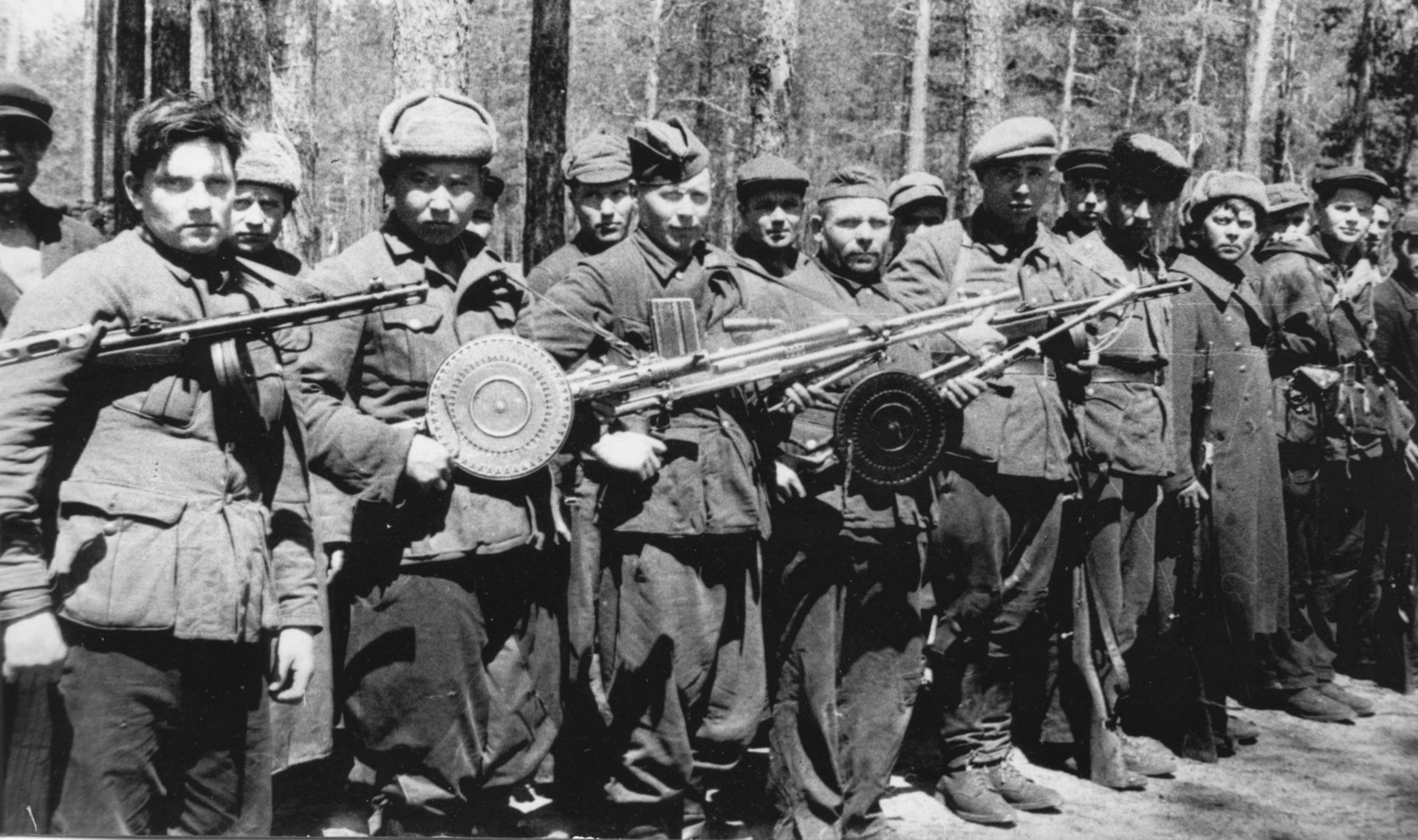
There's plenty of firepower in this guerrilla band, with DP-27 and ZB26 LMGs to support the rifles and SMGs. Author's collection

The PTRD-41 Anti-Tank Rifle
During World War II, the Red Army made significant use of a firearm that was considered “obsolete” by the Western Allies—the anti-tank (AT) rifle. Despite Western misunderstanding, the Soviet 14.5 mm PTRD-41 (single shot) and PTRS-41 (semi-automatic) rifles proved to be effective throughout the war when used against the side/rear armor of German medium tanks, assault guns and all lightly armored vehicles. The PTRD-41 was 79 ½” long, weighed 38 lbs., and its 14.5x114 mm rounds could penetrate up to 40 mm of armor at 100 meters. It is important to note that an experienced AT rifleman could hit the most sensitive points on an enemy vehicle and often achieve a “mobility kill.” Once immobilized, the armored vehicle was often assaulted with satchel charges and Molotov cocktails. While Soviet partisans avoided encounters with German armor whenever possible, the 14.5 mm AT rifles were excellent long-range sniping arms against some of their most lucrative targets—German supply trucks and railroad transports. Also, in many areas under partisan control, the German second-line troops used lesser armored vehicles (often French tanks captured in 1940) that were more vulnerable to anti-tank rifle fire.
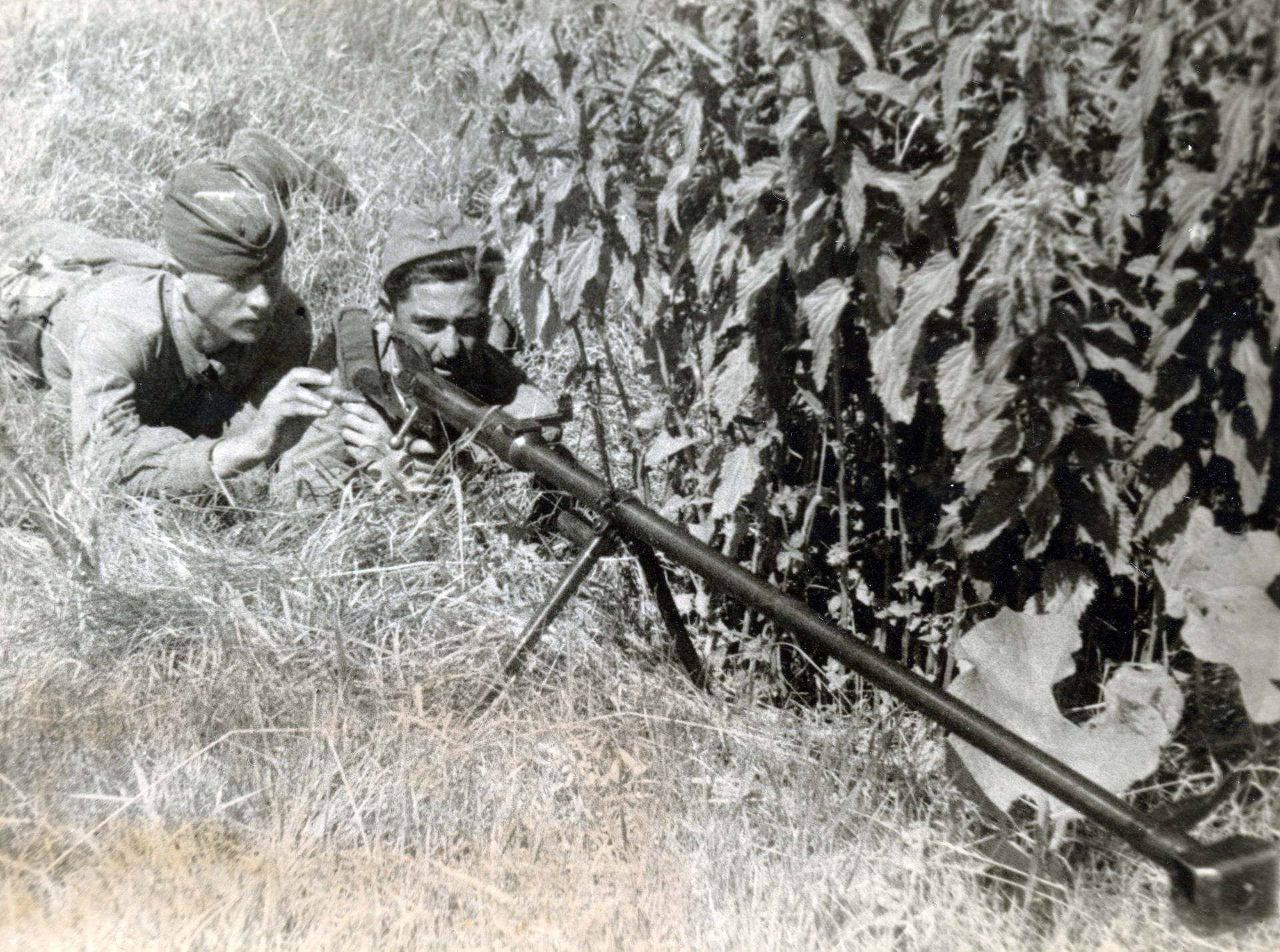
The Soviet PTRD-41 14.5 mm anti-tank rifle gave Soviet partisans a measure of anti-tank capability, along with powerful sniping and long-range bunker-busting ability. NARA

Mines & Explosives
The pamphlet “Rear Area Security in Russia” describes the Soviet partisans deadly use of mines and explosives:

Daily interruptions of traffic were caused by rail demolitions for which the Russians used various types of mines. Pressure and vibration-type mines were placed in the track, to be detonated by the locomotives. To destroy particularly valuable supplies, such as gasoline in tank cars, the partisans used mines with pull-type fuses which were set off by remote control. Retreating Russian forces often buried mines with long-delay fuses, under the tracks where they might blow up as much as three months later. Mines with simple delay-type fuses were also employed to avoid hitting the protective cars ahead of the locomotive. In order to escape the mine detectors, nearly all of these mines were placed in wooden containers, and their construction was of the most primitive type; some of them consisted of no more than a small package of explosives with a safety fuse. Occasionally, even magnetic mines were used. They served as means of sabotage in workshops and on standing trains and were mostly equipped with delay-type fuses.

Ultimately, using what firearms and supplies they could scrounge, the Soviet partisans played a vital role in hampering the German war machine until the Red Army could begin turning the tide on the Eastern Front. Today, most of the credit is given to the Red Army for Russia’s victory in the so-called Great Patriotic War, but the partisans did their job, too, often without the support or direction given to regular army troops.
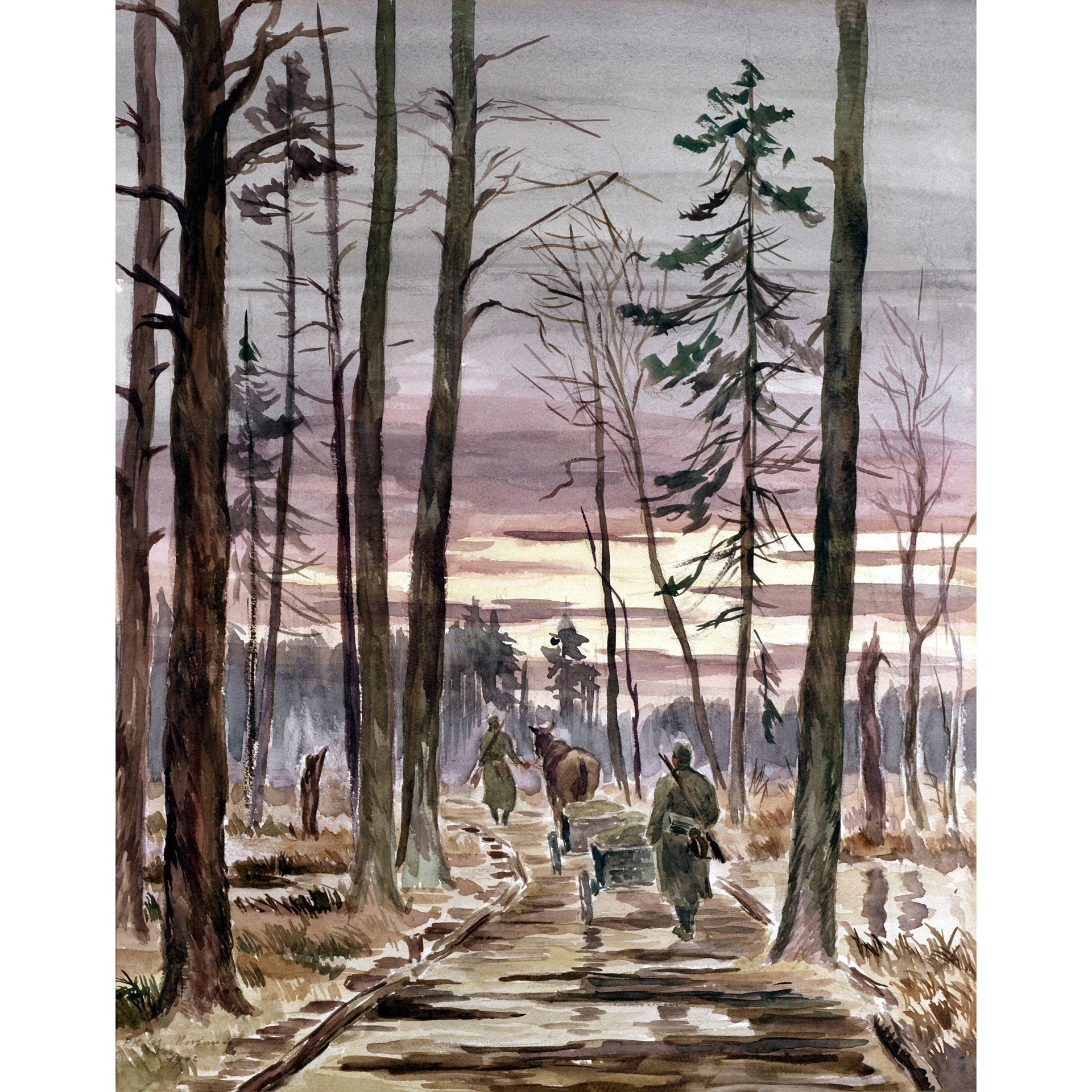
From a German wartime painting by G. Vorhauer, in the US Army Artwork Collection, the perfect environment for ambushes: Germany’s supply lines in Russia were long, lonely and difficult to defend. NARA


Thursday, December 16, 2021

Pearl Harbor Survivors M1903 Salvaged from the U.S.S California.


I clipped this from "American Rifleman", I thought it was a great story, I have or had a 1903 pattern rifle before I lost her in the great kayak mishap*sniff*Sniff*, the same time I lost my lamented Garand


Here they are during happier times before the Kayak mishap*Sniff*Sniff*.  Perhaps one day....the happier times will return, and I can look at ownership again.  The story behind this was really neat.


“December 7th, 1941, a date which will live in infamy, the United States of America was suddenly and deliberately attacked by naval and air forces of the Empire of Japan,” as said by President Franklin D. Roosevelt in Congress on Dec. 8, 1941. The suprise attack on Pearl Harbor, one of the most pivotal moments in United States history, severely crippled the fighting capabilities of the Pacific Fleet for the onset of World War II. After the attack, monumental efforts went into rescuing men still trapped on the sunken vessels and salvaging material from the wrecks. Now, 80 years later, three rifles salvaged from the U.S.S. California have been discovered by the Archival Research Group and can be documented to this recovery operation following the attacks on Pearl Harbor.

The U.S.S. California, BB-44, was a one of two Tennessee Class "super-dreadnought" battleships built by United States Navy during World War I and completed after the war. Launched in November 1919, the ship was over 600' long, weighed over 30,000 tons and was armed with 12 14" naval guns. After being commissioned in 1921, U.S.S. California became the flagship of the U.S. Pacific Battle Fleet and, along with her sister-ship U.S.S. Tennessee, helped form the backbone of the U.S. Navy's modern battle line during the inter-war period. She was nicknamed “The Old Prune Barge,” due to the large amount of prunes her namesake state of California produced at the time. In 1940, she also became one of the first battleships in the U.S. Navy to be fitted with radar.

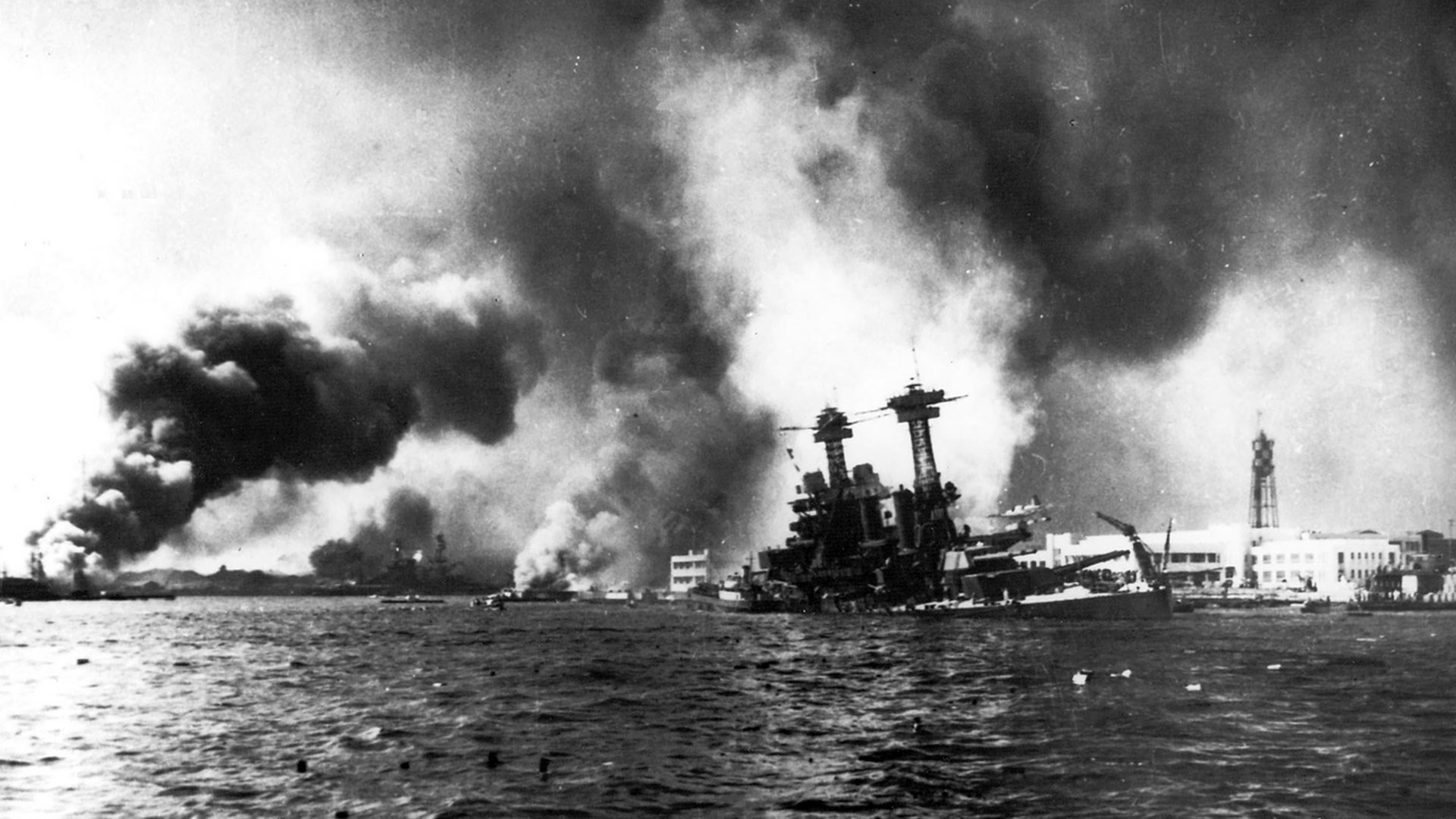
The U.S.S. California (BB-44) sinking at her moorings next to Ford Island during the attack on Pearl Harbor, Dec. 7, 1941. The ship is low in the water and listing to the port side after suffering two torpedo hits. In the background, the destroyer U.S.S. Shaw burns and the stricken battleship U.S.S. Nevada begins to beach herself at Hospital Point.   
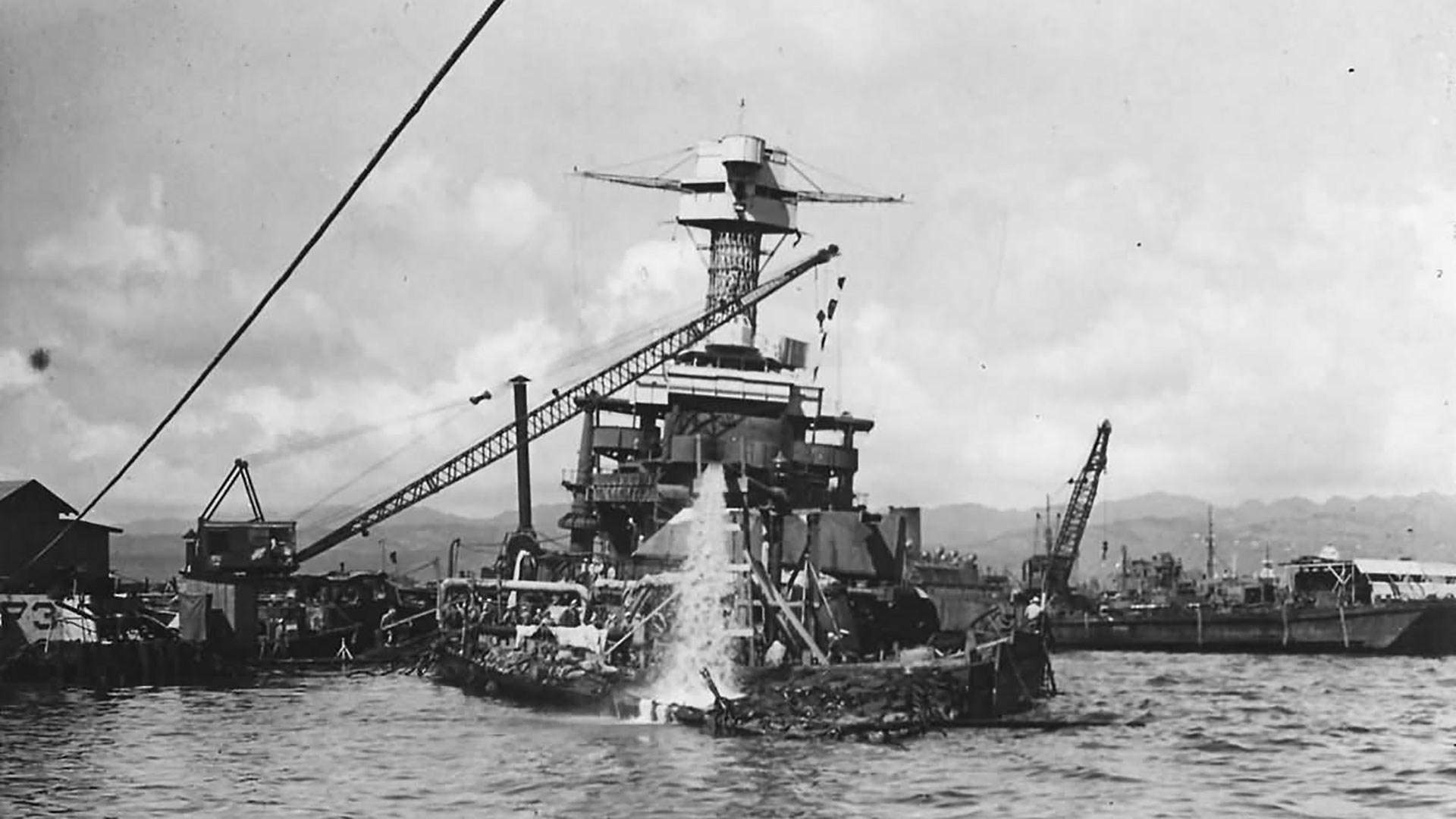
On Sunday morning, Dec. 7, 1941, U.S.S. California was moored alone near the southeastern end of Ford Island in Pearl Harbor, just ahead of the fleet oiler U.S.S. Neosho and "Battleship Row." When the first wave of the attack began, the senior officer onboard roused the crew to general quarters and ordered preparations to get the ship underway. Gun crews rushed to their 5" and .50-cal. anti-aircraft armaments and began firing back at the swarming Japanese warplanes as they made strafing runs and dropped bombs. However, the ready use ammunition kept around the anti-aircraft batteries was limited and the ammunition magazines had to be unlocked.    

While the ship was still attached to her moorings, two Japanese Nakajima B5N "Kate" torpedo bombers approached from the southeast and released their ordnance, with both striking on the port side. The resulting explosions ripped massive holes into the U.S.S. California's hull under the waterline, compromising several internal compartments and structures. She immediately began to take on large volumes of water and heel to the port side, with the flooding only worsened by the fact that many below-deck hatches and doors had been left open for inspection. 

A photo of salvage operations underway on the wreck of U.S.S. California after the attack. Note how low the main deck is in the water, along with the water being pumped out of the hull. As the U.S.S. California settled onto bottom of Pearl Harbor, the hull began to sink down ever deeper into a silt embankment, necessitating the removal of usable materials and extra weight from the ship. This included the removal of the ship's 14" naval guns, which are already missing from the turrets in this photo.
Uncontrolled flooding spread through the port side compartments and the order was given to counter flood on the starboard side, in a desperate effort to keep the ship upright. To make matters worse, water entered the fuel lines and the ship lost power. As the crew fought to save the ship, Japanese Aichi D3A "Val" dive bombers made repeated attacks on the stricken vessel, scoring a bomb hit and two near misses that started fires and caused further damage. Dead in the water, U.S.S. California burned and began to slowly sink. Despite the efforts of the crew, surrounding vessels and portable pumps, the ship slowly settled into the mud of harbor bottom over the next three days, mostly upright with only her main deck and super-structure remaining above the waterline.

After the attack, extensive efforts were made to save men still trapped on the sunken vessels and salvage whatever equipment remained usable. Evaluations on the sunken ships were also conducted to determine if any could be raised and brought back into service. Of the four battleships sunk at Pearl Harbor, the U.S.S. California was the least damaged overall and prioritized for salvage. However, despite resting is the mud, the ship's hull began to sink even deeper into a silt embankment on the harbor bottom. Furthermore, the longer equipment still onboard the ship was exposed to the harbor's salty tropic waters, the less usable it would rapidly become. These factors necessitated efforts to remove extra weight and any usable materials from the ship as quickly as possible, including the removal of the ship's 14" naval guns from their turrets.

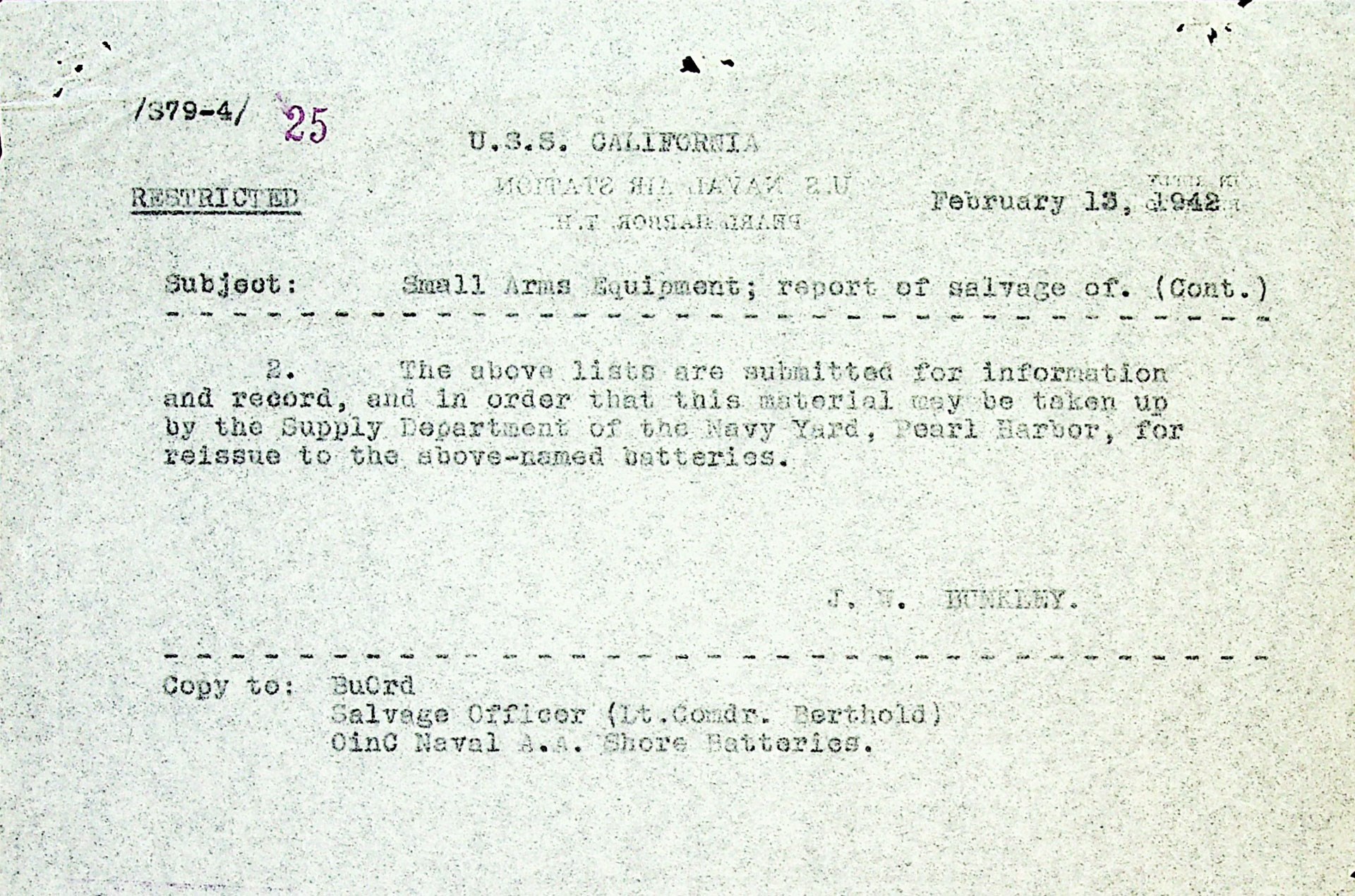
A page of the memorandum in which Capt. Joel Bunkley documents the transfer of the small arms to the Supply Department of the Pearl Harbor Navy Yard. Photo courtesy of Archival Research Group.
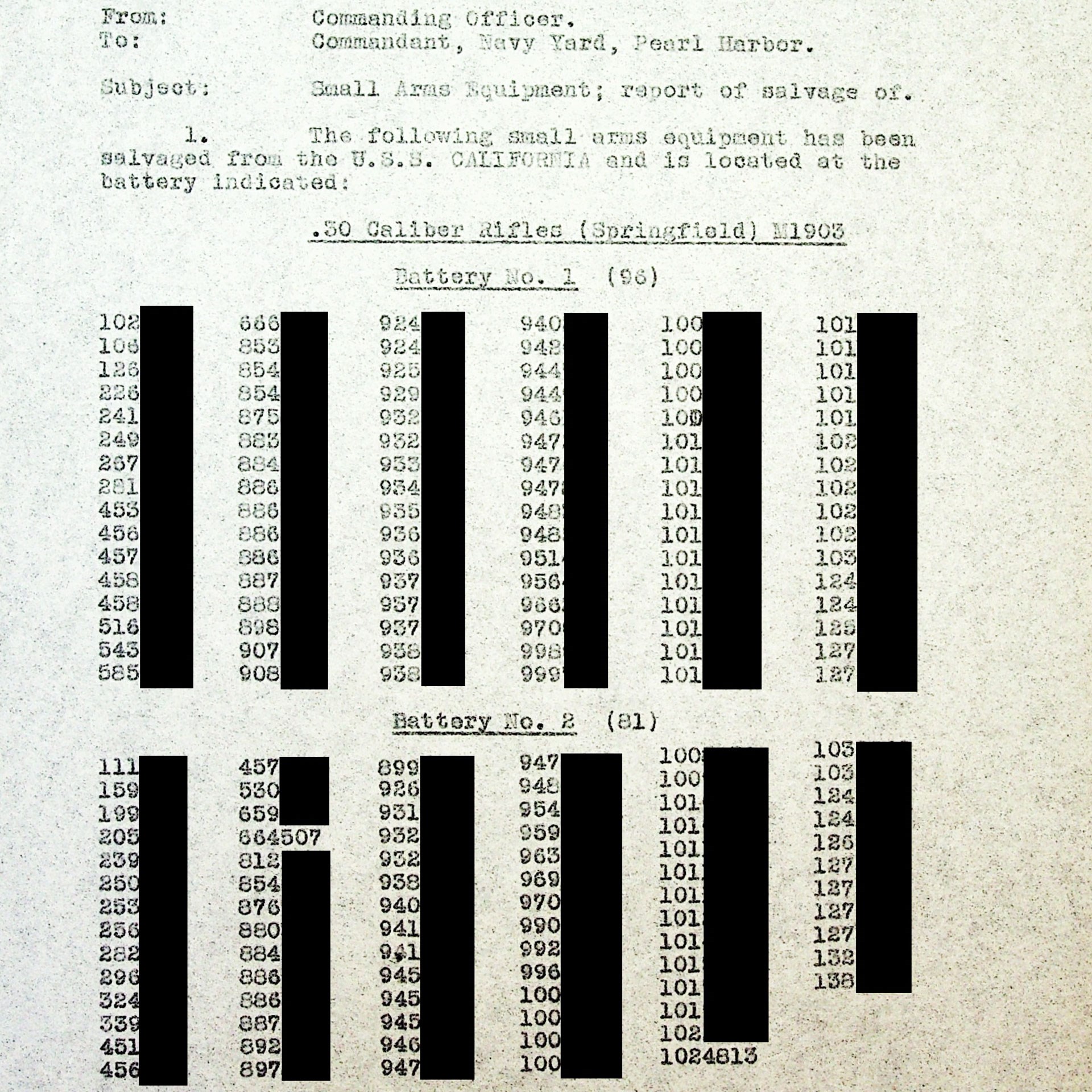
Other equipment of varying size, from the ship's radar to ammunition, was also salvaged. This included the recovery of the many small arms which were still stored in various armories below deck. Yet, what happened to these small arms that were recovered from the wreck since then? This is where documentation from the National Archives expands further. On a memorandum dated Feb. 13, 1942, Capt. Joel Bunkley wrote to the commandant of the Pearl Harbor Navy Yard to transfer the small arms salvaged from the U.S.S. California to various coastal artillery batteries located around the island of Oahu, Hawaii.

This transfer included 352 M1903 rifles, 53 M1911 pistols, 26 Browning Automatic Rifles, 16 Lewis machine guns and two Thompson submachine guns. The lists of serial numbers for the M1903 rifles in the memorandum does not specify whether the rifles are of Springfield Armory or Rock Island Arsenal manufacture. However, all are serial numbers exclusive to Springfield Armory production and above the range of duplicate serial numbers (Springfield Armory and Rock Island Arsenal bearing the same serial number on the receiver). The serial numbers were also recorded in ascending order, making it easier to see trends in serial number ranges present.

The first page from a list of rifle serial numbers from the commanding officer of the U.S.S. California, transferring salvaged property to the commandant of the Navy Yard of Pearl Harbor. Note rifle S/Ns 664504 and 1024813 are contained in the list of rifles sent to Battery No.2. Photo courtesy of Archival Research Group.  
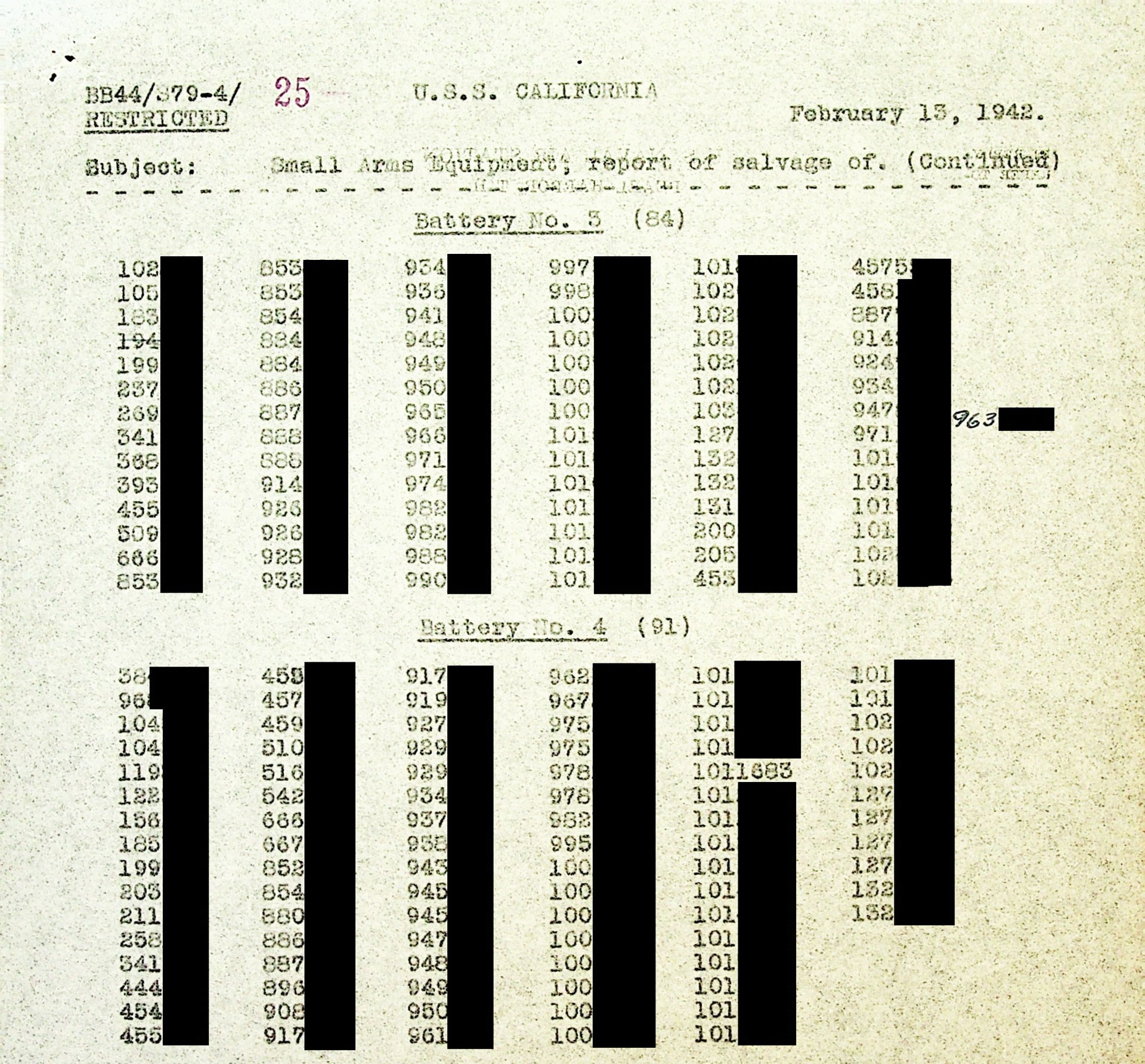
 

The second page of the list of M1903 rifle serial numbers recovered from the wreck of the U.S.S. California, with rifle S/N 1011683 transferred to Battery No. 4. Photo courtesy of Archival Research Group.
In the aftermath of the attack, the Territory of Hawaii was in a state of emergancy and security across the archipelago was put on high alert. Eight defensive batteries were hastily constructed around the island of Oahu to offer better protection against further seaborne attacks and even possible invasion. The salvaged M1903 rifles that came from the U.S.S. California were only sent to batteries one through four, with battery one receiving 96, battery two receiving 81, battery three receiving 84 and battery four receiving 91 of the rifles. The authors of this article have compiled a table of these eight coastal defense batteries built around the island, along with armament type and notes regarding each:

Battery

Number

LocationTypeNotes
No.1Hickam FieldFour 5" Naval GunsLocated at Hickam Village housing complex. No remains.
No.2WaipahuFour 5" Naval GunsLocated in a sugarcane field somewhere in the West Loch vicinity.
No.3

Fort Weaver (Puuloa)

Four 5" Naval GunsMost likely located adjacent to the Navy’s Fleet Machine Gun Training School. Marines here manned three batteries of .50-cal. anti-aircraft machine guns when the Japanese attacked on Dec. 7. This area was developed for housing in the 1950’s, adjacent to the present-day Marine Corps Puuloa Rifle Range.
No.4Ewa Marine Corps Air StationFour 5" Naval GunsNo remains, site developed.
No.5Ahua PointFour 5" Naval GunsSearchlights were emplaced here, as well as an anti-aircraft warning station (AAIS 10) (1940). No remains of any military structures.
No.6

Waipio (Pearl Harbor Naval Base)

Four 5" Naval GunsLocated on the point halfway on the eastside of the Waipio Peninsula along the shore of the Middle Loch. Also included a mobile 3" anti-aircraft gun battery. Two concrete gun emplacements, the power generator house and fire-control switchboard room.
No.7

Pearl Harbor (Ford Island)

Four 5" Naval GunsUnder the command of Fort Kamehameha.
No.8Aiea HeightsFour 5" Naval GunsHawaiian Anti-Aircraft Command, command post was located here.


In the 80 years that have passed since the attack, the history of these rifles and their whereabouts was largely forgotten and began to fade. Yet, thanks to the patient efforts of the Archival Research Group and the information discovered in Capt. Bunkley's 1942 memorandum, three of these salvaged rifles have been identified. These three M1903 rifles appear in the memorandum by serial number as being recovered from the U.S.S. California, and all three were carefully examined by the authors for any interesting features or details. A table with some of technical details of these M1903 rifles is below:

Rifle S/NBoltStockDisposition after salvage from U.S.S. California
664507J5Finger grasping groove with two stock screws. No inspector marks remain.Battery No.2
1011683J5Finger grasping groove with two stock screws. J.S.A. inspected.Battery No.4
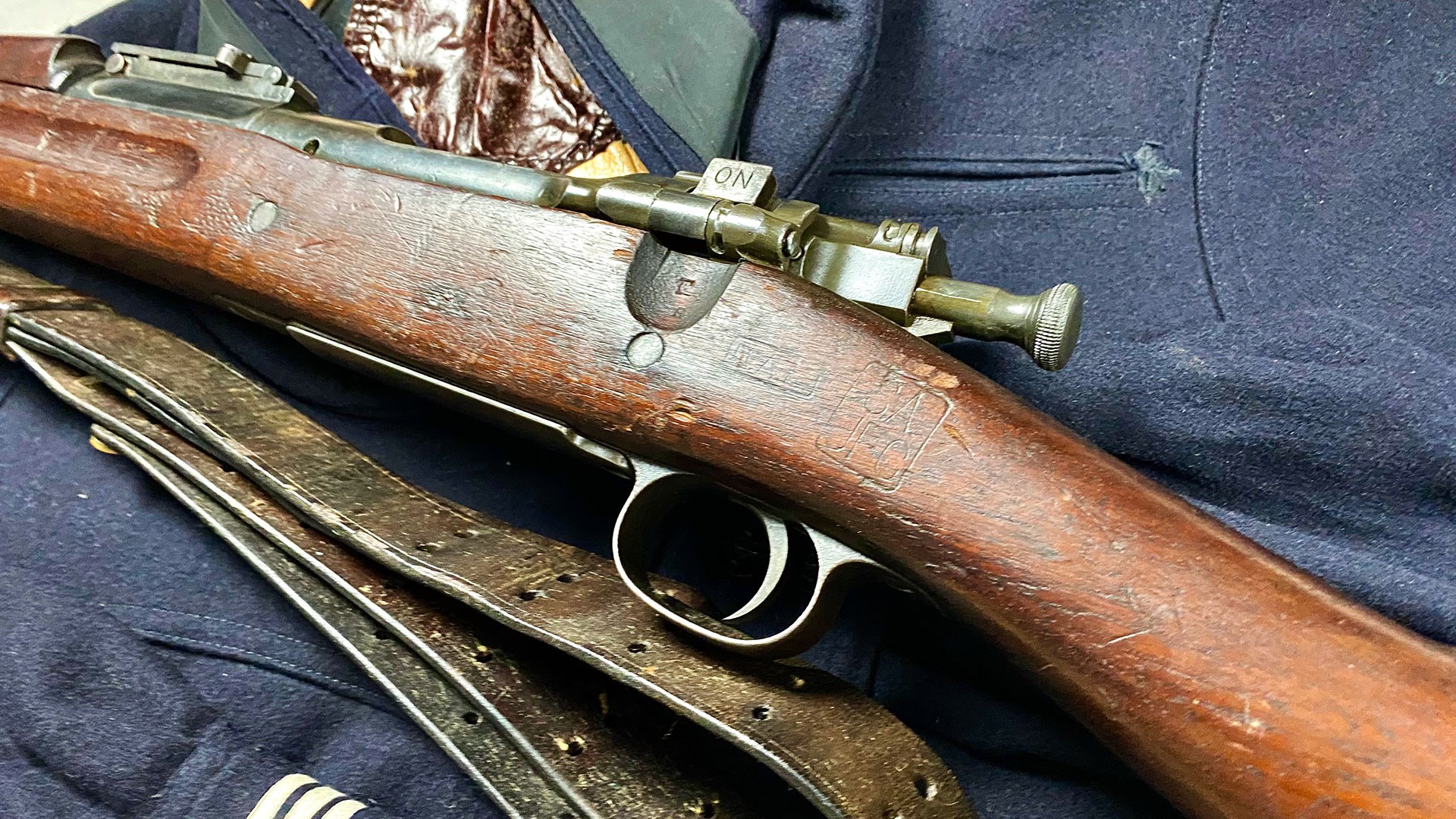
1024813J5Finger grasping groove with two stock screws. D.A.L. inspected, followed by S.A./J.F.C. re-arsenal stamp.Battery No.2


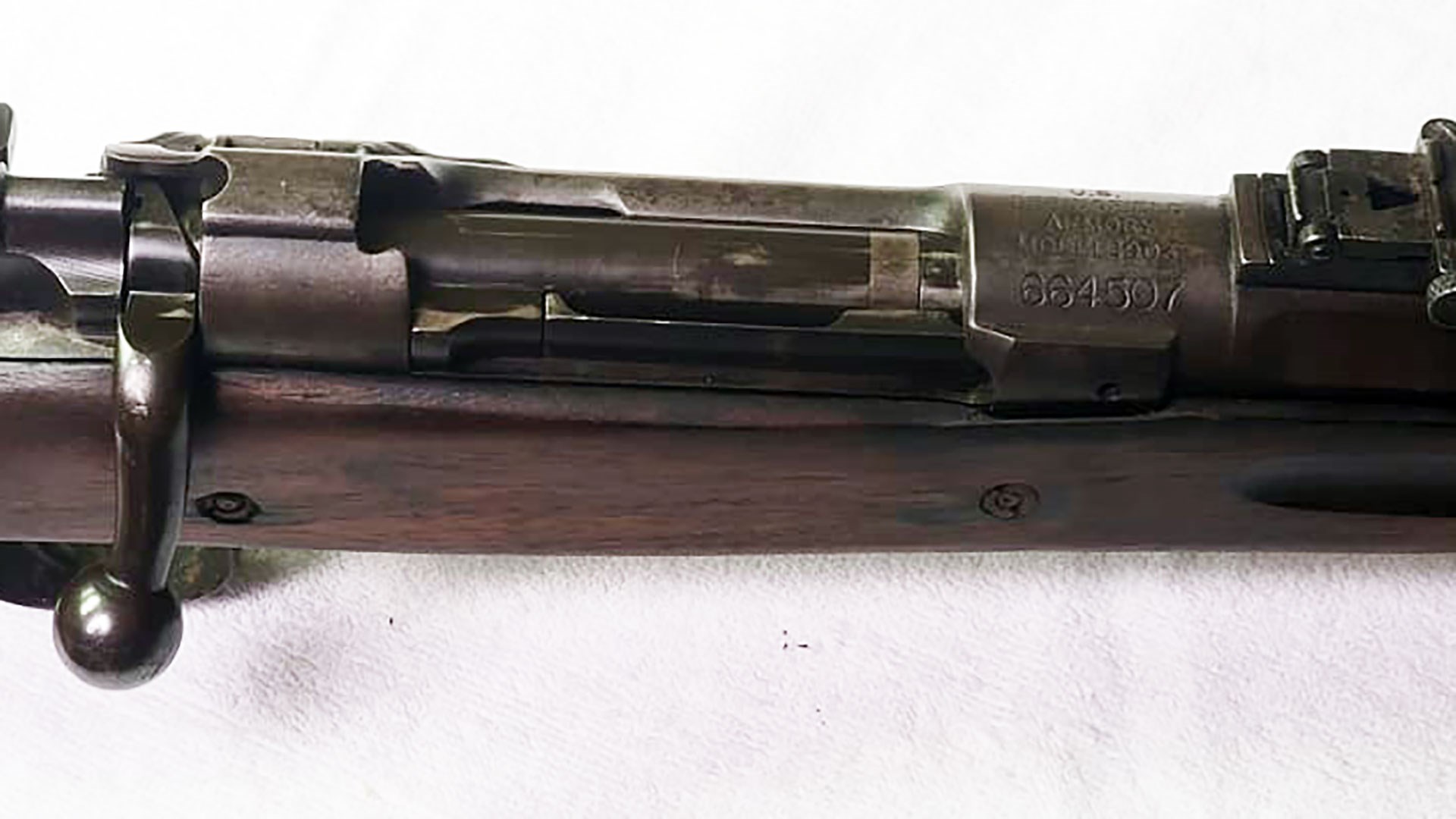
Of the three rifles examined, the lowest numbered, S/N 664507, does not appear in like-new condition, but also does not show signs of extensive surface corrosion or pitting on its metal components. Meanwhile, S/N 1011683 is in an almost like-new condition. It exhibits many features of a non-rebuilt rifle with original finish, with both the metal and wood being in good condition with honest wear and patina, but no signs of water damage. As for S/N 1024813, while its stock and some other parts display signs of being rebuilt by Springfield Armory after the war, it still bears the original receiver finish and has no surface pitting.

When examining these rifles, a question that comes up is: “Why are these rifles not showing signs of salt-water damage?” Unfortunately, the documentation does not specify when exactly during the salvaging operations that these small arms were recovered. Without the confirmation of primary documentation, it theoretically could have been hours, days, or even weeks following the sinking that these small arms were removed. But, considering the intensity of the salvage operation and the conditions concerning the ship, the removal of such items would have been an urgent issue. With the observable conditions of the three rifles, it is likely these small arms were retrieved from the U.S.S. California before the damaging effects of salt-water corrosion could set in.

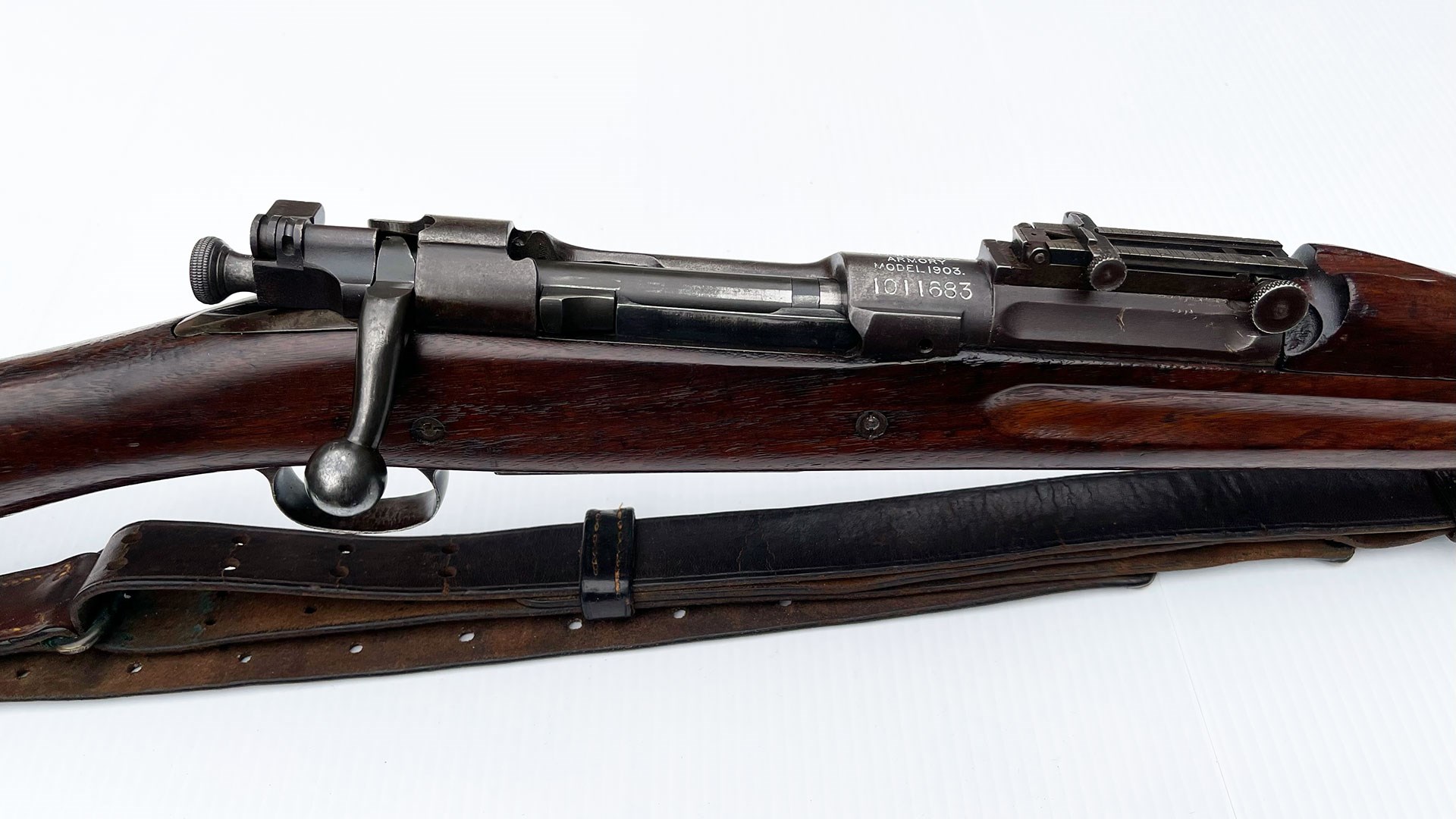
M1903 S/N 664507. 

The memo also does not state the conditions of the armories when the rifles were retrieved, that is, if they were in a partially flooded section or in a dry section. Furthermore, it does not provide any information as the the location or designations of the armories onboard the ship. Yet, these locations where the small arms were stored could have played a big factor in the rifles’ good condition. If the armories were located on the upper decks, they could have been unaffected by flooding due to the ship sinking in shallow water. Also, despite the fact that many watertight doors had been left open during the attack, the crew did manage to close a substantial number and there were lower compartments of the ship that remained water tight even after the sinking.

M1903 S/N 664507 does show some signs of light pitting and the sort of corrosion one would expect from a rifle that was salvaged from a wrecked vessel in a tropical harbor. However, S/Ns 1011683 and 1024813 do not show similar signs of corrosion. At the present time, it is unknown as to whether S/N 664507’s corrosion is linked to Pearl Harbor’s salt water or not. With the U.S.S. California out of action for the foreseeable future, the rifles were perfect candidates for redistribution to the island defenses. Thus, it is also reasonable to speculate that, due to the state of emergency on Oahu, they could have been prioritized to be removed immediately. 

M1903 S/N 1011683.

When viewed through the lens of 2021, it is rather difficult to imagine a land invasion by Japanese troops on the island of Oahu after the attack. It is clear now that invasion was never an immediate strategic intention of the Imperial Japanese Navy. Yet, the strategic intentions of the Imperial Japanese Navy and Army were still unknown at the time. With the fear of a possible invasion looming, it is easy to understand why all weapons would be prioritized for reissue to bolster defenses around the island. However, this prioritization is not directly stipulated in the correspondence.

The details on the memorandum have also caused some confusion in its interpretation. Some have interpreted, based off the four "batteries" listed on the documents, that these small arms were salvaged from the ship's four main gun turrets and barbettes. Understanding Naval terminology can offer some additional clarification. A battleship’s armaments of the time were often referred to as primary and secondary "batteries," and the U.S.S. California did have four main battery turrets. However, these positions only serviced and housed the ship's larger caliber weapons. The term battery can also refer to a grouping of artillery or other large-caliber armaments in an established position, as is the case with the four defensive positions on the island the rifles were sent to.

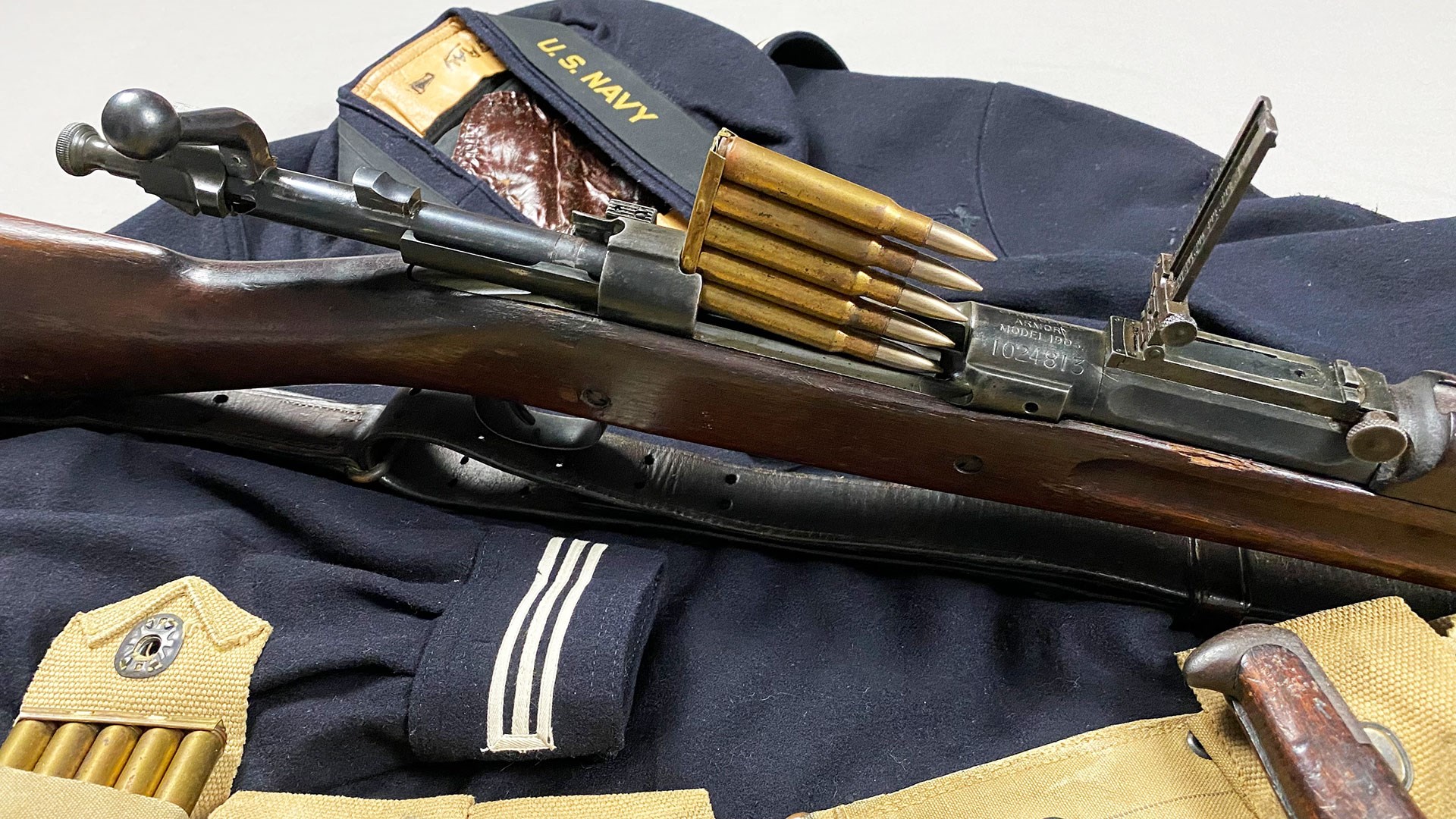
M1903 S/N 1024813.

Some historians have debated whether these rifles were used by Navy personnel or the Marine detachment while aboard the U.S.S. California. These rifles would almost certainly have been for issuance to the naval personnel and landing parties. At the time, the common practice for the Marine detachment was to bring aboard, maintain and handle their own small arms. The responsibility for these arms belonged to the commanding officer of the Marine detachment, not the captain of the ship. Thus, it seems unlikely that these rifles were from the marine detachment.

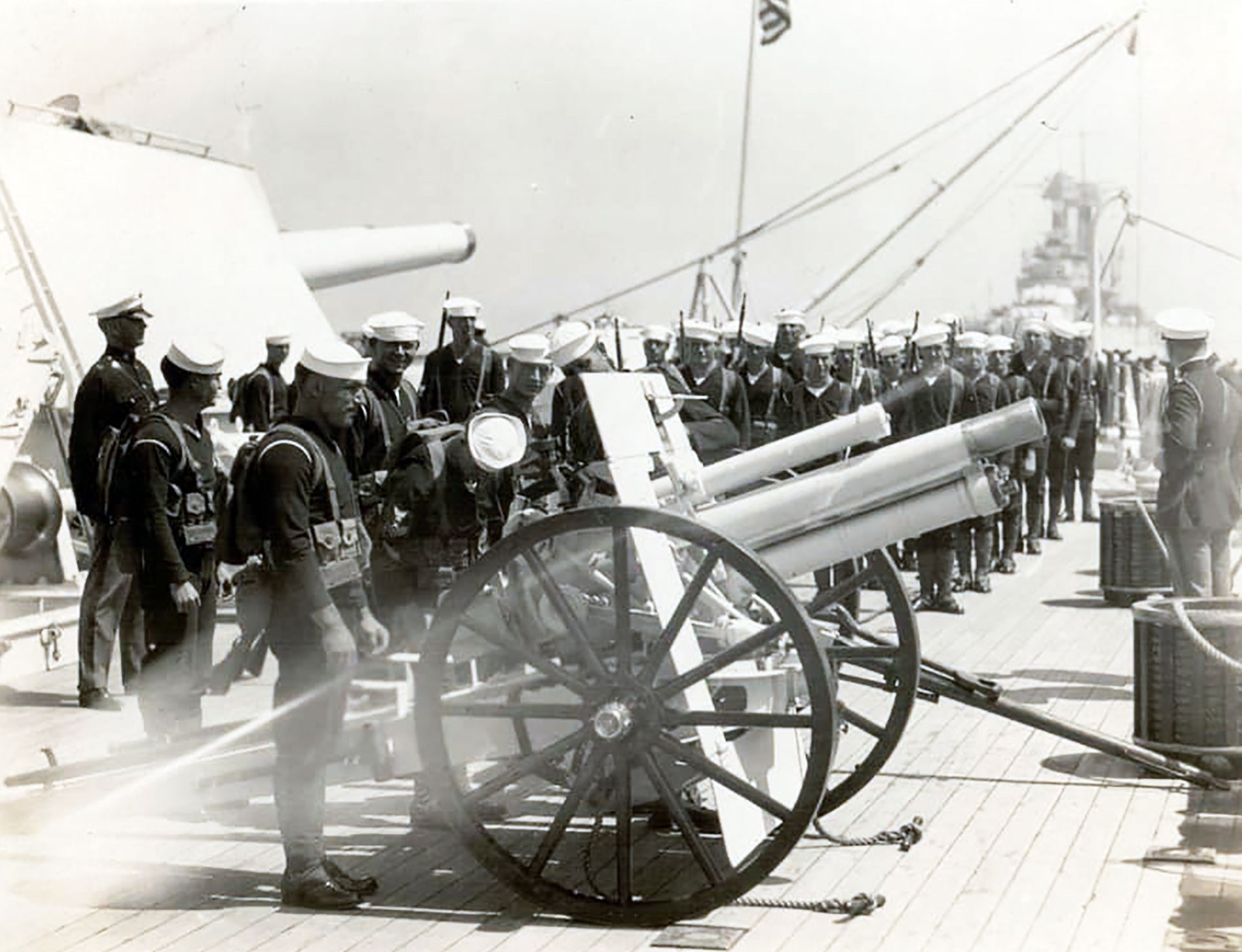
The next question that should be addressed is: "Why does a battleship even need small arms aboard?" The naval landing party would augment the Marine detachment aboard the ship when needed. It consisted of sailors who were normally assigned roles that were not crucial for the ship's operational needs. The primary role of these armed sailors was to function as the ship’s security. Though, this should not be confused with policing onboard the ship.

Landing party members aboard the U.S.S. California, sometime in the late 1920s to early 1930s. The U.S.S. California's sister-ship, the U.S.S. Tennessee, can be seen in the background. Take notice of the two Marine officers supervising the formation. It is reasonable to believe that the rifles we've examined may be shouldered by one of these sailors.
Naval personnel of the landing party would occasionally combine with the Marine detachment to form a larger landing force in certain situations, such as securing and stabilizing a hostile port. One example of the use of combined landing parties was the United States' occupation of Veracruz. The Marine detachment was also tasked with training the naval personnel in infantry tactics. It should also be noted that the Marines and Navy had separate armories for maintaining, repairing and storing their small arms. They only combined for training and carrying out landing party operations.

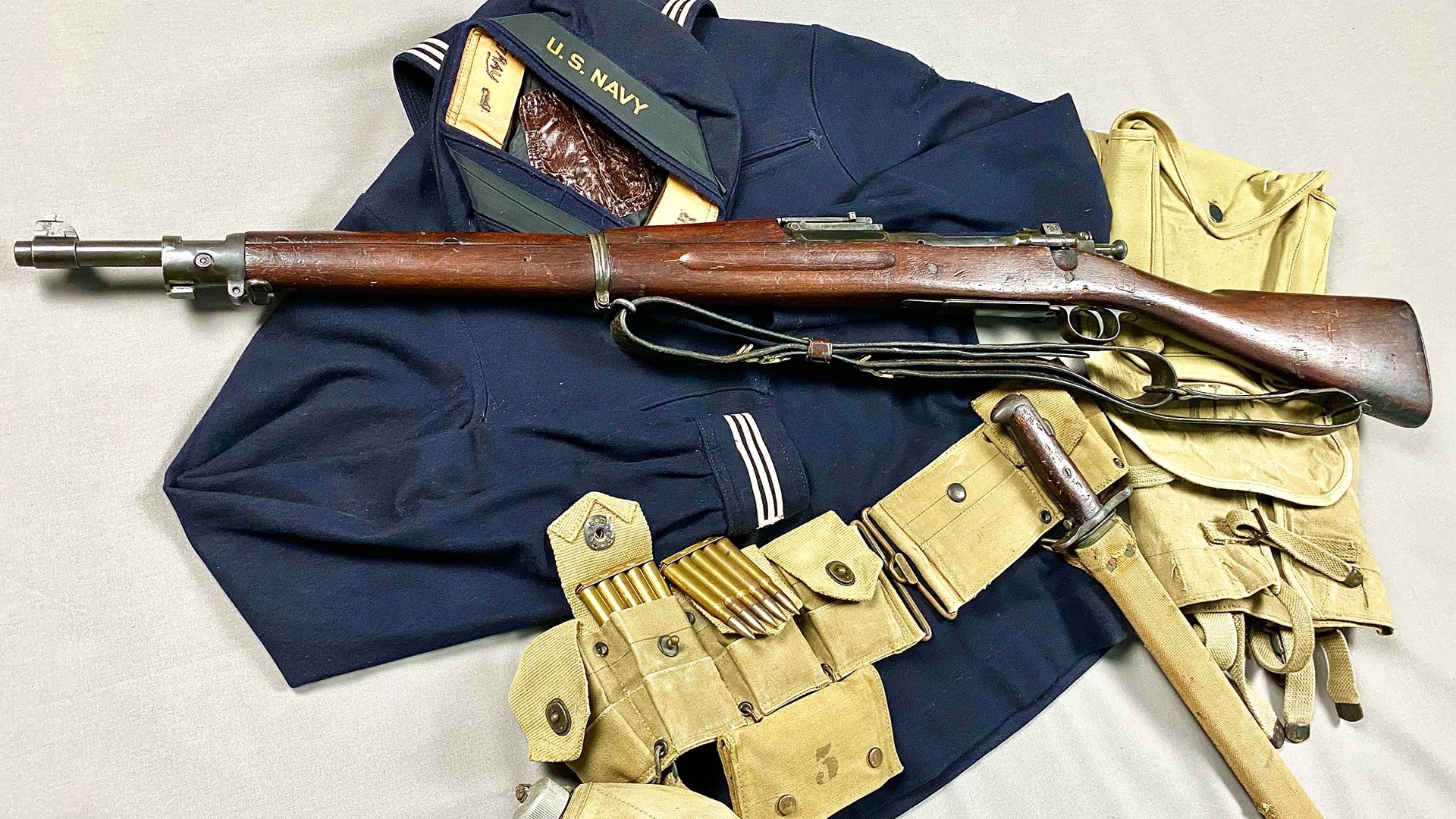
After the small arms were salvaged and sent to their respective batteries, it remains unclear what, if any, further service these rifles saw. It is possible that they sat out the rest of the war at the batteries, were transferred onto active duty ships, used for training or sent elsewhere. The U.S. Navy did not adopt the M1 Garand service rifle until September 1945, and the M1903 rifle was declared obsolete in 1947.

A view of the markings in the stock of M1903 S/N 1024813. Note the original D.A.L. inspector stamp followed by a post-war Springfield Armory S.A./J.F.C. rebuild cartouche as well as the added "Hatcher" hole in the receiver.
Thus, it is possible that these rifles could have served in other roles during the war, but that is unknown at the present time. It's also possible that these rifles were withdrawn from service sometime before or around the official adoption date of the M1 by the Navy in 1945, or shortly after the M1903 was declared obsolete. However, the presence of a Springfield Armory S.A./J.F.C. cartouche from a post-war rebuild in the stock of S/N 1024813 might indicate possible use into the 1950s. 

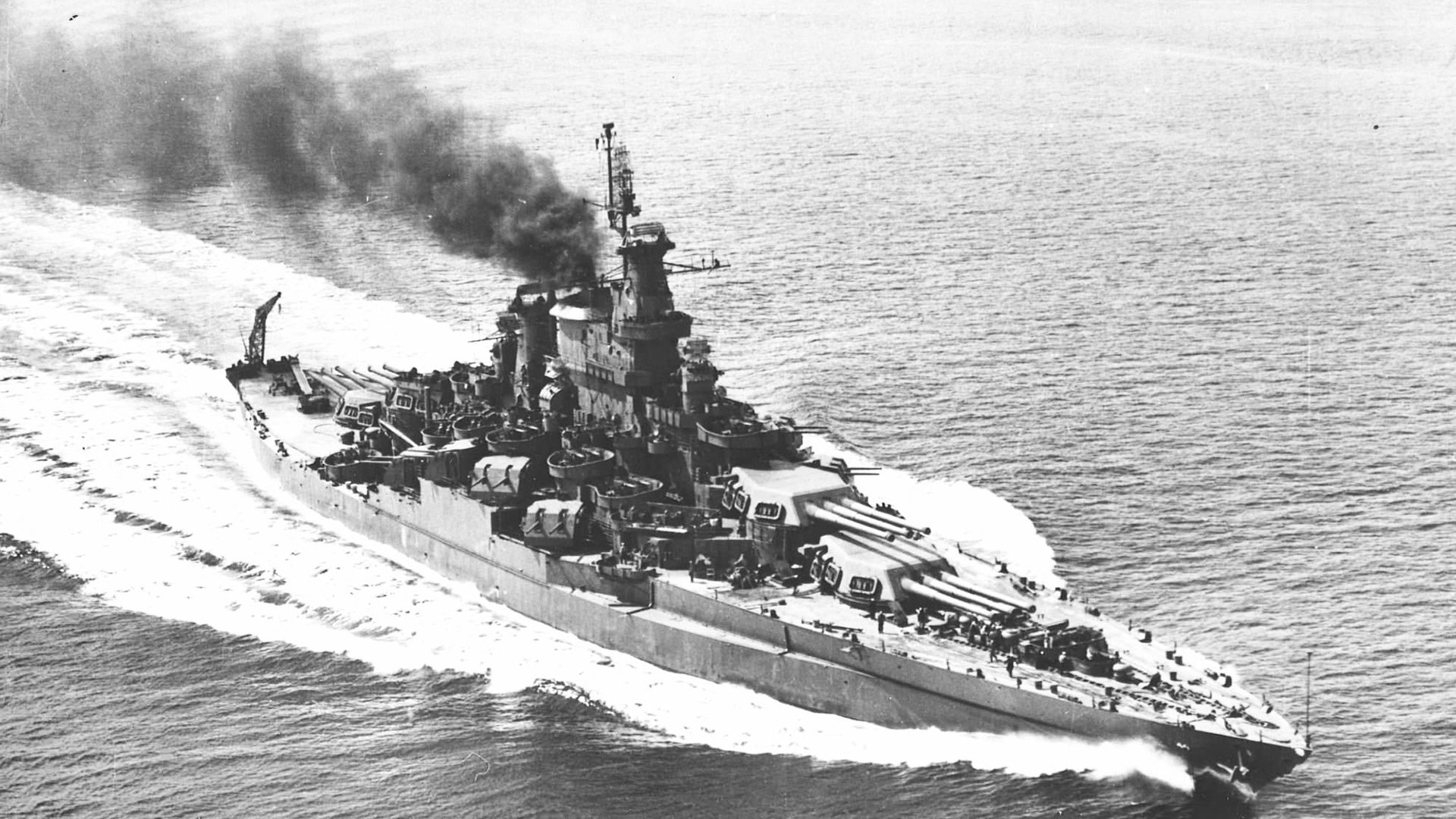
As for the U.S.S California, her story did not end in the mud of Pearl Harbor. After extensive efforts to patch the two torpedo holes and regain buoyancy, she was re-floated in March 1942. In October 1942, she sailed for Puget Sound Naval Yard, Wash., for long-term repairs and reconstruction. While being repaired, the ship was modernized and refitted with a new superstructure, radars and anti-aircraft mounts. Finally, on Jan. 31, 1944, the rebuild was completed, and she underwent a series of sea trials before rejoining the Pacific Fleet.

The U.S.S. California underway in 1944 after her extensive repairs and rebuild at Puget Sound Naval Yard, Wash. Note the redesigned superstructure, added radars and anti-aircraft mounts. 
Back in the fight, U.S.S. California’s battle record included the invasions of the Saipan, Guam and Tinian in the summer of that year. In October 1944, the ship took part in the largest naval battle of World War II, the Battle of Leyte Gulf in the Philippines. On the night of Oct. 25, 1944, a U.S. naval force under the command of Rear Adm. Jesse Oldendorf, which included the Pearl Harbor veteran battleships U.S.S. California, U.S.S. West Virginia and U.S.S. Tennessee, encountered a Japanese battle line sailing up the Surigo Strait.

The Japanese force, commanded by Vice Adm. Shoji Nishimura and comprised of the battleships I.J.N. Fuso, I.J.N. Yamashiro and the heavy cruiser I.J.N. Mogami, attempted to sneak up the strait toward U.S. amphibious forces landing on the island of Leyte. In the ensuing battle, the U.S. battleships crossed the enemy's "T" and opened fire with devastating accuracy, thanks to their radar-guided gunnery. All three Japanese ships were lost during this engagement, and it marked the final gun dual between battleships in naval history. U.S.S. California served for the remainder of the war in the Pacific, before being decommissioned in 1947 and placed in reserve. She and her sister-ship remained in mothballs until being scrapped in 1959.

Another view of M1903 S/N 1024813.
It is often said in the firearm collecting community: “Buy the rifle and not the story.” These words are commonly repeated almost as a mantra when advising fellow collectors on the most intriguing of backstories attached to prospective purchases. Specifically, this advise aims to help avoid a costly mistake. Many stories attached to old arms with a price tag are typically just that, stories that cannot be validated.

These three rifles serve as the exception to that rule, and show that one can in fact accept and prove a story with primary source documentation. Their unique history would have been lost, had the connection not been made between the respective serial numbers and the 1942 memorandum obtained at the National Archives. They also serve as a humble reminder of one of the darkest moments in U.S. history, as 98 men perished onboard the U.S.S. California during the attack. For more information on other serial numbers of small arms salvaged from the U.S.S. California and other documentation, visit archivalresearchgroup.com.

Thursday, December 9, 2021

America's First Sniper Rifle


I clipped this from "American Rifleman", I thought the subject matter was fascinating, and I had never heard of this.


Even before the term “sniper” came into widespread use, the U.S. Ordnance Dept. developed and tested a rifle that predicted the task. It was identified with the following nomenclature: “United States Military Rifle – Krag-Jorgensen – Equipped with Sharpshooters’ Telescopic Sight.
first American rifles to employ telescopic sights in combat

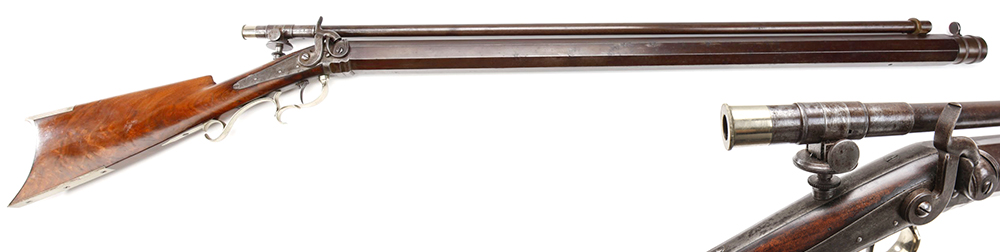
The American Civil War was the first conflict in our nation’s history in which telescopic-sighted rifles were employed in combat to any appreciable extent. These muzzleloading, percussion rifles were fabricated by a number of civilian gunsmiths and gunsmithing firms, primarily for benchrest shooting matches. Such rifles normally weighed from 25 to 35 lbs., had heavy barrels (of generally between .50 and .58 cal.) and were capable of surprising accuracy. While many, if not most, had iron sights, a number were fitted with long sheet-metal or brass telescopes, typically two to three feet in length. When war erupted, limited numbers of these civilian benchrest match rifles were procured by both the Union and Confederate armies for issuance to select “sharpshooters” and were used throughout the war, often with notable success. Curiously, after Appomattox, the U.S. Army showed virtually no interest in telescopic-sighted rifles, despite their proven effectiveness during the recently concluded war. Such was the case for the next three-and-a-half decades.
Muzzleloading, percussion-fired “sharpshooting” bench- rest rifle
Muzzleloading, percussion-fired “sharpshooting” bench- rest rifles, such as this one, circa 1860, were the first American rifles to employ telescopic sights in combat.


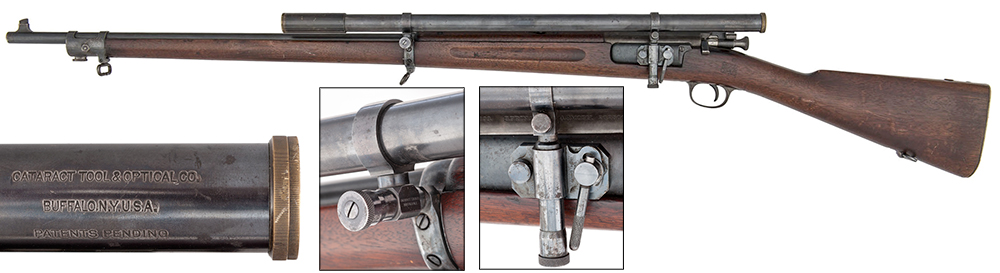
Then, on June 8, 1900, a board appointed by Lt. Col. Frank H. Phipps, commanding officer of Springfield Armory, was convened by order of the U.S. Army Ordnance Dept. to evaluate a Model 1898 Krag rifle fitted with a telescopic sight designed and manufactured by the Cataract Tool & Optical Co. of Buffalo, N.Y. The rifle was described as “United States Military Rifle – Krag-Jorgensen – Equipped with Sharpshooters’ Telescopic Sight.” The likely reason for the renewed interest by the American military in a telescopic-sighted rifle after remaining dormant for so long is that the Krag was the U.S. Army’s first standardized smokeless-powder service rifle. Its .30-40 Krag cartridge possessed a flatter trajectory and better ballistic performance than the larger-caliber blackpowder cartridges previously in use. Presumably, a telescopic sight would be able to enhance the long-range accuracy of the rifle. A couple of nondescript rifle telescopes were reportedly looked at previously by the Ordnance Dept. in 1896-1897, but none were deemed to be suitable for further consideration.

The minutes of the Ordnance testing board related the following regarding the Model 1898 Krag with the Cataract telescope:

“The sight consists of a telescope which is attached by means of brackets to the left side of the rifle. The front bracket is secured to the lower band by two screws, and the ring through which the telescope passes has a horizontal motion to provide for drift and windage. A ball-and-socket joint in this ring allows the telescope to be moved in any direction … The rear bracket is screwed to the side plate of the receiver, and the ring which holds the telescope has a vertical movement for changes of elevation.

“Telescopes of three different powers are submitted for trial, viz. 8 diameters, 12 diameters, and 20 diameters. The medium power (12 diameters) gave the best results.

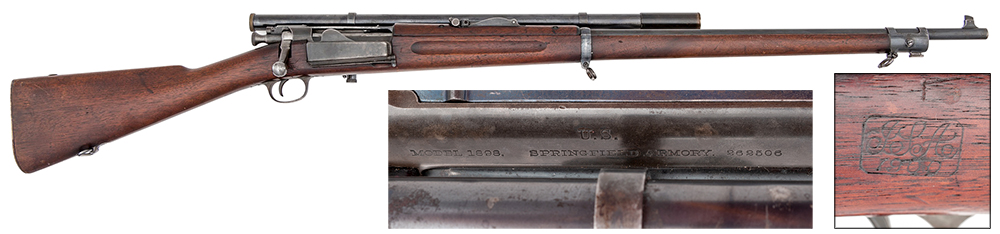
Model 1898 Krag rifle
Evaluated Cataract riflescopes (l.) were held in mounts that featured mechanisms designed to allow for both windage and elevation adjustments (below, l. and r.). The Model 1898 Krag rifle pictured (above) bears Serial No. 262506.


“The telescope is of practically universal focus; that is, it does not require readjustment for different marksmen or for different ranges. The eye can be placed close to the eyepiece or several inches away without any apparent difference in the focus. Danger of being struck in the eye when the piece recoils can therefore be avoided.

“The lenses are large and are held in place by having the metal of the tubes in which they are mounted spun over their outer edges. The telescope is light, but at the same time strong. The brackets for attaching the telescope to the rifle are strong and durable and there appears to be no tendency to jar loose.

“The sight was tested by actual firings up to a range of 2,000 yards, each member of the board participating in the firings. As a result of this test, the board is of the opinion that the use of this telescopic sight appears to be of especial value in hazy or foggy weather and at long ranges. In either case the target can be seen with remarkable clearness, and the marksman can be absolutely sure that he is aiming at the proper object. This would be of especial importance to sharpshooters acting independently. [Author’s note: Since the word “sniper” was not in widespread use in 1900, the terms “marksman” or “sharpshooter” were used instead].

Model 1898 Krag
The final inspection stamp (right) on one of the test rifles denotes its “1900” assembly date. The markings on the left side of the “sniper” Model 1898 Krag’s receiver (left) indicate that it was made by Springfield Armory.


“The ordinary sight is useful for accurate firing at a regular target up to about 2,000 yards; but it is impossible to see a man or even a small body of men clearly at that range unless projected against the sky or under other very favorable conditions. It is for this reason that volley firing is so largely resorted to at long ranges.

“With a telescopic sight a man could be distinguished easily at 2,000 yards, even with an unfavorable background.

“The board is of the opinion that this sight is suitable for use in the U.S. service, and recommends a number of them be purchased for trial by troops in the field. If found to be satisfactory, a sufficient number should be purchased to supply such a number of the sharpshooters of each organization as experience in the field shall indicate to be desirable.”

Following the favorable report of the test board, the findings were forwarded to the Chief of Ordnance on June 14, 1900. It is reported that the rifle used in the test was subsequently sold to the Cataract company.

Upon receipt of the report, the Chief of Ordnance approved the manufacture by Springfield Armory of six additional Model 1898 Krag rifles fitted with Cataract telescopes for field trials. In the summer of 1901, four of these rifles were sent to Manila in the Philippines and one each to Fort Leavenworth, Kan., and Fort Monroe, Va. The testing consisted chiefly of firing on regulation targets at known ranges and comparing the scores with standard Krag rifles (without telescopes) fired by the same marksmen.

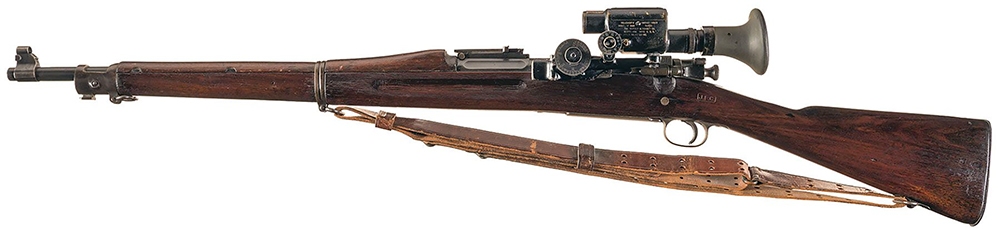
Springfield Model 1903 rifle with a Model 1908 Warner & Swasey “Musket Sight”
Despite never being utilized by the military beyond the seven test guns, the Model 1898/Cataract rifle represents the first step toward the development of a purpose-built telescopic-sighted sniper rifle. The Springfield Model 1903 rifle with a Model 1908 Warner & Swasey “Musket Sight” (above) would go on to become the U.S. Army’s first standardized scope-equipped sniper rifle.


The results of the testing were varied. Some of the soldiers involved in the testing were quite enthusiastic about the performance of the telescope-equipped rifles—others complained that the offset position of the scope, which was necessitated by the upward ejection of the fired cartridge cases, was cumbersome and uncomfortable. It was reported that a couple of the Cataract telescopes suffered damage during the testing, including front lenses that were dislodged due to the force of recoil.

After the conclusion of the field testing, further development of telescopic-sighted Krag rifles was dropped, even though there were demonstrable advantages to the use of telescopes. In 1901, the assets of the Cataract Tool & Optical Co. were acquired by the J. Stevens Arms & Tool Co., which may or may not have had any bearing on the decision to drop further consideration of the Cataract telescopic sight. Regardless, the primary reason for not pursuing the matter further was the ongoing development of the Model 1900 bolt-action rifle that eventually culminated in the adoption of the famed Model 1903 Springfield a few years later.

Five years after the adoption of the Model 1903, the Army tested and subsequently adopted a telescopic sight for the rifle. However, this sight was totally unlike the Cataract design tested with the Krag. Developed by the Warner & Swasey Co., the “Model of 1908 Musket Sight,” was of a rather unusual prismatic design and was small and compact as opposed to the long and slender Cataract scope. A slightly improved “Model of 1913” Warner & Swasey sight was the standard U.S. Army sniper riflescope, teamed with the Model 1903 rifle, during World War I, but it was dropped from service in the mid-1920s.

Only seven Model 1898 Krag rifles fitted with the Cataract telescopic sight were ever fabricated under U.S. government auspices and were never utilized by our armed forces beyond the limited testing in 1900-1901. Nevertheless, the Model 1898/Cataract rifle was, however haltingly, the first step toward the future development of purpose-built telescopic-sighted rifles for our armed forces. It has the distinction of being America’s first prototype sniper rifle of the 20th century—even before the term “sniper” came into vogue.

Friday, August 6, 2021

The Armalite Story

I read this article and it was full of stuff that I didn't know about Armalite and that they seemed to have a "spate" of bad luck, it seems.  They design something really neat like the quintessential "America's rifle" like the AR-15 and its derivatives, then crash and burn later.  Yes I got this from "American Rifleman.


Bringing Small Arms Into The Space Age
As detailed in The ArmaLite AR-10 by Maj. Sam Pikula, USAR, The Black Rifle by R. Blake Stevens and Edward C. Ezell and the company’s own official history available at armalite.com, the ArmaLite story starts with George Sullivan, patent counsel for Lockheed Aircraft Corporation. Visionary, firearm enthusiast and huckster all describe Sullivan. His job at Lockheed was crucial to subsequent events because it meant that Sullivan was aware of the latest technological breakthroughs and space-age materials at a time when the American small-arms industry was stagnated and relatively antiquated. Small arms were built only of steel and wood, and new products were simply derived from evolutionary changes to old ones.

While not a professional, Sullivan had a passion for small-arms design. Through contacts in the aviation industry, that passion eventually came to the attention of fellow firearm enthusiast Richard Boutelle, who happened to be president of Fairchild Aircraft. Boutelle was intrigued by Sullivan’s ideas and, in the early 1950s, provided funding for a foray into the business of designing small arms. Sullivan set up shop in Hollywood, Calif., in a small building affectionately referred to as “George’s Backyard Garage.” Initially, the hope was to create sporting arms for the commercial market using modern, high-tech materials. The first effort, for example, was a .308 Win.-cal., Mauser-style bolt-action with a foam-filled plastic stock and aluminum receiver and barrel with a thin steel liner. Very few examples of this rifle, variously called the AR-1 and “Parasniper,” were produced.

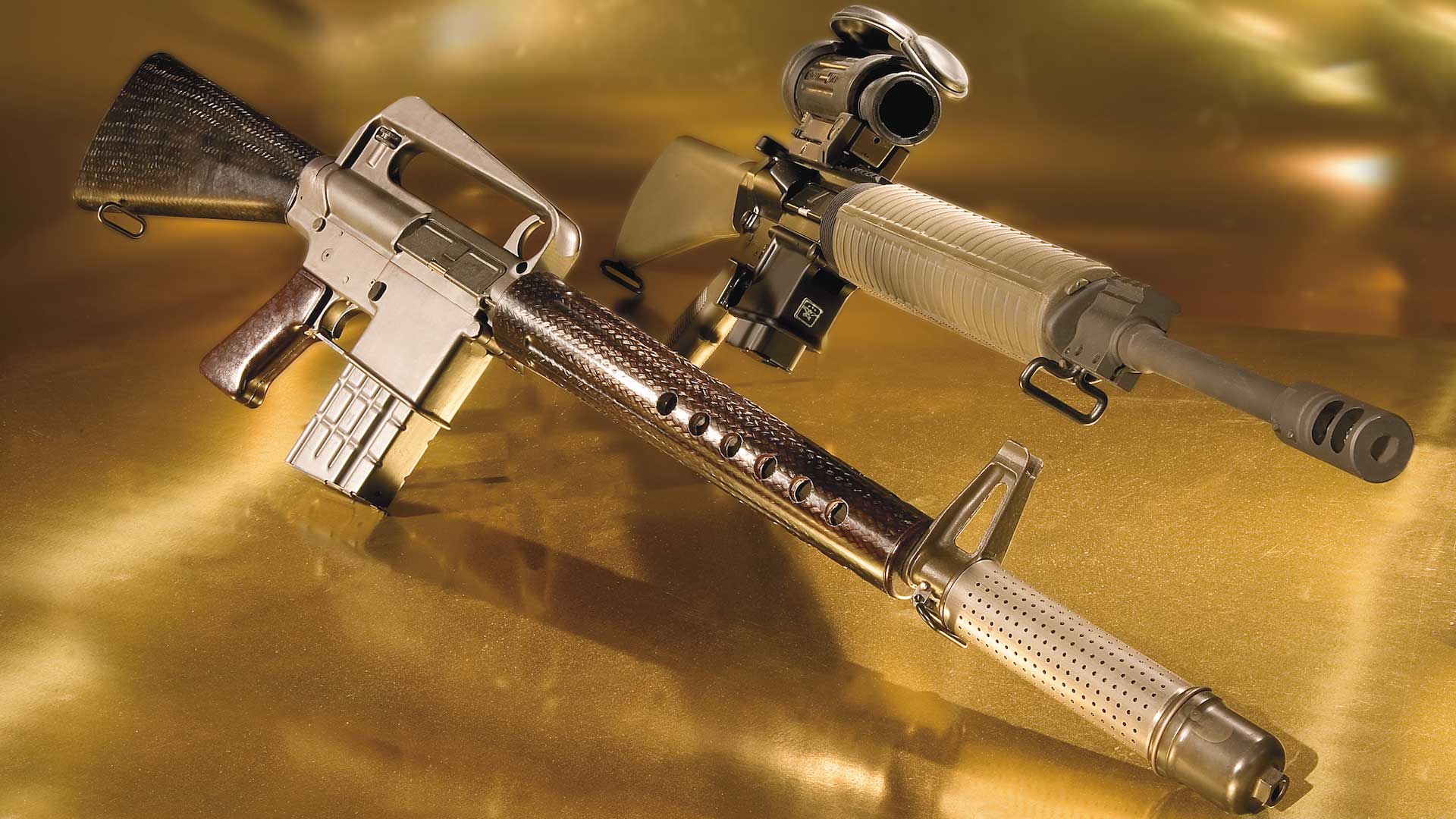
rifles on golden background guns armalite semi-auto carbine .223 .308
A 1950s AR-10 prototype (l.) is shown next to a state-of-the-art AR-10A4 flat-top, this one mounted with an Arma-ment Technology ELCAN 3.4x scope.


As envisioned by Sullivan, ArmaLite was not intended to be a firearm manufacturer; ArmaLite’s stock-in-trade was to be ideas. The company would use knowledge of materials and manufacturing techniques gleaned from the aircraft industry to create radical new designs. It would then build prototypes of those designs and market them to manufacturers who would produce them under license. Sullivan proposed that Fairchild purchase ArmaLite and make it a division of the company, and in that way inject additional capital into the venture. Boutelle agreed and, on October 1, 1954, ArmaLite became a division of Fairchild Aircraft.

A Change Of Direction

Advertisment rifle survival rifle gun right side camo ad magazine
The AR-7 was a commercial, .22 LR-cal. version of the Air Force AR-5 survival rifle. The barrel and action could be detached and stored within the stock.

Shortly thereafter, ArmaLite was invited to submit a rifle for consideration by the Air Force for its new survival rifle. The firearm the company submitted, a .22 Hornet-cal. bolt-action takedown with a four-shot magazine, was dubbed the AR-5. The gun’s barrel could be detached from the action and stored in the plastic stock. With the buttcap then replaced, the 2 3⁄4-lb. gun could float. The Air Force adopted the gun as the MA-1, but never purchased it in quantity. Despite that, though, the interest shown by the military took ArmaLite in a whole new direction. From that moment on, the company would focus on military designs.

While testing an ArmaLite prototype at the Topanga Canyon Shooting Range in southern California, Sullivan met a gentleman who lived in nearby Los Angeles and made dental plates for a living. He was a former Marine who also happened to be an amateur firearm designer. In fact, he was testing one of his own designs that day. His name was Eugene Stoner. Shortly thereafter, Stoner found himself in the employ of ArmaLite as its chief design engineer.

While Sullivan had been the company’s visionary, day-to-day operations were run by Charles Dorchester, who served in numerous executive capacities, including president and eventually chairman of ArmaLite. While the company conceived and developed various designs, it was a semi-automatic rifle with an unusual locking action and unique gas system that would make Stoner—and ArmaLite—famous. It was called the AR-10 and was the focus of ArmaLite’s efforts from 1955 until 1959.

Tomorrow’s Rifle—Today
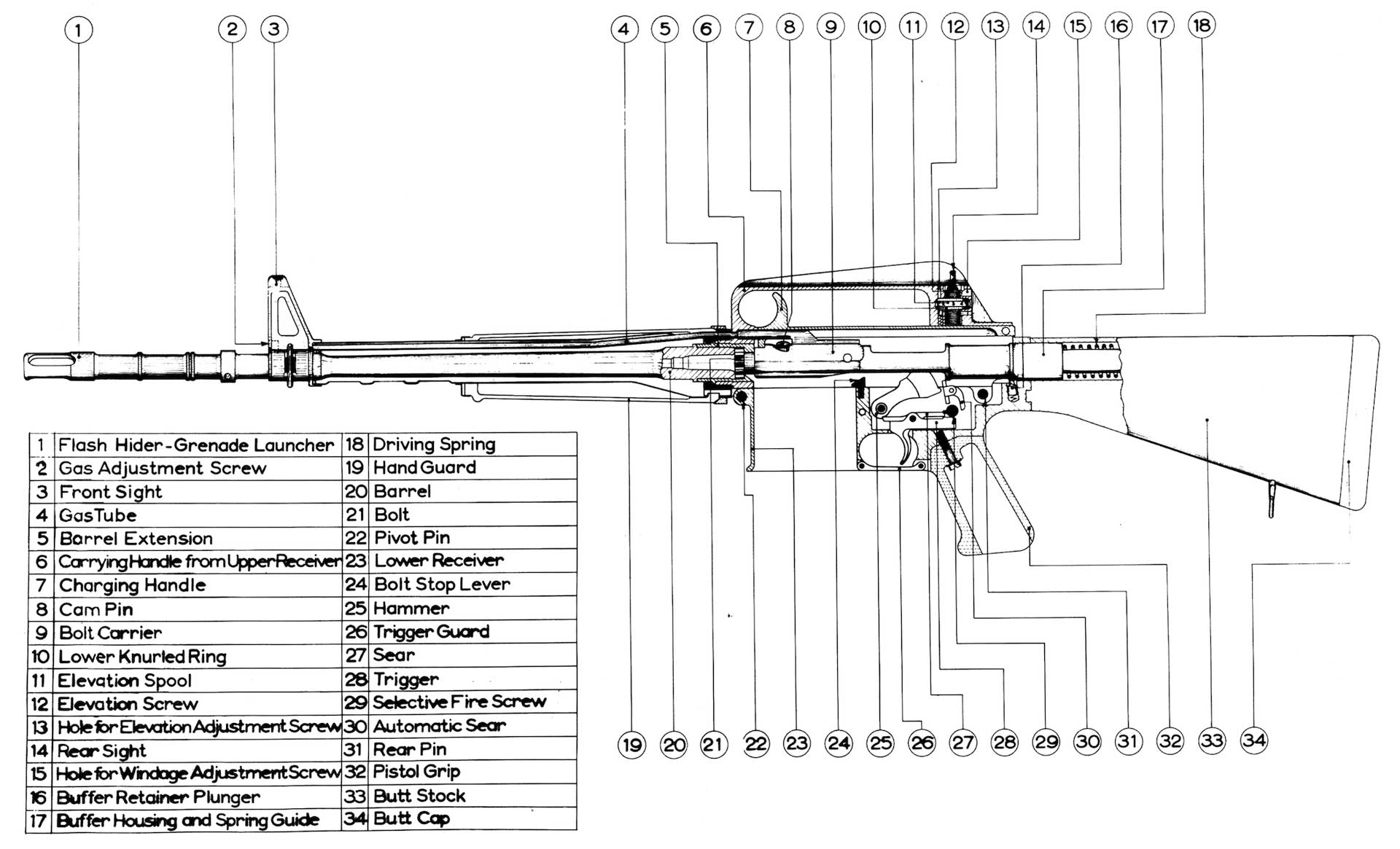
The AR-10 looked radically different from anything previously seen. It had an integral carry handle atop the receiver that contained the gun’s iron sights. The cocking lever was on top of the receiver and articulated in the opening of the handle. The fore-end was not wood, but fiberglass and, later, plastic, thanks to plastics engineer Tom Tellefson. Inside, it was just as radical with an eight-lug, rotary bolt locking not into the receiver, but into a steel barrel extension. That allowed the receiver to be made from lightweight, rustproof, forged aluminum rather than heavy, rust-prone steel.

drawing black white gun rifle parts callouts descriptions schematic

The rotary bolt and barrel extension was borrowed from the Johnson rifle designed by Melvin M. Johnson. (Johnson was the East Coast military rifle consultant for ArmaLite and had a contentious relationship with the military dating back to his efforts to get the Johnson rifle adopted in place of the M1 Garand. Some speculate that his involvement with ArmaLite didn’t help the company’s chances with the military.) The lock-up may have been Johnson’s, but the gas system was Stoner’s.

As described in The Black Rifle:
“[S]toner’s gas system utilized a simple open pipe, a concept first used in the Swedish Ljungman Gevar 42 and the later French 1944 and 1949 MAS semi-automatic rifles. In these relatively rudimentary applications, the gas piston and spring of a conventional gas-impingement system were replaced by the jet of hot gas itself, which traveled back through the hollow gas tube and impinged directly onto the face of the bolt carrier. The kernel of genius in Stoner’s gas system was that the AR-10’s gas tube, running along the left side of the barrel under the handguard, fed the gas through aligned ports in the receiver and bolt carrier wall into a chamber formed between the tail of the bolt and the surrounding bolt carrier. This forced the bolt carrier back. After about 1/8” of movement, the port in the carrier no longer lined up with the port in the receiver, and the further flow of gas was cut off. The momentum already imparted was sufficient to keep the bolt carrier moving, which unlocked the bolt by rotating it with a connecting cam pin, thus beginning its rearward travel. With the gas cylinder at maximum size and the bullet long since out of the muzzle, what little pressure remained was exhausted as a weak ‘puff’ through slots in the right side of the bolt carrier.”

Battling The Big Boys

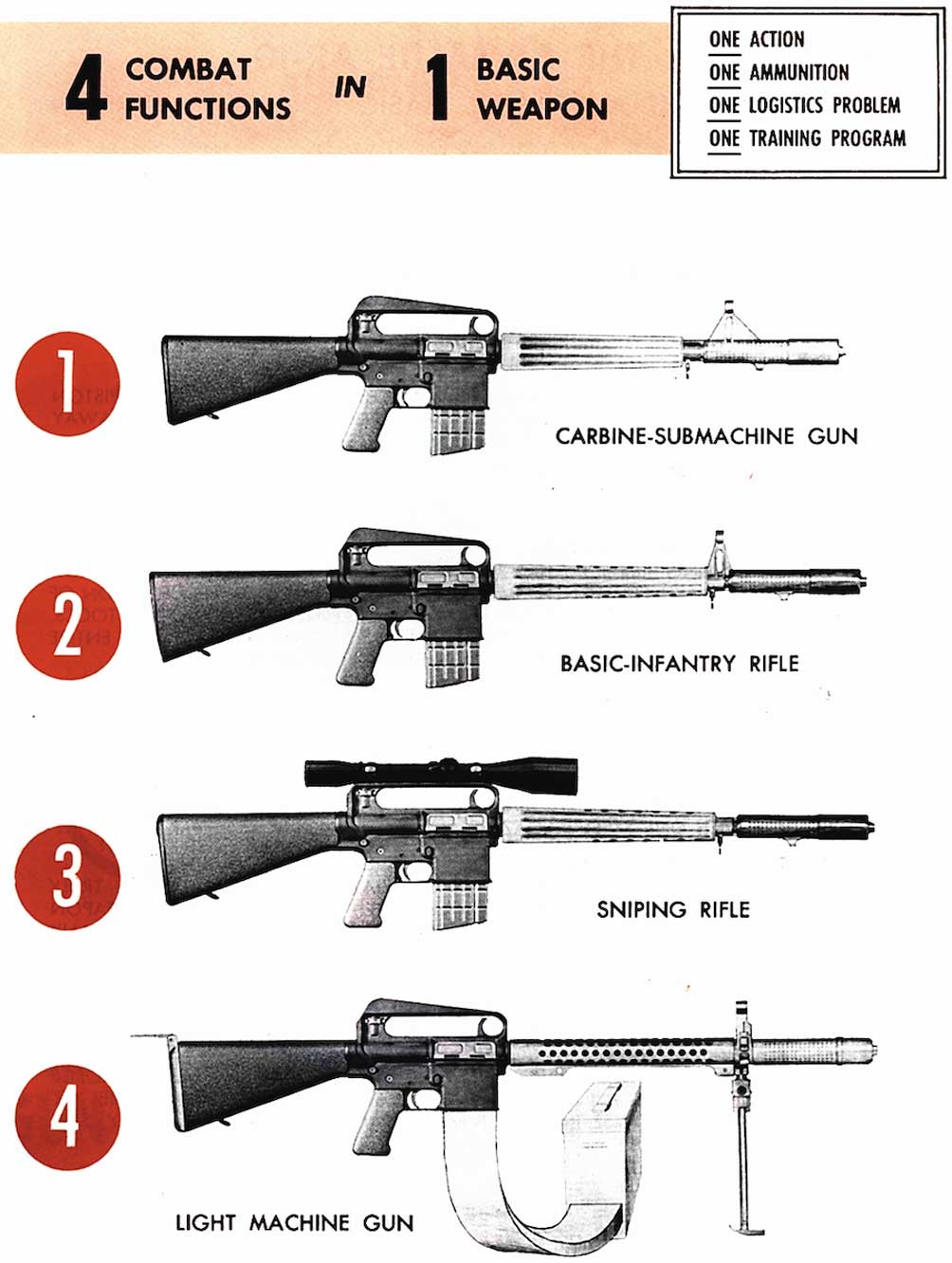
guns drawing stack four rifles military guns armalite advertisement


The gun was quickly entered into the ongoing service rifle competition then pitting the Springfield T44 against the T48, a version of the FN FAL. The AR-10 arrived on the scene too late and with too little development to best the other rifles in the trials and the contract was awarded to the T44, which was adopted by the military as the M14.

However, a handful of researchers at Aberdeen Ballistics Research Laboratories—among them American Rifleman Ballistics Editor William C. Davis—had come up with some pretty radical notions of their own. Despite years of insistence by Army brass on .30-cal. rifles for combat use, some ballisticians within the military had begun to explore the feasibility of lesser calibers. The Hall Study, conducted by Donald L. Hall, had concluded that, given a rifle and ammunition combination with a total weight of 15 lbs., a soldier armed with a small-caliber rifle could kill, on average, 2.5 times as many of the enemy as a soldier armed with an M1 rifle and ammunition.

This was followed shortly by The Hitchman Report prepared by Norman Hitchman. It determined that most soldiers do not engage the enemy until he has closed to 300 yds., and that hit potential was rather low until combatants had closed to 100 yds. Therefore, the accuracy and power of .30-cal. U.S. battle rifles—built to a 600-yd. standard—were excessive. Practically speaking, equal results could, in theory, be achieved with smaller, less powerful, less accurate and less costly arms. This led to the Small Caliber, High Velocity (SCHV) concept. In addition to maintaining practical effectiveness, a small cartridge would recoil less, be more controllable in fully automatic fire (a distinct problem encountered with the .308 Win.-cal. M14), could be carried in greater quantity by individual soldiers and would allow a lighter, handier rifle than a .30-cal. cartridge. ArmaLite was consequently asked to explore reducing the AR-10 to .22-caliber. The company agreed, though it continued to seek sales of its .30 cal. domestically and abroad.

man white shirt black pants black rifles wall line row guns carbines engineer
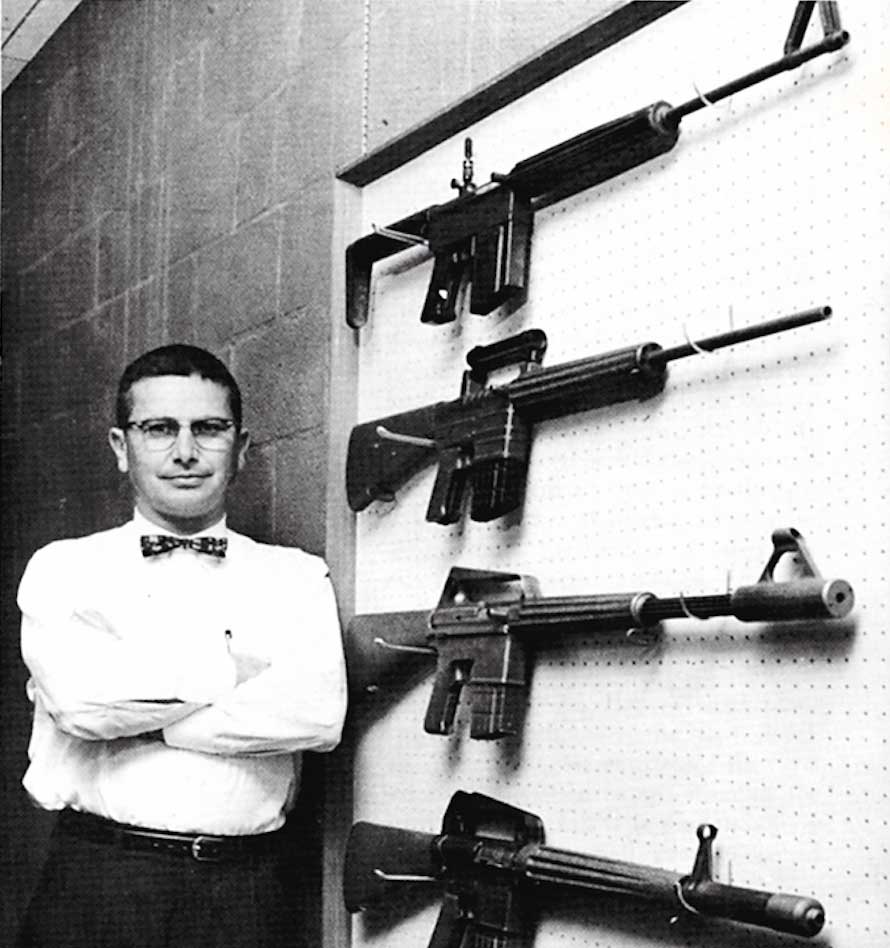
Firearm designer Eugene Stoner poses beside various incarnations of the AR system. His greatest strength may have been his ability to take clever, yet disparate design elements and integrate them into a single, functional firearm. The AR-15/ M16 that evolved from his design has been with us for about 40 years now.

When the military requested that ArmaLite investigate downsizing the AR-10 to accommodate a .22-cal. cartridge, it’s doubtful the company realized how significant the request was to prove. Modifying the .222 Rem. cartridge and freely building on the work done at Aberdeen, Stoner—no ballistician—created the round that eventually became known as the .223 Rem. (5.56 mm NATO). Meanwhile, Arma-Lite designers Robert Fremont and L. James Sullivan downsized the AR-10, not an easy task since it wasn’t a matter of a consistent ratio of reduction from the large gun to the small one.

Once completed, the new gun—referred to as the AR-15—was largely ignored by the military bureaucracy that had initiated its development. Factions within the military were still uncomfortable with SCHV, while some felt the military was too far along in its commitment to the new M14 service rifle to change at that point.

From Bad To Worse
In the meantime, things were going badly with the AR-10. It is important to remember that Armalite was conceived of as a design shop rather than a manufacturing entity. The company contracted with Artillerie-Inrichtingen, the Dutch arsenal, to build the rifle, hoping for sales to foreign militaries. However, the company had never had the funds to properly develop the gun completely. There were numerous bugs that had to be worked out of the design, bugs a larger company might have anticipated and dealt with easily. Moreover, manufacturing obstacles continually delayed production, frustrating ArmaLite executives. Further, with the exception of a contract with Sudan—which no one has ever mistaken for a world power—the rifles weren’t selling, even to the Dutch whose arsenal was building them.

right side rifle armalite ar-180b black gun carbine
AR-180B (.223 Rem.)


Finally, with no future AR-10 sales on the horizon, the military’s interest in the SCHV concept apparently waning and Fairchild strapped for cash, ArmaLite chose to cut its losses and, in early 1959, licensed the rights to both the AR-10 and AR-15 designs to Colt’s Manufacturing for $75,000 and a 4.5 percent royalty.

Although it is widely regarded as a milestone in the history of bad ideas, the licensing agreement with Colt’s was not irrational given what was known at the time. Colt’s—itself near bankruptcy—was taking a gamble. Fortunately, that company’s luck was much better than ArmaLite’s. Its luck came in two forms: rising tensions in Vietnam, and the person of Robert W. “Bobby” MacDonald.

New Shooter
When the U.S. decided to intervene in Southeast Asia, it helped set the stage for the ultimate triumph of the AR-15. The election of John F. Kennedy and the appointment of Robert S. McNamara as Secretary of Defense meant that change had come to arms procurement. With McNamara’s “Whiz Kids” steeped in no tradition save arrogance, the traditional channels of trial, development and adoption could be breached. That is just what happened when Colt representatives took the AR-15 to Indochina.

The American government had decided that, despite the focus on strategic nuclear weapons, small arms for fighting limited wars against insurgents were needed and had been neglected. Developing and securing such weapons was to be the mandate of the Advanced Research Projects Agency (ARPA). These weapons were not to be carried by U.S. personnel, per se, but were to arm U.S.-backed foreign nationals. It was the result of such a program, specifically Project AGILE, that brought Colt’s representatives, including MacDonald and now Stoner, to the Far East to demonstrate the AR-10 and AR-15. The smaller arm was a tremendous hit with the diminutive foreign troops. The gun and its shooting characteristics appealed to those of smaller stature far more than did the AR-10 or any other .30-cal. battle rifle. Moreover, the AR-15 had virtually no competition from like-chambered combat rifles—there were none. MacDonald promptly informed Colt’s to focus on the AR-15 rather than the AR-10 and to gear up for the Asian market.

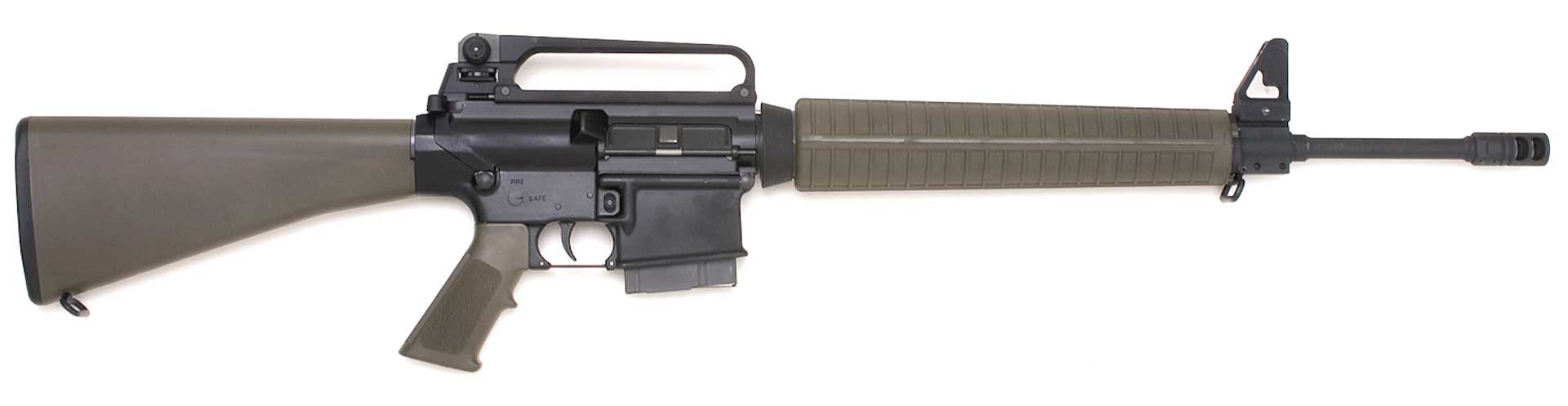
right side rifle gun carbine green plastic stocks armalite ar10
ArmaLite AR-10A4 (.308 Win.)


Stateside, MacDonald was no less effective. At Boutelle’s birthday party in Maryland, MacDonald handed Air Force General Curtis LeMay an AR-15 and let him shoot a couple of watermelons with devastating effect. The result was two exploded melons and LeMay’s quick request that AR-15s be purchased to replace M1 Carbines for Air Force personnel responsible for the security of Strategic Air Command bases.

In Vietnam, the role of the “black gun” continued to expand. Although it was supposed to be issued only to foreign troops, U.S. personnel gradually began carrying the new rifle, too. Obviously, this made logistic sense since they were traveling with AR-15-equipped ARVN soldiers. But also, American personnel noted that the light, fast-handling gun was better suited to jungle warfare than any other battle rifle-caliber longarm available. At first it was issued only to specialized personnel, but soon became a general-issue arm. ArmaLite could only watch in bitter astonishment as the AR-15 became the standard-issue U.S. service rifle, supplanting the bulky M14.

There were, of course, problems with the AR-15 (which was subsequently given the military designation M16). Many of those problems were directly attributable to how the arm was adopted—without adequate testing of the gun nor training for the soldiers. However, with the wherewithal that comes from having enormous government contracts, Colt’s, with Stoner as a consultant, was eventually able correct serious problems, especially the extraction and jamming issues that plagued the early guns and were only discovered after the rifles were widely issued.

After having reduced the AR-10 to produce the AR-15, ArmaLite reversed course and took what had been learned from the AR-15 and scaled it up to create a new, improved AR-10 called the AR-10A. The future, however, was clearly with the .223-Rem.-chambered rifle, and it appeared that the age of the AR-10 would never come.

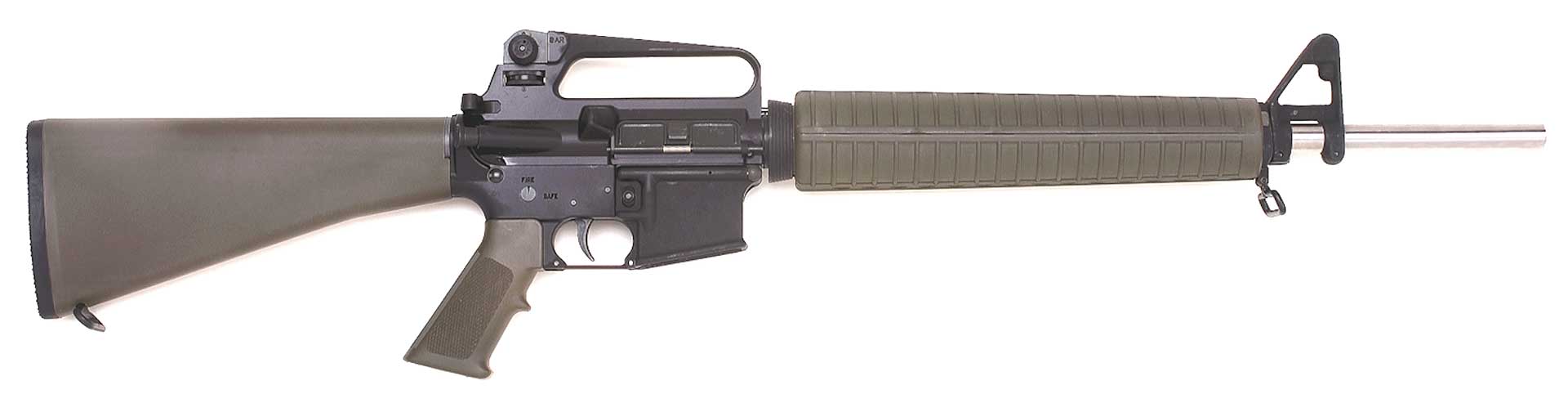
right side rifle ar15 armalite gun
ArmaLite M15A2 National Match (.223 Rem.)


The Dream Winds Down

Boutelle was eventually relieved of his position with Fairchild. George Sullivan, the ArmaLite muse, landed more softly: He had never left his position with Lockheed.

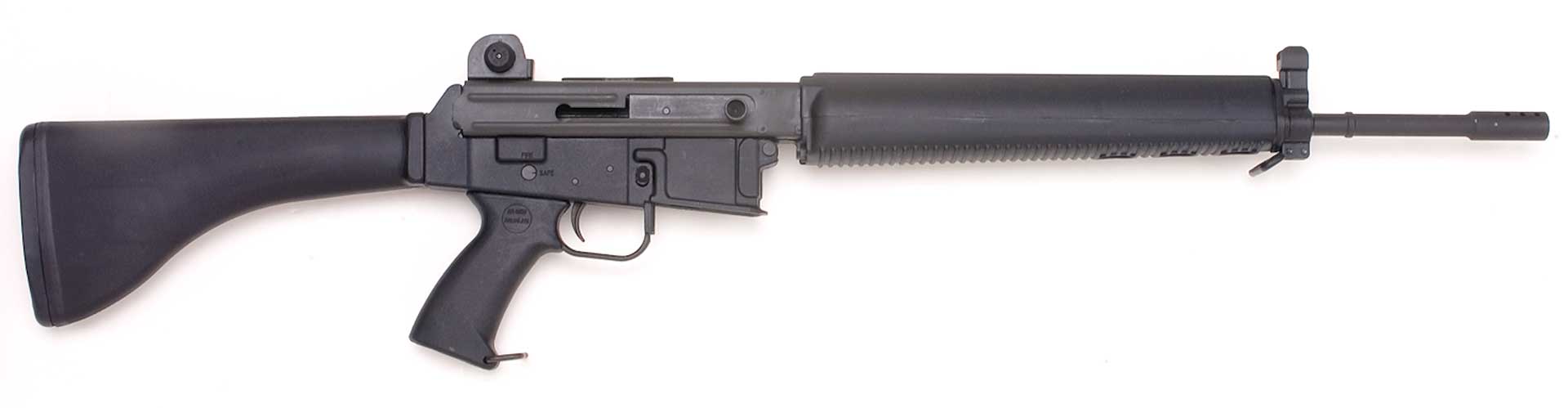
Recognizing that the .223 Rem. was the hot ticket, ArmaLite was faced with the problem that the AR-15 patents now belonged to Colt’s. The company then created a “poor man’s .223” called the AR-18. It was to be a low-cost .223 rifle made from stampings rather than forgings and having a different gas system than the AR-15. It would allow less-wealthy countries to equip their militaries with a .223 Rem.-cal. rifle.

However, despite two decades of effort, the company’s luck ran true to form and sales of the AR-18 were very limited. In the end, ArmaLite was sold to Elisco Tool Manufacturing Company, a Philippine concern whose U.S. component folded with the overthrow of Philippine president Ferdinand Marcos.

Restoring The Dream
In January of 1994, Mark Westrom, a former Army Ordnance officer and civilian employee of the Weapons Systems Management Directorate of the Army’s Armament Materiel and Chemical Command (AMCCOM) purchased Eagle Arms, a small company that made AR-15-type rifles and parts following the expiration of Stoner’s patents. A business associate of Eagle Arms, Dr. John Williams, had worked for ArmaLite in his youth and introduced Westrom to former ArmaLite Production Manager John McGerty who, in turn, introduced Westrom to John Ugarte. Ugarte had been the last president of record at ArmaLite and had retained the rights to the trademark; Westrom promptly purchased those rights. Thus was the ArmaLite marque reborn.

logo print lion armalite