Webster

The Constitution was made to guard the people against the dangers of good intentions." --American Statesman Daniel Webster (1782-1852)


Showing posts with label Army; WWII. Show all posts

Sunday, September 26, 2021

The Men and Guns of "D-Day", the 101st Airborne.

Still working a lot of "overtime", I ain't complaining, but I am tired,  I am off today, but I plan on piling it on all next week if I can get it.  (Momma wants a new pair of shoes*rolling dice*, lol).  I have a rant or two that is perculating, but it may be a bit before I post it.  

      I snagged this off "American Rifleman" it was sitting in my "almost ready" post that I didn't upload sooner.  I thought it was pretty cool.


On June 6, 1944, in conjunction with the naval landings of Operation Neptune, the U.S. Army sent in two airborne divisions to land behind enemy lines in Normandy, France, as a part of the overall D-Day landings. One of these two divisions was the 101st Airborne, who wore the now legendary "screaming eagle" patch. The 101st Airborne Division was tasked with capturing a series of beach exits and enemy strongpoints directly inland from the shores of Utah Beach. The division would parachute in with 6,928 men, ferried by numerous C-47 transport aircraft.
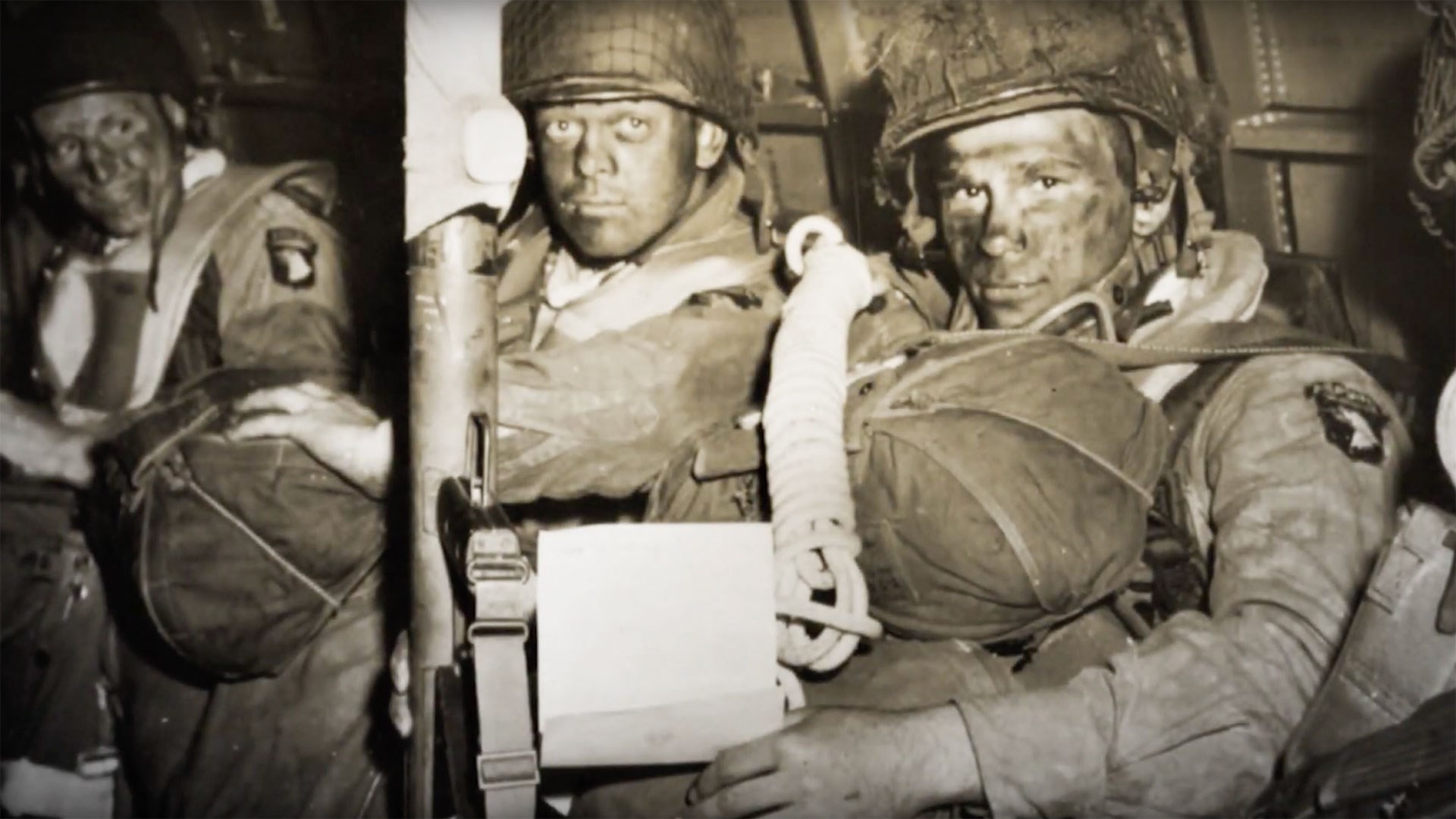
Paratroopers of the 101st Airborne Division geared up and sitting in a C-47 transport aircraft.

As recalled by 101st Airborne Division veteran, Donald R. Burgett, the force took off from airbases in England just before dark on the evening of June 5, and by the time they arrived in Normandy and began to parachute in, it was 1:14 a.m. The aircraft flew in through a fog bank, which caused them to scatter a bit. The C-47s were flying so slow that, as Don recalls, he felt the opening sock, looked up to see machine gun tracers fly through the canopy of his chute and then hit the ground. They had been dropped from merely 300' off the ground, much lower than the 700' minimum they were supposed to jump at.
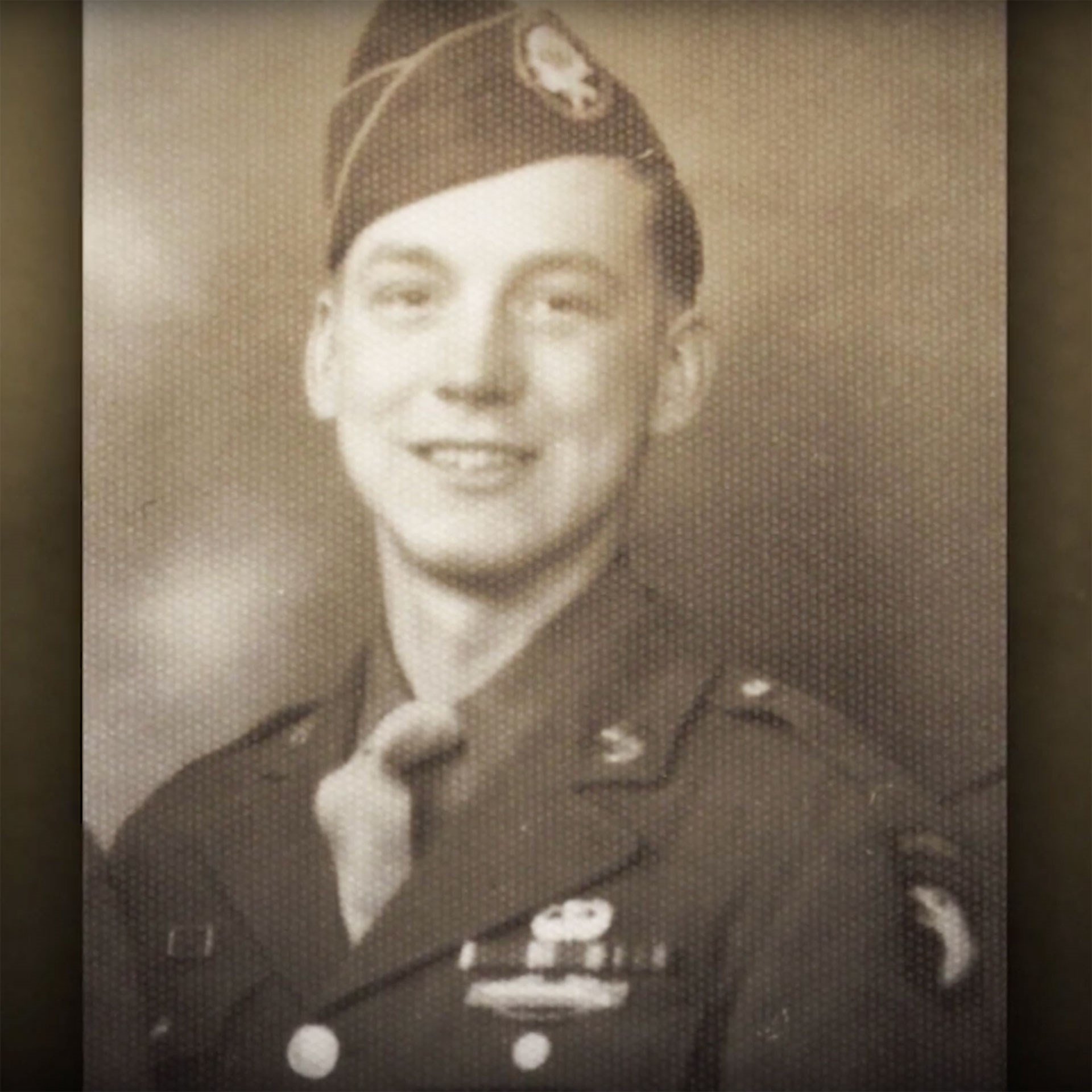
A photo of Donald R. Burgett in uniform during World War II.

Another 101st Airborne veteran, Raymond Geddes Jr., recalls jumping only to see a farm house in the distance for a brief moment, before hitting the ground. It was the lowest parachute jump he ever made. His watch broke when he landed, freezing the hands at the time of 1:25 a.m. Many lesson were learned during these jumps that should have been worked out during training.

One example of these hard-learned lesson involved the jump gear. The paratroopers carried more than 60 lbs. of equipment each during the jumps, with much of it, including weaponry, attached with less than ideal tiedowns. As a result, many paratroopers on D-Day lost their important equipment when the tiedowns failed. This led to paratroopers having to run around in the dark trying to find their drop bags and weapons on the landing zone, all while behind enemy lines.
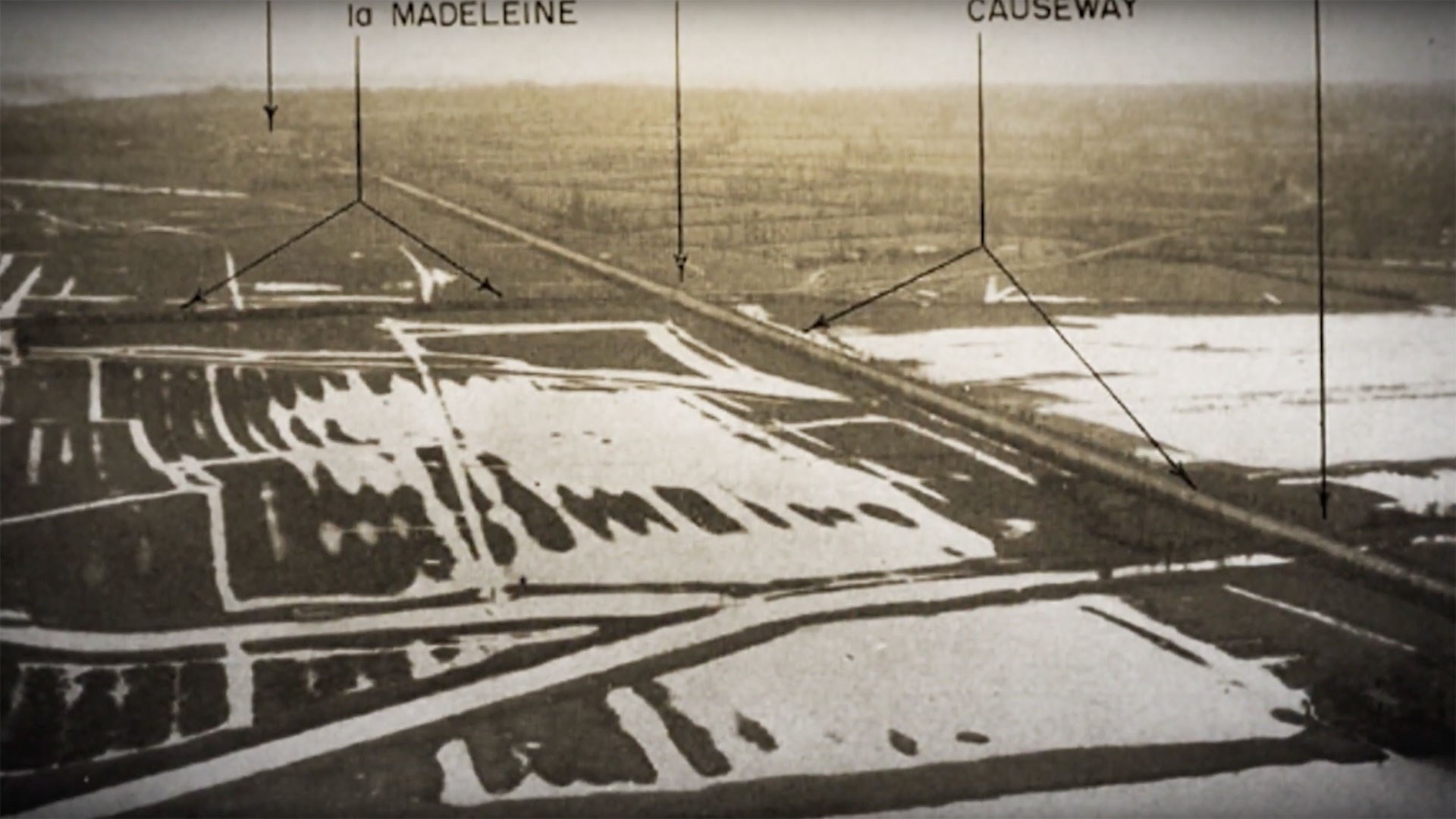
An aerial photo of the flooded plains behind Utah Beach, with causeways pointed out with arrows.

Just behind Utah Beach, the Germans had flooded the Normandy countryside, making the open ground impassable for the invasion forces to head inland off-road. There were, however, a series of causeways headed inland from the beach into various towns and cities inland. These causeways and their intersecting points became vital for moving forces inland, so the 101st Airborne was tasked with capturing the hubs.

On one of the causeways, leading from Saint Côme Du Mont into the outskirts of the city of Carentan, was a house on an intersection with a knocked out M5A1 Stuart tank on the side of the road. The body of the tank's commander was left hanging from the top hatch, leading to the place earning the nickname "Dead Man's Corner," a term coined by Don Burgett.   
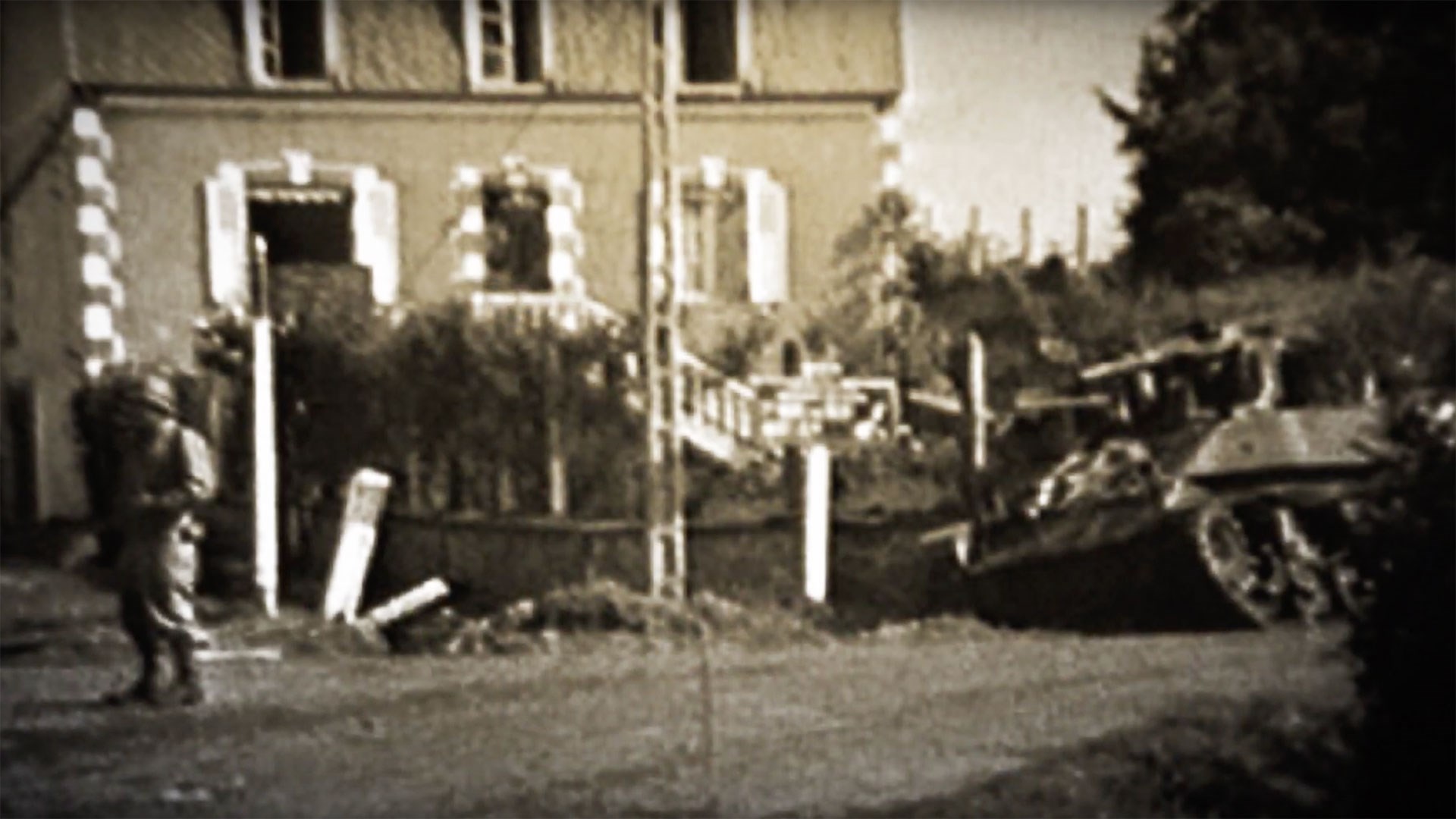
"Dead Man's Corner" as seen in June 1944.

Ray Geddes recalled the site as his last combat experience of the war. Geddes was transmitting the orders of a superior over the radio to an observer while his group was at the "Dead Man's Corner," until the superior took the radio mic to talk for himself. Geddes moved off and was standing around with some of his comrades when an artillery round came thundering in. 
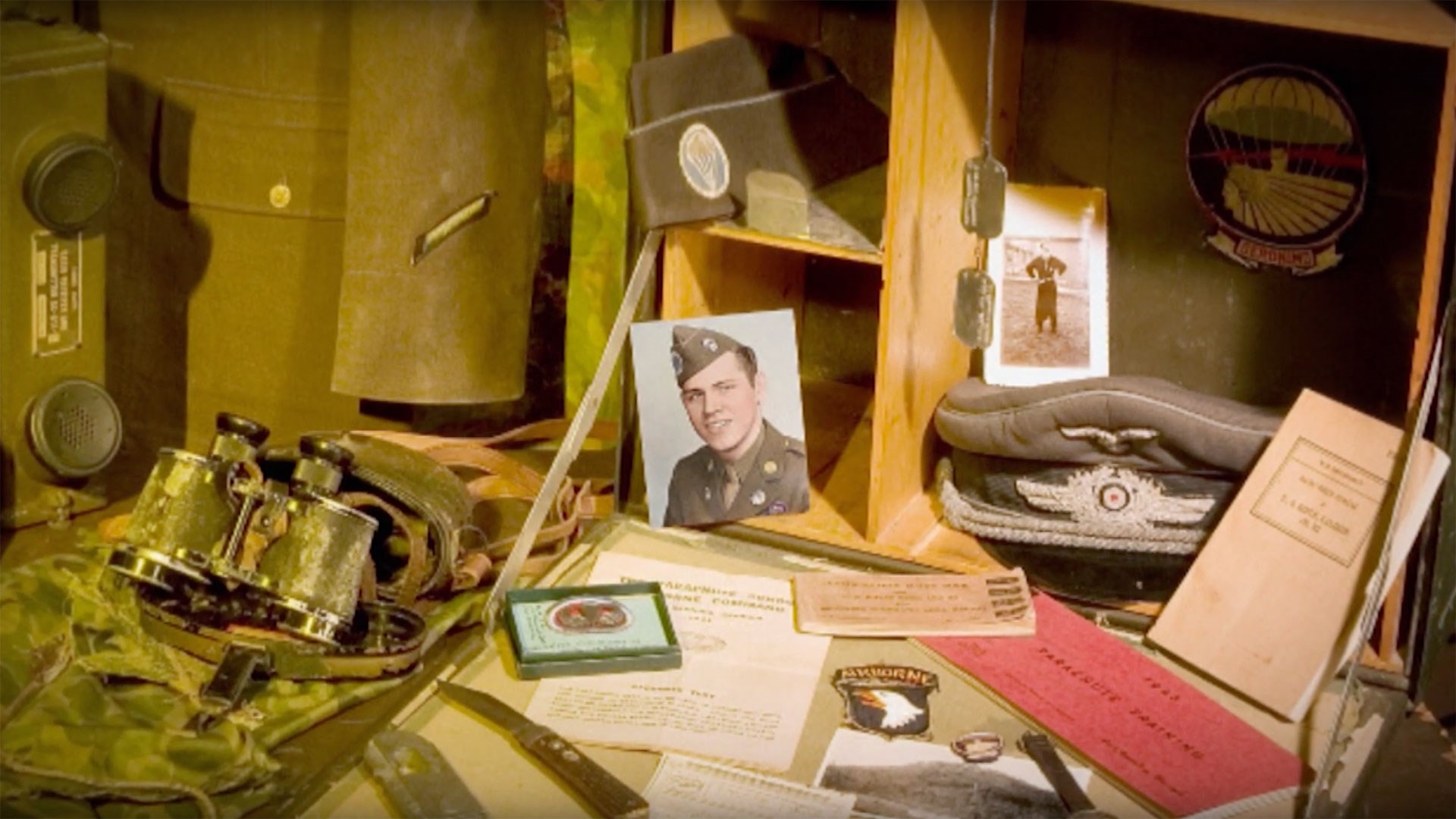
A display of items brought back from the war belonging to Raymond Geddes Jr., along with a photo of him in uniform.

Geddes was hit by shrapnel from the shell, with one piece hitting him in the eye. Wounded, he went down into the basement of the house full of surrendered Germans, where a German medic looked over his eye and gave some first aid. He was then evacuated on a jeep to the landing beaches and then taken to England by ship for medical treatment.

One of the most storied actions of the 101st Airborne on D-Day took place on the afternoon of June 6, as the U.S. Army forces landing on Utah Beach received an unwelcome surprise from the Germans in the form of 105 mm howitzer shells bracketing the beach. The howitzers were inland, hidden in a hedgerow near Brécourt Manor, in a location that was not known to the Allies prior. Elements of the 2nd Battalion, 506th Parachute Infantry Regiment, of the 101st Airborne were tasked to silence the German artillery. 
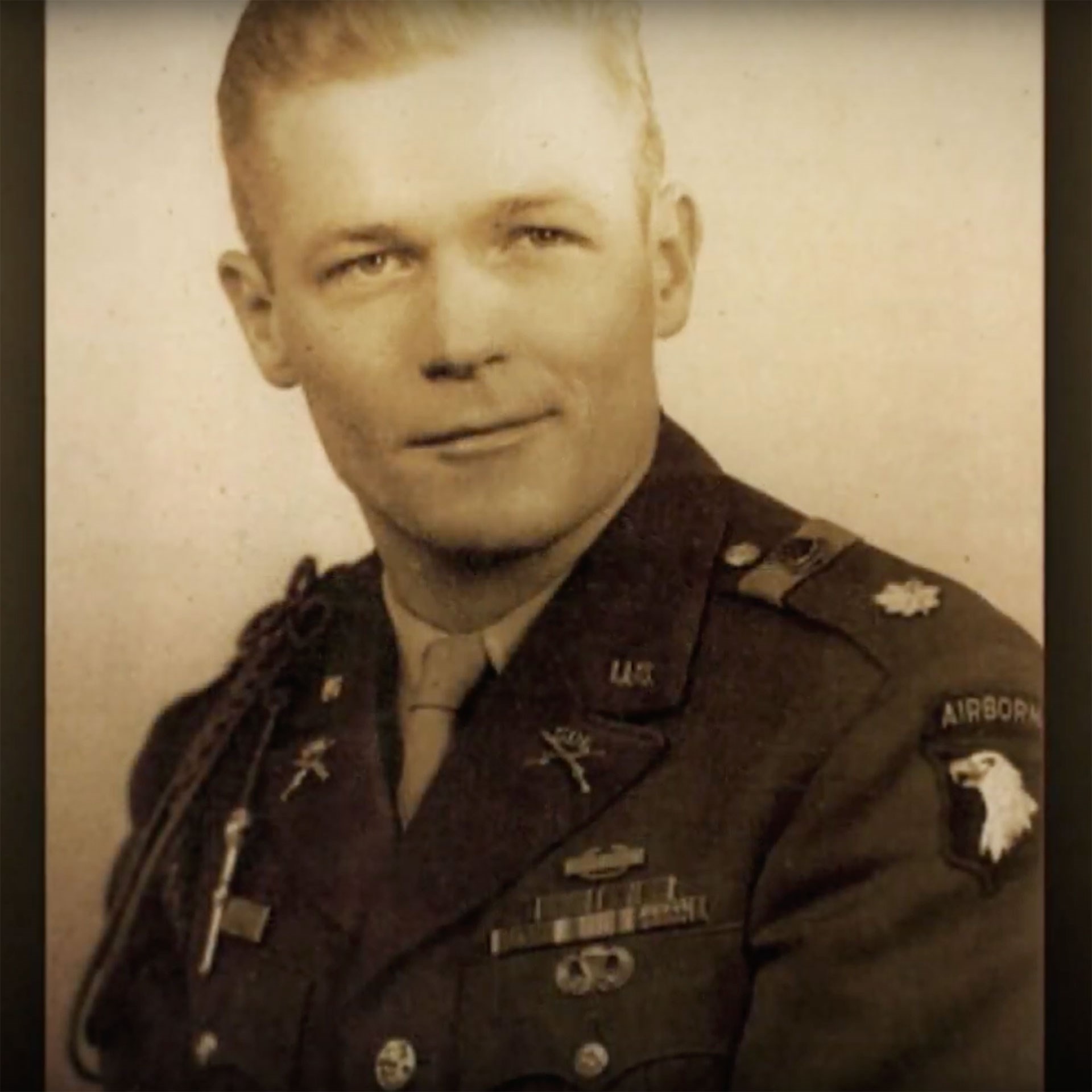
A photo of Richard Winters while in service.

Lead by Lt. Richard Winters, the acting commanding officer of "E" Company since the actual company commander was missing, a group of paratroopers found the positions of the German Howitzers and prepared an assault. Winters himself scouted the positions before formulating a plan of attack. A base of fire was set up, with an assault team that would move in and take out the individual gun positions.
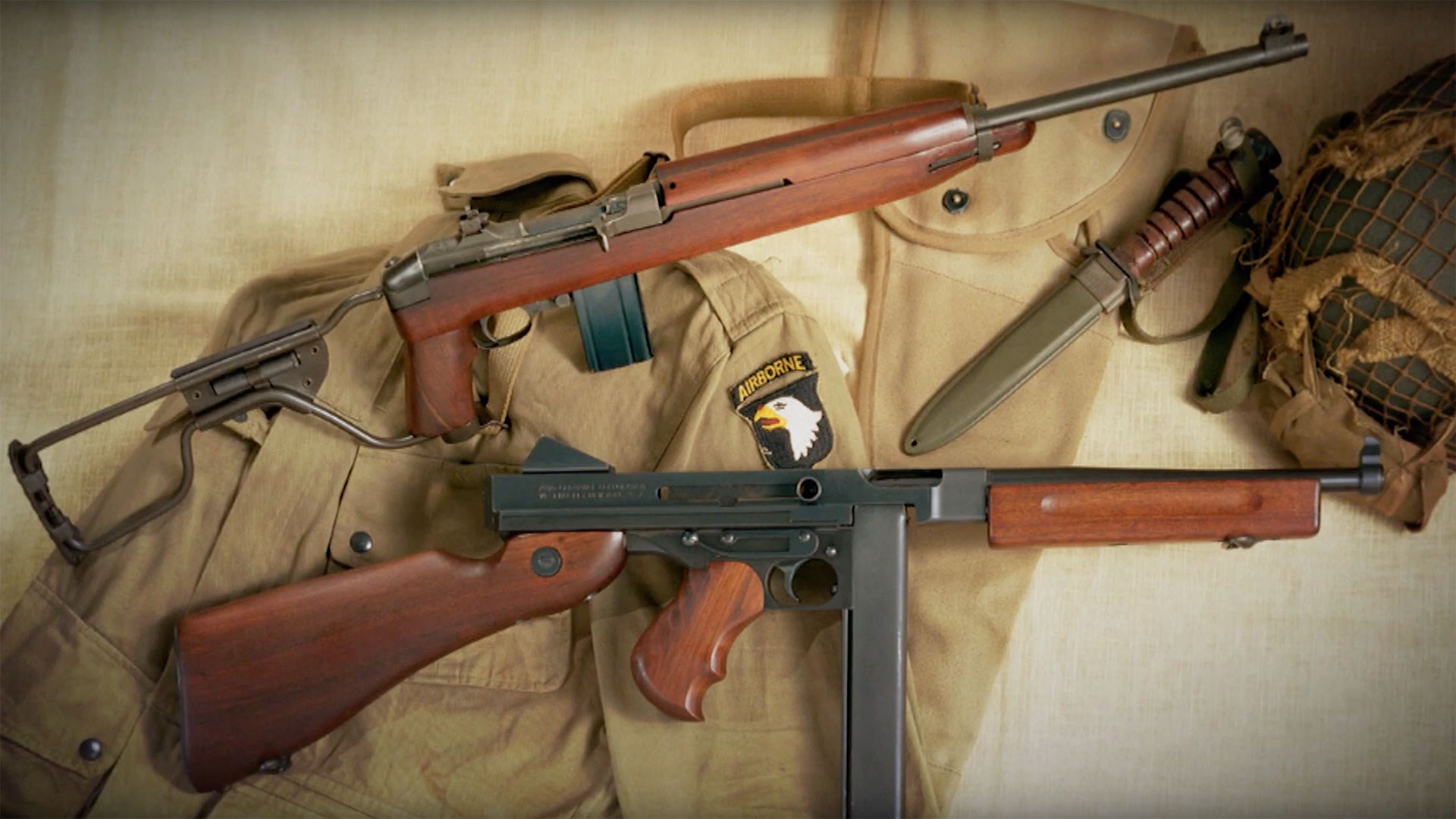
A M1A1 Carbine (top) and M1A1 Thompson submachine gun (bottom) displayed with a 101st Airborne uniform.

Two other men were tasked with climbing a tree and taking shots at the Germans with their M1A1 carbines. Over the course of the action, which ended up lasting several hours in total, Winters and his men successfully drove the Germans from the gun positions and Brécourt Manor, ending the howitzer barrage onto Utah Beach. For his leadership in the action, Richard Winters was awarded the distinguished service cross. This action was recreated in the HBO series Band Of Brothers.

When Ray Geddes went into the army on Dec. 11, 1942, he was issued a M1 Garand rifle. Even decades after his training, Geddes could still recall the serial number of his Springfield Armory M1, 987078, manufactured in November 1942. Geddes took good care of his first M1, which he carried during training and maneuvers in the United States before shipping out to Europe. After spending so much time with his rifle, he got attached to it. So, it came as a bit of a shock and disappointment for Geddes when they were told to turn in their rifles before shipping out.
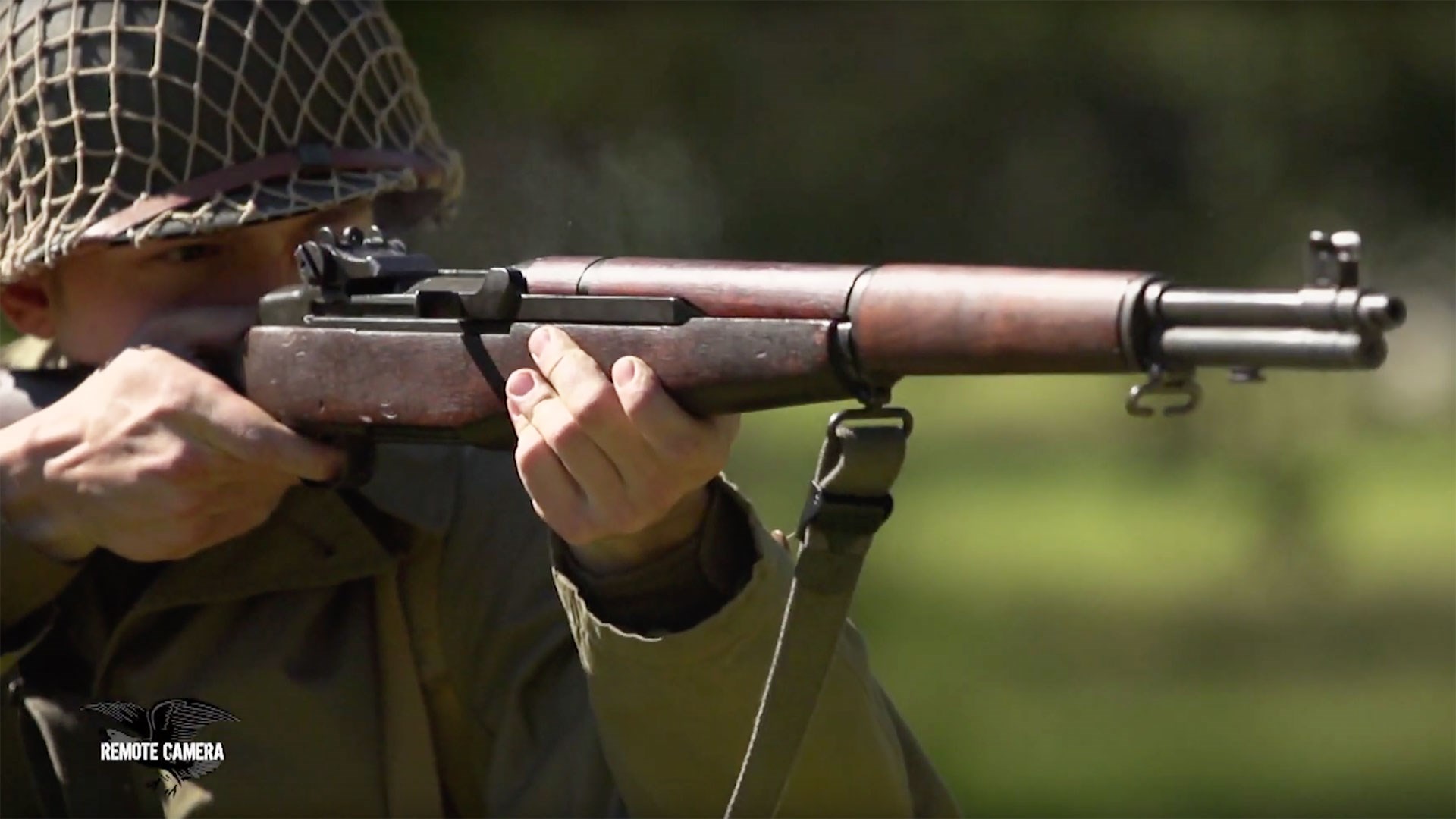
A reenactor dressed as a U.S. Army infantryman shooting a M1 Garand.

He was issued a new rifle when he made it to Europe, and admitted that he remembered nothing about the M1 that he carried for his short time in combat, other than the fact it was a rifle. Don Burgett was also issued a M1 Garand, and praised it as what he believed to be the "best rifle made." He noted that some would claim that the M1 had a tendency to jam, which he renounced from his own experience.

Instead of jamming, Burgett noted that sometimes the operating rods would crack at the 90-degree angle where the rod body meets the charging handle. When this happened, the charging handle part of the operating rod would separate from the rest and fall off, resulting in a useless rifle. Yet this issue wasn't overly common, and such a failure is was usually what would stop a M1 from working in combat instead of a jam. This issue was addressed after the war with the addition of a radius cut to the operating rod at the 90-degree intersection. 
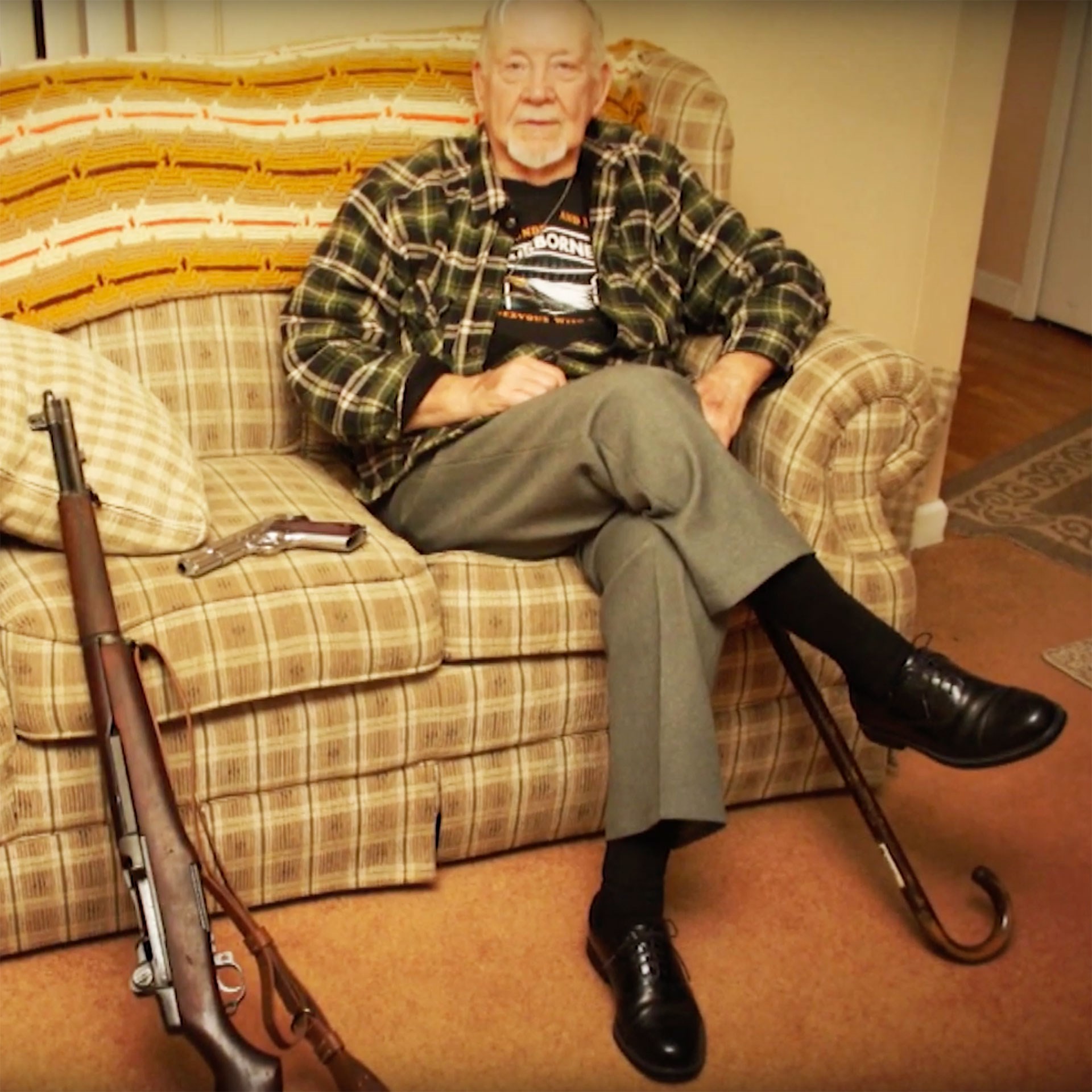
Don Burgett with his M1 and M1911 shortly before his passing.

In the case of such a failure, Burgett noted that a soldier didn't have time to try and fix his rifle, so typically they would be discarded and another one retrieved off of a dead or wounded comrade. Burgett remained an enthusiast of the M1 Garand for the rest of his life and was a NRA life member. 

This article is dedicated in memory of Raymond Geddes Jr. and Donald R. Burgett, who were kind enough to leave their stories for future generations to learn from. Don Burgett passed away on March 23, 2017, at the age of 92, just a week short of his birthday. Ray Geddes passed away on Oct. 31, 2020, at the age of 96. Their heroism will not be forgotten


Tuesday, September 4, 2018

"Come and Fight a Gurkha"

I ran across this article and I really liked it.  My friend Old NFO likes to feature Gurkha's in his Military Science Fiction.  He portrays them as fierce warriors, steadfast soldiers, totally honorable and uncorruptible and loyal to their officers and the ideals.  I have known about Gurkha's since I started reading about WWII as a kid and the knife was legendary.

The kukri is effective as a chopping weapon, due to its weight, and slashing weapon, because the curved shape creates a "wedge" effect which causes the blade to cut effectively and deeper. Because the blade bends towards the opponent, the user need not angle the wrist while executing a chopping motion. Unlike a straight-edged sword, the center of mass combined with the angle of the blade allow the kukri to slice as it chops. The edge slides across the target's surface while the center of mass maintains momentum as the blade moves through the target's cross-section. This gives the kukri a penetrative force disproportional to its length. The design enables the user to inflict deep wounds and to penetrate bone.

Utility

While most famed from use in the military, the kukri is the most commonly used multipurpose tool in the fields and homes in Nepal. Its use has varied from building, clearing, chopping firewood, digging, slaughtering animals for food, cutting meat and vegetables, skinning animals, and opening cans. Its use as a general farm and household tool disproves the often stated "taboo" that the weapon cannot be sheathed "until it has drawn blood".
The kukri is versatile. It can function as a smaller knife by using the narrower part of the blade, closest to the handle. The heavier and wider end of the blade, towards the tip, functions as an axe or a small shovel.


Former Field Marshal Sam Manekshaw of the Indian Army once said: “If a man says he is not afraid of dying, he is either lying or he is a Gurkha.” Correct, but what is a Gurkha?
In 1814, the East India Company began making “excursions” into the Kingdom of Nepal, believing the Nepalis would be pushovers. They were wrong. Not only did their invasion hurt their pockets, but it also cost them dearly regarding personnel.
What malaria or desertion did not claim, the Gurkhas did. By the time the Anglo-Nepalese War ended in 1816 with a truce, the British had learned not to underestimate their foe. Quite the opposite, in fact. Others noticed it also, which is why various countries currently regularly recruit Gurkhas.

Originally from the Nepali district of Gorkha, they now come from all over the country. They are renowned for their service in the British Army and have fought in many contemporary wars forming part of the Coalition Forces in Iraq.
They are willing to serve the British (and other foreign nations) due to poverty – an unfortunate state of affairs that still exists today. “Service” does not do justice to what it is they do, which is why many have gone down in legend.
Gurkha soldiers during the Anglo-Nepalese War.
One such man was Lachhiman Gurung, born on December 30, 1917, in the village of Dakhani, Tahani District, Nepal. He was very poor. So much so that by 1940, he stood a mere 4’11” tall as a result of deprivation and malnutrition. Fortunately, he was tough.
Gurung had repeatedly tried to join the British Indian Army. Being so short and puny even by Nepali standards, the authorities had declined. As WWII progressed, the British needed everyone, so the 23-year-old finally joined the British Indian Army in December 1940. What he lacked in size, he more than made up for regarding sheer determination. He earned himself a place as a rifleman in the 4th Battalion, 8th Gurkha Rifles.
In late April 1945, his battalion crossed the Irrawaddy River into Burma (now Myanmar) with the 89th Indian Infantry Brigade of the 7th Indian Infantry Division. Their mission was to attack Japanese positions north of the Prome-Taungup Road.


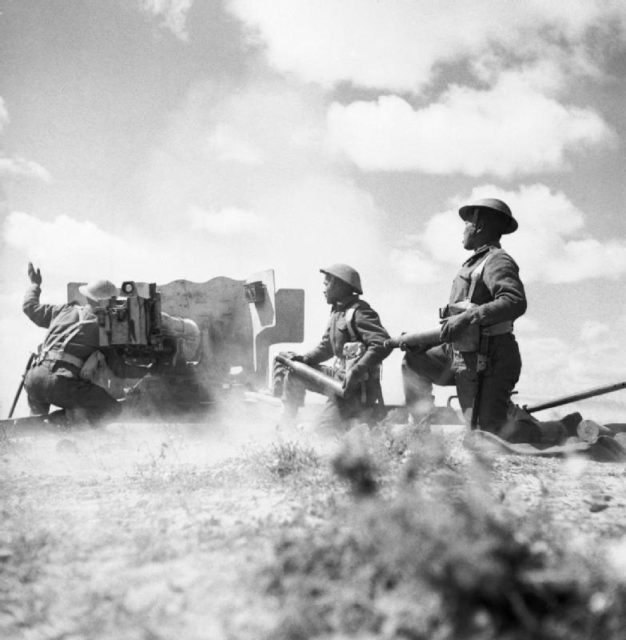
Gurkhas manning a 6-pound anti-tank gun in Tunisia on March 16, 1943
 
The Japanese were taken by surprise and by May 9, were retreating to the village of Taungdaw in northwestern Burma. Lachhiman’s battalion was waiting for them.
Late at night on May 12, most of the 4th Battalion, 8th Gurkha Rifles lay asleep. Rifleman Lachhiman was on guard duty. His small group was in a trench farthest away from the village when the attack came – cutting them off from the other Gurkha positions.
At least 200 Japanese soldiers tried to make their way to Taungdaw. To do so, they first had to pass through Lachhiman’s position. A grenade landed on the edge of his trench. He jumped up, grabbed it, and hurled it back with a satisfying boom!
A second landed in the trench inches away from his foot. He returned that one too. A third landed just outside the trench, so he lunged forward and picked it up as well. As he was about to throw it back, it exploded.
His right hand was pulverized, and his arm shattered while burning shrapnel pummeled his face and right leg. The explosion rocked two other soldiers off their feet sending them crumpling to the ground.
Half-blinded from the blast, his mouth severely bleeding, Lachhiman managed to scream the Gurkha’s ancient battle cry: “Jai Mahakali! Ayo Gorkhali!”
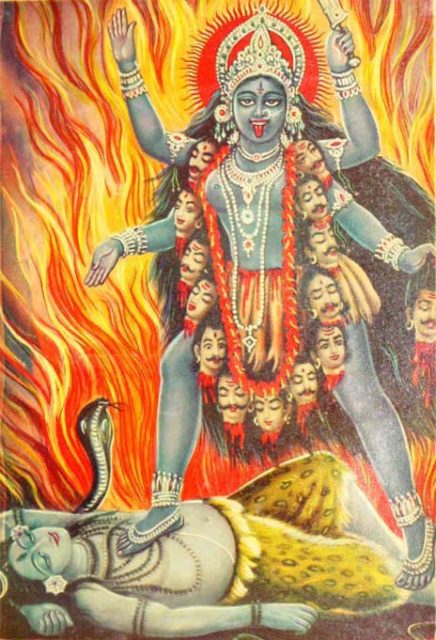
Kali is the Hindu goddess of night, death, time, and destruction. She wears a necklace of severed heads and a skirt of chopped off arms while she tramples her husband (the god Shiva) underfoot. She is not someone to mess with and probably explains why she is the patron goddess of the Gurkhas.
The goddess Kali
 
What Lachhiman shouted translates as “Victory to Great Kali! Gurkhas approach!”
There was only him. All the others were either dead or too badly injured to fight. So he loaded his rifle with his left hand – not an easy task as his standard-issue bolt-action rifle was designed for right-handed use. Despite his wounds, he fired at point blank range each time the Japanese attacked, reloading and repeating the process for four hours.
Exhaustion, shock, and blood loss took their toll, but eventually, his comrades were able to relieve him. For the next three days and two nights, the Gurkhas were on their own, heroically fighting off the Japanese until more Allied troops arrived. The other Gurkhas were inspired by what Lachhiman had done.
When it was over there were 87 Japanese bodies around the trench. Thirty-one of them lay directly in front of the spot Lachhiman had defended single-handedly.
Doctors did their best for him, but could not save his right eye or right hand. Lord Louis Mountbatten, British Admiral of the Fleet, awarded Lachhiman the Victoria Cross (Britain’s highest military award for valor) on December 19, 1945.
Despite his injuries, Lachhiman continued to serve the 8th Gurkhas until 1947 when they were transferred to the newly independent Indian Army. He eventually settled in Britain where he died in 2010 – after successfully fighting the British government for the right for other Gurkha veterans like himself to live in Britain.

                                                                     Monument to the Gurkha Soldier outside the Ministry of Defense Building in London;

Despite his injuries, Lachhiman continued to serve the 8th Gurkhas until 1947 when they were transferred to the newly independent Indian Army. He eventually settled in Britain where he died in 2010 – after successfully fighting the British government for the right for other Gurkha veterans like himself to live in Britain.


                                                                                                    THE GURKHA
                                                                                                     SOLDIER
                                                                                               Bravest of the brave,
                                                                                      most generous of the generous,
                                                                                                  never had country
                                                                                                more faithful friends
                                                                                                          than you.


The treatment of Gurkhas and their families was the subject of controversy in the United Kingdom once it became widely known that Gurkhas received smaller pensions than their British counterparts. The nationality status of Gurkhas and their families was also an area of dispute, with claims that some ex-army Nepali families were being denied residency and forced to leave Britain. On 8 March 2007 the British Government announced that all Gurkhas who signed up after 1 July 1997 would receive a pension equivalent to that of their British counterparts. In addition, Gurkhas would, for the first time, be able to transfer to another army unit after five years' service and women would also be allowed to join--although not in first-line units--conforming to the British Army's policy. The act also guaranteed residency rights in Britain for retired Gurkhas and their families.
Despite the changes, many Gurkhas who had not served long enough to entitle them to a pension faced hardship on their return to Nepal, and some critics derided the government's decision to only award the new pension and citizenship entitlement to those joining after 1 July 1997, claiming that this left many ex-Gurkha servicemen still facing a financially uncertain retirement. An advocacy group, Gurkha Justice Campaign, joined the debate in support of the Gurkhas.
In a landmark ruling on 30 September 2008 the High Court in London decided that the Home Secretary's policy allowing Gurkhas who left the Army before 1997 to apply for settlement in the United Kingdom was irrationally restrictive in its criteria, and overturned it. In line with the ruling of the High Court the Home Office pledged to review all cases affected by this decision.
On 29 April 2009 a motion in the House of Commons by the Liberal Democrats that all Gurkhas be offered equal right of residence was passed by 267 votes to 246. This was the only first-day motion defeat for a government since 1978. Nick Clegg, the Liberal Democrat leader, stated that "this is an immense victory [...] for the rights of Gurkhas who have been waiting so long for justice, a victory for Parliament, a victory for decency." He added that it was "the kind of thing people want this country to do".
On 21 May 2009 Home Secretary Jacqui Smith announced that all Gurkha veterans who retired before 1997 with at least four years service would be allowed to settle in the UK. Actress Joanna Lumley, daughter of Gurkha corps Maj. James Lumley who had highlighted the treatment of the Gurkhas and campaigned for their rights, commented, "This is the welcome we have always longed to give".
A charity, The Gurkha Welfare Trust, provides aid to alleviate hardship and distress among Gurkha ex-servicemen.
On June 9, 2015, a celebration called the Gurkha 200, held at The Royal Hospital Chelsea and attended by members of the royal family, commemorated the bicentennial of the Gurkha Welfare Trust by paying tribute to Gurkha culture and military service.