Webster

The Constitution was made to guard the people against the dangers of good intentions." --American Statesman Daniel Webster (1782-1852)


Showing posts with label Boeing 747. Show all posts

Friday, September 18, 2026

USAF Set to Power on New Air Force One Ahead of First Flight.


I have several comments to make, sure the Qatari donated the plane, after Boeing laid down on the original Air Force One contracts with massive delays and cost overruns, and President Trump short circuited the process when he got that plane totally sandbagging Boeing.  Yes I know that Boeing was having MAXX issues and 777X certification delays and that was distracting them...but still, you gotta handle your business.   And second in the article, you notice the 2 democratic congress critters wanting to make sure that the Air Force keeps the plane once President Trump leaves Office, if the President had been democrat, there would have been no squawking, no whining, but because the President is GOP and especially Trump...Oh the caterwauling.  jeez.  President Trump ain't gonna keep the plane, he knows how much a maintenance hog a 747 is, he is a money guy, it don't make fiscal sense.  He will go back to his trusty 757.


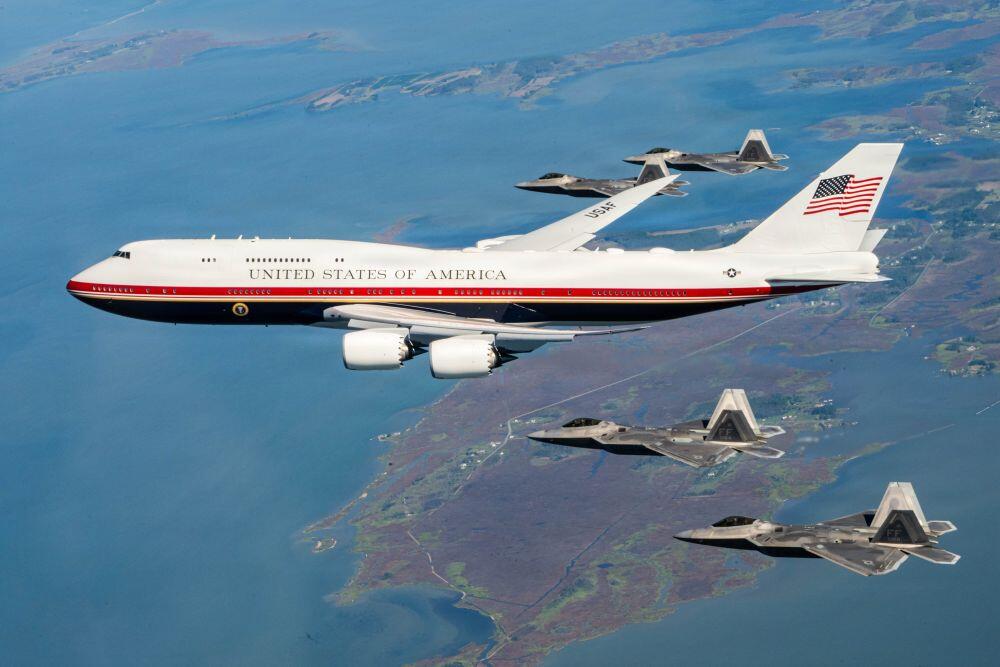
The VC-25B Bridge aircraft is teaching the Air Force how to operate the 747-8i ahead of accepting two new VC-25Bs. Credit: U.S. Air Force

The VC-25B Bridge aircraft is teaching the Air Force how to operate the 747-8i ahead of accepting two new VC-25Bs.

Credit: U.S. Air Force

NATIONAL HARBOR, Maryland—The U.S. Air Force expects to power on the first new Air Force One this calendar year ahead of first flight next year as the service’s official overseeing the program says there has been substantial progress.

This, as President Donald Trump has been flying on the Qatari government-donated VC-25B Bridge aircraft ahead of the expected first delivery of the Boeing-built VC-25B in 2028.

Gen. Dale White, the Air Force’s direct reporting program manager for major programs, told reporters Sept. 14 at the AFA Air, Space & Cyber Conference here that there has been “tremendous progress” after substantial delays to the program, with Boeing pushing to get final structure work complete.

The program is completing electrical work ahead of powering on the aircraft, as Boeing has pressed to hire electricians to support the progress. Substantial structural work on the two 747-8is has progressed.

“The areas I focus on are the areas that I think are on the critical path to making sure we can deliver these platforms,” White said of the overall VC-25B program.

Structural work on the aircraft, including but not limited to stringer crack repairs on the airframes, has progressed, he says.

A recent selected acquisition report on the program highlighted issues relating to the certification of spare windshields and passenger windows. This is an issue that is not unique to the specific two 747-8is and impacting the broader fleet. But White says he recently was briefed on the issue and “I feel like it’s trending in the right direction. I feel like we have a solution set.”

Boeing in July announced it was taking a charge on the program to continue pressing forward to meet the aggressive schedule of delivery in 2028. White says that extra funding helped address issues with closing the design and catching up after a long delay getting there.

“They’re laser focused on that. They’ve been really good partners,” White says of Boeing. “I talked to Boeing again this morning. The commitment is there. … This program is at a really, really fast clip, but we were in a pretty challenging place to begin with and now we’re starting to turn that around.”

The delivery of the VC-25B Bridge aircraft has been controversial, as Rep. Joe Courtney (D-Conn.) and Rep. Adam Smith (D-Wash.) on Sept. 14 released a bill requiring the Air Force to retain the aircraft after Trump leaves office. Trump had said the aircraft could be transferred to his presidential library.

White told reporters he has been as forthcoming as possible with the program. The aircraft has helped the Air Force learn how to operate the 747-8i.

“What we’ve learned is the unique nature of how you maintain it and sustain it. Basically, how this platform is so different in how you even fly it,” he says. “So what this has required us to do is to take a step back and think through, thoughtfully, on how we’re going to go about maintenance, how we’re going to go about sustaining, how we’re going to go about training and all of those things. And what that does, which is critically important, is it has given that ramp up to the VC-25B airplanes because they’re identical.

Friday, October 17, 2025

Boeing to offer 747-8 VIP and Business Jet conversions.


I got this from "Aviation Week" in my work email.


Boeing
Credit: Boeing

LAS VEGAS—Boeing is setting up a “turnkey” service to acquire former passenger 747-8I Intercontinental aircraft and convert them into long-haul business jet and VIP transports with custom designed and built interiors.

Although 747-8 production ended with the delivery of an -8F freighter model in January 2023, the final 747-8I passenger model out of 48 built was delivered to Korea Air in May 2017. Of these, around 31 remain in active passenger service with the bulk–some 19 aircraft–operated by Lufthansa.

Several 747-8Is were also delivered as purpose-built Boeing Business Jet (BBJ) or head-of-state VIP aircraft. The final 747-8 BBJ, a previously owned aircraft, was delivered to Qatar Amiri Flight in 2023. This aircraft was subsequently given to the U.S. for use as an executive airlift support,(Airforce One?) arriving in Waco, Texas, for modification work in August.

Aside from Qatar, other VIP versions have been delivered to the governments of Brunei, Egypt, Kuwait, Morocco, Oman, Saudi Arabia and Turkey.

As a VIP aircraft, Boeing says the 747-8 incorporates nearly 5,000 ft.² of cabin space “that can be designed and completed with oversight of a dedicated team under a single Boeing contract.” The company adds the 747-8 VIP can fly 75 passengers with a range of 8,500 nm.

Tuesday, September 5, 2023

New Company Bid on the E4B contract.


Sierra Nevada Corp. hangar complex

Sierra Nevada Corp. is building a new hangar complex in Ohio aimed at large aircraft modernization.

Credit: Sierra Nevada Corp. Concept

An underdog bid by a midsize private company to take on America’s aircraft and defense giants is starting to take shape in a sparkling new hangar in a desolate corner of the Dayton, Ohio, airport complex.

Sierra Nevada Corp. (SNC) recently cut the ribbon on this 90,000-ft.2 maintenance, repair and overhaul hangar, one of four with a separate 120,000-ft.2 paint facility that the company is planning. The construction is part of a self-funded bid for what would certainly be one of the company’s biggest programs, if SNC can pull it off: The U.S. Air Force’s Survivable Airborne Operations Center (SAOC). The program has a development budget of more than $8 billion over the next five years to replace the Air Force’s aging Boeing 747-based E-4B Nightwatch fleet, also known as the Doomsday Plane.

  • E-4B replacement likely to come from used 747 market
  • Air Force expects early 2024 award

The idiosyncratic Sparks, Nevada-based company has outgrown existing large-aircraft facilities in Colorado and has tapped the Dayton market for its biggest complex. That is also a likely site for the company’s work on the U.S. Navy’s E/A-XX Take Charge and Move Out (Tacamo) program, for which it has teamed with Collins Aerospace to compete as a subcontractor. For the SAOC, SNC is competing as a prime.

“SNC continues to see tremendous growth on the horizon at a time when most of our competitors are shrinking or merging,” the company says in a statement. “That makes SNC a bit of a unicorn in the aerospace and defense sector as not only a midtier contractor, but as the No. 1 privately held defense contractor in the business. This unique role as one of the few remaining midtier companies allows us to remain competitive with our speed and agility. We are small enough to be agile, but large enough to succeed with a highly skilled, motivated workforce.

“Because of this,” the statement continues, “SNC is proud to announce that we have responded to the SAOC contract as a prime and have submitted a high-value, competing proposal to the USAF.”

The SAOC’s role is the next generation of the E-4B National Airborne Operations Center, providing top military leaders with a survivable aircraft to ensure the National Military Command System can direct military forces and execute emergency war orders, including nuclear command and control, in case of a nuclear war. The commercial derivative aircraft needs to be hardened against nuclear and electromagnetic effects, as well as having an aerial refueling capability to extend its time aloft.

Under the acquisition strategy, the engineering and manufacturing development contract winner would be required to buy the aircraft and bring them to a common configuration, along with providing required ground support.

SNC could be seen as a dark horse in the competition that might more than double the Air Force’s existing fleet of four aircraft. Although the SAOC program is largely classified and the names of competitors kept under wraps, defense giant and OEM Boeing says it responded to the Air Force’s request for proposals and identified its own low-hour aircraft to meet the need. Boeing is doing similar work under the Air Force’s VC-25B Presidential Airlift Replacement program, replacing the older VC-25A Air Force One aircraft with newer, used 747-8s.

While SNC has not provided specifics, it says it has picked its aircraft for the program, adding that “the USAF values quality at a low life-cost for the SAOC program.”

The Dayton complex is designed to accommodate 747-8s. SNC specializes in data and communication modifications to existing aircraft, largely working within the Air Force’s Big Safari outfit at nearby Wright-Patterson AFB, Ohio. Over its 60-year existence, the company has done post-production modifications without relying on OEM data that manufacturers may be reluctant to provide or only hand over at a high cost.


The U.S. Air Force plans to announce early next year the company selected to replace its E-4B fleet. Credit: Brian Everstine/AW&ST

“That really sets us apart in the industry,” the company states. “We create a digital data package, which is then shared with the government in full. This empowers the customer and significantly reduces life-cycle sustainment and modification costs through competition.”

The company has drawn on in-service U.S. Air Force aircraft and leased jets to conduct in-depth scans—including using spectrographic and radio-frequency analysis—to create the data packages. These include Boeing 747s, 767s, C-17s and KC-135s as well as Lockheed Martin C-130Js and C-5s. 

In early July, SNC’s operational approach was put to the test. An Air Mobility Command (AMC) C-17 took off from NAS Oceana, Virginia, and landed more than 24 hr. later at Kadena AB, Japan. 

On board was the company’s new Airlift/Tanker Open Mission Systems (ATOMS) kit. Five months earlier, SNC started developing it by scanning two C-17s, a C-130J and a KC-135 to fit the kit, which largely uses existing antennas and cables attached throughout the aircraft connected to what looks like a small server rack in a box, inside the cargo bay. ATOMS provides line-of-sight and beyond-line-of-sight data connections using networks such as Link 16, Tactical Targeting Network Technology and the Mobile Ad-hoc Network so the mobility aircraft has more real-time situational awareness, including access to the Space Force’s Unified Data Library.

“In the case of ATOMS, the USAF urgently needed a low-risk solution to interconnectivity over the vast Pacific Ocean and across multiple different aircraft types,” the company says. “SNC delivered in just five months from contract award to Mobility Guardian 2023 [an Air Force exercise] this summer.”

AMC  commander Gen. Mike Minihan told Aviation Week during Mobility Guardian that he had seen the installation of ATOMS at Dayton and cited both ATOMS and another ongoing program the command is using to increase connectivity through cockpit modernizations as “a classic example . . . to get after that connectivity.”

“This pounding drum of connectivity in the mobility fleet is paramount,” Minihan said. “If I have to key my mic to know what’s going on, then we are condemned to an old architecture of employing airpower, especially when it comes to cargo.”

For the SAOC, the Air Force wants to move quickly. Air Force Secretary Frank Kendall told Aviation Week shortly before budget plans were announced in the spring that the service does not have time for a development program, as the E-4B fleet is approaching the end of its reasonable life span.

“I think we have to take something that’s a commercial derivative,” he said.

As with the VC-25B program, speculation has centered on Boeing’s 747-8. With the production line shut down early this year, the service will need to look at the used market as airlines move away from four-engine aircraft.

The service left the option open to companies to decide what to offer.

“The U.S. Air Force has finalized the SAOC requirements and acquisition strategy and is progressing toward a competitive contract award in early calendar year 2024,” the service says in a June statement. “Industry partners will determine and provide bids presenting their preferred solution to meet SAOC requirements.”

While it is officially open, requirements appear to solidly prefer four engines. Since the Air Force is unlikely to support purchasing European-built Airbus A380s, the 747-8s appear the most likely option.

During a visit to the E-4B operating location in Nebraska, the group’s commander emphasized the need for four engines. Col. Brian Golden, then commander of the 595th Command and Control Group, said the Nightwatch role requires enough power for the nuclear command role, communications and security, along with essential redundancies.

The Air Force plans to buy 8-10 aircraft for the SAOC fleet to keep the Nightwatch role going after the E-4B, although that could grow. Rep. Don Bacon (R-Neb.) told Aviation Week in June that he is urging lawmakers to return the Air Force to the “Looking Glass” mission. The Cold War-era practice of flying the nuclear command post 24/7 could require a larger fleet.

“With hypersonics, you may have a 15-min. warning time. That’s not enough time to get a jet off reliably, in my view,” Bacon says. “So you’re better off having a 24/7 capacity. Why? Because you want the Russians and the Chinese to know that no matter what they do, we can strike back. And so I think it’s important for deterrence.”

The service is looking to increase spending for the SAOC this year, with $888 billion as part of its fiscal 2024 request. That amount will more than double in fiscal 2025 after the contract award, and spending would be slated to reach  $8.1 billion over the next five years.
Friday, December 16, 2022

End Of an Era The Last 747 rolls off the Assy line

 I wanted to post this last week but I was too busy, between Thanksgiving and New Years, we are busy, unless the plane is broke, she is flying passengers, so when a plane comes in, we fix her as fast as we safely can and return her to revenue service, the flying public is relying on us to get to where they have to go during the holiday season.  I kinda wished my employer had bought some 747-8's but it wasn't to be, the plane really didn't work with our routes that the planes we already had could handle so we took a hard pass.  It is a shame, the 747 is a plane like no other.

747

SEATTLE—Boeing rolled out the last 747 from its Everett assembly site in Washington on Dec. 6, marking the end of the line for the world’s first widebody transport and bringing down the curtain on an unprecedented 55 years of continuous production of the twin-aisle model.

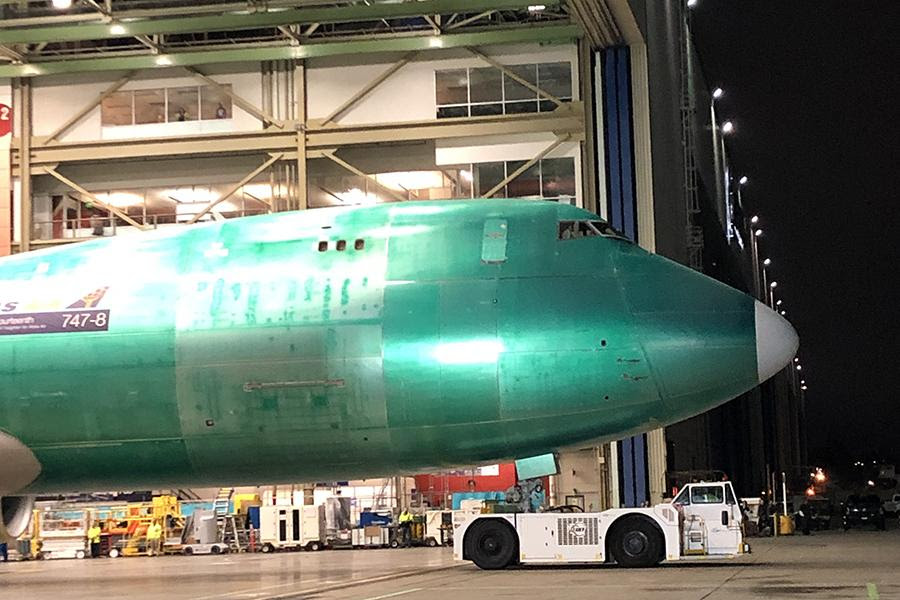
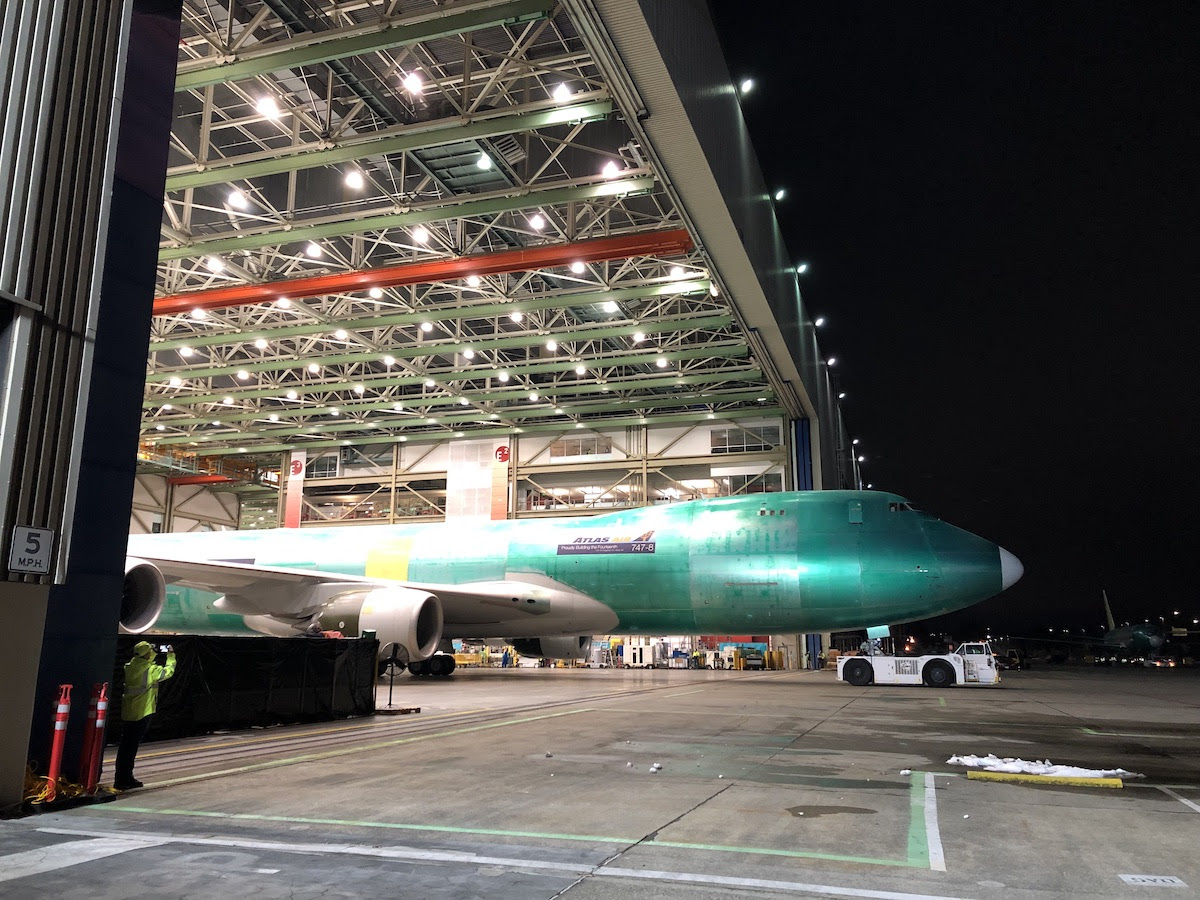
Watched mostly in silence by Boeing workers, the final 747, a -8F freighter, emerged into the cold night from Everett’s Building 40-21—the original 747 production line facility built on land hacked out of virgin evergreen forest 56 years ago. Line number LN 1574 will be painted and completed over the coming months before delivery to cargo carrier Atlas Air in early 2023.

Although the 747 will continue to ply the air routes for years to come, particularly in its final 747-8 freighter guise, it is the impact of the passenger-carrying model on world air travel in the 1970s and beyond for which the aircraft will be forever remembered. When introduced into service the double-deck, twin-aisle 747 represented an astonishing increase in scale over the single-aisle 707s and Douglas DC-8s of the day—most of which carried around 140 passengers.

As the late Pierre Sparaco, Aviation Week’s former Paris Bureau Chief who attended the first 747 roll out in 1968, later recalled, “suddenly we were admiring a 363-seat giant that could accommodate up to 490 passengers in a high-density cabin configuration. This was an unbelievable change of gauge, the dawn of a new age or, in other words, the end of elitist air transportation and the emergence of mass flying in ‘tourist’ class—an unprecedented initiative in terms of marketing and fare levels.”

747

But the 747 did more than democratize air travel and influence social interaction on a global scale. The technology behind its development—particularly the availability of powerful, yet quieter, high bypass turbofans—also enabled the birth of a follow-on wave of first-generation widebodies that combined to transform the industry.

Perhaps the most enduring irony of the 747 is that its success as both an airliner and freighter was based on the late design decision to give the aircraft a single wide deck. That move was driven by the belief that supersonic aircraft would quickly relegate the majority of 747s to be modified into freighters.

The late Joe Sutter, director of engineering for the original 747, once commented to the author that “of all the decisions we made, the most important was selecting the single wide deck. It gave us an airplane that was efficient and extremely flexible and was one of the main reasons for its success.” Sized to accommodate two 8 x 8-ft. seagoing containers side-by-side, its broad dimensions created not only the first widebody but also ensured a long life as a cargo carrier that would ultimately extend production to 2022—far beyond Boeing’s expectations.

With the end of 747 production, Boeing is preparing to bolster spares provisioning for the in-service fleet through Boeing Global Services. Following the consolidation of the 767/KC-46A and 747 line functions in 2016, and the transition of the 787 to Charleston, South Carolina, in 2021, the clearance of the 747 line will open up even more spare capacity in Everett. Boeing says no decisions have yet been taken on what to do with the space. Boeing meanwhile continues development of the 777X which—as the 777-9—is designed to fill the 747 passenger capacity slot from 2025 onward and—as the 777-8F—will become Boeing’s new largest freighter from 2027 onward.

To-date Boeing has delivered more than 1,570 747s, the bulk of which were 747-400s. In all, including various sub-models, Boeing has produced: 205 747-100s; 45 short-bodied 747SPs; 393 747-200s; 81 stretched upper deck 747-300s; 694 747-400s, the last -400F variant being delivered at the end of 2009; and, following the switch to production of the 747-8 in 2010, 48 747-8I passenger models and—pending completion of the final aircraft—106 -8F freighters so far.


Friday, June 3, 2022

Final Wings signal the End of the Iconic 747

 I have blogged a lot about the Boeing 747 , She is called the "Queen of the Sky for a reason, the plane is iconic and recognizable and she changed aviation forever.  My apologies for not blogging sooner, I went out of town and cane back yesterday and immediately went to work this morning.  I will blog about my misadventures, LOL


Atlas Air 747-8

Boeing has staged the left wing for the last 747-8F freighter onto the production line at Everett, Washington, marking the build-up for the aircraft’s final assembly process and close out of the historic 747 line later in 2022.

The wings for the final 747-8 freighter, line number LN 1574, were loaded on the line almost 54 years after the final body join of the first aircraft in the summer of 1968 and comes 54 years and 8 months after the initial wing skin/stringer riveting machine began work on the first units at Everett in September 1967. 

All four of the final aircraft are due for delivery to cargo carrier Atlas Air by the end of 2022, Boeing says. The first of the group, which were ordered by Atlas in January 2021, is LN 1571, which made its first flight on April 22 and is expected to deliver soon having made its fourth shake-down flight on May 17. 

The second aircraft, LN1572, is undergoing final body join on the production line in Everett’s Building 40-22. The wing set for LN1573 is meanwhile being prepared for mating with the center fuselage section prior to transfer to the final body join position. Systems installation for the forward and aft fuselage sections of the second-to-last 747-8 is meanwhile underway in the adjacent build-up area on the north-west side of 40-22. 

Boeing confirmed in 2020 it would terminate production of the 747 in 2022. Previously, the company had hoped to extend deliveries into 2023 but was forced to bring the production date cut off forward after the backlog shrank following order losses after financial problems at the Volga-Dnepr Group in Russia. 

With the end of 747 production Boeing is preparing to bolster spares provisioning for the in-service fleet through Boeing Global Services, as well as clearing out space in 40-22 and the adjacent wing build-up area in 40-21. Following the consolidation of the 767/KC-46A and 747 line functions in 2016, and the transition of the 787 to Charleston, South Carolina, in 2021, the clearance of the 747 line will open up even more spare capacity in Everett. Boeing says no decisions have yet been taken on what to do with the space.

To-date Boeing has produced 1,569 747s of which the bulk—694—were 747-400s. The last variant of this model, a -400F, was delivered in December 2009. 


Friday, December 31, 2021

30 years ago a 747 went supersonic


 This was that 747 post that I was working on, I heard about this and did some digging and found some information.

Sunday marked the 30th anniversary of an interesting event: a Boeing 747 going supersonic. Reports from 1991 suggest that the aircraft reached a speed of Mach 1.25 while rapidly descending due to a malfunction. While this was never confirmed, this could be the fastest a commercial Queen of the Skies has ever flown.

Evergreen International Airline Boeing 747-200
The 747-100 (not pictured) is capable of withstanding speeds of Mach 0.92,
 just under the sound barrier. Photo: Getty Images

According to This Day In Aviation, 12th December marks the date of a notable event in history. We all know that the Concorde and the Tupolev Tu-144 were the only commercial aircraft designed to reach supersonic speeds. But what if a Boeing 747 did the same? A serious incident on this day in 1991 could have seen it happen.

The story begins on an Evergreen International Airlines Boeing 747-100, registered N475EV. The aircraft had recently been converted to a freighter for the use of charter operator Evergreen. On 12th December 1991, the plane was flying from Newark to Tokyo, with a stop in Anchorage, when the crew noticed a failure warning on the inertial navigation system

The flight was carrying six crew and cruising at 31,000ft over the province of Ontario. Upon noticing the INS warning, the crew rechecked their instruments and noticed a shocking change. The 747 had banked 90 degrees to the right and was descending at an angle of 30-35 degrees.

This uncontrolled descent caused the aircraft to accelerate rapidly and fall over 10,000 feet before the pilots could regain control. The 747 stabilized at 22,500ft before the crew landed safely in Duluth, Minnesota.

 All eyes were on what caused the 747 to act this way. The answer was a 3x15ft hole in the forward section of the right-wing. The panels from the gaping hole caused damage to the flaps and the horizontal tail sections. However, it was unclear if the hole was a result of, or cause of, the 747s rapid descent.

The result of this rapid descent was the 747-100 exceeding its maximum speed limit of Mach 0.92. Official reports suggest the aircraft reached at least 0.98 Mach during its descent. However, some reports indicate the plane reached speeds as high as Mach 1.25, well beyond the supersonic limit.


Evergreen Boeing 747-200F
Conflicting reports over the years have been unable to confirm whether the 747 went supersonic.

While the NTSB initially did not confirm speeds higher than 0.92, Boeing has made statements to the effect in the past. In the Chicago Times in 1992, a spokesperson said,

“Original flight tests of 747s conducted in 1969 and 1970 took 747-100 models to speeds of Mach 0.99. In addition, Boeing knows one case in which a 747 operated by Evergreen International made an emergency descent at speeds that exceeded Mach 1.”

While aircraft are put through extreme testing during their certification, these are never intended to be actually faced. The 747-100, for instance, was tested up to Mach 0.99, almost breaking the sound barrier. Other 747s, such as Air Force One, have approached the sound barrier but never crossed it. It’s unclear if we will ever know if Evergreen’s 747-100 ever went supersonic, but it sure is one of the closest to do so.


Tuesday, July 28, 2020

Why the 747 isn't as popular with airlines as they are with passengers.

My apologies, Monday Music didn't drop like I planned, it will drop Next week, I didn't get it finished Sunday night, I had one of those days at work, you know one of those days where you feel like the little burro carrying the 400 pound lady down the Grand Canyon, in July kind of day...I was too tired to set it up properly so it didn't happen.   This post is about the 747-800 or the "Intercontinental" as she was called, I had blogged about the plane a lot, I was hoping my employer would buy a couple of them, but we never did, I understood the reason when I spoke with the director of our routing and marketing director during an Employee breakout I was invited to and explained that with the route structure we have, the plane would be expensive to operate on the routes we have and yes he likes the plane but we can't justify the cost of running an airline on "likes", we have to run the airline on most efficient especially because fuel is the most single expensive thing an airline has to pay is the fuel bill.  What he said makes sense so I understood the logic, we are in business of running a airline the best way possible, the most efficient way possible because the other guy is doing the same thing.   We still stop and look when a '47 occasionally very occasionally comes by our hanger at work and cruises by, the plane has that effect on us.  She is "The Queen" 
 
I clipped the article from "Simply Flying, and I augmenting the article with some of my photo stash.


Boeing anticipated selling about 300 of the 747-8. Its passenger variant, the 747-8I, or Intercontinental, received a mere 47 orders before being discontinued. How could it be, that an upgraded, superior model of one of the world’s most popular widebody aircraft did so poorly on the market?
Lufthansa
Boeing only received 47 orders for the 747-8 Intercontinental. Photo: Lufthansa
The Queen of the Skies has carried passengers for half a century. Beloved by travelers all over the world, she has been an iconic and exciting feature on the runways from the first 747-100 introduced by Pan Am in 1970.
The initial model was designed and built by a team at Boeing known as “The Incredibles,” and it carried two and a half times as many passengers as the manufacturer’s first jet, the 707. Its size, range, and speed helped transform air travel and turned it into something more accessible for a wider clientele.
But the era of the massive four-engine aircraft seems to be over. As reports are surfacing that Boeing will most likely end production of the legendary plane in lack of sufficient orders, let’s take a look at what happened to the much-upgraded 747-8, and why it was not the commercial success for which Boeing had calculated.
British Airways, Boeing 747, History
The 747 helped transform long-haul air travel, making it more accessible. Photo: Getty Images
The history of the final passenger version of the jumbo jet is a short-lived one. The first 747-8I only took flight on March 20th, 2011, and today’s production is limited to the freighter version, the 747-8F.
Boeing predicted it would receive 300 orders for the 747-8. After all, the previous variation of the jumbo, the 747-400, landed at 442 for its regular passenger model, and 694 including the extra range options and freighters, and was operated by over 40 carriers worldwide.
However, it only received 47 orders for the passenger Intercontinental variant and hasn’t sold a single one since 2017. And that was for the repurposing of two 747-8Is previously belonging to Transaero.
Lufthansa was the first carrier to order the new version of the jumbo in 2006. The German flag-carrier took delivery of the aircraft in May 2012, and it entered service the next month.
The freighter variant of the 747-8 did much better, with orders tallying in at 103, for a total of 150 orders for the model. Its largest customer is UPS Airlines, which has 28 and has almost single-handedly kept production going.
While production is still ongoing at Boeing’s Everett facility for the freighter variant, the 747-8F, this will most likely also come to an end once the manufacturer completes its backlog of 15 orders. The company believes it will need another two years to complete the outstanding deliveries.
Boeing 747 F
The 747-8F is the last of its kind to remain in production, but for how long?. Photo: Boeing
The 747-8 built on its highly successful preceding sibling, the 747-400, launched 20 years earlier. While its technical specs may have outdone any of the jumbos to date, for various reasons, it failed to become as popular with airlines as any of its predecessors.
First of all, the same factors that have seen carrier after carrier send the 747 into retirement come into play. The rise of the much more fuel-efficient long-range twin-engine aircraft has simply outdated the need for the jumbo.
Particularly the arrival of the A350 Ultra-Long-Range and Boeing’s new 777X is shifting the long-haul landscape. Two engines are also much more economical than four. Twice the engines equal twice the maintenance cost, after all.
The 777-9, the larger of the 777X models, can carry as many as 407 passengers, which is nearly as many as the 747s maximum 467. And it does so on two engines, rather than four. Airlines have already placed orders for 309 of the 777X.
Boeing 777-9
The Boeing 777-9 can carry almost as many passengers as the 747. Photo: Boeing
When taking a closer look at the popularity of other models, Boeing may have shot itself in the jumbo jet wing. While the 777X was introduced later than the 747-8, the 787 beat it to the punch.
The 747-8 was introduced in 2005. The planemaker had debuted its Boeing 787 Dreamliner program only a year prior. Despite several hiccups along the way, the Dreamliner has since proceeded to snag an impressive 1510 orders. That is just under the total number of orders for all of the 747s combined. The largest customers for the 787 are All Nippon Airways, who has ordered 95, Ethiad Airways –  71, American Airlines – 69, and United Airlines – 64.
Emirates, Airbus A380, Return
The failure of the 747-8 has much in common with that of the A380. Photo: Dubai Airports
The hub-and-spoke model that made the 747 such a success throughout the years has also given way to customer-driven point-to-point operations. Passengers have also displayed a preference for a wider selection of departure times. This makes the large capacity of the jumbo, as well as the superjumbo, the A380, challenging to fill and thus obsolete.
As previously stated, Boeing only received 47 orders for the passenger variant of the 747-8 or the Intercontinental as it is also called. Only three commercial airlines opted for the latest version of the jumbo, with Lufthansa taking 19, Korean Air ten, and Air China seven.
As you may have noticed, those numbers combined do not really add up to 47. The missing eleven orders are made up of eight Business Jet models going to VIP customers, one “unidentified,” and two 747-8Is previously belonging to Transaero. These are to be refitted and augmented on request by the US Government to replace the Air Force One fleet.
UPS
UPS is one of the largest customers of the 747-8F. Photo: UPS
While it is incredibly sad to be saying goodbye to the 747, it is understandable that by the time the 747-8 hit the market, despite its upgraded and more fuel-efficient specs, other options were already on the horizon. The new twin-engine widebody solutions turned the jumbo jet into a thing of the past, and carriers eager to modernize their fleets looked to the future, rather than to upgraded versions of old favorites, no matter how classic a silhouette it may be.