Webster

The Constitution was made to guard the people against the dangers of good intentions." --American Statesman Daniel Webster (1782-1852)


Showing posts with label gun stuff. Show all posts

Saturday, July 25, 2026

The Nylon 66 "A Rifle For The Future"


 I clipped this off "American Rifleman"   I have a "Nylon 66", paid $99 at a pawn shop for it in the early 2000's.  I had a Magazine fed version when I was a kid  and I was a dork and gave away to a kid of a friend of mine when I came back from Desert Storm and later regretted doing that.  I happen to walk into a pawnshop and saw one and plunked the money on the spot surprising my wife when I did so considering that I normally am very measured with any purchases I make.  My son loves my nylon and loves shooting it since he was a kid over his .22 rifles.  If I run across another one, I will probably buy it.  I run a snake through the barrel keeping it clean, but somehow not being able to break it down and clean "Da Innards" seems unnatural. 


Remington Nylon 66

Polymer stocks, grips and frames are common on firearms today, but that wasn’t the case back in 1959, when Remington introduced the Nylon 66. Roughly 4,500 became available for sale in January of that year with a price tag of just under $50.

The design was radical and marketed as “The gun of the future.” The stock and receiver were constructed from a synthetic mix that DuPont—which assumed ownership of Remington in 1933—created in 1935. The concoction was actually known as Fiber 66 at the time, a name subsequently swept up in a large family of mixtures often simply referred to as Nylon.

DuPont’s encyclopedic knowledge of chemistry, along with injection-molding expertise, and Remington’s renowned reputation for crafting fine firearms were a historically timed collision of industries in this rifle. An American Rifleman article that covers the gun’s development and summarizes, “The end result was that it became the most successful .22-cal. rifle Remington has ever made, with total production of more than 1,000,000 by 1991 when the Nylon 66 was discontinued.”

First year sales for the blowback-operated semi-auto were so good that the company couldn’t keep up with orders. That demand wasn’t just because enthusiasts wanted to be the first on their block to own a “plastic” firearm, either. The self-lubricating polymer receiver was one attraction. Then there was the rugged stock. It wore a 19.5" barrel and had a 38.5" overall length, but managed to remain light—coming in at roughly 4 lbs. 8 ozs. More than likely, though, the torture testing Remington widely publicized to showcase reliability and fast-growing reputation for accuracy sealed the deal.

The Nylon 66 featured a tubular magazine that held fourteen .22 LR cartridges. It had to be removed from the side of the buttstock to be reloaded. The exterior of the polymer receiver wore a steel shell that was also home to the rear leaf sights, although it was grooved for mounting a scope.

Today, you can expect to pay around $300 for a lightly used, cosmetically solid Nylon 66. As condition drops, of course, so does the price on this groundbreaking rifle. 


remington66_lede.jpg
This article first appeared in American Rifleman, January 2009.

By John Gyde and Roy Marcot

In the early 1950s, Remington Arms Co. did not have a mid-priced .22-cal. semi-automatic rifle. Management knew that there were three high-cost components of any sporting arm—the barrel, receiver and stock. Engineers analyzed each to see if any significant cost savings could be obtained. They soon concluded that barrels did not offer much opportunity for savings, so they focused on the receivers and stocks.
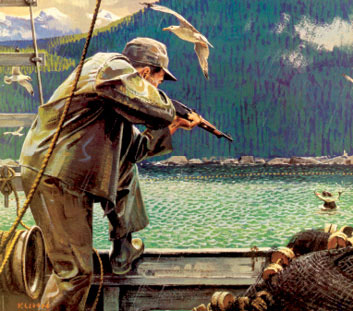
Remington touted the synthetic Nylon 66 rifle as “The only .22 Alaskan fishermen find able to withstand corrosive sea spray,” as demonstrated by a Bob Kuhn painting. The 1959 image (top) shows Nylon 66 stock production at Remington’s Ilion, N.Y., plant. Note the canisters of Zytel waiting to be turned into Nylon 66s.

Remington asked the chemical engineers at DuPont to come up with a plastic that could replace both the wooden stock and the receiver. The specs given to the DuPont chemical development department in the early 1950s were: The material must be capable of forming any shape desired; it must have a high tensile-impact and flexural strength; it must have high abrasion resistance; it must have high resistance to heat distortion; it must be resistant to cold temperatures, it must, if exposed to a flame, not continue to burn when that flame is removed; it must be impervious to solvents, oils, mild acids, alkalis, fungus, rodents, and insects; it must have a finish that is easy to repair; it must be light in weight; it must hold permanent colors; it must have no corrosive effect on other parts; and it must be self-lubricating and dimensionally stable. undefined
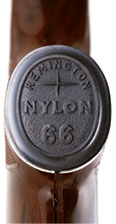
DuPont’s control of Remington (since 1933) provided a resource for the new synthetic rifle stock, which was a radical concept of a combination receiver/stock as one unit made entirely of injection-molded plastic. In less than four months, DuPont’s engineers came back to Remington with Nylon Zytel-101. The Nylon story began when DuPont operated an R&D Laboratory called “Purity Hall.” The lab’s name was to emphasize the separation of the R&D work from production at DuPont. The efforts of Gerald Berchet and Wallace Carothers resulted in 81 new polyamides in 1935. From those new polymers, Polyamide 6-6 was chosen for further testing. It was soon after referred to as “Fiber 66.” The name “Nylon” was adopted by DuPont soon after. The first practical use of the new material was for ladies stockings, which were (and still are) called nylons. The actual DuPont material was structural Zytel Nylon 101, a member of the Nylon 66 family of plastics.

Remington knew that fabricating a .22-cal. Nylon rifle posed three formidable challenges. Would it have durability, accuracy and dependability? An internal memo dated July 7, 1955, reported a preliminary action design had been completed as a cooperative project with DuPont Polychemicals Dept., and a prototype of the new plastic-stocked rifle had been built. The design consisted of two hollow nylon pieces that were fused together to form the completed stock. The center section was covered by a low-cost, formed-steel metal cover—giving it the appearance of a more conventional gun with a steel receiver, and a prototype nylon stock was machined from bar stock.
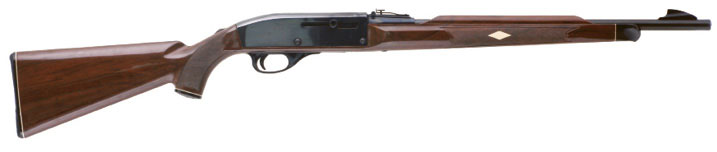
Nylon 66 rifles used DuPont’s Zytel Nylon 101—part of the Nylon 66 family of plastics—for the stock and receiver, and it had a metal receiver cover. Stocks were offered in Mohawk Brown, Seneca Green and Apache Black.

The assembled rifle was then tested by firing 75,000 rounds with a malfunction rate of only 0.005 percent. Refinements on this prototype continued through the summer and fall of 1955. Testing continued to ensure there would be no distortions during molding and that stock shrinkage would not occur after the rifles were assembled.

A nylon gun had never before been made. Its appearance and feel would be significantly different from any other .22 on the market. Would the shooting public buy it? Remington hoped to gain acceptance through overwhelming evidence of the reliability and ease of use of the new gun. This was a gamble, but Remington felt the public would buy an unconventional .22 rifle—if it was extremely reliable and dependable. The new rifle had to sell at no more than other mid-level .22 rifles on the market.

Considerable time and energy were devoted to cost-control measures. But this was complicated by delays and cost increases on parts supplied by outside vendors. Also, Remington management changed the projected number of nylon rifles that would be produced, and the unit cost of certain parts changed with the size of the projected order. Even with costs not completely firm, Remington continued to proceed with development.

Remington Model 555 Bearcat Prototype Rifles
Early on, Remington engineers referred to the new rifle as the Model 555. A few of the early, prototype guns carrying the barrel stamp “Model 555” have surfaced. The nickname “Bearcat” was initially proposed for the Model 555. But in 1958 Sturm, Ruger & Co. introduced its Bearcat revolver, so Remington dropped the name. undefined
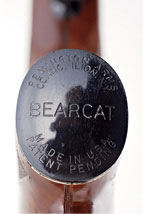
Remington design engineers launched the most extensive field-testing program it had have ever attempted, conducting tests almost continuously in late 1955, 1956, 1957 and into 1958. Hundreds of thousands of rounds were fired. In January 1958, Remington provided each of its sales representatives two prototype Model 555s for field-testing. They were each given one in olive drab green (later renamed Seneca Green) and one in walnut (later renamed Mohawk Brown). The salesmen were asked to fire a minimum of 1,000 rounds in each gun under adverse conditions, then return the gun with the results within 30 days.
On Feb. 23, 1958, salesman Delbert Conner sent his written report to Wayne Leek, Remington’s primary gun designer of the day. Conner’s summary was four pages long. His report began: “My first impression of these guns was, that they were just toys—or maybe air rifles for Buck Rogers. I doubt that the color or material will make much difference on the first showings. The public will refer to them as plastic ... .”

Conner then went into detail about the testing routine to which he subjected the rifles. He fired 2,000 rounds of various brands of ammunition. He held the guns right-side-up, upside-down and sideways. He fired slowly, then rapid fire by fanning the trigger until the barrel on one of the test guns was too hot to touch. He tested it in a blinding windstorm with blowing sand. Then he deliberately drove his station wagon over one (front and rear tires). The next morning, he took it in a boat to the middle of a lake and lowered it, fully loaded, to the bottom with a string on the trigger guard. He retrieved it, drained the water, and shot 100 rounds without a malfunction. He did manage to crack the front of a stock by deliberately dropping a gun from some unspecified elevation onto a concrete sidewalk. He reported that it functioned flawlessly both before and after that incident. His summary stated: “Looks like a plastic toy—performance and accuracy unbelievable.” And then he returned the rifles to Ilion, but wrote “I would surely like to have one back—charged to my sample account—if and when available.”

Introducing The Nylon 66
On May 2, 1958, Remington changed the model designation from Model 555 to Nylon 66. The final approval for formal introduction was given by management on Dec., 17, 1958. Just why Remington changed the model designation from Model 555 to Nylon 66 is not known. Approximately 4,450 production Nylon 66s were made in late 1958 for shipment after the first of the year. The retail price in January 1959 was $49.95. The Nylon 66 was called the “Gun Of Tomorrow” and introduced with an advertising blitz. Its dependability in adverse conditions was used as the primary selling point. Remington ads said: “This is the rifle trappers depend on from Hudson Bay to the Everglades. The only .22 that Alaskan fisherman find able to withstand the attacks of corrosive sea spray—To protect their nets from marauding sea lions!” Remington claimed “lubricant-free nylon ball bearings throughout the mechanism eliminate the need for lubricants of the functional parts of this rifle.”
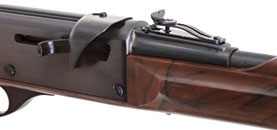
A “Gallery Special” Nylon 66 was introduced in 1961, and the “.22 Short Only” variant was made until 1981. It had a shell deflector shield on the receiver’s right side. Most of the 16,474 Gallery 66s were in Mohawk Brown.


Initial Nylon 66 Publicity
In 1959, Tom Frye, a field representative for Remington, set out to surpass Ad Topperwein’s world record (set in 1907) of shooting 72,500 2½" wooden blocks as they were tossed into the air while missing only nine. Frye used three Nylon 66 rifles and maintained an average pace of 1,000 shots per hour (one shot every four seconds) for 13 consecutive eight-hour days. When the smoke cleared, he had shot at 100,010 blocks and hit 100,004, missing only six! The rifles were cleaned only five times during the Marathon trial.

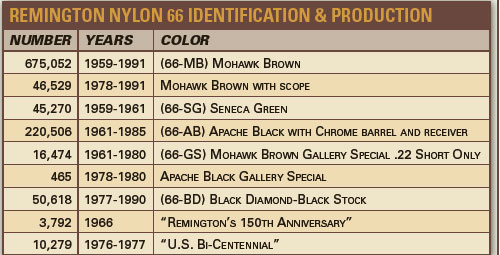
The Nylon 66 was accepted enthusiastically. Demand exceeded projections and production capacity during its introductory year—1959. The Nylon 66 was initially available in two colors; Mohawk Brown (N66MB) and Seneca Green (N66SG). Production was scheduled to be 70 percent in Mohawk Brown and 30 percent in Seneca Green. The names were derived from the Mohawk and Seneca Native American tribes that originally lived near what would become Ilion, N.Y. Production rifles in Seneca Green were dropped in late 1962 because of limited demand.
undefined

Nylon 66 Characteristics
The Nylon 66 had a Zytel-101 stock that was injection-molded in two halves, of which one-half had a tongue and the other a groove. They were then bonded together. The buttstock and fore-end, of course, were two pieces and the middle section was the receiver. Between 1959 and 1969, Remington offered the following guarantee on all Nylon 66 rifle stocks: “We guarantee that this stock will not warp, crack, chip, fade or peel for the life of the rifle, or we will replace it free.” The buttplate, the fore-end tip, and the pistol grip cap were all black plastic bonded in place. Each had a white spacer. There were two reinforcing screws with nuts under the receiver cover, and there was one more under the ivory white diamonds on each side of the fore-end.
 
The magazine was in the butt, loaded through the buttplate and held 14 standard or high-velocity .22 LR rimfire cartridges. The striker was either an investment steel casting or a forging, which required no machining except for the hole down its center. The bolt was a steel machined forging. The striker and bolt ran in grooves in the self-lubricating nylon receiver. The other parts were either stainless steel or mild steel stampings, or, like the trigger guard and the trigger itself, were plastic. The forward face of the bolt had no spot-facing cut as originally fabricated; soon a semi-circular end mill cut was added.

The barrel measured just over 19½" and was clamped to the receiver by a screw-secured barrel bracket in a cradle formed within the stock. When the rifle needed cleaning, the barrel could be easily removed and cleaned from the breech. The barrel at its breech had two gas relief cuts added very soon after production started. In the event of a ruptured case, these cuts were to allow the hot gases to escape in a vertical direction, thus not hurting the shooter.

One of the main advantages from a manufacturer’s point of view was that it could be assembled with little or no hand fitting. In spite of the lack of hand fitting, the trigger pulls were excellent. The total weight of the rifle was about 4 lbs., 8 ozs. A slight disadvantage was that the magazine tube had to be completely removed before reloading, unlike the Models 16, 24 and 241, which were loaded through ports in the side of the buttstock.

In order to avoid shooter rejection of this “plastic gun,” the designers covered the nylon receiver with a blued steel stamping. They must have decided that as long as they were going to disguise the receiver with a steel shell, they would make the shell serve some useful purpose so the rear sight assembly was riveted to it. The cover was grooved so a scope could be mounted. It has been found that when a scope was mounted and the gun was gripped too rigidly the point of impact could change. The steel cover also held the ejector into the receiver. Finally, the flat spring that tensioned the cartridge feed guide was mounted by a rivet to the underside of the cover. The receiver covers and barrels were changed from blued to a matte black finish near the end of production.

The receiver cover had no serial number stamped on it until October 1967, just prior to the enactment of the 1968 Gun Control Act, which required that all guns have serial numbers. Serial numbering of the Nylon 66 and its spin-offs started at serial number 400000 and went to 419011, but at that time the number was stamped on the underside of the barrel just aft of the front sight. Three months later in 1968 the serial number started with 419012 and went to serial number 473710. In December 1968, the serial number range was changed to 2100000. When this series of serial numbers reached 2599999 in February 1977, the letter “A” was added in front of the numbers.

Nylon 66 Markings
The original logo stamped on the barrel in the open space just in front of the rear sight was “PAT. PEND.” over “22 L.R. ONLY” plus the date code and the final inspector’s stamp. Later the “PAT. PEND.” was dropped as the patent was granted and the stylized word “Remington” was added. Most Nylons also have the oval stamp with “REP” on the right rear of the barrel meaning “Remington English Proofed.” In the early 1980s, Remington started to use a much larger stamp on the barrel behind the front sight. It read: “REMINGTON 22 LONG RIFLE ONLY.” In 1959, Remington still had two other autoloading .22s on the market: the older Model 550-1 and the newer Model 552. The Model 550-1 sold for $46.75, and the Model 552 sold for $52.25. Therefore, the Nylon 66 acted as a “middle of the line” gun at $49.95.

Nylon 66 Legacy
The Nylon 66 was a huge gamble for Remington, as traditionally “real” guns had wood stocks. But it was a huge success. The end result was that it became the most successful .22-cal. rifle Remington has ever made, with total production of more than 1,000,000 by 1991 when the Nylon 66 was discontinued. The Nylons have been a “love-’em or hate-’em” gun ever since they were introduced. The appearance and feel were certainly non-traditional. The “love-’ems” seem to be winning, judging by the collector interest and price escalation of the less-common variations. Will Remington ever bring back this low-cost, lightweight 22? Only time will tell.

Thursday, February 10, 2022

The 3 most accurate firefights ever Filmed by Hollywood.


 I snagged this from "We are the Mighty", I thought it was pretty good.

It’s no secret that movies get a lot wrong about firearms and the ways they’re used in a fight. From every 80’s protagonist refusing to shoulder their rifles when they fire, to the seemingly infinite magazine capacity in every hero’s gun, filmmakers have long prized what looks coolover what’s actually possible in their work, and to be honest, it’s hard to blame them. After all, diving sideways while firing pistols from each hand does look pretty badass, even if it’s just about the dumbest thing someone could do in a firefight.


There are, of course, exceptions to the rule when it comes to Hollywood’s depictions of firefights–movies that manage to offer a realistic representation of how armed conflicts actually play out while still giving the audience something to get excited about. These movies may not be realistic from end to end, but each offers at least one firefight that was realistic enough to get even highly trained warfighters to inch up toward the edges of their seats.

1. Delta’s time to shine: “Sicario”


The border scene in 2015’s Sicario is worthy of study from multiple angles: as an exercise in film making, this scene puts on a clinic in tension building, and although some elements of the circumstances may not be entirely realistic, the way in which the ensuing firefight plays out offers a concise and brutal introduction to the capabilities boasted by the sorts of men that find their way onto an elite team like Delta.

Unlike the Chuck Norris depictions of Delta from the past, these men are short on words and heavy on action, using their skill sets to not only neutralize opponents, but to keep the situation as contained as possible. The tense lead up and rapid conclusion leaves the viewer with the same sense of continued stress even after the shooting stops that anyone who has ever been in a fight can relate to, despite the operators themselves who are seemingly unphased. As real special operators will often attest, it’s less about being unphased and more about getting the job done–but to the rest of us mere mortals, it looks pretty much the same.

2. The Gold Standard: “Saving Private Ryan”


When “Saving Private Ryan” premiered in 1998, I distinctly recall my parents returning home early from their long-planned date night. My father, a Vietnam veteran that had long struggled with elements of his service had been excited about the new Tom Hanks, Steven Spielberg wartime epic, but found the opening scene depicting the graphic reality of the Normandy invasion of World War II to be too realistic to handle. My dad, who never spoke of his time deployed, chose to leave the theater and spent the rest of the evening sitting quietly in his room.

This list is, in spirit, a celebration of realism in cinema, but realism has a weight to it, and sometimes, that weight can feel too heavy to manage. A number of veterans have echoed my father’s sentiments about the film (he did eventually watch it at home by himself), calling that opening sequence, often heralded as a masterpiece of film making, one of the hardest scenes they’ve ever managed to watch.

3. Val Kilmer helps train Green Berets: “Heat”


The dramatic ten-minute shootout in “Heat” has become legendary in Hollywood for good reason. For six weeks, the film’s production team closed down parts of downtown Los Angeles every Saturday and Sunday to turn the city into a war zone, and the actors came prepared to do their parts. Production brought in real British SAS operatives to train the actors in real combat tactics at the nearby L.A. County Sheriff’s combat shooting ranges.

Legend has it that Val Kilmer took to the training so well that the shot of him laying down fire in multiple directions and reloading his weapon (without the scene cutting) has been shown at Fort Bragg as a part of training for American Green Berets. Marines training at MCRD San Diego have also been shown this firefight from “Heat” as a depiction of how to effectively retreat under fire.


Tuesday, February 8, 2022

Rifle Recoil Table

 I got this link from Jordan Palka, the information is compliments of "Sportsman's Warehouse" I get nothing out of this, but I figured the information might be useful for my readers.

Rifle Recoil Table

A Guide to Rifle Recoil Energy, Velocity and Level

Recoil (often referred to as "kick") is the force a rifle exerts against the shooter when it is fired. As a rule of thumb, the heavier a rifle the lower the recoil. However, perceived recoil -- what the shooter feels -- is influenced by several factors including the powder load, bullet mass, projectile speed and stock shape. Recoil is measured by free recoil energy, and recoil velocity. Selecting the correct rifle and cartridge combination ensures that a shooter can shoot accurately without discomfort.

Rifle recoil not only impacts how accurately you shoot, it can also determine how many shots you can shoot in a day, and simply how much you enjoy using your rifle. You’ll want a lower recoil rifle for shooting practice, so that you can shoot for longer periods of time. You’ll also want lower recoil when you’re hunting over long days. If you’re hunting game where you’ll just need one well-placed shot, and you’re able to maintain your aim through the heavier recoil, a more powerful rifle with heavy recoil may be right for you.

The following chart provides a rifle's recoil level based on its recoil score*.

Recoil Score* Recoil Level
1-2 Low Recoil
3-4 Moderate Recoil
5-10 High Recoil

The following table provides rifle recoil energy, recoil velocity and recoil score of various rifle cartridges based on respective projectile weight, projectile velocity, powder charge and rifle weight.

Note: Bw = Bullet Weight; Mv = Muzzle Velociy; Rw = Rifle Weight
Cartridge (Bw;Mv;Rw) Recoil Energy (ft-lbs) Recoil Velocity (fps) Recoil Score*
.17 HMR (17; 2550; 7.5) 0.2 1.5 1.02
.17 Hornet (20; 3650; 8.5) 0.6 2 1.08
.17 Rem. (25; 4000; 8.5) 1.6 3.5 1.24
.204 Ruger (33; 4225; 8.5) 2.6 4.4 1.38
.218 Bee (45; 2800; 8.5) 1.3 3.1 1.20
.22 LR (40; 1165; 4) 0.2 1 1.00
.22 WMR (40; 1910; 6.75) 0.4 1.5 1.04
.22 Hornet (45; 2800; 7.5) 1.3 3.3 1.20
.222 Rem. (50; 3200; 7.5) 3 5.1 1.45
.223 Rem. (45; 3500; 8.5) 2.6 4.5 1.38
.223 Rem. (55; 3200; 8) 3.2 5.1 1.46
.223 Rem. (62; 3025; 7) 3.9 6 1.57
.223 Rem. (70; 2900; 8) 3.6 5.4 1.52
.224 Wby. Mag. (55; 3700; 10) 3.6 4.8 1.49
.22-250 Rem. (55; 3600; 8.5) 4.7 6 1.65
.22-250 Rem. (60; 3500; 12.5) 3.1 4 1.41
.220 Swift (50; 3900; 10.5) 3.7 4.8 1.50
.220 Swift (55; 3800; 8.5) 5.3 6.4 1.72
.223 WSSM (55; 3850; 7.5) 6.4 7.4 1.87
5.6x50 Mag. (60; 3300; 7.5) 4 5.9 1.58
5.6x52R (70; 2800; 7.5) 3.7 5.7 1.54
5.6x57 RWS (60; 3800; 7.5) 6.9 7.7 1.93
6mm BR Rem. (80; 3100; 8.5) 5.2 6.3 1.71
6mm Norma BR (95; 2914; 8.5) 5.9 6.7 1.80
.243 Win. (75; 3400; 8.5) 7.2 7.4 1.95
.243 Win. (95; 3100; 7.25) 11 9.9 2.43
.243 Win. (100; 2960; 7.5) 8.8 8.7 2.16
6mm Rem. (100; 3100; 8) 10 9 2.29
.243 WSSM (100; 3100; 7.5) 10.1 9.3 2.31
.240 Wby. Mag. (100; 3406; 8) 17.9 9.7 3.09
.25-20 Win. (86; 1460; 6.5) 1.3 3.5 1.21
.256 Win. Mag. (75; 2400; 7.5) 2.4 4.5 1.36
.25-35 Win. (110; 2425; 7.5) 6 7.2 1.83
.25-35 Win. (117; 2230; 7.5) 7 8.3 1.97
.250 Savage (100; 2900; 7.5) 7.8 8.2 2.04
.257 Roberts (100; 3000; 7.5) 9.3 8.9 2.22
.257 Roberts (120; 2800; 8) 10.7 9.3 2.37
.257 Rob. Imp. (115; 2900; 8) 10.8 9.3 2.38
.25 WSSM (120; 2990; 8) 13.8 11.1 2.75
.25-06 Rem. (100; 3230; 8) 11 9.4 2.41
.25-06 Rem. (120; 3000; 8) 12.5 10 2.58
.257 Wby. Mag. (100; 3602; 9.25) 15.8 10.5 2.92
.257 Wby. Mag. (115; 3433; 9.25) 17.7 11.1 3.13
.257 Wby. Mag. (120; 3300; 9.25) 15.1 10.3 2.84
6.5mm Grendel (120; 2600; 7.5) 8.9 8.8 2.18
6.5mm Grendel (123; 2590; 8) 7.9 8 2.05
6.5x54 M-S (140; 2400; 7.5) 11.1 9.7 2.43
6.5 PRC (143; 2960; 6.1) 15.7 11 2.93
6.5x55 Swede (129; 2700; 8) 12.5 10 2.58
6.5x55 Swede (140; 2650; 9) 10.6 8.7 2.34
6.5x55 Swede (140; 2735; 8.5) 12.1 9.6 2.52
6.5x55 Swede (160; 2300; 8) 12.7 10.1 2.60
.260 Rem. (120; 2860; 7.5) 13 10.6 2.65
.260 Rem. (140; 2360; 8) 9.5 8.8 2.23
.260 Rem. (129; 2900; 8.25) 12.5 9.9 2.57
.260 Rem. (140; 2750; 8.25) 11.9 9.7 2.51
6.5x57 (140; 2700; 8) 12.5 10 2.58
6.5mm-284 Norma (140; 2920; 8) 14.7 10.9 2.83
6.5mm-06 (140; 2800; 8) 13.9 10.6 2.74
6.5mm Rem. Mag. (120; 3100; 8) 13.1 10.3 2.65
6.5mm Rem. Mag. (140; 2900; 8.5) 13.9 10.3 2.73
6.5x68 S (140; 2990; 8.5) 16.8 11.3 3.05
.264 Win. Mag. (140; 3200; 8.5) 19.2 12.1 3.32
.26 Nosler (129; 3400; 8.5) 23.9 13.5 3.84
6.5-300 Wby. Mag. (140; 3395; 9.5) 21.1 12 3.50
6.8mm Rem. SPC (115; 2625; 7.5) 8 8.3 2.07
.270 Win. (120; 2675; 8) 10 9 2.29
.270 Win. (140; 3000; 8) 17.1 11.7 3.10
.270 Win. (150; 2900; 8) 17 11.7 3.09
.270 WSM (130; 3275; 8) 18.7 12.3 3.28
.270 WSM (150; 3000; 8) 18.9 12.3 3.30
.270 Wby. Mag. (130; 3375; 9) 21 12.3 3.50
.270 Wby. Mag. (150; 3000; 9.25) 17.8 11.1 3.14
7x57 Mauser (139; 2700; 8.75) 11.7 9.3 2.47
7x57 Mauser (140; 2660; 8) 13.5 10.4 2.69
7x57 Mauser (145; 2725; 8.5) 13 9.9 2.62
7x57 Mauser (175; 2500; 8) 15.5 11.2 2.92
7mm-08 Rem. (120; 3000; 7.5) 12.1 10.2 2.55
7mm-08 Rem. (140; 2860; 8) 12.6 10.1 2.59
7mm-08 Rem. (150; 2750; 7.5) 13.9 10.9 2.75
7x65R (175; 2600; 8) 17.1 11.7 3.10
.280 Rem. (140; 3000; 8) 17.2 11.8 3.11
.280 Rem. (150; 2900; 8) 17.4 11.8 3.13
.280 Rem. (160; 2800; 8) 17 11.7 3.09
.280 Ackley Imp. (150; 2930; 8.5) 16.3 11.1 3.00
7mm Rem. SAUM (160; 2931; 8) 21.5 13.2 3.59
7mm WSM (140; 3200; 8) 20.7 12.9 3.50
7mm WSM (160; 3000; 8) 21.9 13.3 3.63
7mm Rem. Mag. (139; 3100; 9) 19.3 11.8 3.32
7mm Rem. Mag. (140; 2700; 8.5) 15.5 10.8 2.90
7mm Rem. Mag. (150; 3100; 8.5) 19.2 12.1 3.32
7mm Rem. Mag. (154; 3035; 8.5) 20.3 12.4 3.44
7mm Rem. Mag. (160; 2950; 9) 20.3 12 3.42
7mm Rem. Mag. (175; 2870; 9) 21.7 12.5 3.58
.275 H&H Mag. (160; 3050; 8.5) 19.5 12.2 3.35
7mm Wby. Mag. (140; 3300; 9.25) 19.5 11.7 3.33
7mm Wby. Mag. (160; 3200; 9) 25.6 13.5 4.00
7mm STW (160; 3185; 8.5) 27.9 14.6 4.27
.28 Nosler (160; 3200; 8.5) 29.4 14.9 4.43
.30 Carbine (110; 1990; 7) 3.5 5.7 1.52
.300 Blackout (135; 2085; 8) 3.32 4.95 1.47
.30 Rem. (170; 2120; 7.5) 9.8 9.2 2.28
.30-30 Win. (125; 2175; 7.5) 6.6 7.5 1.90
.30-30 Win. (150; 2364; 8) 9.4 8.7 2.22
.30-30 Win. (150; 2400; 7.5) 10.6 9.5 2.37
.30-30 Win. (160; 2400; 7.5) 12.7 10.5 2.62
.30-30 Win. (170; 2200; 7.5) 11 9.7 2.42
.307 Win. (150; 2600; 7.5) 13.7 10.9 2.73
.308 Marlin Express (160; 2660; 8) 13.4 10.4 2.68
7.5x55 Swiss (150; 2800; 9) 12.9 9.6 2.60
.308 Win. (125; 2675; 8.75) 9 8.1 2.16
.308 Win. (150; 2800; 7.5) 15.8 11.7 2.97
.308 Win. (165; 2700; 7.5) 18.1 12.5 3.23
.308 Win. (180; 2610; 8) 17.5 11.9 3.15
.30 T/C (150; 2900; 8.5) 13.9 10.3 2.73
.30-06 Spfd. (150; 2910; 8) 17.6 11.9 3.16
.30-06 Spfd. (165; 2900; 8) 20.1 12.7 3.43
.30-06 Spfd. (180; 2700; 8) 20.3 12.8 3.46
.30-06 Ackley Imp. (180; 2985; 8.5) 23 13.2 3.74
.300 RCM (180; 2900; 8.5) 22.3 13 3.66
.300 Rem. SAUM (180; 2960; 8.25) 23.5 13.6 3.80
.300 WSM (150; 3300; 8.25) 22.5 13.3 3.69
.300 WSM (180; 2970; 7.25) 27.1 15.5 4.23
.300 WSM (180; 2970; 8.25) 23.8 13.6 3.83
.308 Norma Mag. (180; 3000; 8.5) 25.9 14 4.05
.300 Win. Mag. (150; 3320; 8.5) 23.5 13.3 3.79
.300 Win. Mag. (165; 3110; 8) 26.2 14.5 4.10
.300 Win. Mag. (180; 2960; 8.5) 25.9 14 4.05
.300 H&H Mag. (180; 2920; 8.5) 23.1 13.2 3.75
.300 Dakota (180; 3100; 8.5) 28.3 14.7 4.32
.30 Nosler (180; 3112; 9) 26.9 13.9 4.15
.300 Wby. Mag. (150; 3400; 9.25) 24.6 13.1 3.89
.300 Wby. Mag. (180; 3240; 9) 31.6 15 4.65
.300 Ultra Mag. (180; 3230; 8.5) 32.8 15.8 4.80
.300 Norma Mag. (180; 3317; 8.5) 35.5 16.4 5.09
.30-378 Wby. Mag. (180; 3300; 9.75) 42.6 16.8 5.80
7.62x39 Soviet (125; 2350; 7) 6.9 8 1.95
7.62x53R Finn (150; 2800; 9) 13.1 9.7 2.62
7.62x54R Russian (150; 2800; 9) 13.1 9.7 2.62
7.62x54R Russian (174; 2600; 9) 15 10.4 2.84
.303 British (150; 2700; 7.5) 14.2 11 2.79
.303 British (180; 2420; 8) 15.4 11.1 2.91
.32 Spec. (165; 2410; 7.5) 13.2 10.6 2.67
.32 Spec. (170; 2250; 7) 12.2 10.6 2.57
8x57 Mauser (170; 2400; 8) 13.6 10.4 2.70
8x57JS Mauser (150; 2900; 8) 17.1 11.7 3.10
8x57JS Mauser (195; 2500; 8) 18.5 12.2 3.26
.325 WSM (180; 3060; 7.5) 33.1 16.9 4.88
.325 WSM (220; 2840; 7.5) 37.5 17.9 5.35
8mm Rem. Mag. (200; 2900; 8.5) 32.9 15.8 4.81
.33 Win. (200; 2100; 8) 13.9 10.6 2.74
.338-57 O'Connor (200; 2400; 8) 19.2 12.4 3.33
.338 Marlin Express (200; 2400; 8) 16.2 11.4 3.00
.338 Marlin Express (200; 2600; 8) 22 14 3.67
.338 Federal (200; 2660; 8.5) 19.3 12.1 3.33
.338 Federal (210; 2630; 8) 21.9 13.3 3.63
.338-06 A-Square (200; 2800; 8) 23.9 13.9 3.85
.338-06 A-Square (250; 2500; 8.5) 28.2 14.6 4.30
.338 RCM (200; 2800; 8) 26.1 14.5 4.09
.338 Win. Mag. (200; 2950; 8.5) 32.8 15.8 4.80
.338 Win. Mag. (225; 2780; 8.5) 35.2 16.3 5.06
.338 Win. Mag. (250; 2700; 9) 33.1 15.4 4.82
.338 Lapua Mag. (225; 3000; 9.5) 37.2 15.9 5.24
.338-378 Wby. Mag. (250; 3040; 11.75) 41.1 15 5.58
.340 Wby. Mag. (200; 3100; 8.5) 29.6 13.8 4.41
.340 Wby. Mag. (250; 2940; 9) 43.4 17.6 5.91
.38 Special. (158; 1100; 7) 1.7 4 1.27
.357 Mag. (158; 1650; 7) 4.7 6.6 1.67
.357 Mag. (180; 1550; 6.5) 5.5 7.4 1.79
.35 Rem. (200; 2050; 7.5) 13.5 10.8 2.71
.358 Win. (200; 2490; 8) 20.9 13 3.52
.358 Win. (250; 2260; 7.5) 23 13.9 3.77
.35 Whelen (200; 2675; 8) 22.6 13.5 3.71
.35 Whelen (225; 2525; 8) 25 14.2 3.97
.35 Whelen (250; 2400; 7.5) 27.9 15.5 4.31
.350 Rem. Mag. (200; 2700; 8.5) 22.3 13 3.66
.350 Rem. Mag. (225; 2550; 8.5) 24.2 13.5 3.87
.350 Rem. Mag. (250; 2500; 8.5) 29 14.8 4.39
.358 Norma Mag. (250; 2723; 9) 31.2 15 4.61
9.3x57 (232; 2330; 8.5) 19.8 12.2 3.38
9.3x62 (250; 2450; 8.5) 25.7 14 4.03
9.3x62 (286; 2360; 9) 28 14.1 4.26
9.3x64 (286; 2650; 9) 36.5 16.2 5.18
9.3x66 (286; 2559; 9) 36.3 16.1 5.16
9.3x74R (250; 2550; 9) 29.1 14.4 4.38
9.3x74R (286; 2400; 8.25) 34.3 16.6 4.98
.370 Sako Mag. (286; 2550; 8.5) 35.2 16.3 5.06
.375 Win. (220; 2200; 7.5) 17.1 12.1 3.12
.375 Ruger (270; 2840; 9) 41.3 17.2 5.69
.375 Ruger (300; 2550; 8.5) 44.8 18.4 6.08
.375 H&H Mag. (235; 2700; 9) 29.5 14.5 4.43
.375 H&H Mag. (270; 2690; 9) 36.1 16.1 5.14
.375 H&H Mag. (300; 2530; 9) 37.3 16.3 5.26
.375 Dakota (300; 2600; 8.5) 44.5 18.4 6.06
.375 Wby. Mag. (300; 2700; 10) 47.3 17.5 6.29
.38-40 Win. (180; 1100; 7.5) 3.1 5.2 1.46
.404 Jeffery (400; 2170; 10.25) 41 16.1 5.62
.405 Win. (300; 2200; 8) 30.6 15.7 4.58
.41 Rem. Mag. (210; 1775; 7) 9.5 9.4 2.26
.416 Taylor (400; 2350; 10) 47.8 17.5 6.34
.416 Ruger (400; 2390; 9) 58.1 20.4 7.47
.416 Rem. Mag. (400; 2400; 10) 52.9 18.5 6.88
.416 Rigby (400; 2400; 10) 58.1 19.3 7.42
.416 Dakota (400; 2500; 10) 59.2 19.5 7.54
.416 Wby. Mag. (400; 2700; 10.25) 83 22.8 10.00
.44 Rem. Mag. (240; 1760; 7.5) 11.2 9.8 2.44
.44 Rem. Mag. (275; 1580; 7.5) 11.4 9.9 2.47
.444 Marlin (240; 2400; 7.5) 23.3 14.2 3.81
.444 Marlin (265; 2200; 8.5) 22.1 12.9 3.64
.444 Marlin (265; 2325; 8.5) 27.6 15.4 4.28
.45 Colt (255; 1100; 8) 4 5.6 1.56
.45 Colt +P (250; 1500; 6.5) 11.1 10.5 2.46
.458 SOCOM (300; 1840; 7.5) 20.2 13.2 3.46
.45-70 (300; 1800; 7) 23.9 14.8 3.89
.45-70 (350; 1900; 7) 37.9 18.7 5.42
.45-70 (405; 1330; 7.5) 18.7 12.7 3.30
.450 Marlin (350; 2000; 7) 37.2 18.5 5.35
.450 Marlin (350; 2100; 8.5) 33.6 16 4.89
.450 N.E. (465; 2150; 11) 55.5 18 7.11
.458 Win. Mag. (400; 2050; 9) 41.7 17.3 5.74
.458 Win. Mag. (500; 2100; 9) 62.3 21.1 7.91
.458 Lott (500; 2300; 10) 70.4 21.3 8.71
.470 N.E. (500; 2150; 11) 69.3 20.1 8.55
.480 Ruger (325; 1450; 6.25) 16.4 13 3.08
.50 BMG (647; 2710; 30) 70 12.3 8.29
*Recoil score is calculated as a function of recoil energy and recoil velocity using a weight average which is then normalized between 1-10. See below for a detailed explanation. Recoil energy and recoil velocity figures are taken from various sources including the recoil nomograph in the Handloader's Digest 8th Edition, online recoil calculators, or calculated from the formula provided in the Lyman Reloading Handbook, 43rd Edition.

Calculating Rifle Recoil

We're all familiar with Newton's third law which states for every action there is an equal and opposite reaction. Newton's third law explains why when you shoot a gun it kicks. The bullet explosion exerts an incidental force on the gun which in turn transfers a reciprocal force onto the shoulder. Mathematically, this relationship is explained by the equation F(i) = -F(r), where F(i) represents the 'incident force' (bullet force on the gun) and -F(r) represents the 'reciprocal force' (gun force on shoulder). This force is referred to as Recoil, or in industry vernacular "kick". How much kick a rifle generates when discharged is a function of two measurements: Recoil Energy and Recoil Velocity.

Recoil Energy

Recoil energy is the kinetic energy transferred to the shooter when a gun is discharged. It's the propulsive force generated when the powder charge within a firearm chamber combusts. Recoil energy is measured in Joules (J) but is more commonly expressed in foot-pounds of force (ft-lbf). Recoil energy is sometimes referred to as "free recoil". While similar, the two terms are different. Recoil energy is the measurement of gross energy produced by the discharge of a firearm. Free recoil is the measurement of net energy produced by the discharge of a firearm--or gross energy less recoil energy loss due to various energy transferring inhibitors such as recoil reducing butt pad; muzzle break; recoil suppression tube; recoil operated action vs gas operated action; etc. In other words, free recoil energy is the actual energy absorbed by the body of the shooter.

Each shooter perceives free recoil energy slightly different. Some of the factors that influence perceived recoil energy include but are not limited to: size of the shooter; shooting style and position; suppression equipment (as previously mentioned); firearm fit; and other environmental stressors. For example, a 240lb muscular man is not going to experience the same amount of perceived recoil energy when shooting a .30-06 Springfield rifle as will a 130lb woman with a smaller body frame and structure. This isn't because the woman is not as strong as the man, but simply because the same energy transfer is being met by the man's greater mass.

Rifle weight is also a very important factor in determining and managing free recoil. Rifle weight is inversely proportional to a rifle's recoil. All things being equal, the heavier the rifle the lower the free recoil energy. Inversely, the lighter the rifle, the greater the free recoil energy. Therefore, rifles that shoot heavier rounds are typically manufactured with more weight. If you purchase a lightweight rifle that shoots heavier rounds, expect it to pack a punch.

Recoil Velocity

Where recoil energy determines how big of a punch the shoulder will feel, recoil velocity determines how abrupt of a punch the shoulder feels. Recoil velocity is the speed at which the stock of the rifle impacts your shoulder. A rifle that produces high recoil energy, but low recoil velocity, is going to pack a large slow punch. Inversely, a rifle that produces low recoil energy, but high recoil velocity, is going to pack a small fast punch. Recoil velocity is measured in feet per second (fps).

Recoil Score

If you've never shot a rifle before, or have limited experience shooting rifles, it can be difficult to conceptualize based on Recoil Velocity and Recoil Energy measurements alone what it's going to feel like to shoot a particular rifle. In our opinion, rifles that generated over 20 lbs of recoil energy when discharged may cause shooters to develop a sore shoulder. A maximum 15 lbs of recoil energy and 10 fps recoil velocity is probably the most an average shooter can comfortably handle for long-term hunting or target shooting. However, it's the combination of both recoil energy and recoil velocity that generate the overall impact a shooter feels when shooting a rifle.

Recoil score combines recoil energy and recoil velocity measurements into a single value. While rifle recoil scores are subjective, they are useful for gauging the perceived "kick" of one rifle relative to another. If you've ever shot a .257 Roberts with a recoil score of 2.37 (low recoil) it's easy to conceptualize how it will feel to shoot a .338 Lapua Magnum with a recoil score of 5.24 (high recoil).

Recoil level is calculated as a function of the weighted average of recoil energy and recoil velocity at a ratio of 7:3, respectively, to generate a recoil score. The recoil score is then normalized between 1 and 10 using the normalization equation xnormalized=(b−a)*((x−min(x)/max(x)−min(x))+a where xnormalized denotes the measurement to be scaled, min(x) denotes the minimum of the range of the measurement, max(x) denotes the maximum of the range of the measurement, b denotes the highest value and a denotes the lowest value. Recoil level is than assigned on a scale from 1-10 with ranges of 1-2 (low recoil), 3-4 (moderate recoil) and 5-10 (high recoil).

Disclaimer: Sportsman's Warehouse assumes no responsibility or liability for any errors or omissions of the information on this page. Although we strive to provide the most accurate information as we can the information contained in this page is provided on an "as is" basis with no guarantees of completeness, accuracy, usefulness or timeliness. There are many quantitative and qualitative factors that influence rifle recoil and how it impacts the individual shooter. Do not use this guide as a basis for purchasing a rifle. It is design for informational purposes only.


Thursday, February 3, 2022

"What to Say After You Had To Defend Yourself"

 I got this link in my email and Massad Ayoob is a legend in the "Gun" community, I met the man at NRAAM and he was really gracious with us shooters asking him questions.  From All accounts, he is a class act.  I personally have a good friend who is a good lawyer and deals a lot with police officers and other first responders and don't mind getting into it with city governments and county governments when they try to railroad a client and he I will call but the principle is the same, "Diarrhea of the mouth will put you in prison."


Back in the very early 1980s, when I founded Lethal Force Institute, I formulated a “five point checklist” of things that need to be said to responding authorities at the scene after you have defended yourself or others with force, perhaps even deadly force. 

In the four decades since, that advice has worked remarkably well.

Defense lawyers often tell you “Never talk to the police.” You have to understand where that advice comes from. In forty-plus years as an expert witness in homicide cases, including many years of teaching CLE (Continuing Legal Education) for practicing attorneys, and a couple of years as Co-Vice Chair of the Forensic Evidence Committee of the National Association of Criminal Defense Lawyers, I’ve gone into this matter deeply with a helluva lot of defense lawyers. Many of them have NEVER defended a truly innocent person who fired in self-defense. Those who have done that sort of case generally agree with my advice, which is to establish a Five-Point Checklist of things right there at the shooting scene from the get-go.

Unfortunately, the gun-related internet is full of people who have bought into the “never talk to the police” narrative, and mis-interpret my advice as “Babble as much as you want and answer every question you are asked.”


A couple of years ago, my friend John Correia hosted me and my colleague Marty Hayes to do a Deadly Force Instructor class for John and his staff and some other attendees. While we were doing that in Phoenix, Arizona, John recorded the following video with me:

Please take a few minutes to review.

If anyone tells you “Never say anything after you defended yourself, because you’ll be so stressed out that your brain will turn into feces,” ask them this:

“We can all agree that when someone is trying to kill you or your loved ones, you’ll be under MORE stress than ‘talking to cops.’ If our brains melt into diarrhea under stress, how the hell did we defeat an apex predator in a life-or-death battle, to begin with?”

And ask that person the question I put to John Correia at the end of the video: If you think your brains melt into feces under stress, why the hell do you keep deadly weapons for defense of yourself or others in the first place?


Thursday, December 2, 2021

Black Friday Gun Sales Can best be Summed up in Two Words ....


 From what I have seen, the market is still very hot, according to my friend Mack "it is F**king crazy right now". 


Black Friday Gun Sales Can Best Be Summed Up with Two Words

Source: AP Photo/Andrew Selsky

Holy shrimp! No, that’s not the two words I’d used to describe Black Friday gun sales, but it’s close. It was a good day for the gun industry and American civil rights. With Democrats back in power and acting like idiots, they’re back to being the best sales team for the number one item they hate: firearms. Seriously, it’s hilarious to see such an anti-gun party do everything they can to make sure that everyone rushes to buy firearms and thereby forever killing chances of shredding the Second Amendment. Democrats pay for their anti-gun antics. We’ve seen it.  

With economic security in doubt, lawlessness in our cities, and violent crime spiking, it’s no shock why Americans are rushing to gun stores to procure means of protection. With a new COVID lockdown possible, it just gives Americans yet another reason to stock up. Stephen Gutowski of The Reload wrote about the Black Friday sales, which could be summed up with two words: “truly remarkable” (via Reload):

Additionally, the total for the week leading up to Black Friday topped 687,788 checks.  The numbers indicate the demand for guns has not decelerated significantly since last year, according to the industry.

“We’re still seeing a very strong appetite for firearm ownership in America,” Mark Oliva, a spokesman for the National Shooting Sports Foundation, told The Reload.

While most months in 2021 have seen lower gun sales numbers than 2020, they haven’t dropped far and still occasionally outstrip 2020 demand. That indicates the new normal for gun sales will remain well above what it had been pre-pandemic. In fact, more guns were sold through September 2021 than all of 2019.

“This figure of over 687,000 background checks is truly remarkable,” Joe Bartozzi, NSSF President and CEO, said in a statement. “This year has already been shaping up to be the second strongest year for firearm sales on record, second only to 2020’s record-breaking number of 21 million background checks for a firearm sale. We anticipate, based on annual data, that firearm sales will rise during the final month of the year coinciding with hunting seasons and holiday sales.”

The industry has struggled to keep up with the unprecedented demand seen throughout the country since March of last year. Long lines formed, and store shelves were stripped dry as the coronavirus accelerated the urgency to provide for their own safety while facing meat and supply shortages. When rioting came in summer 2020, the lines started up again, and millions more Americans became first-time gun owners.

The surge has left manufacturers scrambling to increase production. Many of the biggest gun companies have been able to significantly increase production and profits. Smith & Wesson banked the first billion-dollar year for a gunmaker in American history.

Bartozzie said the number of sales on Black Friday “underscores” not just sustained demand but the “resilience of the firearm and ammunition industry to meet that demand.”

It’s as American as apple pie. Yet, the supply chain issues might put a wrinkle in some purchases. On top of that, there was already a massive ammunition shortage. Due to the COVID pandemic, we saw some nine million new gun owners in 2020. These first timers put pressure on the ammo market, which already doesn’t have 9mm and .223/5.56 ammunition readily available. The price of copper and materials have hit 50-year highs. Both calibers are some of the most used by gun owners—and we could see these shortages last for another 18 months to two years. 

Still, great to see Americans go out and continue to exercise their constitutional right to own firearms.


Thursday, May 14, 2020

AR-15 Barrel Length Explained


I shamelessly poached this from Classic Firearms, I have bought pistols from them before as well as parts and found them as a good source.  I haven't bought anything recently during the kung-flu so I don't know how they are doing.  I have been exceedingly frugal with my firearm dollars because of the unknown nature of what to expect.


Barrel length and the AR-15 

The AR-15 is a fascinating rifle. Not just its long history of service, or the fact that it’s America’s favorite rifle, but also from an engineering perspective. The rifle is incredibly modular, and you can pick and choose parts like no other weapon out there. One major change you can make is with the barrel length. There are a wide variety of barrel lengths you can use for your gun, so we’ve broken them down here. 

The Rifles 

24 Inches 
A 24-inch barrel is an odd one, and when it comes to a 5.56 AR, there are not many advantages to the four extra inches of barrel. However, in calibers like 6.5 Grendel, the extra barrel length can get you extra velocity, which adds extra range and hitting power. 
AR-15 .224 Valkyrie 24" Barrel
20 Inches
Twenty inches is what the original 223 Remington round was built for. 20-inch barrels allow you to maximize the velocity of a 5.56 or 223 Remington round. The extra barrel length not only provides extra velocity and range, but offers you a softer shooting, smoother handling rifle. 

The Weird One

18 inches
Eight inches is an odd barrel length, but it’s a cool idea rooted in Special Operations. The 18-inch barrel allows you to use a rifle-length gas system, which gives you the same recoil and muzzle rise impulse as a 20-inch barrel. It’s also two inches shorter, giving you a more handy rifle. 18-inch barrels are popular in the competition world due to their smooth shooting. 
AR-15 20" Barrel 6.5 Creedmoor

The Civilian Carbine Standard 

16 Inches 
16-inch barrels are the shortest a civilian can legally go as a title 1 firearm. Any shorter necessitates a pistol or short-barreled rifle. Sixteen inches gives you a light and handy rifle that makes good use of the 5.56 cartridge. It’s the most popular AR-15 barrel length. 
AR-15 7.62x39 16" Barrel

The Military Carbine Standard 

14.5 inches
14.5-inch barrels are the standard for the military’s M4 program. They are popular with civilians as well, but they have to be pistols SBRs, or a third option is choosing a 1.5-inch long muzzle device and pinning and welding it to create a 16-inch barrel. Like 16-inch barrels, the 14.5 is light and handy, and still retains decent velocity and range capability.
AR -15 .223 Wylde 14.5" Barrel

The Shorties 

12.5, 11.5, and 10.3 inches
These three lengths are super short and commonly found on rifles purpose-built for clearing rooms. All of these lengths require a pistol build or SBR. These three lengths all have reduced velocity, and therefore range, but are so light and handy they are perfect for inside of 300 yards. They can hit targets beyond that range, but they aren’t optimal for those distances. 
AR -15 .450 Bushmaster 10.5" Barrel

The Super Shorties 

7.5 inches and Below 
The super shorties are a little silly when your AR-15 is a 5.56. Rounds like the 300 Blackout and 9x19 can be effective from these super short barrels. These short barrel lengths make the guns even handier inside structures, but also easy to conceal in bags. These super short barrels can be a lot of fun, and when paired with a suppressor, you still get a light and short rifle. 
AR-15 9mm 7.5" Barrel

Suit Up 

Barrel length can completely change how a weapon handles, how it recoils, and even its legal status. Different calibers work with different barrels in different ways, so when you choose a barrel, you need to observe your purpose, your caliber, and your overall intent. Then you need to come to Classic Firearms and find the barrel or rifle you need. 

Saturday, December 14, 2013

"Picked the wrong Girl" Glock Commercial....and Brain Freeze and other musings


I was trying to pick my brain for something to post,  I am sure that other bloggers have those moments where there is soo much you want to post about but there is a mental dis-connect between the brain and the fingers hovering over the keyboards.  I wanted to continue something with my Hitler and 2nd Amendment thingie that I have been running with and just had "vapor lock".  Well I also wanted to post about the "selfies" that the first Grifter was doing at the funeral of Nelson Mandela. 
  The recent budget deal that the wimp establishment republicans pushed through that basically kicked sequestration to the curb.  The GOP is afraid that they would get mauled in another budget showdown with the Democrats so they rolled over and let the Democrats steamroller them.  The Democrats I believe were hoping for a budget showdown to get the bad publicity of Obamacare off the news...for a while.  
 The Election year Democrats are running scared of this election year cycle, because they will have to answer for Obamacare that was passed strictly on a party line vote, there were no GOP votes..Even the RINO's stayed away from this.....Surprisingly.  They were hoping to force a budget fight to get the onus back on the GOP on the runup before the 2014 elections.

     Speaking of Obunglercare...Here is a tidbit I got talking to another parent at my sons scout troop.  This person was talking about a  major software upgrade roll out they they are worried about and I commented " as long as your roll out works better than the Obamacare website roll-out , then y'all would be fine."    This person replied that " My company is the one that rolled out the ACA website."   *Oh Snap*   I thought.   I replied " You work for CGI Federal?"   This person nodded in the affirm, I without thinking immediately asked " What happened, was there any test of the system before the roll-out?"  This person replied " there was soo much bureaucratic interference in the program, all these people wanted their input into the product, but then wouldn't make a decision and punted it to another bureaucrat who then shuffled it to another one.  We had no guidance on exactly what they wanted...Just vague *suggestions*.  We were stumbling around trying to do what they asked.  There were no leadership or direction given.  We kept changing the codes, adding things and then removing things....per their many request, but no firm guidance. And they would not change the date of the rollout, political considerations"     I was thinking.*yep, the bureaucrat play...Duck and cover....Don't make a decision...you might be held responsible by those above you and get demoted.*    And people want the government to run your healthcare?

Well I was surfing around looking for something to go with my Hitler and 2nd Amendment thingie...and in a flash of insanity *ahem* brilliance I thought of Glock, they are an Austrian import...As was Hitler...*.Tada!* this fit the *Hitler and 2nd Amendment* thingie I was looking for.  So I was surfing Glock and ran across this video. 

"Somebody picked the wrong girl."
You'd think the party that claims to support strong, independent women would love her. OK, no you wouldn't. Because they don't. The party in question loves a woman who knows where to go to get government benefits. A woman like this is doing it all wrong:

It's actually a lot more dramatic and intense than you might have expected. Every time she goes back to the couch (if you are wondering what she is watching, it is the "somebody picked the wrong diner" commercial by Glock and R.Lee Ermey) and sits down, only to hear that ominous knock on the door once again, you're really starting to get concerned that the perp might get in before she's armed and ready.
The first time I watched (spoiler if you haven't already hit play), I was actually expecting her to shoot him dead. Now that would have been attention-getting, but it is a commercial after all, and I don't suppose that's really the association Glock is looking for. It's about protecting yourself, not about killing someone. Granted, without the threat of the latter you can't really do the former, but I do think it's accurate that in the circumstances envisioned here, it would not be necessary to ever pull the trigger the vast majority of the time. The perp is either going to run or put his hands on his head and give up.
A lynchpin of the liberal argument against gun rights is that the average gun-toting citizen is more likely to get shot by his/her own gun than to use in successfully in self-protection. This ad really exposes the thinking that drives that argument. The left simply doesn't believe that a young woman like this could handle herself in the situation depicted. In their minds, there is no way she's pointing the gun at the door when the bad guy gets it open - poised and ready. And that goes for a 40-year-old dad looking to protect his family too. These dopes would just end up getting shot by their own gun, so they're better off not being allowed to own it in the first place. That's the argument. They are better off calling the Police and hope they get there in time.
I will say this: If I'm her, I'm not waiting until the third time I hear the noise to get the gun. The first time I might write it off as something harmless, but the second time I'm getting the Glock. Why does she wait so long? Just for the ad's dramatic effect?  That has been a complaint with all the scary movies that I see...When somebody goes looking for the *bump in the night* they go unarmed.   In the real world, Jason or Freddie would have ate either a few shots of 00 buck or some other form of projectiles.
Anyway, if that's the strongest criticism of the ad (and it would be mine), that's not an anti-gun control argument. It's an argument for getting that thing in your hands sooner.

     And here is the "Somebody picked the Wrong Diner" video that a blurp was shown in the preceeding video.

Tuesday, February 19, 2013

Gun Owners get discount on Pizza..

I saw this on Yahoo news.  This is for us Gun Owners, We can vote with our $$$ as a bunch of companies are pulling out of NY or refusing to sell in places that try to limit the rights of Lawful Gun Owners. 


VIRGINIA BEACH, Va. (AP) — A Virginia Beach pizza shop owner is showing his support for firearm rights by giving gun owners a 15 percent discount.
The discount is given to anyone who brings a gun or concealed handgun permit to All Around Pizzas and Deli.
Owner Jay Laze tells news media outlets that he'd planned on offering the discount for a limited time. But he says the response has been overwhelming and he might make it permanent.
Since the discount began last Friday, Laze says 80 percent of his customers have brought guns into the pizza shop. He says one customer came in with an AK-47.
Laze is a gun owner and says he's always been a supporter of the right to carry firearms.