Webster

The Constitution was made to guard the people against the dangers of good intentions." --American Statesman Daniel Webster (1782-1852)


Showing posts with label Russians. Show all posts

Sunday, February 20, 2022

Why Russia's Military isn't quite as powerful as it seems.

 I have been super busy at work and unable to post on the blog, 

    I snagged this off "Sandboxx"

 With tensions between the United States and Russia once again simmering to a boil, Russia’s massing of troops and hardware along Ukraine’s borders have prompted a resurgence in concern about what a war between these former Cold Warriors might look like. Russia has made a spectacle of unveiling new and exotic weapon systems and combat platforms in recent years, from stealth fighters to nuclear doomsday torpedoes and seemingly everything in between.

But there’s a difference between developing a platform or weapon and deriving any actual tactical or strategic value from it, and while that idea is often lost in the sea of headline-grabbing buzzwords like hypersonic, nuclear, and stealth, Russia has placed much more focus on the former than the latter in recent years.
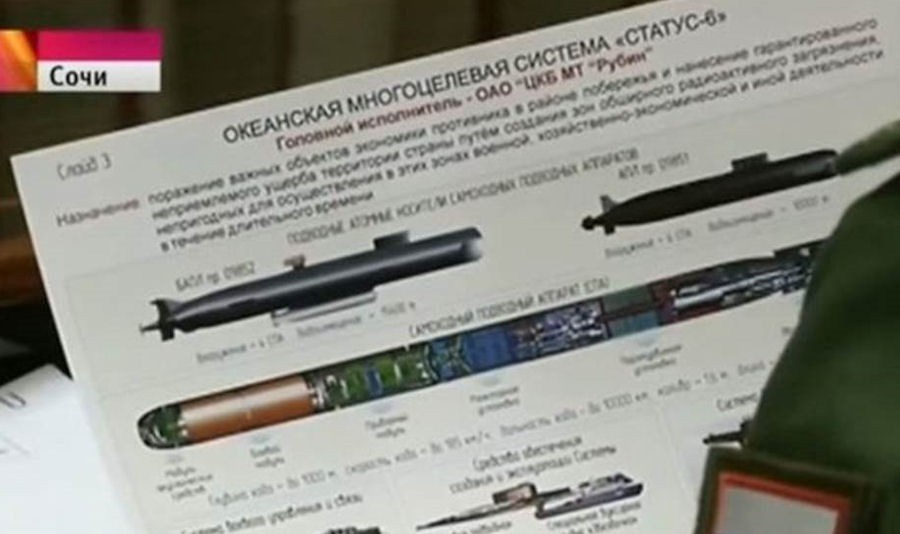
Russia’s 50 megaton “Status 6” drone torpedo

Let there be no doubt, a war between NATO and Russia would only end one of two ways: With Russia eventually suffering a defeat because it lacked the economic power it needed to sustain combat operations on such a large scale… or with a nuclear exchange that would end our world as we know it. As bad as the nuclear option may be, victory in a conventional war likely wouldn’t be much to celebrate either. Russia and its allies would all but certainly exact a punishing tole on American and NATO forces, likely quickly capturing the Suwalki Gap and severing the Baltics from the rest of Europe as the conflict ballooned away from Ukraine and into what would have a strong likelihood of becoming a new World War.

It’s clear, then, that war is an unacceptable outcome that leaders on both sides of this conflict are likely hoping to avoid (while continuing to pursue their own geopolitical interests, of course), but if a conflict were to result, it’s important to have a clear-eyed perspective on just how capable Russia’s advanced weapons, tanks, and aircraft really are.

Russia emphasizes hybrid warfare because it’s cost effective
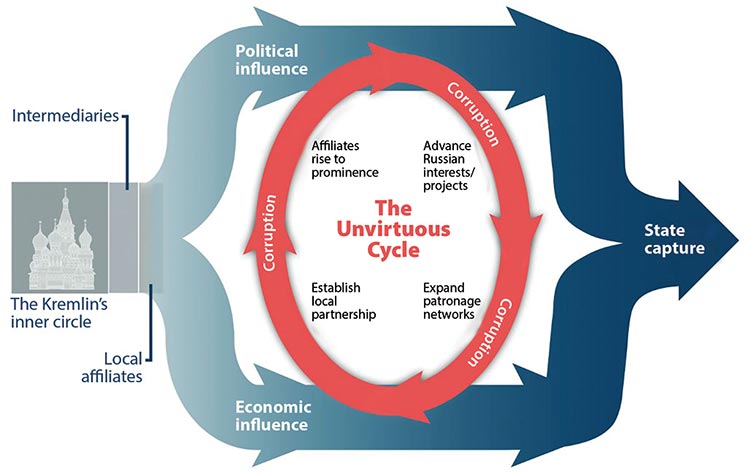
During the Cold War, the United States and Soviet Union played the roles of competing super powers, with each nation investing heavily into new weapons technology they hoped would give them a decisive edge against the competition. Of course, the Soviet Union fell in the early 1990s, leaving the Russian people to pick up the pieces and the United States reigning as the world’s sole remaining super power.

Less than a decade after the fall of the Soviet Union, Vladimir Putin (a Russian politician and former KGB agent) rose to power, and although he’s shuffled titles periodically to avoid term limits, the nation has remained under his control in one form or another since 1999. Putin is a popular figure among large portions of the Russian people (thanks in no small part to a government-controlled media) but internationally, he’s seen as an aggressive leader with few qualms about ending lives as he pursues his vision of restoring his nation to its former Soviet glory. Over the years, Putin has been tied to a number of public assassinations and attempts, including the poisoning of a former Russian military intelligence officer turned MI6 informant (Sergei Skripal) on English soil in 2018.
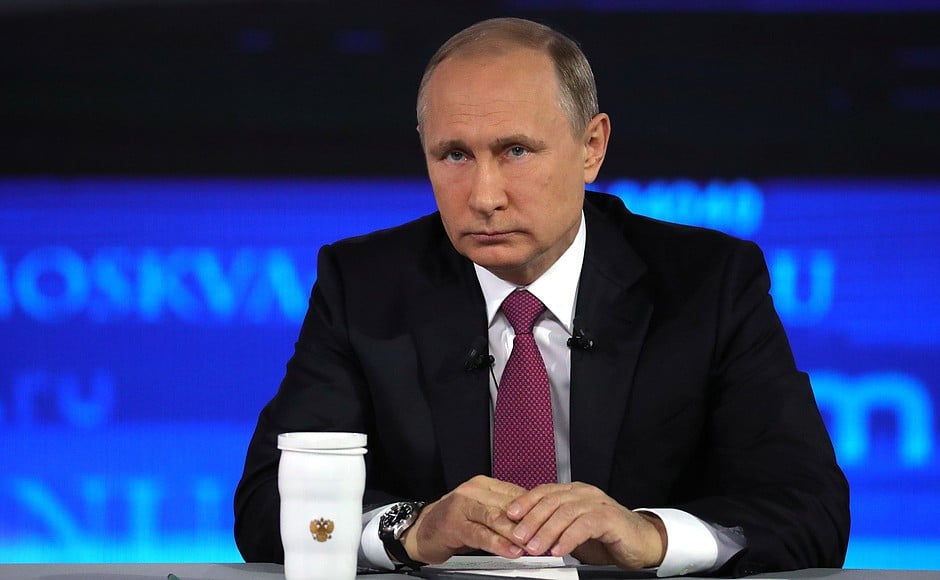
Putin
Russian President Vladimir Putin (Courtesy of the Kremlin)

It’s because of Russia’s aggressive foreign policy that the nation’s economy has struggled to find new footing since the end of the Soviet glory days. Russia’s military annexation of Crimea from Ukraine in 2014 serves as one significant example of Russia’s knack for circumventing international norms through the use of irregular warfare. Russia’s attempts to influence foreign elections in Europe and the United States serve as yet another.

Russia’s aggresive foreign policy has hindered military modernization
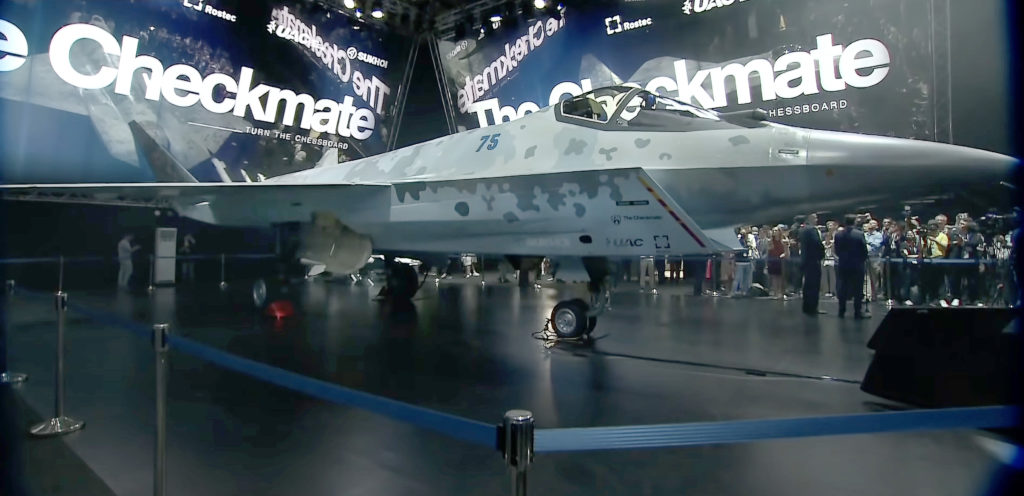
Su-75 Checkmate

Sanctions placed on Russia by the international community following those and countless other incidents have left the Russian military with an ever-shrinking pot of money to invest in Putin’s force-wide modernization efforts. As a result, Moscow has adopted a “best bang for their buck” mentality, with less emphasis placed on actual combat operations, and far more placed on developing high profile weapons that draw global attention. That attention helps Russia posture as though they remain a potent global military threat, while also bolstering foreign weapons sales—providing the nation’s military apparatus with a much-needed injection of funds.

But not all of these “advanced” Russian weapons are quite what they seem. In fact, many of Russia’s high profile technological leaps in military prowess have since proven to be little more than publicity stunts. The Su-57, Russia’s 5th-generation stealth fighter, exists in too few numbers to matter even if it were as capable as they claim. Expert assessments place their premier stealth fighter’s radar cross-section as about comparable to that of America’s 4th generation F/A-18 Super Hornet, and their recently unveiled Checkmate fighter, if it ever flies at all, will almost certainly be even less stealthy.


Likewise, Russia’s T-14 Armata main battle tank may also prove to be among the best in the world, if only Russia could afford to build any. Like the Su-57, Russia has been unable to produce the T-14 in any appreciable numbers, with the most recent projections saying serial production will begin sometime this year. It’s important to note that the Su-57 may yet to prove highly capable at the sorts of missions it was designed to fly, and the T-14 would offere a marked improvement over Russia’s existing tank platforms… but a lack of funding has left these points moot.

But while capable platforms like those wait patiently for enough Rubles to kick-start production, these other headline-grabbing efforts made a splash in the media in recent years, only to quietly fail once the cameras were off.

The Uran-9 Infantry Drone
advanced Russian weapons
(WikiMedia Commons)

Back in 2018, Russia’s state-owned media outlets were aflutter with reports of the Russian military’s new advanced infantry support drone dubbed the Uran-9. Shortly after the platform was unveiled, Moscow announced that they were deploying the drone mini-tank to Syria, where it would participate in combat operations in support of Bashar Al Assad’s Russian-backed regime.

At first glance, the Uran-9 looked like something to behold. The tread equipped mini-tank boasts a 30mm 2A72 autocannon as it’s primary weapon, along with a 7.62-chambered PKTM machine gun, four anti-tank missiles and 6 thermobaric rocket launchers. It was designed to work via remote control and, according to Russian media, was built to withstand heavy fighting in urban environments.

It wasn’t until a few months later that reports of just how poorly the Uran-9 performed in combat started to bubble to the surface. In a Russian Security Conference held later in 2018, A.P. Anisimov, a Senior Research Officer from the 3rd Central Research Institute of the Russian Defence Ministry, discussed a laundry list of issues the Uran-9 encountered before offering his final conclusion that the platform simply couldn’t do the tasks it was built to do.

Aside from lots of structural problems with the chassis and weapons platforms, operators regularly lost control of the Uran-9 when line-of-sight was obstructed. The platform also used a non-stabilized video camera for targeting, which Anisimov described as making identifying, tracking, or engaging any targets at any distance nearly impossible.
The Nuclear-Powered ‘Skyfall’ Cruise Missile
advanced Russian weapons
(DoD Image)

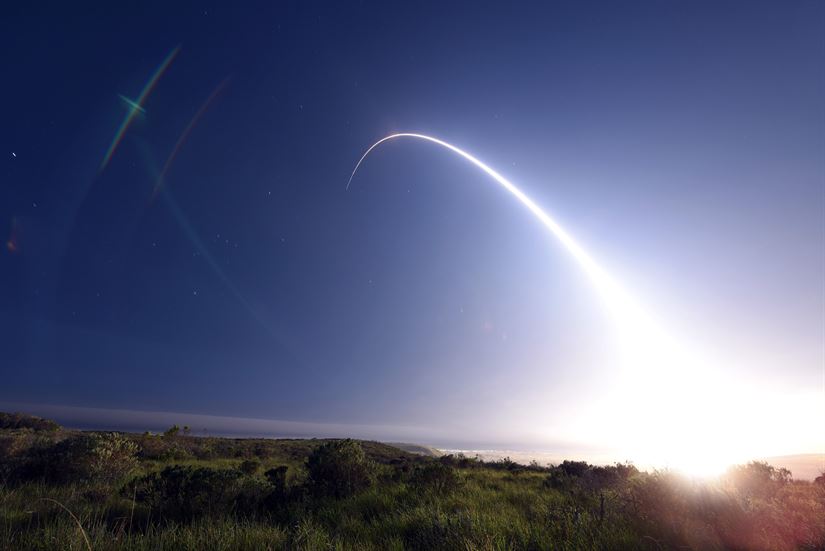
Vladimir Putin delivered a national address in March of 2018 that, among other things, touted a number of new and highly advanced Russian missile systems. Although he discussed a number of missiles, it was the nuclear-powered cruise missile NATO has dubbed the SSC-X-9 Skyfall (known in Russia as the 9M730 Burevestnick) that caught the most attention.

According to Putin, this new missile would have a near-unlimited range thanks to its on-board nuclear reactor. That would theoretically allow the missile to strike any target in the world, as well as allowing for evasive maneuvers to avoid being intercepted by anti-missile defense systems.  As a result, Putin called it “invincible.”
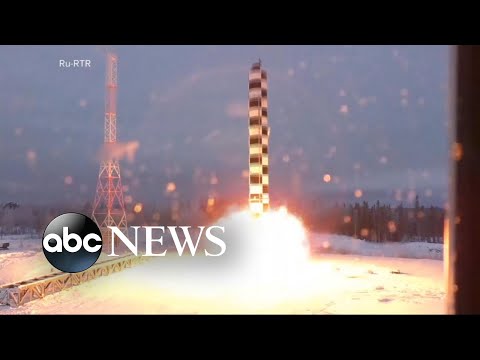
The idea of a nuclear-powered cruise missile wasn’t particularly new. The United States experimented with nuclear propulsion systems in the 1950s, but scrapped the effort out of concerns that the nuclear-system could spread radiation on anything below its flight path. Concerns about the safety of such a propulsion system were once again brought to light after a Skyfall cruise missile went missing after its nuclear engine failed to fire and the missile fell into the ocean. Another explosion at Russia’s Nenoska test range was believed to have involved the same missile. It reportedly killed five to seven scientists.

American intelligence agencies have spoken publicly about Putin’s “invincible” missile, pointing out that thus far, the nuclear propulsion system has failed to propel the missile in every test launch Russia has attempted.
The Flying AK-47 (Shotgun Drone)
advanced Russian weapons
RU Patent (11) 113562 (Kremlin)

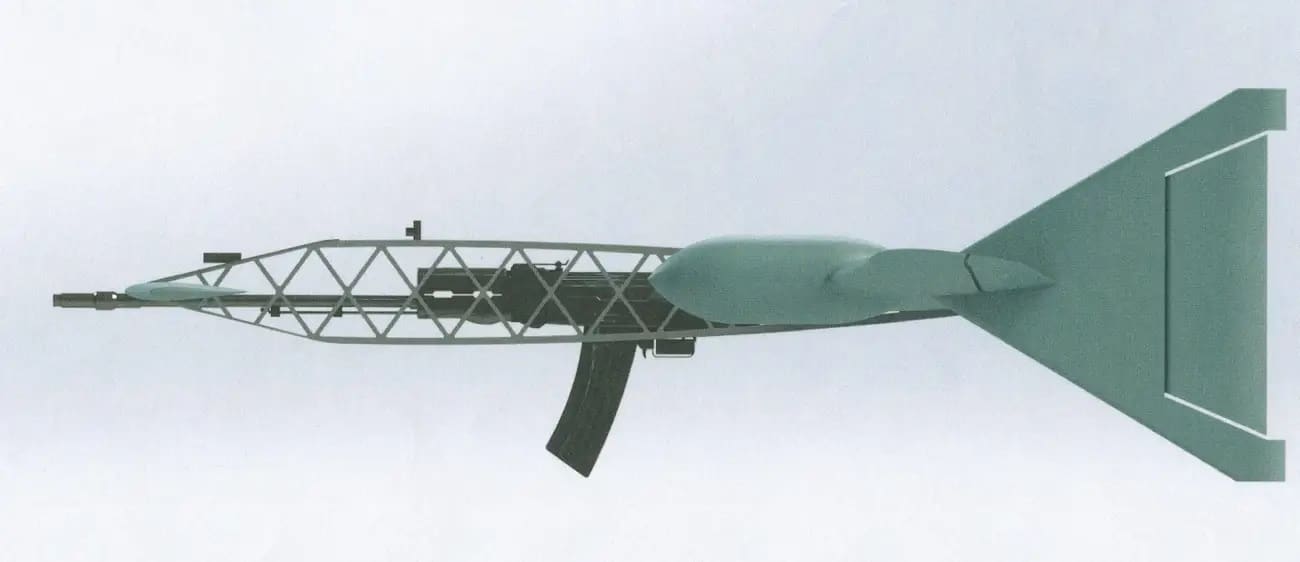
In 2019, Russian media unveiled what they claimed would be a game-changing technology: a new drone that, at first glance, appeared to be equipped with an AK-47, but that later turned out to be intended for use with an AK-style Carbine Vepr-12 Hummer 12 gauge shotgun. The small drone was reminiscent of a remote-controlled airplane, with what looked like a standard issue rifle occupying the majority of the fuselage. Of course, building an aircraft around a weapons system worked for the A-10 Thunderbolt II, but a 12-gauge shotgun is no GAU-8 Avenger.

At first glance, the drone seemed pretty cool, but the more you think about it, the less effective a single flying shotgun with a 10-round magazine could really be in practically all combat situations. Unlike quad-rotor drones that can hover in place and take careful aim, this drone has to maintain forward momentum to keep from crashing–which makes it extremely difficult to level the weapon directly at a target. That became even more apparent when video was released of the drone in action.

This drone might seem like a whole lot of fun to operate, but it certainly won’t tip the scales of any conflict in Russia’s favor.


Wednesday, December 31, 2014

I survived camping............and a quick missive on class warfare

Well I am back, I survived camping with the Boy Scouts and am glad to be home.  While I was there , I assisted on the Rifle and Shotgun Range,  I didn't think it was a big deal...


    They thought enough of it to give me this cool coffee mug,  I was floored by the gesture and was very touched that they thought enough of me and my effort to do that.    Thank you very much to Mac and Mike and crew.
      Nothing like getting home and starting the "Lets clean stuff up" part.  We still have the Christmas tree up and I will start working on that part of it shortly.

    
    The above poster is actually taken from the archives of the Old Soviet Union.  I remember reading books in the late 70's and early 80's that the Soviets under Joseph Stalin fomented class warfare on a massive scale, his target was the Kulaks, landowning Peasants under the Czars. basically the middle class of Russia   He wanted to break the Kulaks up and seize their land for the collective farming that was necessary for the communist ideals to work.  Joseph Stalin and the communist party stirred up major class warfare and envy against the Kulaks, and when the people got mad, he then used the power of the state to tax them out of their wealth, then seize their land..."For the good of all", and punish the rich,   was the logic of the seizures.     Once the Kulaks were gone, then he started the massive collective farms that was necessary,  The problem was that the collective farming didn't work and it caused massive famines especially in the Ukraine and other areas of the Soviet Union.  Entire villages were wiped out, the surviving Ukrainians for this reason initially favored the Germans when they invaded...until the short sighted policies of the Nazi's turned the people against them.  The money that was seized from the Kulaks was used to finance the heavy industry that seemed to favor the communist ideals.    Funny how I am seeing the same thing again since obungler got elected.

Monday, September 1, 2014

Stalin.... and his use of body doubles.....

I ran across this article reading another historical magazine, and figured I would expound upon it.   I knew for a long time that Stalin had employed "doubles" to guard against assassination, and to do things that he didn't want to do.  Here is a picture of Stalin visiting Berlin.


The truth of the matter was that this was reenactment in 1949 and that wasn't Stalin.  Stalin never went to Berlin as I understand it.  he had a fear of flying and used trains exclusively, for his meeting in Potsdam and in Yalta. 
Mikheil Gelovani


In 1938, Gelovani first portrayed Stalin in Mikheil Chiaureli's The Great Dawn. His performance won him the Order of the Red Banner of Labour on 1 February 1939 and the Stalin Prize during 1941. Afterwards, Gelovani "established a monopoly on the role of Stalin", which he continued to portray in twelve other pictures until the premier's death.Gelovani greatly resembled Stalin physically, except in his stature: he was much taller than the latter. Reportedly, he was not the premier's favorite candidate for depicting himself on screen: since he was Georgian, he mimicked Stalin's accent "to perfection". Therefore, the leader personally preferred Aleksei Dikiy, who used classic Russian pronunciation. However, Gelovani appeared in his role much more than Dikiy. According to the The Guinness Book of Movie Facts and Feats, Gelovani had probably portrayed the same historical figure more than any other actor. When the two met, the general secretary told the actor: "you are observing me thoroughly... You do not waste time, do you?"
Soviet cinema played an important part in cultivating the leader's cult of personality: from 1937 and onward, in a gradual process, Stalin's reign was legitimized by depicting him as Vladimir Lenin's most devout follower[ and by positively presenting historical autocrats - like in Sergei Eisenstein's Ivan the Terrible.


Due to his identification with Stalin, Gelovani was barred from playing other roles in cinema; he was not allowed to depict "mere mortals." From 1942 to 1948, he was a member of the cast in the Gorky Moscow Art Theatre. During World War II, the personality cult was abandoned in favor of patriotic motifs, but returned already at the war's late stages, and with greater intensity than ever after 1945: Stalin was soon credited as the sole architect of victory. In the postwar films in which he portrayed him - The Vow, The Fall of Berlin and The Unforgettable Year 1919 - Gelovani presented the leader as "a living god."
The actor was awarded three more Stalin Prizes, all of which were granted for his performances of the premier in film: in 1942 for The Defence of Tsaritsyn, in 1947 for The Vow and in 1950 for The Fall of Berlin. On 3 June 1950, he was given the title People's Artist of the USSR.
After Stalin's death in 1953, Gelovani was denied new roles in films, since he was completely identified with the character of the dead ruler. From 1953 until his death in 1956, he acted in Moscow's State Theater for Film Actors. Andreas Kilb wrote that he ended his life "a pitiful Kagemusha" of Stalin. Gelovani is buried in the Novodevichy Cemetery, alongside his wife Ludmila.
Following Nikita Khrushchev's Secret Speech in 1956, most of the pictures he appeared in as Stalin were either banned or had the relevant scenes removed.


This is a clip of the Soviet Propaganda film that was used to help create this cult of personality around Stalin as the patient father figure....despite the gulags, the NKVD terror raids and other things he did to totally subdue Russia.  it was almost a "Stockholm Syndrome". type of effect that he had.


Felix Dadaev (left) in the 1940s and the real Joseph Stalin (right).
Rumors circulated in Russia for decades that Joseph Stalin had a “twin” who replaced him during certain situations. After decades of rumors, finally Stalin’s decoy decided to talk. Felix Dadaev, a former dancer and juggler was ordered to the Kremlin to work as Stalin’s body double. For more than half a century, Dadaev remained silent, fearing a death sentence should he dare to open his mouth. But in 2008, at the age of 88, and with the apparent approval of the Putin regime, he finally came forward to write his autobiography. Dadaev’s autobiography explains that he was one of four men employed to impersonate the supreme leader, taking his place in motorcades, at rallies, on newsreel footage etc.
Dadaev was born in the Caucasian highlands of Dagestan and when his family moved to Grozny, in Chechnya, he began taking ballet lessons. When the Second World War started, he was required to fight and was so badly injured during the Soviet liberation of Grozny in 1942 that his family was told he had been killed. He was one of seven corpses delivered to a hospital, but he and another guy were still alive. Fortunately, he got better, though that “death” was the start of a strange double life. Soon his resemblance to 60-year-old Stalin (which got him teased in school) caught the eye of Soviet intelligence agents, who started using him to save the real Stalin from assassination plots and lame public ceremonies.

Even Stalin’s closest comrades couldn’t spot the imposter.

Just into his 20s, Dadaev was a great deal younger than Stalin, but make-up and the strain of war meant that he could pass as a 60-year-old. “We had all experienced so much suffering that I looked much older than I was”, Dadaev said. Trained at the personal request of Stalin, Dadaev attended rallies and meetings across Soviet Union wearing the leader’s trademark Red Army cap and heavy overcoat encrusted with medals. He watched movies and speeches of Stalin to perfect the mimicry of his movement and intonation. Some say that Dadaev, like other Stalin’s body doubles, was trained by Alexei Diky, an actor who played the role of Stalin in propaganda films.

Felix Dadaev in his military uniform.
In an age before media dominated, he didn’t have to mimic perfectly Stalin’s vocal inflections, just his look and mannerisms. And he pulled it off so well even Stalin’s closest comrades couldn’t spot the imposter. “By the time my make-up and training were complete, I was like him in every way, except perhaps my ears. They were too small”.
Interesting facts:
  • Another Stalin’s body double was a man identified only as “Rashid”. Rashid so closely resembled the dictator that when he joined the army he was dismissed almost immediately. Even his facial scars nearly matched the Soviet leader’s pockmarks from a bout with smallpox. He spent two years studying with Alexei Dikiy. Rashid claimed there were other Stalin lookalikes employed by the NKVD (predecessor of KGB), although he never met any. He claimed to have heard of another Stalin double who was hired to live in the dictator’s dacha outside of Moscow in the late 1940s and 1950s when Stalin was dying. After Stalin’s death in 1953, Rashid moved to a provincial city and shaved off his mustache and gradually became bald. Yet even then the resemblance proved so striking that he often received stares on the street, they were afraid that the dictator had gone into hiding with them.
  • A man who looked so much like Josef Stalin
    that he was hired to sit in for the Soviet dictator
    at meetings and banquets has died in the southern city
    of Krasnodar. He was 93. The newspaper Rabochaya Tribuna
    identified the Stalin double only as Rashid and said without
    explaining further that he died "several days ago."


    Later Rashid made a career as Stalin’s double. Officials
    at the KGB heard of his adventures at the Army recruiting office and
    eventually tracked him down. Rashid spent 2 years studying with Alexei
    Dikiy, an actor who played the role of Stalin in films. But Rashid's role was to
    play Stalin "live," at public functions such as banquets. (Was Dikiy jealous?
    Or too busy playing Stalin in the movies to play him in real life?)
    No mention is made in the obituary of the role Stalin
    played in his hiring, if any, or if Rashid was ever
    allowed to meet or study the man he was to impersonate.
    He may have been taught to impersonate by Stalin’s first impersonator,
    and by images of that impersonator on the silver screen.

    There are also other doubles mentioned in the obituary,
    doubles multiplying into quadruples and more. It’s not
    at all clear what the total number of Stalin’s doubles actually was (were?).
    Rashid never met with any other Stalin lookalikes except Dikiy,
    but he told of another Stalin double who was hired to live
    in the dictator's dacha outside of Moscow in the late 1940s
    and 1950s when Stalin was dying. This double filled in
    for Stalin for media events and other times when Stalin
    had to meet government functionaries and others.
     
 I was unable to find any photo's of "Rashid"
Perhaps some of the "Official" photo's of Stalin were of him...I don't know.

Saturday, June 28, 2014

Restored MIG-3 flies again *revised*

I had some photo issues...I hope I fixed them.   Sorry Murphy...

One of the sites I have bookmarked is "EnglishRussia"  It is a website that has stuff that you can see in Russia.  It is interesting to see equipment that I have only seen in "Friend or Foe" cards actually see them in color.  I am a staunch American but I would like to travel to Russia and I would like to go to St Petersburg check out all the museums and stuff where Peter the Great hung out.and go to Volgograd(Stalingrad) and check out all the historical stuff. One thing I can say about the Russians, they take their history seriously.
    I ran across this while I was catching up on my blogging and other peoples postings and saw this and really liked it.  Perhaps Murphy would roll with an "Old Mig" instead of a O2-birddog..

  Here is some more stuff on the Mig's:

   
The Mikoyan-Gurevich MiG-3 (Russian: Микоян и Гуревич МиГ-3) was a Soviet fighter aircraft used during World War II. It was a development of the MiG-1 by the OKO (opytno-konstruktorskij otdel — Experimental Design Department) of Zavod (Factory) No. 1 to remedy problems that had been found during the MiG-1's development and operations. It replaced the MiG-1 on the production line at Factory No. 1 on 20 December 1940 and was built in large numbers during 1941 before Factory No. 1 was converted to build the Ilyushin Il-2.
On 22 June 1941 at the beginning of Operation Barbarossa, some 981 were in service with the VVS, the PVO and Naval Aviation. The MiG-3 was difficult to fly in peacetime and much more so in combat. It had been designed for high-altitude combat but combat over the Eastern Front was generally at lower altitudes where it was inferior to the German Messerschmitt Bf 109 as well as most modern Soviet fighters. It was also pressed into service as a fighter-bomber during the autumn of 1941 but it was equally unsuited for this. Over time the survivors were concentrated in the PVO, where its disadvantages mattered less, the last being withdrawn from service before the end of the war.


Soviet KV-1 Tank just pulled from a river in Russia.
Another one...In a Finnish Museum.

      This article is from them including the pictures and "English is a second language" sentence structure.  I am not criticizing, just an observation.

     Remember how we showed you a WW2 tank that they pulled out of the river? Yes, that was their fifty-fifth operation of pulling large WW2 machinery from the bottom of Russian rivers and lakes. However this is something different – this time another group of enthusiasts have pulled a real WW2 plane out of the lake and fully repaired it so that the plane that you can see in the air in the picture above is a real WW2 plane they recovered.
The group of people went to the no man’s land in distant parts of Russia and pulled the old war plane from the bottom of a lake which didn’t belong to anybody, then restored it investing some of their resources, and ultimately got a free plane!
See how those Red star wings looked when they were freshly recovered from the lake mud. I find it interesting how they pull them out –  they put car tires on the wings and around the body of the plane, then inflate them so that the plane rises up from the bottom. See it here:


This particular plane was found in the Murmansk region, the northern part of which is close to Finland and Norway. Here are those inner car tires on the wings.

As soon as they raised the plane they use pressurized water to remove the lake mud from the body.

They say that the plane starts rusting as soon as it gets into the open air.


So they rush loading it into the truck.

The truck takes the plane to the train station where it is loaded onto the train car and destined to travel a few thousand kilometers to the Siberian city of Novosibirsk. There, in a special factory, the plane is going to be restored and turned into a flight legal machine.

Here, it’s being restored.

And rebuilt. It might take a few months to finish this job!


Everything looks like new! There is a shot of the same cockpit when it was fresh out of the water, you can compare to its new look now.


Finally, putting wings back on the plane.

And getting the plane out to the street for the first time.

After everything is checked and painted plane is ready for its first flight. First time since it was shot down tens of years ago, back in WW2.


Here we go! By the way this is a MiG plane.


Friday, September 13, 2013

Syria and how our President got punked by Putin...


Well, if you’re one of those out there who has thus far failed to see the dominance of Vladimir Putin in the Putin/Obama relationship … the light surely must be shining now.  In the last 24 hours The Chicago Messiah has managed to show not only America, but the rest of the world, just how weak he is on the world stage.
            A bit of a recap here to show you what kind of a bind Obama was in:
  • Obama goes off-teleprompter (always a dangerous thing) and comes up with this “red line” gaff.  He is then on the record as saying that Assad will be dealt with harshly if he dares to use chemical weapons.
  • Assad uses (or at least Obungler and Flipper say he used) chemical weapons against his own people.
  • Obama realizes how badly he screwed up with his “red line” comment.  His credibility, whatever is left of it, is on the line.
  • Obama seeks help from Great Britain.  For the first time since 1792 the British Parliament refuses to go along with a request from the Prime Minister to use force.  Obama is in this on his own.  I guess repeatedly being dissed by Obama has its repercussions.
  • Obama needs someone to stand with him on this, so he tells the nation he will seek an approval vote for the Congress.  Nothing like pushing the possibility of failure on Congress.  It soon becomes clear the congress is not going along.  The Senate .. maybe … but not the house.  Obama is feeling even more lonely and exposed.  I guess Congress don't want to be the fall guy for another Obungler failure.
  • Obama calls in the campaign team, Plouffe et al.  It’s not policy he’s looking for, it’s words.  They tell him to tell the world that the red line isn’t really his.  Fail.It doesn't matter that there is proof all over youtube that Obungler drew the red line.  Perhaps the media will cover for him...as they always have.
  • Virtually all polls taken of the American people show strong opposition to Obama’s planned attack on Syria.  We as Americans know that there is no American interest to be served getting involved.  The attitude is basically "they are killing each other....not us."

      Putin (background – ass-kicking KGB operative) sees a way to take advantage of this situation to both embarrass and establish a stronger dominance over 0bama (background – pot-smoking community organizer and freeloader).  Putin heard John Kerry make a bit of a mistake at a presser.  Flipper is asked what Assad can do to avoid an attack.  The Flipper suggests that Assad could turn over his chemical weapons.  The White House immediately refutes the idea, and Flipper’s handlers start trying to walk the comment back.  But Putin was listening … and he makes his move.
      Putin, loyal to his primary goal here is to keep his pal Assad in power, immediately seizes on Kerry’s idea and makes it a firm proposal.  Just that quickly Putin takes control.
      Now Obama sees a way out.  He knows that Putin is controlling the situation here, but at least now he can avoid an embarrassing congressional “no” vote, the first in American history.  But hmmmmmm.  Maybe Obama can get some of his grove back here.  So he tells us that he was actually talking about this plan for Assad to give up his chemical weapons when he was meeting with Putin last week!  Yeah … sure.

      So …. Here we are.  Harry Reid has already put off the Senate vote.  After tonight’s speech by Obama Reid will probably announce that the vote is postponed indefinitely.  The House may go ahead with a vote, but in light of Putin’s little parlay that vote will be cast as nothing more than an attempt to embarrass the anointed one.
      An agreement will be reached between the ass-kicker, the community organizer and the gasser for Syria to turn over “all” of its chemical weapons.  Of course “all” of the weapons will not be turned over.  There will be inspections, but Putin will work with Assad to make sure the inspections are not too thorough.  In the end Assad will keep a good portion of those chemical weapons, and Putin will supply him with even more arms including the S-300 series missile system.
       Down the road chemicals weapons will be utilized again and Assad can say " I turned in all the chemical weapons...Must be some rebel faction using it."   
     Obama's foreign policy is like an episode of the "Keystone Cops", total amateurs bumbling from one crisis to another most of them due to their own making.

Thursday, April 11, 2013

"Moscow Rules"

I have had several references  made to "Moscow Rules" so I googled them and this is what I came up with.  It is a good rule of thumb kinda like my "Gibbs Rules" that I had posted a couple of months ago.  The Pictures are compliments of "Bing"  The Rules are compliments of Wikiuniversity


Whether fiction or fact, the Moscow Rules are often referenced and seldom printed. Said to have been developed by CIA for making sure their operatives were not sent like lambs to the slaughter to tough spots like Moscow, the Moscow Rules are an incredibly profound set of pragmatic guidelines for effective tradecraft. They are exceptionally difficult to find online in their entirety. Here, all 40 of the Moscow Rules are preserved. This page provides an opportunity to seminar students to elaborate upon and give examples of the rules in operation.


The Moscow Rules

Please use this Template for commentaries!

  1. Assume nothing. Commentary
  2. Technology will always let you down. Commentary
  3. Murphy is right. Commentary
  4. Never go against your gut. Commentary
  5. Always listen to your gut; it is your operational antennae. Commentary
  6. Everyone is potentially under opposition control. Commentary
  7. Don’t look back; you are never completely alone. Use your gut. Commentary
  8. Go with the flow; use the terrain. Commentary
  9. Take the natural break of traffic. Commentary
  10. Maintain a natural pace. Commentary
  11. Establish a distinctive and dynamic profile and pattern. Commentary
  12. Stay consistent over time. Commentary
  13. Vary your pattern and stay within your profile. Commentary
  14. Be non threatening: keep them relaxed; mesmerize! Commentary
  15. Lull them into a sense of complacency. Commentary
  16. Know the opposition and their terrain intimately. Commentary
  17. Build in opportunity but use it sparingly. Commentary
  18. Don’t harass the opposition. Commentary
  19. Make sure they can anticipate your destination. Commentary
  20. Pick the time and place for action. Commentary
  21. Any operation can be aborted; if it feels wrong, then it is wrong. Commentary
  22. Keep your options open. Commentary
  23. If your gut says to act, overwhelm their senses. Commentary
  24. Use misdirection, illusion, and deception. Commentary
  25. Hide small operative motions in larger non threatening motions. Commentary
  26. Float like a butterfly; sting like bee. Commentary
  27. When free, In Obscura, immediately change direction and leave the area. Commentary
  28. Break your trail and blend into the local scene. Commentary
  29. Execute a surveillance detection run designed to draw them out over time. Commentary
  30. Once is an accident; twice is a coincidence; three times is an enemy action. Commentary
  31. Avoid static lookouts; stay away from chokepoints where they can reacquire you. Commentary
  32. Select a meeting site so you can overlook the scene. Commentary
  33. Keep any asset separated from you by time and distance until it is time. Commentary
  34. If the asset has surveillance, then the operation has gone bad. Commentary
  35. Only approach the site when you are sure it is clean. Commentary
  36. After the meeting or act is done, “close the loop” at a logical cover destination. Commentary
  37. Be aware of surveillance’s time tolerance so they aren’t forced to raise an alert. Commentary
  38. If an alert is issued, they must pay a price and so must you. Commentary
  39. Let them believe they lost you; act innocent. Commentary
  40. There is no limit to a human being’s ability to rationalize the truth.Commentary


Thursday, January 31, 2013

City renames itself Stalingrad...for a while


I am a history nut, I would like to see Volgograd and St Petersburg and check out the museums.  This stuff is on my bucket list.  I may pile on Putin, but the Russian people I respect a lot, and they take their history seriously.   I got this off the AP wire.  The pics are compliments of "google"

    
MOSCOW (AP) — The southern Russian city where the Red Army decisively turned back Nazi forces in a key World War II battle will once again be known as Stalingrad, at least on the days commemorating the victory.
The city was renamed Volgograd in 1961 as part of the Soviet Union's rejection of dictator Joseph Stalin's personality cult. But the name Stalingrad is inseparable with the battle, in which at least 1.25 million people died.
Russia on Saturday plans extensive ceremonies to mark the 70th anniversary of the battle's end.
The Volgograd city council passed a measure Thursday to use the name Stalingrad in city statements on the commemoration day, on Russia's May 9 Victory Day and on four other days connected with the battle, the ITAR-Tass news agency reported.


Friday, January 11, 2013

Russia commissions new nuc boat

Russia is flexing their muscle and we are cutting ours.   Funny how things seem to be going.  Is this a resurgence of the Cold War?  Russia has always had naval ambitions, this is a holdover from the time of the Tzars.  From Peter the Great challenging the Swedish navy for control of the Baltic to Tsarina Catherine hiring American Revolutionary war hero and father of the American Navy John Paul Jones to assist in her endeavors, Russia has always had a maritime fleet.  I wonder if this is a thing to be concerned about.  Russia having a new boomer and if it changes the balance of power especially with the U.S. cuttings its strength to be stylish with the environmental and other leftist causes.   I have studied Russia back when they were the Soviet Union, how they fought, their culture and a bit with their language.  I would like to actually go to St Petersburg and check it out along with Stalingrad since I am a fan of history.

MOSCOW (AP) — The Russian navy on Thursday hoisted its flag on a new nuclear powered submarine intended to form a key part of the country's future nuclear deterrent. It is part of an ambitious weapons modernization effort that comes as the military is preparing for a naval exercise off Syria's shores.
Defense Minister Sergei Shoigu said the war games in the Mediterranean will be the biggest such exercise since Soviet times and involve ships from all four Russian fleets. The maneuvers have been seen as a demonstration of Russian naval power and a show of support for an old ally, whom Moscow has shielded from international sanctions.
Shoigu made the statement after commissioning the new Yury Dolgoruky nuclear submarine, which carries 16 Bulava intercontinental ballistic missiles. It is the first of a new series of Borei-class submarines that will replace older Soviet-built ships. Another submarine of the same type is currently undergoing sea trials and two others are now under construction.
President Vladimir Putin congratulated the Yuri Dolgoruky's crew during a conference call Thursday, hailing the ship as a "powerful weapon that will guarantee our security."
"Submarines of that class will become an important element of sea-based strategic forces, a guarantor of global balance and security of Russia and its allies," Putin said.
Commissioning of the new submarines is part of an ambitious arms modernization program that envisages spending over 20 trillion rubles ($657 billion) on new weapons through 2020.
Putin said Thursday that 4 trillion rubles ($132 billion) of that money will be spent on commissioning the new submarines and other navy ships. "Modernization of the navy is one of the most important priorities in our work to strengthen the armed forces," he said.
Putin said the navy will commission the total of eight Borei-class ICBM nuclear submarines and eight nuclear submarines of a different Yasen class intended to hunt for enemy ships.
The construction of the Yuri Dolgoruky, named after a medieval Russian prince who founded Moscow, began in 1995 but was slowed down by a post-Soviet economic meltdown and it wasn't until 2009 when it finally entered sea trials. The submarine's commissioning was delayed further by problems with the new Bulava intercontinental ballistic missile intended to arm it.
The Bulava experienced a string of failures during tests that dragged on for years, raising doubts about the future of the most expensive military project in Russia's post-Soviet history. Recent tests, however, have been successful, allowing the navy to finally commission the submarine.
Shoigu, who attended the commissioning of the new submarine at a shipyard in Severodvinsk, said that the Bulava is fully combat ready.
Facing questions about Bulava, Putin's chief of staff Sergei Ivanov also insisted that "the navy has no reason to doubt its reliability."
A hawkish Russian Cabinet member marked the ceremony with a tongue-in-cheek comment mimicking the Cold War-era diatribes of Soviet leaders. "You bourgeoisie tremble! You are screwed!" Dmitry Rogozin, deputy prime minister in charge of military industries, wrote on Twitter.
Rogozin, a nationalist politician in the past, has been known for his bellicose and sometimes crude statements.