Webster

The Constitution was made to guard the people against the dangers of good intentions." --American Statesman Daniel Webster (1782-1852)


Showing posts with label Historical Rifles. Show all posts

Friday, January 7, 2022

The Forgotten U.S. Infantry Rifles of WWI


I ran across this article on American Rifleman and it was very informative, I knew about the "American
Mausers" and they were used by the "Polar Bears" , but not about the other rifles.  I thought it was a heck of a good article.


The American Doughboy, immortalized in photo, film and statuary, is almost exclusively depicted wielding either the classic M1903 Springfield or the quickly adopted and fielded M1917 bolt-action rifles. While other iconic weapons of the era certainly loom large in the American consciousness, such as the M1911 pistol and M1897 shotgun, the two rifles have a special place in the hearts of historians, collectors and sportsmen the world over. This is perhaps because World War I was arguably the last rifleman’s war, during which the rifle’s place as the most lethal arm on the battlefield was completely eclipsed by artillery, machine guns and all manner of other technological contraptions.

While the M1903’s total production numbers reached 914,625 by Nov. 30, 1918, the 587,468  M1903 rifles on hand when hostilities started (as tallied by the Ordnance Department after the war) were woefully inadequate to supply the vast number of men that would eventually be drawn into service during the war. Famously, this caused Brig. Gen. William Crozier, the U.S. Army’s Chief of Ordnance, to request authority to being the “[e]mergency procurement of small arms other than of U.S. design." This led to the adoption of a slightly modified British P14 Enfield rifle, re-chambered for the U.S. standard Model 1906 cartridge (.30-'06 Sprg.) and designated the Model of 1917.
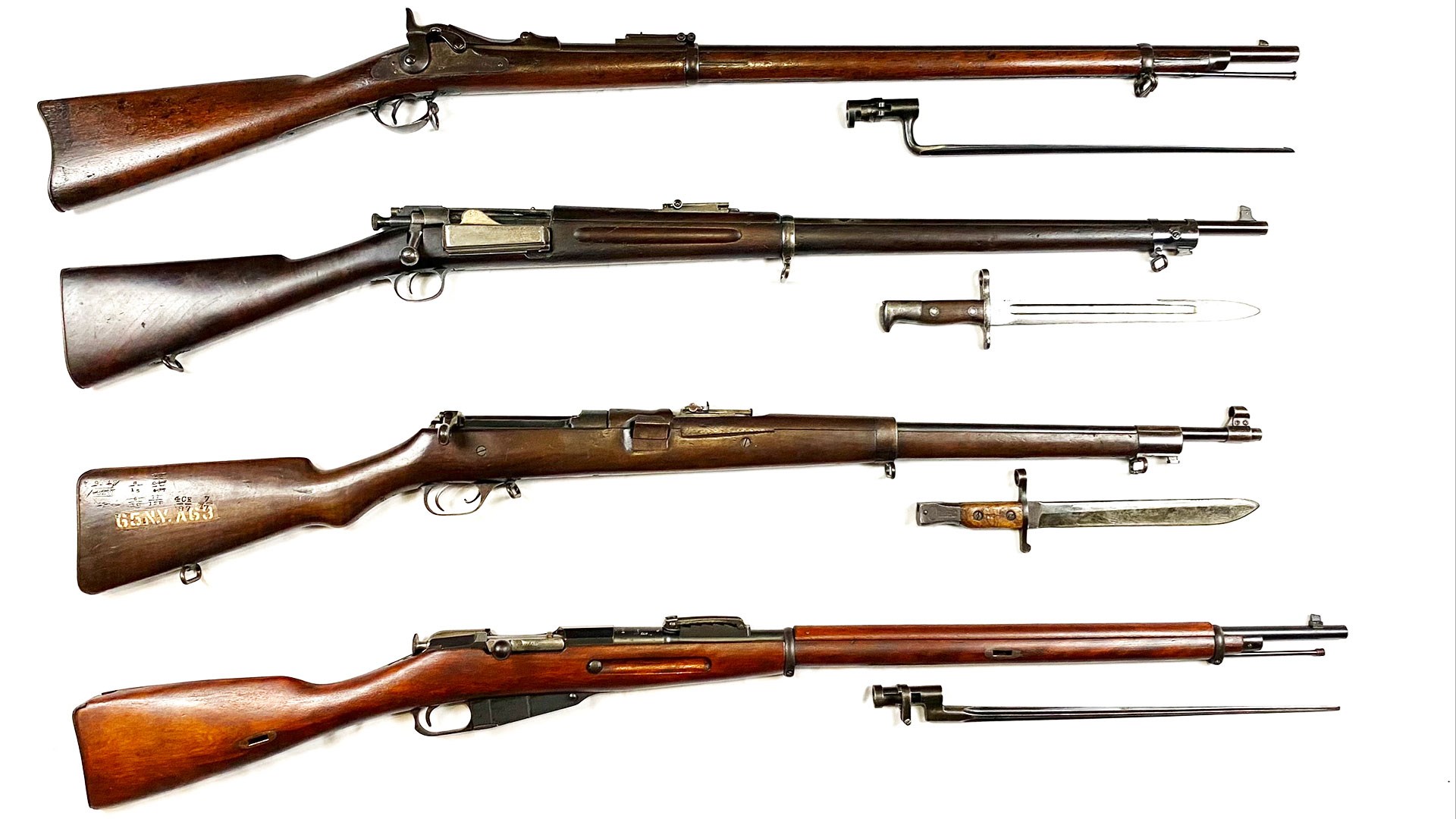
Four largely forgotten infantry rifles that were used in some capacity by the U.S. during World War I. From top to bottom: Springfield Trapdoor, Krag-Jorgenson, Ross Mk II*** and an American-made M1891 Mosin-Nagant rifle.

But this was not a painless or fast process, and between military and bureaucratic tangles along with serious parts interchangeability issues, the first production rifles didn’t start rolling off the line until September – approximately five months after both the decision was made to adopt it and the official US entry into the war. While the fielding of the M1917 is rightly regarded as an impressive industrial feat by the three commercial factories tasked with its production (indeed more M1917s saw field service than M1903s), the fact remained that in the meantime more rifles were still desperately needed to train recruits, guard stateside infrastructure and even deploy overseas.

“Very serviceable weapons, although not of the present standard model for the United States Army”

The first and most obvious choice to supplement the shortfall of “modern” rifles was the Krag-Jorgenson pattern of rifles, produced between 1894 and 1903 by Springfield Armory. While not quite as excellent as the M1903 that replaced them (the Krag lacks a charger loading system, utilizes a ballistically inferior cartridge and is overall longer), they were still very suitable weapons for use by an early 20th century military, as they fit the mold of small-bore and smokeless powder that had become the practical requirement.

After the adoption of the M1903s, Krag rifles remained the primary arm of many state military units as the M1903s slowly trickled out to the entire force. In addition, many were disbursed to various organizations that had a need for a recently obsolete military rifle for marksmanship training, drill practice or ceremonial use. A majority, however, were simply recalled to and stored in government arsenals awaiting either future use or disposition.  
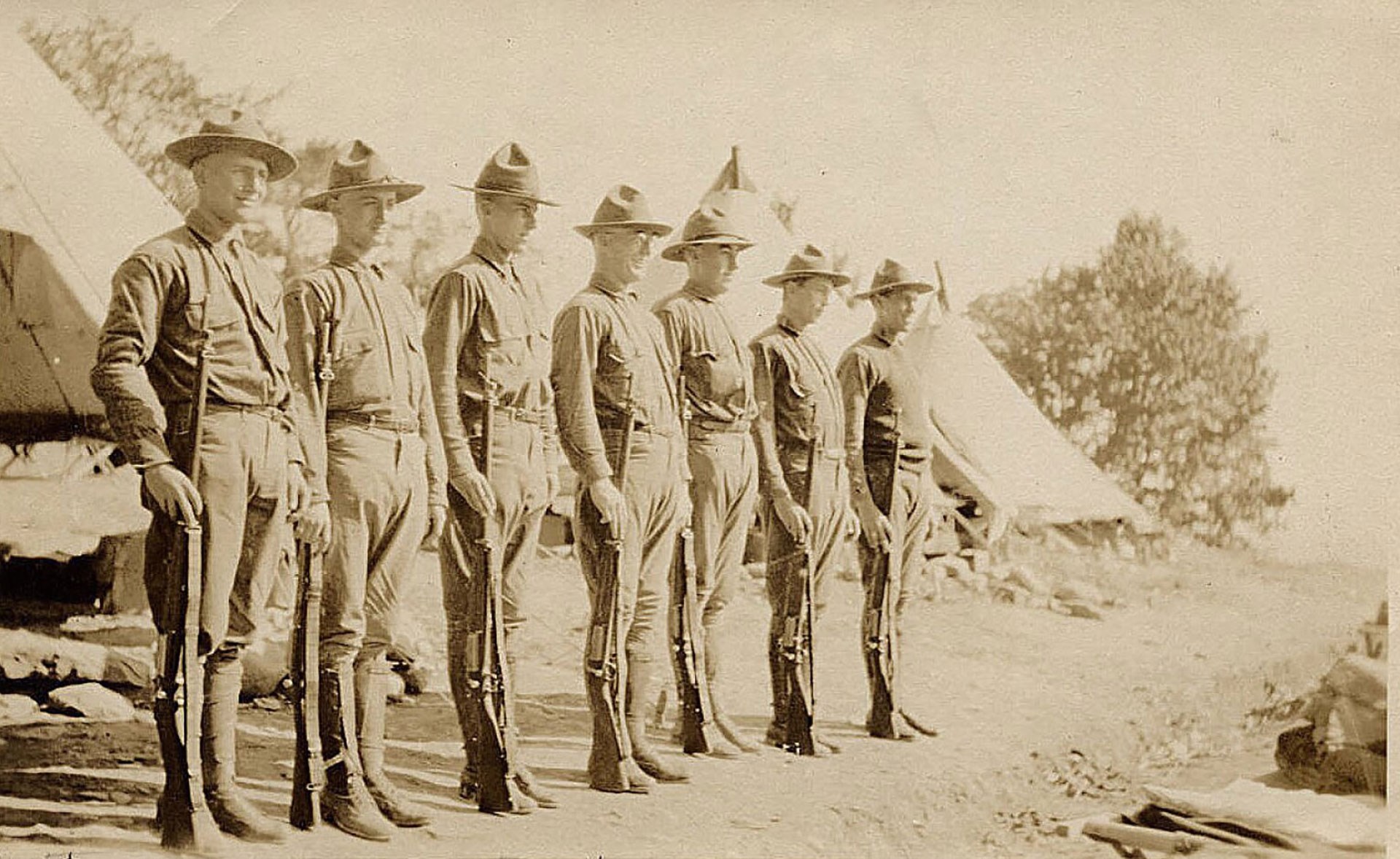
Men of the New York Guard standing at attention with their Krag-Jorgenson rifles.

In a May 17, 1917, memorandum from the Office of the Chief of Ordnance, they report that, “there are in in the possession of Educational Institutions 44,708 Krags and in the possession of Rifle Clubs 7,421." Because the shortage of rifles was apparent early on, Brig. Gen. Crozier stated that even though “it is not necessary that troops shall go into campaign armed with the [Krag] rifle, it is possible that some of these rifles may be required for drill and target practice," and he recommended that the issue of Krag rifles to groups “other than federal forces be suspended." Almost certainly acting under this advisement, the Secretary of War cut off rifle clubs, schools and colleges in an order dated May 9, 1917.

One would think that the rifles held by the federal government would be the easiest to put into immediate service, since they just needed to be brought out of storage – yet they weren’t always in “fighting ready” condition. In the same May 17 memorandum, the Ordnance Department reported that, “There are on hand approximately 210,000 Krag rifles and carbines, of which 102,000 are serviceable," and that, “The unserviceable guns and ammunition require overhauling and putting in shape." 
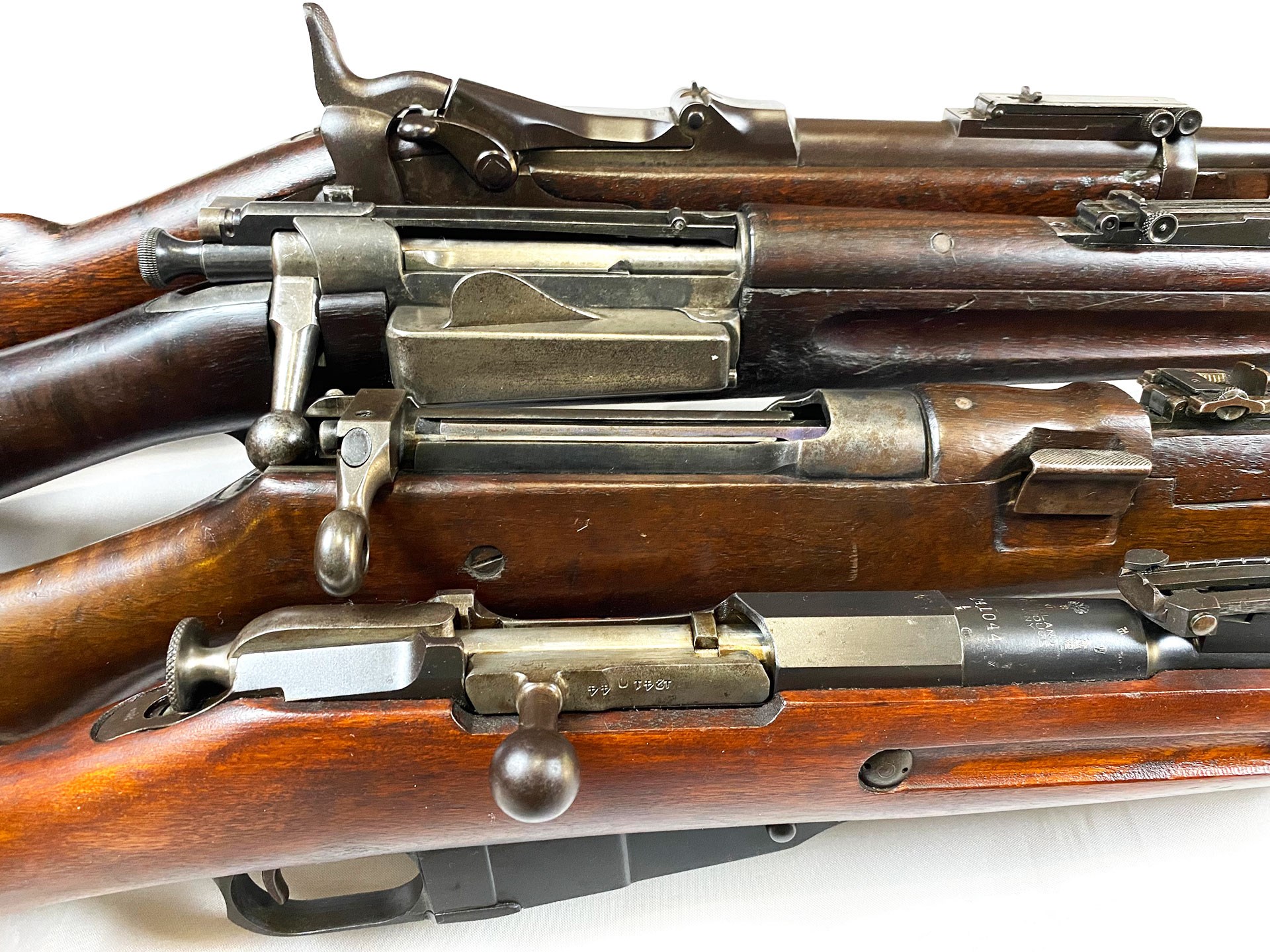
A comparison between the four rifles' actions.

A rapid series of messages back and forth between the Ordnance Office, and the commanders of both Springfield Armory and Watervliet Arsenal details some of this process. In the correspondence, the three parties work out the particulars of sending some 88,952 unserviceable Krag rifles and carbines, along with Springfield’s supply of spare parts, to Watervliet for overhaul. This included not only the M1898 rifles, but also approximately 2,500 M1892 and M1896 rifles as well as "bayonets and appendages."

As discussed above, and as envisioned by Ordnance officials at the time, the Krag saw heavy use training the ever-growing body of American fighting men as they prepared to deploy to Europe. The broader population had become aware of the rifle shortage, however, and many wrote to their elected officials to express their concern that their sons might be forced to drill with broomsticks or wooden rifles. The Krag was often used to allay these fears, with Brig. Gen. Crozier pointing out to one worried mother that, "There have been for some time at each cantonment of the National Army 55,000 Krag Jorgenson rifles for training; these were soon after their supply followed by an additional 2,000 of these rifles, which are very serviceable weapons, although not of the present standard model for the United States Army."
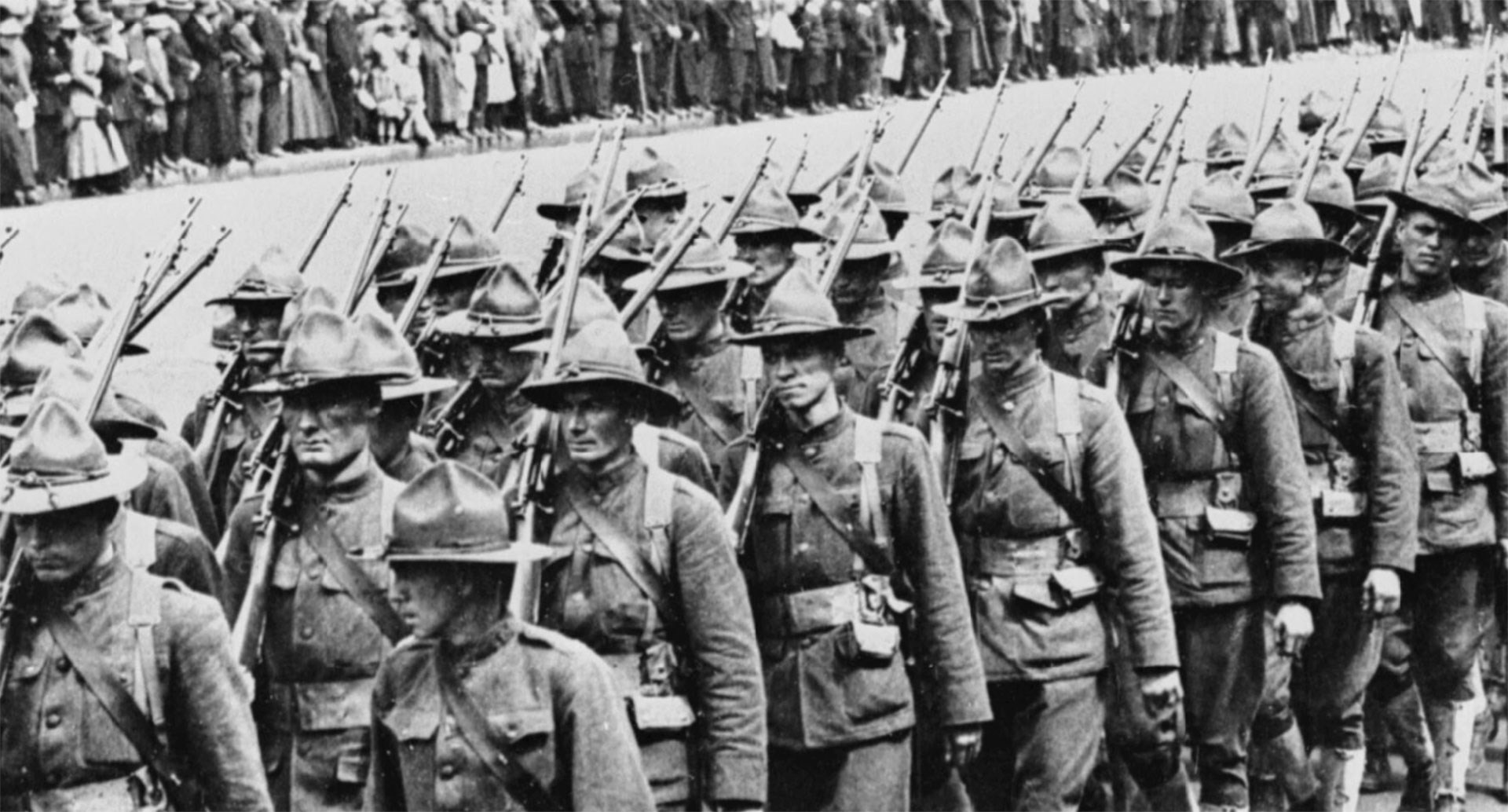
Krag rifles being carried by men of the American Expeditionary Force during World War I.

Some Krags did see limited service overseas during the war, with at least the 14th United States Engineers carrying them all the way into France. By July 1918 however, they had been switched out for M1903 rifles and the II Corps Ordnance Officer reported disbursing 1,157 M1903s in exchange for at least 972 Krag rifles. The stated reason for the switch was to ensure ammunition standardization in whatever area the unit was assigned to.

“When will they be put on Flintlocks”?

Even older US military rifles were brought back into service to help alleviate the acute shortage of functional weaponry. On Aug. 23, 1917, an officer from the Small Arms Division of the Ordnance Department instructed the commanding officer of the Rock Island Arsenal to "put into good condition" the 2,927 unserviceable Trapdoor Springfield rifles on hand at the arsenal. This action, along with the work on Krag rifles and carbines, earned the scorn of some of the workers – as reflected in one anonymous complaint written to U.S. Senator G.M. Hitchcock and forwarded to the Chief of Ordnance:

Dear Sir:

Of my own personal knowledge I know that there is a force of men at work at R. I. A. on worn-out Krag-Jorgenson rifles used in the Philippine campaign of ’99 and 1900 – also another force on caliber .45 Springfields discarded at that time.

It’s a standing joke among these employees as to when they will be put on Flintlocks.

Now I don’t know if this will put me in jail, but I think it should be asked of Mr. Baker [the Secretary of War] if this can in any way assist in arming our men to defeat the Huns.

Despite this anonymous worker’s skepticism about the usefulness of Trapdoors to the war effort, they were actually in high demand by a number of states which wanted rifles for stateside security use. New York in particular, while angling to acquire more modern arms from Canadian sources, articulated a need to guard "lines of transportation and communication over which are sent Federal Supplies" and that the "Prospect of [a] shipping strike on water front N.Y. makes [the shortage of rifles] serious." Brig. Gen. Crozier, somewhat tersely, reminded the writer that "the governor of the State of New York was authorized to requisition guns from educational institutions and rifles clubs of New York," and that he had not drawn all that he was able.
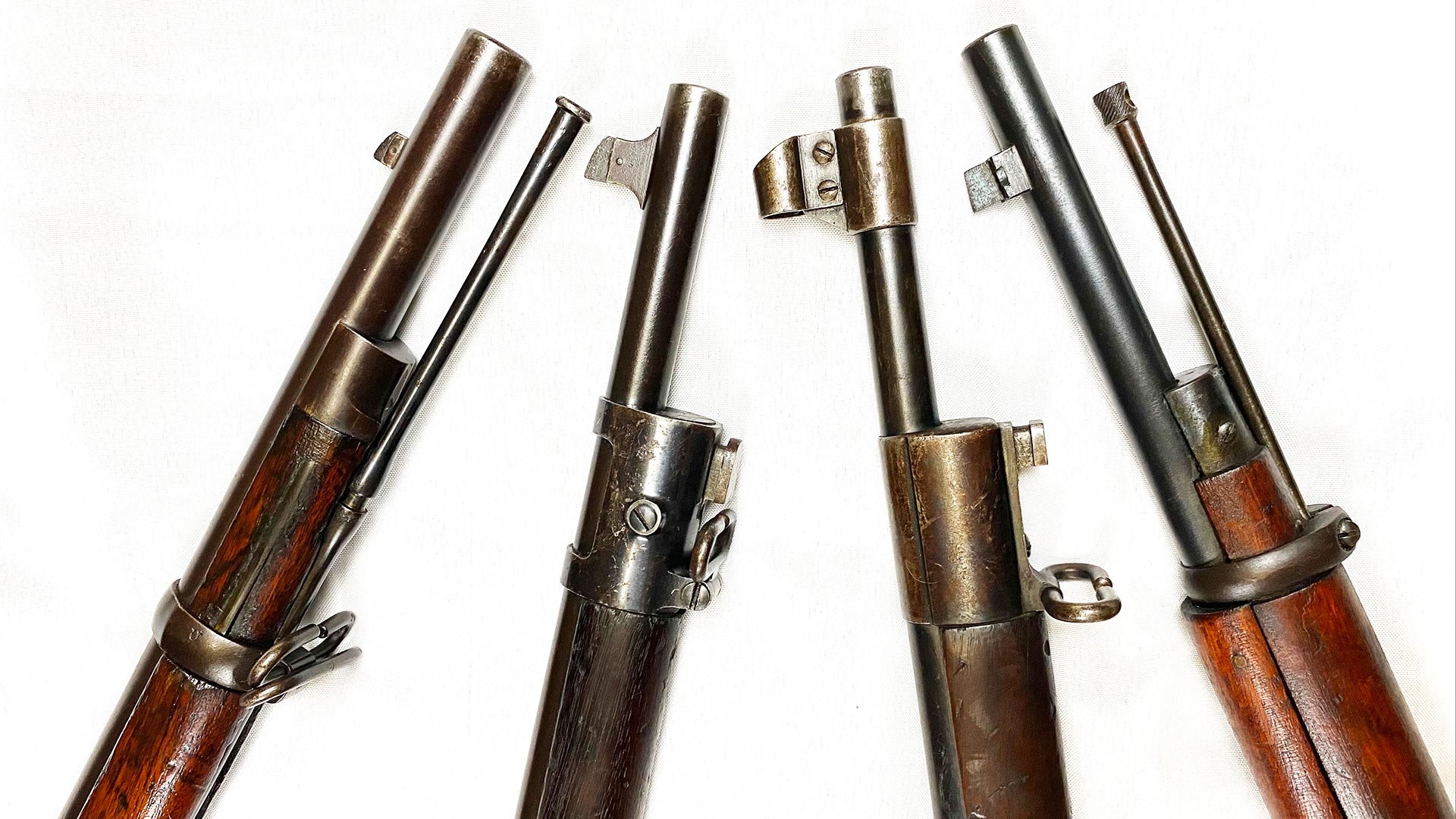
The muzzles of the four rifles compared. From left to right: Springfield Trapdoor, Krag-Jorgenson, Ross Mk II*** and an American-made M1891 Mosin-Nagant rifle.

Additionally, he stated that the governor was issued 500 Trapdoor Springfields on Aug. 11, 1917, and that, "There are on hand, not already allotted to state organizations, 7,979 rifles of caliber .45. The demand is very heavy for this character of equipment for use of home guard organizations; about 30 states have not as yet been supplied, and no more rifles can properly be issued to this state. The former Adjutant General was fully advised as to this."

So even though the Trapdoor was thoroughly out of modern military fashion by 1917, being not only a single-shot breechloader, but also blackpowder and large bore; thousands of them still played a role in the process of getting American fighting men and their equipment safely across the country and loaded onto ships bound for France.

“War Department has no objection to State of New York purchasing rifles from Dominion Government”

While Trapdoors were useful in certain roles, there still existed a stateside need for “modern” rifles more akin to the M1903 and M1917 rifles that were to be used against the Hun (and the RIA workers were, after all, not going to be tasked with refurbishing flintlocks). As mentioned above, New York was especially interested in obtaining additional rifles, particularly since its harbors were a key point of embarkation. Fortunately, America’s neighbor to the north had a number of older pattern Ross Rifles that they were willing to sell across the border to help Uncle Sam.
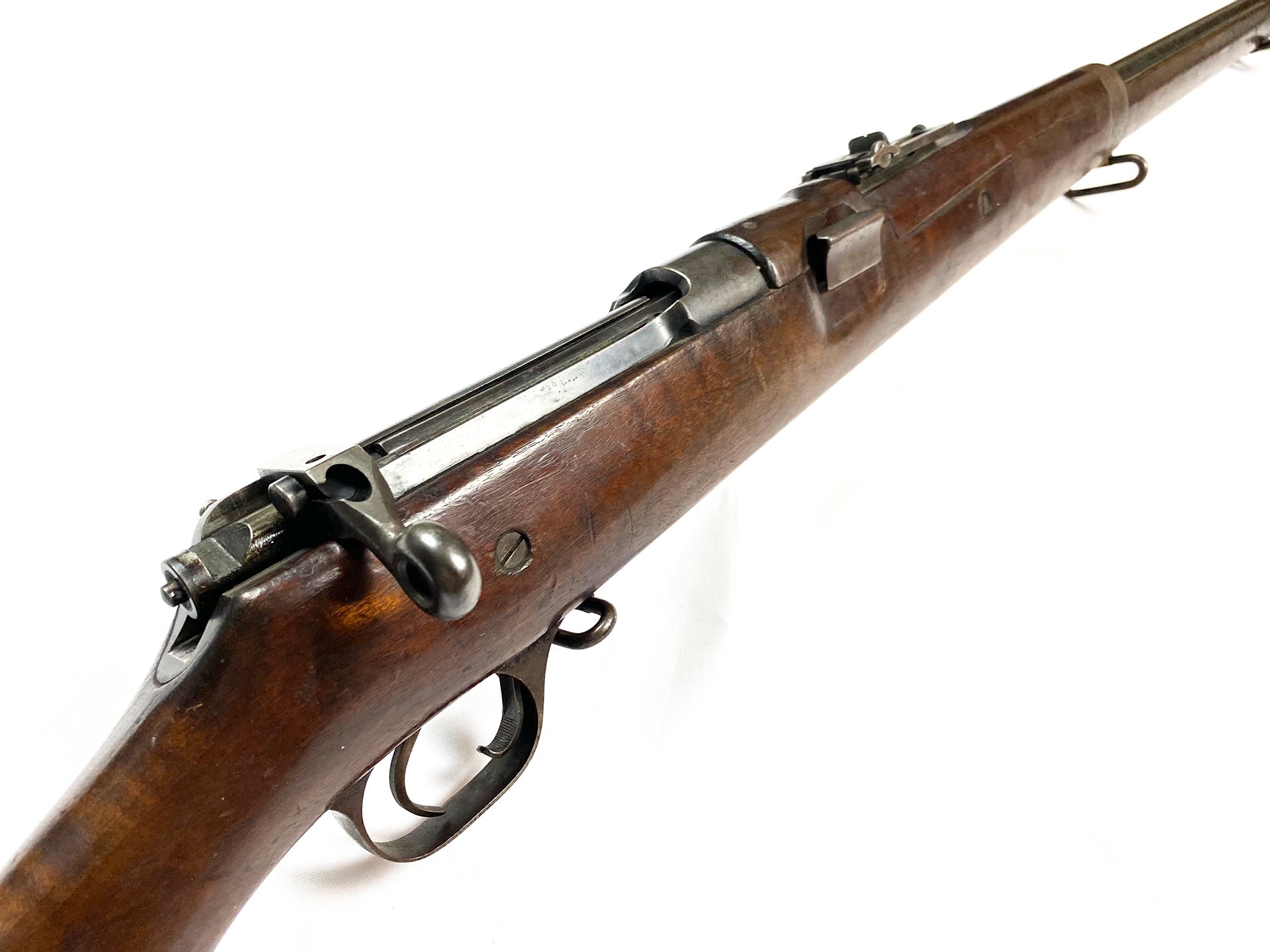
A closer look at the features of the action on the Ross Mk II*** rifle.

These took the form of Ross Mk II*** rifles, also known as the Model 1905. Featuring a straight-pull action, the Ross fires the .303 British cartridge from an internal magazine. While the later Ross Rifles were charger fed, the Mk II*** featured a follower depressing lever on the side of the rifle that allows the user to “dump” the cartridges into the rifle, instead of inserting them singly. Even though the Mk II*** was already obsolete by Canadian standards, Ross Rifles as a species also ran into problems in the harsh fighting conditions of the trenches. This, combined with tight tolerances better suited for a target rifle and loose British ammunition tolerances, resulted in a majority of Ross Rifles being withdrawn from frontline service in Europe and replaced by the Short, Magazine Lee-Enfield.

Despite these issues, the rifles were certainly suitable for stateside use, and more importantly, were actually available for transfer south in September 1917. New York was so eager to get their hands on these rifles that they actually started negotiations directly with Canada and secured the ability to purchase 15,000 Ross Rifles and ammunition for them, with the purchase price recorded as being $12.50 for the rifle, bayonet and scabbard. Their plans hit a snag however, as the rifles would be subject to an import duty of 35 percent, making a relatively good deal suddenly less appealing.
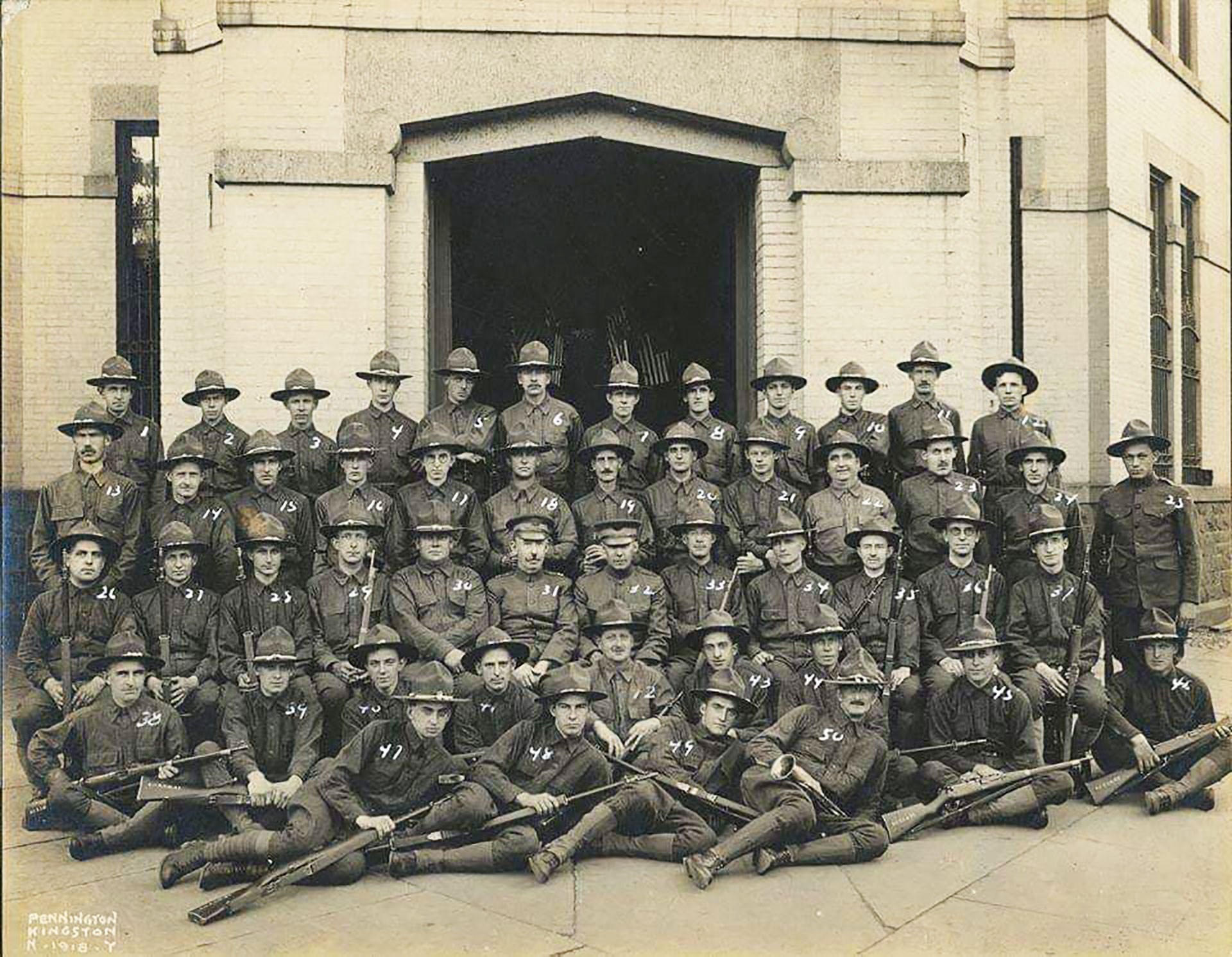
Men of the New York Guard armed with Ross Rifles. 

New York requested either an exemption to the tax, or reimbursement for the fee through the federal government. Instead, Brig. Gen. Crozier informed the Adjutant General for New York that he was already in talks with the Canadians for rifles, and that he would be able to sell some quantity of the procured rifles to the state. In the end, the ordnance department was able to procure some 20,000 Ross Rifles for use, with 10,000 of them going to New York and the difference being used for training troops in federal service.

The rifles acquired under this contract are identified by a “U.S.” stamping on the underside of the wrist, and “flaming bomb” stamps in the wood both fore and aft of the trigger guard and magazine assembly. Additionally, a new inventory or serial number was also added to the underside of the wrist. This broke from the Canadian practice of marking model, serial number, and unit assignment on the right side of the buttstock, and many of the rifles feature multiple struck through markings denoting the rifle changing hands.
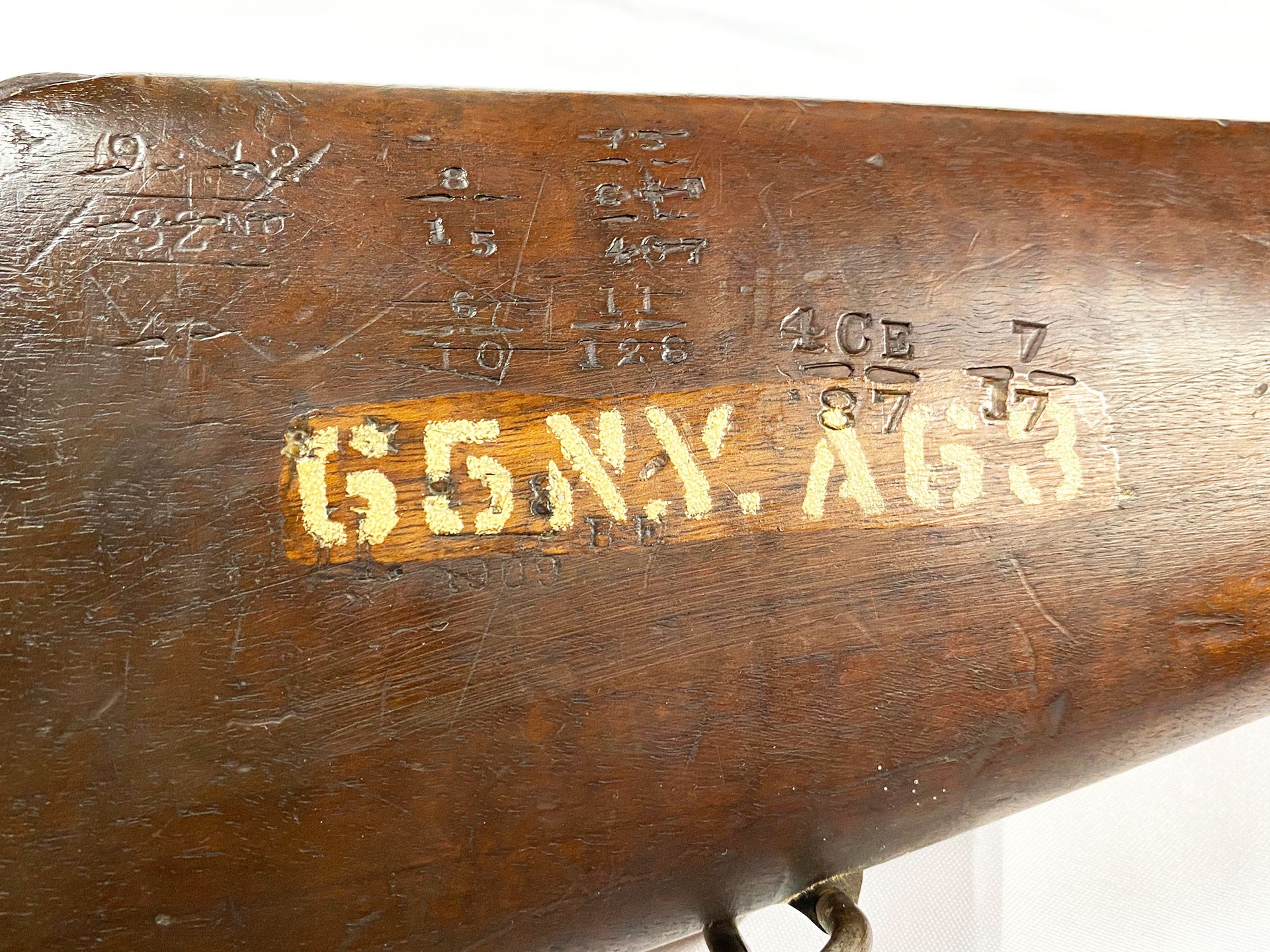
New York Guard markings painted over older Canadian service stamps on a Ross Mk II*** rifle.

The rifles that made it to New York primarily found themselves in the hands of the New York Guard (not to be confused with the New York National Guard). Since the New York Guard was a purely state organization, it was not subject to being called into federal service and was used by the state for protecting infrastructure and other critical internal security roles. As the pictured rifle and period unit photograph shows, rifles distributed to the NYG often received painted on unit markings done right over top of the original Canadian stampings.

“The rifle will be known as the Russian 3 Line Rifle”

While the government looked across its northern border for the Ross rifle, they didn’t have to look nearly as far for another foreign service rifle to supplement their supply of rifles. That is because two U.S. firearm makers – the New Remington Rifle Company in Bridgeport, Conn., and New England Westinghouse in East Springfield, Mass. – had been hard at work producing Model 1891 Mosin-Nagant rifles. Both of the companies were subsidiary organizations to their more famous parent companies, and had been designed almost exclusively to handle the massive Russian contracts.

On June 6, 1917, the vice president of Westinghouse Electric and Manufacturing Company wrote to the Ordnance Department with a proposal. The company had "been successful in adapting the Russian type of military rifle to the use of U.S. ammunition, with very slight changes." All of the existing forgings could be used, with the goal to "develop a military rifle of about the same length as the Springfield rifle and one which [the company] experts feel could in an emergency be usefully employed by our own troops." Ten days later, a polite but lukewarm response was composed by a major from the Small Arms Division, stating that "it is not deemed advisable to have a third model of rifle in the service, at the present time," although he did suggest that the rifle could be sent to Springfield Armory for further evaluation.
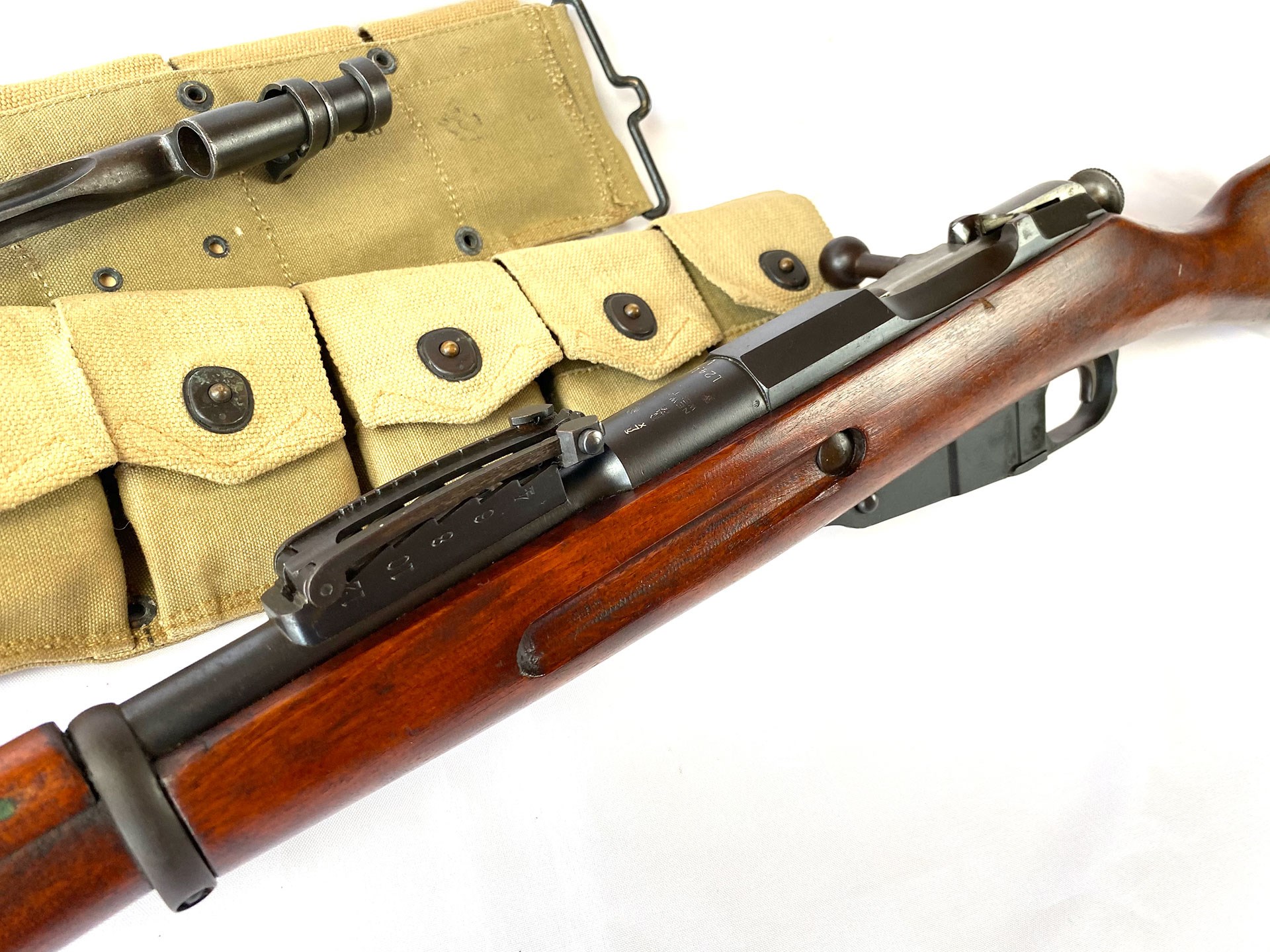
A left-side view of a New England Westinghouse manufactured Model 1891 Mosin-Nagant rifle, which was commonly referred to as the "Russian rifle."  

In the closing days of 1917, however, the War Department circled back to the idea of using the Russian rifles – albeit in their original caliber of 7.62x54 mm R. The new Soviet government had entered into an armistice with the Central Powers on Dec. 15, 1917, and began formal peace negotiations on December 22 at Brest-Litovsk in Ukraine. It was likely at this point that American War Department and Ordnance officials felt safe in assuming that the new Russian government’s demand (and willingness to pay) for the rifles would be greatly reduced as they exited the war and turned their attentions inward.

The loss of this contract would economically harm the companies of course, as they had been created almost exclusively to handle the Russian contracts. The U.S. decision to order Russian rifles has sometimes been framed solely as a “too big to fail” bail out of sorts, designed to prop up floundering US companies. However, primary source documents from the era reveal a bit more nuance and show that there were serious war material production concerns at stake as well. The New England Westinghouse Contract is particularly interesting, because the ultimate plan was to convert the factory over for the production of 15,000 heavy machine guns — something indispensable on the modern battlefield. 
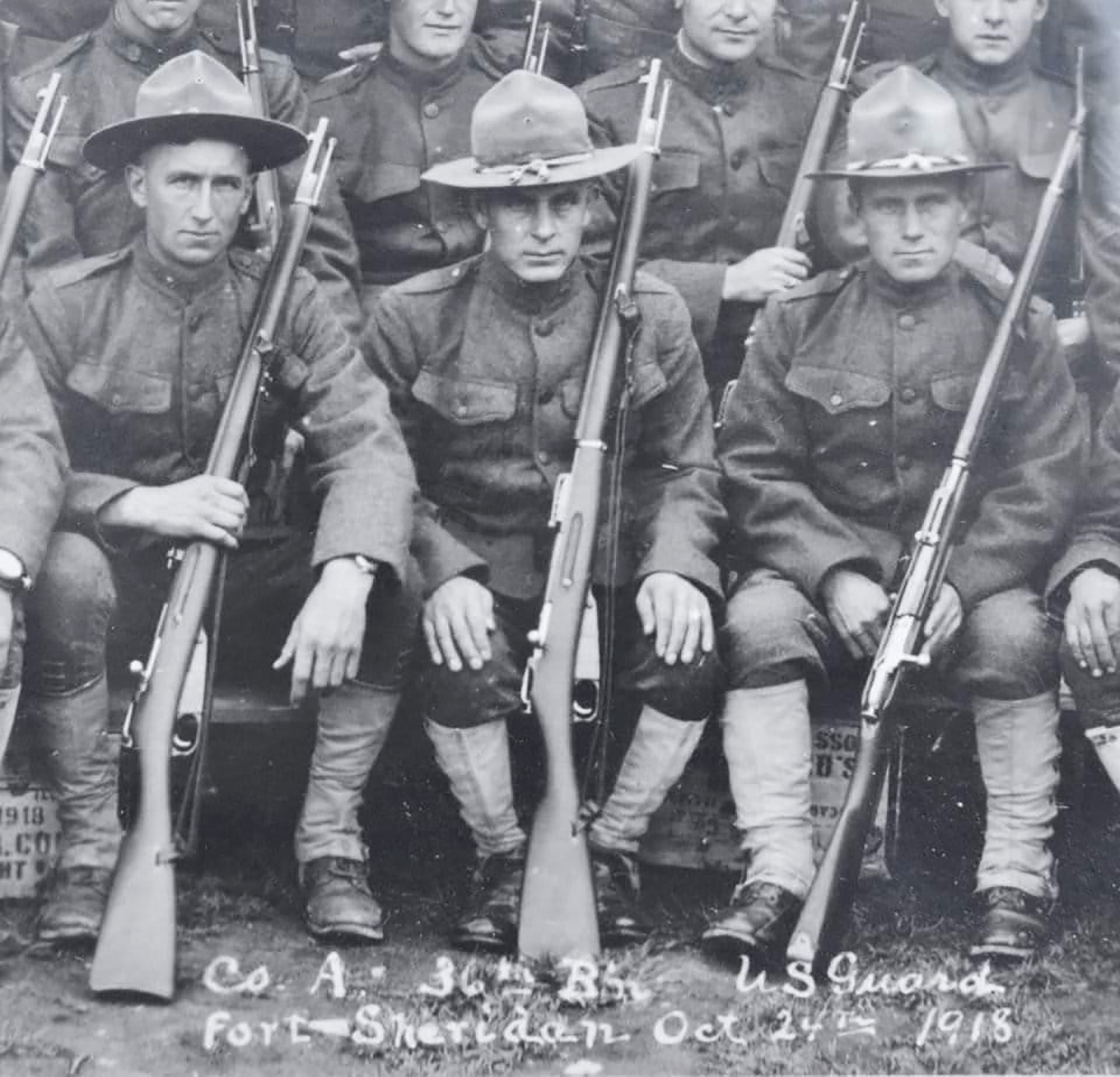
Men of the U.S. Guards armed with Model 1891 rifles.

In order to, "insure production it was found necessary to provide means of preserving the organization of [N.E.W.] until such a time as the manufacture of the machine guns could be started." As one could imagine, the loss of skilled laborers, managers and inspectors would have an extremely harmful effect on the ability of the company to transition over to an entirely new set of weapons. While the companies certainly benefited from government picking up their contract for Russian rifles, the government war effort was at least an equal beneficiary.

Losing no further time, the Secretary of War placed an order with the New England Westinghouse Company of Springfield Massachusetts on Dec. 29, 1917, for "the manufacture of 200,000 Russian rifles on the basis of cost without profit to [the] company," which equated a contract price of $15 per rifle. Hedging their bets a little bit, it was "stated that an option was given to the Russian Government until May 1, 1918, to purchase such Russian rifles as [produced by N.E.W.]." The plan was that the company would continue manufacturing the Russian rifles, and the government would pay New England Westinghouse $600,000 per-month until May 1918, at which time $3 million would be expended and the machine gun production lines were scheduled to be operational.
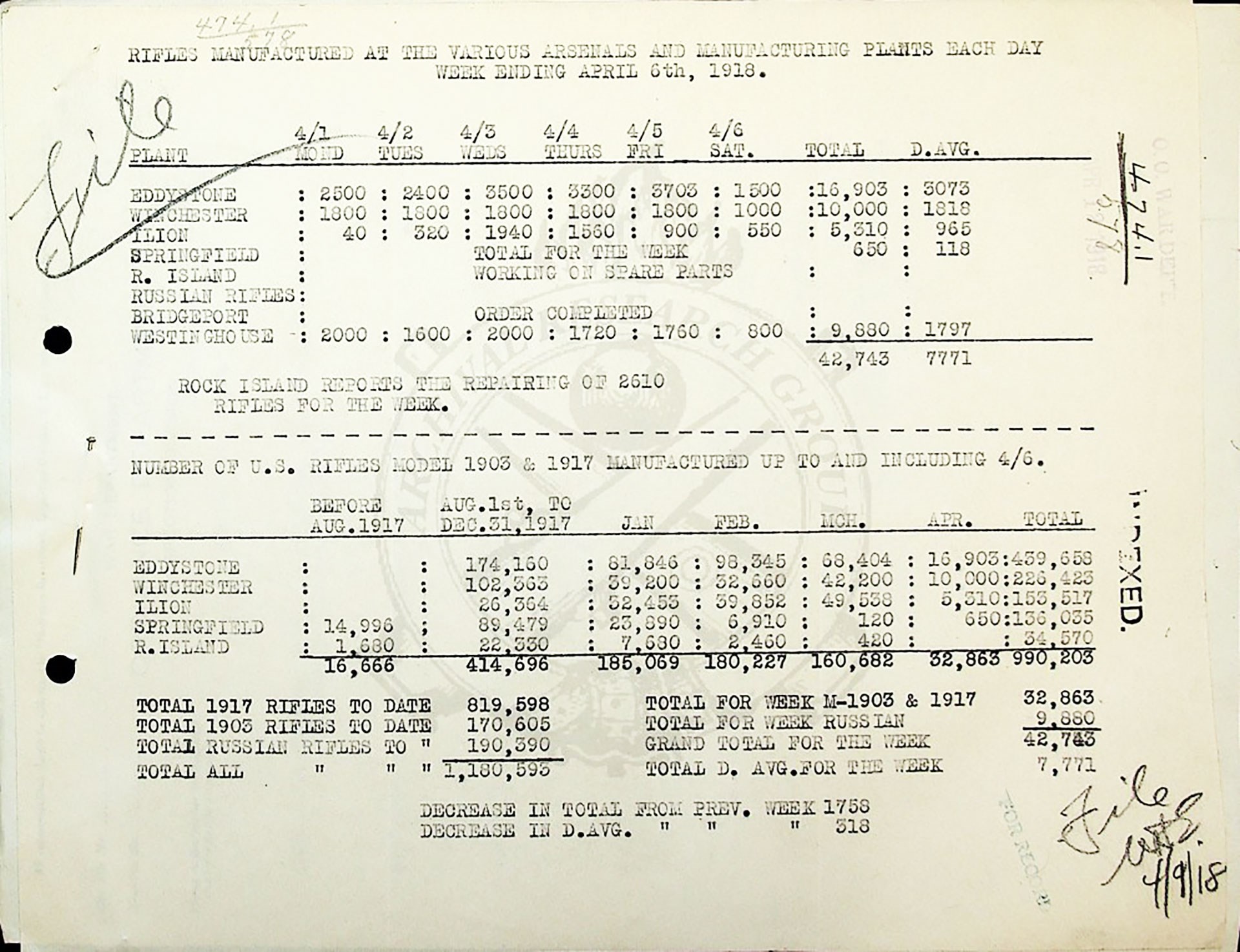
A document comparing production numbers of the M1903, M1917 and M1891 rifles from their various manufacturers. Photo courtesy of Archival Research Group.

The New Remington Rifle Company of Bridgeport, Conn., wasn’t far behind, with the Acting Chief of Ordnance placing an order on Jan. 7, 1918 for 78,950 already produced rifles. The cost would be set at $30 per rifle, for a total contract price of "$2,368,500 to be paid […] upon delivery and acceptance of said rifles." Remington did continue to make rifles for the Russian government as well, but downward adjustments to the contract by the Russians caused Remington to reduce the number of men on the job. As in the case of New England Westinghouse, the purchases made by the U.S. government appear to have been made to allow the company "to keep a substantial portion of its organization together until it can be gradually diverted from work on the Russian rifles to work on the United States Government’s orders."

Regarding nomenclature, there seems to have been some attempt by the Ordnance Department to give the M1891 in U.S. service the name “Russian 3 Line Rifle,” although in the vast majority of official correspondence they are simply referred to as “Russian rifles." When it comes to weapons produced primarily for U.S. service, you perhaps would think that rifles of the same type would have the same inspection process when it came time to certifying their suitability for use. This was not the case with the Russian rifles.
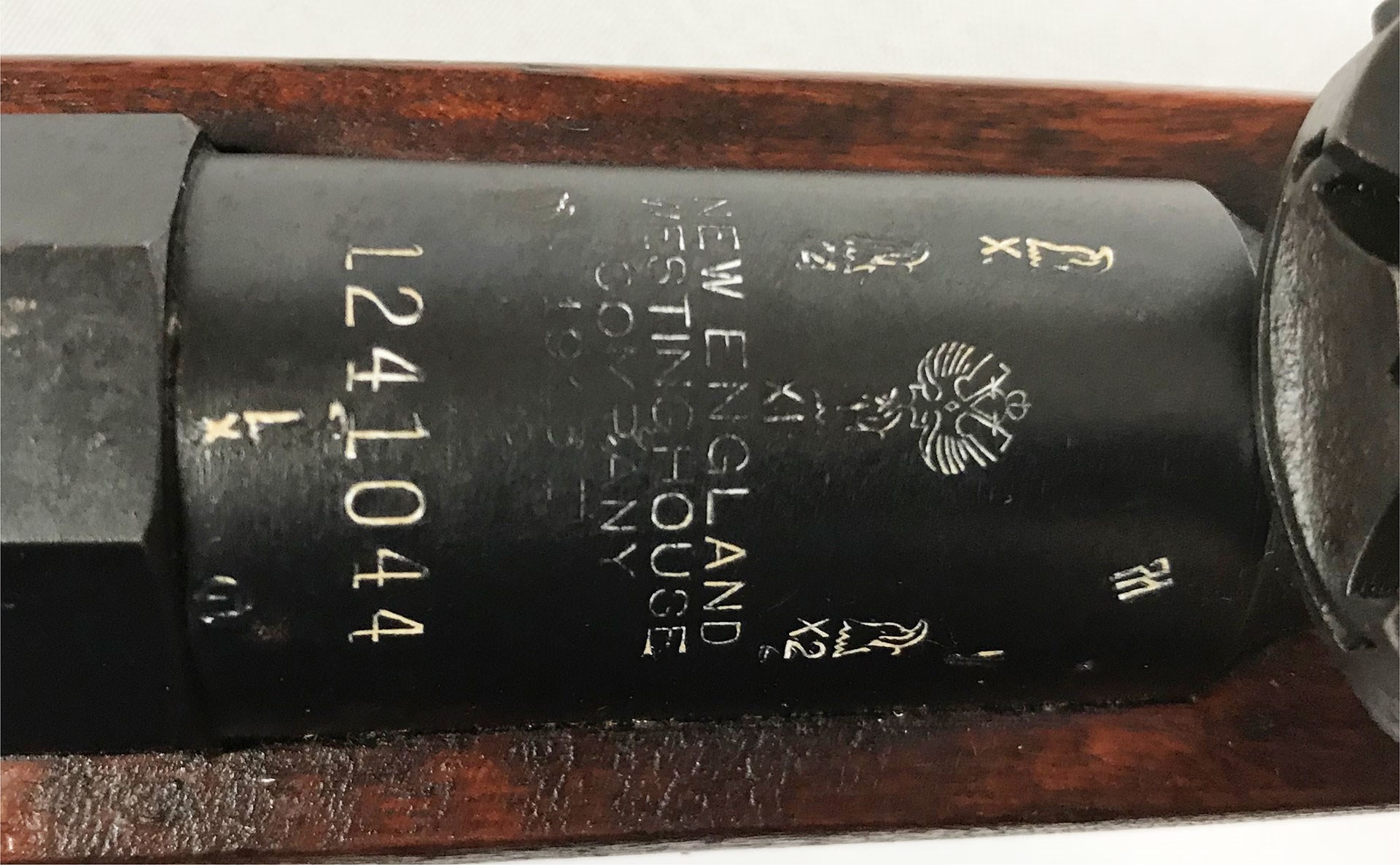
A closer look at the receiver markings of a Westinghouse manufactured M1891 rifle.

In general, Remington took a relatively minimalist approach and usually chose to simply stamp a flaming ordnance bomb and maybe an eagle head over “U.S.” on the bottom of the stock, just forward of the magazine. The inspection team at New England Westinghouse, on the other hand, must have decided to put their inspectors to work, as the rifles produced during this contract run are covered by a bevy of eagle head stampings on both the wood and the metal.

Documents drafted shortly after the war indicate that many thousands of these rifles were shipped across the United States for use as training weapons and stateside guard duty, with 12,954 being issued to the National Guard, 41,705 to various Home Guard organizations and approximately 25,000 to the U.S. Guards (a Federal military internal security organization composed of men aged between 31 and 40). On Governor’s Island in the New York Harbor for instance, the 300 men of the 9th U.S. Guards stationed at that post were armed exclusively with “266 Russian type rifles.” Post-war, Camp Logan, Texas, reported it had “532 Rifles, Russian”, along with an equal number of M1898 Krags that it wanted to divest itself of.
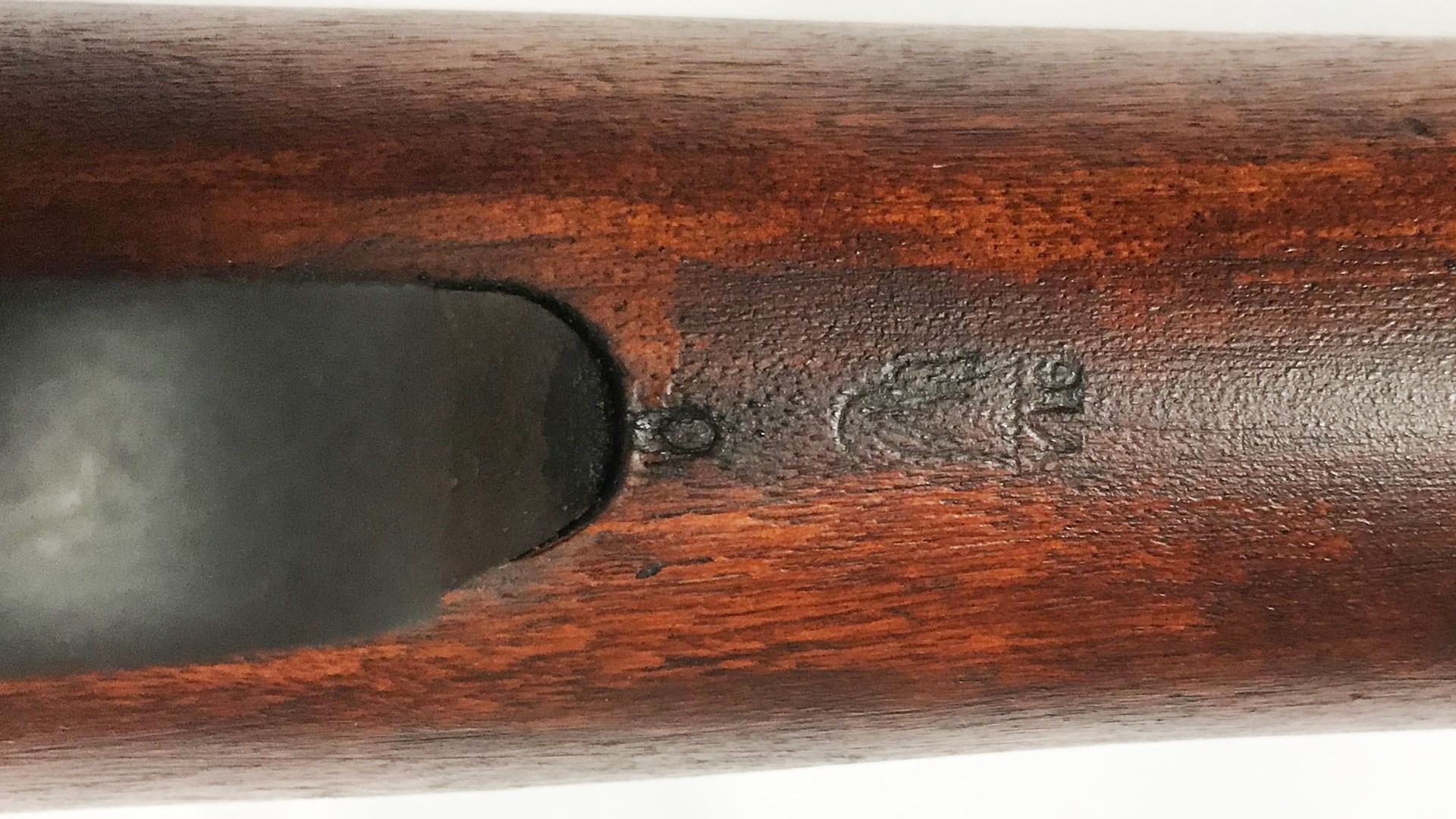
An eagle head inspection stamp in the wood of the Westinghouse manufactured M1891.

The largest number of Russian rifles were shipped to schools and colleges with programs of military instruction. Many of these had been forced to give up their Krags or other weapons during the early days following the U.S. entry into the war, and would likely have welcomed brand new (although non-standard) firearms into their arms rooms. Student Army Training Corps (S.A.T.C.) detachments received a staggering 109,700 rifles, while Reserve Officer Training Corps (R.O.T.C.) programs received 5,597.

That’s not to say they were always received with open arms however, and the Commanding Officer of the 5th Battalion, U.S. Guards stationed at Fort Robinson, Neb., had some critiques:

Subject: Russian Rifles

Stating a few apparent defects in the construction of Russian rifle, due perhaps to lack of knowledge of its nomenclature:

Can be safety locked only by pulling back knob of cocking piece with fingers and turning it to the left which makes it impossible to pull trigger or open chamber.

Examination has failed to reveal a cut off.

Apparently there is no provision for stacking arms.
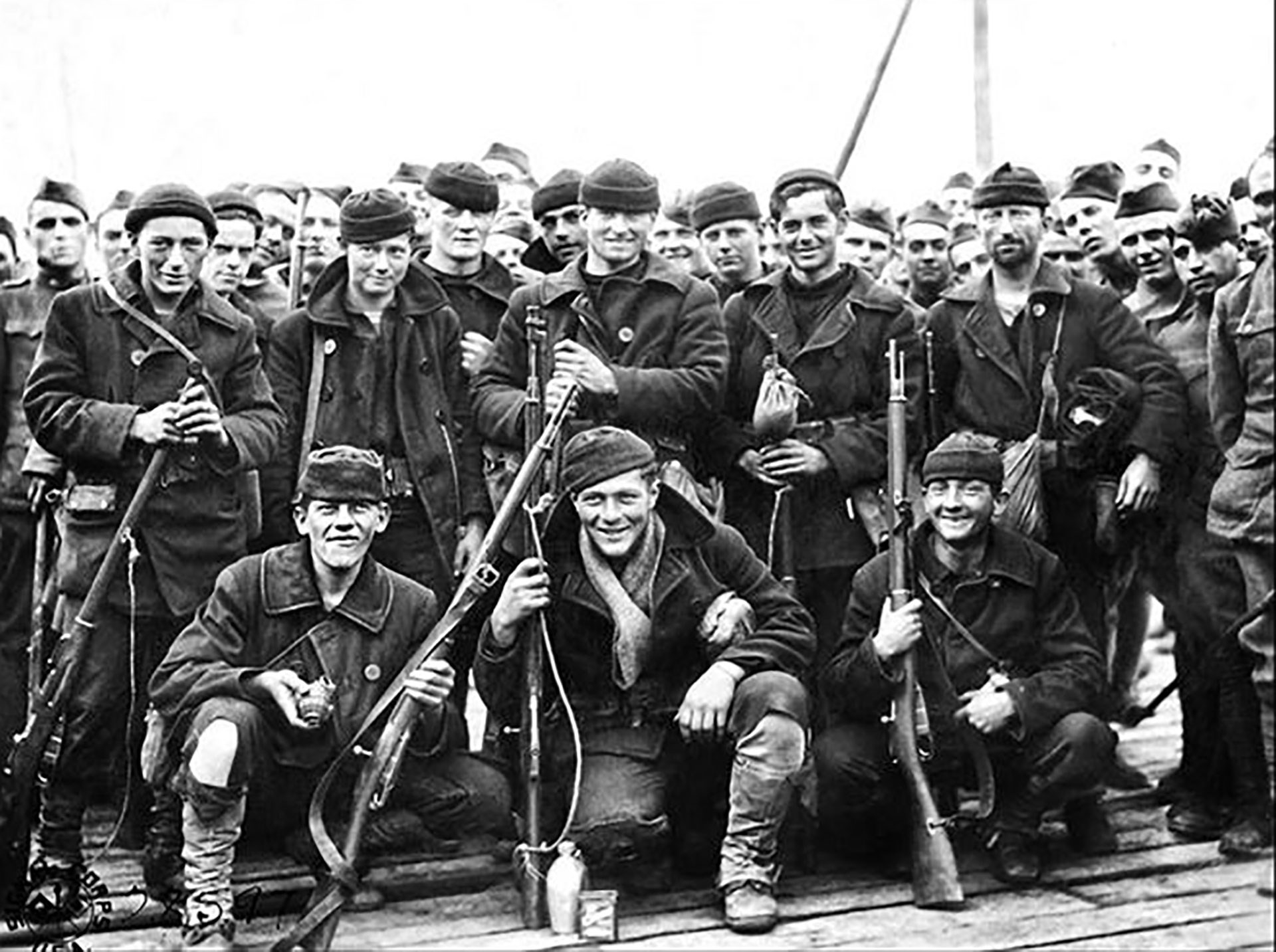
Sailors from the U.S.S. Olympia's shore party armed with M1891 rifles during the U.S. intervention in the Russian civil war in September 1918.

Despite its inferiority to the M1903 and M1917, the Russian rifles did actually see combat service with the United States military. A large portion of the U.S. soldiers and sailors tasked with the controversial intervention in the Russian Civil War were armed with American made Mosin-Nagants, something that undoubtedly simplified logistics when it came to spare parts and ammunition. Those rifles didn’t sail home with the troops in June 1919, however, as a telegram from Brig. Gen. Wilds P. Richardson, the man tasked with organizing the withdrawal of U.S. forces from Russia, reported that the Russian rifles had been turned over to the British by the departing “Polar Bear” personnel.

All Pulling for Victory

Although not designed as a military rifle like the others, an honorable mention should also go to the 1,800 Winchester Model 1894 lever action rifles chambered in .30 W.C.F. that were put into service in the Pacific Northwest guarding the pine forests. These so called “Spruce Guns” were used by the U.S. Army Signal Corps to secure this critical national resource from possible work stoppages or sabotage.

Although the vast majority of the non-standard rifles detailed above did not see overseas service, they did free up a staggering number of M1903s and M1917s for service abroad. They further provided security for the home front, not only guarding physical places and things, but also providing peace of mind to a nation newly at war. While they may not be enshrined in small town statues or immortalized in film being held by the square-jawed doughboy, they allowed the United States to quickly mass critical resources overseas and help bring about the end of World War I.

A special thanks is owed to Archival Research Group for providing high quality scans of the primary source documents used to write this article.

Wednesday, June 9, 2021

The Forgotten Guns of D-Day (June 6, 1944)

 I Shamelessly "Nicked" this from "American Rifleman".  I saw the article and really enjoyed the article and saw quite a few guns I never thought about being involved on "D" Day.  So I reproduced the article in its entirety.  

forgotten-guns-of-d-day-june-1944-f.jpg

When we think of the D-Day invasion of Normandy in June 1944, images of Allied and German infantrymen locked in combat with the standard guns of 1944 come to mind.

We inevitably think of rifles such as the M1 Garand and the Lee-Enfield No. 4, Mk. I exchanging fire with German Kar98k Mausers. We picture the M1A1 Thompson submachine gun fighting it out with the German MP40, and the MG42 spitting bullets at British and Canadian light machine gun sections armed with the mighty Bren.

While these guns of D-Day certainly fought the battle, a variety of other firearms also provided the firepower that made Normandy so vicious and bloody. Among this variety were firearms that typically do not come to mind when one thinks of D-Day. Some oddities and oddballs showed up during the 10 weeks that followed June 6,1944, and they fought right alongside the firearms that are more familiar to us.

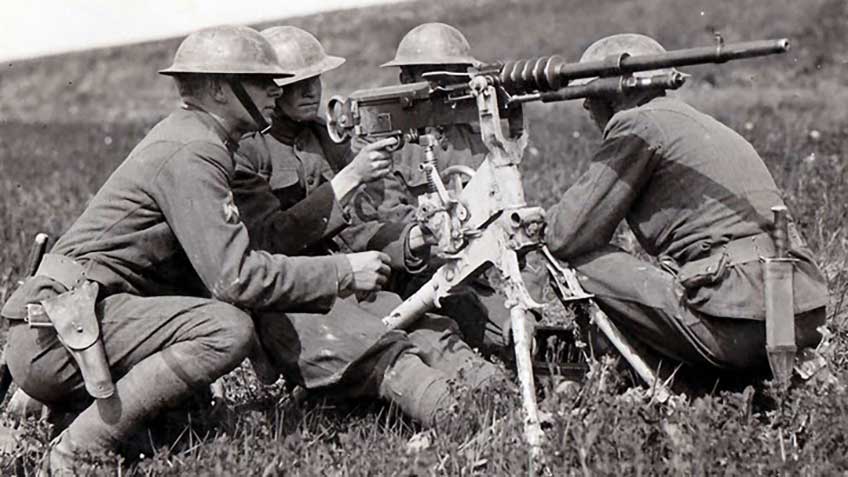
A Hotchkiss Model 1914 shown during World War I.


Hotchkiss Model 1914

Among the belt-fed machine guns that served both sides in France that summer, there were some surprises-especially on the German side. Although the Third Reich produced outstanding automatic arms before and during World War II, occasionally German troops were issued captured machine guns-such as the French Hotchkiss Model 1914 in 8x50 mm R Lebel.

At least one German unit was using that machine gun during the intense struggle for the city of Caen, because troops from the King’s Own Scottish Borderers (an element of the British 3rd Infantry Division) picked up a Hotchkiss Model 1914 and put it to their own use.

The interesting chain of custody that eventually resulted in British troops using a French-made machine gun that had been captured from the Germans reflects the unique and multi-national circumstances that made World War II an often complex global event.

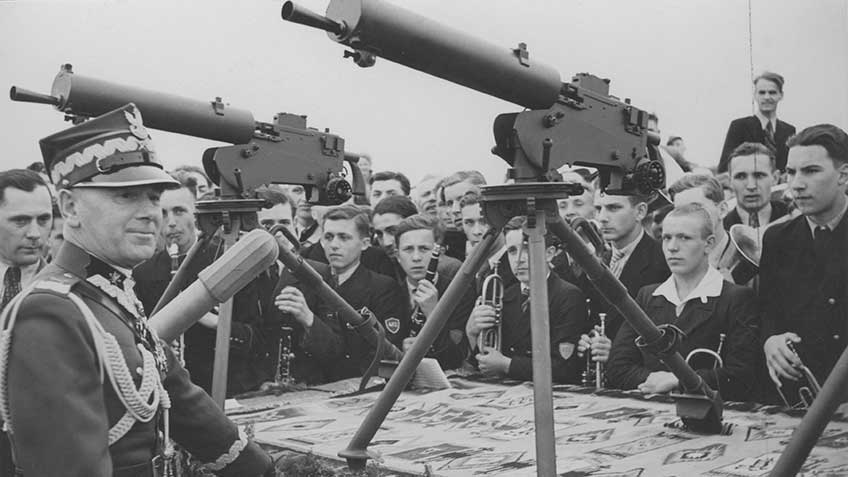
Polish wz.30 HMGs presented by the youth to Marshal E. Rydz-Śmigły. (Polish National Digital Archive)


Polish Ckm wz.30

The Wehrmacht also made good use of a captured water-cooled heavy machine gun in Normandy: the Ckm wz.30. Manufactured in Poland by Ciezki Karabin Maszynowy and chambered for the 7.92x57 mm Mauser cartridge, the wz.30 was capable of laying down sustained fire in a way that air-cooled machine guns simply could not. Franz Gockel was a corporal assigned to the 716.Infanterie-Division’s Grenadier-Regiment.726 at the Widerstandsnest 62 bunker complex on June 6.

From his fighting position looking down on the Fox Green Sector of Omaha Beach, Gockel directed fire on men of the U.S. 16th Infantry Regiment, 1st Infantry Division, when they began landing at 6:30 a.m. on June 6. He fired his wz.30 throughout the morning until being wounded and, thereafter, was evacuated for medical treatment.

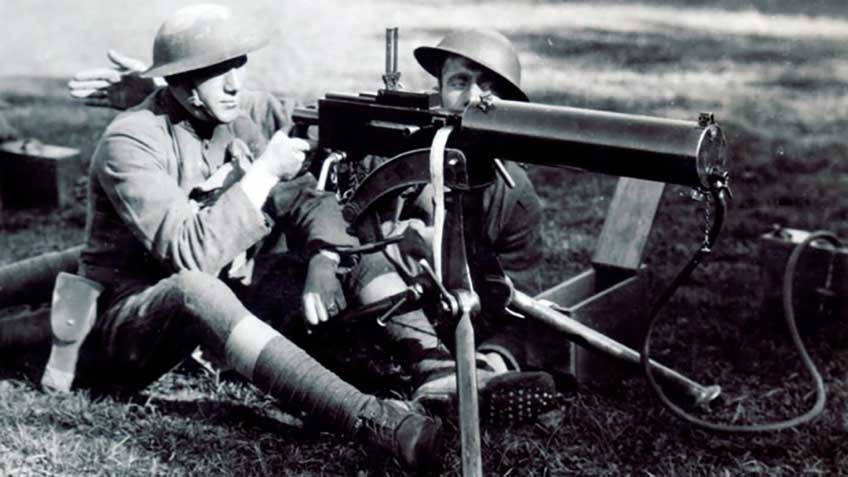
The U.S. M1917 Heavy Machine Gun shown in its WWI configuration. The A1 variant was a slight modification introduced in the 1930s.


U.S. M1917A1 Heavy Machine Gun

The bitter irony is that Franz Gockel killed an unknown number of Americans on D-Day using an obscure Polish machine gun that was based on John M. Browning’s M1917 design. That same design, chambered in the M2 .30-cal. Cartridge (better known as .30-’06 Sprg.), also saw extensive service in Normandy as the U.S. M1917A1 Heavy Machine Gun.

Although it had its origins in World War I, in 1944, the M1917A1 was employed by the 8th Infantry Regiment, 4th Infantry Division, and other ground-pounder units. But it was also a gun used by the Army Airborne forces. Since parachute infantry regiments could not easily jump with the cumbersome water-cooled Browning, they were armed instead with the lighter M1919A4 air-cooled machine gun.

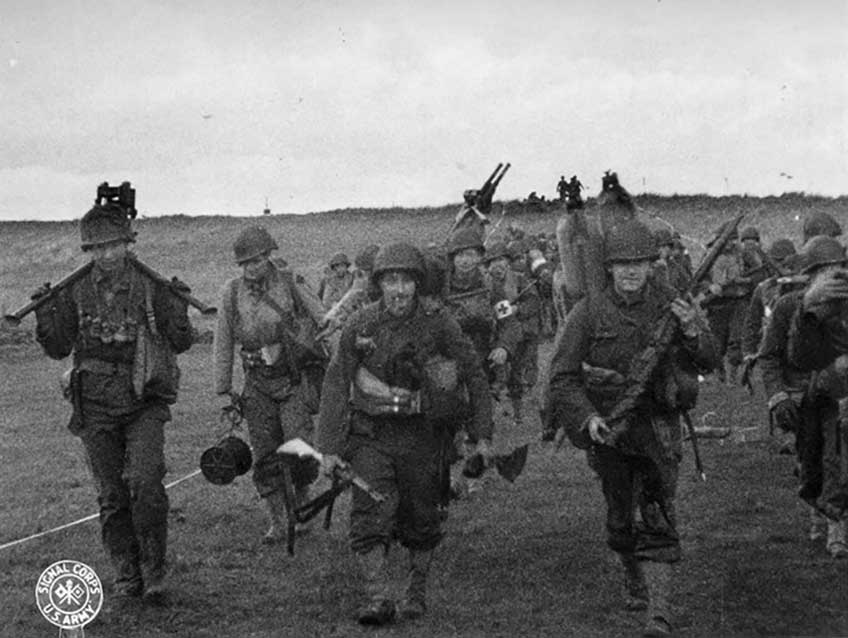
Soldiers of the 4th Infantry Division advancing inland. The man at the far left is carrying the tripod for an M1917A1 water-cooled heavy machine gun, along with four Mk. II fragmentation grenades suspended around his neck by a string.


In the 82nd Airborne Division’s 325th Glider Infantry Regiment though, heavy machine gun sections used the M1917A1. Following the successful liberation of the city of Ste.-Mère-Église during the pre-dawn hours of D-Day, the 82nd Airborne began attacking its other objectives. Among those objectives was the strategically important Merderet River bridge at the tiny settlement of La Fière.

There a 600-yd. causeway stretched across the marsh to the hamlet of Cauquigny. During the first three days of the invasion, the 82nd Airborne struggled with the German 91st Luftland Divisionto control the critically important hotspot in Normandy. Throughout it all, the glider infantrymen of the 325th used the M1917A1 Heavy Machine Gun to lay down sustained and effective defensive automatic fire.

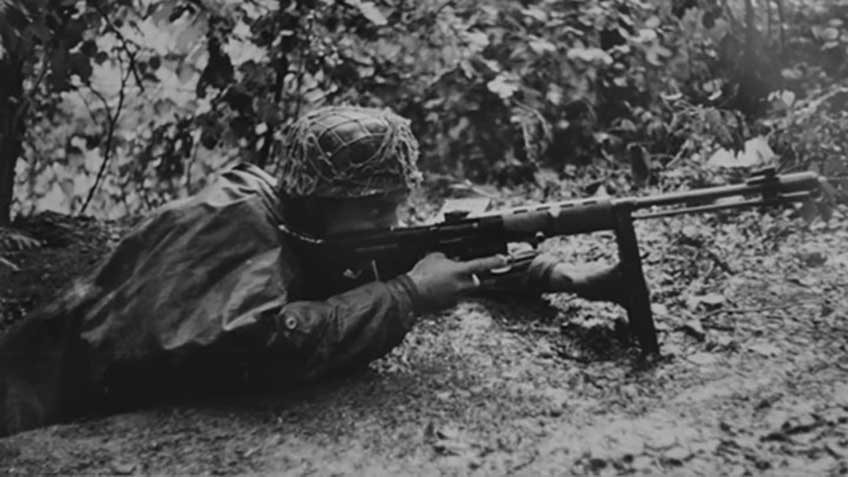
A German paratrooper seen in Normandy with a late model Ausführung "E" (Type I) FG42.


Fallschirmjägergewehr Model 1942

Just as the 82nd and 101st Airborne Divisions had paratroopers in the fight in Normandy, so did the German 91st Luftland Division. Assigned to the 91st was the 6th Fallschirmjäger Regiment, a combat-experienced Luftwaffe unit that engaged the 101st Airborne Division in the area around the city of Carentan.

Known for being especially well-trained and well-equipped battlefield opponents, Germany’s Fallschirmjäger units were also remarkably well-armed. They carried the typical assortment of German infantry arms-the Kar98k Mauser carbine, the MP40 submachine gun and the MG42 belt-fed machine gun-but some of the regiment’s paratroopers carried the Fallschirmjägergewehr Model 1942-universally known as the FG42.

It combined the features of a hand-held infantry rifle and a squad automatic weapon. Firing the 7.92x57 mm Mauser rifle cartridge, the FG42 was most certainly not an underpowered carbine. With select-fire capability, it spanned the gap between rifle and machine gun. The FG42 was ahead of its time in that it fired from the open bolt in the full-automatic setting and from the closed bolt in semi-automatic.

That provided closed-bolt accuracy in semi-automatic mode and open-bolt heat dissipation in full auto-truly the best of both worlds. Even though Germany was well known for its high-quality automatic firearms during World War II, the FG42 was in a league of its own and it provided individual Fallschirmjäger with a superlative firepower capability.

The commanding officer of the 3rd Fallschirmjäger Division, Generalleutnant Richard Schimpf, was even known to carry one in combat as his personal arm when his division joined the battle in Normandy.

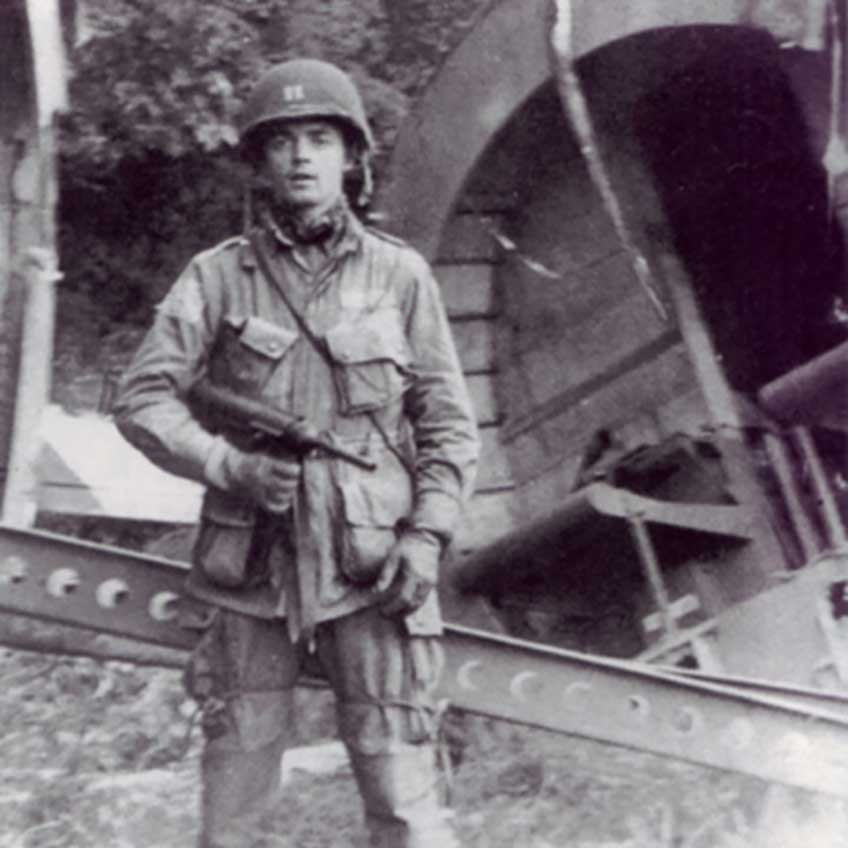
Capt. Bob Piper of G Company, 505th Parachute Infantry Regiment, 82nd Airborne Division shown in front of a wrecked Horsa glider in Normany. He is armed with a Guide Lamp M3 submachine gun.


U.S. M3 "Grease Gun"

Like the German paratroopers, American paratroopers also carried automatic arms that provided a high volume of fire. Although they had nothing to compare to the firepower of the FG42, the men of the 82nd Airborne and the 101st Airborne were armed with submachine guns that could send a large number of bullets toward a target in very short order.

Anyone familiar with the American airborne in Normandy has no doubt seen photographs of paratroopers carrying the renowned Thompson submachine gun. Most frequently seen is the M1A1 Thompson, the model that was developed for mass-production and was manufactured by Auto Ordnance Co. of Bridgeport, Conn., and Savage Arms Corp. of Utica, N.Y. However, a limited number of the earlier M1928A1 Thompsons were carried by paratroopers during the campaign-some of which were still equipped with the iconic wooden vertical foregrip.

But by the summer of 1944, a new submachine gun was ready to join the ranks of the U.S. Army in Europe-a submachine gun that was being produced back in the States for less than half the cost of the cheapest mass-production version of the Thompson: the M3 “grease gun.”

In its World War II combat debut, the “grease gun” armed paratroopers and the crews of armored vehicles during the Normandy invasion. It was 2 lbs. lighter than the Thompson, it was handier than the Thompson-thanks to its collapsible stock-and it was a bargain for the U.S. government, with each unit costing a mere $20.94 delivered.

Although its cyclic rate was significantly slower than the Thompson’s, the M3 nevertheless fired the same 230-gr., .45 ACP. bullet and was, therefore, every bit as lethal.


Heeres-Küsten-Batterie Pointe Du Hoc 15.5-cm. K 418(f)

On D-Day, a force of 225 men from the U.S. Army’s 2nd Ranger Battalion was given the special D-Day mission of landing four miles west of Omaha Beach at a place called Pointe Du Hoc. After coming ashore, the Rangers would have to scale 100-ft. tall cliffs to conduct an assault against one of the most threatening German gun batteries in lower Normandy.

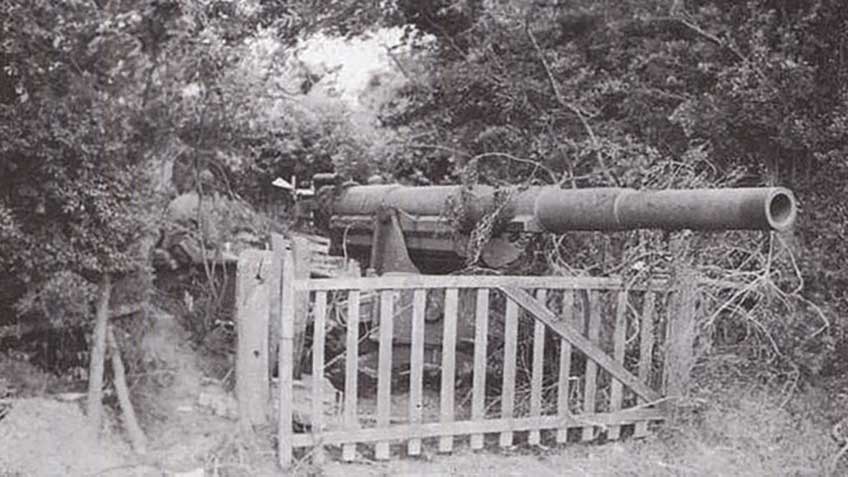
Established in May 1942, Heeres-Küsten-Batterie Pointe Du Hoc was a position armed with six French Canon de 155mm Grande Puissance Filloux (GPF) mle. 1917. The guns had been captured in 1940 and subsequently placed in German service with the designation 15.5 cm K 418(f). At Pointe Du Hoc, they were mounted on concrete traversing tables that extended their maximum effective range, improved their already impressive accuracy, and transformed them into formidable anti-ship weapons. The Ranger mission on D-Day, which was commanded by Lt. Col. James Earl Rudder, had the objective of preventing the guns from firing on the fleet.

At 7:10 a.m., Rudder’s force landed, scaled the cliffs, and swiftly pushed the enemy back from the battery area. That is when the Rangers discovered that no guns were mounted at the point. Instead, timbers had been placed on each of the six concrete traversing tables to present the false appearance that the battery remained armed.

The Rangers also found two casemates for heavy artillery at Pointe Du Hoc, but they were still under construction and their guns had not yet been mounted. In late April, the Germans removed the guns from the point to a position almost a mile to the south, but the Rangers did not know that at the time.

After they secured the battery position at the point, the Rangers moved on to the next phase of their mission, which was to set up a roadblock on the Vierville/Grandcamp road. While doing this, they put out flank security for the roadblock and quickly stumbled across the guns concealed along a hedgerow-enclosed lane.

First Sergeant Leonard “Bud” Lomell and S/Sgt. Jack Kuhn then used thermite grenades to destroy each gun’s traversing and elevation mechanisms. After that, Lomell used the buttstock of his M1A1 Thompson to smash the sights for each gun.

Although not designed for such a purpose, the Thompson nevertheless proved effective. Those 155 mm guns-among the deadliest guns of D-Day-never fired a shot in opposition to the Normandy invasion.


Vickers K Gun

Overnight on June 6 and 7, the Germans launched a series of powerful counterattacks that pushed the Rangers back to the point. By the time vehicles from Omaha Beach linked up with Rudder’s force at Pointe Du Hoc on June 7, the Rangers had suffered 135 casualties, mostly during the German counterattacks on the night of June 6.

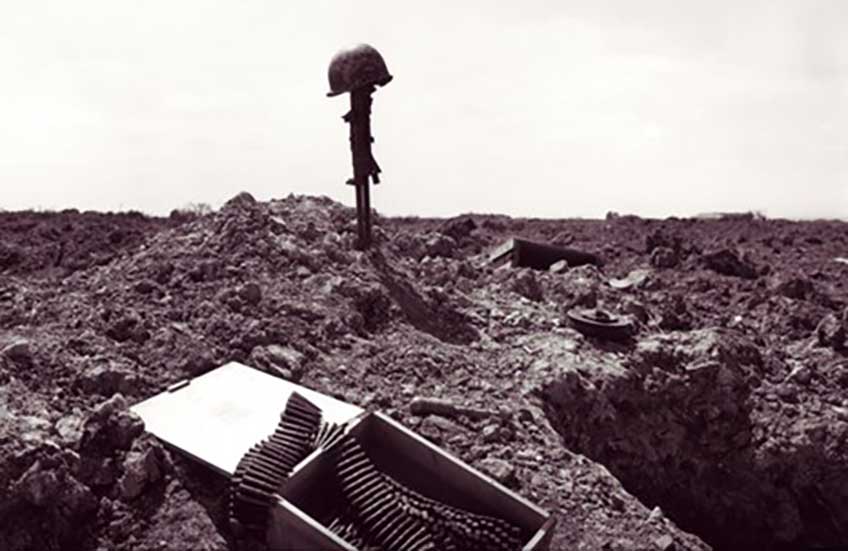
In the aftermath of the intense battle, one particular memorial to a fallen Ranger was raised amid the craters and debris at Pointe Du Hoc. A U.S. M1 helmet was placed on top of the handgrip of a Vickers K Gun, the muzzle of which was stuck into the soil.

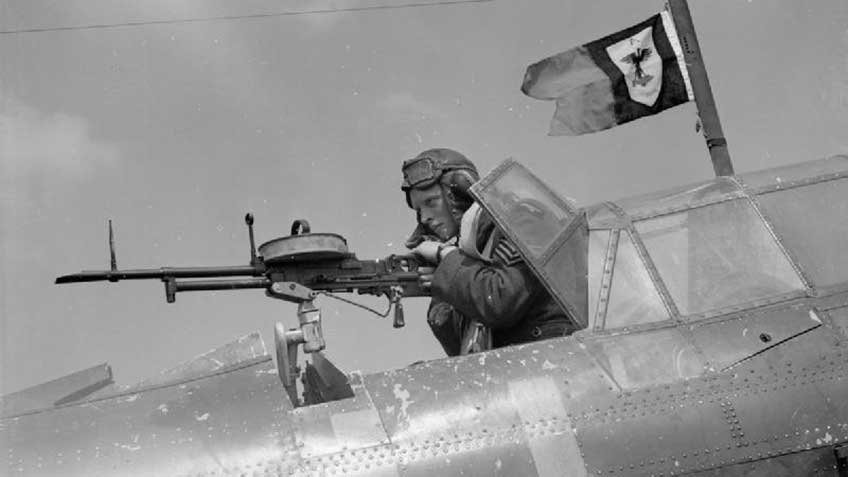
Although a British design chambered for the .303 British cartridge, K Guns were mounted on the ends of extending ladders that were, in turn, mounted on DUKW amphibious trucks. The plan was that the DUKWs would swim up to the beach, then roll up to the base of the cliff at Pointe Du Hoc and extend the ladders so that the K Guns could provide suppressing fire while the Rangers conducted their assault on the battery.

A sergeant air-gunner mans his .303 Vickers K-type gas-operated machine gun from the rear cockpit of a Fairey Battle of No. 103 Squadron RAF at St-Lucien Ferme near Rheges. Note the unofficial flight and squadron pennant flying from the radio mast. (Imperial War Museums)


Because of its blended hand grip/trigger and 60-round pan magazine, the K Gun was anatomically well-suited for the mission in ways that the M1918A2 BAR and the M1919A4 .30-cal. machine gun were not. Of course, the Rangers could not expect to be resupplied with .303 cartridges, but they were not planning to use their K Guns beyond the morning of June 6, anyway.

When the ammunition ran out, it would be all over and the K Guns were to be discarded as the battle pushed inland. That is why a British automatic weapon can be found among the spent shell casings and exhausted smoke grenades at Pointe Du Hoc in the American sector of the invasion area.

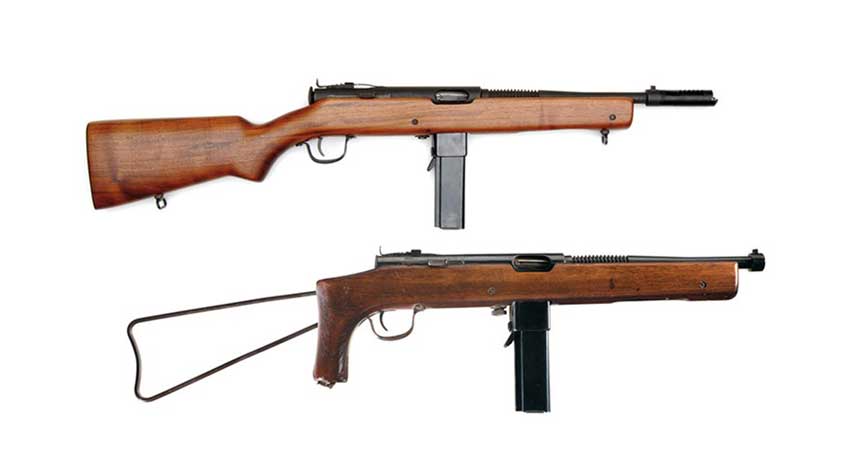
Two types of Reising submachine guns were procured by the U.S. Marine Corps during World War II. The first type is the Model 50, which had a full length wooden stock and a compensator found on the barrel. The variant with the folding stock was the Model 55 and was procured for use by the Marine Corps parachute units early in World War II.


Harrington & Richardson Model 50 Reising

The Vickers K Gun was not the only obscure firearm associated with the battle at Pointe Du Hoc. On the afternoon of June 6, the Rangers began sending prisoners down to the beach. They were not just German soldiers, but also Italian and French laborers from Organisation Todt who had been captured during the battle among Pointe Du Hoc’s craters.

When the prisoners reached the beach, they were loaded aboard landing craft being used to evacuate the wounded out to the ships lying just off shore. Although they ultimately ended-up aboard an LST (Landing Ship, Tank), at first the prisoners were taken to the battleship U.S.S. Texas (BB-35). With prisoners coming aboard, the ship’s Marine Detachment was called on to draw arms and serve as guards.

While the Marine NCOs carried M1911A1 pistols, the guards themselves were armed with one of the unlikeliest guns of D-Day: the Model 50 Reising submachine gun made by Harrington & Richardson. It may not be well-known, but U.S. Marines participated in the D-Day invasion, and many of them did so with their Reisings.

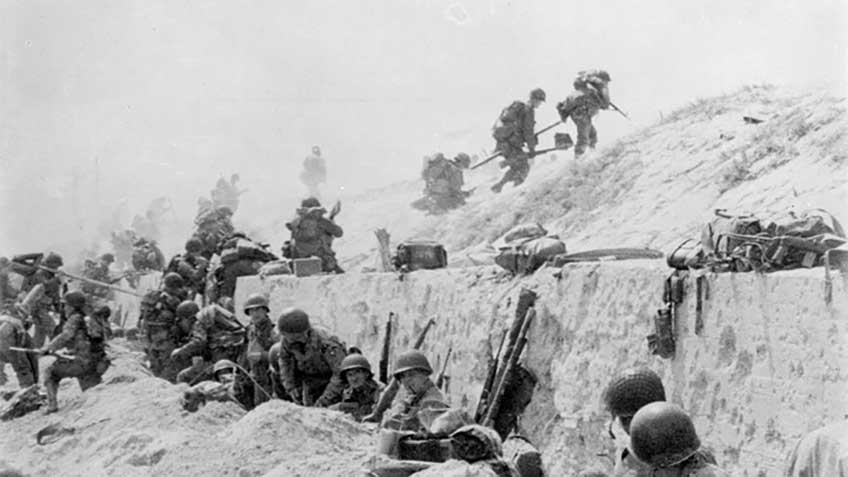
U.S. Army VII Corps Soldiers from the 4th Infantry Division crossing the seawall and sand dunes on Utah Beach. The men in the foreground are from the 101st Airborne Division's 327th Glider Infantry Regiment, which landed amphibiously rather than by glider. Note the M1A1 Carbine on top of the seawall at the far right.


M1A1 Carbine

Even among the more common U.S. infantry firearms involved in the assault on fortress Europe there were some surprises. Because of its light weight and detachable, 15-round box magazine, the M1 Carbine saw widespread use during the invasion, but the straight stock version of the carbine was not the only configuration that fought the battle for Normandy.

The M1A1 Carbine, with its folding stock, was also present in large numbers. Although the fact that it showed up in the airborne division drop zones is not an altogether learned observation, the photographic record also reveals that the M1A1 made a few appearances on the invasion beaches, too.

As the battle developed on Omaha Beach on D-Day morning, a group of soldiers from L Company, 16th Infantry Regiment, 1st Infantry Division, together with some troops from the 29th Infantry Division’s 116th Infantry Regiment, sought shelter at the base of the high chalk cliffs of the Fox Red Sector.

In a photograph showing the mixed group gathered there, one man has the folding stock of his M1A1 Carbine tucked under his forearm while he cleans sand out of its action. An image captured at about that same time only 16 miles to the west shows troopers from the 101st Airborne Division’s 327th Glider Infantry Regiment gathering on Utah Beach. In that photograph, one man has laid his M1A1 Carbine on top of the seawall there before moving inland.

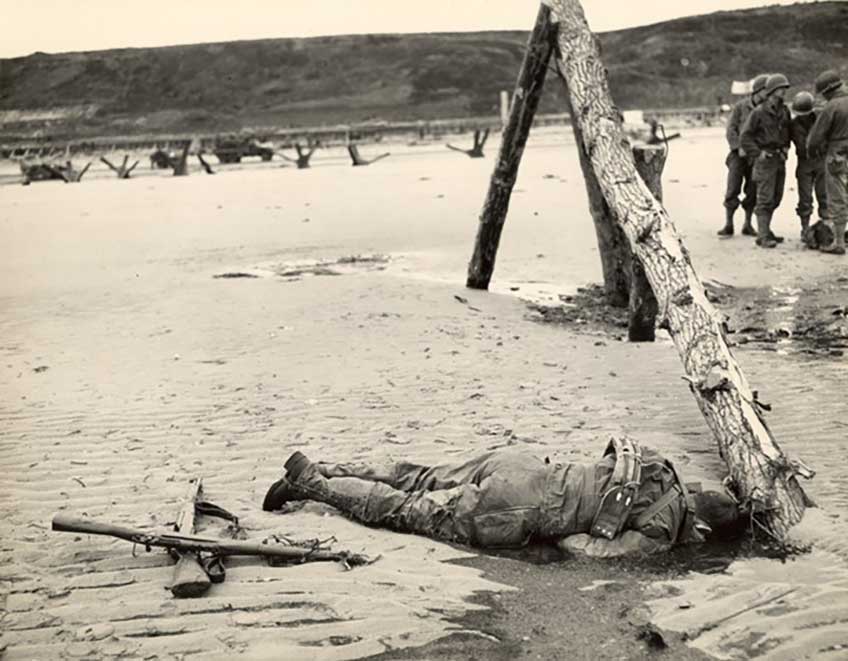
The body of a young U.S. Soldier lies face-down in the sand at the base of an obstacle on Omaha Beach. His M1942 HBT trousers and M1941 Field Jacket suggests that he was a ranger either from the 2nd or 5th Battalion. He still wears his M1926 Inflatable Lifebelt and two rifles lay at his feet: an M1 Garand and a Model 1903 Springfield.


U.S. Model 1903 Springfield

The U.S. Army infantry rifleman who liberated France during the summer of 1944 did not always do so using the U.S. Rifle, Cal. .30, M1. Although the Garand was certainly the most abundant service rifle in use with American troops at the time, another rifle did the job alongside it: the Model 1903 Springfield.

From the sands of Omaha to the streets of Cherbourg, the ’03 was there through it all. In old and new configurations, it fought from June 6 through to the end of the campaign in the hands of soldiers from both support units and front-line combat units.

In fact, one of the most famous photographs taken in Normandy in June 1944 shows a group of soldiers carrying ’03 rifles while they climb the bluff above Omaha Beach. They are all from the 2nd Infantry Division’s 23rd Infantry Regiment, and they brought 1903 rifles to France that summer because their commanding officer told them to.

Col. Hurley E. Fuller, a World War I combat veteran, preferred the M1903 rifle, and he made sure that the men of his regiment carried it instead of the Garand. Thus, even as late as June 1944, the Model 1903 Springfield was the primary battle rifle of one of the infantry regiments attacking Hitler’s fortress Europe.

African-American Soldiers from the 320th Barrage Balloon Battalion aid in the hunt for a German sniper in Saint-Laurent-sur-Mer on June 10, 1944. The Soldier at the far left is armed with a Model 1903A3 Springfield.


U.S. Model 1903A3 Springfield

The M1903 rifle also served in many of the other U.S. units fighting in Normandy during the summer of 1944. In fact, its use was so widespread that one particular photograph of an Ordnance Maintenance and Repair Company working in a hedgerow enclosed field near St.-Lô on July 18, 1944, shows hundreds of ’03s piled up and stacked high for servicing.

Although the photograph depicts only examples of the standard M1903 rifle, the newer M1903A3 was present for the Normandy battle as well. Modified for World War II mass production and manufactured by Remington and Smith Corona, the ’03A3 conserved precious raw materials and could be made faster and at less cost.

A product-improved version of the ’03, it was distributed among support troops from Military Police and Barrage Balloon battalions and shows up in photographs throughout the campaign, although with less frequency than the standard M1903 rifle.


U.S. Model 1903A4 Springfield Sniper Rifle

Still another version of the ’03 participated in the liberation of France: the M1903A4 sniper rifle. With its Weaver M73 (or M73B1) 2.75X scope mounted using the Redfield Junior base, the ’03A4 provided the U.S. Army’s only sniping platform during World War II.

Although it served many different units during the campaign, we know that at least one ’03A4 served in the 313th Infantry Regiment, 79th Infantry Division, because the rifle can be seen in a photograph taken in Cherbourg on June 26, 1944.

The photographic record provides some of the best documentary evidence of which firearms were being used where and when in Normandy.

For the most part, it shows the use of the standard small arms that we normally associate with Allied and German infantry battalions in combat during the summer of 1944. That same record leaves evidence of the interesting diversity of guns used on both sides of the fighting.

The surprises that showed up on the beaches and in the hedgerows of northern France that summer reveal the significant demands exerted on both sides of the conflict to put as many guns as possible in the fight.

Sunday, May 30, 2021

The Breechloading Sharps "History and Performance

I am still on vacation and am still using my baby laptop, internet is spotty and using this laptop is problematic until my new laptop gets here so my posting will be spotty.  

 I remember reading about the "Sharps" rifles as a kid but never really "Saw" one until I was living in the barracks in Germany and we were buying Westerns on VHS, I had bought a bunch of John Wayne Movies that way.  Something about the Duke, I also had my old VHS machine that could bootleg any VHS tape in existence, it was an old JCPenny machine that was made before they put the chip in that scrambled the tape when you would try to record a store bought tape, y'all older people know what I am talking about. Well Anyway I saw this new movie for "Quigley Down Under" with Tom Selleck and I knew him as the "Magnum P.I." guy and he was branching out into movies.  Well I "rented" the movie with the intent of "burning me a copy"...hey hate all you want, the hate keeps me warm....I laugh at the warnings at the beginnings of the Movies ...HAH, Well anyway, the old machine finally died several years later and I wound up pitching the VHS tapes because I could buy the DVD's soo much cheaper and far less space and with better picture quality.  


     Well this was the first time I actually saw a "Sharps" rifle being used and I was impressed, and it tied in with what I remembered from my reading all the Buffalo Bill" and the other Hunters of the Buffalo's of my youth.   Plus there was this line..

And here is a video of the actual rifle used in the movie

                                               The "Quigley Rifle"

I shamelessly clipped this off "American Rifleman".


 By Rick Hacker

It was an internationally renowned rifle whose inventor never got rich. And although it was publicly praised by respected frontiersmen such as John C. Fremont, Buffalo Bill Cody and Theodore Roosevelt, the company went bankrupt just as the American West was booming. Yet, the Sharps rifle amassed so much glory in its 32 years of existence that its legacy has continued into the 21st century.

The history of the single-shot that tamed the West began on September 12, 1848, when Christian Sharps patented a unique breech-loading rifle that utilized a lever-operated sliding breechblock. Pressure from the ignited powder charge helped seal the chamber, making the gun safer, more powerful and more accurate than previous breech-loading designs.

right side sharps carbine wood stock gun metal steel blue finish shine


This was still the era of the muzzleloader and the Sharps breechloader had an enticing military appeal, as soldiers could reload without having to stand and expose themselves to enemy fire. Unfortunately for the young inventor, the U.S. was at peace in 1848 and there was little interest in his new breechloader. A subsequent lack of funding forced Sharps to sub-contract the manufacture of his rifle; the first 700 guns weren’t even stamped with his name.

Things began looking up when Robbins & Lawrence agreed to manufacture Sharps’ Improved Model of 1851. A factory was built in Hartford, Conn., and the Sharps Rifle Manufacturing Company was born. But personality clashes soon caused Christian Sharps to leave the firm, although he continued to receive royalties on every rifle sold.  It was Richard S. Lawrence, chief armorer of the company, who kept the rifle alive, improving on the original patent.

Subsequent models, including the slant-breech Model of 1852, the extremely rare Model 1855 (of which only 800 were produced), and the more efficient vertical breechblock of the New Model 1859, eventually brought the Sharps rifle to the attention of the U.S. government. By using pre-rolled paper “cartridges,” a breech-loading Sharps could be fired five times faster than the standard-issue Springfield rifle-musket. The carbine was especially favored by mounted dragoons.

left side rifle carbine wood steel silver antique lever-action rifle gun


The War Between The States brought orders and much-needed Yankee dollars into the fledgling Sharps company. The rifles’ reputation became so great that Colonel Berdan’s 2nd Regiment of Sharpshooters threatened mutiny when it was shipped 2,000 Colt’s revolving rifles instead of the Sharps rifles it had been promised. They got their Sharps. By the end of hostilities in 1865, a total of 80,512 carbines and 9,141 full-stocked military rifles had been shipped to Union troops, with the Model of 1863 being the last percussion Sharps made. Interestingly, after the war, approximately 5,000 additional carbines were produced with 1865 stampings. However, aside from the barrel stampings, these guns are virtually identical to the Model 1863.

In 1874—shortly after the deaths of Richard Lawrence and Christian Sharps—the company decided to close up shop, right on the eve of America’s great western expansion! Fortunately, a group of investors reorganized the firm as the Sharps Rifle Company. Their new venture was launched with the Model 1874, a cartridge rifle they stamped “Old Reliable.” A variety of options were offered for both target and sporting versions, including special sights, extra-length barrels and engraving. The Sharps was truly a custom rifle, a labor-intensive dedication to perfection. While Winchester’s breech-loading repeaters were selling for as little as $10, a single-shot Sharps listed for $33. Firepower and price tags aside, savvy frontiersmen opted for the more expensive Sharps, because it could do something the weaker toggle-linked Winchester 73s and 76s could not: The Sharps could fire hefty, bone-crushing bullets capable of taking down any animal on the North American continent. With specialized cartridges such as the .44-77 bottleneck, .45-100 and .50-100, the 1874 Sharps became the big-game rifle.

left side carbine lever-action classic antique metal wood steel silver


But it was in the hands of buffalo hunters that Sharps validated its Old Reliable moniker. From 1871 until 1883, an estimated 20,000 “buffalo runners” scoured the Great Plains. In order to harvest the huge, tenacious bison, a hard-hitting, long-range rifle was needed. As a result, the majority of market hunters carried one or more Sharps rifles, switching guns when the barrels became too hot after firing volley after volley at ranges often exceeding 400 yds.

A notable chapter in Sharps history occurred in 1874, during the Battle of Adobe Walls. A war party of more than 700 Kiowa and Comanche Indians had 28 buffalo hunters pinned down. Seeing one of the chieftains on a distant rise, a young hunter named Billy Dixon borrowed a “Big .50” Sharps, took aim, and toppled the warrior from his horse.

left side wood stock rifle metal steel gun carbine classic vintage old gun


Unnerved by the rifle’s far-reaching accuracy, the Indians hastily departed. Later, an Army surveyor officially recorded the distance at 1,538 yds. (seven-eigths of a mile). Years afterward, Dixon admitted it was a lucky shot, but that didn’t matter; the Sharps’ long-range reputation had achieved legendary status.

The Sharps excelled on target ranges as well. During one memorable match at Creedmore in 1877, British marksmen were soundly defeated by Americans shooting long-range Sharps and Remington Rolling Block rifles. Later, an incredulous member of the British team visited the Sharps factory, where he shot 16 consecutive bullseyes at 1,000 yds., using an 1877 Long Range Express Rifle. Thus, another convert was made. In spite of its success, economic woes plagued the Sharps Rifle Company. The guns were expensive and time-consuming to produce, and the company was finally forced to cease operations when a large British order was canceled. The last rifle was shipped in 1881. And yet, the gun had become immortal; it could not die.

metal stamp black steel closeup gun parts barrel action rifle


Today, not only are originals highly collectable, but replicas are eagerly sought by reenactors, competition shooters and hunters. They are popular for the same reasons now as the originals were back in the 19th century: reliability, ease of cleaning and accuracy. Of course, today we have the added aura of nostalgia. But unlike the originals, not all replicas are created equal. There are two distinct categories of modern-day Sharps: custom guns manufactured in America, and mass-produced replicas made in Italy.

The custom market is dominated by Shiloh Rifle Manufacturing Company and C. Sharps Arms, both within shouting distance of each other in Big Timber, Mont. The rifles of these two companies are so close to the originals that parts will interchange, and they are hand assembled with the same care and precision as the old Sharps. Neither company makes the pre-cartridge 1863 any longer, but just as in 1874, both Shiloh and C. Sharps Arms offer a wide variety of options, including round, octagonal and half-round barrels of various lengths, Hartford pewter or Bridgeport schnabel fore-ends, single or double-set triggers, crescent or military buttplates, special sights, fancy walnut stocks, and engraving. In short, if you’re willing to wait and you have the budget, you can get the Sharps of your dreams.

gun in hands carbine sharps rifle ammo ejection stop motion outdoors arms metal wood rifle


So what differentiates Shiloh from C. Sharps? Actually, very little, in appearance and shootability. In fact, at one time Shiloh was actually C. Sharps Arms, but like the original company, a personality dispute split the firm into two entities. However, Shiloh only makes the 1874 Sharps, while C. Sharps Arms offers the 1874 as well as the 1877 and the never-originally-produced 1875 models. Shiloh’s receivers are investment cast in their factory, where they also make their own button-rifled and burnished barrels; C. Sharps receivers are machined in-house from solid stock and fitted with cut-rifled Badger barrels. Both firms specialize in traditional Sharps calibers as well as the .38-55 and .40-65 Win. Perhaps the biggest difference between the two firms is the two-and-a-half year wait for Shiloh rifles whereas C. Sharps Arms can ship guns within two to eight months. They also stock some completed models for immediate delivery.

The Italian replicas are notably less expensive and offer a wider variation of models. For blackpowder shooters there is the .54-cal. 1859 and 1863 carbine, rifle and military muskets, as well as numerous versions of the Model 1874, including the Hawken-stocked Gemmer and a Schuetzen target model. Calibers range from .40-65 to .45-120, with a .45-110 scheduled later this year. Note: If you want a Sharps “Big .50,” you’ll have to go to a custom gun.

right side rifle wood metal steel classic carbine long range shooting gun
The above 1874 Davide Pedersoli reproduction gun is optimized for today's long-range shooting with an included Lothar Walther bull barrel, improved stock design and tapped for optics.


Virtually every replica is made by either Davide Pedersoli or Armi Sport. Importers include Taylors & Co.Navy ArmsCabela’s and Cimarron Arms; some of the largest selections are available from Flintlocks, Etc. and Dixie Gun Works. The Pedersoli guns are slightly more expensive, and its well-grained stocks have a satin polish. Armi Sport uses an oiled, matte finish for its wood and its receivers are very close to the originals in dimension. However, the one common failing of nearly every replica is the slight “perch belly bulge” of the fore-end. Why these fore-ends can’t be profiled like the originals is beyond me.

Cimarron Arms actually fills a gap between custom rifles and mass-produced replicas, as special after-market finishing and customized engraving are offered. In addition, Cimarron was responsible for the Italian-made copy of the famous Quigley Model. The original Quigley was made by Shiloh for the 1990 Tom Selleck movie, “Quigley Down Under.”  However, it was Mike Harvey of Cimarron Arms who talked Pierangelo Pedersoli into producing a more affordable replica. Today, it is catalogued by practically every importer and has become one of the most popular of all Sharps replicas. It should be noted that the Quigley Sharps is simply an 1874 Hartford-stocked No. 3 Sporting Rifle with an 1863 patchbox. Unlike many of the Italian replicas, Shiloh’s original movie version had no provision for a saddle ring. Interestingly, my Dixie Quigley has a saddle bar but no ring. Some importers outfit this 13-lb. rifle with a vernier tang sight, enabling it to live up to its motion picture reputation as a long-range bucket buster.

gun sight metal round aperature parts steel old


In reality, every Italian Sharps is capable of better accuracy than its factory sights permit. Personally, I don’t know how anyone can shoot a respectable group with the clunky open sights that come on most of these otherwise excellent rifles. The first thing I did on my Dixie No. 3 Sporter was to equip it with the more practical flip-up buckhorn sight from C. Sharps Arms (a similar sight is available from Dixie). And when I took my Pedersoli Quigley .45-70 Govt. out to the range the second time, it was wearing a Long Range Creedmore tang sight and Spirit-Level Front Globe Sight from Cabela’s. My 100-yd. group from the previous week immediately shrank from 4 “ to a less-embarrassing 3/4” using factory ammo. Speaking of sights, the widest selection of accessories are stocked by Cabela’s and Dixie Gun Works. Be sure to check out the cross sticks for long-range shooting and Dixie’s numerous Sharps bullet molds.

All of which brings us to the actual performance of these guns in the field. Without bragging, I can honestly state I own twice as many Sharps rifles as John C. Fremont (he had two). Although I had hunted with an old .50-70 carbine back in my growing-up days in Arizona, finger-pressing a .490 round ball into a brass case filled with FFG blackpowder never quite brought out the full potential of the gun. Years later I bought a C. Sharps Arms 1863 Gemmer (no longer made). Although the .54 military action holds 60-grs. of blackpowder, I had the factory ream the chamber to accommodate 90 grs. This proved to be better suited for big game, as the elk over my fireplace mantle can attest. Rather than load loose powder in the field, I rolled 90-gr. tubes out of potassium-soaked paper wrapped around a wooden dowel. I sealed one end, removed the dowel, filled the tube with FFG blackpowder, and then folded over and glued the other end. I inserted these powder-filled paper “cartridges” into the chamber after I had seated it with a greased conical bullet. You can do the same thing today with Dixie’s Combustible Cartridge Kit. Closing the breech cuts off the end of the “cartridge,” exposing the powder to the flash from the musket cap.

hunter with animal outdoors gun rifle cowboy buffalo sandy blue sky


In the early 1980s I decided to “go modern,” and I acquired an 1874 C. Sharps Arms No. 1 Deluxe Sporter, with double-set triggers, premium wood and chambered in .45-70. I hunted a variety of big game with this rifle throughout the American West and Africa. Most of my shots were taken at 100 yds. or less, but the more I hunted with that Sharps, the more intrigued I became with its long-range reputation. After reading about Theodore Roosevelt’s exploits with a No. 3 Sporter chambered for the .40-90 bottleneck cartridge, I ordered a similar 12-lb. rifle.

The original .40-90 packed 100 grs. of FFG, which produced 2,097 ft.-lbs. of muzzle energy. With the advent of smokeless powder, duplex loads became popular, as the smokeless powder burned the blackpowder fouling that clogged the shallow Sharps rifling. Consequently, I settled on a duplex load of eight grs. of MP 5744 beneath 85 grs. of FFG and a paper-patched 385-gr. soft lead bullet. Taking a tip from the old-timers, the paper patching reduced leading and, in conjunction with the duplex loads, improved accuracy. This gave me 2,130 ft.-lbs. of energy and sent the bullets out at 1575 f.p.s.

It was with this combination of cartridge and rifle that I have been able to verify some of the “tall tales” of the old-timers. For example, it is possible to kill a 2,000-lb. buffalo with a single shot from a Sharps. I have done it, stalking a free-roaming Montana herd and firing at the lead bull at a range of 125 yds. On another occasion, using my tang sight and firing offhand, I dropped an antelope at 285 yds. I would never put this in print if I hadn’t had a witness; John Schoffstall, owner of C. Sharps Arms, was with me and saw the shot. We both were equally amazed—I now know how Billy Dixon felt.

Yes, the Sharps lives up to its reputation. But as with anything, you get what you pay for. So study the catalogs, examine the guns if possible, compare prices, and decide whether you want a rugged hunting rifle, a tack-driver, or a collectable heirloom. But whether you end up taking your Sharps to the target range or the open range, you’ll soon realize why they called it “Old Reliable.”