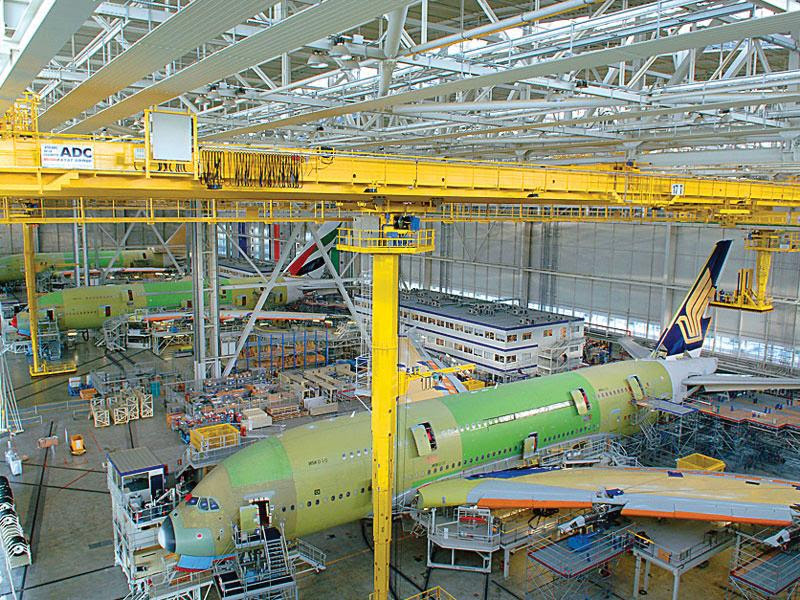
Trying to find time to post pity comments, but ran across this in an email from my work email. I had posted a lot about the "A380", the plane is a technological marvel but American Carriers will not touch an A380 for a couple of reasons, 1. They are maintenance heavy and American carriers are a "For Profit" enity meaning that they have to earn money to return an investment to the shareholders and the plane is a money pit. All the airlines that fly the A380 are flag carriers for their respective nations and they get a "stiped" from their home government to "fly the Flag, because there is a lot of prestige to having a Flag Carrier. We in the United States never had a "National Carrier" although "Pan-Am" was the closest we ever had to a national carrier.
Data: Checking In With The A380 Two Decades After Paris Debut
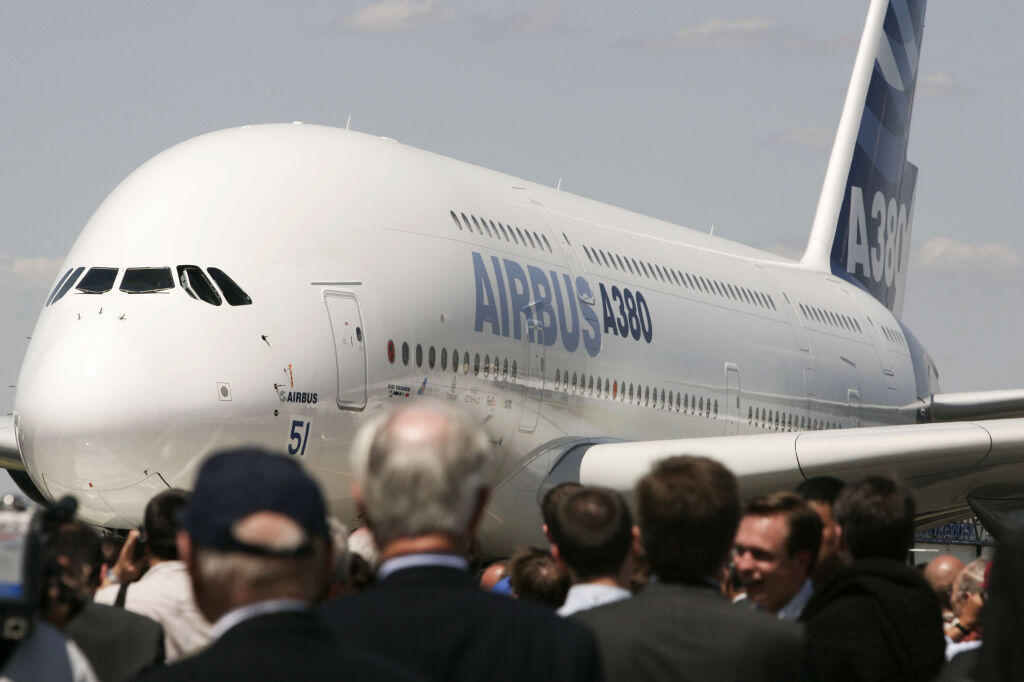
The Airbus A380 on show at Paris Air Show for the first time in 2005.
Credit: Pascal Le Segretain/Getty Images
Twenty years on from wowing crowds at Le Bourget for the first time during the flying display in 2005, the Airbus A380 has not reached the heights once hoped for the program.
While the production run has now ended and a viable secondary market for the airframe is yet to be found, the A380 has nevertheless recovered better than many expected following the COVID crisis.
The global in-service fleet of A380s has dropped by 53 aircraft since May 2019, a fall of 22.7%. Yet total flight hours in May according to Aviation Week’s Tracked Aircraft Utilization tool were still 78.4% of May 2019.
However, a big year is coming up for the fleet. The mode age of the remaining in-service A380s is 11 years old, meaning 26 of the type are due for their costly 12-year D checks next year. Of the remaining in-service fleet, 111 airframes—or 73%—are younger than 12 years, which means operators have decisions to make.
British Airways’ A380 fleet is around the heavy check age, and the airline previously committed to continue operating the type, good news for its MRO partner Lufthansa Technik Philippines, which is contracted into 2027. Aviation Week data shows the flag carrier’s A380 fleet is racking up more monthly flight hours this year than in 2019 and outperforming average utilization for the global fleet.
Some more information to accompany my post from Friday, Like I said, I am not a fan of this particular aircraft, but some people are.
This came from a 3rd party email from my work email.
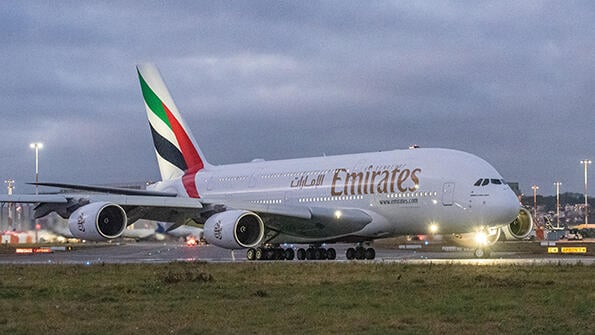
Credit: Emirates Airline
Airbus
A380s that sit idle in severe environmental conditions may be
susceptible to wing-spar cracking previously linked to the wing’s age,
prompting the European Union Aviation
Safety Agency (EASA) to adopt broader inspection criteria recommended by the manufacturer.
A
May 11 airworthiness directive (AD) requires A380 operators to
calculate “factored time on ground” (FTOG) and conduct inspections based
on Airbus’ revised criteria. The AD is
based on a May 11 Airbus operators’ telex.
The AD builds on existing
inspection criteria for the A380 wing box areas: the top and
bottom flanges of the outer rear spar (ORS) between Ribs 33 and 49, the
outer inner front spar (OIFS) between Ribs 8 and 14 and the outer front
spar (OFS) between Ribs 38 and 49. The original
AD was issued in 2019, covering only part of the affected area and
setting inspection thresholds starting 15 years after the wing box
assembly date. Feedback from operators and additional work by Airbus
prompted subsequent ADs that expanded the areas that
needed checks and shortened the inspection thresholds. The most recent
AD, issued in 2022, mandated starting ORS inspections 11.5 years after
the wing box assembly date.
The new criteria affect only the ORS area.
“Since
that [2022] AD was issued, prompted by analysis of further inspection
results, it was determined that the threshold for ORS inspection must
depend on more criteria than
only the wing age,” EASA said. “The severity of ORS findings showed a
relationship with the amount of time an airplane spends on ground (e.g.,
parked, stored) in severe environmental conditions. This new criterion
introduces the need to calculate FTOG as defined
[in the Airbus telex].”
Among
the new triggers for ORS inspections is an aircraft returning to
service after 12 or more months in service. The most recent, previously
mandated checks are still in place.
Wing inspections take about one week. The non-destructive checks are typically performed by airlines in-house.
Aviation Week Network’s Fleet Discovery shows 140 A380s in regular service. Another
75 are listed as parked or stored. Emirates Airline has 121 of them, including 88 in service.
I have blogged quite a bit about the "A380 And The WingBox Issues" and the A380 in general. I wasn't a fan of the airplane, I work on Airbuses and they are good airplanes, but for some reason, I never got the warm and fuzzies for that plane and my employer and other American Carrier won't touch the A380 despite the plane being a Technological marvel for several reasons, first off, the plane is maintenance intensive and the airlines that do use the plane are subsidized by their host Country and American Carriers are not, We are required to make a profit to survive and make cost. Another reason is "Tenerife", having an A380 full of passengers turn into a lawndart is really rough on the company stock.
I got this from 3rd party in my work email
Credit: Ovidiu Dugulan/Alamy
FRANKFURT—A
phenomenon called hydrogen assisted cracking or hydrogen embrittlement
has been identified as the cause of accelerated crack development in
certain wing spars of Airbus
A380s that have been stored for extended periods of time.
“The
biggest driver is temperature; the second is moisture,” Pierre-Henri
Brousse, head of the A380 program, told Aviation Week. When aircraft are
on the ground and exposed to
extreme weather conditions, hydrogen is diffused into the materials and
causes embrittlement of the aluminum alloy, which in turn makes the
propagation of cracks easier.
The findings are behind a May 11 airworthiness directive (AD) issued by the European Union Aviation
Safety Agency (EASA) that introduced the concept of
“factored time on ground” (FTOG) and required inspections and
potentially repairs at intervals also linked to actual aircraft age and a
maximum takeoff weight (MTOW) threshold of 510 tons.
The
affected areas are the top and bottom flanges of the outer rear spar
(ORS) between ribs 33 and 49. Previous ADs also included instructions
for other parts in which defects
had been found—the outer inner front spar (OIFS) between ribs 8 and 14
and the outer front spar between ribs 38 and 49.
EASA
and Airbus had determined as early as 2019 that aircraft have to be
inspected 15 years after the date of the wingbox assembly.
Following
the findings, the maintenance limit was pulled forward twice. EASA
published an AD on Aug. 31, 2022, expanding on a 2019 directive. In the
AD, EASA said: “Occurrences
have been reported of finding cracks in the affected areas of the wing
ORS on in-service A380 aeroplanes. This condition, if not detected and
corrected, could reduce the structural integrity of the wing.” The 2019
AD, based on Airbus’ service bulletin A380-57-8263,
had initially set the 15-year limit. However, “since that AD was
issued, it has been determined that additional areas may be affected by
the same unsafe condition, and that all MSN (manufacturer serial
numbers) must be inspected.” EASA added in December 2022
that “recent inspection results have indicated the need for ORS
inspection from 15 years to 12.5 years.” That was later revised to 11.5
years—with the initial date of wing box assembly as the reference point.
But
that remained insufficient. “We inspected some aircraft that were
younger than the threshold described by the regulator,” Brousse said.
“And we had some findings.”
Airbus
then launched a deep dive into the data to try to understand why
aircraft as young as 10 years (after wing box assembly and therefore
with sometimes significantly fewer
years in revenue service) were developing the cracks. “We accumulated a
sample that became statistically relevant,” Brousse said. Eventually,
the research yielded results—namely that storage conditions have an
effect on how fast the cracking develops.
Importantly,
the findings will not “substantially change” Airbus’ recommendations
for storage of the A380 or any other type. The aluminum alloy of the
affected spars is no longer
used in any other Airbus aircraft and is changed to a different
material when parts are replaced during repairs. “We have no concerns
for other components,” Brousse said.
Airbus has not disclosed which airlines are most affected by the defects. However, Emirates said
in November 2022 that it is dealing with the issue. The airline had
parked many of its A380s at the Dubai World Central airport during the
coronavirus pandemic, where they were exposed to particularly high
temperatures and humidity during summer. Qatar
Airways and Etihad are two more Gulf carriers with A380 fleets, though Etihad is only now beginning to return its A380s to service.
According to Aviation Week Network’s Fleet Discovery database, 135 A380s are in active
service, with Emirates operating 87 of them. Singapore Airlines and British Airways are flying 11 of the aircraft each. Qatar
Airways and Qantas are following with seven and six,
respectively. Most current A380 operators are in the process of
returning more of the aircraft from storage, given how fast demand has
rebounded on long-haul routes.
Emirates has two more aircraft in parked/reserve status, six are parked and 26 are
stored.
According
to Airbus, wing inspections take about one week. The non-destructive
test inspections can typically be performed by airlines in-house.
Affected parts can be repaired
through local stopholes or reinforcements, or will be replaced.
Stopholes can be introduced in one shift, while the more extensive
repairs can take one week per area affected.
Finding
enough MRO capacity to deal with the repairs is an ongoing issue,
Brousse said. However, he described the situation as manageable and now
that A380s are being taken out
of service because of the cracking, Airbus is trying to find more MRO
providers globally that have the needed A380 capability and free
capacity. The manufacturer is also helping with repairs of some aircraft
that are performed in Toulouse.
Emirates has returned younger aircraft first to avoid running into inspection intervals
early. An Emirates spokesperson
said the airline is reviewing the inspection requirements outlined in
the May 11 EASA AD. “Currently, we see minimal disruption to
our scheduled A380 operations,” the spokesperson told Aviation Week.
“We are working on the mid-longer term MRO support requirements for our
A380 fleet. We expect a large part of the work will be conducted at Emirates’
Engineering Center, and we are also looking at supplementary support from Airbus and our MRO partners.”
I have blogged a bit about "The Airbus A380" on my blog over the years, and the Wingbox crack were on several of my blog post if you want to go through the articles. I personally preferred the Boeing 747 series airplane, but I don't discount the technological marvel of the A380. My employer didn't buy any 747-8's and we had retired our older 747's a while back, We are heavily into Airbus but we won't touch the A380, the official word is that the plane doesn't work on our route, that the "A330" and the "A350" and the "B767" handle the international routes quite well.and the plane is not efficient and actually a money loser and we unlike certain airlines that are state supported have to make a profit for our stockholders and keep us employed for our job security and the unofficial belief among many is that to have an A380 turn into a lawndart and equal to the body count of "Tenerife in 1977" make the stock and company lawyers have a rash. You notice that the A380 is not on any Airplane fleet in the Americas, draw what conclusion what you will. I pulled this off one of my 3rd party news sources .
Emirates currently has 84 Airbus A380s in service.
Operators of olderAirbusA380sare
finding that cracks in some areas of wing spars are making a return to
service a significantly longer process, as inspections and repairs take
weeks to complete.
Airbushas sent around 60 engineers to Dubai “to deal with the problem,”EmiratesAirline
President Tim Clark told Aviation Week. “Airbusis fixing everything. We have to get
the spars reworked in various areas.”
Emiratesis by far the largest operator of the aircraft with 84 flying now and was the
second customer to take delivery of the type followingSingapore Airlinesin
2008. The airline currently has four aircraft on the ground awaiting repairs, one of which has been flown toAirbus’
Toulouse site for rework as the airline is struggling to find
sufficient hangar space elsewhere. “This is inhibiting us,” Clark said.
Other airlines did not comment officially.
“They started seeing cracks appearing so [the European UnionAviation SafetyAgency
(EASA)] got involved,” Clark said. “As usual, some [aircraft] are worse than others. It is not a safety issue at the moment—we
are nowhere near that. But we will have to have a regular inspection program going forward.”
The affected areas are the top and bottom flanges of the outer rear spar
(ORS) between ribs 33 and 49, the outer inner front spar (OIFS) between
ribs 8 and 14 and the outer front spar between ribs 38 and 49.
EASAandAirbushad
determined as early as 2019 that aircraft have to be inspected 15 years
after the date of the wingbox assembly. But earlier this year one
youngerA380was
dismantled. “We found a higher number of cracks than we were used to
and outside of the areas that we knew,” said Pierre Henri Brousse,Airbus’
head of theA380program. “We launched a stress analysis
and found that there was no particular issue [that needed to be addressed].”
By now,AirbusandA380operators
have looked at around 20 aircraft that had reached the 15-year
threshold at time of inspection. “On most of the aircraft we found
something,” Brousse said, including on five that had not yet reached the
15-year limit. Because of the early program delays—the
firstA380delivery
took place more than two years
later than initially expected—there are cases in which wingboxes were
produced years before actual entry-into-service of the aircraft, meaning
“younger” aircraft can be affected, too, if wings had been stored for
an extended period.
Following the findings, the maintenance limit was pulled forward.EASApublished
an airworthiness directive (AD) on Aug. 31, 2022, expanding on a 2019 directive. In the AD,EASAsaid:
“Occurrences have been reported of finding cracks in the affected areas of the wing ORS on in-serviceA380aeroplanes.
This condition, if not detected and corrected, could reduce the structural integrity of the wing.” The 2019 AD, based onAirbus’
service bulletinA380-57-8263,
had initially set the 15-year limit. However, “since that
AD was issued, it has been determined that additional areas may be
affected by the same unsafe condition, and that all MSN (manufacturer
serial numbers) must be inspected.”EASAadded
that “recent inspection results have indicated the need for ORS
inspection from 15 years to 12.5 years.” Also, inspections have to be
repeated every three years.
EASAalso
made clear in August that “the threshold might be further amended upon
completion
of the currently ongoing analysis.” Brousse said Dec. 14 that, while
younger aircraft have been investigated, so far no findings on aircraft
with wingbox completion dates of less than 12.5 years require a change
in the inspection and repair regime at this
point.
According toAirbus, wing inspections take about one week. The non-destructive test inspections
can typically be performed by airlines in-house. Brousse said thatAirbushas
no plans for wing spar redesigns. Affected parts can be repaired
through local stopholes or reinforcements, or will be replaced.
Stopholes can be introduced in one shift, while the more extensive
repairs can take one week per area affected.
The spar cracks are not the first timeAirbushas
had to deal with wing defects. In 2012Airbusdiscovered
a much broader issue, finding the early development of cracks in
certain wing rib feet for which a composite material including a lighter
aluminum alloy (Al 7449) was used. The manufacturer introduced a
retrofit and forward-fit program that replaced the Al
7449 composite with the more traditional Al 7010 at the time. According
to Brousse, there is no connection between the two issues as Al 7085 is
used for the spars.
According to theAviation Week NetworkFleet Discovery
database,Qantascurrently
operates the only three
aircraft in revenue service that are older than 12.5 years, though the
real threshold of wingbox production is unclear. VH-OQB is the
Australian carrier’s fleet leader at 14.5 years.Singapore
Airlineswas the first carrier to take delivery of anA380in
October 2007, but that aircraft and several more of its earlyA380shave
either been scrapped or are stored.
Emiratesreceived its firstA380in
July 2008, but that aircraft and several more have been scrapped. Clark said that the airline is pulling youngerA380sfrom
storage first to deal with the wing spar repairs and limit the capacity effect.
Lufthansais another airline that will return theA380next
year, moving its base from Frankfurt to Munich. The German carrier will
only take up to five of its eight remaining aircraft out of long-term
storage. Six more have been sold toAirbusand
are in the process of being handed back to the manufacturer. Four ofLufthansa’sA380sare
now older than 12.5 years.
According toAviation Week Network’s Tracked Aircraft Utilization tool, the combinedA380fleet
operated 5,300 cycles in November—more than twice as many as the 2,400 in November 2021.
I clipped this from my work email from a 3rd party source, I get news and tidbits in my email about aviation happenings and future trends, I may be a Chemtrail Technician, but I do want to keep updated on what is transpiring in my industry. This article is an opinion piece, I will add something to this persons opinion. Emirates is a State supported Airline, they don't have to make money, they are supported by petrodollars, that is the reality that most airlines don't have is a "Sugar Daddy" known as a governmental entity that will subsidize them. My employer and other American carriers before Covid had a huge squabble with the Middle Eastern carriers, it was called the "open Skies" agreement dealing with free trade,The threat the Middle East three carriers poses to my employer and other US airlines is a very serious matter. For more than a decade, Emirates, Etihad, and Qatar airlines have received over $50 billion in subsidies from their governments, in violation of Open Skies agreements that require fair competition. The subsidies allow these airlines to sell cut-rate seats without ever needing to turn a profit. That floods the international aviation market and forces other airlines out of important, profitable routes. The CEO on one of the U.S. Carrier has been quoted stating that within 10 years, one of the US majors will be out of business as a result of these unfair practices. I tried to explain to people especially to people that never has been to the middle east, "It is not your country that determines what happens, it is your familial connection, your tribal connections, or what religion you belong to over there. In Qatar for example, the extended family owns the airline, the airport, the airport services, and anything related to it, so they give each other the "Family Discount" and everyone else pays full freight plus a surcharge, it is the price if doing business in the Middle East. Emirates is the Same way as are the other airlines in the Middle East, whereas here in the United States and Europe, the climate is much different, the governmental relationship is more adversarial."
I view the A380 as a technological marvel, personally I preferred the Boeing 747, but the A380 is an impressive airplane and I have "Blogged about the A380" several times over the years.
Credit: Stefan Kruijer/Airbus
The Airbus A380 production line has closed, with the last of only 251 aircraft built delivered to Emirates in December. Now is a good time to look back on why the A380, though a favorite with passengers, was not successful commercially.
Explanations start in the cabin, where 10-abreast seating on the main deck was far too generous when compared to 10-abreast on a Boeing 777 or nine-abreast on a 787, the density standards to which almost all airlines have moved. While customers liked the extra room, they would not pay for it. No airline would push seating to 11 abreast, which is awkward, requiring a 3-5-3 layout.
A second feature that customers liked but that made the A380 less economically viable was the low noise level. Pushed by Singapore Airlines, Airbus designed the A380 to address that issue back when noise concerns around London Heathrow Airport were the driving environmental requirement rather than the carbon footprint. The result was that the Engine Alliance GP7200 and Rolls-Royce Trent 900 have a wider fan, and the aircraft has bigger, heavier nacelles than are optimal for fuel burn. If the A380 had been designed to minimize fuel burn, it would have been 0.5% more efficient.
The A380 also missed some key technologies and will be the last all-metal aircraft ever built. Carbon fiber is clearly superior, at least for the wings, though it is perhaps less critical for the fuselage. The metal made the aircraft heavier than it should have been, a problem compounded by carrying excess weight in preparation for a stretched version. The design and production delays, followed by slow deliveries, rendered the overall technology of the aircraft—particularly the engines—obsolete too soon. The slow sales did not encourage either engine manufacturer to invest in upgrades, a problem exacerbated by Airbus’ unnecessary and costly decision to provide a choice of engines.
The issues described here are not entirely market factors. The A380’s main problem was its inability to offer key features driving market demand.
Emirates was the only carrier that preferred the A380 over other options to the extent that it placed repeat orders, an acid test of a commercial airplane’s attractiveness. The aircraft works for Emirates because its average stage length for the A380 is low. Although used for some very long routes such as Dubai-Los Angeles, the more typical mission is 6-7 hr., to Europe or Asia. Emirates also often uses the A380 on even shorter routes, of a few hours, to the Indian subcontinent and within the Middle East. The A380 can compete on efficiency on dense routes of 7 hr., but not on routes of 10-12 hr., where the big twins are far more efficient.
Three changes would have been essential for the A380 to have been more viable commercially. First, it needed a stretch, perhaps of only 50 seats. Since adding seats would not have changed trip operating costs very much, the cost per seat would have decreased significantly. Second, to fill these seats with lower frequencies, operators would have needed to focus on leisure travel routes rather than business travelers. Finally, the aircraft needed technology upgrades or at least upgraded engines, the same recipe that has successfully been applied to the Boeing 737 and 777 and the Airbus A320 and A330.
When first launched, the Boeing 747-100 was not a big seller, but the stretched, reengined 747-200 was. With some different decisions and further investment, the A380 might have achieved similar success, at least in an environment not distorted by the disruptions of COVID-19.
Christopher Gibbs, senior advisor at Navier Consulting, served as Cathay Pacific’s engineering director for a decade.
I saw this article from something I got in my email at work, I have blogged about the A380 before, I personally preferred the Boeing 747-8 and I wish my employer had bought some of those 747's, but that iconic plane didn't really fit our business plan or route that we flew and as much as we like a plane, we are in business to make money. I have blogged about Airbus A380 before.
“
A few minutes before midnight on June 17, 2020, a mild summer Wednesday
night in the small town of Levignac in southern France, the local bar
normally would have been about to close. But that
night the place was full despite the raging pandemic, and outside the
street was filling with hundreds of people—both locals and many who had
come from Toulouse, a 30 min. drive away.
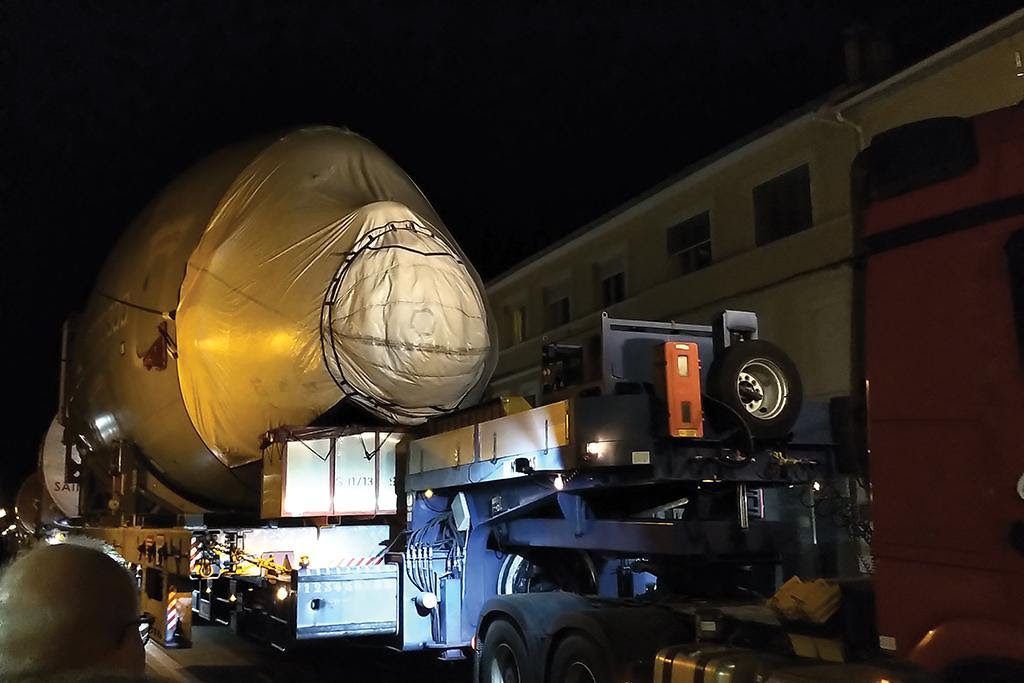
They were there to witness a historic moment: A convoy of trucks was transporting largeAirbus A380fuselage
sections on
the country roads of Toulouse’s hinterland to the Blagnac final
assembly line for the very last time. Those sections, accompanied that
night by farewell wishes of many who once worked on the program, have
since turned into the lastA380ever
produced, an aircraft that is slated to be handed over toEmiratesAirline in November.
But afterEmiratesfinally pulled the plug on a large follow-up order that would have saved the program in the winter of
2018, it was up to departingAirbusCEO Tom Enders to finally decide the ending for theA380.
It had become clear thatAirbuswould
never recover the €25 billon ($30 billion) or so in research and
development costs
sunk into the program over the years. And with no new orders keeping
production open even at minimal rates, it became unsustainable. Europe’s
most ambitious commercial aircraft program post-Concorde had become a
gigantic failure and a prime example of management
reading the market improperly.
Hundreds
assembled in the town of Levignac in June 2020 to bid farewell to the lastA380convoy.
Was it a misreading, though? Was there ever a chance of it continuing until demand recovery?
In the weeks before that final delivery, Aviation Week spoke with many
insiders who shared their views and memories. Among them were Enders and
formerAirbussales
chief John Leahy as well as Nico Buchholz, himself a formerAirbussales executive who later ordered the aircraft forLufthansaas
its head of fleet strategy. Some still think the program could have
been rescued. But the look back into its history also shows that
industry doubts about theA380’s
viability had begun even before first delivery
Enders was head of strategy atAirbus’ German shareholder DASA in the 1990s—the manufacturer was still a loose economic interest group
(French acronym GIE), a consortium of shareholders that was nowhere near being integrated. Much later, of course, theA380was
the key factor in fundamentally changing that. In the 1990s,
discussions about the risks and opportunities of building an A3XX were
intensifying after years of studies. “Airbusdid
not stumble into [building] theA380; we were very aware of the project’s risks,” Enders says. “But then, technology and the market changed
faster than everyone had thought.”
In hindsight, the writing may have been on the wall for theA380even before its own entry into service—even as early as
four years before. In December 2003,Boeingdecided to launch the 787, a revolutionary aircraft in many ways, particularly
in its use of lightweight composites for structural weight savings. By contrast, “Airbus’ achievement in theA380was
mainly to be able to build something that big,” says Buchholz. Other than that, theA380was structurally fairly conventional.
Of equal importance was engine manufacturers’ commitment to build powerplants for theBoeing 787that were significantly
better than those of theA380.
The consequences were fundamental: Suddenly, the paradigm of building
larger aircraft to cut unit costs was broken. The unit costs of 787—and
later theA350—were
comparable to or even better than those of the much largerA380,
but with a considerably lower risk of not being able to fill the
aircraft.
Unit revenues were the other side of the coin: There was greater
pressure on yields, with literally hundreds of additional seats to fill
on every flight. OnceLufthansastarted
flying theA380across the Atlantic, the airline found that the yield on its Frankfurt-New York route fell by almost as
much as unit costs.
Looking back, Leahy has harsh words forRolls-RoyceandGE
Aviation. “Airbuswas
blindsided by the engine manufacturers in 2000, when we were getting
ready to launch it,” he says. “Our program
people had assurances [from] the engine OEMs that there was nothing on
the horizon with better specific fuel consumption [SFC] for years to
come. And three years later, when we had not even delivered the first
aircraft,GEand
Rolls had engines with 15% better SFCs that they were bringing out for the 787. That leftAirbusat a commercial disadvantage
that was very unfortunate.”
The aircraft’s most important customer,EmiratesAirline President Tim Clark, agrees to an extent. “I regret that it was
not reengined, that the weight was not taken out,” he says. However, he also points to the many problems theA350and the
787 have had since the market introductions of the next generation of engines, issues theA380has not faced to the same
degree. He asks whether theA380may have had the same reliability issues, which are hard enough to handle on a 150-seat
narrowbody but could require large sums for passenger compensation and handling for just one canceledA380flight. The tradeoff
between efficiency and reliability was a big consideration.
WhenAirbusdecided to launch theA380,
it was still chasing another idea, and therefore the wrong target. “In the 1990s, not onlyAirbusbut also many airlines
were still very focused on four engines when it came to widebodies,” Enders recalls. AndAirbusthought it had to build
an aircraft that would compete with the 747 and break into theBoeingmonopoly on very large jets. In 2015, in the midst
of increasingly desperate struggles to find new customers, then-CEO Fabrice Bregier conceded that theA380had been launched
“at least 10 years too soon.”
Perhaps it was not launched too soon but too late: In 1990,Boeingreceived orders for 122 747-400s and delivered 70. Ten
years later, whenAirbuscommitted to building theA380,
747 orders were down to 26 and deliveries to 25. And with few exceptions since, 747 production has continuously declined.
Airbus’ growing problem was not just the 787, or later its ownA350,
which further deepened the market shift. In April 2004, it was none other thanAir France, inAirbus’
backyard, that took delivery of the first twoBoeing 777-300ERs. That aircraft, and not theA380,
replaced the 747 as the reference on long-haul trunk routes before slowly being superseded by even more efficient twins.
“We all have misjudged the future of the twins, and that led to the efficiency problem of theA380,” Enders says. “I only admit this reluctantly,
butBoeinghas
largely been right with its point-to-point argument.” He is referencing
the idea that passengers, when
having the choice, prefer nonstop flights over hub connections. Both
Leahy and Clark disagree with the idea that the hub concept has
weakened. “I don’t share the view that the days of the superhub are over
at all,” Clark says.
The two-year phase from 2005 to 2007 was crucial to theA380’s
early demise, not only because of the growing threat from more
efficient
twins. In those years, billions of euros in extra costs were added to
the program, and important decisions that could have been made were
not.
The aircraft had performed its first flight at the end of April 2005, a milestone for the entire aviation industry.Airbusgarnered
applause from around the world for the achievement. But a little over a
month later, the company was forced to announce the first (six-month)
delay in the program. As it turned out, different parts of the
consortium had used different versions of the CATIA
design software and, infamously, as a result many of the cables inside
the fuselage were too short.
An almost incomprehensible struggle followed.Airbusthrew
literally thousands of technicians and engineers at the problem.
Many in charge burned out—and many left, but those who stayed learned
tough lessons that were incredibly valuable for their later careers.Airbushad
to announce two more delays before finally regaining control of the situation toward the end of 2006.
The crisis was so deep that management considered the most radical
moves. “We asked ourselves whether we should terminate the program,”
Enders reveals. “But that would not have been right back then.
Development was very far advanced, and the reputational damage
would have been huge.”
There were still consequences.EADShad been formed in 2000 along with the launch of theA380.
The formerAirbusGIE was converted into a real company a year later. But in 2006,EADSacquired
the remaining 20% inAirbusSAS previously held byBAE
Systemsand proceeded with much deeper integration.
“We pushed through relatively brutal integration in 2006-07,” Enders
says. “Before that there had been a lot of talk about it but no real
action.”
Airlines had their own perspective, which changed substantially between
the 2000 launch and entry into service seven years later. “In 2000, you
could not predict what crystallized in 2005—that the aircraft was
technically outdated,” says Buchholz, who ordered
theA380sforLufthansa.
After all, the aircraft’s unit costs were advertised to be 13% better than those of the747-400. But then things started to move.
Japan opened up TokyoHaneda Airportfor international flights, weakening the argument that theA380was
needed for slot-constrainedNarita International Airport. China built new international airports at a record pace and encouraged long-haul
service to them. “You could get a feeling that theA380was going to be too large,” remembers Buchholz. “But you could not
really prove it.”
Buchholz contends that it might have been possible to rescue theA380, but it would have required early, decisive and painful action.
When the program was delayed bya cabin installation disaster,Airbusshould have used the opportunity to modernize the
aircraft with a better engine based on ongoing development programs for the 787 and later theA350. “With a better engine, theA380would
have had a longer life,” he says.
“With new engines, it would have been an unbeatable aircraft in the
marketplace,” Leahy asserts. “We came close to pulling it off. Had we
had the right engines, we would probably have rewritten history.”
But he does not think Buchholz’s idea of pushing for an early reengining
then would have been possible. “There were commitments made; the
engines were being developed. It would have pushed back the thing a
couple of years, [and] there would have been big fights
with the engine manufacturers. They had invested a lot of money into
that generation of engines.”
On Oct. 15, 2007,Airbusfinally delivered the firstA380toSingapore
Airlines. A little over a week later, the aircraft flew its first
commercial service from Singapore to Sydney. It was a major milestone
that,Airbushoped,
would pave the way for a less eventful future and a ramp-up of
production to 45 aircraft a year, a rate of just under four aircraft per
month. Of course,Airbusnever
reached rate 45. Production peaked at 30 aircraft in both 2012 and
2014. The last relatively big year for the type was 2016, whenAirbusagain
managed to deliver 28. However, the turning point that likely sealed
the aircraft’s fate also occurred in 2016 and led to the end of
production five years later.
The nine years between 2007 and 2016 continued to be drama-filled.Emirates,
by far the type’s most important and loyal operator, had
just taken delivery of its first aircraft in early 2008 when the U.S.
subprime and global financial crisis unfolded and heavily affected
demand for international air travel.Airbusdelivered
12A380sin 2008 and only 10 a year later, a step in the wrong direction. It was not able to expand production in a significant
manner until 2010, when it decided to shelve plans for theA380-900 in light of the huge financial burdens accumulated and development
work on theA350,A320neoandA400M.
The stretchedA380version was what theAirbusdesigners
really had in mind when they built a wing much larger than necessary for the baselineA380-800. It made that version heavier and so significantly
less efficient than would have been possible with a smaller wing optimized for its fuselage size. “The [A380-800] was not the aircraft that we actually
wanted to build,” Enders says.
“The design was optimized for larger variants,” Buchholz says. Airlines knew that, of course. But some, likeLufthansa,
decided right
from the beginning that the -900 would have been too large. The problem
with the -800—“you can’t send the upper deck somewhere else when a
route does not perform as planned,” as Bucholz puts it—would only have
become worse with a larger aircraft, he says.
The lack of flexibility was frightening airline planners.
In
the years after 2010, 80% ofEmirates’ profits came fromA380operations.
Credit: DubaiAirports
On the other hand,Emirateswas
foremost of a number of airlines that were very much in favor of the
-900. They pointed
out that the larger version would be much more efficient and could
reinstate the unit-cost advantage over smaller long-haul aircraft,
including theA350and
787. They also saw a market for it on their busiest routes. “We wanted
the -900, not the -800,” Clark says. “The aircraft would have had
another 120 seats. But when the idea was discussed, there was a slowing
down in appetite [at other airlines]. We did not
share [their] view.”
The real problem with theA380-900
plan was not that the stretch was never built, it was that it made the
-800 a much worse version. “The
fact that from the very beginning they built weight into the airplane
so they could do the -900 was a program mistake,” Leahy points out. “You
just don’t build extra weight into the airplane so you can stretch it.
You optimize the aircraft, and then you figure
out how to stretch it by taking some of the margin that you did not
need. When you build in the capacity for another 100 seats from Day 1,
you are going to build a heavy airplane.”
Clark says it still worked well forEmirates. “In the years after the financial crisis, 80% of our profits came from theA380,”
he notes. “TheA380is still a hugely efficient aircraft, even though it has old-technology engines.” According to his calculations,
a two-classA380has 4% lower fuel burn per seat than a787-9at
equivalent space allocation, which would mean putting 670 seats onto the aircraft.Emirates’ two-classA380scurrently
have 617 seats.
The airline went above and beyond anyone else in the industry to make
the aircraft the core of its brand. “It was a wonderful, exciting
challenge to deal with this enormous amount of space,” Clark remembers
somewhat wistfully. “We put in the bars and the showers.
We created a Ritz Carlton.”
But that Ritz Carlton was hugely complex to build. “The showers caused a
lot of issues,” Clark says. Pumping hot water up to the upper deck with
sufficient pressure was just one of them.
One of the biggest misunderstandings in the history of theA380was its true market potential in China. “If small Dubai can
take more than 100 aircraft, we should be able to place a lot more of them into China,” a seniorAirbusexecutive recalls
thinking. But in the entire production run of the aircraft, only five were actually delivered to a Chinese airline,China Southern,
the first of which arrived in October 2011. So why did China not work out?
WhenAirbustried to sell theA380to
the nation’s big three—Air China,China
EasternandChina Southern—some
factors worked against them. Given their relatively poor reputation for
customer service
and product quality, the carriers lacked confidence that they could
compete with their U.S. and European rivals on long-haul routes, let
alone with an aircraft that big.
Long-haul flying was also a much smaller part of their business at the
time, as opposed to the late 2010s. Being very conservative, the Chinese
airlines also disliked launching a new aircraft, or even taking
delivery of one, until performance was proven well
after market introduction. The odds for Chinese business were always
much lower than some in Toulouse had imagined.
“The obvious target [forA380s] should have beenAir
China,” says one insider. Of the three airlines, it was the one
with a base in the country’s capital, and in many ways it was perceived
as the flag carrier. But, unfortunately, the airline always had been
close toBoeingand
ended up being one of the few carriers around the world that ordered the747-8.
For Leahy, the case is clear. “There was an enormous amount of politics involved in this from the U.S. andBoeing,”
he says. “There
was a lot of pressure on Beijing to not go with the airplane and stay
with the 747. There was a lot of ingrained inertia with the old team in
Beijing. That’s where we hit a brick wall.”
Some China experts believe it was still possible at some stage to have placed theA380withAir
China. “IfCathay Pacifichad gone for theA380,Air
Chinawould have followed,” says a source with knowledge of past talks.“ Cathay certainly would have helped,” Leahy agrees.
Although the carrier’s former CEO Tony Tyler has always been skeptical
about the aircraft, Cathay was nonetheless close to an order at various
points, particularly in 2010. One time, according to an insider, a deal
failed only because Toulouse was not willing
to accept some last-minute concessions demanded by the airline.The Hong
Kong-based carrier was perceived as a role model for strategy, fleet
and product quality byAir
China, which has since also become a big shareholder. But Cathay did not jump.
The only order for theA380ever placed by a Chinese carrier also played a role, notes one executive. “You could argue that
selling toChina Southernwas a mistake,” he says. “It really enragedAir
China, because they viewed themselves as the flag carrier. There was also a lot of personal rivalry between the CEOs, and whenChina
Southernwent for [theA380],Air
Chinahad to show it was the wrong move.”
A fleet of just five aircraft was also suboptimal and a compromise that did not work, particularly fromChina Southern’s main base in
Guangzhou. The airline always planned to base the aircraft at Beijing but was not allowed to deploy them on routes fromAir China’s
hub. The two carriers tried to negotiate a jointA380operation but in the end could not come to an agreement.
At one point, Hong Kong Airlines placed an order for 10A380s, but insiders say the commitment was “never very credible.”
HadAirbussucceeded in breaking into the Chinese market, would it really have been literally with hundreds of aircraft,
as some hoped? One executive with deep knowledge of the situation saysAir Chinacould have taken no more than 15A380sandChina
EasternandChina Southernpossibly
10 each. Even if the Hong Kong Airlines deal had gone through, only
about 50 aircraft across all Chinese and Hong Kong-based airlines
seemed feasible, the executive says. “Two-hundred was never going to be
realistic,” he asserts.
In the meantime, theA380went through its first safety and second industrial crisis. On Nov. 4, 2010,QantasFlight
32 (QF32), anA380registered VH-OQA, took off fromSingapore
Changi Airportbound for Sydney, just like the type’s
first commercial flight three years earlier. But this time, the flight
did not go smoothly. VH-OQA suffered an uncontained failure of engine
No. 2, aRolls-Royce
Trent 900, 4 min. after takeoff, causing extensive damage to the
airframe, wings, tanks and one hydraulic system. Two other engines
continued to operate, but only in degraded mode.
QF32 landed back in Singapore and no one was hurt, but bothQantasandSingapore
Airlinestemporarily grounded theirA380fleets. According to a 2011 preliminary report by the Australian
Transport Safety Board, 55Trent 900engines had to be replaced across the world fleet.
As dramatic as the incident was, the type’s most serious since
commercial service had begun also demonstrated the resilency of the
aircraft—and the flight’s crew. Redundancy had paid off.
VH-OQA was repaired in Singapore and returned to Australia in April
2012. During the repairs, tiny cracks in the wings were discovered. They
turned out to be the start of the next industrial crisis:Airbushad
to strengthen certain areas of the wings for in-service aircraft and
use a new aluminum alloy for some parts going forward. The problem was
eventually fixed, and it is not among the main causes of the premature
end of production. But it made the program’s
economics even worse. It was becoming increasingly clear thatAirbuswould never make a profit on theA380.
But the airframer was still a long way from giving up. About a year after the European UnionAviation SafetyAgency (EASA)
had made mandatory checks for wing cracks,Airbusdelivered the 100thA380toMalaysia
Airlines. With the industry now fully out of the global financial
crisis, the air transport sector entered an unprecedented period of
strong growth, helped by expanding global trade, low interest rates
and—for the most part--—relatively low fuel prices.
Those in charge in Toulouse were still hopeful theA380could benefit and somehow turn the corner.
In November 2013,Emiratesgave
the program another boost:With 39 of the aircraft in service and
another 51 on firm order,
the airline bought 50 more at the Dubai Airshow. The three big Gulf
carriers were peaking—they also placed massive commitments for the newBoeing777Xat
the time. TheEmiratesdeal was for the existing aircraft, but the A380neo concept was also discussed. After all,Airbushad
launched theA320neoin 2010 and had received much better market feedback than expected.
A year after that Dubai Airshow,Airbus’
then-CEO Fabrice Bregier said the company would “one day” launch an
A380neo and a stretch—and
the bigger aircraft would get new engines. Six months later, he talked
about an A380neo that would enter service around 2020. But in June 2016,
Clark announced that the talks about an A380neo had “lapsed.”
“It was becoming apparent that we weren’t getting a customer on board
for a Neo or a stretch,” Leahy says. “They were looking at some strong
commitments from the engine manufacturers, as well asAirbus,
about what the capability was going to be of a reengined airplane.”
Potential customers did not get what they wanted. Only one month later, in July 2016,Airbusmade
a U-turn by announcing
a massive production cut from 28 aircraft that year to just 12 in 2018.
The company was trying to buy time, as well as looking for
alternatives.
In June 2017,Airbuspresented
the A380plus concept—the same airframe as before but with a more
efficient cabin, around
80 more seats. Space was going to be made available, among other ways,
by eliminating the rear staircase that was taking up a lot of room. But,
again, customer response was lukewarm. Notably,Emiratesdid
not like the idea since theA380’s luxury—the first-class shower and the bar at the back of the upper deck—had become part of its iconic
brand.
Emiratesstuck with the aircraft nonetheless. With theA380deep
in crisis mode and questions about its viability (and residual value)
swirling, the airline agreed to buy another 36 aircraft at the beginning
of 2018. The decision was preceded by months of tense negotiations with
bothAirbusandRolls-Royce.
The Engine Alliance ofGeneral ElectricandPratt&
Whitney had long lost interest in furtherA380business.
The deal,Airbushoped,
would enable it to sustain production at low but justifiable levels
long enough for demand from
other airlines to kick in eventually. It was also Leahy’s last marquee
deal, a final exclamation point at the end of a very successful
decades-spanning career as an aircraft salesman. Almost exactly one year
after Leahy returned from the contract talks in
Dubai, though, Enders pulled the plug on the project, announcing that
production would cease in 2022, a date that would later be pulled
forward to November 2021.
When Enders decided to end the program, Leahy had already retired, and
the CEO had also announced his own departure. “Tom was leaving the
company. He felt theA380was
not selling well, and he wanted to clear the deck for the new team and
shut down the program,” the former sales chief says. “That is just the
way Tom is.”
Leahy saw things differently. “I fully expected theA380program to continue withEmirates’
support after I retired,” he says. “I left around February, handed over
to a new commercial director and expected to have that deal
finalized.”
So why didn’t that happen? “I never really managed to get to the bottom
of why they were not able to do it,” he says. “I think it was a
combination ofAirbusandRolls-Roycefactors.Emiratesstill
wanted to do the deal. I still believe it to this day.”
The case may be more nuanced. Clark remembers thatEmirateswas going through another round of fleet strategy planning
in late 2018 and was coming to the conclusion that a fleet of 120A380swas going to be “optimal.” At least a large part
of that fleet is to be flown “well into the 2030s,” Clark notes.
However, in the end, evenEmiratesfound that it did not want more of the aircraft and instead decided that a supplemental
fleet of smallerA350sand787-9smade
more sense.






 In
the years after 2010, 80% of
In
the years after 2010, 80% of