Webster

The Constitution was made to guard the people against the dangers of good intentions." --American Statesman Daniel Webster (1782-1852)


Showing posts with label weapons system. Ukraine. Show all posts

Saturday, May 30, 2026

Ukraine Finalizing Deals For Gripen Acquisition And Donation


I got this from Aviation Weekly, I thought it was interesting for those keeping track of the assorted weapon systems that are being utilized by the Ukrainians right now.
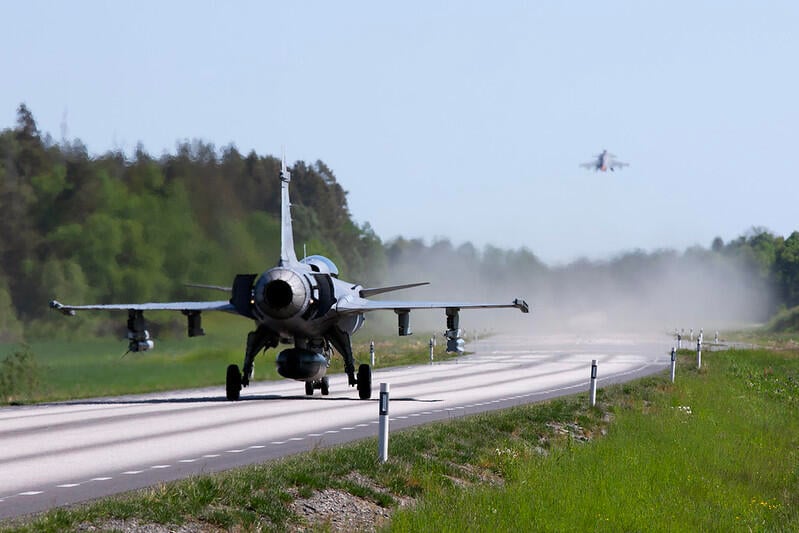
Gripen

Credit: Tony Osborne/Aviation Week

Ukraine will receive 16 donated Saab Gripen fighters from Sweden once it finalizes the first stage of a deal to acquire new-build Gripen Es.

Visiting Sweden on May 28, Ukrainian President Volodymyr Zelenskyy said the donated Gripen C/Ds could be fighting in Ukrainian skies by the beginning of 2027.

Crucially, these aircraft would be armed with MBDA Meteor ramjet-powered beyond-visual-range air-to-air missiles, finally giving the Ukrainian Air Force a counter to the long-range air-to-air missiles used by the Russian Air Force. Kyiv would also gain the ability to target Russian strike aircraft carrying standoff weapons such as glide bombs.

“These jets, with very specific weapons, especially Meteors, which can destroy [air] targets [at ranges of] 200 km-plus…we think we will push back these Russian jets, and they will not be able to use their aerial glide bombs,” Zelenskyy told journalists.

The $2.3 billion package of ex-Swedish Air Force aircraft would also include other long-range weapons, ammunition, electronic warfare capabilities and what the Swedish government described as “support to innovation,” enabling the aircraft to be adapted to Ukrainian operational requirements.

Receipt of the donated Gripens as bilateral assistance depends on export approvals and finalization of an agreement to acquire an initial batch of 20 Gripen E/Fs, which Ukraine plans to fund using €2.5 billion from a broader €90 billion European Union loan package.

European leaders have already approved reforms and financial terms for the Ukraine Support Loan. The first funds will potentially reach Kyiv next month. Around two-thirds of the package is expected to support Ukrainian defense requirements.

The European Council approved the loan in April after Hungary and Slovakia lifted objections to the arrangement.

Swedish Prime Minister Ulf Kristersson said there had initially been skepticism about Ukraine’s plans to acquire the fighters last year, but that the effort was now moving ahead.

Negotiations and implementation details were underway, he said, adding that “our ambition is to quickly conclude an agreement which will enable deliveries before 2030.”

“This is a historic decision for Sweden, but it also significantly strengthens Ukraine’s air defense,” Kristersson added.

“Building a Ukrainian fleet of Swedish Gripens will help us guarantee the security of Ukraine and the Ukrainian people,” Zelenskyy said.

The milestone follows the signing of a declaration of intent last October covering the potential acquisition of as many as 150 Gripen E/F fighters over the next 10-15 years.

Zelenskyy said he was committed to acquiring all 150 aircraft, a move that would make Ukraine the largest customer for the fighter. Orders and deliveries would occur in batches.

Ukrainian pilots have already been training in Sweden on the Gripen since allied countries agreed to begin donating Western combat aircraft to Ukraine. Earlier plans to transfer Gripen C/Ds were deliberately delayed to avoid disrupting deliveries of the Lockheed Martin F-16s now entering Ukrainian service. Swedish Defense Minister Pål Jonson said that training effort would expand this fall.

Kristersson also said Sweden would continue contributing to pilot training for the Ukrainian Gripen fleet. He added that deliveries of Gripen Es to the Swedish Air Force would need to accelerate to replace the Gripen C/Ds being transferred to Ukraine.

In a statement, Saab said discussions regarding Sweden’s replacement of the donated aircraft capability would begin shortly. No contracts or orders have yet been signed, the company added.

Ukraine is currently fighting Russian forces using Soviet-era Sukhoi Su-24s, Su-25s, Su-27s and Mikoyan MiG-29s, while continuing to receive F-16s from Belgium, Denmark and the Netherlands. Dassault Aviation Mirage 2000s have also been supplied by France.

Analysts have long argued that the Gripen is particularly well suited to Ukraine’s operational environment because of its ability to operate from austere locations and employ weapons such as Meteor. Pilots have also suggested the Gripen is more forgiving to operate and maintain than the F-16s already delivered.

“Gripen was built for a country that may have to fight outnumbered, under pressure and from dispersed bases, that makes it highly relevant for Ukraine,” Jonson said.

Sweden has been among the largest contributors of military aid to Ukraine, supplying weapons, artillery and airborne early warning aircraft intended to enhance the effectiveness of the fighter fleets provided by allied nations.

Kyiv also signed a similar declaration of intent with France in November covering the potential acquisition of 100 Rafales. No details have yet emerged regarding progress in those negotiations or whether part of the Ukraine Support Loan could also be allocated toward a Rafale purchase.

Friday, June 13, 2025

Ukraines Drone strike highlights the surprise of that delivery system.

 I snagged this from "Defense Weekly", it talked more about the Ukrainian Strike against the Russian Bomber Fleet, to me this is a strategic attack, it takes part of their nuclear delivery assets out of play.  I don't know if this was a game changer for the Ukrainians, but I do know that Putin did lose face by this incident.


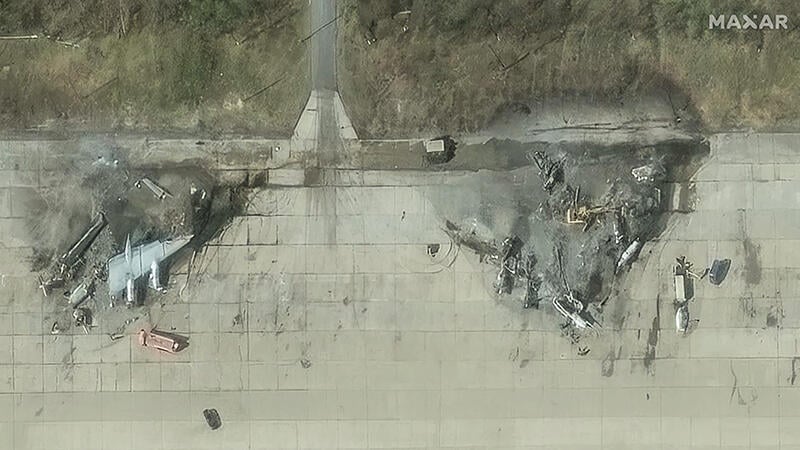
satellite view of damaged Russian bombers

Poststrike satellite imagery revealed the charred remains of two Russian Tupolev Tu-95 bombers hit by Ukrainian drones at Olenya air base near the Barents Sea.

Credit: Maxar Technologies

Three Ukrainian attack drones struck a Sukhoi Su-57 fighter on June 8, 2024, at a base 365 mi. deep inside Russia. Satellite imagery showed the strike damaged the stealth fighter, a small victory for Kyiv in a long, difficult war.

That isolated action a year ago proved to be only a warning shot—or perhaps a sneak preview. On June 1, 2025, Ukraine struck again on a larger and deeper scale. In a creative aerial ambush devised 18 months and nine days earlier by the Security Service of Ukraine (SBU), semitrucks hauling portable cabins smuggled scores of armed drones deep into the Russian interior, parking in locations stretching from along the Finnish border on the Barents Sea to near the shores of Lake Baikal in Siberia.

  • At least 11 Russian aircraft were destroyed in the June 1 attacks
  • The strikes introduce new offensive options and reveal defensive vulnerabilities

Hiding in plain sight within range of several bomber bases, these “Trojan trucks” opened their cabin roofs and released more than 100 remotely piloted, first-person-view (FPV) drones. Satellite imagery confirms Ukrainian estimates that the drones destroyed at least 11 Russian aircraft, including nine bombers. Dozens more may have been damaged.

For Ukraine, the impact of Operation Spider’s Web—the SBU’s code name for the covert drone attacks—may play out for months. It is not clear how many of the aircraft destroyed were involved in strikes in Ukraine or even flyable, but the widespread nature of the attacks may still have some effect. In addition to the embarrassment from the failure to stop such a brazen operation, “Russia will likely struggle to replace the aircraft that Ukrainian forces damaged and destroyed,” the Institute for the Study of War states in a June 1 assessment.

The attack also highlights a global trend in aerial warfare with implications for offensive planning and defensive preparations.

Springing attacks on enemy aircraft while they are parked on seemingly friendly soil is nothing new. At the outset of the Six-Day War in 1967, the Israeli Air Force launched a surprise raid into Egypt, destroying 452 aircraft on the ground. Nor is it new to blend conventional airpower with special operations units like the SBU. In 1942 the British Special Air Service infiltrated a Luftwaffe base in Egypt, then used machine guns loaded with tracer rounds to destroy or damage 37 parked aircraft.

Attacks on enemy airfields also feature in planning for future wars. In 2017, U.S. Air Force then-Brig. Gen. Alexus Grynkewich published an online essay after spending a year drafting the strategy for acquiring what became the Boeing F-47. In a future conflict, Grynkewich wrote, Northrop Grumman B-21s would strike enemy airfields while the next air superiority fighter swept the skies of any aircraft that had managed to take off.

Meanwhile, interest in ground-launched, short-range FPV drones is spreading. A day after the Operation Spider’s Web attacks, the U.S. Defense Innovation Unit (DIU) launched Project GI, a competition offering $20 million in prizes to companies that can rapidly deliver such weapon systems with ranges beyond 20 km (12.4 mi.). Project GI aims to close a gap in the U.S. drone inventory.

“Today, warfighters lack the unmanned systems needed to train for combat and prevail if called upon to use them,” DIU Director Doug Beck said June 2. “Doing this [project] at speed will in turn help catalyze the necessary scaling and readiness through major acquisition and training efforts.”

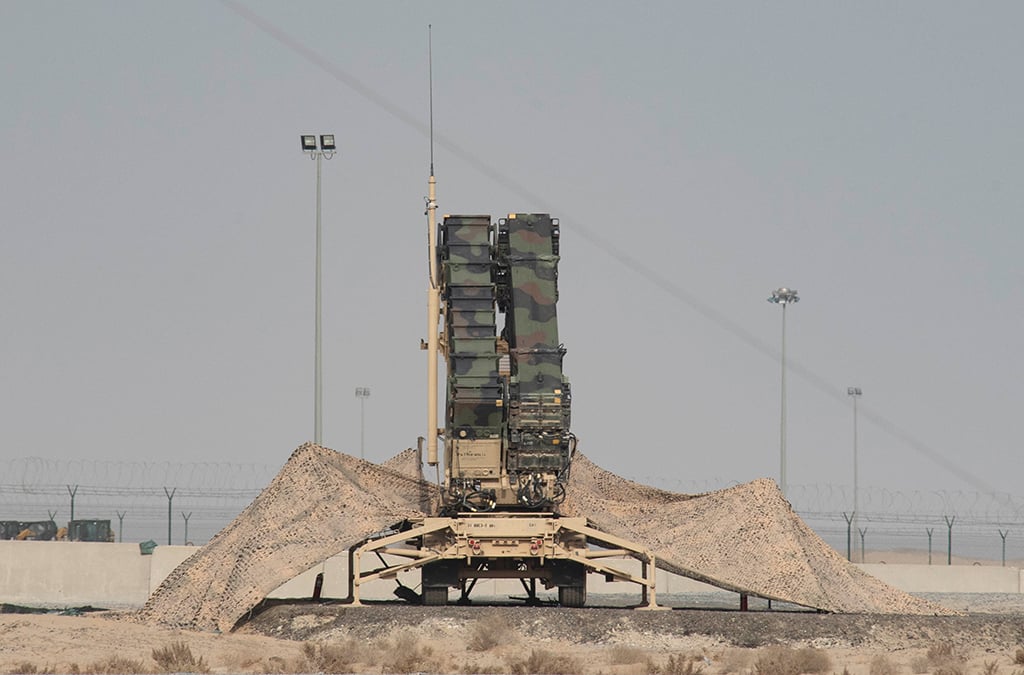
U.S. Army Patriot battery
A U.S. Army Patriot battery guards Ali Al Salem Air Base in Kuwait, but Air Force leaders urgently want a more robust, layered system to protect air bases from air and missile attacks. Credit: Staff Sgt. Kenneth Boyton/U.S. Air Force

Although Ukraine lacks air superiority and a long-range bomber fleet, the country’s repeated attacks on air bases inside Russia shows the advance of technology in the air littoral, a layer of airspace usually defined as below 10,000 ft. For Operation Spider’s Web, the SBU reportedly deployed Ukrainian manufacturer First Contact’s Osa drones. Each 5-kg (11-lb.) quadcopter can carry up to 3.3 kg of explosives to targets up to 8 km away, according to the manufacturer’s website.

Meager attempts to protect the Russian bombers by covering the upper surfaces with old tires—possibly to confuse vision-based, autonomous targeting systems—failed to save the aircraft.

In addition to creating new offensive opportunities, the successful Ukrainian operation exposes defensive vulnerabilities that are as common in Europe and the U.S. as they are in Russia. Over the past two years, reports of unauthorized drone sightings have plagued several U.S. air bases, including a Lockheed Martin F-22 operating base in Virginia and a space launch complex in California. Last year, the Air Force paused the award of the Next-Generation Air Dominance contract for several months to review the original requirements, including whether the vulnerability of air bases could negate the advantages of a powerful new fighter.

“The F-47 is an amazing aircraft, but it’s going to die on the ground like everything else if we don’t protect it,” Gen. David Allvin, the Air Force chief of staff, said at an event hosted by the Center for a New American Security in Washington on June 3.

Concerns about air base vulnerability are driving negotiations with the Army over whether the Air Force should be responsible for defending its own air bases. The Navy provides a layered air defense system to protect its fleet, but a long-standing policy requires the Air Force to rely on the Army for such protection.

“The bottom line is that the joint force needs more robust ground-based air defense, whether it’s from an airfield or someplace that the Marines are operating or the Army is operating,” Allvin said. “We do continue to need robust point defense for agile combat employment to work.”

In Europe, the threat of similar attacks is acute. Most air bases are in the open countryside and near public roads. Their movements are easily monitored, and the aircraft are parked in the open air, often undispersed. Many of these air bases lack anti-drone equipment or the spare personnel to operate it if they did.

Some countries, like France and Germany, have multiple bases with transport aircraft and airlifters, but the UK, for example, has piled all of its air transport assets into one location, Brize Norton, to save costs.

NATO’s Air Command is urging member countries to develop agile combat employment concepts to generate sustained combat airpower through dispersal. However, this does not necessarily work for intelligence, surveillance and reconnaissance platforms, which are often tethered to main or forward operating bases so their intelligence products can be processed and distributed.

While tankers and transports can operate from commercial airports, they tend to stick out.

China is increasingly building air bases with shelter infrastructure for large aircraft, including the KJ-500 airborne early warning aircraft based on the Shaanxi Y-8 turboprop airlifter. While not hardened, these 60-m-wide (197-ft.) structures with closing doors at both ends make the aircraft difficult to target on the ground, as overhead imagery cannot identify what aircraft is in a shelter. They would also prevent attack by small drones like those Ukraine used in Russia. These structures can be found at a People’s Liberation Army Air Force base near Dalian, at Leizhuang near Guiyang, and at Jiujiang’s Lushan air base.

Wednesday, June 4, 2025

"Which Soldiers that volunteer in the Ukraine War have the Best Skillset"

I saw this on Quora, while taking a break at work, and I thought it was interesting viewpoint.  THe views are that of the Author(Not Me, lol) but it does track with my experiences, and what I have seen of 3rd world armies it does track. 

by 

Roland Bartetzko

I’ll probably make some enemies with this answer, but who cares?

Let’s start with the worst foreign fighters (and why they perform so poorly):

Colombians. It’s not that they lack experience or knowledge, but every foreigner who comes here needs to learn additional skills their home country's military likely didn’t teach them.

These skills are mostly in the areas of drone and electronic warfare, adaptation to the battlefield environment, and TCCC (Tactical Combat Casualty Care). Even training from “richer” Western armies isn’t enough to survive on the Ukrainian frontlines.

Even if you’been serving in your home country's best army unit before you came to Ukraine, there's some machinery here you haven't learned to operate. (Picture: all rights by the author of this post)

Fortunately, the Armed Forces of Ukraine will teach you most of this—if (and that’s a big “if”) you’re willing to learn.

Unfortunately, with the Colombians (and other South Americans as well), the motivation to train and acquire new skills is rather low. Some might say they’re a bit lazy. As a result, they suffer a high number of casualties.

That said, this problem isn’t limited to South Americans. Some combat veterans from Afghanistan and Iraq came here thinking they were untouchable—that their sh*t didn’t stink and they didn’t need any “stupid” training. They quickly learned otherwise—the hard way.

On the other hand, there are many professional soldiers who recognize their limitations and are eager to learn. These individuals make up the majority of foreign volunteer fighters.

Especially among the Americans (many of them former Marines) and the Brits, the mantra is always: “Training, training, training!”

That’s the right attitude. It doesn’t matter where you’re from—an enemy artillery shell or drone doesn’t care about your passport. If you’re too lazy or too arrogant to learn new things, you’ll quickly perish.

Wednesday, April 19, 2023

Poland transfers more fighters to the Ukraine.

 I have had several blogpost about transfers of Mig 29's to the Ukraine from the Eastern European Countries to bolster that country defense against the Russians.  The Polish are getting updated Western based fighters.  They and the other Eastern Europeans still recognize the threat that the Russians were being under the boot of The Soviets and communism for 45+ years unlike the Western Europeans that have grown soft and kiss the boots of the same Russians.

       I got this article from a 3rd party email from my work.

Credit: Tony Osborne/Aviation Week

The German government has approved a Polish request to hand over five Mikoyan MiG-29 “Fulcrum” fighters to Ukraine that had previously been operated by the German Air Force

Warsaw needed re-export approval from Berlin to allow it to transfer the aircraft to Ukraine. Poland is in the process of transferring its entire MiG-29 fleet to Ukraine, bolstering the war-ravaged country’s air force inventory. 

The Polish government made the request for re-export on April 13, with the German government responding the same day, Defense Minister Boris Pistorius said. “I welcome the fact that we in the federal government have reached this decision together … that shows you can rely on Germany.” 

Germany absorbed 24 MiG-29s into its air force from the inventory of the East German Air Force when the East and West unified at the end of the Cold War.  

In 2003—after more than a decade of service in the German Air Force including operational use in the quick reaction alert mission—the remaining 22 aircraft were purchased by Poland for a symbolic €1. 

According to the German defense ministry, included in the contract with Poland was an end-user clause which stipulated that the MiG 29s may not be passed on to third parties by Poland without the written consent of Germany. 

Poland and Slovakia are transferring their MiG-29s to Ukraine, to be backfilled by deliveries of Korea Aerospace Industries FA-50 Golden Eagles for Poland and Block 70-standard F-16C/Ds for Slovakia


Friday, March 31, 2023

Slovakia Sends 4 Mig 29's to the Ukraine

 I got this from another email.

      This goes with an article that I "Published" last week  about Poland sending some " Mig 29's" to the
Ukraine as they replace their losses against the Russians.  

Slovakia MiG-29s

Slovakia has become the first country to declare it has delivered operational crewed combat aircraft to Ukraine, with the transfer of four MiG-29s to the war-torn country. 

Ukrainian pilots collected the aircraft, which had been in storage in Slovakia since the Warsaw Pact-era fighters were withdrawn from the Slovak Air Force inventory last summer. 

Video released by the Slovak defense ministry shows the four aircraft, all single-seaters, taxiing out and taking off on the short delivery flight, their final destination in Ukraine unknown.  

All four aircraft had their Slovak national markings painted out, but their serials remain. Another nine aircraft are expected to follow in the coming weeks, defense officials say. 

Slovakia’s handing over of MiG-29s is the first officially declared transfer of operational combat aircraft to Ukraine in its war with Russia. Other nations may have made similar transfers but have not publicly announced them.  

Several countries are believed to have delivered nonoperational airframes that could be stripped for spares. These include North Macedonia, which delivered four Sukhoi Su-25s ground attack aircraft from long-term storage. 

“Slovakia is on the right side, and with this gesture, we as a country have written ourselves in capital letters in modern world history,” Slovak Defense Minister Jaro Nad said. 

Poland has also declared that it will deliver its surplus MiG-29s to Ukraine. The transfers are expected to take place shortly, if they have not already. Warsaw has so far kept a tight lid on its defense equipment transfers to Ukraine. 

It is hoped that the fighter transfers will help bolster the Ukrainian Air Force fighter fleet. The fleet has employed its MiG-29s mainly for air defense duties and also in an austere destruction of enemy air defense role, thanks to deliveries of U.S. anti-radiation missiles. 

Ukraine is ultimately seeking deliveries of Western combat aircraft such as Lockheed Martin F-16s to try to secure air superiority over Russian fighters and air defenses. 


                                                   "F-16 Block 70/72"

Slovakia plans to backfill the MiG-29s with deliveries of Block 70 F-16s that were on order prior to the war starting, but deliveries have been delayed. 

Without a fighter aircraft to perform national air policing, protection of Slovak airspace is currently being performed by fighters from Poland and the Czech Republic.


Thursday, September 1, 2022

Suppliers are locating alternative sources for Russian Titainium.


This is a big deal, Titanium is a major metal used in aviation and in Aerospace in general because of its lightweight and strength and the Russian excursion into the Ukraine has caused problems for everyone concerned. 


aircraft wheel
Manufacturers of everything from brackets to landing gear are adding alternative sources for titanium to lessen their reliance on Russian suppliers.
Credit: Sean Broderick/AW&ST

The push by Western manufacturers to lessen their reliance on Russian-supplied titanium is bearing fruit, with little evidence of major disruptions to manufacturing or delivery schedules.

  • Vendors see uptick in aerospace business
  • Parts qualification is considered a pacing item

“The situation in Ukraine has focused the industry on shifting aerospace titanium purchases to Western sources,” Robert Wetherbee, president and CEO of titanium supplier Allegheny Technologies Inc. (ATI), said on a recent earnings call. “Customer discussions on the subject are pervasive, active and lively.”

Suppliers such as ATI and Howmet Aerospace have the bandwidth to take on new aerospace customers or added business from existing ones. The tipping point often secures enough work to justify any required investment, particularly when supplying complex forgings and castings.

In the aircraft-production world, build rates of 75 units per month are considered significant. But they pale in comparison to those generated by other needs, such as producing truck wheels, that metal parts specialists also satisfy.

“We’re disciplined in our response,” Wetherbee said. “We’re balancing the need to help our customers in repositioning their supply chain with our commitment to benefit our shareholders at the same time, balancing short-term and long-term interests of both.”

The approach is yielding new business.

ATI recently announced a deal that will see it supply “the majority share” of titanium plates and sheets for GKN Aerospace.

Howmet said it is adding $20 million to projected fourth-quarter sales based on recent deals with several new, unnamed airframe and engine customers.

“We’ve begun to book orders with them,” Howmet CEO John Plant said on a recent earnings call. “We’re still working elsewhere with other manufacturers. . . so [there’s] still a lot to play for.”

The Russian invasion of Ukraine in February prompted the titanium supply-chain shuffling (AW&ST April 18-May 1, p. 50). Before the war, Western aerospace suppliers tapped Russian sources—notably VSMPO-Avisma, the world’s largest titanium producer and part of a joint venture with Boeing—for material critical to everything from brackets and engine parts to landing gear. The metal’s importance to aerospace and other major industries has prevented the issuance of sanctions against VSMPO. But many companies are lessening or eliminating their reliance on Russian suppliers.

Boeing has not provided any updates on its Ural Boeing Manufacturing joint venture, but the U.S. manufacturer stopped buying Russian titanium in March.


Embraer is working on replacing VSMPO, which specializes in raw materials and forgings. The company currently sources 60% of its titanium from VSMPO, down from 85%, Chief Financial Officer Antonio Carlos Garcia told analysts on a recent earnings call. “Our plan is to try to eliminate this source of raw material,” he added.

Airbus is part of a group that purchased metallurgy specialist Aubert & Duval earlier this year, but continues to source from Russia (AW&ST July 11-24, p. 80). The European Union in late July backed off on plans to put limited sanctions on VSMPO, fearing retaliation that could hamper titanium sales to Airbus and other European civil aerospace manufacturers, The Wall Street Journal reported.

The changes translate into opportunities for Western suppliers that extend beyond commercial aerospace.

“I think most of us who are in this position will qualify, and we will win some share,” Wetherbee said. “I do think the [aerospace] industry is repositioning itself, not 100%, but significantly.”

Safran, a 50-50 partner with GE Aviation in narrowbody engine-maker CFM International and a major landing gear supplier, is among those minimizing—but not eliminating—its reliance on Russia.

“We still receive titanium from our Russian sources, but we have now managed to get alternative sources,” CEO Olivier Andries said. “We are protected.”

Rolls-Royce also recently tapped a U.S.-based supplier, the company says. Spirit AeroSystems, a major subassembly supplier to Airbus and Boeing, has been ramping up its titanium inventory as well.

Raytheon Technologies, which counts engine-maker Pratt & Whitney among its subsidiaries, is also expanding its titanium supply base. While it has made progress in finding new vendors, the time required for qualification—ensuring vendors can produce parts to the required specifications—is affecting some program schedules.

“The issue simply is getting the parts qualified,” Raytheon Chairman and CEO Greg Hayes said on a late July earnings call. “You’ve got to go through a first article. You’ve got to go through the metallurgical analysis. You’ve got to make sure that the composition of material is exactly the same as what it was. And then you’ve got to get the parts certified. So that’s the part that takes time. It’s not actually identifying the suppliers. We’ve done that.”

Raytheon’s shift away from Russian titanium suppliers is hitting its Pratt & Whitney Canada (P&WC) executive jet and small-aircraft-engine business hardest. Hayes cautioned in April that finding alternatives for some P&WC castings would “take some time” and result in late deliveries—a fact he reiterated on the July call.

“[We’re] talking five to 10 airplanes at these customers that are going to be without engines because we don’t have the titanium forgings that we had expected to get this year,” Hayes said. “This will recover sometime in the middle of next year, but there’s still a lot of work to do to get these suppliers requalified.”

Hayes did not name affected customers. P&WC supplies engines to a number of Cessna light and midsize business jets. Scott Donnelly, CEO of Cessna parent Textron, recently cautioned that the company will likely see “a relatively small number” of scheduled 2022 aircraft deliveries slide into 2023 due to “some particular supplier issues” that include engines. Cessna declined to provide details on the affected aircraft types.

Hayes expressed confidence that Raytheon’s titanium-related challenges will be short-lived.

“People are stepping up,” Hayes said. “People understand this is a long-term business, and I think the suppliers of titanium see this as a big opportunity to take share. So we’ll work through it, but it’s not going to be without a little bit of pain to our customers.”

Tuesday, August 2, 2022

Lockheed is trying to ramp up production of their Javalin Missile System and The Air Force wants to "Upgrade" the engine on the F-35?

 I got both of these in my email at work, and I am still working a lot of overtime....getting it while I can.

 I can see the concern, we are sending our war stocks in to that great suck called "Ukraine" and sure they are killing a lot of Soviet er Russian equipment, but some of this stuff we are sending them is showing up on the black market also.  I am wondering if we will run out of missiles before the Russians run out of tanks, then we still have to worry about the Chinese and our larders are getting pretty low due to years of war and face it, new weapons systems get the pork, the restock and logistics......not so much.  We have to restock and getting new missiles with microchips that are not corrupted by the Chinese is a trick.

FARNBOROUGH—Lockheed Martin is seeking to add suppliers amid a production ramp-up for tactical missiles fueled by surging demand from the response to the Russian invasion of Ukraine, senior executives said July 20 at the Farnborough Airshow. 

“We are looking for additional sources of supply,” said Rita Flaherty, vice president of strategy and business development at Lockheed’s Missiles and Fire Control business unit. 

Lockheed has committed to doubling annual production of the Javelin missile after the U.S. government transferred thousands of the anti-tank weapons to help Ukrainian forces fight Russian armored units. Deliveries are rising to 4,000 Javelins per year instead of the 2,000 now. 

The Javelin production surge comes as Lockheed also ramps up deliveries of Hellfire missiles and Guided Multiple Launch Rocket Systems (GMLRS) missiles, as well as introducing the GMLRS-Extended Range and Precision Strike missiles with the U.S. Army next year.

The ramp-up has stressed a supply chain for tactical missiles, which has long struggled with boom-and-bust order cycles by U.S. and foreign militaries. 

Lockheed executives met with many British and European suppliers during the air show, said Paula Hartley, vice president for Lockheed’s Tactical Missiles unit. “I can’t tell you how many suppliers we met with this week,” Hartley said.

Lockheed is particularly looking for sources of propulsion systems and microelectronics. 

“It’s not just about rocket motors,” Flaherty said. “It’s [also about] microchips.

 Also I for the life of me can't figure out why we are trying to change out the engine system on the F-35 unless the Air Force is trying to be "Unique" and the fighter Mafia is pulling the strings much to the detriment of everyone else? or is it some beltway bandit pushing because there is some huge payout for him after he hung up the blue suit?  Maybe I am getting cynical in my Summer Chicken years......

Lockheed Martin F-35

Thirty-five members of the U.S. Congress say they are concerned about an Air Force proposal to use its Advanced Engine Technology Program (AETP) propulsion system to replace the F-35 fighter’s current powerplant.

In January, Air Force Secretary Frank Kendall launched a market survey to find potential suppliers for an F-35 Adaptive Engine Replacement Program, in advance of a possible program launch in fiscal 2024. Since then, F-35 program officials have released information about the limitations of the F135 engine.

In a July 22 letter, the lawmakers led by Rep. John Larson (D-Conn.) appealed to Pentagon acquisition chief Bill LaPlante, arguing a new effort to build an engine to replace Pratt & Whitney’s F135 would be costly—up to $6 billion—and undermine commonality with partner nations.

The lawmakers revisited then-President Barack Obama’s opposition to the development of another F-35 engine, quoting then-Air Force Chief of Staff Gen. Norton Schwartz as saying, “The alternate engine is not for anybody else but the Air Force. The Navy isn’t going to operate an alternate engine aboard ships. The European partners are not going to operate two engines. You’re talking about focusing this on your Air Force, which is problematic in my view.”

The letter asks LaPlante to lay out a timeline for modernizing the F-35 engine, and to specify what roles the Joint Staff, the Office of the Secretary of Defense, the other U.S. military services and international partners on the program would have in creating requirements. It also asks whether the Pentagon would require an independent cost assessment of the program, whether the Pentagon would assess the impact on the industrial base and if the Pentagon might also replace the F-35 air vehicle.

“The F135 has outperformed its original specifications, including bleed air draw and time on wing, enabling it to support three major airframe and payload upgrades without engine modernization,” the letter says. “At the same time, the average engine cost has been reduced by more than 50% to date. Meanwhile, the U.S. services have spent over $7 billion upgrading the airframe and payloads. The current engine can support the upcoming Block 4 air vehicle and payload upgrades. However, there will be an impact to engine life and increased sustainment costs as a result.” 

Congress is likely to weigh in on the Air Force proposal to adapt the AETP engine for use on the F-35. The Senate is poised to consider a provision that would ask the comptroller general to review the business case for alternatives to F-35 engine upgrades. And the House has passed a fiscal 2023 Defense Authorization Act that directs the head of the Joint Program Office, Air Force Lt. Gen. Michael Schmidt, to brief congressional defense committees by Oct. 4 on the results of an ongoing cost-benefit analysis about replacing the F-35’s power and thermal management system, though the bill is not likely to become law before year-end.