I posted this back in 2020, I am presently out of town, my employer sent me on a roadtrip. so I preloaded my scheduler thingie.
I ran across this on Farcebook and I remembered the incident and it infuriated me. I was at North Georgia College and I heard about the Soviets shooting an American Officer then Soviets being Soviets, trying to blame the Americans. I still remember the KAL 007 where the Soviets shot down the Korean jetliner then said that it was an "CIA plane" and we had proof that from intercepts that the Soviets knew that the plane was a civilian plane and the Soviets were being Soviets and duplicitous. I knew about the "SMLM" missions because I lived in Germany in the 1970's and the Soviets had their "SMLM" counterpart delegation in "Bunde" in the British sector and the American Sector they had their Main office in Karlsruhe and a satellite location in Frankfurt. I know because I saw a guy in a Soviet Officer uniform in the Stars and Stripes in Frankfurt ( Soviets delegations had full access to the PX system, this is part of the reason that getting assigned to the Delegation was a prime assignment so they could send western goods back to the motherland for barter for other things) and he said "hi" to me and my being polite responded in kind as I was buying another book. I asked my dad who was "El-Cid" in Frankfurt at that time about that and he explained what that guy was and his purpose was and that he was a legal "spy" for the Soviet Military.
That Card on the lower right of the Pic, we all got them when we got "in Country" we were supposed to call a number if we saw this vehicle traveling around in Germany. Especially near any maneuver or Training areas.
When I returned to Germany in 1986 as a GI and joined my unit at the Big Red One at Cooke Barracks, we immediately started border missions inside the (1K Zone) under the auspices of 2ACR who had the authority to run the area immediately behind the border between East Germany/West Germany and Czechoslovakia. It was good duty, It was sobering to see the little M151 jeep loaded with a footlocker with claymore mines, LAAW rockets, extra ammo, grenades and so forth. 2ACR were Speedbumps for GSFG if they crossed the Fulda Gap and they knew it and we were to buy time for the other troops to get out of garrison to stop the Soviets before they got to the Rhine. During this tour I spent 90 days in Wobeck by Helmstedt. Then I spend the rest of my time at Stuttgart until 1991 with a detour in the Gulf.
14 years ago I bought a copy of a book and talked to the author, his name is James Holbrooke and Here is the Potsdam Missionslink on Amazon It was interesting reading about the adventures on "that side of the fence and the "souped up Bronco's they used"
I clipped this story off Farcebook and it is a worthy story of remembrance.
Fort Huachuca, AZ. - When Major "Nick" Nicholson and his driver, Staff Sergeant Jessie Schatz headed out to patrol an area in Ludwigslust, East Germany on the morning of March 24, 1985, there was nothing unusual about their mission. They were in uniform, driving a vehicle marked with the distinctive plates of the U.S. Military Liaison Mission (USMLM) and they were unarmed. As members of this unique organization, the two men were basically licensed spies, authorized by a 1947 treaty with the Soviet Union which allowed all parties of the occupation to maintain communications and exchange intelligence in the occupied zones of East and West Germany. Originally, the agreement was designed to coordinate efforts and keep tabs on German disarmament and demilitarization. As the Cold War progressed, however, the liaison teams remained in place, keeping tabs on each other rather than the Germans. The Soviets had their own liaison mission which operated on the same principles inside the American, British, and French zones of occupation.
On this particular day, however, something went very wrong. The 2-man team was following a convoy of Soviet tanks returning from target practice -- a very typical activity for a USMLM team. At some point, the two Americans left the convoy and headed for a tank shed off the main road. Seeing no guards, they drove to within 200 yards of the shed. Major Nicholson left the vehicle to take some photos, leaving SSG Schatz with the vehicle to provide security. After a few minutes, Nicholson got back in and they drove closer, this time to within 10 yards. With the driver watching, he got back out and approached the shed to look in a window. That was when Schatz noticed a young Soviet sentry emerging from the woods. Nicholson was turning to get back in his vehicle when the first shot rang out, narrowly missing his driver's head. The Soviet sentry, a young sergeant named Aleksandr Ryabtsev, aimed again and fired two more shots.
One of them hit the major, and dropped him. Rising to an elbow, he shouted: "Jessie, I've been shot!" Then he collapsed. Schatz reached for his first aid kit, showing the Red Cross emblem to the sentry, and attempted to assist his teammate. The sentry kept the AK-47 trained on Schatz, however, trapping him in the vehicle for over an hour. By the time anyone bothered to check for a pulse, Major Nicholson didn't have one. The Soviets refused to accept any blame, changing their story regularly and contradicting themselves repeatedly. In the final analysis by the U.S. Army investigators, Nick's death was "officially condoned, if not directly ordered" by the Soviet leadership.
This incident caused immediate political furor, with both sides blaming the other. Major Nicholson's body was eventually released, and he was buried with full military honors in Arlington National Cemetery. All 13 of his USMLM team members were present at his funeral. He was posthumously awarded the Legion of Merit and the Purple Heart, and in an unprecedented move, promoted to Lieutenant Colonel upon approval of the President. Three years later, the Soviet Union expressed "regret" over Nicholson's death. Ironically, by the time LTC Nicholson was inducted into the MI Hall of Fame in June 1991, the two divided sides of Germany had been reunited (Oct 3, 1990), and six months after his induction, the Soviet Union would officially be dissolved (Dec 26, 1991). The veterans of the Cold War, America's longest war, deserve to be recognized, honored, and remembered. LTC Arthur D. "Nick" Nicholson, Jr: we thank you for your service.
This was a very good article and I with glee clipped it from "American Rifleman". I have handled several of the weapons mentioned in this article and used to own a couple until that durn kayak accident *sniff*sniff*. I do have a question, and this is a hypothetical question..."How Hard is it to make a PaPasha in 9mm? They say that one can make a "Sten Gun" easily, but it is prone to failure from what I have heard and read. This question is a hypothetical question made for entertainment value only.
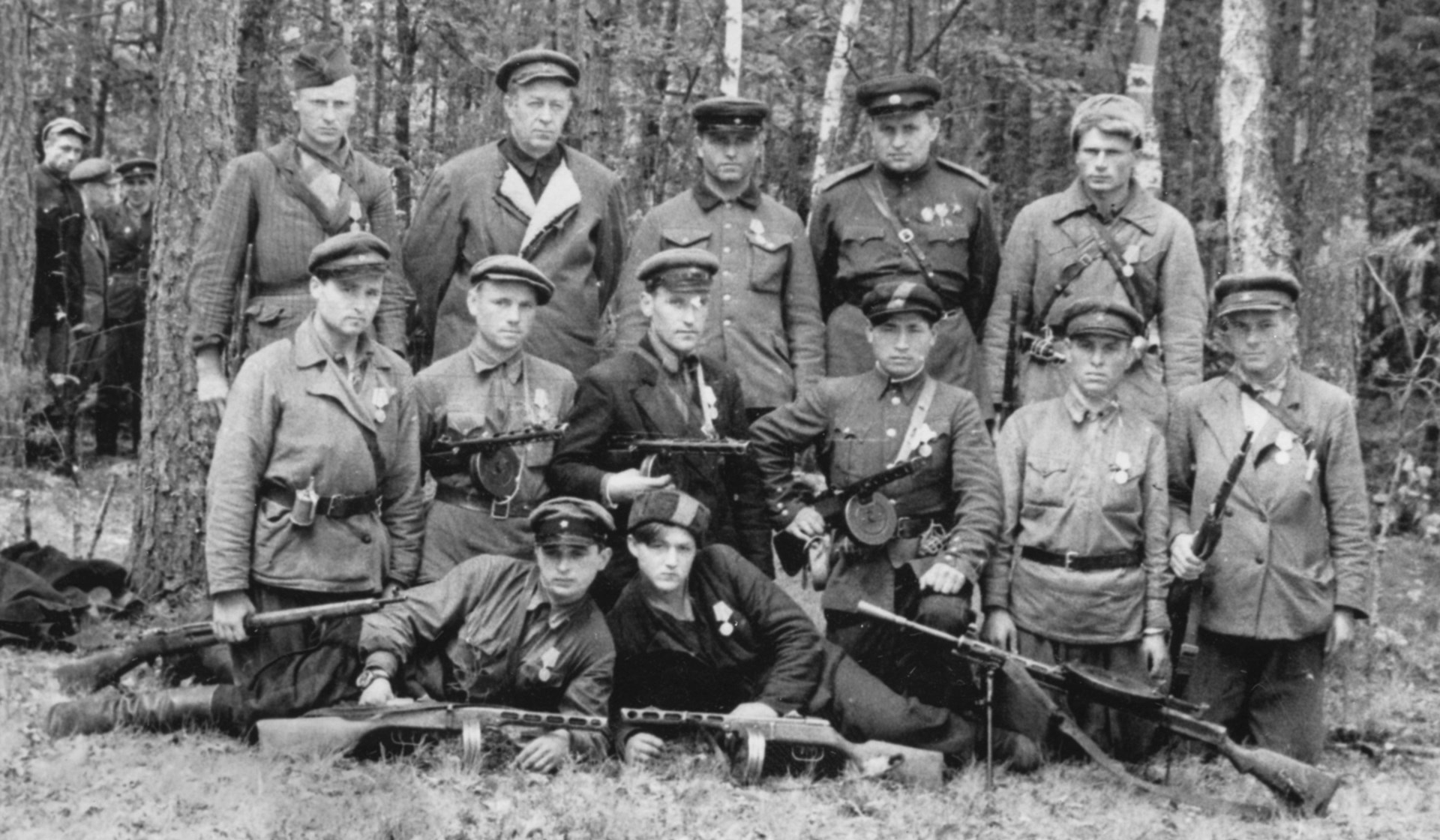
Partisan bands had a rag-tag appearance at best. Note the SVT-40 (l.) semi-automatic rifle.
Author's collection
Germany’s conflict with the Soviet Union represented a level of brutality not seen in the other areas of Europe during World War II.
Of all the German casualties suffered during the Second World War,
nearly 65 percent came in the fight against Russia. Combat on the
Eastern Front proved to be an unrelenting meat grinder of men and
machines.
Just like every invader before them, the Germans found themselves
swallowed up by the vastness of the Russian landscape. With every meter
the Wehrmacht
advanced, their supply lines seemed to grow exponentially longer. The
Soviet partisan groups gained strength and efficiency; meanwhile, the
Germans struggled to maintain security in their occupied territory.
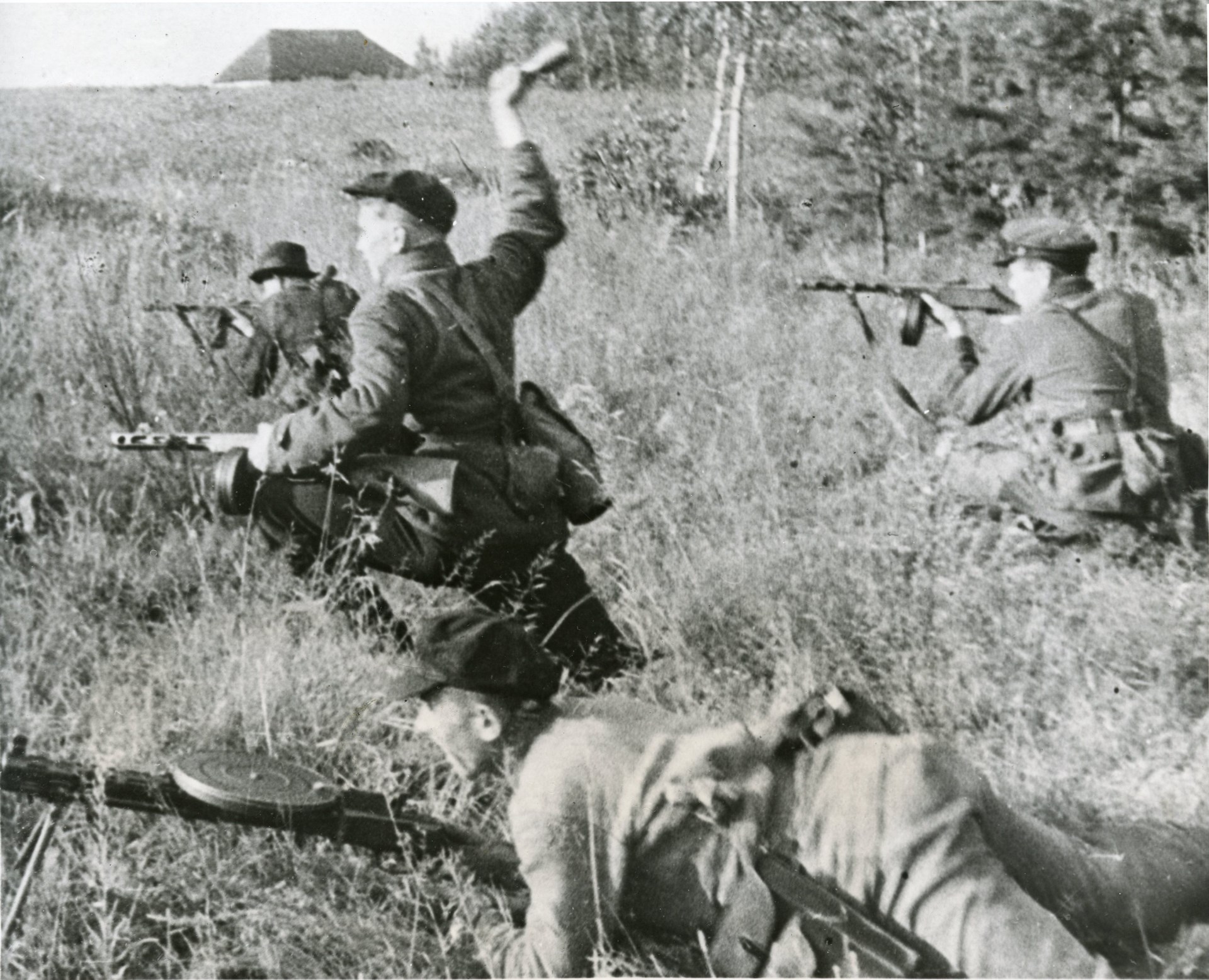
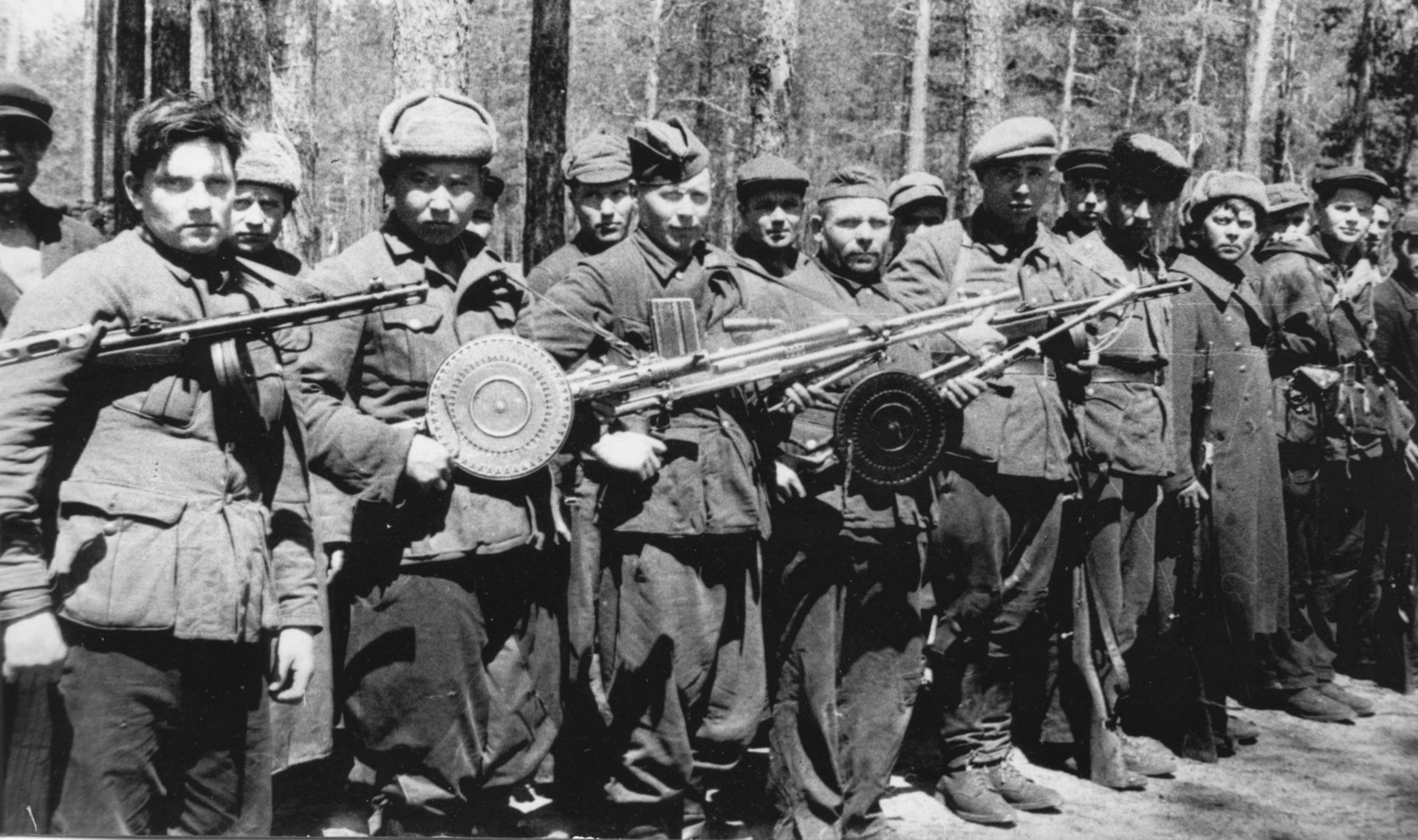
Soviet partisans with a DP-27 LMG and the ubiquitous PPSh-41 SMG. Author's collection
Planned Partisan Resistance Although the Soviets
never expected to suffer such losses in men, equipment and territory
during the German invasion of June 1941, there were still plans in place
to combat the Nazi advance with irregular groups of resistance fighters
in the remote areas behind German lines. The partisan bands that formed
in the early days of the invasion gathered their initial supply of
small arms from the edges of the massive battlefields and from the Red
Army stragglers who appeared in small groups.
In the early days of the partisan war, most Soviet units used small arms typically found in Red Army service during 1941. Automatic guns were in short supply, and ammunition was always quite limited.
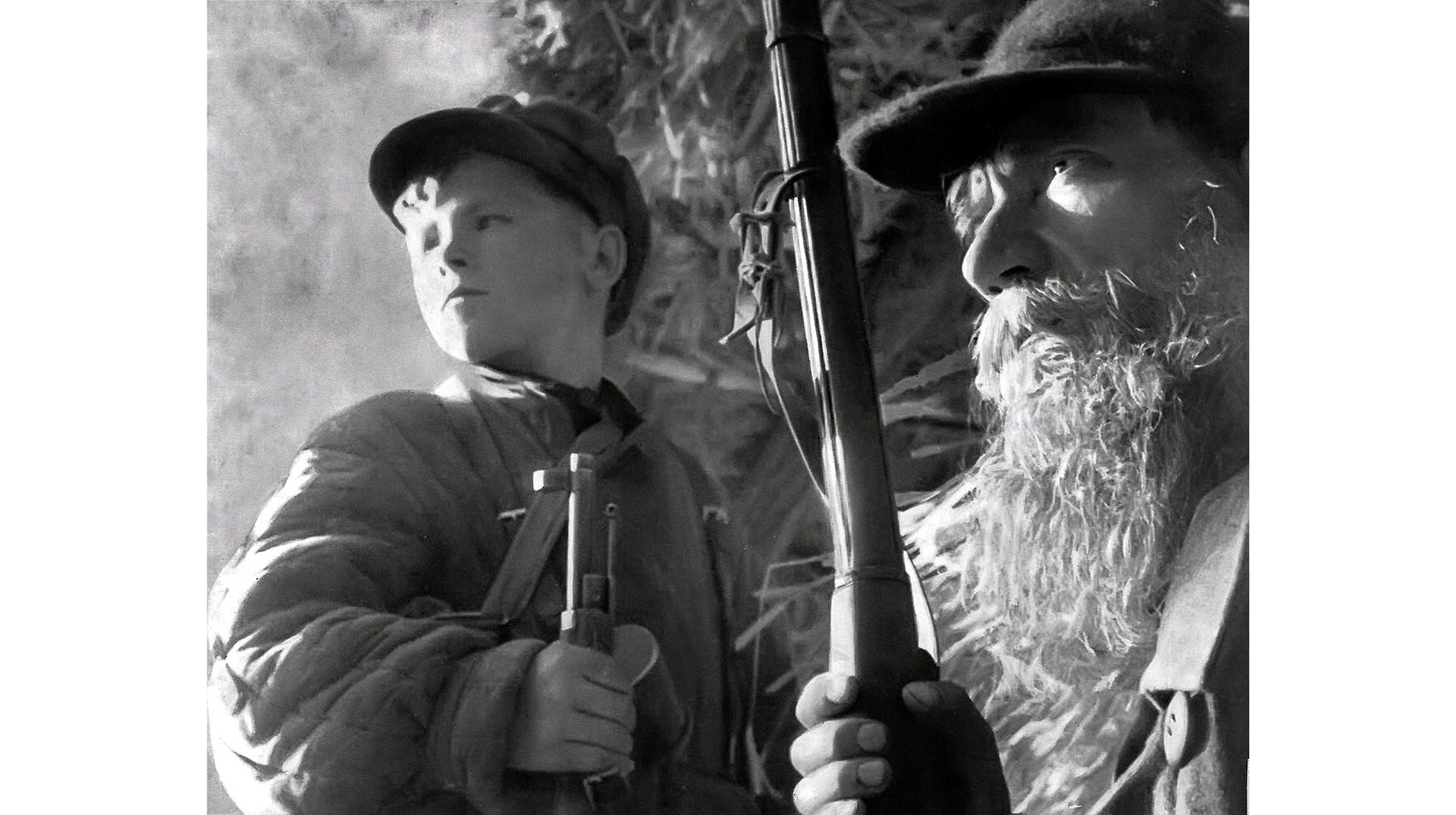
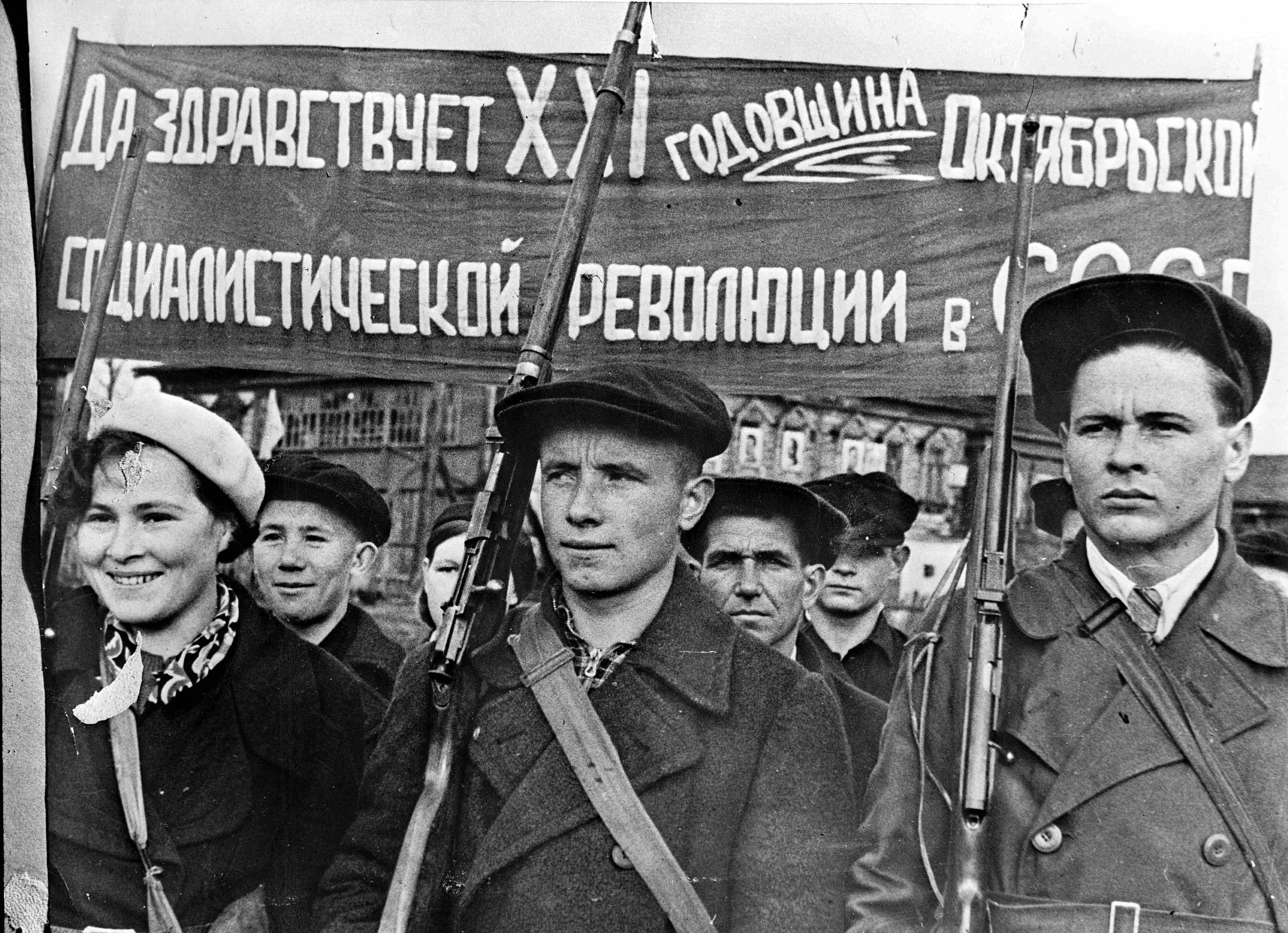
The People's War: The very old and the very young served in the Soviet resistance; many carried the M1891 Mosin-Nagant rifle. NARA
On some occasions, the larger partisan groups were headed by Soviet
army officers. These units gained access to hidden firearms, ammunition
and equipment that the Red Army had left behind. The 11th Kalinin
Partisan Brigade is even said to have had several tanks that had been hidden in the forests
east of the Latvian border. Heavy weapons could rarely be kept in
action for long, though, as the partisans lacked fuel, spare parts and
ammunition. Traditional Russian frugality meant that the partisans would
dig up Soviet mines and re-use them in their intended role or strip out
the explosives for other demolitions. Dud artillery rounds were also
recovered and used for improvised mines.
In the first phase of the war in Russia, many of the partisan groups
were simply fighting for their own survival. Almost 40 percent of the
Soviet population lived in territory occupied by the Germans and, in
many of these areas, the Soviet commissars had abused the local
populations so badly that the people greeted the Germans as
“liberators.” The German high command never understood or appreciated
this early advantage. A 1956 U.S. Army study titled “The Soviet Partisan
Movement 1941-1944” remarked:
… poor treatment of the Russian
civilian population by German political leaders created resistance
instead of maintaining and exploiting the advantage of the initial
confidence displayed by many elements of the population.
Even so, during 1941-42, the eastern European population was
generally unsympathetic to the Soviet partisan cause. The situation grew
worse when partisans attempted to deprive locals of their limited food
supplies.
German Brutality Drives Partisan Support The
Germans did not consider the Soviet partisan groups to be “military
units.” Consequently, they were defined as “bandits” or “terrorists,”
and no quarter was given to partisans or anyone believed to be helping
them. This was an important turning point in the war in Russia. Hitler’s
attitude towards the partisans, and most people in Eastern Europe, is
summarized in this passage from “Primordial Violence: German War on
Soviet Partisans” by Maj. Gus Costas, USMC (Ret.): “Hitler’s
personal enmity and hatred were apparent when he declared that the
anti-partisan effort was simply an opportunity ‘to eliminate anything
that opposes us,’ and to ‘shoot dead anyone who even looks at us
askance.’”
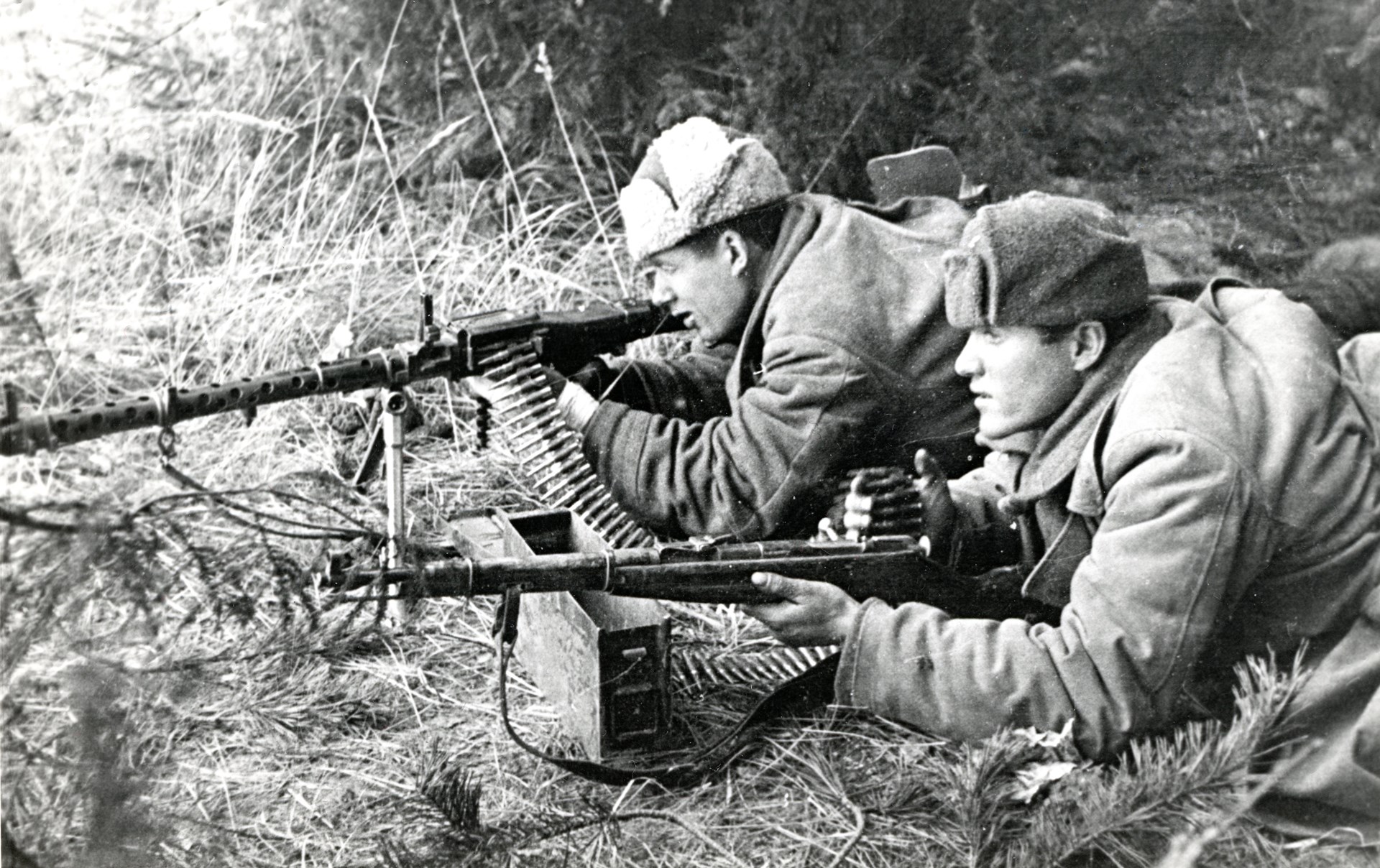
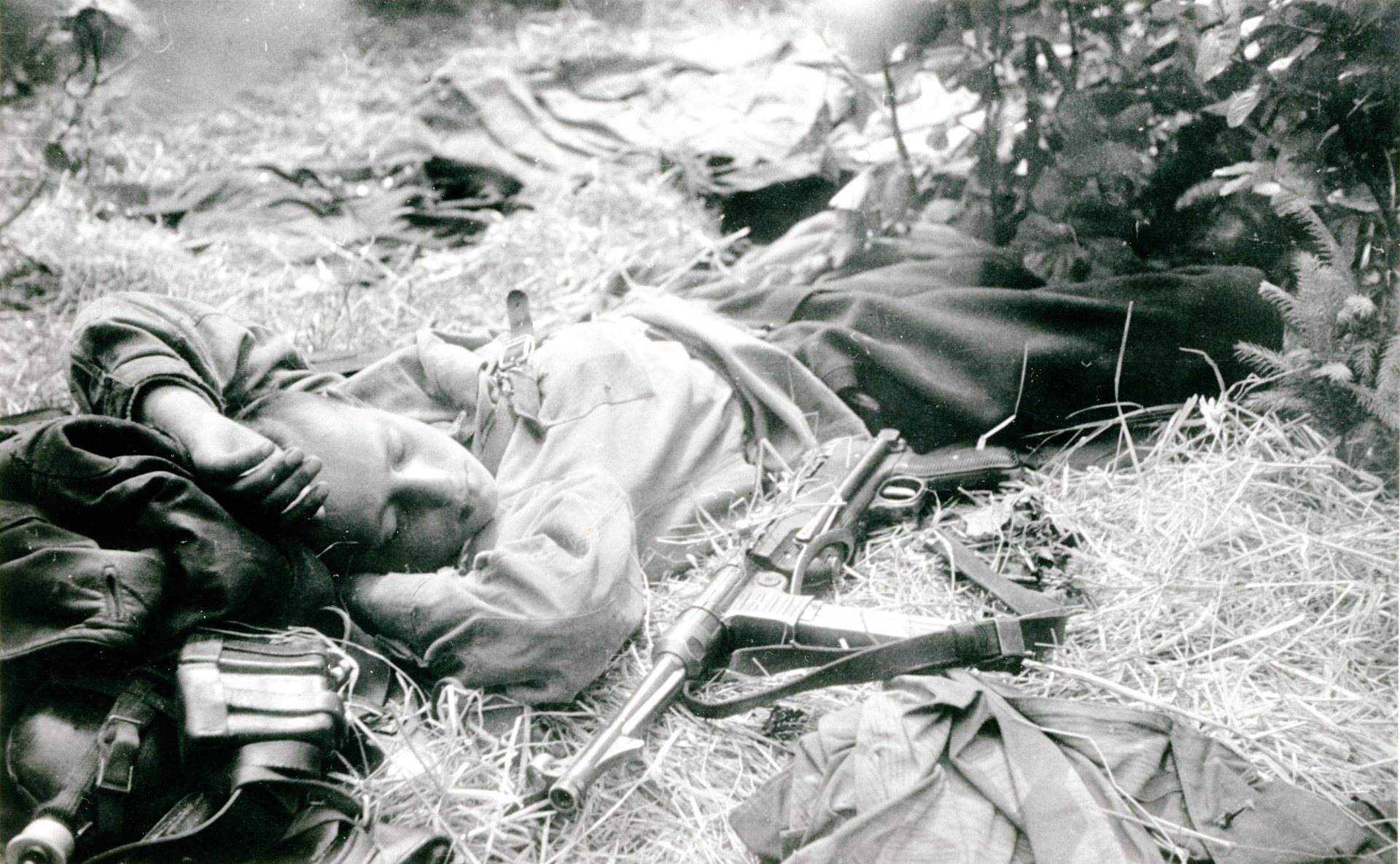
Captured
firearms played an important role. Shown here, a German MG34 supports a
partisan attack. The man alongside has a Mosin-Nagant Model 38
carbine. Author's collection
Strength & Experience The territory behind
German lines represented a massive landmass, so the Soviets sought to
create as great a disturbance as possible in the Nazi rear areas. In
“The Soviet Partisan Movement 1941-1944” (DA-PAM 20-244, August 1956),
Soviet “by-hook-or-by-crook” methods of recruiting members for partisan
bands as war went on are described:
Manpower for the bands continued to
be drawn from a variety of sources. Escaped prisoners of war still
drifted into the partisan ranks, while German occupation policies caused
many civilians to volunteer. But by and large, as the movement
expanded, the larger proportion of the personnel was drafted from the
native populace, forcibly when necessary.
The Central Staff constantly advised
the lower echelons to foster the best possible relations with the
natives as a means of facilitating such recruiting. In some areas
recruits were taken systematically by age groups, and at times even
women were drafted.
Special attention was paid to
recruiting members of the “Komsomolsk,” the communist youth
organization. These young Bolsheviks were highly desirable as combat men
or political activists because of their fanaticism.
In partisan-dominated areas recruits
were put through a training course. Generally, they spent several weeks
on probation to prevent escape or defection of those forcibly drafted
and to give attached NKVD (precursor to the KGB) agents an opportunity
to check their backgrounds against the possibility of infiltration of
agents in German pay. Through informants within the units the commissars
also kept a constant check on all personnel. Desertions of individual
partisans were reported to the Central Staff, and their families, if
they could be reached, were sent to labor camps in Siberia. If a
defector was apprehended, the NKVD both passed and executed sentence. In
a number of cases, the NKVD terrorized German collaborators into
double-dealing by forcing them under threat of death to sign oaths of
loyalty to the Soviet regime and then threatening to have the oath
delivered to the occupation authorities should the individual fail to
cooperate with the partisans.
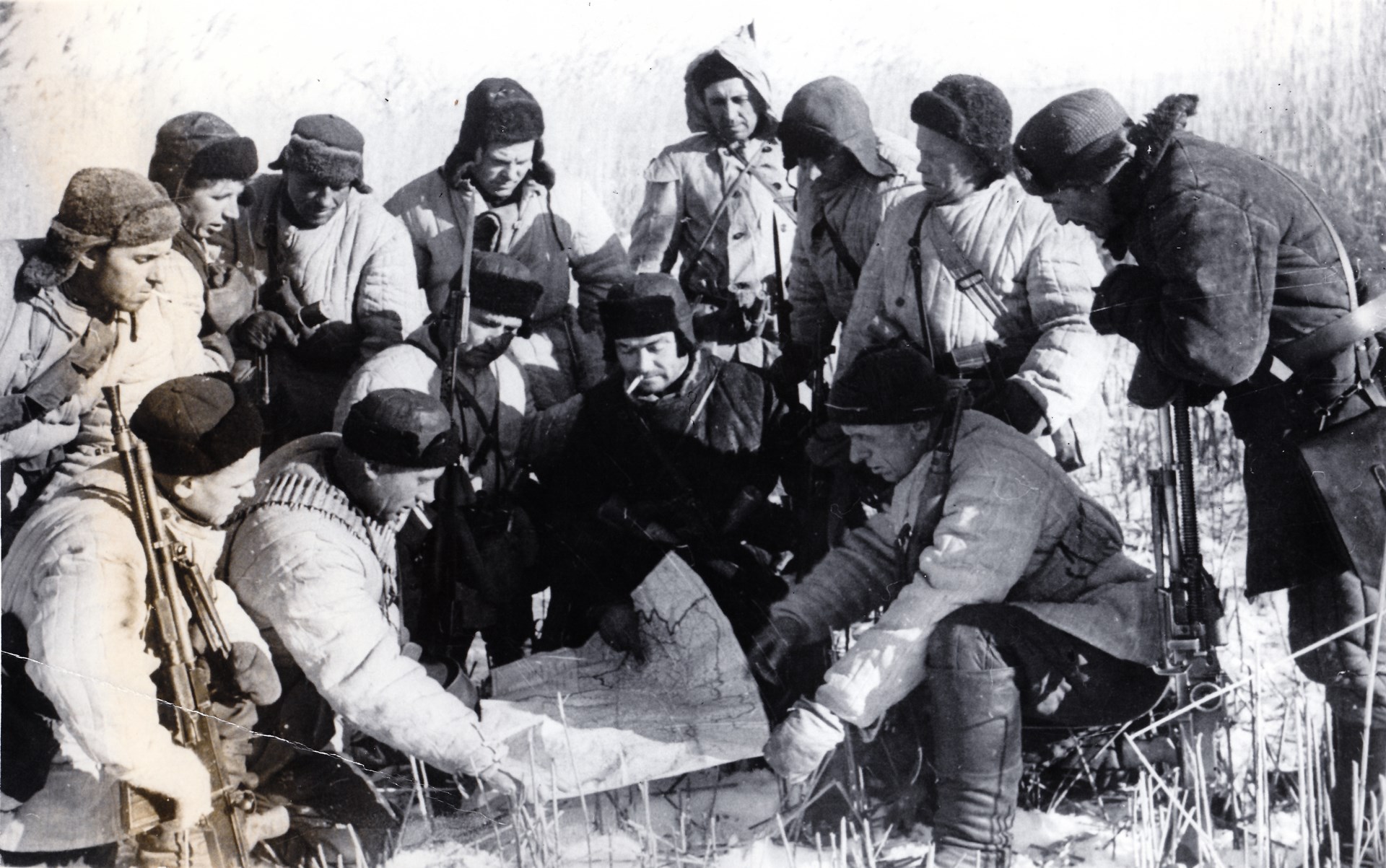
This partisan group appears to be made up of a more uniform Red Army unit. Note the Czech ZB26 LMGs (7.92x57 mm). NARA
The Red Air Force In 1962, the US Air Force Research Studies Historical Institute produced “Airpower and Russian Partisan Warfare” written by General der Flieger
D. Karl Drum. General Drum had first-hand knowledge of the Soviets’
efforts to supply partisan bands by air. He describes the effectiveness
of the Red Air Force in this role:
Without the regular system of air
transport established by the Red Air Force, the Soviet partisan bands
could not have been organized, maintained, and controlled to any
effective degree.
The Germans, of course, became
increasingly aware of the vital role of airpower in partisan operations.
The German Air Force could not spare the necessary aircraft, nor did it
possess on the Eastern Front sufficient warning and communications
equipment to make its efforts effective.
Without air transport, it would have
been impossible for the Russians to supply the partisans with weapons
and ammunition. Air lifting these items over the battle front was the
primary mission of the air transport supply system.
Communications was another critical component in the partisans’ success. General Drum continues:
Along with the messenger service,
radio equipment was indispensable for transmitting partisan intelligence
information and orders both for intra-partisan liaison and with
communication with the Central Command in Moscow.
Electric power plants (for radios),
batteries, receiving and sending equipment, and spare parts, could only
be supplied in quantity from the Zone of the Interior by airlift. Often,
specially trained radio operators were airlifted or parachuted into the
partisan areas.
Likely another Red Army-partisan group operating behind the lines, equipped with M1891 rifles, PPSh-41 SMGs and a DP-27 LMG. Author's collection
Partisan Targets Beginning in 1943, there was far
more coordination in the partisans’ efforts and more strategic
direction in their attacks. The Soviet Central Staff issued a directive
that designated the priority of partisan targets. Primary targets were
rail lines and rolling stock, as well as road bridges and German
transport vehicles. Additional targets were German communication lines
and supply depots. It is important to note that Soviet partisans were
directed to take aggressive action in force against German units only
when the resistance groups had significant superiority in numbers. The
partisans rarely had enough ammunition to remain competitive in an
extended firefight.
The U.S. Army study titled “Rear Area Security in Russia: The Soviet
Second Front behind the German Lines” (Department of the Army Pamphlet
20-240), described the progression of the armament of their supply
troops as the war in the East progressed:
At the beginning of the Russian
campaign the crews of Germans supply trucks had small arms, but no
machine guns. Later on, after truck convoys had been helplessly exposed
to surprise fire and partisan raids, they were issued machine guns which
were mounted on the platform of one-half to one-ton trucks. At a still
later stage of the campaign the trucks were lightly reinforced with
armor plates. Shortage of personnel, however, precluded the use of
special machine gun crews and placed an additional burden on the supply
troops. On every trip the relief driver had to sit behind the machine
gun, ready to fire, while the rest of the convoy personnel was
constantly on the alert against surprise attacks. Soldiers returning
from furlough were sometimes collected at security strong points along
the roads and employed as escort personnel for supply convoys moving up
to the front.
Resistance
units sprang up in the country, in the towns and in the factories.
Here, a man on the right carries a single-shot, .22-cal. TOZ-8 Cadet
Rifle. NARA
Arms Of The Partisans While many photographs show Soviet partisans using captured German small arms (particularly the MP40),
these images were often staged propaganda tools created at the
direction of the Soviet Central Staff. The use of captured guns stressed
the partisans’ logistics, demanding the stockpiling of enemy ammunition
and spare parts. After 1942, the expanding size of the partisan groups
ultimately required the use of Soviet-made small arms. Even so, captured arms like the MP40, the MG34, the Karabiner 98k rifle, and any type of German pistol were used to supplement partisan firepower.
The German MP40 9 mm SMG was a popular firearm in any resistance group in Europe. Author's collection
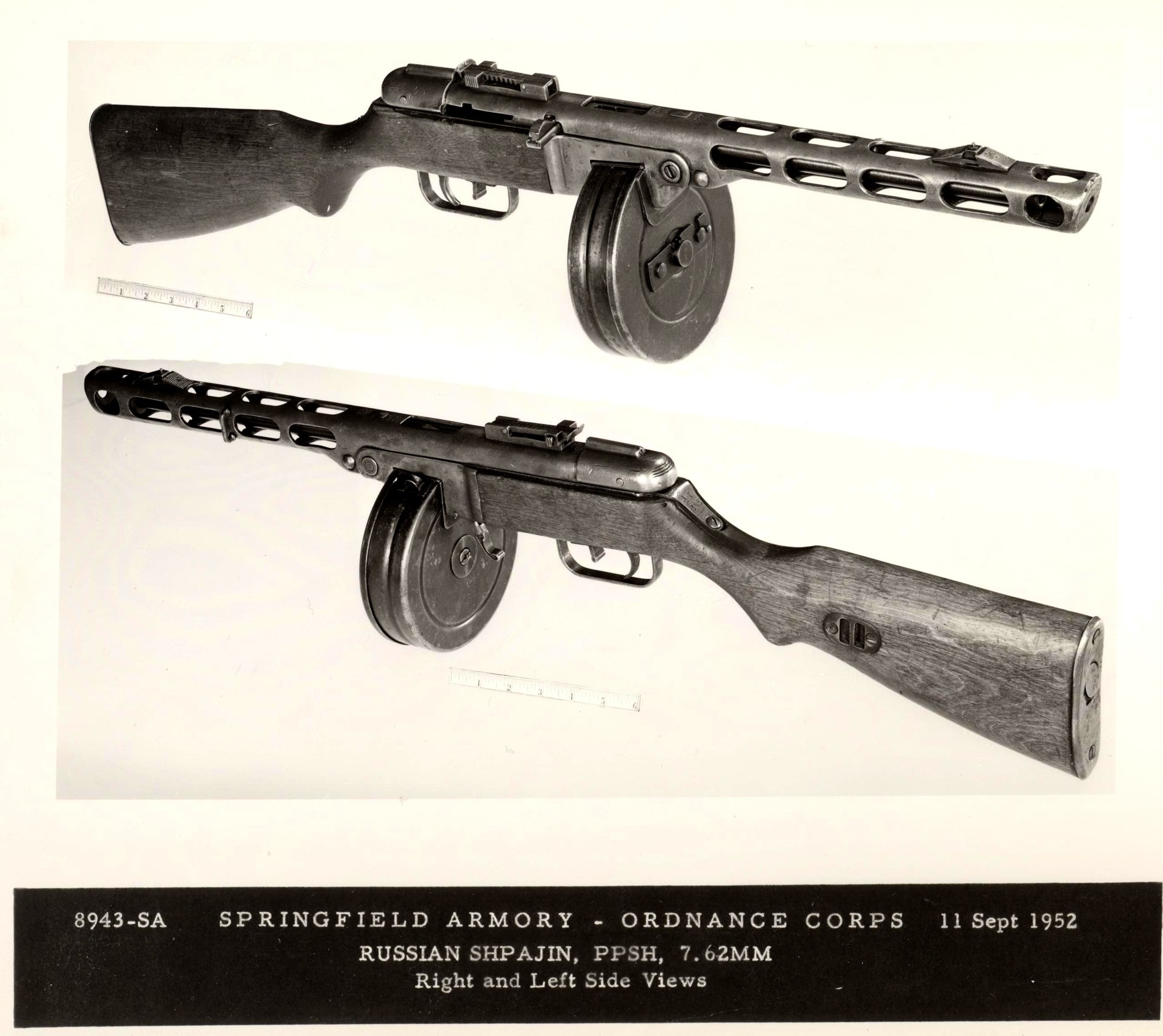
PPSh-41 Like most resistance formations, Soviet partisans made extensive use of submachine guns (SMGs). Luckily for the Russians, they were armed with the PPSh-41
(7.62x25 mm Tokarev), easily one of the finest SMGs of the war. The
fast-firing PPSh cycled at nearly 1,000 rounds per minute, providing the
partisans with a distinct firepower advantage in close-range
firefights. The PPSh-41, called “Papasha,”
by fighters, used either a 71-round drum or a 35-round box magazine.
Simple and sturdy, it became an icon of Soviet resistance in World War
II.
The
partisan's best friend, the PPSh-41 SMG equipped with a 71-round drum
magazine. The simple PPSh offered tremendous short-range firepower. Springfield Armory
Mosin-Nagant Rifles The venerable Mosin-Nagant M1891
(7.62x54 mm R) gave Soviet partisans a simple, reliable and accurate
rifle for the light infantry makeup of their groups. One of the classic
military bolt-action rifles, the M1891 served from before World War I, through both world wars, and even into the early years of the Cold War. From 1942, greater numbers of M91/30 sniper rifles became available, and Soviet marksmen used them to great effect. Equipped with a 3.5X PU scope, the M1891 was accurate
out to nearly 900 yards, just right for a partisan sniper with his
sights set on a German officer, truck driver or locomotive conductor.
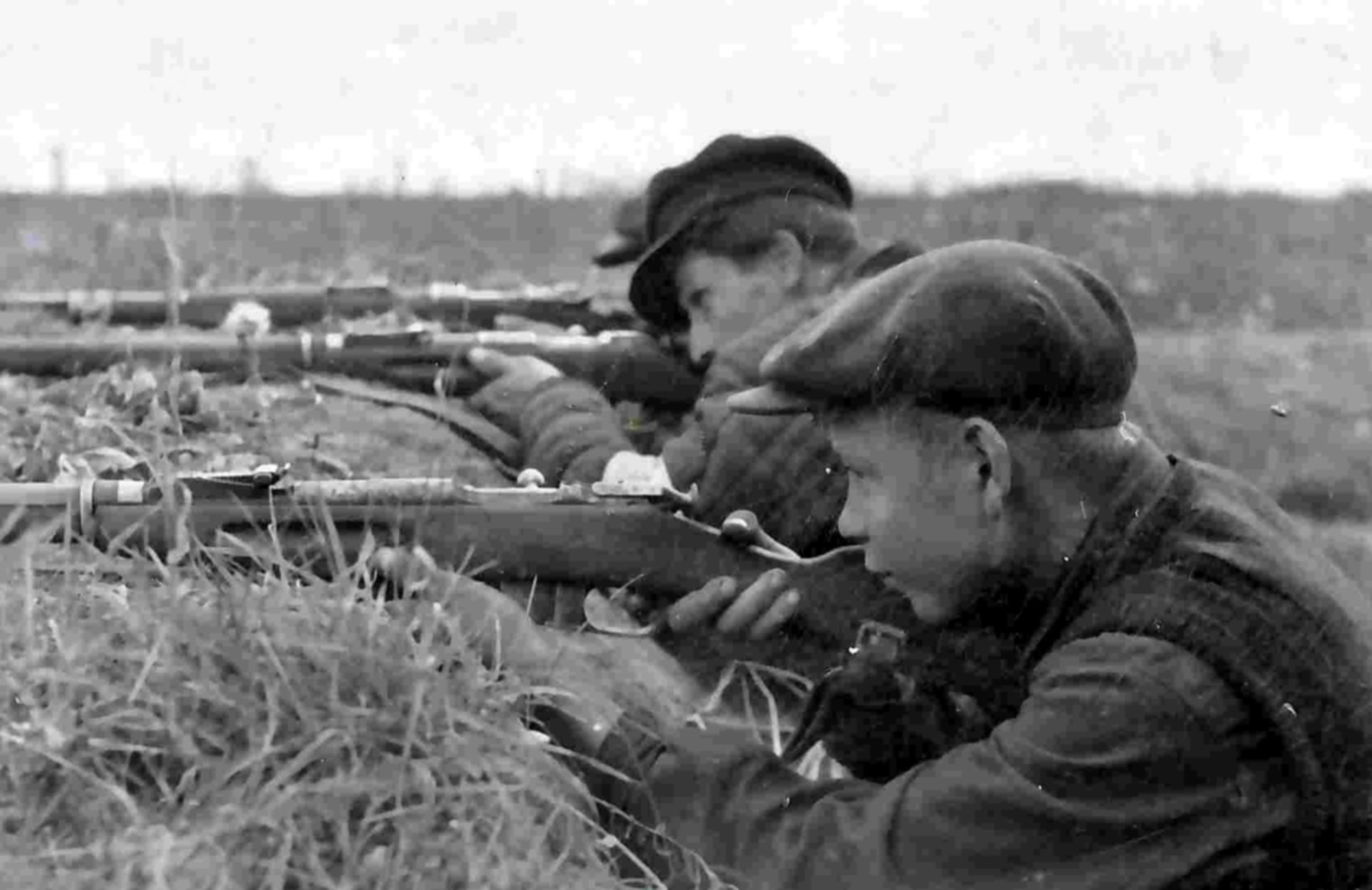
Total war on the Eastern Front knew no age limit. Shown here, a youthful partisan sights his M1891 Mosin-Nagant rifle. NARA
The Degtyaryov DP-27 The gas-operated DP-27
(7.62x54 mm R) gave partisan groups an effective base of mobile
firepower. With just about 80 parts, the DP light machine gun (LMG) was
simple enough for quickly trained partisan gunners. The DP-27 weighed 25
lbs. loaded, featured a folding bipod and a built-in flash hider.
Rugged and practical, the DP-27 offered a manageable cyclic rate at 550
rounds per minute and was considered highly reliable—earning the
nickname “Record Player” for its unique 47-round pan-shaped magazine.
There's plenty of firepower in this guerrilla band, with DP-27 and ZB26 LMGs to support the rifles and SMGs. Author's collection
The PTRD-41 Anti-Tank Rifle During World War II, the Red Army made significant use of a firearm that was considered “obsolete” by the Western Allies—the anti-tank (AT) rifle. Despite Western misunderstanding, the Soviet 14.5 mm PTRD-41 (single shot) and PTRS-41 (semi-automatic) rifles proved to be effective throughout
the war when used against the side/rear armor of German medium tanks,
assault guns and all lightly armored vehicles. The PTRD-41 was 79 ½”
long, weighed 38 lbs., and its 14.5x114 mm rounds could penetrate up to
40 mm of armor at 100 meters. It is important to note that an
experienced AT rifleman could hit the most sensitive points on an enemy
vehicle and often achieve a “mobility kill.” Once immobilized, the
armored vehicle was often assaulted with satchel charges and Molotov
cocktails. While Soviet partisans avoided encounters with German armor
whenever possible, the 14.5 mm AT rifles were excellent long-range
sniping arms against some of their most lucrative targets—German supply
trucks and railroad transports. Also, in many areas under partisan
control, the German second-line troops used lesser armored vehicles
(often French tanks captured in 1940) that were more vulnerable to
anti-tank rifle fire.
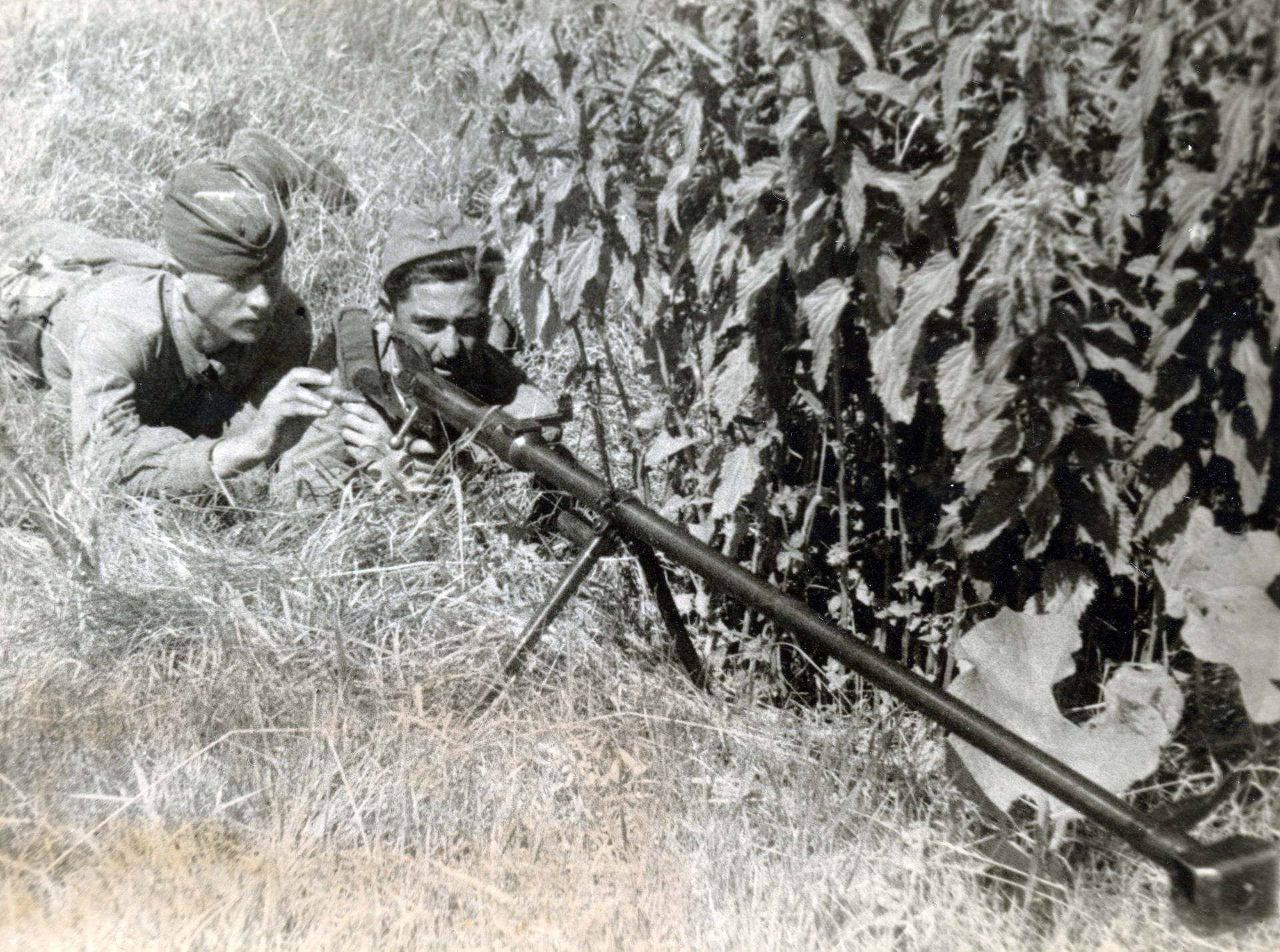
The
Soviet PTRD-41 14.5 mm anti-tank rifle gave Soviet partisans a measure
of anti-tank capability, along with powerful sniping and long-range
bunker-busting ability. NARA
Mines & Explosives The pamphlet “Rear Area Security in Russia” describes the Soviet partisans deadly use of mines and explosives:
Daily interruptions of traffic were
caused by rail demolitions for which the Russians used various types of
mines. Pressure and vibration-type mines were placed in the track, to be
detonated by the locomotives. To destroy particularly valuable
supplies, such as gasoline in tank cars, the partisans used mines with
pull-type fuses which were set off by remote control. Retreating Russian
forces often buried mines with long-delay fuses, under the tracks where
they might blow up as much as three months later. Mines with simple
delay-type fuses were also employed to avoid hitting the protective cars
ahead of the locomotive. In order to escape the mine detectors, nearly
all of these mines were placed in wooden containers, and their
construction was of the most primitive type; some of them consisted of
no more than a small package of explosives with a safety fuse.
Occasionally, even magnetic mines were used. They served as means of
sabotage in workshops and on standing trains and were mostly equipped
with delay-type fuses.
Ultimately, using what firearms and supplies they could scrounge, the
Soviet partisans played a vital role in hampering the German war
machine until the Red Army could begin turning the tide on the Eastern
Front. Today, most of the credit is given to the Red Army for Russia’s
victory in the so-called Great Patriotic War, but the partisans did
their job, too, often without the support or direction given to regular
army troops.
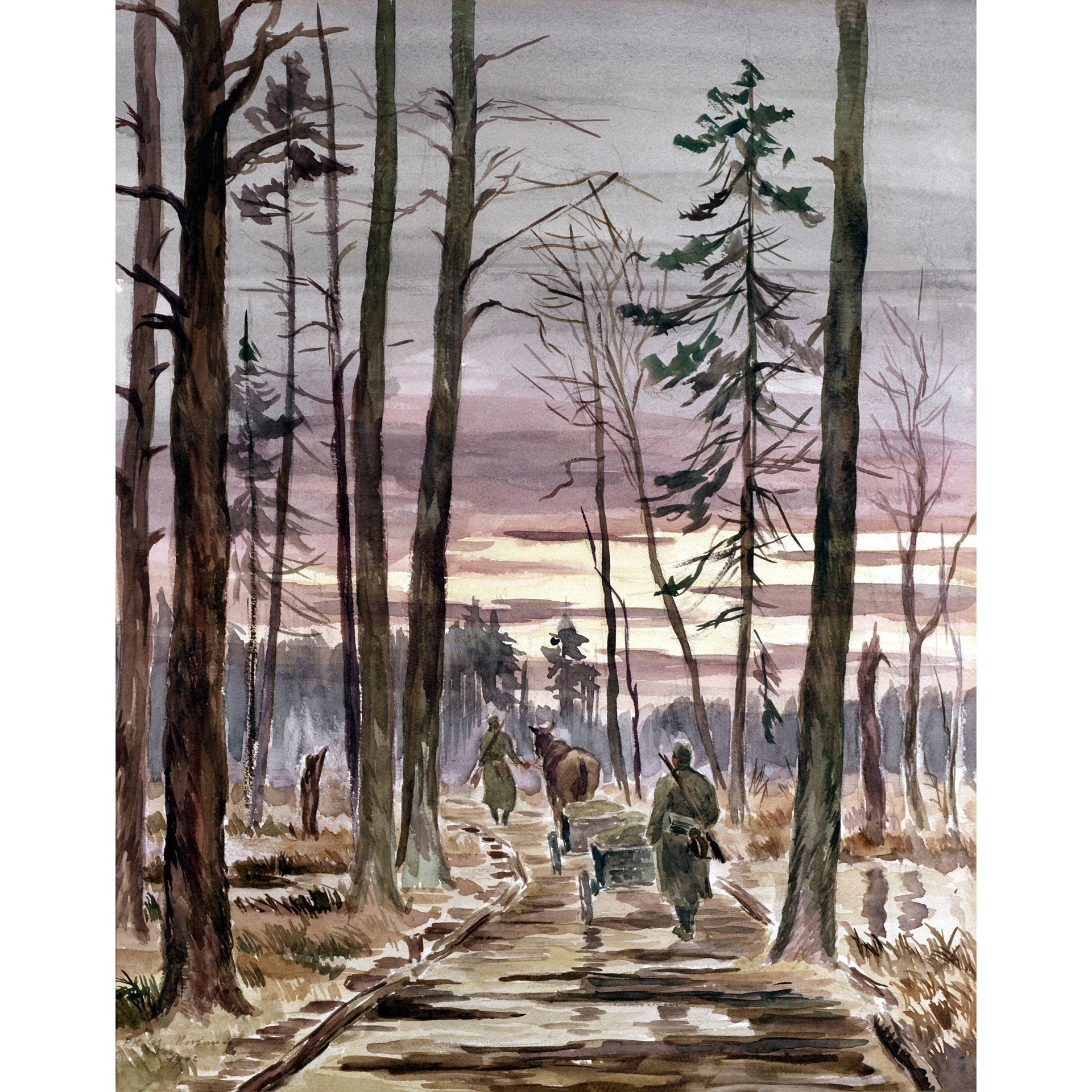
From
a German wartime painting by G. Vorhauer, in the US Army Artwork
Collection, the perfect environment for ambushes: Germany’s supply lines
in Russia were long, lonely and difficult to defend. NARA
I saw this pop up in my feed, I never heard about this and there have been "Rumors" that the Soviets have flown against the Allies in North Korean planes before but this was strictly Soviet planes, I wonder if some Soviet Aviation front commander had to go in front of "The Boss" and explain what he was thinking. Sure Stalin wanted to support Communism all over the world, but a direct clash with the West wasn't what he wanted or had in mind and to have several fighters shot down to boot especially by an inferior plane had to irk the Soviets. After reading this article, I almost think he should have gotten "The Blue Max" for what he accomplished.
Former US Navy Grumman F9F Panther pilot E Royce Williams was recently awarded the Navy Cross by Secretary of the Navy (SECNAV) Carlos Del for his solo dogfight with seven Soviet Mikoyan Gurevich MiG-15 pilots during the Korean War.
On November 18, 1952, Retd. Capt. Williams, who was then a Lieutenant in the US Navy, took off in his F9F-5 from the USS Oriskany, along with three other pilots from his fighter squadron, VF-781, into the stormy skies over the Sea of Japan.
“We started to rendezvous with each other as we climbed out of the clouds,” Williams recalled. “And that’s when we heard from the combat information center that there were inbound bogeys from the north,” he said.
US Intelligence reports assessed that the MiGs were seeking retribution for a major airstrike earlier that day (in which Lt. Williams had also participated), on an industrial complex in northeastern North Korea, only around eight kilometers from the Soviet border.
During the Korean War, Navy Lt. Royce Williams went head-to-head with 7 Soviet fighters and not only survived but left the fight with multiple confirmed kills. (Task & Purpose photo composite/Wikimedia Commons/US Navy via Twitter).
The bogeys were detected on radar roughly 80 nautical miles (148.16 kilometers) in the north-northeast. There appeared to be seven Soviet MiG-15 fighters that had taken off from a Soviet base in Vladivostok.
Soon after, Williams’ flight was directed toward the bogeys. During this time, one of the jets suffered a fuel pump problem which forced it to break off and return to the aircraft carrier bringing his wingman with him as an escort, leaving Williams and his wingman to defend the carrier against incoming MiGs.
The F9Fs had broken out in the clear at 12,000 feet and were climbing past 16,000 feet when Williams spotted the enemies’ contrails (line-shaped clouds produced by aircraft engine exhaust) some seventy kilometers from the carrier. He estimated that the Soviet fighters were flying 30,000 feet higher.
Williams kept ascending and radioed back to the Oriskany that he had sighted the MiGs split into a three-plane and a four-plane group. The CIC onboard Oriskany radioed Williams not to engage when suddenly the MiGs opened fire with their 23mm and 37mm cannon, and the battle was on!
The engagement became one of the most incredible feats in aerial combat and arguably the longest aerial duel in US military history.
Williams radioed back to the CIC, ensuring his cannons were armed and ready to fire. “We are already engaged!”
The attacking aircraft were indeed swept-wing MiG-15s, which surpassed Williams’ Panther in speed, maneuverability, climb rate, and the weapons range.
A Soviet Air Forces MiG-15UTI two-seater trainer over Duxford Air Festival 2017 (Wikipedia)
While the US Navy had scored some early kills against the MiGs, their mission had now changed to one which primarily entailed ground attack sorties.
The aerial combat was generally limited to the western half of the Korean peninsula, where the US Air Force (USAF’s) F-86 Sabres would patrol the approaches from China known as ‘MiG Alley,’ which indicated to Williams that the planes he was engaging were most likely launched from the Soviet Union.
MiG-15 (left) and F-86 Sabre (right) on display at the Steven F. Udvar-Hazy Center, National Air, and Space Museum (Wikipedia)
The four-plane formation of MiGs came at Williams and his wingman from the right side and opened fire. Williams pulled into a hard climbing left turn, came around on the “Number Four MiG,” and fired a short burst at its rear fuselage.
The MiG went down smoking, and Williams’ wingman followed it, leaving the former alone to face six remaining Soviet fighters.
As the two MiG formations climbed for altitude to make attacking dives, Williams found himself on the tail of one and downed the second aircraft. After this, he had to be careful while firing shots, as the Panther carried less ammunition than the MiGs.
“In that moment, I was a fighter pilot doing my job. I was only shooting what I had,” said Williams.
The remaining five MiGs now began taking turns climbing and then making passes at Williams, who could only engage a Soviet jet when it passed in front of him or rapidly turned to engage them head-on.
“I was engaged mentally at the time. A lot of it was awareness of where they were and how I had to maneuver to avoid them. They were taking turns. I decided that if I concentrated on shooting them down, I’d become an easy target. So, my initial goal was to look for defensive opportunities when they made mistakes,” he said.
F9F-5s USS Lake Champlain in 1953. (Wikipedia)
Williams then fired at another MiG, forcing it to a bank (inclined turn) out of the fight, and the wingman of that aircraft turned towards him, who fired a long burst as the two jets passed close to each other, with the Soviet plane crashing into the sea.
The three remaining MiGs of the other group easily accelerated away from Williams and gained altitude to dive for another firing run.
Williams saw their left wings emerge as they reversed course and managed to fire a burst as the MiGs flashed past but failed to score any hits. The three MiGs pulled away again to make another firing run.
Williams then saw a MiG locked on him from behind. He made a tough wings-vertical right turn with contrails spinning off his wingtip fuel tanks, and the MiG flashed past his tail.
Two F9F-2Bs over Korea. (Wikipedia)
Eventually, the enemy formations were torn apart, allowing Williams to track an individual MiG as the pilot dived in to attack. Some rounds appeared to hit, but he could not follow up as he had to avoid getting locked on from behind.
“I was firing at every MiG that passed within gun range as they came by,” said Williams.
Finally, the leader of the group and his wingman turned to the right, and Williams went after the section leader of the plane he had shot, who pulled up into the sun, and Williams lost him.
After that, Williams saw the leader and his wingman come around for a diving attack. “I turned into them and fired at the leader. He turned away, and the wingman rolled down on me, and we went past belly-to-belly as I raked him with a long burst. He caught fire and went down,” he explained.
The section leader then came around, and Williams turned into him and fired at him practically point-blank, and he also went down.
The flight leader came around again, and Williams fired, and parts came off his aircraft as he went away.
The Panther had also suffered a lot of damage of its own.
“I was turning, and one guy hit me with the 37mm cannon that knocked out my hydraulics,” said Williams.
With no ammunition and a plane that could barely fly, he turned back toward the Oriskany, using his remaining flight controls to maneuver the aircraft.
Diving low into the clouds, Williams thought of ejecting but decided to keep flying, knowing full well that in that weather, he could not have survived in the time it would have taken to find him.
Also, he found that his aircraft was uncontrollable below 170 knots which made the approach dangerous, considering the Panther’s normal landing speed was 105 knots.
A F9F lands on the USS Oriskany in November 1952 (Wikipedia)
As Williams approached the aircraft carrier, several escorting destroyers fired on him, mistaking him for an enemy aircraft.
Aboard Oriskany, the deck was ordered cleared for what was going to be a crash landing. “I told them I couldn’t fly slower than 170 knots and I could see the ship visibly speed up as she turned into the wind,” Williams said.
Eventually, the Oriskany’s captain turned the ship away from the wind, allowing Williams to make a straight-in approach.
Lt. Royce Williams observes some of the damage his F9F-5 Panther sustained in combat with 7 Soviet MiG-15s on November 18, 1952. (US Naval Institute/via Twitter)
On deck, there were 263 holes counted in Williams’ Panther, although he never saw it again.
The jet was supposedly pushed off the deck into the sea, with the gun camera footage being taken away for analysis.
Navy Admiral Robert Briscoe informed Williams, then commander of Naval Forces Far East, that while it was confirmed he had shot down three and possibly four MiGs, he was not to discuss the engagement with anyone, ever.
The US Navy and National Security Agency also did not keep a record of this incident because the US was concerned that acknowledging the incident might drag the Soviets into the Korean War.
Therefore, it was not mentioned in the declassified American archives for the Korean War.
Meanwhile, Williams continued to serve in the Navy for an additional 23 years, flying 110 sorties during the Vietnam War.
He retired in 1975 with a display case full of awards, including the Silver Star, two Distinguished Flying Crosses, and the Legion of Merit with combat “V.”
He kept the dogfight a secret from everyone, including his wife Camilla and his pilot brother, until the early 2000s, when the Korean War archives were formally declassified.
Four decades later, following the disintegration of the Soviet Union, records began to come out from Moscow confirming the aerial battle.
The dogfight was covered in a chapter in a 2014 book by Russian historian Igor Seidov, “Red Devils Over the Yalu: A Chronicle of Soviet Aerial Operations in the Korean War.”
However, according to that book, four MiGs were brought down by a single American aircraft, one was shot up and crashed while returning, and the seventh was never located.
Several years ago I did postings about the equipment used in the book "Red Storm, Rising", I had enjoyed doing those postings. I had seen this pop up in my feed and I wondered if this plane was ever used in the book and as I recall, it wasn't used, the plane was too new.
Entering service in 1987, the Tu-160 was the last strategic bomber designed for the Soviet Union. As of 2016, the Russian Air Force's Long Range Aviation branch still had 16 aircraft in service.
The Tu-160 active fleet has been undergoing upgrades to electronics
systems since the early 2000s. The Tu-160M modernization program of
existing models has begun with the first updated aircraft delivered in
December 2014. On 12 January 2022 first newly serial built aircraft had
its first test flight with planned deliveries of 2 new until end of 2022 within contract of 10 on order.
The first competition for a supersonic strategic heavy bomber was launched in the Soviet Union in 1967. In 1972, the Soviet Union launched a new multi-mission bomber competition to create a new supersonic, variable-geometry ("swing-wing") heavy bomber with a maximum speed of Mach 2.3, in response to the US Air ForceB-1 bomber project. The Tupolev design, named Aircraft 160M, with a lengthened blended wing layout and incorporating some elements of the Tu-144, competed against the Myasishchev M-18 and the Sukhoi T-4 designs.
Tu-160 in flight
Work on the new Soviet bomber continued despite an end to the B-1A
and in the same year, the design was accepted by the government
committee. The prototype was photographed by an airline passenger at a Zhukovsky Airfield
in November 1981, about a month before the aircraft's first flight on
18 December 1981. Production was authorized in 1984, beginning at the Kazan Aircraft Production Association (KAPO)
First overhauled and partially modernised aircraft was accepted into
Russian service after testing in July 2006. The aircraft reportedly
received a capability to use conventional weapons, but was not upgraded
with new avionics as previously planned.[11][12] First modernised aircraft capable to carry the new long-range Kh-555 conventional cruise missile was delivered to the Russian Air Force in April 2008;[13][14] a follow-up contract for modernisation of three more aircraft is estimated to cost RUR3.4 billion (US$103 million).[15]
The modernisation appeared to be split into two phases, first
concentrating on life extension with some initial
communication–navigation updates, followed by engine upgrades after
2016. In November 2014, a Tu-160 upgraded with new radar and avionics performed its first flight. The aircraft was delivered to the Russian Air Force as Tu-160M model in December 2014.The phase I update was due to be completed by 2016, but industrial limitations may delay it to 2019 or beyond.Although Kuznetsov designed an NK-32M engine with improved reliability
over the NK-32 engines, its successor company has struggled to deliver
working units. Metallist-Samara JSC had not produced new engines for a
decade when it was given a contract in 2011 to overhaul 26 of the
existing engines, by two years later, only four were finished.
Ownership and financial concerns hinder the prospects of a new
production line; the firm insists it needs a minimum of 20 engines
ordered per year but the government is only prepared to pay for 4–6
engines per year. A further improved engine has been bench tested and may enter production in 2016 or later.
New modernized in production
On 29 April 2015, Russian Defense Minister Sergei Shoigu on order of President Putin announced Russia was resuming production of the Tu-160. In May 2015, TASS
reported that the Russian Air Force would purchase at least 50
new-build Tu-160s and that production of the aircraft would resume at
KAPO.General Viktor Bondarev has said that development of the PAK DA will continue alongside resumption of production of the older model bomber.
On 16 November 2017, a newly assembled Tu-160, built from an
unfinished Tu-160 airframe, was unveiled during a roll-out ceremony at
KAPO, signifying a restoration of certain production technologies such
as electron-beam welding or titanium work reportedly lost after the termination of serial production in 1992. According to Dmitri Rogozin, the serial production of completely new airframes for the modernized Tu-160M2 should begin in 2019 with deliveries to the Russian Air Force in 2023.The aircraft, named Petr Deinekin, after the first commanding officer of the Russian Air Force Gen. Pyotr Deynekin, performed its maiden flight in January 2018 and began flight testing the same month. It performed its first public flight on 25 January 2018, during President Vladimir Putin's visit to KAPO plant.The same day, a contract for ten upgraded Tu-160M2 bombers was signed. On 12 January 2022 a new serial produced from scratch Tu-160M had its first low altitude basic test flight. It is planned to deliver 2 newly built serial Tu-160M in 2022 with ramping up production until all 50 on order new aircraft are delivered.
The Tu-160 is a variable-geometry wing aircraft. The aircraft employs a fly-by-wire control system with a blended wing profile, and full-span slats are used on the leading edges, with double-slotted flaps on the trailing edges and cruciform tail.
Titanium constitutes around 30% of the aircraft's 110 tonne empty
weight, and the largest component (the swing wing hinge) weighs 6
tonnes.[32] The Tu-160 has a crew of four (pilot, co-pilot, bombardier, and defensive systems operator) in K-36LMejection seats.
The Tu-160 is powered by four Kuznetsov NK-32afterburningturbofan engines, the most powerful ever fitted to a combat aircraft. Unlike the American B-1B Lancer, which reduced the original Mach 2+ requirement for the B-1A to achieve a smaller radar cross-section, the Tu-160 retains variable intake ramps, and is capable of reaching Mach 2.05 speed at altitude. The Tu-160 is equipped with a probe-and-droguein-flight refueling
system for extended-range missions, although it is rarely used. The
Tu-160's internal fuel capacity of 130 tons gives the aircraft a roughly
15-hour flight endurance at a cruise speed of around 850 km/h
(530 mph), Mach 0.77, at 9,100 m (30,000 ft). In February 2008, Tu-160 bombers and Il-78 refueling tankers practiced air refueling during air combat exercise, as well as MiG-31, A-50 and other Russian combat aircraft.
The aircraft carries a TsNPO Leninets Obzor-K (Survey, NATO: Clam Pipe) radar for tracking ground and air targets, and a separate SopkaTerrain-following radar. Although the Tu-160 was designed for reduced detectability to both radar and infrared signature, it is not a stealth aircraft. Nevertheless, Lt. Gen. Igor Khvorov claimed that Tu-160s managed to penetrate the US sector of the Arctic undetected on 25 April 2006, leading to a USAF investigation according to a Russian source.
Weapons are carried in two internal bays, each capable of holding 20,000 kg (44,000 lb) of free-fall weapons or a rotary launcher for nuclear missiles; additional missiles may also be carried externally.[citation needed] The aircraft's total weapons load capacity is 40,000 kg (88,000 lb). No defensive weapons are provided; the Tu-160 is the first post-World War II Soviet bomber to lack such defenses.
As of 2020, the Russian Air Force is planning to arm the Tu-160 with new hypersonic missiles, in particular the Kh-47M2 Kinzhal.
While similar in appearance to the American B-1 Lancer, the
Tu-160 is a different class of combat aircraft; its primary role being a
standoff missile platform (strategic missile carrier).
The Tu-160 is also larger and faster than the B-1B and has a slightly
greater combat range, though the B-1B has a larger combined payload with
external payload.
Another noticeable difference is that the B-1's colour scheme is
usually subdued dark gray to reduce visibility; the Tu-160 is painted
with anti-flash white, giving it the nickname among Russian airmen "White Swan".
Tu-160M2
United Aircraft Corp. (UAC) on Jan. 12 flew the first newly assembled Tu-160M2
bomber from the Kazan Aviation Plant in Russia.
The first flight lasted about 30 min. and reached an altitude of 600 m,UACsays
in an announcement.
The
flight of the first newly built version of the modernized, supersonic
bomber follows by more than two years the debut of the first Tu-160M
that was retrofitted to the more advanced standard.
The Tu-160M2 adds more efficient Kuznetsov NK32 Series 2 turbofan engines to extend the bomber’s range.
“The
fundamental importance of today’s event is that the new machine is
completely rebuilt, from scratch,” said Yury Slyusar, general director
ofUAC.
The
revival of new production allowed the Kazan Aviation Plant to “restore
key competencies,” Tupolev Managing Director Vadim Korolev says. The
Kazan factory now houses the “world’s largest
installation for electron beam welding and vacuum annealing of
titanium, according toUAC.
UACexpects that further development of the Tu-160 will include
the addition of new, advanced missiles



.jpg.webp)
.png)

.jpg)


