Webster

The Constitution was made to guard the people against the dangers of good intentions." --American Statesman Daniel Webster (1782-1852)


Showing posts with label GM. Show all posts

Tuesday, September 11, 2012

GM Bankruptcy...? Facts and Fiction, Past and Future

As those that have read my bio know that I am a former autoworker.. Ford shuttered the Atlanta Assembly back in 2006 in their restructuring bid.  Some facts about the Ford restructuring that is not apparent with the GM model.  Ford mortgaged its own restructuring, it borrowed against everything it had, sold off unprofitable side ventures(Volvo,Aston Martin,Jaguar because it detracted from the core business which was building cars for the blue collar(Lincoln handles the white collar folks).  Ford had veered away from its core business in the 90's when the SUV craze hit America and leading the pack was the Ford Explorer
    The trends started changing after the turn of the new decade and Ford didn't. they focused on SUV's and trucks, Ford Motor company cars got the short end of the development stick.  The Ford Taurus was considered by many the emblematic problem of Ford Motor Company, from being a cutting edge vehicle to being relegated to rental status at the end of its initial run in 2006 as an automotive fall from grace that was unprecedented.
  The other vehicles with the exception of the Ford Mustang was equally lackluster.  Ford realized that there was a big problem and they need to find a formula that worked or they will fade away like the other names in automotive history like PackardAMC and Studebaker.   Ford knew that they needed somebody that was respected in the business world to show that Ford was serious about rebuilding itself.  They wooed the CEO of Boeing (BCA) to lead the way.  Alan Mulally was brought in and Ford went through a frantic period where they sold off excess ventures and borrowed heavily against its own assets to restructure.  They didn't get a government bailout like GM and Chrysler.   Ford did it themselves..they rolled the dice and went for broke...literally.  If they failed in this, Ford would fade away  like the other Icons of the American Automotive landscape.   Ford was the only American Automotive company that refused the government bailout.   Ford engineered a comeback and totally changed their corporate culture.  That is a point of pride for me.  I still have my pension(small as it is) and I still have all my Ford stock.  Alan Mulally had the Taurus nameplate brought back...to him it was a poor business decision.    The new Ford Taurus looks a lot different than the old one.
       

    I do want GM to succeed but they still have all the baggage from before, from the management to the unions   Nothing has changed...the corporate culture remains the same.

The Democrats have decided to run in 2012 as the bailout party. It is an odd choice — the 2008–09 bailouts were deeply unpopular among the general public, and even their backers were notably conflicted about the precedent being set and the ensuing moral hazard. But Democrats have nonetheless made one of the most abusive episodes in the entire bailout era their economic cornerstone: the government takeover of General Motors.
The GM bailout was always an odd duck: The Troubled Asset Relief Program (TARP) was created in order to preserve liquidity in the financial markets by heading off the collapse of key financial institutions that had made catastrophically bad bets on real-estate securities — nothing at all to do with cars, really. GM’s financial arm, today known as Ally Financial, was in trouble, but GM’s fundamental problem was that its products were not profitable enough to support its work-force expenses. A single dominant factor — the United Auto Workers union’s extortionate contracts with GM — prevented the carmaker from either reducing its work-force costs or making its products more efficiently. And its hidebound management didn’t help.

Admirers of the GM bailout should bear in mind that it was the Bush administration that first decided to intervene at the firm, offering a bridge loan on the condition that it draw up a deeply revised business plan. President Obama’s unique contribution was effectively to nationalize the company, seeing to it that the federal government violated normal bankruptcy processes and legal precedent to protect the defective element at the heart of GM’s troubles: the financial interests of the UAW. It did this by strong-arming GM’s bondholders into taking haircuts in order to sweeten the pot for the UAW. The Obama administration also creatively construed tax law to relieve GM of tens of billions of dollars in obligations — at the same time that Barack Obama & Co. were caterwauling about the supposed lack of patriotism of firms that used legal means rather than political favoritism to reduce their tax bills. Mitt Romney’s proposal for a structured bankruptcy would have necessitated considerable federal involvement, too, but with a key difference: The UAW contracts would have been renegotiated, and GM’s executive suites would have been cleaned out, placing the company on a path toward innovation and self-sufficiency rather than permanent life support. Which is to say, Obama did for GM what he is doing by un-reforming welfare: creating a dependent constituency.
The Democrats cling to the ridiculous claim that the bailout of GM and its now-Italian competitor, Chrysler, saved 1.5 million U.S. jobs. This preposterous figure is based on the assumption that if GM and Chrysler had gone into normal bankruptcy proceedings, the entire enterprise of automobile manufacturing in the United States would have collapsed — not only at GM and Chrysler but at Ford and foreign transplants such as Toyota and Honda. Not only that, the Democrats’ argument goes, but practically every parts maker, supplier, warehousing agency, and services firm dedicated to the car industry would have collapsed, too. In fact, it is unlikely that even GM or Chrysler would have stopped production during bankruptcy: The assembly lines would have continued rolling, interest and debt payments would have been cut, and — here’s the problem — union contracts would have been renegotiated. Far from having saved 1.5 million jobs, it is not clear that the GM bailout saved any — only that it preserved the UAW’s unsustainable arrangement.
Bill Clinton bizarrely tried to claim that the bailout has been responsible for the addition of 250,000 jobs to the automobile industry since the nadir of the financial crisis. Auto manufacturers and dealerships have indeed added about 236,000 jobs since then, but almost none are at GM, which has added only about 4,500 workers, a number not even close to offsetting the 63,000 workers that its dealerships had to let go when the terms of the bailout unilaterally shut them down.
Ugly as the bank bailouts were, the federal government appears set to make its money back on most of them, with the exception of some smaller regional banks and CIT. Even AIG, one of the worst of the financial basket cases, is set to end up being a break-even proposition for U.S. taxpayers. But tens of billions of dollars will be lost on GM. The federal government put up more for a 60 percent interest in the firm than GM is worth today.
At their convention, Democrats swore that GM is “thriving,” but the market doesn’t think so: GM shares have lost half their value since January 2011. And while the passing of the Great Recession has meant growing sales for all automakers, GM is seriously lagging behind its competitors: Its sales are up 10 percent, a fraction of the increases at Kia, Toyota, Volkswagen, and Porsche. With its sales weak, its share price crashing, and its business model still a mess, some analysts already are predicting that GM will return to bankruptcy — but not until after the election.
The Obama administration talks up all of the “jobs” it saved at GM — but jobs doing what? Manufacturing automobiles that are not competitive without a massive government subsidy? Propping up an economically unviable enterprise just long enough to get Barack Obama reelected? As much as it will pain the hardworking men and women of GM to hear it, it is not worthwhile to save jobs at enterprises that cannot compete on their own merits. So long as the federal government is massively subsidizing the operation, a job at GM is a welfare program with a fairly robust work requirement. (And we all know how the Obama administration feels about work requirements.)
We have bankruptcy laws and bankruptcy courts for a reason. It may make sense to expedite the proceedings for very large firms such as GM in order to prevent disruptions in the supply chain that would, as Ford’s executives argued, harm other, healthier firms. But bankrupt is what GM was, and bankrupt is what GM is, a fact that will become blisteringly apparent should the government ever attempt to sell off the shares it owns in the company.
The GM bailout was a bad deal for GM’s creditors, for U.S. taxpayers, and, in the long run, for the U.S. automobile industry and our overall national competitiveness. No wonder the Democrats are campaigning on a fictionalized account of it

Tuesday, September 4, 2012

GM might be in bankruptcy again......Soon


I saw this from Forbes and I have heard rumblings about this from other financial publications.   I don't want to see this again, I am a hardcore Ford Motor supporter, but to see this happen again will be bad, there are a lot of people that depend on GM to keep its act straight and there seems to be a problem.  A lot of people got screwed from the last bankruptcy proceedings from the retirees to the stock and bond holders from the political settlement that Obama forced on everybody that seemed to benefit only the U.A.W.  

    The Pics are compliments of "google"


Opinion: General Motors Is Headed For Bankruptcy -- Again
By Louis Woodhill; Forbes ~ Aug 15, 2012

President Obama is proud of his bailout of General Motors. That’s good, because, if he wins a second term, he is probably going to have to bail GM out again. The company is once again losing market share, and it seems unable to develop products that are truly competitive in the U.S. market.

Right now, the federal government owns 500,000,000 shares of GM, or about 26% of the company. It would need to get about $53.00/share for these to break even on the bailout, but the stock closed at only $20.21/share on Tuesday. This left the government holding $10.1 billion worth of stock, and sitting on an unrealized loss of $16.4 billion.

Right now, the government’s GM stock is worth about 39% less than it was on November 17, 2010, when the company went public at $33.00/share. However, during the intervening time, the Dow Jones Industrial Average has risen by almost 20%, so GM shares have lost 49% of their value relative to the Dow.

It’s doubtful that the Obama administration would attempt to sell off the government’s massive position in GM while the stock price is falling. It would be too embarrassing politically. Accordingly, if GM shares continue to decline, it is likely that Obama would ride the stock down to zero.

GM is unlikely to hit the wall before the election, but, given current trends, the company could easily do so again before the end of a second Obama term.

In the 1960s, GM averaged a 48.3% share of the U.S. car and truck market. For the first 7 months of 2012, their market share was 18.0%, down from 20.0% for the same period in 2011. With a loss of market share comes a loss of relative cost-competitiveness. There is only so much market share that GM can lose before it would no longer have the resources to attempt to recover.

To help understand why GM keeps losing market share, let’s look at the saga of the Chevy Malibu.

The Malibu is GM’s entry in the automobile market’s “D-Segment”. The D-Segment comprises mid-size, popularly priced, family sedans, like the Toyota Camry and the Honda Accord. The D-Segment accounted for 14.7% of the total U.S. vehicle market in 2011, and 21.3% during the first 7 months of 2012.

Because the D-Segment is the highest volume single vehicle class in the U.S., and the U.S. is GM’s home market, it is difficult to imagine how GM could survive long term unless it can profitably develop, manufacture, and market a vehicle that can hold its own in the D-Segment. This is true not only because of the revenue potential of the D-Segment, but also because of what an also-ran Malibu would say about GM’s ability to execute at this time in its history.

GM is in the process of introducing a totally redesigned 2013 Chevy Malibu. It will compete in the D-Segment with, among others, the following: the Ford Fusion (totally redesigned for 2013); the Honda Accord (totally redesigned for 2013); the Hyundai Sonata (totally redesigned for 2011); the Nissan Altima (totally redesigned for 2013); the Toyota Camry (refreshed for 2013); and the Volkswagen Passat (totally redesigned for 2012).

Automobile technology is progressing so fast that the best vehicle in a given segment is usually just the newest design in that segment. Accordingly, if a car company comes out with a new, completely redesigned vehicle, it had better be superior to the older models being offered by its competitors. If it is not, the company will spend the next five years (the usual time between major redesigns in this segment) losing market share and/or offering costly “incentives” to “move the metal”.

Uh-oh. At this point, it appears that the 2013 Malibu is not only inferior to the 2012 Volkswagen Passat, it’s not even as good as the car it replaces, the 2012 Chevy Malibu.

If you follow the automobile enthusiast press, you know that, under the leadership of then product czar Bob Lutz, GM went all out to develop a competitive D-Segment car for the 2008 model year. The result was the 2008 Chevy Malibu, which managed to get itself named by Car and Driver magazine as one of the “10 Best Cars” for 2008.

However, when tested head to head against six other D-Segment sedans in the March 2008 issue of Car and Driver, the 2008 Malibu came in third, behind the Honda Accord and the Nissan Altima. Adjusted to the points scale that Car and Driver uses today, the 2008 Malibu scored 187 points, 6% lower than the winning 2008 Honda Accord’s 198 points.

Still, third was a respectable showing. The previous generation of the Malibu, a darling of rental car fleets, would have come in dead last in any D-Segment comparison test.

Acknowledging the importance of the D-Segment to the company’s future, GM’s CEO, Dan Akerson, ordered that the introduction of the redesigned 2013 Chevy Malibu be advanced by six months, from the fall of 2012 to the spring of 2012.

In their March 2012 issue, Car and Driver published another D-Segment comparison test, pitting the 2013 Chevy Malibu Eco against five competing vehicles. This time, the Malibu came in dead last.

Not only was the 2013 Malibu (183 points) crushed by the winning 2012 Volkswagen Passat (211 points), it was soundly beaten by the 2012 Honda Accord (198 points), a 5-model-year-old design due for replacement this fall. Worst of all, the 2013 Malibu scored (and placed) lower than the 2008 Malibu would have in the same test.

Uh-oh.

Digging deeper, the picture just gets worse. Despite its mild hybrid powertrain, which is intended to provide superior fuel economy (at the cost of a higher purchase price and reduced trunk space), the 2013 Malibu Eco delivered the same 26 MPG in Car and Driver’s comparison test as the Passat, the Accord, and the Toyota Camry.

In a recent speech, Dan Akerson admitted that GM’s powertrain technology had fallen behind that of competitors in some cases. This is illustrated by the Malibu Eco’s EPA gas mileage ratings. At 25 MPG City/37 MPG Highway, the Malibu Eco is not as fuel-efficient as the conventionally-powered 2013 Nissan Altima (27 MPG City/38 MPG Highway).

It might be possible for GM to give the Malibu a better powertrain during its five-year-product life cycle. Unfortunately, there is no way that they will be able to correct its biggest design flaw, which is its short wheelbase.

For years, automobile companies have been trying to design cars with the longest possible wheelbase (distance between the front and rear axles) for a given overall vehicle length. A longer wheelbase provides advantages in the areas of styling, ride, and legroom.

In developing the 2013 Malibu, GM decided to shorten the wheelbase by 4.5 inches from that of the previous-generation Malibu, from 112.3 inches to 107.5 inches. This gave the 2013 Malibu the shortest wheelbase in the entire D-Segment.

The Car and Driver comparison-test-winning Passat has a wheelbase of 110.4 inches, which gives it a “unique selling proposition”, the roomiest back seat in the D-Segment. The Passat has combined front and rear legroom totaling 81.5 inches, 3.5 inches more than the Malibu.

This may not sound like a lot, but, like baseball, automobile design is “a game of inches”.

For a 6’1” tall man, sitting in the back seat of the 2012 Passat behind a similar-sized driver is like sitting in a limo. His knees will be nowhere near the back of the front seat. In contrast, the same sized man would have to struggle to get into the back seat of the 2013 Malibu, and would have to sit with his legs splayed once he did.

Rear seat legroom is important in the family sedan market, not only for the comfort of adult passengers, but also for the ease of using children’s car seats. The 2013 Nissan Altima also has longer wheelbase and more rear seat legroom than does the Malibu.

Chevrolet is not a premium brand, like Mercedes or BMW. Since the 1920s, Chevy’s essential market positioning has been “more car for your money”. Unfortunately, the 2012 Volkswagen Passat is more car for the money than is the 2013 Malibu. There will not be anything that GM will be able to do about this for the next five years other than to reduce the price of the Malibu by offering “incentives”. This will eat into the company’s profitability, which is already weak.

As a company, General Motors peaked in 1965, when it commanded 50.7% of the U.S. market, and made a stunning-for-the-time $2.1 billion dollars in after-tax profits. Adjusted by the GDP deflator to 2011 dollars, GM made $12.1 billion in after-tax profits on $117.9 billion in revenue.

In 1965, Volkswagen was tiny compared to GM. It produced only 1.6 million vehicles, about 22% of GM’s 7.3 million. VW’s total revenues were only 11% of GM’s. The most powerful engine you could get in VW’s volume family car, the Beetle, had 40 horsepower. The biggest engine you could get in GM’s equivalent, the 1965 Chevy Impala, had 425 horsepower.

In the first half of 2012, Volkswagen sold almost as many vehicles as GM did, 4.6 million vs. 4.7 million. And, its total revenues were much higher, $119.2 billion vs. $75.4 billion for GM. Part of this is the result of currency exchange rates, but VW had a significantly higher operating profit margin than GM, 6.8% vs. 5.7%.

Under the leadership of Ferdinand Piech, who is kind of like a German-speaking, automobile industry version of Steve Jobs, Volkswagen is determined to become the biggest and most profitable car company in the world. And, right now, they are eating GM’s lunch.

Not only has Volkswagen taken an important share of the U.S. D-Segment with their new Passat, but they are pulling away from everyone in the troubled European market, where GM is losing money on its Opel subsidiary. The headline in the current edition of Automotive New Europe’s “Global Monthly” is, “Buried: VW Uses Europe’s Crisis to Crush Rivals”. In this case, GM is one of the “crushees”.

Will GM be able to turn itself around, and save American taxpayers from losing $26.5 billion on Obama’s bailout?

One way to answer that question is to compare the 2013 Chevy Malibu against the 2012 Volkswagen Passat, as Car and Driver did. Results: VW, first out of six; GM, dead last. However, additional insight can be obtained by looking at how GM’s CEO, Dan Akerson (63), stacks up against Professor Doctor Martin Winterkorn (65), the man handpicked by Ferdinand Piech in 2007 to be his replacement as CEO of Volkswagen AG.

Akerson has an engineering degree, but he also has a Master’s Degree in Economics, and his first big job was as CFO of MCI. Akerson was CEO of General Instrument, and then of Nextel, and then of XO Communications, which went bankrupt in June 2002. He joined the private equity firm, the Carlyle Group, in 2003.

Akerson got his first job in the automobile industry when he was named CEO of GM in late 2010. Recently, he has been hiring and firing top GM executives at an alarming pace, and he is understood to be working on a major reorganization of the company. Akerson recently gave a televised speech to GM employees on the need for “integrity”.

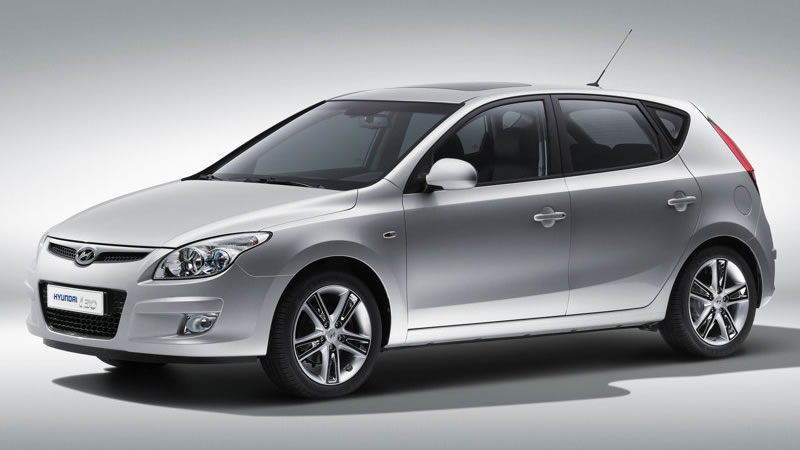
Martin Winterkorn has a PhD in Metallurgical Engineering, and he has spent his entire career in the automotive industry. At the 2011 Frankfurt Auto Show, Winterkorn was caught on amateur video sitting in, and studying Hyundai’s newly introduced i30, a competitor to VW’s best-selling family car, the Golf. Here is an excerpt from a story about this incident published along with the video by The Truth About Cars, an auto industry blog:
I-30
“(Martin Winterkorn) pulled on the adjuster of the steering column, and heard – nothing. At Volkswagen, there is an audible (“klonk!) feedback whenever the steering column is adjusted.

Immediately, Klaus Bischoff, head of Volkswagen Brand Design was summoned. He pulled on the adjuster: No sound. “Da scheppert nix,” exclaimed Winterkorn in his heavy Bavarian accent. “There is no rattle!”

Winterkorn was livid: “How did he pull that off?” He, the blasted Korean. “BMW doesn’t know how. We don’t know how.” He, the blasted Korean, must have found out how to battle the dreaded Scheppern.

Tension is high. This could affect careers. Someone quickly explains that there had been a solution, “but it was too expensive.” That gets Winterkorn even more enraged. “Then, why does he know how?” For less money. He, the Korean. There is no answer. Hyundai has beaten Volkswagen at the Scheppern front.

Winterkorn measures the A-pillar, runs his hands over the plastic. He walks away, his entourage trots after him. Deeply in thought and very worried.”

Uh-oh. While Dan Akerson is busy rearranging the deck chairs on GM’s Titanic, Martin Winterkorn is leading VW to world domination via technical excellence.

“The game isn’t over until it’s over”, but if President Obama wins reelection, he should probably start giving some serious thought to how he is going to justify bailing out GM, and its unionized UAW workforce, yet again. And, during the current campaign, Obama might want to be a little more modest about what he actually achieved by bailing out GM the first time.


; Forbes ~ Aug 15, 2012