I got this article from "
AOM" . I saw the article and thought it would be pertinent to what is going on here. I have commented that in the times gone past, 20 years longer or more people would just rob you, now they would kill you just for sport or "street cred". More people are borderline ferel, they are totally soulless and will quickly use violence to support their desires. Now with the violence that the antifa movement uses in attacking what they consider "hate speech", the violence that antifa uses is mostly "social violence" used to dominate, there is also the possibility that the violence can change from mostly intimidation to serious harm. It is important to understand the dynamics of mob violence and how fast it can change.
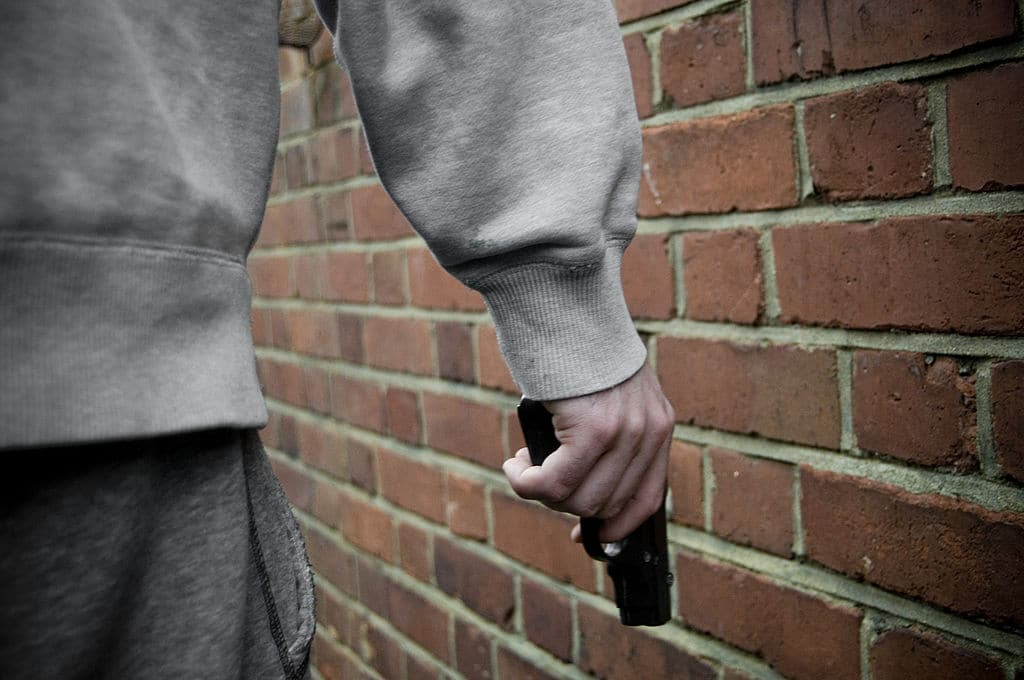 Editor’s note: The following article was adapted from When Violence Is the Answer: Learning How to Do What It Takes When Your Life Is at Stake by Tim Larkin.
Dulce bellum inexpertis. (War is sweet to those who have never experienced it.) —Pindar
You don’t have to look very hard on YouTube to find videos of
long-suffering kids reaching their breaking point with bullies and
finally fighting back. The scenes vary in geography, gender, and the
size and age difference of the kids involved, but each scene generally
goes down the same way.
The video picks up mid-conflict. The bully is in full aggressor mode:
stalking after the victim, cutting them off, pushing them, taunting
them, and getting in their envelope of personal space, sometimes looming
over them like a beast. The bullying victim is folded over, trying to
make themselves smaller. Or they’re turned to the side, as if
subconsciously hoping the teasing will just go away. Sometimes they’re
backed against a wall, as if they are hoping to melt into it.
Then, suddenly, there is a shift. The victim stops, stiffens, and
bows up. There is going to be a fight. The bully is almost always caught
off-guard when this happens. Bullies typically pick their victims based
on the likelihood that they won’t fight back. The fight might happen
right then and there, it might have to wait until after school. It
doesn’t really matter, though, because once the bully’s victim has had
enough and finally decides to defend himself, the decision ripples
through the playground or the schoolyard like a shockwave. The other
kids start getting super excited. If the fight is going down after
school, it’s all anyone can talk about.
They can’t wait. If it
happens right there in the moment, the kids immediately encircle the
pair chanting, “Fight! Fight! Fight!” In the lead-up to the actual
physical confrontation, the bully will often start talking trash in an
attempt to humiliate or intimidate and regain the upper hand in his
relationship to the victim. If the victim responds, it’s to show that
the bully’s taunts aren’t going to work this time. They’re going to have
it out once and for all.
Fights likes these are instances of what I call “social aggression.”
They are quasi-violent scenarios that stem from conflict and jockeying
within the social hierarchy. I call them quasi-violent not because I
don’t take them seriously, but rather because they don’t always involve
violence as we understand it — sometimes it’s just talking or
threatening — and they’re less about physically destroying the other
person than they are about asserting social dominance, gaining some
advantage, or elevating social status. That’s why people instinctively
want to gather around and watch these types of conflicts, because they want to see what happens.
Kids get so excited about these playground fights because there is
valuable social information to be gleaned from them. Both fighters’
positions in the school’s social hierarchy are in flux. The bully
occupies a position of power, and when his target finally fights back,
that means his position is being challenged. When it’s all over, will
there be a change in social standing? Will the bully get his comeuppance
and be reduced to a pariah and a laughingstock? Will his victim be
elevated to the position of nerd hero or defender of the meek and
helpless? Or will the bully get the upper hand and the social status
remain the same? This kind of aggression isn’t exactly tolerated — it’s
the kind teachers usually break up and punish, after all — but it
doesn’t destroy the social order in the school, either. Afterward, the
kids will be talking about it excitedly in the lunchroom for the rest of
the week.
And then there is the other way these playground fights and bully
takedowns can go. These are the kinds of incidents that do not show up
on YouTube. The victim has had enough, but he has only stiffened and
bowed up in his mind. He — and it’s almost always a he — has no interest
in fighting back at the center of a ring of classmates. Instead, he
opens his backpack, pulls out a revolver and shoots his bully in the
head at point blank range. Do you want to guess what happens next? There
is no excited chanting for a fight. No one is hoisting the bully’s
victim on their shoulders and marching him triumphantly around the
schoolyard. There is only complete and total pandemonium. Everybody runs
and no one looks back. There is no social information to be gathered
here.
That is the rough outline of any number of the school and workplace
shootings that have dominated our news over the last fifteen years, and
become (along with ISIS-style terrorism) the scariest, most urgent form
of violence we face today. I call violence of this nature “asocial.”
Asocial violence is violence that has nothing to do with communication
or reshuffling the pecking order. Asocial violence is nothing like that:
it doesn’t try to change the order, it tries to
wreck the
order. It’s the kind of violent interaction we instinctively run from —
the kind in which there is only mayhem, death, misery, and horror. (The
knockout game is asocial violence.) At the end of the day, all violence
has the potential to be a matter of life or death. The difference with
asocial violence is that death and destruction are not its by-products;
they are its purpose.
It is essential we understand this distinction between social aggression and asocial violence right now. Social aggression is about competition; asocial violence is about destruction
. Competition
has rules; destruction has none. Social aggression is about
communication — implicitly with status indicators but explicitly with
lots of taunting and posturing. There is no talking with asocial
violence. Open your mouth and you are likely to eat a lightning-fast
punch or a jacketed bullet traveling at 2,500 feet per second.
How to Tell the Difference Between Social Aggression and Asocial Violence
If there is one reliable way to distinguish between the two kinds of
violent encounter, it is the presence or absence of communication. If a
man comes upon you from behind as you’re walking home from dinner and he
puts a gun to your head and says, “Give me your wallet or I’ll blow
your brains out,” that is fundamentally an act of social aggression. It
may
feel asocial, because you feel powerless when you’re taken
by surprise, but how you feel has nothing to do with whether a situation
is social or asocial. What matters is the intent and the action of the
attacker. In this scenario, his primary motive is not to destroy, it’s
to dominate. He’s using the
threat of violence to make it
easier to get what he wants. If the situation were asocial, if what he
wanted to do was destroy you, you would not hear any words. You probably
wouldn’t even hear the hammer cock before the trigger got pulled and
the bullet left the chamber.
Social aggression doesn’t wear off after adolescence; fast-forward
twelve years to a bar fight between rival fraternity members and the
outline is the same. It’s still two guys exhibiting their inner-male
aggression, thrashing, ranting, raving. It’s the silverback gorilla
banging his chest. It’s the butting of rams’ heads. It’s the clashing of
male grizzly bears. These are all bids for a kind of social status, and
they’re all meant to be witnessed.
The schoolyard brawl and the bar fight aren’t usually life-or-death
situations. Rather, they’re a form of primitive communication. It’s a
social display that communicates,
“I’m really agitated. I’m mad. I want to run this other guy off my territory.” And the other guy is responding,
“I’m not willing to be run off my territory. I’m going to stand my ground.” The intent is not to inflict grievous bodily harm. It’s only to exert social dominance.
In these situations of quasi-violence, people rarely punch their
opponent’s throat or kick them in the testicles or gouge out their eyes.
They rarely try to inflict permanent damage. If you were to look at
such a confrontation simply from the perspective of causing bodily harm,
you’d call it wildly inefficient. I have studied video of countless
epic bar brawls that have gone on for ten or fifteen minutes that left
the combatants bloody and bruised, but also conscious, uninjured, and
able to walk away. I’ve also seen guys beat each other senseless and
then hang out afterward — like it was something they just needed to get
out of their systems.
Many of us know how to act like jerks and add fuel to the fire, how
to turn an argument into a shouting match that turns into a fistfight.
It can be scary. It can be wrong. It can be extremely intimidating. But
the aggressor is not deliberately trying to maim, cripple, or kill. He’s
not trying to break down the social order, to sow terror and mistrust.
The goal is to dominate, not to destroy. This is social aggression.
Asocial violence, on the other hand, is brutally streamlined. It’s
quiet. It happens suddenly and unmistakably. It’s one person beating
another person with a tire iron until he stops moving. It’s stabbing
somebody thirty-seven times. It’s pulling a gun and firing round after
round until he goes down, and then stepping close to make sure he has
two to the brain, just to be sure. If you’re a sane, socialized person,
thoughts like those can make you physically ill. That’s because you
recognize them for what they are: the breakdown of everything we, as
humans, hold sacred. Indeed, they are often a breakdown of the
perpetrator of the violence themselves. They are no longer in control,
they are no longer thinking rationally, they are no longer thinking at
all. These acts represent the destruction of the social fabric. They’re
devoid of honor.
They’re acts without rules, where anything goes. That is asocial violence.
How to Respond to Social Aggression and Asocial Violence
So why am I harping on the difference? Because our responses to
social aggression and asocial violence ought to be fundamentally
different.
Social aggression is avoidable — and you should avoid it.
You can choose not to participate. You can employ social skills to
remove yourself from the situation, or to de-escalate it. It comes with
big, flashing warning signs — loud, dramatic, and recognizable social
posturing. You can see it coming a mile away. These sorts of problems
can usually be handled with social tools that we all know how to use.
We’ve all talked our way out of a bad situation. We all know how to calm
another person down. We all know how to back down ourselves. If we
didn’t, none of us would have made it this far in life. Similarly,
threats of violence with a clear purpose — like a robbery — can be
terrifying. But they remain social interactions, with generally clear
demands and big, flashing warning signs of their own; the lines of
communication remain open. When he says, “Give me your wallet or I’ll
blow your brains out,” give him your wallet and live to see another day.
You can rarely, if ever, talk yourself out of asocial violence.
You have no idea whether the movie theater you chose is the one where a
shooter with a full arsenal will show up looking like The Joker and
acting like Bane. You have no idea if your child’s school is the one
where a deranged mind will decide to make his mark. Asocial violence
doesn’t care about your social skills.
Negotiating with a serial killer is like arguing with a bullet. If
it’s coming your way, words won’t deflect it. If somebody has decided to
stab you to death, capitulation doesn’t appease them. It only makes
their work easier.
When it comes to asocial violence, if you
have not been able to foresee and escape it, you must render your
attacker one of three ways to survive: incapacitated, unconscious, or
dead. Understanding and accepting that reality, then training
to deal with these unlikely scenarios, will give you the confidence you
need to quickly and calmly identify the difference between social
aggression and asocial violence, while setting your mind at ease that
you’ll be able to handle whichever comes your way — de-escalating where
it’s possible to de-escalate, and fighting to save your life where it is
not.
When the Rules Don’t Apply
Though these kinds of conflict — social aggression and asocial
violence — look and sound quite different from each other, our instinct
is to apply the same set of rules to both, because our socialized minds
don’t want to accept the possibility that the rare and unthinkable has
found us, by no fault of our own. If we don’t have rules governing how
we deal with the rare and unthinkable, then the rare and unthinkable
can’t happen, right? Alternatively, we try to shove this unseemly
business out of our minds by dismissing the distinction altogether:
Why are we talking about this? Violence is violence; it’s all bad.
We get ourselves into deep trouble when we take either one of these
approaches, because you can’t play by rules that your attacker refuses
to recognize even exist.
Rules, as a social construct, only work in a conflict when both sides
honor them. Major League Baseball has a broad set of rules that
generalize across the American and National Leagues. But when teams from
each league play against each other during interleague play or in the
World Series, they have to agree on which league’s rules govern or else
the whole thing collapses. The idea that rules of any kind go away the
second
the other guy ignores them is generally unsettling and
downright terrifying in the case of violence. But when you think about
asocial violence through that prism, you start to realize that it’s a
horrible mistake to use the same social contract that governs social
aggression, to understand and navigate true asocial violence. During
true violence, our usual social categories—good guy/bad guy,
right/wrong, attacker/defender — cease to apply. These dichotomies are
useful, but only before and after a violent confrontation has occurred.
During the actual fight, they are utterly irrelevant, if not misleading
and dangerous.
It is an issue of practicality in the most literal sense. In the
midst of a violent encounter, to think merely of “defending” yourself —
rather than incapacitating your opponent — is essentially to curl up in a
ball and hope for the best. Waiting for your attacker to give up — or
worse, expecting him to
follow the rules — is, putting it
bluntly, to risk participating in your own murder. Your only reliable
course of action to save your life is to do what your attacker is trying
to do to you, but do it more effectively and efficiently, and to do it
first. To use the very same tool of violence.
And yet, as sane, socialized beings, we continue to drag our rules
into these places where they don’t belong. We want to somehow keep
everything fair, on a level playing field.
This is why most confrontations involving real violence go terribly wrong for the good guy.
We’re constrained by a litany of social rules while the asocial
predator is bound only by the laws of physics. All he cares about is how
best and most quickly he can do you grievous bodily harm and end the
situation. He’ll stab you when you’re not looking. He’ll kick you in the
throat when you’re down. If things don’t look hot for him, he’ll
capitulate to get you to let go, then pull his gun and shoot you. He’ll
use your socialization against you — he’ll turn the social rules that
normally protect you from harm into his most powerful weapon. But all
his weapons are tools that you can use in turn.
When you’re staring down the barrel of a gun (literally and
figuratively) with a violent asocial predator on the other end of it,
you must remember that this is not a movie or a video game or a hero
fantasy. This is not high
noon at the O.K. Corral. There is no Good, Bad, and Ugly — there is just ugly.
Social Aggression Can Quickly Turn Into Asocial Violence
In 2006, a young British lawyer named Thomas Pryce exited the tube station by his home. It was early January, about
11:30
at night. It was cold. Tom had just left a work function in London and
he was hustling back to the flat he shared with his fiancée on a quiet
street in an up-and-coming suburb of London.
On this night, he was followed by two young men in hooded sweatshirts
who had robbed someone else earlier in the evening and saw Tom as
another opportunity. They circled around in front of him and drew their
knives, demanding his valuables. He quickly complied, handing over
everything. If the incident had ended there, we might say that Tom used
his social skills to escape an instance of social aggression. He saw
assailants who, however intimidating and dangerous, were still offering a
recognizable, if coercive, exchange — his possessions for his life,
straight up — and he accepted the exchange. He kept quiet, offered no
resistance, and gave up his property exactly how the authorities tell
you to do it in a robbery situation like that.
Thomas was shaken up, but he kept walking home. Then the young men
came back. This time, their knives were already drawn, their heads were
down, and they weren’t saying anything. Thomas broke into a sprint, but
they quickly overtook him and began stabbing him repeatedly, in the
chest, the hip, the face, the hands, and the lower torso. He yelled
frantically, “Why, why, why? You’ve got everything!” But they didn’t
have everything. They didn’t have the one thing they needed once they
realized he had seen their faces. They didn’t have his silence.
“He could identify us,” they said to themselves, according to the Metropolitan police who interrogated the men upon their capture,
“we need to kill him.”
That quick realization was all it took for those two young men to go
from opportunistic robbers to cold-blooded murderers. Social aggression
to asocial violence in the blink of an eye.
The lesson I take from Tom’s murder is how essential it is to
understand the difference between the two types of physical
confrontation. You need to be able to identify them in the moment, and
you need to recognize that one can turn into the other very quickly when
circumstances change. The kind of encounter that Tom endured initially —
no matter how frightening it must have been — still presumed a kind of
communication. He was in the kind of conflict that we can escape with
our social skills: after all, giving up your belongings in exchange for
your life is a kind of negotiation, even if it happens under extreme
duress. If you can comply with demands, it means there’s still
communication happening, which means there’s still a chance of getting
out of there in one piece.
Unfortunately, the situation turned asocial very quickly, for reasons
Tom could not have foreseen. The rules that he believed were governing
his initial encounter ceased to apply when the two men returned. His
attempts to communicate, to negotiate, to make sense of what was
happening, all of it fell on deaf ears and was met only with more
violence. His only hope lay in recognizing, quickly, what kind of
situation he was in, and acting accordingly. In a phrase:
using violence. By the time he realized the shift from social aggression to asocial violence — if he ever realized it — it was too late.
When escape was off the table, the only thing that could have helped
him was a fuller understanding of the tool of violence and greater
preparedness to take immediate action. Instead of turning to flee, he
needed to turn and fight. Because when an aggressor doesn’t care about
your reasons or your rules, and isn’t interested in having a
negotiation, no other strategy tends to work. Especially when you’re
outnumbered. Tom’s only hope was to inflict injury first. But before his
survival depended on that, it depended on recognizing, as soon as
possible, that he was not in a situation of coercion and communication,
but in a situation of life-or-death violence.
Social Aggression and Asocial Violence: Know the Difference, and Be Prepared to Act Accordingly
Remember: all of what I’ve been explaining goes both ways. Just as
there’s no way to de-escalate a situation of true, asocial violence,
there’s no reason to escalate a situation of social aggression. We learn
the difference between the two not only to prepare ourselves to fight
for our lives when we absolutely have to, but also to prepare ourselves
to wisely back down when there’s no need for a fight.