
I am doing a post that I started last year on Labor day. I am what is called a "old school unionist". Unions served a purpose when they first started for the working conditions in the average facility was horrible, people were getting maimed and killed and the kids working the factories at a young age to help out their families but they were not able to go to school and having to work, with little education guaranteed them being virtual slaves. My experience with unions was that I was a "shop steward" for the automotive union. I got the job by my peers because I knew the contract backward and forward and I would go toe to toe with any one. I was the only republican to hold union office. I found my experience interesting, with few exceptions I found myself working with the same group of people, they wanted to get paid but not work. I used a formula, 5% of the workforce utilized 95% of my time as they gamed and played the system. I heeded my oath of office to do the best I could and I did, I was successful. I would have the rank and file members always complain that "the union are saving the sorry asses." And I agreed. I was an employee and a Ford Stockholder and I wanted them gone but as a union rep, I had to do the best I could and I did. I almost wished the union was self policing and got the sorry asses gone on their own. I would have the same slackers tell me that "Ford owes me a job", and when i go outside in the parking lot, I would see the latest offering from the Japanese companies. I would then ask the dirtbags " what about a Ford? their response was "F*ck Ford, it be my money." I would then call them" a hypocritical 2 face suns of bitches." They would then threaten to whip my ass, I would reply "if you feel froggy, jump to it." They would complain to the chairman about me but I never got any complaints from him. What I meant by an "old school unionist" was that the union was our balance against the corporations, I don't agree with government unions. Walther Reuther one of the founders of the UAW considered a government union to be incorrect. In the traditional relationship, the union and company knew how much the other can stand and still pay and stay in business. Contrary to popular belief, the unions don't want the company to go out of business for it is the livelihood of their members....Little Debbie not withstanding. With the government unions, the people representing the "company" are politicians, they don't feel the pain for their decisions. The decisions are then pushed on the communities and there is no check and balance. Walther Reuther believed in community.

Most of the world marks Labor Day on May 1 with parades and rallies.
Americans celebrate it in early September, by heading to the beach or
firing up the grill. Why the discrepancy? Here’s a hint: The answer
would have been a great disappointment to Frederick Engels.
Engels, the co-author of
The Communist Manifesto, had high
hopes for May Day, which originated in the United States. When the
socialist-dominated organization known as the Second International
jumped on the American bandwagon and adopted May 1 as International
Labor Day, Engels confidently expected the proletariats of Europe and
America to merge into one mighty labor movement and sweep capitalism
into the dustbin of history.
Things didn’t work out that way, of course, and the divergent Labor Day celebrations are part of the story.
May Day’s origins can be traced to Chicago, where the Federation of
Organized Trades and Labor Unions, under its leader Samuel Gompers,
mounted a general strike on May 1, 1886, as part of its push for an
eight-hour work day. On May 4, during a related labor rally in Haymarket
Square, someone threw a bomb, which killed a policeman and touched off a
deadly mêlée. As a result, four radical labor leaders were eventually
hanged on dubious charges.
In 1888, Gompers’s union reorganized itself as the American
Federation of Labor, and revived its push for the eight-hour day.
Gompers laid plans for a strike to begin on May 1, 1890–the fourth
anniversary of the walkout that had led to the Haymarket affair.
Meanwhile, in Paris, a group of labor leaders were meeting to establish
the Second International. To these Europeans, the executed Chicago
radicals were revered martyrs. In an act of solidarity, the Second
International set May 1, 1890, as a day of protest.
Engels was thrilled. “As I write these lines, the proletariat of
Europe and America is holding a review of its forces; it is organized
for the first time as one army,” he wrote on the first May Day. “The
spectacle we are now witnessing will make the capitalists and landowners
of all lands realize that today the proletarians of all lands are, in
very truth, united. If only Marx were with me to see it with his own
eyes!”
The first May Day was deemed a success, so the Second International
adopted it as an annual event. And for a few years, it seemed as though
May 1 might be on the way to becoming a rallying point for socialists in
America, as it was elsewhere. The Panic of 1893 touched off a national
wave of bankruptcies that plunged the nation into a deep depression–and
depressions generally push workers toward radical solutions. Things came
to a boil with the Pullman Strike, which erupted in Chicago in May
1894. The striking Pullman Palace Car Co. workers quickly won the
support of the American Railway Union, led by Gompers’s rival Eugene V.
Debs. Railroad traffic in much of the country was paralyzed.
President Grover Cleveland, a conservative Democrat, was determined
to squash the strike. But he did not want to alienate the American
Federation of Labor, which was not yet involved in the Pullman dispute.
Moreover, 1894 was a midterm election year, and the Democratic Party
could ill afford to be seen as an enemy of labor. Cleveland and the
Democrats hit upon a possible solution: They would proclaim a national
Labor Day to honor the worker. But not on May 1–that date was tainted by
its association with socialists and anarchists. Fortunately, an
alternative was at hand.
Back in September 1882, certain unions had begun to celebrate a Labor
Day in New York City. By 1894, this event was an annual late-summer
tradition in New York and had been adopted by numerous states, but it
was not a national holiday. Nor was it associated with the radicals who
ran the Second International, and who liked to run riot on May Day.
On the contrary, the September date was closely associated with
Gompers, who was campaigning to have it declared a national holiday.
Gompers opposed the socialists and was guiding the AFL toward a narrower
and less-radical agenda. Gratefully, Cleveland seized upon the
relatively innocuous September holiday as a way to reward labor without
endorsing radicalism. On June 28, 1894, he signed an act of Congress
establishing Labor Day as a federal holiday on the first Monday of
September. (He made a point of sending the signing pen to Gompers as a
souvenir.) Less than a week later, the president sent federal troops to
Chicago. Gompers refused to support the strike, which soon collapsed.
With his union in ruins, Debs went into politics, but his Socialist
Party ultimately failed to catch on as America’s party of the left.
Organized labor did not regain its momentum until the 1930s–and by that
point, Gompers’s September holiday had been institutionalized as
America’s Labor Day. May Day, meanwhile, had become the occasion for big
annual parades in Moscow’s Red Square, which did not improve that
holiday’s reputation in the United States.
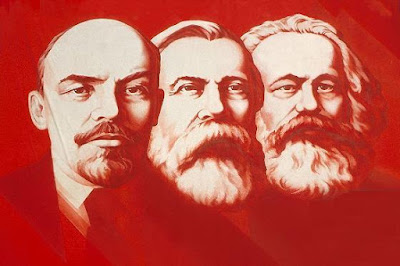
May Day today is well established in most of the world as
International Labor Day. May 1 also remains a traditional date on which
leftists and anarchists of various stripes take to the streets to
demonstrate their scorn for capitalism. But America, which has proved
impervious to socialism, still celebrates Labor Day in September–and not
by marching. AFL officials in New York long ago gave up holding their
annual parade on Labor Day itself, because it could not compete with the
prospect of a three-day weekend. The parade in recent years has been
held on the following Saturday, and even so has been sparsely attended.
This year, it has been canceled altogether.
Only 12% of the U.S. workforce belongs to a union these days, down
from a peak of 33.2% in 1955. But whether they belong to a union or not,
most Americans still have to work, so they appreciate a day off–and
they prefer to spend it by relaxing, rather than storming the
barricades.
May
Day today is well established in most of the world as International
Labor Day. May 1 also remains a traditional date on which leftists and
anarchists of various stripes take to the streets to demonstrate their
scorn for capitalism. But America, which has proved impervious to
socialism, still celebrates Labor Day in September–and not by marching.
AFL officials in New York long ago gave up holding their annual parade
on Labor Day itself, because it could not compete with the prospect of a
three-day weekend. The parade in recent years has been held on the
following Saturday, and even so has been sparsely attended. This year,
it has been canceled altogether.
Only 12% of the U.S. workforce belongs
to a union these days, down from a peak of 33.2% in 1955. But whether
they belong to a union or not, most Americans still have to work, so
they appreciate a day off–and they prefer to spend it by relaxing,
rather than storming the barricades
- See more at: http://www.therightplanet.com/#sthash.jPYBajgL.dpuf

President
Grover Cleveland signed an act of Congress in 1894 establishing Labor
Day as the first Monday of September because he didn’t want to lend
support to the socialists and anarchists who rallied annually on May 1
to celebrate International Workers’ Day. (Photo credit: Library of
Congress)
By: Mark Lewis
Forbes
Most of the world marks Labor Day on May
1 with parades and rallies. Americans celebrate it in early September,
by heading to the beach or firing up the grill. Why the discrepancy?
Here’s a hint: The answer would have been a great disappointment to
Frederick Engels.
Engels, the co-author of The Communist
Manifesto, had high hopes for May Day, which originated in the United
States. When the socialist-dominated organization known as the Second
International jumped on the American bandwagon and adopted May 1 as
International Labor Day, Engels confidently expected the proletariats of
Europe and America to merge into one mighty labor movement and sweep
capitalism into the dustbin of history.
Things didn’t work out that way, of course, and the divergent Labor Day celebrations are part of the story.
May Day’s origins can be traced to
Chicago, where the Federation of Organized Trades and Labor Unions,
under its leader Samuel Gompers, mounted a general strike on May 1,
1886, as part of its push for an eight-hour work day. On May 4, during a
related labor rally in Haymarket Square, someone threw a bomb, which
killed a policeman and touched off a deadly mêlée. As a result, four
radical labor leaders were eventually hanged on dubious charges.
In 1888, Gompers’s union reorganized
itself as the American Federation of Labor, and revived its push for the
eight-hour day. Gompers laid plans for a strike to begin on May 1,
1890–the fourth anniversary of the walkout that had led to the Haymarket
affair. Meanwhile, in Paris, a group of labor leaders were meeting to
establish the Second International. To these Europeans, the executed
Chicago radicals were revered martyrs. In an act of solidarity, the
Second International set May 1, 1890, as a day of protest.
Engels was thrilled. “As I write these
lines, the proletariat of Europe and America is holding a review of its
forces; it is organized for the first time as one army,” he wrote on the
first May Day. “The spectacle we are now witnessing will make the
capitalists and landowners of all lands realize that today the
proletarians of all lands are, in very truth, united. If only Marx were
with me to see it with his own eyes!”
The first May Day was deemed a success,
so the Second International adopted it as an annual event. And for a few
years, it seemed as though May 1 might be on the way to becoming a
rallying point for socialists in America, as it was elsewhere. The Panic
of 1893 touched off a national wave of bankruptcies that plunged the
nation into a deep depression–and depressions generally push workers
toward radical solutions. Things came to a boil with the Pullman Strike,
which erupted in Chicago in May 1894. The striking Pullman Palace Car
Co. workers quickly won the support of the American Railway Union, led
by Gompers’s rival Eugene V. Debs. Railroad traffic in much of the
country was paralyzed.
President Grover Cleveland, a
conservative Democrat, was determined to squash the strike. But he did
not want to alienate the American Federation of Labor, which was not yet
involved in the Pullman dispute. Moreover, 1894 was a midterm election
year, and the Democratic Party could ill afford to be seen as an enemy
of labor. Cleveland and the Democrats hit upon a possible solution: They
would proclaim a national Labor Day to honor the worker. But not on May
1–that date was tainted by its association with socialists and
anarchists. Fortunately, an alternative was at hand.
Back in September 1882, certain unions
had begun to celebrate a Labor Day in New York City. By 1894, this event
was an annual late-summer tradition in New York and had been adopted by
numerous states, but it was not a national holiday. Nor was it
associated with the radicals who ran the Second International, and who
liked to run riot on May Day.
On the contrary, the September date was
closely associated with Gompers, who was campaigning to have it declared
a national holiday. Gompers opposed the socialists and was guiding the
AFL toward a narrower and less-radical agenda. Gratefully, Cleveland
seized upon the relatively innocuous September holiday as a way to
reward labor without endorsing radicalism. On June 28, 1894, he signed
an act of Congress establishing Labor Day as a federal holiday on the
first Monday of September. (He made a point of sending the signing pen
to Gompers as a souvenir.) Less than a week later, the president sent
federal troops to Chicago. Gompers refused to support the strike, which
soon collapsed.
With his union in ruins, Debs went into
politics, but his Socialist Party ultimately failed to catch on as
America’s party of the left. Organized labor did not regain its momentum
until the 1930s–and by that point, Gompers’s September holiday had been
institutionalized as America’s Labor Day. May Day, meanwhile, had
become the occasion for big annual parades in Moscow’s Red Square, which
did not improve that holiday’s reputation in the United States.
May Day today is well established in
most of the world as International Labor Day. May 1 also remains a
traditional date on which leftists and anarchists of various stripes
take to the streets to demonstrate their scorn for capitalism. But
America, which has proved impervious to socialism, still celebrates
Labor Day in September–and not by marching. AFL officials in New York
long ago gave up holding their annual parade on Labor Day itself,
because it could not compete with the prospect of a three-day weekend.
The parade in recent years has been held on the following Saturday, and
even so has been sparsely attended. This year, it has been canceled
altogether.
Only 12% of the U.S. workforce belongs
to a union these days, down from a peak of 33.2% in 1955. But whether
they belong to a union or not, most Americans still have to work, so
they appreciate a day off–and they prefer to spend it by relaxing,
rather than storming the barricades
- See more at: http://www.therightplanet.com/#sthash.jPYBajgL.dpuf


