Webster

The Constitution was made to guard the people against the dangers of good intentions." --American Statesman Daniel Webster (1782-1852)


Showing posts with label Armalite. Show all posts

Friday, March 10, 2023

The Evolution of the Colt Model 601 (The M16)


 I had blogged about the M 16 and my experiences with the Rifle and my personal Rifles. you know...before the durn Kayak accidents.  Y'all can "Read about it and ordinance dept shafting the development".  This was another  article that I snagged from "American Rifleman",  I have been busy working, but I just took a week off from work to do spring cleaning including getting a big roll on dumpster.

Colt 601 Cutway

On April 19, 1963, military aide Gen. Chester V. Clifton brought two firearms into the Oval Office to show them to President John F. Kennedy. One was a crossbow intended for use in counterinsurgency operations, and the other was an AR-15, the Colt Model 601. President Kennedy had seen the AR-15 demonstrated the year before and had been directly involved in the gun’s military procurement, so he was well aware of the various innovative aspects of its design. The example JFK held that afternoon in the White House was the product of a lengthy design development evolution that began six years earlier and would eventually produce the most prolific military rifle in the nation’s history.
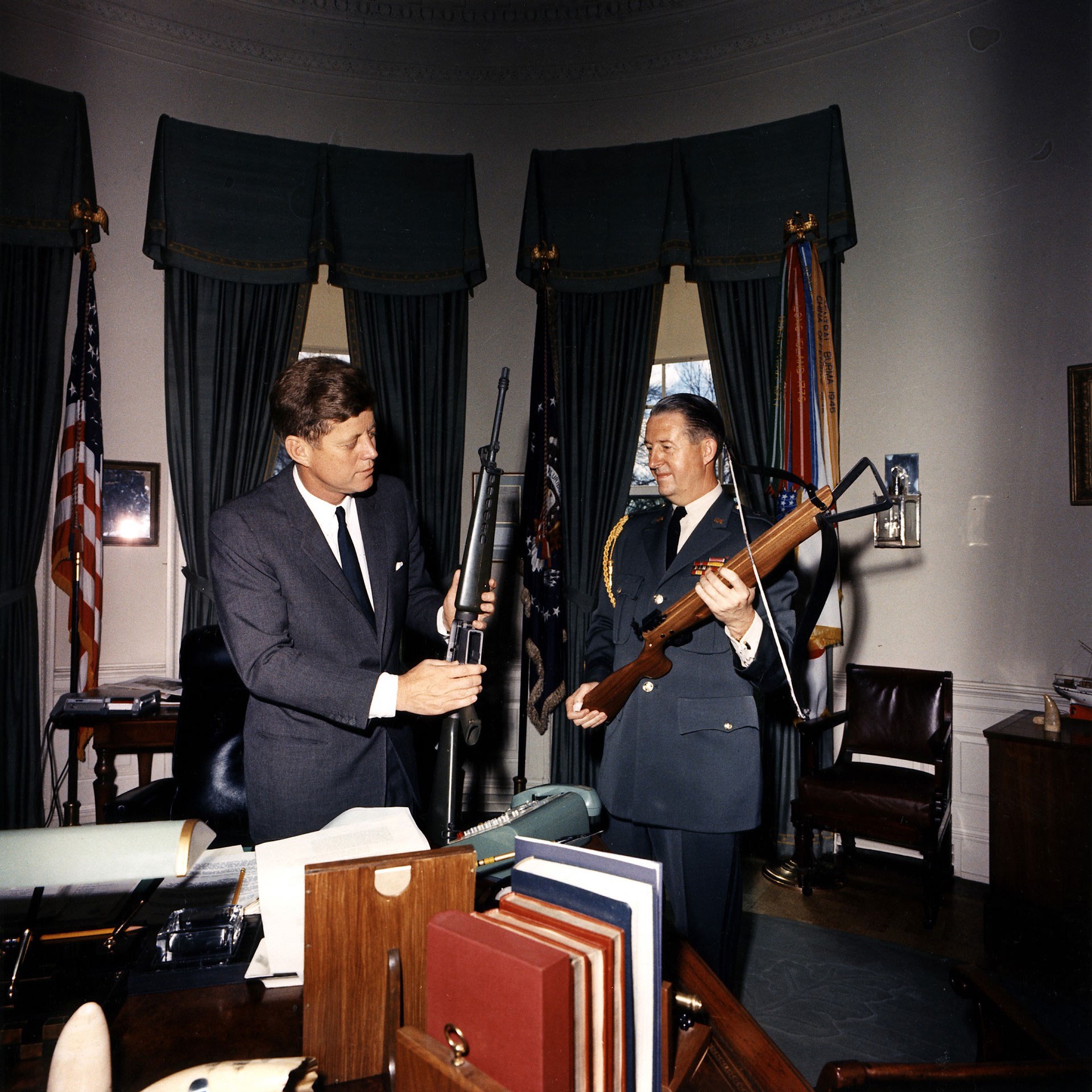
President John F. Kennedy and Military Aide Gen. Chester V. Clifton examine a COLT Model 601 rifle and crossbow in the White House’s Oval Office on April 19, 1963.President John F. Kennedy and Military Aide Gen. Chester V. Clifton examine a Colt Model 601 rifle and crossbow in the White House’s Oval Office in April 1963. (ST-C85-1-63)

When a White House photographer snapped a now-famous image of the meeting, John Kennedy had only 217 days left to live, but the Model 601 on the other hand was just beginning its military service. During the next six decades, the rifle would fight in Vietnam, Grenada, Panama, Iraq and Afghanistan, among other geopolitical hotspots. Its basic design would evolve during those 60 years to ultimately become the M4 carbines and M16A4 rifles that arm our troops today. But it all began with the Model 601, the rifle that President Kennedy personally examined in the Oval Office.
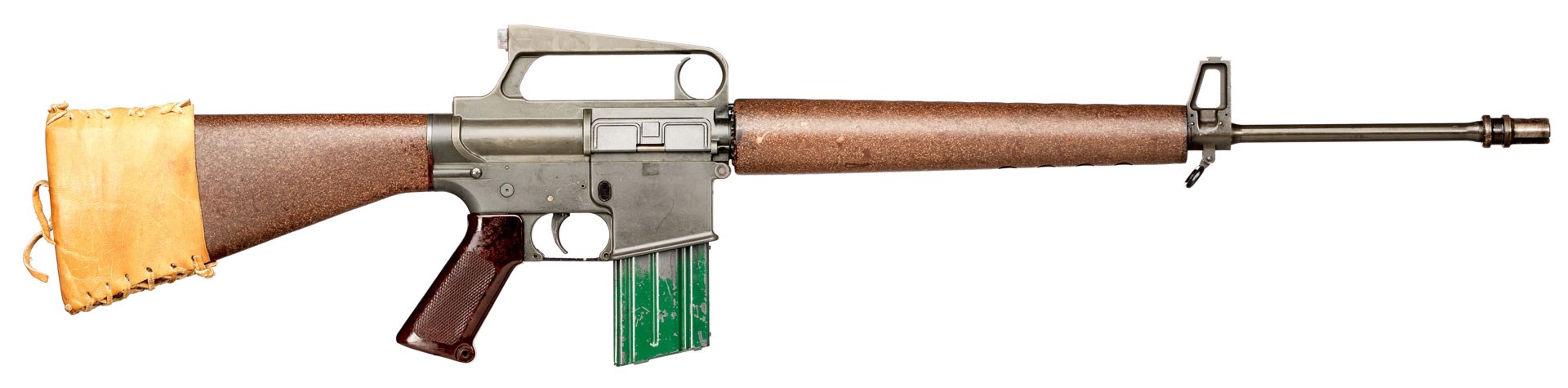
Right side view of the ArmaLite XAR1501 prototype. Photo courtesy of the Institute for Military TechnologyRight side view of the ArmaLite XAR1501 prototype. Photo courtesy of the Institute for Military Technology

Serial production of the Model 601 began in December 1959, and continued through to the summer of 1963. During that time, more than 14,000 of them came off the assembly line. Although the Model 601 was the first AR-15 to be mass-produced, it was not the first AR-15. The design development and evolution that ultimately led to it began in the spring of 1957, when the Continental Army Command (CONARC) expressed an interest in evaluating a rifle chambered for a Small Caliber, High Velocity (SCHV) cartridge. By then, the ArmaLite Division of Fairchild Aircraft Corporation was attempting to find a buyer for a 7.62×51 mm NATO-chambered, select-fire rifle that had been designed by Eugene Stoner and developed under the model designation AR-10.
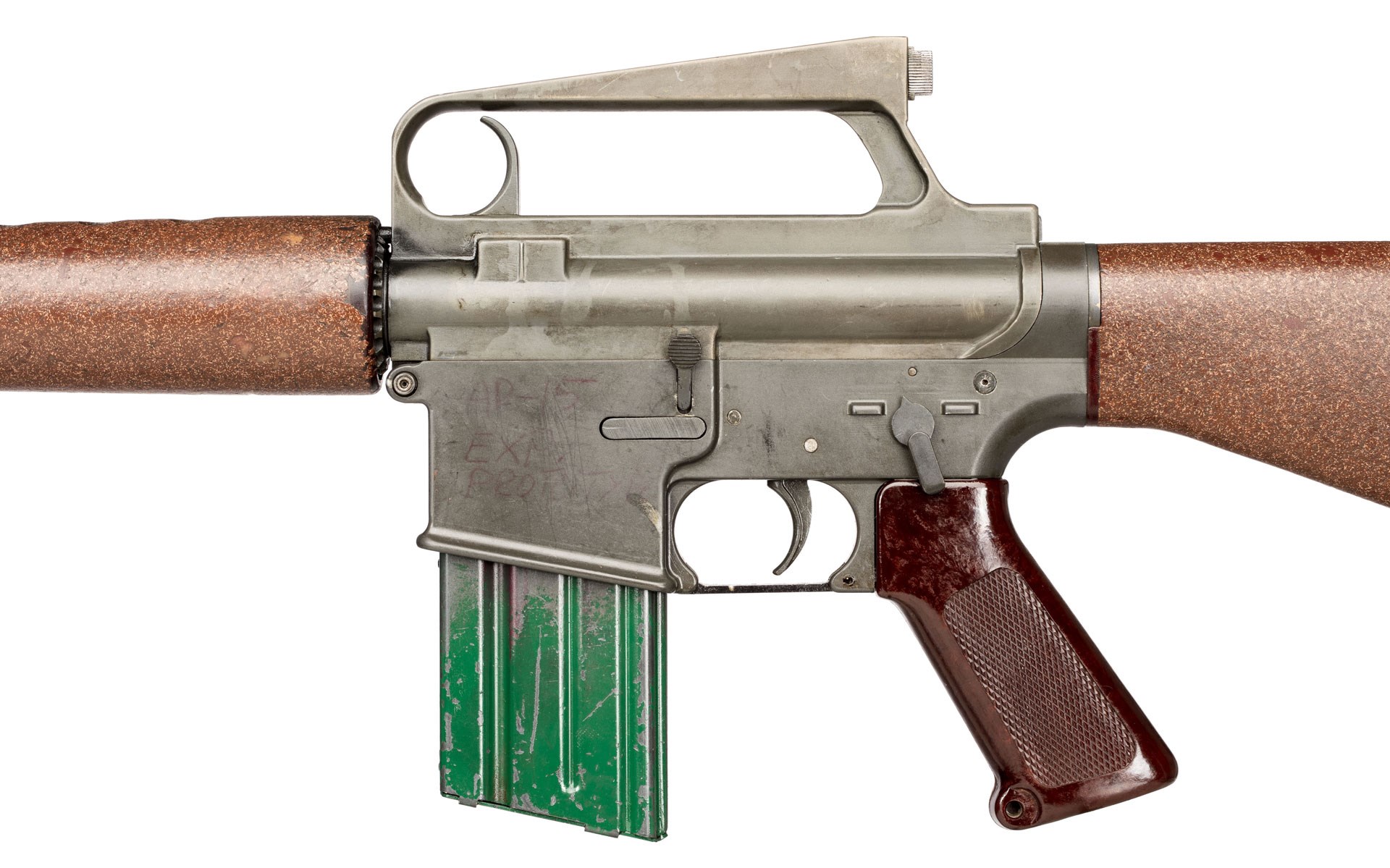
Left side closeup of the receiver of the ArmaLite XAR1501 prototype. Photo courtesy of the Institute for Military TechnologyLeft side closeup of the receiver of the ArmaLite XAR1501 prototype. Photo courtesy of the Institute for Military Technology

Although it was lightweight, because of the use of plastic and aluminum in its construction, and it offered a number of significant advantages as an infantry rifle, the U.S. Army had just rejected the AR-10 in favor of the M14. Despite this setback, ArmaLite was not ready to throw in the towel, so it continued to look for a customer for the AR-10 while it simultaneously began a process of adapting its design to the type of SCHV cartridge the Army now wanted to test. Two engineers at ArmaLite, Robert Fremont and L. James Sullivan, were therefore assigned the task of scaling-down Stoner’s 7.62 NATO rifle to chamber an existing wildcat cartridge known as .222 Remington.
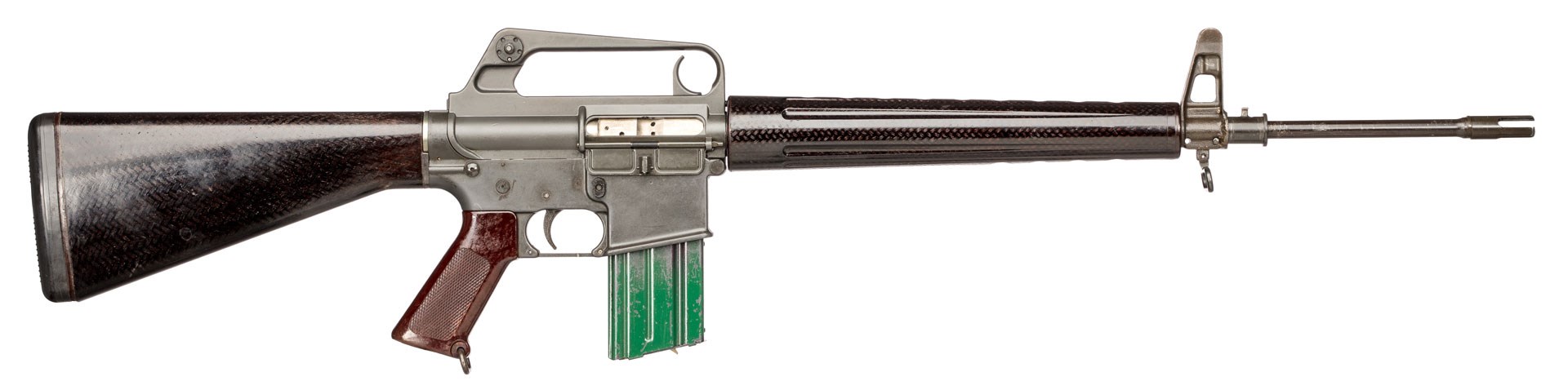
Right side view of ArmaLite prototype AR-15 S/N 000001. Note the buttstock and one-piece forward handguard made from woven fiberglass. Photo courtesy of the Institute for Military TechnologyRight side view of ArmaLite prototype AR-15 Serial No. 000001. Note the buttstock and one-piece forward handguard made from woven fiberglass. Photo courtesy of the Institute for Military Technology

The prototype that Fremont and Sullivan created generally resembled the AR-10, insofar as it combined a buttstock and forward handguard made from woven fiberglass with an upper and lower receiver made of anodized aluminum. Like the AR-10, a distinctive carry handle was incorporated in the upper-receiver forging that provided protection for an equally distinctive non-reciprocating, trigger-type cocking handle. The rifle used Stoner’s patented direct gas-impingement operating system and multi-lug rotating bolt, a 20" fluted pencil barrel with 1:14" twist rifling, and a detachable box magazine with 25-round capacity. Designated XAR-1501, it was demonstrated for CONARC by Stoner himself in May 1957, with the result that an order for 10 additional test rifles for further evaluation was placed.
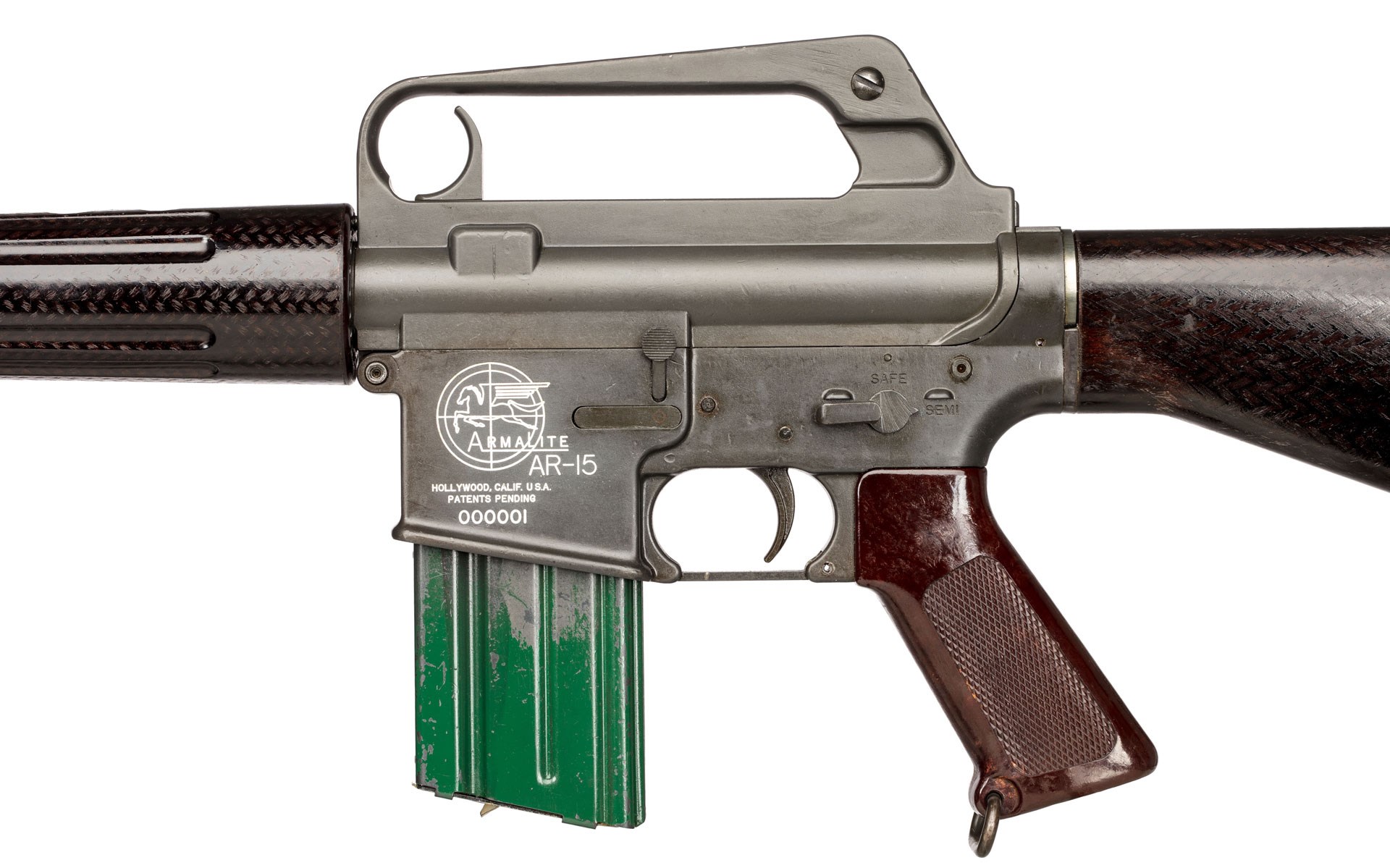
Left side closeup of ArmaLite prototype AR-15 S/N 000001. Note the AR-10 trigger type charging handle. Photo courtesy of the Institute for Military TechnologyLeft side closeup of ArmaLite prototype AR-15 Serial No. 000001. Note the AR-10 trigger type charging handle. Photo courtesy of the Institute for Military Technology

The only problem was that CONARC wanted the new SCHV cartridge’s bullet to penetrate a helmet at 500 yards. Since the .222 Rem. cartridge was not capable of meeting that requirement, Remington modified it by lengthening the case to provide the additional powder capacity needed to generate additional muzzle velocity and achieve the required penetration. A 55-grain bullet and DuPont’s IMR-4475 nitrocellulose smokeless powder brought the package together, and the new cartridge initially received the designation .222 Special. To avoid confusion, though, that designation was ultimately changed to .223 Rem. More changes would soon follow.
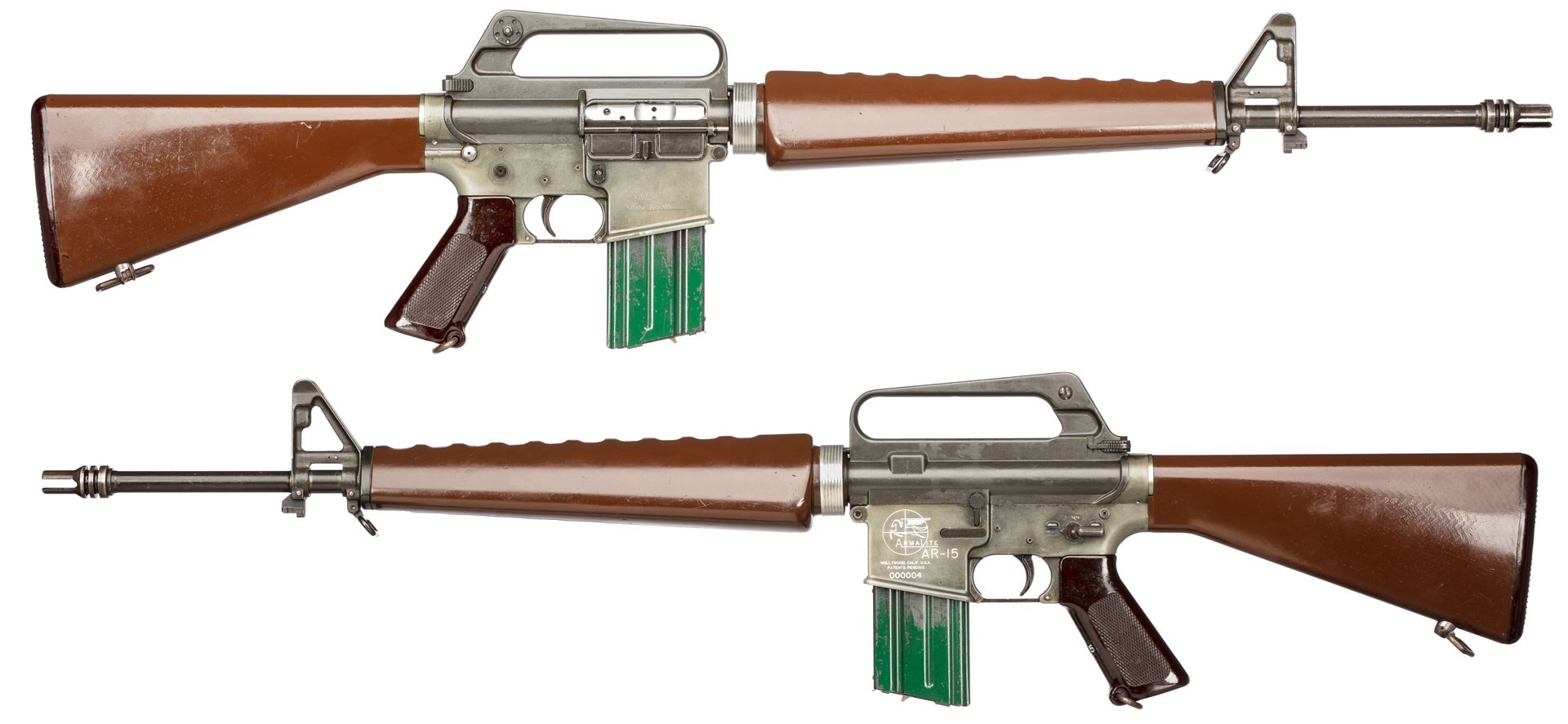
Left- and right-side view of ArmaLite prototype AR-15 S/N 000004. A 601-type upper receiver group from a later phase of the development of the AR-15 has been paired with the S/N 000004 lower despite the fact that it was first built during an earlier phase. Photo courtesy of the Institute for Military TechnologyLeft- and right-side view of ArmaLite prototype AR-15 Serial No. 000004. A 601-type upper receiver group from a later phase of the development of the AR-15 has been paired with the Serial No. 000004 lower despite the fact that it was first built during an earlier phase. Photo courtesy of the Institute for Military Technology

In March 1958, ArmaLite delivered the 10 AR-15s in .223 Rem. to Fort Benning, Ga., for test and evaluation. Except for a noticeable change to the rear sight assembly, the addition of a sling swivel to the Bakelite pistol grip and the addition of a bipod mounting bushing affixed to the front sight base, these rifles were anatomically similar to the XAR-1501. Similarities notwithstanding, though, the new cartridge gave them the additional muzzle velocity needed to pass the 500-yard helmet penetration test. In addition to that, these AR-15s exhibited the low malfunction rate of just 6.1 for every 1,000 rounds fired in an early demonstration of the legendary reliability for which the system would ultimately be known.
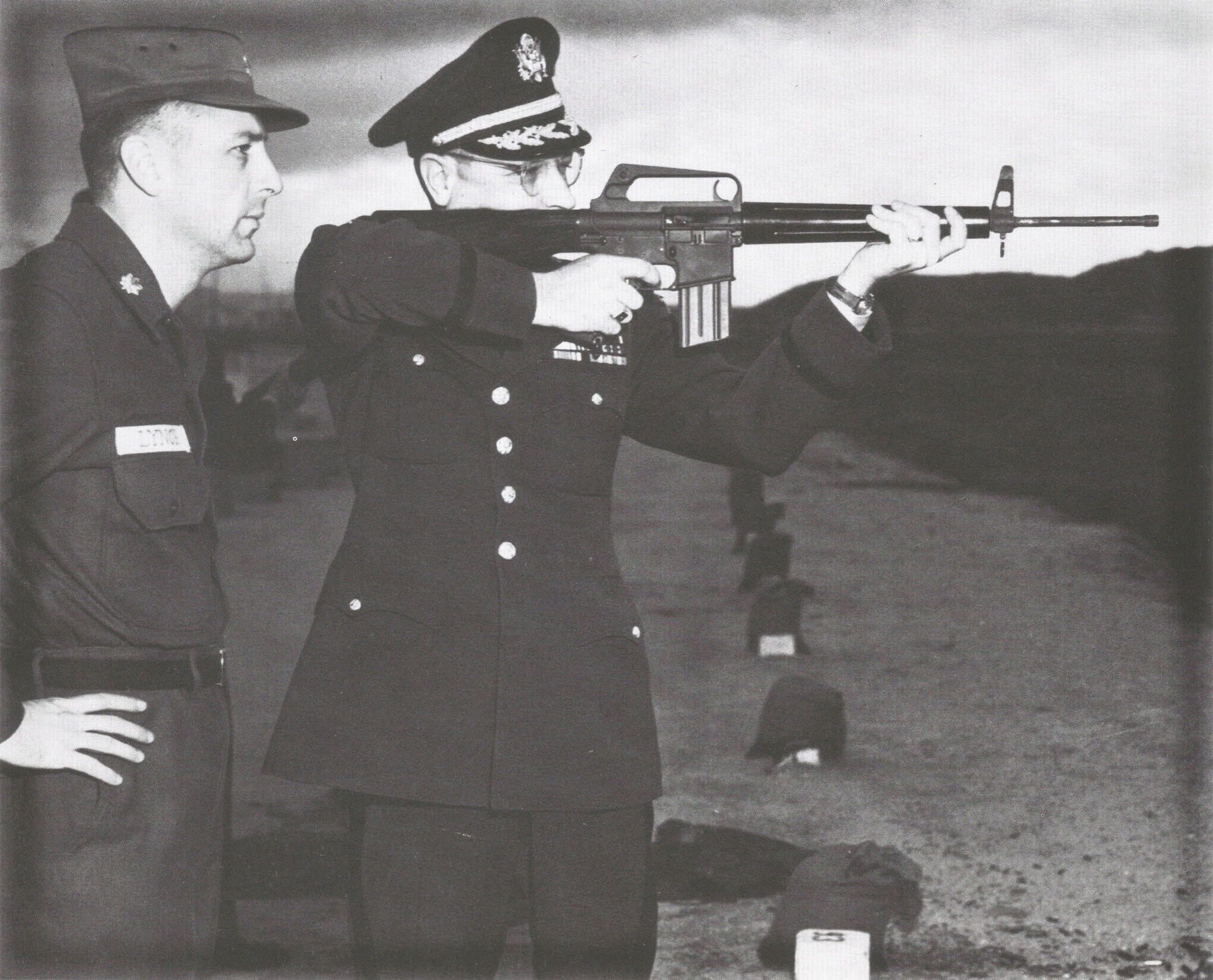
Major Eugene M. Lynch observes Lt. Col. Robert Vallendorf as he shoulders an ArmaLite prototype AR-15 (possibly S/N 000013) at Fort Benning on March 31, 1958. The rifle has no flash suppressor, but it is equipped with the AR-10 trigger type charging handle, one-piece cylindrical fiberglass handguard, and 25-round capacity magazine. U.S. Army photoMajor Eugene M. Lynch observes Lt. Col. Robert Vallendorf as he shoulders an ArmaLite prototype AR-15 (possibly Serial No. 000013) at Fort Benning on March 31, 1958. The rifle has no flash suppressor, but it is equipped with the AR-10 trigger type charging handle, one-piece cylindrical fiberglass handguard, and 25-round capacity magazine. U.S. Army photo

Two months after the tests at Fort Benning, the Infantry Board published a report titled “Evaluation of Small Caliber High Velocity Rifles – ArmaLite (AR-15)” that identified the rifle as a potential replacement for the M14. Everything was not perfect, though, because it was found that the AR-15’s barrel could burst if water intruded into it, and because of that, the board decided that research should continue. Accordingly, the report recommended ordering another eight prototype AR-15s with “minor” modifications for further test and evaluation, and those modifications produced some elements of the AR-15’s anatomy that remain with the firearm to this day.
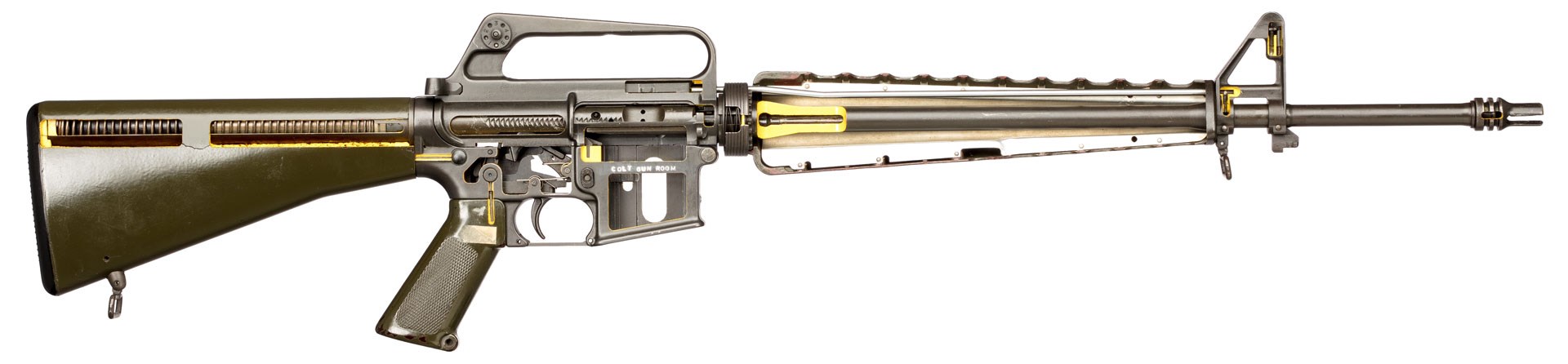
Right side view of a COLT/ArmaLite AR-15 Model 601 cutaway that reveals details of the rifle’s gas tube, the left handguard’s single heat shield, and the early Edgewater buffer. Photo courtesy of the Institute for Military TechnologyRight side view of a Colt/ArmaLite AR-15 Model 601 cutaway that reveals details of the rifle’s gas tube, the left handguard’s single heat shield and the early Edgewater buffer. Photo courtesy of the Institute for Military Technology

First of all, the Army wanted the one-piece conical fiberglass handguard changed to a triangular two-piece design. It also requested a magazine capacity change from 25-rounds to 20-rounds as well as a redesign of the AR-10 trigger type charging handle. In response, ArmaLite introduced a non-reciprocating triangular charging handle positioned at the rear end of the carry handle. To reduce the water sensitivity that had been previously observed, the barrel fluting that had been a part of the first run of prototype rifles was eliminated. This was a change that made the barrel slightly heavier and, therefore, less likely to burst when water intruded into the bore. The selector positions were also changed.
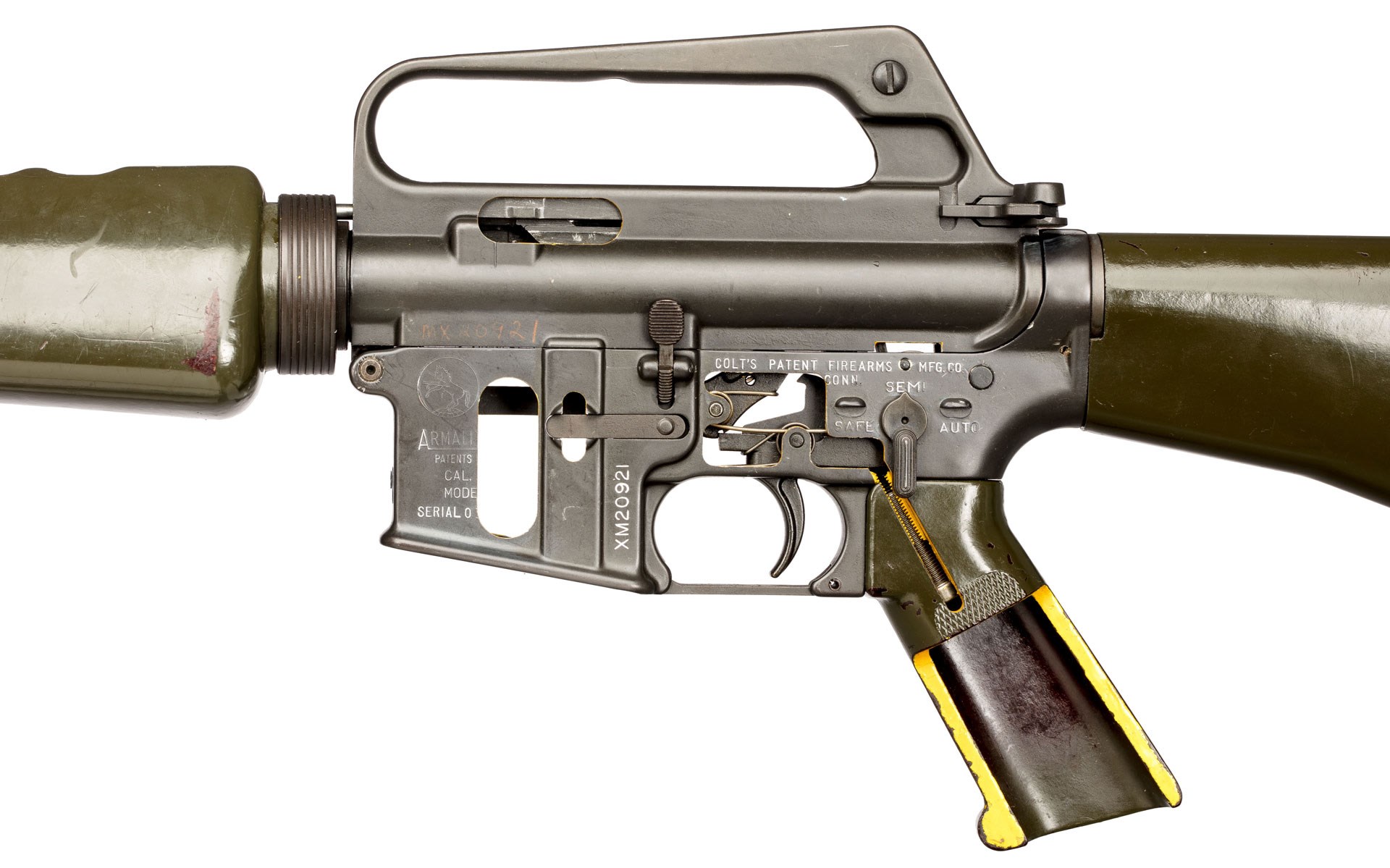
Left side closeup of a COLT/ArmaLite AR-15 Model 601 cutaway. The original 601-type triangular charging handle has been replaced by a later 602-type charging handle. Photo courtesy of the Institute for Military TechnologyLeft side closeup of a Colt/ArmaLite Model 601 cutaway. The original 601-type triangular charging handle has been replaced by a later 602-type charging handle. Photo courtesy of the Institute for Military Technology

Earlier prototype AR-15s featured selector settings with “AUTO” in the nine o’clock position, “SAFE” at twelve o’clock and “SEMI” at three o’clock. The Army worried that, in this configuration, troops crawling through brush could unintentionally advance the selector from the “SAFE” position to the “AUTO” position. ArmaLite solved the problem with a simple redesign that moved “SAFE” to nine o’clock, “SEMI” to twelve o’clock and “AUTO” to three o’clock. This is also when ArmaLite introduced the aluminum slip ring for retention of the two-piece handguards, as well as a new version of the flash suppressor that could also function as a grenade launcher and a new version of the front-sight base, incorporating a .875" gap between its front and back legs for securing the bipod. Little by little, the sleek austerity of the AR-15 prototypes was beginning to give way to an appearance more like the rifle President Kennedy would be photographed with five years later.
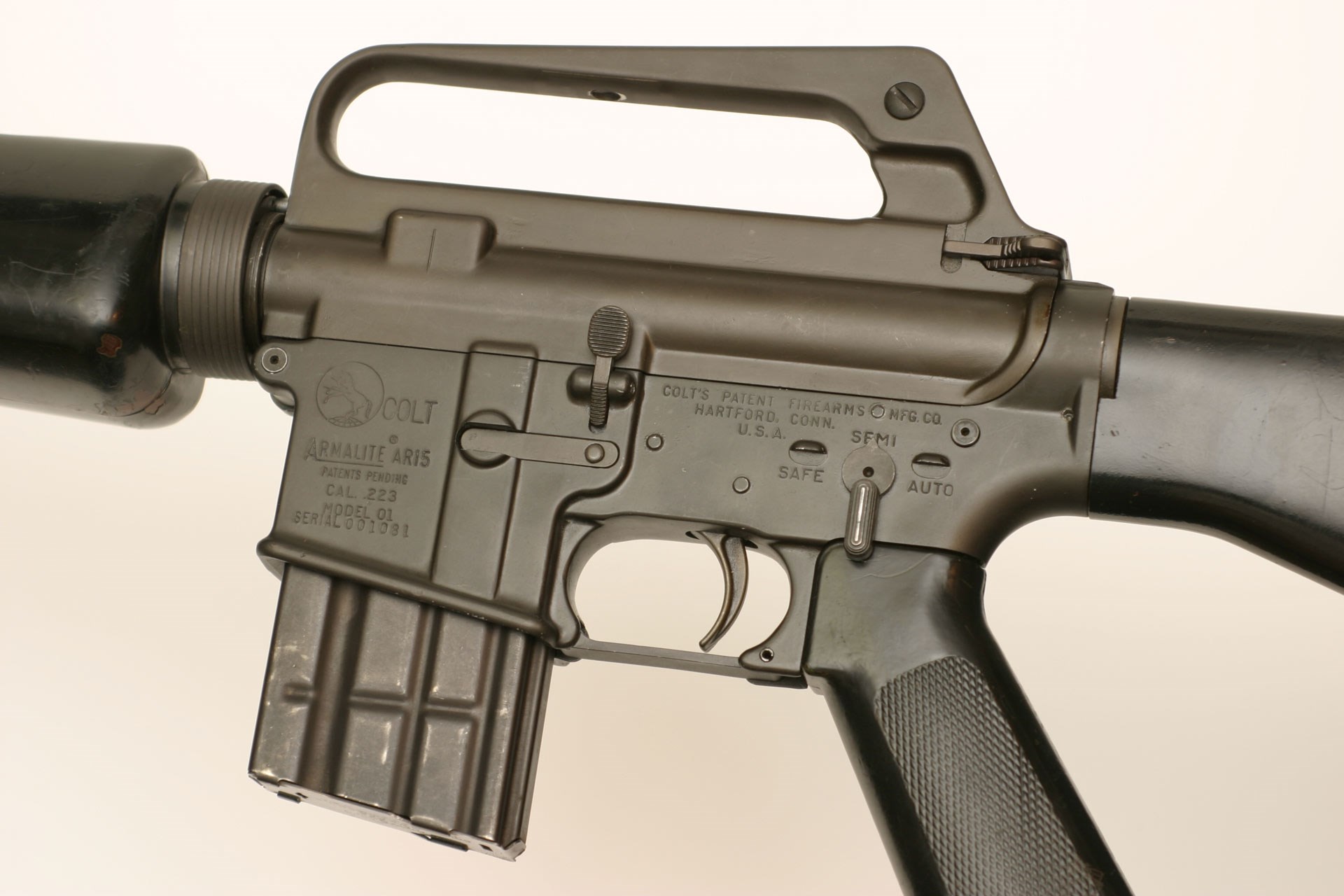
Left side closeup of COLT/ArmaLite AR-15 Model 601 S/N 001081. The rifle’s original green painted furniture has been replaced by black painted furniture. Photo by the authorLeft side closeup of Colt/ArmaLite Model 601 Serial No. 001081. The rifle’s original green painted furniture has been replaced by black painted furniture. Photo by the author

As the latest batch of modified prototype AR-15s was being built back in Hollywood, Calif., later that year, ArmaLite was in trouble. The company was losing money and was therefore in no position to continue the costly design development of the AR-15, even though it was beginning to look like the Army just might adopt the rifle. While a multi-million-dollar government contract could save the day, there was another even bigger problem that had to be addressed. ArmaLite was a small shop that was not capable of the kind of mass production that would be required if the Army placed a big order, and Fairchild’s Board of Directors was not willing to allow it to establish an in-house production line.
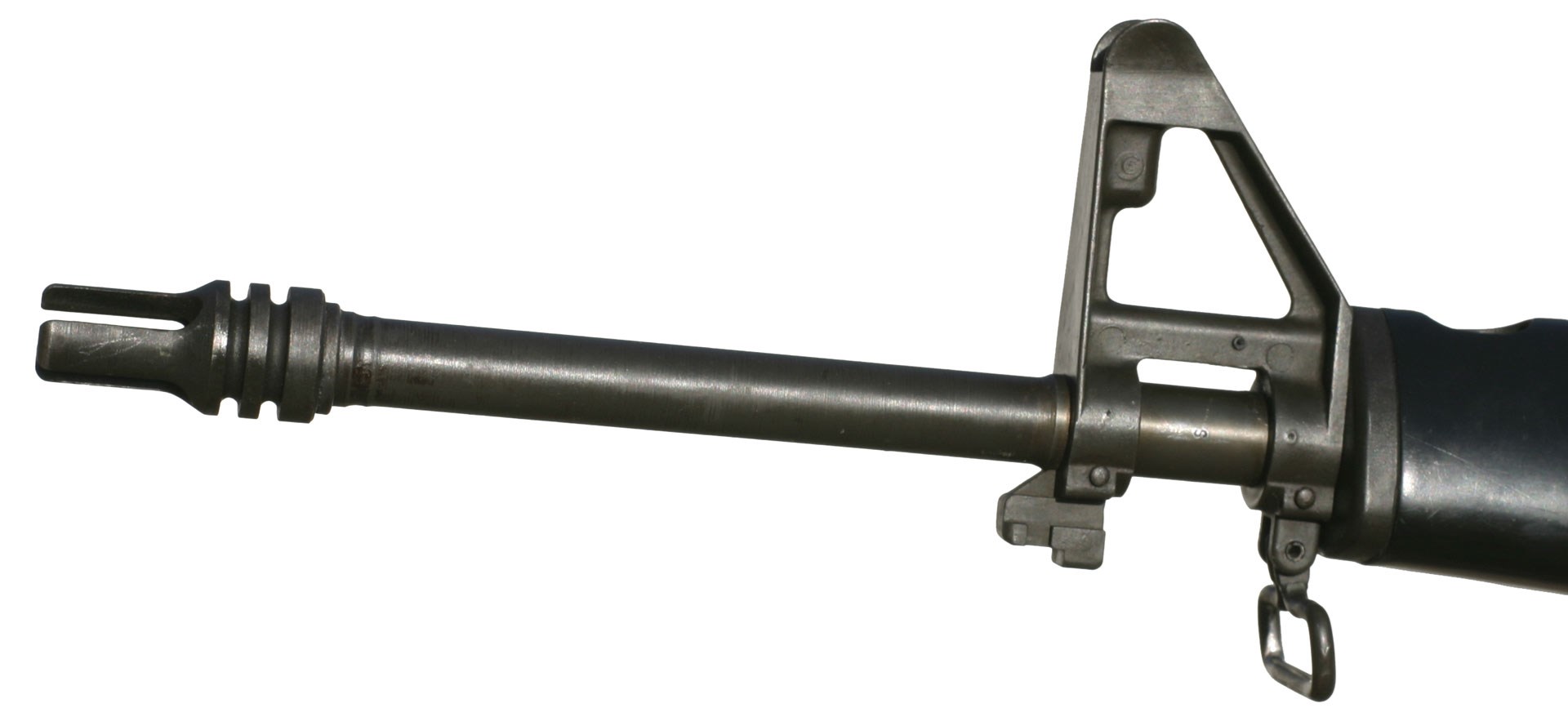
Closeup of the cast front sight base and duckbill flash suppressor of COLT/ArmaLite AR-15 Model 601 S/N 001081. Photo by the authorCloseup of the cast front sight base and duckbill flash suppressor of Colt/ArmaLite Model 601 Serial No. 001081. Photo by the author

ArmaLite was going to need a well-resourced partner capable of financing the AR-15’s continuing design development and eventually the large-scale production of the rifle. Colt’s Patent Firearms turned out to be that partner. Although it was not much better off than Fairchild or ArmaLite financially, Colt nevertheless had the kind of industrial capacity to get large scale production of the AR-15 rolling. To that end, the company bought the rights to the AR-15 from ArmaLite in 1959 for a lump sum of $75,000, plus a 4.5-percent royalty against future sales for the use of Eugene Stoner’s patented gas system.
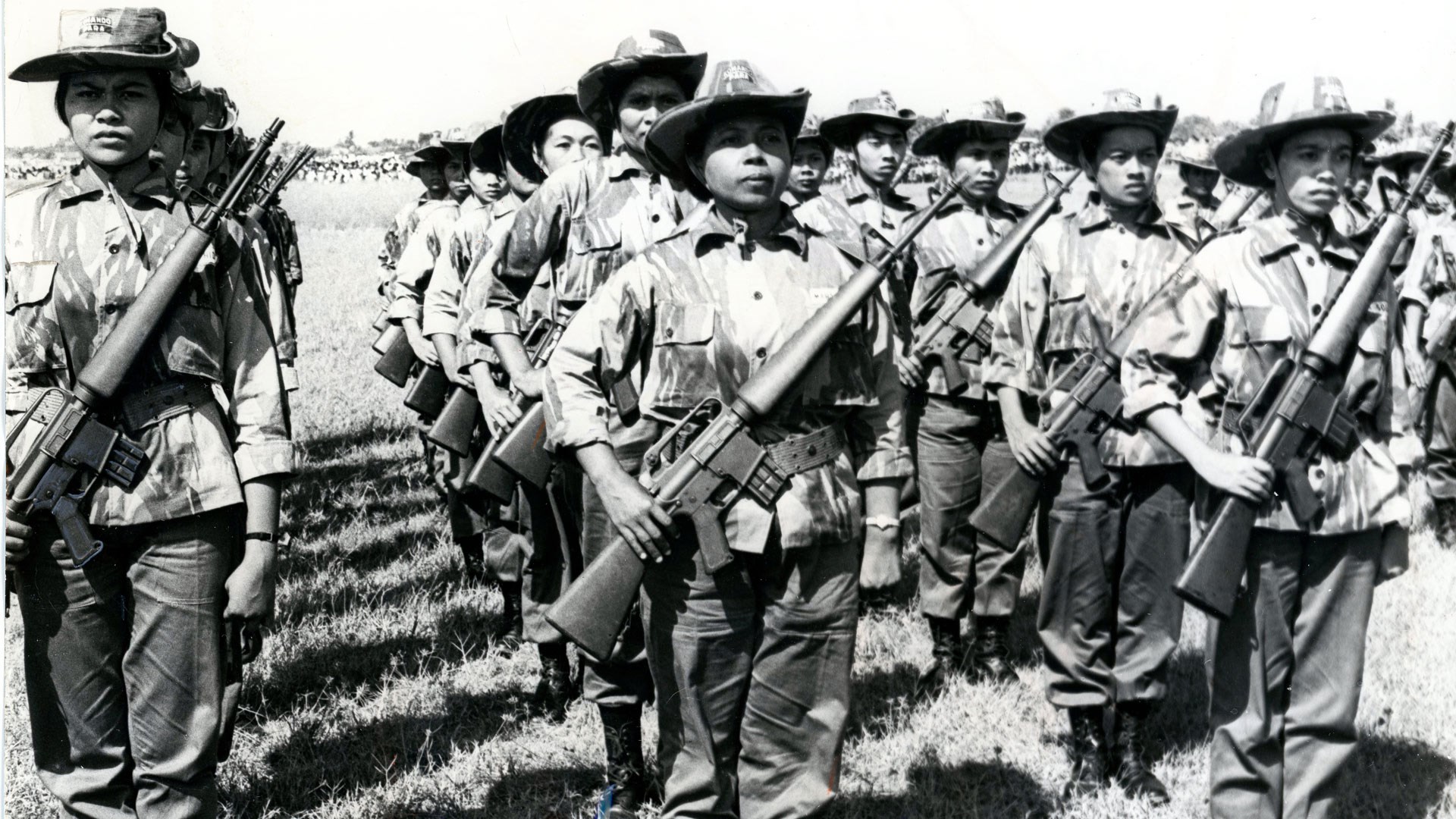
Indonesian female volunteer paratroopers armed with COLT/ArmaLite AR-15 Model 601 rifles - June 1965. Author’s collectionIndonesian female volunteer paratroopers armed with Colt/ArmaLite AR-15 Model 601 rifles - June 1965. Author’s collection

Just when it looked like the future of the AR-15 was in good shape, the Army backed away from it. The rifle had failed rain tests, and it did not help matters at all that Arctic testing in Alaska left a false indication that there were more problems yet to be solved. At that point the gun had progressed through enough of a design evolution that it was ready for mass production, and when that began at Colt in December 1959, it was assigned the model number “01,” the first of many in Colt’s “600 series” of AR-15 type rifles. But even as serial production of the Model 601 began in Connecticut, the gun’s evolution continued. After assembling the first 300 rifles with unpainted Bakelite handguards, pistol grips and buttstocks, Colt began applying a light green epoxy paint to the furniture. Toward the end of Model 601 production though, black paint replaced green.
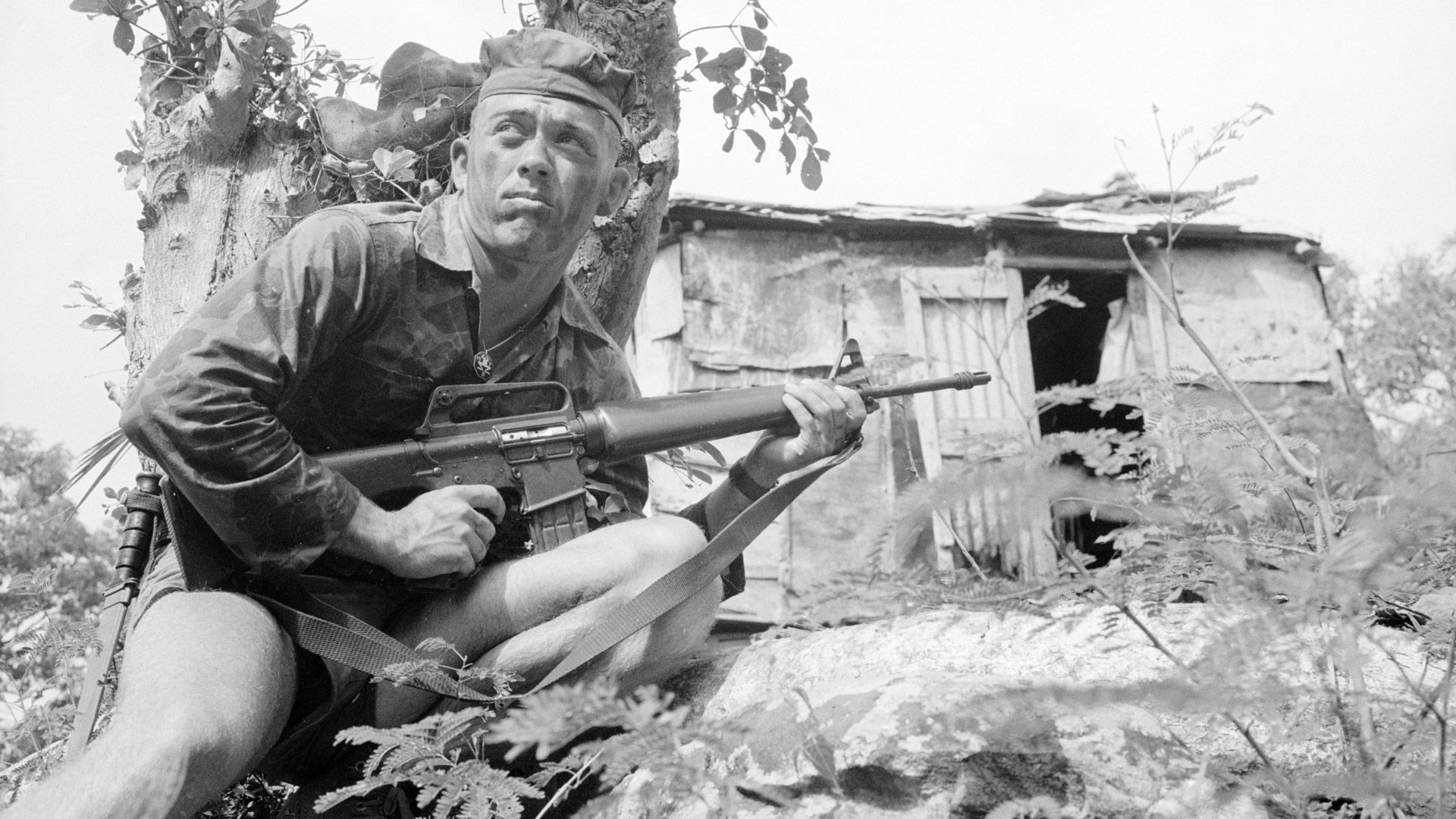
A U.S. Navy SEAL armed with a COLT/ArmaLite AR-15 Model 601 is seen here during a training exercise on St. Thomas, U.S. Virgin Islands on February 21, 1963. Photo by Marion S. Trikosko/US News and World Report Collection/PhotoQuest/Getty ImagesA U.S. Navy SEAL armed with a Colt/ArmaLite Model 601 is seen here during a training exercise on St. Thomas, U.S. Virgin Islands on February 21, 1963. Photo by Marion S. Trikosko/US News and World Report Collection/PhotoQuest/Getty Images

Eventually, changes were also made to the profile of the buttstock, the configuration of the receiver roll markings and the type of aluminum alloy used to make the uppers and lowers. By the 1960s though, the Model 601 had reached its final form right at about the time that things really began to happen for it. On July 4, 1960, the U.S. Air Force Vice Chief of Staff, Gen. Curtis LeMay, test fired Model 601 Serial No. 000106 during a barbeque in Maryland, and the emphatically positive impression he took away from the experience would ultimately lead to the rifle’s adoption by the American military. Although the U.S. Army had initiated the development evolution that eventually led to the creation of the Model 601, it was the U.S. Air Force that made the first purchase, and that set in motion the sequence of events that brought a Model 601 to the White House on April 19, 1963.
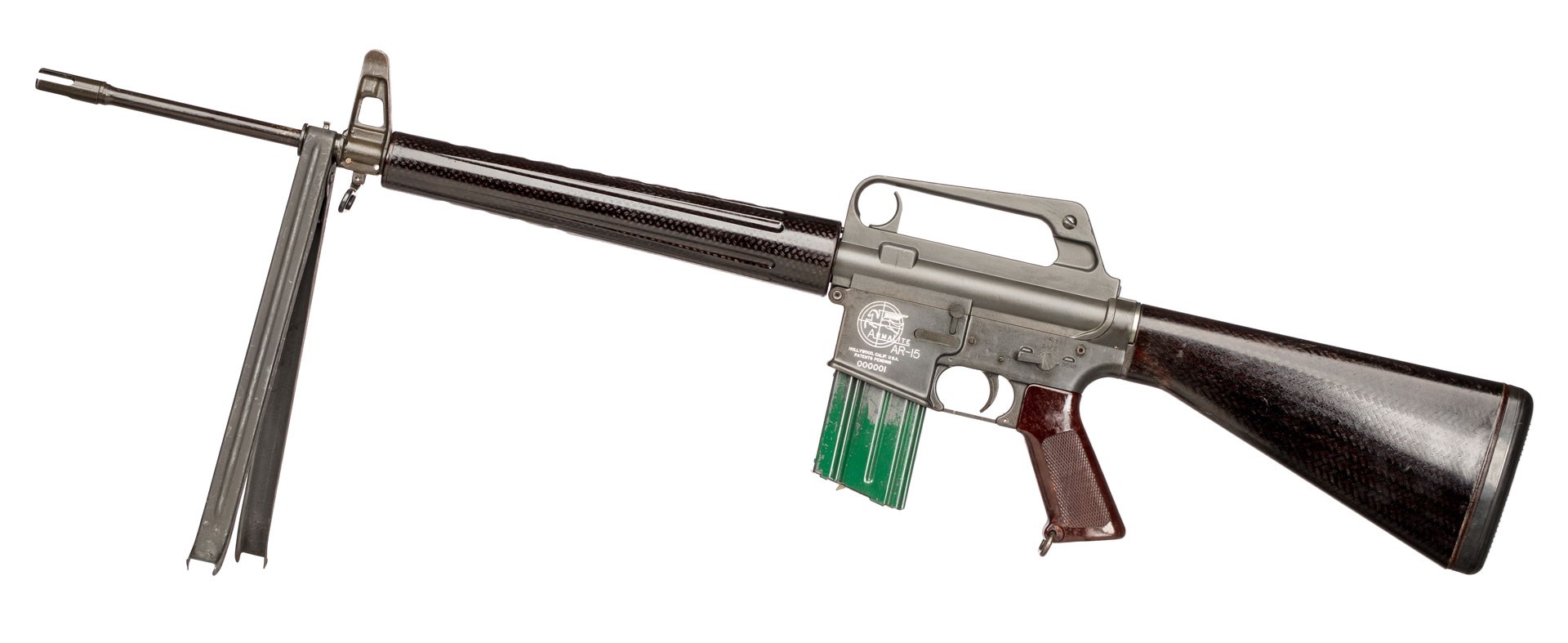
Left side view of ArmaLite prototype AR-15 S/N 000001 with bipod attached. Photo courtesy of the Institute for Military TechnologyLeft side view of ArmaLite prototype AR-15 Serial No. 000001 with bipod attached. Photo courtesy of the Institute for Military Technology

The AR-15 that JFK handled that day had come a long way from the XAR-1501 that had started it all way back in 1957, and many big changes were yet to come. But, in those days before forward assist devices, birdcage flash suppressors, chrome-lining, flat top upper receivers and three-round burst, the rifle was lighter, simpler and more lethal. In the end, the AR-15 would be asked to do much more than anyone could have imagined in 1963, and it would serve all the way across the threshold of the 21st century. President Kennedy would not live to see any of this though because the example he inspected in the Oval Office that Friday afternoon in April 1963 was the only AR-15 he would ever know.


Friday, August 6, 2021

The Armalite Story

I read this article and it was full of stuff that I didn't know about Armalite and that they seemed to have a "spate" of bad luck, it seems.  They design something really neat like the quintessential "America's rifle" like the AR-15 and its derivatives, then crash and burn later.  Yes I got this from "American Rifleman.


Bringing Small Arms Into The Space Age
As detailed in The ArmaLite AR-10 by Maj. Sam Pikula, USAR, The Black Rifle by R. Blake Stevens and Edward C. Ezell and the company’s own official history available at armalite.com, the ArmaLite story starts with George Sullivan, patent counsel for Lockheed Aircraft Corporation. Visionary, firearm enthusiast and huckster all describe Sullivan. His job at Lockheed was crucial to subsequent events because it meant that Sullivan was aware of the latest technological breakthroughs and space-age materials at a time when the American small-arms industry was stagnated and relatively antiquated. Small arms were built only of steel and wood, and new products were simply derived from evolutionary changes to old ones.

While not a professional, Sullivan had a passion for small-arms design. Through contacts in the aviation industry, that passion eventually came to the attention of fellow firearm enthusiast Richard Boutelle, who happened to be president of Fairchild Aircraft. Boutelle was intrigued by Sullivan’s ideas and, in the early 1950s, provided funding for a foray into the business of designing small arms. Sullivan set up shop in Hollywood, Calif., in a small building affectionately referred to as “George’s Backyard Garage.” Initially, the hope was to create sporting arms for the commercial market using modern, high-tech materials. The first effort, for example, was a .308 Win.-cal., Mauser-style bolt-action with a foam-filled plastic stock and aluminum receiver and barrel with a thin steel liner. Very few examples of this rifle, variously called the AR-1 and “Parasniper,” were produced.

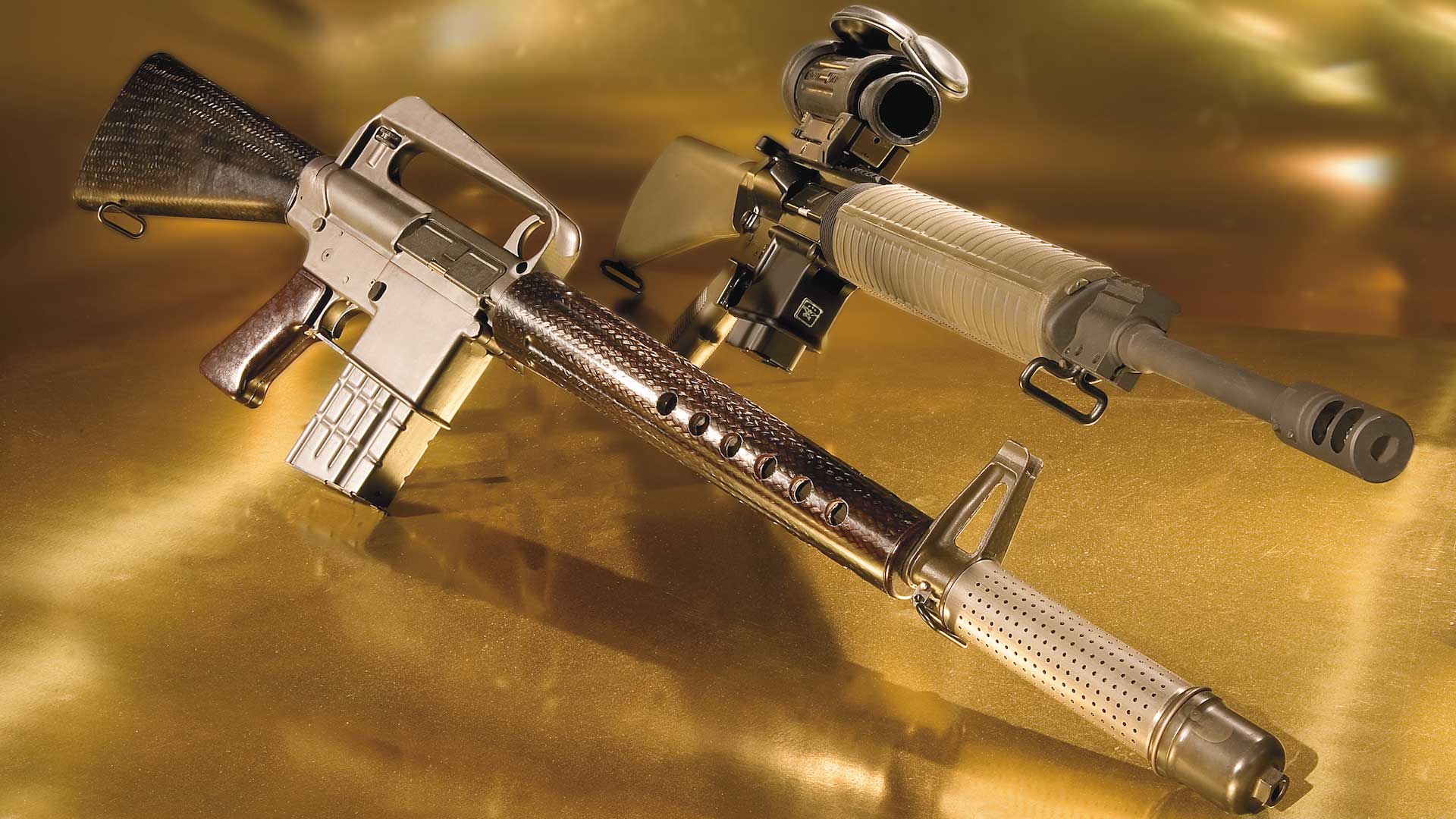
rifles on golden background guns armalite semi-auto carbine .223 .308
A 1950s AR-10 prototype (l.) is shown next to a state-of-the-art AR-10A4 flat-top, this one mounted with an Arma-ment Technology ELCAN 3.4x scope.


As envisioned by Sullivan, ArmaLite was not intended to be a firearm manufacturer; ArmaLite’s stock-in-trade was to be ideas. The company would use knowledge of materials and manufacturing techniques gleaned from the aircraft industry to create radical new designs. It would then build prototypes of those designs and market them to manufacturers who would produce them under license. Sullivan proposed that Fairchild purchase ArmaLite and make it a division of the company, and in that way inject additional capital into the venture. Boutelle agreed and, on October 1, 1954, ArmaLite became a division of Fairchild Aircraft.

A Change Of Direction

Advertisment rifle survival rifle gun right side camo ad magazine
The AR-7 was a commercial, .22 LR-cal. version of the Air Force AR-5 survival rifle. The barrel and action could be detached and stored within the stock.

Shortly thereafter, ArmaLite was invited to submit a rifle for consideration by the Air Force for its new survival rifle. The firearm the company submitted, a .22 Hornet-cal. bolt-action takedown with a four-shot magazine, was dubbed the AR-5. The gun’s barrel could be detached from the action and stored in the plastic stock. With the buttcap then replaced, the 2 3⁄4-lb. gun could float. The Air Force adopted the gun as the MA-1, but never purchased it in quantity. Despite that, though, the interest shown by the military took ArmaLite in a whole new direction. From that moment on, the company would focus on military designs.

While testing an ArmaLite prototype at the Topanga Canyon Shooting Range in southern California, Sullivan met a gentleman who lived in nearby Los Angeles and made dental plates for a living. He was a former Marine who also happened to be an amateur firearm designer. In fact, he was testing one of his own designs that day. His name was Eugene Stoner. Shortly thereafter, Stoner found himself in the employ of ArmaLite as its chief design engineer.

While Sullivan had been the company’s visionary, day-to-day operations were run by Charles Dorchester, who served in numerous executive capacities, including president and eventually chairman of ArmaLite. While the company conceived and developed various designs, it was a semi-automatic rifle with an unusual locking action and unique gas system that would make Stoner—and ArmaLite—famous. It was called the AR-10 and was the focus of ArmaLite’s efforts from 1955 until 1959.

Tomorrow’s Rifle—Today
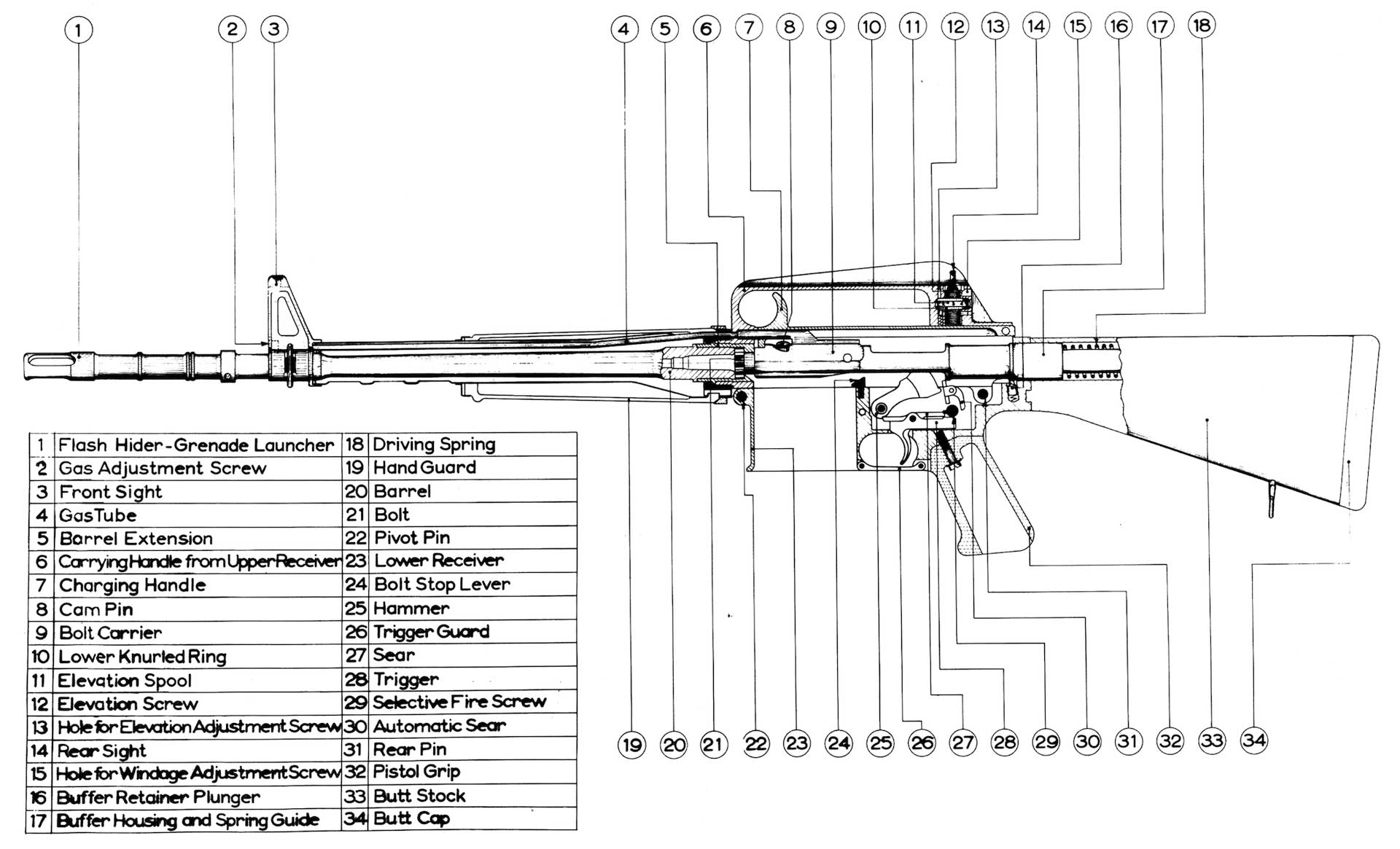
The AR-10 looked radically different from anything previously seen. It had an integral carry handle atop the receiver that contained the gun’s iron sights. The cocking lever was on top of the receiver and articulated in the opening of the handle. The fore-end was not wood, but fiberglass and, later, plastic, thanks to plastics engineer Tom Tellefson. Inside, it was just as radical with an eight-lug, rotary bolt locking not into the receiver, but into a steel barrel extension. That allowed the receiver to be made from lightweight, rustproof, forged aluminum rather than heavy, rust-prone steel.

drawing black white gun rifle parts callouts descriptions schematic

The rotary bolt and barrel extension was borrowed from the Johnson rifle designed by Melvin M. Johnson. (Johnson was the East Coast military rifle consultant for ArmaLite and had a contentious relationship with the military dating back to his efforts to get the Johnson rifle adopted in place of the M1 Garand. Some speculate that his involvement with ArmaLite didn’t help the company’s chances with the military.) The lock-up may have been Johnson’s, but the gas system was Stoner’s.

As described in The Black Rifle:
“[S]toner’s gas system utilized a simple open pipe, a concept first used in the Swedish Ljungman Gevar 42 and the later French 1944 and 1949 MAS semi-automatic rifles. In these relatively rudimentary applications, the gas piston and spring of a conventional gas-impingement system were replaced by the jet of hot gas itself, which traveled back through the hollow gas tube and impinged directly onto the face of the bolt carrier. The kernel of genius in Stoner’s gas system was that the AR-10’s gas tube, running along the left side of the barrel under the handguard, fed the gas through aligned ports in the receiver and bolt carrier wall into a chamber formed between the tail of the bolt and the surrounding bolt carrier. This forced the bolt carrier back. After about 1/8” of movement, the port in the carrier no longer lined up with the port in the receiver, and the further flow of gas was cut off. The momentum already imparted was sufficient to keep the bolt carrier moving, which unlocked the bolt by rotating it with a connecting cam pin, thus beginning its rearward travel. With the gas cylinder at maximum size and the bullet long since out of the muzzle, what little pressure remained was exhausted as a weak ‘puff’ through slots in the right side of the bolt carrier.”

Battling The Big Boys

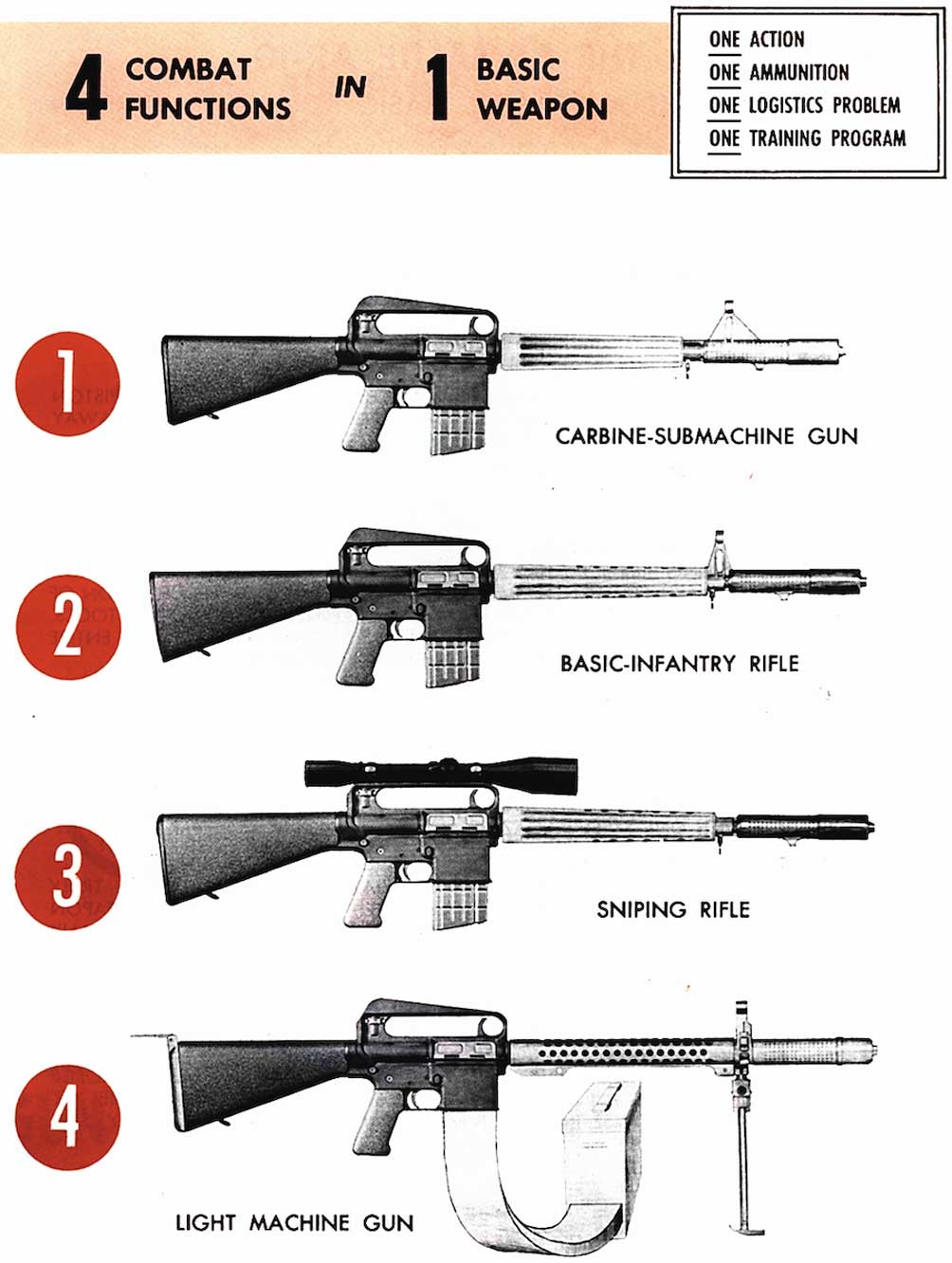
guns drawing stack four rifles military guns armalite advertisement


The gun was quickly entered into the ongoing service rifle competition then pitting the Springfield T44 against the T48, a version of the FN FAL. The AR-10 arrived on the scene too late and with too little development to best the other rifles in the trials and the contract was awarded to the T44, which was adopted by the military as the M14.

However, a handful of researchers at Aberdeen Ballistics Research Laboratories—among them American Rifleman Ballistics Editor William C. Davis—had come up with some pretty radical notions of their own. Despite years of insistence by Army brass on .30-cal. rifles for combat use, some ballisticians within the military had begun to explore the feasibility of lesser calibers. The Hall Study, conducted by Donald L. Hall, had concluded that, given a rifle and ammunition combination with a total weight of 15 lbs., a soldier armed with a small-caliber rifle could kill, on average, 2.5 times as many of the enemy as a soldier armed with an M1 rifle and ammunition.

This was followed shortly by The Hitchman Report prepared by Norman Hitchman. It determined that most soldiers do not engage the enemy until he has closed to 300 yds., and that hit potential was rather low until combatants had closed to 100 yds. Therefore, the accuracy and power of .30-cal. U.S. battle rifles—built to a 600-yd. standard—were excessive. Practically speaking, equal results could, in theory, be achieved with smaller, less powerful, less accurate and less costly arms. This led to the Small Caliber, High Velocity (SCHV) concept. In addition to maintaining practical effectiveness, a small cartridge would recoil less, be more controllable in fully automatic fire (a distinct problem encountered with the .308 Win.-cal. M14), could be carried in greater quantity by individual soldiers and would allow a lighter, handier rifle than a .30-cal. cartridge. ArmaLite was consequently asked to explore reducing the AR-10 to .22-caliber. The company agreed, though it continued to seek sales of its .30 cal. domestically and abroad.

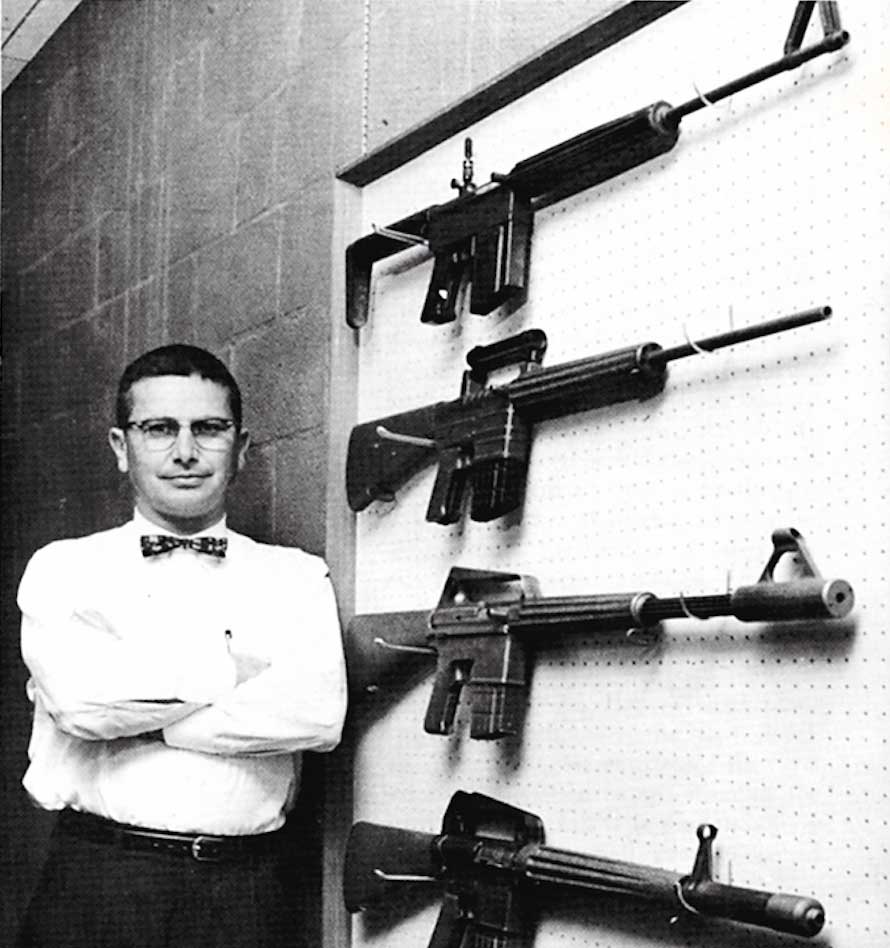
man white shirt black pants black rifles wall line row guns carbines engineer
Firearm designer Eugene Stoner poses beside various incarnations of the AR system. His greatest strength may have been his ability to take clever, yet disparate design elements and integrate them into a single, functional firearm. The AR-15/ M16 that evolved from his design has been with us for about 40 years now.

When the military requested that ArmaLite investigate downsizing the AR-10 to accommodate a .22-cal. cartridge, it’s doubtful the company realized how significant the request was to prove. Modifying the .222 Rem. cartridge and freely building on the work done at Aberdeen, Stoner—no ballistician—created the round that eventually became known as the .223 Rem. (5.56 mm NATO). Meanwhile, Arma-Lite designers Robert Fremont and L. James Sullivan downsized the AR-10, not an easy task since it wasn’t a matter of a consistent ratio of reduction from the large gun to the small one.

Once completed, the new gun—referred to as the AR-15—was largely ignored by the military bureaucracy that had initiated its development. Factions within the military were still uncomfortable with SCHV, while some felt the military was too far along in its commitment to the new M14 service rifle to change at that point.

From Bad To Worse
In the meantime, things were going badly with the AR-10. It is important to remember that Armalite was conceived of as a design shop rather than a manufacturing entity. The company contracted with Artillerie-Inrichtingen, the Dutch arsenal, to build the rifle, hoping for sales to foreign militaries. However, the company had never had the funds to properly develop the gun completely. There were numerous bugs that had to be worked out of the design, bugs a larger company might have anticipated and dealt with easily. Moreover, manufacturing obstacles continually delayed production, frustrating ArmaLite executives. Further, with the exception of a contract with Sudan—which no one has ever mistaken for a world power—the rifles weren’t selling, even to the Dutch whose arsenal was building them.

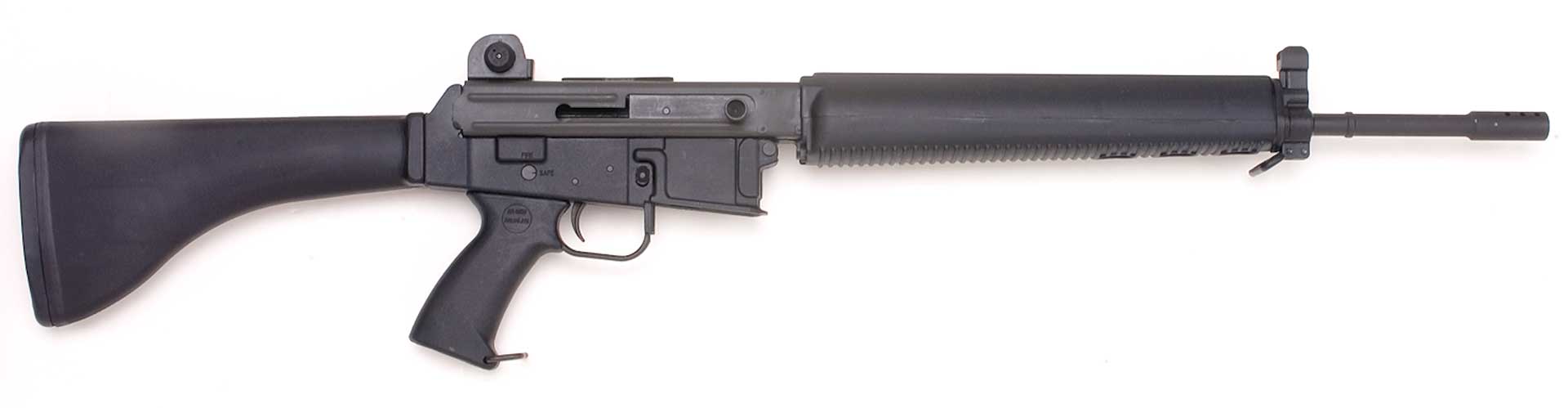
right side rifle armalite ar-180b black gun carbine
AR-180B (.223 Rem.)


Finally, with no future AR-10 sales on the horizon, the military’s interest in the SCHV concept apparently waning and Fairchild strapped for cash, ArmaLite chose to cut its losses and, in early 1959, licensed the rights to both the AR-10 and AR-15 designs to Colt’s Manufacturing for $75,000 and a 4.5 percent royalty.

Although it is widely regarded as a milestone in the history of bad ideas, the licensing agreement with Colt’s was not irrational given what was known at the time. Colt’s—itself near bankruptcy—was taking a gamble. Fortunately, that company’s luck was much better than ArmaLite’s. Its luck came in two forms: rising tensions in Vietnam, and the person of Robert W. “Bobby” MacDonald.

New Shooter
When the U.S. decided to intervene in Southeast Asia, it helped set the stage for the ultimate triumph of the AR-15. The election of John F. Kennedy and the appointment of Robert S. McNamara as Secretary of Defense meant that change had come to arms procurement. With McNamara’s “Whiz Kids” steeped in no tradition save arrogance, the traditional channels of trial, development and adoption could be breached. That is just what happened when Colt representatives took the AR-15 to Indochina.

The American government had decided that, despite the focus on strategic nuclear weapons, small arms for fighting limited wars against insurgents were needed and had been neglected. Developing and securing such weapons was to be the mandate of the Advanced Research Projects Agency (ARPA). These weapons were not to be carried by U.S. personnel, per se, but were to arm U.S.-backed foreign nationals. It was the result of such a program, specifically Project AGILE, that brought Colt’s representatives, including MacDonald and now Stoner, to the Far East to demonstrate the AR-10 and AR-15. The smaller arm was a tremendous hit with the diminutive foreign troops. The gun and its shooting characteristics appealed to those of smaller stature far more than did the AR-10 or any other .30-cal. battle rifle. Moreover, the AR-15 had virtually no competition from like-chambered combat rifles—there were none. MacDonald promptly informed Colt’s to focus on the AR-15 rather than the AR-10 and to gear up for the Asian market.

right side rifle gun carbine green plastic stocks armalite ar10
ArmaLite AR-10A4 (.308 Win.)


Stateside, MacDonald was no less effective. At Boutelle’s birthday party in Maryland, MacDonald handed Air Force General Curtis LeMay an AR-15 and let him shoot a couple of watermelons with devastating effect. The result was two exploded melons and LeMay’s quick request that AR-15s be purchased to replace M1 Carbines for Air Force personnel responsible for the security of Strategic Air Command bases.

In Vietnam, the role of the “black gun” continued to expand. Although it was supposed to be issued only to foreign troops, U.S. personnel gradually began carrying the new rifle, too. Obviously, this made logistic sense since they were traveling with AR-15-equipped ARVN soldiers. But also, American personnel noted that the light, fast-handling gun was better suited to jungle warfare than any other battle rifle-caliber longarm available. At first it was issued only to specialized personnel, but soon became a general-issue arm. ArmaLite could only watch in bitter astonishment as the AR-15 became the standard-issue U.S. service rifle, supplanting the bulky M14.

There were, of course, problems with the AR-15 (which was subsequently given the military designation M16). Many of those problems were directly attributable to how the arm was adopted—without adequate testing of the gun nor training for the soldiers. However, with the wherewithal that comes from having enormous government contracts, Colt’s, with Stoner as a consultant, was eventually able correct serious problems, especially the extraction and jamming issues that plagued the early guns and were only discovered after the rifles were widely issued.

After having reduced the AR-10 to produce the AR-15, ArmaLite reversed course and took what had been learned from the AR-15 and scaled it up to create a new, improved AR-10 called the AR-10A. The future, however, was clearly with the .223-Rem.-chambered rifle, and it appeared that the age of the AR-10 would never come.

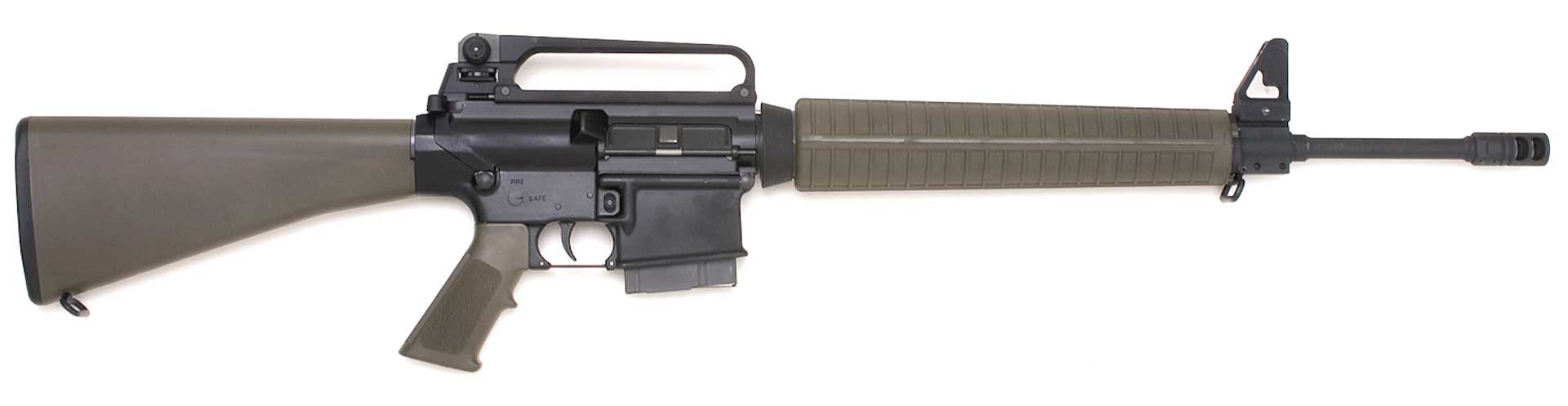
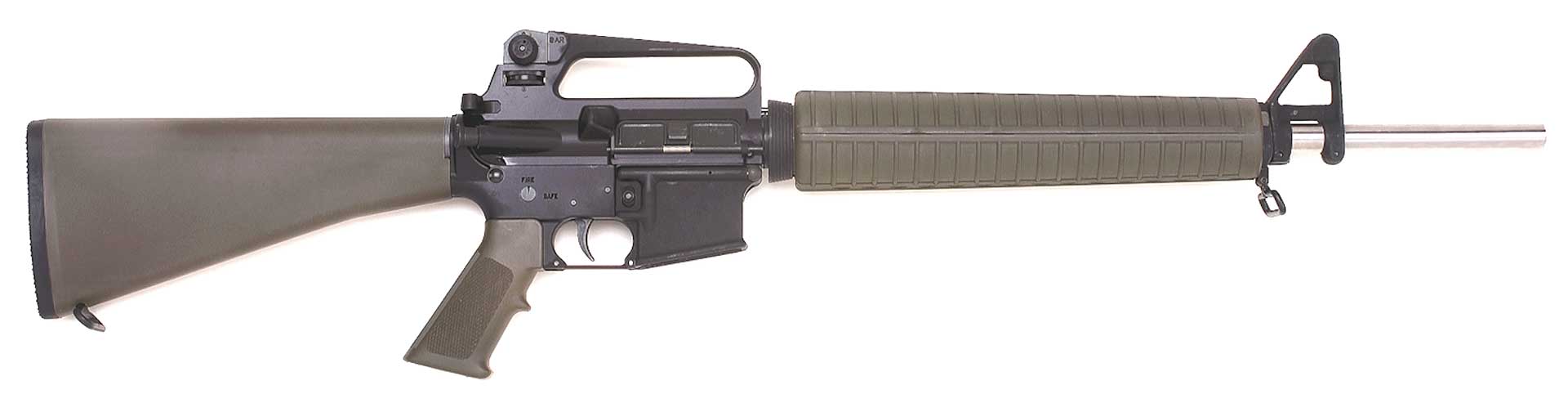
right side rifle ar15 armalite gun
ArmaLite M15A2 National Match (.223 Rem.)


The Dream Winds Down

Boutelle was eventually relieved of his position with Fairchild. George Sullivan, the ArmaLite muse, landed more softly: He had never left his position with Lockheed.

Recognizing that the .223 Rem. was the hot ticket, ArmaLite was faced with the problem that the AR-15 patents now belonged to Colt’s. The company then created a “poor man’s .223” called the AR-18. It was to be a low-cost .223 rifle made from stampings rather than forgings and having a different gas system than the AR-15. It would allow less-wealthy countries to equip their militaries with a .223 Rem.-cal. rifle.

However, despite two decades of effort, the company’s luck ran true to form and sales of the AR-18 were very limited. In the end, ArmaLite was sold to Elisco Tool Manufacturing Company, a Philippine concern whose U.S. component folded with the overthrow of Philippine president Ferdinand Marcos.

Restoring The Dream
In January of 1994, Mark Westrom, a former Army Ordnance officer and civilian employee of the Weapons Systems Management Directorate of the Army’s Armament Materiel and Chemical Command (AMCCOM) purchased Eagle Arms, a small company that made AR-15-type rifles and parts following the expiration of Stoner’s patents. A business associate of Eagle Arms, Dr. John Williams, had worked for ArmaLite in his youth and introduced Westrom to former ArmaLite Production Manager John McGerty who, in turn, introduced Westrom to John Ugarte. Ugarte had been the last president of record at ArmaLite and had retained the rights to the trademark; Westrom promptly purchased those rights. Thus was the ArmaLite marque reborn.

logo print lion armalite