Webster

The Constitution was made to guard the people against the dangers of good intentions." --American Statesman Daniel Webster (1782-1852)


Showing posts with label D-Day. Show all posts

Sunday, September 26, 2021

The Men and Guns of "D-Day", the 101st Airborne.

Still working a lot of "overtime", I ain't complaining, but I am tired,  I am off today, but I plan on piling it on all next week if I can get it.  (Momma wants a new pair of shoes*rolling dice*, lol).  I have a rant or two that is perculating, but it may be a bit before I post it.  

      I snagged this off "American Rifleman" it was sitting in my "almost ready" post that I didn't upload sooner.  I thought it was pretty cool.


On June 6, 1944, in conjunction with the naval landings of Operation Neptune, the U.S. Army sent in two airborne divisions to land behind enemy lines in Normandy, France, as a part of the overall D-Day landings. One of these two divisions was the 101st Airborne, who wore the now legendary "screaming eagle" patch. The 101st Airborne Division was tasked with capturing a series of beach exits and enemy strongpoints directly inland from the shores of Utah Beach. The division would parachute in with 6,928 men, ferried by numerous C-47 transport aircraft.
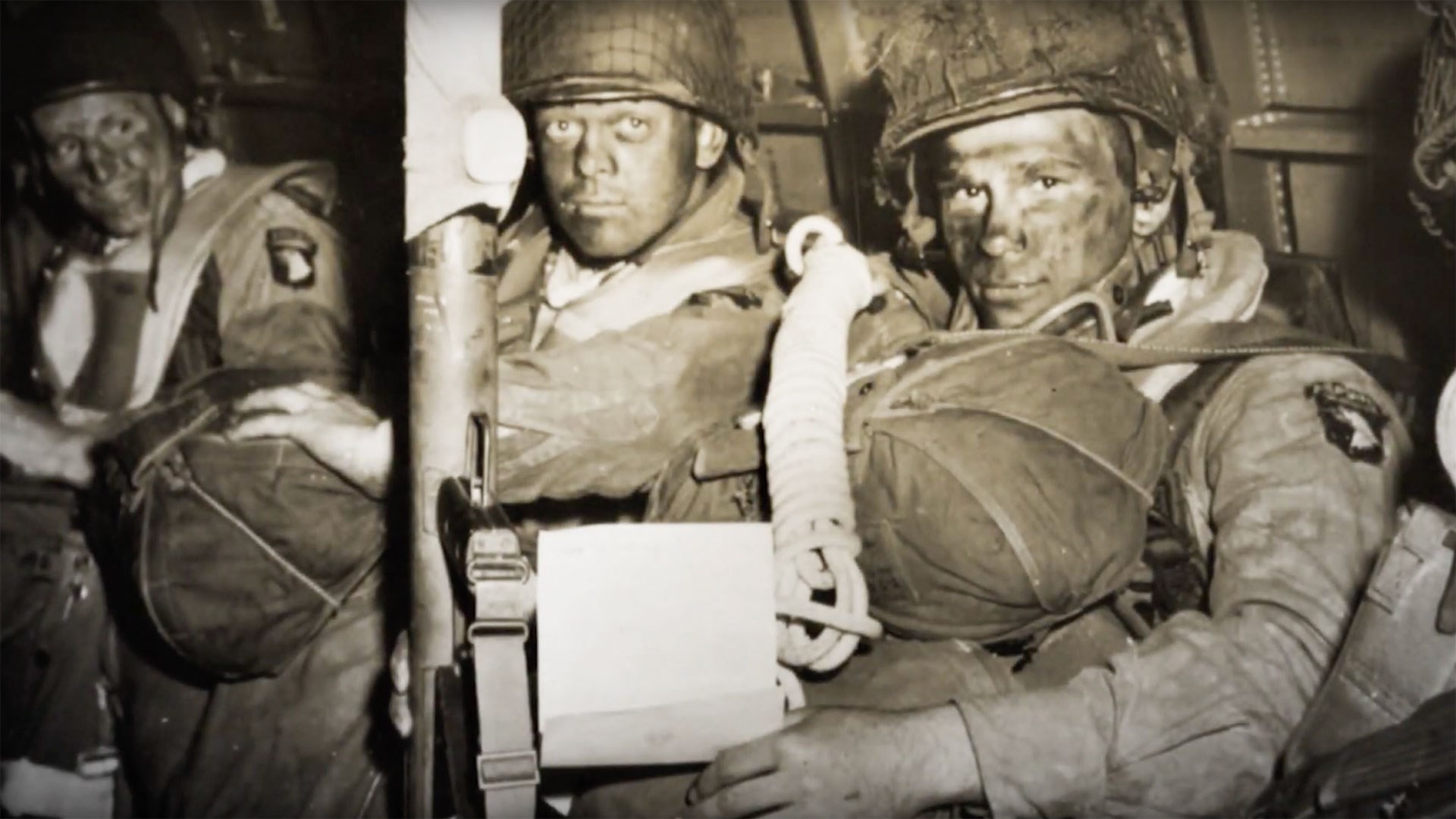
Paratroopers of the 101st Airborne Division geared up and sitting in a C-47 transport aircraft.

As recalled by 101st Airborne Division veteran, Donald R. Burgett, the force took off from airbases in England just before dark on the evening of June 5, and by the time they arrived in Normandy and began to parachute in, it was 1:14 a.m. The aircraft flew in through a fog bank, which caused them to scatter a bit. The C-47s were flying so slow that, as Don recalls, he felt the opening sock, looked up to see machine gun tracers fly through the canopy of his chute and then hit the ground. They had been dropped from merely 300' off the ground, much lower than the 700' minimum they were supposed to jump at.
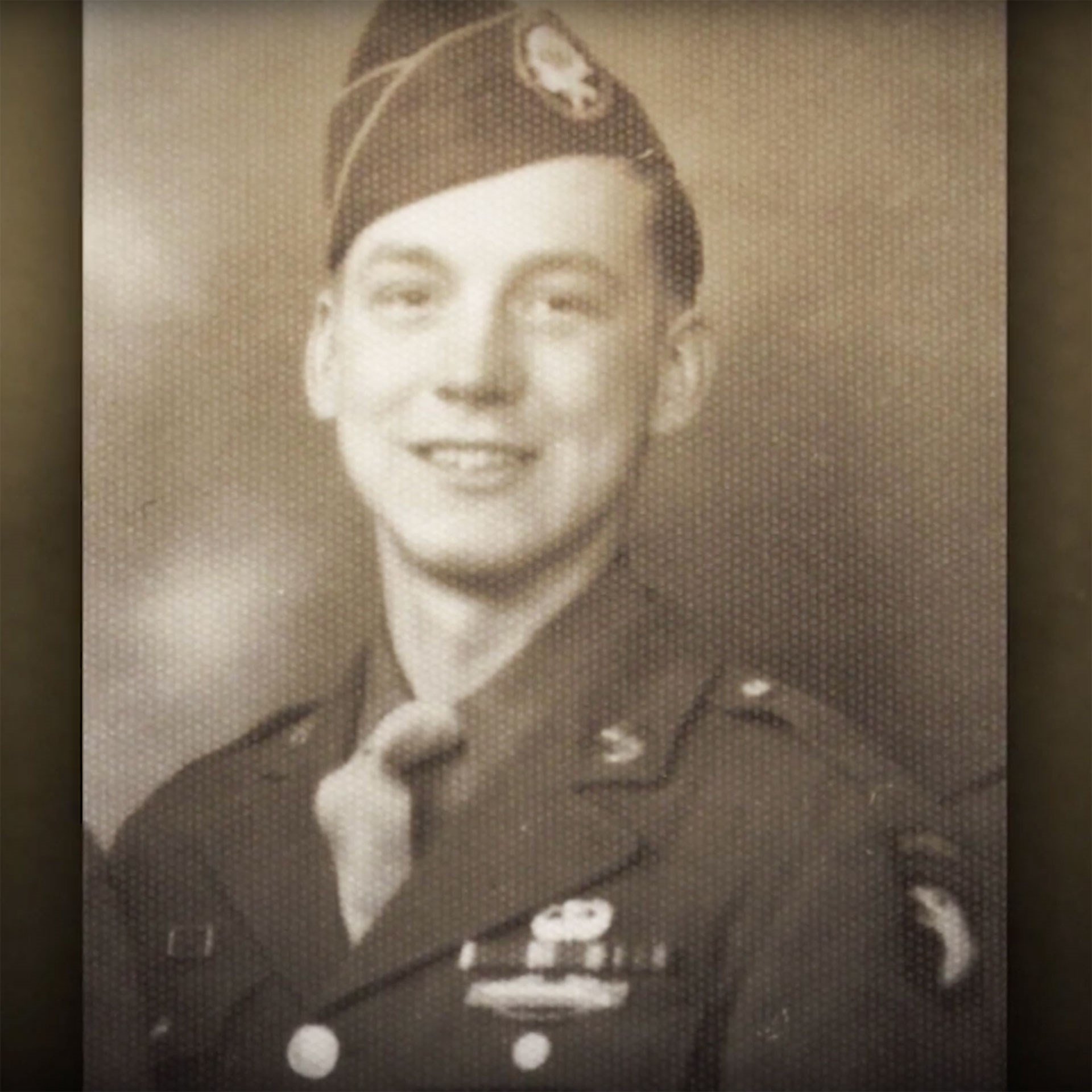
A photo of Donald R. Burgett in uniform during World War II.

Another 101st Airborne veteran, Raymond Geddes Jr., recalls jumping only to see a farm house in the distance for a brief moment, before hitting the ground. It was the lowest parachute jump he ever made. His watch broke when he landed, freezing the hands at the time of 1:25 a.m. Many lesson were learned during these jumps that should have been worked out during training.

One example of these hard-learned lesson involved the jump gear. The paratroopers carried more than 60 lbs. of equipment each during the jumps, with much of it, including weaponry, attached with less than ideal tiedowns. As a result, many paratroopers on D-Day lost their important equipment when the tiedowns failed. This led to paratroopers having to run around in the dark trying to find their drop bags and weapons on the landing zone, all while behind enemy lines.
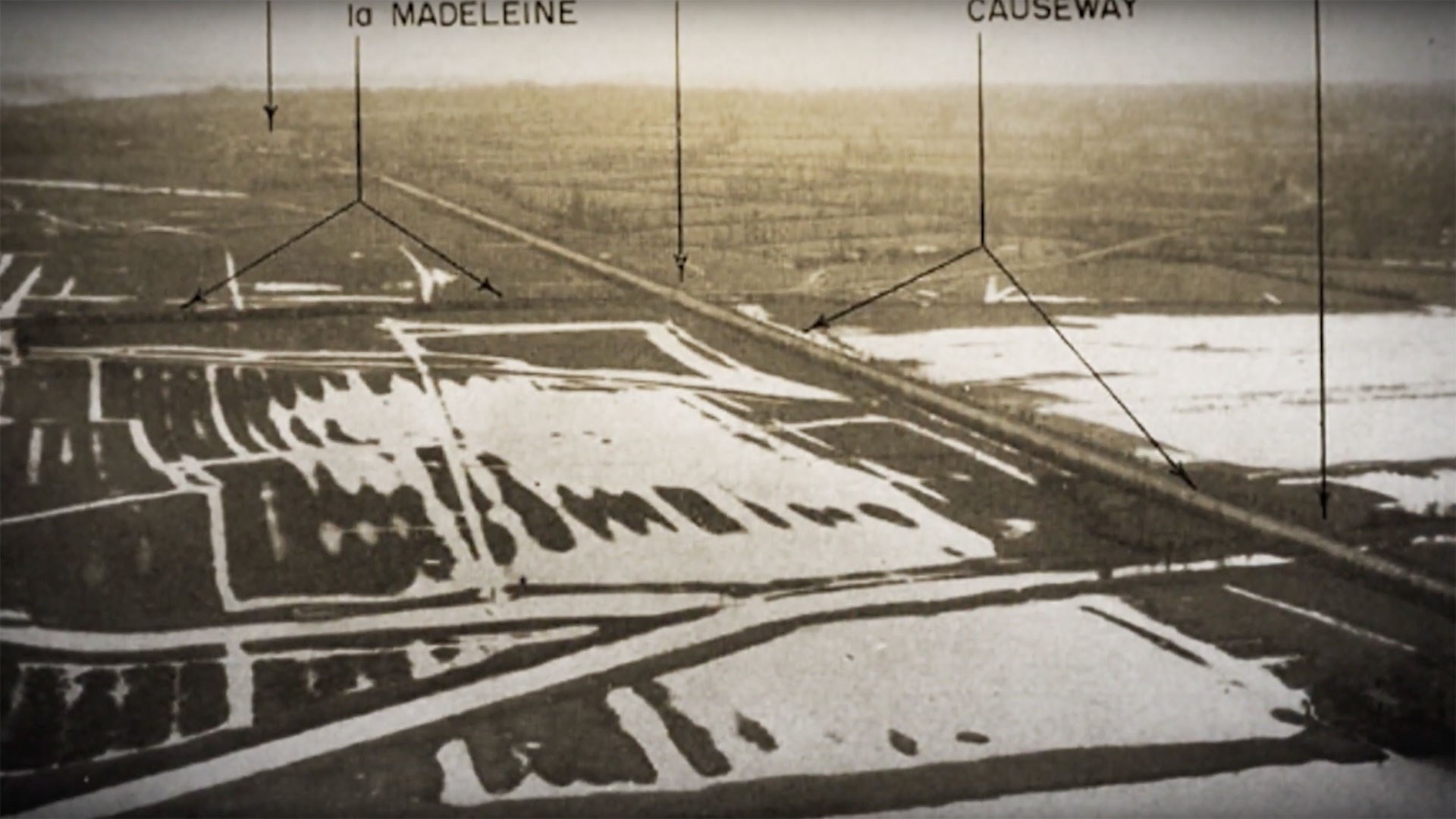
An aerial photo of the flooded plains behind Utah Beach, with causeways pointed out with arrows.

Just behind Utah Beach, the Germans had flooded the Normandy countryside, making the open ground impassable for the invasion forces to head inland off-road. There were, however, a series of causeways headed inland from the beach into various towns and cities inland. These causeways and their intersecting points became vital for moving forces inland, so the 101st Airborne was tasked with capturing the hubs.

On one of the causeways, leading from Saint Côme Du Mont into the outskirts of the city of Carentan, was a house on an intersection with a knocked out M5A1 Stuart tank on the side of the road. The body of the tank's commander was left hanging from the top hatch, leading to the place earning the nickname "Dead Man's Corner," a term coined by Don Burgett.   
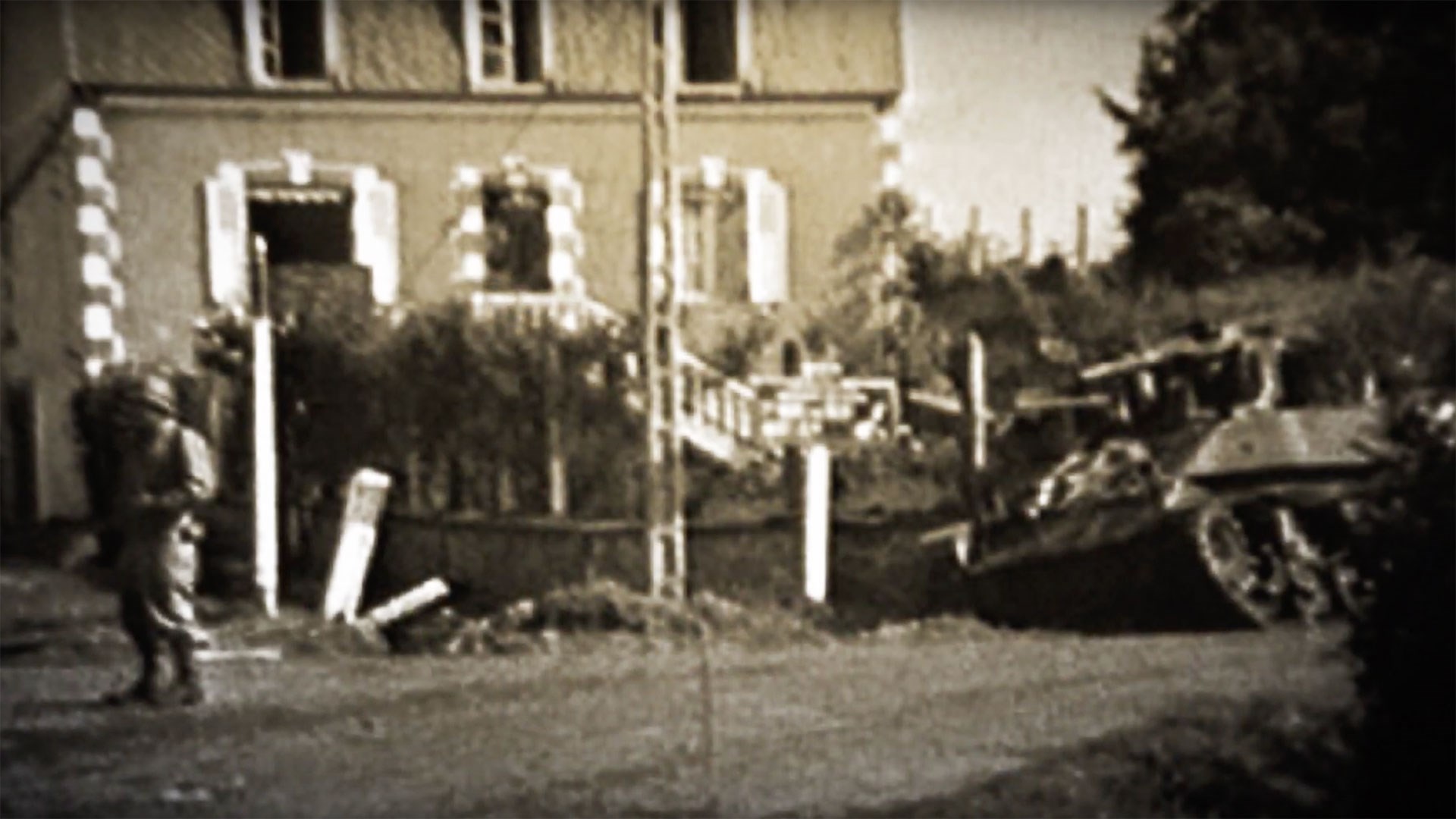
"Dead Man's Corner" as seen in June 1944.

Ray Geddes recalled the site as his last combat experience of the war. Geddes was transmitting the orders of a superior over the radio to an observer while his group was at the "Dead Man's Corner," until the superior took the radio mic to talk for himself. Geddes moved off and was standing around with some of his comrades when an artillery round came thundering in. 
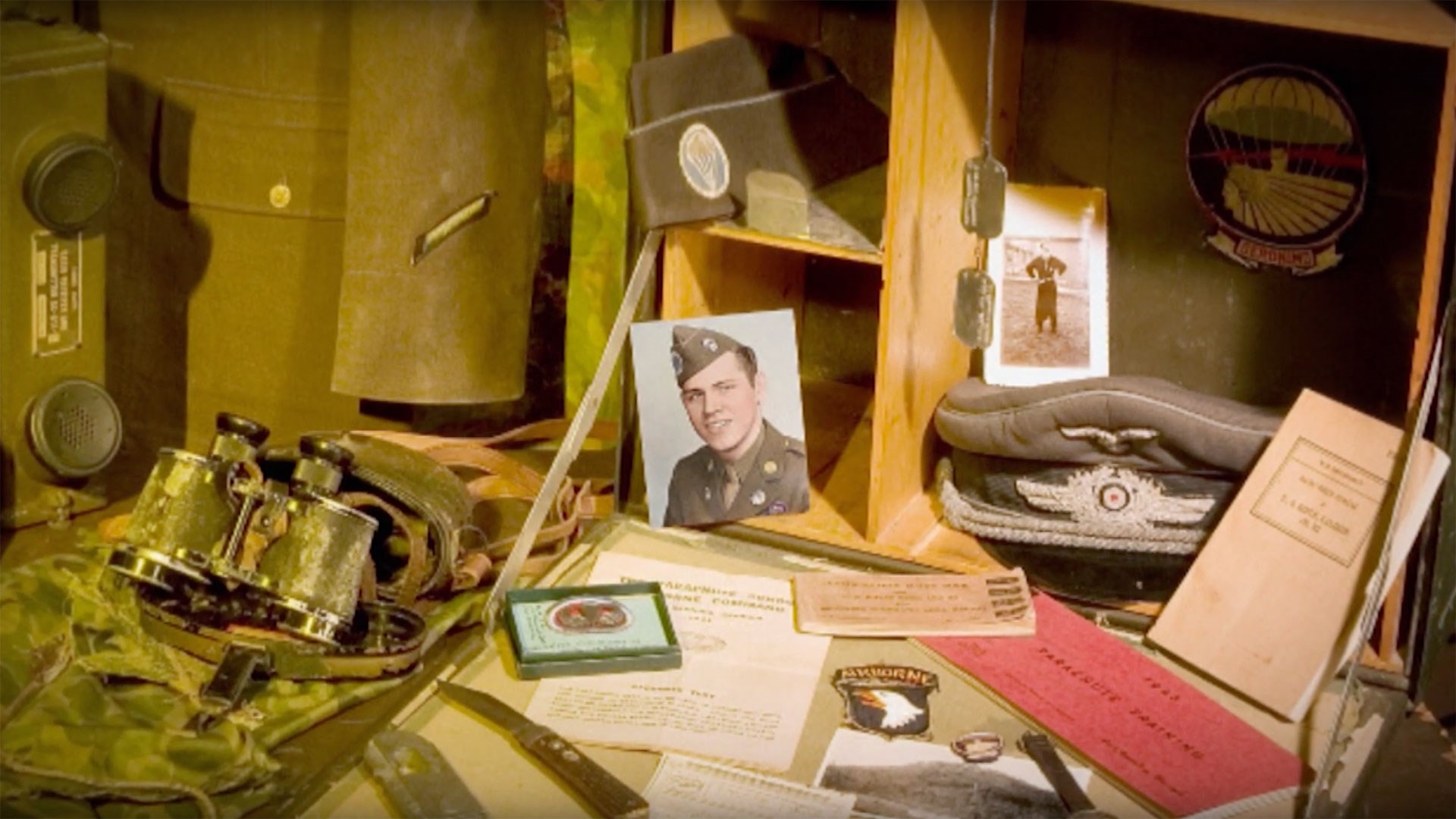
A display of items brought back from the war belonging to Raymond Geddes Jr., along with a photo of him in uniform.

Geddes was hit by shrapnel from the shell, with one piece hitting him in the eye. Wounded, he went down into the basement of the house full of surrendered Germans, where a German medic looked over his eye and gave some first aid. He was then evacuated on a jeep to the landing beaches and then taken to England by ship for medical treatment.

One of the most storied actions of the 101st Airborne on D-Day took place on the afternoon of June 6, as the U.S. Army forces landing on Utah Beach received an unwelcome surprise from the Germans in the form of 105 mm howitzer shells bracketing the beach. The howitzers were inland, hidden in a hedgerow near Brécourt Manor, in a location that was not known to the Allies prior. Elements of the 2nd Battalion, 506th Parachute Infantry Regiment, of the 101st Airborne were tasked to silence the German artillery. 
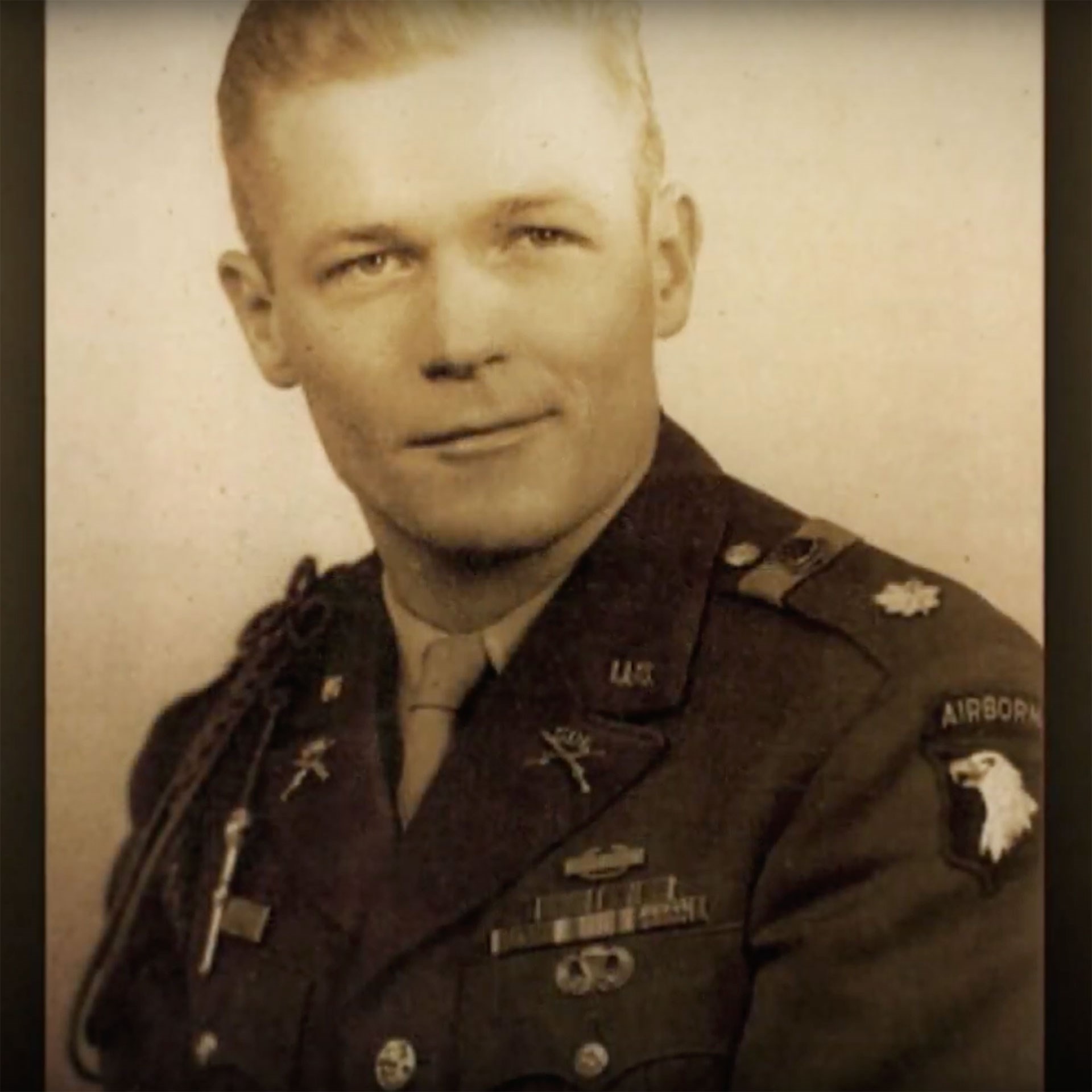
A photo of Richard Winters while in service.

Lead by Lt. Richard Winters, the acting commanding officer of "E" Company since the actual company commander was missing, a group of paratroopers found the positions of the German Howitzers and prepared an assault. Winters himself scouted the positions before formulating a plan of attack. A base of fire was set up, with an assault team that would move in and take out the individual gun positions.
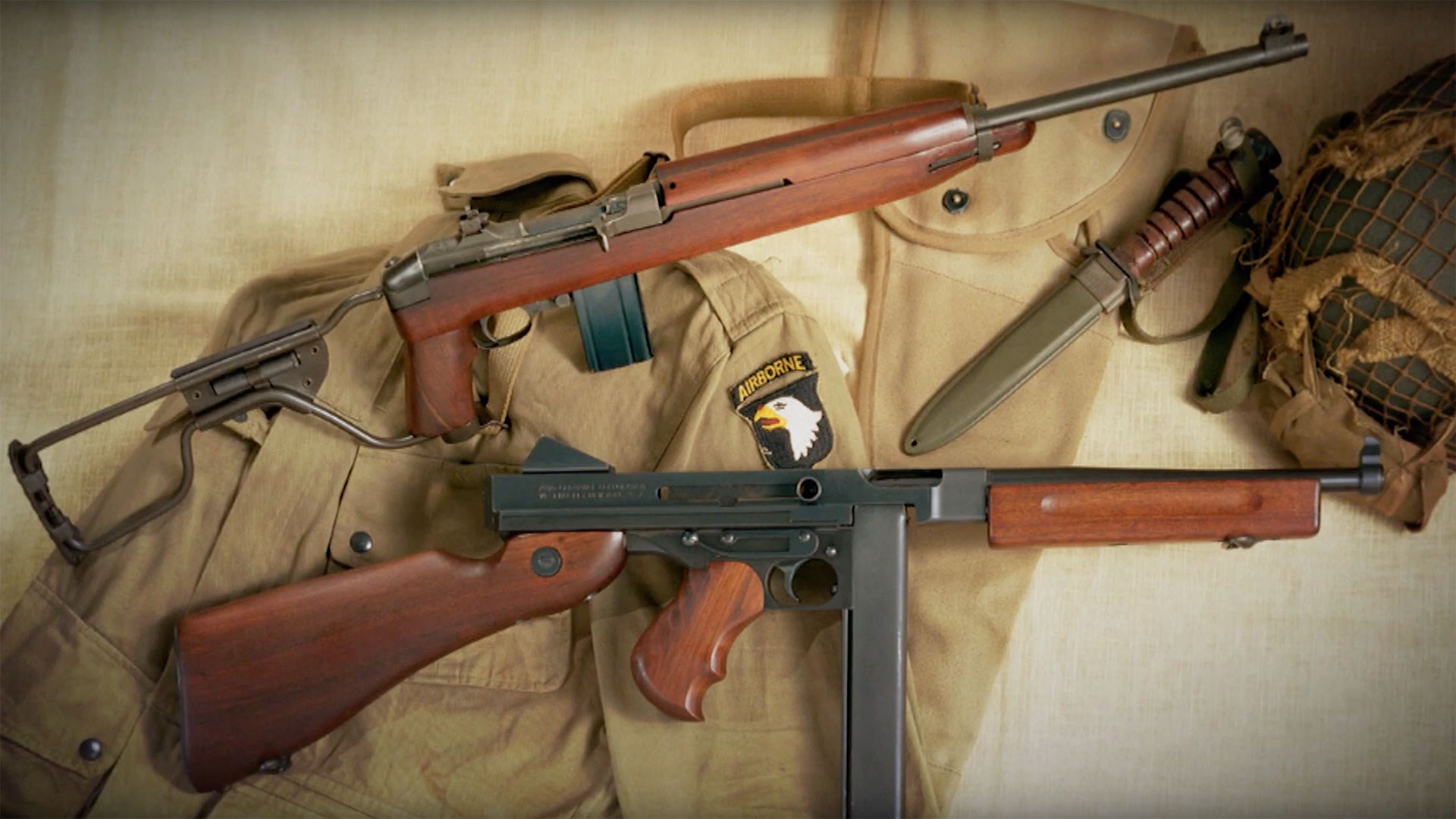
A M1A1 Carbine (top) and M1A1 Thompson submachine gun (bottom) displayed with a 101st Airborne uniform.

Two other men were tasked with climbing a tree and taking shots at the Germans with their M1A1 carbines. Over the course of the action, which ended up lasting several hours in total, Winters and his men successfully drove the Germans from the gun positions and Brécourt Manor, ending the howitzer barrage onto Utah Beach. For his leadership in the action, Richard Winters was awarded the distinguished service cross. This action was recreated in the HBO series Band Of Brothers.

When Ray Geddes went into the army on Dec. 11, 1942, he was issued a M1 Garand rifle. Even decades after his training, Geddes could still recall the serial number of his Springfield Armory M1, 987078, manufactured in November 1942. Geddes took good care of his first M1, which he carried during training and maneuvers in the United States before shipping out to Europe. After spending so much time with his rifle, he got attached to it. So, it came as a bit of a shock and disappointment for Geddes when they were told to turn in their rifles before shipping out.
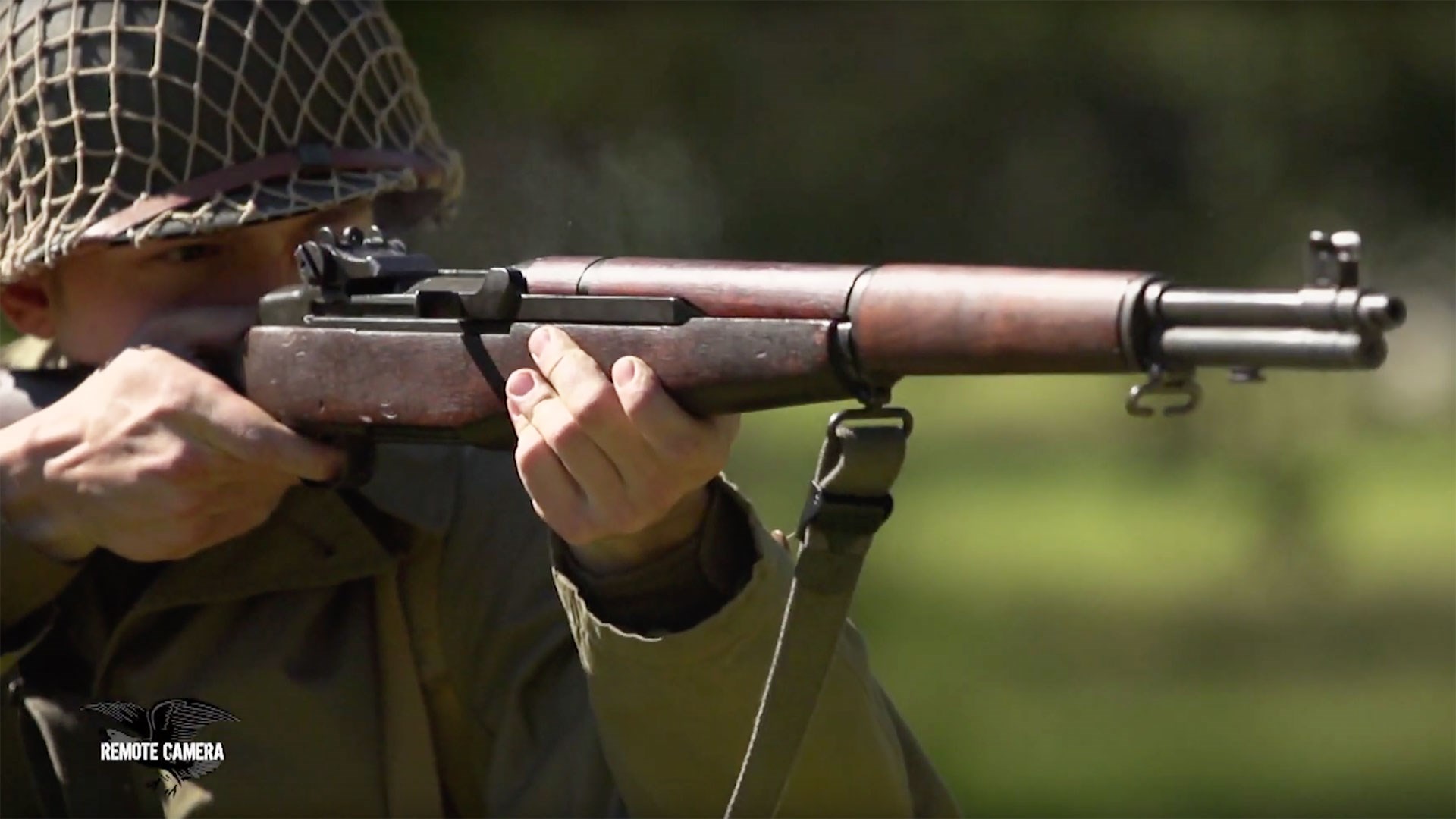
A reenactor dressed as a U.S. Army infantryman shooting a M1 Garand.

He was issued a new rifle when he made it to Europe, and admitted that he remembered nothing about the M1 that he carried for his short time in combat, other than the fact it was a rifle. Don Burgett was also issued a M1 Garand, and praised it as what he believed to be the "best rifle made." He noted that some would claim that the M1 had a tendency to jam, which he renounced from his own experience.

Instead of jamming, Burgett noted that sometimes the operating rods would crack at the 90-degree angle where the rod body meets the charging handle. When this happened, the charging handle part of the operating rod would separate from the rest and fall off, resulting in a useless rifle. Yet this issue wasn't overly common, and such a failure is was usually what would stop a M1 from working in combat instead of a jam. This issue was addressed after the war with the addition of a radius cut to the operating rod at the 90-degree intersection. 
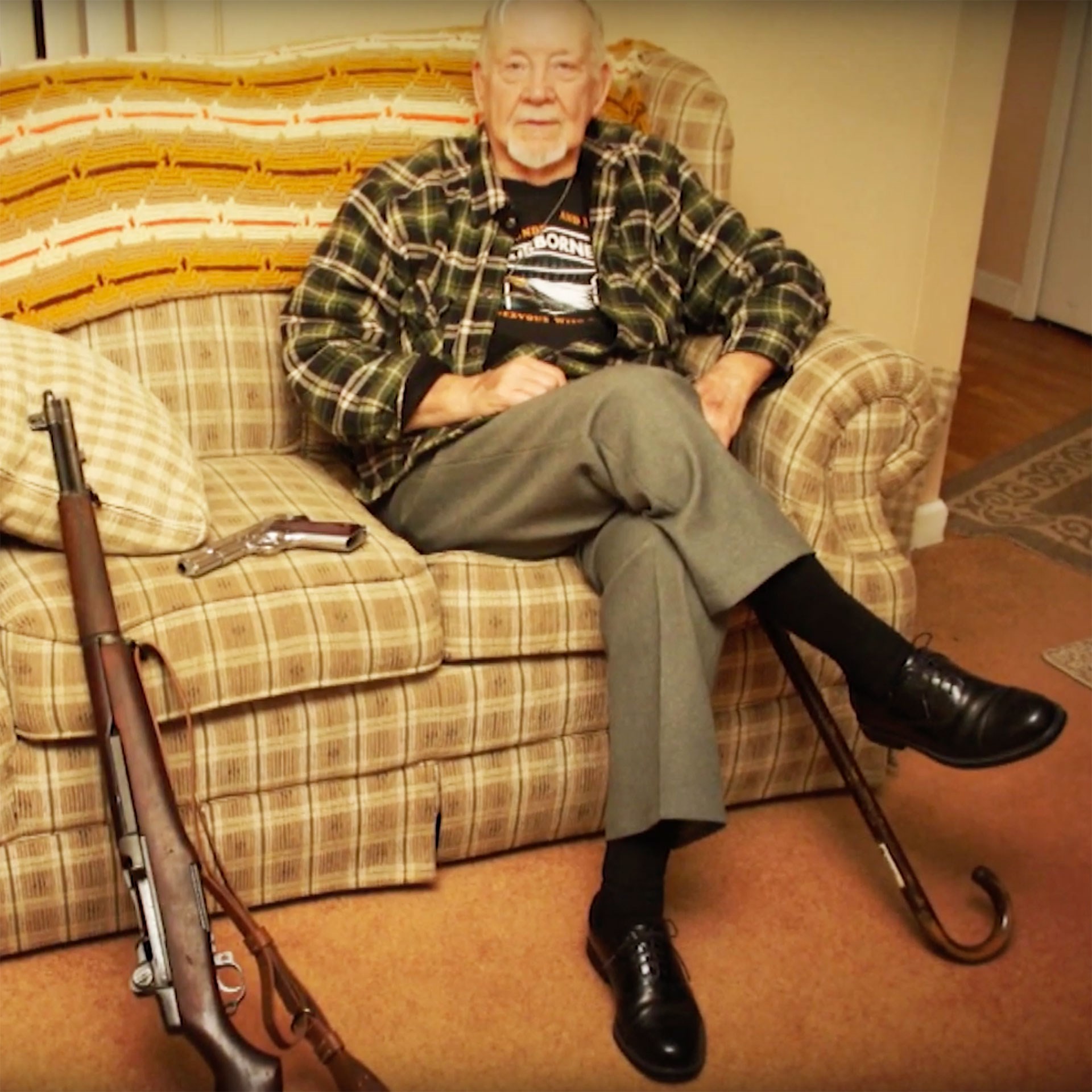
Don Burgett with his M1 and M1911 shortly before his passing.

In the case of such a failure, Burgett noted that a soldier didn't have time to try and fix his rifle, so typically they would be discarded and another one retrieved off of a dead or wounded comrade. Burgett remained an enthusiast of the M1 Garand for the rest of his life and was a NRA life member. 

This article is dedicated in memory of Raymond Geddes Jr. and Donald R. Burgett, who were kind enough to leave their stories for future generations to learn from. Don Burgett passed away on March 23, 2017, at the age of 92, just a week short of his birthday. Ray Geddes passed away on Oct. 31, 2020, at the age of 96. Their heroism will not be forgotten


Wednesday, June 5, 2019

Thoughts, Musings and a cruise :) with Casa De Garabaldi

I am out of the country on a cruise, I don't post stuff like this on Facebook, call me paranoid.  Only a few people know who I actually am in "Meatspace". I m using my "Baby Laptop" for this post.

   First off a musing,  Granted I am at sea, I have blogged many times about the Battle of Midway, One of two significant events during WWII
      To me it was a strategic battle of huge significance.  I even debated the great Tom Kratman on this subject,    He had posted a question, "Did the U.S. Navy have a strategic battle on par with the "Spanish Armada".  Many used the Battle of the Philippine sea  because of the number of ships involved.  I used the "Battle of Midway" as my argument, Sure the Battle of the Philippine Sea was much bigger, but strategically like the Spanish Armada the Battle of Midway determined the destiny of the battle of the Pacific.  My Argument was that after the loss of their 4 first line carriers and more so, the loss of their experienced aircrews, the Japanese never recovered.  We had some close calls and the War in the Pacific still swung in the balance especially during the fighting around Guadalcanal,  but the Japanese were on the defensive from that point on.  They had to respond to us, we had the initiative. Tom disagreed with my assertion that the U.S. Navy ever had a significant battle on par with the "Armada".  The War of 1812 was mentioned not by me and I disagreed with that one, sure the U.S Navy had some victories in the War of 1812, the U.S. Navy was too small to challenge the British Fleet.   Considering his chops as they were, that I was even able to debate Tom and not be called an "Idiot" to me was a victory. :)

     Also in 1944 Operation "Overlord" commenced to free Europe from the Germans,


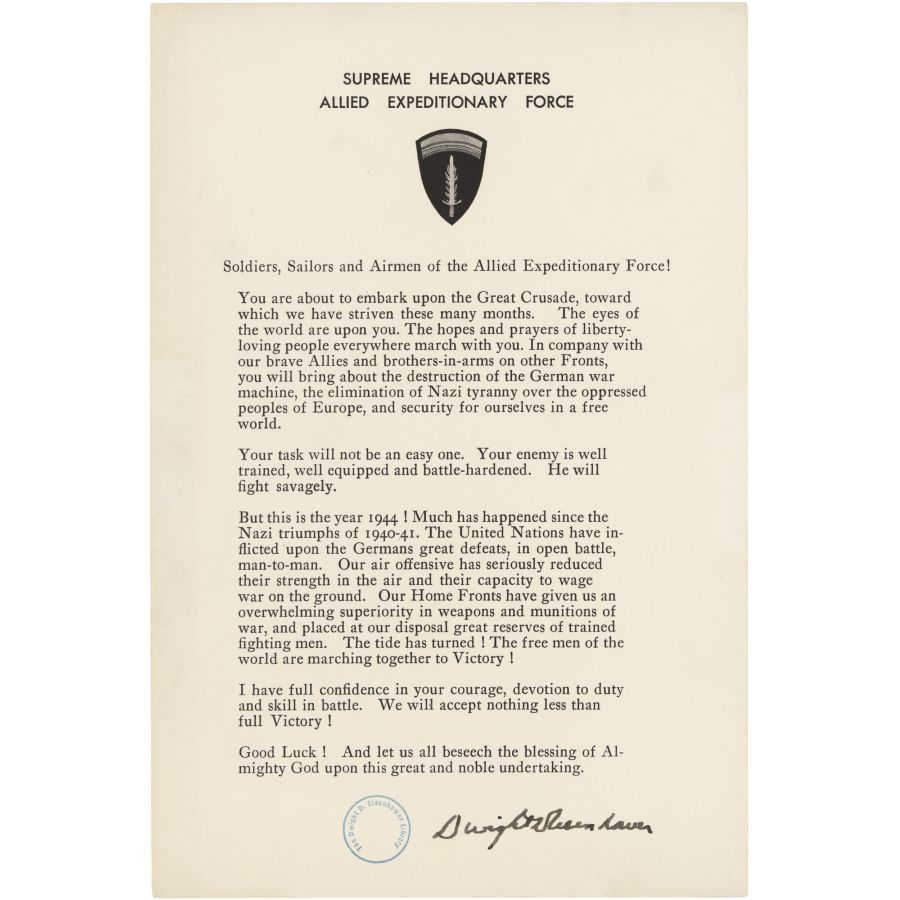
General Dwight D. Eisenhower's Order of the Day encouraged Allied soldiers, sailors, and airmen taking part in the D-day invasion. It was handed to Allied troops stepping onto their transports in early June 1944. As Commander of the Supreme Headquarters, Allied Expeditionary Force, Eisenhower provided hope for those about to liberate the European continent from Nazi tyranny.

Almost immediately after France fell to the Nazis in 1940, the Allies planned a cross-Channel assault on the German occupying forces. At the Quebec Conference in August 1943, Winston Churchill and Franklin Roosevelt reaffirmed the plan, which was code-named Overlord. Although Churchill acceded begrudgingly to the operation, historians note that the British still harbored persistent doubts about whether Overlord would succeed.

The decision to mount the invasion was cemented at the Teheran Conference held in November and December 1943. Joseph Stalin, on his first trip outside the Soviet Union since 1912, pressed Roosevelt and Churchill for details about the plan, particularly the identity of the supreme commander of Overlord. Churchill and Roosevelt told Stalin that the invasion "would be possible" by August 1, 1944, but that no decision had yet been made to name a supreme commander. Stalin commented: "Then nothing will come of these operations. Who carries the moral and technical responsibility for this operation?" Churchill and Roosevelt acknowledged the need to name the commander without further delay. Shortly after the conference ended, Roosevelt appointed Gen. Dwight David Eisenhower to that position.

By May 1944, 2,876,000 Allied troops were amassed in southern England. While awaiting deployment orders, they prepared for the assault by practicing with live ammunition. The largest armada in history, made up of more than 4,000 American, British, and Canadian ships, lay in wait. More that 1,200 planes stood ready to deliver seasoned airborne troops behind enemy lines, to silence German ground resistance as best they could, and to dominate the skies of the impending battle theater.

Against a tense backdrop of uncertain weather forecasts, disagreements in strategy, and related timing dilemmas predicated on the need for optimal tidal conditions, Eisenhower decided before dawn on June 5 to proceed with Overlord. Later that same afternoon, he scribbled a note intended for release, accepting responsibility for the decision to launch the invasion and full blame should the effort to create a beachhead on the Normandy coast fail.

Much more polished is this printed Order of the Day for June 6, 1944, which Eisenhower began drafting in February. The order was distributed to the 175,000-member expeditionary force on the eve of the invasion.

     We Students of History and us who served or still serve, honor those from back then for the courage displayed to step off into the unknown.

     Well to my cruise...we left the city of JAX
   As we sailed, I saw a container ship being unloaded, I knew how they did it, but it still was fascinating to watch..
  Then we approached a bridge...
It got closer....
and closer............
And really Close.........
is it gonna "scratch"...?
Looks like we cleared......lol
As we neared the mouth of the Harbor, we had a seahawk buzz us...probably looking for "Free Range Boobies".   Hey I was a G.I. at one time, I know.....
Followed by the View of some of the big gray canoe's that the U.S. Navy is known for...
And a LHD-7 U.S.S Iwo Jima, the silhouette doesn't exactly match what I saw in "Wiki", the Big white then is covering the aft Antenna mount on the island.  I don't know if the ship is being in for maintenance, storage or overhaul.  Still it is a cool pic...

 And some humor.....with truth attached to it for us that work the aviation field.

Thursday, June 6, 2013

2 historic events happened on this day...Normandy and Midway

What I am referring to are the D-Day invasion of Western Europe in 1944, it was the first direct attack on Western Europe and "Festung Europa", after the aborted attack on Dieppe in 1942.  Some believed that this was a practice run on the Germans to see how they reacted.  The British left a lot of material behind and a lot of casualties and prisoners from that raid.  The Canadians were not happy about the results.  But 2 years later the Allies tried again with much different results than the ill-fated raid.
 On June 6th, the allies struck in Normandy on 5 beaches, Gold, Sword,Juno,Utah and Omaha, after a major bombardment with aircraft, battleships, destroyers, cruisers and the French resistance and more aircraft attacking the rear areas including railroad marshaling yards, bridges and other gathering points, they kept the Germans from reinforcing the bridgehead.  Also a major factor was Adolph Hitler who refused to release the reserves because he believed that the main attack would come at Calais instead.  This belief was reinforced by a major misinformation campaign by the allies to keep the Germans pinned at Calais and not reinforcing the embattled Germans at Normandy.

    Some facts about D-day:
    
The D-Day Invasion at Normandy – June 6, 1944


 Invasion Date    
June 6, 1944 – The D in D-Day stands for “day” since the final invasion date was unknown and weather dependent
Allied Forces
156,000 Allied troops  from The United States, The United Kingdom, Canada,Free France and Norway
Invasion Location
The Allied code names for the beaches along the 50-mile stretch of Normandy coast targeted for landing were Utah, Omaha, Gold, Juno and Sword. Omaha was the costliest beach in terms of Allied casualties.
The Armada
5,000 ships and landing craft
50,000 vehicles
11,000 planes
The Commanders
United States – Dwight D. Eisenhower, Omar Bradley
The United Kingdom – Bernard Law Montgomery, Trafford Leigh-Mallory, Arthur Tedder, Miles Dempsey, Bertram Ramsay
Germany – Erwin Rommel, Gerd von Rundstedt, Friedrich Dollmann

Casualties
Numbers represent total killed, wounded, missing or captured
United States – 6,603 (1,465 killed)
United Kingdom – 2,700
Canada – 1,074 (359 fatal)Germany – Estimated between 4,000 – 9,000
Results
By June 11, with the beachheads firmly secured, more than 326,000 troops had crossed with more than 100,000 tons of military equipment. Paris was liberated on August 25. Germany surrendered on May 8, 1945.


As a treat, a couple of weeks ago when we were at work, there was our annual  AMT appreciation day at the hanger, we had some free food, the tool vendors were out in force and we got some cool stuff. we had some airplanes show up in the hanger:
 This P51D is sporting the Stripes on the fuselage and wings that the allies had painted to make Identification easier so there would be less friendly fire incidents.
Here is a better look at the P51D.  It is the iconic fighter from WWII for the allies.  This plane protected the B-17's and B-24's all the way to Berlin and back.  This plane made the Strategic bombing strategy a success, as far as enabling the bombers to make it to their targets.  Schweinfurt in 1943 was very costly to allied bombing efforts.  This showed the folly of sending bombers unescorted against Luftwaffe fighters.  Hermann Goering commented later when he saw a crashed P51 near Berlin, he "Knew the jig was up". 
    After being invaded on both sides by the allies, with most of Germany occupied, Hitler committed suicide in his bunker as Russian guns blasted Berlin. 11 months later, the Germans surrendered unconditionally to the allies. and the War in Europe was over.

     Also on the other side of the world, in 1942 from June 4 through June 6 the Americans fought the Japanese at the battle of Midway.  At the end, the Japanese lost 4 carriers, 1 cruiser and 300+ airplanes and worse than that, they lost the creme of their aviation strike force.  the Japanese never recovered from that loss.  We lost 1 carrier, 1 destroyer  and 100+ airplanes.   The details that started this in motion was the Doolittle Raid , this overrode Admiral Yamamoto  caution in dealing with the United States.  After the raid he pushed through operation MI, the invasion of Midway island, which he believed would force the Americans to leave their Pearl Harbor base to save their last remaining outpost in the Pacific.  The Japanese Navy had to deal with the Americans at the Battle of the Coral Sea which they lost a light carrier Shoho a light carrier, but the dive bombing and torpedo planes of the Shokaku and the Zuikuku were savaged and the Shokaku was heavily damaged.  This forced the Japanese to use their other 4 heavy or fleet carriers.  the 6 carriers total, the Shokaku, Zuikaku, Akaki,Soryo,Hiryo and Kaga were the 6 carriers that attacked Pearl Harbor.  They represented the creme of Japanese Naval Aviation.  With Zuikaku depleted in their air arm and the Shokaku  heavily damaged, both were sidelined on the next battle.   The Americans lost the Lexington, a Destroyer U.S.S. Sims and many aircraft.  Also the U.S.S. Yorktown was damaged.  The Americans got her to Pearl Harbor and in 3 days got her repaired enough for combat operations to join the Enterprise and Hornet to defend Midway Island.  The American Cryptographers under Joe Rochefort were able to break the Japanese JN-25 imperial naval code which gave the Americans the plans of the Japanese to attack Midway Island.  The Japanese believed that the Americans only had 2 carriers, the Enterprise and Hornet, they believed that the Yorktown was sunk at Coral Sea.  The Americans met the Japanese at what was called the battle of Midway.  The end results was that the Japanese lost 4 of their fleet carriers, the creme of their naval aviation, and they never recovered from the blow.  It took 3 more years of hard fighting before the Japanese surrendered to the Americans on the deck of the U.S.S. Missouri.
     The Plane that devastated the Japanese at Midway was the SBD Dauntlass, this plane was responsible the the destruction of the Japanese carriers at Midway.

          The diving brakes are evident in this picture. of a Dauntlass diving on a Japanese carrier.

    We got a treat along with the P51D we had visit, we also had a SBD Dauntlass visit us also.

     
            The diving brakes that made her so devastating are shown here retracted.    Here is another pic
of her from the other side.
I was very excited to see icons of American aviation in person.  I explained the significance of these planes to the other mechanics...especially the younger ones.  I wanted to crawl inside of them but I didn't want to insult the CAF by crawling all over their airplanes without permission. 


The number of remaining D-Day vets is estimated anywhere between 8,000 and 60,000. The Veterans Administration has detailed numbers on total WWII vets remaining available at www.nationalww2museum.org/the-greatest-generation