Webster

The Constitution was made to guard the people against the dangers of good intentions." --American Statesman Daniel Webster (1782-1852)


Showing posts with label Russia. Show all posts

Tuesday, March 25, 2025

"What if Europe Had to Fight Without the Americans?"

 I saw this article surfing the web during break, and it to me was spot on, for generations Europe has let their defenses laps as they focused on "Butter instead of Guns", and they relied on the United States to do the heavy lifting.  During the Cold War, West Germany had a very good Military Services the "Bundeswehr" but after the cold war was over, they rapidly demobilized and now they are a shadow of their former selves.  Same with the rest of the Western Europeans.  Now the Eastern Europeans whom are in NATO spend in excess of 2% of GDP as is mandated by NATO charter because they know what it is like to be under the boots of the Soviets Er the Russians and have no desire to repeat the experience whereas the Western Europeans have gotten soft and in my mind I have severe doubt if they have the "stones" to defend Western Civilization as we know it.  

     I do know that President Trump isn't happy with the alliance because of the Europeans taking advantage of the Americans for many years, sneering about the proventials colonist then expecting us to carry the freight and then work cross purposes against us  For example gutting their energy sector because of the political pressure from the "Die Grune" to chase the unicorns of solar energy and wind, so they shut down their coal and nuclear plants and to make up the shortfalls, the Germans have to buy their gas and energy from the Russians, thereby financing their war machine.....Funny that..  So the possibility of The United States Leaving NATO is possible, I doubt it, but it is there, especially if the Western Europeans out of Brussels keep trying to jerk President Trump around, I can see him totally pulling out or seriously reducing our presence especially in Western Europe.  Although Poland and some of the Eastern Europeans would love to have us there on their soil.  Only Time will tell.

I got this from the "Wavell Room"  All credit goes to them.


As the possibility of a U.S. withdrawal from NATO increases, Europe faces not just a political crisis but a military emergency.  No longer shielded by American power, it may have to stand alone against a weakened, yet aggressive Russia – forced to fight, whether it is ready or not. What would war in Europe look like without the United States?  Could Europe still find a way to fight on its own terms?  It must – and it can.

Fighting without the tools to win

From British Paratroopers to Poland’s GROM, from Eurofighters to German howitzers, Europe fields some of the finest professional forces and most sophisticated weapon systems; the problem is, they just don’t have enough of them.   It is not that Europeans do not know how to fight.  The problem is, what do they actually have to fight with?  For years, defence budgets and industries have been allowed to wither away. Without the United States, European NATO members face crippling shortfalls in trained personnelammunition stocks, and critical military assets.  Although this has already impeded European operations in the past, it would prove fatal in a peer-to-peer conflict. 

Without U.S. stockpiles and equipment depots, Europe would face an immediate logistical challenge from the very outbreak of hostilities.  Ammunition shortages would be catastrophic.  The war in Ukraine has demonstrated that European stockpiles cannot sustain modern, high-intensity combat.  Stocks of artillery shells, precision munitions, and armoured vehicle replacements would be exhausted within weeks, with no immediate means of replenishment. 

Dwindling reserves and slow production

Unlike the United States, which maintains vast prepositioned stockpiles, European nations have allowed their war reserves to dwindle.  Decades of underinvestment and fragmentation across national borders have meant Europe’s defence industries are too slow and unresponsive to meet wartime demand.  Peacetime procurement cycles stretch across years, not weeks.  The very munitions that define NATO’s battlefield superiority – smart bombs, guided rockets, and cruise missiles – are produced too slowly and in far too small quantities.  In a war with Russia, Europe’s current production capacity would be overwhelmed within days.

To make matters worse, Europe lacks the military mobility to move what it currently has to where it is needed.  Equipment losses would mount rapidly without a resilient battlefield repair and maintenance infrastructure.  Damaged tanks, Infantry Fighting Vehicles, and aircraft would be difficult to restore to combat readiness, and many would be lost for the duration of the war.

This is not just a logistical issue; it directly impacts Europe’s ability to dictate the course of the war.  When its reserves run out and production fails to keep pace, Europe will be unable to effectively shape the strategic environment.  Yet, such shaping operations – preparing the battlefield to favour one’s own forces – are essential for modern warfare.  They involve neutralizing enemy air defences, disrupting command-and-control networks, and degrading logistics and reinforcements.  These operations set the conditions for manoeuvre warfare, allowing ground forces to exploit gaps and achieve operational breakthroughs.  Without American air assets and stand-off capabilities, Europe would struggle to achieve air dominance or degrade enemy systems sufficiently to enable rapid and decisive ground manoeuvres. 

The air domain

The inability to gain and maintain control of the air would be felt long before European troops even reached the frontlines.  Russian ISR drones would detect and track their movements, enabling relentless strikes that would force European units to disperse, dig in, and hide.  Without U.S. anti-air capabilities, European forces are vulnerable to threats from Russian glide bombs, Shahed drones, and loitering munitions. Unable to mass for decisive operations, mechanized assaults would become a non-starter.  Frontlines would harden, forcing tanks and infantry fighting vehicles to disperse even further – acting as individual force multipliers rather than combined instruments of manoeuvre. 


RAF F35 Europe faces a political crisis
Royal Air Force F35 (Photo by SAC Tim Laurence, Crown Copyright)


A highly dispersed force – down to the platoon and squad level – means that core tactical tenets would start to break down.  Fire and movement would no longer be mutually enabling components – the effective use of which has been central to Western warfare since the First World War.  With European forces unable to shape the battlefield, to mass for decisive action and to effectively suppress and outmanoeuvre the enemy, the result would be a war of attrition, much like what we see in Ukraine today.  

The Ukrainian way of war is not an option

Some argue that the war in Ukraine offers a glimpse into the future of warfare.  But while it has showcased remarkable battlefield innovation, it remains a war of necessity, not choice – and one that Europe cannot afford to emulate. 

Ukraine has fought with dispersed positions, drone teams, and small-unit tactics – not because they are optimal, but because they are the only available option.  The slow supply of Western equipment has forced it into an attritional fight, where gains are measured in tree lines rather than strategic advances.  This approach has exacted a staggering toll: entire formations lost, offensives stalled, and casualty rates in the tens of thousands.  It is a brutal struggle with no clear path to victory; and as important as they may be, no number of AI-driven drones has solved the fundamental challenge of breaking this bloody deadlock of trench warfare.

2023 – a counteroffensive without air superiority

The failed 2023 Ukrainian counteroffensive revealed the harsh limits of attacking without air dominance, without deep strikes, and without shaping operations – precisely the situation European forces would face if they had to fight Russia alone.  Yet, unlike Ukraine, which spent eight years adapting to Russian tactics along the demarcation line and over three years in all-out war, most European armies lack comparable experience.  They also do not possess Ukraine’s extensive anti-air network, leaving European cities and infrastructure even more vulnerable to Russian missile and drone strikes.  Most critically, if Europe fights without the United States, it will have no external lifeline.  Ammunition shortages will not be offset by foreign aid, depleted stockpiles will not be replenished, and tank battalions will not be resupplied by allies. Europe must be able to sustain itself.


Europe faces a crisis
Swedish Archer artillery system (WikiMedia Commons)


Furthermore, while Ukrainians have shown enormous resilience, driven by a fight for national survival, it is hard to imagine similar determination across Western Europe.   Few European nations beyond the Baltic countries and Poland have the resolve to endure the kind of high-casualty warfare that would likely follow if Europe had to go to war today.  Public support for any conflict involving mass casualties and prolonged attritional warfare would likely collapse.

To understand what Europe must do now, we must recognize that Ukraine is not fighting this war on its own terms.  This is why it has repeatedly pleaded and begged for more artillery, aircraft, cruise missiles, and combat vehicles.  As critical as innovation and adaptability are in modern warfare, they cannot replace the fundamental need for firepower and manoeuvre.  Thus, while Ukraine has adapted to sustain its fight with domestically built systems, it has not regained the operational capabilities needed for decisive action.

Russia is weaker than we think

The good news is – neither has Russia.  Despite the gains it has made in recent months and the remarkable ‘political will’ – for lack of a better word – to sacrifice hundreds of thousands on the battlefield, the Russian Armed Forces have proven themselves far weaker than most anticipated before 2022.  While they have made tactical adaptations and remain proficient in defensive operations, Russia has paid a steep price.  It has lost large portions of its pre-war force, depleted its Soviet-era stockpiles, and pushed its economy to the limits of its labour force. 

The Russian military has repeatedly failed to conduct basic combined arms manoeuvres or air campaigns and has yet to find a solution to the stalemate other than pressing forward with wave after wave of squad-sized infantry assaults.  For now, Russia remains stuck in Ukraine, and it is highly unlikely that it can simultaneously defeat Kyiv, reconstitute its forces, and open a second front against Eastern Europe.  Where Europe lacks the means to fight the war the way it wants to fight, Russia lacks the systems to conduct it effectively. 

Europe still remembers what stalemates look like

This is the other good news: Europe knows how to avoid a bloody stalemate – because we have been here before: after the First World War, Western militaries adapted their operational and tactical procedures to ensure that it would never again be trapped in the kind of static, attritional warfare that defined the battlefields of Flanders.  The Western Allies, the Wehrmacht, and later NATO did not adopt manoeuvre warfare out of academic preference, but out of the hard-learned necessity to avoid pointless slaughter.  Despite repeated claims by some analysts, it does not mean NATO was incapable of attritional warfare.  Attrition was not abandoned – it was moved away from the frontlines.  Air campaigns and stand-off capabilities such as cruise missiles and long-range rocket artillery were how Western militaries sought to degrade enemy capabilities before their own soldiers ever entered the fight. 

Both these core tenets were validated in Ukraine, as most recaptured territory resulted either from operational breakthroughs – such as the 2022 Kharkiv counteroffensive – or from shaping the environment into untenable conditions, forcing Russian troops to withdraw, as seen in Kherson later that year.  And while the Kursk offensive has been controversial strategically, it shows that the Russian Armed Forces cannot defend in force everywhere – leaving exploitable gaps and opportunities for manoeuvre.

Russia has shown it cannot replicate the systems to conduct complex air campaigns and shaping operations – even in its own backyard.  This is because NATO’s dominance in Multi-Domain Operations has never been just about tanks, stealth aircraft or cruise missiles.  Rather, it came from the integration of systems—command structures, intelligence fusion, and targeting processes – that allowed NATO forces to operate with unmatched precision.  In this, NATO had – and still has – no peer in the world. 

European strength remains a political—not a military—question

Much of this has depended on U.S. assets, technology, and personnel.  Yet Europe possesses both the institutional knowledge and technological expertise to rebuild these capabilities independently in its own area of responsibility.  We know what to do, how to do it and what to do it with.  Large-scale air exercises with European command structures have demonstrated this potential.  Technology, both new and old, an industrial base and financial resources exist to produce, procure, and employ the necessary weapon systems – build, buy and bomb.  This applies to everything from aircraft and drones to cruise missiles, long-range rocket artillery, and other critical capabilities. 

Europe also has a deep well of doctrinal expertise and a large corps of staff and non-commissioned officers capable of leading the necessary expansion of forces.  With a workforce more than twice the size of Russia’s – and larger than that of the United States – Europe has the manpower to sustain and build up its militaries – if it acts now. 

The crisis facing Europe means challenge is formidable.  Nations – some of which may not even believe in the cause – must unite.  Fragmented European defence industries have to move towards a consolidated warpath.  It means convincing entire generations that this is their fight.  It means spending ‘gold for iron’ today to avoid spilling blood for freedom tomorrow.  Finally, it also means reconstituting European forces now, rather than being forced to send untrained conscripts into the meat grinder later.  Europe needs weapons, civilian defence, hardened infrastructure, and a high state of force readiness – on a massive scale. 

Conclusion

Will Europe ever be as powerful as it was with U.S. support?  No, probably not.  That is why one can only hope NATO still has a future – even as we prepare for the worst.   But if Europe acts with determination and unity it can avoid the political and military crisis it currently faces.  It can rebuild the dominant, highly integrated military systems necessary to deter or decisively defeat any Russian aggression.  The challenge, therefore, is not whether Europe can fight effectively without the United States – it can, and it might soon have to.  The real question is whether Europe will invest today, while it still has the choice of how it wants to fight before circumstances dictate the way it has to.

Friday, February 28, 2025

10 Hard Facts about Ukraine and NATO

 I knew back in the 90's when  the Ukraine and Bill Clinton negotiated away the Ukraine's Soviet era Nuclear weapon, their security was guaranteed by the United States, it also was understood that NATO wasn't gonna get any closer to the Soviet er the Russian Homeland, but since then that agreement was broken by the Europeans in NATO with a blind eye by the clowns in Foggy bottom and by self serving idiots on both parties.  Now we are where are.  The Russians invaded the Crimea while Obungler was in Office and the rest of ukraine while Biden was in Office.  I wonder why.

      I ripped this from Townhall.com.


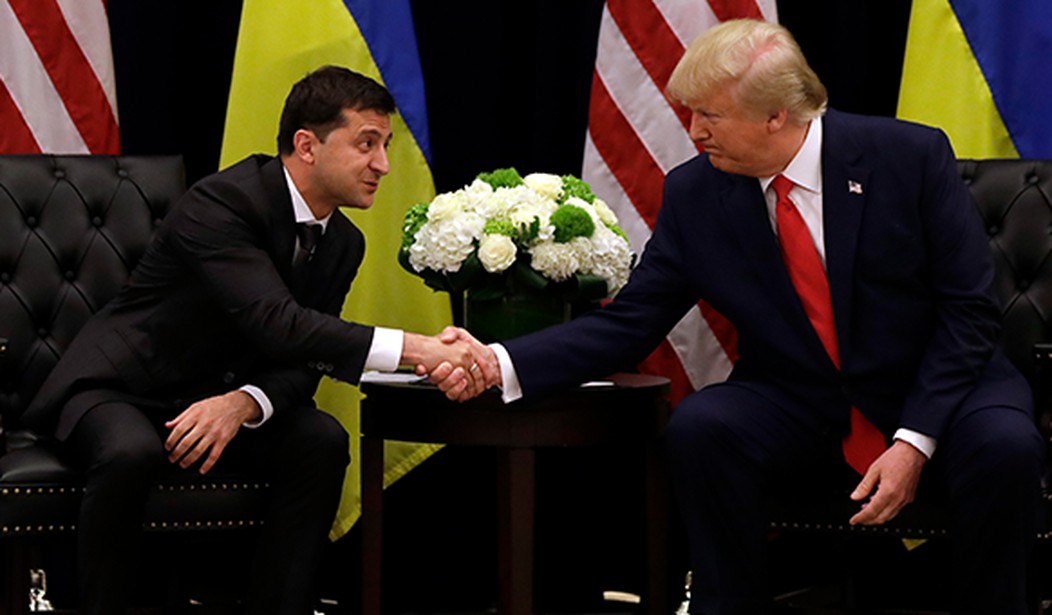
AP Photo/Evan Vucci

President Donald Trump is trying to force not only Ukraine and Russia to make peace but also the Europeans to carry their own weight in the defense of their own continent. It’s astonishing how angry the establishment is about this. It’s almost as if they want this meat grinder to continue forever and for America to subsidize the Europeans’ bizarre social pathologies forever. But what can’t go on forever won’t go on forever. Change is coming. We have to start accepting some realities. Childish clichés and moral posturing have no place in foreign policy. When somebody starts answering your arguments by calling you literally Hitler and saying that you suck Putin’s toes, you can be absolutely sure they don’t want to contend with substantive arguments. But they’re going to have to. Trump is serious about ending this war and resetting our relationship with NATO. They aren’t going wait him out or shame him into submission.

And let me make something clear at the beginning. I like the Ukrainians. I trained them and they were with us when I deployed. I would like them to be able to win their war. I would also like to have a pony. Wishing doesn’t make things so. It’s time to get hard-nosed and real about what’s going on so we can stop this nightmare before it spins completely out of control. And when two nuclear-armed powers are facing each other, spinning out of control can be really bad.

1. Russia is absolutely in the wrong for invading Ukraine. Nothing Ukraine did excuses or justifies Russia’s actions. But we still need to understand why they did it. They had reasons, even if you and I don’t agree with their reasons. It’s not simply because Vladimir Putin is Mr. Burns, tenting his fingers and planning evil deeds for the sake of doing evil. There is much more going on in this conflict than in the portrait painted by the media and establishment. It involves history, ethnicity, and other factors we Westerners do not and cannot understand. Some of those facts include that Ukraine used to be part of Russia, and Russia believes it should be in the future. Also, there are huge numbers of ethnic Russians, who Ukrainians do not like – Ukrainians get mad at you if you speak Russian to them – in those areas that Putin has captured. Further, Russia is paranoid, and not without reason, about an invasion from the West. Look at Napoleon, look at Hitler. We may not think that it should be upset about Ukraine joining NATO, but Russia thinks it should be. Again, this isn’t to justify what Russia did. We need to understand why it did it even if we don’t agree with its motivations.

2. Ukraine is not going to be able to win the war if the definition of winning the war is recovering all the conquered Ukrainian territory. A continued stalemate will result in many thousands of additional deaths. The idea that somehow, Ukraine, which has been nearly bled dry, is going to come up with the combat power to throw the Russians off its soil is just insane. That’s never going to happen. I would like it to happen, but it won’t. So, we’ve got to deal with the reality we’re facing.

3. Zelensky will have to accept the reality that America will need to be paid back for its aid, which means, as a practical matter, access to Ukraine’s mineral reserves. The establishment has been scandalized that Trump expects to be paid back, but why should America pick up the tab? It’s not our war. Zelensky, who stupidly has gotten himself crosswise with the new American government, stated that he would not require ten generations of Ukrainians to pay America back. So, does he propose that ten generations of Americans pay back the money America has to borrow to give to Zelensky? That’s just not going to fly with normal Americans.

4. Ukraine is an unbelievably corrupt country, and the idea that no substantial portion of our aid money has been stolen is ridiculous. There are going to be a lot of people getting very rich off the American aid, including many Americans. The fact that much of the establishment is so resistant to attempting to audit those funds indicates that they understand this, too.

5. The American people are, by and large, tired of subsidizing Ukraine’s end of this war. They are absolutely against American forces being involved. There is a lit fuse on America’s patience, and trying to stamp it out by shouting that anyone questioning perpetual subsidies of this war is Putin’s pal is not going to cut it. The fact is that Trump is probably Ukraine’s last chance to retain American support. The guy who follows Trump is going to be worse for Ukraine.

6. China is a substantially greater threat to the United States than Russia in the macro. The fact is that right now, we can’t confront both powers. We need to focus on China. That’s the major threat to the United States.

7. The Europeans should be taking the lead in supporting Ukraine and should be taking the lead in defending Europe. They are freaking out about this. It’s hilarious that their answer to Donald Trump telling them they need to step up and take charge of their own defense is to step up and take charge of their own defense to show Donald Trump what for. Typically, a threat involves promising to do something the person you’re threatening does not want you to do instead of exactly what he wants you to do.

8. The campaign to insult critics of past Ukraine policy by calling them Putin’s puppets and so forth is a lie and is going to result in enmity towards the idea of helping the Ukrainians. You cannot insult Americans into obedience. You cannot fail to address their legitimate concerns and expect them to agree with you.


9. Some of our NATO allies are participating in internal repression, including suppression of free speech and the right to organize and participate in elections via non-establishment parties. This dangerously undercuts the moral argument in favor of NATO. Americans have no desire to spend blood and treasure defending countries that arrest people for speaking. And the Europeans refuse to accept the judgment of their people. Just this week, the allegedly conservative German party that came in first in the election after promising to close German borders announced the very next day that it would not be closing borders. That’s bad. Why again should we spend money on these people? I mean, it’s only been 80 years.

10. It is in America’s interest that this war ends. We want to draw Russia away from China and closer to the West. It is not in our interest to have a war going on where our proxy is fighting with a nuclear-armed enemy, regardless of how moral the cause of Ukraine is. The only way this is going to happen is if the United States takes the lead and forces Ukraine to make painful concessions in order to end this dangerous bloodbath. In the harsh calculus of international politics, it’s critical that we bring the Russians into our orbit and get them away from the Chinese.  Putin has an interest in that – the sparsely populated Siberian wilderness is right there north of China, full of all sorts of resources that China will eventually grab. Putin can’t stop it. He needs allies. Yes, Putin’s a bad guy, but this isn’t about good guys and bad guys. This is about protecting America’s interests. And it’s in America’s interest to stop this war and strip China of a major ally.


Follow Kurt on Twitter @KurtSchlichter. Get the newest volume in the Kelly Turnbull People’s Republic series of conservative action novels set in America after a notional national divorce, the bestselling Amazon #1 Military Thriller, Overlord! And get his new novel about terrorism in America, The Attack!

Monday, February 3, 2025

Right now NATO couldn't win a war against Russia


I was getting "Red Storm Rising" feelings when reading this article that I saw on Bongino Reports.  Remember that quote, "Amateurs talk tactics, professionals talk logistics."  NATO has lost the skill and the manufacturing base they used to have, thanks to the environmental movement that wanted no industry and pollution, so it was either shut down or throttled, and a lot of it was outsourced to the 3rd world because it is ok if they pollute, it is in the name of "equity" or something. as long as the western based world doesn't pollute. Also they have until recently not even met their 2% of GDP as required by treaty obligation because the provincial Americans will do it and defend them, so the Europeans spent their money on their social system and sneered at the backwater Americans.  Now the piper is coming due and they are scrambling.  The eastern Europeans are being serious about it, they still remember the Russian threat, whereas the Western Europeans have forgotten, and viewed the Soviets er the Russians as friends, and started buying their gas from them, thereby financing Putin's war against Ukraine.  Funny that. 

    I shamelessly clipped off "Responsible Statecraft"


   Summer Exercise between American, Polish and Latvian forces (from Duck,Duck,Go)

In 2024, reflecting a popular Western belief, former Secretary of Defense Lloyd Austin said: “NATO is the most powerful and successful alliance in history.” Yet just two years earlier in 2022, after a 15-year campaign, NATO was defeated by the Taliban, a rag-tag group of poorly armed insurgents.

How can NATO’s humiliating defeat and Austin’s view be reconciled?

Of course NATO was never the most powerful military alliance in history — that accolade surely goes to the World War II Allies: the U.S., Russia, Britain, and the Commonwealth nations. Nevertheless, after 1945, NATO did its job, did it well, and those of us who served in it were proud to do so.

Since the Berlin Wall’s fall, though, its record has become tarnished. Satisfactory in Kosovo. Humiliated in Afghanistan. Strategic failure looming in Ukraine. Are we really sure NATO is up to the job of defending democratic Europe from a supposedly expansionist Russia in the doomsday scenario of a conventional NATO-Russia war?

The doomsday NATO-Russia war scenario is the defining way to explore this question. “Amateurs talk tactics, professionals study logistics,” and our strategic analysis needs to start all the way back in NATO’s logistics rear areas, then work forward to a future line of battle on the continent of Europe.

First, unlike Russia, no major NATO nation is industrially mobilized for war, as evidenced by the fact that Russia is still outproducing NATO on 155mm shells for Ukraine. Which, incidentally, gives the lie to the view that Russia is poised to take more of Europe — if we in NATO truly believed this, we would all be mobilizing at speed.

More importantly, it is not clear that NATO could mobilize at the speed or scale needed to produce the levels of equipment, ammunition, and people to match Russia. And certainly not without a long build up that would signal our intent. This is not just about lost industrial capacity, but also lost financial capacity. Of the largest NATO nations, only Germany has a debt to GDP ratio below 100%.

Second, to have the remotest chance of success in this doomsday scenario of a NATO-Russia war, U.S. forces would need to deploy at scale into continental Europe. Even if the U.S. Army was established at the necessary scale — with a 2023 establishment of 473,000, under one third of the current Russian Army, it is not — the overwhelming majority of American equipment and logistics would have to travel by sea.

There, they would be vulnerable to Russian submarine-launched torpedoes and mines. As a former underwater warfare specialist, I do not believe that NATO now has the scale of anti-submarine or mine-warfare forces needed to protect Europe’s sea lines of communication.

Nor, for that matter, would these forces be able to successfully protect Europe’s hydrocarbon imports, in particular oil and LNG so critical to Europe’s economic survival. Losses because of our sea supply vulnerability would not only degrade military production, but also bring accelerating economic hardship to NATO citizens, as soaring prices and energy shortages accompanying an outbreak of war rapidly escalated the political pressure to settle.

Third, our airports, sea ports, training, and logistics bases would be exposed to conventional ballistic missile attack, against which we have extremely limited defenses. Indeed, in the case of the Oreshnik missile, no defense.

An Oreshnik missile arriving at Mach 10+ would devastate a NATO arms factory, or naval, army and air force base. As in Ukraine, Russia’s ballistic campaign would also target our transport, logistics, and energy infrastructure. In 2003, while I was working for the British MOD’s Policy Planning staffs, our post 9/11 threat analysis suggested a successful attack against an LNG terminal, such as Milford Haven, Rotterdam, or Barcelona, would have sub-nuclear consequences. The follow-on economic shock-waves would rapidly ripple across a European continent, now increasingly dependent on LNG.

Fourth, unlike Russia, NATO nations’ forces are a heterogenous bunch. My own experience, while leading the offshore training of all European warships at Flag Officer Sea Training in Plymouth, and later working with NATO forces in Afghanistan, was that all NATO forces were exceptionally enthusiastic but had very different levels of technological advancement and trained effectiveness.

Perhaps more contemporarily important, other than a handful of NATO trainers forward deployed in Ukraine, our forces are trained according to a pre-drone “maneuver doctrine" and have no real-world experience of modern peer-to-peer attritional warfighting. Whereas the Russian Army has close to three years experience now, and is unarguably the world's most battle-hardened.

Fifth, NATO’s decision-making system is cumbersome, hampered by the need to constantly communicate from Supreme Headquarters Allied Powers Europe to national capitals — a complexity made worse each time another nation is admitted.

Worse still, NATO cannot do strategy. Shortly after arriving in Afghanistan in 2007, I was shocked to find that NATO had no campaign strategy. In 2022, notwithstanding numerous Russian warnings about NATO expansion constituting a red-line, NATO was wholly unprepared, strategically, for the obvious possibility of war breaking out — as evidenced again by our inability to match Russia’s 155mm shell production.

Even now, in 2025, NATO’s Ukraine strategy is opaque, perhaps best summarized as "double-down and hope.”

In summary, NATO is positioning itself as Europe’s defender, yet lacks the industrial capacity to sustain peer-to-peer warfighting, is wholly dependent on U.S. forces for the remotest chance of success, is unable satisfactorily to defend its sea lines of communication against Russian submarine, or its training and industrial infrastructure against strategic ballistic bombardment, is comprised of a diverse mix of un-bloodied conventional forces, and lacks the capacity to think and act strategically.

An easy NATO victory cannot be assumed, and I am afraid that the opposite looks far more likely to me.

So what? Conventionally, we could now work out how to redress the manifest weaknesses revealed. Strategic audits to confirm the capability gaps. Capability analyses to work out how to fill the gaps. Conferences to decide who does what and where costs should fall. Whilst all the time muddling on, hoping that NATO might eventually prevail in Ukraine, notwithstanding all the evidence to the contrary.

But without unanimous agreement of the NATO nations to increase military investment at scale, we would be lucky to solve these capability shortfalls within ten years, let alone five.

Or we could return to consider — at last — the judgement of many Western realists that NATO expansion was the touchpaper for the Russo-Ukraine War. The Russians warned us, time and again, that such expansion constituted a red line. So too did some of our very greatest strategic thinkers, starting with George Kennan in 1996, Henry KissingerJack Matlock, even Bill Burns in his famous ‘Nyet means Nyet’ diplomatic telegram, and most recently John Mearsheimer with his 2014 forecasts. All ignored.

The truth is that NATO now exists to confront the threats created by its continuing existence. Yet as our scenario shows, NATO does not have the capacity to defeat the primary threat that its continuing existence has created.

So perhaps this is the time to have an honest conversation about the future of NATO, and to ask two questions. How do we return to the sustainable peace in Europe that all sides to the conflict seek? Is NATO the primary obstacle to this sustainable peace?

Tuesday, January 2, 2024

50 Years ago the "Gulag Archipelago" was released in Russian.

 I have used a quote from the book on my blog more than once, actually quite a few times.


   There is a lesson here for any qould be tyrant that when people have nothing to lose...the state will lose.

   I saw this chasing another article at work..."Where else,. LOL"

Just after Christmas 50 years ago, the original Russian edition of the first two parts of The Gulag Archipelago was published, followed by French and English translations the next year. Aleksandr Solzhenitsyn dedicated his book “to all those who did not live to tell it.”

This was followed by second and third volumes in 1975 (parts three and four) and 1976 (parts five through seven), with corresponding translations in 1976 and 1978. Harper Collins publishes an authorized abridged edition.


My parents emigrated from the Soviet Union. From what they told me, I developed a deep reluctance to being frog-marched to Kolyma courtesy of unilateral disarmament peaceniks, who are nowadays called “woke” with alternate grievances but the same collectivist Borg mentality. With that mindset, I purchased copies of all three volumes as they became available and read them with curiosity and sorrow.

Unlike Gulag by Anne Applebaum (2004), Solzhenitsyn’s treatment does not present a comprehensive history of Soviet slave labor camps. Rather, it’s an anthology of vignettes, both firsthand and described by other former inmates, woven into a damning indictment of communism under Moscow’s dominion.

Frozen Apocalypse

Prior to Archipelago’s release, Americans and Western Europeans had been exposed to only glimpses of communist inhumanity, mostly from the few survivors who had escaped their dystopias by fortitude and fortune. But their voices were seldom heard, drowned out by a cacophony of Soviet apologists who insisted socialist coercion represented the ideal manner for ordering other people around. Central planning is benevolent, you see.

Solzhenitsyn tore the curtain away from this façade and forced the “progressive” elite to confront the ugly truth: Their prosperous socialist utopia was a cruel and barbaric sham. “Gulag” is a Russian acronym, for Glavnoye upravleniye lagereii i mest zaklyucheniya (Главное управление лагерей и мест заключения). It’s translated as General Authority on Internment and Detention.


These prisons and labor camps established across Russia, with a sprinkling in Ukraine and Kazakhstan, contained uncounted millions from the various ethnic “republics” of the Soviet Union. Solzhenitsyn employed the term “archipelago” as a metaphor for this collection of penal islands within a broad terra firma. Here, “enemies of the people” — those we might now call “deplorables” — could be punished for their alleged thought crimes, mostly under Art. 58, sec. 10 of the Russian Federation’s penal code.

These sites within the vast Soviet domain are expressed in the map from Gariwo below.

Vladimir Lenin as de facto head of the Communist (Bolshevik) Party in Russia began using terror to subdue the populace immediately after seizing power. He particularly used state-authorized secret police, with labor camps created in May 1918.

The first Soviet secret police was called by its initials, ChK in the Cyrillic alphabet. As the party’s policies transitioned under party secretary Iosif Stalin, this clandestine terror machine was followed by a scattered assignment of letters, including GPU, OGPU, NKGD, MGB, MVD, and finally KGB after Stalin’s death. Their tactics expanded into neighboring countries with Russian territorial acquisition.


Solzhenitsyn’s Life

Born in 1918, Solzhenitsyn studied mathematics at Rostov University. He served as an artillery captain in the Red Army, defending the country from the Nazi invasion during the Second World War. He was arrested in February 1945 for derogatory comments about Stalin in a private letter and sentenced to eight years in a Kazakhstan labor camp. Upon completing his sentence in March 1953, still in internal exile, he was belatedly treated for cancer in Tashkent.

In February 1956, Nikita Khrushchev delivered his “Personality Cult” speech to the Communist Party Congress. It implicitly criticized mass incarceration. In the aftermath, Solzhenitsyn was released from exile. During this period, he published a novella, One Day in the Life of Ivan Denisovich (1962) about life in the camps.

The Politburo deposed Khrushchev in October 1964, quashing the brief literary thaw. Solzhenitsyn continued writing, and a few of his novels were published in the West, notably Cancer Ward and The First Circle (both in 1968).

Solzhenitsyn labored quietly and clandestinely to compose The Gulag Archipelago from 1958 to 1967. These writings were based on his observations and testimonies from former prisoners in a magnum opus collection. He carefully maintained several copies, both internally and abroad, but because many of the people he interviewed remained alive and vulnerable, he declined to publish the contents. In the afterward, he apologizes for his inability to properly edit the materials because he didn’t dare assemble all the text in a single location where all of it could be confiscated.


Soviet authorities seized a hidden copy in late 1973, prompting Solzhenitsyn to publish a draft in safekeeping beyond the Iron Curtain. Deported from his homeland in February 1974 to (then West) Germany, he briefly sojourned in Switzerland before settling in Vermont.

Solzhenitsyn continued writing books, including Lenin in Zurich (1976) and a memoir, The Oak and the Calf (1981). In May 1994, he returned to Russia, noting the changes from his two decades of absence. He continued writing and died in Moscow in 2008.


First Volume

The first volume is divided into two parts: “I The Prison Industry” and “II Perpetual Motion.” These describe the Communist Party’s terror organizations, the prisons with their wardens and psychological toll on inmates, the quasi-legal tropes used to justify arrest and torture, and the logistics of transporting prisoners from prisons to camps.

In part I’s fourth chapter, Solzhenitsyn encourages humility about human vulnerability to evil. “If only there were evil people somewhere insidiously committing evil deeds, and it were necessary only to separate them from the rest of us and destroy them. But the line dividing good and evil cuts through the heart of every human being. And who is willing to destroy a piece of his own heart?”

In the fifth chapter, another comment resonated with me: “I had grown up among engineers, and I could remember the engineers of the twenties very well indeed: their open, shining intellects, their free and gentle humor, their agility and breadth of thought, the ease with which they shifted from one engineering field to another, and, for that matter, from technology to social concerns and art. Then, too, they personified good manners and delicacy of taste; well-bred speech that flowed evenly and was free of uncultured words; one of them might play a musical instrument, another dabble in painting; and their faces always bore a spiritual imprint.” (STEM types on our side are a tad more plebeian.) What happened to them? They got replaced.

Archipelago doesn’t address the communist purges directly. Those decimated more privileged members of society, especially party members. This thinned the ranks of technical specialists and senior military officers. Back in 1975 during a Soviet exhibition, I purchased a booklet, Rocket Engines GDL-OKB, by Valentin Glushko. Of the 10 men it mentions who were born between 1893 and 1907, fully half died in the 1930s — implicitly casualties of the prewar liquidation.


Another 17 men whose photographs were taken during their prime had no dates identified. This suggests additional victims of state paranoia. Whether these engineers and technicians were summarily executed or worked to death remains unknown.

Second Volume

Volume two is also divided into two parts: “III The Destructive-Labor Camps” and “IV Soul & Barbed Wire.” These chapters describe conditions in the labor camps, especially the backbreaking labor to dig the White Sea Canal in 1931-33. The photograph below illustrates the wretched working conditions.

Public domain / Wikimedia

The unrelenting recitation of tragic stories can be numbing. Nonetheless, one recounted in part III’s 10th chapter stood out regarding one woman’s arrest and detention.

Grusha … committed a crime of simply astounding gravity. She worked at a glass factory for twenty-three years and her neighbors had never seen an icon in her home. But just before the [invading] Germans got to her district she did put up some icons. … Then, too, she had picked up near her house a pretty German leaflet with a picture and pushed it into the vase on her dresser. And despite all this our humane court, taking into consideration her proletarian origins, gave Grusha only eight years of camp and three years of disenfranchisement. Meanwhile, her husband perished at the front. And her daughter was a student in the technological institute, but the cadres kept tormenting her: ‘Where is your mother?’ And the girl poisoned herself. (Grusha could never get past the point of her daughter’s death in telling her story. She sobbed and went out.)


Solzhenitsyn segues to courage in the third chapter: “Every act of resistance to the government required heroism quite out of proportion to the magnitude of the act. It was safer to keep dynamite during the rule of Alexander II than it was to shelter the orphan of an enemy of the people under Stalin. Nonetheless, how many such children were taken in and saved.”

Third Volume

Volume three is divided into three parts: “V Katorga,” “VI Exile,” and “VII Stalin Is No More.” These chapters explain the transition of penal labor (katorga) from Tsarist rule to the Soviet version as well as the occasional resistance and escape.

One meeting in part V’s 11th chapter erupted into confrontation:

One of the foremen, T., rose and spoke slowly, almost inarticulately, whether because that was natural to him or because he was extremely agitated. ‘I used to agree … when other prisoners said … we live … ·like dogs …’ The brute in the presidium bristled. T. kneaded the cap in his hands, an ugly crop-headed convict, his coarsened features contorted by his struggle to find the right words. ‘But now 1 see that 1 was wrong …’ The brute’s face cleared. ‘We live-much worse than dogs,’ T. rapped out with sudden emphasis, and all the foremen sat bolt upright. ‘A dog has only one number on his collar; we have four. Dogs are fed on meat; we’re fed on fishbones. A dog doesn’t get put in the cooler! A dog doesn’t get shot at from watchtowers! Dogs don’t get twenty-fivers pinned on them!’ They could interrupt whenever they liked now — he had said all that mattered.

In part VII’s third chapter, Solzhenitsyn excoriates apologists for Soviet misrule: “All you freedom-loving ‘left-wing’ thinkers in the West! … As far as you are concerned, this whole book of mine is a waste of effort. You may suddenly understand it all someday — but only when you yourselves hear ‘hands behind your backs there!’ and step ashore on our Archipelago.” He knew his disclosures would meet that era’s version of cancel culture.

Reception

American and European intelligentsia dismissed testimonies of Russia’s socialist utopia. Can’t make an omelet without breaking a few eggs. (Among all the eggshells, where’s the omelet?)


In 1978 following Archipelago’s publication, at Harvard University Solzhenitsyn excoriating Western leaders: “A decline in courage may be the most striking feature which an outside observer notices in the West in our days. … Such a decline in courage is particularly noticeable among the ruling groups and the intellectual elite, causing an impression of loss of courage by the entire society. Of course, there are many courageous individuals, but they have no determining influence on public life.”

In 2004, the late Joseph Ratzinger (the future Pope Benedict XVI) lamented that even after the fall of the Berlin Wall “how little was said about the horrors of the Communist Gulag, how isolated Solzhenitsyn’s voice remained. … It was about justice for all, about peace, about doing away with unfair master-servant relationships, and so on. Marxism believed that it had to dispense with ethical principles for the time being and that it was allowed to use terror as a beneficial means to these noble ends. Once the resulting human devastation became visible, even for a moment, the former ideologues preferred to retreat to a pragmatic position or else declared quite openly their contempt for ethics.”

Jesus condemns this human lack of perception in comparing motes and logs (Matt. 7:3-5). We refuse to recognize evil and hence are paralyzed to confront its manifestations when they arise. That deficit can and often does result in massively deadly consequences.

The will to dominate runs deep in the human psyche. Archipelago reminds us such despotic cruelty became commonplace in living memory with few held accountable.

Moreover, such atrocities continue today behind barbed wire in western China, North Korea, and elsewhere on the globe. Solzhenitsyn warns us all of the consequences should resistance to totalitarianism fail.


G. W. Thielman has bachelor’s and master’s degrees in engineering. He is currently employed as a patent attorney, and lives in Fredericksburg, Virginia. His opinions are his own.