Webster

The Constitution was made to guard the people against the dangers of good intentions." --American Statesman Daniel Webster (1782-1852)


Showing posts with label society norms. Show all posts

Tuesday, April 21, 2026

"The Way We Were"


I saw this article from Michael Smith and it made me think, it was something that I read that a soldier commented during the Korean war and it was really driven home during the Vietnam war and every war since.  There has been a disconnect between the G.I's fighting and the American people, as one commented "Its like they don't even know that there is a war on except for the evening news and the caskets coming home, there is no sense of urgency, no sense of sacrifice, 24 hours after you catch the freedom bird you are home. and you feel lost.  The people at home have no clue what you went through, they have no frame of reference. nothing."  This sentiment has gone on through every war since Korea, now the WWII vets had an idea so that helped with Korea, but after that, there was no frame of reference.   This disconnect has caused a chasm between the actions of the U.S. Military and the society.  The WWII generation would have understood what President Trump was trying to do to keep the Mad Mullahs' from getting nuclear weapons.  But this generation is soo coddled so inured, they have no sense of sacrifice, they can't endure any discomfort, what was to happen if we were to get into a war with a peer or a near peer adversary, our soft society couldn't handle the strain, they would fold rather than fight to save the country, rather than endure, not realizing what would happen in the future is much worse.  I fear for this country. for the country that my son will inherit.


I just paid $3.79 per gallon for regular gas to fill up my truck. Two months ago, that was $2.49 per gallon.
As I was thinking about that change, I also thought about going through my mom’s stuff after she died and finding ration coupons from the WWII era and it trigged a consideration about just how soft and coddled America is as compared to the war effort against the Axis powers and how some are not willing to pay even a small price or experience a tiny amount of discomfort as America seeks to end a global threat.
My dad was a Seargent First Class in the Army Corps of Engineers and was on the beach at Normandy as a combat engineer. I remember him talking about the start of the war and how the people of rural Mississippi pulled together as husbands, fathers, brothers and sons enlisted, left the farms and went to war. I remember my mom and my extended family of grandparents, aunts and uncles, talking about what it was like during the war and the sacrifices they willingly made.
How different it seems today.
During World War II, the American home front became an extension of the battlefield, not through combat, but through discipline, restraint, and a shared understanding that victory required sacrifice from everyone. The government did not simply ask for support, it organized daily life around it, and ordinary citizens adjusted accordingly.
Rationing was the most visible expression of that shift. Basic staples such as sugar, meat, butter, and coffee were no longer items of casual purchase but controlled commodities, distributed through coupon books that limited how much any household could buy. The system was not merely about scarcity; it was about fairness and prioritization. Soldiers needed food first, and industry needed raw materials, so civilians learned to stretch meals, substitute ingredients, and accept that abundance was temporarily off the table. In backyards across the country, “Victory Gardens” appeared, turning private property into small-scale food production and reinforcing the idea that self-reliance was part of national service.
Fuel and transportation were similarly constrained. Gasoline was rationed, and tires became precious due to rubber shortages, forcing Americans to rethink mobility. Carpooling was encouraged, unnecessary travel discouraged, and even speed limits were lowered to conserve fuel and extend tire life. The automobile, long a symbol of American freedom, became subject to collective necessity. Convenience gave way to coordination.
Clothing and consumer goods followed the same pattern. Fabric, leather, and rubber were diverted to military use, leaving civilians with fewer options and a clear message: use what you have. The phrase “make do and mend” was not a slogan but a practical instruction. Clothes were repaired instead of replaced, wardrobes simplified, and even small luxuries, like nylon stockings, disappeared almost overnight because those materials were needed for parachutes and other military equipment.
Perhaps the most participatory aspect of the home front effort was the nationwide push for scrap collection and recycling. Americans were asked to gather metal, rubber, paper, and even used cooking grease, all of which could be repurposed for war production. These drives turned neighborhoods, schools, and civic groups into active contributors to the industrial war machine. It was not enough to conserve, one was expected to contribute.
Even energy use became a matter of national concern. Households were encouraged to limit electricity and heating consumption, and in coastal areas, blackout measures were enforced to reduce visibility to potential enemy attacks. Daily routines were adjusted in small but meaningful ways, reinforcing the sense that the war touched every aspect of life.
Rationing wasn’t just about scarcity, it was about true shared sacrifice and discipline, not the made up virtue signaling crap of today. The government framed it as a civic duty: every pound of sugar saved, every mile not driven, every scrap collected contributed, at least symbolically, to victory.
It created a culture where restraint and conservation were patriotic, and waste and excess were quietly frowned upon.
Taken together, these measures reshaped American habits and expectations. Comfort was reduced, convenience curtailed, and consumption disciplined, and in exchange, there was a widely shared belief that these sacrifices mattered. The home front operated on a simple premise: that millions of small acts of restraint and contribution could add up to something decisive.
There is no doubt that presidents, politicians, and planners played a large role in crushing the spirit of unity. From Jack Kennedy to the Biden administration, America cocked up pretty much every military operation, and our military paid the price. Soldiers and sailors returning from Vietnam were spit on and called “baby killers.”
I get the feeling that tide has turned, at least for most of America. I hope so, given we are engaged in what I and many others believe is the alteration of the global power structure in a positive direction for everybody but America’s stated enemies.
Something we should remember as we head into our 250th year.

Monday, August 12, 2024

What America Needs is Virtuous Leaders.


I saw this on Townhall, and I really liked it, I snuck it in on my work 'puter :)  

   We as a society keep selecting leaders that don't have society's best interest at heart, we keep selecting career politicians that are in for their own pockets, you know that they somehow manage to become millionaires despite only making less than $200,000 a year.  Pelosi is the queen of insider trading and somehow she is shielded from investigation....I wonder why.

AP Photo/Patrick Semansky

“The aim of every political constitution is, or ought to be, first to obtain for rulers men who possess the most wisdom to discern, and most virtue to pursue, the common good of the society, and in the next place, to take the most effectual precautions for keeping them virtuous while they continue to hold their public trust.”  James Madison 

If there is one thing America has not done, if there is one great principle the country has tossed out the window, if there is one great piece of advice and truth that is utterly ignored in the political ethos of the United States today, it is the words of James Madison above as written in “The Federalist,” no. 57.  And it’s why we are destroying ourselves.

Of course, firstly, to do what Madison said, a person must know what “virtue” and “wisdom” are, and most Americans don’t.  The godless Left has made licentiousness, decadence, perversion, and depravity so prevalent that a nuclear family is now “weird.”  And such is the reason why we elect people like Biden, Clinton, Obama, Pelosi, and every other Democrat in Washington and around the country—and most Republicans as well.  

If you give Evil the right to vote, do not be surprised when Evil is elected to public office.  If you give Madness the right to vote, do not be surprised when Knaves are elected to office.  If you give Selfishness the right to vote, do not be surprised when Selfish people are elected to office.  If you give Ignorance and Idiocy the right to vote, do not be surprised when tyrants rule over you.  “The fear of the Lord is the beginning of wisdom.”  But we have kicked God’s Word to the curb, and true wise men can see the horrendous consequences of that in our world today.

As James Madison so perceptively wrote, the first two crucial elements in any country, or, as he said, the “aim of every political constitution,” should be, first, to elect rulers of wisdom and virtue, those able to “discern” the “common good of society.”  Please note that last phrase:  “the COMMON good of society.”  Governments should benefit every citizen equally, not provide special privileges and benefits to people whom those in power favor and whose votes they want to purchase.  If you read the powers given Congress in Article 1, Section 8 of the Constitution, you’ll see that those powers are neutral, benefitting all Americans equally.  There was no DEI, no money for some favored group paid for by those out of power.  No political parties are mentioned in the Constitution (and George Washington specifically warned against them) because parties are divisive, not unifying.  When Party D gets in power, it will benefit its members, paid for partly by Party R’s members who do not believe in those things.  And when Party R gets in power, it will reciprocate.  That isn’t unity. That is division; that isn’t “the COMMON good,” Madison said was the “first aim of a political constitution.”  And THAT, folks, is what really caused America’s civil war if you’ll take the time to study it and truly find out.

AND, further, “to compel a man to furnish funds [taxes] for the propagation of ideas he disbelieves and abhors is tyrannical and sinful” (Thomas Jefferson).  Amen and Amen.  “Equal rights for all, special privileges for none” (Jefferson again).  Triple Amen.

But a “tyrannical and sinful” government is exactly what America has today, and it is exactly why the country is so horribly divided.  We have elected evil, degenerate rulers with no virtue and no wisdom who think only of themselves and how they can selfishly remain in power.  And they do it by granting financial and other favors to people they are trying to cajole into voting for them.  America has created a hideously unvirtuous political system that has been and is being ruthlessly exploited by godless tyrants who worship no god but power.  It has been happening for too long now, and even the great wisdom of our Founding Fathers hasn’t been able to protect us from our own lack of virtue and wisdom.

As always, our Founders were right.  America has given power to amoral narcissists, and the country is in dire straits because of it. It’s not new in history by any means, but it does seem to be a lesson that humans never learn.  

Madison’s second point in the opening quote is equally valid.  We must elect rulers of virtue and wisdom and “take the most effective precautions for keeping them virtuous while they continue to hold their public trust.”  “Power tends to corrupt, and absolute power corrupts absolutely” (Lord Acton).  Even the best of men can be tempted to abuse power. That is exactly why the Founding Fathers wrote a Constitution that gave national government officials very little power, putting most of it into the hands of state and local governments that the people can more easily monitor.  Impeachment and removal from office was a protection against unscrupulous leaders written into the Constitution, but such has proved very ineffectual.  How do you keep the wicked from being wicked?  Nobody, not our Founding Fathers, not even Jesus, has ever been able to solve that greatest of human dilemmas.

Thus, every great nation in history has eventually destroyed itself, firstly, from within with unvirtuous rulers, and secondly, by hungrier mouths who descend upon it to feast on its dying, decadent carcass (can you say, “illegal aliens”?).  Our Founders understood that perfectly.  They repeatedly warned us about it and tried desperately to protect us against it.  But nobody can fully protect against evil in the human heart.  Evil obviously has a vested interest in perpetuating itself.

Too many Americans no longer know virtue and wisdom; they only know evil and decadence, which is why evil and decadence rule much of America.

Friday, August 4, 2017

Professional cuddling is booming....No I ain't making this up...

I pulled this off Drudge and Drudge got this off that leftist rag "Rolling Stones".  I used to read it back in the 80's back when it talked about music and trending events, but it wasn't overly leftist like it is now.    This is another article that ties in with my "ANTIFA" article that I am working on.  I will do several more I am sure.  This to me shows a death knell to our society, we have people so weak that they need this to handle the day.  How would they have handled the great depression or WWII?   This makes me doubt that American civilization will long endure with these pantywaists running things.

On a Saturday night in Venice, California, light spills from an open door on an otherwise dark street. The space appears to be an art gallery or studio: blank walls, cubbies for shoes and personal items and cushioned mats and pillows lining half of the room's hardwood floor.


Twelve individuals filter into the room – dressed in pajamas, yoga attire, sweatpants – some more confidently than others. There are a handful who remove their shoes immediately and find a place on the floor, blanket in tow, presumably preparing for some grand slumber party or group nap. Each visitor is greeted by a woman wielding an iPad. "Would you like a hug?" she asks.
Abhit Singh looks puzzled but welcomes the hug – this is his first time here. The woman offers Singh the iPad. He, like all other participants, must sign a waiver. She then instructs the group to take a seat on the cushions, her voice maintaining a steady and smooth timbre.
This room is called The Love Dome and hosts events including yoga, dance and private parties. Every Wednesday and Saturday night, The Love Dome is host to Cuddle Sanctuary, an organization that leads group cuddle events, professional cuddling and training for professionals. This is one of their group cuddle sanctuaries.

Fei Wyatt, the iPad-toting host, is Cuddle Sanctuary's Chief People Officer, a professional cuddler and certification program leader and the facilitator for tonight's cuddle. In an hour's time, she'll be chaperoning a room full of strangers spooning each other on the floor. But now, participants sit cross-legged, eyes fixed on Wyatt, who leads the group through a number of warm-up exercises like deep breathing, a body awareness activity and light stretching. She then outlines a few rules: to arrive and stay sober, to keep the identities of everyone in the room confidential, that no touch is required, that you can change your mind at any time and to respect others' boundaries with enthusiasm. "This is a G-rated event," Wyatt says. "Touch stays outside the bikini area."
In an event that depends almost entirely on physical intimacy, the topic of consent is crucial to the field's success. Everyone should be in what Wyatt calls a "hell yes" space – that if asked for a specific touch, the reply would be a passionate OK. But more importantly, if you don't want to partake, the word "no" should not be marred with guilt or shame.
"That is the thing that changes the most lives," Wyatt says earlier. "Take the whole touch thing away, teaching people that they have choice over their body, they've never seen it before, they've never experienced it."
The reasons one seeks out a professional cuddling experience range from average adults seeking connection, those on the autistic spectrum, those healing from sexual trauma, adults dealing with sexual dysfunction or for older virgins to practice touch in a safe environment. The elephant in the room during some of these sessions, though, is the current state of the country's affairs. Since November – and the election of Donald Trump – professional cuddling services have seen a spike in client interest.
"The holiday season was the first time that since Trump won the election that a lot of people were seeing their family," says Adam Lippin, co-founder and CEO of Cuddlist, which provides training services to professional cuddlers and allows clients to search listings of "Cuddlists" nearby. "People with different political views were going to be in the same place with relatives. That was the first hit of people having to confront it in a significant way. We saw an uptick around that."
But what makes the organized effort of being held, a service that comes with a cost (Cuddlist sessions go for $80 an hour), something that aids in relieving the fear and discomfort that has come with Trump's presidency?
Professional cuddling is one of the latest iterations of self-care and wellness, focusing on touch therapy. Since the early 2000s, the field of professional cuddling as a therapeutic tool has transitioned from stigmatized field with pay-for-sex undertones to a legitimate service for healing with proven health benefits. Cuddle Party, founded by relationship coaches Reid Mihalko and Marcia Baczynski in 2004 in Manhattan, was one of the first organized groups for those looking to engage in facilitated touch workshops. Now, Cuddle Party trains group cuddle facilitators and hosts parties worldwide from Australia to Utah. Since their incorporation in 2016, Cuddlist has fielded over 5,000 client requests and has trained over 200 practitioners.
A decade after Cuddle Party's first events, Jean Franzblau, who would go on to found Cuddle Sanctuary, discovered her own touch needs on a business trip, mistaking her touch deprivation for a desire for a sexual experience.

"I found myself isolated and lonely," Franzblau says. "I basically hijacked this guy's evening and I pushed for a sexual experience because I really wanted to spoon. I invested four hours in dinner, hanging out and the bottom of it was 'Let's spoon' and he's like, 'I won't do that.' It was humiliating, actually."
Franzblau created Cuddle Sanctuary in 2014, after attending her first group cuddle event, to help others realize their own touch needs. Since the election, Cuddle Sanctuary has seen 252 new clients beginning as early as the day following the election. The usual Wednesday night cuddle workshop following the decision was dubbed "Election Detox." Five of the 21 attendees were new.
While the professional cuddling network is tight and connected, ultimately the field operates through individual organizations and certified facilitators nationwide. Through various groups like Cuddle Sanctuary and Cuddle Party, professional cuddler training includes three-and-four-day certification programs which cover the rules of a cuddle, consent and boundary activities. Cuddle Party even offers online seminars. To be considered a certified Cuddlist, one must enroll in an online course, attend a Cuddle Party group session and pass a video or in-person evaluation.
Though the service sometimes comes with a stigma – Is this an orgy? Do I have to go to someone's house? – there are rules, like asking for what you want and waiting to receive a "yes" before proceeding, that help everyone feel safe. Cuddle Sanctuary and Portland-based Cuddle Up To Me, which has seen 186 new clients and the addition of three new staff members since the start of 2017, encourage clients to be specific with requests – a shoulder to lean on, a spooning session or even for no touching at all – and to not feel ashamed for saying no to what they don't want.
"What this means is that we will feel more connected, empathetic, content, [have] lower stress, anxiety and depression," says Samantha Hess, owner and professional cuddler at Cuddle Up To Me. "We will sleep better, have higher metabolic function, increase our immune response, and even decrease our impulse behavior – like drinking because the world is doomed."
"The work is actually political now," says an organizer. 
Either via one-on-one sessions with a certified professional cuddler or in a workshop basis where groups of people snuggle up to one another (lead by a facilitator), participants are looking for a natural boost of the hormone oxytocin, known to relieve stress, which is released in the brain upon positive human contact. Studies have shown that just 20 seconds of mutually engaged touch can trigger the release of oxytocin.
The same kind of feel-good hormones that are released when mothers nurse their babies or when you get a great massage are the same ones at play during a positive and platonic embrace. Those chemical aftereffects leave you experiencing nurtured and connected in much the same ways that sex does.
As executive orders, cabinet appointments, abuse of power, protests and other signs of political unrest sweep the nation, there's a sense of unease brewing in many. They are turning to alternative forms of care to alleviate these fears.
Marcia Baczynski, co-founder of Cuddle Party, has seen her already established clientele base reacting to the election. Many of them, she says, feel triggered by Trump's actions, history of sexual abuse allegations and manipulative behaviors.
"The work is actually political now," Baczynski says. "It used to be the case that you talked about cuddle parties because these are important skills for life – everyone's navigating boundaries. And now we need to have boundaries with our government. How the fuck do you do that? How do you conceptualize having a leader who is essentially an abusive asshole?"
A significant number of those seeking professional cuddling services have experienced abuse, and some see in Trump qualities that remind them of past trauma. Three days after the election, Anastasia Allington, a professional cuddler in Austin, Texas, had a session with a client who was bereft and frequently broke into tears. Another scheduled a cuddle session on Election Day in order to alleviate the anxiety he was already experiencing around the campaign.
"I started thinking about why it would be that people would seek out this service after this particular election and I think it has a lot to do with the space," Allington says. "We walk through our days and we wear all these hats: mother, sister, employee, then something like this happens where, for many people, they felt bereft and the world doesn't stop. In the cuddle space, you can be where you are with whatever emotion you're feeling and no one has any expectations of you."

For others, generalized anxiety and depression are heightened because of some of Trump's executive orders. John, who declined to give his last name, originally sought out cuddling services after determining talk therapy and prescribed medications didn't fit his needs. A veteran who served in Iraq, John felt that a combination of his experiences and chemical makeup contributed to his mental health and that the inclusion of positive touch in his life was the most effective form of treatment. Since Trump took office, he noticed his stress levels creeping higher again. The day prior to the inauguration, John received a career-changing job offer. Days later, it was rescinded – the job was a government position and Trump's federal hiring freeze prevented the department from moving forward with John's employment. Cuddling has been a way to help him cope.
"I think that there's so much stress in people's lives these days, and especially in today's political climate," he says. "What a cuddling service can offer is that opportunity to lower those stress levels, to relax, and [to] go back to the basics and seek out some human touch."
At times, the cuddle party Wyatt leads in Venice turns silent. Along one wall, participants sit stacked snugly in between another person's legs, one person using another's body as a support pillow; in the middle of the room is a spooning train; others sit side-by-side coloring. Just as touch is optional, so is speaking.
Abhit Singh has worked past his initial cuddle shyness and engages in the spoon train. Professional cuddling has been on his radar for the better part of a decade – this is Southern California, after all – but this is his first foray into the practice.
"When we have a figurehead who's dismissing those values, it's an opportunity for the rest of us to say, 'This is who we are and this is what we want,'" says one professional cuddler. 
"I think I worked up the courage to come and cuddle with random people," he says. "Along the years, I let go of some inhibitions. It was the perfect synergy and the perfect timing to try it out."
His mood fluctuates, he says, but for the most part, the start of 2017 is a lot harder for him, emotionally, than the end of 2016 because of the new administration.
"There's a lingering sadness but it's not like I'm still in the shock phase. I've gotten over that," Singh mentions. "If that triggered [me] attending an event, I didn't consciously think about it, but it could've been a perfect storm, [Trump] driving me subconsciously to attend this."
The tools one learns in both workshop and one-on-one situations translate into life outside the cuddle space. The practice of asking for what you want, being prepared to hear no and, more importantly, turning down offers you don't want are crucial in both cuddles and in life. It leaves participants and facilitators feeling empowered and like they have a choice over their bodies and livelihoods, especially in a time when so much can seem out of the average person's control.
"When we have a figurehead who's dismissing those values and demonstrating that it's not important, it's an opportunity for the rest of us to say, 'This is who we are and this is what we want,' and to take more action around it," Madelon Guinazzo, co-founder of Cuddlist, says.
"The skills we're teaching in Cuddle Party are, 'What do I know to be true, right now in this moment?'" Baczynski adds. "When something's not right – or when something is right – let's listen to that. I think that's a really important counter when there's someone running the country who's acting like an out of control, abusive father."
There's a reason for the emphasis on the "sanctuary" part of Cuddle Sanctuary. It's a place for people to go when they feel wronged, Wyatt says. The program Franzblau developed allows for participants of all backgrounds and political affiliations to gather together for the sole purpose of feeling safe while being touched.
"In regards to the Trump administration, this practice is really inoculating me from the drama and trauma that I'm witnessing on Facebook," Franzblau says. "I'm getting the boost that I need on a regular basis that helps me feel like a human instead of a panic machine."

Sunday, July 16, 2017

Some dangerous things we can let our kids do.

I have read on some other Blogs, for example about the how it was for us growing up versus what the kids nowaday experience.  for example this gem..
I and my brother rode in the back of my Dads 1970 Dodge "Camper Special" in middle Georgia and Alabama in the late 70's all the time.  Dad scored a "bench seat" from somewhere and dropped it in the bed so we could ride in relative comfort.  I used to sit on top of the fender-well or sit against the cab or if we were not on the interstate, we would sit in the corner of the bed by the tailgate and it was awesome.  I have a pic of my son in the back of my "disgruntled Veteran" Ranger and that would be the closest he would ever come to really riding in the back of my truck.
This was from a few years ago when the Couch went to the "happy Hunting Ground"  A.K.A. "Good will".  My son rode in the cab with me.  He so wanted to ride in the bed, but the law is real strict about such a thing so my son misses out on something magical because of the "Nanny State" and their rules.  
    A lot of what is shown here my son has done with the Boy Scouts, This is one of the things that I like about the Boy Scouts, besides teaching him the rules to be an honorable man, he has the experience that a lot of his peers don't get and they miss out on.  
    I shamelessly clipped this from "Art of Manliness"


Even though the modern world isn’t any more dangerous than it was thirty or forty years ago, it feels like a more perilous place. Or, more accurately, we inhabit the world today in a way that’s much more risk averse; for a variety of very interesting and nuanced reasons, our tolerance for risk, especially concerning our children’s safety, has steadily declined.
So we remove jungle gyms from playgrounds, ban football at recess, prohibit knives (even the butter variety) at school, and would rather have our kids playing with an iPad than rummaging through the garage or roaming around the neighborhood.
Unfortunately, as we discussed in-depth earlier this year, when you control for one set of risks, another simply arises in its place. In this case, in trying to prevent some bruises and broken bones, we also inhibit our children’s development of autonomy, competence, confidence, and resilience. In pulling them back from firsthand experiences, from handling tangible materials and demonstrating concrete efficacy, we ensconce them in a life of abstraction rather than action. By insisting on doing everything ourselves, because we can do things better and more safely, we deprive kids of the chance to make and test observations, to experiment and tinker, to fail and bounce back. In treating everything like a major risk, we prevent kids from learning how to judge the truly dangerous, from the simply unfamiliar.
Fortunately, we can restore the positive traits that have been smothered by overprotective parenting, by restoring some of the “dangerous” activities that have lately gone missing from childhood. The suggestions below on this score were taken both from 50 Dangerous Things (You Should Let Your Children Do), as well as memories from my own more “free range” childhood. If you grew up a few decades back, these activities may seem “obvious” to you, but they’re less a part of kids’ lives today, and hopefully these reminders can help spark their revival.
While each contains a element of danger and chance of injury, these risks can be thoroughly mitigated and managed by you, the parent: Permit or disallow activities based on your child’s individual age, maturity level, and abilities. Take necessary precautions (which are common sense and which I’m not going to entirely spell out for you; you’re a grown-up, not a moron). Teach and demonstrate correct principles, and supervise some practice runs. Once you’ve created this scaffolding of safety, however, try to step back and give your child some independence. Step in only when a real danger exists, or when your adult strength/dexterity/know-how is absolutely necessary. And don’t be afraid to let your kids fail. That’s how they learn and become more resilient.
In return for letting your children grapple with a little bit of healthy risk, the activities below teach motor skills, develop confidence, and get kids acquainted with the use of tools and some of the basic principles of science. Outside any educational justification, however, they’re just plain fun — something we’ve forgotten can be a worthy childhood pursuit in and of itself!

Play With Fireworks
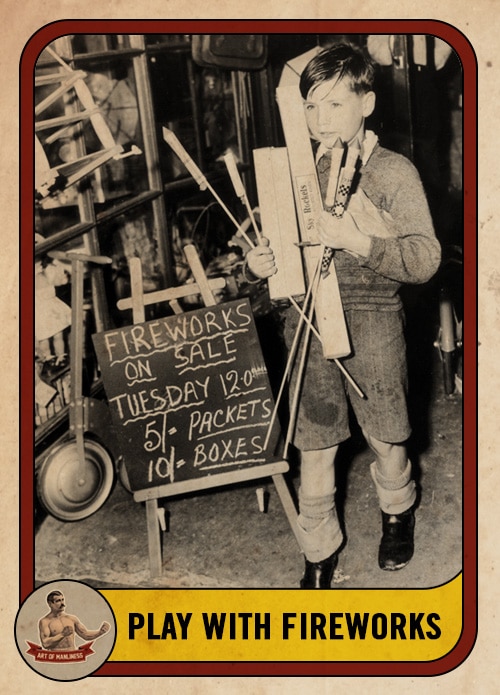

Playing with fireworks is not only a fun way to celebrate freedom, it teaches your kids how to responsibly handle fire and to have a healthy respect for exploding objects. Unfortunately, thanks to stringent fireworks laws and parents freaked out from viral stories of children losing eyeballs while lighting Roman candles, many kids today have never experienced the pure excitement and joy of igniting a fuse and waiting for the impending explosion.
Introduce your 3-5 year olds to the world of fireworks with “pop-pops” — those little paper-wrapped tadpole-like things you throw on the ground. They’re safe and the kids can have fun with them without injuring themselves or anybody else. You can also get them acquainted with sparklers. These preparatory “fireworks” offer a chance for children to learn general principles of safety: not to throw lit objects at others, touch people with a hot sparkler, handle a dud, etc.
When your kids hit age 6, you can start letting them light innocuous fireworks like snakes and smoke bombs. These don’t explode and will teach your kids how to light a fuse safely and to be aware of others as they use firecrackers.
By age 9 or 10, your kid should be ready to fire off pretty much anything you can find at a fireworks stand. You should continue to supervise their pyrotechnics until they’re teens, though.

Hammer a Nail
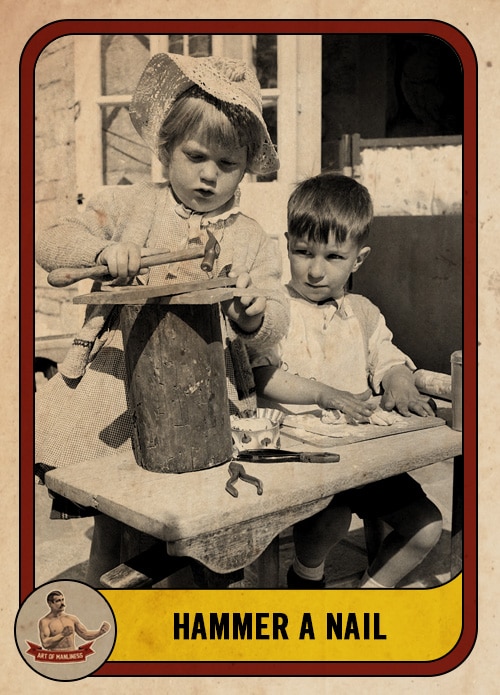

Hammering a nail is a basic life skill every person should master, but many parents don’t let their kids attempt this task out of fear of them smashing their fingers. Yes, little children are uncoordinated, but the only way they’ll ever become coordinated is if they gain hands-on experience in using tools. Start letting your 3-year-old practice hammering nails with a ball peen hammer. They’re lighter than the traditional claw variety and thus easier to handle. As your child’s dexterity and strength improve, upgrade him to a full-sized claw hammer, lay out a 2×4 and a box of nails, and let him go to town.
Talk about cheap entertainment.

Stick Your Arm Out a Car Window
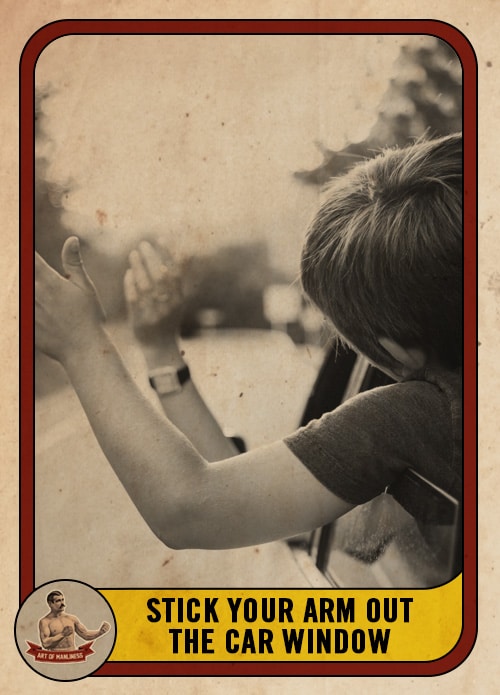

Sticking their arm out the window of a moving car and letting their hand ride the wind is a great way for kids to get acquainted with the basic principles of aerodynamics — it’s like a personal wind tunnel. Encourage your child to play with different positions  — moving the angle of her hand, closing and opening her fingers — to observe how these variations affect lift and drag.
Yes, an arm could be severed if it hit an object alongside the road, but objects are very, very rarely positioned close enough to cause a collision. And if they are, your kid’s got eyes, doesn’t she?

Jump Off a Cliff
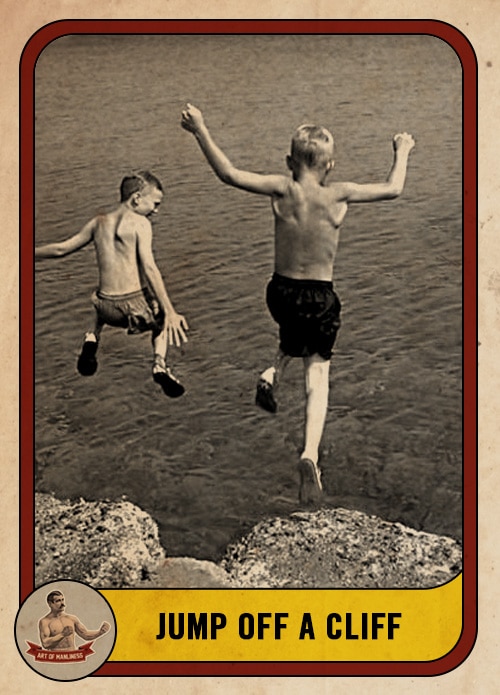

When you jump from a cliff 20 feet high, you’ll hit the water at 25 miles an hour. That’s enough force to do some serious bodily damage. But making such jumps, and even those which are higher, is certainly doable, even for small kids, as long as you take precautions and teach them proper technique.
Make sure the water is deep enough; for a jump of 20 feet, the water should be at least 8 feet deep. Then add 2 feet of water depth for every additional 10 feet of jump height. Ensure the landing spot is free from underwater obstacles like rocks. And teach your child to jump in a pencil dive: body straight, arms overhead, back slightly arched to avoid rotating forward. For little ones who aren’t strong swimmers, put them in a life jacket before they Geronimo! into the water.

Use a Bow and Arrow
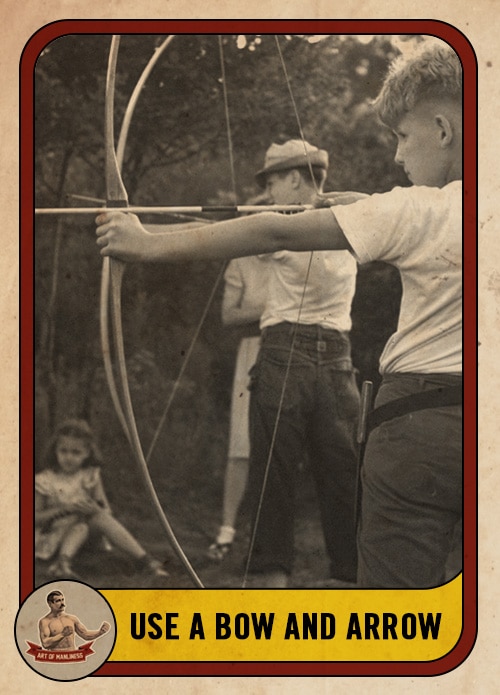

After watching a Robin Hood flick or reading The Hunger Games, your kids will probably want to shoot a bow and arrow. Instead of getting him (or her) the wimpy Nerf variety, let them use the real thing. A youth archery set can be found for less than $50, will provide hours of entertainment, and will teach your kids how to be responsible with potentially dangerous objects. They’ll also pick up skills like judging distance and how to aim.

Cook a Meal
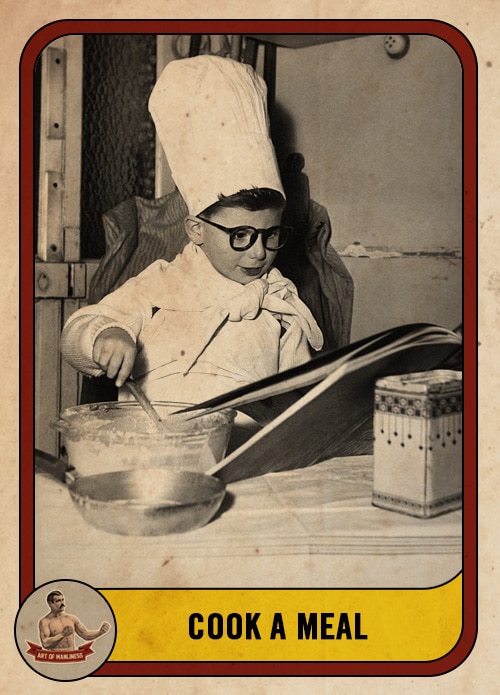

Cooking might not seem that dangerous, but once your kids start wanting to help make dinner, you begin noticing how many tasks prompt a “Whoa, be careful there!” response. Sharp knives, stove fire, and hot pans present hazards. I remember when I was five, I decided to nuke a bowl of milk by myself; when I took the bowl out of the microwave, I spilled its scalding hot contents all over my arm. At first I hid from my mom, but as a huge blister formed, I had to confess and get it tended to by a doctor.
Despite such potential mishaps, it’s worth not only letting your children assist you in the kitchen, but allowing them to try cooking on their own too. More so than any other activity on this list, it’ll teach them a valuable skill towards grown-up self-sufficiency.

Climb a Tree
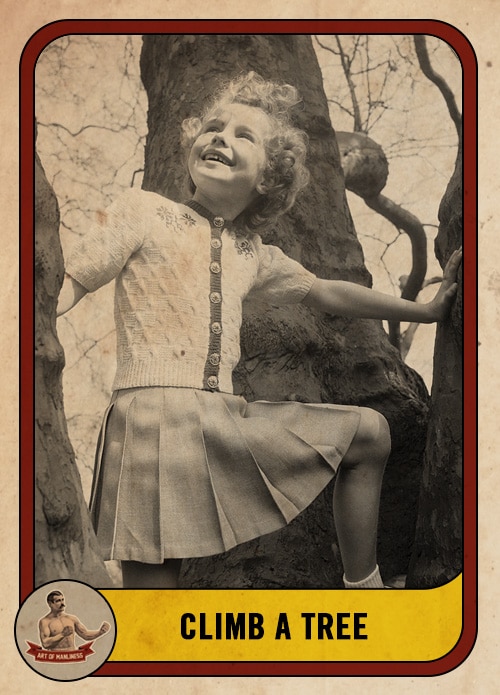

Few activities feel more liberating than climbing a tree. It’s thrilling to leave the ground and test your physical deftness, as well as your daring as you decide just how high up you’ll go. The air seems fresher among the branches. The most classic of classic childhood activities, hopefully tree climbing will continue on for another millennia.

Roughhouse
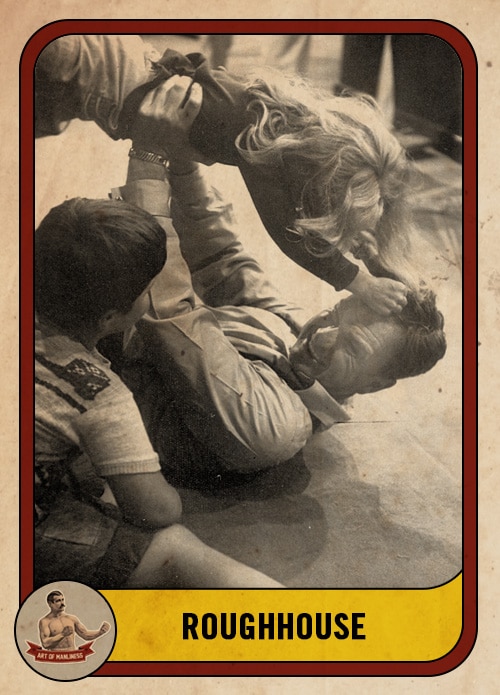

Roughhousing may just look like a primitive-level melee of potentially injury-causing wrestling and hair pulling, but it actually has a bunch of high-level benefits. Whether children are mixing it up with Dad, or with each other, research has shown that good old fashioned horseplay develops kids’ resilience, intelligence, and even empathy — it teaches them how to negotiate the dynamics of aggression, cooperation, and fair play. So suplex your children more often, and don’t break up the good natured battle royales they put on between themselves.

Go Sledding
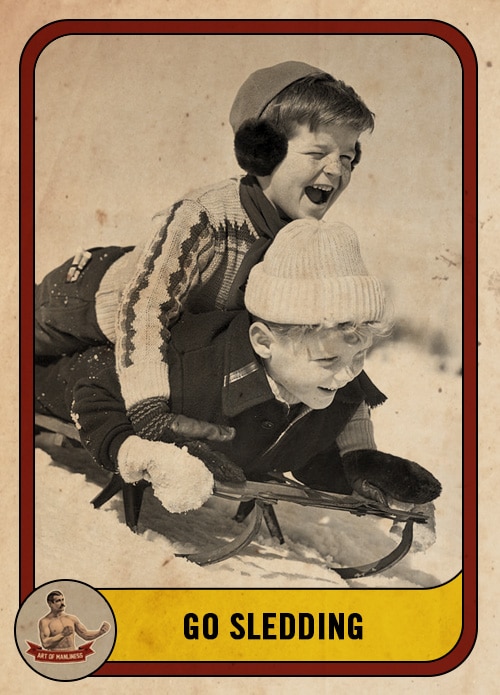

Yes, it’s hard to believe this needs to be mentioned — that sledding isn’t an intrinsic part of every childhood (at least for those who live in colder climes). But I’ve met an alarming number of kids who grew up where there was at least occasional snow, and yet never went sledding. It’s hard to know if this is because parents are worried about the danger of the activity, or are just too lazy to leave their toasty, climate-controlled home to take the kids to a local hill. Either way, while sledding invariably comes with some bumps and bruises, as well as environmental discomforts, there’s hardly a more fun and memorable childhood activity. Especially when mitten-molded snow ramps are involved.

Drive a Car
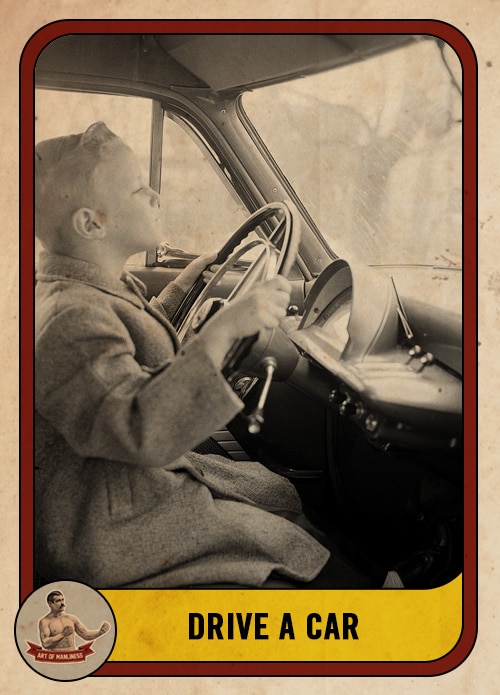

Not by themselves, mind you. Or on public streets, of course, which would be illegal. But in a big parking lot, largely free of obstacles, positioned on Dad’s lap, who can work the pedals and grab the steering wheel if needs be. From this position, a kid can experience the thrill of learning how to steer a 2-ton hunk of metal in relative safety.

Burn Things With a Magnifying Glass
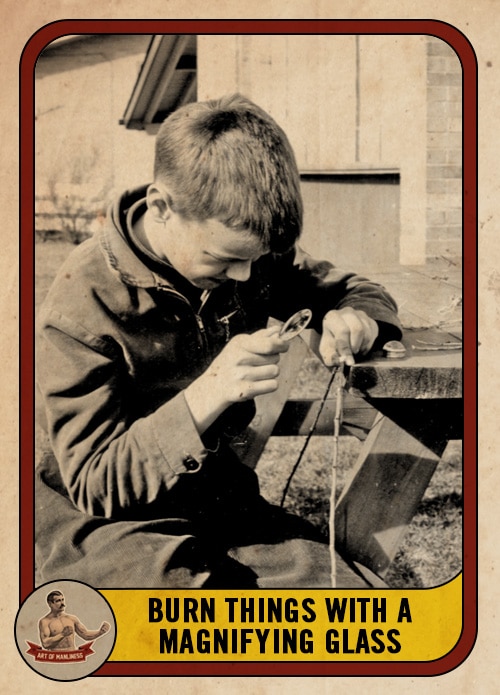

There are many fun and interesting ways to start a fire without matches, but using a magnifying glass is one of the most versatile. It provides you with a focused beam of heat that cannot only burn paper and leaves, but melt plastic. A kid can even use it to burn a symbol or his name into a piece of wood.

Walk or Ride a Bike to School
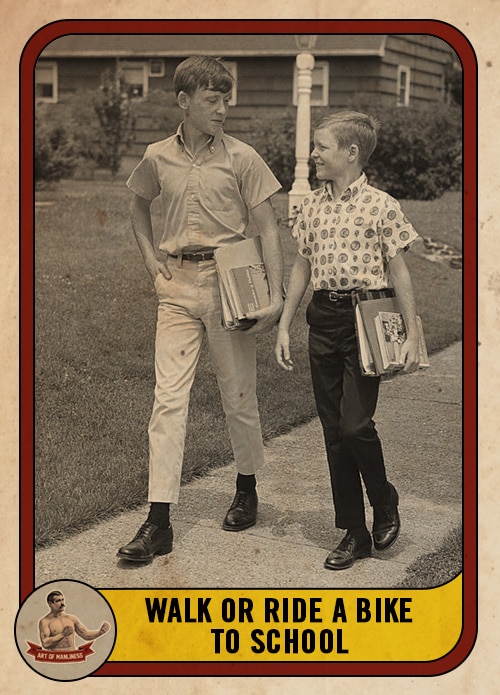

According to one study in the U.K., while 80% of third-graders were allowed to walk to school in 1971, that number had dropped to just 9% in 1990, and is even lower today. Parents started prohibiting their children from walking or riding their bike to and from school by themselves out of the fear that they might be kidnapped along the way. Yet abductions are exceedingly rare, and no more common now than they were several decades ago. Further, a child has a 40X greater risk of dying as a passenger in a car than being kidnapped or killed by a stranger.
If letting your kid walk to school (or even the bus stop) still fills you with dread, work up to it gradually: 1) Walk together with your child to school a few times, pointing out any dangers from traffic and reviewing how to deal with strangers, then 2) walk halfway to school with your child, watching her walk the rest of the way alone, and finally 3) let her walk all the way by herself, without you watching.

Shoot a Gun
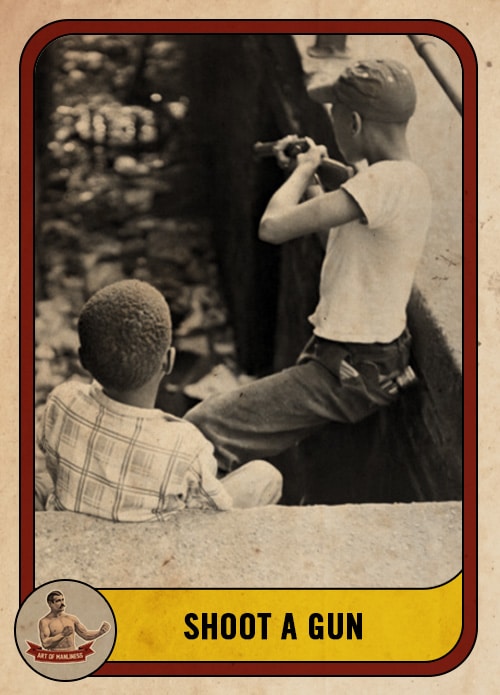

Guns and kids is an understandably sensitive topic, but we’d make the case that proactively teaching your kids how to safely use firearms is the best way to teach a healthy respect for them. When they’re 7 or so, introduce them to a pellet gun and begin teaching proper gun safety rules like keeping their finger off the trigger until they’re ready to shoot and treating every weapon as if it were loaded. Set up a a target (tin cans are fun) in your backyard and let them plink away while you watch. As they get a little older, they can tote around their BB gun by themselves. Don’t worry about them shooting their eye out!
When they reach about age 10 or 11, you can introduce them to a .22 caliber rifle or pistol. Again, this should be done under your supervision and you should reinforce good gun safety principles the entire time.

Stand on the Roof
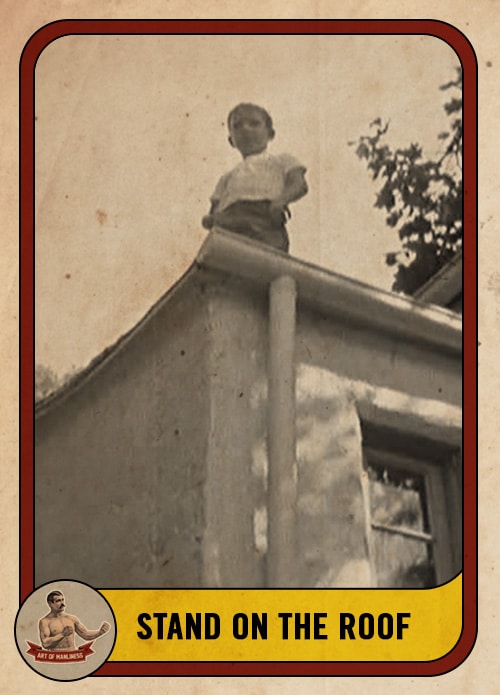

What kid hasn’t wanted to get a bird’s eye view of the neighborhood? Standing on the roof of your home is one of the more risky activities in this list, naturally, so supervise this vertical venture and take the necessary precautions: Only allow your child to attempt if your roof isn’t overly steep and is in good condition, without loose shingles and other potential hazards. Have your kid walk straight up and down the roof, standing with one foot on either side of its peak for stability, as they survey the landscape below.

Squash a Penny on a Railroad Track
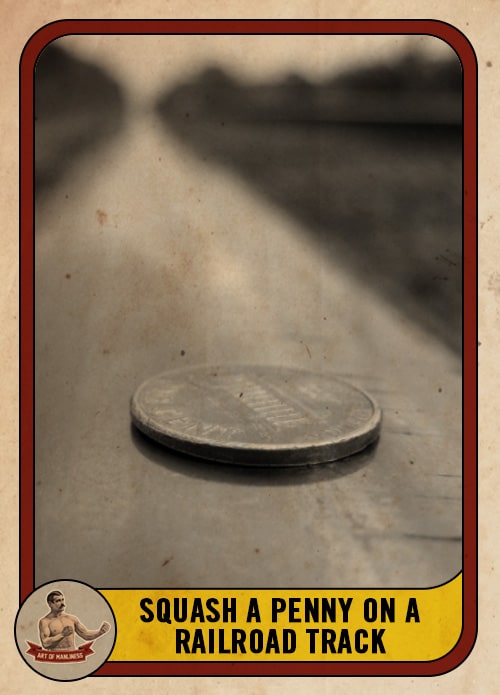

Kate did this once in Vermont as a kid. At the exact moment she placed the penny on the track, a car in an adjacent parking lot happened to honk its horn; thinking it was the sound of an oncoming train, she jumped 10 feet in the air. Her family still laughs about it.
You do want to stay aware as you put your penny on a railroad track to be sure a train isn’t coming. If you’re going to wait for the train to come by and smoosh your coin, you also want to stand back at least 30 feet, as it could hypothetically come flying off and hit you. You don’t have to wait around for the train, though. If you decide to come back in a few hours or the next day to see what became of your penny, mark the spot with a stick before you leave for easy finding later on.
There’s a myth that a penny can derail a train, but that’s not true. You don’t want to put anything larger than a penny on the track, though.

Sword Fight With Sticks
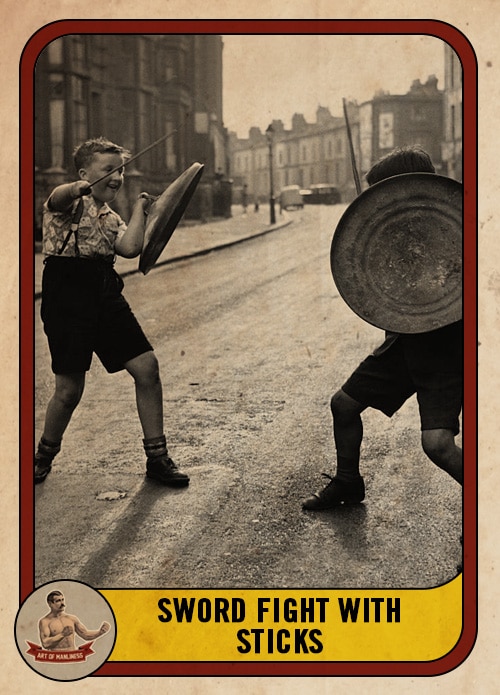

Parents are wary of anything involving sharp objects, sticks included. But letting your kid engage in some improvised swashbuckling is too fun an opportunity to pass up because of a negligible risk of injury.

Shoot a Slingshot
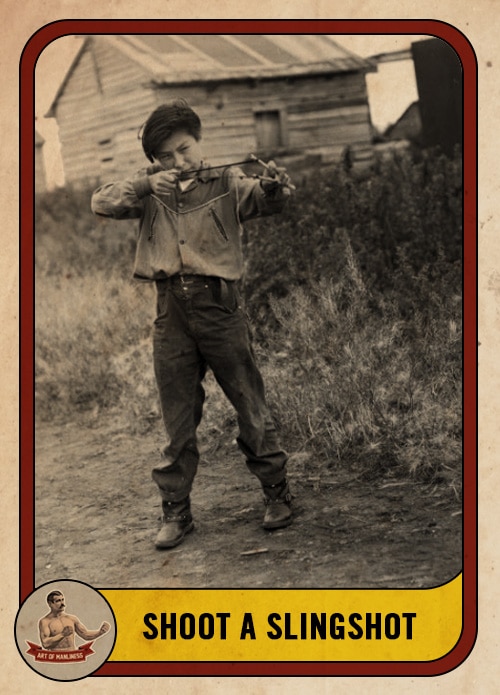

In a time not too long ago, the archetypical boy had a handmade slingshot dangling from the back of his pocket. Today, most boys have never touched one. Which is a shame because slingshots can provide hours of fun and they’re a great way to introduce firearm safety to your young ones (e.g., only point at what you plan on hitting).
Yes, you could just buy your kid a fancy manufactured slingshot on Amazon, but how about exposing them to even more positive danger by letting them make their own? (You can find instructions here.) They’ll learn how to handle a saw safely and get to practice some knife wielding skills to boot.

Explore a Construction Site
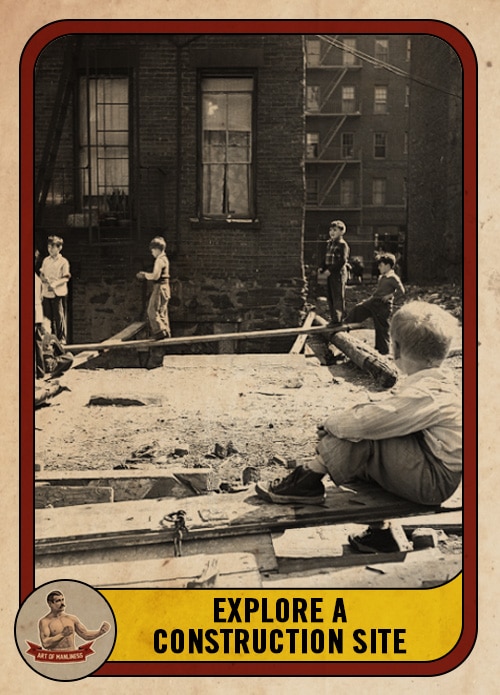

While I was growing up, the subdivision I lived in was still under construction, so there were always plenty of partially-built houses to explore. After the construction workers left for the day, my boyhood pals and I would cruise down the street on our bikes to check out their work and poke around the skeletal structures rising from the muddy lots. The ones that were the most fun to explore were the two-story houses. You’d have to climb up the railing-less, unfinished stairs and when you got to the top, you were able to walk to the edge of the second story’s framing and throw stuff down on your buds.
It’s a hard way to beat spending an afternoon.

Use a Pocket Knife
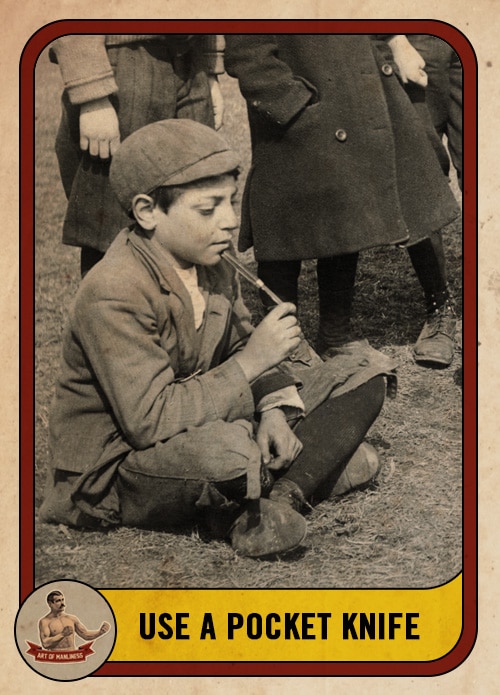

In Home Grown, author and homesteader Ben Hewitt describes how he gave his sons their first pocket knives at age four. Hewitt admits that he was worried that they would constantly slice open their pudgy toddler fingers with these sharp implements, but much to his surprise, his young boys rarely injured themselves. “There was something in the seriousness of the blade and the responsibility granted that transformed our son[s],” he notes. By giving them the responsibility of using a knife safely, Hewitt’s kids became responsible.
While you don’t have to give your toddler a pocket knife, consider letting them handle this trusty, handy tool sooner rather than later. It’s the only way they’ll learn how to handle sharp things safely and deftly, and doing so will open up new activities to them — from whittling to mumbley peg.

Climb a Rope
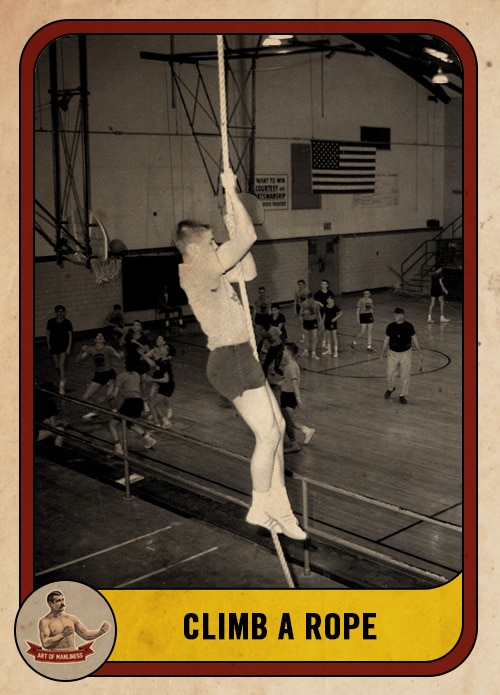

Many schools have banned certain physical activities from recess and P.E. class due to their being too “dangerous.” Football, dodgeball, tag…even all balls of any kind and running itself have gotten the boot in some places. Ropes have also been removed from many school gyms, due to the perceived risk of a child falling from the top — and probably also because of the risk of injury to the self-esteem of the kid who can’t even make it halfway up.
Climbing is one of the crucial physical skills everyone should develop, however, so if schools don’t provide the opportunity for its practice, then parents ought to, perhaps putting up a rope of their own in the backyard.

Ride Your Bike Off a Ramp
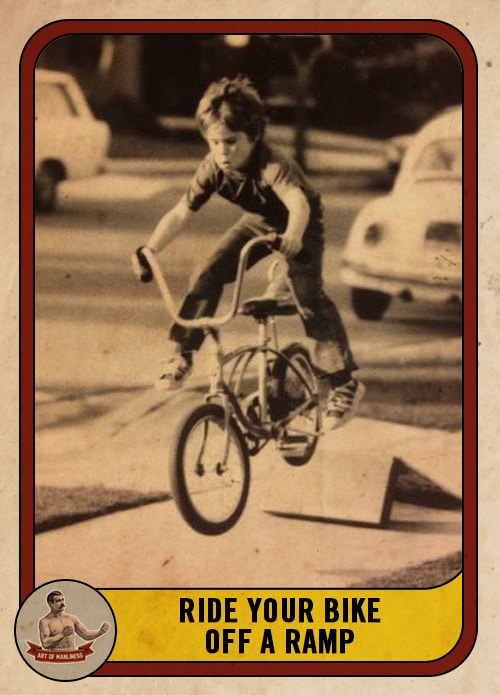

As a kid, taking your bike off a ramp is the closest you’ll get to flying without being on a plane. Back when I was a boy, my neighborhood posse and I built a big ol’ ramp out of a pile of dirt. We’d spend hours flying off that thing. For some reason, my favorite thing was to let go of my bike in midair and watch it continue to fly while I hit the dirt.
Building and riding off ramps will teach your kids some basic physics and even some construction skills. They’ll also learn, just as Napoleon Dynamite did, that if you’re not careful, taking your bike off sweet jumps can be hazardous to your junk.

Make a Fire
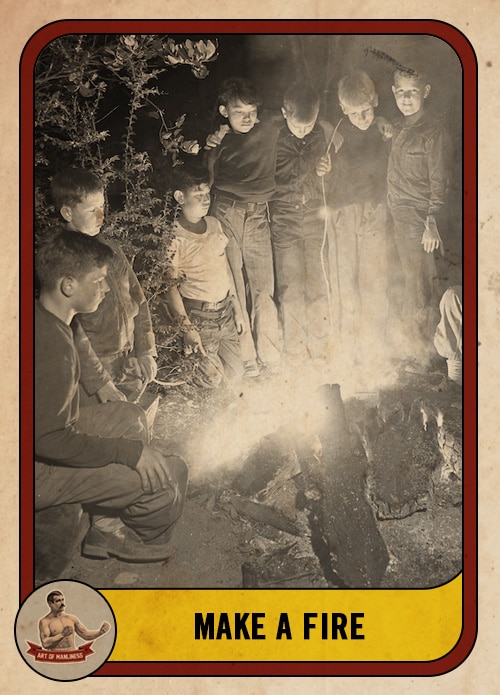

There’s a primal connection between man and fire. Nurture that connection with your kids while they’re young. Let them play with matches and light candles when they’re pre-school age (with your supervision). They’ll learn that fire indeed burns, but from a flame so small it won’t hurt too much if it glances their skin. When they get to be about 8 or 9, let them build a fire all by themselves (still with your supervision, of course).

Explore a Tunnel
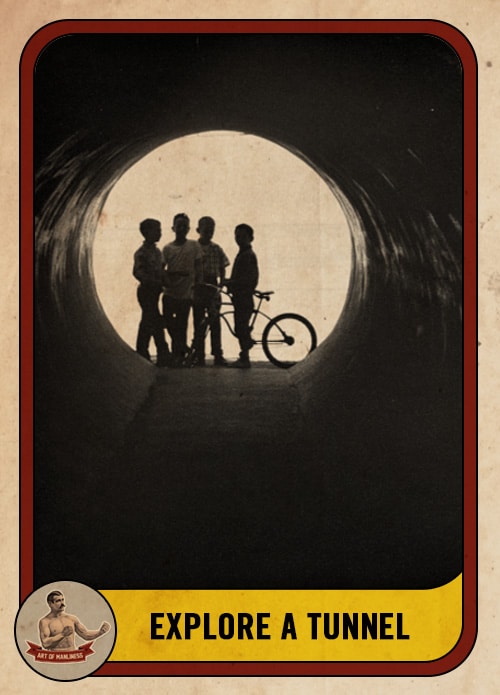

When my father-in-law was a boy in the early 1960s, the post-WWII housing boom was still in full swing, and a huge neighborhood was being built about a mile away from his home. Once the land was cleared, workers laid out gigantic sewer pipes so high he could walk through them without bending down, and so long they became pitch black once you advanced several yards from the openings. Though exploring the tunnels was a favorite activity of the neighborhood boys, my father-in-law recalls being a little terrified by these expeditions. Yet they still became an indelible memory!
Modern explorers should avoid tunnels filled with sewage and unsavory critters or humans, stay away from storm drains after rain, wear gloves, and bring along a flashlight — as well as a heaping helping of courage!
_____________
Magnifying glass photo courtesy of George’s Workshop
Penny photo taken by Eli Duke

Friday, October 31, 2014

Chivalry....and the modern age...

This is an unusual post, I will stay away from politics except to say if you havn't voted or decided yet...then you are part of the problem.  Be part of the solution.  I decided to do a post on chivalry, what meant and the lack of it now.   This post has been eating at me for a long time and I finally decided to roll with it.

     I have been told that I am a throwback to a bygone age,my mannerism and vocabulary are archiac from what I was told.   I am a firm believer in manners, I like to quote "Lazarus Long" a character that Robert Heinlein created.  Basically Lazarus Long was an immortal and he would keep notes of his experiences and observations.  
    "Moving parts in rubbing contact require lubrication to avoid excessive wear. Honorifics and formal politeness provide lubrication where people rub together. Often the very young, the untraveled, the naive, the unsophisticated deplore these formalities as “empty,” “meaningless,” or “dishonest,” and scorn to use them. No matter how “pure” their motives, they thereby throw sand into machinery that does not work too well at best."

     I will use other quotes from Lazarus here and there to make a point, Robert Heinlein  besides being a prolific writer was prescient also, but I digress.  The point I was making and he was with that quote is basically manners are the social lubricant for interactions with other people.  I have told my son more than once, to be nice to people and remember your manners, you get more accomplished with a kind word than being a jerk.  
     The Act of Chivalry as practiced long ago is no longer there, It used to be stressed as part of our culture, the culture of the West.  But it is no longer practiced because people out there believe that all cultures are equal and if you display chivalrous manners, you are denigrating other cultures.....Are you kidding?   The same people that denigrate Western Civilization, are the cultural marxist and their fellow travelers that use what is called "Constructive criticism" to challenge the beliefs of a culture.  This is from the Frankfurt School of Neo Marxist social theory.  Once you have forced a society to question it's long held belief system, you can then replace it with one that is more conducive to the goals of the marxist.  The Marxist believe in social and economic equality...the end results...Having one culture being superior to the other cultures kinda upsets the social applecart.  The lack of manners that is being displayed today is a result of this.  Remember back in the Victorian era, the manners were expected of all , even the "low class people" and if somebody gave you an affront, you were expected to deal with it yourself.  Usually with a duel or fisticuffs I believe it was called.  Even when I was in school, if somebody was bullying you , you either sucked it up or you beat the bully.  Now they want you to go tell an authority figure instead...People are afraid to do anything unless they have the power of the state behind them.  People are afraid to stand on their own two feet.  That is what the social reconstruction has wrought.
     This ties in with the decline of Western civilization.  

     "The two highest achievements of the human mind are the twin concepts of “loyalty” and “duty.” Whenever these twin concepts fall into disrepute--get out of there fast. You may possibly save yourself, but it is too late to save that society. It is doomed. "

Another quote from Lazarus, Remember that the idea of duty and loyalty are denigrated in today's society as being "outmoded" and old fashioned. "  Duty is very hard to describe, Robert E. Lee had commented that " Duty is sublime and the harshest of mistresses".  Duty is difficult to describe, but duty is basically your obligation that you place on yourself as what you owe to society by your standards.  Duty is part of a person's personal code of honor and integrity.  Words that you don't see much of anymore.  People do " what feels good", not thinking that they are doing is contributing to the decline of Western Civilization.  Loyalty is another word that is not used anymore except to yourself.  People nowadays are taught by the decline of societal norms that  it is OK to "let it all hang out" where in the past such behavior is frowned upon.  If you did something that was frowned upon by society, you got the message pretty fast, this contributed to a code of conduct or behavior that was expected of all gentlemen.  Now it is OK to be a thug.  Again this is by design, if a society cannot remember its past or the moral upbringing, than they will accept anything that the statist put out there.

"All societies are based on rules to protect pregnant women and young children. All else is surplus age, excrescence, adornment, luxury or folly which can--and must--be dumped in emergency to preserve this prime function. As racial survival is the only universal morality, no other basic is possible. Attempts to formulate a “perfect society” on any foundation other than “women and children first!” is not only witless, it is automatically genocidal. Nevertheless, starry-eyed idealists (all of them male) have tried endlessly--and no doubt will keep on trying"

     Another quote from Lazarus,   It does harken back to the Victorian age of "Women and Children First".  Because in that time, they knew that it was the job of all men of virtue to ensure that the women and children survived, it was a way to guarantee their culture.  It also taught a person to put the needs of the society above his needs.  I always liked the phrase that the veteran at one time handed the government a blank check that would include payment including life if necessary.  people that are willing to out the needs of the country above their own are a rare breed,
     I remembered when I was in North Georgia College, the Military college along with VMI, the Citadel, and Norwich.  There was a painting on the wall that discussed  the rules of Gentlemen.  

    
1. Be gentle to the fairer sex, it's in the name.
2. Dress well no matter the occasion.
3. Pride is dangerous, be careful.
4. Be humble, be grateful
5. Opening the door or giving up a seat for a lady isn't up
for discussion.
6. Work hard, that is if you want to own anything worth having
7. Starting / instigating a fight is for school boys, but men obtain the power to end one.
8. Ignorance isn't bliss, knowledge is power.
9. Suit up (make sure they're tailored to fit)
10. Confidence is a gentleman's trademark.
11. Comfort zones are for the weak, men aren't weak.
12. Foul language is for the less educated. Make eye contact and mean business. 
13. Make Eye contact and mean business.
14. Lower your standards for no one.
15. Being romantic doesn't make you a woman.
16. Stay groomed.
17. Admit when you're wrong
18. Always make the first move, you're the MAN
19. Handwritten "Thank you" cards aren't outdated. Use them.
20. Chivalry is not dead, there are just too many boys.
21. It is said you can tell a lot about a man through his handshake, so make it strong and firm.
22. Leave her breathless
23. Judge no one, just improve yourself.
24. Speak your mind, don't hesitate.
25. Offer your arm to a lady while walking, they'll feel secure.
26. You're the man, you pay.
27. Women love compliments, gentlemen provide them.
28. Never wear your hat indoors, it's disrespectful.
29. Make sure everyone has their plate before you start eating.
30. We don't always have to be the center of attention, but we are always noticed. It is our      signature   as gentlemen to come, make a statement, leave, and be remembered.
31.  Never discuss the virtues of your women with other gentleman, it is crass and beneath you.

  A gentleman is a successor of the knights that were sworn to defend the weak against injustice , this was a noble endeavor, it showed what it took to be the best of us, what made us more than mammals interested in the here and now.  A Knight was supposed to represent the best of their society by words and deeds.

   I don't know what will it take to bring back the old norms, it will take generations to undue the damage done to Western civilization by the Marxist and their fellow travelers.  I don't know if we as a society have the mental fortitude to make the proper call.  I almost think of the 40 years in the desert like the Israelite did after leaving Egypt until all that remembered the bondage was no longer there and the ones that were there grew up in freedom and adversity.