Webster

The Constitution was made to guard the people against the dangers of good intentions." --American Statesman Daniel Webster (1782-1852)


Showing posts with label Historical movie.. Show all posts

Monday, February 26, 2024

Watching a WWII movie and it triggered a memory,(No I ain't that old)

  I was watching a movie last night(Sunday) called a "Bridge Too Far" one of my favorite movies along with "Midway", I liked the 1976 version and Yes I even liked the 2019 version, but I digress and they were talking about a "Bailey Bridge" and I remembered doing a blogpost so I rustled around and found it.  I also added the soundtrack because I until recently did "Monday Music" and yes I will bring back.


  I considered a very accurate telling of a battle told in a movie format.  It was neat seeing all these big name movie stars in the movie and I was living in Europe during the time this movie was filmed, I could relate to what I had seen on the screen.  To me this movie was underrated and next to the film "Midway" is one of my favorite WWII movies.

The film tells the story of the failure of Operation Market Garden during World War II. The operation was intended to allow the Allies to break through German lines and seize several bridges in the occupied Netherlands, including one at Arnhem, with the main objective of outflanking German defenses in order to end the war by Christmas of 1944.
The name for the film comes from an unconfirmed comment attributed to British Lieutenant-General Frederick Browning, deputy commander of the First Allied Airborne Army, who told Field Marshal Bernard Montgomery, the operation's architect, before the operation: "I think we may be going a bridge too far", in reference to the intention of seizing the Arnhem bridgehead over the Rhine river.
The ensemble cast includes Dirk BogardeJames CaanMichael CaineSean ConneryEdward FoxElliott GouldGene HackmanAnthony HopkinsHardy KrügerLaurence OlivierRyan O'NealRobert RedfordMaximilian Schell and Liv Ullmann. The music was scored by John Addison, who had served in the British XXX Corps during Market Garden.


Building the Bailey Bridge over the River Son
 This actually showed one being build.


Picture an Allied tank commander in Europe, during Autumn, 1944. Advancing for days, destroying the German resistance. Nothing has been able to stop the invasion; except a blown bridge. Luckily, somewhere back in the supply columns which keep the army going, is a Bailey Bridge.
Donald Bailey, the designer of the Bailey Bridge, was born in Rotherham, in 1901. He received his BA in Engineering from the University of Sheffield in 1923. After graduating, he helped design railway bridges in the 1930s, but by 1940 he was working for the War Department.
In Christchurch, Southern England he and a group of other engineers, comprised MEXE (Military Experimental Establishment). They were designing and testing new engineering equipment for the British Army.

The Army at the time was facing a dilemma. They knew they would be required to fight in Europe, with its various canals, rivers, streams, and lakes. Any one of these could stop an army advancing, and they needed a foolproof way to cross them.
Collapsible and portable bridges had been around for hundreds of years, in various forms. By 1940, however, British weapons were outstripping engineering equipment.
Their tanks weighed more than 40 tons, but the heaviest portable bridge could hold only 26 tons. The Allies would be bogged down and delayed as engineers worked to repair existing bridges or build more permanent ones.
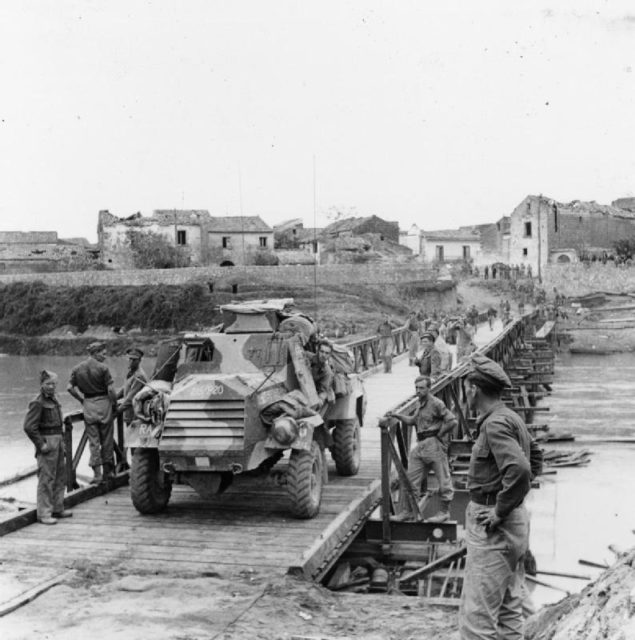

A Bailey Bridge like this had to be constructed over the Son. This took precious time, but was eventually able to allow XXX Corps to continue their advance.
A Bailey Bridge like this had to be contructed to cross rivers. This took precious time but was eventually able to allow XXX Corps to continue their advance.


Donald Bailey was being driven back to his headquarters building after a failed bridge test. The world seemed to be collapsing around England, and everything they tried seemed to fail. The War Department was desperate for a reliable bridge. Suddenly, Bailey had an idea. He began sketching it out on the back of an envelope.


Engineers slide a Bailey Bridge section into place, almost every part of the bridge construction was done by hand. The only time heavy equipment was used was to lift pieces into high places. Image Source:
Engineers slide a Bailey Bridge section into place, almost every part of the bridge construction was done by hand. The only time heavy equipment was used was to lift pieces into high places.

It was an amazingly simple design. Prefabricated panels each made up of internal trusses. These were joined by pegs, with large beams running across the bridge’s width. This gave them not only the rigidity needed to span a large area, but they could be assembled with simple tools: sledgehammers, rollers, and wrenches.
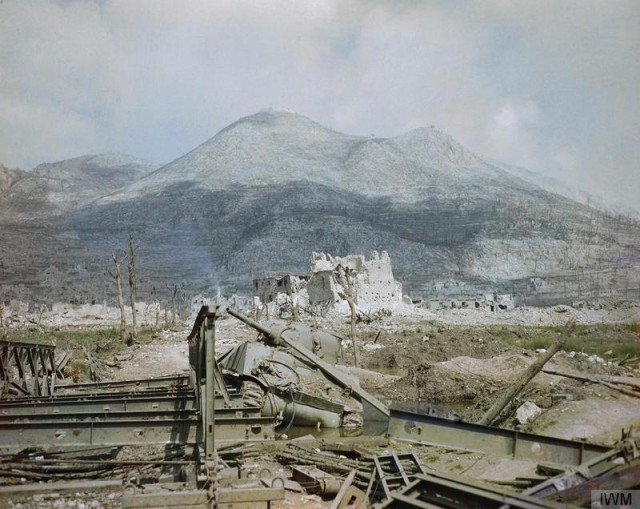


A destroyed Bailey Bridge and tank in Italy. While not indestructible, the bridges were easily replaced and cheap. They proved sturdy enough to stand up to almost any stress, but quick and cheap enough to be disposable.
A destroyed Bailey Bridge and Sherman tank in Italy. While not indestructible, the bridges were easily replaced and cheap. They proved sturdy enough to stand up to almost any stress but quick and cheap enough to be disposable.

Equally important, they were straightforward and cheap to produce. Almost any industrial fabricator could make the panels and pieces necessary, and mass production was a definite possibility. The Bailey Bridge had been born.
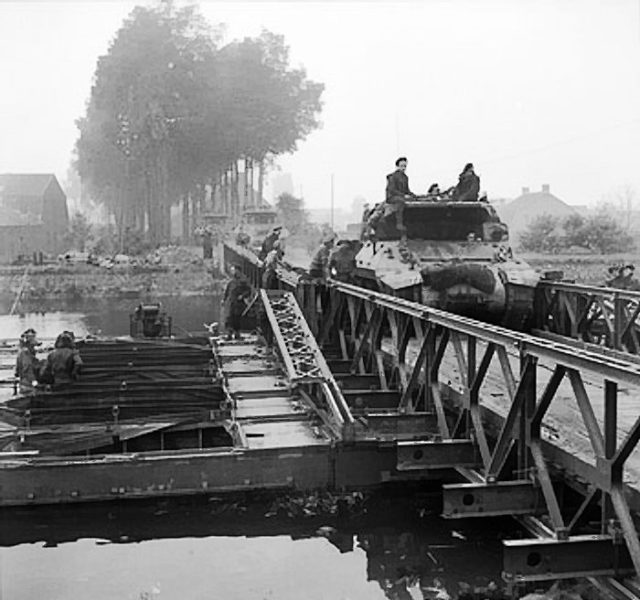


An M10 tank destroyer crosses the bailey bridge near Son.
An M10 tank destroyer crosses the Bailey Bridge.

In the battlefield these bridges proved indispensable. Field Marshal Montgomery said they were necessary to the speed of the Allied advance during the war. In Italy and Sicily, over 55 miles of bridges were built, spanning everything from stream beds, to the 1,126 ft. Bridge over the Sangro River. The longest, which spanned the Chindwin River in Burma, was 1,154 ft.
After D-day, in France, the low countries, and Germany, Bailey Bridges were consistently used to replace many of the bridges destroyed by the retreating Germans. Famously, the Son bridge was replaced with one during Operation Market Garden, in September 1944; eventually allowing Allied armor to press forward and help seize Nijmegen.
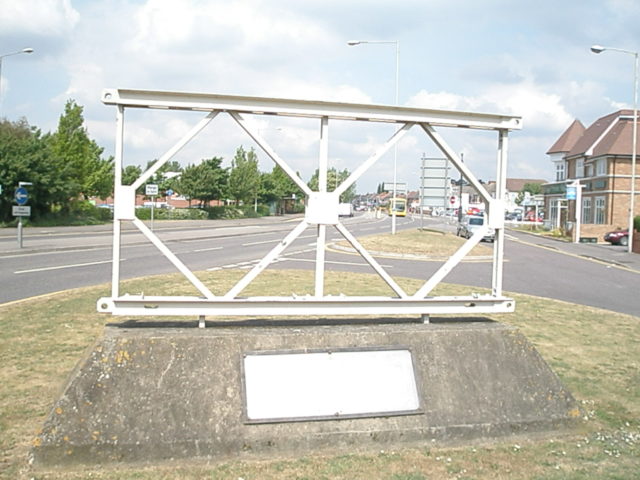


A bailey section in a memorial in Christchurch. The local proving grounds in the Stanpit Marshes saw the development of much of the engineering equipment of WW2.
A Bailey section in a memorial in Christchurch. The local Stanpit Marshes saw the development of much of the engineering equipment of WW2.

Today Bailey style bridges are a fixture of almost any modern military. The materials have been upgraded, but the basic design, prefabricated, interlocking sections which can be put together a myriad of ways, has not changed.
Their use has expanded to the civilian life, where they are often used for disaster relief and are permanent fixtures in some areas. Bailey might not be the best-known hero from World War 2, but his contribution to the war effort was immense, and his memory, and legacy, can not be forgotten.

Thursday, September 10, 2020

Raid on Entebbe, The real event and the Movie.


Air France Airbus 300B-4-203


Uncertainty filled the hearts of 248 passengers of an Air France plane when the aircraft was commandeered by terrorists on 27 June 1976.  The hijackers were demanding the release of Palestinian and affiliate militants that were imprisoned in Israel.
One of these was Koza Okamoto, a Japanese Red Army (JRA) member recruited by the Popular Front for the Liberation of Palestine-External Operations. He was part of the three-man attack on Lod Airport popularly known as the Lod Airport Massacre. The hijackers also demanded the release of 13 other prisoners held in four different countries.
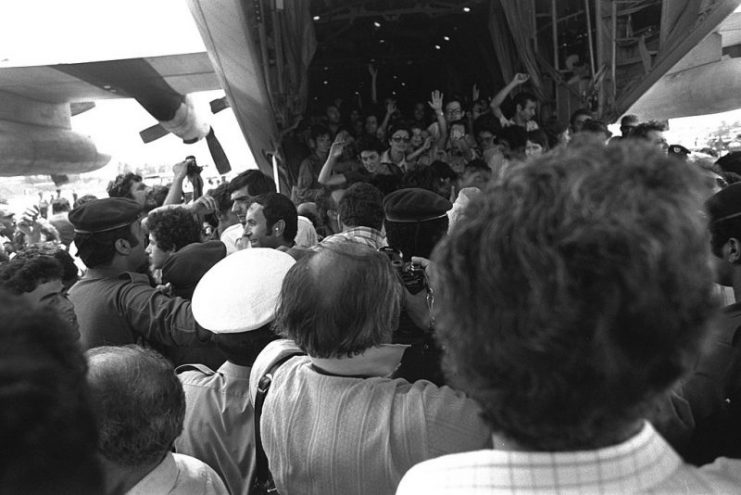
Rescued Air France passengers. Photo: Government Press Office (Israel) / CC BY-SA 3.0
Rescued Air France passengers. 
The flight which took off from Tel Aviv and originally Paris bound was hijacked after a stopover at Athens. Two Palestinian and two German hijackers were reported to have boarded the plane alongside 54 other passengers.
Of the hijackers, one was a female; Brigitte Kuhlmann, one of the founding members of the West German left-wing military group, Revolutionary Cells. The hijackers totaled 7 in number.
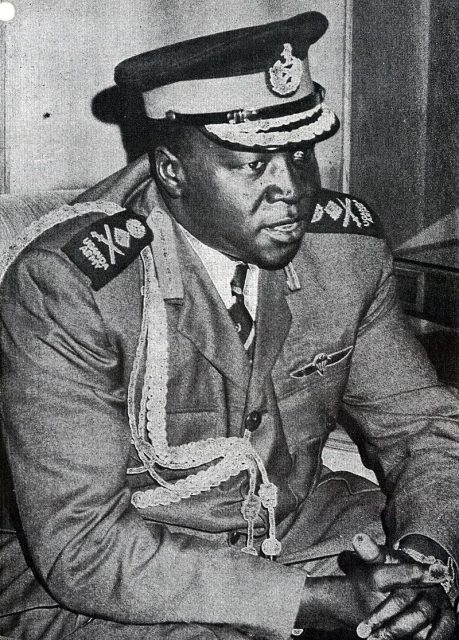
Idi Amin -Archives New Zealand CC BY 2.0
Idi Amin 
The plane was redirected and landed in Benghazi, Libya, where it was refueled and thereafter taken to Uganda’s Entebbe Airport, where they made their landing on June 28.
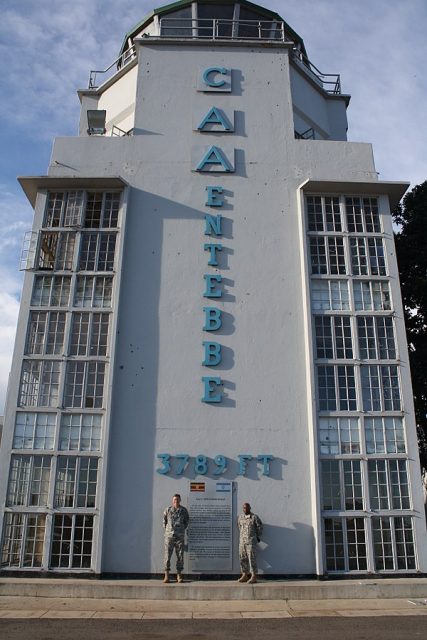
The old terminal building of the Entebbe International Airport.
The old terminal building of the Entebbe International Airport
The passengers were separated into two categories; Israeli and non-Israeli Jews in one category and other passengers, mainly French, in the second. The members of the second group were released over the next two days and flown to Paris, their original destination. The Israeli captives, meanwhile, were held for a week before special Israeli forces raided and successfully rescued them.
The decision to go ahead with the rescue mission was made on the eve of 3 July after the Israeli authorities failed to find a political solution to the crisis at hand. It was now considered, without dispute, that the way forward was through covert ops.
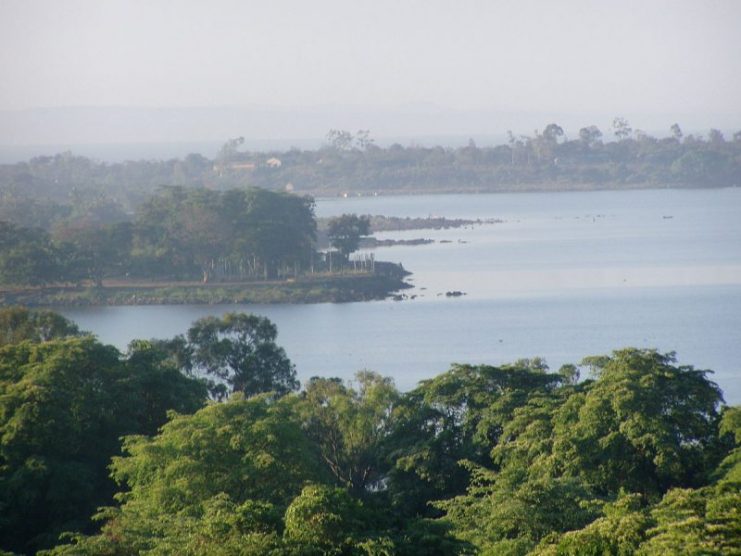
The hostages were held at an abandoned airport on the edge of the Lake Victoria and the Israelis initially considered dropping their elite commando unit Sayeret Matkal into the lake from where they would ride off in boats and find their way into the airport. However, a report of the presence of crocodiles in the lake meant the plan was changed.
Lake VictoriaMandiafrika / CC BY-SA 3.0
Lake Victoria
The hijackers sealed their fate with the decision to release other passengers as the information provided from extensive interrogations with the released hostages by Israeli intelligence yielded good results. They were able to determine the number of weapons in the possession of the hijackers as well as other information that helped build intelligence.
The Israeli Defense Forces (IDF) acted on the information that was relayed to them by Israeli intelligence, the Mossad, which proved to be accurate. The number of hijackers, the precise location of the hostages in the building, and the expected level of resistance from the Ugandan soldiers who supported the hijackers were provided so the 100-man unit would not be flying into enemy territory blind.
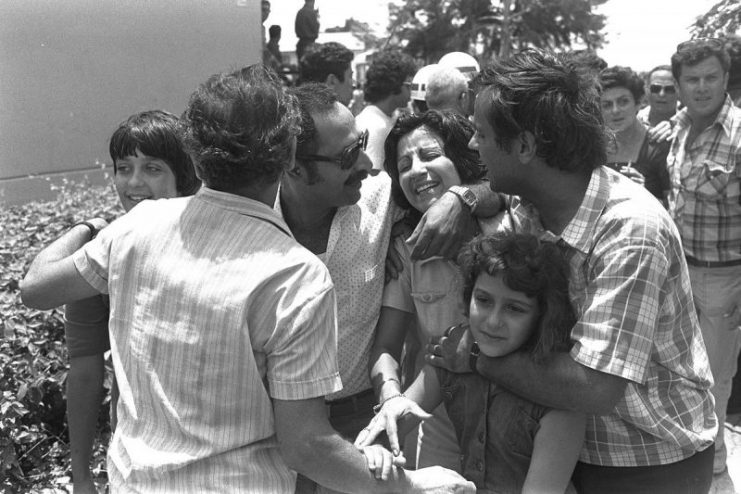
A reunion of a hijack victim and family. Photo: Government Press Office (Israel) / CC BY-SA 3.0
A reunion of a hijack victim and family.
The team was comprised of three groups made up from the Sarayet Matkal, Israeli paratroopers, and men from the Golani infantry brigade. The Sarayat Matkal commandos were tasked with two elements of the operation: assaulting the terminal and rescuing the hostages, and eliminating the MiG fighter planes on the ground at the airstrip and holding off any hostilities until the hostages were and homebound.
The paratroopers were tasked with securing the airport and its runway as well as securing and fuelling the Israeli aircraft in Entebbe. The Golani force, led by Col. Uri Sagi, was charged with securing a Lockheed C-130 Hercules aircraft to be used to carry out the evacuation of the hostages, getting it as close to the terminal as possible while acting as backup in case of needed support.
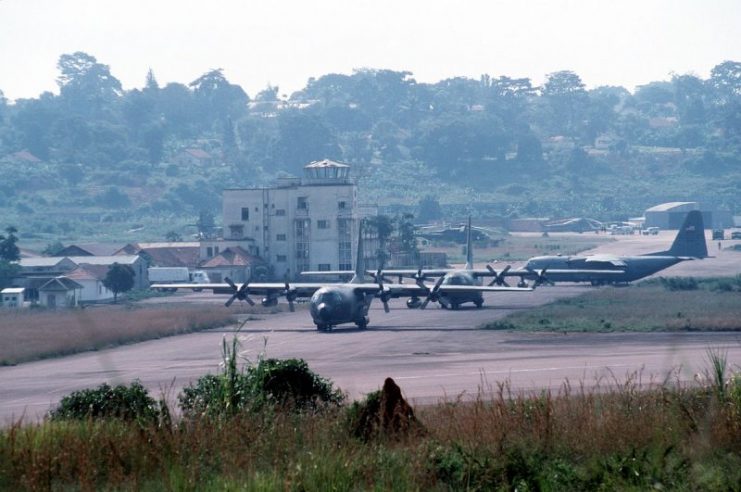
Three USAF C-130 Hercules aircraft are parked in front of the empty “Raid on Entebbe” terminal. The building is still pockmarked from the infamous 1976 Israeli rescue operations.
With a detailed plan in place and under a very tight schedule, the rescue operation task force of 4 Israeli Hercules C-130s took off from the town of Sharm El Sheikh in Egypt and flew over the Red Sea towards Djibouti.  It then made its way across Somalia and towards Nairobi in Kenya, where a Boeing 707 jet carrying medical supplies landed. The others planes proceeded to Lake Victoria before landing.

The commandos set foot on Entebbe soil at about 11:00 PM Israeli Time. They then proceeded in a convoy of vehicles intended to look like that of President Idi Amin of Uganda in order to avoid detection. However, they were halted by Ugandan soldiers posted at the checkpoints who were not so easily deceived; shots from silenced pistols left the soldiers wounded but unsuppressed gunfire from one of the Israeli commandos announced the presence of gun activity and the team hastily approached the terminal in order to their plan.
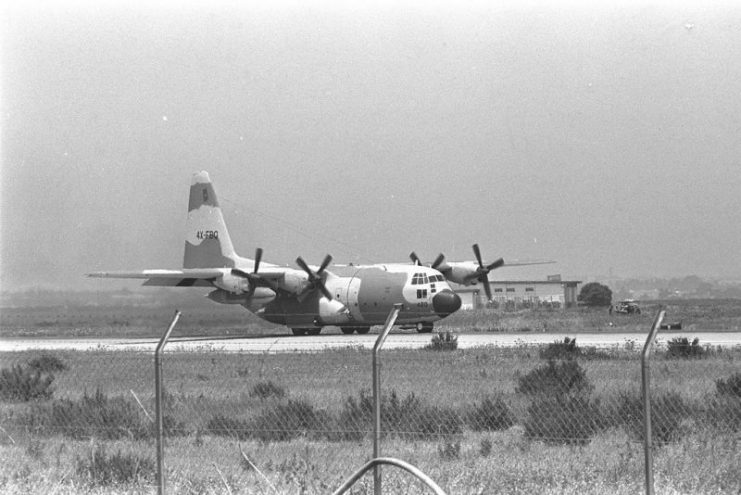
One of the Lockheed C-130 Hercules transport planes lands at Ben-Gurion Airport carrying hijacked Air France passengers rescued in the IDF Operation Entebbe. Photo: Photo: Government Press Office (Israel) / CC BY-SA 3.0
One of the Lockheed C-130 Hercules transport planes lands at Ben-Gurion Airport carrying hijacked Air France passengers rescued in the IDF Operation Entebbe.
The rescue team abandoned their Land Rovers and made their way into the building, telling people to stay on the ground through a megaphone both in English and Hebrew. Some people panicked at hearing the voice of the rescuers and ignored the previous warning to stay down. The commandos mistook these for the hijackers and fired, killing two of the hostages.

Rescued Air France passengers. Photo: Government Press Office (Israel) / CC BY-SA 3.0
Rescued Air France passengers.
One of the hijackers, the German, Wilfried, was gunned down in the place where the hostages were being kept.  He was the only hijacker found there and the Israeli operatives inquired about the location of the remaining hijackers from the hostages, who, with a show of fingers, pointed them in the direction of a room. The Israeli soldiers threw in grenades first, after which they went in and shot three more hijackers.
Upon concluding their business, the commandos lay waste to the Ugandan MiG fighter jets in the area and conducted a sweep of the airfield before departure but as fate would have it, not all of the Israeli soldiers would leave the airport alive that day, and in a series of back and forth gunfire between the departing commandos and Ugandan hostiles, Lt. Col. Yonatan Netanyahu, the commanding officer of the Israeli assault team, was shot and killed.
Some of the other commandos were also wounded. The Ugandan who shot Yonathan was killed in the return fire.
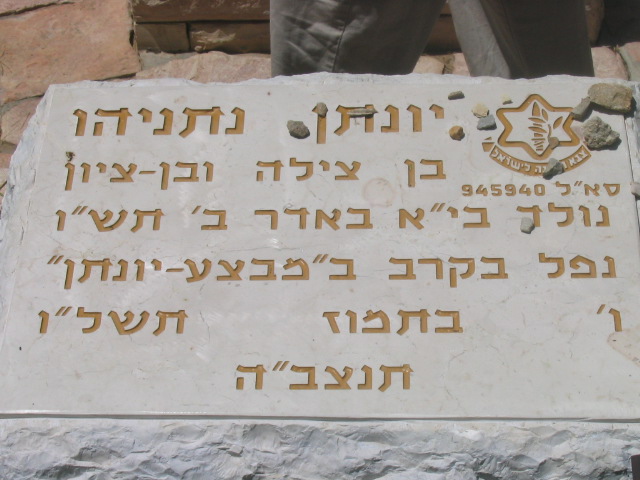
Netanyahu’s gravestone.
The operation, which lasted about 55 minutes, saw the deaths of the 7 hijackers along with 45 Ugandan soldiers, one of whom was reported to be the president’s cousin, and 11 Ugandan MiG fighter jets were destroyed. Of the 106 hostages that were held, the raid recorded the successful rescue of 102 hostages – 3 were killed during the operation.
Plaque at Entebbe Airport Terminal present day
One of the hostages, Dora Bloch, hospitalized at a Ugandan hospital after reportedly choking on a chicken bone was left behind and eventually killed by Ugandan soldiers along with her attending doctors and nurses under the orders of Idi Amin. and it was believed that she was eaten by him for he practiced cannibalism.  My Grand mother who was German called him "MenchenFresser".  
Jonathan Netanyahu – Brother of Benjamin Netanyahu.
In honor of Yonathan Netanyahu, the commander who was killed in action that day, the operation is sometimes referred to as Operation Jonathan. And in September 1976, the Jonathan Institute was founded by Yonathan’s brother, Benjamin Netanyahu, to sponsor terrorism-related international conferences.

As most of this film was shot at the Stockton Airport in California, it's very obvious that the production had the assistance of the California National Guard that has a facility there. The C-130's are all National Guard aircraft. their camouflage being very different from that of Israel. All of the vehicles were of national guard origin. The Ford M151A1 "jeeps" (mutts) were then in use in active military and national guard. In the film both the Israelis and Ugandans were driving them. When the Ugandan reinforcements arrive, they're driving current "deuce and a half" trucks that would only be found in the current US military, Uganda would have most likely had old hand-me-down UK equipment. The character of Lt Col Yonatan Netanyahu (played by Stephen Macht) was the brother of the former Israeli PM Benjamin Netanyahu.

The song sung by the Israeli soldiers on their way to Entebbe and at the end of the movie is Hine Ma Tov, a setting of Psalm 133
The Raid on Entebbe is considered one of the best counter-terrorist operations planned in the modern era.  it did much to burnish the reputation of the IDF that had received a bloody nose from the 1973 Yum Kippur War


Friday, March 6, 2020

Some Mistakes made in War movies...

There have been some really good war movies, from Zulu, Both Midways, A bridge too far, Siege of Firebase Gloria, Full Metal jacket and a bunch others, but there have been some dogs out there.
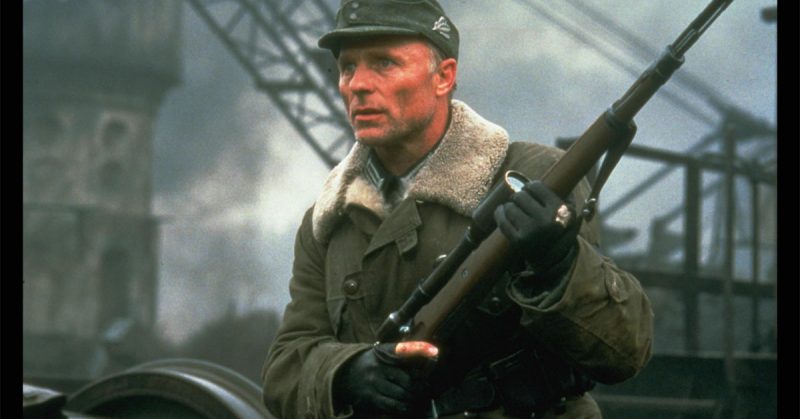
FILM 'ENEMY AT THE GATES' BY JEAN-JACQUES ANNAUD (Photo by Siemoneit/Sygma via Getty Images)
One of the biggest bombs of Ben Affleck’s career, and there have been several, happens to be one of the most error-ridden war movies Hollywood has ever produced: Pearl Harbour (2001). It wasn’t just a bad Affleck film, it is one of several films to come out of Hollywood’s “dream factory” that can’t seem to get it consistently right when telling wartime narratives.
Of course, filmmakers have to enhance stories to lure audiences into theatres. But accuracy is often sacrificed in the process. In Pearl Harbour, Affleck’s character is a member of the Air Force who joins the Eagle Squadron.
In reality, that couldn’t happen. Neither would he have flown a Polish plane, as he does in the film. This movie is riddled with as many errors as bullets, and bad reviews followed swiftly upon its release.
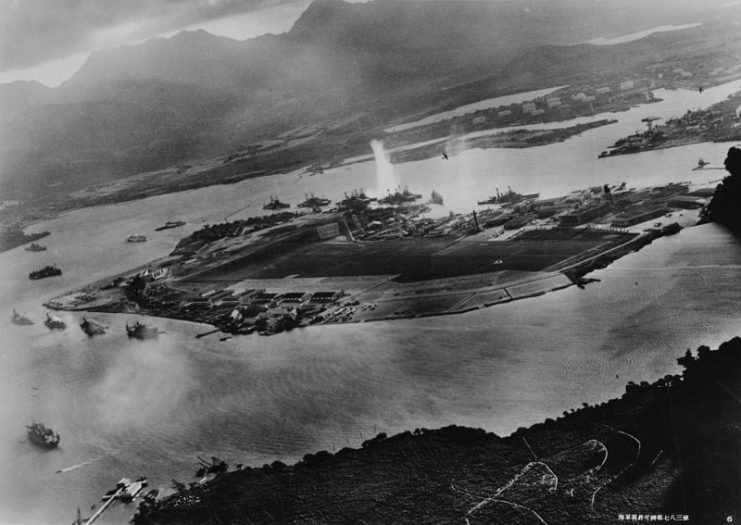
Photograph of Battleship Row taken from a Japanese plane at the beginning of the attack. The explosion in the center is a torpedo strike on USS West Virginia. Two attacking Japanese planes can be seen: one over USS Neosho and one over the Naval Yard.
Hollywood sometimes falls prey to serving as propaganda, and there is no better example than the 1968 John Wayne film, The Green Berets. In truth, the film was trying to sell the public on an unpopular war in Vietnam.

Almost everything about the movie, from its use of forests instead of a jungle, is wrong.  I remembered seeing bleachers by the "Vietnamese Village", it was filmed at Fort Benning. Wayne’s performance is unbelievable: he is ageing, overweight, and distracted, a man who would never be allowed in the field in the real army.
Even a Best Picture winner like The Hurt Locker can get it wrong. Veterans complained that this depiction of a bomb disposal squad in Iraq bore no resemblance to reality. In the film, the soldiers are unsupervised and surly to officials, neither of which is fair or accurate, according to army personnel.
World War II is probably the most fertile ground for filmmakers, but that also makes it ripe for creative reinvention.
Windtalkers, a 2002 film about the role of Native Americans in WWII, depicts them helping U.S. forces send each other coded messages in Navajo. But it also shows them as disposable. Their bodyguards are told to kill them rather than let them fall into enemy hands. This film failed to find an audience, except perhaps on Netflix.
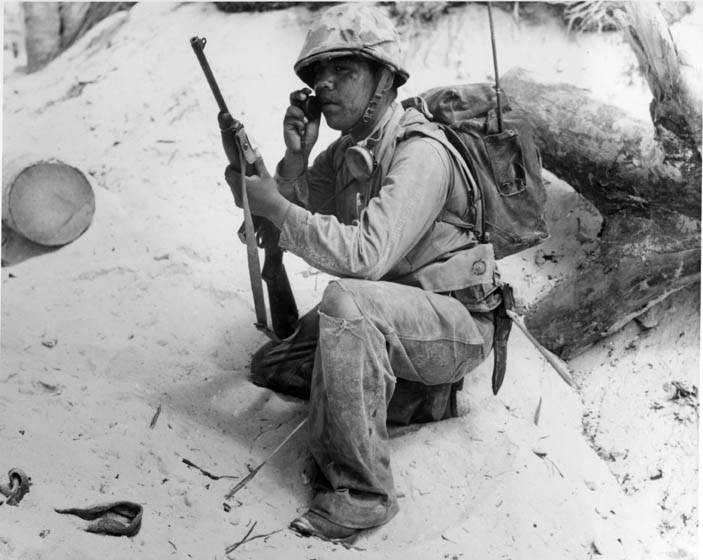
A Navajo Code Talker relays a message on a field radio. The code talkers served in the South Pacific during World War II and were kept a secret until 1968 when the Navajo code was finally declassified.
Some errors are less egregious than others. In 2006, Flyboys dramatized the battle between U.S. pilots and the German Luftstreitkräfte
but used the wrong planes. Producers said it was so audiences could tell one side from the other, which seemed fair enough until it was revealed that a military advisor on the film had made up his service record.
A 2000 film, U-571, earned a rebuke from the highest-ranking member of the British government at the time, Prime Minister Tony Blair. The film credited America with decoding the Nazi Enigma machine in 1941. The U.S. had not even entered the war by then, let alone done any code breaking.
That success was achieved by the Royal Air Force, prompting Britain’s PM called the movie “an insult.” The Imitation Game followed a few years later, a much-acclaimed film that told the true story of the first Enigma machine, and was nominated for several Oscars.
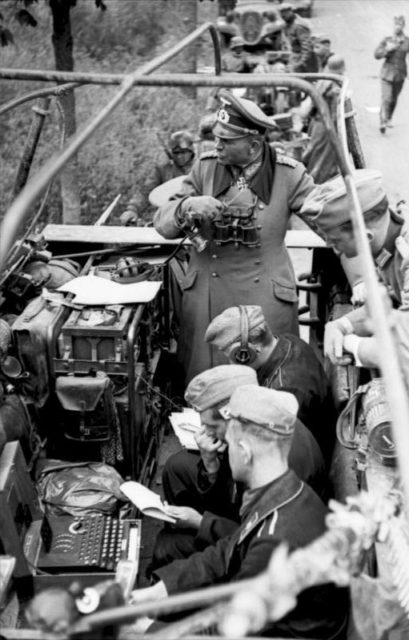
Heinz Guderian with an Enigma machine in a Sd.Kfz. 251 half-track being used as a mobile command center during the Battle of France. By Bundesarchiv, Bild  CC-BY-SA 3.0.
Enemy At The Gates (2001) told a story of World War II from a different angle, that of a Soviet sniper. The movie is based on the real soldier, Vasily Zaytsev, but is believed to contain two critical mistakes.
Firstly, it shows the Red Army severely ill-equipped, which wasn’t true. Secondly, it depicts a one-on-one encounter between the Russian sniper and his Nazi opponent, which experts believe likely didn’t happen.
The Battle Of The Bulge, released in 1965, is a much-admired movie, but it got plenty wrong too. This epic film shows the famous battle being fought on flat land, but the real one happened in a forest. The film battle was shot in “easy” weather while the real one was plagued with snow and rain. Finally, the tanks on the Nazi side were clearly American made.
Vasily Zaytsev, left, and soviet snipers equipped with Mosin-Nagant M1891/30 with PE scope in Stalingrad, December 1942.
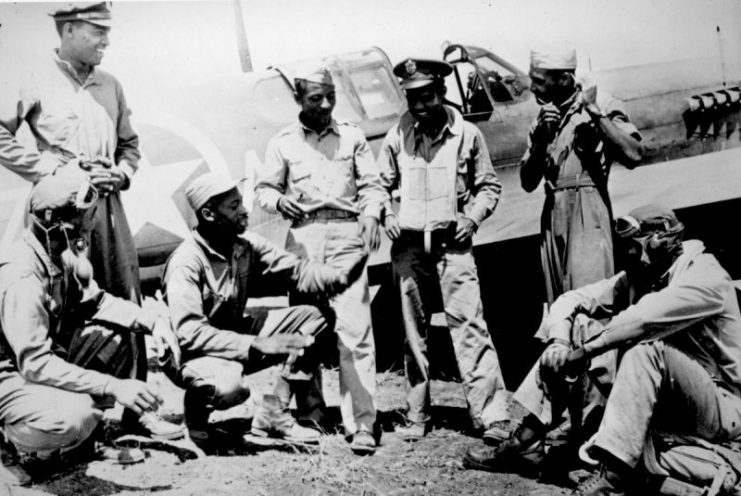
A movie about WWII that tried to be less downbeat than most was Red Tails, released in 2002. It told the story of the first African American air squadron, but in its desire to be positive, it made errors. In reality, the squad had no aces and, 25 bombers lost their lives to enemy forces. However, the film doesn’t depict this, implying instead that the team had a perfect survival rate.
Pilots of a U.S. Army Air Forces fighter squadron, credited with shooting down 8 of the 28 German planes, 1944.
,Presenting the Armed Forces in a negative way has become something of a popular approach these days, as in Jarhead, released in 2005. This film is about the first Gulf War, and is set in the 1990s.  I saw that movie and it pissed me off almost as bad as the "Three Kings" movie with George Clooney during the First Gulf War, I had a very poor reaction to that movie, I considered it "crap".  Officials claim that the severe training methods shown, during which one soldier dies, are unfair. They believe the film makes army life look unnecessarily tough, and argue that soldiers would not be left to die on the battlefield. Officials went on record to make known their displeasure.
    I am sure that there are others but these are the ones that jumped out at me.  

Thursday, May 23, 2019

The Battle of Actium and the fall of the Roman Republic

I remembered being mesmerized by the Movie "Cleopatra", the sheer pageantry was really unmatched.  Back then Movie houses made elaborate sets rather then CGI and it really seemed "More real" than the later movies.    This scene from the movie "Cleopatra" showed what I am referring to..


I will be showing more clips from the movie "Cleopatra" throughout this blog post.
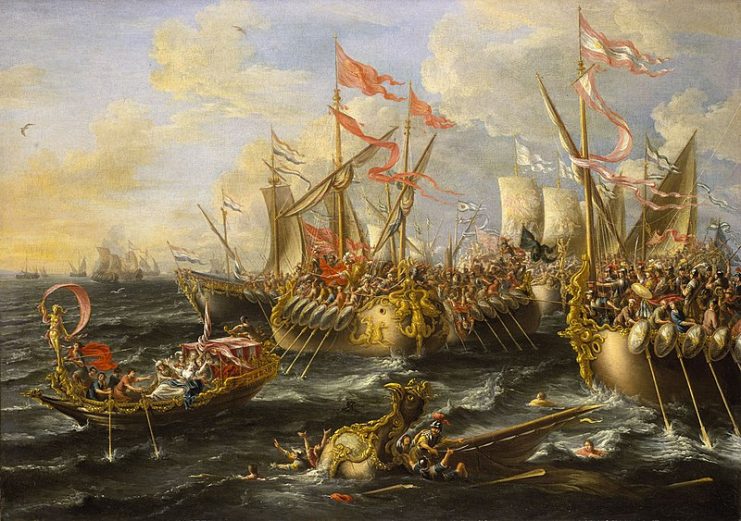
The battle of Actium, which took place off of the west coast of Greece on September 2, 31 BC, is widely regarded as the decisive moment at which the Roman Republic fell and the Roman Empire rose in its place following the assassination of Julius Caesar.
The Assassination of Julius Caesar
Octavian, the adopted son and great-nephew of Caesar, faced off against the combined forces of Egypt, led by Cleopatra and Mark Antony who had been a close friend of the late Caesar.
Antony had once been second in command to the emperor. When he discovered a plot against his friend, he was unable to warn Caesar in time and had no choice but to flee Rome. He returned after the coup to try and preserve his friend’s legacy from posthumous attacks by the very men who had conspired to end his life.

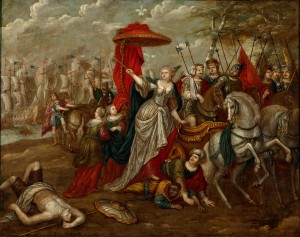
A baroque painting of the battle of Actium by Laureys Castro, 1672.National Maritime Museum, UK
Upon learning that Caesar had bequeathed the throne to Octavian, however, Antony contested the younger man’s inheritance. What followed was a decade of ill-fated military campaigns designed to unseat the rightful heir of the deceased dictator.
The forces of Antony and Octavian first clashed the year after Caesar’s passing. Although Antony was soundly beaten, Octavian nevertheless included him and another rival in a power-sharing agreement that divided the Roman empire among them.

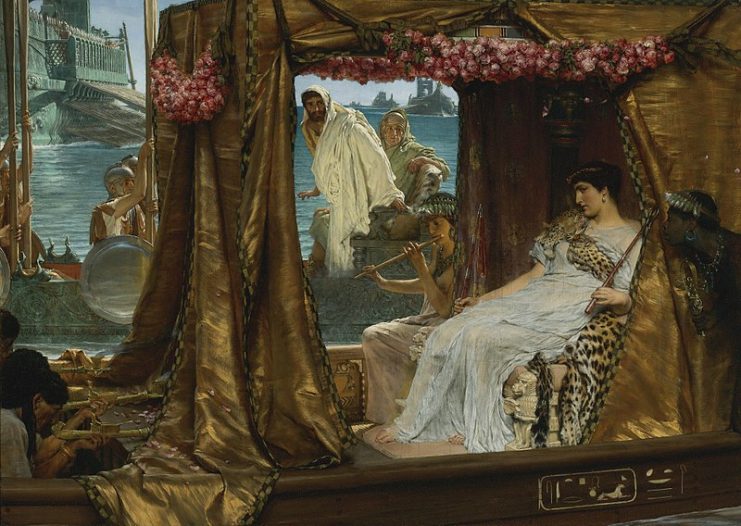
Antony and Cleopatra (1883) by Lawrence Alma-Tadema depicting Antony’s meeting with Cleopatra in 41 BC.
In the years that followed, Antony was busy. He defeated the assassins who had dispatched Caesar and later struck up a romance with Cleopatra, the queen of Egypt, who had also been Caesar’s lover.

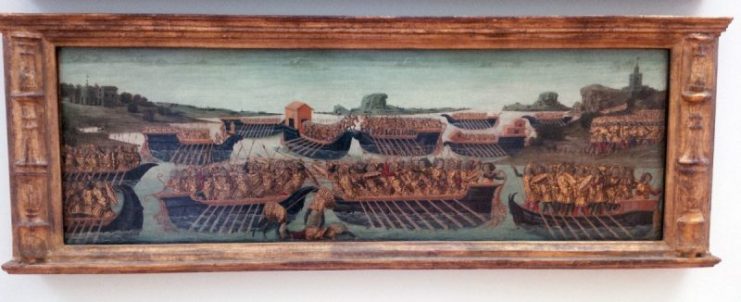
Neroccio De’ Landi and Workshop, The Battle of Actium (circa 1475–1480)
Despite unease among the Romans about Antony and Cleopatra provocatively flaunting their children as royal heirs, the triumvirate ruled steadily for a decade before a series of events led Antony and Octavian to war once again.

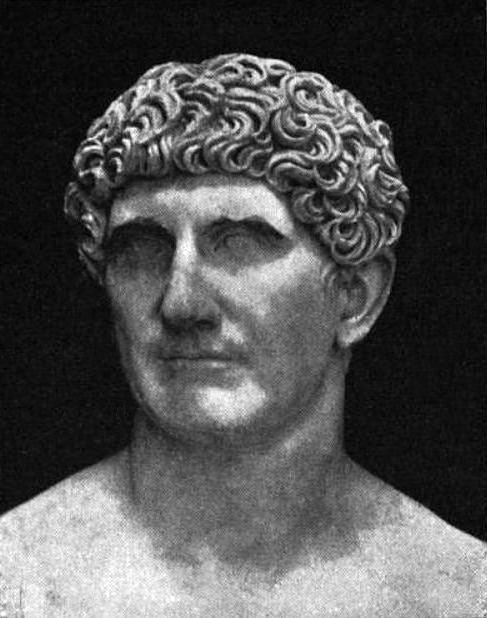
A Roman bust of the consul and triumvir Mark Antony, Vatican Museums
Owing to a failed rebellion some time earlier, Antony had been forced to marry Octavian’s sister. When he divorced her in 32 BC, Octavian declared war on Cleopatra – a wise political move which allowed him to cast his war as one fought against foreigners, rather than his fellow Romans.

A year later, having driven Antony’s forces from the Greek mainland, Octavian’s fleet of 500 ships and 70,000 infantry faced off against Antony and Cleopatra’s combined 400 ships and 80,000 infantry.

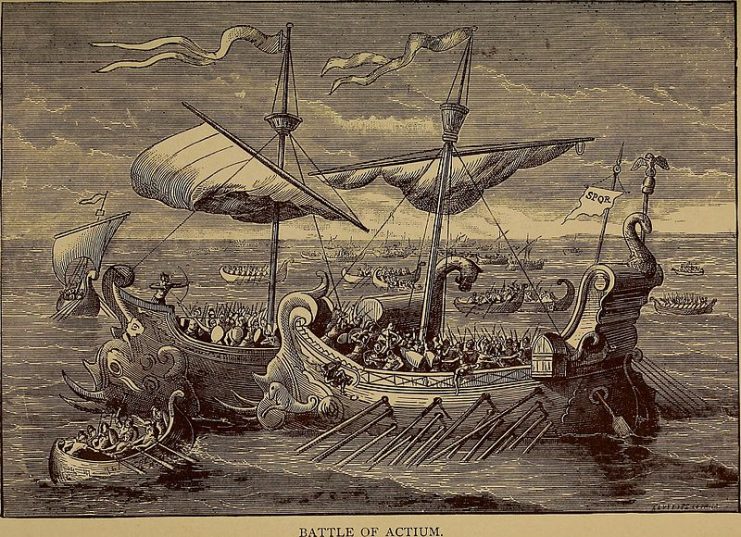
Battle of Actium
Battle of Actium
At first, the battle was uncertain, but upon Cleopatra’s unexpected retreat, Octavian captured much of the opposing fleet and pursued his enemy through the gates of Alexandria.

 Battle of Actium(Cleopatra 1963)
Naval historians have studied the battle extensively, curious about the effect that Octavian’s smaller ships might have played in ensuring their decisive victory over the comparatively larger ships which made up Antony and Cleopatra’s fleet.
Now, a recent archaeological discovery has helped to shed light on exactly how much of an advantage this gave the Roman commander.

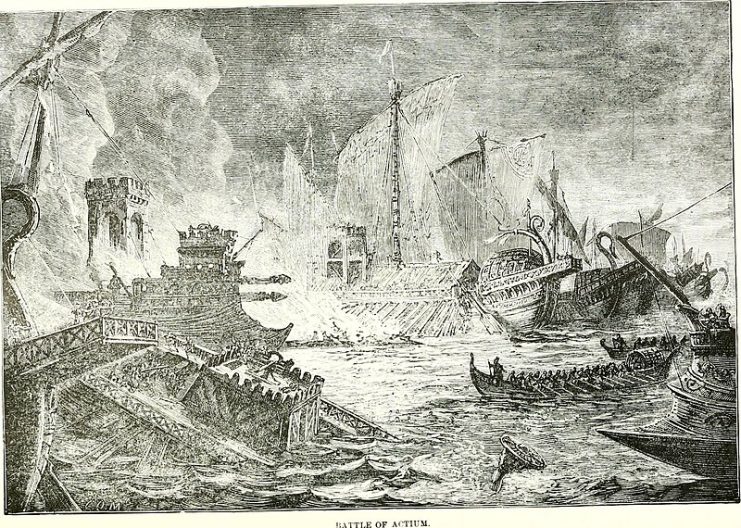
Battle of Actium
Battle of Actium
Upon the excavation of Octavian’s monument to the Roman victory (built alongside an entire city devoted to Rome’s success), it was discovered that Octavian took a large number of trophies from the enemy fleet.
The assertion of historians that the larger, less maneuverable fleet was at a significant disadvantage gained some credibility with the discovery that Octavian took as trophies 35 bronze rams from the captured fleet of 350 ships.

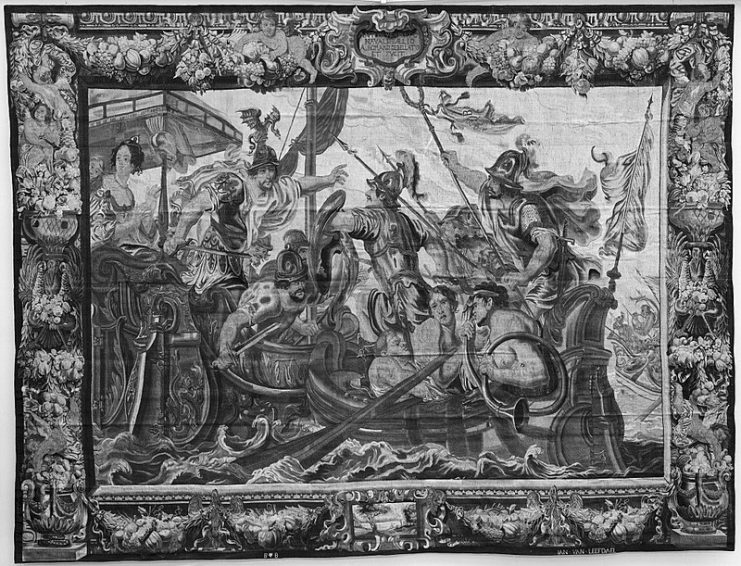
The Battle of Actium from a set of The Story of Antony and Cleopatra
The underwater battering rams, designed to break down harbor defenses, were considerably larger than any that had been previously found.

Peeter Sion – Defeat of Marc Antony and Cleopatra at Actium
Although only remnants of the rams themselves were discovered in the excavated ruin (it is assumed that later generations or invading forces stole them and melted them down for bronze), the size of the niches they were placed in led historians to estimate that Antony and Cleopatra sailed in ships as large as 40 meters long.

The ending was that Anthony fled to join with Cleopatra with Octavian in hot pursuit.
 Anthony took his own life  via sword rather than be paraded through Rome in chains...
  Cleopatra took her own life via adder rather than be paraded through Rome as a trophy

Sunday, May 28, 2017

Battleship Potemkin (Soviet Propaganda Movie) Red Storm Rising

Continuing my Red Storm Rising theme I have been following, is this movie that was also mentioned.   No I ain't going communist.  When I was in the service, my specialty was the Soviet Army, I studied its tactics and how they fight.  I started learning Russian from the linguists we had in my unit to improve my craft.    I was hoping to get a slot to the language school in DLI or the local branch in Munich, I wanted to learn as much as I can, when you might have to fight someone, you learn as much as you can about them, the phrase "know your enemy" holds true. 
   Say what you want about the godless communist, they could make a good propaganda movie.  It helps when you can control the information that the people receive and make sure that it fits a narrative, it is easier to sway and control the population. 

Battleship Potemkin (Russian: Бронено́сец «Потёмкин», Bronenosets Patyomkin), sometimes rendered as Battleship Potyomkin, is a 1925 Soviet silent film directed by Sergei Eisenstein and produced by Mosfilm. It presents a dramatized version of the mutiny that occurred in 1905 when the crew of the Russian battleship Potemkin rebelled against their officers.
Battleship Potemkin was named the greatest film of all time at the Brussels World's Fair in 1958.


The film is set in June 1905; the protagonists of the film are the members of the crew of the Potemkin, a battleship of the Imperial Russian Navy's Black Sea Fleet. Eisenstein divided the plot into five acts, each with its own title:

The scene begins with two sailors, Matyushenko and Vakulinchuk, discussing the need for the crew of the Potemkin to support the revolution taking place within Russia. While the Potemkin is anchored off the island of Tendra, off-duty sailors are sleeping in their bunks. As an officer inspects the quarters, he stumbles and takes out his aggression on a sleeping sailor. The ruckus causes Vakulinchuk to awake, and he gives a speech to the men as they come to. Vakulinchuk says, "Comrades! The time has come when we too must speak out. Why wait? All of Russia has risen! Are we to be the last?" The scene cuts to morning above deck, where sailors are remarking on the poor quality of the meat for the crew. The meat appears to be rotten and covered in worms, and the sailors say that "even a dog wouldn't eat this!" The ship's doctor, Smirnov, is called over to inspect the meat by the captain. Rather than worms, the doctor says that the insects are maggots, and they can be washed off prior to cooking. The sailors further complain about the poor quality of the rations, but the doctor declares the meat edible and ends the discussion. Senior officer Giliarovsky forces the sailors still looking over the rotten meat to leave the area, and the cook begins to prepare borscht although he too questions the quality of the meat. The crew refuses to eat the borscht, instead choosing bread and water, and canned goods. While cleaning dishes, one of the sailors sees an inscription on a plate, which reads "give us this day our daily bread." After considering the meaning of this phrase, the sailor smashes the plate and the scene ends.

 All those who refuse the meat are judged guilty of insubordination and are brought to the fore-deck where they receive religious last rites. The sailors are obliged to kneel and a canvas cover is thrown over them as a firing squad marches onto the deck. The First Officer gives the order to fire, but in response to Vakulinchuk's pleas the sailors in the firing squad lower their rifles and the uprising begins. The sailors overwhelm the outnumbered officers and take control of the ship. The officers are thrown overboard, the ship's priest is dragged out of hiding, and finally the doctor is thrown into the ocean as "food for the fish".

The mutiny is successful but Vakulinchuk, the charismatic leader of the rebels, is killed. The Potemkin arrives at the port of Odessa. Vakulinchuk's body is taken ashore and displayed publicly by his companions in a tent with a sign on his chest that says "For a spoonful of soup" (Изъ-за ложки борща). The sailors gather to make a final farewell and praise Vakulinchuk as a hero. The people of Odessa welcome the sailors, but they attract the police.
 The Odessa steps in silent movie format
The best-known sequence of the film is set on the Odessa steps, connecting the waterfront with the central city. A detachment of dismounted Cossacks forms a line at the top of the steps and march towards a crowd of unarmed civilians including women and children. The soldiers halt to fire a volley into the crowd and then continue their impersonal, machine-like advance. Brief sequences show individuals amongst the people fleeing or falling, a baby's pram rolling down the steps, a woman shot in the face, broken spectacles and the high boots of the soldiers moving in unison.
In retaliation, the sailors of the Potemkin decide to fire on a military headquarters with the guns of the battleship. Meanwhile, there is news that a squadron of loyal warships is coming to quell the revolt of Potemkin.

The sailors of the Potemkin decide to go all the way and lead the battleship from the port of Odessa to face the fleet of the Tsar. Just when the battle seems inevitable, the sailors of the formerly loyal ships incredibly refuse to open fire on their comrades, externalizing with songs and shouts of joy their solidarity with the mutineers and allowing them to pass unmolested through the fleet, waving the red flag.
 Full Movie with English Subtitles
On the 20th anniversary of the first Russian revolution, commemorative Commission of the Central Executive Committee decided to stage a number of performances dedicated to the revolutionary events of 1905. In addition, as part of the celebrations was suggested a "grand film shown in a special program, with an oratory introduction, musical (solo and orchestral) and a dramatic accompaniment based on a specially written text". Nina Agadzhanova was asked to write the script and direction of the picture was assigned to 27-year-old Sergei Eisenstein.
In the original script the film was to highlight a number of episodes of the 1905 revolution: Russo-Japanese War, massacre of the Armenians, revolutionary events in St. Petersburg, Moscow uprising. Filming was supposed to be conducted in a number of cities of the USSR.
Eisenstein hired many non-professional actors for the film; he sought people who had a specific type instead of famous stars.
Shooting began on March 31, 1925. Sergei began with filming in Leningrad and had time to shoot the railway strike episode, horsecar, city at night and the strike crackdown on Sadovaya Street. Further shooting was prevented by the deterioration weather: permanent fog began. At the same time the director was placed in tight time constraints: the film was needed to be finished by the end of the year, although the script was approved only at the 4th of June. Objectively assessing the situation, Sergei Eisenstein decided to give up the original script consisting of eight episodes to focus only on one – the uprising on the battleship "Potemkin", which in the all-encompassing scenario of Agadzhanova took up only a few pages (41 frames). Sergei Eisenstein together with Grigori Aleksandrov essentially recycled and extended the script. In addition during the progress of making the picture some episodes were added which were not provided by Agadzhanova's scenario or by Eisenstein's scenic sketches, such as the storm scene with which the film begins. As a result, the content of the film was very far from the original script by Agadzhanova.
The film was shot in Odessa which at that time was one of the centers of film production and where it was possible to find a suitable boat for shooting.
The first screening of the film took place December 21, 1925 at the ceremonial meeting dedicated to the anniversary of the 1905 revolution in the Bolshoi Theatre.
The premiere took place in Moscow on January 18, 1926 in the 1st Goskinoteatre (now called the Khudozhestvenny).
The silent film received a voice dubbing in 1930 (during the life of director Sergei Eisenstein), restored in 1950 (composer Nikolai Kryukov) and reissued in 1976 (composer Dmitri Shostakovich) at Mosfilm with the participation of the USSR State Film Fund and the Museum of S.M. Eisenstein under the artistic direction of Sergei Yutkevich.
In 1925, after sale of the film negative to Germany and reediting by director Phil Jutzi, "Battleship Potemkin" was released in the world in a different version of the author's intention: the shooting of sailors was moved from the beginning to the end of the film. Later it was subjected to censorship and in the USSR some frames and intermediate titles were removed, words of Leon Trotsky in the prologue were replaced with a quote from Lenin. In 2005, under the overall guidance of the Foundation Deutsche Kinemathek, with the participation of the State Film Fund and the Russian State Archive of Literature and Art, the author's version of the film was restored with the music by Edmund Meisel.
Battleship "Prince Potemkin-Tauride" at the time of the shooting of the film was written off, prepared for recycling and was in poor condition. Instead the battleship "Twelve Apostles" residing in the port of Odessa was shot in the film. By this time it was turned into a warehouse of floating mines making it difficult for the shooting. Scenes taking place indoors were filmed on the cruiser "Komintern".
In the film the rebels raise the red flag on the battleship. However, with the limitations of that time the red flag in the black and white transmission looked black. Therefore, in the movie a white flag was shot. In the copy intended for the premiere at the Grand Theatre, 108 frames, the scene where the flag appears was hand-painted in red which greatly impressed the audience.