Webster

The Constitution was made to guard the people against the dangers of good intentions." --American Statesman Daniel Webster (1782-1852)


Showing posts with label Environmental extremist. Show all posts

Wednesday, July 13, 2022

The Inconvenient Truth about Bio Fuels

 I got this in my email at work, there is a huge push to rush for "Sustainable" fuel in the aviation industry and in manufacturing in general in the western world, but somehow I think that India and China will get a pass on this stuff whereas we will pay a much higher price to keep the environmental weenies happy...and they are never happy, they keep moving the goalpost because what they want is total eradication of industry and "oneness" with Gaia", no matter how impractical it is, their professors in collage told them so.  I thought this article was a good article because it ties in with the rush to increase biofuel for car use and that stuff will wreck a car motor, and I wonder if that is the plan.

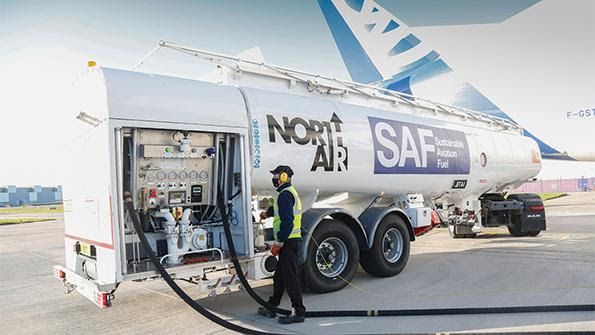
 

SAF truck
Credit: Jane Widdowson/Airbus

Sustainability logo

With the worst of the pandemic downturn hopefully in the rearview mirror, commercial aviation must now move on to face its greatest challenge yet: How to achieve net-zero emissions by 2050.

Governments are making commitments to incentivize sustainable aviation fuel (SAF)—Europe, through February’s “Toulouse Declaration,” and the U.S., with the Biden administration’s aim to have enough SAF to meet 5-10% of jet fuel demand by 2030 and 100% by 2050, including through tax credits. A growing list of nations, industry associations, airlines and manufacturers have voiced their intentions, positioning SAF to play a key role in achieving net zero.

Although still in its infancy for adoption, SAF has generated excitement as an attractive “bridge” to future technologies that may eventually include zero-emission aircraft. While SAF produces carbon emissions, many feedstocks are considered largely carbon-neutral as they “catch and release” already emitted CO2. eFuels are especially promising, given their potential to reduce life-cycle emissions by 90% compared with Jet A when combined with renewable sources of electricity and CO2.

As a drop-in fuel, SAF is mostly compatible with today’s engines and does not require costly fleet replacements. And unlike other propulsion technologies—such as electricity and hydrogen, which will be limited to short- and medium-haul missions, given energy and volumetric density limitations—SAF offers a ubiquitous option.

Several pathways are already approved at blends of up to 50%, with the feasibility of 100% SAF flights already demonstrated, including a passenger-carrying United Airlines Boeing 737 MAX. Thus, many commitments have been made by public and private stakeholders to produce and purchase SAF.

But the ugly truth is that the sky is not the limit with SAF. A recent Bain study on future aviation propulsion technologies deeply explored the technical and infrastructure challenges to producing alternative fuels, including projecting future economics for production of SAF and liquid hydrogen at scale.

Our conclusion is that despite aggressive assumptions around technology and efficiency improvements over the coming decades, SAF production cost and supply availability will fail to meet aviation needs, falling short even with government incentives and mandates that spur early investments and adoption.

Today’s SAF primarily centers on hydroprocessed esters and fatty acids (HEFA), which account for more than 85% of all announced SAF and renewable diesel production capacity beyond 2025. Feedstocks for HEFA make up more than 80% of costs and present unique supply challenges. Inputs of used cooking oil and animal fats have significant dis-synergies of scale, whereby collecting incremental material gets harder.

And even in a nascent state, demand from SAF and other biofuels has already pushed up input prices significantly, more than doubling them in the past two years, leading to perverse incentives attracting nonsustainable feedstocks like virgin palm oil. Ultimately, theoretical supply is capped at around 40 metric tons, which would address less than 10% of 2050 Jet A demand.

Other feedstocks like biomass, municipal solid waste and the holy grail of eFuels will require trillions of dollars in capital outlays. By our estimates, $1.3 trillion in processing and renewable energy would generate less than a 25% share of 2050 Jet A demand, and it would take more than $10 trillion to theoretically reach 100%.

Notably, refinery economics currently favor renewable diesel production over SAF production, so choosing aviation—which has fewer alternatives like electric-vehicle technologies already viable at scale—will require incentives and/or mandates.

Ultimately, costs of SAF estimated at 2-3x historical Jet A prices would need to decrease. While today’s elevated oil prices may help to reduce this gap, higher ticket prices would inevitably eat into travel demand.

To decarbonize commercial aviation, unless we are prepared to cap aviation traffic, the industry will eventually need to accelerate other technologies into its fleet and, more likely than not, require more time to get there.

Massive investments and incentives well beyond current committed levels are needed to accelerate other technology development and necessary infrastructure spending. Meanwhile, competing technologies are likely to split scarce investment resources and lead to delays in technology adoption.

Given that aircraft last on average a little more than 20 years and that technologies are unlikely to be available for mass adoption across fleets well into the 2040s, setting an improbable 2050 target can feel disingenuous.

Tough choices will need to be made. Either travel will once again become a luxury good, or targets will need to be revisited as we bet on scaling up technologies that largely only exist in the lab today. And these will need to be better aligned with the realities of physics, feasible technology maturation timelines and the limits of SAF feedstock capacity at reasonable prices. 

Jim Harris is a partner at Bain & Co. and co-leads the firm’s Americas aerospace, defense and government services practice.

The views expressed are not necessarily those of Aviation Week. 


Thursday, March 10, 2022

"We Must Stop The Western Environmentalist that Made the Ukraine Invasion Possible"


 I snagged this from "PragerU" and Dennis Prager.  The article is from him, the cartoons are from my collection of cartoons on my 'puter. 


No. 1: The NATO excuse. A widely offered explanation for the Russian invasion of Ukraine is that Russia -- which at this time essentially means President Vladimir Putin -- fears the expansion of NATO to its borders, especially Ukraine. The argument is often presented as an analogy: How would the United States react if Mexico had a mutual defense pact with Russia and received weapons from Russia?


A second explanation is that Russia is "paranoid" as a result of its having been devastated by the invasions of Napoleon's France in the 19th century and Hitler's Germany in the 20th. This was the excuse that many professional excuse makers made for the Soviet Union's shooting down -- without any warning -- Korean Air Lines flight 007 in 1983, killing all 269 passengers and crew.

"The Russians are paranoid" became a widespread explanation. Seymour Hersh, the best-known New York Times investigative reporter for decades, wrote a book on the shooting down of KAL 007. As described in a 1986 New York Times book review, "On the Soviet side, writes Mr. Hersh, there was paranoia."


When I was a graduate student at Columbia University's Russian Institute, I regularly encountered the "paranoid" explanation for Soviet/Russian policies. It struck me then, and even more so now, as pathologic or false, or both. Russia is by far the largest country on Earth, spanning approximately one-ninth of all the world's land surface. When that fact is combined with Russia's vast nuclear weaponry, the "paranoia" explanation for Russian aggression is rendered absurd.

It is even more absurd when one considers the countries Russia allegedly fears will invade them. Which one of their Western-border countries --Latvia, Estonia, Lithuania, Moldova, Belarus, Ukraine -- is likely to invade Russia? Wasn't every one of them invaded by Russia? Shouldn't every one of them be paranoid?


We'll end the "paranoid" discussion with this rule of history: Generally speaking, wars are either between two police states or between a police state and a free state. And the latter are nearly always initiated or provoked by the police state. Russia has nothing to fear from its neighbors. Its neighbors have plenty to fear from Russia.

2. America is watching, not intervening.

I know of no American, on the Right or the Left, who has called for sending the U.S. military into Ukraine. But every American should feel awful -- morally and as an American -- about America sitting by and watching the first major invasion of a peaceful country since Hitler and Stalin. One reason is that since World War II, the weaker nations of the world have all held onto the hope that should they be attacked by a stronger nation, Americans would come to their aid.

America is aiding Ukraine with arms and economic sanctions, but as I watch peaceful Ukraine devoured by aggressive Russia, I can't help but think that it appears that evil will triumph -- and lead to more evil on Earth. I have never agreed with the throwaway line, "America is not the world's policeman." Does the world not need a policeman? And if not America, who? China? Russia? The U.N.?

If the strongest boy in high school, one whom the weakest boys and girls looked to for protection, decided one day to watch rather than to protect them as they were beaten by the school bully, even if there was good reason for the lack of intervention, wouldn't that be a very sad day? And wouldn't it affect the way the protector saw himself?

Most Americans see themselves as protectors of the weak against bully nations. This is the first time in our lifetime that America has abandoned that role.

No. 3: A comedian is the world's most courageous political leader. By general consensus among the world's media and world's nations, Ukraine's President Volodymyr Zelenskyy is the most courageous leader in the world today.


For many people, this is particularly remarkable since Zelenskyy's professional background is that of a comedian. It strikes most people as amazing that a comedian turns out to be the world's most inspiring leader.


That, of course, was the reason so many dismissed Donald Trump when he ran for president: "He has no political experience, he's just a wealthy real estate developer." However, that real estate developer also turned out to be the most courageous leader in the world. Honest haters of Trump must at least acknowledge his courage -- just as supporters must acknowledge his lack of a filter between his brain and his mouth.

It was Trump who had the courage to demand that our NATO allies live up to their obligations with regard to military spending. Ironically, thanks to Putin, the NATO countries are finally doing so. It was Trump who uncovered a deep state of corruption in nearly every major American governmental institution. It was Trump who took on the mainstream media, regarded by half of America as little better than Pravda, the Soviet newspaper. It was Trump who had the courage to do what president after president and Congress after Congress called for but never acted on: moving the American embassy in Israel to Israel's capital city, Jerusalem. He did this despite the opposition of almost every world leader and his own State Department. If that's not courage, what is?

And it remains a fact that Putin did not invade Ukraine while Trump was president. Putin feared Trump. Neither Putin nor anyone else fears President Joe Biden.

It is therefore not at all surprising that a comedian is the world's most courageous leader. It is surprising that people still think a lifelong political career produces leaders. Biden is a lifelong politician and, as his behavior during COVID-19 showed, may well be the least courageous president in American history.

 4. Western environmentalists made the invasion possible. It is overwhelmingly likely that American and European environmentalists made the Russian invasion of Ukraine possible. Under Trump, America became energy independent and was even able to supply Europe with energy. But the environmental movement, which dominates the Democratic Party and nearly every Western European country, has made Russia the major supplier of natural gas to Europe, and especially to the most important country on the European continent, Germany.


The environmentalist movement uses climate change to achieve its primary objectives: undoing of the West's economic foundations, reshaping the Western way of life, dismantling capitalism and transferring wealth to the Third World. They will pursue these aims at any cost -- whether crippling inflation, energy blackouts, even the strengthening of Russia and China.

If you really believe climate change poses an "existential threat" to human life, there is no price too high to pay in order to eliminate fossil fuel-based energy. That includes empowering and enriching evil men.


Thursday, November 15, 2012

The EPA effect is already being felt.


A report by the Union of Concerned Scientists demonstrates the effect of the Obama Administration's EPA on consumer prices, arguing that 22 coal plants in Georgia would be more cost-effectively shut down and replaced with new plants than upgraded to comply with government regulation.
The report compared the cost of upgrading pollution controls at old coal-fired units to the cost of shutting down those units and switching to natural gas or cleaner sources such as wind power. unicorn farts, and other liberal dreams
In Georgia, the report identified 22 coal units, which can produce 34.7 million megawatt hours of electricity a year, that should be shut down at Crisp, Mitchell, Kraft, Harlee Branch, Bowen, Hammond and Yates power plants. All but one are owned by Georgia Power.

      When we have utility price spikes and rolling brownouts from the EPA effect ......we can get together and sing kumbaya to keep warm....because the heater won't be working.