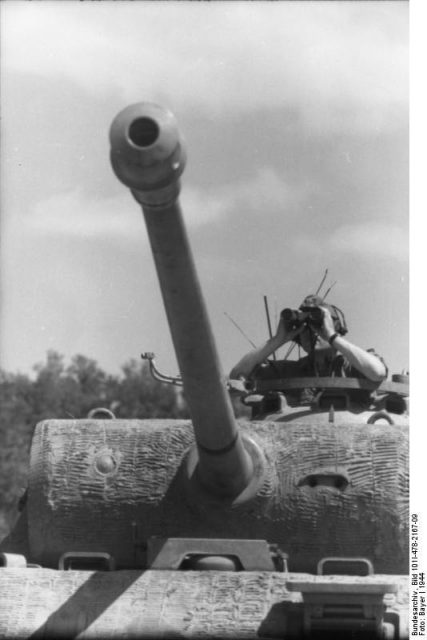
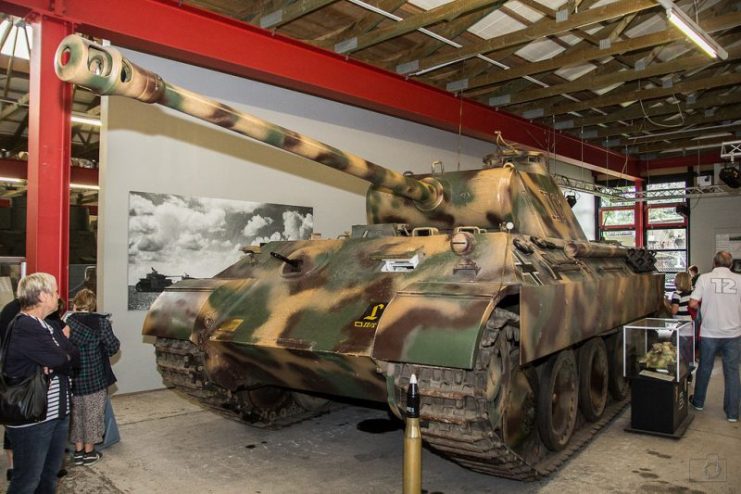
Webster

The Constitution was made to guard the people against the dangers of good intentions." --American Statesman Daniel Webster (1782-1852)


Showing posts with label German. Show all posts

Saturday, February 2, 2019

German Army unready for combat...

I have blogged in the past about the unreadiness of the German Army and Military in general.  I remember right after the end of the cold war, the German Army was well trained and well equiped, their tank was on par or slightly better than our M1 and their other vehicles were also first rate.  But the 25 years since then the German military has changed and it reflects the new progressive values that are popular in Europe.  I can't say too much, I see our military doing some of the same stuff.  The stupidity has lessened under Trump but when Obama was president, I saw many attempts to convert the military or subvert the military with the values of the progressive movement basically being feminist heavy, or LGBTEIEIO interest not what I call "War fighter interest".  I am sure that the Russian and Chinese don't have this problem.


Posted by    Thursday, January 31, 2019 at 11:00am
“Less than 50 percent of the Bundeswehr’s tanks, ships and aircraft were available at any one time.”
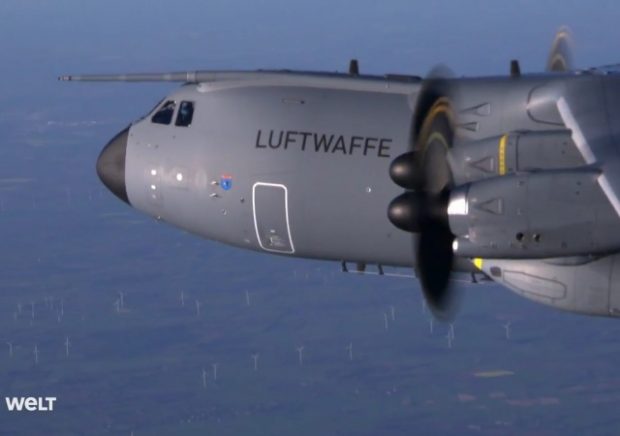
https://www.youtube.com/watch?v=Mz2aBFCefwg&t=912s
While German Chancellor Angela Merkel has clamored for an EU army, the country’s military continues to deteriorate as a fighting force. The German armed forces, or the Bundeswehr, are underequipped, demoralized and running out of recruits,” an official report reveals.The military was relying on civilian helicopters for tactical troop transport and the soldiers on the battlefield lacked even the basic equipment such as body armor and overalls, the annual report published by the German parliament’s military commissioner, Hans-Peter Bartels, said. The report found that “often less than 50 percent of the Bundeswehr’s tanks, ships and aircraft were available at any one time, either for training or operational purposes.”
Things look just a grim on the recruitment front. “The government has promised 198,500 active personnel by 2025, up from the current 181,000, but the number of new recruits dropped from 23,000 in 2017 to 20,000 last year,” the report disclosed.
German state broadcaster Deutsche Welle reported the details of the annual parliamentary inspection:
The biggest problem that Bundeswehr soldiers complained about was the lack of equipment, despite repeated government promises, dating back to a 2014 NATO summit, of a change in direction. That does not count as a surprising development, considering the barrage of poor press the German military has been facing.
Heavy machinery was a particular concern: [Hans-Peter] Bartels found that often less than 50 percent of the Bundeswehr’s tanks, ships and aircraft were available at any one time, either for training or operational purposes.
“Spare parts are still missing; maintenance in industry is dragging; the training programs are suffering,” Social Democrat Bartels said. “An absolute must is the acceleration of procurement.” (…)
Another worry for the Defense Ministry is the stagnation of its post-conscription recruitment drive, which began after Germany scrapped national service in 2011. Though the Bundeswehr is expanding overall (the report found a net gain of 4,000 professional soldiers), most of these were won by extending existing contracts. In other words, the German military is aging.
The government has promised 198,500 active personnel by 2025, up from the current 181,000, but the number of new recruits dropped from 23,000 in 2017 to 20,000 last year.
While the army is in a state of grave disrepair, the country’s first female Defence Minister and Merkel’s confidant, Ursula von der Leyen, is busy promoting diversity and ‘multiculturalism’ in the military.
As German business daily Handelsblatt reported in January 2017: “Defense Minister Ursula von der Leyen has invited senior officers from Germany’s armed forces, the Bundeswehr, to a groundbreaking workshop on sexuality.” The workshops titled “Dealing with sexual identity and orientation in the Bundeswehr” included eminent speakers such as the minister herself and “a sex therapist who supports transsexuals in the army.”
As laudable as these cosmetic efforts may be, they do nothing to enhance the combat readiness or boost troop morale.
Minister von der Leyen’s efforts to “open the army up to minority groups” hasn’t been a great success either. In recent years, the Bundeswehr has caught 24 Islamist infiltrators in its ranks. At least 29 Bundeswehr soldiers have traveled to Syria and Iraq to fight for the Islamic State.
The findings are a vindication of President Donald Trump, who has repeatedly asked Germany and other NATO members to increase their defense spending up to two-percent of their economic output. He tweeted in July 2018: “Germany just started paying Russia, the country they want protection from, Billions of Dollars for their Energy needs coming out of a new pipeline from Russia. Not acceptable! All NATO Nations must meet their 2% commitment, and that must ultimately go to 4%!”
Currently, the United States contributes 4.2 percent of its GDP to NATO, compared to just 1.2 percent chipped in by Germany. In 2017, the U.S. “accounted for 51.1 percent of the allies’ combined GDP and 71.7 percent of combined defense expenditure,” Virginia-based Defense News reported. In addition to that, over 35,000 U.S. troops are stationed in Germany to bolster Europe’s military preparedness.
Under Chancellor Merkel’s watch, however, the Germany army has other pressing issues at hand than border security or defense preparedness. In wake of the 2015 migrant crisis, thousands of German soldiers were whisked off to build migrant shelters, making it the largest domestic deployment of the postwar ear. The county is busy converting army barracks into migrant camps.
The annual defense report glaringly highlights the fatal flaws in Germany’s military armor. Perhaps Chancellor Merkel should take a pause from her saber-rattling about an EU army and invest in the Bundeswehr for change.

The military was relying on civilian helicopters for tactical troop transport and the soldiers on the battlefield lacked even the basic equipment such as body armor and overalls, the annual report published by the German parliament’s military commissioner, Hans-Peter Bartels, said. The report found that “often less than 50 percent of the Bundeswehr’s tanks, ships and aircraft were available at any one time, either for training or operational purposes.”
Things look just a grim on the recruitment front. “The government has promised 198,500 active personnel by 2025, up from the current 181,000, but the number of new recruits dropped from 23,000 in 2017 to 20,000 last year,” the report disclosed.
German state broadcaster Deutsche Welle reported the details of the annual parliamentary inspection:
The biggest problem that Bundeswehr soldiers complained about was the lack of equipment, despite repeated government promises, dating back to a 2014 NATO summit, of a change in direction. That does not count as a surprising development, considering the barrage of poor press the German military has been facing.
Heavy machinery was a particular concern: [Hans-Peter] Bartels found that often less than 50 percent of the Bundeswehr’s tanks, ships and aircraft were available at any one time, either for training or operational purposes.
“Spare parts are still missing; maintenance in industry is dragging; the training programs are suffering,” Social Democrat Bartels said. “An absolute must is the acceleration of procurement.” (…)
Another worry for the Defense Ministry is the stagnation of its post-conscription recruitment drive, which began after Germany scrapped national service in 2011. Though the Bundeswehr is expanding overall (the report found a net gain of 4,000 professional soldiers), most of these were won by extending existing contracts. In other words, the German military is aging.
The government has promised 198,500 active personnel by 2025, up from the current 181,000, but the number of new recruits dropped from 23,000 in 2017 to 20,000 last year.
While the army is in a state of grave disrepair, the country’s first female Defence Minister and Merkel’s confidant, Ursula von der Leyen, is busy promoting diversity and ‘multiculturalism’ in the military.
As German business daily Handelsblatt reported in January 2017: “Defense Minister Ursula von der Leyen has invited senior officers from Germany’s armed forces, the Bundeswehr, to a groundbreaking workshop on sexuality.” The workshops titled “Dealing with sexual identity and orientation in the Bundeswehr” included eminent speakers such as the minister herself and “a sex therapist who supports transsexuals in the army.”
As laudable as these cosmetic efforts may be, they do nothing to enhance the combat readiness or boost troop morale.
Minister von der Leyen’s efforts to “open the army up to minority groups” hasn’t been a great success either. In recent years, the Bundeswehr has caught 24 Islamist infiltrators in its ranks. At least 29 Bundeswehr soldiers have traveled to Syria and Iraq to fight for the Islamic State.
The findings are a vindication of President Donald Trump, who has repeatedly asked Germany and other NATO members to increase their defense spending up to two-percent of their economic output. He tweeted in July 2018: “Germany just started paying Russia, the country they want protection from, Billions of Dollars for their Energy needs coming out of a new pipeline from Russia. Not acceptable! All NATO Nations must meet their 2% commitment, and that must ultimately go to 4%!”
Currently, the United States contributes 4.2 percent of its GDP to NATO, compared to just 1.2 percent chipped in by Germany. In 2017, the U.S. “accounted for 51.1 percent of the allies’ combined GDP and 71.7 percent of combined defense expenditure,” Virginia-based Defense News reported. In addition to that, over 35,000 U.S. troops are stationed in Germany to bolster Europe’s military preparedness.
Under Chancellor Merkel’s watch, however, the Germany army has other pressing issues at hand than border security or defense preparedness. In wake of the 2015 migrant crisis, thousands of German soldiers were whisked off to build migrant shelters, making it the largest domestic deployment of the postwar ear. The county is busy converting army barracks into migrant camps.
The annual defense report glaringly highlights the fatal flaws in Germany’s military armor. Perhaps Chancellor Merkel should take a pause from her saber-rattling about an EU army and invest in the Bundeswehr for change.

Friday, September 7, 2018

Panther Tank


I consider the Panther Tank the all around best German Tank, it had the armor to stand up to the T34/85 and of course the undergunned American Tanks like the Sherman. The later tanks like the Pershing were better armed and of course the American Tank destroyers were better armed.  The British Shermans called the "Firefly" had the excellent British 17 pounder gun(76 mm) The Panther was developed in response to the T34 tank that the Germans ran across right after they started Operation Barbarossa and to their shock discovered that their Panzer Mark III and Panzer Mark II's were woefully undergunned and the few Panzer Mark IV's had the 50 MM gun and it had problems.  The Germans had to use the legendary 88 to take out the better armed Soviet Tanks. 


The German Panther tank was deployed during the Second World War in the European Theater, between the years 1943 and 1945. It saw action on both the Eastern and Western fronts, and is widely hailed as one of the best tanks designed and produced during the conflict.
The Panther was the third most-produced German armored fighting vehicle, after the Sturmgeschütz III assault gun/tank destroyer at 9,408 units, and the Panzer IV tank at 8,298 units.
They proved to be extremely popular, and as a result more than 6000 Panthers were built for the German military. More surprisingly, however, is the fact that nine of these tanks were built by the British Army between 1945 and 1946. This alone is a testament to the high quality of these remarkable war machines

There were three main version of the Panther – versions D, A and G – with each new version incorporating significant improvements. There were also the artillery spotter, recovery, and Commander versions.
The full name was the Panzerkampfwagen V Panther and it had the ordnance inventory designation of Sd.Kfz. 171. However, on 27 February 1944, Hitler ordered that the Roman numeral “V” be deleted from the designation.
This wan’t the only way in which Hitler was directly involved with the tank’s design. The Panther was originally meant to weigh 30 tons, but the Nazi Leader demanded extra armor and a heavier gun and so it ended up weighing almost 50 tons.


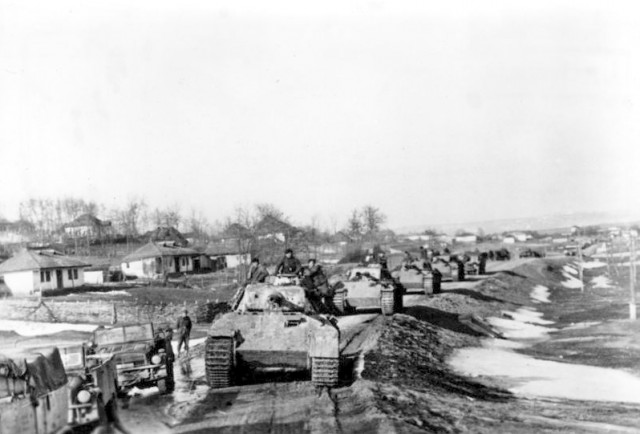
Bundesarchiv_Bild_183-J24359,_Rumänien,_Kolonne_von_Panzer_V_(Panther)
Panther tanks of the Großdeutschland Division advance in the area of Iaşi, Romania in 1944 .Bundesarchiv – 
Hitler later ordered a Panther II which would feature more armor while still maintaining the same gun, one prototype of which prototype was captured by the Americans. The project was quietly cancelled in mid-1943.
Although weighing a great deal, they could still move at a considerable pace. The later models had a top speed of 46km/h, roughly as fast as the Tiger and slightly faster than the Sherman tank.
These powerful tanks could be used to devastating effect on the battlefield. One of the top German Panther commanders was SS-Oberscharführer Ernst Barkmann of the 2nd SS-Panzer Regiment “Das Reich”. By the end of the war, he had some 80 tank kills claimed.
The Panther tank uses an engine very similar to the one used in the Tiger Tank, with an average life of 1500 hours. The Panther tank came into service after the Tiger tank, the Panther being first used in combat in July 1943 in Kursk whereas the Tiger was first used in Leningrad in December 1942.


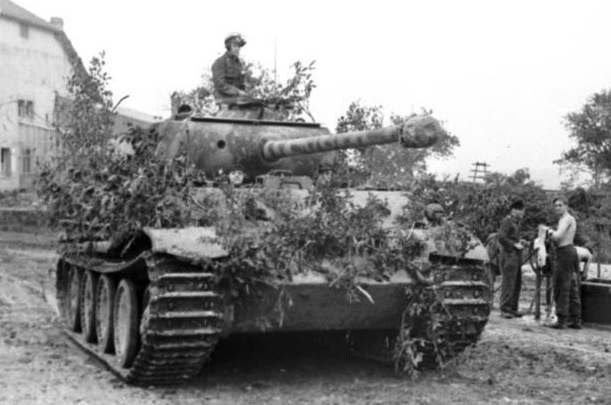
Nordfrankreich, Panzer V (Panther) mit Infanterie
Panther tank with bush camouflage in Northern France, 1944. Bundesarchiv – 

Panther tanks were captured on certain occasions and put to use by Germany’s enemies. At least two Panthers were commandeered by the Polish resistance in the early days of the Warshaw uprising, although they were immobilized after several days due to lack of fuel, and were then set on fire.
Russian troops also captured several Panthers, turning them against the Nazis along the Eastern Front. They abandoned them once the tanks broke down, however, as they were deemed too complicated and too difficult to repair.
The Panther had a 7.5 cm main gun that could carry 40 rounds of anti-tank ammo and 39 high explosive shells. It also had two MG 34 machine guns with 5100 rounds of ammunition. The tank needed a crew of at least five men, including a commander, driver, gunner, loader, radioman and machine gunner.

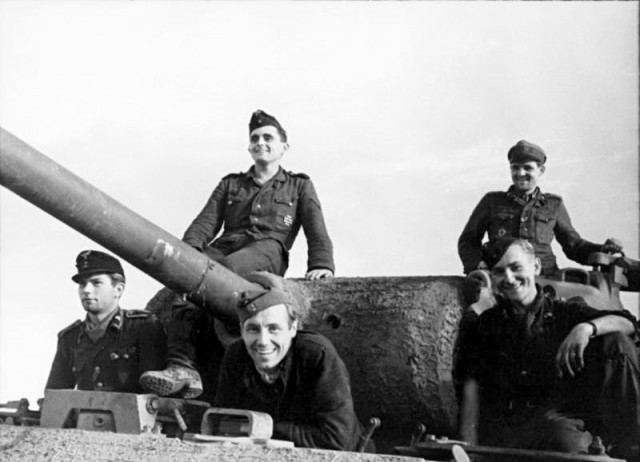
Bundesarchiv_Bild_101I-244-2323-06A,_Ostfront-Süd,_Panzersoldaten
A Panther crew. Bundesarchiv – 
The Panthers saw a great deal of action during their years in service. At their peak in September 1944 there were 552 Panthers operational on the Eastern Front, out of a total of 728. Later, during the Battle of the Bulge, the Germans used 400 Panther Tanks, five of which were disguised to look like American M10 Tank Destroyers. They did this by welding on additional plates and applying US-style camouflage paint and markings.
There are thought to be five surviving Panthers in running order, two of which were built by the British Army. There are a lot more non-runner Panthers out there in museums, as monuments or in the hands of private collectors.
The last operational report dated March 15, 1945, lists 361 operational out of 740 Panther tanks.
 Postwar Use :
Although a technologically sophisticated vehicle, the Panther's design had a very limited influence on postwar tank development. The French postwar AMX 50 tank prototype was indirectly influenced by it through the Entwicklung series, but never entered series production. It is claimed that the Panther was arguably a forebear to the modern main battle tank.
The Panther itself also saw some limited use outside the German military, both before and after 1945.


 British officers ride on a captured Panther tank in Italy June 1944, with early "letterbox" hull gun aperture

During the war, the Red Army employed a number of captured Panthers. These were repainted with prominent Soviet emblems and tactical markings to avoid friendly fire incidents. Unlike captured Panzer IVs and StuGs, the Soviets generally only used Panthers and Tigers that had been captured intact and used them until they broke down, as they were too complex and difficult to transport for repair. Panzer IVs and StuGs, on the other hand, were so numerous in terms of spare parts and easy to repair that they could be used over a much longer period in combat conditions.
During March–April 1945, Bulgaria received 15 Panthers of various makes (D, A, and G variants) from captured and overhauled Soviet stocks; they only saw limited (training) service use. They were dug down, with automotive components removed, as pillboxes along the Bulgarian-Turkish border as early as the late 1940s. The final fate of these pillbox Panthers is unknown, but sources indicate that they were replaced and scrapped in the 1950s.
In May 1946, Romania received 13 Panther tanks from the USSR. They were initially used by the 1st Armoured Brigade, but in 1947 the equipment was ceded to the Soviet-organized "Tudor Vladimirescu Division", which was transformed from a volunteer infantry division into an armoured one. The Panther tank was officially known as T-V (T-5) in the army inventory. These tanks were in poor condition and remained in service until about 1950, by which time the Romanian Army had received T-34-85 tanks. All of the tanks were scrapped by 1954. The tanks were different models: Ausf A, Ausf D, and Ausf G.They were shown to the public in 1948, during the 1 May parade in Bucharest, painted with Romanian markings. Until 1950, the T-V (T-5) was the heaviest tank available to the Romanian Army.
 Batalion Zośka armored platoon on a captured German Panther, 2 August 1944.

During the Warsaw Uprising, the Polish Home Army captured and used two Panther tanks. One, nicknamed Magda, was used by Batalion Zośka's armored platoon under the command of Wacław Micuta to liberate the Gęsiówka concentration camp.
One captured vehicle (named "Cuckoo") also saw service with the British Coldstream Guards for some time.
Germany sold Japan a single Panther along with a Tiger in September 1943; by the time it was ready in 1944, it was impossible to ship due to Allied naval interdiction.
In 1946, Sweden sent a delegation to France to examine surviving specimens of German military vehicles. During their visit, the delegates found a few surviving Panthers and had one shipped to Sweden for further testing and evaluation, which continued until 1961. The tank is on display in the Deutsches Panzermuseum in Munster.
After the war, France was able to recover enough operable vehicles and components to equip the French Army's 503e Régiment de Chars de Combat with a force of 50 Panthers from 1944 to 1947, in the 501st and 503rd Tank Regiments. In 1947, the French War Ministry wrote an evaluation of them entitled Le Panther 1947. These remained in service until they were replaced by French-built ARL 44 heavy tanks.
The last 'production' Panthers were produced at the factory by German staff just after the end of World War II under the supervision of the Royal Electrical and Mechanical Engineers (REME) using available components. 9 Panthers and 12 Jagdpanthers were produced and shipped back to Britain for post-war trials. A complete Panther and a complete Jagdpanther produced this way are now at the Bovington Tank Museum, Dorset, with brass plates on them, explaining their history.

Sunday, September 2, 2018

German Armor development from WWI to WWII and the early Cold War


Though initially slow to adopt tanks, the Germans eventually became masters of armored warfare, with some of the most effective vehicles of the Second World War and one tank of the Cold war.

A7V

When they faced British tanks during World War I in 1916, the Germans were at first shocked and then dubious about these new weapons. Once they recovered from their initial fear and alarm, they focused on the limitations of the early vehicles, which often became stuck in the mud and broken ground of the Western Front.
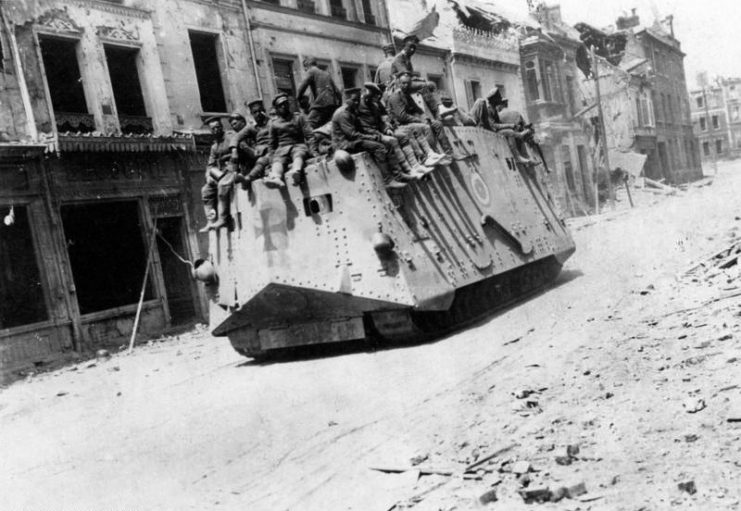
For some time, they didn’t try to imitate the British vehicles, and it was only in March 1918 that the A7V, Germany’s own combat tank, made it to the fighting front.
A7V tank at Roye on 21 March 1918.Photo: Bundesarchiv, Bild
The A7V adapted the chassis of a Holt tractor, adding an armored hull around it. A 57mm gun captured from the Russians was installed in the front of each tank, with six or seven Maxim machine guns mounted at firing ports around the rest of the body. The commander had a small raised cupola, from which he had to shout to be heard by his crew.
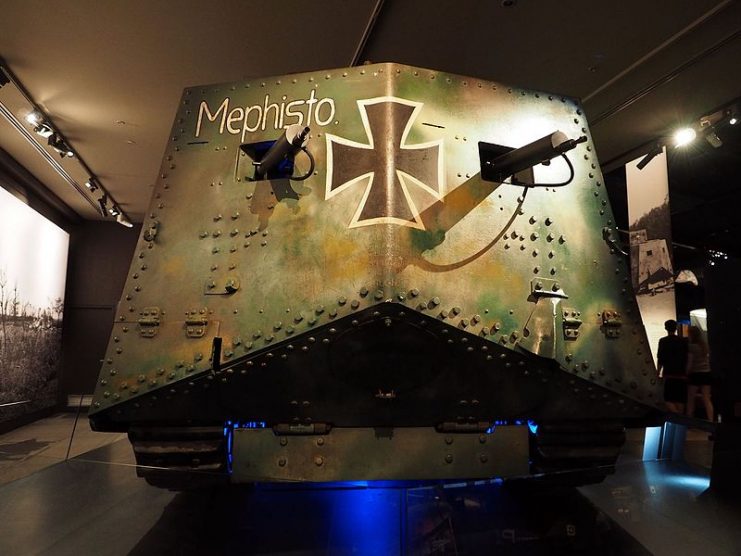
The rear of the tank Mephisto while on display at the Australian War Memorial
With Germany running short of industrial materials, only around 30 A7Vs were built and they made little difference in the war.

PzKpfw I

When Germany began openly rearming in 1933, one of its first priorities was to quickly equip the army with tanks. Military thinkers such as Heinz Guderian had convincingly argued for fast, hard-hitting armored formations as the future of war, and Hitler wanted to make this a reality for Germany.
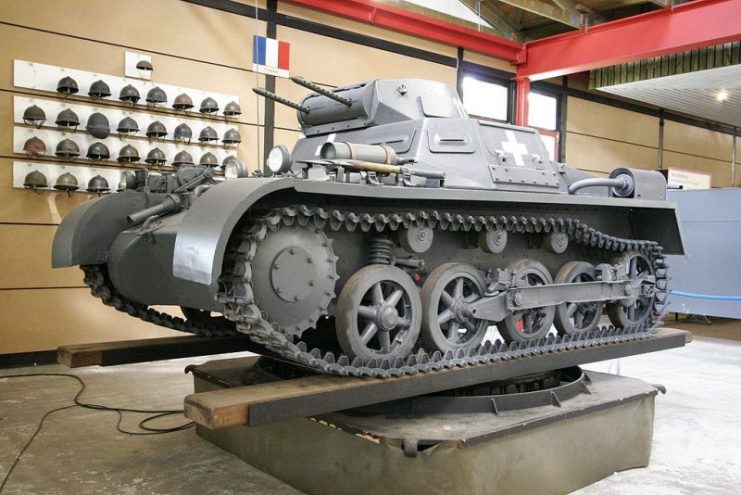
The PanzerKampfwagen I (PzKpfw I) was the first product of this policy. Hastily put into production, it entered service in 1934. It was a light tank with only two crew and two machine guns for armament.
Panzerkampfwagen I Ausf. A (Sd.Kfz. 101) on display at the Deutsches Panzermuseum Munster , Germany
Like many German weapons and soldiers of the 1930s, the PzKpfw I saw its first service in support of Franco’s regime in the Spanish Civil War. There, tank crews discovered to their own misfortunes that the PzKpfw I was too lightly armored to stand up against any sort of anti-tank gun.
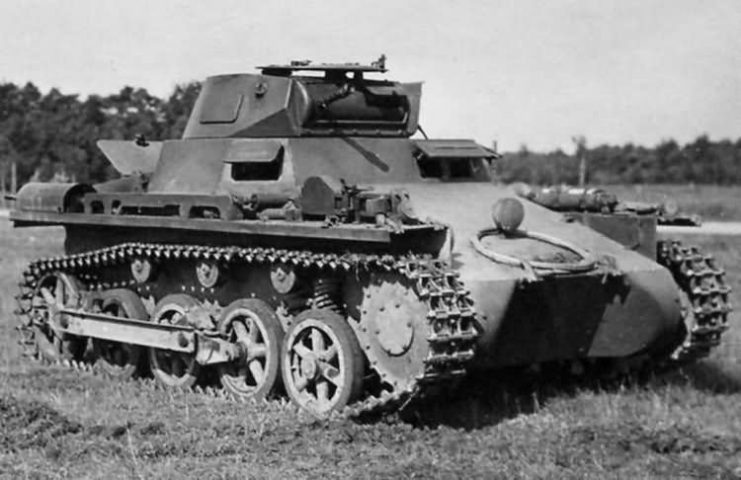
Panzer I ausf A 2
Despite its inadequacies, the PzKpfw I saw widespread use in the invasions of Poland in 1939 and France in 1940, where it made up for a shortage of heavier tanks. A few took part in the invasion of Russia in 1941 but were quickly taken off the front line. A couple hundred saw further service as command vehicles.

PzKpfw III

Based on the performance of the PzKpfw I and its successor the PzKpfw II, the Wehrmacht commissioned two tanks to form the basis of its new armored formations. These were the anti-tank PzKpfw III and the PzKpfw IV support tank.
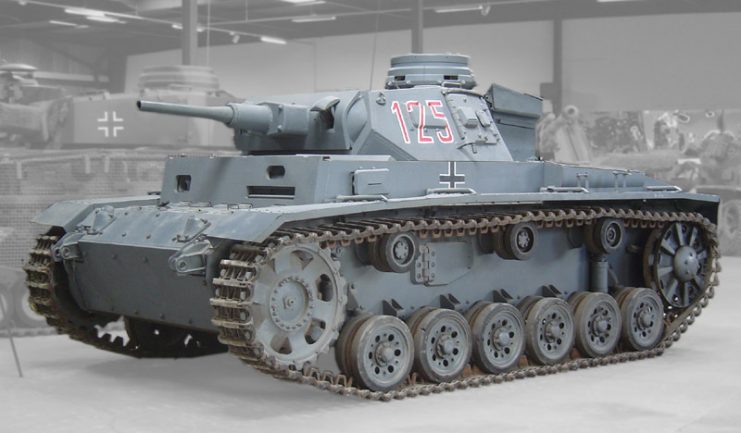
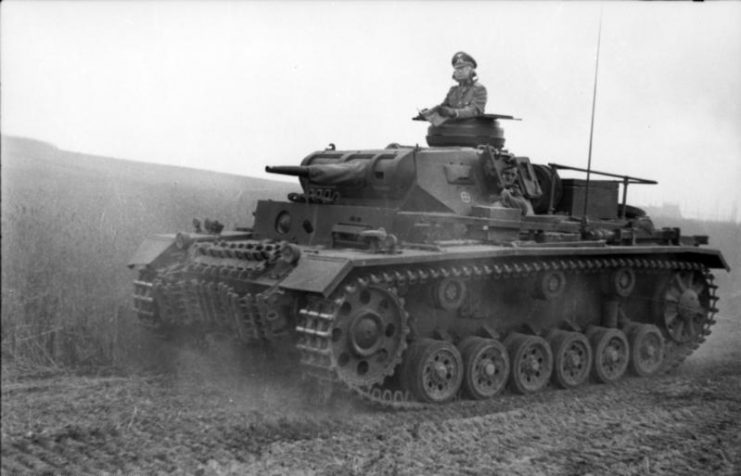
PzkpfWg III Ausf. H.
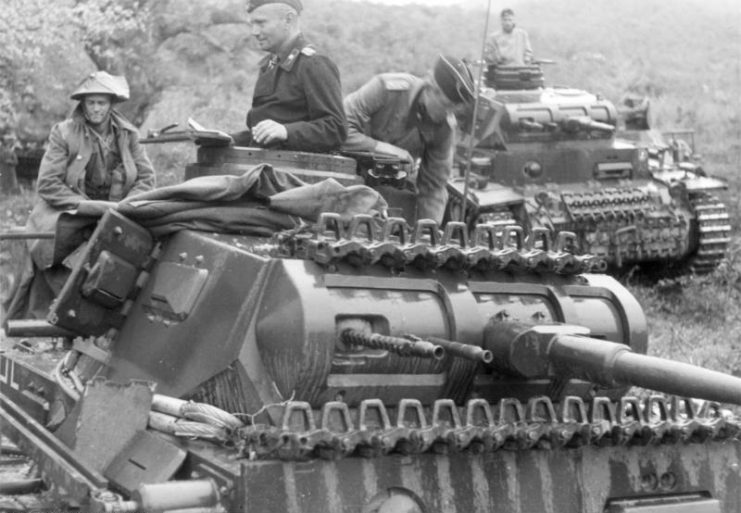
The PzKpfw III was a medium tank. Original models were equipped with a 37mm gun, but this proved inadequate for penetrating contemporary tank armor and was later replaced by a short-barreled 50mm gun. Two machine guns were also fitted, one in the hull and the other mounted coaxially with the main gun.
PzKpfw III Ausf. E command tank in Greece 1941. This vehicle is fitted with a dummy 37mm main gun and a dummy MG 34 co-axial machine gun but has an actual ball-mounted MG 34 machine gun on the right side of the turret’s mantlet.Photo:
An excellent gearbox, good suspension, and wide tracks contributed to the PzKpfw III’s fine cross-country performance.

The PzKpfw III was produced just in time for 100 of them to take part in the invasion of Poland, and 350 were fielded in the invasion of France. Thousands more were made over the next two years. But as with the PzKpfw I, its armor proved too thin to stand up against most enemy guns.
Panzer III in Yugoslavia with a striking loop antenna on the engine compartment.Photo Bundesarchiv, Bild
The first years of the war had proved that heavy tanks were needed. Germany responded with one of the finest weapons of the war.

Tiger

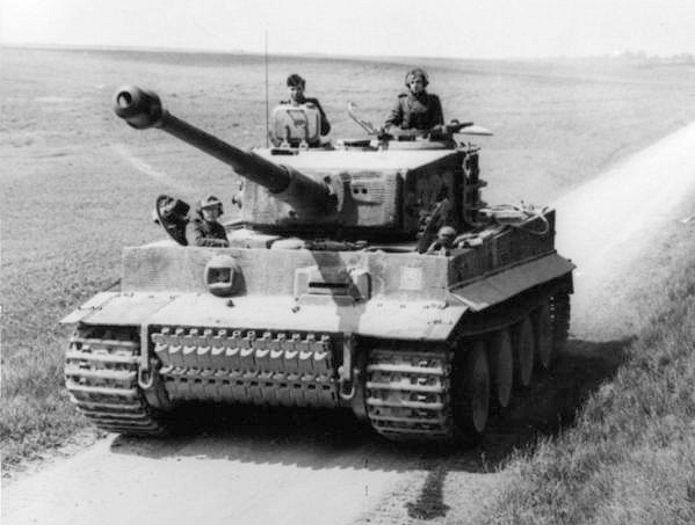
The appearance of the Russian T-34 forced the government to finally listen to a request the army had been making since 1937: to commission a heavy tank. Two vehicles were quickly designed and the simpler one went into production in 1942. This was the Tiger, produced by Henschel.
North France, Panzer VI (Tiger I).Photo: Bundesarchiv, Bild 
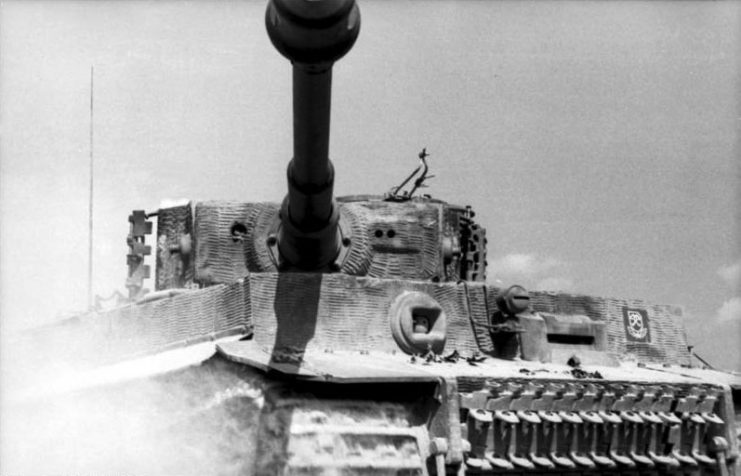
The Tiger was a huge step up from the PzKpfw models.  Its front armor was impervious to Allied guns at all but the closest range. Its 88mm main gun could penetrate 100mm of armor at distances of up to a kilometer. It was the most impressive tank in the world and kept its fearsome reputation until the war’s end.
Panzer VI (Tiger I). Photo: Bundesarchiv Bild
The Tiger did have some limitations. Its maneuverability wasn’t always efficient, so skilled opponents could sometimes get around it. If the engine wasn’t running, the turret had to be traversed by hand. But these impediments were nothing compared with its power and toughness.

Panther

Also commissioned in response to the T-34, the Panther was a medium tank created by the Maschinenfabrik Augsburg-Nürnberg and put into production in November 1942.
At 45 tons, the Panther was heavier than most medium tanks. This was partly because of its armor, which was up to 120mm thick at the front and provided superior protection against Allied guns.
Main armament- 75 mm KwK 42 (L 70).
 
The size of its weapon contributed to its weight as well as to its excellent performance on the battlefield. Its 75mm gun was twice as long as that carried by the PzKpfw IV, giving it greater power and range.
Tough, powerful and maneuverable, the Panther was one of the best tanks of the war. Initial technical problems saw the first production run returned to the factory for modifications, but from then on the Panther performed satisfactorily. Together with the Tiger, it gave the Germans a significant edge in tank-on-tank combat.
The Panther was intended to counter the Soviet T-34 Tanks.

Leopard I

During the 1950s, the reformed West German Army was initially equipped with American M47 and M48 tanks. The government, wanting a tank of their own, started working with the French on a tank-building collaboration. When this fell through, they spent several years commissioning and testing prototypes before selecting the Leopard I, which entered service in 1965.
Leopard 1

A solid main battle tank equipped with a British 105mm L7 gun, the Leopard was West Germany’s most successful tank of the Cold War. Thousands were built, with later versions adding features such as night sights and improved tracks. The design was exported to several other countries.


Wednesday, May 9, 2012

Spandau Prison

My son found my copy of "Inside the 3rd Reich" by Albert Speer and read it, impressive for a 9 year old boy I should say.  I remember reading my Dad's copy when I was 12.  It was an eyeopener and it explained how a 2nd rate street hustler named Adolph Hitler was able to ensnare an entire generation of Germans  I later purchased "Spandau" for my collection.
     What prompted this post was that my son was asking a lot of questions about the prison and i told him that I didn't know what happened after the last prisoner was released.  I figured that I would surf around.  Google and Wiki are good things;)

Spandau Prison


Coordinates: 52°31′16″N 13°11′07″E

Spandau Prison in 1951.
Spandau Prison was a prison situated in the borough of Spandau in western Berlin, constructed in 1876 and demolished in 1987 after the death of its last prisoner, Rudolf Hess, to prevent it from becoming a neo-Nazi shrine. In history, Spandau Prison succeeded as a prison to the Renaissance-era Spandau Citadel where Frederick II of Prussia had held captive the magistrates of the Prussian Kammergericht and the Spandau jail, where Carl Schurz had freed his friend Gottfried Kinkel in the aftermath of the 1848 German revolution.[1] The magistrates and Kinkel were held captive as Festungsgefangene (fortress prisoners), being privileged in detainment condition

The prison was built in 1876. It initially served as a military detention center. From 1919 it was also used for civilian inmates. It held up to 600 inmates at that time.
In the aftermath of the Reichstag Fire of 1933, opponents of Hitler and journalists such as Egon Kisch and Carl von Ossietzky were held there in so-called protective custody. Spandau Prison became a sort of predecessor of the Nazi concentration camps. While it was formally operated by the Prussian Ministry of Justice, the Gestapo tortured and abused its inmates, as Egon Erwin Kisch recalls in his memories of Spandau Prison. By the end of 1933 the first Nazi concentration camps had been erected (at Dachau, Osthofen, Oranienburg, Sonnenburg, Lichtenburg and the marshland camps around Esterwegen); all remaining prisoners who had been held in so-called protective custody in state prisons were transferred to these concentration camps.
After World War II it was operated by the Four-Power Authorities to house the Nazi war criminals sentenced to imprisonment at the Nuremberg Trials.
Only seven prisoners were finally imprisoned there. Arriving from Nuremberg on 18 July 1947, they were:
Prisoner Prisoner Number Sentence Released
Karl Dönitz 4 10 Years 30 Sep 1956
Konstantin von Neurath 3 15 years Nov 1954 (released early)
Baldur von Schirach 1 20 years 30 Sep 1966
Albert Speer 5 20 years 30 Sep 1966
Erich Raeder 2 Life 26 Sep 1955 (released early)
Walter Funk 6 Life 16 May 1957 (released early)
Rudolf Hess 7 Life Died 17 Aug 1987 in prison
Of the seven, only four fully served their sentences; the remaining three, Neurath, Raeder, and Funk, having been released earlier due to ill health. Between 1966 and 1987, Rudolf Hess was the only inmate in Spandau Prison. His only companion was the warden, Eugene K. Bird, who became a close friend. Bird wrote a book about Hess's imprisonment entitled The Loneliest Man in the World.
Spandau was one of only two Four-Power organizations to continue to operate after the breakdown of the Allied Control Council; the other being the Berlin Air Safety Center. The four occupying powers of Berlin would alternate control of the prison on a monthly basis, each having the responsibility for a total of three months out of the year. Observing the Four-Power flags that flew at the Allied Control Authority building could determine who controlled the prison.
The prison was demolished in 1987, largely to prevent it from becoming a Neo-Nazi shrine, after the death of its final remaining prisoner, Rudolf Hess, who had been the prison's sole occupant after the release of Speer and von Schirach in 1966. To further ensure its erasure, the site was made into a parking facility and a NAAFI shopping center, named The Britannia Centre Spandau and nicknamed Hessco's after a British supermarket chain of a similar name. All materials from the demolished prison were ground to powder and dispersed in the North Sea or buried at the former RAF Gatow airbase.
As of 2006, a Kaiser's Supermarket, ALDI, and a Media Markt consumer electronics store occupied the former prison grounds. In late 2008, Media Markt left the main shopping complex. The space lies now abandoned. In 2011 the new owner, a development company applied for permission to demolish the cinema complex of the Britannia Centre, which is used by ALDI. The contracts for both, the cinema complex and the shopping complex, with Kaiser's, were terminated.


Location

The compound was located on Wilhelmstraße in the district of Spandau.
Image showing the location of the Spandau Prison on Berlin map

Map

Map of the Spandau Prison.

Pre Occupation Forces History

The prison was built in 1876. It initially served as a military detention center. From 1919 it was also used for civilian inmates. It held up to 600 inmates at that time.

Occupation Forces History

On July 18, 1947 seven Nazi war criminals were brought to the Spandau Prison. They were sentenced at the Nürnberg Trials. Rudolf Hess, Walther Funk, and Erich Raeder faced life sentences. Albert Speer and Baldur von Schirach faced a 20 year sentence while Konstantin von Neurath had to serve 15 and Karl Dönitz 10 years in the prison.
Dönitz, Speer, and Schirach served their full sentences. Neurath, Raeder and Funk were released earlier due to their ill health.
From 1966 on Rudolf Hess remained the only prisoner at the Spandau Prison. The four powers took turns in guarding the prison. Despite the tensions between the Western Allies and the Soviets the guard duty at the Spandau Prison was never interrupted.
The guarding platoon, made up by 37 soldiers and one officer, changed monthly with a change of the guard ceremony in front of the prison:

FRUKUSSU
FebruaryJanuaryAprilMarch
JuneMayAugustJuly
OctoberSeptemberDecemberNovember
The sentries were manning six towers arround the prison.
Since the prison was located next to Smuts Barracks which housed the Berlin Armoured Squadron the Soviets were able to take a close look at the activities in the barracks.
The prison was funded by the Federal republic of Germany through the occupation budget and the budget of the justice department in West Berlin. According to a newspaper article the costs from 1970 until 1983 were about 20 million DM.
Until his death Germany and the Western Allies tried to release Hess for humanitarian reasons but the Soviets would not agree.
On August 17, 1987 Hess comitted suicide. However some people do not believe that he comitted suicide but have a controversial theory of the British SAS killing Hess.
The US guard detail which served at the prison during August was pulled out and British guards took over the compound.
In order to prevent the prison becoming a memorial for Neo-Nazis the prison was torn down in 1987. The rubble was spread in the North Sea.
A new NAAFI shopping centre was built on the former prison grounds.

Post Occupation Forces History

The shopping centre was turned over to German authorities in 1994.

Images


This picture was taken the morning after Hess died. The barriers were put up to keep sympathisers away