Webster

The Constitution was made to guard the people against the dangers of good intentions." --American Statesman Daniel Webster (1782-1852)


Showing posts sorted by date for query Boer War. Sort by relevance Show all posts

Thursday, July 16, 2026

The Different Opponents Faced By The British Victorian Army.


I decided to do some history stuff rather than political stuff.


I bought a book in the early 90's called "The Zulu Wars" and a bit later a book called "The khaki and the Red". These books were fascinating to read the different history and battles that the Victorian era British army faced in defending the empire and "PAX BRITANNIA".   Those books along with a book I used in college called "The Defense of Duffers Drift" which talked about small unit tactics during the Boer war.  Some of the stuff was no longer relevant but it encouraged critical thinking.  One of my favorite movies is "Zulu", having the British soldiers stand and fight the word I remember from the movie was "Get some good pikeman", for the use of the bayonet would be needed.

As I recall part of the British soldier to deal and adapt was part of the Victorian heritage that was prevalent at the time, the British soldiers and the culture believed that they were superior to everyone because they were British, it was part of the DNA.  For this reason they pushed the sphere of influence to a point where it was said that "The Sun never sets on the British Empire".  Also I remembered another movie with Michael Caine and Sean Connery "The man who would be King"


It is a different time and I wonder what a Britisher from back then would think about the empire today and the problems that the British are having from the E.U and the invasions of the "Kiffirs" from the subcontinents., They probably would be appalled


Maintaining your status as a global power is no easy thing. The British Victorian Army was one of the best equipped and most experienced in the world, its forces active from North Africa to the South Pacific. But while this gave many British soldiers useful experience, it also created unique challenges for them, their commanders and the politicians putting them into the field.
The British army was the same wherever they went, but their opponents were wildly different, each one presenting a new combination of skills, tactics, and weaponry for the British to overcome.

1. Egyptian Nationalists

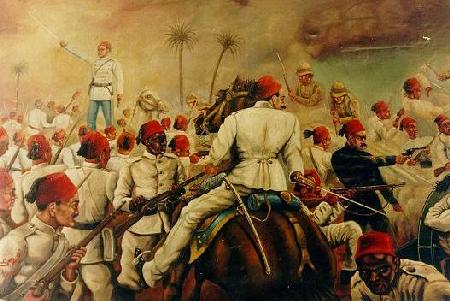
Anglo-egyptian_war
By 1879, the Egyptian government was massively corrupt, inefficient, and favorable to Europeans over locals. Even the law gave better protection to wealthy Europeans in the country than its native inhabitants. France and Britain in particular held huge sway.
Egyptian nationalists led by Colonel Ahmed ‘Urabi seized control of the country, seeking to bring about democratic reforms that would take power away from the elite and reduce foreign influence. France refused to intervene. Britain, on the other hand, used the death of 50 Europeans in riots to justify an invasion in 1882, whose real purpose was the defense of economic interests.
The forces they faced were trained and equipped by Europeans and fought like a regular army. But the British proved superior, defeating ‘Urabi at the Battle of Tel-el-Kebir and taking control of Egypt.

2. Ashanti


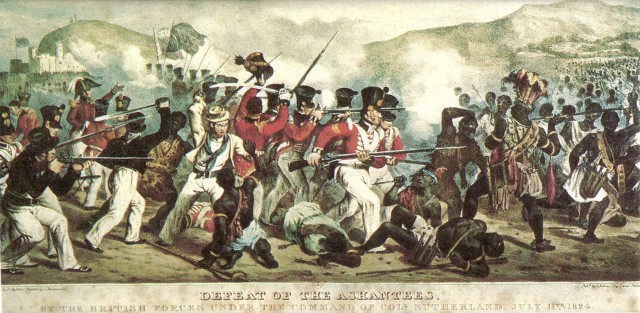
Defeat of the Ashantees, by the British forces under the command of Coll. Sutherland, July 11th 1824
The defeat of the Ashantees, by the British forces under the command of Coll. Sutherland, July 11th, 1824.

As in Egypt, the British fought the Ashanti Empire, located in modern Ghana, for control of economic resources. They wanted to control gold from the region, and ownership or favorable peace treaties could prevent other European powers from getting involved.
The Ashanti were primitively armed but experienced and smart at fighting in local terrain. Launching ambushes out of the hills and jungle, they gained the element of surprise and often outflanked their opponents.
The downside of Ashanti tactics was a lack of cohesion and close order discipline. In the face of increasingly accurate rifles, dispersed troops were more vulnerable than they had been a century before. Unable to break British formations, they were repeatedly defeated.

3. Zulus

Perhaps the most famous of Britain’s colonial opponents, the Zulu Empire was defended by warriors called impis. Tough and aggressive, they could run for miles before charging into battle and overwhelming their opponents with short stabbing spears. They were also highly disciplined, able to maneuver swiftly and coherently on command and willing to throw themselves in waves against the enemy.
To gather together various territories in southern Africa, the British needed to conquer the Zulus. They sent an ultimatum that triggered the war and then invaded Zulu lands.
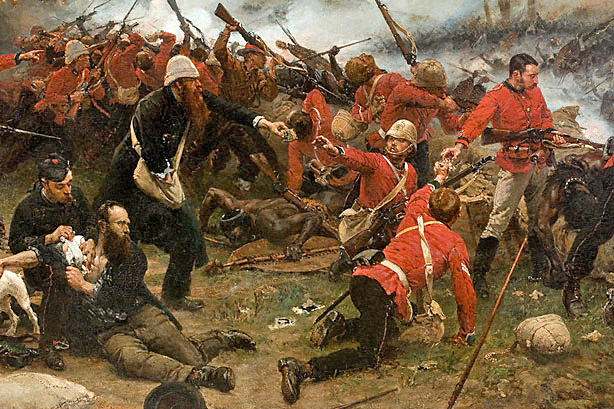
The Zulus achieved an early victory at Isandlwana, where appalling leadership crippled the British  forces. The famous defense of Rorke’s Drift followed, in which 150 British and colonial troops fought off 3-4,000 Zulus in a desperate engagement.


Défense_de_Rorke's_Drift
Defense of Rorke’s Drift.

Despite these early events, the ferocity, tenacity, and courage that had served the Zulus so well were not enough to let Spears beat modern guns. By the final Battle of Ulundi, courageous charges were creating massive casualties for little gain. However, the war had shaken British confidence, teaching some not to under-estimate a technologically inferior force.

4. Maoris


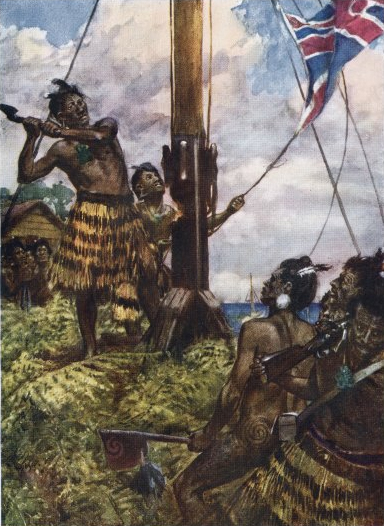
Hone Heke cuts down the flagstaff on Flagstaff Hill at Kororāreka.

A similar lesson was taught in the New Zealand Wars (1845-1872). With settlers spreading across New Zealand, and the colonial authorities backing them against the native Maoris, many locals took up arms to resist.
The Maori way of warfare was the polar opposite of that used by the Zulus. Impi tactics were flowing and aggressive, adapted to fight other African tribes. Those of the Maoris were stationary and defensive, adapted to counter European guns. Creating fortified earthen strongholds called pā, the Maoris held off British and then colonial militia troops, firing from well-prepared defensive positions, forcing the attackers into costly advances. Though the result was once again domination by white colonials, fighting was nowhere near as decisive as in the Zulu Empire.

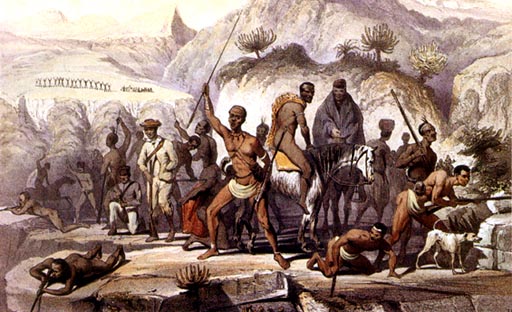
5. Xhosa


Resistance fighters defend a stronghold in the forested Water Kloof during the 8th Xhosa war of 1851. Xhosa, Kat River Khoi-khoi and some army deserters are depicted
Resistance fighters defend a stronghold in the forested Water Kloof during the 8th Xhosa war of 1851. Xhosa, Kat River Khoi-khoi, and some army deserters are depicted.

The Zulus were not the only natives the British fought in their attempt to unite southern Africa. Further, east, the Xhosa also resisted, triggering the Ninth Xhosa War (1877-9)
Unable to beat the well-equipped British in open battle, the Xhosa retreated to the Amatola Mountains. Here they fought a guerrilla war, making use of the terrain to launch a string of ambushes. By never presenting the British with a target and always withdrawing when put under pressure, they prevented the invaders from gaining an advantage. It was only by building a string of fortifications and creating an elaborate system of mounted pursuit that the British beat them.

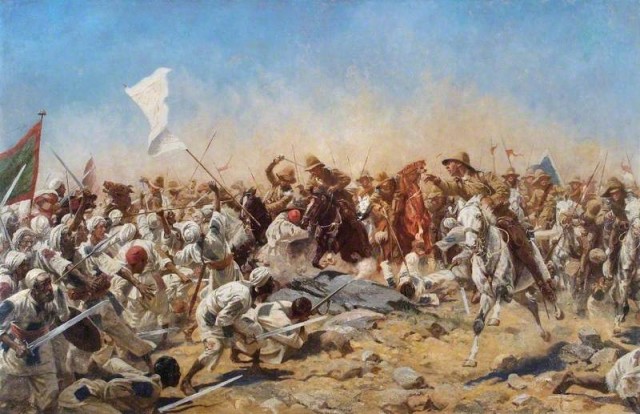
6. Mahdists


The Battle of Omdurman
The Battle of Omdurman.

The Mahdists in Sudan faced the British with a different challenge in the 1880s and 1890s. Believing their leader Muhammad Ahmad to be the Mahdi, a prophesied Islamic religious leader, they fought with fanatical fervor against foreign influence.
This religious fervor led to frontal assaults even more determined than those of the Zulus. Though these served the Mahdists well early on, they were no match for well-prepared troops equipped with the latest guns. It was such a force that broke them finally broke them at Omdurman in 1898.

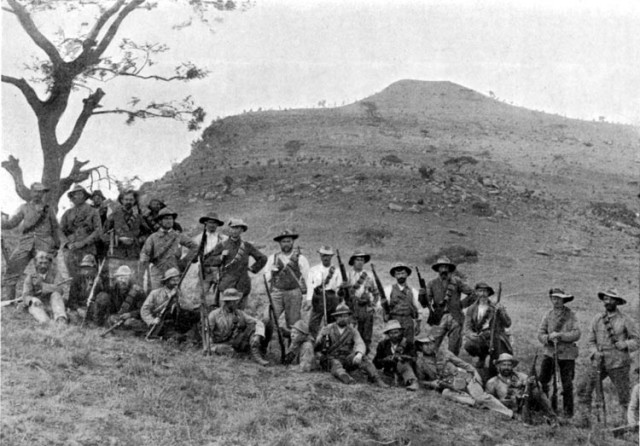
7. Boers


Boer militiamen at Spionkop
Boer militiamen at Spionkop.

While many opponents used elements of guerrilla warfare against the British, the Boer version came closest to what we see in the modern world. The descendants of Dutch settlers, the Boers became caught up in the British attempt to unify southern Africa, and like the natives they resisted.
Smart, accurate marksmen with talented leaders who understood European warfare, they were foes unlike any others the British had faced. They were able to gain large armies and adapt elements of guerrilla warfare to the battlefield, defeating the British in bloody confrontations as well as small actions.
Ultimately, the Boers were undone not by their enemies’ superior tactics or leadership. Indeed, British leadership in the war was often among the worst in history. Yet even the tenacious Boers could not defeat the superior resources of the British Empire, and sheer weight of numbers eventually wore them down

Tuesday, March 7, 2023

"Reading A Rifle" The Story of One Mosin-Nagant

 I thought this was an interesting story, I thought I knew quite a bit about "Mosin" since I owned a couple until that durn kayak accident*Sniff*Sniff*.  This article had some stuff that I didn't know about.

     I shamelessly "Nicked" this from American Rifleman


 Historical arms collectors are often confronted with opportunities to acquire guns that are outside the normal boundaries of their collections, like, in this instance, Russian rifles that were used by Finland during World War II. However, creative thinking and knowledge of the gun’s history may justify their inclusion in those collections

As arms collectors, many of us have established fairly strict boundaries on our collections—most often out of financial necessity and available space in our homes— and we sometimes pass by interesting, and affordable, antique or vintage guns being offered for sale, because they don’t seem to fit within the confines of our collection. However, by taking a broader view and ultimately understanding the history of your period of interest, guns that, at first glance, don’t appear as candidates for inclusion in your collection may actually have a place in it. The secret is to know how to discern the history of a gun and to read the story that it can tell you.

While taking a break during a musical session in my former collection room (the late “Kriegszimmer”) some years ago, one of my pals looked around at the assemblage of military memorabilia and asked the rhetorical question: “If these things could only talk, what kind of a tale would they have to tell?” I was sitting next to a vintage rifle, so I pulled it out of the rack and said, “This one really has quite a history, and I can only imagine the stories that it could tell.” Taking this as a cue, the other guest musicians asked me to tell the story of this well-traveled rifle that had been born in one country, fought for another country and then fought for two more countries over a short span of only thirty years.

Mosin nagant bolt action recevier gun rifle three line

Facing a shortage of rifles in the early months of World War I, czarist Russia contracted with American arms manufacturing firms to provide Model 1891 Mosin-Nagant rifles for its troops. Courtesy of the author.

When Russia entered into World War I, its huge conscript army was already woefully short of service rifles. Its standard infantry shoulder arm was the “Russian Three-Line Rifle, Caliber 7.62 mm. (.3”),” or M1891, a five-shot, bolt-action rifle that was chambered for the 7.62x54 mm R rimmed cartridge. The “three-line” designation was a Russian term, meaning that the caliber of the bore was 0.3” in diameter, a “line” representing 0.1”—thus .30 caliber, or 7.62 mm. A Russian army officer, Sergei Mosin, designed the rifle in 1891, but a Belgian inventor, Leon Nagant, claimed to have developed certain features on it, so, at least in the United States, this rifle is commonly referred to as a “Mosin-Nagant.”

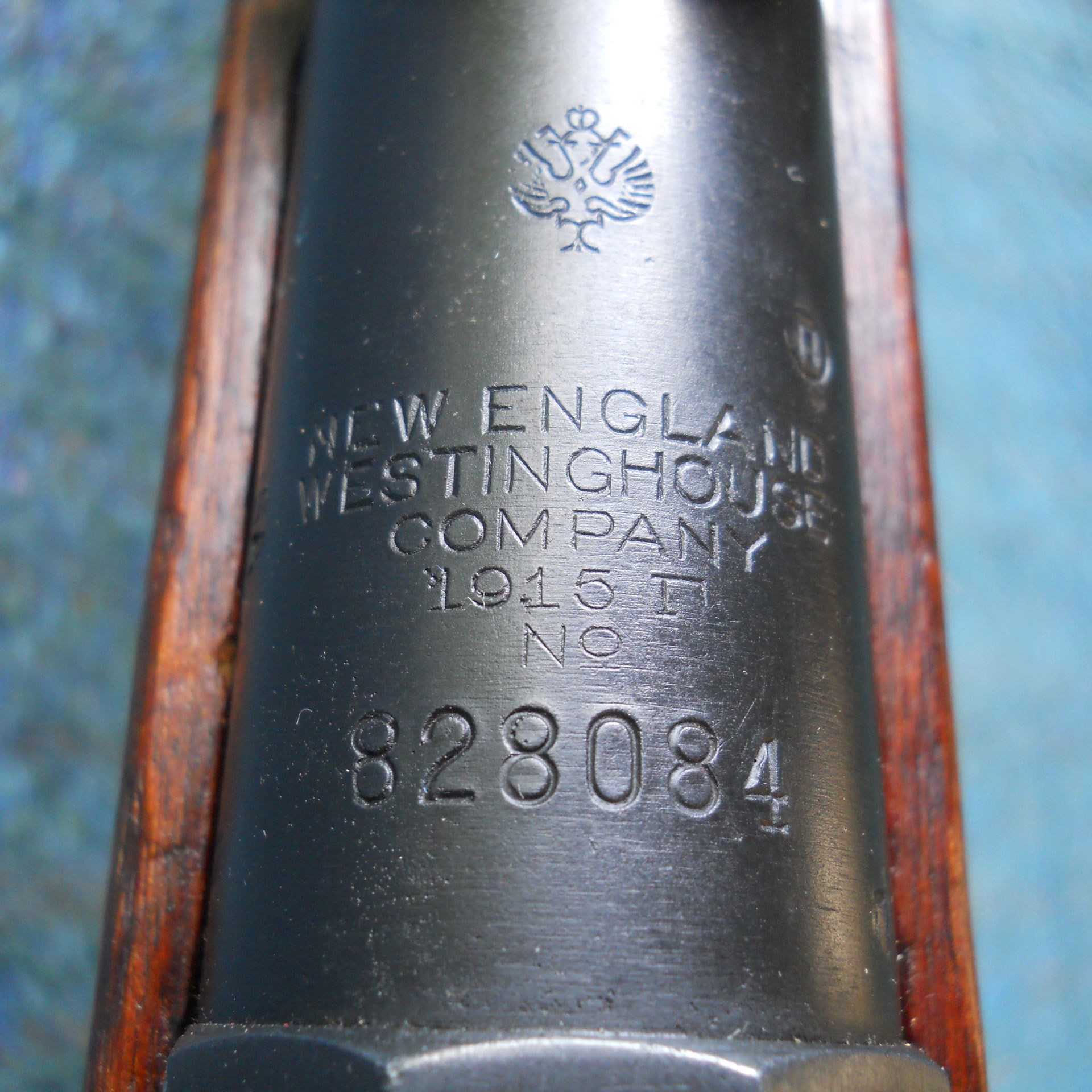
New England Westinghouse company stamp metal gun rifle mosin nagant serial number

All of the rifles made by New England Westinghouse were marked with the date of “1915,” regardless of the actual date of their manufacture: 1915, 1916 or 1917. Courtesy of the author.

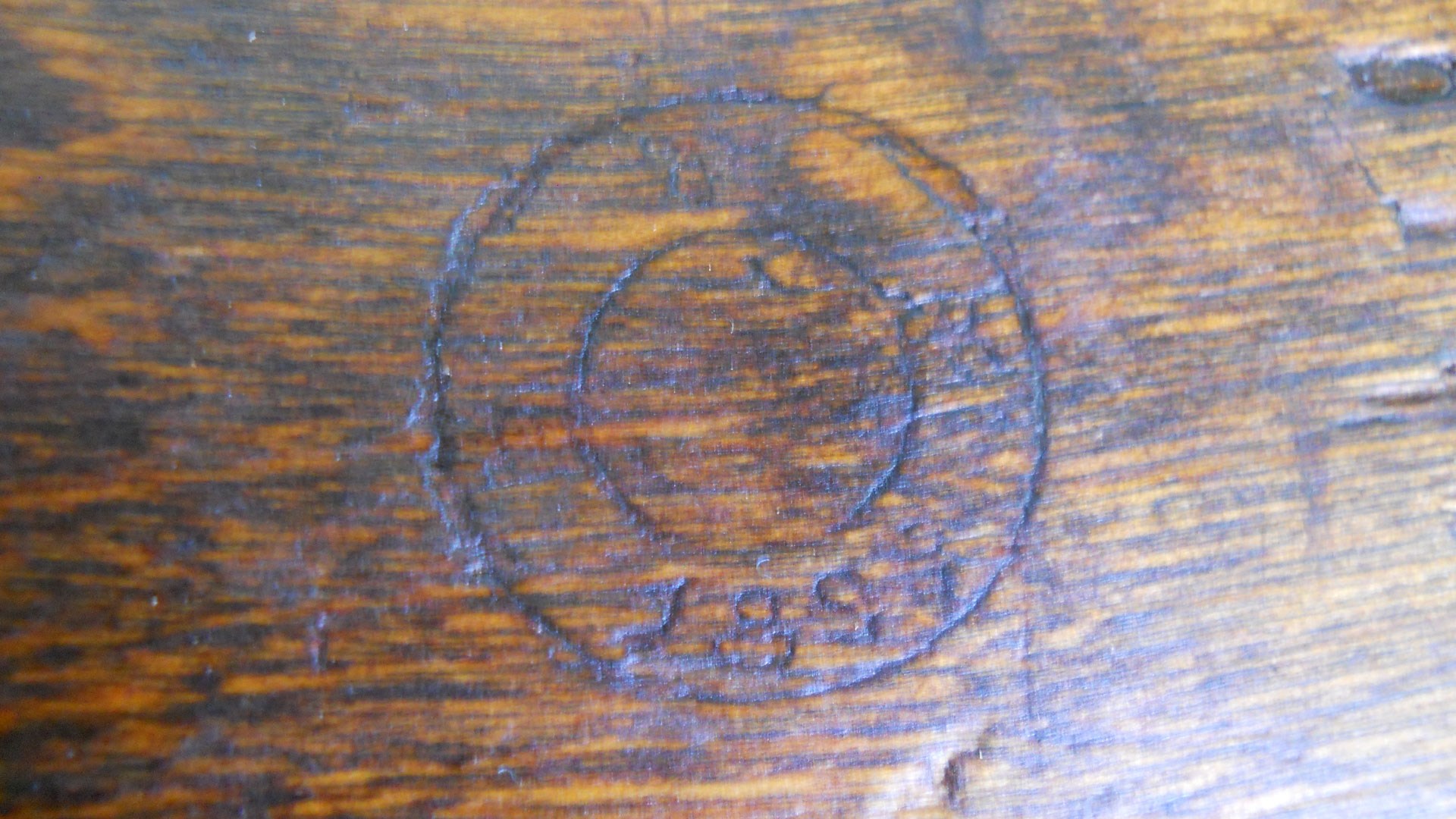
By 1915, the Russians had more men in the lines than they had rifles, and they also had lost thousands of guns in the defeats they suffered by the hands of the German army in 1914. The czarist government turned to America and contracted with both the well-known Remington Arms Co. in New York and a new firm called New England Westinghouse in Massachusetts to make Mosin-Nagant rifles. Remington was contracted to make 1.5 million rifles, while Westinghouse was to produce 1.8 million arms. According to some published sources, only a total of about 750,000 thousand rifles had been produced by Remington prior to the Bolshevik Revolution in 1917, and nearly 470,000 of these had been shipped to Russia. However, the serial-number range from extant verifiable rifles does not bear out these statistics, as the National Museum of the Marine Corps has a Remington rifle that was supplied by the Russians to the Nicaraguan insurgents in the late 1920s, and it has a serial number in the 562,000 series. Westinghouse alone must have made more than 800,000 rifles, as at least two of them in my former collection, 828084 and 803375, clearly made it to Russia and were subsequently used by the Finns. These rifles were very well-made and had wood stocks of American walnut. The Russians stamped an acceptance mark on the wood buttstock and then issued them as fast as they could.

The czarist Russian acceptance stamp in the rifle’s butt stock. Courtesy of the author.

With the collapse of the Romanov dynasty and Russia’s exit from World War I in 1917, the new Russian government refused to pay for any more rifles, so those rifles still in storage in the U.S. were purchased by the American government, marked and issued for recruit training, as its army was expanding exponentially after entering the war earlier that year. Interestingly, the U.S. government also shipped 50,000 of these rifles to Vladivostock in 1917 to arm the Czech Legion, while also supplying the small American expeditionary forces in both Murmansk and Archangel with Remington and Westinghouse Mosin-Nagants. After the war, most of the rifles still in American armories were sold to civilians under the Office of the Director of Civilian Marksmanship, the forerunner of today’s Civilian Marksmanship Program.

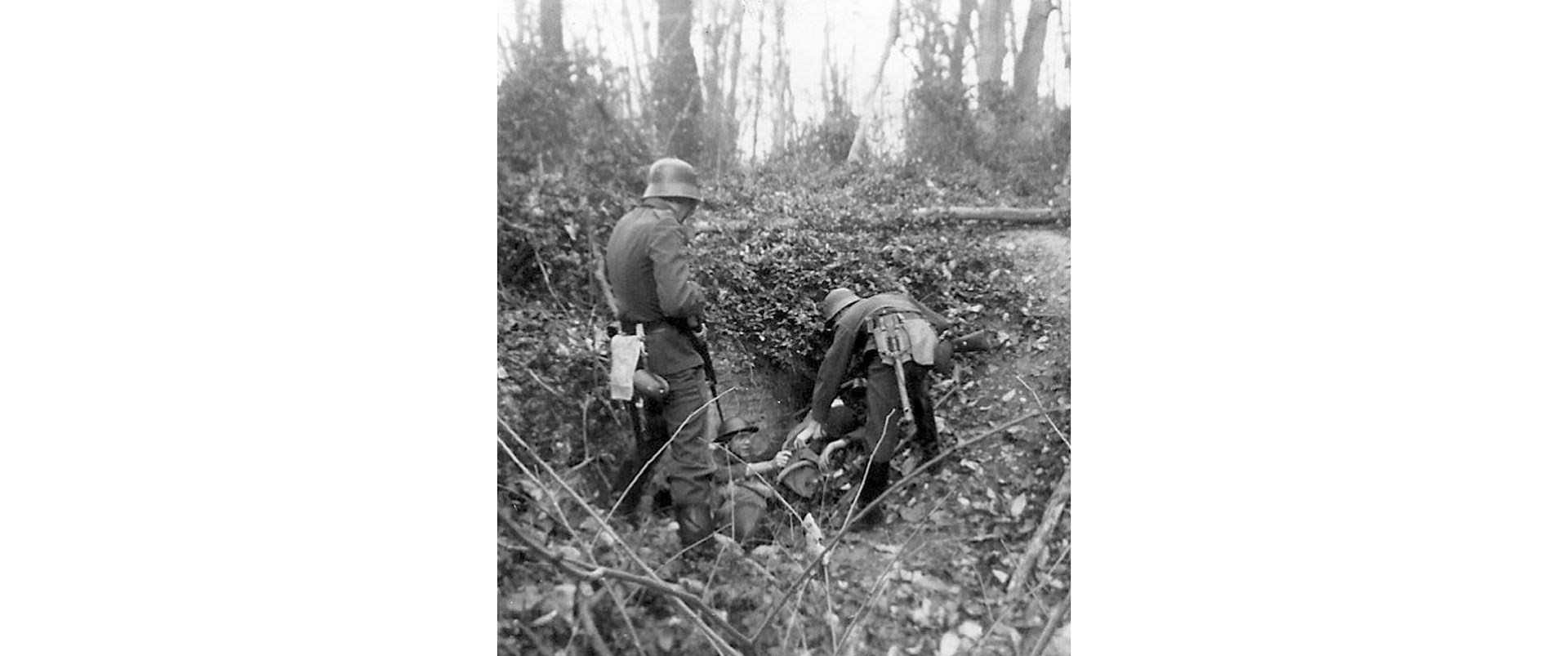
Vintage black and white photograph war prisoner of war pow trench outdoors guns military world war i

The Russian Army lost thousands of its rifles to its German enemies in World War I. After being captured, some Allied prisoners in POW camps across Germany were guarded by rear-echelon German troops, often armed with captured Russian rifles. Courtesy of Robert Martin.

Meanwhile, the Germans were putting the Russian rifles that they had captured to good use. After marking the buttstock with a “Deutsches Reich” stamp, these rifles were issued to rear-line troops as “substitute-standard” arms, and some were even fitted with an adapter on which an all-metal “ersatz” knife-bladed bayonet could be mounted. The standard Russian bayonet was an épée-style, socket-mount bayonet. While the majority of the rifles were issued to prison camp guards, transportation units and other similar rear-area troops, the German Imperial Navy also received some of them. By 1916, the German forces had thousands of these rifles in its ranks and even had enough of them to spare for one of the most curious episodes in World War I.

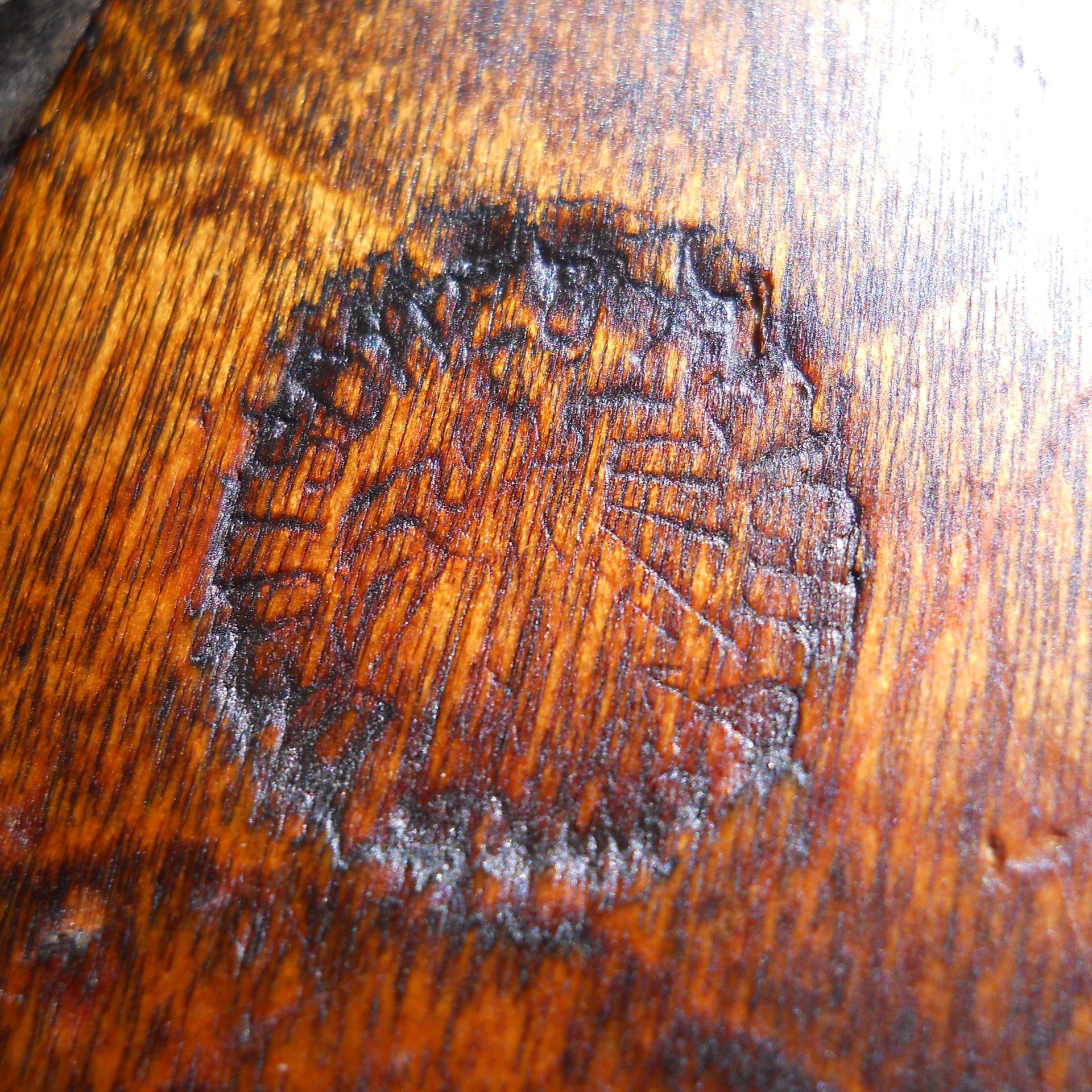
wood stamp german guns rifle cartrouche mosin nagant

Shown here is the German Imperial ownership stamp applied after its capture from the Russians. Courtesy of the author.

Irish nationalist separatists had been plotting to gain Ireland’s independence from Great Britain for more than a century prior to World War I. Although the British had offered a form of Home Rule to Ireland prior to the beginning of World War I, it was put on hold for the duration of the war. A small group of revolutionaries gained control of the “Irish Volunteers” (a group pledged to support Home Rule by force), and during Easter Week of 1916, the secret Irish Republican Brotherhood fomented a rebellion against the British government. While it fizzled across most of the country, it raged for a week in the capital city of Dublin and reduced much of the center city to rubble.

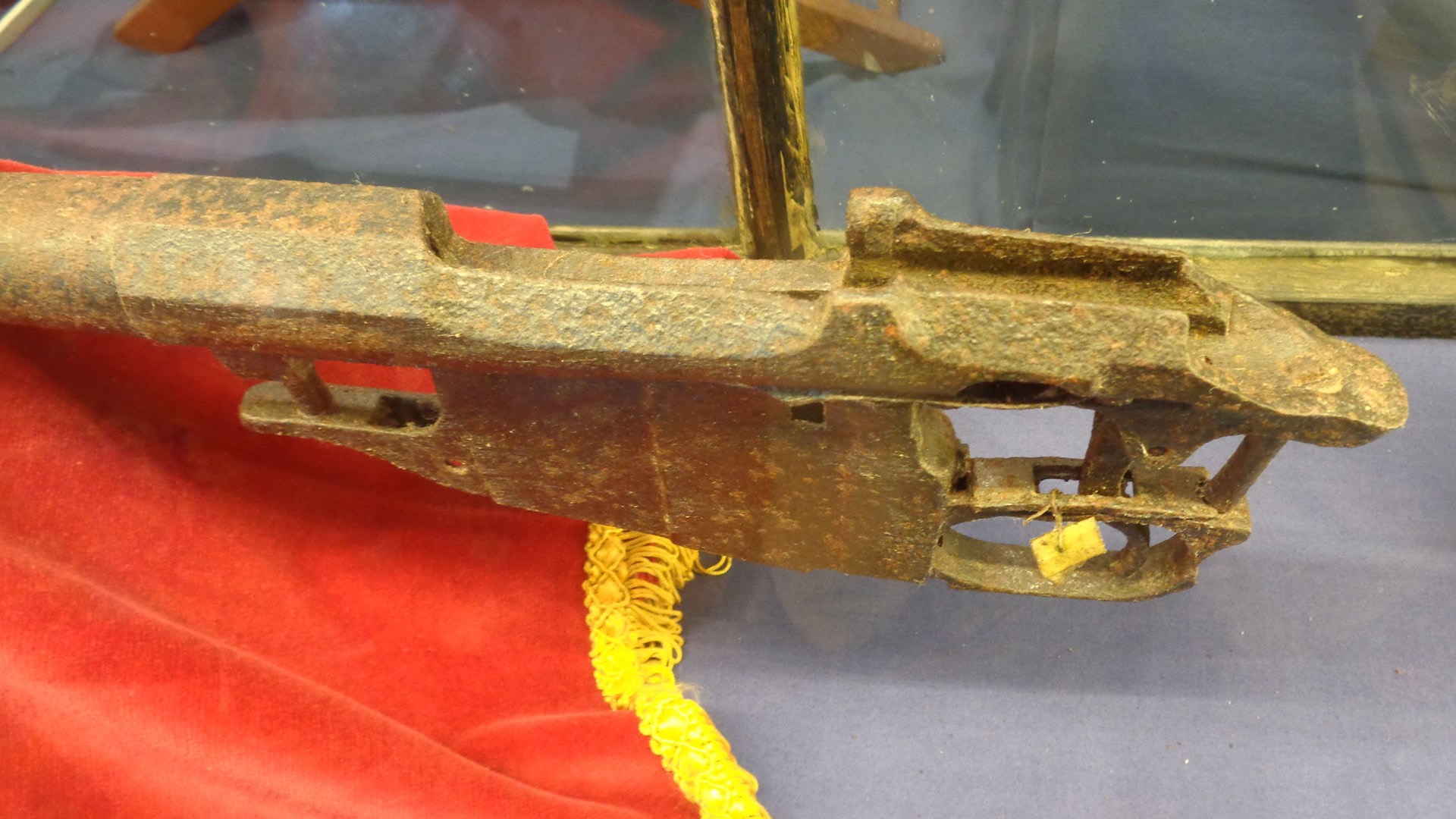
rusty gun parts rifle museum

The Germans sent 20,000 of these captured rifles to Irish Nationalists in 1916, but the ship on which they were being transported to Ireland was sunk in Cobh Harbor, near Cork. This is one of the very few rifles recovered from the wreckage, and it is now in the town museum. Courtesy of the author.

The success of the “Easter Rising” across Ireland depended on German support—namely arms, since the Irish volunteers had just a few modern arms and not many more obsolete military rifles and civilian shotguns. At the urging of the Irish revolutionaries (including the famed social reformer, Sir Roger Casement), the German government filled an old cargo ship, the Libau, with 20,000 of these captured, and “twice stamped,” Mosin-Nagant rifles, disguised the ship as a Norwegian freighter and tried to land the guns on the west coast of Ireland a few days prior to the Easter Rising. However, due to a series of mishaps, the British were able to seize the freighter, now known as the Aud. Its captain scuttled the ship as it was being escorted into Cork Harbor, and all 20,000 rifles, as well as 10 Maxim machine guns and millions of rounds of ammunition, went to the bottom of the harbor, where they, except for a very few examples that were recovered and are now in museums, remain to this day.

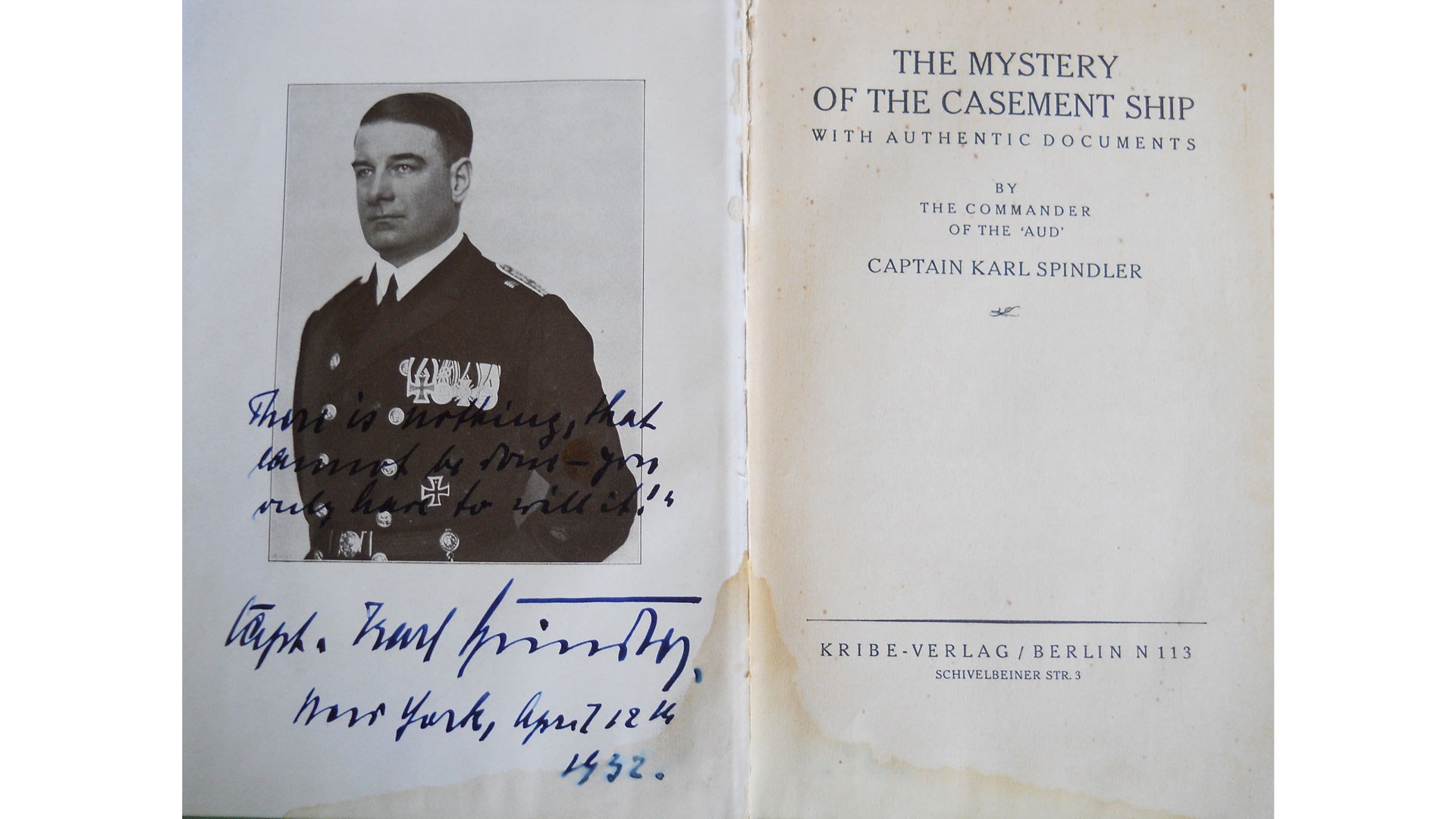
The Mystery Of The Casement Ship booklet and photograph signature writing ink

In “The Mystery of the Casement Ship,” the Aud’s captain recounted the efforts to land 20,000 of these Russian rifles in Ireland, prior to the 1916 “Easter Rising.” Courtesy of the author.

By the time of the Armistice in November 1918, Germany had thousands of Mosin-Nagant rifles on hand. Since the Treaty of Versailles only allowed for a small 100,000-man “Reichswehr” army, the German government had no need for an excess of captured foreign rifles, so it sold most of them to Finland in the early 1920s. Finland had finally gained its freedom from Russia during World War I and needed arms to protect its new status as a republic. The Finns marked the rifles that had been purchased from Germany and issued to its new army with an “SA” (Suomi Armeija, meaning Finland Army) stamp on the breech of the gun, as they also did the rifles that they had captured from the Russians during the Finnish Civil War in 1918. Those rifles acquired for the Finnish Civil Guard were stamped with a capital letter “S” on either the buttstock or the barrel shank, and sometimes with the corresponding number of the Guard district. While most of the captured Mosin-Nagant rifles were Russian-made, some of them, like some of the German-supplied arms, were the American imports from Remington and New England Westinghouse.

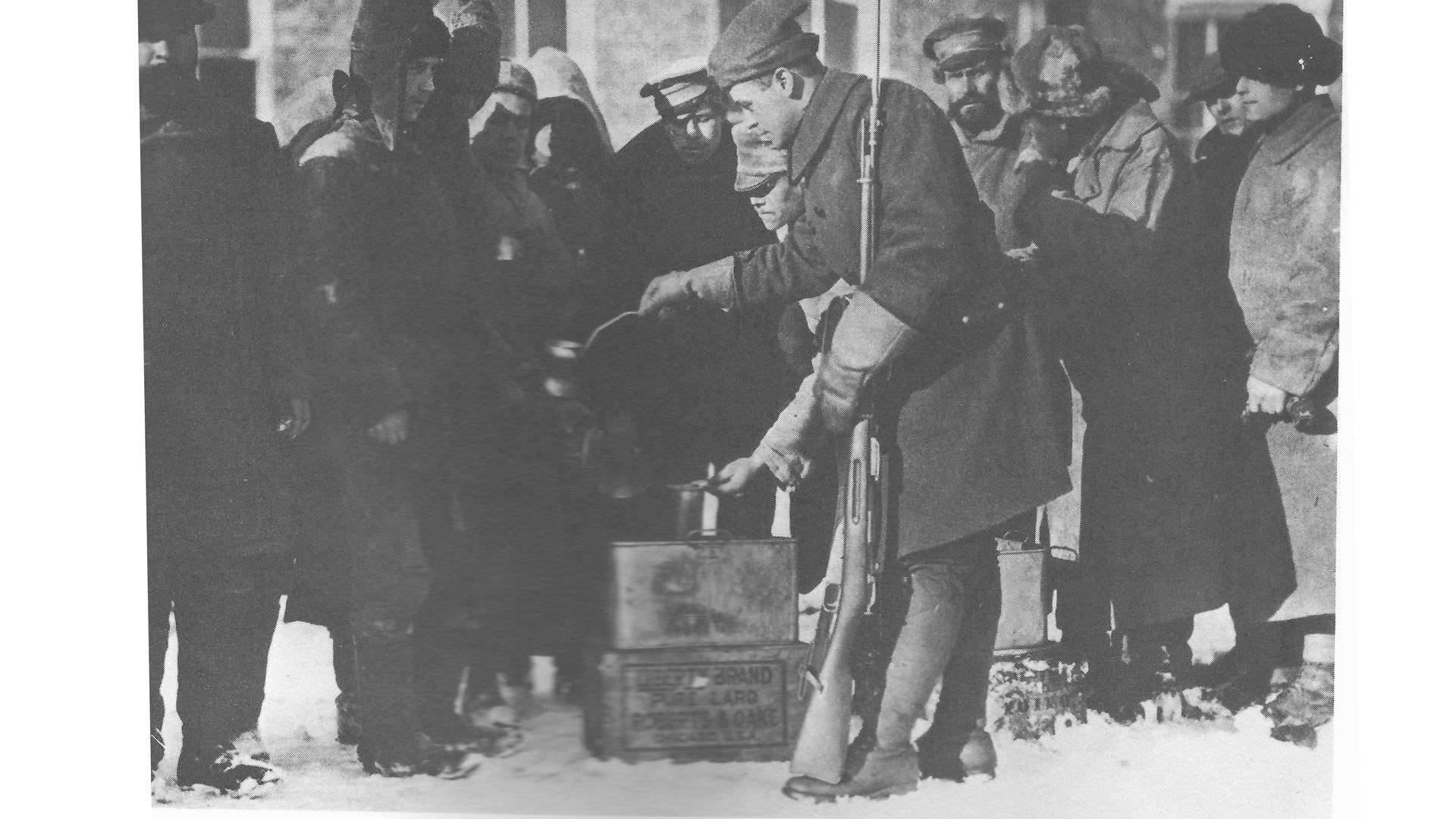
vintage black and white photograph russians outdoors rifles box

With the fall of the Romanov dynasty in 1917, Russia canceled its contracts with Remington and New England Westinghouse. The U.S. purchased the rifles still awaiting shipment, issuing some of them to recruits for basic training and some to the American forces sent to Russia. U.S. Signal Corps photograph, U.S. National Archives.

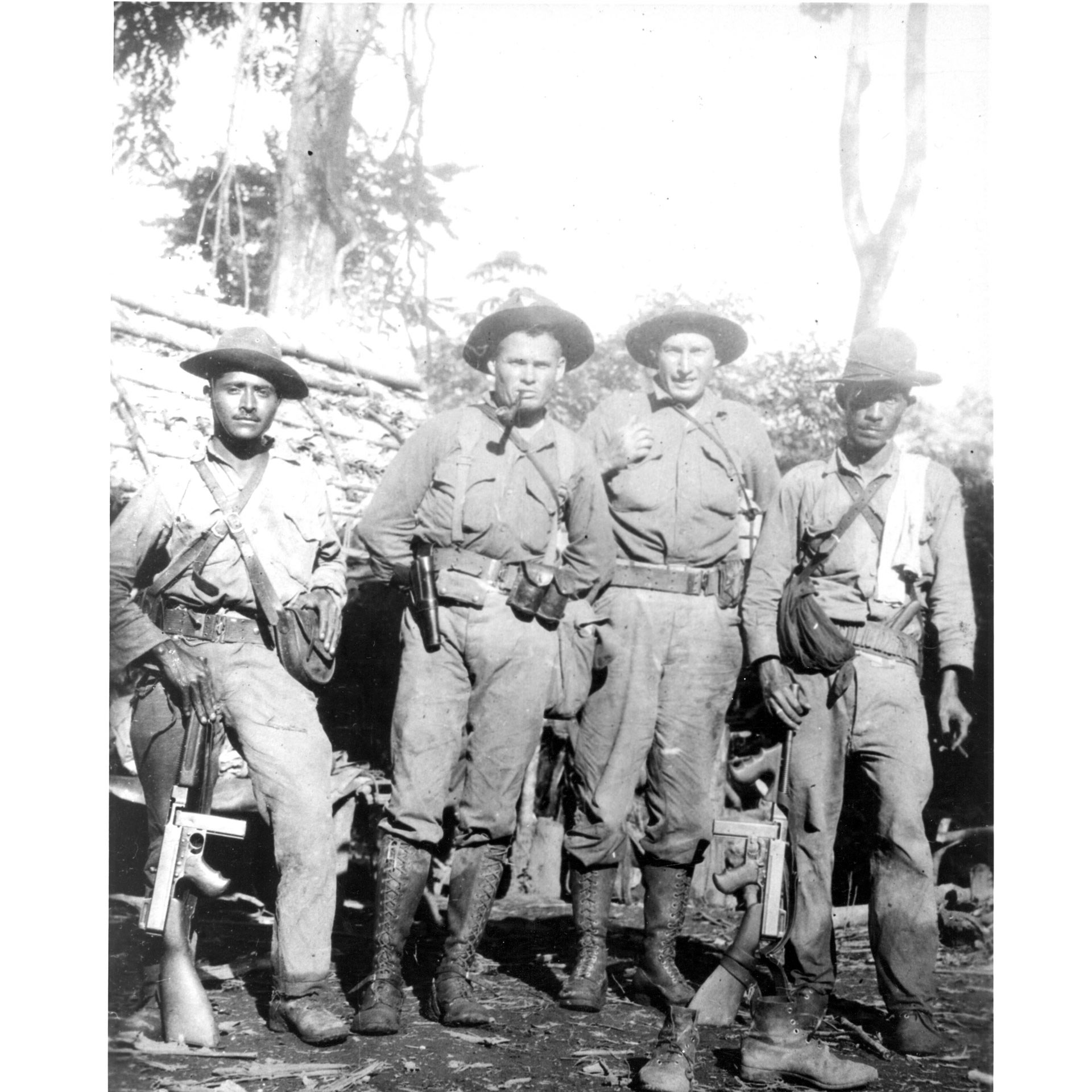
A few years later, Soviet Russia supplied Mosin-Nagant rifles to the insurgents fighting with Augusto Sandino against the government forces and the U.S. Marines in Nicaragua. Buried deep in the diplomatic files at the U.S. National Archives, in Washington, D.C., is a Mosin-Nagant rifle that was cut in half and sent to Washington, via diplomatic pouch, by the military attaché in Managua, Nicaragua. He sent it back to prove Soviet complicity in the ongoing battle against the Sandinista rebels. Another rifle, in the collection of the National Museum of the Marine Corps, validates this assertion, as it is one of the last Remington-made arms to reach Russia during World War I, and it has all the characteristics of a rifle that had been used by the czar’s forces. U.S. Marines captured this rifle during the Second Nicaraguan Campaign, and, very interestingly, it has a Star of David carved into its stock.

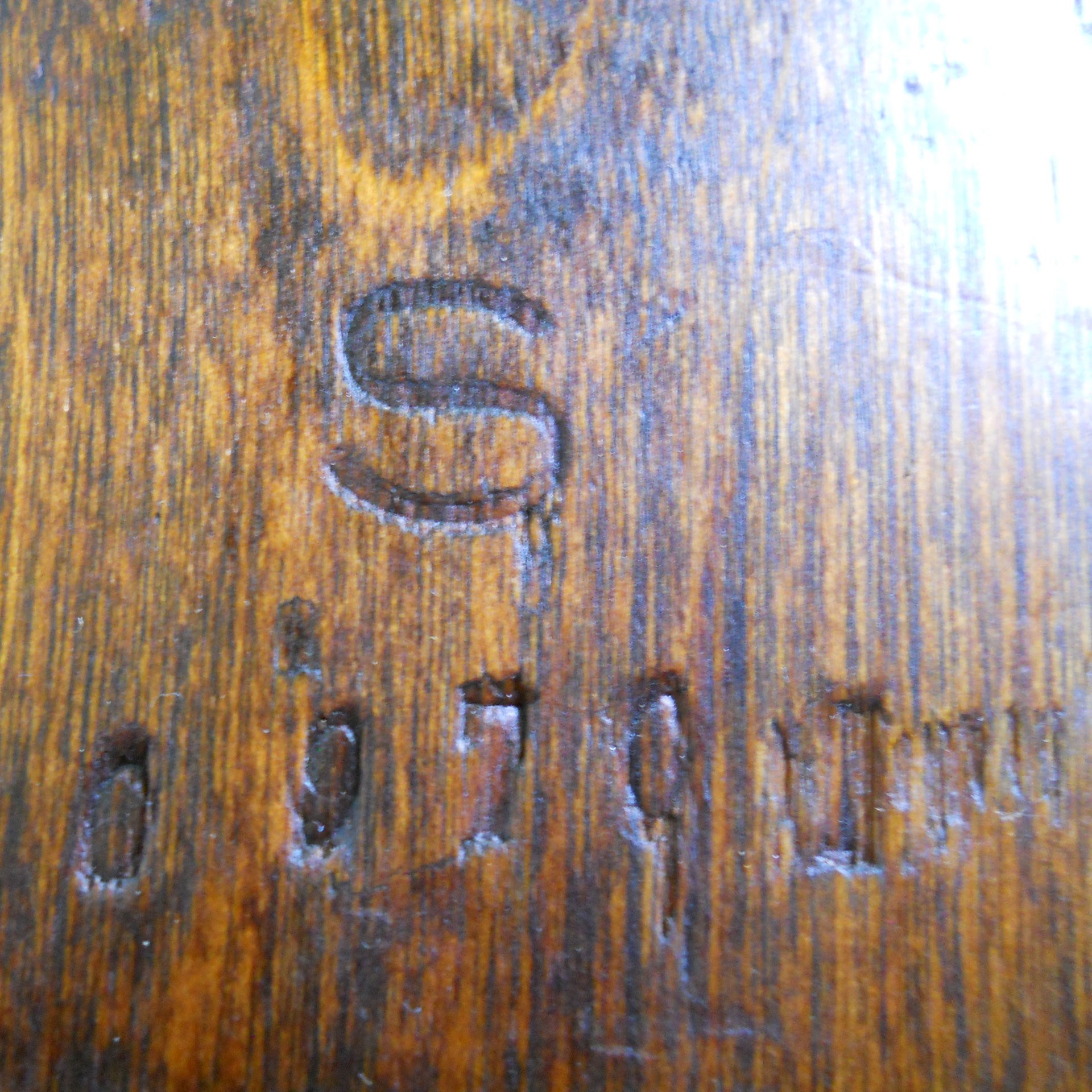
wood stamping gun rifle civil guard mark

The Finnish Civil Guard marking, with the number of the corresponding district. Courtesy of the author.

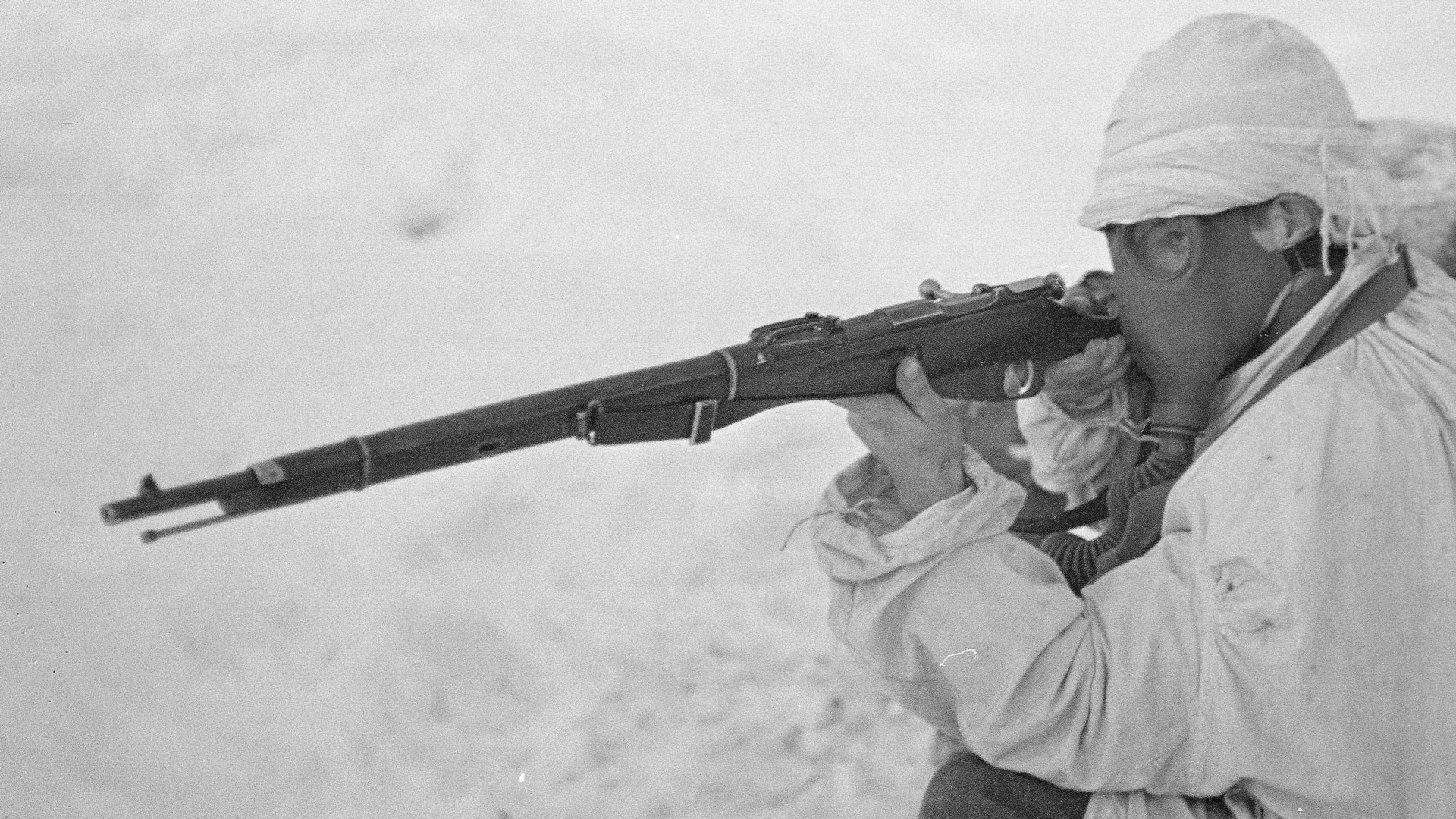
When the Winter War broke out between Finland and Soviet Russia in 1939, the Finns had been producing several models of their own version of the Mosin-Nagant, by modifying existing rifles. However, many of the original Civil Guard rifles were pressed into service with the army, and these guns were then marked with the “SA” in a rectangular cartouche.  While some of the captured and purchased Finnish rifles were fitted with new, two-piece birch-wood stocks—characterized by a “three-finger” splice—others retained their original configurations with all of the markings to tell the rifle’s story. Finnish forces carried Mosin-Nagants of all types in the “Continuation War” (the Finnish term for World War II) against Soviet Russia.

vintage photograph black and white soldiers guns hats smoking

U.S. Marines and Guardia Nacional de Nicaragua (as seen here, with the famed Lewis B. “Chesty” Puller commanding its Company M) faced Sandinista rebels in Nicaragua during the 1920s and 1930s that were, in part, armed by Soviet Russia with Russian Mosin-Nagant rifles—some of them American-made. Courtesy, Marine Corps History Division, Quantico, VA.

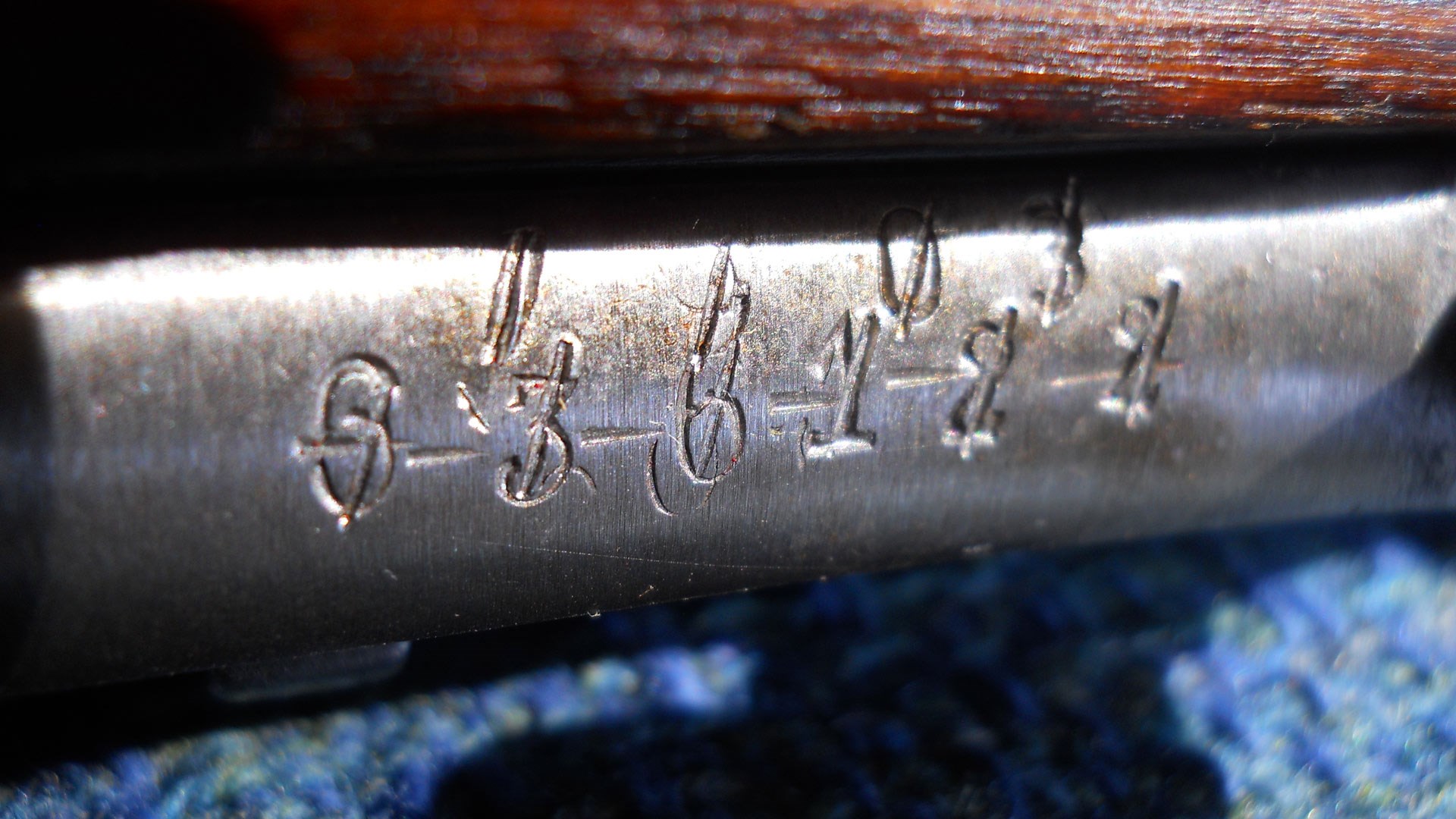
So, what tales would my rifle have to tell? It is marked with the New England Westinghouse name, as well as a Romanov czarist eagle, on its breech. It has the czarist acceptance stamp, along with a Finnish Civil Guard marking on one side of its walnut butt stock and a German “Deutches Reich” ownership stamp on the other side of the butt. On the side of the barrel shank it has the Finnish Army “SA” marking, and, finally, a “Century Arms St Albans VT” marking near the muzzle of the barrel. However, it has a Remington-made bolt, marked with an “R” in a circle and a crossed out serial number of “636122” on it, again refuting the claim that only a few more than 470,000 Remington-made rifles arrived in Russia.

barrel marking on mosin nagant rifle "SA"

The “SA” indicates Finnish Army use. Courtesy of the author.

The rifle could start out by describing the city of Springfield, Mass., where it was made in 1917 when America was either on the brink of war with Germany over the resumption of unrestricted submarine warfare and Mexican intrigues or had just entered the war on the side of the Allies. Site of the first U.S. arsenal founded in the 1790s, the city was also home to the well-known Smith & Wesson firearms company, while the Ames company, a longtime supplier of swords, knives, bayonets and more to the U.S. government, was located in a nearby town, Chicopee Falls. Other private arms companies that supplied the federal government during the War Between the States were also located there. The rifle could then tell of the harrowing sea voyage across the Atlantic, through the U-Boat blockade to one of Russia’s arctic ports, where it was unloaded for the armies of the czar. It could then tell of the conversations between the Russian soldiers huddled around a campfire on the Eastern Front, most likely somewhere between the Baltic coast and Galicia, while they discussed the breakdown of the Russian army and the political upheavals back home.

vintage finnish soldier with gas mask and mosin nagant rifle white clothing snow background

Finnish soldiers used Russian rifles alongside their own versions of the Mosin-Nagant rifle in the 1939 Winter War with Soviet Russia. Courtesy SA-Kuva, Finnish National Archives, via Tom Laemlein.

The next set of stories could be about guarding captured Russian, French, British or American prisoners of war, or perhaps the dreary duty of guarding supplies along a railway siding in Germany. The rifle may have seen service during the German navy’s mutiny in late 1918, or could have been caught up in the fighting between the Spartacists and the Freikorps during the German civil war following the end of World War I. After arriving in Finland, it could tell about the life in a small Finnish town, while a Civil Guardsman owned it in the 1920s and ‘30s. The rifle could then tell of the brave resistance of the Finns when Soviet Russia invaded their country in the bitter cold of 1939 and also tell of long service during the ensuing fighting on the Finnish border with Russia from 1941 to 1944. Somewhere along the line, it could tell about the circumstances that led to its bolt being replaced with one from another American-made rifle.

barrel stamping serial number rifle mosin nagant

The Remington-made bolt is marked with a serial number of “636122”, but the numerals have been lined out at some point in its service. The bolt on the Mosin-Nagant from Nicaragua in the Marine Corps Museum’s collection is also marked like this. Courtesy of the author.

Finally, the rifle could tell of its voyage back to America in the 1990s, after the American Gun Control Act of 1968 was amended to allow the importation of Curio & Relic arms once again into the country. The rifle ended up in northern Vermont, just a little more than two hundred miles away from its birthplace, before coming to a gun store in southern Virginia, and eventually, to my home. However, its most poignant, or disturbing, story would be about the four notches carved in its upper hand guard, representing the possible four combat “kills,” sometime during its service life.

Person in snow with white clothes laoding bolt-action mosin-nagant rifle

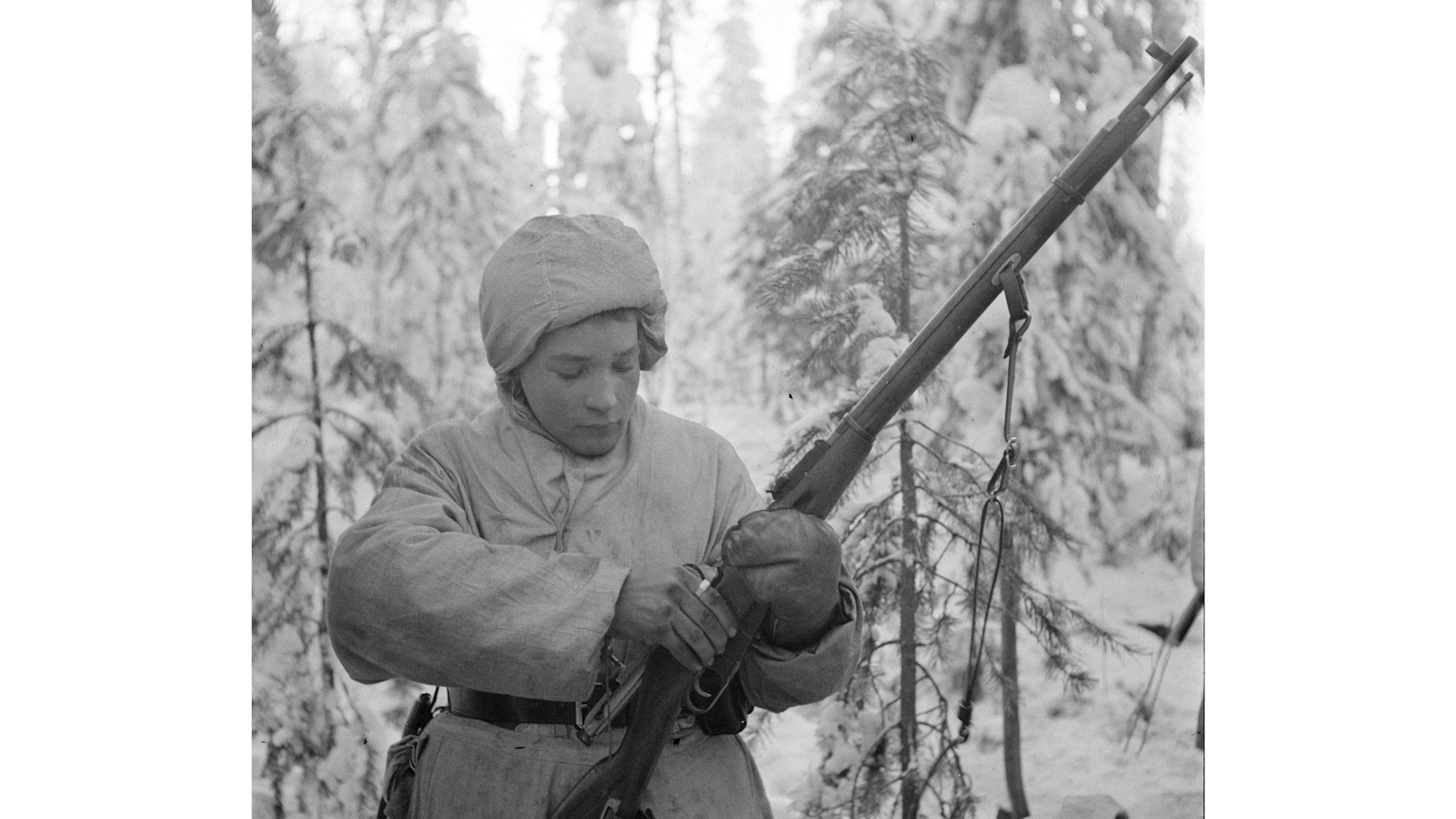
The Mosin-Nagant’s magazine holds five 7.62x54 mm R cartridges, which are loaded into it using a stripper clip. Courtesy SA-Kuva, Finnish National Archives, via Tom Laemlein.

Although guns can’t talk and can’t actually tell their stories, we, as collectors, can figure out their stories, and use these objects as tangible touchstones to the past, in order to illustrate the drama of history in our collections and in our exhibits at arms shows and in museums. All too often, firearms are displayed in museums with labels that read like, “Standard Russian infantry rifle of World War I, Caliber 7.62mm, Wood and Steel, Catalog Number 1983.6.1”, with no interesting story or context, or they are not included in a personal collection or a firearms show display because the gun is “atypical” of the subject. However, as this gun’s story has unfolded, it is obvious that it deserves a place among other firearms that, at first glance, one would not consider.

wood gunstock notches from war

Other Finnish rifles have been reported with “kill notches,” and sometimes with initials carved into their stocks. Carving names and initials on rifle stocks was also prevalent among the Boers during the Boer War, as well as with Confederates during the American Civil War and with Irish volunteers during the Easter Rising. Courtesy of the author.

For instance, this M1891 rifle could be included in any collection of “New England” or “Springfield” arms, and obviously in a collection of “Russian” firearms, or “World War I” guns. It could also hold a place in any collection of “German” arms, and “Winter War” and “World War II” rifles. Likewise, it could also be used to support an exhibit on the German submarine blockade of World War I, the Atlantic convoys system, the German navy mutiny of 1918 and the German civil war.

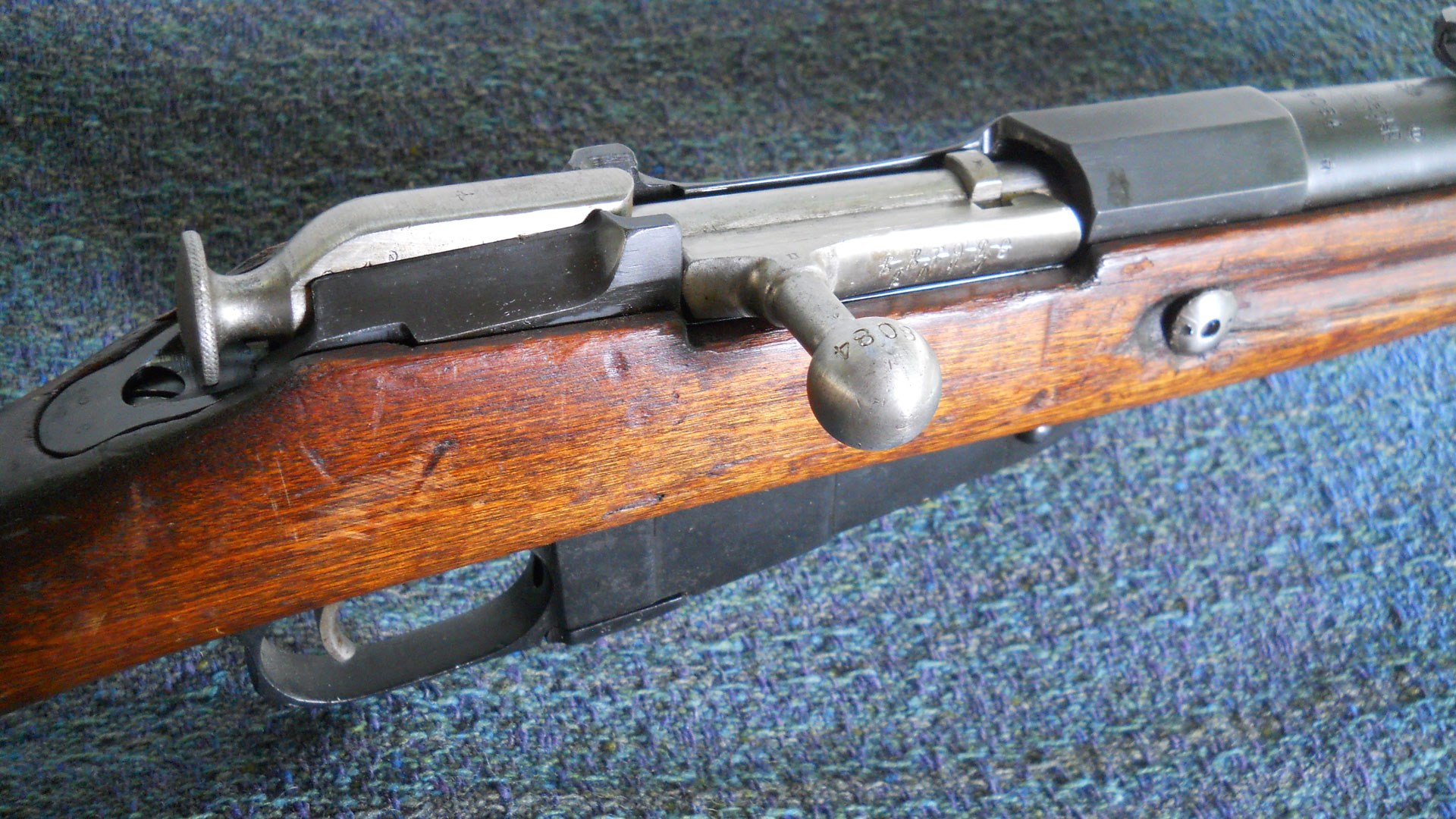
silver metal steel bolt knob stamping numbers

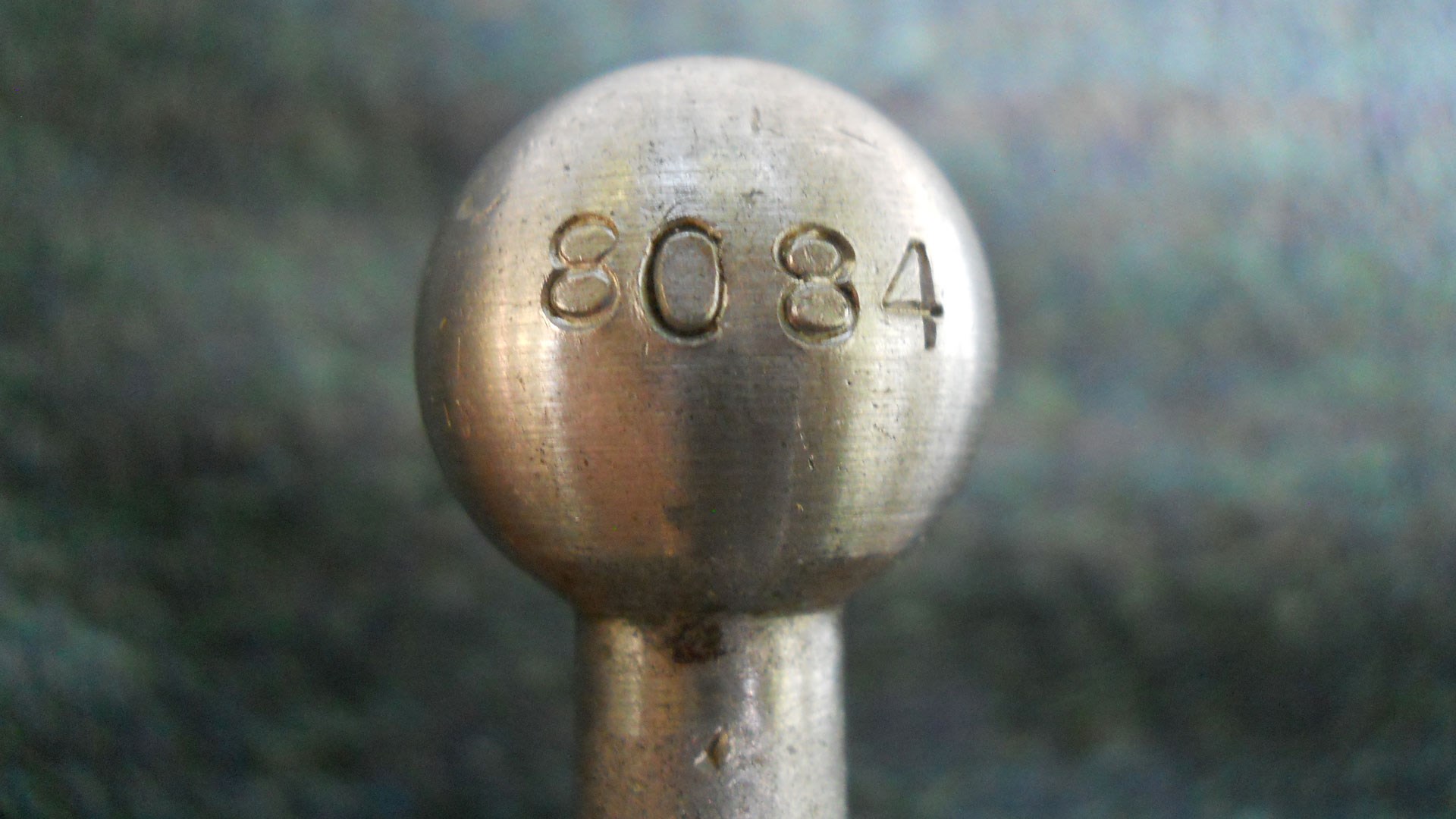
The bolt knob has had the last four digits of the original serial number applied to it, perhaps by its American importer. Courtesy of the author.

In a broader context, and using it as a “typical example” (but known not to be the case), it could have validity as an example of the guns that were sent to Ireland in 1916, like the position it had held in my former collection, due to its being “double-stamped.” Although the rifle has Finnish markings on it, it could still serve as an example of the guns that were used against U.S. Marines in Nicaragua in any collection of “USMC Arms”, and even without “U.S.” property stamps, it would not be out of place in a display of “Arms of the American Expeditionary Forces,” as long as the artifact label in a display read “rifles like this were used to train the AEF.” Even though we know it not to be the actual history of the gun, it could still serve as an example of the arms carried by the AEF’s “Polar Bears” in Russia at the end of World War I and on into the Russian Civil War—as it does now in its current home.

Thus, the answer to the question of whether or not to acquire another gun for your collection depends on how far you can “think outside the box” and justify its acquisition. Happily, for most of us, we don’t have to work too hard on this, and if you have a wad of greenbacks in your pocket and an empty space in your gun rack, you should consider getting another gun, if the price is right and it piques your interest!


The author's Mosin-Nagant rifle was featured in the NRA’s “American Rifleman” television show about the “Guns of 1914” that aired in 2014. Still accurate, it hit a 12”-diameter steel gong target at a range of 150 yards, on its first shot, when fired in front of the video camera from the off-hand position.

Tuesday, February 7, 2023

The M 1895 Machine Gun.


 I saw this article on "American Rifleman" and I have seen pictures of the machine gun before but
I didn't know that John M. Browning developed it before he did his other machine guns.  The article was really well done so I shamelessly "nicked" it for my blog.  


The late 19th century was a productive era in firearm design. The fertile mind of John Moses Browning was beginning to show its genius. In the autumn of 1890, in the big sky country of Ogden, Utah, one of John Browning’s early concepts took shape. The following is a letter to Colt’s Patent Firearms Company from Matthew S. Browning, dated Nov. 22, 1890:

Dear Sirs:

We have just completed our new automatic machine gun & thought we would write to you to see if you are interested in that kind of a gun. We have been at work on this gun for some time & have got it in good shape. We made a small one first which shot a 44 WCF charge at the rate of about 16 times per second & weight about 8#. The one we have just completed shoots the 45 Gov’t charge about 6 times per second & with the mount weighs about 40#. It is entirely automatic & can be made as cheaply as a common sporting rifle. If you are interested in this kind of gun we would be pleased to show you what it is & how it works as we are intending to take it down your way before long. Kindly let us hear from you in relation to it at once.

Yours Very Truly,
Browning Bros.
2461 Washington Avenue
Ogden, Utah

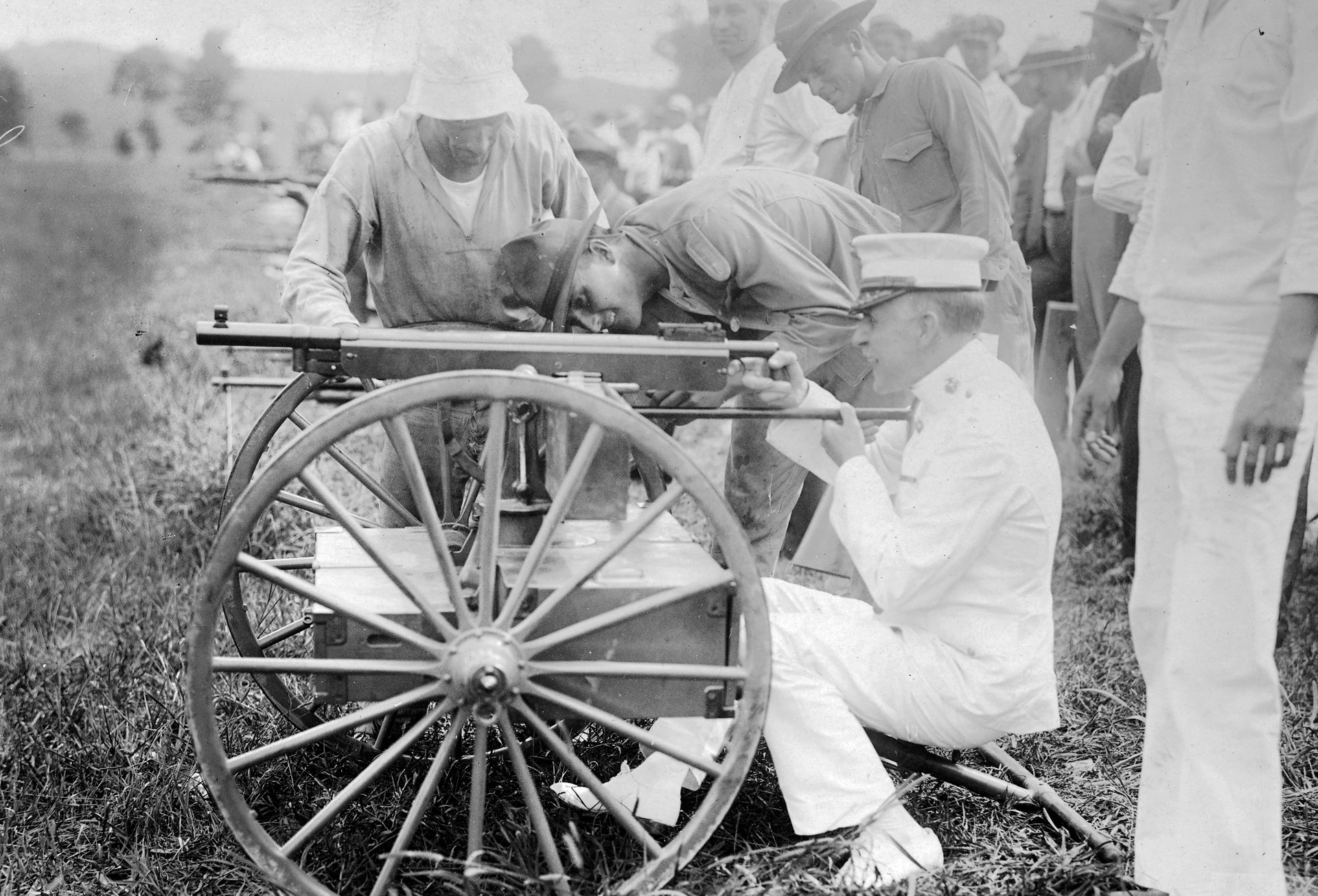
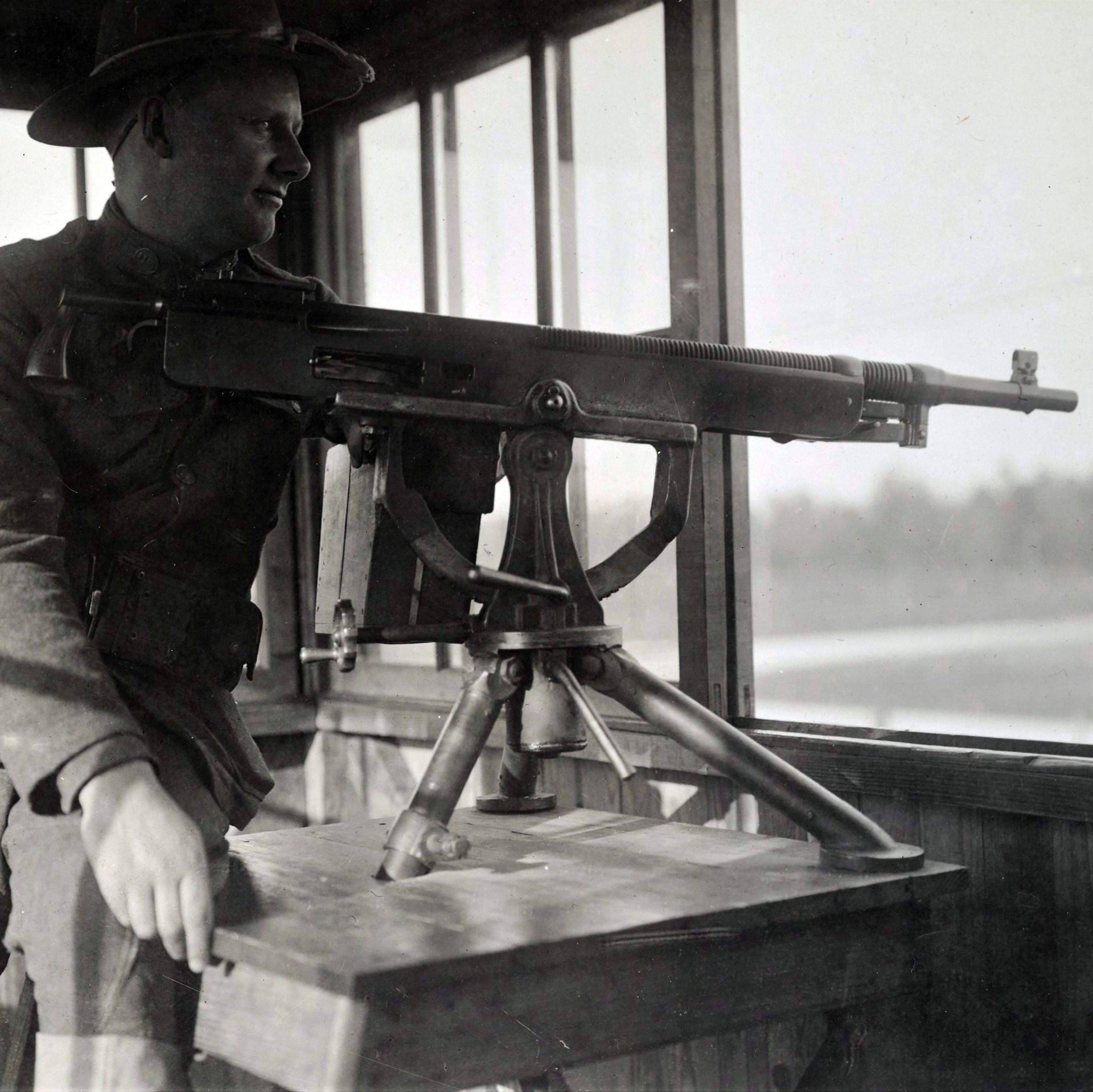
6)	General Barnett tests “Colt’s Automatic Gun” at the Winthrop, Md., range during 1917.

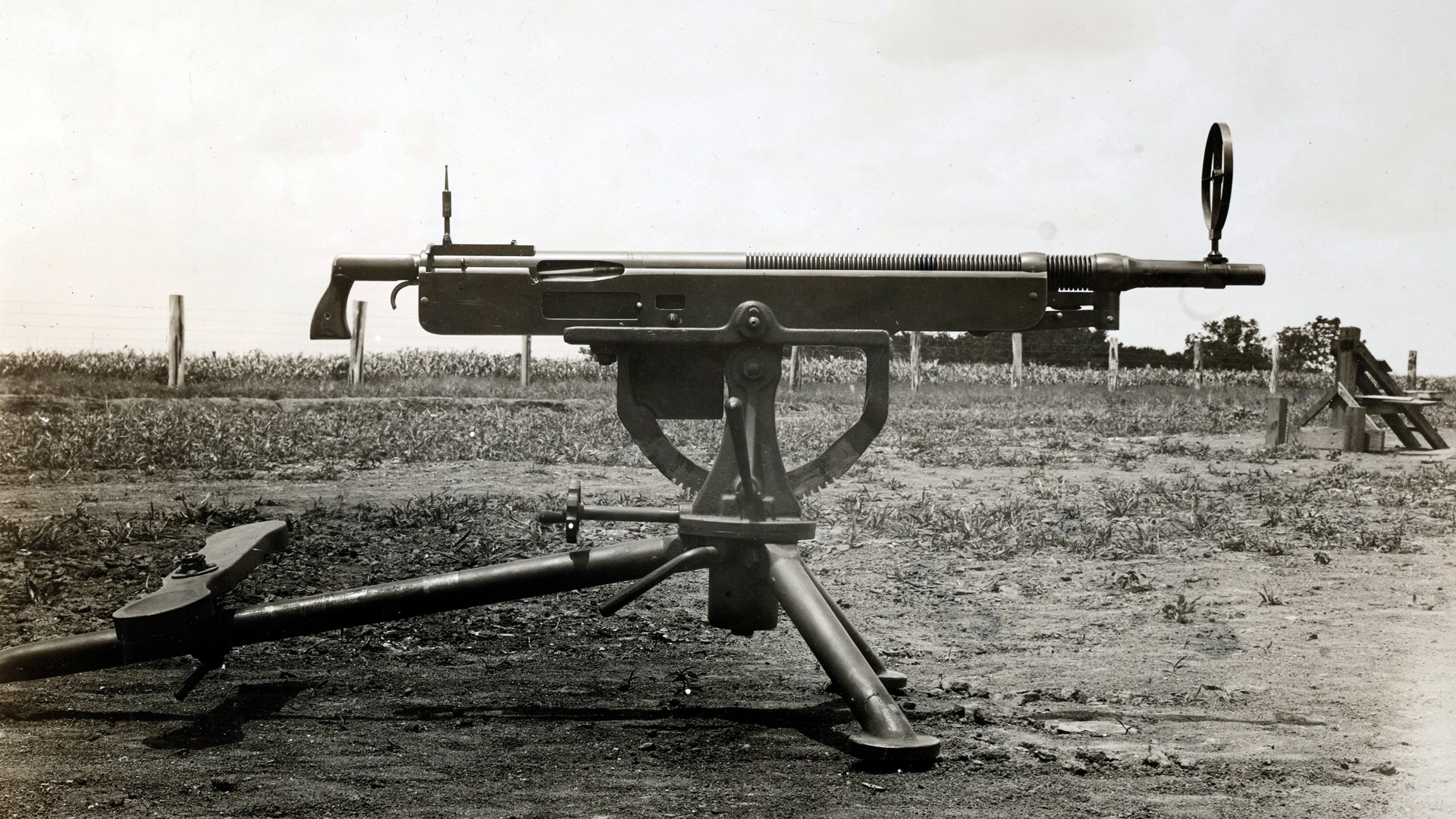
General Barnett tests “Colt’s Automatic Gun” at the Winthrop, Md., range during 1917. Library of Congress photo.

A Hot Potato Digger
Colt’s sales literature claimed that the hammer supposedly “pumped cool air” into the chamber. Regardless, the M1895 was widely noted to heat up quickly after only a medium-length burst—making it hazardous to leave a live round in the chamber. The chamber needed to be unloaded after almost any sizeable burst, unless the gun was going to remain in continuous action. The heavy barrel was supposed to provide adequate cooling for sustained firing but was ultimately not up to the task. Another drawback was that the M1895 could not be fired from the prone position, as the forward and backward swinging of the gas-actuated loading lever prevented this. The “Potato Digger’s” action demanded a tripod.

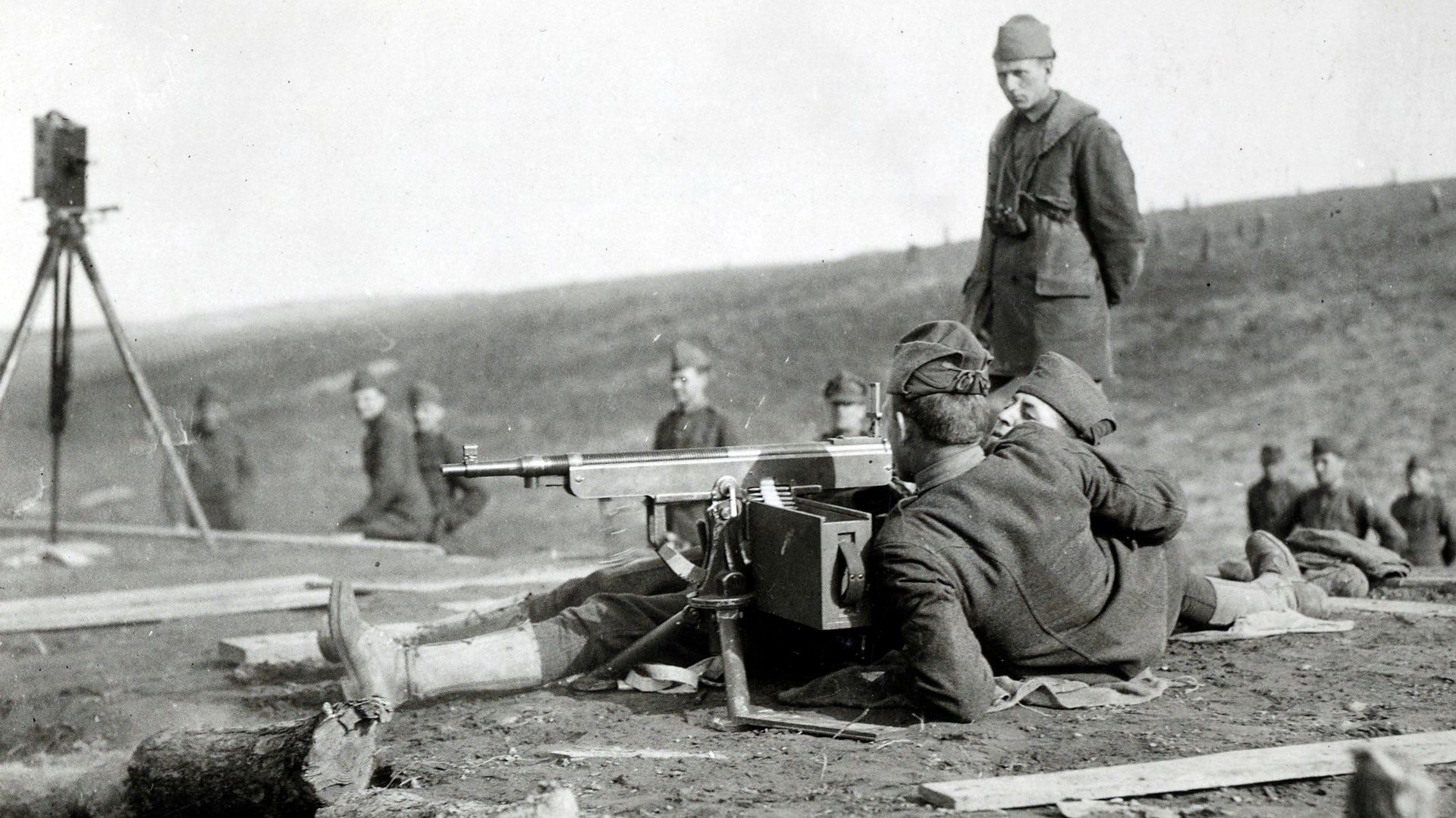
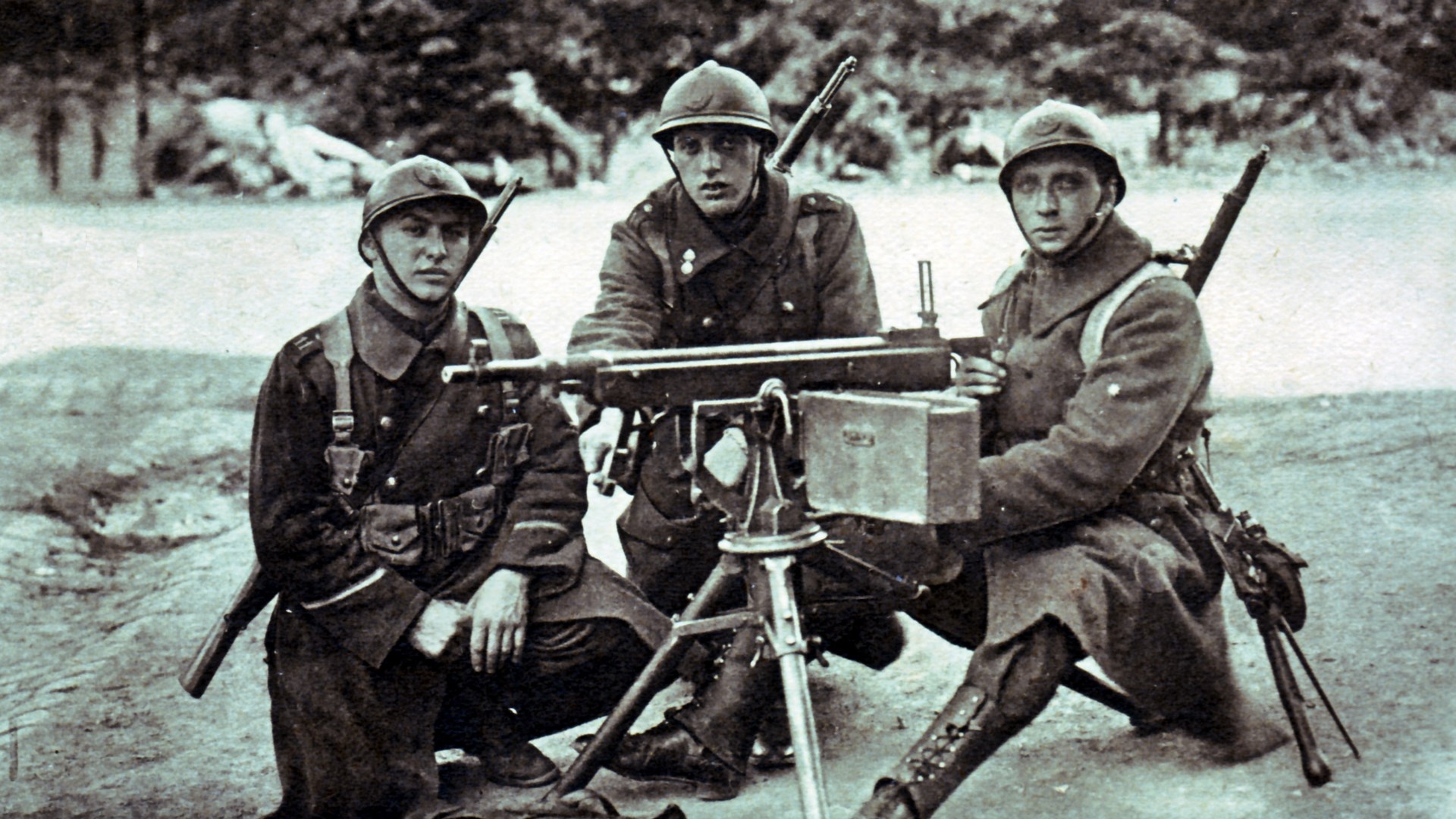
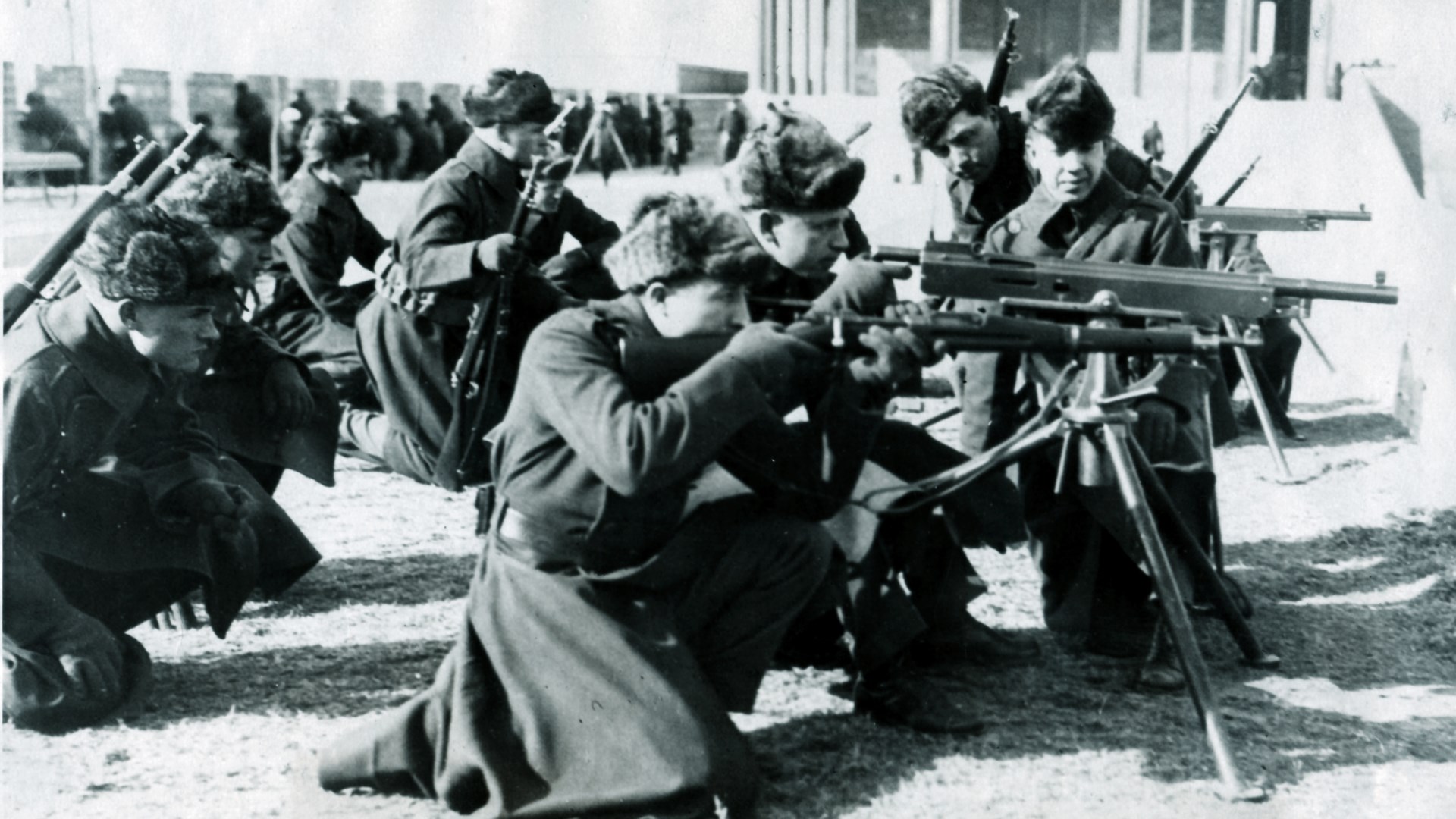
11)	Training the Doughboys: M1895 gunners train at Camp Upton, N.Y. on Long Island during early 1918.M1895 gunners train at Camp Upton, N.Y. on Long Island during early 1918. National Archives photograph.

U.S. Army Pushback
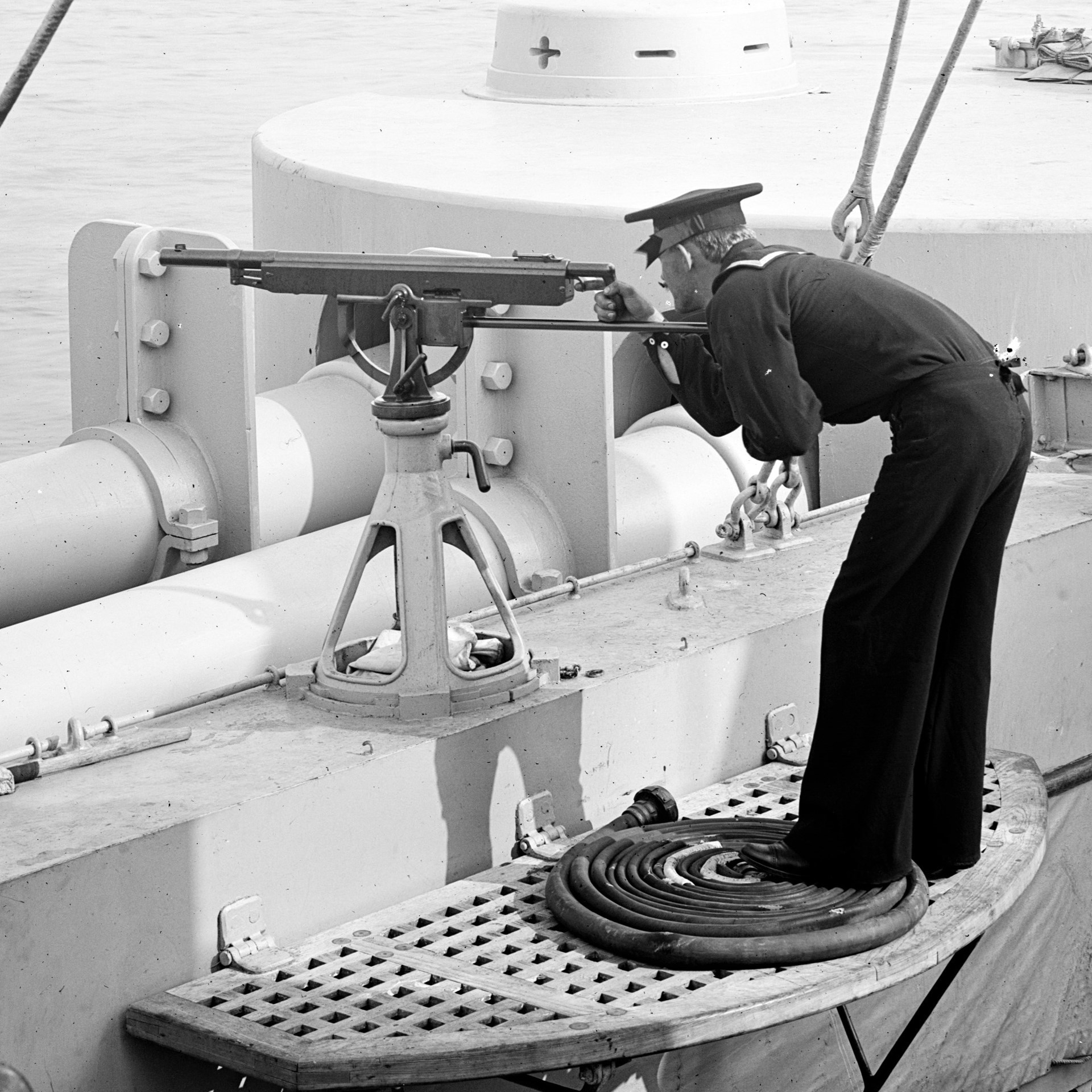
Not everyone was impressed with the new “automatic machine gun” designs that began to appear in the 1890s. There were, of course, those who saw the tremendous firepower potential in these new arms. Unfortunately for John Browning, and for Colt, the manufacturer of his automatic gun, the U.S. Army was quite pleased with its batteries of hand-cranked Gatling guns. Military interest in Browning’s new firearm was quite limited, with some considering it something of a newfangled “fad.” Meanwhile, the Browning gun found some interest from the U.S. Navy, and an order for about 200 examples, chambered in 6 mm Lee Navy followed. 

While the U.S. Navy embraced machine guns before the turn of the 20th century, the U.S. Army was still committed to the Gatling Gun and remained so for nearly another decade. The Army tested many early machine-gun designs, and the Colt gun was regularly in the mix. The Army Ordnance Board reviewed the firearm in June 1895 and wrote: “The Colt automatic gun is an ingenious, compact, and relatively light arm. Its continuous automatic firing depends upon the action of the ammunition used. It is easily pointed by hand, and its fire is completely under the operator’s control. Its rapidity of fire during the tests was about 100 rounds in 17 seconds.”

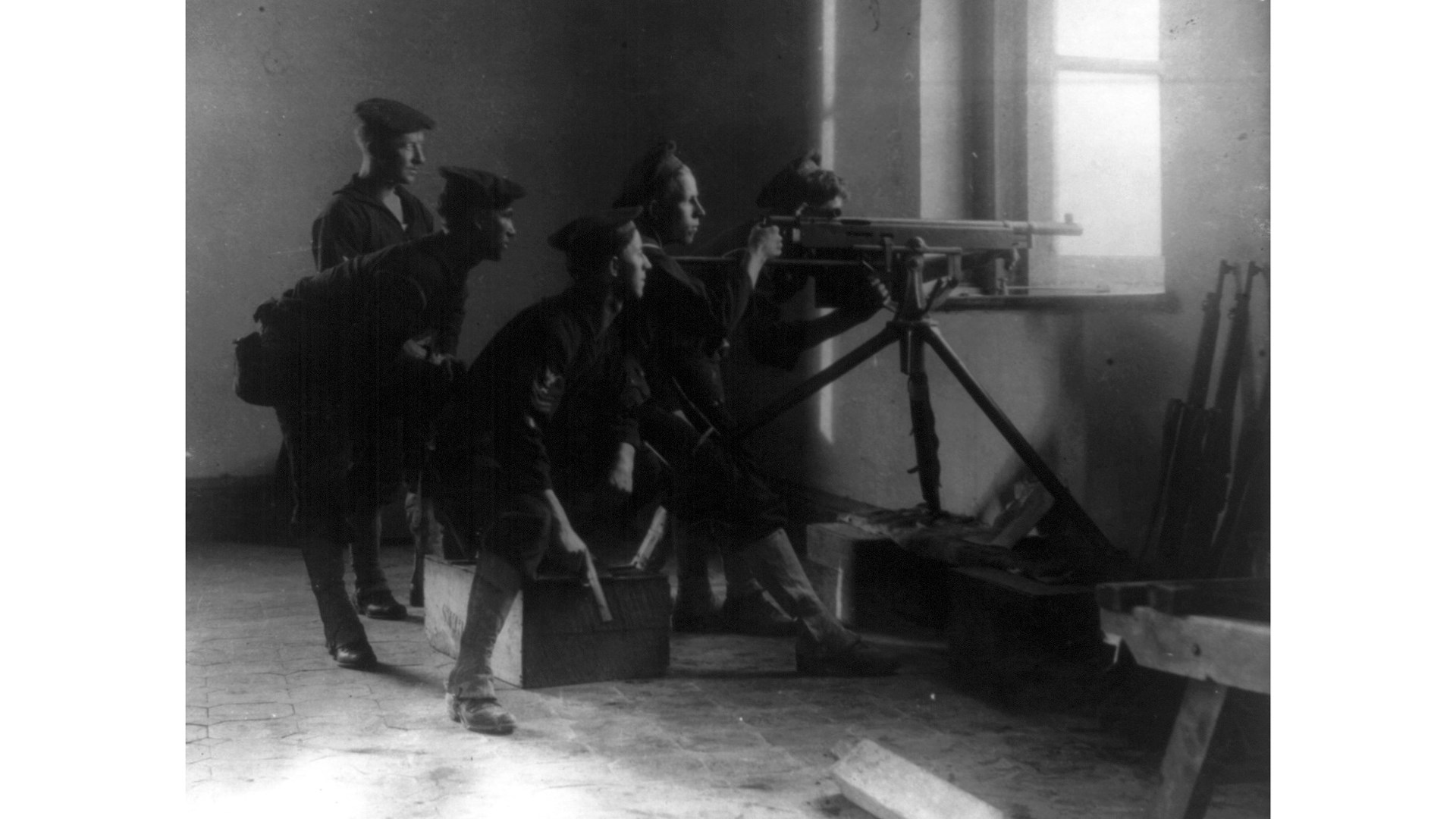
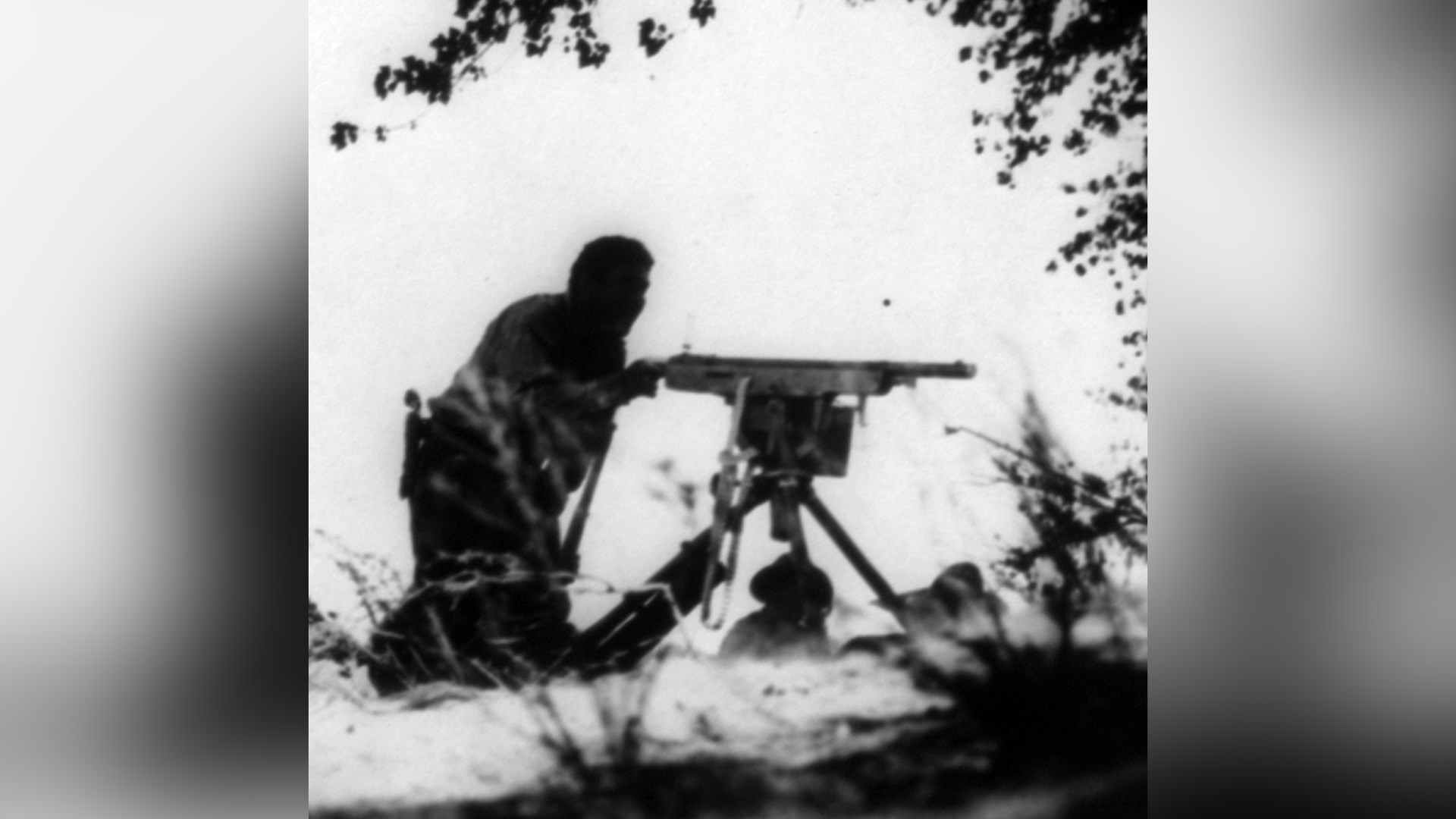
U.S. Navy Bluejackets ashore manning a M1895 (6 mm Lee Navy) during the occupation of Veracruz, Mexico during April 1914.

U.S. Navy Bluejackets ashore manning a M1895 (6 mm Lee Navy) during the occupation of Veracruz, Mexico during April 1914. National Archives photograph.

However, the board concluded: “The board is of the opinion that in its present form, as shown by the tests made this arm is not suitable for ordinary service and has no place in the land armament.”

Born In Navy Service
While the Navy first used the Colt machine gun in combat in Cuba during 1898, it was the Army that gave the M1895 machine gun its designation. Even so, there is no record that the Colt-Browning gun was never officially adopted by the U.S. Army. Two Colt M1895 guns (in 7x57 mm Mauser) were privately purchased by Lt. Col. Roosevelt’s “Rough Riders,” a volunteer cavalry regiment. Roosevelt was not impressed, calling the Colt machine guns “delicate and readily out of order.” Navy Colt MGs received good marks during their use in Cuba during 1898, and later in the Philippines. They proved their worth yet again during the Marine Corps’ defense of the International Legation compound in Peking during the Boxer Rebellion of 1900. South of the border, Colt MGs in 7 mm Mauser were used in the Mexican Revolution, and the U.S. Navy’s Colt guns were brought ashore for the occupation of Veracruz in April 1914.

M1895 machine gun used by Mexican revolutionaries. Pancho Villa’s “Division of the North” is thought to have acquired at least two of these guns.M1895 machine gun used by Mexican revolutionaries. Pancho Villa’s “Division of the North” is thought to have acquired at least two of these guns.

Canadian troops successfully used Colt machine guns (chambered in .303 British) during the Second Boer War during 1900. The Canadians retained their M1895s through the early days of World War I, using them in combat until they acquired Vickers machine guns. 

The first 200 U.S. Navy guns (called the Mark I), originally acquired in 6 mm Lee Navy, were ultimately rechambered in the newly unified Army-Navy .30-40 Krag (renamed the Mark I Modification I). When the official U.S. service ammunition was changed to the .30-’06 Sprg., the Navy once again rechambered their Colt machine guns but strangely retained the Mark I Mod I nomenclature. 

1)	an M1895 pedestal-mounted aboard the pre-dreadnought battleship U.S.S. Iowa (BB-4), launched in March 1896. Four M1895 machine guns were listed as part of the ship’s armament. Library of CongressAn M1895 pedestal-mounted aboard the pre-dreadnought battleship U.S.S. Iowa (BB-4), launched in March 1896. Four M1895 machine guns were listed as part of the ship’s armament. Library of Congress photo.

Almost The Final Straw
The U.S. Army continued to look at machine gun designs, but with an increasingly critical eye. The 1904 Report of the U.S. Chief of Ordnance describes the in-depth and rigorous testing of the M1895 machine gun versus the Maxim-Vickers machine gun. The following comments come from the “Test of automatic machine guns:”

During marching tests several of the ammunition boxes provided with the Colt gun came apart or broke. They are entirely too fragile to withstand service conditions. During the marching tests many cartridges worked loose, and a number worked out of the belts provided with the Colt gun, showing conclusively their unsuitability for service.

The two guns appear to be equally accurate at 500 and 1000 yards. The mount of the Colt was less stable, requiring more frequent adjustments of aim. The endurance of the Vickers gun, when its jacket is kept filled with water, is greatly superior to that of the Colt. The time required to insert a belt in either of these guns and to load it is about 10 seconds.

The radiation of heat from the Colt barrel seriously interferes with sighting after a few hundred rounds are fired from it. After 500 to 1000 rounds are fired continuously from the Colt gun, the heat remaining in the barrel is sufficient to ignite a cartridge in the chamber. The gas lever handle on the Colt gun also becomes so heated as to burn the hands, and as this lever must be operated to insert each belt, this is a serious defect. After firing about 500 rounds the Colt gun becomes so hot that it can only be handled with great difficulty.

After the 1904 tests, and the overall negative opinion of the firearm by the board, it appeared that the Colt M1895 had reached a dead end with the U.S. Army.

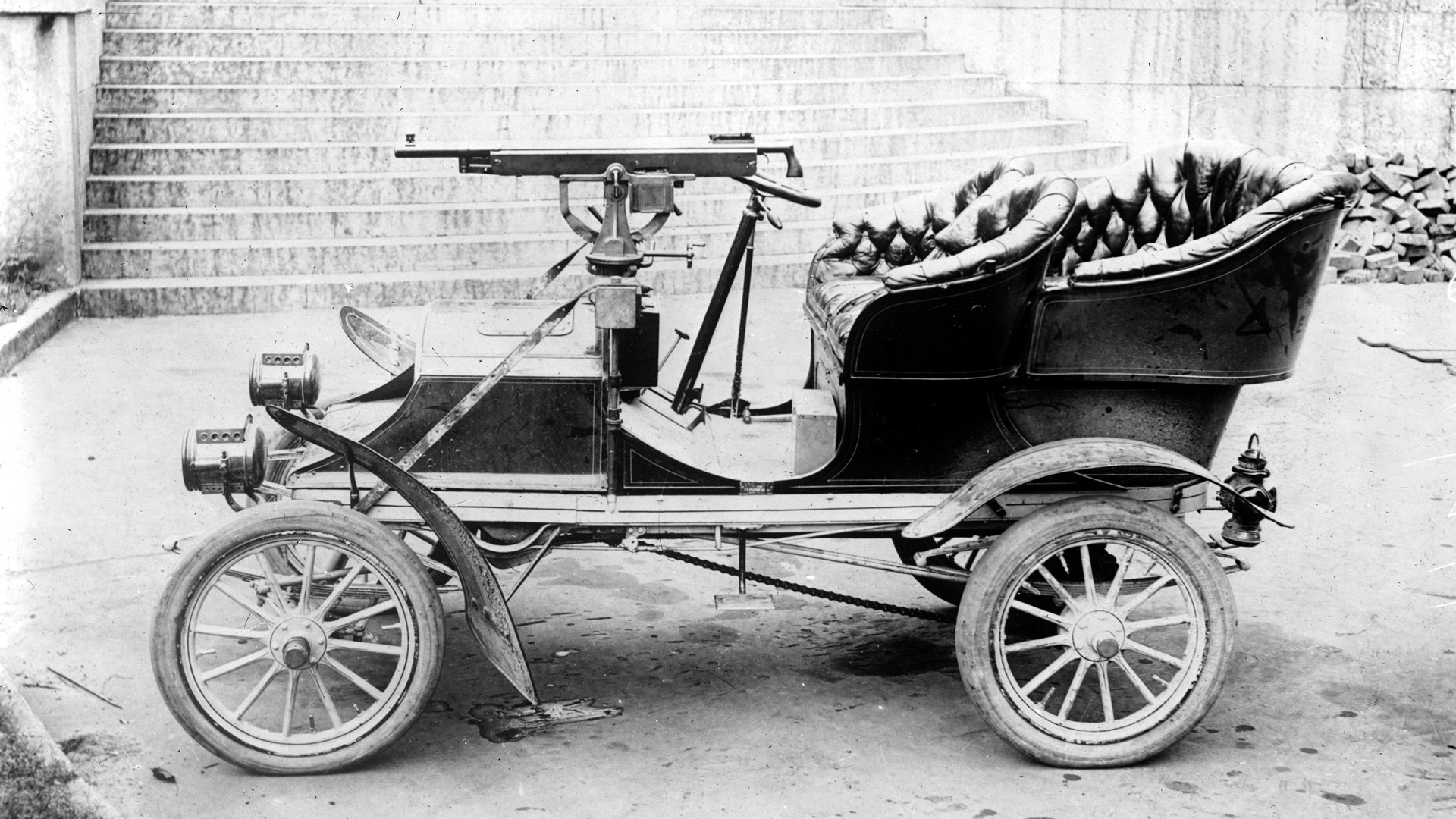
3)	Apparently “road rage” is not a modern concept. This M1895 is seen mounted aboard a Model T Ford. Library of Congress photoApparently “road rage” is not a modern concept. This M1895 is seen mounted aboard a Model T Ford. Library of Congress photograph.

Resurrection In The Great War
As World War I began in August 1914, some of the European powers found themselves in need of machine guns. The Russian Empire purchased nearly 15,000 (chambered in 7.62x54 mm R), first from Colt, then from Marlin-Rockwell, which purchased the manufacturing rights and the factory machinery in 1916.       

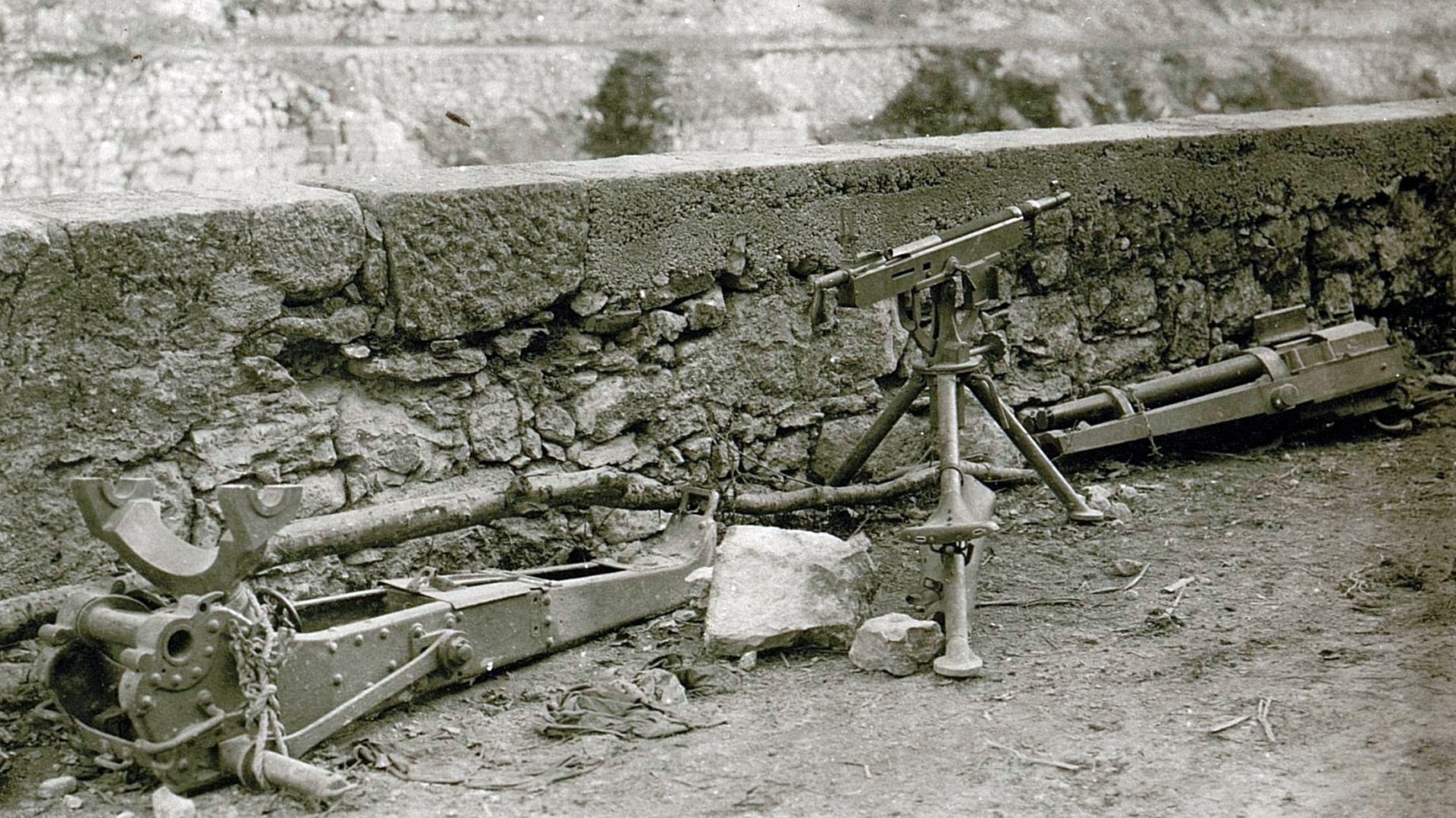
The Italians purchased M1895s (chambered in 6.5x52 mm Mannlicher-Carcano) and used them in combat against the Austro-Hungarian Empire. The Belgian Army inherited the Canadians’ Colt guns (.303 British) and purchased new guns chambered for 7 mm Mauser.

3)	Italian M1895 machine gun captured by the Austrians during World War I.Italian M1895 machine gun captured by the Austrians during World War I. Photograph from author’s collection.

In America, the M1895 was already considered obsolete, but U.S. forces had so few machine guns that 1,500 additional M1895s were built for the Army. These proved useful in training America’s fledgling army in several roles, ranging from infantry units to aerial gunners. Some were mounted aboard U.S. Navy “sub-chasers” protecting Allied convoys from U-boats. Beginning in 1917, Marlin-Rockwell redesigned the M1895, replacing the “potato-digger” arm with a linear gas piston to produce the Marlin Aircraft Model 1918. The Marlin Aircraft machine gun was a synchronized firearm that was mounted on a few U.S. Air Service pursuit and recon aircraft in the fall of 1918. Pilots praised it for its reliability and high rate of fire—ultimately the U.S. Air Service judged it to be the equal of the Vickers aircraft gun. After WWI, the Marlin gun was also mounted in the first American-made tank, the M1917 (the US version of the French FT-17).

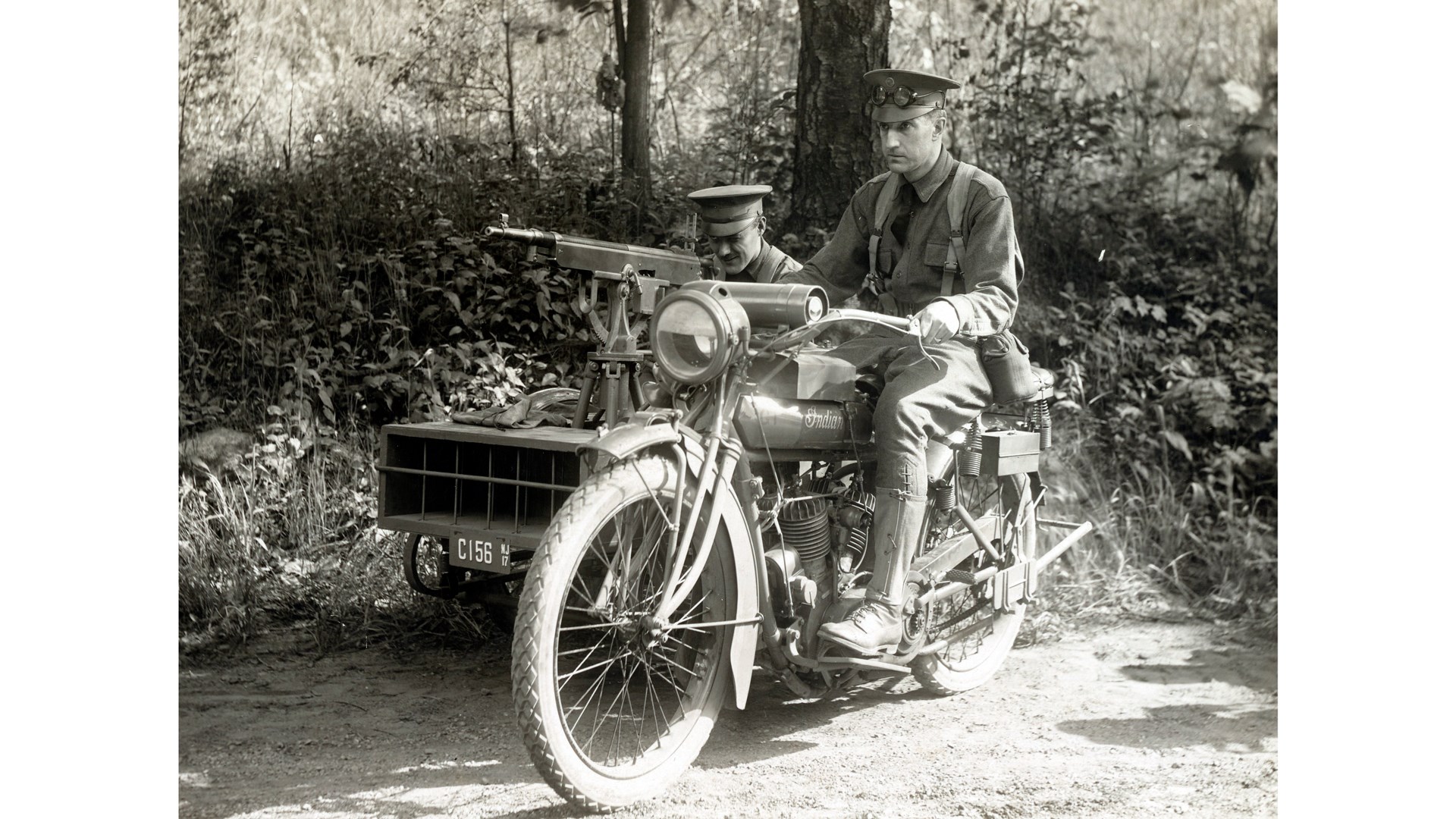
A firearm for a new century of mobile firepower: The M1895 machine gun was often mounted on early motorcycle/sidecar combinations. This is the New Jersey Mobile Battery during 1917. NARAA firearm for a new century of mobile firepower: The M1895 machine gun was often mounted on early motorcycle/sidecar combinations. This is the New Jersey Mobile Battery during 1917. National Archives photograph.

Soldiering On
Even though World War I was ostensibly ended by the November 1918 armistice, the fighting only intensified throughout Eastern Europe. The many M1895s purchased by the Russian Empire, continued their deadly work in the hands of Red and White forces in the Russian Civil War. Once the communists had seized control of Russia, the M1895 continued to fire shots in anger and saw action on both sides in the Ukrainian War of Independence (1917-1921) and the Soviet-Polish War (1919-1921), as well as the Finnish Civil War (1918), the Estonian War of Independence (1918-1920) and the Latvian War of Independence (1918-1920). 

On guard at Fort Oglethorpe Prison, Ga., early 1919.  NARAOn guard at Fort Oglethorpe Prison, Ga., early 1919. National Archives photograph.

Back in the U.S., the M1895s appeared in the second largest armed insurrection in American history, firing shots in the West Virginia “Coal Mine War” (1921). The Colt machine guns were owned by the coal companies and used by the strike-breaking Baldwin-Felts agents.

A small amount of M1895s (7 mm Mauser) were used in the Spanish Civil War (1936-39), and when England stood alone in 1940 and was desperate for arms, M1895s were purchased for the British Home Guard, which used them during World War II.

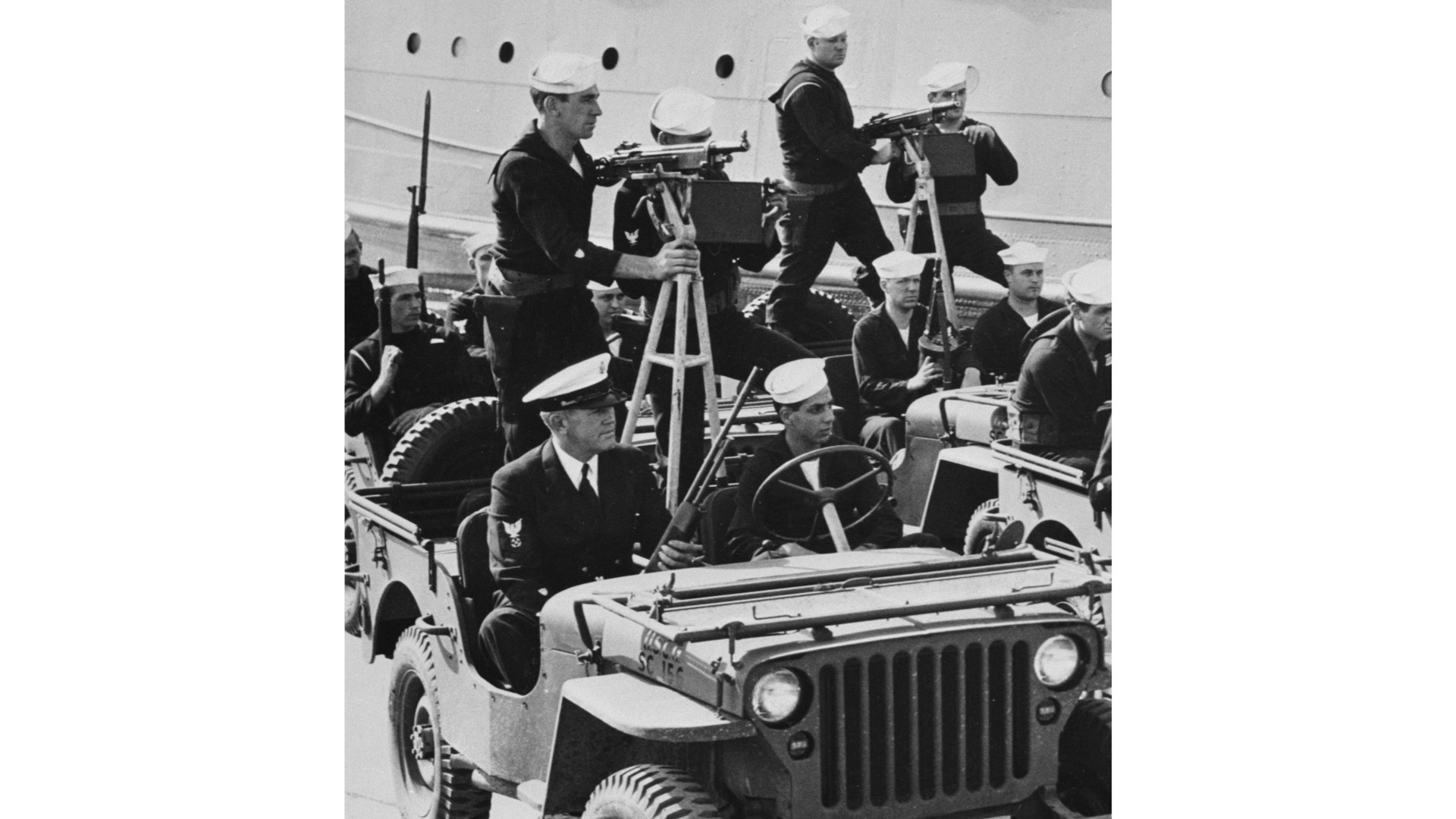
11)	Service in World War II: M1895 guns mounted aboard U.S. Coast Guard Jeeps for stateside shore patrol during 1943. national archives photographService in World War II: M1895 guns mounted aboard U.S. Coast Guard Jeeps for stateside shore patrol during 1943. National Archives photograph.

Surprisingly, a few Jeep-mounted M1895s appear in photos of stateside U.S. Coast Guard shore patrols during WWII. The old potato-digger fought on longer and in more conflicts than its maker ever expected. John Browning’s first machine gun set the stage for his later genius designs that would serve America through two world wars and beyond.

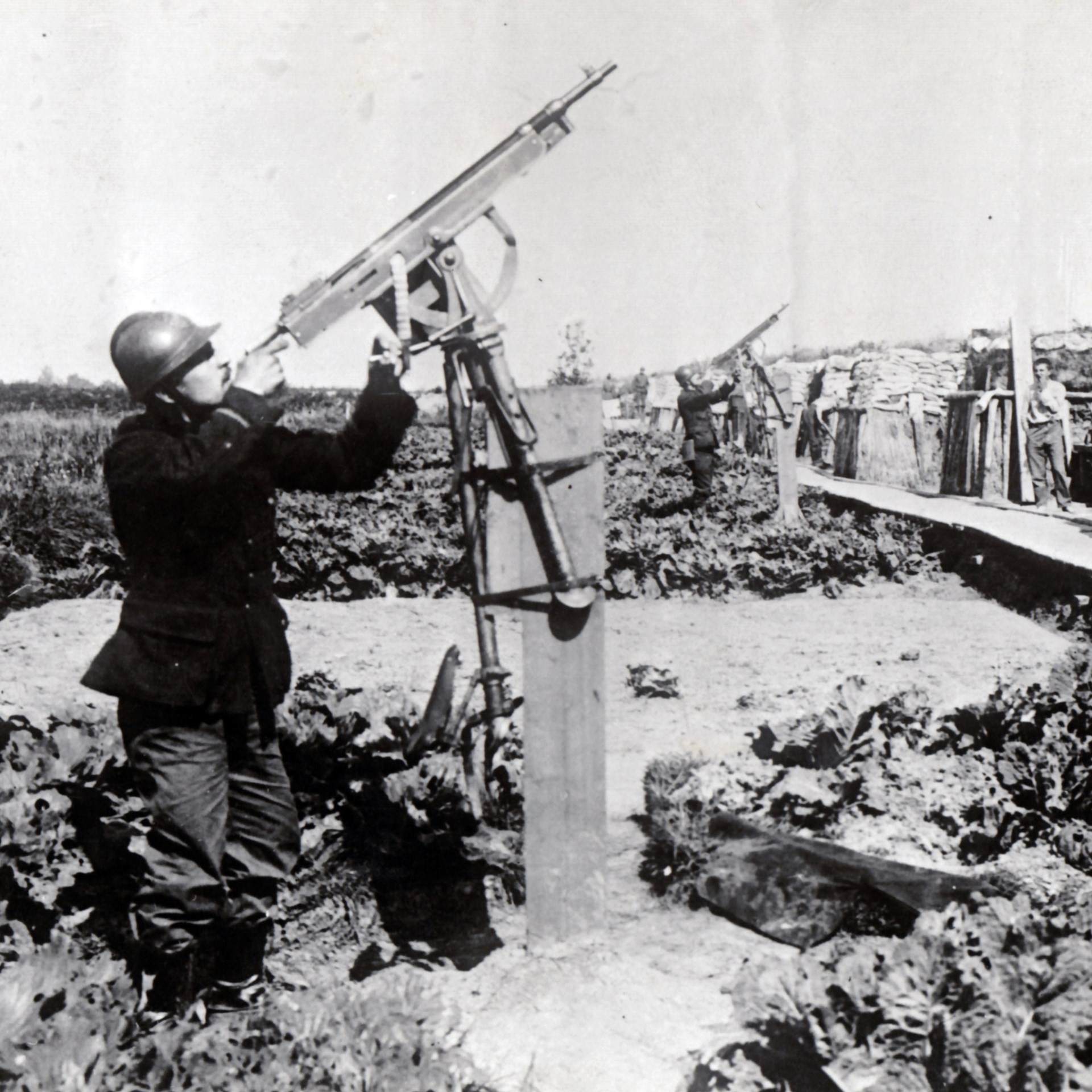
Belgian M1895 guns set up to provide anti-aircraft defense on the Western Front. NARABelgian M1895 guns set up to provide anti-aircraft defense on the Western Front. National Archives photograph.

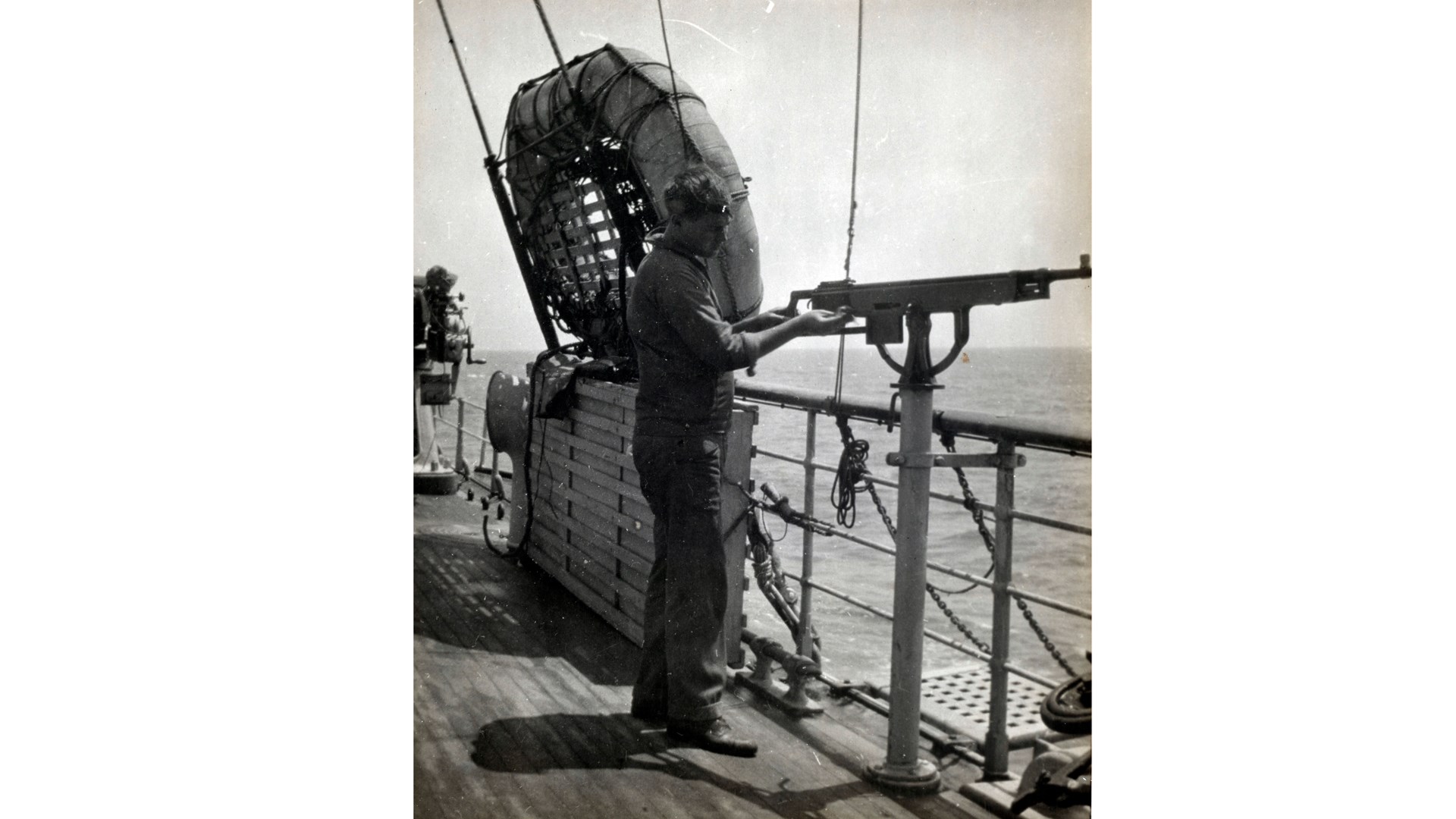
A M1895 in Coast Guard service aboard a converted yacht on anti-submarine patrol during 1918. NARAA M1895 in Coast Guard service aboard a converted yacht on anti-submarine patrol during 1918. National Archives photograph.

M1895 in Belgian service during World War I. Photograph from author’s collection.M1895 in Belgian service during World War I. Photograph from author’s collection.

The potato-digger in training at Fort Lewis, Wash., during 1918. National Archives photograph.The potato-digger in training at Fort Lewis, Wash., during 1918. National Archives photograph.

An aged M1895 serving with the USMC at Hankow, China, during December 1926. Author’s collectionAn aged M1895 serving with the USMC at Hankow, China, during December 1926. Photograph from author’s collection.


Wednesday, May 18, 2022

10 more little known facts about the Mauser

 I shamelessly "nicked"this from American Rifleman", I have or *had* 2 Mauser pattern rifles until my dastardly kayak accident *Sniff*Sniff*.   Don't get me wrong, I like or liked my semi-auto's, the marvel of modern technology, but there is something about a good old fashioned bolt action Rifle.

Knupp Mauserfacts 0

Everyone knows the name “Mauser,” and the bolt-action rifles associated with it. Yet, there is far more that goes with the famous name than that. There were already 10 little-known facts covered previously, but thats not all. Here are 10 more facts you may not have known were a part of the Mauser story:

One: The U.S. Military Tried The Mauser, But Had to Be on the Business End Before They Were Convinced

The U.S. Army included Mausers in their 1892 trial to replace the single-shot Trapdoor Springfield. Versions of the Belgian Model 1889, including some modified to fire the rimmed .30 Government (later to be known as the .30-40 Krag) round, were evaluated. Alas, America’s first bolt-action, smokeless cartridge service rifle ended up being the Danish Krag-Jorgensen design.

In a few years, the Army would see the error of their ways when their Krag and Trapdoor Springfield-armed rifleman encountered Mausers on the battlefield. The Spanish-American War brought the U.S. under the sights of Model 1891 and 1893 Mausers, which had a clip-loading system that gave them a distinct firepower advantage over the Krag, which had to be reloaded one round at a time in its side-hinged magazine. The Mauser didn’t turn the tide for the Spanish, however, and thousands of Mausers were captured and brought back to the U.S. where they were sold as surplus through the Bannerman Company.

A Bannerman ad for captured Spanish 1893 Mauser rifles following the Spanish-American War.

The U.S. Army gave the 1893 Mauser a good looking over, and soon after, they began working on a new rifle that closely followed the Mauser design. The Springfield 1903 was so close, in fact, that it was determined that it infringed on several patents held by Mauser (who patented all its innovations in the U.S., too). Mauser and the U.S. government cordially negotiated a settlement for seven patent infringements that ranged from the Springfield’s box magazine to its extractor to its clip-loading system.

After a negotiated settlement, the U.S. agreed to pay the company a royalty on each ‘03 Springfield rifle and ammunition clip produced. This amounted to 75 cents per rifle and 50 cents per 1,000 loading clips manufactured up to $200,000, an amount reached by 1909. Mauser was very familiar with this arrangement, as many of their designs were licensed and manufactured by government arsenals, who paid the company a royalty.

A 1903A1 Springfield rifle, manufactured by Remington, showing the stripper clip of cartridges inserted.

The Mauser-based ‘03 Springfield would continue to serve U.S. forces as a front-line combat rifle through World War II and as a sniper rifle through the Vietnam War. The British had their own experience of facing the withering fire of a Mauser in the Boer War. This caused them to add a clip (which the British called a “charger”) loading feature to their Lee-Enfields and led to experimentation with a Mauser-based rifle of their own, which would eventually become the U.S. P-17 Enfield.

Two: One Of The Biggest Fans of Mauser Designs Was China

Chinese troops training with C96 pistols with shoulder stocks (right) and Chinese troops with CZ vz.24 Mauser 98-type rifles (left).

One of the earliest modern firearms used by China was the single-shot Mauser Model 1871, which they first purchased in 1876, followed by the repeating 71/84 version. Starting in 1894, China began buying the ‘88 Commission rifle which, though not a Mauser, would be one of the most prolific bolt action designs used by that country. Yet they continued to look for more modern bolt-action rifles, and in 1896, they would purchase some Model 1895 Mausers in 7 x 57 mm.

In the early 1900s, the Chinese began a trial for a new rifle, which was eventually won by a 1907 Mauser, an export version of the Gewehr 98 that was chambered in a special 6.8 x 57 mm cartridge. The 1911 Revolution interrupted the new cartridge’s full adoption and the country ended up sticking with the 8 x 57 mm for most of its weapons.

The C96 Broomhandle pistol was also extremely popular in China. When the Chinese couldn’t get enough of the pistols from Germany, they began to import copies from Spain. Spanish firms, like Astra, took the C96 concept one step further by making fully-automatic versions that, when combined with a shoulder stock, could serve as a rudimentary submachine gun. In response, Mauser introduced their own fully-automatic Broomhandle, the Model 712 Schnellfeuer-Pistole (“Rapid-fire Pistol”).

A Mauser Model 712 Schnellfeuer-Pistole with shoulder stock attached and detachable 20-round magazine. The selector switch for semi-automatic or fully-automatic fire can be seen.

The Chinese also made indigenous copies of the C96, including some chambered in .45 Auto to complement the Thompson submachine guns they were also fond of.

A copy of the C96 Mauser in .45 Auto made at the Chinese Shangshei Arsenal.

World War I made the Chinese realize that they couldn’t rely on foreign countries for their armaments, and they began producing many of their small arms domestically, including copies of the ‘88 Commission and Mannlicher 1904 rifles and the 1907 Mauser to supplement what they could import. 

When the Versailles Treaty prohibited Mauser from exporting firearms, the Chinese had to look elsewhere for new rifles. They purchased 190,000 FN rifles of the Mle. 24 and 30 patterns and 200,000 CZ vz. 98/22 and vz. 24 rifles in the 1930s. Right before World War II started, they were once again able to purchase Mausers and bought “Standardmodell” export rifles. Like earlier Mausers, these newer designs, specifically the FN Mle. 30 and Standardmodell (which would be known as the “Chiang Kai-Shek rifle," with more than half-a-million made) were manufactured domestically.

A Model 1898 Mauser rifle made at the Chinese Mukden Arsenal.

Following the Communist Revolution, the People’s Republic of China began to adopt Soviet firearms designs, while Nationalist China (Taiwan) would continue using Mausers until they could be replaced by American-supplied weapons. Chinese Mausers, however, would soldier on, being used in the Korean War and eventually in the Vietnam conflict.

Three: Mauser Started Experimenting With Semi-Auto Rifle Designs Well Before WWII (And Even Before World War I)

While the German Army would start and finish World War II with the Mauser 98K as their standard service rifle, early in the war, they recognized the need for a “selbstlader” (“self-loader”) battle rifle and they started experimenting and issuing several designs. In 1941, both Mauser and Walther came up with competing designs, both of which used the Bang muzzle gas trap principle to operate the action.

A G41(M) semi-automatic rifle made by Mauser. Note the bolt handle, which allowed the rifle to be operated as a manual repeater.

While the Walther design won out, the rifle was not without its problems and would lead to the much-improved G43 and eventually, to the revolutionary, intermediate cartridge firing, selective-fire Sturmgewehr. Mauser continued experimenting with autoloading designs. Though none would be adopted, they resulted in the development of the famous roller-delayed blowback system.

Mauser’s experimentation with semi-automatic rifles, however, started nearly half-a-century earlier. In 1898, Mauser made a series of patents for recoil-operated designs, with a rifle using those principles appearing in the same year.

An 1899 patent for a recoil-operated Mauser semi-automatic military rifle.

The Mauser C98 Selbstladegewehr, the first semi-automatic rifle made by Mauser.

Mauser produced several versions of a recoil-operated rifle in the first decade of the 20th century, which the German military evaluated but never adopted. A few sporting semi-auto rifles were also made.When World War I started, a use for a semi-automatic rifle did arise. The early days of air warfare brought the need to arm aircraft crews with a fast-firing weapon. In 1915, Mauser produced a semi-automatic “Fliegermodell” carbine that was chambered in 8 mm and used a 25-round magazine (the U.S. tried a similar concept with their bolt-action 1903). The complicated and expensive to produce rifle was quickly replaced by aerial machine guns.

A Mauser Model 1916 Flieger-Selbstladekarabiner.

Four: Mauser Produced the First Anti-Tank Rifle…It Did and Didn’t Influence The Development of the .50 BMG

One of the innovations to appear on the World War I battlefield was a heavily armed and armored vehicle, codenamed the “tank.” As tanks slowly became successful on the battlefield in late 1917, methods to counter them were developed. Because tanks could withstand even armor-piercing rounds from conventional cartridges, something more powerful was needed.

Mauser answered the call with the world’s first anti-tank rifle, called the “Panzerjäger” or “Tank Gewehr.” The rifle was basically a single-shot, oversize Model 98 that was 66.5” long and weighed 41 lbs. It fired a 13.25 mm (0.52”) semi-rimmed cartridge that had been designed as a heavy machine gun round, which launched its 809-grain hardened steel core bullet at 2,575 f.p.s. The cartridge, called the “TuF” (“Tank und Flieger” - "tank and aircraft") could penetrate about an inch of hardened steel tank armor at 100 yards (if struck at a perfect right angle), more than adequate to deal with the tanks of the day. Nearly 16,000 T-Gewehrs would be produced by the war’s end.

A Mauser Tank Gewehr compared to a Mauser 98AZ carbine (foreground).

While the anti-tank rifle concept would survive into World War II, with designs like the British Boys and the Polish wz. 35, by the 1940s, most tanks had evolved their armor to resist even the strongest of shoulder-fired cartridges.

As its name implied, an extra large cartridge like the 13 mm TuF was intended for use against aircraft as well. While the German MG18 machine gun that the TuF round was developed for never made it to the battlefield, other heavy machine gun designs did. A Hotchkiss machine gun was chambered for the 11 mm Gras cartridge, whose heavy bullet had space to hold incendiary compounds to be used against observation balloons and aircraft. Vickers would also chamber an aircraft machine gun in the Gras cartridge.

While the cartridge that would later become the .50 BMG and the Browning machine gun designed to fire it were already being developed before the Allies encountered the Tank Gewehr on the battlefield, the success of Mauser’s anti-tank rifle certainly encouraged the U.S. to continue to develop the Browning .50 after the war ended as an effective cartridge to deal with vehicles and aircraft.

John Browning would chamber the cartridge in a scaled-up version of his M1917 water-cooled machine gun that would eventually evolve into the air-cooled M2, a weapon still in frontline service with the U.S. and other nations around the world. The .50 BMG would also play a critical role in World War II’s air war. Modern rifles chambered for the .50 BMG cartridge, while not used against tanks, are highly effective in sniping and anti-material roles.

Five: Mauser Actions Formed the Backbone of the British Custom Rifle Industry and the Rest of the Hunting Rifle World

When most people think of British sporting rifles, a finely-made double rifle is what comes to mind. Bolt action “magazine rifles” were also an important part of the British custom rifle industry, and the Mauser 98 action was the basis of many of those rifles.

At the turn of the 20th century, the new bolt action rifles provided an affordable alternative to hand-built single-shot and double rifles, while still being strong, accurate and reliable. The success of Mauser’s factory-produced sporting rifles, especially in hard-hitting calibers like the 9.3 x 62 mm, led British makers to pursue their own turn bolt rifles.

While other types of bolt-actions were also used by British makers, such as the Mannlicher (with both Mannlicher en-bloc clip magazines and the Schoenauer rotary magazine) and the Lee, the Mauser was the most popular. By 1900, the John Rigby firm of London was Mauser’s agent in England. Mauser-based sporting rifles were made by Bland, Cogswell & Harrison, Gibbs, Greener, Holland & Holland, Jeffery, Purdey, Westley Richards and many others. At Rigby’s request, Mauser even designed a lengthened “Magnum” version of its action, which allowed for the development of famous hunting cartridges like the .300 and .375 H&H, .416 Rigby, .404 Jeffery and .505 Gibbs.

A Holland & Holland rifle in .375 H&H that uses a Mauser Model 98 action.

A cased Holland & Holland takedown rifle that uses a Mauser Model 98 action.

The influence of the Mauser 98 action on sporting rifles didn’t stay on one side of the Atlantic. American hunters and shooters were begrudgingly weaned off their lever actions through their exposure to Mauser-based bolt action designs, such as the ‘03 Springfield. When Winchester set about to develop their Model 54 (predecessor to the “Rifleman’s Rifle” Model 70), the company looked to the Mauser.  

Close-up of the Mauser 98 action used on a Griffin & Howe custom rifle.

Remington’s first modern bolt-action sporters, such as the Model 30, were derived from the Mauser-based P-17 Enfield. American custom makers, like Griffin & Howe, used 98 actions and the design’s controlled-round-feed extractor became the standard for dangerous game rifles. Today, Mauser 98-actioned sporting rifles can be had from Mauser themselves, as well as companies like CZ and Zastava.

Six: Mauser Made Cars

Everyone knows that FN made bicycles and motorcycles, but did you know that Mauser made cars? When the terms of the Versailles Treaty prevented the company from making and exporting firearms they looked into other manufacturing fields. Their company’s first automotive model was the Einspur-Auto (“Single Track”). As much motorcycle as car, the Einspur-Auto used a tandem set of wheels with two outriggers that retracted when the vehicle got up to speed.

Powered by the M2B15, the first version of BMW’s famous air-cooled Boxer twin, its driver and passengers sat in an open, boat-like cockpit. It was produced from 1923 to 1929. Mauser also made a more conventional four-wheeled car, the 6/24 Mauserwagen that was offered as a sedan or open-top model, from 1923-1927.

Advertisements for Mauser automobiles.

Seven: Mauser Designed and Built Machine Guns and Cannons

In addition to rifles and handguns, Mauser also designed and built machine guns and automatic cannons. World War I made the German military realize the need for a portable, belt-fed machine gun. While the terms of the Versailles Treaty limited German efforts to develop weapons technology themselves, the Rheinmetall-designed MG30 was refined and manufactured by Solothurn in Switzerland.

The magazine-fed MG30 was brought back to Mauser, where engineer Heinrich Vollmer refined it into the MG34. The MG34 was the world’s first successful general purpose machine gun. It was light enough to be transported by one man and fired from a bipod, yet its quick-change barrel and belt feed mechanism meant it could be utilized on a tripod in a sustained fire role.

A MG34 with spare parts and barrels.

The MG34 would be the basis for the MG81, a faster firing version used as a flexible-mounted aircraft machine gun, that was also manufactured by Mauser. The MG 81was used in one, two, four or six gun installations in aircraft such as the Junkers Ju-88, Heinkel He-111 and the Dornier Do-217.

Twin MG 81Z machine guns mounted in rear of the crew gondola of a Focke-Wulf Fw 189 reconnaissance aircraft.

While the MG34 had an excellent service record in the early years of World War II, Mauser and the other factories that produced it could not keep up with demand for the machined steel firearm. The same techniques of using synthetic materials and metal stampings that had been used in guns like the MP40 were applied by sheet metal specialists Grossfuss to the MG34. The result was the MG42. The MG42 was the premier World War II machine gun and was also manufactured by Mauser. It was so successful that the design is still in use today, with modern versions chambered in 7.62 NATO manufactured and deployed around the world.

In addition to fully-automatic small arms, Mauser also designed and built automatic cannons. The MG151 15 mm and 20 mm autocannon was used to arm German and Italian fighter and bomber aircraft, including the Focke-Wulf Fw-190 and Messerschmitt Bf-109.

Cleaning the barrel of the automatic cannon on a Messerschmitt Bf 109 in the Soviet Union, January 1942.

The Mauser MG 213 20 mm cannon never saw service in World War II but would be developed into the U.S. M39, which was used in aircraft like the F-86 Supersabre and  F-5 Freedom Fighter. Mauser also designed ground-based autocannons, such as the single-barreled 20 mm Flak 38 (an example of which is used to devastating effect in the final battle scene of the film Saving Private Ryan). A four-barreled anti-aircraft version, known as the Flakvierling, was also made.

 German soldiers with a Flak 30 20mm in northern France in August 1944.

When Mauser re-entered the defense market in the 1970s, they designed and built the BK-27 27 mm revolving cannon for Tornado and Typhoon fighter jets and in the 1990s, the RMK-30, a 30 mm recoilless autocannon used in ground, sea and aerial applications. Both of these systems are still marketed by Rheinmetall.

Eight: Mauser Almost Disappeared After World War II

Portions of Mauser’s factory in Oberndorf were destroyed in 1945 by Allied bombing, and the plant was occupied by the French Army in April of that year. Mauser continued manufacturing firearms for two years, including 98K rifles and HSc pistols for use by the French military. In 1947, the company was ordered to be liquidated and much of its machinery removed and the original factory records destroyed. The Mauser company survived over the next decade making sewing machines and automotive parts.

Mauser returned to the firearm business in 1965 with the Walter Gehmann-designed Model 66. The Model 66 was a departure from pre-war Mausers. It utilized a short action telescoping bolt and interchangeable barrel system. More conventional bolt action sporting rifles were made for Mauser by Heym. Production of HSc and Luger pistols also resumed.   

Mauser continued to develop their line of bolt action rifles over the years, introducing the rear-locking-lug Model 77. They produced a line of precision sniping rifles and even dabbled with a straight-pull design in the Model 96 (currently manufactured by Roessler as the Titan 16).

A Mauser SP66 sniper rifle used by Israeli forces.

In 1994, Mauser became part of the Rheinmetall group, with the sporting firearm business being spun off into its own entity. Sporting rifles are currently made by Mauser Jagdwaffen Gmbh and include the M12 and the M18 (named the American Rifleman Golden Bullseye Rifle of the Year in 2020) and the classic Model 98. 

Nine: Heckler & Koch, and Their Roller-Delayed Blowback System, Got Their Start At Mauser

Following World War II, former Mauser employees Edmund Heckler, Theodor Koch and Alex Seidel joined together to form Heckler & Koch, a machine tool and engineering firm in Mauser’s home town of Oberndorf. 

H&K returned to their firearms roots when the German Army was in the market for a new infantry rifle. They took on the Spanish CETME design, based on the roller-delayed blowback concept that Mauser was perfecting at the end of World War II, and refined it into a rifle that Germany would adopt as the G3. The G3 would go to become one of the world’s most prolific battle rifles ever made, with more than eight million produced. 

A diagram of the roller-delayed blowback mechanism of the G3 rifle, as invented by Mauser, perfected by CETME and made successful by Heckler& Koch.

 Heckler & Koch scaled the roller-delayed blowback design to a variety of firearms, from the 7.62 mm NATO G3 rifle (top) to the 9 mm Parabellum MP5 submachine gun (bottom).

Heckler & Koch took the roller-delayed principle and scaled it to a variety of firearms, from belt-fed machine guns to precision rifles to handguns and to submachine guns, in the form of the famous MP5.

One of the most famous applications of the Mauser-invented roller-delayed blowback mechanism is in the Heckler & Koch MP5 submachine gun, as seen here in the hands of a German GSG-9 operative.

In the 1970s, H&K moved away from the roller-delayed principle in handguns with innovative designs like VP70, a polymer-framed pistol that used an 18-round double-column magazine, and the gas-delayed blowback, “squeeze cocking” P7. From its humble origins rising from the ashes of Mauser, Heckler & Koch has grown into one of the world’s leading firearms manufacturers, with contemporary products like the HK416 or MR556, the VP9 and the G36.

Ten: The Mauser Model 1898 is One of the Most Produced and Influential Firearms Designs of All Time

The most successful turn-bolt rifle design ever, the Mauser Model 1898, shown in its Gewehr 98 form.

 A Mauser Model 98 receiver and bolt.
That the Mauser 98 is one of the most produced and influential designs of all time is certainly not a little known fact, but it bears repeating at the summation of this series. Mauser 98 rifles and copies are probably the second most widely- produced firearm design, after the AK-47 and its derivatives. Conservative estimates put production of Mauser 98-type rifles at over 100 million, approximately 10 times the total number of Glock handguns produced to date. Mauser’s heritage lives on in nearly every modern turn bolt rifle and in the company’s own contemporary products, like the M12 and M18.