Webster

The Constitution was made to guard the people against the dangers of good intentions." --American Statesman Daniel Webster (1782-1852)


Monday, February 7, 2022

"Lets Get Ready To Rumble" Jock Jam remixes Monday Music


 I am continuing my string of "bugaloo" songs.  This discussion was started in the "Monster Hunter Nation, Hunters Unite", back in November of 2019? it is a Facebook group with enthusiast of the ILOH "International Lord of Hate" A.K.A Larry Correia.  We were talking about what song would we use if we looked out of our window or glanced at our security camera and saw this.....

One of the alphabet bois lining up to take down your house...What would be your "Valhalla" song and you would set it up to play as you load up magazines set up the Tannerite Rover, turn on the water irrigation system and fill it with gasoline instead of water and prepare yourself.

 I figured it would scar the alphabet boys if they come busting in and hearing a song about people having a good time and standing up for themselves and having the best music from the best decade and  playing  it Loud will scar the Alphabet Boi's as they force the stack through the door, because they will be exposed to good music for the first time unlike the crap they listen to now sipping their soi latte's and comparing notes on the latest soyburger recipes and who wears the best manbuns in the team.

   I was going to work and this song came on my 90's channel and it was a "Eureka" moment and I knew I found my next candidate for "Monday Music.


"Let's Get Ready to Rhumble" is a 1994 song by PJ & Duncan AKA, the performing name used by British duo Ant & Dec at the time. The song was released in the United Kingdom on 11 July 1994 as the third single from their debut studio album Psyche. The song was written by Nicky Graham, Deni Lew and Mike Olton, and produced by Nicky Graham. It peaked at number 9 in the UK Singles Chart in 1994, and was later #1 almost two decades after its original chart appearance. The song includes a repeatedly-used sample of boxing and wrestling announcer Michael Buffer saying his trademark catchphrase. “Rumble” was deliberately spelled as "rhumble" to avoid copyright problems, since Buffer had trademarked the phrase, and the chosen additional “h” was a homage to the rhumba dance.

The single was re-released in March 2013, with royalties from sales donated to the charity ChildLine. The song peaked at number one on the UK Singles Chart in its first week of new release, becoming their first ever single to reach that spot and gave DMG TV's Edsel label a number one.The song was performed on Ant & Dec's Saturday Night Takeaway. The single was re-released in February 2014. 


Michael Buffer (born November 2, 1944) is an American ring announcer (or "MC") for boxing, professional wrestling and National Football League matches. He is known for his trademarked catchphrase: "Let's get ready to rumble!"

 Michael Buffer began using the phrase "Let's get ready to rumble!" in 1984. By 1992, he acquired a federal trademark for the phrase. Buffer uses his famous phrase in various licensing deals including the platinum selling album Jock Jams by Tommy Boy Records, the video games Ready 2 Rumble Boxing, Ready 2 Rumble Boxing: Round 2 for the PlayStation 2, Nintendo 64, Dreamcast and Game Boy Advance and Greatest Heavyweights of the Ring for the Sega Genesis and numerous other products. In addition, he has used variations of the phrase in advertisements, including the popular commercial for Mega Millions in which he says "Let's get ready to Win Big!" and the Kraft Cheese commercial in which he says "Let's get ready to Crumble!" and most recently for Progressive Insurance in which he says "Let's get ready to bundle!" As of 2009, the catchphrase has generated $400 million in revenue from licensing the trademark.

Buffer has appeared on various talk shows hosted by Jay Leno, David Letterman, Arsenio Hall, Conan O'Brien and Jimmy Kimmel. He has also appeared on Saturday Night Live, In Living Color, Mad TV and The Howard Stern Show.

He appeared on NBC's Deal or No Deal on December 10, 2007, and opened the finale of the seventh season of American Idol, a production of RTL. In 2011 he made an appearance on the 12th season of Dancing with the Stars to announce Sugar Ray Leonard week 3 dance. Buffer has also served as ringside announcer for the syndicated television game show The Grudge Match, hosted by Steve Albert and Jesse Ventura.

In the 1997 film Hercules, Hades uses Buffer's catchphrase "Let's Get Ready to Rumble"! during Hercules' fight with Hydra.

He has played himself in various films including Ready to Rumble and Rocky Balboa, and in 2008 Buffer appeared as Walbridge, the main villain in the comedy You Don't Mess with the Zohan. He also appeared in the 2019 remake of Dumbo, portraying a ringmaster who delivers the line "Let's get ready for Dumbo!" in his trademark cadence.

Buffer has been animated in The Simpsons, South Park, and Celebrity Deathmatch. Buffer also appears in the animated TV series Phineas and Ferb in the episode "Raging Bully", as the voice of the announcer for the big thumb-wrestling match with Phineas and Buford. Buffer appeared in the extended version of the Muppets webisode "Food Fight", where he is seen announcing the cooking competition between Gordon Ramsay and the Swedish Chef.

Buffer appears as featuring artist on "Let's Get Ready to Rumble" and "Go for It All!" by German eurodance group the K.O.'s and his voice was sampled in the Ant & Dec song "Let's Get Ready to Rhumble" He recorded the introduction track for country artist Josh Turner's 2012 album, Punching Bag.

In 2013, Buffer appeared in Progressive Insurance commercials, promoting their program of combining different coverages into one policy, with a parody of his famous phrase - "Let's get ready to bundle!"

Buffer reproduced as an action figure in both Toy Biz's WCW line and Jakks Pacific's Rocky line.


In 1982, Buffer began his career as a ring announcer. By 1983, he was announcing all boxing matches promoted by Bob Arum's Top Rank on ESPN, which gave him a national identity at a time when ring announcers were strictly locally hired talent. By 1984, Buffer developed the catchphrase "Let's get ready to rumble" in his announcing, which gained enormous popularity. He began the process of obtaining a federal trademark for the phrase in the 1980s, acquiring it in 1992. Consequently, Buffer has earned in excess of $400 million with the license for his trademark.

By the late 1980s, Buffer was the exclusive ring announcer for all bouts in Donald Trump-owned casinos. Trump said of Buffer, "He's great, he's the choice, he has a unique ability...I told my people, 'We got to have him.'"Buffer's work was also admired by many boxing greats. Sugar Ray Leonard once told Buffer, "When you introduce a fighter, it makes him want to fight."

In 2018, Buffer signed with DAZN to serve as the exclusive ring announcer for all of its boxing broadcasts, which include deals with Matchroom


Sunday, February 6, 2022

Russia Upgrades the TU-160 "Blackjack" Bomber

 Several years ago I did postings about the equipment used in the book "Red Storm, Rising", I had enjoyed doing those postings.  I had seen this pop up in my feed and I wondered if this plane was ever used in the book and as I recall, it wasn't used, the plane was too new.

The Tupolev Tu-160 (Russian: Туполев Ту-160 Белый лебедь, romanized: Belyj Lebeď, lit. 'White Swan'; NATO reporting name: Blackjack) is a supersonic, variable-sweep wing heavy strategic bomber designed by the Tupolev Design Bureau in the Soviet Union in the 1970s. It is the largest and heaviest Mach 2+ supersonic military aircraft ever built and second to the experimental XB-70 Valkyrie in overall length. As of 2021, it is the largest and heaviest combat aircraft, the fastest bomber in use and the largest and heaviest variable-sweep wing airplane ever flown.

Entering service in 1987, the Tu-160 was the last strategic bomber designed for the Soviet Union. As of 2016, the Russian Air Force's Long Range Aviation branch still had 16 aircraft in service. The Tu-160 active fleet has been undergoing upgrades to electronics systems since the early 2000s. The Tu-160M modernization program of existing models has begun with the first updated aircraft delivered in December 2014. On 12 January 2022 first newly serial built aircraft had its first test flight with planned deliveries of 2 new until end of 2022 within contract of 10 on order.

The first competition for a supersonic strategic heavy bomber was launched in the Soviet Union in 1967. In 1972, the Soviet Union launched a new multi-mission bomber competition to create a new supersonic, variable-geometry ("swing-wing") heavy bomber with a maximum speed of Mach 2.3, in response to the US Air Force B-1 bomber project. The Tupolev design, named Aircraft 160M, with a lengthened blended wing layout and incorporating some elements of the Tu-144, competed against the Myasishchev M-18 and the Sukhoi T-4 designs.

Tu-160 in flight

Work on the new Soviet bomber continued despite an end to the B-1A and in the same year, the design was accepted by the government committee. The prototype was photographed by an airline passenger at a Zhukovsky Airfield in November 1981, about a month before the aircraft's first flight on 18 December 1981. Production was authorized in 1984, beginning at the Kazan Aircraft Production Association (KAPO)

First overhauled and partially modernised aircraft was accepted into Russian service after testing in July 2006. The aircraft reportedly received a capability to use conventional weapons, but was not upgraded with new avionics as previously planned.[11][12] First modernised aircraft capable to carry the new long-range Kh-555 conventional cruise missile was delivered to the Russian Air Force in April 2008;[13][14] a follow-up contract for modernisation of three more aircraft is estimated to cost RUR3.4 billion (US$103 million).[15]

The modernisation appeared to be split into two phases, first concentrating on life extension with some initial communication–navigation updates, followed by engine upgrades after 2016. In November 2014, a Tu-160 upgraded with new radar and avionics performed its first flight. The aircraft was delivered to the Russian Air Force as Tu-160M model in December 2014.The phase I update was due to be completed by 2016, but industrial limitations may delay it to 2019 or beyond.Although Kuznetsov designed an NK-32M engine with improved reliability over the NK-32 engines, its successor company has struggled to deliver working units. Metallist-Samara JSC had not produced new engines for a decade when it was given a contract in 2011 to overhaul 26 of the existing engines, by two years later, only four were finished. Ownership and financial concerns hinder the prospects of a new production line; the firm insists it needs a minimum of 20 engines ordered per year but the government is only prepared to pay for 4–6 engines per year. A further improved engine has been bench tested and may enter production in 2016 or later.

New modernized in production

On 29 April 2015, Russian Defense Minister Sergei Shoigu on order of President Putin announced Russia was resuming production of the Tu-160. In May 2015, TASS reported that the Russian Air Force would purchase at least 50 new-build Tu-160s and that production of the aircraft would resume at KAPO.General Viktor Bondarev has said that development of the PAK DA will continue alongside resumption of production of the older model bomber.

On 16 November 2017, a newly assembled Tu-160, built from an unfinished Tu-160 airframe, was unveiled during a roll-out ceremony at KAPO, signifying a restoration of certain production technologies such as electron-beam welding or titanium work reportedly lost after the termination of serial production in 1992. According to Dmitri Rogozin, the serial production of completely new airframes for the modernized Tu-160M2 should begin in 2019 with deliveries to the Russian Air Force in 2023.The aircraft, named Petr Deinekin, after the first commanding officer of the Russian Air Force Gen. Pyotr Deynekin, performed its maiden flight in January 2018 and began flight testing the same month. It performed its first public flight on 25 January 2018, during President Vladimir Putin's visit to KAPO plant.The same day, a contract for ten upgraded Tu-160M2 bombers was signed. On 12 January 2022 a new serial produced from scratch Tu-160M had its first low altitude basic test flight. It is planned to deliver 2 newly built serial Tu-160M in 2022 with ramping up production until all 50 on order new aircraft are delivered. 


The Tu-160 is a variable-geometry wing aircraft. The aircraft employs a fly-by-wire control system with a blended wing profile, and full-span slats are used on the leading edges, with double-slotted flaps on the trailing edges and cruciform tail. Titanium constitutes around 30% of the aircraft's 110 tonne empty weight, and the largest component (the swing wing hinge) weighs 6 tonnes.[32] The Tu-160 has a crew of four (pilot, co-pilot, bombardier, and defensive systems operator) in K-36LM ejection seats.

The Tu-160 is powered by four Kuznetsov NK-32 afterburning turbofan engines, the most powerful ever fitted to a combat aircraft. Unlike the American B-1B Lancer, which reduced the original Mach 2+ requirement for the B-1A to achieve a smaller radar cross-section, the Tu-160 retains variable intake ramps, and is capable of reaching Mach 2.05 speed at altitude. The Tu-160 is equipped with a probe-and-drogue in-flight refueling system for extended-range missions, although it is rarely used. The Tu-160's internal fuel capacity of 130 tons gives the aircraft a roughly 15-hour flight endurance at a cruise speed of around 850 km/h (530 mph), Mach 0.77, at 9,100 m (30,000 ft). In February 2008, Tu-160 bombers and Il-78 refueling tankers practiced air refueling during air combat exercise, as well as MiG-31, A-50 and other Russian combat aircraft.

The aircraft carries a TsNPO Leninets Obzor-K (Survey, NATO: Clam Pipe) radar for tracking ground and air targets, and a separate Sopka Terrain-following radar. Although the Tu-160 was designed for reduced detectability to both radar and infrared signature, it is not a stealth aircraft. Nevertheless, Lt. Gen. Igor Khvorov claimed that Tu-160s managed to penetrate the US sector of the Arctic undetected on 25 April 2006, leading to a USAF investigation according to a Russian source.

Tupolev Tu-160 at the 2013 Moscow Victory Day Parade

Weapons are carried in two internal bays, each capable of holding 20,000 kg (44,000 lb) of free-fall weapons or a rotary launcher for nuclear missiles; additional missiles may also be carried externally.[citation needed] The aircraft's total weapons load capacity is 40,000 kg (88,000 lb). No defensive weapons are provided; the Tu-160 is the first post-World War II Soviet bomber to lack such defenses.

As of 2020, the Russian Air Force is planning to arm the Tu-160 with new hypersonic missiles, in particular the Kh-47M2 Kinzhal.

While similar in appearance to the American B-1 Lancer, the Tu-160 is a different class of combat aircraft; its primary role being a standoff missile platform (strategic missile carrier). The Tu-160 is also larger and faster than the B-1B and has a slightly greater combat range, though the B-1B has a larger combined payload with external payload. Another noticeable difference is that the B-1's colour scheme is usually subdued dark gray to reduce visibility; the Tu-160 is painted with anti-flash white, giving it the nickname among Russian airmen "White Swan".


Tu-160M2

United Aircraft Corp. (UAC) on Jan. 12 flew the first newly assembled Tu-160M2 bomber from the Kazan Aviation Plant in Russia. 

The first flight lasted about 30 min. and reached an altitude of 600 m, UAC says in an announcement.

The flight of the first newly built version of the modernized, supersonic bomber follows by more than two years the debut of the first Tu-160M that was retrofitted to the more advanced standard. 

The Tu-160M2 adds more efficient Kuznetsov NK32 Series 2 turbofan engines to extend the bomber’s range. 

“The fundamental importance of today’s event is that the new machine is completely rebuilt, from scratch,” said Yury Slyusar, general director of UAC. 

The revival of new production allowed the Kazan Aviation Plant to “restore key competencies,” Tupolev Managing Director Vadim Korolev says. The Kazan factory now houses the “world’s largest installation for electron beam welding and vacuum annealing of titanium, according to UAC. 

UAC expects that further development of the Tu-160 will include the addition of new, advanced missiles


Saturday, February 5, 2022

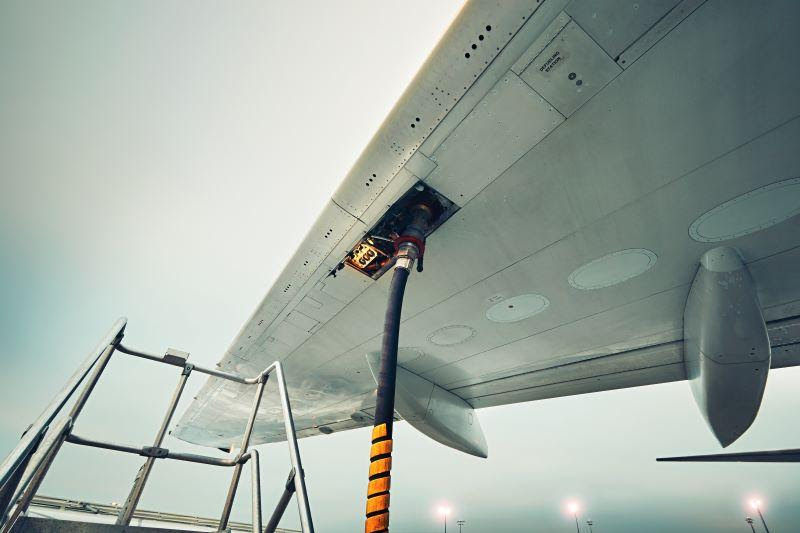
Airline Fuel Prices are going up

 I also "snagged" this from my work email.  This is a bit deal, Fuel cost is the single biggest expenditure for my employer, and this is important because if fuel goes up, so will ticket prices and that can impact my employer and other airlines and this can impact the economy because the biggest most profitable group for us and any other airline are "Business Travelers". you know the ones that are always traveling for their jobs.  If tickets go up too much, a lot of businesses will curtail their travels to save money and this can impact the bottom line of my employer and other airlines.  What happens in Europe will come to America.


fuel airplane

As Europe’s airlines look beyond the omicron coronavirus variant to what they hope will be a successful summer season, fuel is in focus, as jet fuel prices reach record highs.  

IATA said the price for jet fuel ended last week (Jan. 28) up 2.6% at $105.7/bbl compared to the previous week. Compared to a year earlier, the price represented a huge 77.8% increase. IATA estimates the average jet fuel price for 2022 will be $102.2/bbl and puts the impact on the 2022 fuel bill at $65 billion.  

Of course, after two devastating years of pandemic, rising fuel costs can be seen as a good thing for airlines. If airlines are spending more on fuel that means they are finally doing what they have been aiming to do since the beginning of the COVID-19 crisis—fly more.  

European LCCs reporting quarterly results over the past few days have flagged the negative impact omicron had on their bookings, fares and yields over the peak winter season. With many travel restrictions in the region now easing, they also made upbeat noises about summer 2022.  

But with jet fuel often accounting for an approximate quarter of an airline’s operating expenses, a sustained rise in jet fuel prices is still a cause for concern.  

And airlines also know that looking further ahead, in the years to come, expenses related to making their fuel purchasing more sustainable are also going to have an impact on their balance sheets. The phasing out of ETS allowances as well as the cost of more expensive sustainable aviation fuel (SAF) will have an impact. 

“Airlines have long had to worry about fuel costs as their largest operating expense,” Bernstein analysts wrote in a January 24 research note. “In the 2020s, European airlines will increasingly need to worry about decarbonization costs as well.” 

For now, though, the price of oil is the main focus as airlines look to their fuel costs. As easyJet set out in its most recent quarterly results, the UK-based carrier is around 60% hedged for fuel in fiscal 2022 at about $504 per metric ton with the spot price on Jan. 26, 2022 at $840. 

Ryanair said its fuel requirements were almost fully hedged for the fourth quarter of its fiscal 2022 (which runs to March 31), while the first half of fiscal 2023 is 80% hedged and the second half 70% hedged.  

Credit Suisse analysts flagged up fuel in a research note published after Ryanair released its fiscal 2022 third quarter (Q3) results Jan. 31. Credit Suisse trimmed its estimate for Ryanair’s 2023-24 net income, “principally to reflect higher unhedged jet fuel prices at $800/mt for unhedged exposure versus $750/mt previously.” However, the analysts also noted that longer-term fuel costs, carbon costs, interest costs, debt repayments and the need to renew fleets would also be putting pressure on Ryanair’s weaker competitors, ensuring a “benign capacity environment” for the Irish LCC.  

For Hungary-based LCC Wizz Air, fuel expenses increased by 263.3% to €204.3 million ($229 million) in its fiscal 2022 Q3 (end-Dec. 31, 2021) from €56.2 million in the same period a year prior. “The increase reflects operational capacity increases in terms of fuel quantity consumption to 188% and price increase of 22.9% (all inclusive),” the airline said. “The average fuel price (including hedging impact and excluding into-plane premium) paid by Wizz Air during Q3 was $718.1 per ton, an increase of 100% from $358.9 the same period in [fiscal] 2021.” 

The issue of fuel is of concern to the whole industry. At a Jan. 25 press briefing, IATA Director General Willie Walsh said fuel costs were among the issues on the minds of airline management teams.  

“This is something that airlines will be closely monitoring. And given what we’ve seen over the last couple of years, it’s unlikely that most airlines will have significant hedging in place to protect them against this increase in the oil price.” Walsh said. “So, I think this will be a factor certainly playing into fares as we go through the year if the oil price remains high.”


Friday, February 4, 2022

"Qatar Get 777 Freighter deal and 737-10's"

 This ties in with my Post a few days ago I did with Qatar and Airbus feuding and wondering if Boeing will get an advantage out of it, and looks like they did.  Qatar signs a deal to get some 777 Freighters and 737-10's's to replace the A321 NEO's that were cancelled by Airbus as part of their feuding.  It is interesting how things are playing out.

    I got this article from a 3rd party source in my work email.


Qatar Airways

Qatar Airways has signaled the long-anticipated launch of Boeing’s 777-8F Freighter with a firm order for 34 aircraft as part of a deal which also includes an unexpected agreement covering up to 50 stretched 737-10s.

The two fleet deals, including 16 777-8F Freighter options, are worth around $27 billion at current list prices, and represent a key boost for Boeing as it continues to slowly recover from the impact of the COVID-19 pandemic on its widebody business and the 737 MAX grounding on its single aisle sector.  

The firm launch of the 777-8F, the third derivative of the 777X family, provides Boeing with a freighter model offering a capacity close to that of the 747-400F in an era of historic growth for the air cargo business. The aircraft, which is set to begin deliveries in 2027, shares the same 235 ft. 5 in. wingspan as the passenger models, but is 232 ft. 6 in. long—marking a fuselage extension of 3 ft. 6 in. over the previously defined 777-8.

The extra fuselage length will provide space for up to 31 freight pallets on the main deck, plus existing space for 13 pallets and additional bulk cargo, or 5,995 cu. ft., in the lower holds. Maximum takeoff weight will be increased to 805,000 lb., compared to 775,000 lb. for both 777X passenger versions, providing a range of more than 4,400 nm. and a maximum revenue payload of 247,500 lb. (112.3 metric tons). The aircraft will be configured for a maximum structural payload of 260,000 lb., permitting longer non-stop operations. 

The same fuselage length will now be shared with the 777-8 passenger version. Boeing has yet to confirm the revised development schedule of the ultra-long-range derivative since revealing in 2019 it was delaying the shorter version to focus on the longer body 777-9 variant. However, the manufacturer says it now anticipates delivery of the freighter before the 777-8 passenger variant, indicating the introduction of the longer haul model has now been pushed back until at least 2028.

Boeing adds that with the Qatar order, the 777X family backlog has now grown back toward pre-pandemic numbers with 334 firm orders. “Across all orders, 80% are for the 777-9 and the rest roughly split between the freighter and 777-8 passenger airplane,” the company adds. 

Earlier indications that Boeing was studying extending the 777-8 fuselage to accommodate the freighter model appeared to trouble Tim Clark, the president of Emirates Airlines which—apart from Qatar—is the only other known customer for the model.

Speaking to Aviation Week at the Dubai Airshow in November 2021, Clark cautioned that even a slight stretch of the baseline 777-8 to form the basis for the freighter would “cause issues,” and added “why would you buy something that is so close [in size] to the -9.” Boeing is meanwhile continuing flight tests of the 777-9 and says it remains on track to begin deliveries in late 2023. 

Qatar Airways, whose cargo unit already operates 26 current model 777F freighters, is also ordering two additional 777Fs as part of the agreement. Boeing indicates that 20 of the 34 firm 777-8Fs will be converted from the 60 777X family orders already held by the Middle East-based carrier. 

The surprise inclusion of the 737-10 order, which is made up of 25 firm and purchase rights on an additional 25, follows the equally unexpected termination earlier in January of Qatar’s order for 50 similarly sized Airbus A321neos. The cancellation of the A321neos, which were originally due for delivery beginning later in 2022, is the latest development in the increasingly bitter feud between Airbus and Qatar over problems with the surface finish on the airline’s A350 fleet.

While Qatar is not discussing details of the abandoned A321 order, the airline’s CEO Akbar Al Baker says the carrier “very much looks forward to adding the 737-10 to its fleet, with this new variant of the 737 being ideally suited to our short haul network, allowing us an opportunity to further enhance our product offering for our customers, modernize our fleet and operate the most efficient aircraft in its category.”   

Stretched to 143 ft. 8 in., the 230-single class seating 737-10 is currently undergoing flight testing following its initial flight in June 2021. Although the aircraft does not have the same range capability as the latest A321neo versions and requires a supplemental auxiliary fuel tank to operate on extended ranges up to 3,300 nm., the aircraft continues to amass orders—most significantly attracting an order for 150 from United Airlines in mid-2021


Thursday, February 3, 2022

"What to Say After You Had To Defend Yourself"

 I got this link in my email and Massad Ayoob is a legend in the "Gun" community, I met the man at NRAAM and he was really gracious with us shooters asking him questions.  From All accounts, he is a class act.  I personally have a good friend who is a good lawyer and deals a lot with police officers and other first responders and don't mind getting into it with city governments and county governments when they try to railroad a client and he I will call but the principle is the same, "Diarrhea of the mouth will put you in prison."


Back in the very early 1980s, when I founded Lethal Force Institute, I formulated a “five point checklist” of things that need to be said to responding authorities at the scene after you have defended yourself or others with force, perhaps even deadly force. 

In the four decades since, that advice has worked remarkably well.

Defense lawyers often tell you “Never talk to the police.” You have to understand where that advice comes from. In forty-plus years as an expert witness in homicide cases, including many years of teaching CLE (Continuing Legal Education) for practicing attorneys, and a couple of years as Co-Vice Chair of the Forensic Evidence Committee of the National Association of Criminal Defense Lawyers, I’ve gone into this matter deeply with a helluva lot of defense lawyers. Many of them have NEVER defended a truly innocent person who fired in self-defense. Those who have done that sort of case generally agree with my advice, which is to establish a Five-Point Checklist of things right there at the shooting scene from the get-go.

Unfortunately, the gun-related internet is full of people who have bought into the “never talk to the police” narrative, and mis-interpret my advice as “Babble as much as you want and answer every question you are asked.”


A couple of years ago, my friend John Correia hosted me and my colleague Marty Hayes to do a Deadly Force Instructor class for John and his staff and some other attendees. While we were doing that in Phoenix, Arizona, John recorded the following video with me:

Please take a few minutes to review.

If anyone tells you “Never say anything after you defended yourself, because you’ll be so stressed out that your brain will turn into feces,” ask them this:

“We can all agree that when someone is trying to kill you or your loved ones, you’ll be under MORE stress than ‘talking to cops.’ If our brains melt into diarrhea under stress, how the hell did we defeat an apex predator in a life-or-death battle, to begin with?”

And ask that person the question I put to John Correia at the end of the video: If you think your brains melt into feces under stress, why the hell do you keep deadly weapons for defense of yourself or others in the first place?


Wednesday, February 2, 2022

The Covid conspiracy...Good for what ails the Donks.


 I clipped this also from "Townhall",   I thought it was an interesting opinion piece.


This week has been eye-opening. Even for me -- and I'm the guy who has warned for over a year, in commentary after commentary, and often for three hours a day on my nationally syndicated radio show, that the COVID-19 vaccine could be dangerous and deadly and could lead to catastrophe. 

I stuck my neck out like no other talk show host in America to warn the vaccine may not even prevent illness; in fact, it could damage the immune system, thereby causing more illness and death. And not just from COVID-19, but also injuries and death linked to the COVID-19 vaccine itself.

Eight months ago, I warned it was time to suspend the vaccine program pending an investigation of mounting deaths, grievous injuries and permanent disabilities. I titled my commentary, "What if This Experimental COVID Shot Is Killing People? Don't Americans Have a Right To Know?"

Four months ago, I was courageous enough to scold New York Times medical reporters about the unfolding disaster that they have ignored. I titled my commentary, "What I Just Told the New York Times About the Complete Failure and Disaster of the COVID-19 Vaccine."

Three months ago, I was the first to warn that Americans were dropping in record numbers of heart attacks, strokes and blood clots. I titled my commentary, "If the Vaccine Is So Great, Why Are So Many People Dropping Dead?"

But even I was shocked by the plethora of stories coming out just in the past week, from all corners of the world, suggesting the vaccines are indeed a terrible failure and are causing a mass die-off.

Here is a quick look at the FACTS that have come pouring out of the closet just in the past week:

Israel is the most vaccinated major nation in the world. Almost the entire population is quadruple vaccinated. Yet right now Israel is No. 1 in the world for COVID-19 infections. Over one half of 1% of their entire population is testing positive for COVID-19 PER DAY. 

In Germany, the most draconian COVID-19 mandates and restrictions in the world were sold to the public with false data. Just like in America, the German government labeled this a "pandemic of the unvaccinated." They claimed up to 90% of the infected and dead were unvaccinated. Newspaper investigations have found that none of this was true. The government simply classified every sick or dying person as "unvaccinated." Government officials are apologizing, blaming the "mistake" on a "software error."

In Alberta, Canada, the government published, then quickly deleted health data exposing that almost 60% of the COVID-19 victims classified as "unvaccinated" were actually among the vaccinated. It turns out everyone who got sick, was hospitalized or died within two weeks of getting any vaccine (the first jab, or second, or third) was counted as "unvaccinated."

I'll bet you didn't know the Centers for Disease Control and Prevention play the exact same trick here in the USA. They know most of the COVID-19 deaths and injuries, not to mention deaths from the vaccine itself (mostly heart attacks) will occur within 14 days of any jab. So, everyone that gets sick or dies in that period is counted as "unvaccinated."

The most perfect control group ever is the U.S. military. Every young soldier got the COVID-19 vaccine in the past year. To follow the results is the very definition of SCIENCE. Military whistleblowers have come forward with Department of Defense medical data showing since the start of the vaccine program cancer is up about 300% among military members; female infertility is up 500%; miscarriages are up by 300%; and there was an astronomical 1000% increase in neurological disorders from 82,000 to 863,000 in one year.

These are young men and women who were in perfect health ... until the vaccines. It appears the vaccines are literally crippling our national defense.

One more control group of formerly healthy young men and women: FIFA soccer players in the EU. Deaths from cardiac arrest increased by 500% in 2021. An astounding 183 professional athletes and coaches collapsed "suddenly" in 2021. 

Worst of all is the news from the CDC that non-COVID-19 deaths in the age range of 18 to 49 increased by 40% in the past year. No one has ever seen anything like this. Why are working-age Americans dying in record numbers? Only one thing changed in 2021: vaccine mandates at the workplace. 

The real story these numbers tell is we are experiencing a "pandemic of the vaccinated." I believe the vaccine is doing catastrophic damage, but governments, politicians and bureaucrats the world over have falsely labeled vaccinated people who are sick and dying as "unvaccinated." And the media covers up the truth like it's Hunter Biden's laptop.

This is the greatest scam in world history. It would make Bernie Madoff blush.


Tuesday, February 1, 2022

Airbus squabbling with Qatar

 I keep my ear to the news from my industry and this is totally out of left field, having a major carrier and a manufacturer squabble like this.

    I clipped this from a news article that I got from my work email from a 3rd party source.


Happier days: Qatar Airways Group CEO at the A350-1000 first delivery ceremony in 2018 with then-Airbus president Commercial Fabrice Brégier.

Why has Airbus provoked one of its toughest but also most prominent airline customers with the possibly unprecedented action of unilaterally canceling a major order that the airline is presumably able to afford?

The escalating dispute between Airbus and Qatar Airways has many in the industry scratching their heads; not least, it seems, IATA director general and former IAG CEO Willie Walsh. He was asked about the situation in a media briefing Tuesday and responded that it was something “everyone in the industry will be looking at and trying to better understand.”
The trouble centers on the A350 widebody, for which Qatar Airways was the launch customer, for both the -900 and -1000 variants, and is the second largest operator (after Singapore Airlines), with 53 in service and another 23 on order. 

The Qatar Civil Aviation Authority, however, has grounded 21 of Qatar Airways’ aircraft because of concerns about paint and surface degradation issues that the Doha-based airline says pose “serious and legitimate safety concerns.”

Always outspoken and never shy to use the media to make his point, Qatar Airways Group CEO Akbar Al Baker steadily raised the rhetoric on this issue. When he was unable to reach a satisfactory outcome with Airbus, from whom he is believed to be seeking more than $600 million in compensation, he took the matter to an English High Court.

That was a significant ratcheting of an already tense situation. But the backlash from Airbus is what has caused the wider industry to take a sharp intake of breath. The French manufacturer canceled Qatar Airways’ order for 50 A321neos.

Not surprisingly, Qatar swung right back, posting a video of the defects on its grounded aircraft, which it describes as “not superficial” and which “causes the aircraft’s lightning protection system to be exposed and damaged” and “leaves the underlying composite structure exposed to moisture and ultraviolet light.”

The video images are certainly worrying, but it must be noted that while other A350 operators have reported similar issues, they appear to be much less severe and the European Union aviation authority, EASA, has said it does not consider this to be a safety issue.

Nonetheless, ungrounding aircraft is a much lengthier and complicated exercise than grounding them and Qatar Airways is now seemingly stuck with the daily loss of revenue from those out-of-service widebodies while being unable to expand its narrowbody fleet with the highly efficient and much-in-demand A321neo. Even if a court can sort out the first problem, it will likely be another lengthy and expensive process. Might Qatar Airways also sue over the forced cancellation of its narrowbody order?

Walsh’s remarks focused on whether the neo order cancellation, which he said was “a worrying development” was an indication of one manufacturer, effectively in a duopoly, taking advantage of its current market strength. 

“I would hate to think that one of the suppliers is taking advantage of its position,” Walsh said, in an apparent reference to Boeing’s issues with the 737 MAX and 787. “The relationships between airlines and suppliers do go through different phases, but none as bad as this.”

Walsh, of course, was speaking as the head of IATA and representative of its some 290 airline members, so one has to imagine that his concern reflects thoughts expressed by other CEOs, at least among the IATA board of governors, which includes Al Baker. But Walsh also has a close relationship with Al Baker—while at IAG and British Airways, he was instrumental in getting Qatar Airways into the oneworld alliance and Qatar Airways took a stake in IAG. So Walsh likely has some insight into Al Baker’s case, if not necessarily why Airbus has cancelled a large aircraft order, a rare move usually only taken as a last resort when an airline defaults on payment.

Qatar Airways’ history with the A350-1000 contract might throw up some clues. Back in December 2017, when the airline was scheduled to take the first aircraft delivery, Al Baker haggled for a lower price (my understanding it was a significantly lower price). Airbus’ then-president Commercial Fabrice Brégier was reportedly furious and a first delivery ceremony that should have taken place right before the Christmas holidays was postponed until agreement was reached for a delivery in early 2018. At the time, Al Baker hailed the A350 as “a remarkable state-of-the-art aircraft that will become a firm part of Qatar Airways fleet and will keep us ahead of the curve.”

Did Al Baker’s push, just three years later, to get $600 million from Airbus convince the manufacturer it was not worth the risk of a potential future financial battle over the neos, which Airbus knows it can easily place elsewhere?

And even if this ugly dispute ends up harming Airbus more than Qatar Airways, will it benefit Boeing? Al Baker can potentially cut a deal for MAXs. The question is how badly does Boeing want that deal? The US manufacturer execs are likely as intrigued as the rest of the industry to first see how this game of chess plays out.

I surfed "Youtube" and found this video and it 'splained the issues pretty well.