Webster

The Constitution was made to guard the people against the dangers of good intentions." --American Statesman Daniel Webster (1782-1852)


Tuesday, April 11, 2023

Guns of the Soviet Partisans in WWII

 This was a very good article and I with glee clipped it from "American Rifleman".  I have handled several of the weapons mentioned in this article and used to own a couple until that durn kayak accident *sniff*sniff*.    I do have a question, and this is a hypothetical question..."How Hard is it to make a PaPasha in 9mm?   They say that one can make a "Sten Gun" easily, but it is prone to failure from what I have heard and read.  This question is a hypothetical question made for entertainment value only.

Soviet Partisans Flag
Partisan bands had a rag-tag appearance at best. Note the SVT-40 (l.) semi-automatic rifle.
Author's collection

Germany’s conflict with the Soviet Union represented a level of brutality not seen in the other areas of Europe during World War II. Of all the German casualties suffered during the Second World War, nearly 65 percent came in the fight against Russia. Combat on the Eastern Front proved to be an unrelenting meat grinder of men and machines.

Just like every invader before them, the Germans found themselves swallowed up by the vastness of the Russian landscape. With every meter the Wehrmacht advanced, their supply lines seemed to grow exponentially longer. The Soviet partisan groups gained strength and efficiency; meanwhile, the Germans struggled to maintain security in their occupied territory.
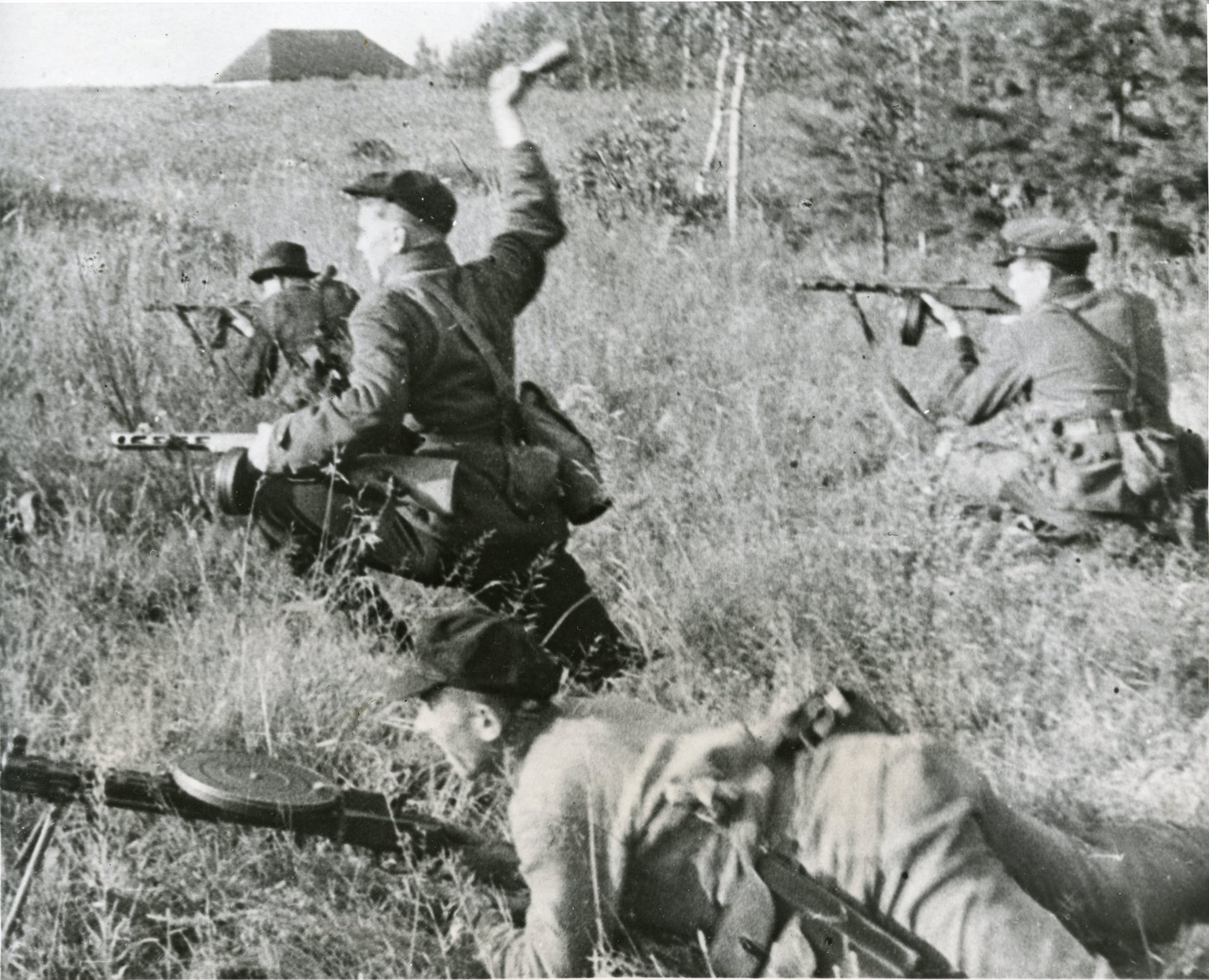
Soviet partisans with a DP-27 LMG and the ubiquitous PPSh-41 SMG. Author's collectionSoviet partisans with a DP-27 LMG and the ubiquitous PPSh-41 SMG. Author's collection

Planned Partisan Resistance
Although the Soviets never expected to suffer such losses in men, equipment and territory during the German invasion of June 1941, there were still plans in place to combat the Nazi advance with irregular groups of resistance fighters in the remote areas behind German lines. The partisan bands that formed in the early days of the invasion gathered their initial supply of small arms from the edges of the massive battlefields and from the Red Army stragglers who appeared in small groups. 

In the early days of the partisan war, most Soviet units used small arms typically found in Red Army service during 1941. Automatic guns were in short supply, and ammunition was always quite limited.
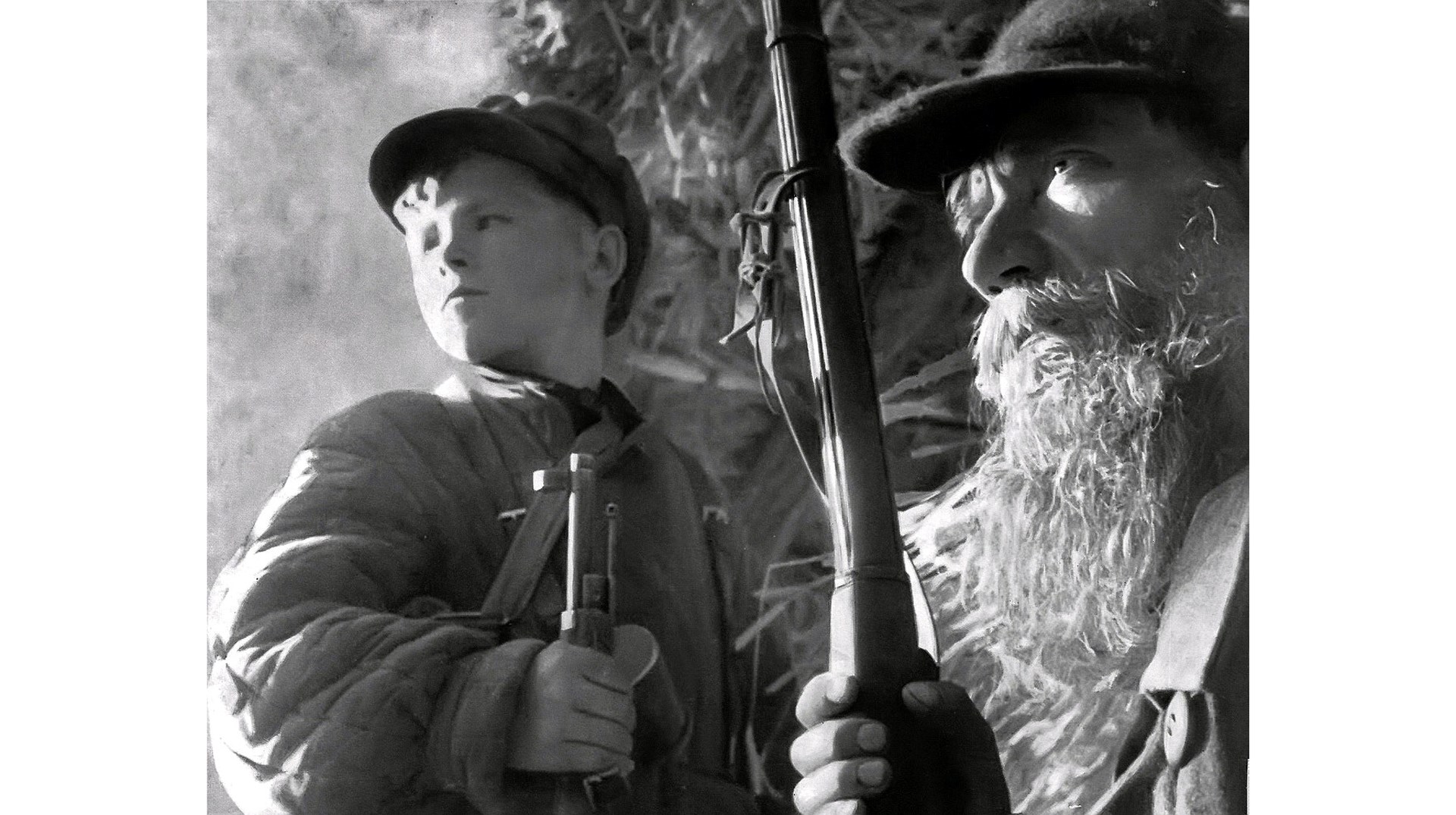
The People's War: The very old and the very young served in the Soviet resistance; many carried the M1891 Mosin-Nagant rifle. NARA

On some occasions, the larger partisan groups were headed by Soviet army officers. These units gained access to hidden firearms, ammunition and equipment that the Red Army had left behind. The 11th Kalinin Partisan Brigade is even said to have had several tanks that had been hidden in the forests east of the Latvian border. Heavy weapons could rarely be kept in action for long, though, as the partisans lacked fuel, spare parts and ammunition. Traditional Russian frugality meant that the partisans would dig up Soviet mines and re-use them in their intended role or strip out the explosives for other demolitions. Dud artillery rounds were also recovered and used for improvised mines.

In the first phase of the war in Russia, many of the partisan groups were simply fighting for their own survival. Almost 40 percent of the Soviet population lived in territory occupied by the Germans and, in many of these areas, the Soviet commissars had abused the local populations so badly that the people greeted the Germans as “liberators.” The German high command never understood or appreciated this early advantage. A 1956 U.S. Army study titled “The Soviet Partisan Movement 1941-1944” remarked:

… poor treatment of the Russian civilian population by German political leaders created resistance instead of maintaining and exploiting the advantage of the initial confidence displayed by many elements of the population.

Even so, during 1941-42, the eastern European population was generally unsympathetic to the Soviet partisan cause. The situation grew worse when partisans attempted to deprive locals of their limited food supplies.

German Brutality Drives Partisan Support
The Germans did not consider the Soviet partisan groups to be “military units.” Consequently, they were defined as “bandits” or “terrorists,” and no quarter was given to partisans or anyone believed to be helping them. This was an important turning point in the war in Russia. Hitler’s attitude towards the partisans, and most people in Eastern Europe, is summarized in this passage from “Primordial Violence: German War on Soviet Partisans” by Maj. Gus Costas, USMC (Ret.): “Hitler’s personal enmity and hatred were apparent when he declared that the anti-partisan effort was simply an opportunity ‘to eliminate anything that opposes us,’ and to ‘shoot dead anyone who even looks at us askance.’”
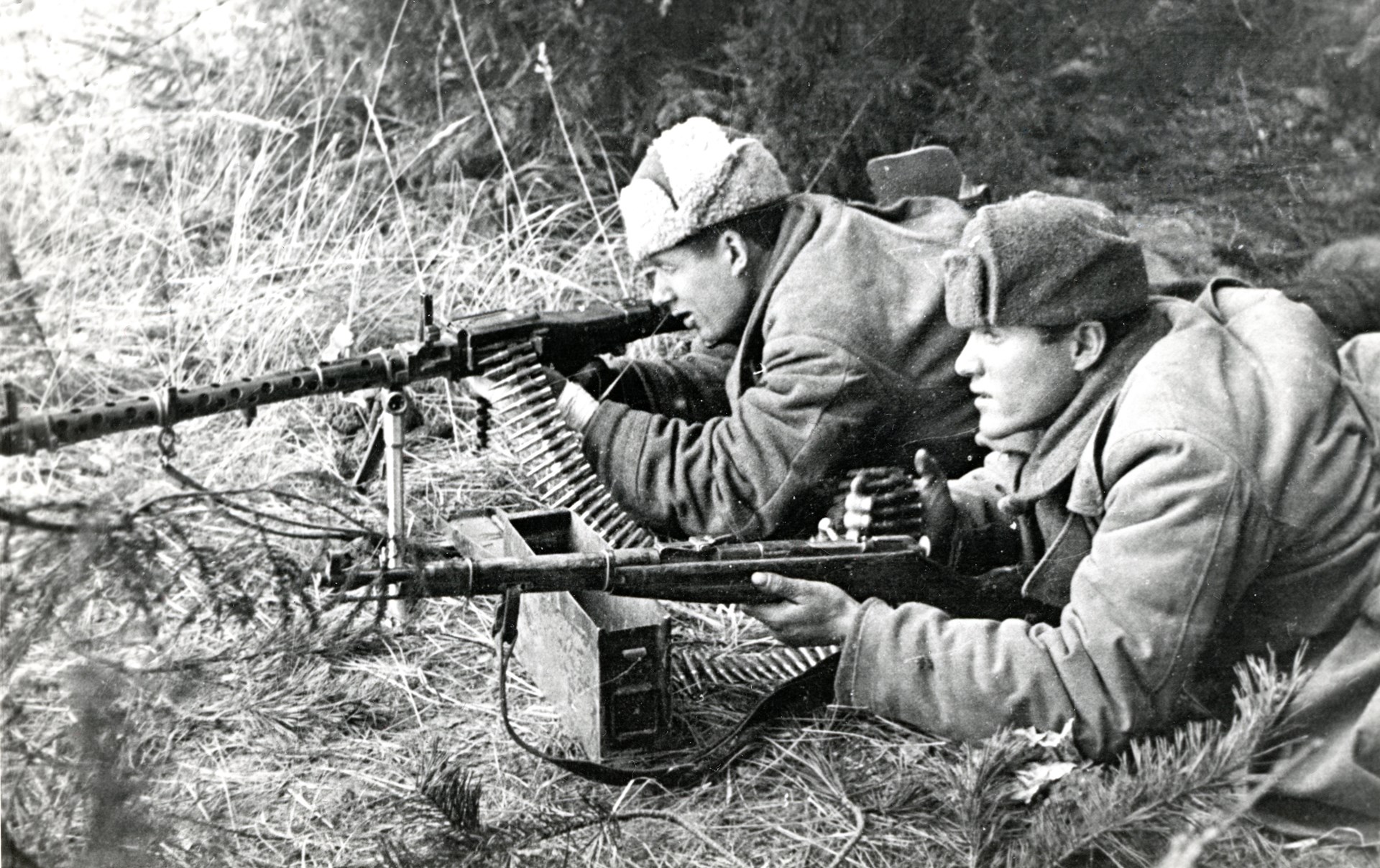
Captured firearms played an important role. Shown here, a German MG34 supports a partisan attack. The man alongside has a Mosin-Nagant Model 38 carbine. Author's collectionCaptured firearms played an important role. Shown here, a German MG34 supports a partisan attack. The man alongside has a Mosin-Nagant Model 38 carbine. Author's collection

Strength & Experience
The territory behind German lines represented a massive landmass, so the Soviets sought to create as great a disturbance as possible in the Nazi rear areas. In “The Soviet Partisan Movement 1941-1944” (DA-PAM 20-244, August 1956), Soviet “by-hook-or-by-crook” methods of recruiting members for partisan bands as war went on are described:

Manpower for the bands continued to be drawn from a variety of sources. Escaped prisoners of war still drifted into the partisan ranks, while German occupation policies caused many civilians to volunteer. But by and large, as the movement expanded, the larger proportion of the personnel was drafted from the native populace, forcibly when necessary. 

The Cen­tral Staff constantly advised the lower echelons to foster the best possible relations with the natives as a means of facilitating such recruiting. In some areas recruits were taken systematically by age groups, and at times even women were drafted.

Special attention was paid to recruiting members of the “Komsomolsk,” the communist youth organization. These young Bolsheviks were highly desirable as combat men or political activists because of their fanaticism.

In partisan-dominated areas recruits were put through a training course. Generally, they spent several weeks on probation to prevent escape or defection of those forcibly drafted and to give attached NKVD (precursor to the KGB) agents an opportunity to check their backgrounds against the possibility of infiltration of agents in German pay. Through informants within the units the commissars also kept a constant check on all personnel. Desertions of individual partisans were reported to the Central Staff, and their families, if they could be reached, were sent to labor camps in Siberia. If a defector was apprehended, the NKVD both passed and executed sentence. In a number of cases, the NKVD terrorized Ger­man collaborators into double-dealing by forcing them under threat of death to sign oaths of loyalty to the Soviet regime and then threatening to have the oath delivered to the occupation authorities should the in­dividual fail to cooperate with the partisans.
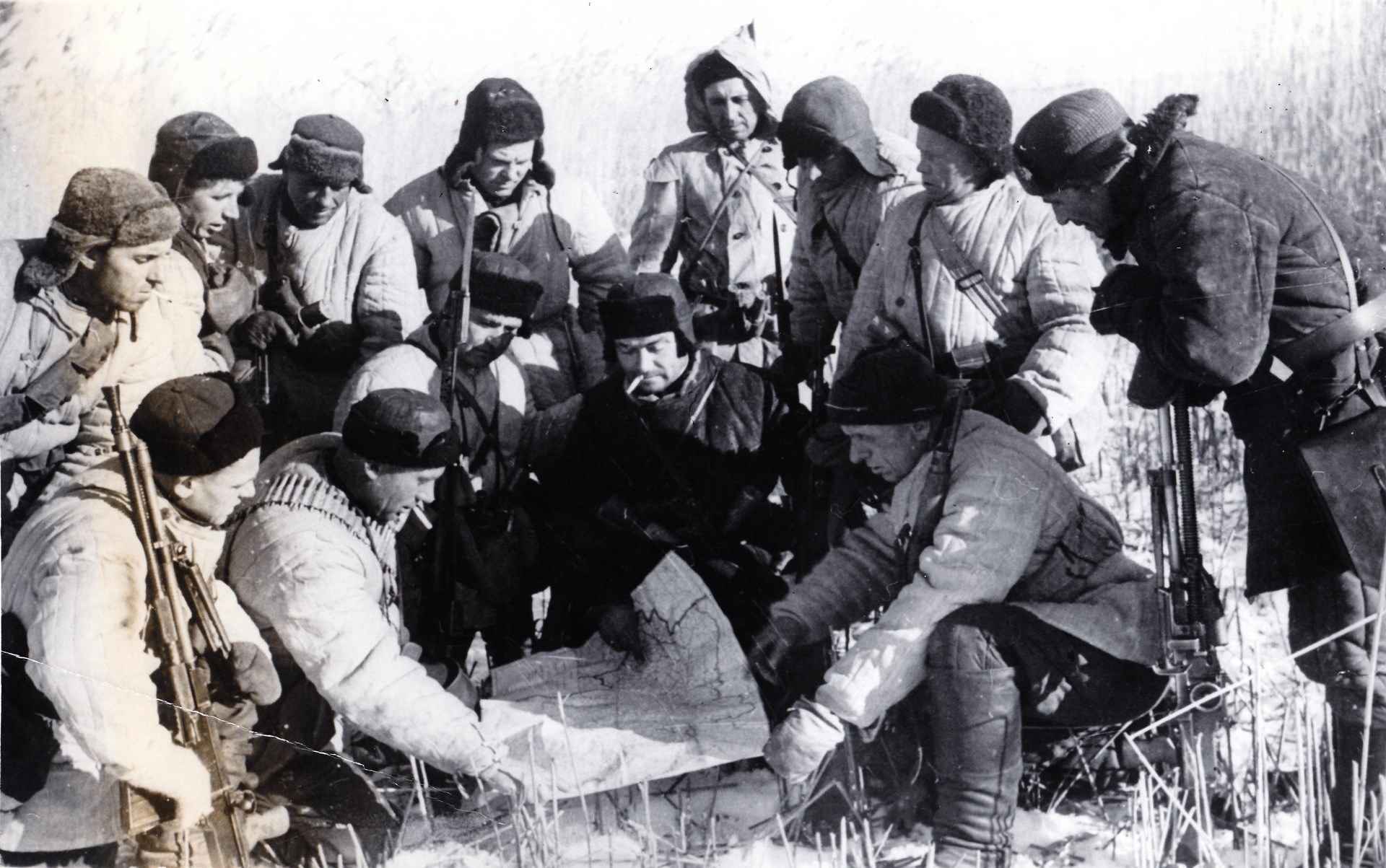
This partisan group appears to be made up of a more uniform Red Army unit. Note the Czech ZB26 LMGs (7.92x57 mm). NARAThis partisan group appears to be made up of a more uniform Red Army unit. Note the Czech ZB26 LMGs (7.92x57 mm). NARA

The Red Air Force
In 1962, the US Air Force Research Studies Historical Institute produced “Airpower and Russian Partisan Warfare” written by General der Flieger D. Karl Drum. General Drum had first-hand knowledge of the Soviets’ efforts to supply partisan bands by air. He describes the effectiveness of the Red Air Force in this role: 

Without the regular system of air transport established by the Red Air Force, the Soviet partisan bands could not have been organized, maintained, and controlled to any effective degree. 

The Germans, of course, became increasingly aware of the vital role of airpower in partisan operations. The German Air Force could not spare the necessary aircraft, nor did it possess on the Eastern Front sufficient warning and communications equipment to make its efforts effective. 

Without air transport, it would have been impossible for the Russians to supply the partisans with weapons and ammunition. Air lifting these items over the battle front was the primary mission of the air transport supply system. 

Communications was another critical component in the partisans’ success. General Drum continues: 

Along with the messenger service, radio equipment was indispensable for transmitting partisan intelligence information and orders both for intra-partisan liaison and with communication with the Central Command in Moscow. 

Electric power plants (for radios), batteries, receiving and sending equipment, and spare parts, could only be supplied in quantity from the Zone of the Interior by airlift. Often, specially trained radio operators were airlifted or parachuted into the partisan areas. 
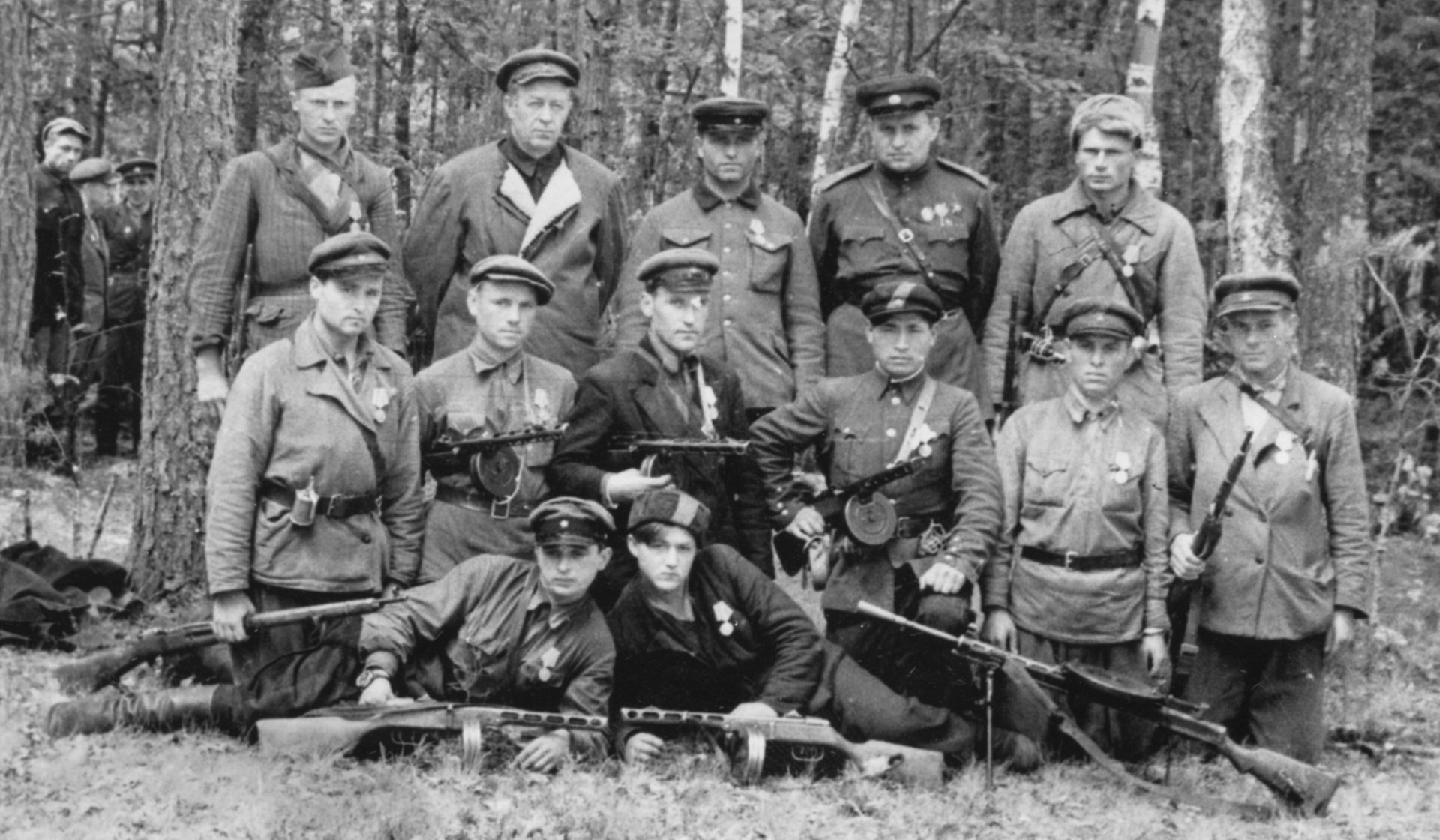
Likely another Red Army-partisan group operating behind the lines, equipped with M1891 rifles, PPSh-41 SMGs and a DP-27 LMG. Author's collection
Likely another Red Army-partisan group operating behind the lines, equipped with M1891 rifles, PPSh-41 SMGs and a DP-27 LMG. Author's collection

Partisan Targets
Beginning in 1943, there was far more coordination in the partisans’ efforts and more strategic direction in their attacks. The Soviet Central Staff issued a directive that designated the priority of partisan targets. Primary targets were rail lines and rolling stock, as well as road bridges and German transport vehicles. Additional targets were German communication lines and supply depots. It is important to note that Soviet partisans were directed to take aggressive action in force against German units only when the resistance groups had significant superiority in numbers. The partisans rarely had enough ammunition to remain competitive in an extended firefight.

The U.S. Army study titled “Rear Area Security in Russia: The Soviet Second Front behind the German Lines” (Department of the Army Pamphlet 20-240), described the progression of the armament of their supply troops as the war in the East progressed:

At the beginning of the Russian campaign the crews of Germans supply trucks had small arms, but no machine guns. Later on, after truck convoys had been helplessly exposed to surprise fire and partisan raids, they were issued machine guns which were mounted on the platform of one-half to one-ton trucks. At a still later stage of the campaign the trucks were lightly reinforced with armor plates. Shortage of personnel, however, precluded the use of special machine gun crews and placed an additional burden on the supply troops. On every trip the relief driver had to sit behind the machine gun, ready to fire, while the rest of the convoy personnel was constantly on the alert against surprise attacks. Soldiers returning from furlough were sometimes collected at security strong points along the roads and employed as escort personnel for supply convoys moving up to the front.
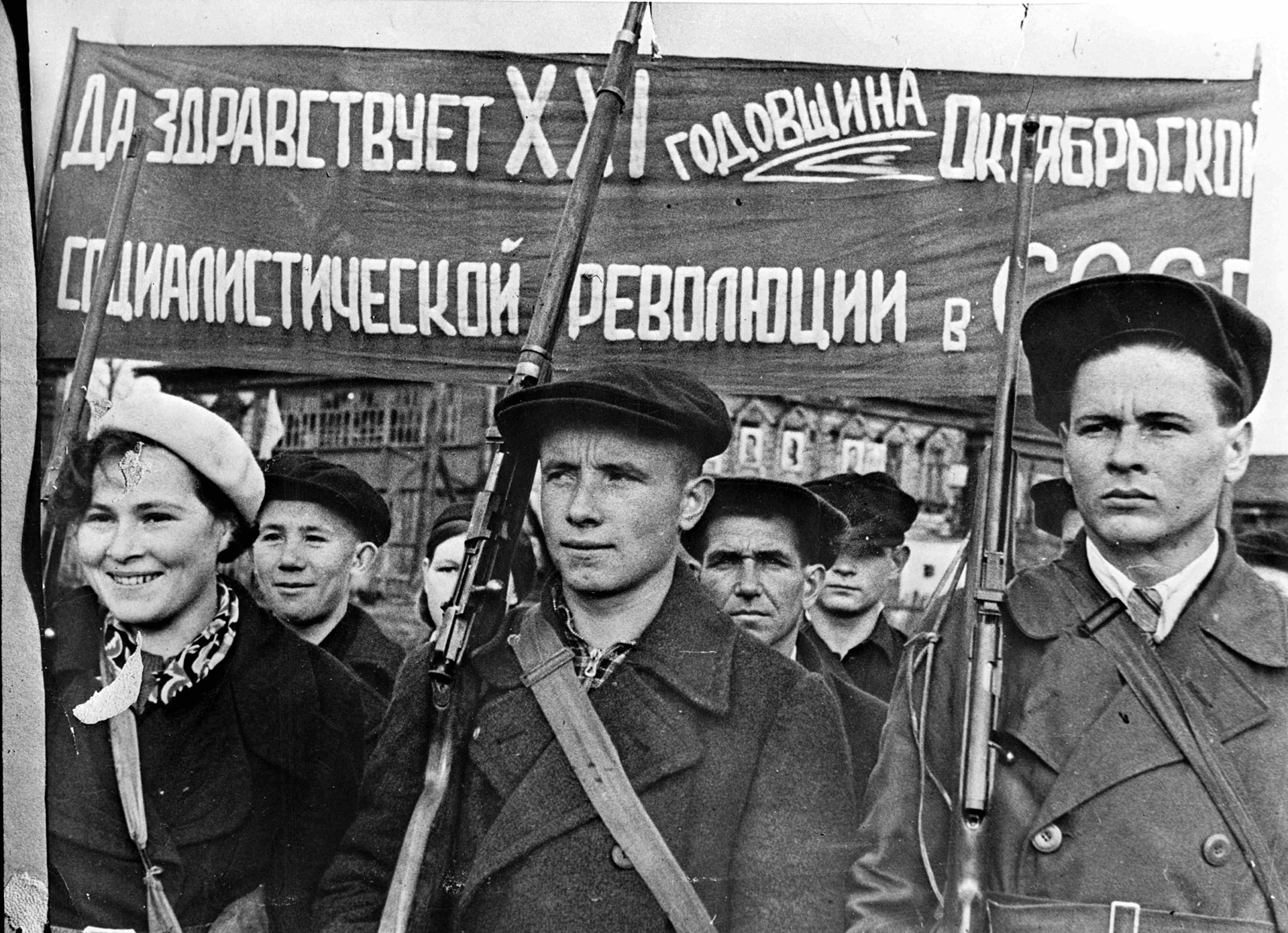
Resistance units sprang up in the country, in the towns and in the factories. Here, a man on the left carries a single-shot, .22-cal. TOZ-8 Cadet Rifle. NARA
Resistance units sprang up in the country, in the towns and in the factories. Here, a man on the right carries a single-shot, .22-cal. TOZ-8 Cadet Rifle. NARA

Arms Of The Partisans
While many photographs show Soviet partisans using captured German small arms (particularly the MP40), these images were often staged propaganda tools created at the direction of the Soviet Central Staff. The use of captured guns stressed the partisans’ logistics, demanding the stockpiling of enemy ammunition and spare parts. After 1942, the expanding size of the partisan groups ultimately required the use of Soviet-made small arms. Even so, captured arms like the MP40, the MG34, the Karabiner 98k rifle, and any type of German pistol were used to supplement partisan firepower.
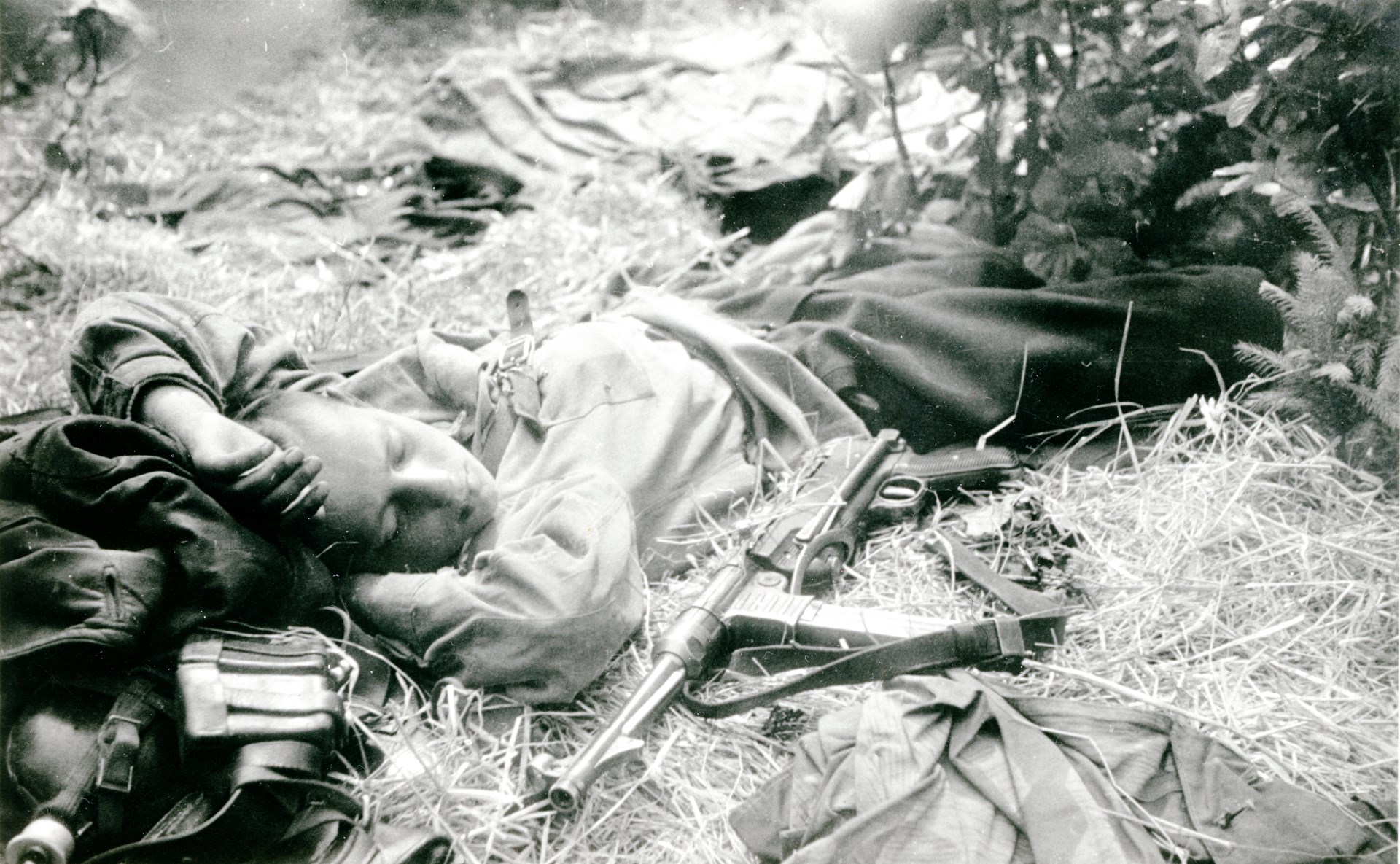
The German MP 40 9 mm SMG was a popular firearm in any resistance group in Europe. Author's collection
The German MP40 9 mm SMG was a popular firearm in any resistance group in Europe. Author's collection

PPSh-41
Like most resistance formations, Soviet partisans made extensive use of submachine guns (SMGs). Luckily for the Russians, they were armed with the PPSh-41 (7.62x25 mm Tokarev), easily one of the finest SMGs of the war. The fast-firing PPSh cycled at nearly 1,000 rounds per minute, providing the partisans with a distinct firepower advantage in close-range firefights. The PPSh-41, called “Papasha,” by fighters, used either a 71-round drum or a 35-round box magazine. Simple and sturdy, it became an icon of Soviet resistance in World War  II.
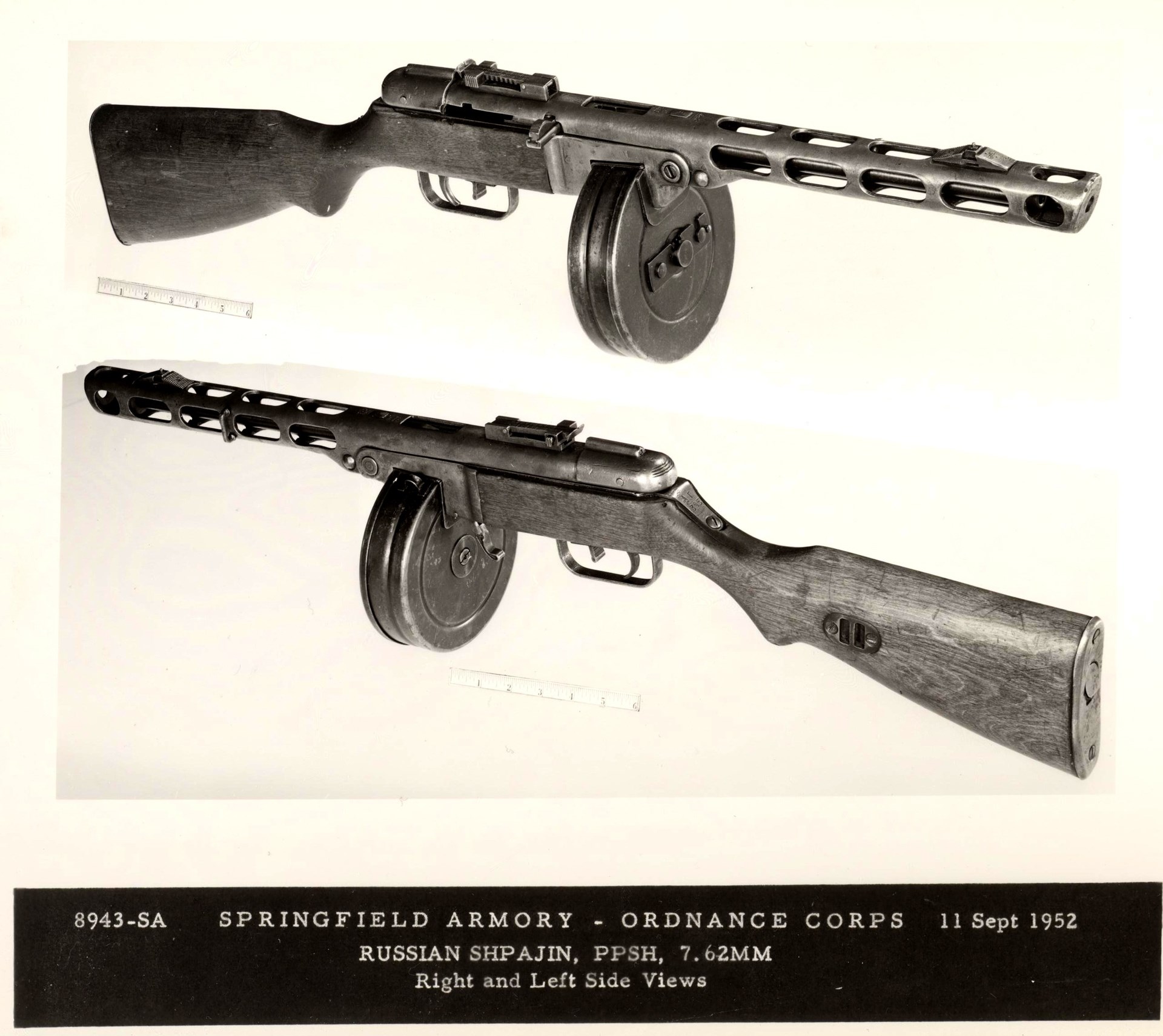
The partisan's best friend, the PPSh-41 SMG equipped with a 71-round drum magazine. The simple PPSh offered tremendous short-range firepower. Springfield ArmoryThe partisan's best friend, the PPSh-41 SMG equipped with a 71-round drum magazine. The simple PPSh offered tremendous short-range firepower. Springfield Armory

Mosin-Nagant Rifles
The venerable Mosin-Nagant M1891 (7.62x54 mm R) gave Soviet partisans a simple, reliable and accurate rifle for the light infantry makeup of their groups. One of the classic military bolt-action rifles, the M1891 served from before World War I, through both world wars, and even into the early years of the Cold War. From 1942, greater numbers of M91/30 sniper rifles became available, and Soviet marksmen used them to great effect. Equipped with a 3.5X PU scope, the M1891 was accurate out to nearly 900 yards, just right for a partisan sniper with his sights set on a German officer, truck driver or locomotive conductor.
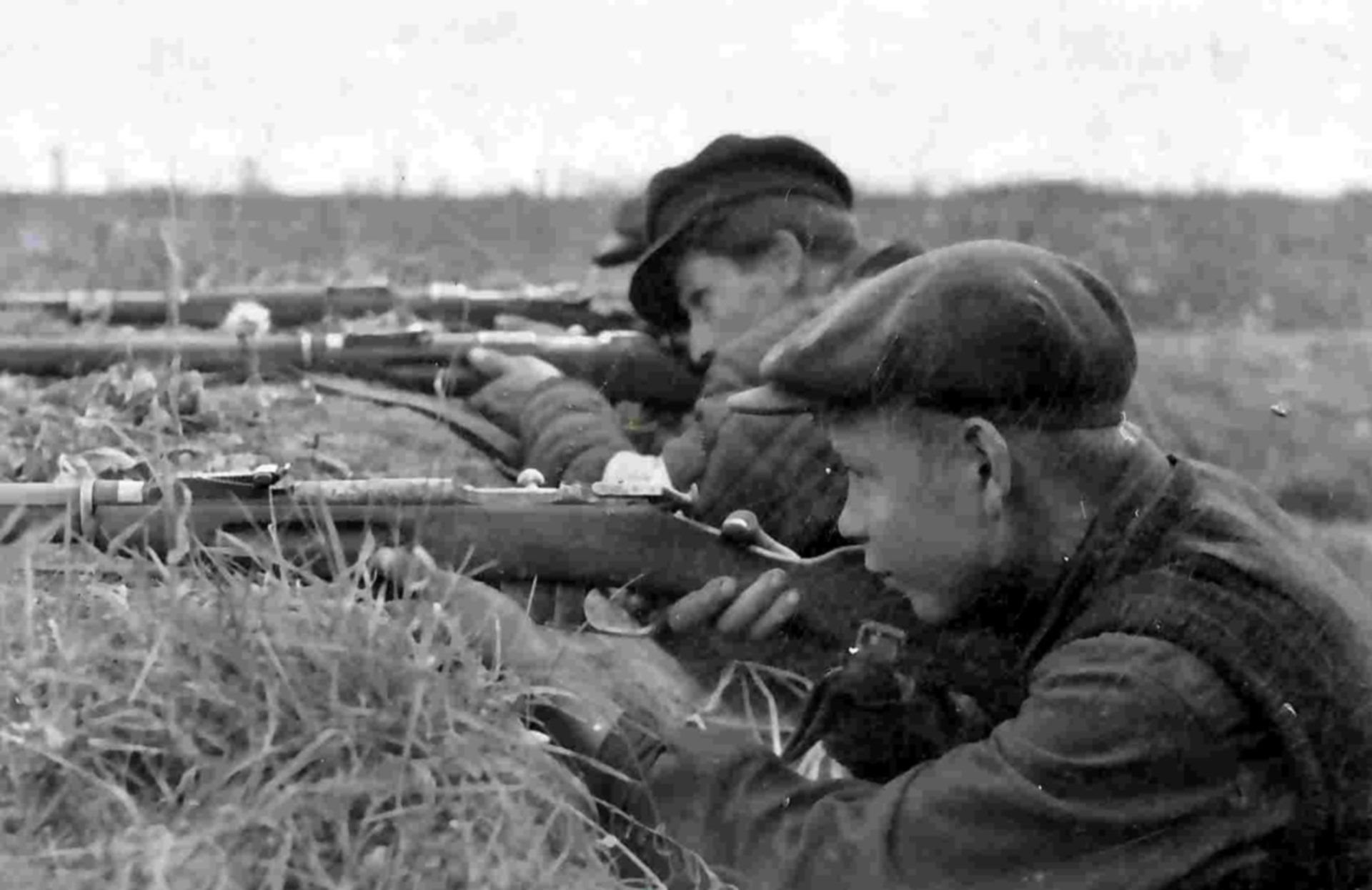
Total war on the Eastern Front knew no age limit. Shown here, a youthful partisan sights his M1891 Mosin-Nagant rifle. NARATotal war on the Eastern Front knew no age limit. Shown here, a youthful partisan sights his M1891 Mosin-Nagant rifle. NARA

The Degtyaryov DP-27
The gas-operated DP-27 (7.62x54 mm R) gave partisan groups an effective base of mobile firepower. With just about 80 parts, the DP light machine gun (LMG) was simple enough for quickly trained partisan gunners. The DP-27 weighed 25 lbs. loaded, featured a folding bipod and a built-in flash hider. Rugged and practical, the DP-27 offered a manageable cyclic rate at 550 rounds per minute and was considered highly reliable—earning the nickname “Record Player” for its unique 47-round pan-shaped magazine.
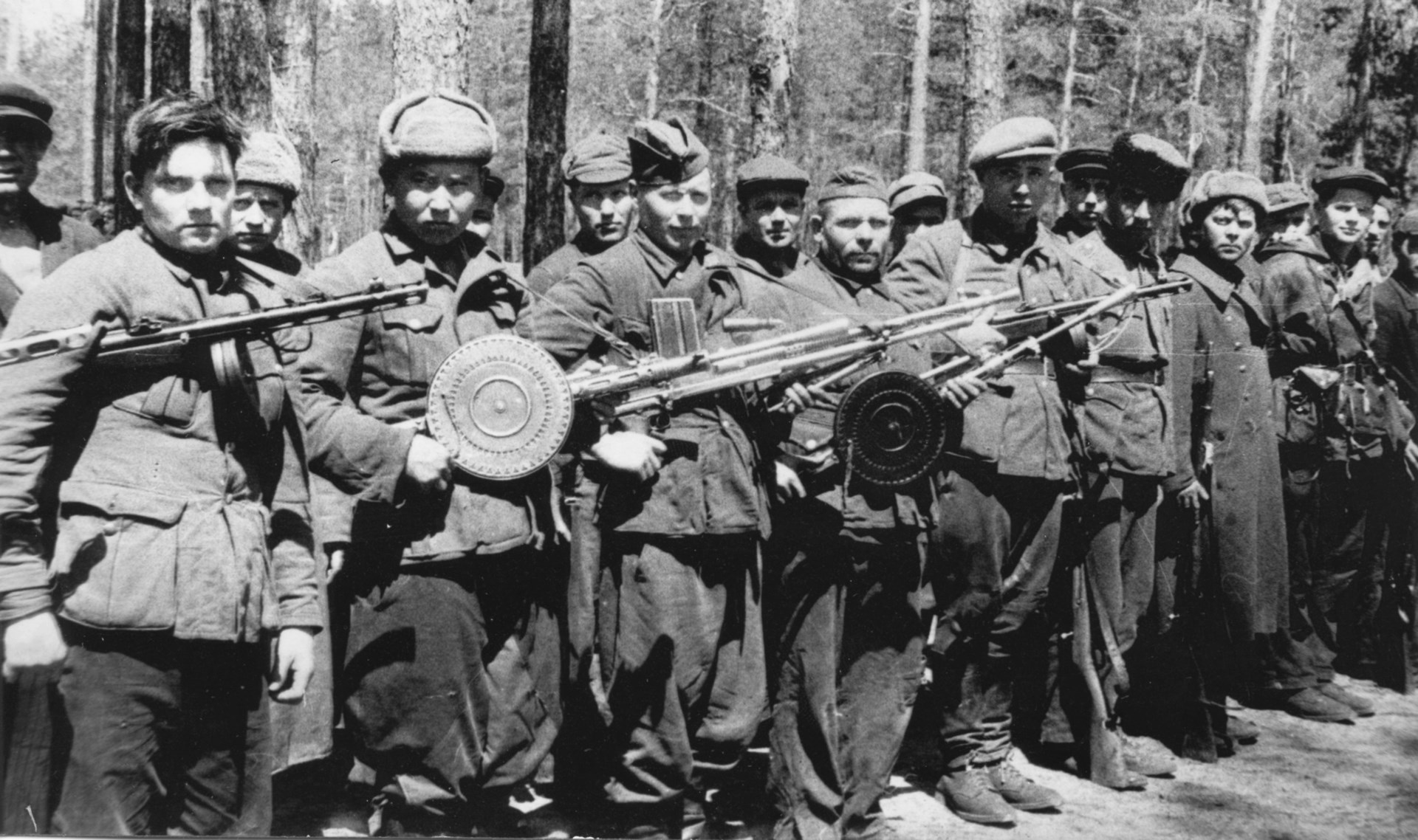
There's plenty of firepower in this guerrilla band, with DP-27 and ZB26 LMGs to support the rifles and SMGs. Author's collection

The PTRD-41 Anti-Tank Rifle
During World War II, the Red Army made significant use of a firearm that was considered “obsolete” by the Western Allies—the anti-tank (AT) rifle. Despite Western misunderstanding, the Soviet 14.5 mm PTRD-41 (single shot) and PTRS-41 (semi-automatic) rifles proved to be effective throughout the war when used against the side/rear armor of German medium tanks, assault guns and all lightly armored vehicles. The PTRD-41 was 79 ½” long, weighed 38 lbs., and its 14.5x114 mm rounds could penetrate up to 40 mm of armor at 100 meters. It is important to note that an experienced AT rifleman could hit the most sensitive points on an enemy vehicle and often achieve a “mobility kill.” Once immobilized, the armored vehicle was often assaulted with satchel charges and Molotov cocktails. While Soviet partisans avoided encounters with German armor whenever possible, the 14.5 mm AT rifles were excellent long-range sniping arms against some of their most lucrative targets—German supply trucks and railroad transports. Also, in many areas under partisan control, the German second-line troops used lesser armored vehicles (often French tanks captured in 1940) that were more vulnerable to anti-tank rifle fire.
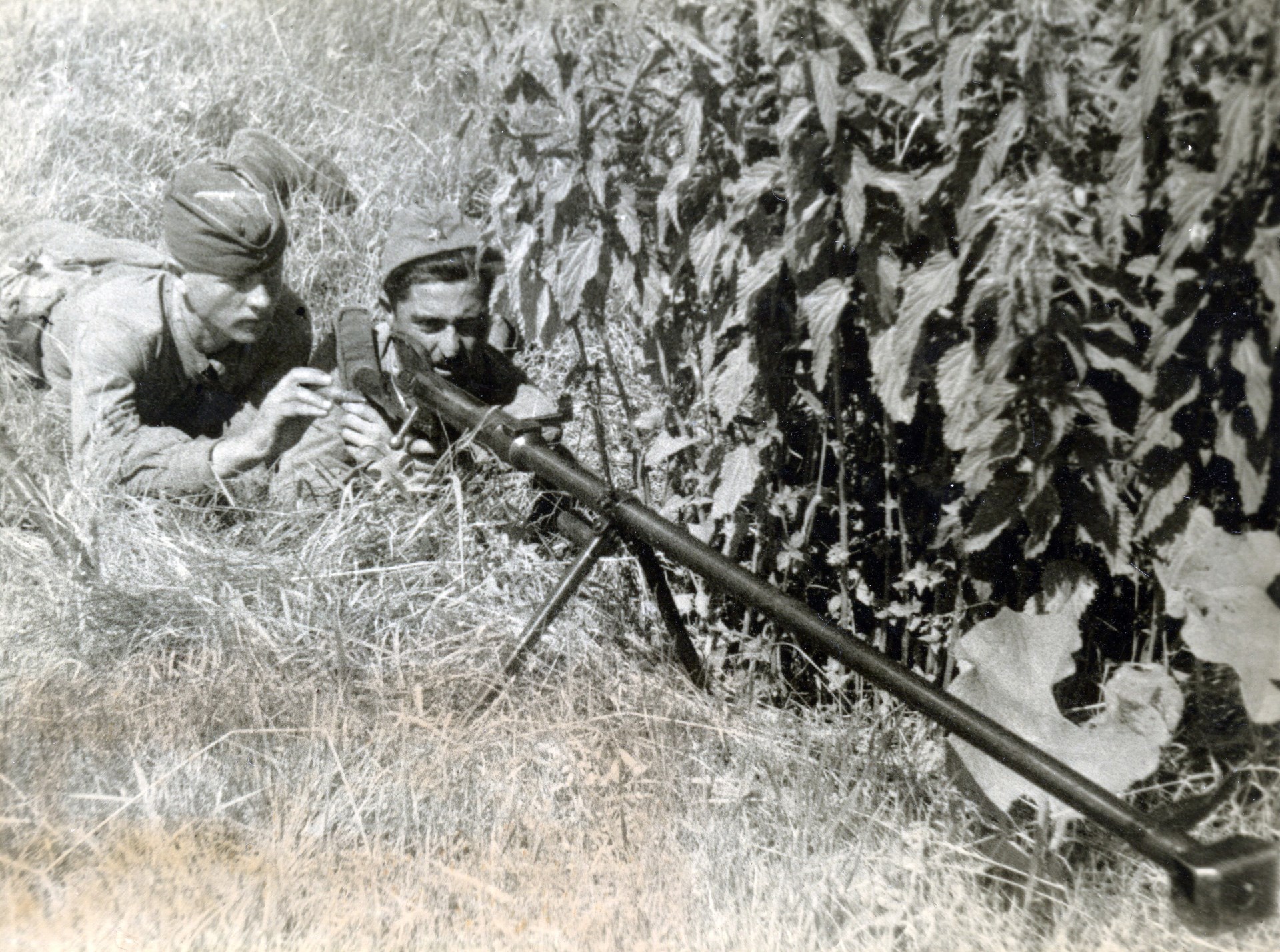
The Soviet PTRD-41 14.5 mm anti-tank rifle gave Soviet partisans a measure of anti-tank capability, along with powerful sniping and long-range bunker-busting ability. NARA

Mines & Explosives
The pamphlet “Rear Area Security in Russia” describes the Soviet partisans deadly use of mines and explosives:

Daily interruptions of traffic were caused by rail demolitions for which the Russians used various types of mines. Pressure and vibration-type mines were placed in the track, to be detonated by the locomotives. To destroy particularly valuable supplies, such as gasoline in tank cars, the partisans used mines with pull-type fuses which were set off by remote control. Retreating Russian forces often buried mines with long-delay fuses, under the tracks where they might blow up as much as three months later. Mines with simple delay-type fuses were also employed to avoid hitting the protective cars ahead of the locomotive. In order to escape the mine detectors, nearly all of these mines were placed in wooden containers, and their construction was of the most primitive type; some of them consisted of no more than a small package of explosives with a safety fuse. Occasionally, even magnetic mines were used. They served as means of sabotage in workshops and on standing trains and were mostly equipped with delay-type fuses.

Ultimately, using what firearms and supplies they could scrounge, the Soviet partisans played a vital role in hampering the German war machine until the Red Army could begin turning the tide on the Eastern Front. Today, most of the credit is given to the Red Army for Russia’s victory in the so-called Great Patriotic War, but the partisans did their job, too, often without the support or direction given to regular army troops.
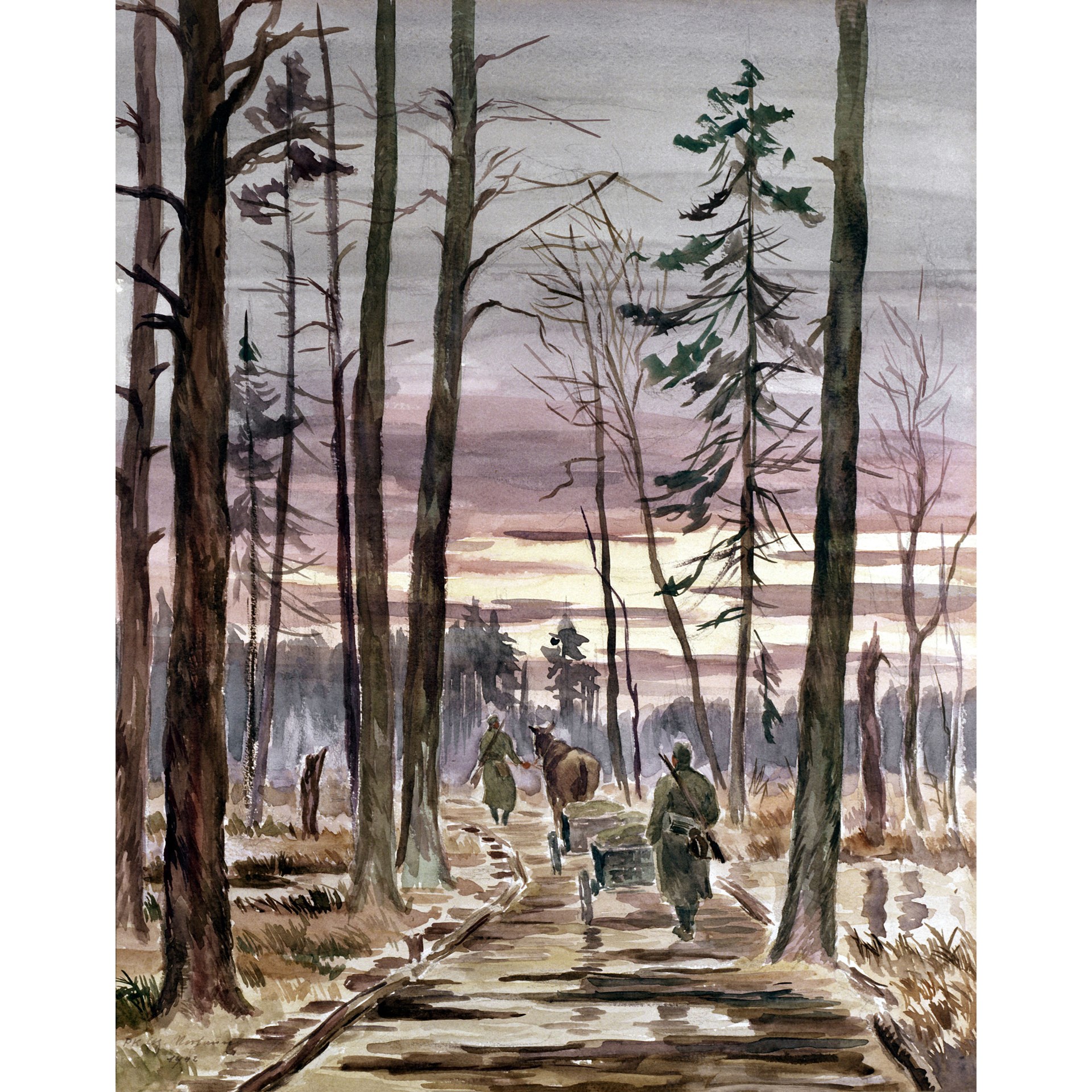
From a German wartime painting by G. Vorhauer, in the US Army Artwork Collection, the perfect environment for ambushes: Germany’s supply lines in Russia were long, lonely and difficult to defend. NARA


Monday, April 10, 2023

Monday Music "The Boys Of Summer" By Don Henley

 I decided to change things up a bit, I will run the next few "Monday Music" with my favorite songs, the songs if they ever would let me run a segment on Sirius/XM or something and they would want me to play some of my favorite songs.    The "Boys of Summer" came out in early 1984 and it became my favorite song, replacing Manfred Mann Earth Band "Blinded by the light" and it was my favorite song until this one came along about a decade later.  This song has stood the test of time for me, it still is my favorite song, it even is my default ringtone on my cellphone. I can listen to it over and over again, there are only a few songs that I can do that with.  I will run "My favorite songs" theme for the next couple months or so.


"The Boys of Summer" is a song released in 1984 by former Eagles vocalist and drummer Don Henley, with lyrics written by Henley and music composed by Henley and Mike Campbell.
It is the lead track and first single from Henley's 1984 album Building the Perfect Beast and reached the top five in the United States as well as the top position on the Top Rock Tracks chart. The song's music video won many awards. "The Boys of Summer" was also performed live by Henley with the reunited Eagles; such a version is included on the group's 2005 Farewell 1 Tour-Live from Melbourne DVD.


Henley's song has a haunting rhythm and timbre, cemented by Campbell's 1-7-5 repetitive riff over a vi-IV-V-IV chord pattern. Superficially, the song appears to be about the passing of youth and entering middle age, with the theme of 'summer love' apparent in the choruses, and of reminiscence of a past relationship.
In a 1987 interview with Rolling Stone, Henley explained that the song is more about aging and questioning the past—a recurring theme in Henley's lyrics (cf. "The End of the Innocence", and "Taking You Home".
In an interview with NME in 1985, Henley explained the 'Deadhead sticker on a Cadillac' lyrics as an example of his generation selling out:
"I was driving down the San Diego freeway and got passed by a $21,000 Cadillac Seville, the status symbol of the Right-wing upper-middle-class American bourgeoisie – all the guys with the blue blazers with the crests and the grey pants – and there was this Grateful Dead 'Deadhead' bumper sticker on it!"

In an interview with Knoxville.com, Neil Giraldo, Pat Benatar's guitarist and husband, says that Henley came in the studio while he was in the process of recording the song "Love Is a Battlefield" using an up tempo beat, and asked Giraldo if he could steal the sound for use in his song, "The Boys of Summer", to which Giraldo gave his permission.
 
"The Boys of Summer" reached number 5 on the Billboard Hot 100 and topped the Billboard Top Rock Tracks chart for five weeks. It was also a hit in the United Kingdom, reaching number 12 on the UK Singles Chart. A re-release of the single in 1998 also reached #12.
In 1986, Henley won the Grammy Award for Best Male Rock Vocal Performance for the song.
"The Boys of Summer" was ranked #416 on Rolling Stone magazine's list of The 500 Greatest Songs of All Time.


The music video to "The Boys of Summer" is a French New Wave-influenced piece directed by Jean-Baptiste Mondino. Shot in black-and-white, it shows the main character of the song at three different stages of life (as a young boy, a young adult and middle-aged), in each case reminiscing about the past relationship. This is shown during the line "A little voice inside my head said don't look back, you can never look back" at which point, each of the three people look back in turn. The young boy in the video, played by seven year old Josh Paul, resembles a young Don Henley. The girl in the music video is played by Audie England. The cutaways of the "boys" jumping in the air appear to have been influenced by the 1938 film Olympia. Interspersed with these scenes are segments of Henley miming the words of the song while driving in a convertible. At its conclusion, the video uses the post-modern concept of exposing its own workings, as with a wry expression Henley drives the car away from a rear projection screen.
The video won the Video of the Year at the 1985 MTV Video Music Awards (leading Henley to comment at the Awards the following year that he had won for "riding around in the back of a pickup"). It also won that year's awards for Best Direction, Best Art Direction, and Best Cinematography. The Best Direction award was presented to Mondino by Henley's then-former Eagles bandmate Glenn Frey. 

Friday, April 7, 2023

Former Head of Security of Antonov Will be charged for the loss of the AN-225

 When the AN-225 was destroyed, I was trying to figure out why the plane wasn't flown out of the country before the attack, the Ukraine knew the attack was coming.  The "tells" were there and for some ungodly reason the plane was left, a strategic asset was left to be destroyed...Planes can fly away easily..unlike other assets, that had me stumped.  Well apparently the head of Security had his head up his ass and refused to release the plane.  Was it *MICE* (Money, Ideology, coercion or ego?)  It will be interesting how the trial will play out.

     The Article came from my work email,


The Antonov An-225 Mriya, the world’s largest cargo plane, destroyed in the Battle of Antonov Airport during the 2022 Russian invasion of Ukraine, stays in a ruined hangar in Hostomel, Kyiv Region, northern Ukraine.


Ukrainian prosecutors have informed the former head of Antonov of suspicion of crimes including failing to dispatch the An-225 Mriya airlifter before the Russian invasion last year and neglecting to renew an insurance policy.

The allegations have come out more than 13 months after Russian and Ukrainian forces fought a battle around Hostomel airport in the opening hours of the invasion. During a crossfire of small arms and artillery, the An-225 was destroyed, along with several Antonov-owned facilities around the airport. 

The Security Service of Ukraine (SBU) said on its Telegram social media channel on April 5 that Serhiy Bychkov, the then-director of state-owned Antonov, failed to approve an order that would have flown the An-225 to Leipzig, Germany, in the weeks before the battle. The An-225 was “in proper technical condition, which [would have] allowed it to fly outside Ukraine” at the time of the invasion, the SBU said on Telegram. 

Bychkov also failed to extend Antonov’s insurance contract, which resulted in $1.14 million in lost compensation payments, the SBU said. 

At the time of its destruction, the sole An-225 was the world’s largest air transport and the second-largest aircraft in the world. Only the Stratolaunch Roc, a space and hypersonic vehicle launch platform, is larger. 

Antonov built the An-225 to transport the Soviet space shuttle Buran in the 1980s. The Mriya instead operated as a commercial transport for out-size cargo. In the wake of the aircraft’s destruction, Antonov has committed to complete the assembly of the partially built second An-225 airframe after the war, although the cost and schedule have not been fixed.

     I clipped this from "Wiki", it had more information, I included the hyperlinks.

The aircraft's last commercial mission was from 2 to 5 February 2022, to collect almost 90 tons of COVID-19 test kits from Tianjin, China, and deliver them to Billund, Denmark, via Bishkek, Kyrgyzstan.[65][66] From there, it returned on 5 February to its base at Antonov Airport in Hostomel,[66] where it underwent an engine swap.[65] On the advice of NATO it was prepared for evacuation, scheduled for the morning of 24 February, but on that day Russia invaded, with the airfield being one of their first targets.[65] A ban on civilian flights was quickly enacted by Ukrainian authorities.[65] During the ensuing Battle of Antonov Airport, the runway was rendered unusable.[65]

On 24 February, the An-225 was said to be intact.[67] On 27 February, a photo was posted on Twitter of an object tentatively identified as the An-225 on fire in its hangar.[68][69] A report by the Ukrainian edition of Radio Liberty stated that the airplane was destroyed during the Battle of Antonov Airport,[70] which was repeated by Foreign Minister Dmytro Kuleba[71] and by Ukroboronprom, Antonov's parent organisation.[72] The Antonov company initially refused to confirm or deny the reports,[73][70] and said it was still investigating them.[74]

Also on 27 February, a press release by Ukroboronprom[72] stated that the An-225 had been destroyed by Russian forces.[75] Several other aircraft were in the same hangar as the An-225 at the time of its destruction, and were also destroyed or damaged during the battle; these include a Hungarian-registered Cessna 152, which was crushed by the An-225's left wingtip after the latter fell on top of it.[76]

Ukroboronprom said that they planned to rebuild the plane at the Russians' expense.[72] The statement said: "The restoration is estimated to take over 3 billion USD and over five years. Our task is to ensure that these costs are covered by the Russian Federation, which has caused intentional damage to Ukraine's aviation and the air cargo sector."[77][78] The Ukrainian government also said that it would be rebuilt.[78][79]

Aftermath

Destroyed Myria
image icon The New York Times, April 2022
image icon The New York Times, March 2023

On 1 March, a new photograph, taken since the initial conflict, was tentatively identified as the tail of the aircraft protruding from its hangar, suggesting that it remained at least partly intact, however, further evidence proved to show that the aircraft is inoperable due to the extreme damage it sustained.[80] On 3 March, a video circulated on social media, showing the aircraft burning inside the hangar alongside several Russian trucks, confirming its likely destruction. Nonetheless, Antonov stated again that until the aircraft is inspected by experts, its official status could not be fully known.[81][82] On 4 March, footage on Russian state television Channel One showed the first clear ground images of the destroyed aircraft, with much of the front section missing.[80] Following Russia's withdrawal from northern Ukraine, the second unfinished aircraft airframe was reported to be intact, despite Russian artillery strikes on the hangar housing it at the Antonov factory at Sviatoshyn airfield.[83][84]

Major Dmytro Antonov, the pilot of the An-225, alleged on 19 March 2022 that Antonov Airlines knew that an invasion was imminent for quite some time, but did nothing to prevent the loss of the aircraft. On his YouTube channel, Antonov accused company management of not doing enough to prevent the destruction of the aircraft, after having been advised by NATO to move the aircraft (ready to fly status) to Leipzig, Germany, in advance.[85][86] Multiple Antonov staff have denied his allegations.[87]

On 1 April, drone footage of Hostomel Airport showed the destroyed Mriya, with the forward fuselage completely burned and destroyed, but with the wings partly intact.[88] It was later revealed that the right wing had been broken, but was held up only by its engines resting on the ground.[89]

Investigations into rebuilding the An-225 are being undertaken, including the possibilities of cannibalising the second, incomplete An-225, or salvaging the remnants of the first plane to finish the second. However, there are several obstacles to rebuilding. Many of the aircraft's Soviet-made components were from the 1980s and are no longer made. Engineers quote a price of US$350–500 million, although there is uncertainty regarding whether or not it would be commercially viable and worth the cost.[90] However, Andrii Sovenko, a former An-225 pilot and aviation author, said:[90]

It's impossible to talk about the repair or restoration of this aircraft -- we can only talk about the construction of another Mriya, using individual components that can be salvaged from the wreckage and combining them with those that were, back in the 1980s, intended for the construction of a second aircraft.

On 20 May 2022, Ukrainian president Volodymyr Zelenskyy announced his intentions to complete the second An-225, to replace the destroyed aircraft and as a tribute to all the Ukrainian pilots killed during the war.[91] In November 2022, Antonov confirmed plans to rebuild the aircraft at an estimated cost of $500 million.[92] At the time, the company did not state whether parts from the wrecked aircraft and the incomplete airframe would be combined to create a new flying aircraft or where funding might come from.[93] Four months later, Antonov confirmed that parts had been removed from the wrecked aircraft for future mating to the unfinished fuselage.[89]

In March 2023, the Ukrainian government announced that it detained two of three Antonov officials suspected of preventing the Ukrainian National Guard from setting up defenses at Hostomel Airport in anticipation of an invasion.[94]


Thursday, April 6, 2023

Venezuela Readies for War while Biden Sleeps.

 I saw this article on "Bongino Reports" and I read it and some of the commenters criticized the article, I think for the politics rather than the accuracy.  I recognized quite a few things like the similarities between Saddam and Kuwait  and the invasion in 1990 that brought on Desert Storm and also The Falkland Islands and Argentina, where Argentina had a lot of internal issues and the junta there invaded the Falkland Islands in 1982 for  2 reasons, the first one was because they believed that the British wouldn't do anything because they were seen as weak and divided and the second was that Argentina had a lot of internal issues and wanted to use the invasion to distract the people and get them behind the Junta.  They failed on both accounts.  The Venezuelans see the United States as weak and distracted, and focused on Russia and Ukraine, and we have taken the eye off South America, and I believe that this will bite us in the ass.  What does everyone else think?


Venezuela Readies for War While Joe Biden Sleeps – The United States is a zombie empire abroad and a banana republic at home. On the world stage, Washington went from being the first among equals following the end of the Cold War; the sine qua non of the world system that it had helped to foster, to today being a cancerous growth to an international order trending toward multipolarity—specifically, a tripolar system in which China and Russia triangulate against the United States. 

Everywhere American decline, while still reversible (if a new American leadership can be elected in 2024), is seen and felt. Whereas the post-Cold War order was purportedly predicated upon the abandonment of territorial wars of aggrandizement and resource conflicts, the post-2022 world appears defined by such struggles. It began with Russia in Ukraine. The failure of the Western nations to either stop the Russian invasion of Ukraine or to find a peaceful settlement to the conflict has ensured that there will be no going back to the pre-2022 peace. 

Thanks to the listlessness of the Western powers and the dearth of decent leadership in those states (notably in America), every larger power that has a geopolitical axe to grind with its smaller, less powerful neighbors will seek to settle those disputes through the injudicious use of force. 

Using the Russian example in Ukraine (and possibly the Chinese example in Taiwan), autocrats everywhere are sharpening their knives as they ready to carve up their respective spheres of influence.

It is not just in the distant steppes of Eurasia or the deserts of the Middle East and North Africa where this terrible trend is occurring. It is right in the backyard of the United States. The kleptocratic socialist dictatorship under Nicolas Maduro in Venezuela has failed to thrive economically, politically, or socially. This, despite the fact that it possesses one of the world’s largest, easily accessible oil reserves. Heavily sanctioned by their American neighbor to the north and led by an incompetent ruling class, Venezuela has imploded. 

To arrest this implosion, Venezuela’s corrupt leadership wants to maximize their nation’s oil production output. Yet, PDVSA, Venezuela’s state-owned oil conglomerate, has proven unable to achieve the increased output quotas that the Maduro government has commanded of them. With the situation in Venezuela worsening for Maduro, the socialist dictatorship still has a large—and modernizing—military that it could deploy to change the outlook of the country’s oil production profile. 

No, this won’t be done by discovering new sources of oil within Venezuela’s borders. It will be accomplished instead by annexing their smaller neighbor, Guyana. 

The situation in South America looks eerily similar to the situation that had occurred in the run up to Saddam Hussein’s unlawful invasion of Kuwait in 1990. Just as in the Iraqi invasion of Kuwait, a larger oil-producing state (Venezuela, in this case), seeks to expand both its territory and its control over the region’s vast oil wealth. Caracas has set for itself this objective, as Saddam did, to break out of Western sanctions, to improve Venezuela’s economy, and to enhance Venezuela’s geopolitical bargaining power in the wider region. Just as in 1990, when few believed that Saddam would invade Kuwait, few are paying attention to the situation between Venezuela and Guyana. 

This is especially true in Washington, which refuses to accept that the United States shares a massive land border with Latin America, as well as cultural connections via immigrants from the region, and deep financial and trade ties. A succession of Democratic and Republican administrations and congresses have obsessed about Ukraine’s borders or the Middle East at the expense of America’s region of the world. 

During the last 20 years, Latin America has steadily destabilized. Many countries there have turned away from the United States and sought closer ties with US rivals, such as China, Russia, and Iran, too. These trends are now coalescing into a dangerous admixture where Venezuela has the time, resources, and willpower to invade their prosperous, smaller, and militarily weaker neighbor. 

In 2018, Brazil intercepted a detailed invasion plan that the Venezuelan military had concocted to take the oil rich Essequibo Island. The island is the crux of a major border dispute that has ripped at the heart of Venezuela-Guyana relations. Venezuela’s President Nicolas Maduro argues that Guyana has ceded control of this disputed, oil-rich territory to ExxonMobil. Caracas believes this is a violation of Venezuela’s sovereignty and risks depriving Venezuela of the oil it needs to create prosperity for its ailing economy. 

At the time that Brazil leaked the Venezuelan war plan, most in Washington were reassured that the Brazilians would make bold moves to deter any Venezuelan invasion of Guyana. But that was when the Right-wing, pro-American Jair Bolsonaro was running Brazil. 

Since that time, Brazil has been roiled by the economic and societal damage that the COVID-19 pandemic created in the region as well as by a recent controversial election in which Bolsonaro was kicked from office and replaced by his socialist predecessor, President Luiz Inácio Lula da Silva. And under Lula’s command, there is little hope that Brazil’s sizable military could be counted on to stop a Venezuelan invasion of Guyana. 

In fact, given that Lula of Brazil and Maduro of Venezuela share many ideological beliefs, the Americans are going to find that they’ve got no partner on the ground in South America who could reliably intervene to prevent what will surely be a destructive invasion of a major oil-producing state, like Guyana. 

What’s more, Venezuela’s leadership thinks the Americans are distracted and weak. There will be little deterring Venezuela from initiating a territorial war for control over Guyana’s vast oil wealth.

The ramifications to the world from this pending war will be devastating. The new international system will be built upon competition and territorial aggrandizement by larger powers against their weaker neighbors. Any invasion of Guyana, a leading oil producer in the Western Hemisphere—especially by another global oil producer, like Venezuela—will cause the international price of oil to skyrocket. 

It will be yet another drag on the American economy as consumers feel the pinch at the pump at a time when our finances are already stretched. This will further empower Venezuela, a country that is both inimical to the United States and is disturbingly close to the Russian Federation. It will also likely bring both China and Iran deeper into Latin America—none of which bode well for American security in its own hemisphere. 

Washington must prepare for a Venezuelan invasion of Guyana. Other than the Colombians, the United States has no friends in the region upon which it can rely to prevent such a devastating conflict. And the Colombians are not powerful enough to prevent the coming conflict. 

More dangerously, with Washington overextended in Eurasia and the Middle East, it cannot even muster the resources needed to put the fear of God into Maduro’s forces. American leaders must refocus their attention to this region now before a major resource war erupts in our backyard. Unless the United States can rally an international coalition to deter Venezuela soon, a major war will have erupted right on the United States’ doorstep with catastrophic consequences. 

Is anyone in the Biden Administration paying attention? Maybe they could send Vice-President Kamala Harris to make another nonsensical speech that aggravates everyone and solves nothing.


Wednesday, April 5, 2023

5 WWI Machine Guns that Changed Warfare Forever.

 I saw this article and snagged it while reading another one.  I will post that one tomorrow.  


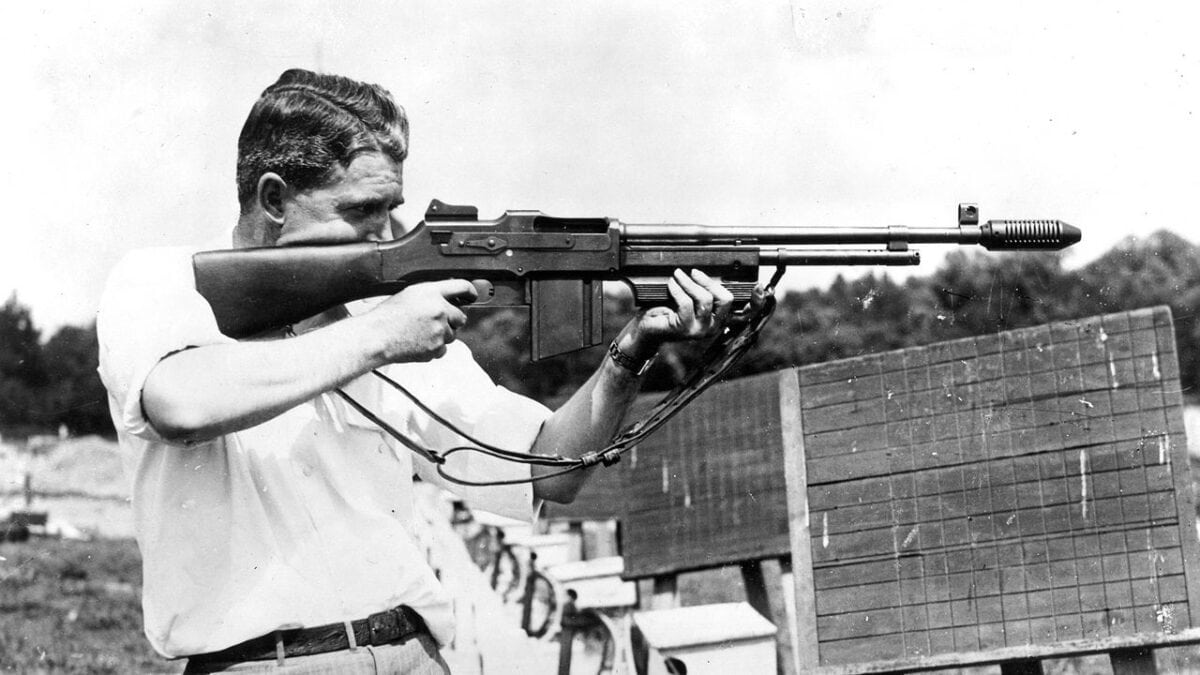
   I used the "Sand Pebbles" image, besides using The Sand Pebbles image, I loved that movie.  I had adopted a quote from that movie The "Cup of Rice" explanation, you have to watch the movie to understand the reference.  but I remember Steve McQueen's character using the "BAR" like a bad ass.

 At the outbreak of the First World War, most of the machine guns employed by the major powers were large and heavy. Ideally suited to defense, few were actually light enough to be used in an offensive advance.

The weight of such small arms, and the fact that many were water-cooled to keep the barrel from overheating, made these impractical in an assault. However, military planners quickly considered ways to provide greater mobility along with sustained fire.

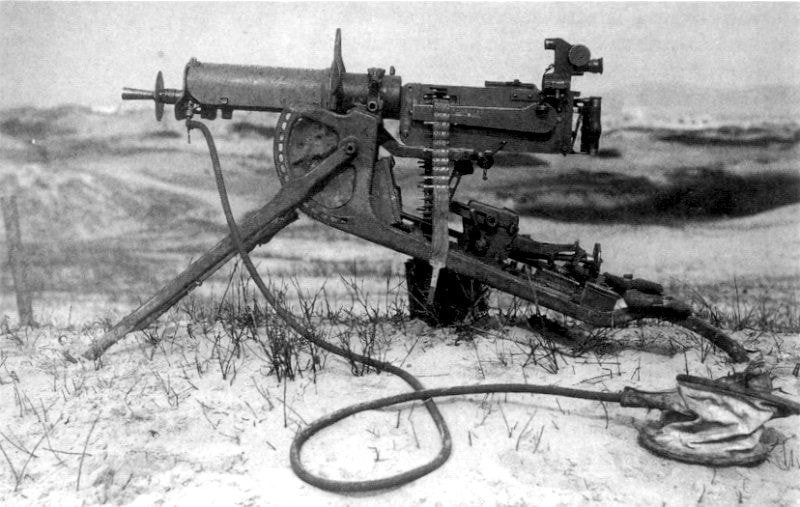
Germany: MG08/15 Machine Gun

Image: Creative Commons.

The Germans saw the effectiveness of their MG08 machine gun and in 1915 developed a version for offensive use. The MG08/15 replaced the rear spade grips with a pistol grip and wooden buttstock. It also featured a short bipod rather than the heavy four-legged sled mount. However, it retained the bulky water jacket, which resulted in a weapon that weighed nearly 40 pounds and that was without water in the jacket or ammunition.

While it wouldn’t be considered “lightweight” it did provide far greater mobility than the MG08. It first saw widespread use during the Second Battle of Aisne in April 1917.


Despite its shortcomings, it was the most common German machine gun deployed during the war with more than four times the number of MG08/15s than the original MG08. An air-cooled version was tested during the final months of the war, but because the barrel couldn’t be quick-changed it overheated quickly.

Germany: Bergmann MP18


Image: Creative Commons.

It took until the final months of the war for Germany to actually introduce a more compact weapon, but in the process the Germans also created a new category of small arm: the submachine gun. Designed by noted firearms pioneer Theodor Bergmann, the Maschinenpistole 18/I fired the 9x19mm Parabellum pistol round, originally from a 32 round Luger drum magazine. It had a rate of fire from 350-500 round per minute, making it an ideal weapon for trench assaults.

The weapon proved ideal for the Germany’s late war strategy, which sought to break the enemy lines. The MP18 was widely employed in the Kaiserschlacht offensive. More than 25,000 were produced and most were issued to the newly formed companies of “Sturmtruppen” (“Storm Troopers”), who were charged with smashing an enemy position to allow the regular infantry to then overwhelm the defenders.

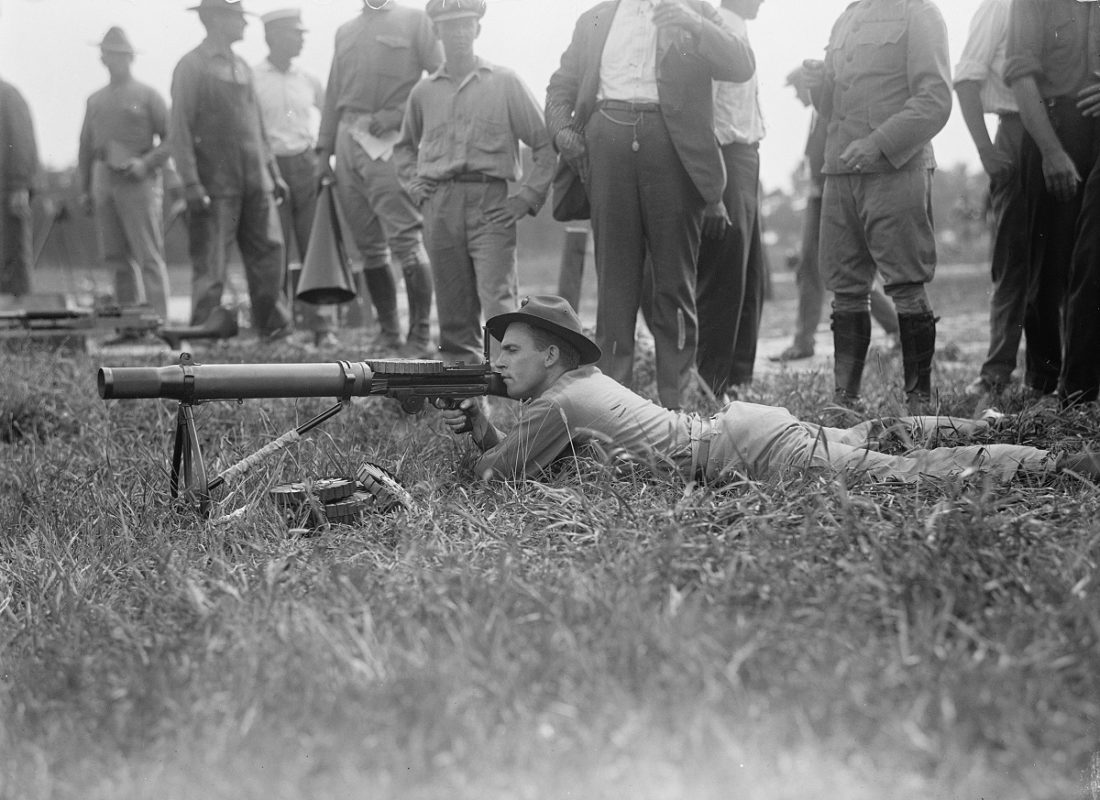
Great Britain: Lewis Gun


Star Wars Guns

U.S. Marines field tested the Lewis machine gun in 1917.

The Lewis Gun has become an almost iconic British machine gun, which is actually a bit ironic as it was designed by the United States before the war broke out. It was passed over by the U.S. Army largely for political reasons, but the U.S. Army’s loss was a gain for the British, which saw the potential with the portable machine gun.

The gas-operated machine gun features the unique “pan” magazine mounted on the top, and was able to maintain a sustained rate of fire of 500-600 rounds per minute. The Lewis Gun had an effective range of up to 800 meters and a maximum range of 3,200 meters. At 28 pounds it was a bit lighter than the German MG08/15. One reason for the lighter weight is that didn’t feature a water jacket – rather the barrel-shroud was designed to draw in air while radial fins acted as a heat sink.

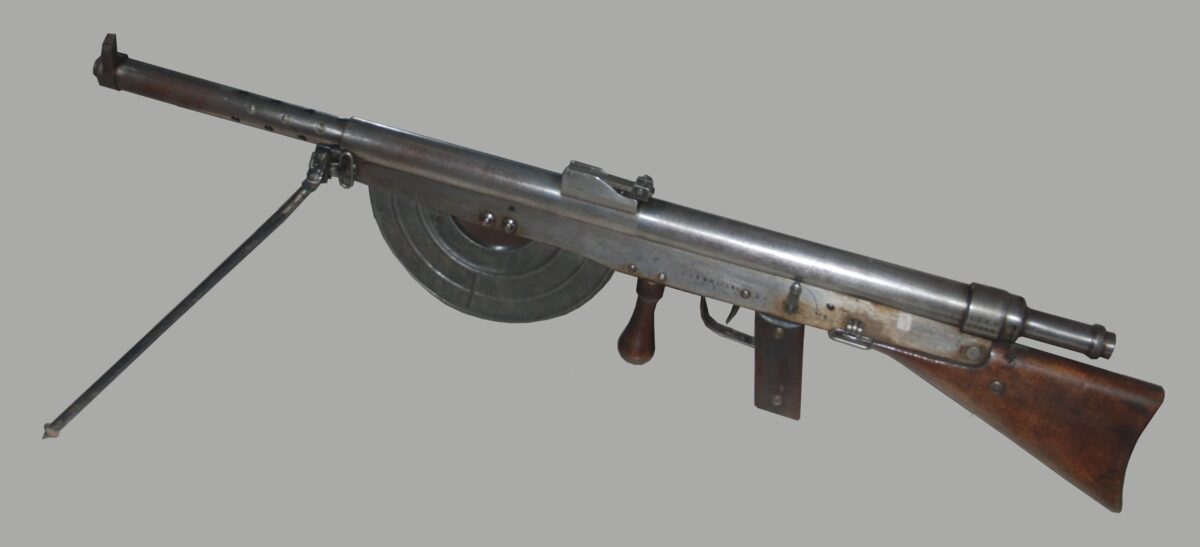
France: Fusil Mitrailleur Modele 1915 CSRG – Chauchat

Image: Creative Commons.

This weapon has earned the reputation of being “the worst machine gun ever made,” but its critics typically highlight the weapon’s shortcomings and overlook its innovative features. When it was introduced in 1915 it became the first successful squad automatic rifle, and provided a rate of fire of 240 rounds per minute while it weighed in at just over 20 pounds. It was among the first automatic weapons to utilize a pistol grip and forward grip – features now common in modern assault rifles. If anything the Chauchat was a bit ahead of its time, and a weapon that needed a bit more refinement.

Likewise, it is true the open magazine allowed dirt and grime to foul the action, but this was common with many belt-fed weapons. The assessment that it was a bad design may be owned to American soldiers who criticized the weapon, but this was due in part to the fact that the version adopted by the U.S. military was chambered for the.30-06 cartridge, which caused performance issues.

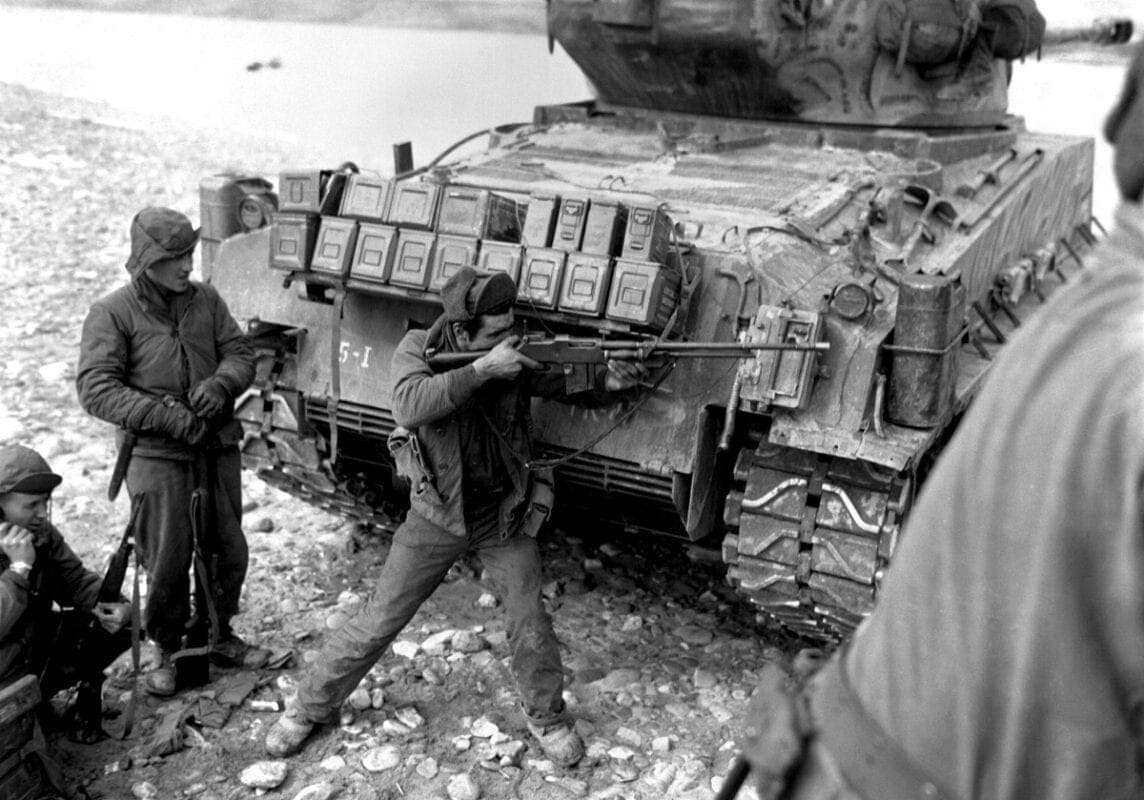
United States: M1918 Browning Automatic Rifle


Taking cover behind their tank escort, one man of this ranger patrol of the 5th RCT, U.S. 24th Infantry Division, uses his BAR to return the heavy Chinese Communist small arms and mortar fire which has them pinned down on the bank of the Han River. At left another soldier uses a field radio to report the situation to headquarters. NARA FILE#: 111-SC-358782

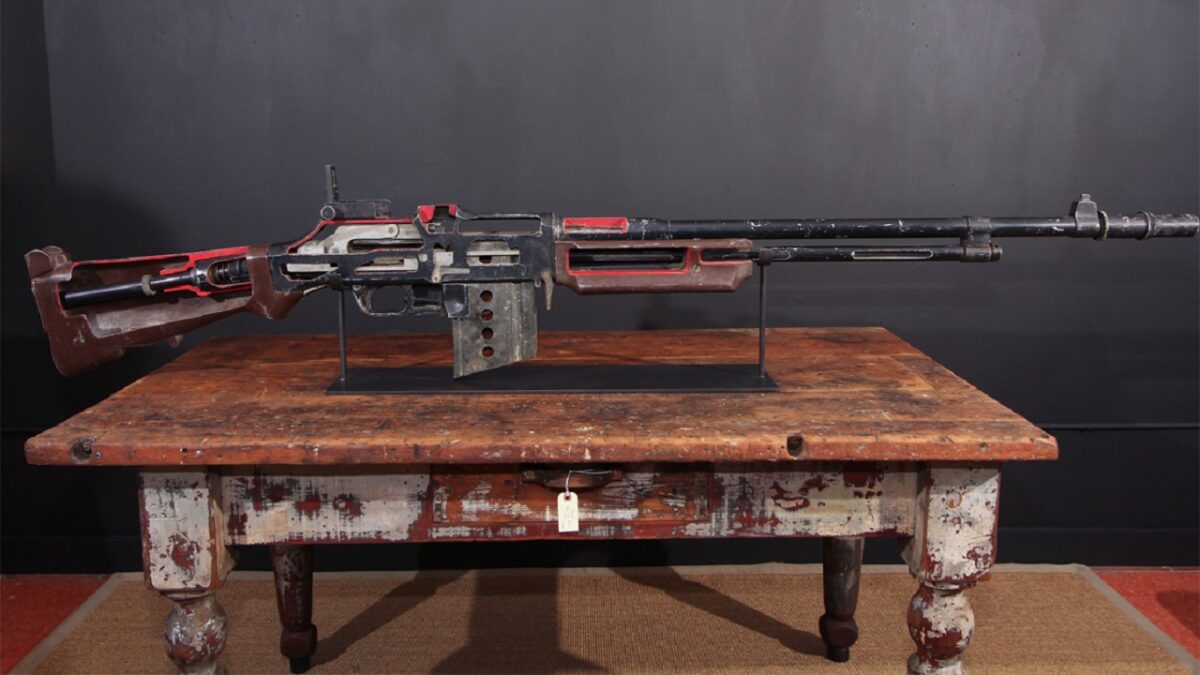
In addition to designing the M1917 machine gun, which greatly improved upon the Maxim design, prolific firearms designer John Browning also created what was arguably the best automatic rifle of the era, the BAR or Browning Automatic Rifle.

An American civilian wanting to own a genuine full-auto Browning Automatic Rifle will have to bring a bankbook to purchase one

An American civilian wanting to own a genuine full-auto Browning Automatic Rifle will have to

 bring a bankbook to purchase one.

Browning Automatic Rifle

Browning Automatic Rifle. Image Credit: Creative Commons.

It successfully provided an infantryman with walking fire during an assault and it was considered so revolutionary that the American military actually held back its use in fears that the Germans might capture one and copy it. For that reason, the BAR didn’t become standard issue until 1938 when it was issued as a portable light machine gun.

The gas operated automatic rifle could provide a rate of fire of 500-600 rounds per minute and had an effective range of 1,300 meters. Had the First World War dragged out into 1919 and beyond there is little doubt the U.S. military would have deemed it necessary to bring the BAR to the front in mass. There were almost 52,000 BARs on hand for the spring offensive that never came, but the BAR went on to serve in World War II, the Korean War and even the early stages of the war in Vietnam.


Tuesday, April 4, 2023

"Destroying The Rule Of Law" By

 I shamelessly clipped this from "Townhall", Allen West Wrote it, and I really liked it so I shamelessly snagged it.   The Cartoons are from my stash and Townhall.

AP Photo

If you dislike Donald Trump, that is your right. However, if you dislike the rule of law that is supposed to govern these United States of America, we have a problem. The indictment of a former U.S. President and declared candidate for president, is highly disconcerting, especially when one considers the nature of the so-called "charges." I could not care less if Donald Trump gave "hush" money to a porn star back in 2016. What concerns me is why a misdemeanor is being upgraded to a felony offense by a New York City District Attorney. The same DA who downgraded felony offenses to misdemeanors and released violent criminals back onto the streets to continue assaulting innocent citizens. Why does this same DA prosecute something that has gone past the statute of limitations? Something his predecessor refused to pursue, along with the Federal Election Commission and the Department of Justice.

Okay, I get it--there are those who just cannot wait to see mug shots and handcuffs on a former President Donald Trump. However, what if there had been mug shots and handcuffs on Bill Clinton? After all, here is someone who was a sitting president who sexually assaulted a young female intern in the Oval Office . . . and then lied about it. Ahh, I get it, we were told that it wasn't about character, it was about the economy.

We have seen a president who lied about an incident that resulted in the deaths of Americans, who were abandoned to face Islamic jihadists. No big deal. The same president started a program to undermine the Second Amendment rights of Americans by flooding weapons into Mexico, Operation Fast and Furious. Hint--not the movie. The endeavor resulted in the death of a U.S. Border Patrol agent, Bryan Terry. Hey, no big deal. As a matter of fact, athen soon-to-be Democrat presidential nominee asserted, "what difference does it make?" That seems to be the theme when it comes to the bifurcated system of justice in America.

It was that same former Secretary of State, Hillary Clinton, who became a Democrat presidential nominee, that concocted a Russian collusion hoax using campaign financing.The FBI agents such as Peter Strzok and his mistress Lisa Paige were implicated in this fiasco, along with Deputy FBI Director Andrew McCabe, but they faced no punishments. Zip, nada, nothing.


Today we have a president, who is a former vice-president, who has a son who is as corrupt as the days are long. A son who is guilty of a felony gun charge. A son who is linked to influence peddling with our number one geo-political foe, and it appears we have a president who has financially benefited from said illicit dealings. However, when a computer surfaced with damning evidence it was dismissed as “Russian disinformation” by members of the U.S. intelligence community. Now, that same son is seeking legal action against the computer store owner who was in possession of the laptop that he originally said wasn't his.

We are living in a time when being pro-life means you can be arrested, tried, and potentially imprisoned. Pro-life advocacy centers are being firebombed and defaced, along with churches by a leftist group, Jane's Revenge.And, as of yet, not one member has been arrested. Parents are being labeled as “domestic terrorists” while the real domestic terrorists, Antifa, roam about free, and they even have prominent leftists raising money for their bail bonds. At the same time, the government withholds exculpatory evidence in the case of J6 defendants where the only person killed was an unarmed female veteran of the US Air Force.

We have a presidential administration that colludes with private sector information platforms to suppress Americans’ freedom of speech and expression. How did we get to the point where a journalist has to have IRS agents come to his door while he is testifying before Congress on the suppression of speech? Or how about a gender dysphoric person who deliberately attacks a Christian school, yet we are not supposed to say gender dysphoria? Yet, if the same crime had been committed bya white male, then you are allowed to say that. Unless you are the white male who shoots up the Republican congressional baseball team practice. Did either of these intentional attacks on a Christian school or Republican members of congress get designated as a hate crime?

Our southern and northern borders are wide open, porous, and millions are pouring into our country illegally, in violation of our Constitution's guarantee clause, Article IV, Section 4. Yet even with the loss of operational control of our border to a narco-criminal terrorist organization, there is no call for impeachment. But, you can be impeached over a hoax or a phone call.


We have entered a new era in America. The progressive socialist left has no regard for the rule of law. They only care about the right to rule. The Constitution does not bindthem, they only adhere to Saul Alinsky's “Rules for Radicals.” They do not want unity, they demand abject conformity, subjugation, and subservience. Leftists do not want political opposition, they want no obstacles to their rule, and those ends justify their means. 

The leftists in America are following the leftist playbook--imprison your enemies, just look at the case of Doug Mackey whom the Biden Department of Justice is prosecuting because of anti-Hillary Clinton memes. Mackey is facing 10 years in prison. Just the same as with radical Islamic jihadists who will issue fatwas against anyone they perceive as mocking Muhammad, so go the leftists. 

Why do they want legal law-abiding citizens disarmed,while they demand defunding of law enforcement? It is simple: it goes along with their releasing violent criminals back onto the streets, along with supporting their version of the Brown Shirts, Antifa as a means of intimidation. I will say it, and it is no hyperbole. If the American left could just line their political opposition up against a wall, they would. 

How else do you explain the radical leftist gender dysphoria community calling for a "Trans Day of Vengeance?" This call to violence resulted from legislation passed and signed into law in Tennessee protecting children from gender mutilation surgeries, hormonal therapies, and puberty blockers, as well as ending the perverse drag queen shows being performed before children. Talk about contributing to the delinquency of a minor! But that is how the left responds to opposition. 

Let's stop talking about Donald J. Trump; this is not about him. This is all about the left destroying our rule of law. This is their mantra and modus operandi. This is not just about defeating them in a political contest, it is about defeating the progressive socialist, Marxist, leftist ideology in America and rendering it ineffective in its goal of fundamentally transforming our America. That is the ultimate threat to our Republic and its system of representative democracy and individual rights, freedoms, and liberties.


Monday, April 3, 2023

Monday Music "Video Killed The Radio Star" By The Buggles

I remembered seeing this song on assorted late night video music channels in the early 1980's like 1980, it was a precursor of the "new Wave" that would be coming from England part of the 2nd British Invasion and it set the tone of the music of the 1980's.  Then MTV, remember them...back when they played Music Video's, Rather than reality shows....This video was their first video played....I thought it was making a statement, but after the formation of MTV, the music bands and records started making music video's to push soundtracks, and songs and it to me revitalized the industry and set the tone for the decade.


"Video Killed the Radio Star" is a song written by Trevor Horn, Geoff Downes and Bruce Woolley in 1979. It was recorded concurrently by Bruce Woolley and the Camera Club (with Thomas Dolby on keyboards) for their album English Garden and by British new wave/synth-pop group the Buggles, which consisted of Horn and Downes (and initially Woolley). 


The Buggles' version of the track was recorded and mixed in 1979, released as their debut single on 7 September 1979 by Island Records, and included on their first album The Age of Plastic. The backing track was recorded at Virgin's Town House in West London, and mixing and vocal recording was done at Sarm East Studios.

The song relates to concerns about, and mixed attitudes toward 20th-century inventions and machines for the media arts. Musically, the song performs like an extended jingle and the composition plays in the key of D-flat major in common time at a tempo of 132 beats per minute. The track has been positively received, with reviewers praising its unusual musical pop elements. Although the song includes several common pop characteristics and six basic chords are used in its structure, Downes and writer Timothy Warner described the piece as musically complicated, due to its use of suspended and minor ninth chords for enhancement that gave the song a "slightly different feel."

On release, the single topped sixteen international music charts, including those in the UK, Australia, and Japan. It also peaked in the top 10 in Canada, Germany, New Zealand and South Africa, but only reached number 40 in the US. The accompanying music video was written, directed, and edited by Russell Mulcahy. It was the first music video shown on MTV in the US, airing at 12:01 a.m. on 1 August 1981, and the first video shown on MTV Classic in the UK on 1 March 2010. The song has received several critical accolades, such as being ranked number 40 on VH1's 100 Greatest One-Hit Wonders of the '80s. It has also been covered by many recording artists. 

All the tracks of The Age of Plastic deal with positives and concerns of the impact of modern technology. The theme of "Video Killed the Radio Star" is thus nostalgia, with the lyrics referring to a period of technological change in the 1960s, the desire to remember the past and the disappointment that children of the current generation would not appreciate the past. The lyrics relate to concerns of the varied behaviours towards 20th-century technical inventions and machines used and changed in media arts such as photography, cinema, radio, television, audio recording and record production. According to Horn, the band initially struggled to come up with a line to follow the song's opening ("I heard you on the wireless back in '52"): he eventually came up with "Lying awake intent at tuning in on you", inspired by memories of listening to Radio Luxembourg at night as a child. Woolley worried about the song's name, given the existence of a band with the name Radio Stars and a song titled "Video King" by singer Snips

"Video Killed the Radio Star" was a huge commercial success, reaching number one on 16 national charts. The song made its debut on the UK Singles Chart in the top 40 at number 24, on the issue dated 29 September 1979. The next week, the track entered into the chart's top ten at number six before topping the chart on the week of 20 October. It was the 444th UK number-one hit in the chart's entire archive.  In 2022, the single was certified platinum by the British Phonographic Industry (BPI) for UK sales and streams of 600,000 units. 

In Australia, "Video Killed the Radio Star" reached number one, and for 27 years it held the country's record for best-selling single.  In late 1979, while the single was still in an eight-week run at Number one in the charts, the single was awarded a platinum disc by Festival Records, the record's distributing company, for sales of over 100,000 copies in Australia.  The song also made a number-one peak in France and Spain,  where it was certified gold and platinum, respectively, as well as Austria, Ireland, Sweden  and Switzerland.  In other parts of Europe and Oceania, "Video Killed the Radio Star" was a number-two hit in Germany and New Zealand,  and also charted in Flanders on the Ultratop 50 and in the Netherlands, on the Nationale Hitparade Top 50 (now the Single Top 100) and Dutch Top 40.

"Video Killed the Radio Star" did not start charting in North America, however, until November 1979. In the United States, the song appeared on the Billboard Hot 100 and Cash Box Top 100, barely breaking into the top 40 on both charts. In a 2015 list from Billboard, it tied with Marvin Gaye's recording of "The End of Our Road" as the "Biggest Hot 100 Hit" at the peak of number 40. "Video Killed the Radio Star" debuted at number 86 on the Billboard Hot 100 on the week of 10 November 1979, while on the Cash Box Top 100 it debuted at number 83 that same week. It started also at number 83 on the Canadian RPM Top Single Chart.y January 1980, it entered the top 40 at number 31, and on 2 February made it into the top 20 at number 11. Two weeks later, the song earned its peak in the top 10 at number 6 and issue dated 16 February 1980.


The music video for "Video Killed the Radio Star", written, directed and edited by Australian Russell Mulcahy, was produced on a budget of $50,000. It was filmed in only a day in South London, and was edited in a couple of days.

The video starts with a young girl sitting in front of a radio. A black-and-white shot of Trevor Horn singing into an early radio-era microphone is superimposed over the young girl by the radio. The radio blows up by the time of the first chorus, then in the second verse, she is seen transported into the future, where she meets Horn and a silver-jumpsuited woman in a clear plastic tube. Shots of Horn and Geoff Downes are shown during the remainder of the video.

There were about 30 takes required for shots of the actress in the tube. The tube falls over in the video, although Mulcahy claims it was not intended to be shown in the final edit. Hans Zimmer can be briefly seen wearing black playing a keyboard,and Debi Doss and Linda Jardim, who provided the female vocals for the song, are also seen.

The video was first released in 1979, when it originally aired on the BBC's Top of the Pops for promotion of the single, in lieu of doing live performances. Zimmer recalled in 2001 that the video drew criticism from some viewers who watched it before it aired on MTV, due to being "'too violent' because we blew up a television." The video is best known as marking the debut of MTV, when the US channel started broadcasting at 12:01 AM on 1 August 1981. On 27 February 2000, it became the one-millionth video to be aired on MTV.It also opened MTV Classic in the UK and Ireland. The video marked the closing of MTV Philippines before its shutdown on 15 February 2010 at 11:49 PM. MTV co-founder Bob Pittman said the video "made an aspirational statement. We didn't expect to be competitive with radio, but it was certainly a sea-change kind of video."In July 2013, multiple independent artists covered the song for the launch of the TV channel Pivot, which launched with the music video of the cover on 1 August at 6 am


Saturday, April 1, 2023

Technical Difficulties.....

 I am having problems.....For some reason "blogger is giving me a lot of problems putting up a post.....After several hours of it looking great in "preview" then posting it and looking like "Gibberish"...I decided to walk away for a while.....Sheesh...