Webster

The Constitution was made to guard the people against the dangers of good intentions." --American Statesman Daniel Webster (1782-1852)


Tuesday, September 12, 2023

Did Congress Steal from the Social Security Fund?

I saw this from the "Motley Fool", they do a lot of financial stuff and normally to me are apolitical or as politically neutral in these times anyway.  

      I always had believed 2 things one. To finance both the war in Vietnam and the "Great Society Programs" he had his minions in congress raid the Social Security fund to hide the true cost of both from the American people and pack it with "IOU's" so the cost wasn't readily apparent. The second one is that if they kept those that never paid into the system from drawing from it, there wouldn't be an insolvency issues. I also believe that by the time I retire, there will be an "Means Test" and since I scrimped my present to fund my future, I will be ineligible to draw from what I call that great "Ponzi"  What I mean is that if anybody ran SS like the government ran it, they would be in jail.


Among America's numerous social programs, none lifts more people out of poverty each year than Social Security. As of 2021, the Center on Budget and Policy Priorities estimates that 21.75 million people, including nearly 15.4 million seniors aged 65 and over, were being lifted above the federal poverty line due to their monthly Social Security benefit. 

Unfortunately, this vital program that provides benefits to approximately 66.7 million people each month -- 49.6 million of which are retired workers -- finds itself on shaky ground.

A businessperson crossing their fingers behind their back while holding a stack of one hundred dollar bills.
A businessperson crossing their fingers behind their back while holding a stack of one hundred dollar bills.© Getty Images

The 2023 Social Security Board of Trustees Report estimates that America's top retirement program is facing a funding obligation shortfall of a whopping $22.4 trillion through 2097.  In plain English, the Trustees believe the Social Security program won't collect enough revenue to meet outlay obligations (benefits and administrative expenses) over the next 75 years.

What's more, the Trustees Report estimates that the asset reserves -- the excess revenue collected since inception -- of the Old-Age and Survivors Insurance Trust Fund (OASI) could be exhausted by as early as 2033. Should this happen, sweeping benefits cuts of up to 23% may be necessary for retired workers and survivor beneficiaries to sustain their payouts through 2097 without the need for any additional reductions. 

It's not the rosiest of outlooks for a program that's crucial to the financial well-being of our nation's retired workers. However, the reason(s) behind this $22.4 trillion long-term funding obligation shortfall may not be what you think.

Has Congress pilfered trillions of dollars from Social Security's coffers?

Just as the sun rising in the Eastern sky every day is a fundamental truth, every prominent Social Security article on the internet with a comments section is destined to be filled with claims that the program's shaky foundation is the result of "Congress stealing trillions from Social Security and not paying interest on what they've taken."

This thesis claims that if Congress were to return the trillions they've taken, with interest, Social Security would no longer be facing a budgetary shortfall. But is there any truth to these claims?

The very direct answer is no.

When Social Security was signed into law in the mid-1930s, it required that the program's asset reserves be invested in special-issue bonds and certificates of indebtedness. In other words, all excess revenue that isn't being disbursed to eligible beneficiaries is invested in super safe government bonds that bear an interest rate that generates the program interest income.

Does the government use the money it receives from these bonds for various line items, including spending on defense, education, healthcare, and so on? Absolutely. But has this money been "stolen" by Congress? Nope. Every cent is accounted for via the bonds and certificates of indebtedness.
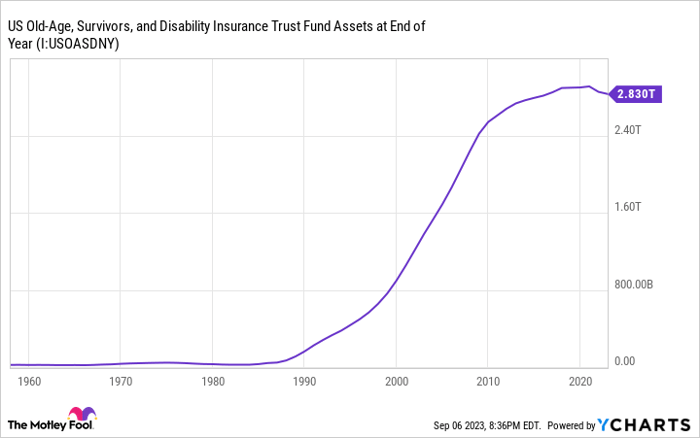
US Old-Age, Survivors, and Disability Insurance Trust Fund Assets at End of Year
US Old-Age, Survivors, and Disability Insurance Trust Fund Assets at End of Year© YCharts. Data as of Dec. 31, 2022

In fact, the Social Security Administration publicly updates its portfolio of investment holdings each month. As of the end of July 2023, the program held $2,856,838,557,000 in asset reserves, with an average interest rate of 2.396%.  Extrapolated out 12 months using 2.396% as the average interest rate would yield $68.45 billion in net interest income for Social Security.

Let me offer a more relatable way you can think about how Social Security treats its asset reserves. Imagine you have $1,000 in cash in your pocket and you deposit this cash at your local bank. Your bank has no intention of sitting on this cash and letting it collect dust. Rather, it's going to use your cash, along with the cash of other depositors, to generate interest income and/or make loans. The bank hasn't stolen your deposit, and your $1,000 is there anytime you want to take some or all of it out.

The same premise holds true for Social Security. The U.S. government is responsible for making interest payments to the program, and every previous bond maturity throughout history has been repaid in full. Nothing has been stolen; interest is being paid; and not a penny is missing.

As one final note, if, hypothetically speaking, the government were forced to repay its nearly $2.86 trillion in outstanding bonds and certificates of indebtedness, Social Security would miss out on tens of billons in annual interest income. In short, it would be in far worse financial shape with its excess cash simply collecting dust in the proverbial vault and losing purchasing power to steadily rising prices for goods and services.
A person holding a Social Security card between their thumb and index finger.
A person holding a Social Security card between their thumb and index finger.© Getty Images

Here are the real reasons Social Security's foundation is buckling

The idea of Congress stealing from Social Security and not paying interest is a complete myth. There are, however, tangible reasons for Social Security's struggles, many of which can be tied to long-running demographic shifts.

To begin with, the U.S. fertility rate has effectively fallen to a record low. The "fertility rate" describes the number of births a woman would be expected to have over her lifetime. As recently as 2007, this figure was above 2. By 2021, the U.S fertility rate had dropped more than 20% from where it stood in 2007. 

The reasons behind fewer U.S. births are many and include, couples waiting longer to get married, fewer unplanned pregnancies, better access to contraceptives, and even economic uncertainty (e.g., the Great Recession and COVID-19 pandemic). Fewer people in the workforce a generation from now means an even lower worker-to-beneficiary ratio for Social Security.

more-than-halving in net immigration into the U.S. is another key problem for Social Security. Legal immigrants tend to be younger, and therefore spend decades in the labor force generating much-needed payroll tax revenue for the program. But over the past quarter of a century, net legal immigration has declined by 57%.

Also, to take another myth off the table, undocumented workers positively contribute to Social Security via the payroll tax, but are ineligible to receive a penny back in traditional benefits.

Income inequality is another front-and-center issue for Social Security. In 2023, all earned income (wages and salary, but not investment income) between $0.01 and $160,200 is subject to the 12.4% payroll tax that's responsible for funding Social Security. Approximately 94% of working Americans won't reach $160,200 in earnings this year, which means they'll pay tax into Social Security on every dollar they earn.

By comparison, earned income above $160,200 is exempt from the payroll tax. In 1984, 91% of all earned income was subject to the payroll tax. But as of 2021, only 81% of earned income was being hit with the 12.4% payroll tax. In other words, more earned income is "escaping" the payroll tax as time passes.

Congressional inaction can be added to this list, as well. The longer lawmakers wait to act, the larger Social Security's funding obligation shortfall grows, and the more painful the eventual solution is going to be on working Americans and retirees.

There's no question that Social Security has issues to contend with. The myth that Congress has its hand in Social Security's cookie jar simply isn't one of them.

SPONSORED:

The $21,756 Social Security bonus most retirees completely overlook

If you're like most Americans, you're a few years (or more) behind on your retirement savings. But a handful of little-known "Social Security secrets" could help ensure a boost in your retirement income. For example: one easy trick could pay you as much as $21,756 more... each year! Once you learn how to maximize your Social Security benefits, we think you could retire confidently with the peace of mind we're all after. Simply click here to discover how to learn more about these strategies.

Monday, September 11, 2023

9-11-2023

  I set to post this on the scheduler thingie to drop on Sept 11, 2023.  I wrote this post back in November of 2018,  I have blogged before about Rick Rescorla, to me he went to Valhalla on the wings of Valkyries.  To use a phrase that isn't used much anymore, "He died Well".  Everyone dies, that is the truth of our existence, but some choose to run forward despite the almost certainty of death to make a difference.


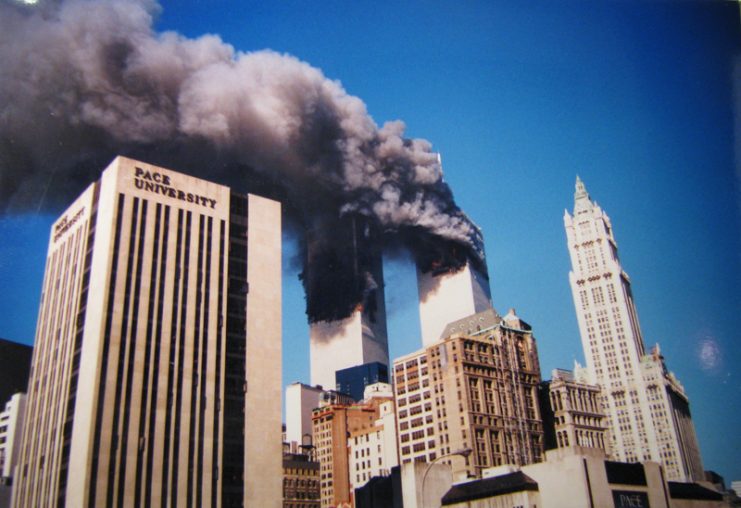
The Battle of la Drang Valley was the first major battle in the Vietnam War. 36 years later, the first major battle of the War on Terror was the bombing of the Twin Towers.
There are many people who remember both events, but Rick Rescorla is the only person who was at the heart of both.
Rick Rescorla was born in Cornwall, United Kingdom, but was one of the most distinguished heroes in the initial battle of Vietnam. He gave his life on September 11, 2001.
 
 
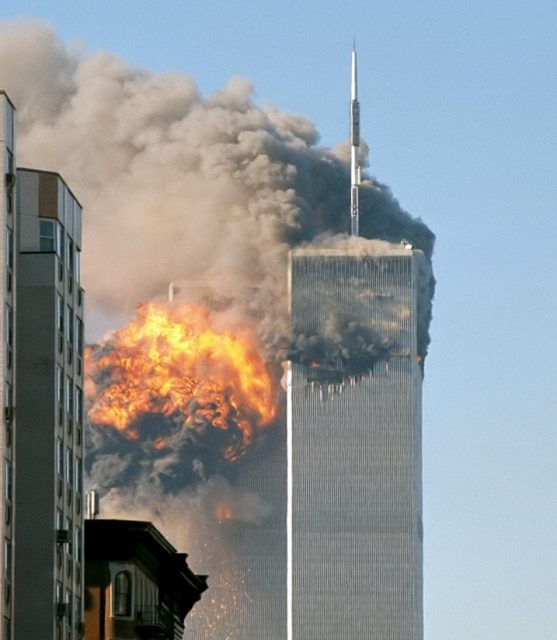
Just before the collapse of WTC 2. You can see all floors fully involved with fire and         structural failure is imminent
Rescorla’s career in the military started at the age of 17 when he joined the British military. There he trained as a paratrooper and would later serve in Cyprus. At the end of his Short-Service Commission, he joined the Northern Rhodesia police before returning to London to join the Metropolitan Police Service.
Rescorla’s tenure with the Met police was short-lived and he soon emigrated to the United States where he lived in a hostel in Brooklyn. He stayed there until he was able to enlist in the United States Army. He completed basic training at Fort Dix.


After basic training, he completed Officer Candidate School and airborne training, graduating with the assignment of platoon leader.
He became infantry leader of Company B, 2nd Battalion, 7th Cavalry Regiment, 1st Cavalry Division. Rescorla and his men were one of the first combat units on the ground in Vietnam.
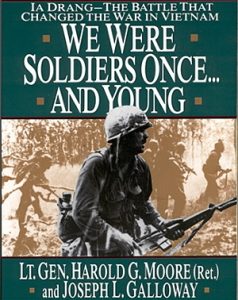
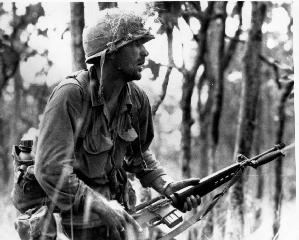
In November 1965, he and his unit were involved in the battles in the la Drang Valley. One of the moments from these battles was captured by a war correspondent and appears on the cover of We Were Soldiers Once And Young. This iconic image is of Rick Rescorla holding his rifle with bayonet attached and marching forward into battle.


Rick Rescorla during the war, 1965
Rescorla and his unit fought at Landing Zone X-Ray before being extracted and provided with a brief rest. They were then instructed to return to the valley and reinforce another unit. The battles lasted three days, during which time the companies faced superior numbers but were able to hold off and drive the enemy forces back.
For his part in the war, Rescorla was honored with the Vietnamese Cross of Gallantry, a Purple Heart, a Silver Star, and the Bronze Star with Oak Leaf Cluster.


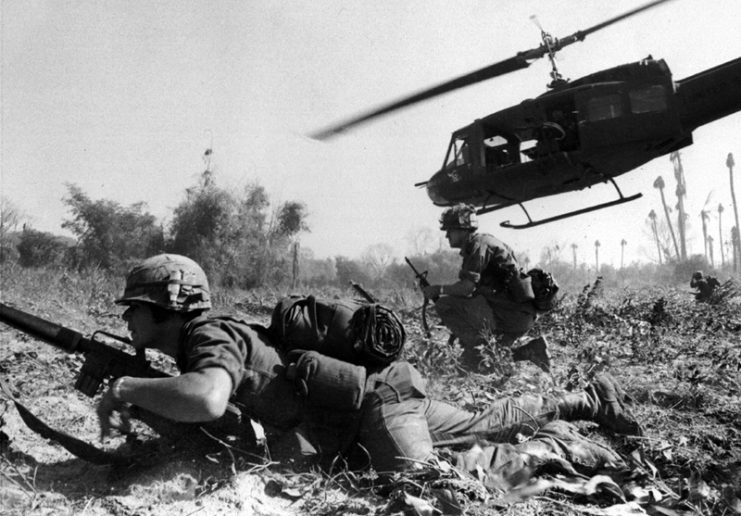
Some U.S. Army soldiers air-lifted into LZ X-Ray.

After leaving active duty, Rescorla remained a reserve, retiring with the rank of colonel. He used his military benefits to study creative writing and eventually earned a law degree from the Oklahoma City University School of Law.
He would go on to teach criminal justice for three years and publish a textbook on the subject.
His teaching career was short-lived and he moved on to the world of corporate security, joining Dean Witter Reynolds at their office in the World Trade Center.
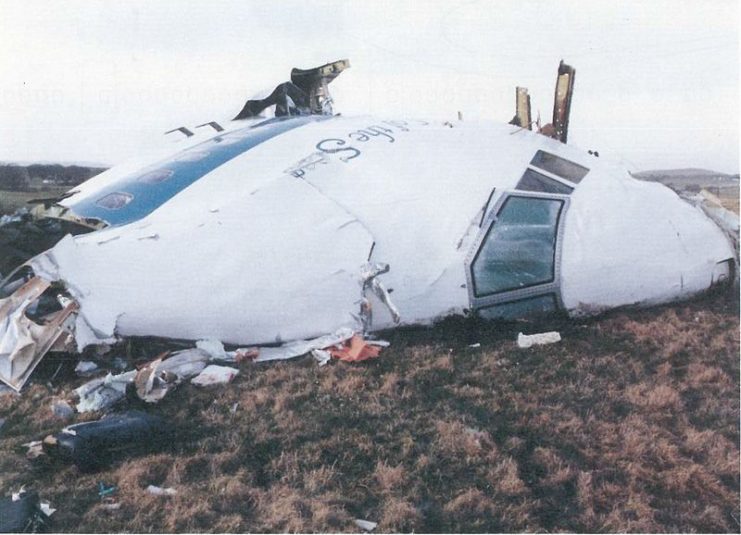
It was during his time there that Rescorla became concerned with the security of the towers. This was prompted by the 1988 bombing of Pan Am Flight 103 over Lockerbie in Scotland.


The remains of the forward section from Clipper Maid of the Seas (Pan Am Flight 103) on Tundergarth Hill, Lockerbie Scotland, 21 December 1988
The bombing pushed Rescorla to invite his old friend, Daniel Hill, to assess the security of the World Trade Center. Hill was trained in counterterrorism and determined that the basement would be the easiest target for a terror attack.
The two of them used the findings to write a report to the Port Authority of New York and New Jersey insisting that more security be added to the parking garage. Their recommendations were ignored due to the costs, leaving the building open to the 1993 terrorist attack.
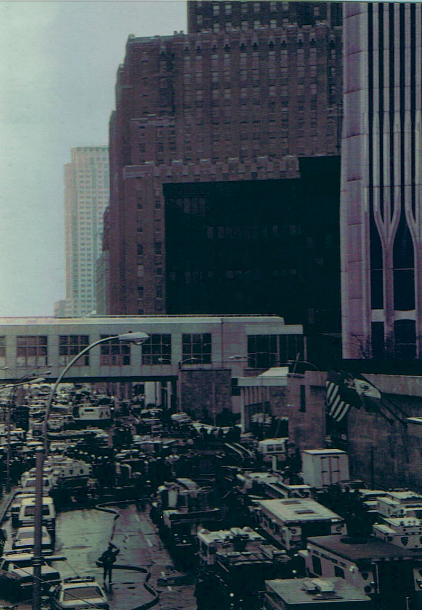
During the 1993 attack, Rescorla was upset by the poor evacuation of the building and vowed that it would never happen again. In 1997, he became the director of security for Dean Witter/Morgan Stanley and was able to make some of the changes he wanted.


Procession of emergency vehicles at the World Trade Center bombing on February 26, 1993. The Tower is on the far right of the frame. Photo taken by Eric Ascalon from an adjacent pedestrian walkway. 
Rescorla did recommend that the company find different office space due to the vulnerability of the building, but lease obligations made this impossible. This left Rescorla to create an emergency evacuation plan that all employees had to practice again and again.
The emergency plan ensured that Morgan Stanley employees were ready for any attacks. On the morning of September 11, 2001, Rescorla heard the explosion from the North Tower and saw it burning from his office window on the 44th floor of the South Tower.
An announcement from Port Authority came over the PA system telling people to remain at their desks. Rescorla ignored the announcement, grabbed his bullhorn and ordered Morgan Stanley employees to start evacuating.


The north face of Two World Trade Center (south tower) immediately after being struck by United Airlines Flight 175

He directed the employees down the staircase and continued to encourage them when the building lurched as the second plane hit. To keep everyone calm, Rescorla started to sing as he had done for his platoon in Vietnam.

 Rick pushing people out of the building in Sept 11, 2001 saving their lives, this was the last pic that was taken of that man.
2,687 employees of Morgan Stanley owe their lives to Rick Rescorla as they were successfully evacuated. After seeing to this, Rescorla returned to the South Tower to ensure that everyone was out.
He was last seen on the 10th floor heading up shortly before the tower collapsed. His remains were never found and he was declared dead three weeks later.


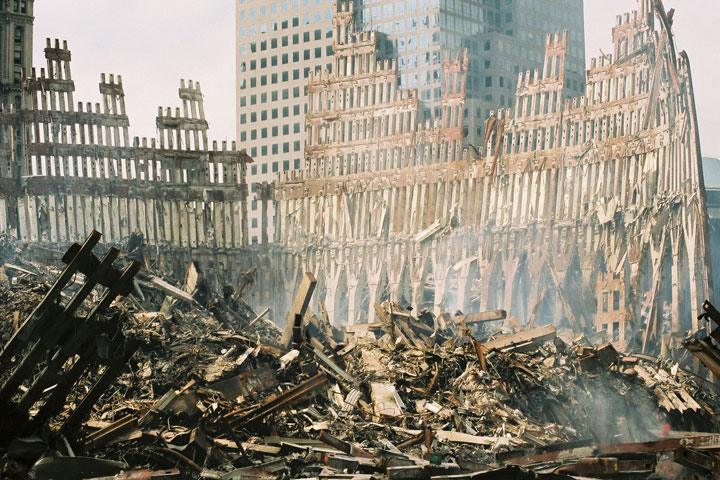
The exterior support columns from the lower level of the South Tower remain standing after the collapse of the building.

Rick Rescorla was a man who saw battle with two armies and the start of the War on Terror. All but 13 employees of Morgan Stanley were able to exit the South Tower safely because of his leadership and foresight.

 Rescorla's name is located on Panel S-46 of the National September 11 Memorial’s South Pool
One of my favorite pics, it shows the indomitable spirit of the American People.
9-11-2002

Saturday, September 9, 2023

"How Well Trained were the NVA during the Vietnam War.

 I saw his on Quora while taking a break at work and thought it was a good article.

Many of us know about this battle, the battle of Ia Drang was the first major engagement between the US Army and PAVN (better know as NVA during Vietnam war). A few months after the battle, Lt Gen Harold G Moore, back then he was Lt Col, wrote his observation of NVA’s tactics in After Action Report Battle of Ia Drang:

THE PAVN ENEMY

He appeared to be well trained. He was aggressive. He was equipped with automatic weapons and plenty of ammunition. He carried 3 – 5 Chinese potato masher hand grenades.

He was an expert at camouflage and used every bit of cover and concealment to perfection.

He was a deadly shot. In caring for my man who had been killed and wounded, I was struck by the great number who had been shot in the head and upper part of the body-particularly in the head. He definitely aimed for the leaders-the men who were shouting, pointing, talking on radios. He also aimed for the men carrying radios. He also appeared to concentrate on men wearing insignia of rank-particularly NCO with stripes on their arms.

When attacking, the PAVN units confronting us used mass assault tactics preceded in some cases by light mortar and anti-tank rocket fire. He also used encircling maneuvers with 50-70 men groups. He employed his machine guns extremely well and thoroughly understood the value of grazing fire. At night, he infiltrated small numbers up to the friendly positions. These enemy set up on top of grassy anthills, in trees, and good close in firing positions. He was expert at probing our defensive perimeter at night and went to great efforts to try to force friendly into firing

He fought to the death. When wounded, he continued fighting with his small arms and grenades. He appeared fanatical when wounded and had to be approached with extreme care

He also appeared fanatical in his extreme efforts to recover bodies of his dead and wounded and their equipment.

A favorite tactic of the PAVN enemy we faced seemed to be an aggressive small unit encircling maneuver. Another was a rapid assault by 6-10 PAVN on 2 or 3 friendly.

(Note : I left out a few irrelevant parts like his food of rice and fish sauce, his green uniform, pitch helmet and how he used B40 anti tank weapon)

As the US military learned about their tactics, so did the NVA. He learned so well that his force would be decimated by superior fire power from the US force, if he was caught on the open ground. As a result he developed a maneuver, which could be called as “ Hill trap maneuver. Hamburger Hill, anyone? Basically, he fortified a fixed location in order to lure the US force into a battle.

Lt Gen William R. Peers, commander of 4th Division, later wrote in After Action Report Battle of Dak to

“The enemy had prepared the battlefield well. Nearly every key terrain feature was heavily fortified with elaborate bunker and trench complexes. He had moved quantities of supplies and ammunition into the area. He was prepared to stay. Enemy fighting positions were characterized by extensive preparation against the effects of artillery and air.”

It became evident the NVA had been preparing the battle for some time. Expanded trails, roads and well constructed defensive positions with over head cover, and signs of usage of draft animals all pointed to undeniable facts the enemy had lured the Allied forces onto the ground of their choosing.

The enemy used the tactic of pinning down assaulting American force from bunkers then attacked with another unit to the rear or flanks. The enemy had learnt to close on, hug, the American perimeter to keep from being destroyed by artillery and aerial bombing.

Brigadier General Leo H. Schweiter of 173rd Airborne Brigade wrote his observations in After Action Report Battle Hill 875

During the Battle of DAK TO, the 173d Airborne Brigade was opposed by large determined NVA units which were exceptionally well equipped and supplied. The enemy continued to elect to choose the time and place in which decisive engagements would be fought. Only when and where the tactical situation, terrain, battlefield preparation and relative strengths of opposing forces favored enemy action were significant contacts initiated.

The NVA presses the attack in contacts apparently attempting to hug the US forces to avoid the US artillery and air support. Air and artillery are of great value as blocking fires, but can be used as close in support only at a high risk to friendly forces.

Enemy Fortifications and Tactics: The NVA utilized reinforcing trenches and tunnels to their bunkers which provided protection from direct fires. Their bunkers had extensive overhead covers (5-8 feet) allowing them to display determined resistance to air and artillery preparation fires, and enabling them to survive and put up a strong defense after bombardment. The NVA will also attack from these fortified positions.

The NVA used tree positions to their advantage even when pressing the attack. The use of this technique gives them the capability of preventing resupply or evacuation mission from being flown by placing automatic weapons fire on the LZ from trees.

The NVA demonstrated a tactic designed to encircle a portion of a unit with the objective of defeating it in detail. When a friendly unit encountered a fortified position it could expect a sharp assault from the flanks or rear. The NVA continually probed friendly flanks or rear elements in an attempt to exploit this tactic. Upon discovery, enemy flanking forces would break contact if it appeared that their attack would be unsuccessful. In addition, this tactic allowed the NVA to "hug" friendly forces, thus practically nullifying the effect of heavier fire power provided by artillery and TAC Air.

The NVA soldiers were camouflaged very effectively over their entire body and were often very difficult to see unless moving, especially in the heavy undergrowth.

So in the conclusion: sorry for another long post. However I think we can put the myth of “the NVA could only throw endless human wave attacks" to rest.