Webster

The Constitution was made to guard the people against the dangers of good intentions." --American Statesman Daniel Webster (1782-1852)


Tuesday, December 26, 2023

The 12 Oldest War Vehicles still in Service.


A MiG-17 in flight
A MiG-17 in flight© Kletr/Shutterstock

M

ilitary spending can amount to hundreds of billions of dollars annually as new technologies are sought, and systems are updated to ensure the world's best fighting forces stay one step ahead of their competition. However, those countries that lack spending power often resort to tried and true technology from previous generations. In some cases, this means using relatively antiquated vehicles that, in some instances, call[ back to the Cold War or even World War II. 

While, on the face of it, this may sound desperate or even downright dangerous, military technology is by its nature highly robust, and some examples, such as the Tupolev TU-95 long-range bomber or the Boeing CH-47 Chinook helicopter, have not as yet required replacing. Some older designs, such as the Lockheed C-130 Hercules transport plane and the Type 209 submarine, have received regular updates to keep them consistent with modern military requirements.

For this article, we have chosen vehicles that remain in fighting forces today. For example, some individual ships and submarines are still used as training vessels or for reconnaissance purposes. These include the USS Constitution, a square-rigger sailing frigate from 1797, and the last remaining Hai Shi Class submarine from 1944, which are still technically in service with the United States and Taiwanese navies, respectively, but pose no significant military threat. The following are the oldest war vehicles that are still in active service today.

Read more: 10 Most Impressive Supersonic Bombers Of All Time

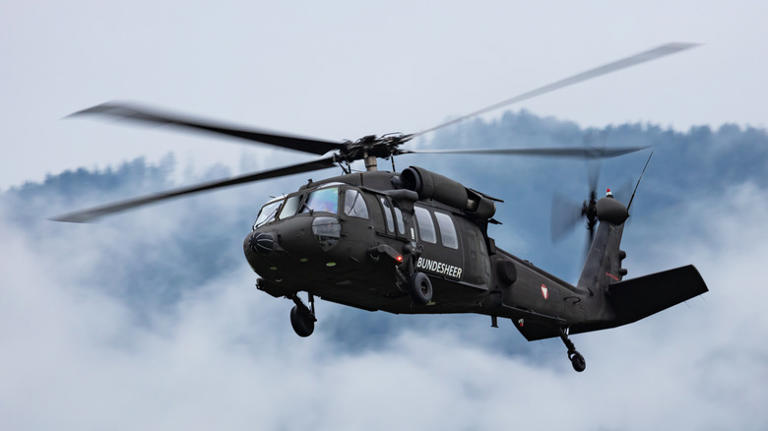
Sikorsky Black Hawk

A Sikorsky Black Hawk
A Sikorsky Black Hawk© Soos Jozsef/Shutterstock

Many of us remember the Black Hawk helicopter as the subject of Ridley Scott's 2001 film "Black Hawk Down," based on a novel of the same name. However, that near-disastrous mission into Somalia in 1993 is just one episode in the long and storied history of this multipurpose helicopter, which has been in service since 1979.

The Black Hawk is a medium-lift helicopter crewed by four, usually consisting of a pilot, co-pilot, and crew chiefs. It can also carry 11 troops or six stretcher patients plus medical attendants, as well as various combinations of personnel and cargo, making it a highly versatile and valuable vehicle. It cruises at an average speed of 174 miles per hour, with a top speed of 222 mph, making it one of the world's fastest helicopters. It also has a range of more than 350 miles, but it can go longer thanks to external fuel tanks.

In over 40 years since the Black Hawk first entered service, it has been used for casualty evacuation, combat assault, aerial firefighting, search and rescue, and special operations. It can be armed with rockets, guns, and missiles. There are currently over 4,000 units in operation worldwide, of which more than 2,000 are used by the United States, and the Black Hawk shows no sign of retiring any time soon.

Type 209
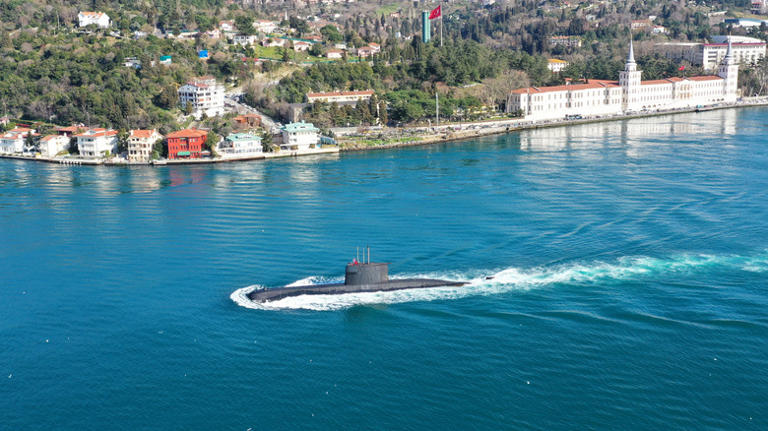
A Type 209 submarine
A Type 209 submarine© Archaeonavall/Shutterstock

Germany is known for many exports, including pharmaceuticals, consumer electronics, luxury automobiles, and ... Albert Einstein. Diesel-electric attack submarines are not usually included in this list, yet the Type 209 is  success story of a military vehicle created exclusively for sale to other countries.These vessels have been sold to 12 navies, as aging World War II and Cold War-era submarines have gradually required replacing. Germany, spotting this looming gap in the market, was quick to respond with this robust and versatile submarine, although, curiously, it doesn't operate any itself.

While specifications vary due to the adaptable nature of the Type 209, it is crewed by roughly 40 people and has a submerged displacement of between 1,200 tons. All use diesel-electric propulsion, which provides a surfaced speed of around 11 knots and a submerged speed of around 22 knots. It can dive to a maximum of 500 meters and has a range of about 430 miles when submerged.

Five variants of Type 209 exist in various militaries, from South America to the Mediterranean, to South Africa, to Asia, as evidence of the versatility and adaptability of the original vessel. Modifications can include an increased air supply, escape hatches, taller masts, overhauled engines and systems, and even an increase in length. While each country assigns its own class names to the submarine, they are all unmistakably the Type 209, based on the original German design and incorporating the European nation's renowned technological prowess and build quality.

Victor Class
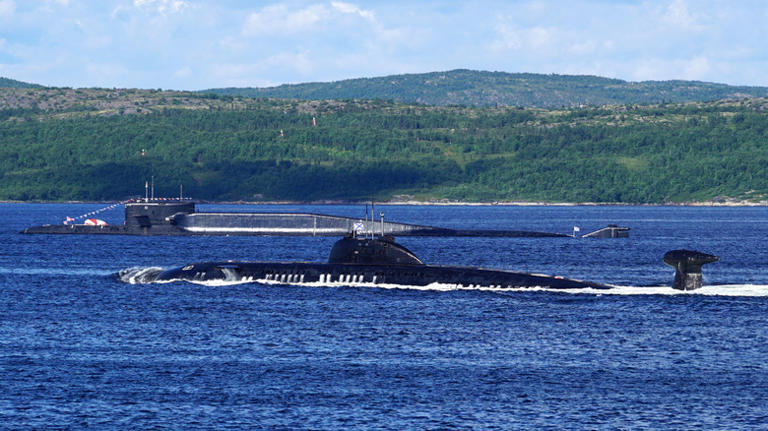
A Victor Class submarine
A Victor Class submarine© Sergei Fokin/Shutterstock

Predating the Type 209 is the Victor Class submarine, which is still operational in its native Russia, where it was first commissioned in 1967. Codenamed "Project 671", it is one of the earliest nuclear-powered attack submarines, which produced two quieter versions, the Victor II and Victor III, in later years, the latter of which is still in service today. This remnant of the Cold War was the Soviets' answer to the U.S. Sturgeon Class sub, and it is characterized by its teardrop-shaped hull and the large sonar pod on its stern plane.

The Victor Class submarine is a worrying reminder of just how dangerous the post-World War II global situation had become, as nations equipped their aircraft and submarines with nuclear warheads in preparation for the outbreak of all-out war. The Victor Class was one such vessel that carried two 200-kiloton Novator torpedoes or two S-10 Granat cruise missiles, each capable of devastating an entire city. They were also powered by a nuclear reactor, which drove a steam turbine, providing 22.7 megawatts of power to a single propeller shaft as a highly efficient, albeit risky, energy source.

Thankfully no boats ever suffered any severe damage during their long tenure, and the Victor Class has gradually been retired, with the first Victor III subs being taken out of service in 1998. Just two, the "Tambov" and "Obinsk," remain operational and are used by the Russian Navy as testing vehicles for new weapons and other technology.

Boeing CH-47 Chinook
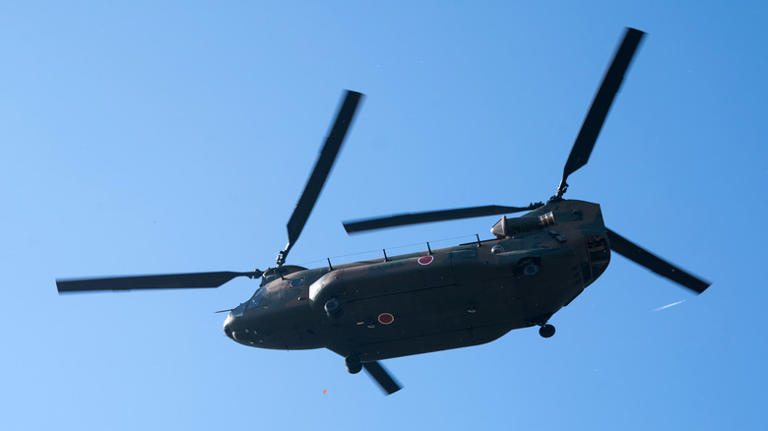
A Boeing CH-47 Chinook
A Boeing CH-47 Chinook© Tomohiro Ohsumi/Getty Images

The Boeing CH-47 Chinook is one of the most recognizable helicopters in history, with its dual rotors and bulbous profile. Its versatility as a medium to heavy-lift vehicle and consistent updates have ensured that the design will remain in service until at least 2060, and the latest CH-47 boasts advanced technological features to rival any of its modern equivalents.

This versatility is evidenced by the fact that the Chinook is operational with many militaries across the globe, as diverse as Great Britain, Australia, Canada, Egypt, and the Netherlands, as well as its native United States. Having first entered service in 1962, it has been used in Vietnam, the Iran-Iraq conflict, the Falklands War, and Afghanistan. It features two powerful gas turbine engines, capable of lifting up to 24,000 pounds, and has many new advanced capabilities that maintain its usefulness in modern military practice.

These include a digital cockpit management system, autopilot functionality, a digital flight control system with hover and landing assists, and advanced cargo capabilities. The CH-47 Chinook embodies the term, "If it ain't broke, don't fix it." However, the modern machine is highly sophisticated compared to the original vehicle from over 60 years ago.

Lockheed C-130 Hercules
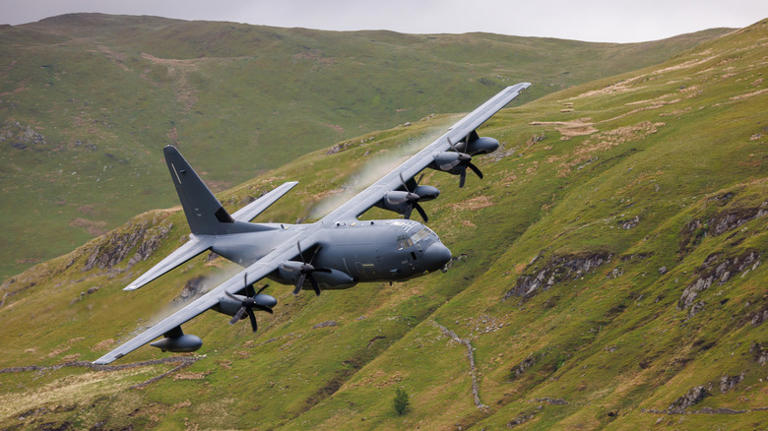
A C-130 Hercules
A C-130 Hercules© Paul Hanley/Getty Images

The Lockheed C-130 Hercules could be called the fixed-wing transport plane's answer to the Chinook helicopter, as a tried-and-true design that hasn't needed replacing since entering military service in 1956. This reliable, versatile workhorse is capable of transporting large payloads from runways that are high in altitude and poorly surfaced. The latest C-130J iteration is used by 21 countries, with other variants employed by tens more nations worldwide.

Built by Lockheed-Martin, the modern Hercules is impressive for a plane with such a long service history. It has four Rolls-Royce turboprop engines producing 4,700 hp each. It will fly at a top speed of 417 miles per hour at an altitude of 22,000 feet, but it can climb to a ceiling of 28,000 feet while carrying its maximum 42,000-pound payload. It is large at almost 98 feet in length and 39 feet tall, with a wingspan of 133 feet.

The Hercules is as powerful as its name suggests, but it is also versatile and used for many different roles, including meteorological services, medical operations, disaster relief, and firefighting duties, as well as airlift support. It is also large and can carry all sorts of cargo, including other helicopters, armored vehicles, palleted goods, and personnel. Given that a larger version, the C-130J-30 "Super Hercules," is also in production, it looks likely that the Hercules will be flying for many years to come.

Tupolev TU-95
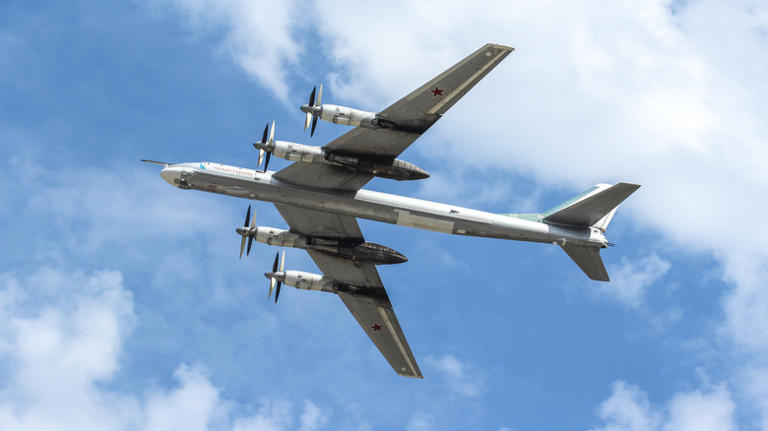
A Tupolev TU-95
A Tupolev TU-95© Sharkovski/Shutterstock

During World War II, three Boeing B-29 Superfortresses were forced to land on Soviet territory and duly appropriated by the Russians. From these, they created their own almost-carbon-copy prototypes, the Tupolev TU-80 and TU-85, which evolved into the Tupolev TU-95. Codenamed "The Bear" by NATO, this long-range bomber was Russia's answer to the B-52, and it entered service in 1956.

Like the B-52, the TU-95 is a formidable and sizable machine capable of carrying a nuclear payload. It underwent several different redesigns for various military applications, including flight training, reconnaissance, and transport duties, as a launcher for hypersonic aircraft, and for recovering space modules for Russia's cosmonaut program. Few aircraft can claim to have had such a storied career as the TU-95.

A lot has happened since 1956. The Cold War that created a requirement for the TU-95 has long passed, and Russia has been involved in many other conflicts. Despite still being in use, this aircraft may be showing its wear. After two accidents, they were briefly grounded in 2015.

Boeing B-52 Stratofortress
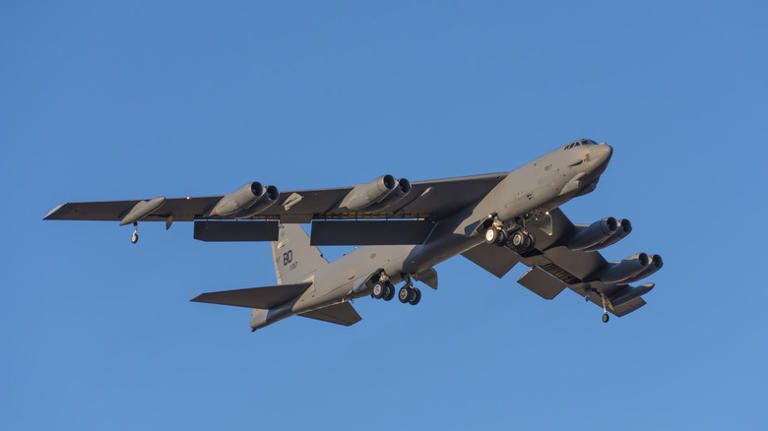
A B-52 Stratofortress
A B-52 Stratofortress© Allenjmsmith/Getty Images

Boeing and the U.S. military have enjoyed a successful partnership dating back to World War I when the company first trained flight instructors for the Army. Since then, it has won many contracts to produce military aircraft for various purposes. These include tactical fighter aircraft, helicopters, transport planes, reconnaissance planes, uncrewed combat planes, and long-range bombers, such as the B-17 Flying Fortress, the B-29 Superfortress, and the B-52 Stratofortress.

The specifications of the B-52 are impressive, to say the least. It is so large that it requires a unique set of skills and specially designed landing gear to attempt a takeoff and landing. It has eight Pratt and Whitney turbofan engines, each providing around 17,000 pounds of thrust. It has a colossal 185-foot wingspan, is 159 feet long, can fly at a maximum speed of 650 miles per hour, and has a range of 8,800 miles. Despite its vastness, the modern B-52 requires a crew of just five to operate, including its commander, pilot, navigator, electronic warfare officer, and radar operator.

This now-legendary bomber is still operational in its native United States, having been in service since 1952. It is yet another testament to the enduring design qualities of some post-war military aircraft that finds them still eminently usable over a half-century later. Originally intended as a high-altitude bomber, its new primary function is to provide the United States with an immediate global strike capability for nuclear and non-nuclear precision weapons. Modern machines offer a maximum payload of 70,000 pounds, which will soon be upgraded by approximately 50%, making this aircraft unrivaled within its segment. As such, the B-52 is expected to remain in service until well after 2040.

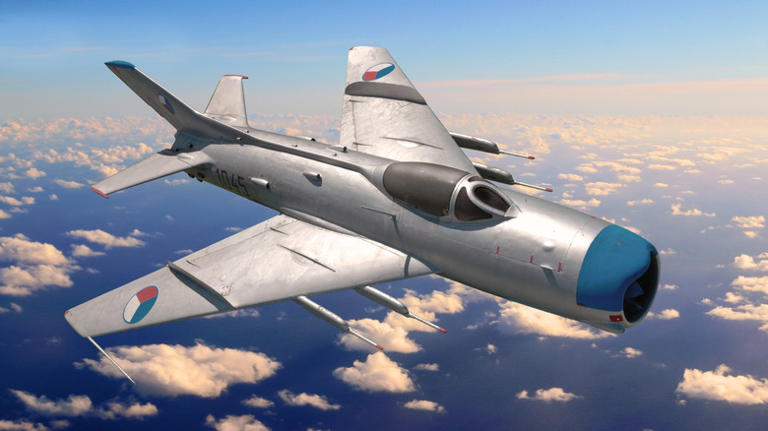
Mikoyan-Gurevich MiG-17
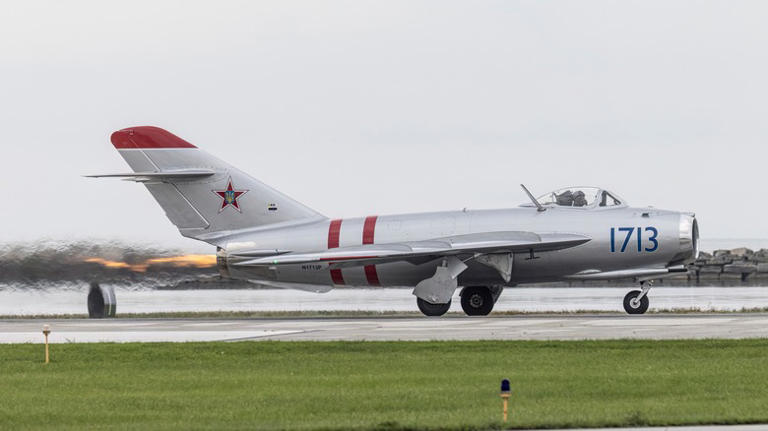
A Mikoyan-Gurevich MiG-17
A Mikoyan-Gurevich MiG-17© BlueBarronPhoto/Shutterstock

Codenamed "Fresco" by NATO, the Mikoyan-Gurevich MiG-17 has had an eventful history, having served in more than 20 military forces since production began in 1951. It is notable for its snub-nosed profile, with its tapered afterburner to the rear that gives it a cigar-shaped silhouette.

Its predecessor, the MiG-15, served successfully in the Korean War, and this updated jet was more agile, with an extended fuselage and more acutely-angled wings. Its armament includes three cannons and 16 rockets, and it can reach speeds of up to 711 miles per hour.

The MiG-17's first major conflic t was the Vietnam War, as flown by the North Vietnamese Air Force, where it was dubbed the "Silver Swallow" and pitted against the F-105s and F-4s of the United States. While not as maneuverable, these had the speed advantage over the MiG, ultimately downing 105 of the aircraft throughout the conflict.

Having been built in its native Russia, as well as Poland, China, and Czechoslovakia, more than 9,000 units were produced in the short time before discontinuation in 1958. While it is something of a relic today, this aging high-subsonic fighter jet is still operational with the military of Tanzania.

M47 Patton
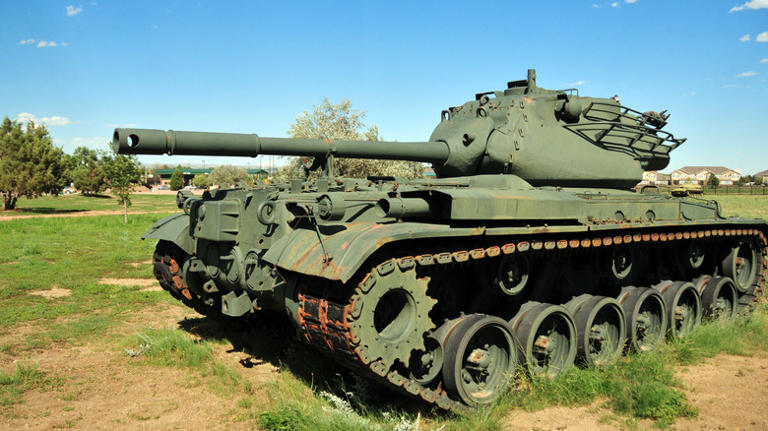
An M47 Patton tank
An M47 Patton tank© Mtcurado/Getty Images

After World War II, the U.S. military saw a requirement to update the Patton, Pershing, and Sherman tanks used throughout the conflict. The result was the M47 Patton unit, which was commissioned in 1950 and named after the legendary General George S. Patton, who had died five years previously.

The M47 Patton was expectedly robust, with four-inch armor plating, and powerful with its twin-turbo V12 engine that produced 810 horsepower. With a top speed of 37 miles per hour, it was a whole seven miles per hour faster than its predecessor, the M46 Patton, and it was well-armed, with its 90-millimeter cannon and dual 30 and 50-caliber machine guns with anti-aircraft capabilities.

While the M47 Patton tank was still in its early years of production, the United States was already working on its successor, the M48, which was far superior in many ways and entered service in 1953. Having only been active with its native U.S. military for around a decade, the unit was later adopted by various countries, including South Korea, Turkey, Yugoslavia, Spain, and Pakistan, and a modernized version is currently operational with the Iranian army.

T-54/T-55
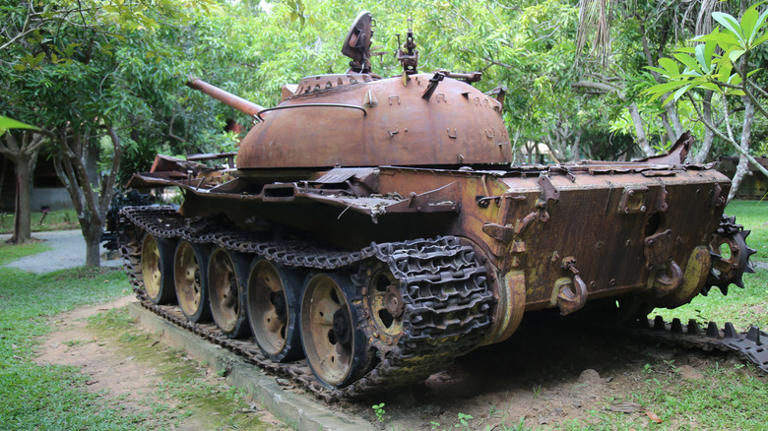
A T-54 tank
A T-54 tank© Brandon Fike/Shutterstock

As the successor to the legendary World War II-era T-34 tank, the T-54 had some big shoes to fill. Its prototype was developed in 1946, immediately after the war, and it entered production in 1947. Along with its sibling, the modified T-55, they are among the most widely-used tanks in history, having been manufactured until 1981. they went on to serve in the Arab-Israeli War and the Vietnam War and saw action in Eastern Europe, the Middle East, and Africa.

The T-54 has a 100-millimeter main cannon, a 7.62-millimeter turret-mounted machine gun, and a 520-horsepower V12 engine. Notable additions on the T-55 include a snorkel that allows it to ford depths of over five meters, additional armor, engine upgrades, an anti-radiation lining, and radiation detection equipment, the latter a reflection of the looming threat of the Cold War at the time of production.

Given its vintage status, you'd be forgiven for thinking that the T-54 would have been retired by now. However, it is still operational with multiple militaries, including those of Afghanistan, Cuba, Ethiopia, Iraq, and Nigeria. Lately, Russia has also had to put many units back into service as artillery on the Ukrainian front line, as its tank force has been depleted by as many as 150 units per month.

M3 Stuart
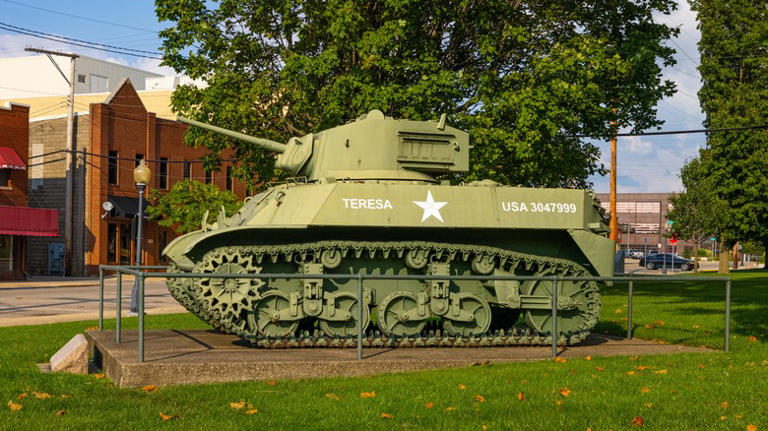
An M3 Stuart tank
An M3 Stuart tank© Roberto Galan/Shutterstock

Before entering World War II, the U.S. offered the Allies a helping hand by way of lend-lease equipment, which included the M3 Stuart tank. The British debuted these in the North Africa Campaign under Gen. Bernard "Monty" Montgomery and were admired for their reliability, speed, and robust build.

While the M3 Stuart tanks were hardy little units, they were no match for the German Panzer tanks, and their high turrets stood out, making them vulnerable to attack. They featured armor of up to 1 1/2 inches thick and up to four machine guns in addition to the main 37-millimeter anti-tank gun.

The M3 Stuart tank was manufactured in large numbers by the American Car and Foundry Company, and many variants were produced, including turretless configurations that were used as personnel carriers and the ominously-named "Satan" that incorporated a flame thrower. It is still operational as a training vehicle with the Paraguay military, having been in service since 1941.

T-34
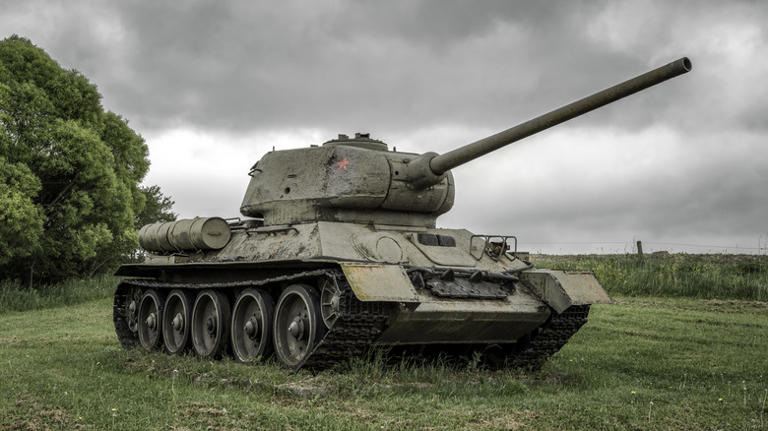
A T-34 tank
A T-34 tank© Jaroslav Moravcik/Shutterstock

Developed in the late 1930s, the T-34 was instrumental in Russia's success on the Eastern Front, ultimately helping to turn the tide of World War II in the Allies' favor. The combination of its mobility, rugged build, and firepower made it a formidable opponent for German tanks like the notorious Panzer units. It was produced in factories in Kharkiv and Stalingrad, the latter becoming the main theater where it would prove its value as a formidable fighting machine.

Throughout the war, the T-34 underwent various modifications and improvements to its design, resulting in different models and variants. There were changes to its armor thickness, engine upgrades, and turret design, but its principal features remained the same. These included the powerful 7.62-millimeter main gun, wide tracks that allowed for improved weight distribution and off-road mobility, and its sloped armor, which proved effective in deflecting enemy shells.

The T-34 is still in service today, a testament to the legacy and robust nature of this World War II relic, which was highly influential in modern tank development. It remains a valuable asset to the armies of North Korea, Laos, Vietnam, Yemen, and Guinea, among others.

Monday, December 25, 2023

Merry Christmas


Merry Christmas to you and yours from Casa De Garabaldi.  May people find grace and peace on this day and celebrate the birth of the Son of God.

Sunday, December 24, 2023

"Die Hard" Is a Christmas Movie!


"Die Hard" IS a Christmas Movie!

 I had fun putting this post together.

I ran across this right after Christmas and decided to post it on my blog for NEXT Christmas, I also have a meme that I use in December everytime the movie comes up.


   My Wife doesn't think that "Die Hard" is a Christmas movie...I Disagree, I bought a couple of Christmas themed T-shirts and one of them looks like this..


    The shirt will be washed then packed away for reappearance in2022 and 2023, Yes I wore it.


The debate over whether Die Hard is a Christmas movie or not rages anew every December. Fans of the Bruce Willis action classic will likely litigate this until the end of time. That debate extends to the cast and crew, as well. Recently, another star of the film weighed in to say yes, Die Hard is as Christmas as It’s a Wonderful Life.

De’voreaux White, who played Argyle, John McClane’s limo driver, recently wrote a piece for Newsweek about his time on the Bruce Willis classic and how he landed the gig. About halfway into the column, White lays the Christmas debate bare.

“Die Hard is one of the original action-packed movies, however, it’s also a Christmas cult classic,” he wrote. “That’s what it is; Argyle said so!”

White joins a growing list of people that worked on Die Hard that say it’s a Christmas movie. That includes the movie’s writer and director.

John McTiernan said his view on the movie changed over the years.

“We hadn’t intended it to be a Christmas movie, but the joy that came from it is what turned it into a Christmas movie,” the director said in a video for the American Film Institute last year.

Writer Steven E de Souza was unequivocal. Die Hard, he said, is more of a Christmas movie than White Christmas, the Bing Crosby classic. He laid out his argument during an appearance on the  Script Apart podcast last year.

Steven E de Souza created a checklist that he believes all Christmas movies must meet. You can watch his dissertation on the subject below. But if you don’t have four minutes to spare, in short, he said Die Hard checks all of the boxes and then some.

If you think Die Hard is a Christmas movie, Bruce Willis is here to ruin the party, pal. The star of the movie says it’s not, and he wants you to stop asking him about it.

Fans and critics have wanted him to end this debate for years, but he never weighed in until 2018, 30 years after the movie came out. 


“Die Hard is not a Christmas movie,” he said through gritted teeth at the end of his Comedy Central Roast. “It’s a g** da** Bruce Willis movie.”

This full-throated rebuke came after an evening of abuse from his friends and hired-gun comedians. So, take it with a grain of salt.

If he believes this way, then he’s in the minority. An IGN poll found that 78 percent of people believe Die Hard is a Christmas film. More than 18,000 people voted in favor of the idea. Only 5,000 said it’s not.

And it’s not an arbitrary distinction. One of the biggest criteria for a Christmas movie, for most of us, is that you watch the movie at Christmas time. You wouldn’t watch Rudolph or Frosty in June. A survey from DISH found that more people watched Die Hard at Christmas than they did Home Alone, Miracle on 34th Street, or The Santa Clause


Another meme that I have on my phone that I trot out in December.

Friday, December 22, 2023

Lufthansa buys the B737 after a 28-year Hiatus.

 I thought this was interesting because Germany being involved in Airbus, although they do have Boeing Wide bodies in their fleet.  I get the "Not putting all their eggs in one basket" philosophy and not being totally beholden to one manufacturer.  

     I remember being stationed in Stuttgart and seeing the Lufthanza 737's come screaming in because of the JT8D engines were not exactly quiet, LOL

  I see those pictures and I can still hear those engines screaming.........And another memory, The airport would hire "jaegars" or Hunters to cull the rabbit populations every once and a while  because those huge jackrabbits would FOD the hell out of a motor when one got ingested during a roll.
.


Boeing 737-100

Lufthansa was the launch customer for the 737-100, which made its first flight (pictured) in 1967 and entered service with the airline in 1968.

Credit: Boeing

Before Lufthansa finally signed an order for the Boeing 737-100 in early 1965, Boeing had to guarantee the airline that it would not cancel the program. Three years later, the 737 entered service with the German airline. Now, 58 years after its first order and 28 years after it last bought the type, Lufthansa is coming back to the aircraft.

The airline’s supervisory board on Dec. 19 approved of a firm order for 40 737 MAXs that could grow to 100 aircraft, including options. While Lufthansa has the flexibility to change to other versions closer to their delivery dates, the group’s priority is the 737-8. The carrier also ordered 40 Airbus A220-300s plus 20 options and secured 40 options for more A320neos. Deliveries are planned to start in 2026 and continue through 2032.

  • Aircraft likely to be flown by subsidiaries
  • The move should help negotiate pricing 

“With today’s aircraft order, we are accelerating the largest fleet modernization in our company’s history,” says Detlef Kayser, an executive board member responsible for fleet and technology. “This increases our order list of around 200 aircraft to 280—plus an additional 120 purchasing options for further state-of-the-art short- and medium-haul aircraft. We are pleased that both Airbus and Boeing were able to convince us on all commercial and technological aspects. In addition to this, the decision for the Boeing 737-8 will also give us more flexibility for the procurement of short- and medium-haul aircraft in the future.”

“Our relationship with the Lufthansa Group has led to a number of industry-changing achievements, and we are delighted to see the 737 return to an original launch customer’s fleet,” Boeing Commercial Airplanes CEO Stan Deal says.

Lufthansa bought its last 737-300 in 1995, after having ordered a total of 146 since the aircraft’s launch. The airline never went for the 737 Next Generation (737NG) and has so far stayed away from the 737 MAX. Its last 737-300 was retired in 2016. The group has since become an all-Airbus narrowbody operator across its various subsidiaries: Lufthansa, Swiss, Austrian Airlines, Brussels Airlines and Eurowings. ITA Airways, in which Lufthansa is seeking to acquire a 41% stake, is also an all-Airbus airline. SunExpress, a leisure carrier jointly owned with Turkish Airlines, is operating a mixed 737NG and MAX fleet and purchased a further 90 737 MAXs at the Dubai Airshow in November.

According to company sources, one major factor in the decision was for Lufthansa Group to become less dependent on Airbus as a sole-source supplier of narrowbodies. In future campaigns, Lufthansa can now more credibly stage competitions between the A320neo and 737 MAX and likely achieve better pricing. Airbus narrowbody slots are sold out until 2030, and the aircraft-maker currently has little incentive for big discounts unless a strategic customer needs to be retained at all costs.

Unlike its narrowbodies, Boeing’s widebodies have significant exposure at Lufthansa Group. Swiss operates Boeing 777-300ERs. Austrian’s long-haul fleet consists of Boeing 767s and 777s. Lufthansa Airlines is one of the few operators of the Boeing 747-8 and has also begun introducing the Boeing 787-9. Lufthansa Cargo operates an all-777F fleet. And Lufthansa was part of the launching customer group for the 777-9, the first of which is now expected to arrive in mid-2025.

Through November, Boeing had received firm orders for 686 737 MAXs this year. In the same period, Airbus sold 1,248 A320neo-family aircraft, showing how much of a prestige win Lufthansa’s order must be for Boeing.

It is still unclear which of the group’s airlines will operate the new 737s, although they will not be deployed to the main brand serving the Munich and Frank-furt hubs nor to Swiss in Zurich. The MAXs could end up being operated at Eurowings, Austrian or Brussels Airlines given the size of the order. Lufthansa says the decision will be made at a later stage. Eurowings has a fleet of about 100 aircraft and could move over to the MAX if all options are exercised.

The 40 A220-300s Lufthansa ordered are slated for its new City Airlines affiliate. Swiss is the only A220 operator in the group, with nine -100s and 21 -300s in service. ITA Airways committed to 22 of the aircraft, with seven coming from Airbus and 15 sourced through Air Lease Corp. Delta Air Lines is by far the aircraft’s largest customer with orders for 131, followed by JetBlue Airways with 100 units. AirBaltic and Breeze Airways have bought 80 aircraft each, and Air France and Air Canada have committed to 60 each.

The Lufthansa A220 deal is a particular blow for Embraer, which had pitched the E2 in the competition against the A220.

City Airlines is planned to start operating feeder services at the Frankfurt and Munich hubs beginning with ex-Lufthansa A319s in 2024. The new affiliate was set up because an agreement allowing the group’s existing regional airline, Lufthansa CityLine, to operate larger mainline aircraft expires in 2027.

The group operates Mitsubishi CRJ-900s and Embraer 190 and 195s at CityLine, Air Dolomiti and Austrian but says it has no plans to buy new aircraft to replace them.

Tuesday, December 19, 2023

"Young Americans Turn against Social Security"

 I have been out of town visiting my mom up in Tennessee and was unable to post.

I saw the article and read it, and unfortunately, I tend to agree with it to an extent.  I have been planning my retirement without Social Security in it despite my paying into it since the early 1980's. I believe that they will put a "means" test on it when it comes for me to retire since I have my own retirement, they will find a way to either cut my benefits or deny me completely because it wouldn't be fair for me to have extra money when others will not.  The politicians have been kicking this can down the road since the 1970's and it took off especially in the 1990's with the proliferation of SSDI and "Crazy Checks". that were paid out if you could prove that your kid was "mentally challenged" and a lot of people saw this as an extra income stream and had their kids certified for the extra money.  My attitude was and still is that if they had left it alone for the old people, the money would be fine, but they opened it up as a piggy bank for a bunch of other stuff and squandered it.


"Here is the Article"

Younger generations in the U.S., including millennials and Gen Zers, are much more likely to believe that the Social Security system needs reforming than those in their 60s and 70s.
Younger generations in the U.S., including millennials and Gen Zers, are much more likely to believe that the Social Security system needs reforming than those in their 60s and 70s.© Photo-illustration by Newsweek/Getty

Younger generations in the U.S., including millennials and Gen Zers, are much more likely to believe that the Social Security system needs reforming than those in their 60s and 70s, according to a recent survey conducted by Redfield & Wilton Strategies on behalf of Newsweek.

The poll was conducted on December 8 among a sample population of 1,500 eligible voters in the U.S.

Some 40 percent of respondents said they believe that the Social Security program currently pays out more to retirees than it is receiving in Social Security tax payments, while 26 percent disagreed with this statement.

Millennials (those aged between 27 and 42), Gen Zers (those aged between 18 and 26), and Gen Xers (those aged between 43 and 58) were more likely than boomers (those older than 59 years old) to think that Social Security should be reformed.

According to the poll, 56 percent of Gen Zers, 76 percent of millennials and 69 percent of Gen Xers believed the system should be reformed, against 50 percent of boomers.

There were also overwhelmingly more millennials (52 percent) thinking that the system isn't getting as many tax payments as it was handing out benefits to retirees than any other generations, including Gen Z (39 percent), Gen X (25 percent) and boomers (39 percent).

"In general, millennials and plurals—our name for Gen Z—are skeptical that Social Security benefits as robust as those retirees like me currently enjoy will be available to them when they retire," Morley Winograd, author of three books on the millennial generation, told Newsweek.

"They have been told by Republicans in Congress, seconded by deficit hawks in think tanks, that the money will run out before they can claim it," he said. "None of that is true. But, luckily, the younger generation's skepticism of experts and politicians will help prevent the kind of unnecessary tinkering with future, never present, Social Security payments that some older folks advocate."

While boomers are the richest generations on the planet, millennials remain burdened by the debt "many of them incurred by paying excessive and economically unjustified tuition prices when we decided to make them the first generation in American history to have the majority of the burden of paying for higher education fall on them and their parents," Winograd said.

The older generation has on average a net worth 12 times higher than millennials, who are worth an average of $100,000.

What's the State of the Social Security Program?

Social Security is currently facing an uncertain future as it is expected to face a 23 percent across-the-board benefit cut in 2033, according to the Committee for a Responsible Federal Budget, unless something changes until then. For an average newly retired couple, that means $17,400 less.

Fixing the Social Security system is becoming an increasingly urgent issue, according to Richard Johnson, director of the Program on Retirement Policy at the Urban Institute, a Washington-based think tank, told Newsweek.

"By law, Social Security payments cannot exceed the program's resources. The program now pays out more in benefits than it collects in revenue," the expert said.

While the Social Security's trust fund is currently making up the difference, this trust fund is widely expected to run out by 2034. "When that happens, Social Security will be able to pay less than 80 percent of promised benefits," Johnson said, citing the conclusion reached by several experts.

"Unless policymakers fix Social Security's finances in the next 10 years, millions of retirees and people with disabilities would plunge into poverty."

For Johnson, the solution might involve cutting benefits or increasing taxes—a change that would be unpopular among retirees, but necessary. "Fixing Social Security sooner rather than later would share the pain of any benefit cuts or tax increases among more people, reducing the pain for later generations," Johnson said.

Winograd is a little more positive on the outlook of the program, saying that a resilient U.S. economy could keep Social Security afloat.

"Whether or not Social Security is able to maintain its current levels of payments or not depends on what assumptions you make about the performance of the U.S. economy in the future—an impossible thing to predict with any degree of accuracy," Winograd said.

"But, for instance, if the economy were to grow at the 5.2 percent rate GDP grew in the third quarter of this year, there would be no problem with Social Security benefits in the foreseeable future," he said.

"Of course, this is a difficult rate to sustain, but with disruptors like AI now starting to change the productivity rates of the U.S. economy in ways as profound as the internet and personal computing did in the go-go 1990s, there is no reason to believe that the U.S. economy won't continue to outperform the expectations of most economists, who are still waiting to see if the recession they forecasted for last year and the year before arrives," he added.

"And, besides, if the system does turn out to need more money, it can be quickly and equitably raised by simply removing the income cap on paying Social Security taxes, which is one of the more egregious regressive elements of our current tax laws and very unpopular with young voters now flooding the electorate."

Saturday, December 16, 2023

Win the War in the EW Spectrum

 Why did I post this article? my long time fellow bloggers know what I did in the service and it has been a bit since I did anything like this on my blog.  My specialty was Sigint and how the Soviet Army did its thing.  my knowledge is so antiquated and out of date, but the interest still is there.  I know that the Chinese are working on their stuff preparing for war and the Soviets er I mean Russians have a lot of good equipment, and we have been mired in low intensity conflicts for 20 years and haven't been preparing for a peer or a near peer conflict plus we have a lot of the "DEI" stuff running rampants through the ranks, I have a real concern that we will get our asses handed to us and I have no faith on the clowns in DC to do the right thing or senior leadership either.

   I snagged this from a 3rd party email from work.

fighter jet at sunset

Credit: L3Harris Technologies

We have all seen the grim images of tanks rolling through muddy fields and buildings reduced to rubble by missile strikes. However, some of the most crucial battles taking place in Ukraine are invisible to the naked eye. In recent months, the Russian military has stepped up its use of the electromagnetic spectrum, executing advanced electronic warfare tactics to disrupt, deny and/or degrade Ukrainian drones and other systems. Russia has demonstrated an ability to intercept and decrypt tactical communications in real time—capabilities that Ukrainian military leaders say are slowing their counteroffensive.

U.S. Air Force practitioners of electronic warfare (EW) are in a sense operating with one eye blindfolded. In today’s environment, they are relying on outdated information and are hamstrung by slow processes and systems that may fail to take advantage of all available information sources across the electromagnetic operating environment. They lack an integrated architecture connecting all echelons—from distributed jammers to edge nodes to U.S.-based processing centers—that would enable them to analyze, reprogram and command and control (C2) disaggregated electromagnetic spectrum operations (EMSO) assets effectively at the speed of need.

Make no mistake: If the U.S. loses the fight over control of the electromagnetic spectrum (EMS), it loses the fight in all other domains. To ensure dominance in future conflicts, the U.S. Defense Department must significantly accelerate investments in building out EMSO capabilities. By modernizing an EMSO data architecture and taking full advantage of widely employed commercial technologies, we can give our warfighters a critical edge to outsmart and outmaneuver adversaries.

The Air Force has made data the centerpiece of its innovation agenda, with plans to leverage artificial intelligence (AI) and robust, cloud-to-edge networks in order to dramatically shorten the time it takes to deliver mission-critical data to warfighters as part of an improved electronic warfare integrated reprogramming process. This approach would enable real-time electromagnetic battle management of distributed offensive and defensive EMS effects in support of long-range Air Force kill chains.

Incremental improvements will not get the U.S. military where it needs to go in the time frame required. A major shift must occur to move from a platform-centric EW approach to a data-centric, enterprise-wide construct comprised of smaller, smarter and connected EW systems that are decentralized across the battlespace.

Many of the technologies underlying this new approach are already used in the commercial world. Today’s warfighter is familiar with distributed smart sensors, onboard analytics, integrated communications, AI, machine learning, cloud computing and other technologies at the heart of our mobile society. To achieve future EMS dominance, these same technologies and concepts must apply to EMSO and EW integrated reprogramming. Here’s how:

• Leverage a cloud-connected EMSO data-sharing architecture. A cloud-connected data architecture provides a flexible, scalable and cost-effective foundation for many of the Air Force priorities, including the ability to integrate software from a “marketplace” of open applications with no vendor lock.

• Deploy an advanced edge-processing node. An enterprise node would consolidate critical EW enablers into a single “roll-on/-roll-off” device to bring advanced, open standards processing, databases and applications to the combat edge.

• Harness the power of AI and machine learning. Integration of AI and machine learning algorithms into the edge-processing node enables rapid identification and classification of unknown threat signals and assists with C2 through AI-informed EMSO development in real time.

The future is now. To invert the adversary’s cost curve, industry must deliver solutions that use data as a weapon. Establishing a resilient, cloud-to-edge architecture that supports dynamic reprogramming and electromagnetic battle management is a vital path toward weaponizing EW data and achieving overmatch.

U.S. military leadership must retain the strategic vision and willpower to invest in these capabilities while establishing an acquisition framework that enables industry and academia to contribute to enterprise-wide solutions. Furthermore, the Air Force must have confidence that these rapidly developed technologies will harness data in unprecedented ways that inform how it operates and helps it win in future threat environments.

U.S. adversaries have studied the EMSO playbook for decades. They are using widely available technologies to field more advanced systems. It is time for the U.S. to do the same. After all, the battlespace may be invisible, but it holds the key to mission success across land, sea, air, space and cyberspace. Most important: Spectrum dominance increases the chances of bringing soldiers, sailors and airmen home safely. And that is a goal worth pursuing

Wednesday, December 13, 2023

Quora Question "What are the benefits of Gun Registration?"

 I saw this question and decided to answer it honestly, I did it while I was on break at work, and here and there if you know what I mean.  I decided to give it a fair answer than rant and scream about it.   here is the answer I gave on the Quora forum:

     Initially it could be used to track the ownership of a firearm in the case of its use in a crime and if the owner can account for it. Basically, narrows down the subject pool. That being said, once the government goes from benevolent to tyrannical, once the government has that information, once they decide that a certain class of people cannot own any sort of firearms, they already know who they are. This happened to the German Jews in the 1930's when their rights as German citizens were stripped by edicts from the Nazi government, one of them being that they had to wear that “Star of David” on their clothing, and all jew owned businesses had to identify as such with signs. This of course led to “ Krystallnacht” where the brownshirts trashed Jewish owned businesses because they were blamed for the “Reichtag” fire which the Nazi's actually set but used to blame the Jews. The results were the destruction of the identified Jewish businesses. They also had their firearms seized earlier because the German government knew about them before the Nazi's took over and the Nazi's used the power of government to strip away the means of defense of their political opponents. You can't do the “Final solution to the Jewish problem “if they make it difficult on you. “ It can't happen today” is the phrase bandied about, but I will bring up a recent history event….Covid…remember during the height of the scare there were talks of stripping the rights of the “unvaxxed” putting them in camps, taking their kids away “ firing them, and banishing them from society, all in the name of “ the public good”, the same language used by the brownshirts against the Jews in Germany in the 1930's. Remember the hysteria? The fear? Certain groups tapped into that fear for their own purposes. We as a society are still recovering from it. Australia did put people that refused to vaxx into camps. As I recall in Victoria I believe, going by memory here. That is one of the fears is that if the government goes full tyrannical, and your guns are already seized they can do to you and yours with no repercussions. Sure, they can put you in a camp but if they get pain in the process, it slows them down.

I have used this quote before, the government is to serve the people, not the other way around, and right now there are a lot of people that believe that they by their schooling, family and beliefs have it in their hearts that they know what is best for “us” and if we just would get with the program under their tutelage utopia will arrive. Well real life doesn’t work like that, they believe that there should be 2 classes of people, the rich and the poor and the poor would be beholding to them for leadership, guidance, sustenance and so forth. Such people if they depend on you, will do what you say. Well, the middle class we tend to have our own wealth and tend as a group to be armed. so, they can’t run roughshod over us because we don’t depend on them.

It is a truism of history, registration always eventually to confiscation. And after confiscation, comes persecution, The Turks did it to the Armenians, Stalin did it to the Ukrainians, The Holomdor is real to them. Pol Pot did it to his fellow Cambodians, and there are more examples in history. The truth of it is that there comes no good if the government knows how among the citizens are armed. kinda keeps them honest. And if someone says “You can’t fight an F-15” or some other high tech weapon system, as I recall the Vietnamese did pretty good as did the Afghans.