Webster

The Constitution was made to guard the people against the dangers of good intentions." --American Statesman Daniel Webster (1782-1852)


Sunday, August 20, 2023

NASA Continues Developmemt on the Truss Wing.

 I have blogged before about "The Truss Wing" Concept that NASA is developing, another step forward when a former

Delta Airline MD-90 left Victorville to be a donor aircraft for this project.  I do wish that Boeing would work on the "797 NMA" also.  it is like they are putting all their eggs in the MAX basket and surrendering a huge share of the market to Airbus.  The "Boeing 757" is a unique airplane and there is nothing else in the world that can do what she does, you can load it down with passengers and cargo and "weight optimized" issues that force a plane to fly with empty seats don't happen with a 757 like what happens with the "A321" series of airplanes although the NEO version has stronger engines and it is the closest to falling in the catagories that the B757 have.  The 757 is getting long in the tooth and eventually they will retired as is the nature of airplanes. I wish that Boeing hadn't quit making the plane but they did to focus in the 787 and "Boeing MAX" development.


MD90 ferry flight

MD-90 ferry flight

Credit: NASA/Carla Thomas

A former Delta Air Lines MD-90 is being prepared for conversion into Boeing’s X-66A transonic truss-braced wing (TTBW) experimental aircraft after arriving at Palmdale, California, on Aug. 15 following a short ferry flight from nearby Victorville. 

The aircraft, which has been in storage since its retirement from the Delta fleet in 2020, will be modified for NASA’s Sustainable Flight Demonstrator (SFD) project with a new strengthened center fuselage crown section to support the 145-ft. span, high aspect ratio transonic wing. To be mounted above the fuselage, the new wing will have an increased span of 46 ft. compared to the aircraft’s original low-mounted wing and will be structurally braced by trusses that also generate lift.

The low drag wing design alone is expected to reduce fuel burn by up to 10% compared with the conventional cantilevered wings on today’s single aisles. NASA, which launched the SFD project in January, says that when combined with advanced propulsion, composite structures, and other technologies, the TTBW is expected to reduce fuel consumption and emissions by at least 30% for an aircraft entering service in the 2030s.

The goal of the SFD program is to validate the benefits of the TTBW concept at the aircraft level and, if successful, is expected to form the basis for a next generation airliner family to succeed the 737 in the 2030s. Boeing has outlined a possible future family of single-aisle TTBW aircraft, the VS-1 and VS-2 (for Vision System). The smaller VS-1 seats 130-160 passengers while the 180-210-seat VS-2 has a bigger wing and engines.

Based on a configuration developed by Boeing and NASA over more than a decade of collaborative studies under the Subsonic Ultra Green Aircraft Research (SUGAR) program, the X-66A conversion will begin with removal of the MD-90’s existing tail-mounted International Aero Engines V2500s. The forward fuselage will then be shortened by around 14 frames to balance the airframe around the new center of gravity. Additional airframe and system spares will be available from a second MD-90, which was ferried to Palmdale in July.

The X-66A will be powered initially by a pair of Pratt & Whitney PW1100G geared turbofans and, for later tests, is expected to be re-engined with the CFM Open Fan—now in development under the GE Aerospace-Safran RISE program.

The conversion program will take several years with flight tests scheduled to take place at NASA Armstrong Flight Research Center at Edwards Air Force Base in 2028. Although the basic modification could likely be achieved over a shorter timescale, Boeing plans to use the X-66A program for in-depth preparation for a follow-on new development program. The design will therefore go beyond a traditional experimental X-plane to include certifiable features such as a production-like fuel system and fail-safe engine pylon, wing truss, and fuselage structures. 

Although Boeing does expect some fuel to be stored in the center of the X-66A wing, the overall thin cross section means the fuel system will likely be augmented with auxiliary belly tanks, a feature previously developed for the MD-90

Saturday, August 19, 2023

Reviving The JU-52 Aircraft.

 There is precedence for this, For a bit now, if you wanted, you could upgrade the DC-3 with modern engines and Avionics package.


Here is some information on "DC-3 Turboprop conversions"   The "JU-52" has almost a storied history as the DC-3


Ju-52

Credit: Bernd K

Swiss light aircraft developer Junkers Aircraft is proposing reviving development of the Ju-52 trimotor as a potential low-cost transport aircraft. 

The Ju-52NG would reuse the basic configuration of the wartime transport aircraft, using the corrugated duralumin skin, but introducing new-generation avionics and piston engines. 

Revealing the concept at the Aero Expo general aviation event in Friedrichshafen, Germany, at the end of April, Junkers company officials say they want to make use of the aircraft’s proven lightweight design and structure. 

Junkers claims the Ju-52’s design makes it ideal for operations from unprepared landing strips, noting that the aircraft does not require complex systems for refueling and has docile handling characteristics. 

The company is already looking at using the A03 500 hp diesel engine developed by Germany’s RED Aircraft GmbH. 

Junkers believes the aircraft could be particularly sought after for the aerial tourism mission—a role taken on by several of the remaining wartime-era Ju-52s still flying.  

“The new JU-52NG is the aircraft for exactly these flights all over the world,” the company says. “With three engines, and their reliability and agility, these flights are possible even over densely populated areas.” 

The Ju-52 was the primary transport of the German Luftwaffe during World War II. Nearly 5,000 aircraft were produced, including through license production in France and Spain. 

Widnau, Switzerland-based Junkers Aircraft has already revived several other pre-World War II-era Junkers designs for the general aviation market. They include the A50 tandem-seat sports aircraft, which the original Junkers first flew in 1929. 

New-build A50s feature a Garmin avionics suite, Rotax piston engine and parachute recovery system. The company is also planning to produce a side-by-side seater aircraft called the A60. 

The company has also produced a replica of the F13 monoplane, which was the world’s first all-metal transport aircraft when it flew in 1919.  

Wednesday, August 16, 2023

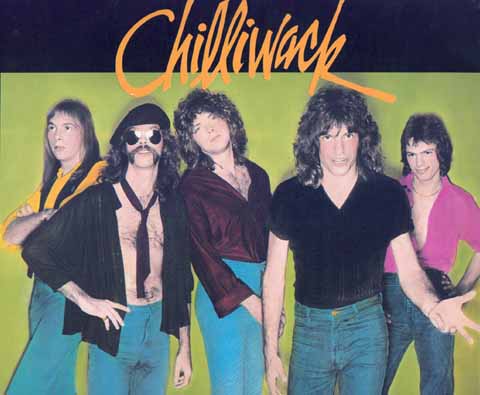
Monday Music...Well Kinda..."My Girl" By Chiliwack

This was supposed to "drop" on Monday, but I wasn't able to finish the post, I was overcome by events as they say so y'all will get "Monday Music on ....WEDNESDAY!!!!! YAY!!!!!

      I am still running songs that I could play over and over again while I am riding the Motorcycle


"My Girl (Gone, Gone, Gone)" is a song that was performed by the Canadian group Chilliwack. It was released on their 1981 album Wanna Be a Star.
In Canada, the song spent four weeks at number 3. In the United States, it reached number 22 on the Billboard Hot 100 and number 19 on the Cash Box Top 100.

The band originated in VancouverBritish Columbia out of the remnants of the C-Span Classics, that changed its name to The Collectors when Henderson joined in 1966. Their psychedelic self-titled debut album yielded the minor hit "Lydia Purple".Their second album was based on the musical score written by the band for a stage play by Canadian playwright George RygaGrass and Wild Strawberries.
Chilliwack effectively began with the departure of vocalist Howie Vickers from the Collectors in 1969; however, the band didn't change their name until 1970, to Chilliwack, a Salish term meaning "going back up" and the name of a city east of Vancouver in the Fraser River valley. With lead guitarist Bill Henderson now providing most of the vocals and doing most of the composing, the band released several records that were moderately successful in Canada. Hit singles in Canada included "Lonesome Mary", which entered Cashbox January 22, 1972  "Crazy Talk" and "Fly at Night". The album track "Rain-o", a blues-based composition that appeared in different versions on the Chilliwack debut album and the later Dreams, Dreams, Dreams, was a well-known concert favourite.
Their album Riding High on Goldfish Records (Terry Jacks' Label) contained one of their biggest hits, "Crazy Talk", which was produced by Terry Jacks.
However, Chilliwack had a difficult time sustaining any success because of their constant label changes. The two Collectors albums were on Warner Brothers, and Chilliwack's first five albums were on four different labels in Canada: Parrot, A&M, Goldfish, and Casino Records. When the band finally found relative stability and success with Vancouver's Mushroom Records, with distribution throughout North America, the label went bankrupt so abruptly in 1979 that Chilliwack's third album for the label, Breakdown in Paradise, was barely released.
In 1978, Brian MacLeod (guitar, drums, keyboards) joined the band for the Lights from the Valley album, and Ab Bryant (bass) joined the band for Breakdown in Paradise, with the other members except for Henderson departing. Chilliwack then signed with Solid Gold Records in Canada and Millennium Records in the U.S. as a trio and enjoyed its greatest success with this new lineup, releasing the albums Wanna Be a Star and Opus X. The singles "My Girl (Gone, Gone, Gone)" (1981), "I Believe" (1982), and "Whatcha Gonna Do (When I'm Gone)" (1982) were popular both in Canada and in the U.S. Rolling Stone Magazine wrote:

"At their best, Chilliwack was the finest Canadian rock band, outrocking BTO and outwriting Burton Cummings. But a lack of consistency kept it from international success."

Henderson and MacLeod received a Best Producer Juno Award in 1982 for Opus X. However, echoing the Mushroom problems, Millennium Records then collapsed. MacLeod and Bryant left the band soon after, and Chilliwack's last new studio recording was released in 1984 with Henderson as the only continuing member. Henderson continued to tour as Chilliwack with other players until December 1988. In 1989 Henderson went on to form the folk-rock supergroup UHF. Henderson also continued touring with Chilliwack, releasing a new live album in 2003.

Tuesday, August 15, 2023

"The American Concorde That Never Was"

 Sorry about not getting my "Monday Music" up, I was overcome by events.  I will try to post it day after tomorrow...

I had "Blogged"about the SST before, and i saw this article and shamelessly clipped it.

In November 1962, the British and French governments announced a deal that caused great distress in the boardrooms of American planemakers.

The two countries announced plans to jointly build a new airliner, one that would be able to fly at more than twice the speed of sound. The aircraft – to be called ‘Concorde’ – would be the most advanced civilian aircraft in the world, showing that European aircraft manufacturers could create the most bleeding-edge designs.

US president John F Kennedy rose to this sudden challenge; the Anglo-French Concorde would have competition. America would create its own rivals to the European design, building a giant, passenger-carrying jet capable of flying faster than a rifle bullet.

The state-sponsored project selected two designs for further selection, one from airliner giant Boeing and another from Lockheed. But the programme became mired in political turmoil, environmental protests and spiralling costs. Neither of ‘America’s Concordes’ ever flew.

The announcement of the Anglo-French Concorde concerned the US (Credit: Getty Images)

Today, however, supersonic flight is back on the agenda in the US, after more than 45 years in limbo. Lockheed recently announced a collaboration with Nasa to design a quieter supersonic jet that may, one day, carry passengers. So, what can be learned from the story of America’s failed Concorde rival?

In the 1960s, Boeing and Lockheed were two of the most experienced aircraft manufacturers in the world. Boeing had revolutionised air travel with ever-more-reliable jet airliners. Lockheed had designed the first aircraft capable of flying at more than twice the speed of sound, the F-104 Starfighter, and was working on even faster military designs.

To be beaten in the supersonic airliner arena by the British and the French was one thing – to be shown a clean pair of heels by the Russians was another

Even before Concorde was announced, American aircraft companies were seriously looking at the feasibility of a supersonic passenger plane, or a Supersonic Transport (SST). One company, Douglas Aircraft, produced a concept in 1961 for an airliner that could fly at three times the speed of sound (Mach 3). Douglas not only believed that such an aircraft could be flying by 1970, but that there would be a market for hundreds of aircraft.

Concorde, it turned out, was not the only reason to focus American attention. On the other side of the Iron Curtain, the Russian design bureau Tupolev was also creating a supersonic transport and airliner, the Tu-144. To be beaten in the supersonic airliner arena by the British and the French was one thing – to be shown a clean pair of heels by the Russians was another.

The quest for a supersonic airliner became almost as important to the US as the race to the Moon. “You look back to that time and there really was a lot of technological advancements in aeronautics,” says Peter Coen, Nasa’s supersonic project manager at Langley Research Center in Virginia. “Whether it was a consideration of the market and what type of aircraft might be needed, or whether it was a case of one-upping Russia and Europe.”

The Lockheed L-2000 was one of two designs that underwent more detailed testing (Credit: San Diego Air & Space Museum)

President Kennedy’s carrot to Lockheed and Boeing was that the government would pick up 75% of the cost of the programme if either could produce a design that could rival Concorde. Both companies had done private research – “paper studies” as they’re known – on supersonic transport since the late 1950s. Most of these studies mirrored the Russian and European research, creating delta-winged aircraft.

As aircraft started being fitted with jet engines, and travelling at far faster speeds, the standard design that had served propeller-driven aircraft for decades was no longer desirable; straight, plank-like wings created too much drag. With a too-powerful jet engine, these wings would snap off. The triangular shape of delta wings provided a stability that could withstand the stresses of enormous speed – aircraft like the French Mirage III fighter and the Russian MiG-21 had already proven the delta shape could easily go to Mach 2 and beyond.

Lockheed chose the delta layout for their design, intended to fly at 2,000mph (3,200km/h) while carrying 270 passengers. Boeing’s design was supposed to be able to fly at Mach 2.7 (1,800mph), carry more than 270 passengers, and be able to fly more than 4,200 miles (6,700 kilometres).

When we were building Concorde, we were pushing technology as far as it could possibly go at the time. They were pushing for something that was just too difficult – Kit Mitchell

Boeing chose what’s known as ‘variable geometry’ – or swing wings, as they became known – in their initial design. The wings would be straight at low speeds, improving the aircraft’s handling at take-off and landing, and then swing back closer to the aircraft’s body as it picked up speed. And the US government must have been impressed – after a great deal of further testing, Boeing’s concept was chosen as the winner on 1 January 1967. But the 2707’s progress was anything but smooth.

Kit Mitchell was the principal scientific officer at the then Royal Aeronautical Establishment (RAE) in the 1960s, and worked on Concorde. He says the Boeing 2707’s main problem was that it was trying to do too much, and that so much of the technology needed to do it was still in its infancy.

The fact that the 2707 was supposed to fly hundreds of miles an hour faster than Concorde “had huge implications”, says Mitchell.

“When we were building Concorde, we were pushing technology as far as it could possibly go at the time. They were pushing for something that was just too difficult.”

The 2707 project was Boeing’s major priority during the late 1960s (Credit: Boeing)

Mitchell says that the 2707’s extra speed would have caused enormous challenges for every single part of the aircraft. At such speed, the aircraft experiences enormous heating – parts of Concorde’s metal skin heated to well over the boiling point of water; the very tip of the nose could be as hot as 127C when cruising at Mach 2. “Everything – from the sealants, to the electrical wiring, to the windows, you name it, had to especially designed for a ‘hot’ airplane.

“A lot of this was unknown territory.”

But few could criticise Boeing for not throwing enough resources at the design. Mike Lombardi, Boeing’s resident historian, says: “To put into context just how ambitious this was, when Boeing was working on supersonic transport, the company was also designing what would be the 747 Jumbo Jet, and the 737 airliner had just entered service. There was the space programme to get a man on the Moon, which Boeing was heavily involved in, and there were some military projects as well.

“We were going to the Moon and building the 747, and 2707 was still the number one project at Boeing.

“Joe Sutter, who was in charge of building the 747, said how difficult it was to get engineers to design that airplane because they were all committed to supersonic transport.”

The design team literally had to go back to the drawing board – Mike Lombardi, Boeing

National pride was at stake. But the political will wasn’t enough to solve the enormous design challenges to get Boeing’s swing-wing giant into the air. Some military jets had already been designed to use the technique, but these were small, carrying two crewmembers at most. Scaling that up to something that could carry almost 300 people was a huge challenge. “The problem Boeing had was that it meant a tremendous amount of extra weight,” says Lombardi. “The bearings had to be really heavy, and the weight became almost prohibitive. The design team literally had to go back to the drawing board.”

Even when the designers moved to a delta wing shape, says Mitchell, they still couldn’t solve some of the weight problems which meant the aircraft was very fuel hungry and couldn’t get from the US to Europe on internal fuel. “That’s the same problem the Concorde prototype and pre-production models had too, however. We had to keep refining the design, and the production model was the first one that could actually cross the Atlantic.”

Wings were not the only problem. The sonic boom the 2707 would create as it broke the sound barrier would be another issue. “Once it became apparent just how disturbing that was,” Coen says, “it put paid to the idea of supersonic flight over the US.”

A full-size mock-up of the delta-winged Boeing 2707 was built in Seattle (Credit: Boeing)

This would be the same issue that would affect Concorde. Dozens of Concordes had been ordered by airlines as the Anglo-French project gathered speed – including US airlines such as Pan Am and TWA – but these orders melted away as it emerged that the environmental constraints would limit the aircraft’s use to flying over the ocean, far away from populated areas. (It’s why British and French Concordes only flew to destinations on the east coast of the US.)

“The model that most airlines use means that they can’t have an airplane that they can only use on a few routes,” says Coen – if you’re going to use expensive supersonic aircraft, then you have to use them on as many routes as possible so they pay for themselves.

Fuel was relatively cheap when the 2707 was being designed in the 1960s, but Boeing’s design burned so much of it that the sheer costs of it might have offset the traditional argument in favour of supersonic transports – that they take less time to fly between airports so each aircraft can carry out more flights per year.

What ended up killing the project, and eventually Concorde itself, was the amount of fuel you had to burn – Mike Lombardi

“What ended up killing [Boeing’s design], and eventually Concorde itself, was the amount of fuel you had to burn. It became prohibitive,” says Lombardi. “There was the recession of 1971, and the cost of oil started to rise. But even if it hadn’t ended then, the oil crisis of 1973 would have killed it. It would have ended up being a disastrous project if it had still gone ahead.”

Boeing became a household name because of the aircraft that did make it into the air – the ones which took ordinary people on holidays near and far. But even if the 2707 failed to make it into the air, Lombardi says there were silver linings.

Nasa and Lockheed will collaborate on a new supersonic demonstrator (Credit: Nasa)

“The 2707 had a lot of effect on the development of the 747, he says. “The thinking was that all the world’s airlines would want supersonic transport, and no-one would buy these subsonic airliners. So Boeing had to plan that some time in the 1970s they would have to turn all these 747s into cargo freighters. It turns out that we only needed to start doing that a few years ago.”

And despite the project’s failure, some of the things Boeing learned made its way into other experimental vehicles the aerospace giant built in the following decades, including some of the unmanned vehicles built in recent years, such as the High Speed Civil Transport project during the 1990s. And the super-critical wing, a design tweak now routinely used on modern airliners to limit shockwaves and reduce drag, came out of the 2707 project.

Lockheed’s ill-fated L-2000 design will live on, in a way, thanks to the collaboration with Nasa and Lockheed to fly an experimental demonstrator to research the supersonic aircraft of the future. Perhaps, in years to come, a US-built supersonic airliner will finally take to the skies – with no pesky Concorde to get in the way this time…

Friday, August 11, 2023

Voyage to resume communication with Earth

 My Inner Geek is "Squeeeing" on this one, The fact that something that was made in the 70's is still working using far less computing power than the smart watch that the average person is using says something about the durability of the technology and the smarts of the people running NASA back then.

    Then I keep thinking of the leadoff for the premise of "Star Trek "The Motion Picture""

NASA Voyager

An artist concept depicting one of NASA's twin Voyager spacecraft.

Credit: NASA/JPL-Caltech

NASA’s Voyager 2, approaching the 46th anniversary of its launch to the outer Solar System, is once again transmitting and receiving data following a July 21 loss of communications due to an inadvertent command that prompted the probe to point its antenna away from Earth.

The resumption of communications through NASA’s Deep Space Network (DSN) follows a “shout” command transmitted by the agency’s Jet Propulsion Laboratory 37 hr. before the science and data flow back to Earth was officially confirmed on Aug. 4 at 12:29 a.m. EDT, according to updates from the mission team.

Voyager 2 launched on Aug. 20, 1977, and its companion Voyager 1 launched Sept. 5, 1977, on missions to explore Jupiter and Saturn and their moons. With their primary missions complete, they now  explore beyond the Solar System on different trajectories, with Voyager 2 now more than 12.3 billion mi. (19.9 billion km) from Earth and Voyager 1 almost 15 billion mi.

The Voyager 2 “shout” signal that triggered the restoration of communications followed an Aug. 1 report from the mission team that it was able to detect a “carrier” signal from the probe after the July 21 communications loss. The signal, however, was too faint for the extraction of data.

Up until the success of the “shout,” it appeared that communications between Voyager 2 might not be restored until an Oct. 15 reset. Voyager 2 is programmed to execute periodic resets to correct its orientation and align its antenna with the Earth and the DSN ground stations at Goldstone in California, Madrid, Spain, and Canberra, Australia.

Thursday, August 10, 2023

5 Largest Commercial Airlines fleet size

 I shamelessly clipped this from work

Credit: ArtisticOperations / Pixabay

The four US majors—American Airlines, Delta Air Lines, United Airlines and Southwest Airlines—continue to dominate the world’s airline rankings by fleet size. Only China Eastern comes closest to these four but is still a distant fifth with 581 aircraft in service versus American’s 1,157.

American’s huge size comprises well over 250 regional aircraft, but also very large numbers of narrowbodies and over 100 widebodies, making it also the most diversified fleet.

Looking ahead via the number of aircraft on order gives a glimpse into how this size-by-fleet dynamic could change over the next 10 to 20 years. US orders will mostly be about replacement, while airlines in emerging and fast-growing markets like India have recently placed very large orders that are pegged against growth


Page 1

American Airlines

Chart

Aircraft

In service

Not in service

On order

A319-100

125

8


A320-200

44

4


A321-200

209

8


A321-200neo

69

1

54

A330-200


15


737 MAX 8

42

0

88

737-800

284

20


757-200


6


777-200ER

44

3


777-300ER

18

2


787-8

31

3

3

787-9

20

2

30

CRJ700

38

23


CRJ900

67

6


E170

10

4


E175

92

3


ERJ145 

64

43


MD-83


24


TOTAL

1157

175

175

Delta Air Lines

Chart

Aircraft

In service

Not in service

On order

A220-100

43

2


A220-300

15

59

A319-100

54

3


A320-200

58

3


A321-200

125

2


A321-200neo

26

129

A330-200

9

2


A330-300

27

4


A330-900

20

1

17

A350-900

23

5

16

717-200

62

20


737 MAX 10


100

737-800

73

4


737-900ER

141

22


757-200

90

21


757-300

15

1


767-300ER

42

3


767-400ER

20

1


CRJ200

6

41


CRJ700

8

10


CRJ900

112

15


Total

969

160

321

United Airlines

Chart

Aircraft

In service

Not in service

On order

A319-100

71

12


A320-200

90

9


A321-200neo


120

A350-900


45

737 MAX 8

46

87

737 MAX 9

55

1

28

737 MAX 10


294

737-700

37

3


737-800

131

10


737-900

12


737-900ER

125

11


757-200

31

9


757-300

17

4


767-300ER

31

6


767-400ER

10

6


777-200

16

3


777-200ER

49

6


777-300ER

18

4


787-8

12


787-9

35

3

100

787-10

20

1

7

CRJ700


7


Total

806

95

681

Fleet data current as of April 21, 2023

Source: Aviation Week Intelligence Network and Fleet Data Services

Southwest Airlines

Chart

Aircraft

In service

Not in service

On order

737 MAX 7


230

737 MAX 8

167

3

173

737-700

390

26

10

737-800

200

7

1

Total

757

36

414

China Eastern Airlines

Chart

Aircraft

In service

Not in service

On order

A319-100

33

2


A320-200

162

17


A320-200neo

91

4

33

A321-200

72

5


A321-200neo


68

A330-200

27

3


A330-300

21

2


A350-900

15

1

4

737 MAX 8

1

2

7

737-700

33

2


737-800

104

4


777-300ER

19

1


787-9

3

1

ARJ21


18

C919


1

4

Total

581

44

135

Fleet data current as of April 21, 2023

Source: Aviation Week Intelligence Network Fleet Data Services