Webster

The Constitution was made to guard the people against the dangers of good intentions." --American Statesman Daniel Webster (1782-1852)


Showing posts sorted by relevance for query honor. Sort by date Show all posts

Friday, March 21, 2025

"Honor In The Quiet Man"


I happen to see this article in the "Art of Manliness".  When I was younger, I definitely didn't get this movie, but as I got older, I find that I like the older movies in general because they don't have the flashy CGI and they actually have to have a storyline and good actors and actresses.  This movie is one of my staples because I am a huge John Wayne fan and I have a picture I got from a street vendor before I joined the Army in 1985.


        Kinda surprised I still have it, It has been in my bonus room since the late 90's.   My wife has told me that I was born in the wrong century because my mannerisms and manners are archaic and I don't mind, to me manners and chivalry are timeless qualities.    

       Well back to this article, I have watched this movie several times and the author to me was correct about the premise of the movie, and it is different movie for John Wayne than his usual.  
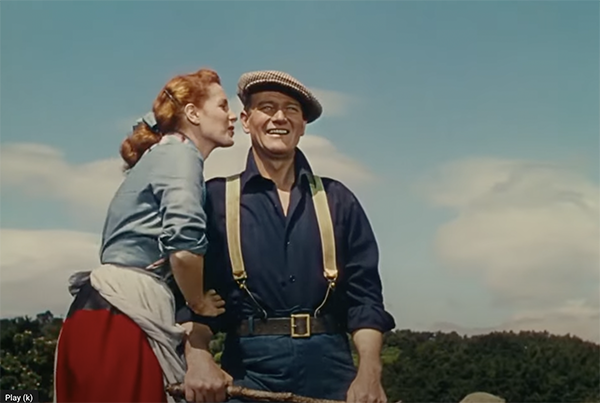

A woman whispers to a smiling man wearing a beret and suspenders, reminiscent of "The Quiet Man," in an outdoor setting under a clear blue sky.

It’s St. Patrick’s Day.

Like a lot of Americans with Irish ancestors, I semi-celebrated the holiday growing up. Our family would eat corned beef and potatoes and decorate the house with shamrocks and pots of gold.

We’d also watch St. Patrick’s Day-themed movies. There was Darby O’Gill and the Little People, of course, starring a crooning Sean Connery.

And then there was John Ford’s 1952 Irish epic romantic comedy The Quiet Man, starring John Wayne and Maureen O’Hara. As a kid, this movie bored me to tears. But my mother loved it so we had to watch it.

When I watched The Quiet Man again as an adult, I enjoyed it more. I started making a viewing a St. Patrick’s Day tradition, and I’ve watched it every year for the past seven or so years.

At first, I couldn’t quite pinpoint why I’d grown to love this movie. Yes, it’s refreshing to see John Wayne play a role that doesn’t involve a cowboy hat and a rifle. Maureen O’Hara is stunning and talented. Barry Fitzgerald is hilarious as Michaleen Oge Flynn. The picturesque scenes of the Irish countryside are charming and pastoral and make me want to live in a cottage with a thatch roof. And, of course, there’s the epic fight scene at the end of the movie.

But I sensed there was something more to the appeal of the film than that.

A few years ago, I finally figured out what that something was:

The Quiet Man represents a near-perfect meditation on the anthropological evolution of honor.

The Story of The Quiet Man

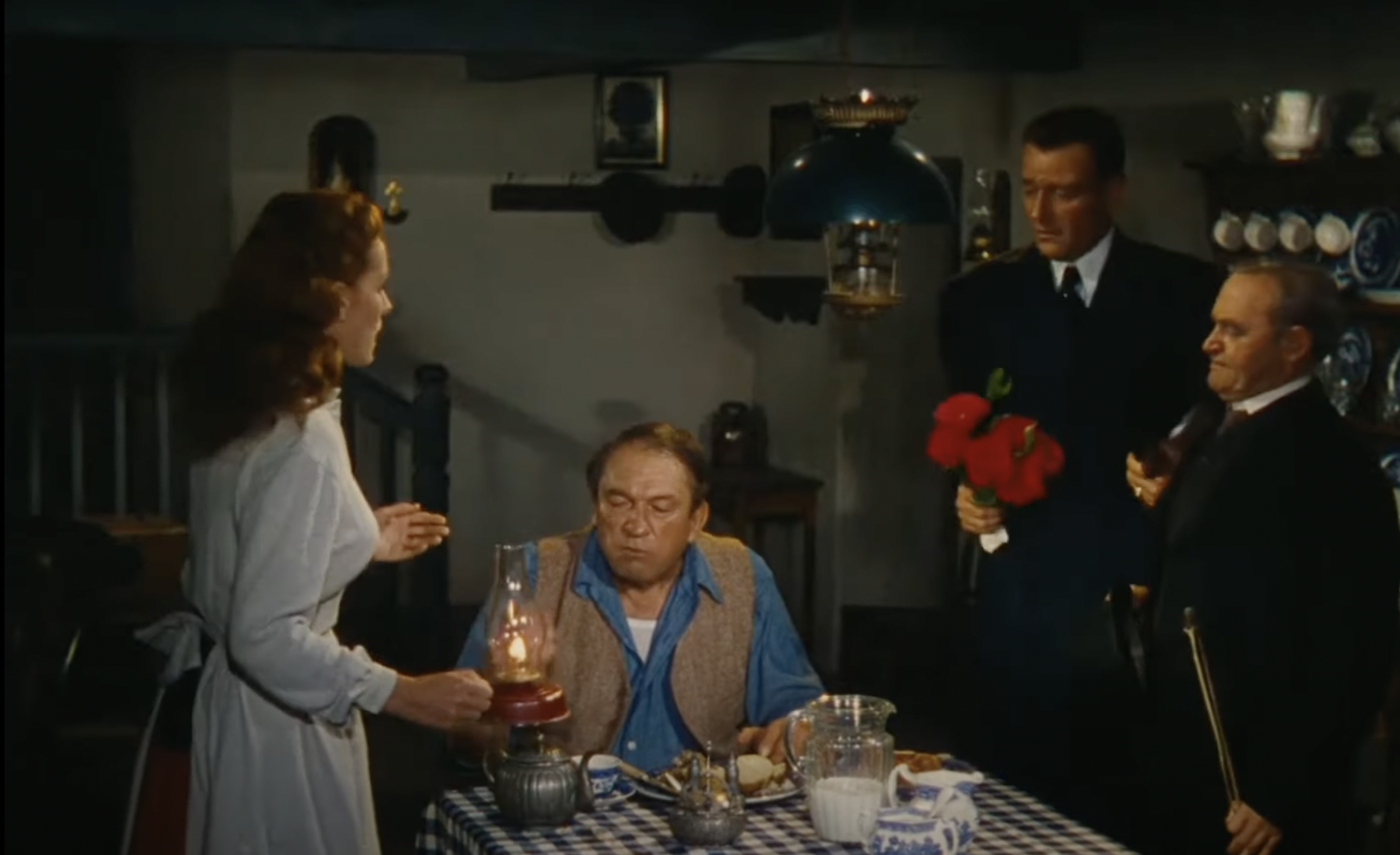
Image5

To understand the theme of honor in The Quiet Man, it helps to know the basics of the story:

Having killed an opponent in the ring, former boxer Sean Thornton (John Wayne) has sworn off fighting for good and hopes to make a fresh start by moving from America to Ireland.

On his first day in the quaint Irish village of Innisfree, Sean spots Mary Kate Danaher (Maureen O’Hara) herding sheep. It’s love at first sight.

Sean purchases his family’s old cottage, outbidding local squire Will Danaher (Victor McLaglen), who also happens to be Mary Kate’s domineering older brother. Will instantly resents him, setting up the film’s central conflict.

Despite Will’s objections, Sean courts and marries Mary Kate. But their wedding night turns disastrous when Will refuses to hand over Mary Kate’s dowry. Feeling the snub unimportant, Sean lets the slight go; he’s got plenty of money as a successfully retired prizefighter. But to Mary Kate, the dowry is important, and deep tensions ensue.

When Sean refuses to fight for what’s rightfully hers, Mary Kate is humiliated. Without her dowry, she doesn’t consider herself truly married, and she refuses to consummate the union. The village whispers about Sean’s manhood, and their marriage deteriorates.

Frustrated, Mary Kate tries to flee by train, forcing Sean’s hand. In the film’s most dramatic moment, he drags her through town to confront Will, demanding that he either give him the dowry or take back his sister. “No fortune, no marriage,” he declares. Will throws him the money, and, with Mary Kate’s help, Sean tosses it into a boiler to burn. Mary Kate proudly walks home.

Enraged, Will sucker punches Sean, sparking an epic brawl that spills across the countryside. The brawl, though heated, is filled with camaraderie and grudging respect and resolves the men’s feud. By the end, Will, Sean, and Mary Kate reconcile, and Sean finally comes to peace with his past.

What Is Honor?

If you’ve been reading the site for a while now, you know that we did an in-depth series on the nature and history of honor over a decade ago. Here’s the TLDR summation of it:

While for most of us living in the modern West, honor is about integrity and being true to a set of personal ideals, anciently, honor meant something very different. It was not only personal, but social. 

Anciently, honor was about your reputation within a group of equal peers.

Anthropologists who have studied this ancient form of honor have found it’s premised on three elements: 1) a code of honor with genuine standards that must be met to have the full status of personhood, 2) an exclusive group of equals who live by that code, and 3) the very real threat of shame for those who fail to measure up to it.

Ancient honor is an all-or-nothing game. You either have the respect of your peers, or you don’t. Bringing dishonor upon yourself by failing to meet the group’s minimum standards means exclusion from the group, as well as shame.

A Clash of Honor Cultures

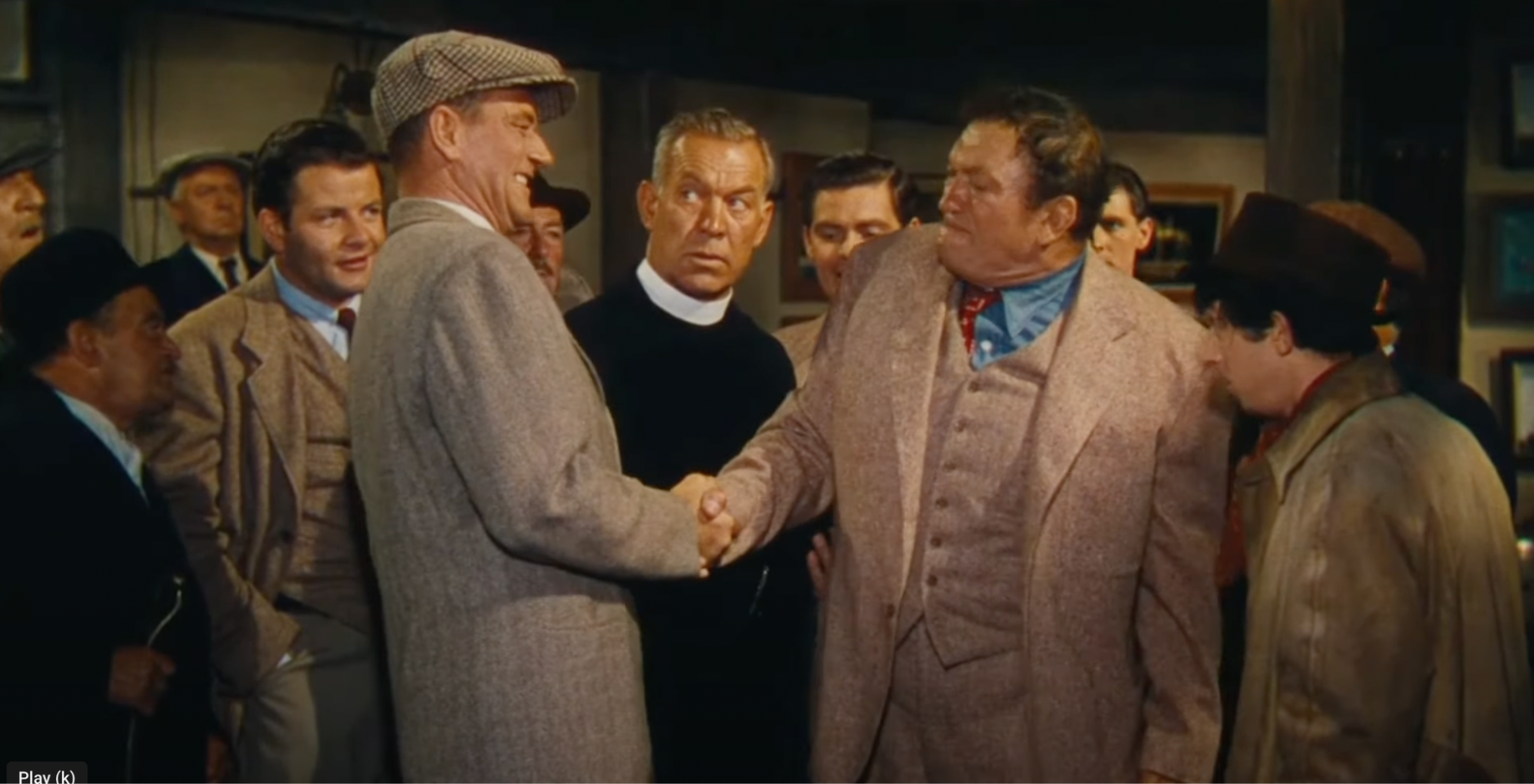
Image1

The Quiet Man is compelling because it sets up a clash between the modern and ancient senses of honor.

Sean Thornton represents the modern sense of honor. For him, honor is about being true to his values. He doesn’t care about what others think so long as he lives by his inner code.

Part of Thornton’s personal code is that he won’t ever fight again. To Sean, maintaining this principle of self-restraint is a matter of personal integrity, regardless of what others might think of him.

Another part of his individualistic American code touches on love and marriage. For Sean, if two people love each other, that’s all that matters. You don’t need the approval of family and community.

But in Innisfree, Sean encounters a society still operating under the ancient code of honor, where reputation and standing within the community matter deeply. Will Danaher and Mary Kate embody this traditional understanding.

Will symbolizes the ancient code of manly honor. He’s boisterous, loud, and domineering because that’s how you gain status in his town. He cares deeply about his reputation and is willing to resort to violence to defend it. For Will and other men who follow the ancient code, might makes right.

There’s a scene that captures this clash between modern and ancient honor perfectly, in which Sean accuses Will of lying.

For us moderns like Sean, his insult isn’t a huge deal. You call things as you see them. If you’re wrong, you can argue about it and maybe figure out the misunderstanding. At worst, the person accused will get angry, walk away, and no longer have anything to do with you.

But for Will, who lives under the ancient code of honor, accusing someone of lying is a really, really big deal — one of the gravest insults you could levy at a man. Publicly challenging a man’s honesty — an act sometimes described as “giving the lie” — was a serious affront, even if the accusation was true.

In honor cultures, an accusation of lying had to be met with a violent defense of one’s reputation. And that’s exactly what Will Danaher undertakes.

When the conflict over the dowry comes to a head, Will demands that Sean fight him over it because that’s what you do when you have a conflict in a traditional culture of honor. Sean refuses, so the entire town questions his manhood. They shame him.

A Woman’s Honor

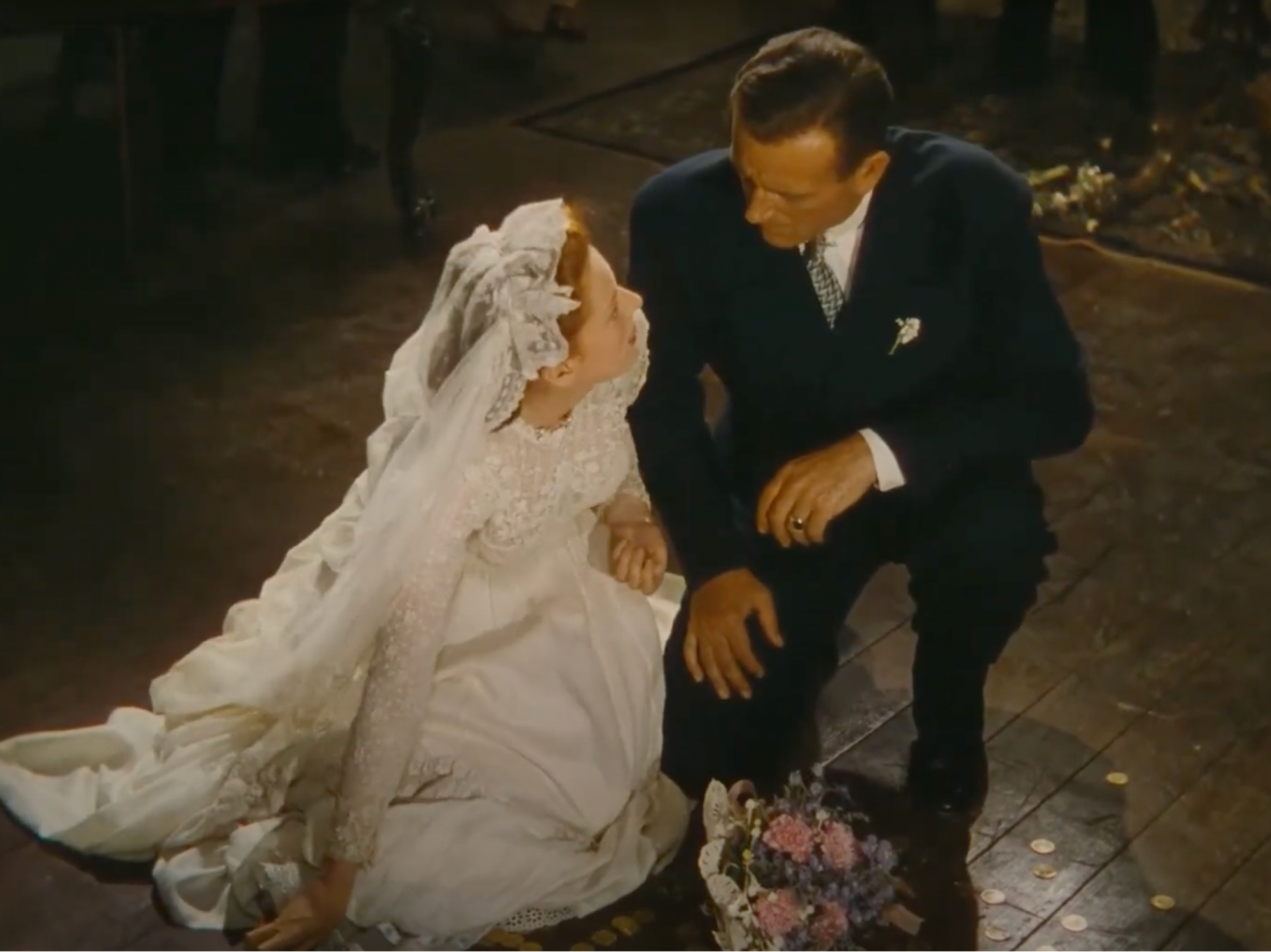
Image6

Will isn’t the only character representing the ancient code of honor. Mary Kate does as well.

Typically, in ancient honor cultures, a woman’s honor is tied up with her chastity. We still see vestiges of that today; while it no longer carries currency in some circles, accusing a woman of being loose still registers for many as a gross insult.

For Mary Kate, her chastity isn’t the issue. Rather, it’s her dowry. In Innisfree, the dowry isn’t just money. It represents a woman’s independence from her childhood home. Unlike Sean, she doesn’t just see it as money but as a symbol of her honor and status as a mature woman. Her refusal to consummate the marriage without it isn’t born out of spite or greed but springs from a deep-seated belief that she cannot truly be Sean’s wife unless she enters the union on equal terms.

Mary Kate’s honor is also social. She refuses to be seen as a woman who has been dishonored in the eyes of the community. When Sean fails to confront Will, she sees it as a betrayal. Her insistence that Sean fight for her dowry isn’t about money but about proving his commitment to her. She wasn’t asking Sean to fight for her money but for her honor. Because Sean refused, she had to deal with the shame of being married to a coward and of not having her status and standing as a full adult woman.

Sean, with his modern sense of honor, is completely flabbergasted. His values clash with his wife’s deeply rooted, traditional code of honor.

Synthesizing Honor Cultures
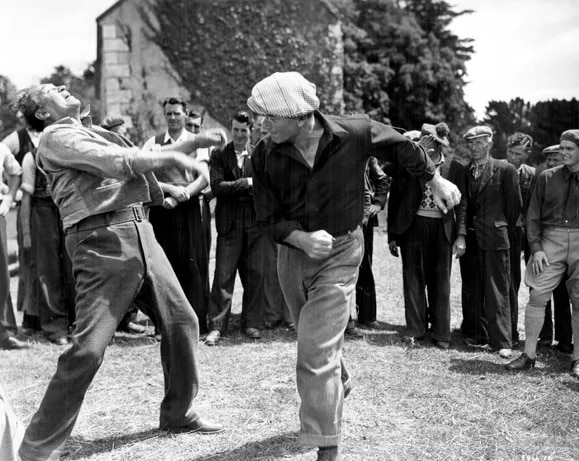
Image4

The conflict resolves when Sean finally realizes that his modern sense of personal honor must find a way to coexist with the ancient communal honor of Innisfree. He realizes that while his personal values matter, they can’t exist in isolation from the community he now calls home. When in Innisfree, you have to do as the Innisfree-ans do.

Sean ultimately fights Will Danaher not because he seeks violence for violence’s sake but because he wants to be a part of the community and a part of Mary Kate’s family. The fight isn’t about money or revenge but rather serves as a ritual that enacts Innisfree’s code of honor. The fight actually serves as a way to create a relationship.

While it may seem foreign to us, Mary Kate claims her honor in the town when Sean drags her across the countryside to her brother and demands the dowry. To her and to the village, Sean is finally acting like a husband and getting Mary Kate out from under the thumb of her domineering brother.

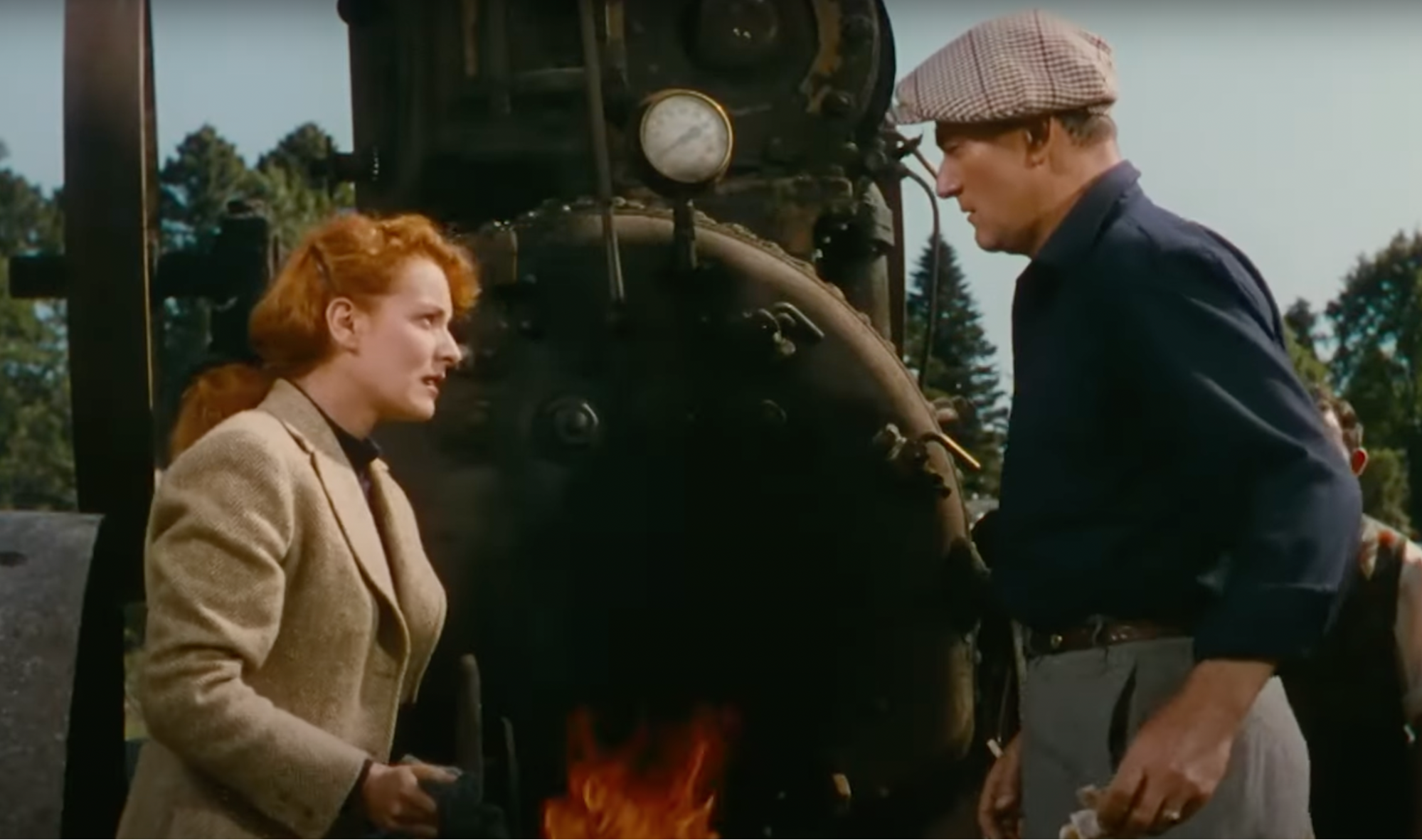
Image3

Sean synthesizes his idea that love isn’t about money with his wife’s idea that it represents honor by accepting the dowry . . . but then burning it. Even without the money in hand, Mary Kate is able to walk with her head held high because she now has her full standing and status as an adult woman.

Conclusion

What makes The Quiet Man endure as a classic isn’t just its sweeping Irish landscapes. Nor the interpersonal conflicts. It’s the competing notions of honor on display.

The film is set in the 1920s, when traditional, social notions of honor were giving way to more modern, individualistic ones. When the movie was released in 1952, there still existed pockets in the West in which the ancient code of honor persisted, and viewers would have recognized vestiges of it in their own lives.

Even today, while the traditional code of honor has largely disappeared in the West, remnants of it remain, and we still experience tensions between the old and new notions of honor. As much as we’re encouraged to pay exclusive adherence to our internal scorecards, and not care what anyone else thinks, we yearn for the status and affirmation of our peers. Such tensions represent the deepest kind of drama, and account for the extra interest burbling beneath the movie’s general plot and the reason that viewers, past and present, have been drawn to the film. 

So this St. Patrick’s Day, after you’ve had your fill of corned beef and potatoes, queue up The Quiet Man, and reflect on how you’re balancing modern and traditional notions of honor in your own life.

All the while, still chuckling at Michaleen Oge Flynn’s witty one-liners

Wednesday, March 25, 2026

"The Honor Deficit"

  I remember reading way back at the turn of the last century that the people that graduated from our elite schools were imbued with a sense of duty, (besides making money) of a sense of altruism, a sense to do what's is good for the country also, to temper their judgement and decisions as to not hurt the country in their pursuit of fame and fortune, and most did just that, and those that didn't were shunned by high society.  But now how things have changed, our "elites" work at cross purposes to the needs of the country, like they want us to fail, not realizing that if we fail, they will also, somehow believing that they money and power will protect them, but it won't...Where could they go...Europe?   That place is more of a dumsterfire than we are, the middle East?...nope China has a lot of influence there as does the Mullah's.  Short sighted they are, their fortunes are tied in with this country, and they have forgotten it.   The word is "Honor", most of them mock that word now, it used to mean something, but now it is an old word, archaic word of a bygone era, and few of them follow the edicts of it, like the word of "integrity", another word that has lost its meaning.  I don't know how its going to end, but it seems that the seamier the politician, the more popular he/she is.

    I shamelessly clipped this from Michael Smith...

Through nearly 50 years of management and leadership experience, I have come to believe the most important aspects of leadership—and relationships more broadly—come down to four basic things: honor, credibility, competence, and trust. These are the four cornerstones of true leadership.

Honor is the supreme core value among equals. It is the foundation upon which everything else rests. My definition of honor consists of three basic elements: honesty, loyalty, and service.

First, honesty. No value can exist without honesty as its foundation. Truth is essential to every relationship—political, professional, or personal. Once honesty is compromised, everything built upon it begins to decay. A leader who is not committed to the truth cannot maintain the confidence of those he leads for long.

Second, loyalty. Honesty begets loyalty. Loyalty is unwavering commitment to purpose, obligations, and ideals. It does not mean blind allegiance to personalities or factions. True loyalty is loyalty to principles and to the mission at hand. It means standing by commitments even when circumstances become difficult.

Third, service. There are times when things must be done simply because they need to be done. Service means recognizing that leadership is not primarily about status or recognition but about responsibility. Necessary things are done without regard for recompense, reward, or applause. The leader serves the mission and the people—not the other way around.

Credibility and competence are equally essential. Credibility combines honor with action. A leader must do what he says he will do and live up to his commitments, even when keeping them becomes inconvenient or costly. Words are easy. Promises are easy. Credibility is built only when those promises are honored in difficult circumstances.

Credibility cannot exist without competence. A leader who lacks competence cannot sustain credibility no matter how sincere his intentions may be. True leaders make personal commitments to learn as much as possible about the problems they face, the situations they encounter, and the people they lead. Continuous learning, self-discipline, and the desire to improve are the basic elements of competence. Leadership requires the humility to understand that mastery is never complete.

Trust is the final product of these qualities working together. Honor establishes the moral foundation. Competence ensures that decisions are grounded in knowledge and ability. Credibility proves that words and actions align. When these elements come together consistently over time, trust naturally follows.

It is my belief that honor—or the lack of it—is one of the key factors behind many of the social, political, and economic struggles facing America today, and perhaps much of the Western world.

For most of human history, leadership was judged first through the lens of honor. A person’s word was expected to mean something. Reputation mattered. Among peers, the loss of honor could be more devastating than the loss of office or influence. A leader who could not be trusted with the truth was not simply criticized; he was discredited.

Modern public life operates very differently.

One aspect of the United Kingdom’s parliamentary system that I admire is the tradition of open debate in the House of Commons. Members of Parliament must stand before their political opponents and defend their positions directly. Prime Minister’s Questions forces leaders to answer criticism in real time before the entire chamber. The exchanges can be theatrical and combative, but they also create a moment of accountability where argument, wit, and knowledge are tested publicly.

Contrast that with what now passes for debate in much of American political life.

Today, most “debate” does not occur between political opponents at all. It occurs through media intermediaries. Politicians repeat rehearsed talking points to cable news hosts, sympathetic podcasts, or carefully curated social-media audiences. Instead of persuasion, the goal is performance, to produce a thirty-second clip that energizes supporters and generates attention.

The audience is no longer fellow legislators or serious critics. The audience is the tribe.

When that shift occurs, the incentives change dramatically. A politician who embarrasses himself before thoughtful critics may still receive applause from his own supporters. Loyalty to faction becomes more important than loyalty to truth, logic and evidence become secondary to messaging and narrative.

The result is a public conversation increasingly detached from reason. Arguments are replaced with slogans. Complex issues are reduced to emotional cues designed to trigger outrage or applause. Truth itself becomes negotiable depending on which side of the political divide happens to be speaking.

In such an environment, honor inevitably declines.

Honor requires commitment to truth even when that truth is inconvenient. It requires the willingness to admit errors and the discipline to engage opponents honestly rather than caricature them for political advantage. Above all, it requires the understanding that leadership carries obligations that extend beyond the immediate demands of political victory. Those expectations once formed an informal code of conduct among leaders. They did not eliminate disagreement—far from it—but they imposed certain boundaries on behavior. Debate was expected to be fierce, but it was also expected to be grounded in argument, evidence, and reason.

Without those boundaries, public life begins to resemble something closer to an MMA fight than governance.

The deeper danger is not merely political dysfunction. It is the erosion of trust across society. When leaders abandon honor, credibility collapses. When credibility collapses, trust disappears, then institutions that once held a society together begin to fracture. A healthy republic ultimately depends on more than laws and procedures. It depends on the character of the people who operate within those institutions. Honor, credibility, competence, and trust are not abstract ideals, they are practical requirements for leadership in any human endeavor—from running a company to governing a nation.

When those values weaken, the entire system becomes unbalanced and begins to spin apart.

Restoring them will not come from better messaging strategies or more sophisticated political marketing. It will come only when citizens demand more—and when leaders once again understand that their reputation, and their honor, must matter more than the next election.


Sunday, May 27, 2018

Flag Etiquette and how it relates to U.S Veterans.

With Memorial Day Tomorrow, I figured I would post the differences in the Holidays for those that don't know. 


I ran across this article and shamelessly clipped it.  It is full of good information about flag etiquette and how it relates to Veterans.

by John Hages as it appeared in the Vietnam Veterans of America Chapter 154 - Boo Coo News, January, 2018.
U.S. military salutes are steeped in tradition, some dating back hundreds of years. However, there are misconceptions about military salutes — understandable, considering the number of salutes that exist for various occasions. Some have even changed over the years, sometimes through acts of Congress. All of them, however, are intended to demonstrate great honor to those for whom they are conducted. This includes fallen members of the military, presidents, heads of state and even the nation.
VVA Chapter 154 Color Guard rendering 3 volleys on Veterans Day, 2017
Three-Volley Salute Calling the shots fired at a military funeral a 21-gun salute is incorrect. Even if there are seven soldiers firing three rounds each, this is not considered a 21-gun salute. The shots fired during a military funeral are called the firing of three volleys in honor of the fallen.
The firing of three volleys dates back to the custom of ceasing hostilities to remove the dead from the battlefield. Once finished, both sides would fire three volleys to signal that they were ready to resume the battle.
During the firing of three volleys, the rifles are fired three times simultaneously by the honor guard. Any service member who died on active duty, as well as honorably discharged veterans and military retirees, can receive a military funeral, which includes the three volleys, the sounding of “"Taps,” along with a United States flag presented to the next of kin. Three spent cases are usually inserted into the folded flag, one representing each volley fired.
The 21-Gun Salute hails from naval tradition where a warship would fire its cannons, rendering them unloaded, to signify its lack of hostile intentions. Ships would typically fire seven shots. Whether this is because that was the traditional number of guns on a British warship or because it is of biblical significance is unknown. Forts, having more ammunition, would fire three shots for every shot by a ship. Of course, this wasn't set in stone, and the number of shots fired differed greatly depending on the country.
Today, the 21-Gun Salute is fired by artillery batteries in honor of the U.S. President, former presidents, the President-elect and heads of foreign states upon their arrival and departure of a military installation. "Hail to the Chief" or the national anthem of the visiting dignitary is also played. The salute is also fired at noon on the day of a funeral of the President, former presidents and the President-elect, as well as Memorial Day in honor of America's fallen, and on Washington's Birthday.
Naval Base Ventura County, Point Mugu, Calif. (June 9, 2004) - U.S. Marine Corps Ceremonial Guard Company render a 21-Gun Salute in honor of former President Ronald Reagan, the 40th President of the United States, before his body is flown to Washington, D.C. where it will lie in state in the Capitol Rotunda. A state funeral will be conducted late Friday morning at the Washington National Cathedral, where President Bush will give the eulogy. On Friday, June 11, President Reagan's body will return to Calif., for a private burial service. U.S. Navy photo by Photographer's Mate 1st Class Jon D. Gesch (RELEASED)
In addition, a 19-Gun Salute is fired in honor of other dignitaries such as the vice president, the speaker of the House, president pro tempore of the Senate, chief justice of the United States, state governors, chiefs of staff and 5-Star generals. There is a ranking system for salutes to lower-ranking generals and other dignitaries consisting of dropping two guns for each flag rank junior to a 5-Star general.
Salute to the Nation The practice of firing one shot for each state was officially established in 1810, which at the time was only 17 guns. This tradition continued until 1841 when it was established as 21 guns. Current tradition has the Salute to the Nation as 50 shots by capable military bases, one for each state in the union, fired at noon on Independence Day, with naval vessels firing a 21-gun salute.
Copy of VA annual Veterans Day poster for 2017
Veterans Day While there isn't a gun salute dedicated to veterans, November 11 is a day when the U.S. and many World War I allied countries commemorate the sacrifices made by the men and women who served in the armed forces. Veterans Day is often confused with Memorial Day, or thought to be the same in their intent. Memorial Day is when we honor those who have fallen in service of our country. Veterans Day celebrates all living military service members.
Veterans Day was first created as Armistice Day by President Woodrow Wilson in 1919 to mark the end of World War I. In 1938, Congress made November 11 a national holiday. Then, on June 1, 1954, President Eisenhower signed legislation that changed the name to Veterans Day to celebrate all military veterans. The exact day of celebration changed a couple more times over the years before being permanently established as November 11 due to popular sentiment.


Have you ever noticed that the honor guard pays meticulous attention to correctly folding the United States of America Flag 13 times? You probably thought it was to symbolize the original 13 colonies, but we learn something new every day! The 1st fold of the flag is a symbol of life. The 2nd fold is a symbol of the belief in eternal life.
The 3rd fold is made in honor and remembrance of the veterans departing the ranks who gave a portion of their lives for the defense of the country to attain peace throughout the world.
The 4th fold represents the weaker nature, for as American citizens trusting in God, it is to Him we turn in times of peace as well as in time of war for His divine guidance.
The 5th fold is a tribute to the country, for in the words of Stephen Decatur, 'Our Country, in dealing with other countries, may she always be right; but it is still our country, right or wrong.'
The 6th fold is for where people's hearts lie. It is with their heart that they pledge allegiance to the flag of the United States of America , and the Republic for which it stands, one Nation under God, indivisible, with Liberty and Justice for all.
The 7th fold is a tribute to its Armed Forces, for it is through the Armed Forces that they protect their country and their flag against all her enemies, whether they be found within or without the boundaries of their republic..
The 8th fold is a tribute to the one who entered into the valley of the shadow of death, that we might see the light of day.
The 9th fold is a tribute to womanhood, and Mothers. For it has been through their faith, their love, loyalty and devotion that the character of the men and women who have made this country great has been molded.
The 10th fold is a tribute to the father, for he, too, has given his sons and daughters for the defense of their country since they were first born.
The 11th fold represents the lower portion of the seal of King David and King Solomon and glorifies in the Hebrews eyes, the God of Abraham, Isaac and Jacob.
The 12th fold represents an emblem of eternity and glorifies, in the Christians eyes, God the Father, the Son and Holy Spirit.
The 13th fold, or when the flag is completely folded, the stars are uppermost reminding them of their Nations motto, 'In God We Trust.'
After the flag is completely folded and tucked in, it takes on the appearance of a cocked hat, ever reminding us of the soldiers who served under General George Washington, and the Sailors and Marines who served under Captain John Paul Jones, who were followed by their comrades and shipmates in the Armed Forces of the United States, preserving for them the rights, privileges and freedoms they enjoy today.
There are some traditions and ways of doing things that have deep meaning. In the future, you'll see flags folded and now you will know why.

Wednesday, October 17, 2012

A Warrior enters Vahalla

I lifted this from the Columbus newspaper,  

   I am sure that the Vikings lifted their mead glasses and toasted the arrival of a warrior that is widely respected and feared. 

A peaceful goodbye for Command Sgt. Maj. Basil Plumley

Published: October 16, 2012 Updated 12 hours ago
ROBIN TRIMARCHI rtrimarchi@ledger-enquirer.com Maj. Gen. H.R. McMaster talks with Debbie Kimble, Command Sgt. Maj. Basil Plumley's daughter, as he hands her the folded flag that draped her father's casket. McMaster is the Commanding General for the Maneuver Center of Excellence. Kimble was escorted to the funeral services by actor Sam Elliott, left, who portrayed Plumley in the film "We Were Soldiers." 10.16.12
ROBIN TRIMARCHI
No one understood war better than Basil Plumley, but he was about to find peace. His Size 12 combat boots were stained with mud and blood from the three great wars of the 20th century and now he was being laid to rest among thousands of other warriors.
Plumley died last week. He didn't die on a battlefield. He was 92, and he died surrounded by a family that knew him as a hero who doted on grandchildren and great-grandchildren and seldom talked about the service that earned him membership in a fraternity more exclusive than the Medal of Honor.
Like many of the hundreds who were there Tuesday, Joe Galloway knew him as a command sergeant major. The legendary war correspondent met Plumley in the Ia Drang Valley of Vietnam -- a place neither thought they would survive.
"He was the very essence of a command sergeant major. They stand at the right hand of God and sometimes they speak with more authority than God," Galloway said, before eulogizing his longtime friend.
The former UPI reporter calls himself a "scribbler." In 1992, he recorded the heroics of Ia Drang and turned memories of that deadly battle into a best-selling book that he co-authored with Lt. Gen. Hal Moore, the commander of that outmanned Cavalry unit.
"We Were Soldiers Once … and Young" was a thank-you note to every soldier that served in what Galloway refers to as an "orphaned war."
Plumley was one of only 324 to earn the rare honor of a Combat Infantryman's Badge with two stars, signifying his efforts in three wars. This compares to the 3,476 recipients of the Medal of Honor.
He has been called "America's Soldier," but Plumley's memorial service was as low-key as the life he has lived since retiring from the Army in 1974 after more than 30 years.
There were clues to his lofty status. Retired Gen. Eric Shinseki, who is the current U.S. Secretary of Veterans Affairs and former Chief of Staff of the Army, was in attendance. Also at the services were: retired Lt. Gen. Carmen Cavezza, executive director of Columbus State University's Cunningham Center for Leadership Development and former Fort Benning commanding general; Gen. Ken Leuer, former Fort Benning commanding general and Ranger Hall of Fame member; Medal of Honor recipient retired Col. Bruce Crandall; Medal of Honor recipient retired Col. Joe Marm; retired Sgt. 1st Class Ernie Savage, the senior member of the "Lost Platoon" in the Battle of Ia Drang; and former Columbus mayor Bob Poydasheff, among others.
But neither the memorial at the Infantry Center Chapel nor the brief graveside service at the Main Post Cemetery veered far from the traditional military burial.
Lt. Col. Jim Murphy, a Fort Benning chaplain, officiated and reminded family and friends that God was a warrior and that God respected warriors.
Galloway described the terror Plumley could strike in the heart of rookie soldiers. Before emotions overtook him he said, "I know of no man can rest better under that flag than Basil Plumley."
Plumley's family invited members of the 7th Cavalry at Fort Hood, Texas, to participate and an honor guard from that unit escorted his remains from the chapel. As their journey up the center aisle began, Moore managed a final salute to his honored comrade.
At the graveside, daughter Debbie Kimble sat between Maj. Gen. H.R. McMaster, the commanding general of the U.S. Army Maneuver Center of Excellence, and actor Sam Elliott, a family friend.
From the honor guard, McMaster accepted the flag that had covered the coffin, then kneeled and presented it to Kimble. Snapping to attention, the general gave her a somber salute that in one gesture delivered a nation's gratitude.
Elliott met the Plumleys when he portrayed the sergeant major in the movie version of Galloway and Moore's book. Known for his cowboy demeanor and deep baritone voice, he spent weeks getting to know the colorful character he brought to life in "We Were Soldiers."
A deep friendship developed that Elliott describes as a father-son relationship. Through the years, the popular character actor has snuck into town to visit the Plumleys. Tuesday, he sat with the family and was Kimble's escort.
Elliott said playing Plumley was a great responsibility. "I've played many historic figures, but Sgt. Plumley wasn't just a great man. He was there."
As an actor, he often seems larger than life. But in Plumley, Elliott found a person that was truly larger than life.
"That's the difference," he said. "I pretend to be, but Sgt. Plumley was real. He lived it."

Sunday, November 11, 2012

Local Airline Dedicates B757 to Veterans

Veterans Day is an important holiday, it is a unique holiday and it is a bit exclusive.  You have to be willing to put your country above your self interest and not all are capable of such an act.   I am proud to be a Veteran and associate with Veterans, as a rule we tend to be a better class of people.  We are patriotic, loyal, well informed and bound by a sense of duty that is mostly missing in the civilian world.
 Work and Cub scouts have had me very busy so the posting has been light.

I saw this on the local news outlet.

    As a Veteran I like seeing this stuff.  It helps to keep us in the public mind, so the veterans now don't go through what the Vietnam Veterans went through.


Delta dedicates Boeing 757 as 'Spirit of Freedom' to honor veterans

November 9, 2012


Photo: More than 600 employees and invited guests gathered Friday for the unveiling of the ‘Spirit of Freedom’ Boeing 757-200 aircraft in Atlanta.
Delta Friday unveiled a Boeing 757 as the “Spirit of Freedom” in honor of the men and women – including more than 10,000 Delta people – who have served and continue to serve in the United States Armed Forces.
Richard was joined by Georgia Gov. Nathan Deal, Maj. Gen. Jim Butterworth, who serves as adjutant general for the Georgia National Guard and is also a Delta pilot, and Ronald Young, executive director for the Employer Support of the Guard and Reserve. They joined more than 600 Delta people, elected officials and representatives from military organizations and Atlanta-based charities to commemorate the dedication at the TOC in Atlanta.
The Delta Honor Guard opened the program. This employee-led initiative administers honor guards –complete with flag ceremonies and patriot-themed ground equipment –when transporting fallen heroes home at more than a dozen U.S. airports.
During the event, attendees were encouraged to write letters to active-duty servicemen and servicewomen in Afghanistan. These letters will accompany care packages through the coordination of Delta’s Veterans Employee Network and its partnerships with the Coca-Cola Co. and the USO.
“At Delta, we have an obligation to support our employee servicemen and servicewomen, our veterans and the millions of others on active duty who fly with us each year,” Richard said in remarks at the ceremony. “In honor of their brave acts of service, selflessness and sacrifice, we are proud to dedicate this aircraft as the ‘Spirit of Freedom.’ “
Delta will continue to honor veterans with a gate celebration at Reagan National Airport in Washington, D.C., Nov. 12-13. During the celebrationthe Delta Air Lines Foundation will donate $350,000 to the Fisher House Foundation to support veterans and families receiving treatment at military medical centers.
Anthony Smith, a 12-year veteran of Delta’s aircraft paint shop went into action Thursday morning to get the Boeing 757-200 prepped and painted for Friday’s event. The job took 10 hours but Anthony says it’s something he feels honored to do.
“It’s such a joy to work on special projects like this for Delta and to work for an airline that honors its employees,” he said. “There is a great deal of pride that goes into painting a plane dedicated to the employees who serve.”
“From employee volunteer efforts to military-friendly hiring practices and company policies, Delta is a leading example of outstanding support provided to men and women who serve our great nation,” said Gov. Deal at the ceremony.
In July, Delta accepted the Secretary of Defense Employer Support Freedom Award for exceptional support of Guard and Reserve employees. Delta is the first airline to receive the honor in a decade and was nominated by its own employee.

Friday, June 5, 2015

German Officer honored by his American adversaries during the Hurtgen Forest battles.

     I saw this article from my friend *Shelldude*'s facebook post.  I make occasional forays into the land of facebook, and I saw this.  My friend has a love of history like I do, we both spent time in Germany in the 80's.   I walked in the Hurtgen forest when I would tour Germany.  I would have a map of Western Germany on the back of my door in the barracks and on Friday afternoon, I would close my eyes and throw a dart and where ever it landed...I would go.  I quickly figured out that to hang around the barracks was an invitation to get "volunteered" for extra duty if the SDO or the CQ needs somebody for a last minute tasking......And don't even get me going on how a mid 25 year old senior enlisted SINGLE soldier is treated, vs a 18 year old married soldier that brings his wife with him.  the difference is startling....but I digress.
     Well one of my darts landed in the area near Belgium and I drove there in my car and I saw the signs and stopped there.  I had remembered the battle in one of my history books and that the Germans really bloodied the Americans there before the United Stated was victorious.  Even my division the famous Big Red One was battered there fighting the dug in Germans.
Ist Infantry Division

   I walked around the forest for a bit...and it was still dark and foreboding...I kept expecting to see either the Teutonic Knights show up or the Brother's Grimm.


    If you remember the Big Red One Movie with Lee Marvin,
I couldn't find the clip....but if you remembered the movie...there was a scene where they were in a forest toward the end of the movie...before the concentration camp scenes....They were looking for one of their soldiers that had disappeared and were calling him and he seemed to be in the trees...   That scene was kinda what it was like...the forboding forest and the  enemy could come out of anywhere.....That was the backdrop of this story.
     What I liked was the "Warrior Code"   You battle the able bodied....but you care for the injured...it was part of the Western code of battle...Only the Warriors of the West will show mercy upon an enemy....In other places in the world, they would cheerfully bayonet the wounded and desecrate the bodies.  


   This reminds us what people with Honor would do, and even though they may be the enemy, you still honor them because to do less will demean you and the only thing you will take when you cross over the river..is your name and honor...I have posted stuff about it here...the Chivalry Post and the Honor Post's.  Some of my earlier brain squeezings.  


The Hürtgen forest (also: Huertgen Forest; German: Hürtgenwald) is located along the border between Belgium and Germany in the southwest corner of the German federal state of North Rhine-Westphalia. Scarcely 50 square miles (130 km2) in area, the forest lies within a triangle outlined by the German towns of Aachen, Monschau, and Düren. The Rur River runs along the eastern edge of the forest.
The Hürtgen Forest lies at the northern edge of the Eifel mountains; its terrain is characterized by plunging valleys that carve through broad plateaus. Unlike many areas of Germany in which the valleys are farmed and hilltops are wooded, the Hürtgen Forest's deep valleys are thickly wooded and the hilltop plateaus have been cleared for agriculture. The forest's rough terrain starkly contrasts with that of the adjoining Rhine Valley. Roads in the forest are few, winding, and narrow.
The rugged terrain of this area was the scene of a long, bloody, drawn-out battle during World War II, often referred to as the Battle of Hürtgen Forest, which took place over three months during a very cold winter from 19 September 1944 to 10 February 1945. Along a road that rises from the Kall River Valley to the town of Schmidt, there is still a length of tank track that melted into the road after a U.S. armored vehicle was hit and burned there.


My company leader, Lieutenant Friedrich Lengfeld has found eternal rest in grave No. 38 of the community cemetery in Düren-Rölsdorf. He was a company leader I could never forget; a true soldier, even in his dealings with the enemy. It is a tragedy that he had to die in the morning of 11/12/44. He was trying to help a severely wounded American soldier, who was crying for help after having been hit between the lines, when he himself stepped on a land mine.

On October 7, 1994 members of the 22nd Infantry Regiment Society dedicated a monument to a German Soldier from the Second World War. The monument stands near the entrance to the military cemetery in Hürtgen, Germany, the final resting place for over 2900 German Soldiers. It honors Leutnant Friedrich Lengfeld, a Company Commander in the German Army, who lost his life trying to save a wounded American Soldier.
It may possibly be the only monument erected anywhere, by former US Soldiers, to honor an act of bravery by a German Soldier, who at the time of the act, was an enemy at war with the United States.


One soldier who got out alive is retired Major Gen. John F. Ruggles of Phoenix, 86. He was then a Lieutenant Colonel serving with the 22nd Infantry Regiment. To mark the battle’s 50th anniversary in 1994, Ruggles organized an effort among veterans of the Regiment to place a monument in the forest. It’s a very different monument. Unlike other World War II tributes, this one doesn’t honor our own soldiers. This one honors an unheralded act of humanity by a 23-year-old German Infantry Lieutenant.

.
Ruggles wasn’t interested in media attention, and the monument’s dedication received no news coverage in the US. But a friend convinced him that others would like to hear the story.


The plaque on the monument erected for LT Friedrich Lengfeld.The inscription (in both English and German) reads:
No man hath greater love than he who
layeth down his life for his enemy.
IN MEMORY 
OF
LIEUTENANT FRIEDRICH LENGFELD
Here in Huertgen Forest on November 12, 1944,
Lt. Lengfeld, a German officer, gave his life
while trying to save the life of an American
soldier lying severly wounded in the “Wilde
Sau” minefield and appealing for medical aid.
PLACED AT THIS SITE ON OCTOBER 7, 1994

On November 12, 1944, Lt. Friedrich Lengfeld was commanding a beleaguered German rifle company. Like most units on both sides, he had suffered heavy casualties. Early that morning, a wounded American could be heard calling from the middle of a German minefield in a no man’s land separating the combatants.
“Help me,” the man cried. His unit had withdrawn, however, and no U.S. troops were close enough to hear. Lengfeld ordered his men not to shoot if Americans came to rescue the man. But none came. The soldier’s weakening voice was heard for hours. “Help me,” he called, again and again. At about 10:30 that morning, Lengfeld could bear the cries no longer. He formed a rescue squad, complete with Red Cross vests and flags, and led his men toward the wounded American.


He never made it. Approaching the soldier, he stepped on a land mine, and the exploding metal fragments tore deeply into his body.
.
Eight hours later Lengfeld was dead. The fate of the American remains unknown. Much of this story, unpublished in any American books on the war, is based on the eyewitness account of Hubert Gees, who served as Lengfeld’s communications runner.
.
Speaking at the monument’s dedication in Germany last October, Gees said : “Lieutenant Lengfeld was one of the best soldiers of the Hürtgen Forest. He was an exemplary company commander, who never asked us to do more than he himself was ready to give. He possessed the complete confidence of his soldiers.”

Ruggles said Lengfeld’s sense of duty went far beyond the call. “You can’t go to any greater extreme than to give your life trying to rescue someone you are fighting as your enemy in war,” he said. “Compare that to the indifference most people feel about each other today.” The bronze and concrete monument is believed to be the only one placed by Americans in a German military cemetery.
To the young Lieutenant, the voice crying out that day did not come from an enemy. Nor from an American, nor a stranger. It came from a human being in need. Something inside Lengfeld compelled him to act – a feeling so strong and enduring not even the madness of war could block it. In the heavy silence of the German forest, where thousands upon thousands met death, that glorious impulse for life is now honored.