Webster

The Constitution was made to guard the people against the dangers of good intentions." --American Statesman Daniel Webster (1782-1852)


Wednesday, October 10, 2018

Allied made mistakes during WWII also......

I have posted in the past about various mistakes the Axis made during WWII, but the AAllies were not totally competant either, they also screwed up.  Such is the vagaries of War, you can't always expect the enemy to screw up, they are in it to win also.

When discussing the outcome of World War II, much is made of Axis mistakes. From Hitler’s launch of Operation Barbarossa to Japan’s failure to destroy the American carrier fleet, there were plenty to be had. But the Allies made plenty of military mistakes of their own.

The Winter War

Before it joined in fighting the Germans, the USSR used the chaos of war to achieve other aims. In November 1939, while the rest of the world was reeling from the invasion of Poland, the Soviets invaded Finland.
Ironically for a nation that had once been saved from an invasion by winter, the Soviets were woefully unprepared for the cold of Finland. Guns malfunctioned. Vehicles seized up. Men froze to death amid the ice and snow.

Their dark green uniforms, which would have disguised them in the forests further south, made them stand out against the snow. Meanwhile, the Finns used skis to swiftly cross the snow and saunas to create warm, safe medical stations.
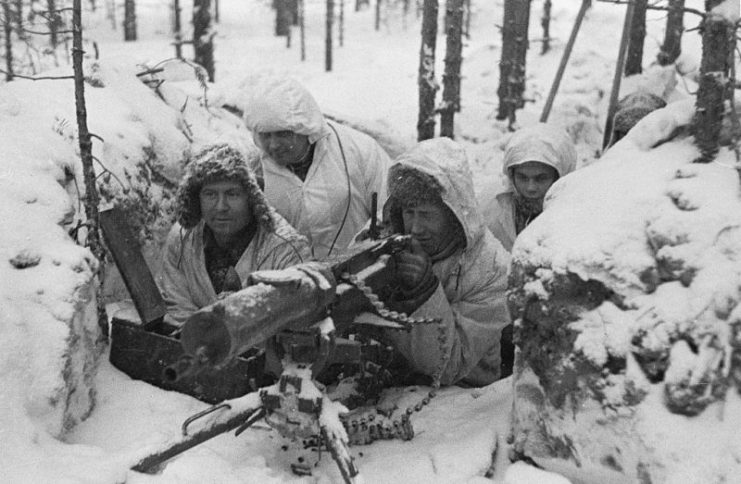
A group of Finnish soldiers in snowsuits manning a heavy machine gun in a foxhole.
Though vastly superior in numbers, the Soviets suffered huge casualties and international humiliation. When peace was made in March, they took control of 11% of Finland, but it had come at a terrible cost.
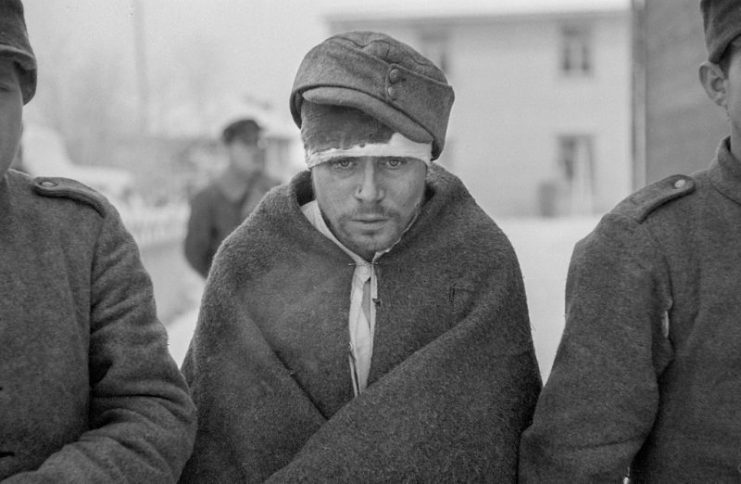
Soviet prisoners of war dressed with new clothes near the Arctic Circle at Rovaniemi in January 1940


Falling for the same trick twice is always embarrassing. In war, it can be fatal. That’s why the Allied attitude to the Ardennes Forest stands out.

 Ardennes

The Ardennes lay in the border region where Belgium, France, and Germany met. In May 1940, the French left this area weakly defended, believing it to be impassable to armored formations. Instead, they relied on the fortified Maginot Line to hold the Germans back.
The Maginot Line.Photo: Goran
The Germans proved the French wrong. Their tanks swept through the Ardennes, across previously neutral Belgium, and into France, completely ignoring the Maginot Line. France fell.
Four and a half years later, the same thing happened all over again. In his last great throw of the dice, Hitler launched an offensive through the Ardennes in December 1944. Once again, his men burst through weak Allied lines, though they were eventually thwarted by their limited resources.
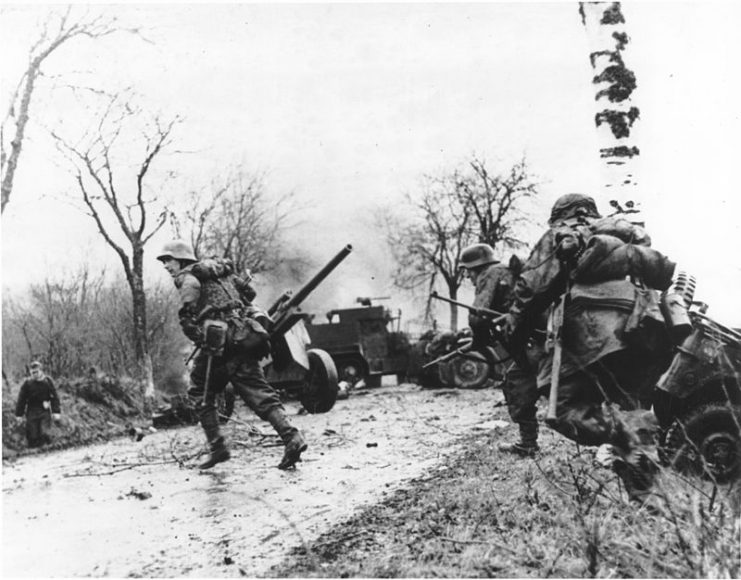
German troops advancing past abandoned American equipment.18 December 1944.
 
In General Eisenhower’s defense, it has been argued that this second time it was a trap, and that the American lines were deliberately weak to draw the Germans in. But if that was the case, Eisenhower never admitted to his own clever plan.
 
The Raid on Dieppe

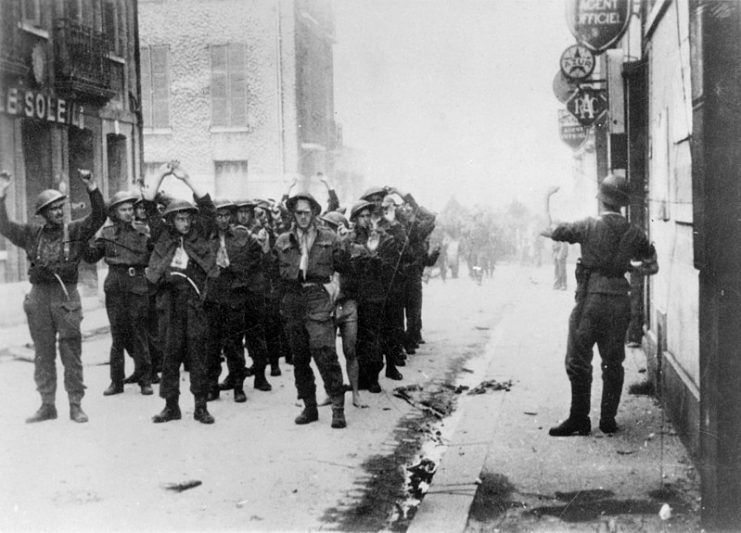
On 19 August 1942, the Allies launched a raid in force on the French port of Dieppe. It was a British Army operation, but the troops involved were mostly Canadian.
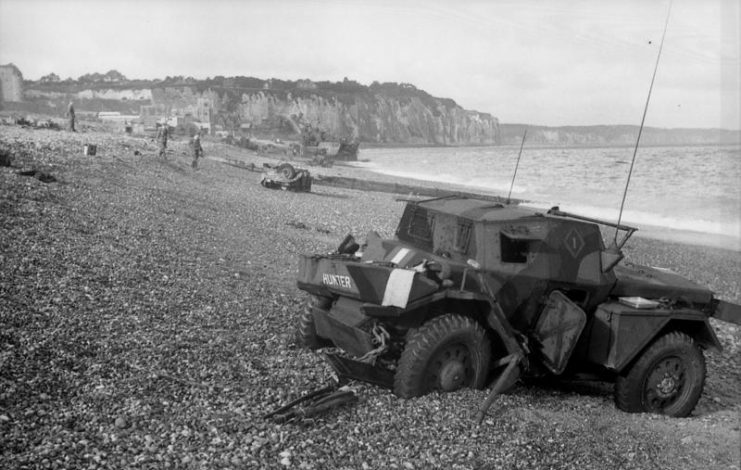
Dieppe’s chert beach and cliff immediately following the raid on 19 August 1942. A Dingo Scout Car has been abandoned.Photo: Bundesarchiv, Bild
The raid was meant to be a trial run for capturing a port by conducting an amphibious landing. It was a complete disaster.
Most of the troops became trapped on the beaches, where they were mercilessly battered by German machine guns and artillery. Even the tanks were mostly unable to get into town. Within a few hours, the withdrawal was called, and more men were lost getting out.
Over 4,000 Allied personnel were killed, wounded, or captured at Dieppe. It was a day that would forever color Canadian memories of the war.
Canadian prisoners being led away through Dieppe after the raid.
 

Kasserine Pass

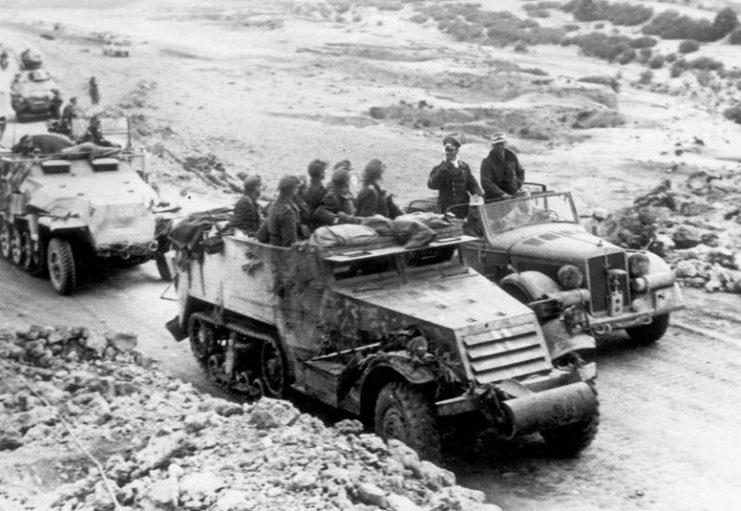
On 19 February 1943, German and Italian troops under General Rommel launched an attack against the Americans at the Kasserine Pass in Tunisia. It was an attack that proved just how unprepared the Americans were.
Rommel in Tunisia speaking with troops riding a captured American built M3 Half-track.Photo: Bundesarchiv, Bild 146-1990-071-31
As the Axis forces stormed forward, they caught the Americans by surprise. The Americans had faced little combat, while many of their opponents were veterans of the North African theater.
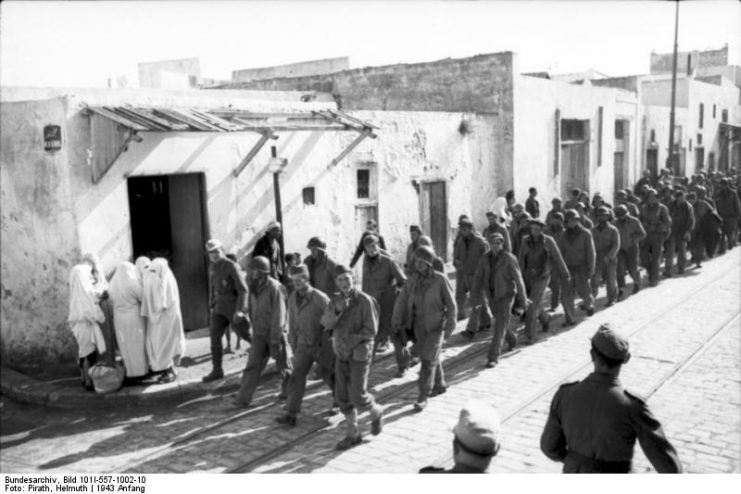
The Americans made basic mistakes such as not digging in properly, bunching together, and failing to properly position their troops. They courageously held out for the first day of fighting, but on the second day they fell into a disorderly retreat.
U.S. troops taken prisoner during the battle march through a Tunisian village.Photo: Bundesarchiv, Bild 101I-557-1002-10 /


Rommel achieved his tactical goal of breaking through the pass, but he was unable to make the strategic gains he had hoped for. British and American forces regrouped beyond the pass and held up his advance.
His aim of punching through the Allied lines and seizing their supplies never came to fruition. Not every failure turned into a disaster for the Allies.

Hurtgen Forest

At the time of the second Ardennes offensive, the Allies were already bogged down in one of their biggest mistakes – the Battle of Hurtgen Forest.
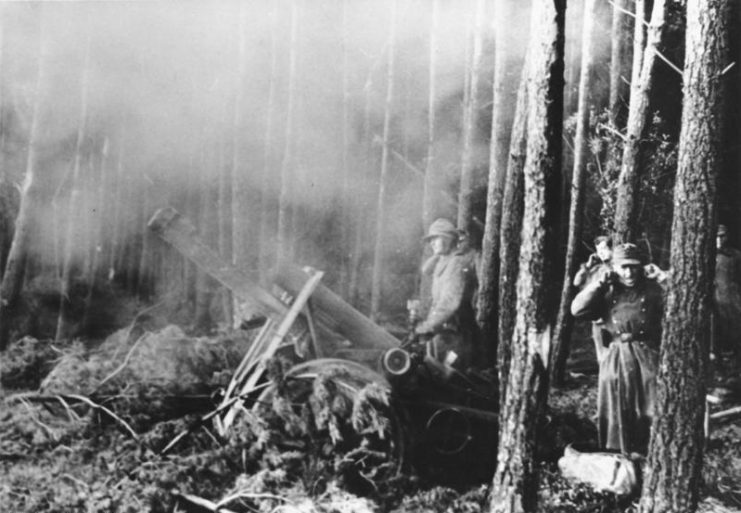
From September 1944 to February 1945, the Americans attacked German positions in the Hurtgen Forest, a wooded area around the border between Germany and Belgium. The Germans were well dug in amid the dense forest, making their lines almost impossible to break.
The Americans tried again and again in a series of bloody assaults. They lost nearly 30,000 men killed or injured and thousands more to combat exhaustion.
A German heavy mortar firing in defense against a U.S. attack on 22 November 1944 in the Hürtgen forest.Photo: Bundesarchiv, Bild
By the time they broke through, the Germans had opened the floodgates on industrial dams, something the battle had supposedly been launched to avoid. The war moved on thanks to real victories elsewhere, and the bloody waste in the Hurtgen was quietly ignored.

Operation Market Garden

One of the boldest ventures of the war, Operation Market Garden was launched by General Montgomery in September 1944. By landing paratroopers at a series of key bridges, he aimed to open a route across the Low Countries and into Germany. Conventional troops would follow before the Germans could counter-attack, ensuring victory.
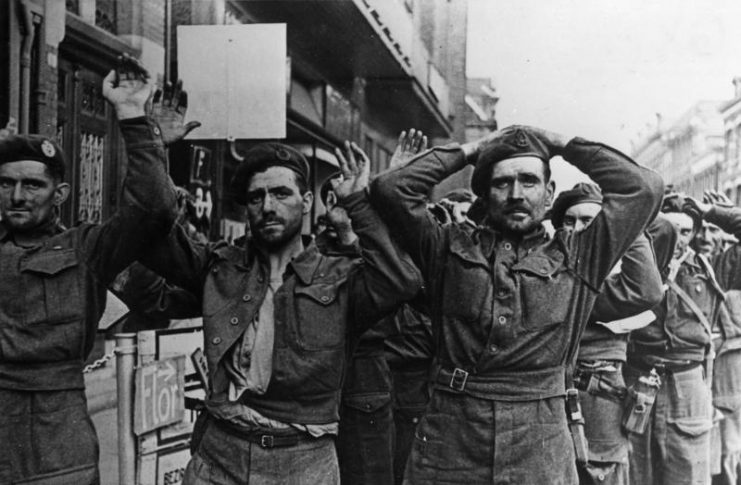
British POWs at Arnhem.Photo: Bundesarchiv, Bild 183-S73820 /
Unfortunately for the British and Polish paratroopers, Montgomery’s scheme proved too bold. The ground campaign didn’t advance as quickly as he had hoped. Allied paratroopers were trapped in the town of Arnhem for a week, taking heavy casualties at the hands of the Germans.
By the time they were withdrawn, 1,200 men had died. 6,600 more were left behind, injured, captured, or missing.


 I used the ending from the movie "A Bridge Too Far".  It is one of my favorite war movies and it was to me well done.
 

Tuesday, October 9, 2018

Why the Left likes to block roads, bridges, harass people....

I saw this article by Dennis Prager and here is the Article.  I cut and pasted it in its entirety.
It is a very good article and I was pleased to see someone that said the same thing that I have said.  The average leftist believe that they are superior due to their education, being "woke", social standing and other factors and that we "normals" are subhuman, Nazi's and other vile things.


When I was in graduate school, I learned a lot about the left.
One lesson was that while most liberals and conservatives abide by society’s rules of order and decency, most leftists do not feel bound to live by these same rules.
I watched the way leftist Vietnam War protesters treated fellow students and professors. I watched left-wing students make “nonnegotiable demands” of college administrations. I saw the Black Panthers engage in violence—including torture and murder—and be financially rewarded by leftists.
Today, we watch leftist mobs scream profanities at professors and deans, and shut down conservative and pro-Israel speakers at colleges. We routinely witness left-wing protesters block highways and bridges, scream in front of the homes of conservative business and political leaders, and surround conservatives’ tables at restaurants while shouting and chanting at them.
Conservatives don’t do these things. They don’t close highways, yell obscenities at left-wing politicians, work to ban left-wing speakers at colleges, smash the windows of businesses, etc.
Why do leftists feel entitled do all these things? Because they have thoroughly rejected middle-class, bourgeois, and Judeo-Christian religious values.
Leftists are the only source of their values. Leftists not only believe they know what is right—conservatives, too, believe they are right—but they also believe they are morally superior to all others. Leftists are Ubermenschen—people on such a high moral plane that they do not consider themselves bound by the normal conventions of civics and decency. Leftists don’t need such guidelines; only the non-left—the “deplorables”—need them.
In August 2017, University of Pennsylvania law professor Amy Wax wrote a column for the Philadelphia Inquirer in defense of middle-class values. She and her co-author cited a list of behavioral norms that, as Wax put it, “was almost universally endorsed between the end of World War II and the mid-1960s.”
They were: “Get married before you have children and strive to stay married for their sake. Get the education you need for gainful employment, work hard, and avoid idleness. Go the extra mile for your employer or client. Be a patriot, ready to serve the country. Be neighborly, civic-minded, and charitable. Avoid coarse language in public. Be respectful of authority. Eschew substance abuse and crime.”
She later wrote in The Wall Street Journal, “The fact that the ‘bourgeois culture’ these norms embodied has broken down since the 1960s largely explains today’s social pathologies—and re-embracing that culture would go a long way toward addressing those pathologies.”
For her left-wing colleagues at Penn Law School, this list was beyond the pale. About half of her fellow professors of law—33 of them—condemned her in an open letter. And Wax wrote in the Journal, “My law school dean recently asked me to take a leave of absence next year and to cease teaching a mandatory first-year course.”
The Pennsylvania chapter of the left-wing National Lawyers Guild condemned her for espousing bourgeois values and questioned “whether it is appropriate for her to continue to teach a required first-year course.”
As regards traditional Jewish and Christian codes of conduct, just read the left’s contempt for Vice President Mike Pence’s religiosity. They fear him more than President Donald Trump solely for that reason.
One would think that leftists, as sensitive as they are to sexual harassment of women, would admire Pence’s career-long policy of never dining alone with a woman other than his wife. On the contrary, they mock him for it.
With such high self-esteem and no middle-class, bourgeois, or Judeo-Christian values to guide them, many leftists are particularly vicious people.
The opening skit of “Saturday Night Live” this past weekend—Matt Damon’s mockery of Judge Brett Kavanaugh—provided a timely example.
It is unimaginable that a prominent conservative group or individual would feature a skit mocking Kavanaugh’s accuser Dr. Christine Blasey Ford. Indeed, Kavanaugh noted his 10-year-old daughter’s prayer for his accuser, and a political cartoonist promptly drew a cartoon with her praying that God forgive her “angry, lying, alcoholic father for sexually assaulting Dr. Ford.”
Is there an equally prominent conservative public figure on the right who has ever said “F— Obama!” on national television just as Robert De Niro shouted, “F— Trump!” at the recent Tony Awards?
Now, why would De Niro feel he could shout an obscenity at the president of the United States with millions of young people watching him? Because he is not constrained by middle-class or Judeo-Christian moral values.
In Nietzsche’s famous words, De Niro, like other leftists, is “beyond good and evil,” as Americans understood those terms until the 1960s.
In 2016, at a Comedy Central roast of actor Rob Lowe, the butt of the jokes was Ann Coulter, not Lowe. They mostly mocked her looks, and if there is something crueler than publicly mocking a woman’s looks, it’s hard to identify. For example, “Saturday Night Live” cast member Pete Davidson said, “Ann Coulter, if you’re here, who’s scaring the crows away from our crops?”
There surely are mean conservatives—witness some of the vile comments by anonymous conservative commenters on the internet. And it is a moral scandal that Ford has received death threats.
The difference in left-wing meanness is the meanness of known—not anonymous—people on the left. They don’t hide behind anonymity because they do not feel bound by traditional notions of civility, for which they have contempt.
Now you can understand why the left hates Pence, a man who has, by all accounts, led a thoroughly honorable life. He—and other evangelical Christians and Orthodox Jews—tries to live by a code that is higher than him.
That ethic is what Ubermenschen seek to destroy. They are succeeding

Monday, October 8, 2018

Monday Music "Thunderstruck" by AC/DC

I am continuing the group of songs that I can hear over and over again and I like them.  This is one of them.
I decided to dedicate this song to the democrats that had protested and threw a massive temper tantrum over the Kavanaugh hearings, so I dedicated this song to the whiners, activist and other bottom feeders that tried to capitalize on the hearing.


    I decided to go with AC/DC "thunderstruck"   This song hit in 1990 while I was in Germany and it was very popular, this was one song that every would play LOUD.  Something about good crunching Heavy Metal Rock and Roll.    When we were in the Gulf, we had dedicated this song to Saddam Hussain and his Republican Guard as they were "Thunderstruck" by the United States Military.

"Thunderstruck" is the first song on the 1990 album The Razors Edge by the hard rock group AC/DC.
The song was released as a single in Germany, Australia, and Japan, and peaked at No. 5 on U.S. the Billboard Hot Mainstream Rock Tracks. In 2010, "Thunderstruck" topped Triple M's Ultimate 500 Rock Countdown in Melbourne, Australia. The top five were all AC/DC songs.
With the exception of new material from an album they are touring behind, this is one of only two songs released after Back in Black that the band still regularly performs live in concert, the other being "For Those About to Rock (We Salute You)".


Saturday, October 6, 2018

Hitler Reacting to the Kavanaugh hearings...

I ran across the ever popular "Hitler Parody" video's again for the Kavanaugh hearings...and the liberals are upset, I am seeing a lot of...


 I had to go looking for this one I had used it shortly after the confirmation of President Donald Trump and the inauguration. 
I was seeing the moonbats and other unhinged leftist being removed from the confirmation hearing...Even now they can't be classy.


Friday, October 5, 2018

more rants and musings...about the Kavanaugh hearings and chasing shinies and other stuff.


The circus of the Kavanaugh hearing is about to end and the democrats are predictably are changing the goalpost...
to touch on what has transpired, at the last minute before the confirmation hearing, the Senator from California came up with a sexual assault claim...
And the smear campaign started, as the process continued the left cranked more activist to harass the GOP senators in the elevators, restaurants,  and I saw this on GunFreezone, apparently this democratic staffer got information and released it to the activists so they can harass the senators.


A Democratic congressional staffer was arrested Wednesday and accused of posting the personal information of at least one Republican senator during last week’s hearing about sexual assault claims against Supreme Court nominee Brett Kavanaugh, authorities said.
U.S. Capitol Police said 27-year-old Jackson Cosko was charged with making public restricted personal information, witness tampering, threats in interstate communication, unauthorized access of a government computer, identity theft, second-degree burglary and unlawful entry. Police added that the investigation was continuing and more charges could be filed.
Senior congressional sources tell Fox News that Cosko most recently worked as a staffer for Rep. Sheila Jackson Lee, D-Texas. He also had worked with Sen. Maggie Hassan, D-N.H., and former Democratic Sen. Barbara Boxer of California.
Democratic staffer arrested in doxxing of GOP senators during Kavanaugh hearing
Some enterprising soul should return the favor and even amplify it.  Hell, no bail for the guy and leave him with the regular inmates for the weekend. With that face and that complexion, he is bound to be very popular.

     Personal information of Sens. Lindsey Graham, Mike Lee and Orrin Hatch was posted on their respective Wikipedia pages Thursday as the Senate Judiciary Committee questioned Kavanaugh over allegations that he assaulted Christine Blasey Ford at a high school party in the early 1980s. All three have professed their belief that Kavanaugh is innocent of the claims brought against him by Ford, with Graham telling the federal judge "you've got nothing to apologize for" amid a fiery rant denouncing Democrats' handling of the allegations.

   Senator Ted Cruz and his wife got harassed at a restaurant by a bunch of activists..Other activist have been following the GOP senators around and harassing them on their travels and staging sitins at their office.  .Funny how stuff like this don't happen to democratic senators, I am making a supposition that the right side of the aisle has more class and realize that there is more to life than politics, something that the "Scorched Earth Democrats haven't figured out.

The Rule of law has taken a hit, and the genie can't be put back in the bottle after this.  Before this hearing,  the rule of law was supreme, there had to be a preponderance of evidence to charge a person under our criminal justice system, but now it is the rule of the mob and the mob is whoever the latest flaver of the month is and this presents a huge problem for people, especially in the future where a women can make a spurious charge against a man and wreck his career and possibly get him put in jail and he has no way to prove his innocence, this will end badly for our justice system.

   On a different note I saw this from Kenny's place,

A man who assaulted a young, female pro-life advocate Sunday in Toronto has been identified by his employer.
Noble Studio 101, a hair salon in Toronto, posted a message on Instagram Wednesday identifying the man as Jordan Hunt, one of its former employees. The business said it fired Hunt after seeing him on a now-viral video.

“It has been brought to our attention that Jordan Hunt has been caught on camera assaulting an innocent bystander at a pro life rally,” the business wrote. “We don’t condone his actions and he has been let go. We believe that everyone has a right to an opinion and the right to voice their opinion without fear of physical violence.
    I believe that he is a member of antifa and they believe that anybody that don't believe like they do is subhuman and deserved to be hit and abused because..well they are Nazi's...according to the left.
 
  This is a post that I did a while back about Antifa

ANTIFA has kinda exploded on the scene during the 2016 election cycle.  You saw them mostly attacking Trump supporters.   To an ANTIFA group, they consider us "Nazi's" and sub human.  Now where did they come from?   Well I believe that they are a continuation of the "Occupy Movement"


  Remember them in the 2012 and the 2014 election cycles, the "Occupy" group were center stage as "the Soldiers of Soros".  I have blogged about them frequently.  Now the Occupy groups have grown up into the "ANTIFA" movement.  They are still supported by the same cabal of leftist but now you have municipalities supporting them.  The ANTIFA movement counts as fellow allies, the BLM movement and the environmental groups.  They tend to band together to harass anybody that don't believe like they do.  And nobody can believe like they do because they are "True Believers" and everyone else will fail the ideological litmus test.  In their world, you can't have dissent, because if you do, than you are wrong and deserve to be punished for deviating from dogma.  The ANTIFA movement are the ideological soldiers of the modern Left.


It is easy to mock the ANTIFA movement as mostly feminist and beta males, and to a large extent that is accurate, but there is the hardcore center that well is "Hard". Those are the ones that do all the fighting and bicycling locking people. They have been demonizing their opponents and deriding them as "Nazi's" and when believe that your opponent is sub human, than you lose the "Taking human life" issue off the table because "we are evil and we deserve it." This is a dangerous mindset and the hardcore ANTIFA believe this and those are the ones you have to watch. You never underestimate people, especially since they are a fan of marxism and to use Mao's little red book as a reference "The Guerrilla can swim among the people and be one with them." What is going on is you have the early makings of a insurgency especially when a lot of city government supports them.


 Here are some definations from "Urban Dictionary" when I used the word "ANTIFA"

ANTIFA
Short for (militant) anti-fascists.

Middle-class champagne socialist/communist/anarchist white boys who don't like nationalists or fascists. They consider themselves to be rebelling against the establishment, whilst upholding all of its ultra-politically correct views.

Antifa only dislike racism when its carried out by whites, and do not have the bottle to stand up against anti-white racism; leading to many people on the right to refer to them as 'traitors'. I'd rather just call them morons.

Most are teenagers and university students who grow out of the fad when they start paying taxes.
Antifa is stupid. 

Anti-capitalistic, anti-personal freedom (unless you agree with them) anti-spiritual, anti-point. Harbors a social superiority with lack of civility or natural intelligence. These dim bulbs (at best) can be characterized by, greasy hair, basement dwellings and being totally devoid of any style or attraction. Usually spotted lurking at night in large groups of marauding retards of like mind (or lack thereof) near a large University or College, anywhere they can find safety in shear numbers (because their pussy's) but has been known to venture out in the daylight to antagonize, mace women, light garbage cans and cop cars on fire at DJT rallies for money.
We don't care if you're 80 years old, we are ANTIFA and were delivering a knuckle sandwich old man. 
Short for antifascist

An antifascist is somebody who is usually young, upper to middle class(wo)man who sits in their parents house standing against racism on their computers while sipping expensive wine. Most of them are anarchists or far-leftists such as communists or Marxists (or any socialists for that matter.)

When they get off their computers and go into the real world, they usually flood the streets in packs waving red and black flags symbolizing anarcho-communism, or maybe they just fly black flags or red flags. Since they are too dumb to realize that anarchism and socialism were ideas written from behind a desk and not able to be used in reality.

Usually antifa groups will not fight in a one on one match with a skinhead, they always attack in packs or cells. However, most are vegans and/or hippies so this is understandable since they're all weaklings.

Even if you do not agree with half of what I said, these people are politically correct hippies who adopt the most mainstream political views and then they make it look like they're a special fucking snowflake.


To the Left it is all about emotionalism, no logic.  To the average leftist it is "I feel" and that is supposed to make everything right for them, but they don't realize that real life don't operate on "Feelingsz"  The attack and harassment of people from the right side of the aisle is increasing for the 2018 election cycle, and I believe that it will get worse and when Kavanaugh gets confirmed, it will be bad and if President Trump replaces Ginsburg, there will be absolute panic on the left.


As far-flung as these incidents were, they have something crucial in common. Like the organizations that opposed the Multnomah County Republican Party’s participation in the 82nd Avenue of Roses Parade, these activists appear to be linked to a movement called “antifa,” which is short for antifascist or Anti-Fascist Action. The movement’s secrecy makes definitively cataloging its activities difficult, but this much is certain: Antifa’s power is growing. And how the rest of the activist left responds will help define its moral character in the Trump age.


Antifa traces its roots to the 1920s and ’30s, when militant leftists battled fascists in the streets of Germany, Italy, and Spain. When fascism withered after World War II, antifa did too. But in the ’70s and ’80s, neo-Nazi skinheads began to infiltrate Britain’s punk scene. After the Berlin Wall fell, neo-Nazism also gained prominence in Germany. In response, a cadre of young leftists, including many anarchists and punk fans, revived the tradition of street-level antifascism.
By the 2000s, as the internet facilitated more transatlantic dialogue, some American activists had adopted the name antifa. But even on the militant left, the movement didn’t occupy the spotlight. To most left-wing activists during the Clinton, Bush, and Obama years, deregulated global capitalism seemed like a greater threat than fascism.


Trump has changed that. For antifa, the result has been explosive growth. According to NYC Antifa, the group’s Twitter following nearly quadrupled in the first three weeks of January alone. (By summer, it exceeded 15,000.) Trump’s rise has also bred a new sympathy for antifa among some on the mainstream left. “Suddenly,” noted the antifa-aligned journal It’s Going Down, “anarchists and antifa, who have been demonized and sidelined by the wider Left have been hearing from liberals and Leftists, ‘you’ve been right all along.’ ” An article in The Nation argued that “to call Trumpism fascist” is to realize that it is “not well combated or contained by standard liberal appeals to reason.” The radical left, it said, offers “practical and serious responses in this political moment.”


Those responses sometimes spill blood. Since antifa is heavily composed of anarchists, its activists place little faith in the state, which they consider complicit in fascism and racism. They prefer direct action: They pressure venues to deny people whom they believe to be white supremacists space to meet. They pressure employers to fire them and landlords to evict them. And when people they deem racists and fascists manage to assemble, antifa’s partisans try to break up their gatherings, including by force.


 I am not sure what the future will bring, but I see all the fighting in the streets and I recall pictures of Germany in the 1920's and early 30's when the brown shirts squashed all dissent and burned books and other things to force people to conform to a certain ideology and if they didn't they went to one of these places..


I am afraid things will happen again like before.  When people forget the lessons of history, they are doomed to repeat it.  And the sad thing is that history isn't really taught anymore unless it is politically correct.    

Wednesday, October 3, 2018

Fehsenturm Berlin

I had posted this article back in 2012 while surfing for some Berlin stuff, the anniversary for the fall of the Berlin wall is coming soon so I figured it would be a pertinent post and I updated it a little.  


When I went to Berlin for the first time in 1987, I drove the  Helmstedt Berlin Autobahn with Check Point Alpha to Check Point Bravo.  We used "flag orders" that basically had a picture of the American Flag with our names on it in both English, French and Russian.  It gave us travel rights to Berlin through the corridor.  We had to stop at 2 Soviet Checkpoints on the autobahn and unless you "donated" a porn magazine to the Russians behind a wall, you waited exactly 45 minutes for them to stamp your flag orders all the while surrounded by Soviet propaganda for example "Why the American Pershing II missile was a threat to world peace, but somehow the Soviet  SS-20 was exempt, funny how that worked out with the protestors, but I digress.  After your flag order was stamped( I framed one of mine) so you can proceed to the next check point.

 Generic Flag orders.  I wouldn't use mine for
the pic because it has my SSN on it.

  You also had an opportunity to give the guard some money for a soviet military badge or something.( I have a couple laying around).  After you got to  West Berlin it was a 24 hour party.  I had an opportunity to go to East Berlin through the Famous Checkpoint Charlie.
     there were Other Berlin Border Crossings but we couldn't use them by the status of forces agreement and the 4 powers occupation of Berlin.  Berlin still was considered an "occupied" city outside the purview of West Germany and it was run by the Garrison commander of Berlin. 


We were not told to acknowledge the East German Guards since we considered East Germany not the "real" Germany...That was West Germany for us.  The Soviets had the same attitude toward the West Germans.  Once we crossed over to East Berlin, it was dour compared to West Berlin.  We saw scaffolding everywhere so it looked like it was under construction but I still saw the bullet holes in the walls where Marshall Zhukov 1st Bellerussian front crashed into the city in what the locals called Gotterdammerung. or the End of the battle in the east.  If we were hassled by the GDR, we were told to say "Ich Musche mit eine Soviet officer mit zum sprechen."  Here is one of the sights I saw in East Berlin
      
   One of the sights of East Berlin was the Fernsehturm
This is called the "Popes Revenge"  The reason for that was that the Church gave money to the East German government to repair and fix the churches in East Germany, well the East Germans being ardent Godless communist took the money and built this tower instead.
When the sun shines on the Fernsehturm's tiled stainless steel dome, the reflection usually appears in the form of a crucifix. This effect was neither predicted nor desired by the planners. Berliners immediately named the luminous cross Rache des Papstes, or "Pope's Revenge". For the same reasons, the structure was also called "St. Walter" (from Walter Ulbricht).
U.S. President Ronald Reagan mentioned this phenomenon in his "Tear down this wall" speech on 12 June 1987:
"Years ago, before the East Germans began rebuilding their churches, they erected a secular structure: the television tower at Alexanderplatz. Virtually ever since, the authorities have been working to correct what they view as the tower's one major flaw: treating the glass sphere at the top with paints and chemicals of every kind. Yet even today when the sun strikes that sphere, that sphere that towers over all Berlin, the light makes the sign of the cross. There in Berlin, like the city itself, symbols of love, symbols of worship, cannot be suppressed."


The Fernsehturm (German for "television tower") is a television tower in the city centre of Berlin, Germany. Close to Alexanderplatz and part of the World Federation of Great Towers (WFGT), the tower was constructed between 1965 and 1969 by the former German Democratic Republic (GDR) administration who intended it as a symbol of Berlin, which it remains today, as it is easily visible throughout the central and some suburban districts of Berlin. The Fernsehturm is the tallest structure in Germany.

In 1964, Walter Ulbricht, leader of the Socialist Unity Party which governed East Germany, decided to allow the construction of a television tower on Alexanderplatz, modelled on the Fernsehturm Stuttgart. IT was intended as a show of the GDR's strength, while its location is thought to have been deliberately chosen so that it would impose on views of West Berlin's Reichstag building (when viewed from the front). The architecture traces back to an idea from Hermann Henselmann, and Jörg Streitparth. Walter Herzog and Herbert Aust later also took part in the planning. Construction began on 4 August 1965. After four years of construction, the Fernsehturm began test broadcasts on 3 October 1969, and it was officially inaugurated four days later on the GDR's National Day. It is among the best known sights in Berlin, and has around a million visitors every year.

Construction of the tower had initially begun at a site in southeast Berlin's Müggelberg. However, the project was stopped because such a tall tower in that location would have obstructed aircraft entering and leaving from the nearby Schönefeld International Airport

Mans Guide to watches...And their history

I shamelessly clipped this from "The Art of Manliness".  The article was talking about watches and how they came to be.  I wear an older fossil watch that I bought a long time ago and still wear it, I refuse to change to a newer one....I kinda like the "old schoolness" of the watch.  I figured about taking a break from all the political stuff for a day or 2 before diving back into the morass known as D.C. on the Potamac.

When I first got my smart phone, I put the watch up but after a while I realized that I was using the battery too fast with my whipping out the phone all the time so I started wearing a watch again. I like it, it is something timeless, and I don't know...maybe I am a throwback to an earlier age where men dressed with class and had pride in their appearance unlike what is seen today....
Like I said, I shamelessly clipped this article from Here.  The site is worth the look.   


No element of men’s style combines fashion and function quite like the wristwatch. Nor does any other male accessory inspire such devotion and interest.
Nevertheless, in recent times there have been those who believed the watch had finally met its demise in the smartphone, and would fade away with other sartorial anachronisms like monocles and sock garters.
And yet the popularity of the wristwatch persists. To understand why, we need to understand the history of this timepiece, how its past continues to inform its present, and why a man might consider wearing a watch in the 21st century.

History of Wristwatches 

While the wristwatch has become a men’s style staple around the world, up until the late 19th century it was considered a piece of jewelry exclusively for women. Men preferred the pocket watch. This wasn’t some arbitrary fashion decision based on taste or gender; there was actually a practical reason for men’s preference for one over the other.
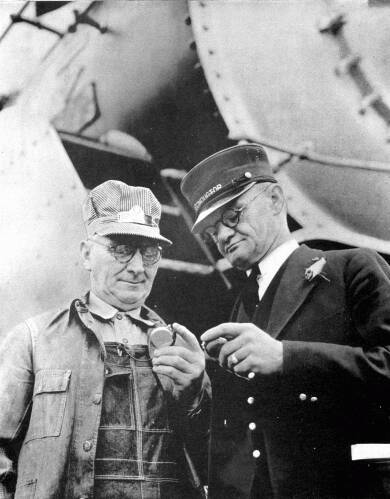
vintage train engineers syncing watches
Before the 20th century, watches were extremely susceptible to the elements. Moisture, cold, heat, and dust could easily bungle the intricate gears and springs within a watch, causing it to lose its accuracy. As men were more likely to face these elements, and held positions in the military, business, and government that made accurate timekeeping more of a paramount concern for them than for women, care had to be taken to protect their timepieces and keep themselves on schedule. Function superseded fashion, so into the pocket men’s watches went, only to be taken out when needed.
As with most things in men’s style, it would take a war for patterns to change and for the watch to leave a man’s pocket and be placed on his wrist.
Pocket watches required a free hand to use — you had to reach into your pocket and hold it while you checked the time. In the tumult of battle, a man needed all the hands he could get. So soldiers began improvising wristwatches by strapping their pocket watches on their arm with leather.
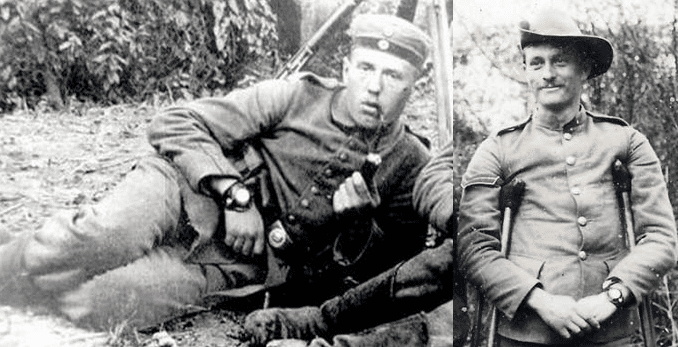
vintage soldiers wearing pocket watch wristlet
Soldiers wearing a wristlet — a pocket watch secured to a leather strap.
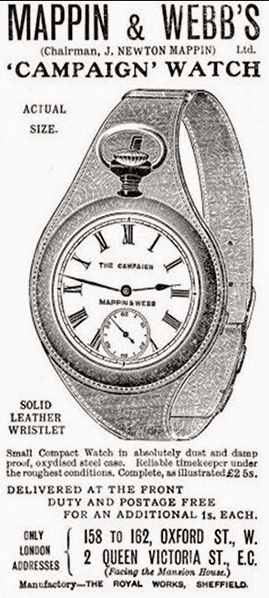
The first instances of the use of these improvised wristwatches are said to have occurred among British soldiers fighting in the Burma and Boer Wars in the late 19th century. Called “wristlets,” these leather straps had a cup to hold their pocket watch. By the 1890s, a few companies started manufacturing leather wristlets for soldiers and even made improvements to them, like adding a compass on the strap for navigation. They were often marketed as “Campaign” or “Service” watches.vintage watch wristwatch ad advertisement campaign watch
Just as GIs returning from WWII continued to wear their government issued tees and khakis as civilians, veterans of the Burma and Boer Wars likely continued using their leather wristlets when they returned home. Male civilians, seeing these rough and tumble war vets sporting what was once considered a lady’s accouterment, began following suit.
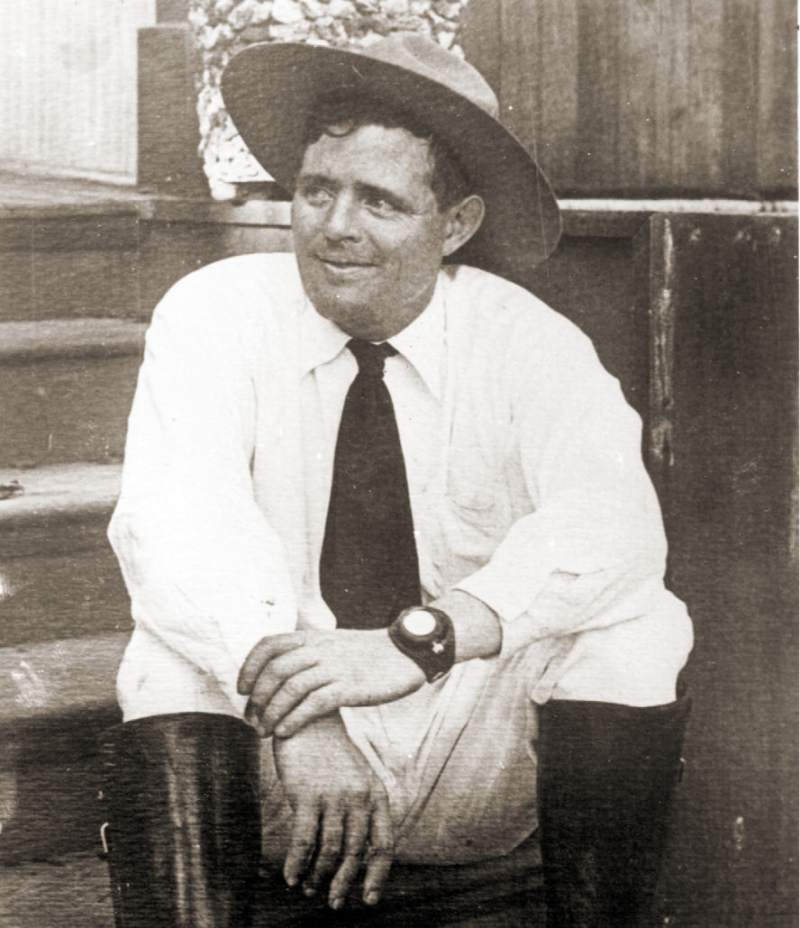
jack london sitting on porch wearing pocket watch wristlet
Jack London, author and war correspondent, sporting a pocket watch wristlet on his California ranch.
Seeing that men — particularly soldiers — were wearing their pocket watches on their wrists, several companies in the late 19th century began creating watches specifically designed for that purpose. Girard-Perregaux was the first company to mass-produce wristwatches specifically for men — particularly for sailors in the German Imperial Navy. The Waterbury Clock Company — now known as Timex — also began selling a men’s wristwatch at around the same time. In 1907, jeweler Louis Cartier designed a wristwatch for his Brazilian aviator friend, Alberto Santos-Dumont, which he called the Santos.
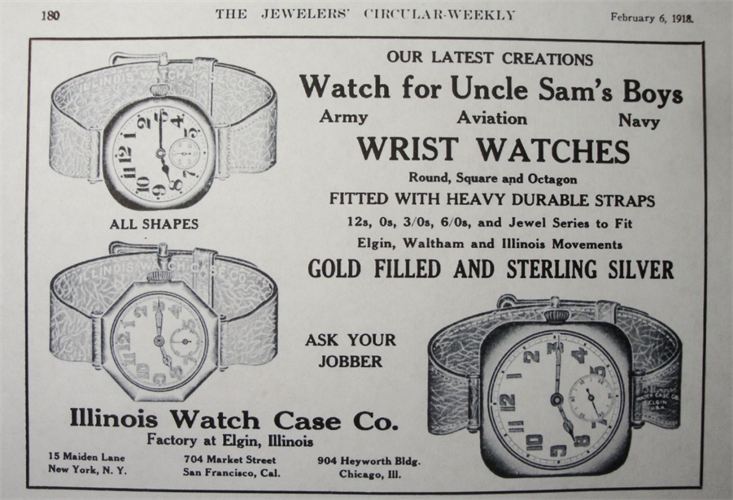
vintage watch wristwatch ad advertisement illinois watch case co
While these manufactures were pioneering a new segment of timepieces, sales weren’t that great. The majority of men still preferred the pocket watch, or the leather pocket watch wristlet.

It would take another war for the watches to find a permanent place on men’s wrists.
World War I ushered in modern, mechanistic warfare, and the wristwatch played a vital role in this process. Before WWI, the coordination and execution of orders relied primarily on visual cues — soldiers would often use semaphore signals to communicate with one another. But because battlefronts were so large during WWI and because soldiers fought in trenches, this visual mode of coordination became increasingly unviable. So clocks began to be used to coordinate attacks: officers would sync watches together at a meeting, return to their respective troops, and initiate the offensive at the agreed upon time.
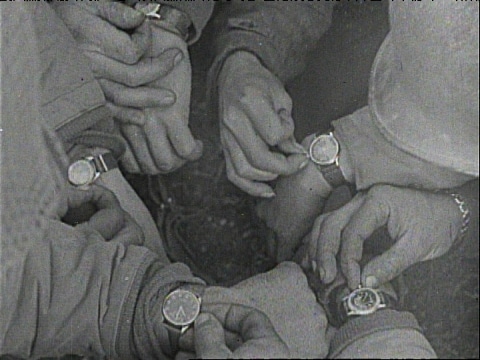
vintage Soldiers syncing their watches during WWII.
Soldiers syncing their watches during WWII.
To do this, many British officers continued to use the improvised wristwatch — their pocket watch tethered to a leather strap. But some began wearing a bona fide wristwatch designed to withstand the rigors of warfare, while maintaining a classy, aristocratic look. Watch companies in England immediately began capitalizing on this new need by making and marketing wristwatches specifically for officers serving in the trenches. They called it, unsurprisingly, the “trench watch.” (The trenches of WWI is also where the “trench coat” was developed.)
The trench watch wasn’t a government-issued piece of equipment (the pocket watch was still the officially sanctioned timepiece), so if an officer wanted one, he was expected to supply his own. Because there wasn’t a single watch company providing watches to the military, this opened up a vibrant and robust market with several competing companies making trench watches for officers. Consequently, you can still find a wide variety of trench watches from this era on eBay and various other auction sites as well as antique stores.
This wartime competition spurred innovation in the men’s wristwatch. Watch hands and numerals donned luminous paint to make time reading easier in darkened conditions (like at night or in the trenches), and unbreakable crystal glass replaced the glass covering the watch’s face. Lugs for attaching the leather strap to the watch started to be built right into the watch, which gave it a more finished look. Porcelain dials to set the time, which were common on pocket watches, were replaced with metal. Finally, the watch casings were made much tighter to keep water and dust out of the watch’s sensitive mechanisms.
Like the veterans of the Burma and Boer wars who returned home to civilian life burnishing their leather wristlets, British vets of WWI came back home wearing their trench watches, thus setting a standard for civilian men to follow. By 1930, more wristwatches than pocket watches were being sold in the U.K.
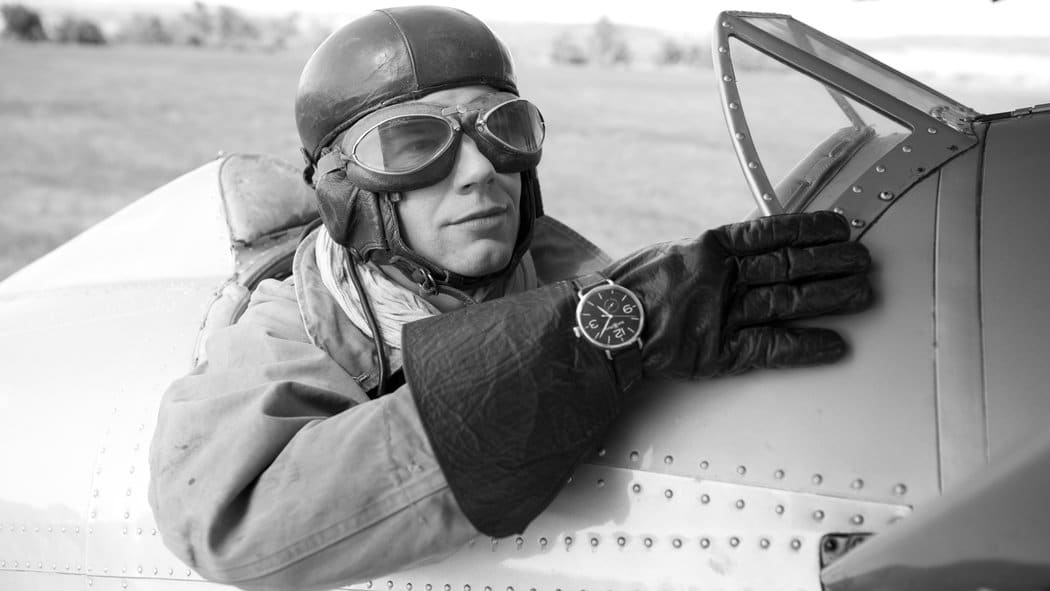
vintage pilot wearing aviator's watch outside leather gloves
The adoption of male wristwatches took hold a little more slowly in the U.S., though. Many American doughboys wore the wristwatch while in the trenches, but went back to the pocket watch after returning home because of the wristwatch’s lingering reputation as a “lady’s timepiece.” The only way an American man could get away with wearing a wristwatch as a civilian was if he was taking part in rugged activity that required chronological precision like flying or racing. It wasn’t until the mid-1920s that wristwatch sales among men began to gain ground, and much later than that that they finally overtook pocket watches.
After WWI solidified the masculine bona fides of the wristwatch, manufacturers began creating timepieces to be worn on all sorts of occasions. Yes, there were fancy dress watches, but most wristwatch innovation was driven by specific needs of men serving in the military and taking part in risky and dangerous activities like car racing and aerial barnstorming.

Why Wear a Watch?

Few men these days need to time the start of a battlefield attack, and technology has come a long way since the Battle of the Somme.
We’ve now entered an age where a man can check the time by pressing a button on his smartphone, which begs an obvious question: “Are there still any reasons to wear a watch?”
It’s a fair question, and wristwatch sales did in fact start declining in the early 00s, thanks in part to the increased use of smartphones. But after reaching an all-time low in 2009, wristwatch sales have been increasing at a steady clip year in and year out and will likely continue that upward trend.
What’s going on there? Every man has his own reasons for sporting a wristwatch, but here are a few as to why you might consider joining their ranks:
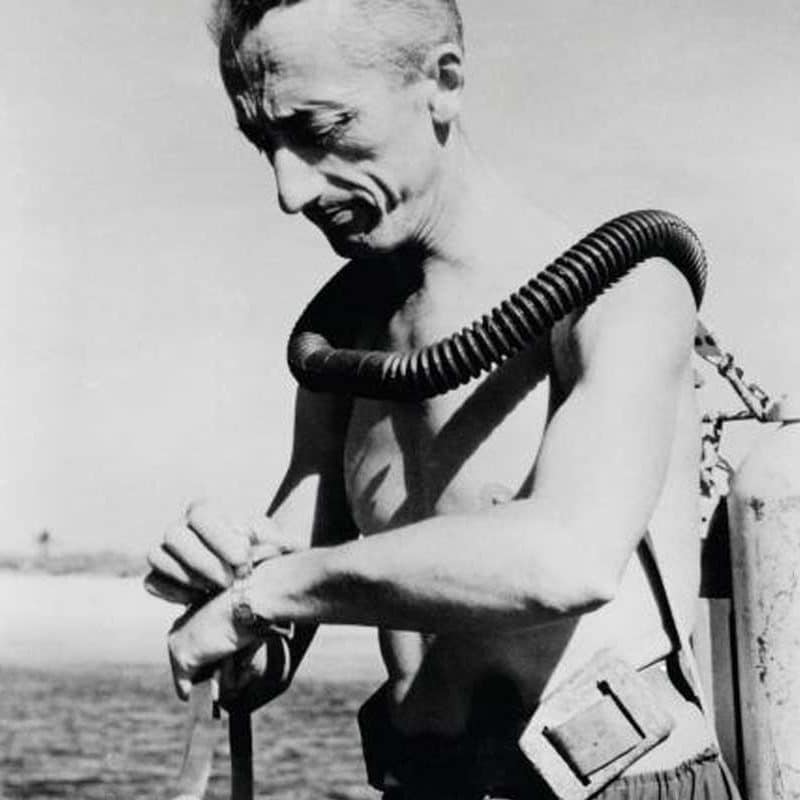
vintage jean jacques cousteau getting ready to dive into water
Wristwatches are functional and convenient. When I got my first smartphone, I was one of those people who dumped their wristwatch. Why carry an extra piece of equipment, I figured, when there’s a clock built right into my phone?
But after a year, I found myself getting annoyed at having to pull my smartphone out of my pocket whenever I wanted to know the time. I had unwittingly traveled back over a hundred years, burdening myself with the same inconvenience soldiers had discovered during the Burma War; in everything else my smartphone was light years ahead of anything from the early 1900s, but as a timepiece, it was essentially an old fashioned pocket watch.
With a wristwatch, on the other hand, telling the time just requires a glance at your arm, and both of your hands remain completely free and ready for action.
What’s more, with a traditional wristwatch you don’t have to worry about the power going out on your timepiece or recharging it regularly. A quartz watch can go months without a new battery, automatic watches almost never lose power, and a mechanical watch only needs to be wound to keep it ticking — no power plug needed. The power factor is a big reason I dumped the smartwatch (they also don’t look very good) after a few months of use. I had to charge the thing all the time. Ain’t nobody got time for that!
Bottom line: nothing beats a classic wristwatch when it comes to convenient, hands-free, at-the-ready timekeeping. 
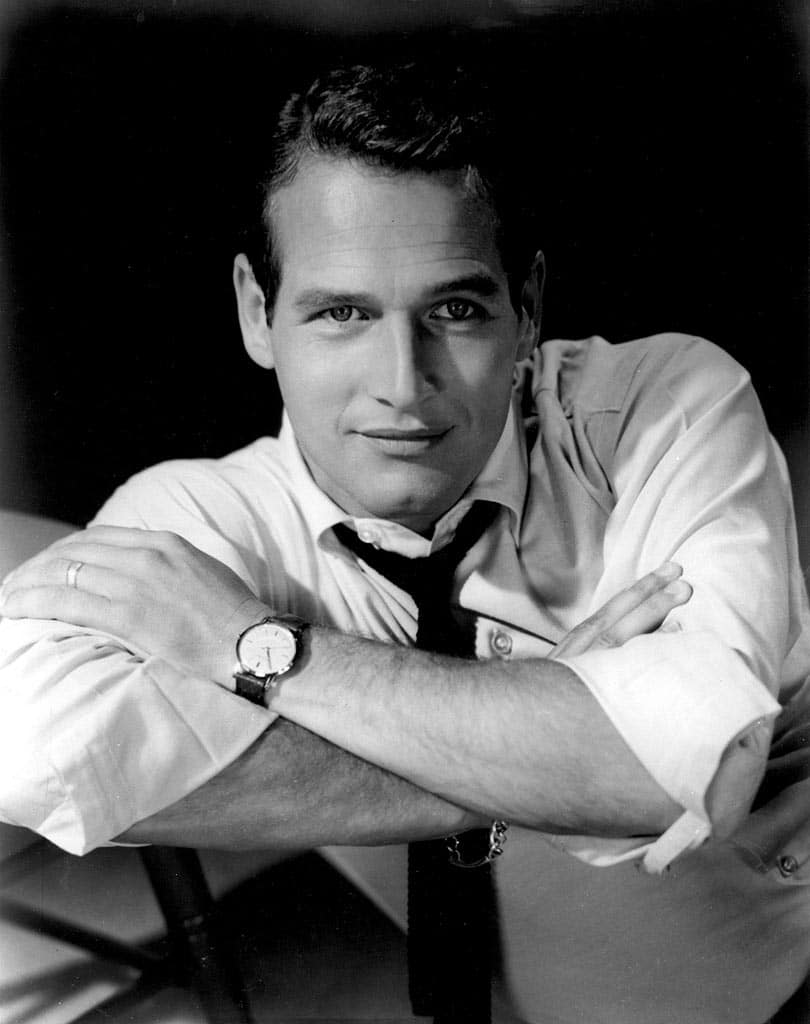
vintage man in shirt and tie with dress watch on wrist
Wristwatches look good. Wristwatches, while functional, are also designed with looks in mind. They’re one of the few pieces of male jewelry that can easily be worn every day.
When matched correctly, a stylish, well-designed watch can add a bit of polish, panache, and visual interest to any outfit. It’s a subtle detail, but people notice it. When I’ve got a solid get-up on and I’m rocking a watch that goes with it, I usually get more compliments on the watch than my clothes.
And the beauty of watches is that because they come in so many varieties, you can develop a collection that you can draw from to put the finishing touch on any ensemble, no matter the occasion. Business formal? Rock your simple, but elegant dress watch. Casual first date? A dive or field watch will look handsome.
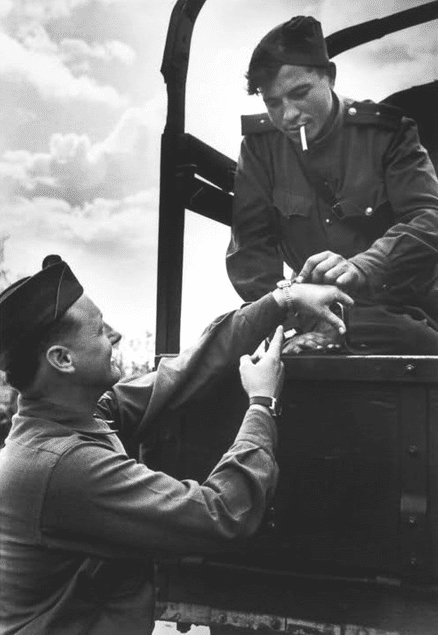
vintage soldiers looking at admiring watch wristwatch
Wristwatches signal status/personality. As we discussed in our series on status, one of the key developments in human development was the adaptation of social signaling. Instead of relying solely on embodied characteristics, like height and physique, to determine status, our human ancestors started using things like clothing and jewelry to size each other up.
When pocket watches came on the scene a few hundred years ago, they quickly catapulted into one of the West’s most powerful social signals. Early watches were expensive, so only the very rich could afford them. Owning one signaled to folks that you had indeed arrived. When pocket watches transformed to wristwatches during the late 19th and early 20th centuries, it was typically high-born British officers wearing them. Even as mass production drove the price of wristwatches down, quality pieces continued to maintain their status signal cache.
Now, the easiest way to signal status with a wristwatch is, of course, to procure the high-end luxury variety. Nothing announces “I’ve made it big” like sporting a $30,000 vintage Rolex.
Yet even if such displays of conspicuous consumption understandably rub you the wrong way, and you opt for something in the far less expensive range, a wristwatch still represents a potent clue to your personality and interests. Fancy yourself a sporty guy? A racing or diving watch can showcase that. Pride yourself on plain practicality? A rugged field watch can convey that.
Yes, watches are about timekeeping, but thanks to their powerful social cache, they can be used to express your values, tastes, and likes to others. Choose wisely.
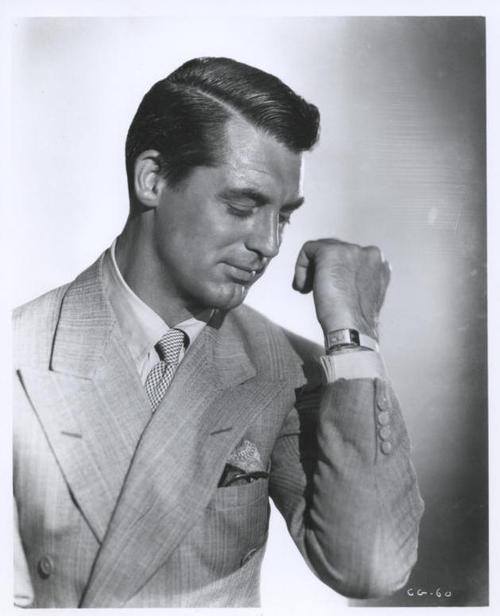
vintage businessman in suit wearing dress watch wristwatch
Wristwatches are timeless. While the wristwatch as we know it has only been around for a century, it’s gained a timeless distinction in the world of style. A well-designed classic wristwatch is like a well-designed suit — it will still look good decades from now. There’s a reason 60-year-old Rolexes are still selling for tens of thousands of dollars. Even if a watch costs you a lot, it’s an investment that will continue paying dividends in enjoyed use for years to come.
The timelessness of the wristwatch also makes it a fantastic heirloom. If you’re lucky enough to inherit a watch from your father or grandfather, every time you wear it, you’ll have a tangible reminder of the men who made your life possible. If you don’t have a family heirloom watch, begin the tradition in your own life by acquiring a nice timepiece that you can someday pass on to your son or grandson.
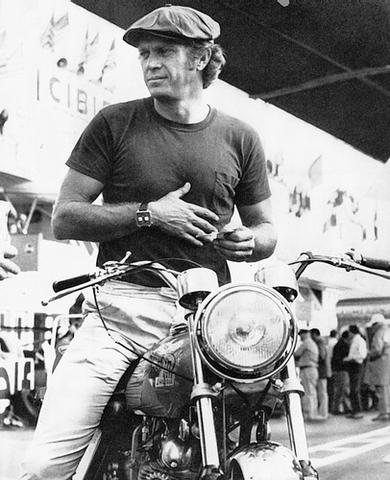
vintage motorcycle wearing racing watch on wrist
Wristwatches feel good. Wristwatches not only look good, but they feel good too. Because of their historic associations with war and adventurous pursuits like racing, flying, and diving, no male accessory is quite as romantic and evocative as the watch. Not only do these associations signal things to others, but they signal things to yourself as well, about who you’d like to be and what you’d like to be doing. If the watch is an heirloom, it may remind you to carry yourself in a way that would make your forebearers proud.
It may sound silly to think a physical object like a wristwatch could alter your mindset a little, but it’s no different than the totems and talismans our primitive ancestors outfitted themselves with for luck, protection, and courage.
Man has always tried to master the elements, one of the primary ones being time. A watch gives you the sense of being in control of your precious hours and minutes; strap one on and you feel ready for your appointment with destiny. Or at least a meeting or date, which, hey, could very well change the course of your life.
Tuesday, October 2, 2018

The Warsaw Uprising....

I remembered reading about the Warsaw Uprising when I was in Elementary School, and the fact that the Poles tried to free themselves from the Germans was inspiring from a historical persoective.  When I got older, it was a reminder what a people will do to be free and that the tyranny of the government can't stop the thirst for freedom and that a people wanting to be free can make weapons and steal them from the enemy and use them against them.

Throughout World War II, the people of Poland were stuck between Nazi Germany and their old enemy the Russians. Occupied by Nazi Germany since 1939, the prospects for their freedom looked very bleak indeed come 1944. Poland was faced with either Nazi rule or domination by the Russians.
Russia’s army was now rapidly approaching from the East and after the Katyn massacre (when Russia executed thousands of Polish officers), fighting between Polish partisans under the Polish Home Army and the Soviet Partisans in Poland, and Joseph Stalin’s thirst to draw more countries into the Soviet Block, many Poles were worried one conqueror would simply be replaced by another.
With this bleak prospect looming on the horizon of a still bleak situation, Commander Tadeusz Bór-Komorowski of the Polish Home Army, devised Operation Tempest: a huge, coordinated effort by the underground resistance to rise up across Poland, focused on Warsaw, to kick the Nazi’s out before the Russians swept into the major cities on the West side of the Vistula river. It became the largest military operation by any resistance movement in an occupied country in World War II.

Though wary and distrustful of the Russians, the Home Army timed their uprising with the approach of the Red Army through Eastern Poland, with the hopes that they would offer some assistance or, at least, divert the Germans away from Warsaw. In fact, almost the opposite was true.
As President Trump explained, “From the other side of the river, the Soviet armed forces stopped and waited. They watched as the Nazis ruthlessly destroyed the city, viciously murdering men, women and children. They tried to destroy this nation forever by shattering its will to survive.”
The Polish strategy had been to quickly take command of the Polish capital in between the German retreat and ahead of the Russian advance. This action would allow the Polish forces to be masters of their own home and, as it was believed, would hinder the Soviet threat to Polish sovereignty.
However, with the Soviet offensive halted, and Stalin not allowing American and British planes permission to land on Soviet-held Polish territory to refuel, thus inhibiting sufficient Western aid from reaching the Warsaw fighters, the Germans were free to methodically and brutally crush the Warsaw Uprising.

First-hand accounts from people living in Warsaw at the time claim that Russian planes that were heard constantly flying missions against the Germans in the weeks before, Operation Tempest suddenly stopped all activity when it began. Stalin had ordered his troops to halt their advance towards Germany. He even issued direct orders that all support for the Home Army’s efforts should be cut off and any Home Army units in Russian-controlled areas should be apprehended and disarmed.
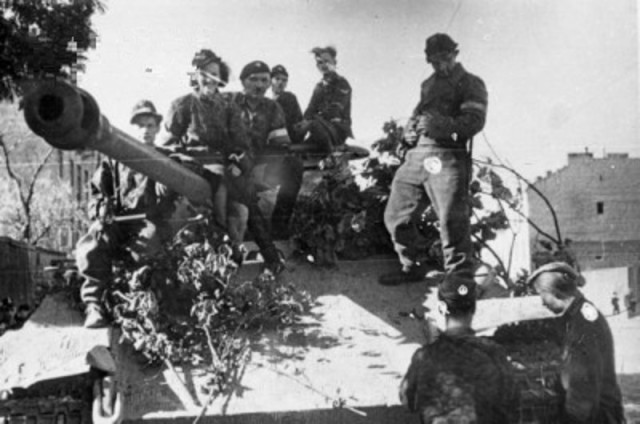
Captured German Panther tank by resistance fighters from "Zośka" Battalion under the command of Wacław Micuta, 2 August 1944
Captured German Panther tank by resistance fighters from “Zośka” Battalion under the command of Wacław Micuta, 2 August 1944
Nevertheless, four days after Operation Tempest began on August 1st, 1944, the Home Army controlled large areas in Warsaw and the fight was on for the liberation of the city.
Many of the Polish resistance forces had been training in urban combat for years in preparation, but weren’t ready for a prolonged struggled against the professional German army and vicious SS troops.
The German’s reaction to the uprising was swift and brutal. Hitler ordered Heinrich Himmler of the Waffen SS to direct mass, indiscriminate executions of citizens.
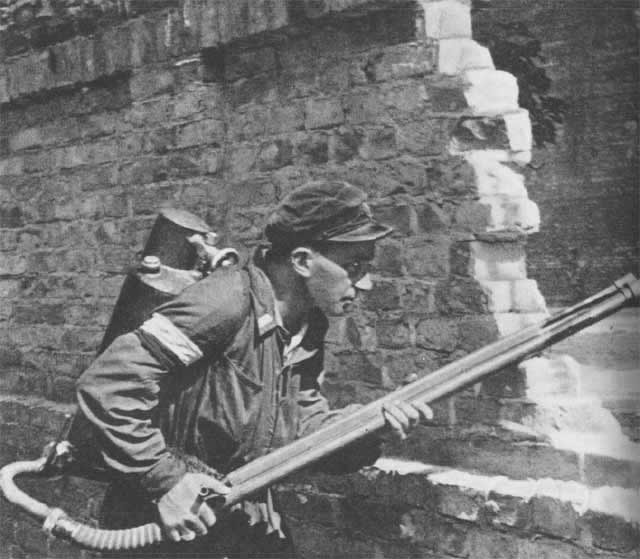
Resistance fighter armed with a flamethrower, 22 August 1944
On August 5th, in just the Western suburb of Wola alone, SS troops murdered tens of thousands of civilians of all ages and sexes, with estimates ranging from 20,000 to 100,000 killed. By the end of the uprising, as many as 200,000 citizens were killed in and around Warsaw.
The Nazis quickly noticed, however, that the mass killings only seemed to strengthen the resolve of the Polish resistance fighters and changed their strategy to focus on the military operation to take back the city, street by street, house by house. The Home Army had between 20,000 and 50,000 active fighters. The Germans began with some 25,000 troops, which was soon increased with more reinforcements and tanks to retake the city.
The battle quickly became a bloody stalemate with the Germans using everything from continuous, widespread bombings, to tanks with human shields. The Poles had set up many barricades and ditches, however, making any progress by German armor very slow.
Through the month of August, the Germans made slow, steady progress retaking the city. Section by section, the resistance fell. By early September, Bór-Komorowski agreed to talks with the Germans, which made progress for several days and achieved things like the evacuation of 20,000 civilians.
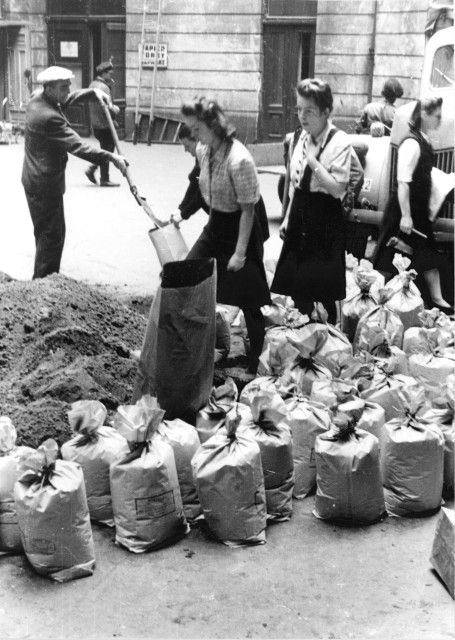
Warsaw residents stacking sand bags on Moniuszki Street, August 1944
The talks were broken off by September 11th, however, as the Red Army, once again pushing forward against the Germans, was moving through the city of Praga, just East across the Vistula from the center of Warsaw. By September 13th, the Germans had retreated across the Vistula and destroyed the bridges.
This brought a great deal of renewed hope to the Home Army and the Poles of Warsaw. Unfortunately, all help they finally did receive was either too little, too late, or both. Not wanting to anger Stalin, it took Britain and America a woefully long time to airdrop supplies to Warsaw. These drops, containing food, weapons, ammunition, medical supplies, etc., were too few and often landed in German-controlled areas.
Perhaps the biggest boost to Home Army moral came when General Zygmunt Berling of the Soviet’s Polish First Army committed troops to send over the Vistula to reinforce his countrymen. Had this move come several weeks earlier, it might have been a huge help. However, after weeks of fighting, the Germans had regained control of all but a small sliver of the Vistula’s West bank. Even with some artillery and air support from the Russian Army, Berling’s units attempting to cross the Vistula met with very little success. About 900 men managed to get across and help their comrades. This was outweighed by very heavy losses- some 5,600 casualties.
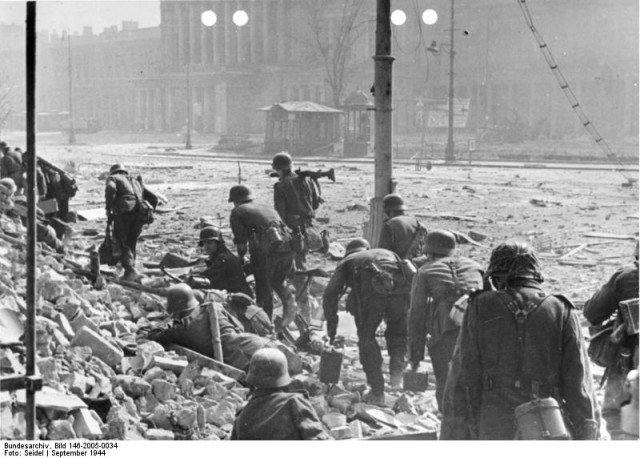
German soldiers fighting the Polish resistance at Theater Square in Warsaw, September 1944 (Bundesarchiv)
German soldiers fighting the Polish resistance at Theater Square in Warsaw, September 1944. By Bundesarchiv –
After many pleas to the Soviets for an intervention and with no answer or substantial help, the Home Army ended their struggle on October 2nd. They disarmed and the Germans once again controlled the city. The entire remaining population of Warsaw, as many as 550,000 people were taken out of the city and moved to POW, concentration, and labor camps or relocated to other areas in Poland and the Ukraine.
The Germans then proceeded to level much of the city, between destruction from the war, earlier uprisings in Warsaw, and now the reaction to Operation Tempest, about 85% of Warsaw was totally destroyed. The Germans put particular focus on destroying monuments, museums, academic institutions, libraries, and archives. Warsaw’s physical presence, history, and culture were being wiped from the face of the map, time and memory.
After the Russian’s “liberated” Warsaw and the rest of Poland and instituted a Soviet rule, talk of the Warsaw Uprising was actively suppressed. Many leaders of the Home Army and other Polish resistance were smeared as Nazi collaborators, put through mock trials and sent to the Gulags. It would be many decades before the brave freedom fighters of Warsaw were to be commemorated by a small monument to their memory and heroism. Only today is the bravery of the Home Army being recognized in their native land.

Monday, October 1, 2018

Monday Music "Lido Shuffle" by Boz Scaggs


I have been out of town so to speak, I had the scheduler thingie putting stuff on the blog.  I went and got my pistol certification and my instructor certification for pistol.  It was a long class but a good class and I shot pretty damm good, LOL if I don't say so myself :)  I do have to give "Tam" some props, I used a phrase I got from her  blog I think it was "Keeping your meathooks off the Bang switch".  while giving a block of instruction on the pistol and the instructors that were grading how we did got a laugh out of it.  The entire group were relaxed and experienced shooters and that is a boon and a bane to instructors...We are experienced shooters...we how our way around firearms, but on the flipside, we have some bad habits also.  Newbie shooters are a black canvas, they are hesitant around firearms, but on the flipside, they don't have any habits either.  It was enjoyable.  I had used what is called a "Tamism" from the blogger/writer Tamara Keel "Keeping your meathooks off the Bangswitch", was very popular because I used a lot of off the wall sayings to make the "dry" stuff more interesting to the class and I got props from the instructors for using that to make a point.

I am continuing with my all time favorite music, the stuff that I can listen to over and over again, this is another one of the songs that I can do that with.
.I first heard of "Lido Shuffle" in the mid 70's, this song was put out on the "Wolfman Jack" show that I would listen to late at night while we were living in Germany when I was suppose to be asleep to go to school but had the radio behind my head playing softly as to not disturb the parents....and bring their wraith kinda stuff.  "Lido shuffle" ranks up there in my top 10 favorite songs, to me it is a good driving song when you are on the road and watching the blacktop roll under your wheels.


Silk Degrees is the seventh album by Boz Scaggs, released on Columbia Records in 1976. The album peaked at #2 and spent 115 weeks on the Billboard 200. It has been certified five times platinum by the RIAA and remains Scaggs's best selling album. Silk Degrees spawned four singles, of which "It's Over", "Lowdown", and "Lido Shuffle" all made the Top 40, while the fourth, What Can I Say, peaked just outside the top 40, at #42.


"Lido Shuffle" is a song written by Boz Scaggs and David Paich and introduced on the 1976 Boz Scaggs album Silk Degrees.
Scaggs recalled: "'Lido [Shuffle]' was a song that I'd been banging around. I...took the idea of the shuffle [from] a song that Fats Domino did called 'The Fat Man' that had a kind of driving shuffle beat that I used to play on the piano, and I just started kind of singing along with it. Then I showed it to Paich and he helped me fill it out. It ended up being 'Lido Shuffle'."
Members of the backup band on "Lido Shuffle" - including David Paich - later formed Toto.
Released as the album's fourth single, "Lido Shuffle" reached #11 US and #13 UK.[5] In Australia the track spent 3 weeks at #2 as a double A-side hit with "What Can I Say".

I like to use video's from the time that the song was released, it is a while different video experience than seeing the singers on some remembrance tour, if that makes sense.  Back then, they have more "soul" than the stuff that has been put out in the last few years.