Webster

The Constitution was made to guard the people against the dangers of good intentions." --American Statesman Daniel Webster (1782-1852)


Showing posts sorted by relevance for query Taurus. Sort by date Show all posts

Wednesday, January 31, 2024

"The Car that saved Ford Motor Company in the 1980's from going bankrupt"

 I have a list of articles that populate my window when I open my "Edge" browser and I scan it to see if there is something interesting and sometimes there is and this article from "TopSpeed" caught my eye because it mentioned the "Ford Taurus", anybody that has been following me for a long time know that I used to work for Ford Motor Company, Atlanta Assembly, we built the Taurus, Sable and the Wagon and the only plant that built the SHO. I had blogged about the "Taurus" extensively also many post about "Ford" some will cross over and some will not, if you have time, surf through those, there is some good nuggets in there and some well unrelated stuff.   I still have a really soft spot for the Ford Taurus, I called her "America's Car", and she was my favorite car. and she went from America's darling to the staple of the rental fleet, Ford was focused on the SUV's and Trucks and let their cars slide, in my mind, it was a short-sighted business decision. so, the Taurus went from cutting edge sedan to the rental fleet darling, it was a fall from grace in the automotive world that was unprecedented.  The car could have done so much more than she did, but the short sighted bean counters torpedoed the cars at the behest of "Jack The Knife" who was building a marque of premium brands and didn't want Ford cars competing with the "Premium Auto Group" that is why in my opinion is why he killed the SHO, why get the SHO that can beats the pants off any premium sedan that cost $20,000  more and was just as well equipped.  and they put the Taurus and Sable on the backburner and the car languished.  I had seen the pre-production photo's and pre-production cars, we got...what we actually to build was nothing like the pre-production models, they were much cheaper in "looks", made me feel bad for the new models. and the car languished and eventually got cut at the end of the production run after the Gen IV update.


  • Ford Taurus revolutionized American car design in the 1980s, saving the company from major financial losses and launching it into the future.
  • The Taurus sold record numbers and became a hit among consumers due to its sleek and futuristic design, efficient engine, and snappy handling.
  • Despite its initial success, the Taurus eventually fell out of popularity due to poor design choices and increasing competition, but it will always be remembered as a game changer in the automotive world.

Ford had really found themselves in a pickle during the 1980s, as bad publicity and lackluster vehicle design hindered their popularity, especially when compared to the popular JDM imports of the era. The boxy, straight-edged American design was outdated and unappealing to look at, not to mention that American vehicles were increasingly inefficient at the time. This all resulted in major income losses over the first half of the decade.

Desperately needing a home run, the production design departments all came together to create a new model from the ground up. Incorporating modern aerodynamic design and a cohesive structure, the Ford Taurus emerged as the car of the future. Some folks at Ford even worried it was too futuristic for consumers, and thankfully, they were wrong.

The Taurus sold record numbers in the first three years and literally launched Ford out of debt. Iconic models, including the SHO, came from the success attained by the original 1986 Ford Taurus, and the Blue Oval rode that high for as long as they could. Poor design and increasing foreign competition saw the Taurus eventually sink into obscurity, but for a brief period, the Taurus ruled the automotive world.

Related
The 10 Most Iconic Ford Cars In Company History
The Blue Oval has been a staple of the automotive industry for over a century and here are 10 of the most iconic models that carried that badge

In order to give you the most up-to-date and accurate information possible, the data used to compile this article was sourced from various manufacturer websites and other authoritative sources; Ford, Ford Media Center, J.D. Power, and Car And Driver.

Ford's Rough Patch

At the start of the 1980s, Ford was experiencing a steady decline in sales and was falling further behind the Japanese import competition. By that time, models like the Honda Accord became a best-seller in North America. This is due in part to the sleek and sporty design, but also the efficiency and road manners of the smaller, more agile imports.

The American way of designing automobiles was dated, as were the powertrains and components. This was a time when high interest rates held back bigger models, so Ford was looking to replace the big, boxy LTD with a more economical and customer-friendly model. The only option at this point was a Hail Mary, and it couldn't have come at a more crucial time.

Henry Ford II was on his way to retirement, as were the old ways of designing Ford's models. New management brought about a new team dynamic that decreased the inner-department competition and increased design cohesiveness. This resulted in a more reliable and well-built vehicle, i.e. the Taurus.

Covering A $1,000,000,000 Tab

The Taurus debuted at the Los Angeles Auto Show in 1985, introducing Ford's new mid-size sedan. The 1986 Ford Taurus sported futuristic design elements, including a tapered front end, sporty character lines, and a peppy attitude. The Taurus was also more efficient than the previous sedans Ford had produced, making it an instant hit among consumers.

At the time of its release, Ford Motor Co. was over a billion dollars in debt and sinking. The Taurus was Ford's attempt to win back the domestic market by dissecting the trends of the era, as well as pushing the brand into the future, and it paid off in a major way. The Taurus sold 1,000,000 units in the first three years and over 2,000,000 in the first generation alone, effectively putting Ford back on the map and opening an entirely new avenue for domestic automakers.

Taurus' Instant Success

It didn't take long for dealerships across the U.S. to sell out of their Taurus offerings, as everyone wanted in on the sleek, futuristic Ford. The mid-sized sedan boasted excellent handling and power, which was delivered to the front wheels, and the fuel economy was comparable to its import counterparts.

This was the first time an American automaker had taken a chance on a vehicle that broke the mold of classic American styling and attitude, but it definitely wouldn't be the last, as brands eventually started following suit and developing economic models that focused on practical, everyday life, while retaining a modern sense of style.

1986 Ford Taurus Key Design Features

  • "Bottom Feeder" style front end
  • Lighter construction
  • Modern design language
  • Less chrome and sharp edges
Related
10 Greatest Ford Sedans Ever Made
Ford brought us sedans, took them away, and now we only have the past to savor what once was. Here are some of the best sedans from the Blue Oval

What Made The Taurus A Hit?

The Taurus was something completely new to North American design, so naturally, it garnered a lot of attention from domestic markets and the media. Its appeal only went up when customers realized that the futuristic qualities exuded by the appearance also applied to the mechanical makeup of the Taurus.

The efficient engine and snappy handling made it a must-have among the average consumers and, with a starting MSRP of $9,645, the Taurus was an undeniably strong mid-size competitor. It was even offered in wagon form for those in need of more cargo space.

Power And Handling Meets Fuel Efficiency

The 1986 Ford Taurus was offered with a humble 2.5-liter HSC four-cylinder that only put out 90 horsepower. Though not incredible, the power was fairly on par with economy sedans of the era, it also boasted better fuel economy than the current domestic sedan models.

An optional upgrade added a Vulcan V-6, which put out 140 horsepower, but the next significant power bump would come in the 1988 model year, where the Taurus was offered with a 3.8-liter fuel-injected Essex V-6 that produced 200 horsepower. This would be the catalyst for one of the most revered Taurus models of all time, the SHO.

Handling-wise, the Taurus was nimble and snappy. This was thanks to independent suspension and MacPherson struts, which allowed the mid-size sedan to tip-toe through tight slaloms and confidently tackle sharp turns. The front-wheel drive Taurus was offered with a three-speed automatic transmission, which proved to be enough gears for the daily driver.

The Ford Taurus SHO

Undoubtedly, the most revered model to wear the Taurus name is the 1988 Ford Taurus SHO, which stands for Super High Output. Ford dropped a Yamaha 3.0-liter V-6 DOHC with a sweet variable length intake manifold. The souped-up Taurus delivered 220 horsepower to a five-speed manual transmission developed by Mazda.

1989 Ford Taurus SHO Performance Specs

Engine

3.0-liter V-6

Horsepower

220

Torque

200 pound-feet

Transmission

Five-speed manual,

Driveline

FWD

Curb Weight

3,348 pounds

0-60 MPH

6.7 seconds

Top Speed

143 MPH

(Source: Car And Driver road test)

The Yamaha 3.0-liter engine was originally developed for a mid-engine two-seater set to compete with the Pontiac Fiero and Toyota MR2, but when the concept failed to see production, the powertrain went to the Taurus.

The SHO was supposed to be a limited production car, but Ford milked its popularity, producing over 100,000 examples in its 10-year lifespan. It eventually lost popularity as it failed to impress in the 1990s models. However, later down the line in 2013, the SHO experienced a rebirth, featuring a saucy 365-horsepower twin-turbo EcoBoost V-6 and an updated appearance.

Related
Best Ford Cars of All Time
From the Model T of 1908 to the Focus RS of 2016

Why The Ford Taurus Is A Disliked Car Today

Though the trusty Taurus lifted Ford Motor Co. up from the abyss of debt, its popularity was not meant to last in the long run. The second generation, though totally redesigned, simply didn't improve the overall appearance or ability. This is where Taurus' star began to dwindle. But even with fading popularity, the Taurus still became the best-selling vehicle in North America in 1992, prying it from the hands of the Honda Accord.

Third-gen design changes brought on the bubblier, sluggish Taurus of the late 1990s, which really didn't sell well among consumers, as it was, well... ugly. This inevitably made the third-gen Taurus the quintessential fleet car, only seeing action as company loaners or rental service options.

The fourth generation deviated from the jelly bean appearance, but it simply wasn't enough to put the Taurus back on top, as its reputation as a futuristic, sleek sedan had long gone. Ford briefly retired the Taurus nameplate in 2007 when work began on a mid-size, full-size, and crossover model to fill out Ford's offerings. This path was short-walked, coming to an end when sales of the Ford Fusion, Five Hundred, and Freestyle failed to meet expectations.

Return Of The Mack (Taurus)

Ford's lackluster lineup ended and was repackaged as the fifth-gen Taurus and Taurus X, yet there wasn't anything special that came with the name change, except maybe bad memories, as it's hard to forget the previous two generation Taurus' hideous appearances. 2010 brought a redesigned sixth-gen Taurus, and this model struck a little better with consumers, as it incorporated modern tech and a new design for the now full-size Taurus.

The sixth-gen Taurus featured a 263 horsepower 3.5-liter V-6, which would receive a modification in 2013, to which it then produced 288 horses. In 2016, the Taurus SHO was brought back with a twin-turbocharged EcoBoost V-6 that put out 365 horsepower. A Taurus Police Interceptor was produced soon after and featured a 3.7-liter V-6 which made 305 horsepower. However, an upgraded Police Interceptor, which featured the 2013 SHO powertrain, became available, which is likely the most ridiculous Taurus to ever roll off the factory floor.

The Taurus' Last Ride

The last Taurus rolled off the assembly line on March 1st, 2019, marking the end of an era. The story of the Taurus is packed with rich lore, make-or-break moments, and huge leaps in automotive advancement. No matter your background or upbringing, most folks have come in contact with a Taurus. In fact, it's Ford's fifth best-selling vehicle, behind the F-150, Escort, Model T, and Mustang.

Ford produced 8,000,000 examples in a 34-year production run, which was almost continuous. After it captured the best-selling car in North America in 1992, it held the title for five years. This not only pulled Ford out of debt but helped them regain public sentiment, further allowing Ford to rise above the competition in the years following the Taurus' heyday.


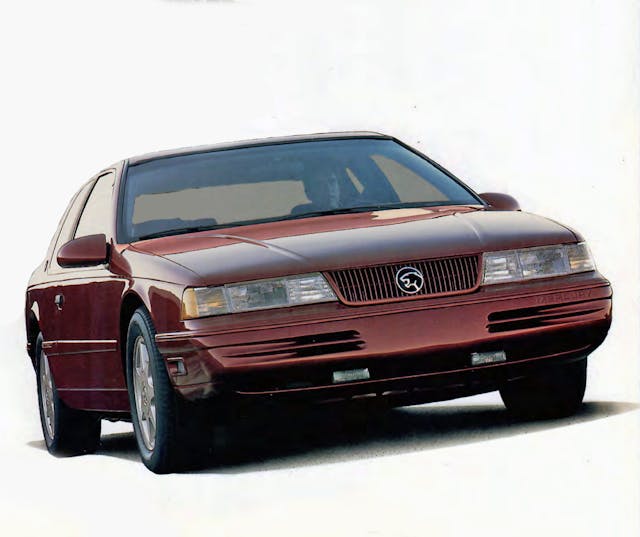
  This pic was in my stash I have had for years, one of the engineers gave it to me.  It was a preproduction model to replace the Thunderbird coupe. but it got killed by upper management.  I loved that car pic as "what could have been". but for the short sightedness of upper management at Ford at the time.


Tuesday, September 30, 2025

"A V-8 Couldn't Save Fords Thunderbird(MN-12) platform


These books are from my stash of books that I have, the bottom 4 books are mostly about *my * favorite car, "The Taurus, and I blogged about that car a lot".  The book "American Icon was about the Boeing CEO coming on to Ford in 2006 when Ford started doing their restructuring without government bailouts to save their company.  He brought the "Taurus" nameplate back after it was was cast out in 2006 when my plant closed down.  His question was "Why would y'all do that? that name had a history behind it?"  it wasn't the cars fault that it got relegated to rental car darling from the juggernaut that saved the company in 1986.  Ford had focused too much on SUV's and trucks and let the bread and butter sedans languished and they had a CEO named Jac Nasser*Hoc,Ptui*, who started forming a premiom automotive group, Lincoln, Austin Martin, Volvo, ete,ete and he let the Ford blue collar cars get the short stick.  I believe that he was responsible for killing the "Ford Taurus SHO", couldn't have a mere Taurus beating the snot out of the high end cars mind you... well anyway Here is my T-bird Article.   I clipped it from...crap I can't remember.


This was a pic of a mustang that looked like mine in Germany.  I was shocked to see the picture in the internet.  My Mustang had that dark sage color and it was unique and at the time I didn't think anything of it.   I loved my Mustang, but I traded her in when I came back to the world in 1991 for my F150 in the hopes of slowing me down......Nope still collected 4 speeding tickets.   I say that to say, I loved the Thunderbirds from that time, I thought they were really cool and to me they were the perfect autobahn cruisers.


I pulled this pic of a "ThunderChicken" off the internet. I always liked the cars, I owned a '94 back in 2009, with the 3.8.  I was bringing the car up from the junkyard status I had gotten her.  She had a lotta Lincoln Mark VIII interior parts like seats, consoles,visors and door panels when I had gone junkyarding.  She was a project car, I enjoyed "wrenching" on her.  I had repaired the door fits, trunk fit, the automatic antenna, and so forth.  Was planning on painting the car after some more repairs.  But the 3.8 was notorious for bad heads and mine fell into that category.  I didn't have the money to repair her and wound up scrapping the car.  Now I have the money, but back then I didn't.  Bummer.


Back in the mid-1980s, Ford’s decision to seek inspiration from European marques was netting significant returns. The one big motivator came from Ford’s own operation in West Germany, as the 1982 Ford Sierra dropped shock and awe into the mid-size family car category. Pairing that moonshot success with the lackluster sales of the 1980-82 Fox-body Ford Thunderbird flagship, Ford designers were given a corporate mandate that gave them freedom and flexibility. It became one of the few times in automotive history that the people who make cars had the ability to make ones they actually wanted to drive.

The first vehicle to benefit from this mandate was a sleeker and slimmer Fox-body ‘Bird for 1983, and its high-performance Turbo Coupe stablemate with a mandatory manual transmission. The latter was paired with multi-port fuel injection, turbocharging, and a genuine fanbase for coupes with aggressively contoured bucket seats and firm suspension tuning.

Ford went as big as its modest budget allowed, picking on the BMW 635CSi with its Foxy Turbo Bird. The 1980s kept looking up, so why not use all this new money, advanced technology, and freedom to make a BMW M6 killer for a fraction of the price? After all, the 1986 Ford Taurus’ success amongst loyalists and foreign-car intenders alike became a case study in case studies. Perhaps lightning could strike twice.

And so an all-new manifestation of the personal luxury genre (which Ford invented in 1958) appeared in the mid-80s. The new platform had a new name, MN12 (Midsized, North America), and Tony Kuchta was its leader. According to Comeback: The Fall and Rise of the American Automobile Industry, he had an executive mandate to make “BMW fighters” of which the Blue Oval could be proud. Kuchta didn’t mince words when speaking to the press about the GM’s personal luxury prospects. The General had just come out with the GM-10 coupe in 1988, so he knew that the Oldsmobile Cutlass, Buick Regal, Pontiac Grand Prix came to the MN12’s gun fight with a butter knife.

“They are nothing cars.”
“They are losers because they aren’t giving the customer what he wants.”

1989 Oldsmobile Cutlass Supreme SL
Oldsmobile

Perhaps this wasn’t a hot take, as Kuchta’s thoughts were shared by others in the car business. And he got away with it, as he was working on an American 6 Series with near-Taurus levels of cash in his coffers.

With Dearborn’s blessing and thanks to Kuchta’s tenacity, the MN12 platform was bigger (in overall size and V-6 engine displacement) and bolder in performance than any front-wheel-drive coupe from GM. There wasn’t a V-8 engine (yet), but the multi-link, fully independent suspension, shockingly long wheelbase, extra standard features (no more crank windows!), and near-silent interior likely made Kuchta consider the personal luxury side of the Thunderbird’s equation sorted. (This platform had more interior room than a Taurus, which could have helped sell the base Thunderbird/Cougar and the posh LX/LS models.)

The Super Coupe (Mercury still had the XR7), not the Thunderbird Turbo, took up the mantle of “BMW fighter,” ditching the buzzy, boosted four-banger for a twin-screw, balance-shafted, supercharged V-6 with a respectable 210 horsepower and a shocking 315 lb-ft of torque. The outgoing Turbo Coupe’s adjustable dampers remained, as did the ABS brakes. But its firmer suspension and limited-slip differential were traditional, mechanical tweaks that could make the new MN12 an independently sprung, legitimate threat to BMW.

Motorweek sampled the Super Coupe’s (SC) distinct blend of European tuning with American proportioning alongside its Mercury Cougar XR7 sister ship, and referenced BMW and Mercedes from the get-go. You even see a touch of BMW’s Hofmeister kink in the SC’s aggressively aerodynamic shape, but its 0-to-60-mph time of 7.5 seconds was almost a second slower than that of an American-spec E24 M6.

The lead foots at Hot Rod magazine put down numbers in an SC that’d scare the Bavarian brute, but made note of Ford’s self-imposed handicap: A disturbingly tall 2.73:1 rear gear. If Ford put the SC automatic’s 3.27:1 differential in all examples, this 3800-lb coupe could have chased legitimate sports cars, laughed at BMW’s all-new 8 Series, and started hunting for Buick’s defunct Grand National at the stoplight grands prix.

Even with a long-legged demeanor, the need for control with this kind of power was crucial. Motorweek suggested the SC had “glued down handling that is akin to Europe’s best.” Hot Rod also addressed the imported competition head-on, suggesting the Super Coupe is “formidable competition for these world-class performers while still maintaining its unique American-built character.”

That should be enough to ensure that Kuchta’s disdain for the GM-10 platform rings true, but the reality of personal luxury demands two more cylinders from their owners. Enter the introduction of the V8-powered MN12 for 1991 … with dark clouds and ominous music in the background.

By this point everyone in Detroit knew Ford executives had changed their tune on the MN12. It was now deemed too large, too heavy, and too expensive to make. There was no mea culpa in front of the media, but glaring omissions like the dual front airbags from its 1989 Lincoln Continental cousin were hastily resolved before production. You see the slapdash fix in the curiously thick steering column, and the shallow, roll-top storage nook where a passenger air bag was intended.

Less obvious is the air-bag warning light in the 1989 Thunderbird gauge cluster, which reached dealerships without a light bulb behind it. What was perceived as an accolade-laden vehicle made production as a tragic also-ran, and the tone from upper management signaled Ford’s intent to make this platform’s short life as difficult as possible. (There was chatter about adding the MN12’s independent rear suspension to the new 1992 Crown Victoria … until there wasn’t.)

Customers still demanded a personal luxury vehicle with a V-8, so Ford splashed the cash to wedge a 5.0-liter small-block under the MN12’s impossibly sleek hood line. Adding more salt to the gaping, self-imposed wound was Motorweek’s modest, 9.2-second sprint to 60. There’s good reason why the 5.0 HO (high output) motor from a Fox-body Mustang did so poorly in the Thunderbird. Ford installed a smaller/shorter intake and a truly awful exhaust system (with at least one 90-degree bend) to shoehorn it into the MN-12’s cramped engine bay. While the personal luxury enthusiast got what they wanted, perhaps this resolution’s impact is best explained by Eric Dess of AeroCats.com, a Mercury Cougar-centric website for owners and history buffs alike:

A traditional V-8 was almost always offered on the Cougar, so that’s what the customer wanted with the MN12 cat. It took two model years to re-engineer the 5.0 to fit under the hood, and millions of dollars were spent in the process. Sales did not take off, although the V8- option was popular enough. Perhaps the reality is that the fix was too little, too late.

If I am being honest, even if the V-8 was available from the start in 1989, it still probably wouldn’t have saved the MN12 from being the financial disaster it was. Spending $2 billion and bleeding all the way is not a great way to launch a car!

Eric’s points are not only valid; they also show that Ford needed to abandon the “BMW fighter” mandate of a previous regime. There’s been chatter that Ford’s new management openly asked why this wasn’t intended as a “two-door Taurus” from the start. We may never get an answer to their question, but the fact that Ford neglected the MN12 even after nearly a million Thunderbirds (and over 500,000 Cougars) sold suggests a sinister problem amongst Dearborn’s ranks.

This tale is actually about two companies managing a single platform. There was one Ford Motor Company that planted an MN12-shaped tree hoping it would bear Germanic fruit, which we see in the Thunderbird SC’s performance. Another Ford Motor Company eventually cut this tree down for firewood.

Even as the company sought rear-wheel-drive kindling, it still made improvements. Ford upgraded the compromised 5.0 to its new Modular 4.6-liter V-8 in 1994 to prove it. Speaking of modularity, the creation of the 1993 Lincoln Mark VIII on this platform likely ensured a handful of fastidious upgrades over time. Perhaps there was instead a give and take, best seen in how the Thunderbird SC experienced a shrinking of sway-bar sizes over time.

Too bad there was another Ford product that turned these corporate machinations into the textbook definition of a moot point. Enter the 1991 Ford Explorer.

The 1990s weren’t about chasing Cutlasses or scaring the living daylights out of BMW 6 Series drivers. In a move that nobody could anticipate, the act of tarting up a Ford Ranger truck into the Explorer SUV reaped sales and market share that no MN12 Thunderbird could fathom. Forget about moving goal posts—let’s just move to a new, SUV-shaped stadium!

In a further twist of irony, Ford added the 5.0-liter V-8 engine to the 1996 Explorer and sales ticked up significantly. We may never know when the V-8-powered SUV appealed to fans of personal luxury, but trucks like the Escalade assured us of this reality. Ford had one winner in the 1990s, and it wasn’t on a bespoke platform with an independent rear suspension.

Star-crossed from day one Job 1, Ford’s MN12 platform likely never had a chance. It’s an unfortunate ending mired in internal struggles and changing consumer sentiment, but perhaps we all see it in hindsight.