Webster

The Constitution was made to guard the people against the dangers of good intentions." --American Statesman Daniel Webster (1782-1852)


Friday, March 10, 2023

The Evolution of the Colt Model 601 (The M16)


 I had blogged about the M 16 and my experiences with the Rifle and my personal Rifles. you know...before the durn Kayak accidents.  Y'all can "Read about it and ordinance dept shafting the development".  This was another  article that I snagged from "American Rifleman",  I have been busy working, but I just took a week off from work to do spring cleaning including getting a big roll on dumpster.

Colt 601 Cutway

On April 19, 1963, military aide Gen. Chester V. Clifton brought two firearms into the Oval Office to show them to President John F. Kennedy. One was a crossbow intended for use in counterinsurgency operations, and the other was an AR-15, the Colt Model 601. President Kennedy had seen the AR-15 demonstrated the year before and had been directly involved in the gun’s military procurement, so he was well aware of the various innovative aspects of its design. The example JFK held that afternoon in the White House was the product of a lengthy design development evolution that began six years earlier and would eventually produce the most prolific military rifle in the nation’s history.
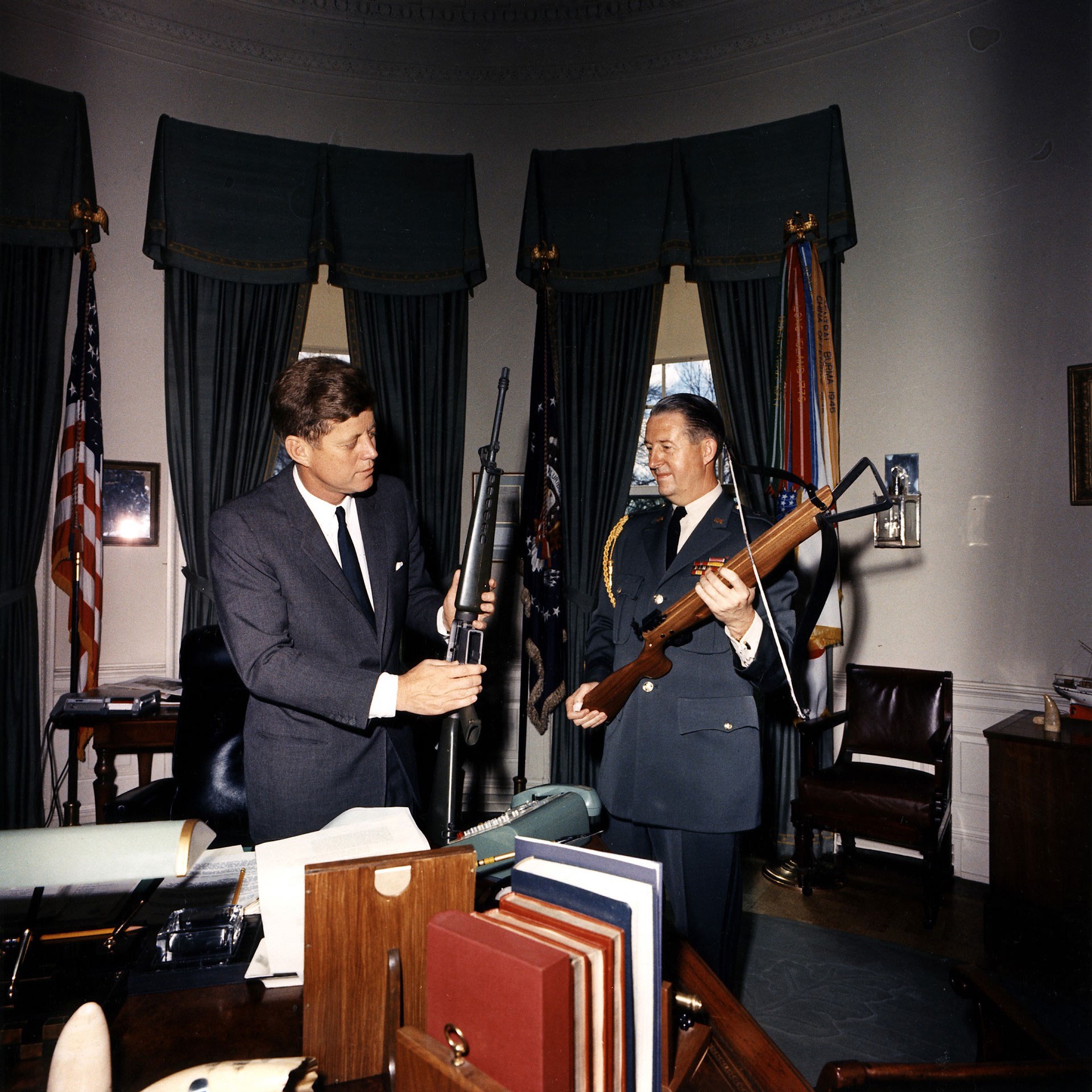
President John F. Kennedy and Military Aide Gen. Chester V. Clifton examine a COLT Model 601 rifle and crossbow in the White House’s Oval Office on April 19, 1963.President John F. Kennedy and Military Aide Gen. Chester V. Clifton examine a Colt Model 601 rifle and crossbow in the White House’s Oval Office in April 1963. (ST-C85-1-63)

When a White House photographer snapped a now-famous image of the meeting, John Kennedy had only 217 days left to live, but the Model 601 on the other hand was just beginning its military service. During the next six decades, the rifle would fight in Vietnam, Grenada, Panama, Iraq and Afghanistan, among other geopolitical hotspots. Its basic design would evolve during those 60 years to ultimately become the M4 carbines and M16A4 rifles that arm our troops today. But it all began with the Model 601, the rifle that President Kennedy personally examined in the Oval Office.
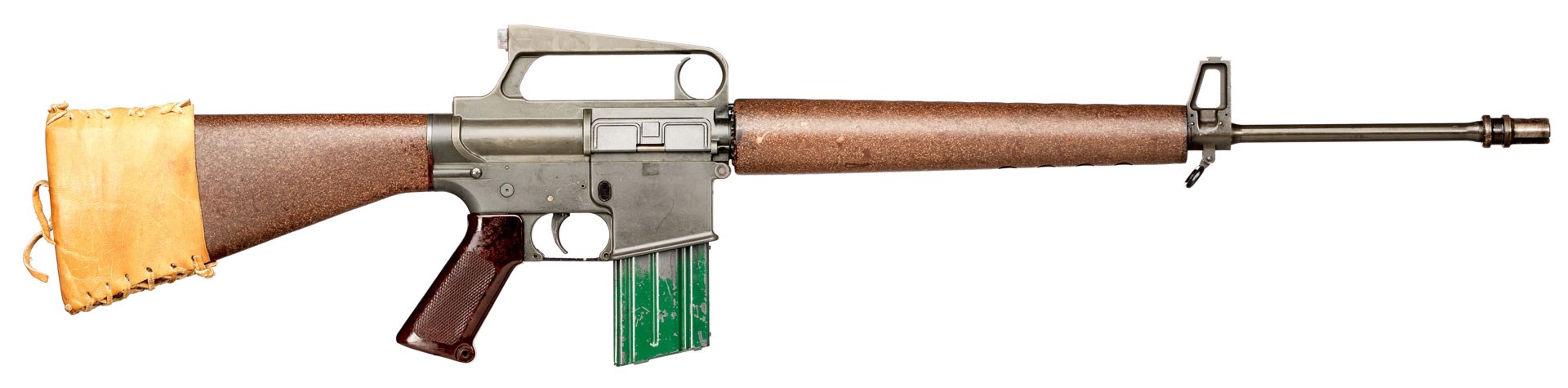
Right side view of the ArmaLite XAR1501 prototype. Photo courtesy of the Institute for Military TechnologyRight side view of the ArmaLite XAR1501 prototype. Photo courtesy of the Institute for Military Technology

Serial production of the Model 601 began in December 1959, and continued through to the summer of 1963. During that time, more than 14,000 of them came off the assembly line. Although the Model 601 was the first AR-15 to be mass-produced, it was not the first AR-15. The design development and evolution that ultimately led to it began in the spring of 1957, when the Continental Army Command (CONARC) expressed an interest in evaluating a rifle chambered for a Small Caliber, High Velocity (SCHV) cartridge. By then, the ArmaLite Division of Fairchild Aircraft Corporation was attempting to find a buyer for a 7.62×51 mm NATO-chambered, select-fire rifle that had been designed by Eugene Stoner and developed under the model designation AR-10.
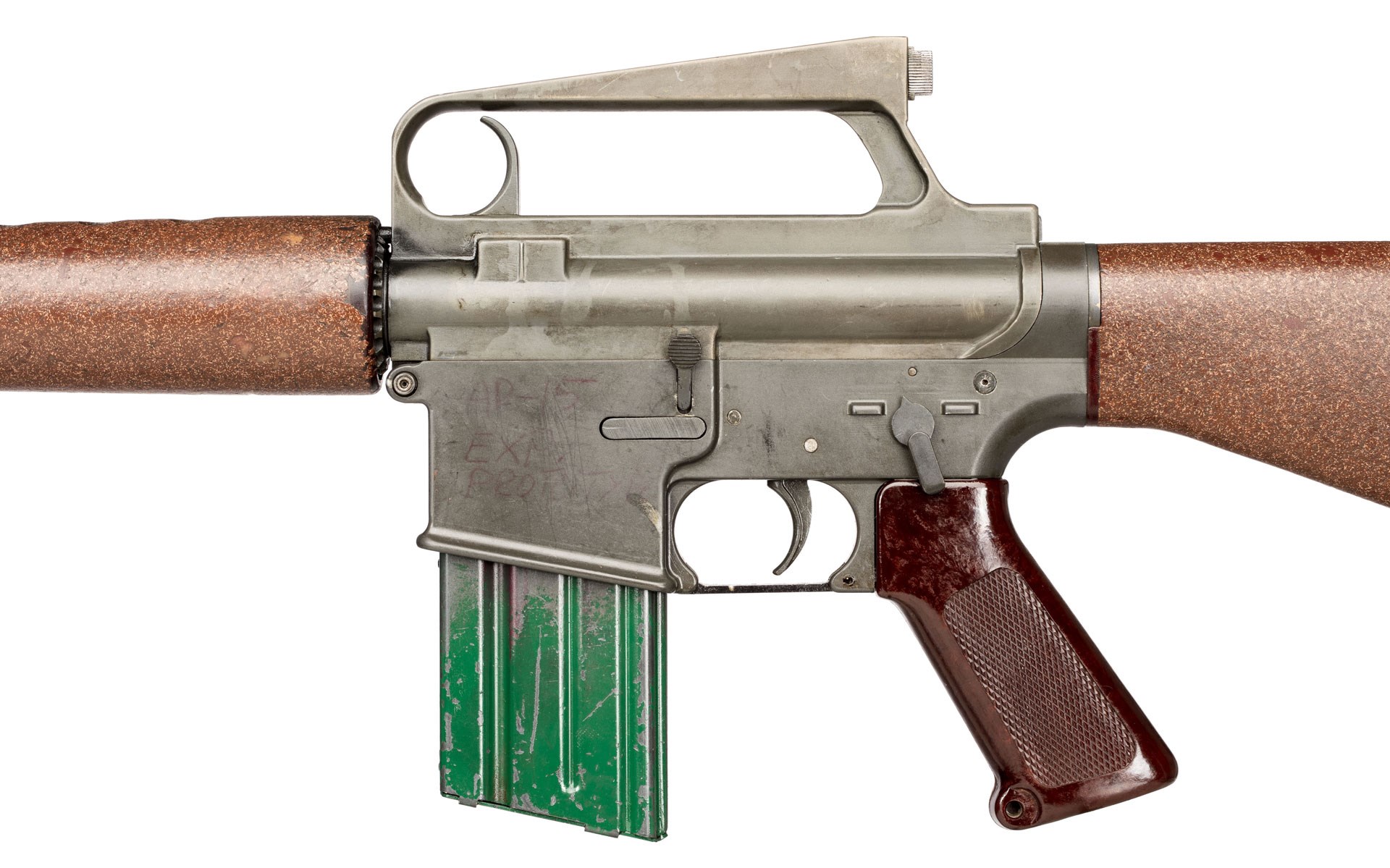
Left side closeup of the receiver of the ArmaLite XAR1501 prototype. Photo courtesy of the Institute for Military TechnologyLeft side closeup of the receiver of the ArmaLite XAR1501 prototype. Photo courtesy of the Institute for Military Technology

Although it was lightweight, because of the use of plastic and aluminum in its construction, and it offered a number of significant advantages as an infantry rifle, the U.S. Army had just rejected the AR-10 in favor of the M14. Despite this setback, ArmaLite was not ready to throw in the towel, so it continued to look for a customer for the AR-10 while it simultaneously began a process of adapting its design to the type of SCHV cartridge the Army now wanted to test. Two engineers at ArmaLite, Robert Fremont and L. James Sullivan, were therefore assigned the task of scaling-down Stoner’s 7.62 NATO rifle to chamber an existing wildcat cartridge known as .222 Remington.
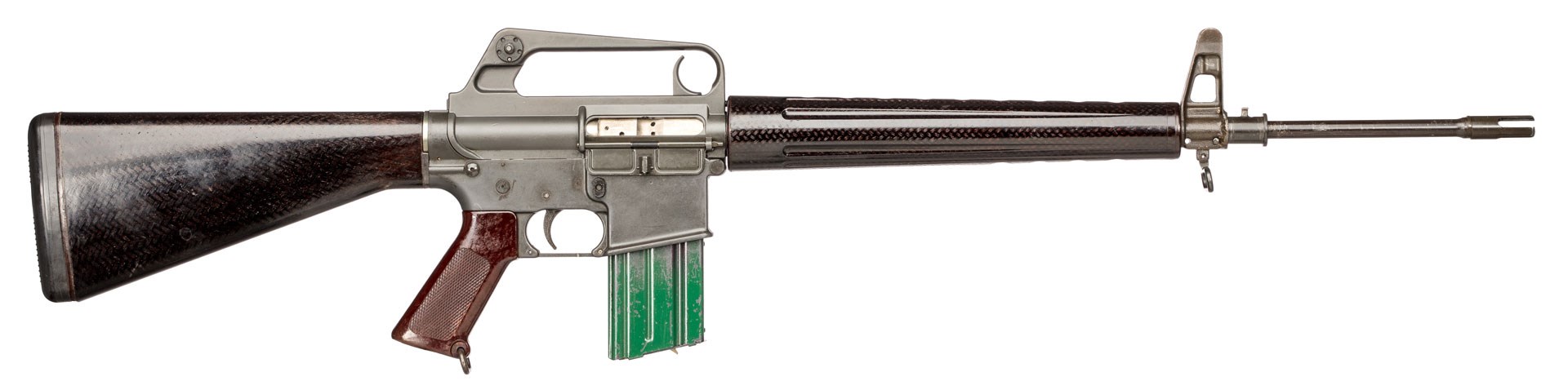
Right side view of ArmaLite prototype AR-15 S/N 000001. Note the buttstock and one-piece forward handguard made from woven fiberglass. Photo courtesy of the Institute for Military TechnologyRight side view of ArmaLite prototype AR-15 Serial No. 000001. Note the buttstock and one-piece forward handguard made from woven fiberglass. Photo courtesy of the Institute for Military Technology

The prototype that Fremont and Sullivan created generally resembled the AR-10, insofar as it combined a buttstock and forward handguard made from woven fiberglass with an upper and lower receiver made of anodized aluminum. Like the AR-10, a distinctive carry handle was incorporated in the upper-receiver forging that provided protection for an equally distinctive non-reciprocating, trigger-type cocking handle. The rifle used Stoner’s patented direct gas-impingement operating system and multi-lug rotating bolt, a 20" fluted pencil barrel with 1:14" twist rifling, and a detachable box magazine with 25-round capacity. Designated XAR-1501, it was demonstrated for CONARC by Stoner himself in May 1957, with the result that an order for 10 additional test rifles for further evaluation was placed.
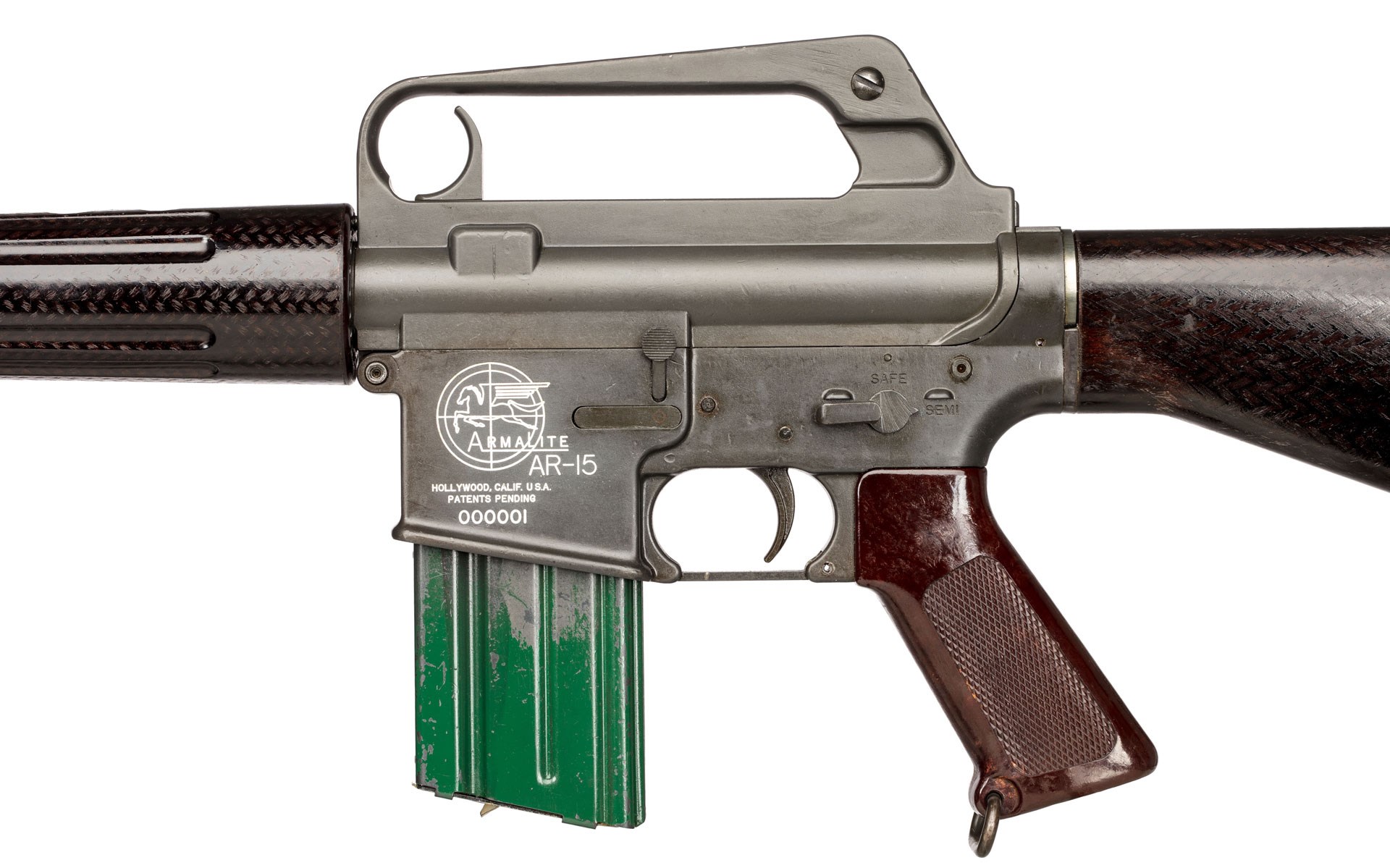
Left side closeup of ArmaLite prototype AR-15 S/N 000001. Note the AR-10 trigger type charging handle. Photo courtesy of the Institute for Military TechnologyLeft side closeup of ArmaLite prototype AR-15 Serial No. 000001. Note the AR-10 trigger type charging handle. Photo courtesy of the Institute for Military Technology

The only problem was that CONARC wanted the new SCHV cartridge’s bullet to penetrate a helmet at 500 yards. Since the .222 Rem. cartridge was not capable of meeting that requirement, Remington modified it by lengthening the case to provide the additional powder capacity needed to generate additional muzzle velocity and achieve the required penetration. A 55-grain bullet and DuPont’s IMR-4475 nitrocellulose smokeless powder brought the package together, and the new cartridge initially received the designation .222 Special. To avoid confusion, though, that designation was ultimately changed to .223 Rem. More changes would soon follow.
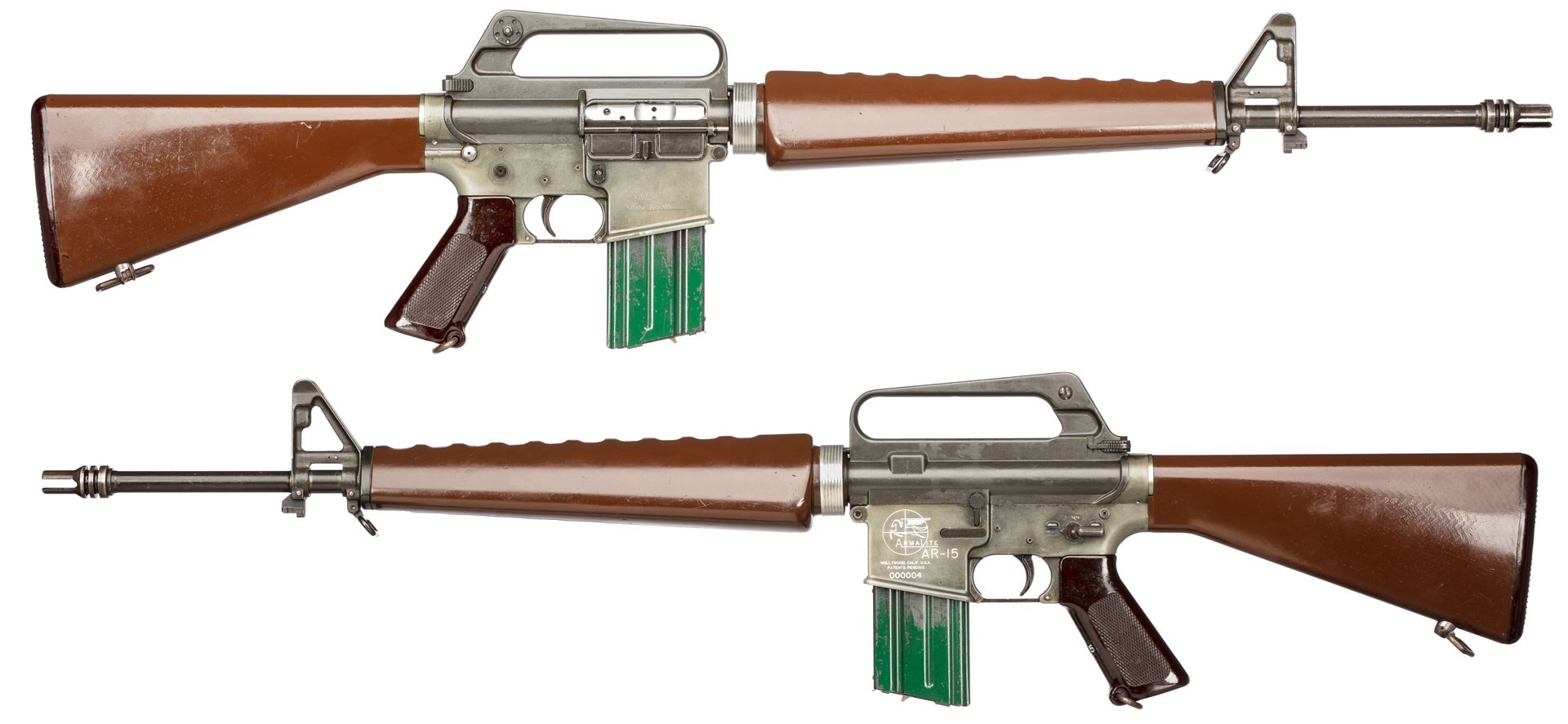
Left- and right-side view of ArmaLite prototype AR-15 S/N 000004. A 601-type upper receiver group from a later phase of the development of the AR-15 has been paired with the S/N 000004 lower despite the fact that it was first built during an earlier phase. Photo courtesy of the Institute for Military TechnologyLeft- and right-side view of ArmaLite prototype AR-15 Serial No. 000004. A 601-type upper receiver group from a later phase of the development of the AR-15 has been paired with the Serial No. 000004 lower despite the fact that it was first built during an earlier phase. Photo courtesy of the Institute for Military Technology

In March 1958, ArmaLite delivered the 10 AR-15s in .223 Rem. to Fort Benning, Ga., for test and evaluation. Except for a noticeable change to the rear sight assembly, the addition of a sling swivel to the Bakelite pistol grip and the addition of a bipod mounting bushing affixed to the front sight base, these rifles were anatomically similar to the XAR-1501. Similarities notwithstanding, though, the new cartridge gave them the additional muzzle velocity needed to pass the 500-yard helmet penetration test. In addition to that, these AR-15s exhibited the low malfunction rate of just 6.1 for every 1,000 rounds fired in an early demonstration of the legendary reliability for which the system would ultimately be known.
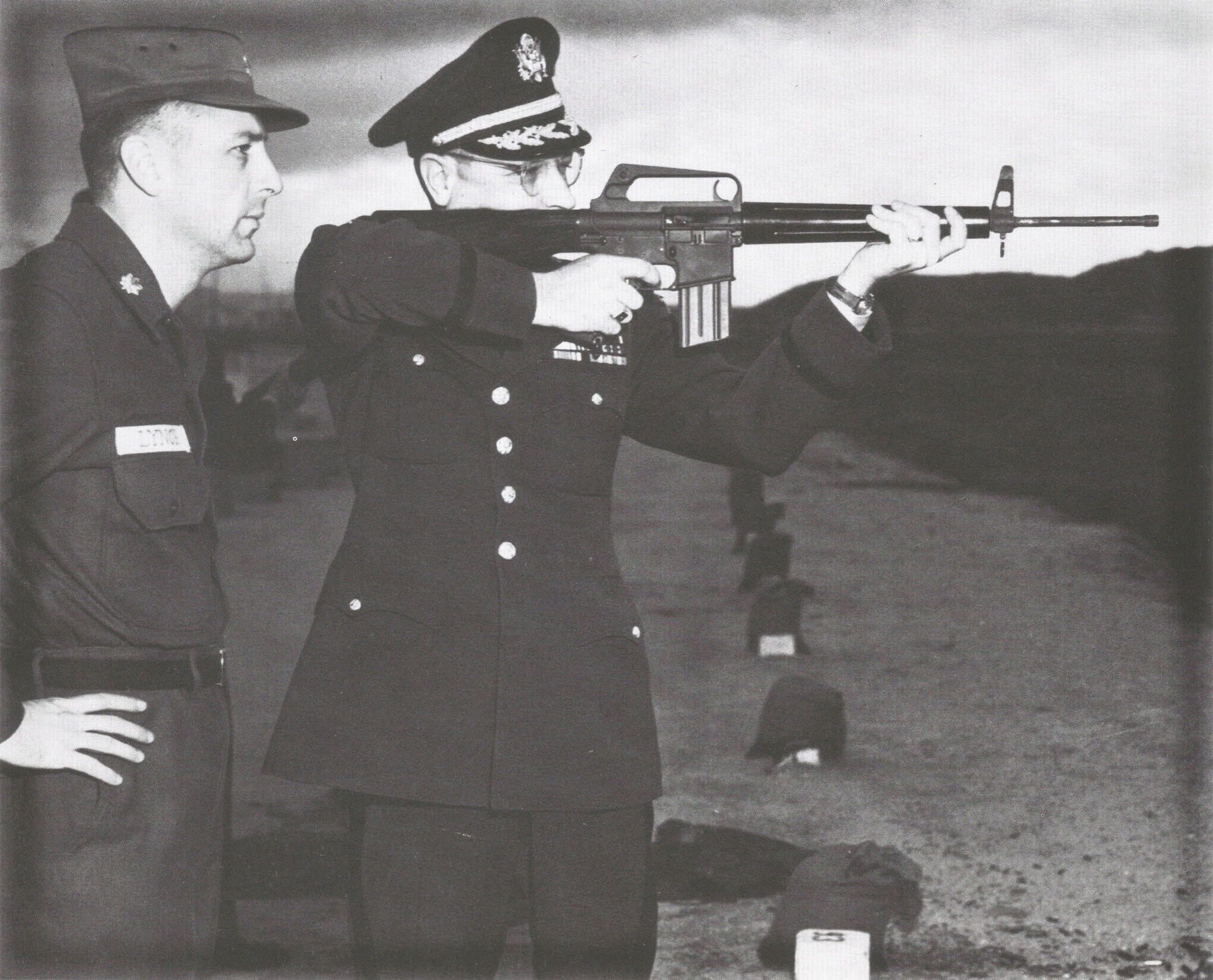
Major Eugene M. Lynch observes Lt. Col. Robert Vallendorf as he shoulders an ArmaLite prototype AR-15 (possibly S/N 000013) at Fort Benning on March 31, 1958. The rifle has no flash suppressor, but it is equipped with the AR-10 trigger type charging handle, one-piece cylindrical fiberglass handguard, and 25-round capacity magazine. U.S. Army photoMajor Eugene M. Lynch observes Lt. Col. Robert Vallendorf as he shoulders an ArmaLite prototype AR-15 (possibly Serial No. 000013) at Fort Benning on March 31, 1958. The rifle has no flash suppressor, but it is equipped with the AR-10 trigger type charging handle, one-piece cylindrical fiberglass handguard, and 25-round capacity magazine. U.S. Army photo

Two months after the tests at Fort Benning, the Infantry Board published a report titled “Evaluation of Small Caliber High Velocity Rifles – ArmaLite (AR-15)” that identified the rifle as a potential replacement for the M14. Everything was not perfect, though, because it was found that the AR-15’s barrel could burst if water intruded into it, and because of that, the board decided that research should continue. Accordingly, the report recommended ordering another eight prototype AR-15s with “minor” modifications for further test and evaluation, and those modifications produced some elements of the AR-15’s anatomy that remain with the firearm to this day.
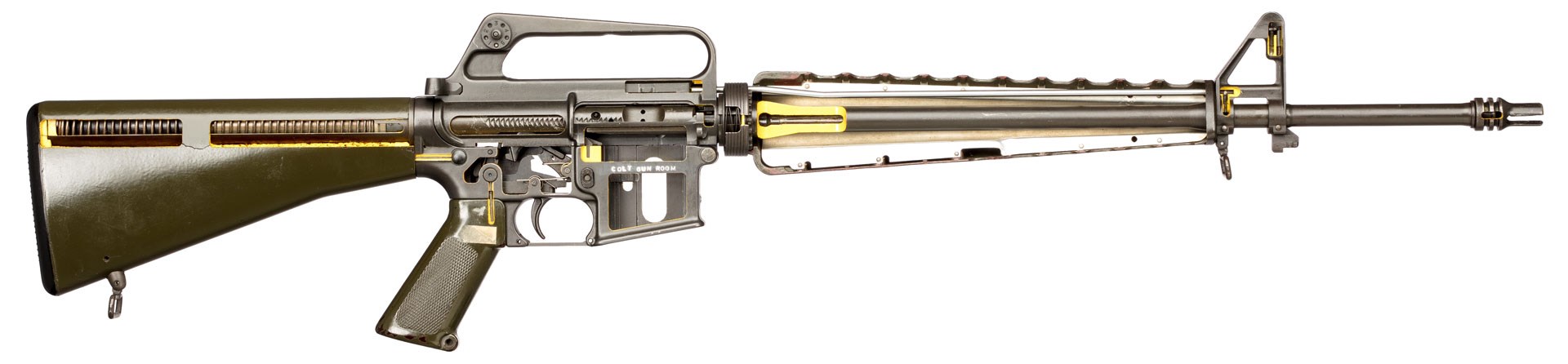
Right side view of a COLT/ArmaLite AR-15 Model 601 cutaway that reveals details of the rifle’s gas tube, the left handguard’s single heat shield, and the early Edgewater buffer. Photo courtesy of the Institute for Military TechnologyRight side view of a Colt/ArmaLite AR-15 Model 601 cutaway that reveals details of the rifle’s gas tube, the left handguard’s single heat shield and the early Edgewater buffer. Photo courtesy of the Institute for Military Technology

First of all, the Army wanted the one-piece conical fiberglass handguard changed to a triangular two-piece design. It also requested a magazine capacity change from 25-rounds to 20-rounds as well as a redesign of the AR-10 trigger type charging handle. In response, ArmaLite introduced a non-reciprocating triangular charging handle positioned at the rear end of the carry handle. To reduce the water sensitivity that had been previously observed, the barrel fluting that had been a part of the first run of prototype rifles was eliminated. This was a change that made the barrel slightly heavier and, therefore, less likely to burst when water intruded into the bore. The selector positions were also changed.
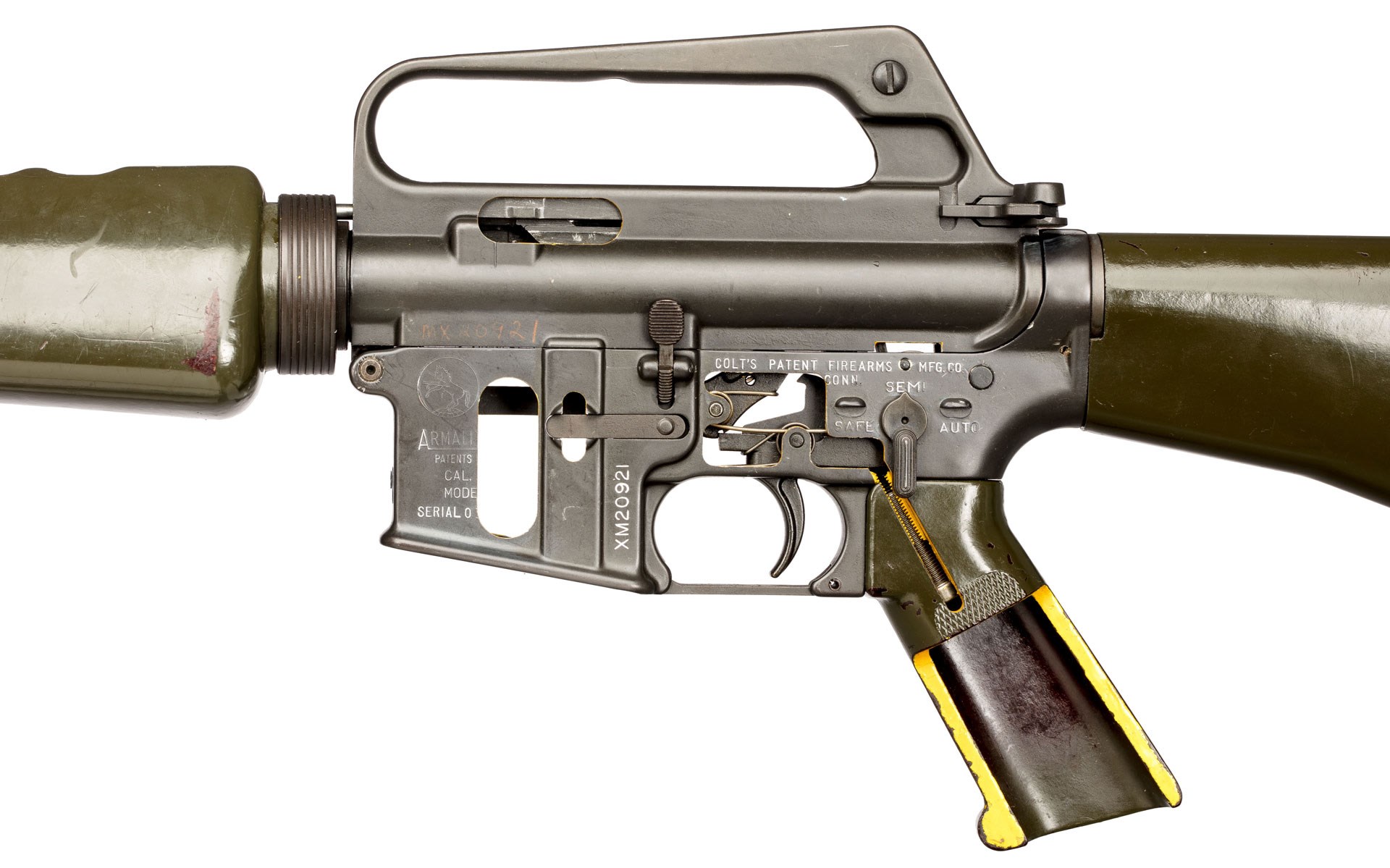
Left side closeup of a COLT/ArmaLite AR-15 Model 601 cutaway. The original 601-type triangular charging handle has been replaced by a later 602-type charging handle. Photo courtesy of the Institute for Military TechnologyLeft side closeup of a Colt/ArmaLite Model 601 cutaway. The original 601-type triangular charging handle has been replaced by a later 602-type charging handle. Photo courtesy of the Institute for Military Technology

Earlier prototype AR-15s featured selector settings with “AUTO” in the nine o’clock position, “SAFE” at twelve o’clock and “SEMI” at three o’clock. The Army worried that, in this configuration, troops crawling through brush could unintentionally advance the selector from the “SAFE” position to the “AUTO” position. ArmaLite solved the problem with a simple redesign that moved “SAFE” to nine o’clock, “SEMI” to twelve o’clock and “AUTO” to three o’clock. This is also when ArmaLite introduced the aluminum slip ring for retention of the two-piece handguards, as well as a new version of the flash suppressor that could also function as a grenade launcher and a new version of the front-sight base, incorporating a .875" gap between its front and back legs for securing the bipod. Little by little, the sleek austerity of the AR-15 prototypes was beginning to give way to an appearance more like the rifle President Kennedy would be photographed with five years later.
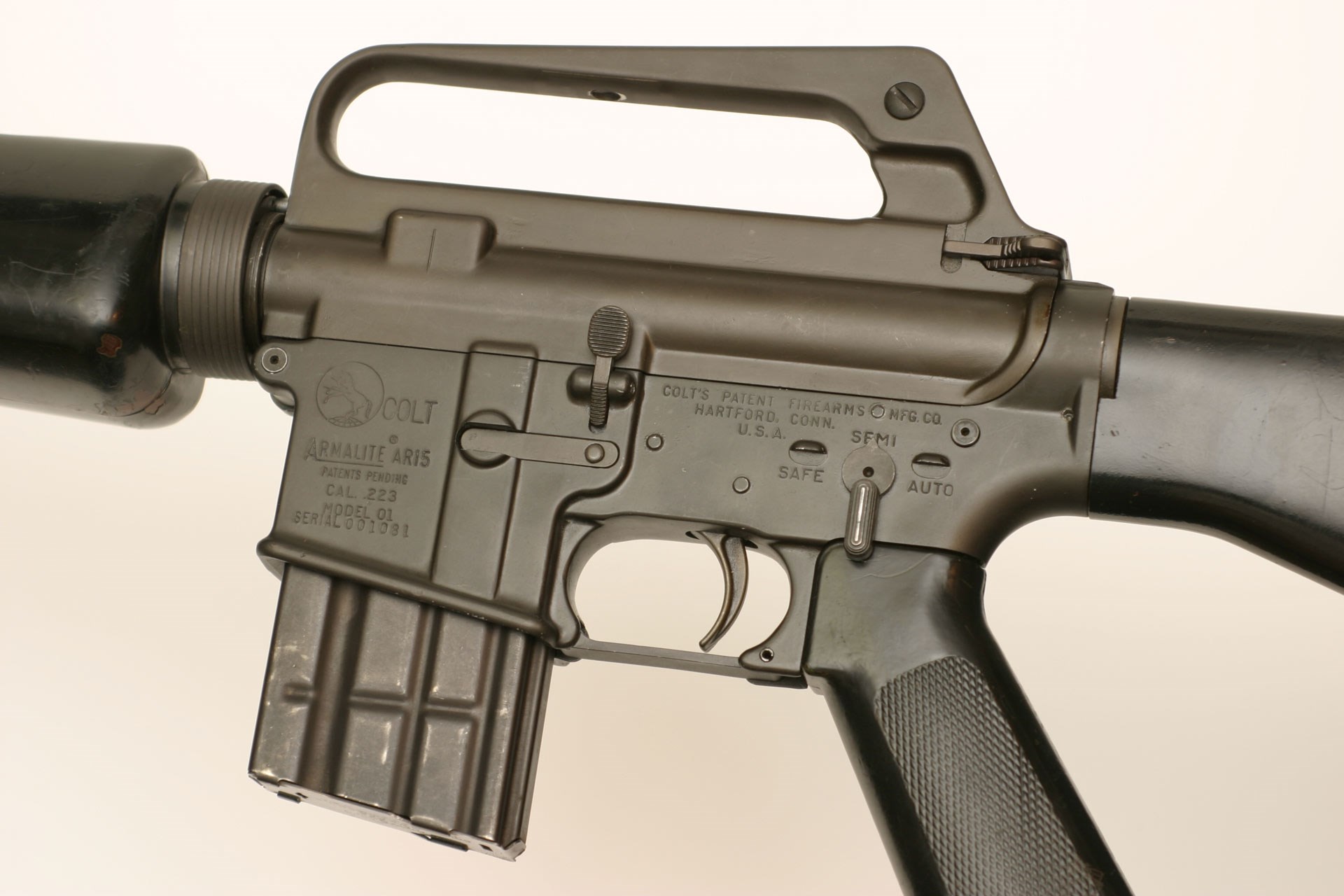
Left side closeup of COLT/ArmaLite AR-15 Model 601 S/N 001081. The rifle’s original green painted furniture has been replaced by black painted furniture. Photo by the authorLeft side closeup of Colt/ArmaLite Model 601 Serial No. 001081. The rifle’s original green painted furniture has been replaced by black painted furniture. Photo by the author

As the latest batch of modified prototype AR-15s was being built back in Hollywood, Calif., later that year, ArmaLite was in trouble. The company was losing money and was therefore in no position to continue the costly design development of the AR-15, even though it was beginning to look like the Army just might adopt the rifle. While a multi-million-dollar government contract could save the day, there was another even bigger problem that had to be addressed. ArmaLite was a small shop that was not capable of the kind of mass production that would be required if the Army placed a big order, and Fairchild’s Board of Directors was not willing to allow it to establish an in-house production line.
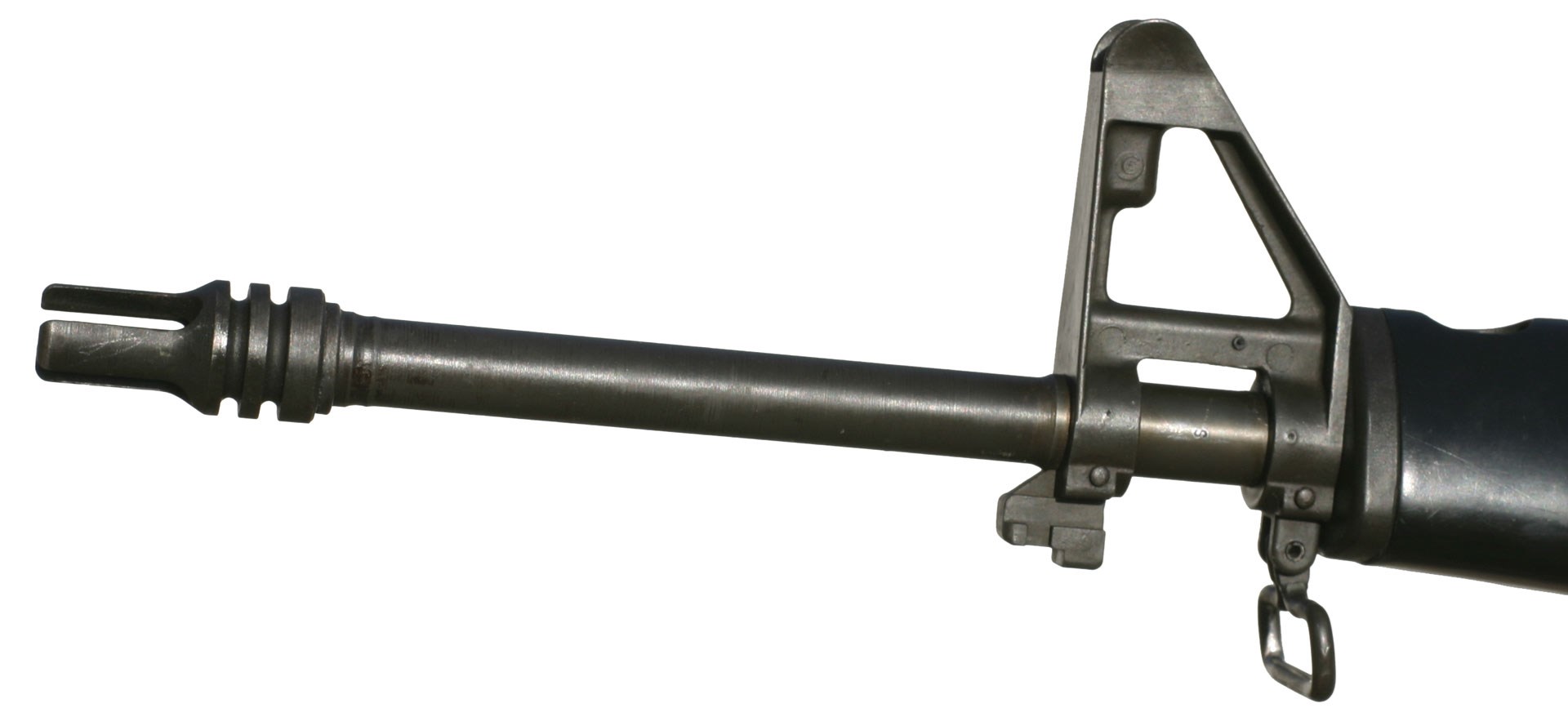
Closeup of the cast front sight base and duckbill flash suppressor of COLT/ArmaLite AR-15 Model 601 S/N 001081. Photo by the authorCloseup of the cast front sight base and duckbill flash suppressor of Colt/ArmaLite Model 601 Serial No. 001081. Photo by the author

ArmaLite was going to need a well-resourced partner capable of financing the AR-15’s continuing design development and eventually the large-scale production of the rifle. Colt’s Patent Firearms turned out to be that partner. Although it was not much better off than Fairchild or ArmaLite financially, Colt nevertheless had the kind of industrial capacity to get large scale production of the AR-15 rolling. To that end, the company bought the rights to the AR-15 from ArmaLite in 1959 for a lump sum of $75,000, plus a 4.5-percent royalty against future sales for the use of Eugene Stoner’s patented gas system.
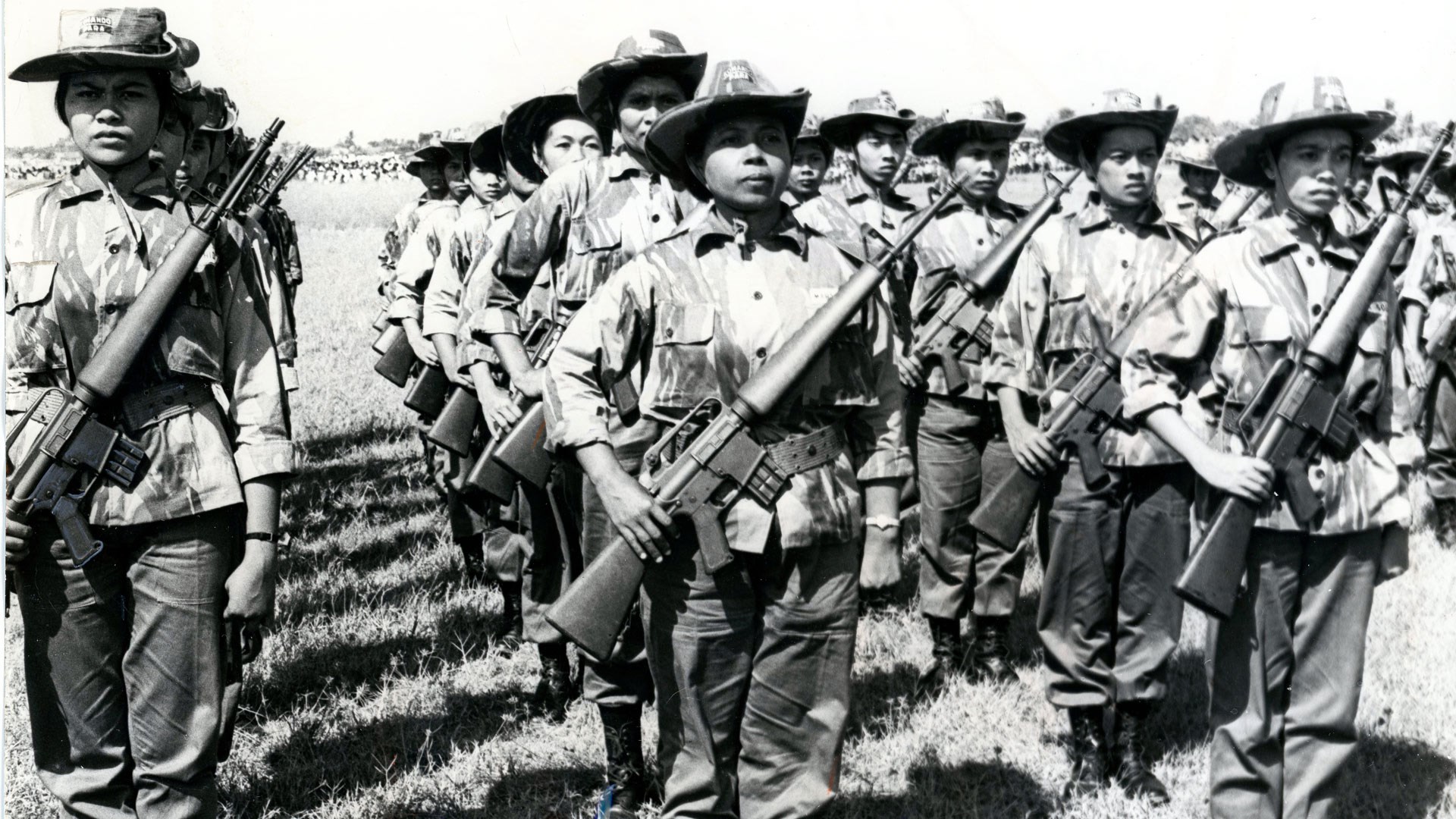
Indonesian female volunteer paratroopers armed with COLT/ArmaLite AR-15 Model 601 rifles - June 1965. Author’s collectionIndonesian female volunteer paratroopers armed with Colt/ArmaLite AR-15 Model 601 rifles - June 1965. Author’s collection

Just when it looked like the future of the AR-15 was in good shape, the Army backed away from it. The rifle had failed rain tests, and it did not help matters at all that Arctic testing in Alaska left a false indication that there were more problems yet to be solved. At that point the gun had progressed through enough of a design evolution that it was ready for mass production, and when that began at Colt in December 1959, it was assigned the model number “01,” the first of many in Colt’s “600 series” of AR-15 type rifles. But even as serial production of the Model 601 began in Connecticut, the gun’s evolution continued. After assembling the first 300 rifles with unpainted Bakelite handguards, pistol grips and buttstocks, Colt began applying a light green epoxy paint to the furniture. Toward the end of Model 601 production though, black paint replaced green.
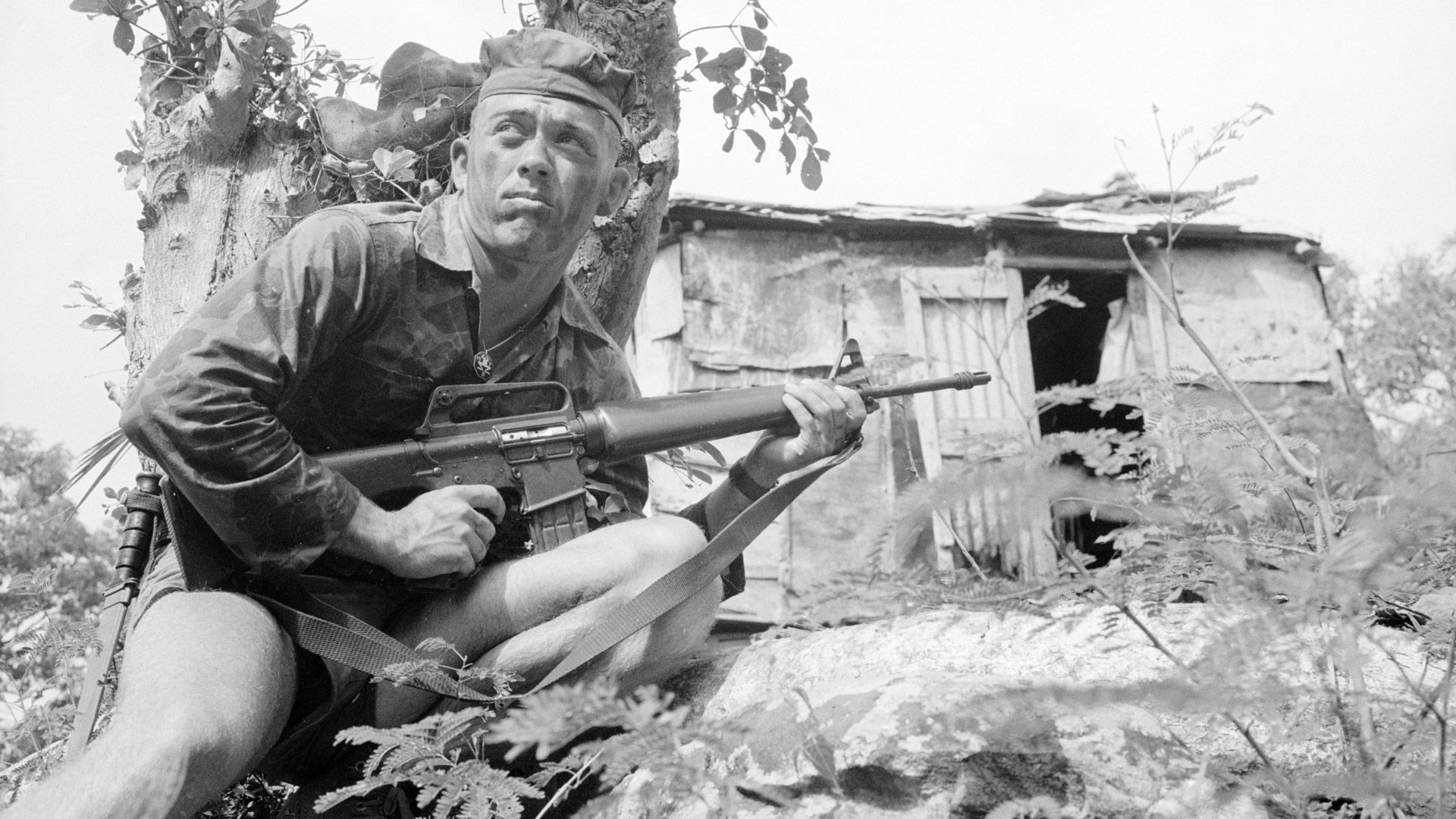
A U.S. Navy SEAL armed with a COLT/ArmaLite AR-15 Model 601 is seen here during a training exercise on St. Thomas, U.S. Virgin Islands on February 21, 1963. Photo by Marion S. Trikosko/US News and World Report Collection/PhotoQuest/Getty ImagesA U.S. Navy SEAL armed with a Colt/ArmaLite Model 601 is seen here during a training exercise on St. Thomas, U.S. Virgin Islands on February 21, 1963. Photo by Marion S. Trikosko/US News and World Report Collection/PhotoQuest/Getty Images

Eventually, changes were also made to the profile of the buttstock, the configuration of the receiver roll markings and the type of aluminum alloy used to make the uppers and lowers. By the 1960s though, the Model 601 had reached its final form right at about the time that things really began to happen for it. On July 4, 1960, the U.S. Air Force Vice Chief of Staff, Gen. Curtis LeMay, test fired Model 601 Serial No. 000106 during a barbeque in Maryland, and the emphatically positive impression he took away from the experience would ultimately lead to the rifle’s adoption by the American military. Although the U.S. Army had initiated the development evolution that eventually led to the creation of the Model 601, it was the U.S. Air Force that made the first purchase, and that set in motion the sequence of events that brought a Model 601 to the White House on April 19, 1963.
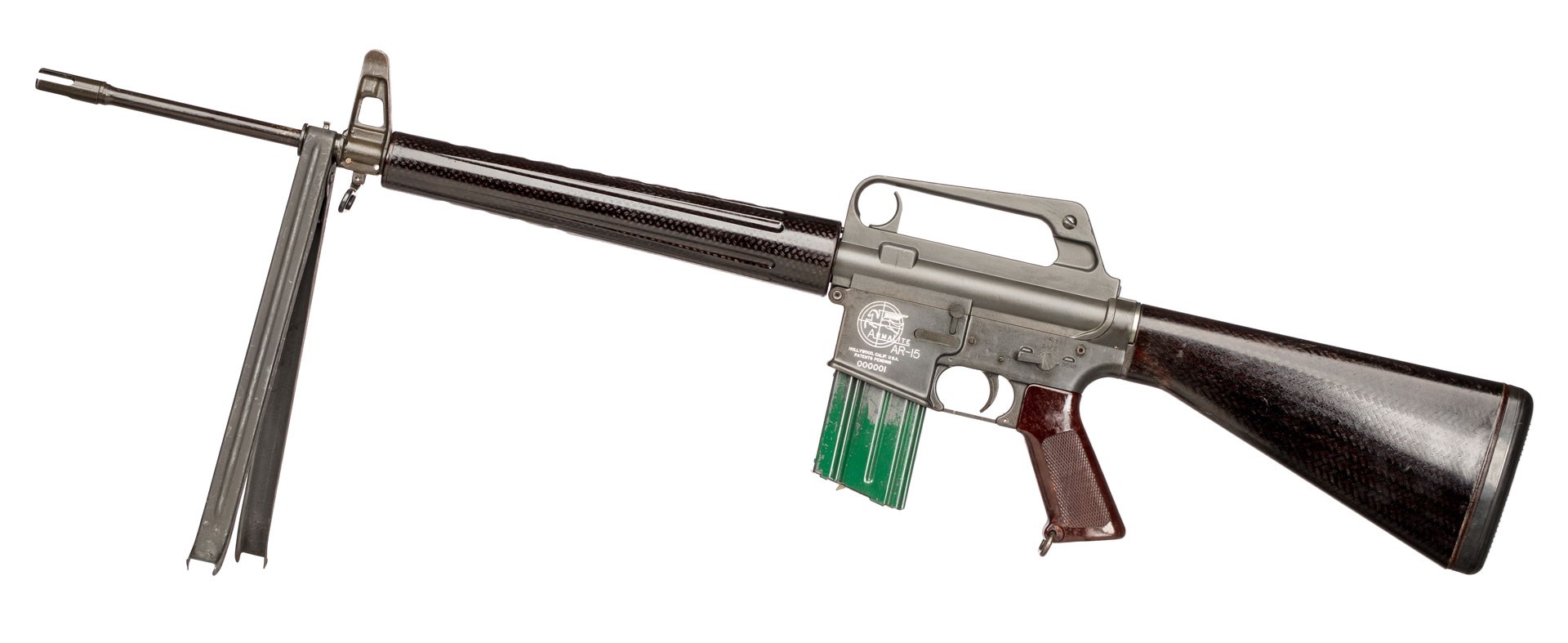
Left side view of ArmaLite prototype AR-15 S/N 000001 with bipod attached. Photo courtesy of the Institute for Military TechnologyLeft side view of ArmaLite prototype AR-15 Serial No. 000001 with bipod attached. Photo courtesy of the Institute for Military Technology

The AR-15 that JFK handled that day had come a long way from the XAR-1501 that had started it all way back in 1957, and many big changes were yet to come. But, in those days before forward assist devices, birdcage flash suppressors, chrome-lining, flat top upper receivers and three-round burst, the rifle was lighter, simpler and more lethal. In the end, the AR-15 would be asked to do much more than anyone could have imagined in 1963, and it would serve all the way across the threshold of the 21st century. President Kennedy would not live to see any of this though because the example he inspected in the Oval Office that Friday afternoon in April 1963 was the only AR-15 he would ever know.


Tuesday, March 7, 2023

"Reading A Rifle" The Story of One Mosin-Nagant

 I thought this was an interesting story, I thought I knew quite a bit about "Mosin" since I owned a couple until that durn kayak accident*Sniff*Sniff*.  This article had some stuff that I didn't know about.

     I shamelessly "Nicked" this from American Rifleman


 Historical arms collectors are often confronted with opportunities to acquire guns that are outside the normal boundaries of their collections, like, in this instance, Russian rifles that were used by Finland during World War II. However, creative thinking and knowledge of the gun’s history may justify their inclusion in those collections

As arms collectors, many of us have established fairly strict boundaries on our collections—most often out of financial necessity and available space in our homes— and we sometimes pass by interesting, and affordable, antique or vintage guns being offered for sale, because they don’t seem to fit within the confines of our collection. However, by taking a broader view and ultimately understanding the history of your period of interest, guns that, at first glance, don’t appear as candidates for inclusion in your collection may actually have a place in it. The secret is to know how to discern the history of a gun and to read the story that it can tell you.

While taking a break during a musical session in my former collection room (the late “Kriegszimmer”) some years ago, one of my pals looked around at the assemblage of military memorabilia and asked the rhetorical question: “If these things could only talk, what kind of a tale would they have to tell?” I was sitting next to a vintage rifle, so I pulled it out of the rack and said, “This one really has quite a history, and I can only imagine the stories that it could tell.” Taking this as a cue, the other guest musicians asked me to tell the story of this well-traveled rifle that had been born in one country, fought for another country and then fought for two more countries over a short span of only thirty years.

Mosin nagant bolt action recevier gun rifle three line

Facing a shortage of rifles in the early months of World War I, czarist Russia contracted with American arms manufacturing firms to provide Model 1891 Mosin-Nagant rifles for its troops. Courtesy of the author.

When Russia entered into World War I, its huge conscript army was already woefully short of service rifles. Its standard infantry shoulder arm was the “Russian Three-Line Rifle, Caliber 7.62 mm. (.3”),” or M1891, a five-shot, bolt-action rifle that was chambered for the 7.62x54 mm R rimmed cartridge. The “three-line” designation was a Russian term, meaning that the caliber of the bore was 0.3” in diameter, a “line” representing 0.1”—thus .30 caliber, or 7.62 mm. A Russian army officer, Sergei Mosin, designed the rifle in 1891, but a Belgian inventor, Leon Nagant, claimed to have developed certain features on it, so, at least in the United States, this rifle is commonly referred to as a “Mosin-Nagant.”

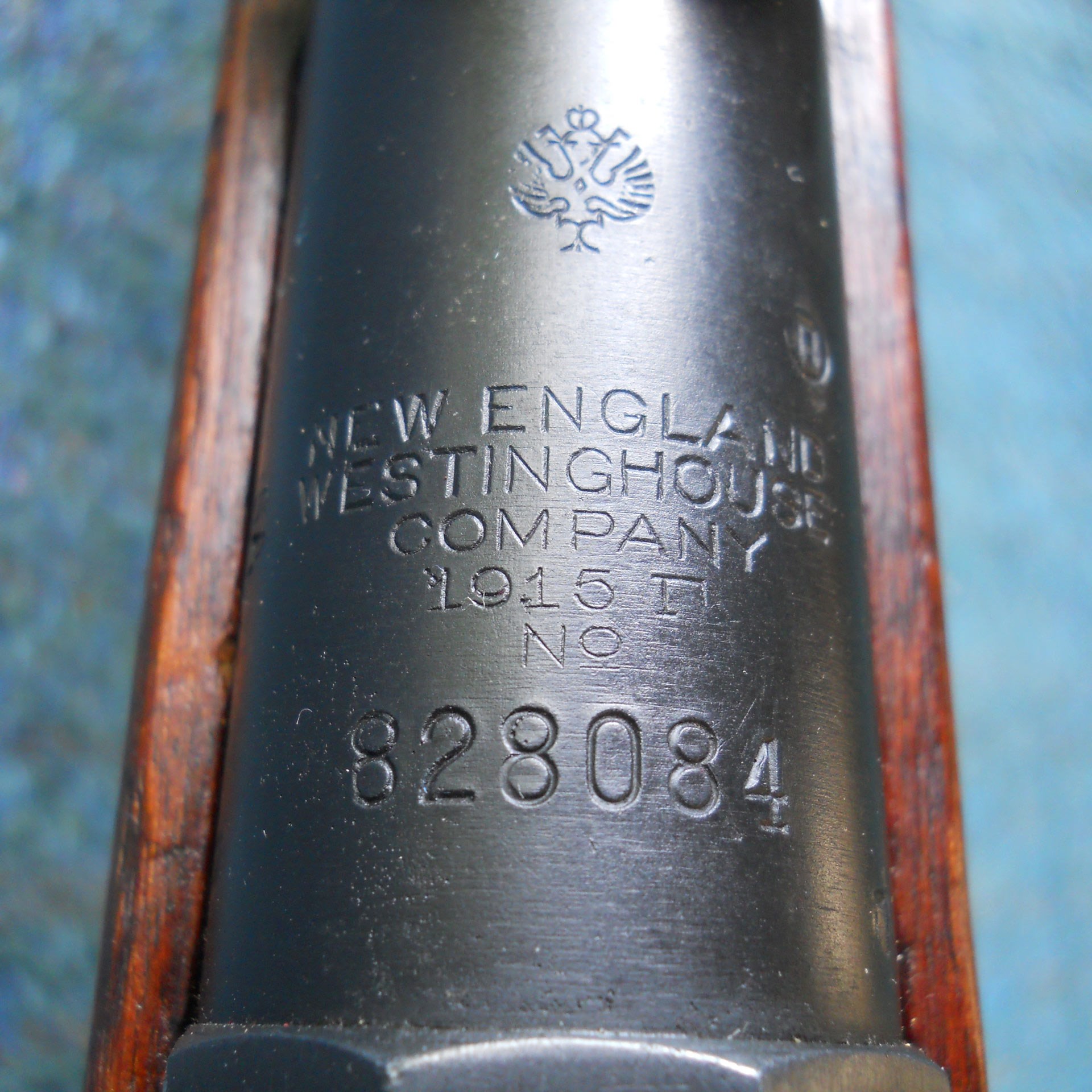
New England Westinghouse company stamp metal gun rifle mosin nagant serial number

All of the rifles made by New England Westinghouse were marked with the date of “1915,” regardless of the actual date of their manufacture: 1915, 1916 or 1917. Courtesy of the author.

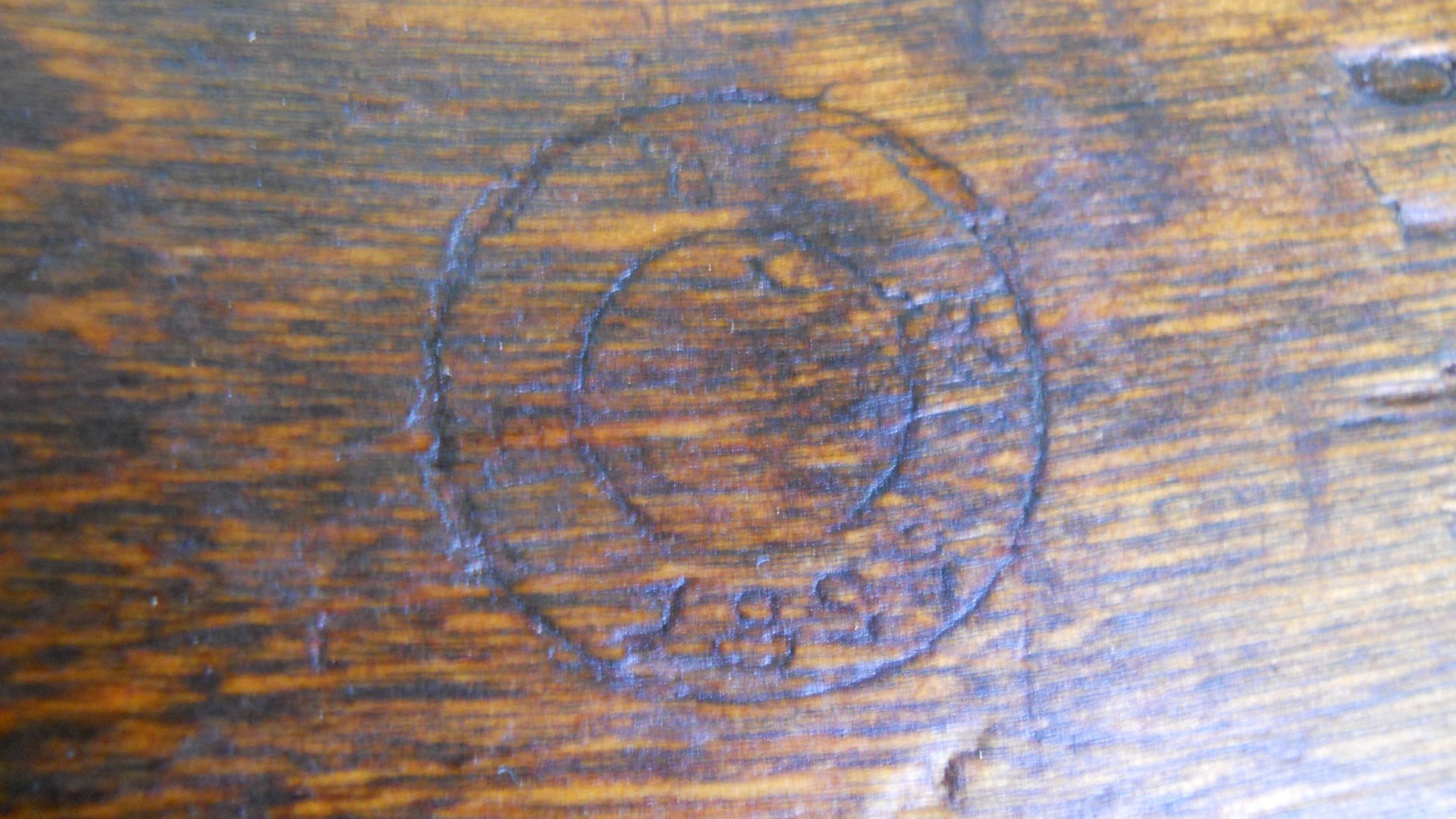
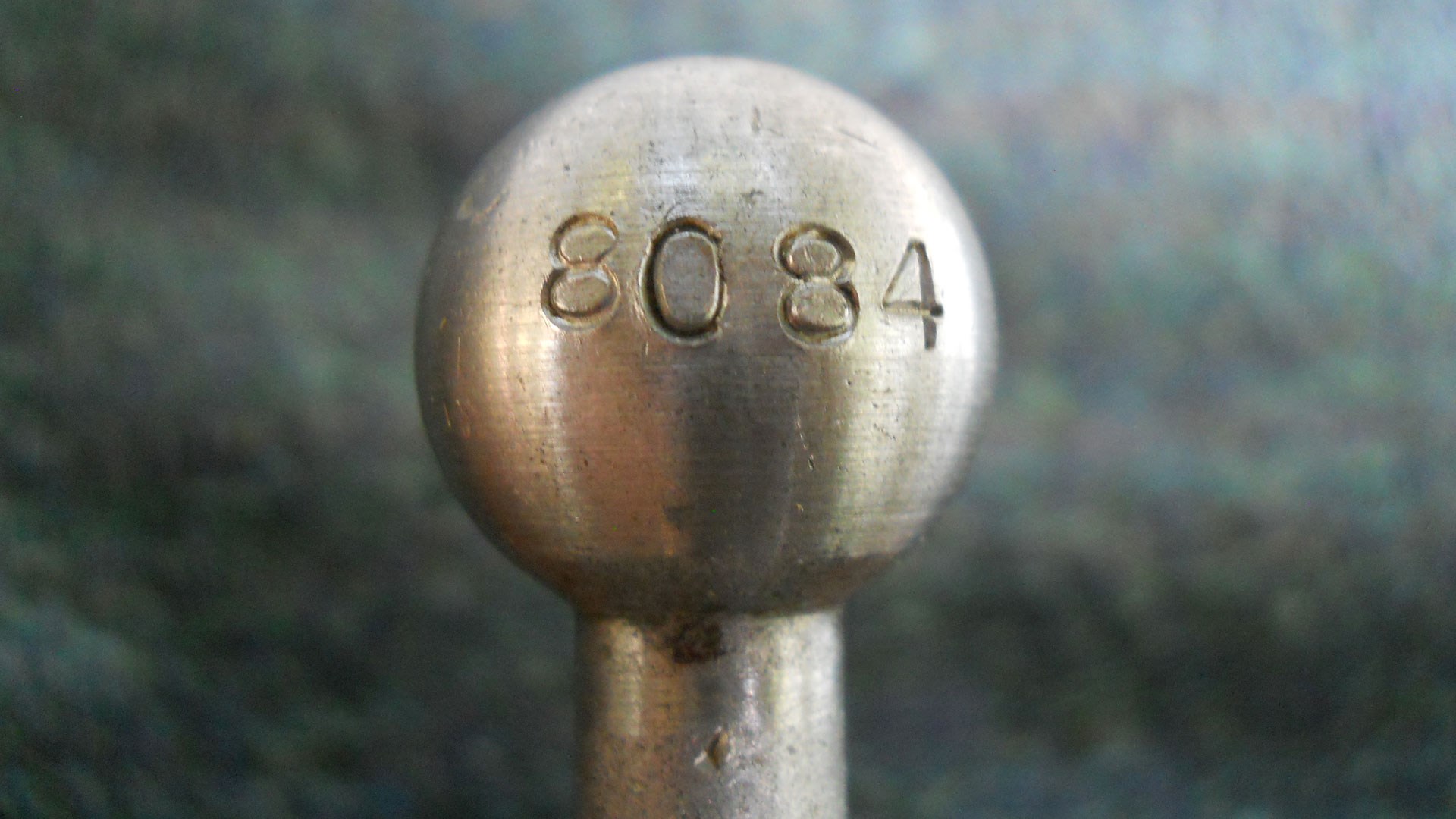
By 1915, the Russians had more men in the lines than they had rifles, and they also had lost thousands of guns in the defeats they suffered by the hands of the German army in 1914. The czarist government turned to America and contracted with both the well-known Remington Arms Co. in New York and a new firm called New England Westinghouse in Massachusetts to make Mosin-Nagant rifles. Remington was contracted to make 1.5 million rifles, while Westinghouse was to produce 1.8 million arms. According to some published sources, only a total of about 750,000 thousand rifles had been produced by Remington prior to the Bolshevik Revolution in 1917, and nearly 470,000 of these had been shipped to Russia. However, the serial-number range from extant verifiable rifles does not bear out these statistics, as the National Museum of the Marine Corps has a Remington rifle that was supplied by the Russians to the Nicaraguan insurgents in the late 1920s, and it has a serial number in the 562,000 series. Westinghouse alone must have made more than 800,000 rifles, as at least two of them in my former collection, 828084 and 803375, clearly made it to Russia and were subsequently used by the Finns. These rifles were very well-made and had wood stocks of American walnut. The Russians stamped an acceptance mark on the wood buttstock and then issued them as fast as they could.

The czarist Russian acceptance stamp in the rifle’s butt stock. Courtesy of the author.

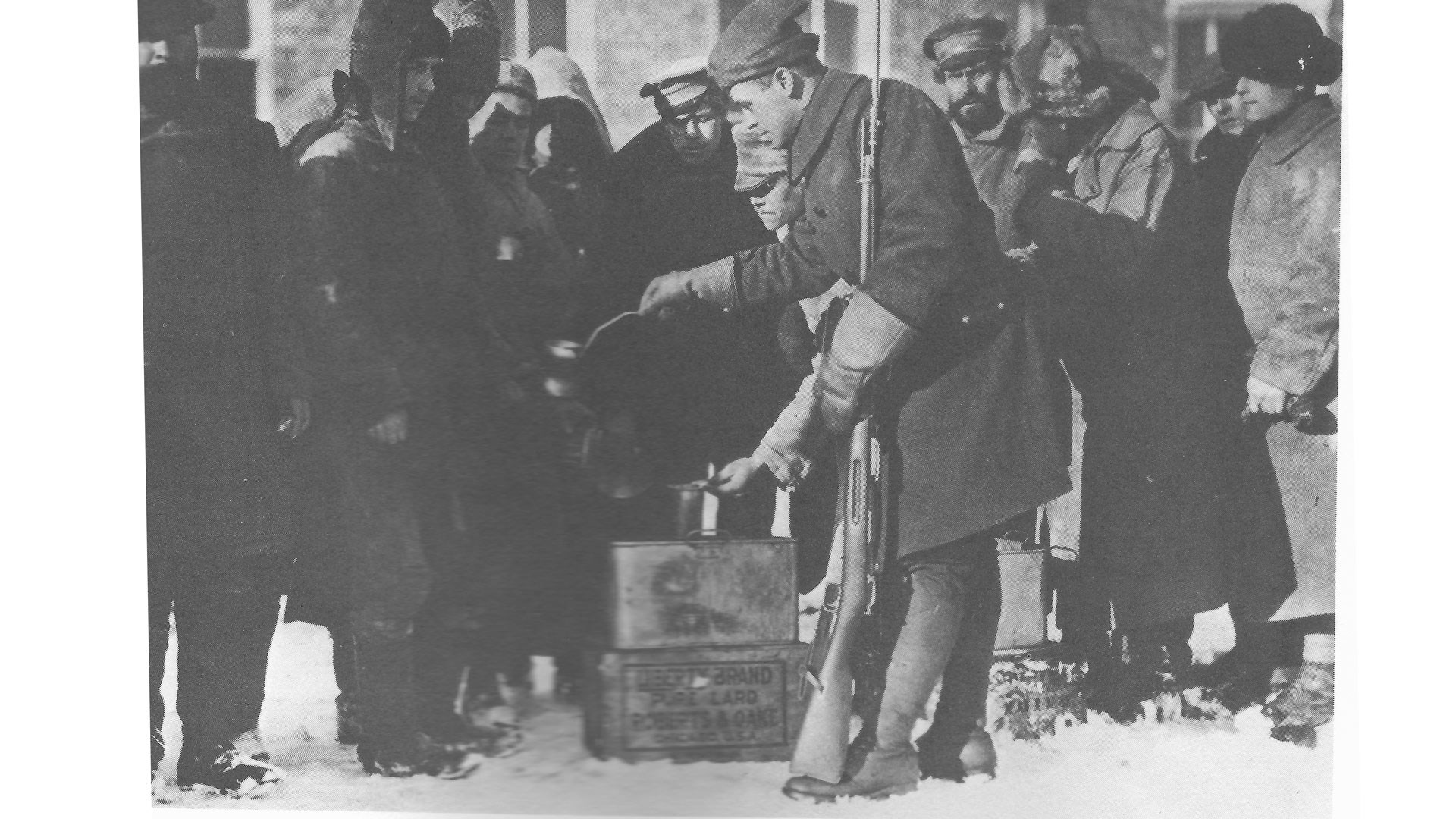
With the collapse of the Romanov dynasty and Russia’s exit from World War I in 1917, the new Russian government refused to pay for any more rifles, so those rifles still in storage in the U.S. were purchased by the American government, marked and issued for recruit training, as its army was expanding exponentially after entering the war earlier that year. Interestingly, the U.S. government also shipped 50,000 of these rifles to Vladivostock in 1917 to arm the Czech Legion, while also supplying the small American expeditionary forces in both Murmansk and Archangel with Remington and Westinghouse Mosin-Nagants. After the war, most of the rifles still in American armories were sold to civilians under the Office of the Director of Civilian Marksmanship, the forerunner of today’s Civilian Marksmanship Program.

Vintage black and white photograph war prisoner of war pow trench outdoors guns military world war i

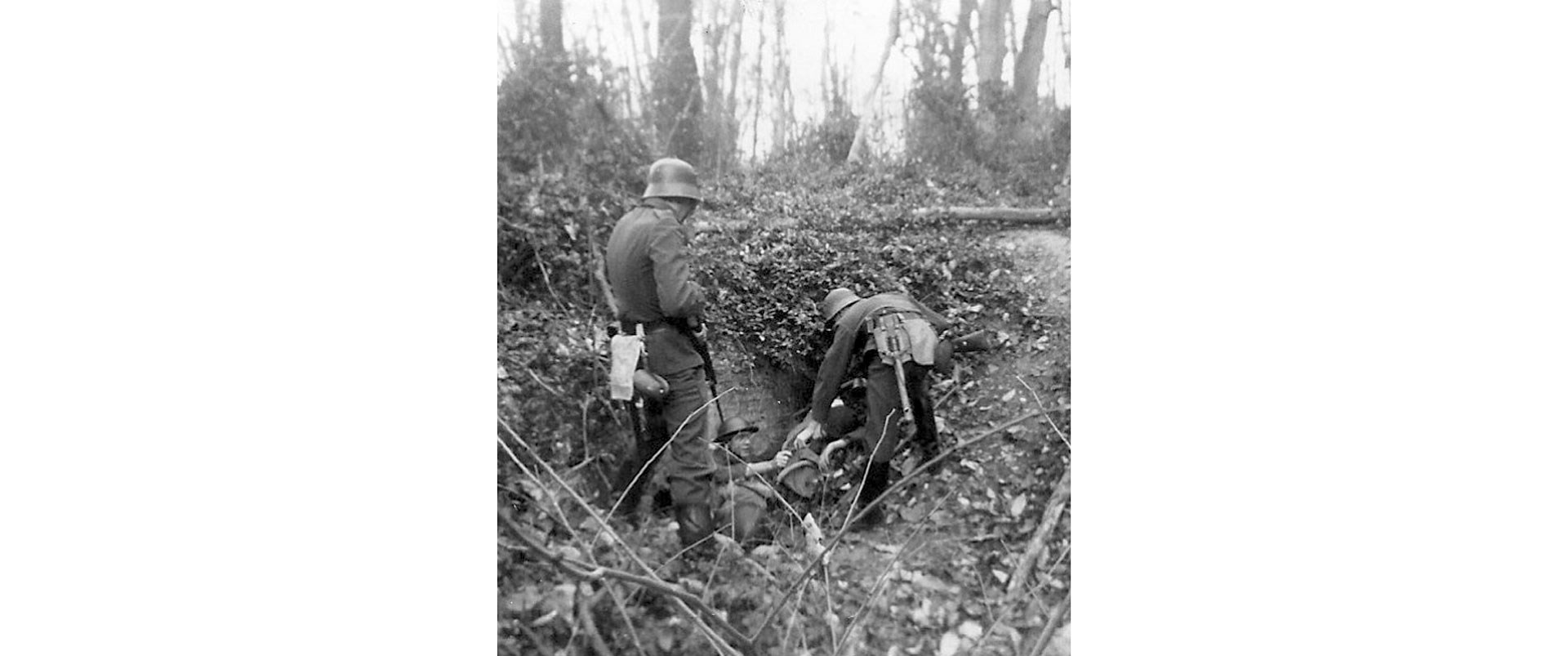
The Russian Army lost thousands of its rifles to its German enemies in World War I. After being captured, some Allied prisoners in POW camps across Germany were guarded by rear-echelon German troops, often armed with captured Russian rifles. Courtesy of Robert Martin.

Meanwhile, the Germans were putting the Russian rifles that they had captured to good use. After marking the buttstock with a “Deutsches Reich” stamp, these rifles were issued to rear-line troops as “substitute-standard” arms, and some were even fitted with an adapter on which an all-metal “ersatz” knife-bladed bayonet could be mounted. The standard Russian bayonet was an épée-style, socket-mount bayonet. While the majority of the rifles were issued to prison camp guards, transportation units and other similar rear-area troops, the German Imperial Navy also received some of them. By 1916, the German forces had thousands of these rifles in its ranks and even had enough of them to spare for one of the most curious episodes in World War I.

wood stamp german guns rifle cartrouche mosin nagant

Shown here is the German Imperial ownership stamp applied after its capture from the Russians. Courtesy of the author.

Irish nationalist separatists had been plotting to gain Ireland’s independence from Great Britain for more than a century prior to World War I. Although the British had offered a form of Home Rule to Ireland prior to the beginning of World War I, it was put on hold for the duration of the war. A small group of revolutionaries gained control of the “Irish Volunteers” (a group pledged to support Home Rule by force), and during Easter Week of 1916, the secret Irish Republican Brotherhood fomented a rebellion against the British government. While it fizzled across most of the country, it raged for a week in the capital city of Dublin and reduced much of the center city to rubble.

rusty gun parts rifle museum

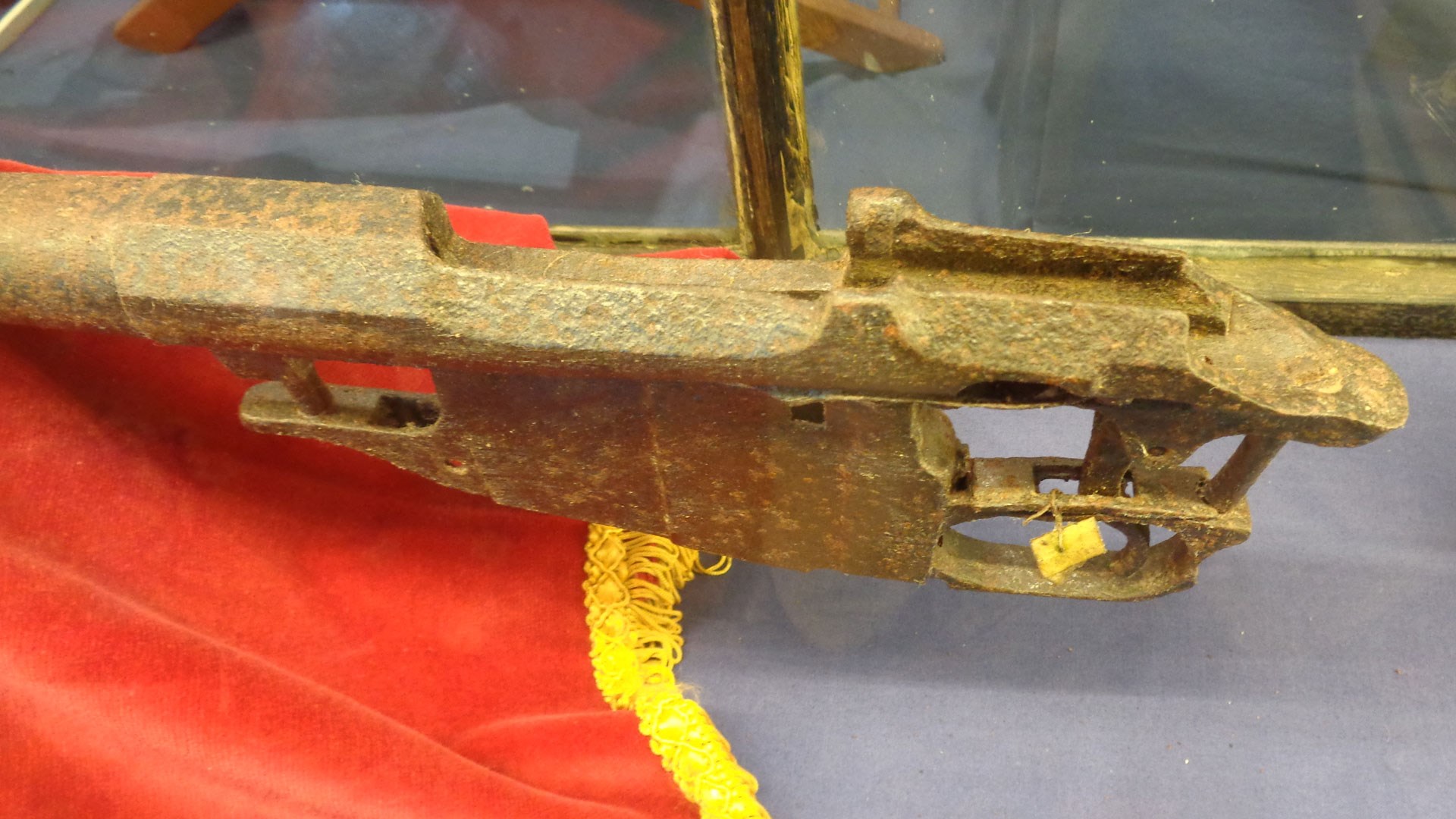
The Germans sent 20,000 of these captured rifles to Irish Nationalists in 1916, but the ship on which they were being transported to Ireland was sunk in Cobh Harbor, near Cork. This is one of the very few rifles recovered from the wreckage, and it is now in the town museum. Courtesy of the author.

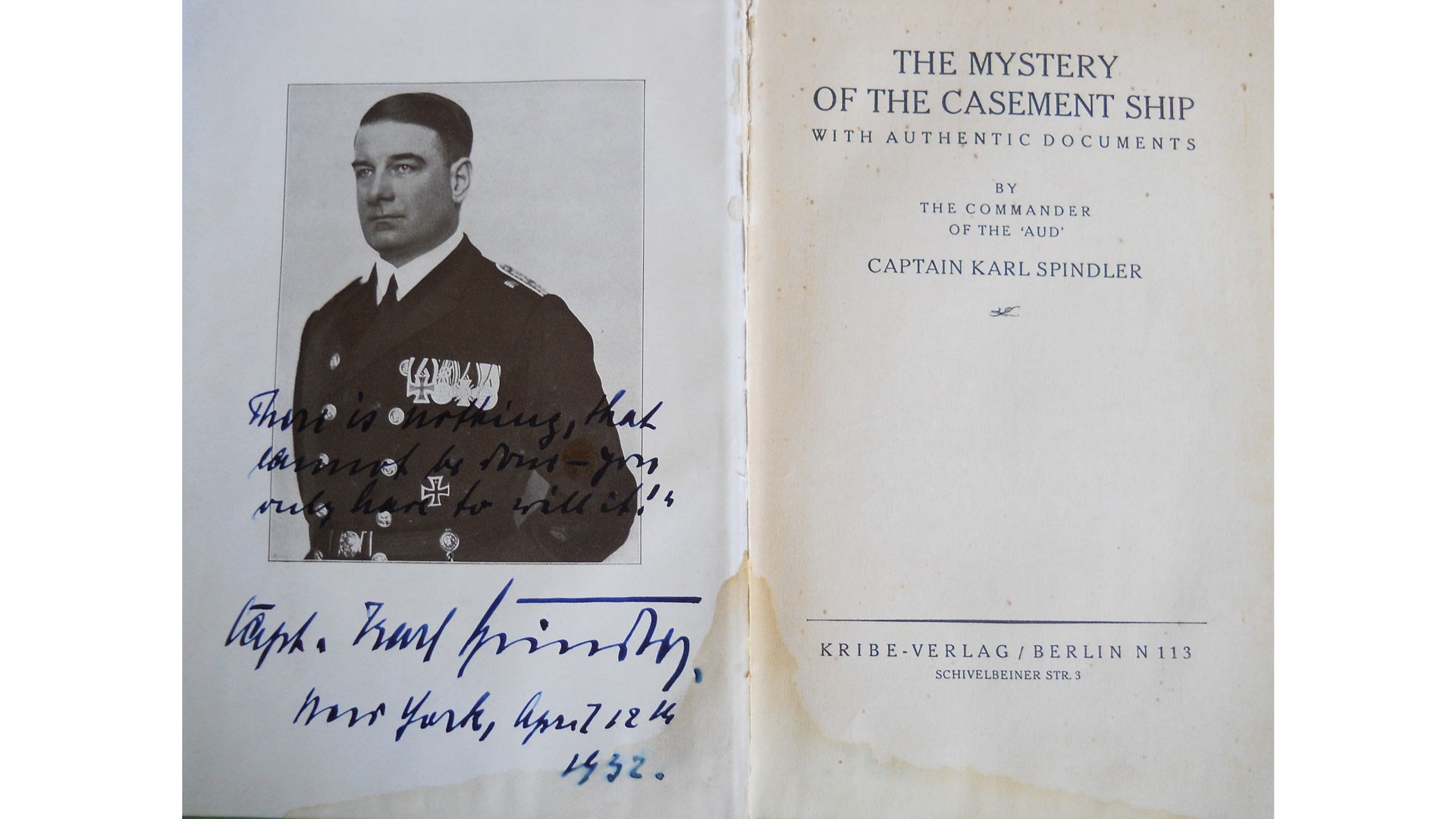
The success of the “Easter Rising” across Ireland depended on German support—namely arms, since the Irish volunteers had just a few modern arms and not many more obsolete military rifles and civilian shotguns. At the urging of the Irish revolutionaries (including the famed social reformer, Sir Roger Casement), the German government filled an old cargo ship, the Libau, with 20,000 of these captured, and “twice stamped,” Mosin-Nagant rifles, disguised the ship as a Norwegian freighter and tried to land the guns on the west coast of Ireland a few days prior to the Easter Rising. However, due to a series of mishaps, the British were able to seize the freighter, now known as the Aud. Its captain scuttled the ship as it was being escorted into Cork Harbor, and all 20,000 rifles, as well as 10 Maxim machine guns and millions of rounds of ammunition, went to the bottom of the harbor, where they, except for a very few examples that were recovered and are now in museums, remain to this day.

The Mystery Of The Casement Ship booklet and photograph signature writing ink

In “The Mystery of the Casement Ship,” the Aud’s captain recounted the efforts to land 20,000 of these Russian rifles in Ireland, prior to the 1916 “Easter Rising.” Courtesy of the author.

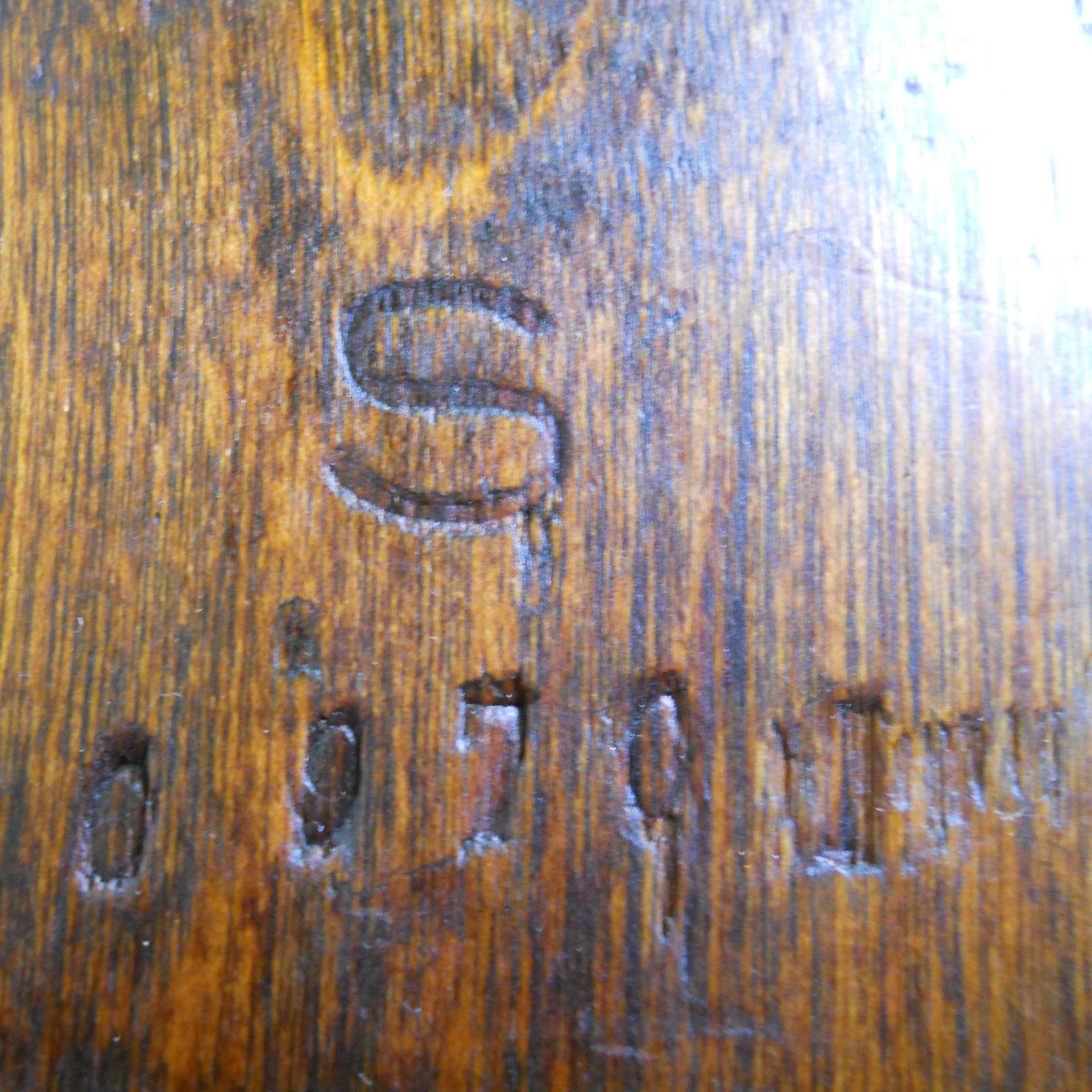
By the time of the Armistice in November 1918, Germany had thousands of Mosin-Nagant rifles on hand. Since the Treaty of Versailles only allowed for a small 100,000-man “Reichswehr” army, the German government had no need for an excess of captured foreign rifles, so it sold most of them to Finland in the early 1920s. Finland had finally gained its freedom from Russia during World War I and needed arms to protect its new status as a republic. The Finns marked the rifles that had been purchased from Germany and issued to its new army with an “SA” (Suomi Armeija, meaning Finland Army) stamp on the breech of the gun, as they also did the rifles that they had captured from the Russians during the Finnish Civil War in 1918. Those rifles acquired for the Finnish Civil Guard were stamped with a capital letter “S” on either the buttstock or the barrel shank, and sometimes with the corresponding number of the Guard district. While most of the captured Mosin-Nagant rifles were Russian-made, some of them, like some of the German-supplied arms, were the American imports from Remington and New England Westinghouse.

vintage black and white photograph russians outdoors rifles box

With the fall of the Romanov dynasty in 1917, Russia canceled its contracts with Remington and New England Westinghouse. The U.S. purchased the rifles still awaiting shipment, issuing some of them to recruits for basic training and some to the American forces sent to Russia. U.S. Signal Corps photograph, U.S. National Archives.

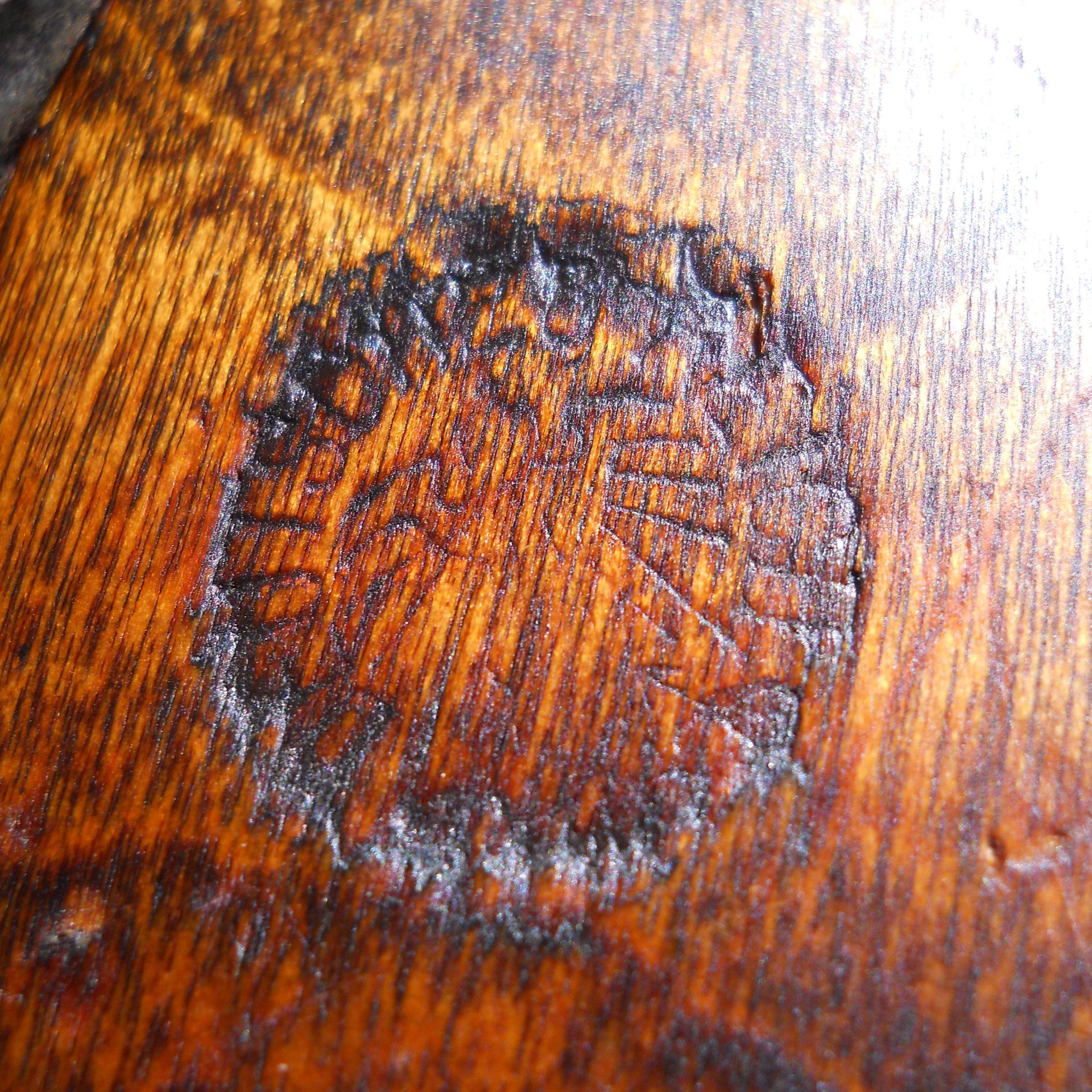
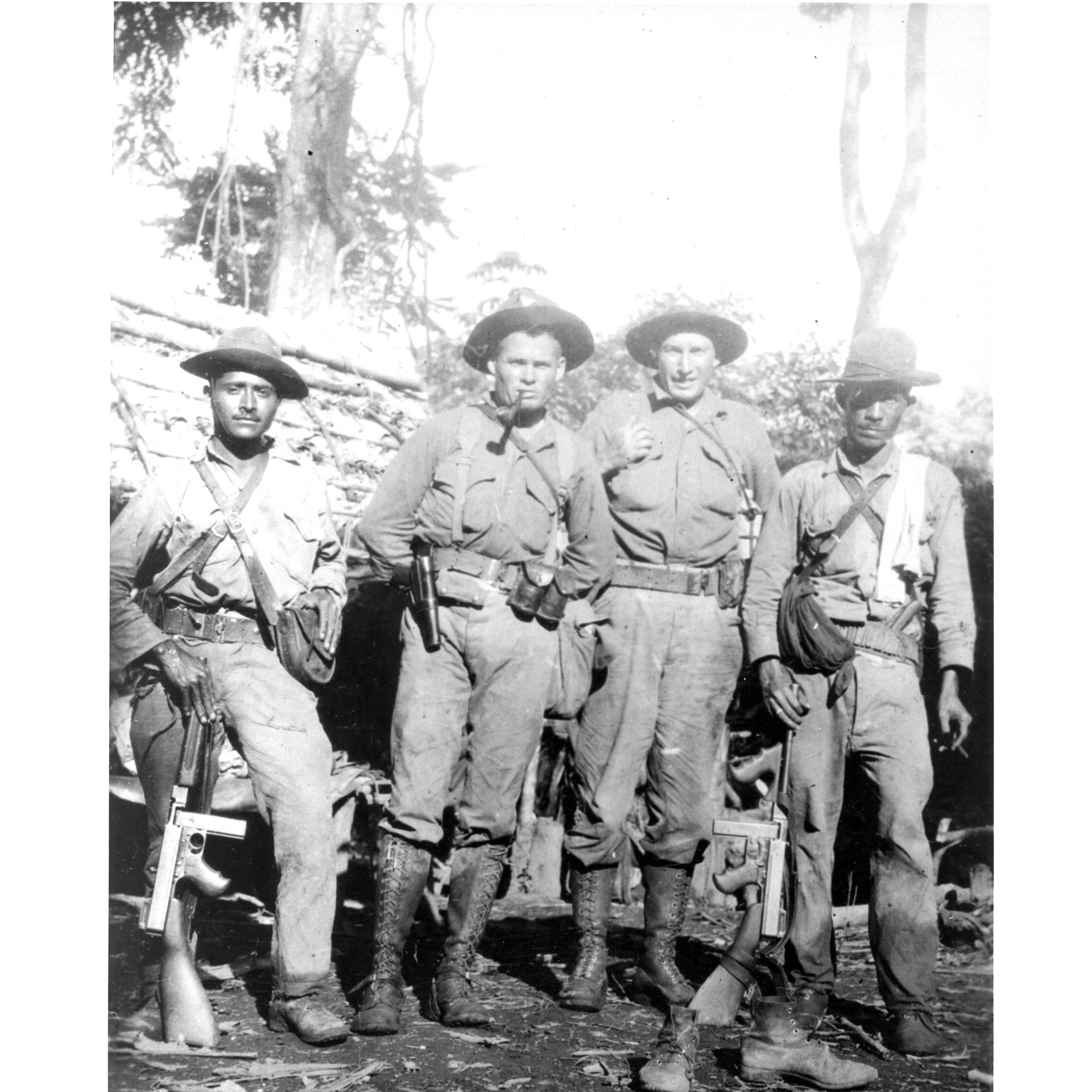
A few years later, Soviet Russia supplied Mosin-Nagant rifles to the insurgents fighting with Augusto Sandino against the government forces and the U.S. Marines in Nicaragua. Buried deep in the diplomatic files at the U.S. National Archives, in Washington, D.C., is a Mosin-Nagant rifle that was cut in half and sent to Washington, via diplomatic pouch, by the military attaché in Managua, Nicaragua. He sent it back to prove Soviet complicity in the ongoing battle against the Sandinista rebels. Another rifle, in the collection of the National Museum of the Marine Corps, validates this assertion, as it is one of the last Remington-made arms to reach Russia during World War I, and it has all the characteristics of a rifle that had been used by the czar’s forces. U.S. Marines captured this rifle during the Second Nicaraguan Campaign, and, very interestingly, it has a Star of David carved into its stock.

wood stamping gun rifle civil guard mark

The Finnish Civil Guard marking, with the number of the corresponding district. Courtesy of the author.

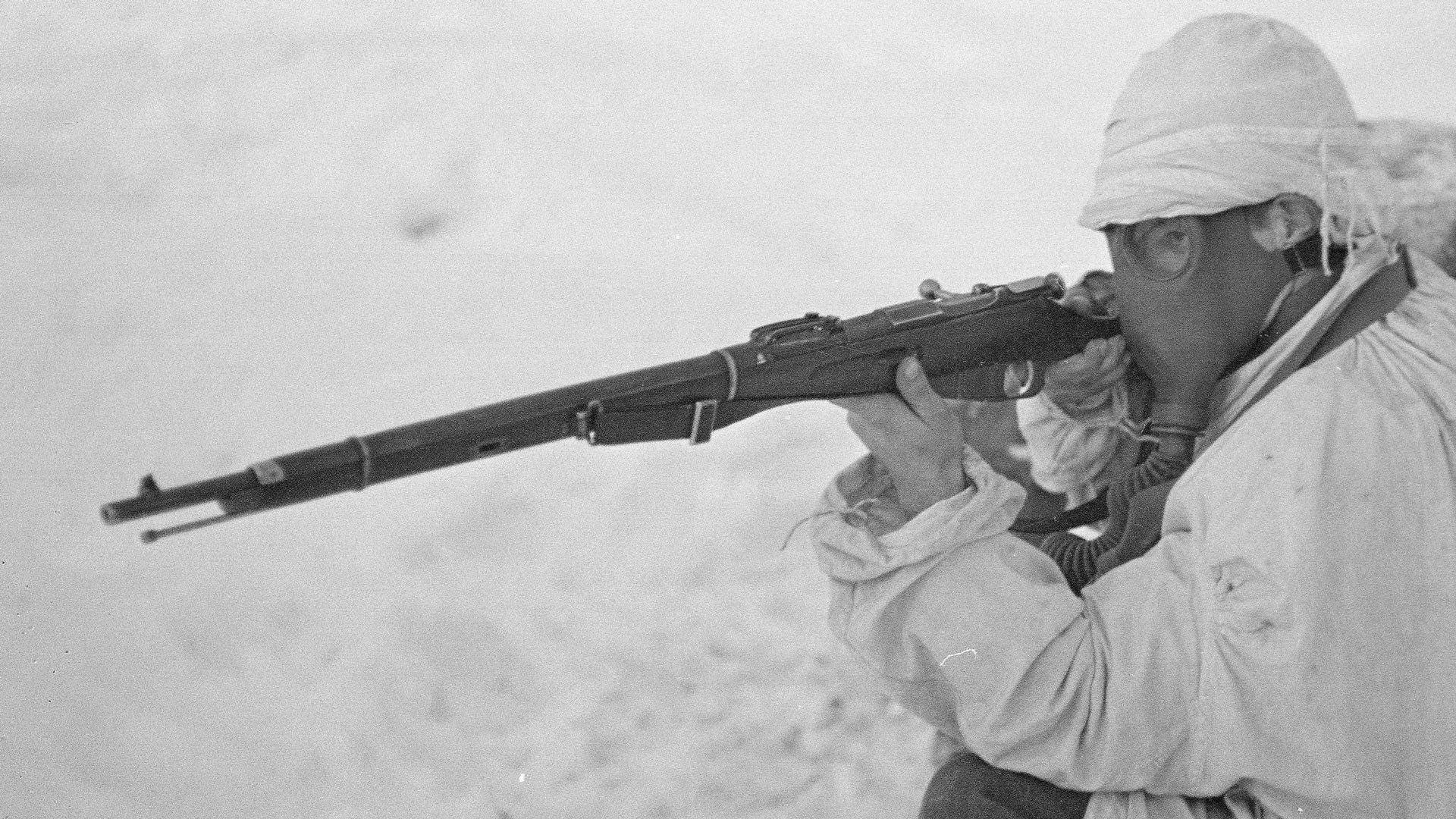
When the Winter War broke out between Finland and Soviet Russia in 1939, the Finns had been producing several models of their own version of the Mosin-Nagant, by modifying existing rifles. However, many of the original Civil Guard rifles were pressed into service with the army, and these guns were then marked with the “SA” in a rectangular cartouche.  While some of the captured and purchased Finnish rifles were fitted with new, two-piece birch-wood stocks—characterized by a “three-finger” splice—others retained their original configurations with all of the markings to tell the rifle’s story. Finnish forces carried Mosin-Nagants of all types in the “Continuation War” (the Finnish term for World War II) against Soviet Russia.

vintage photograph black and white soldiers guns hats smoking

U.S. Marines and Guardia Nacional de Nicaragua (as seen here, with the famed Lewis B. “Chesty” Puller commanding its Company M) faced Sandinista rebels in Nicaragua during the 1920s and 1930s that were, in part, armed by Soviet Russia with Russian Mosin-Nagant rifles—some of them American-made. Courtesy, Marine Corps History Division, Quantico, VA.

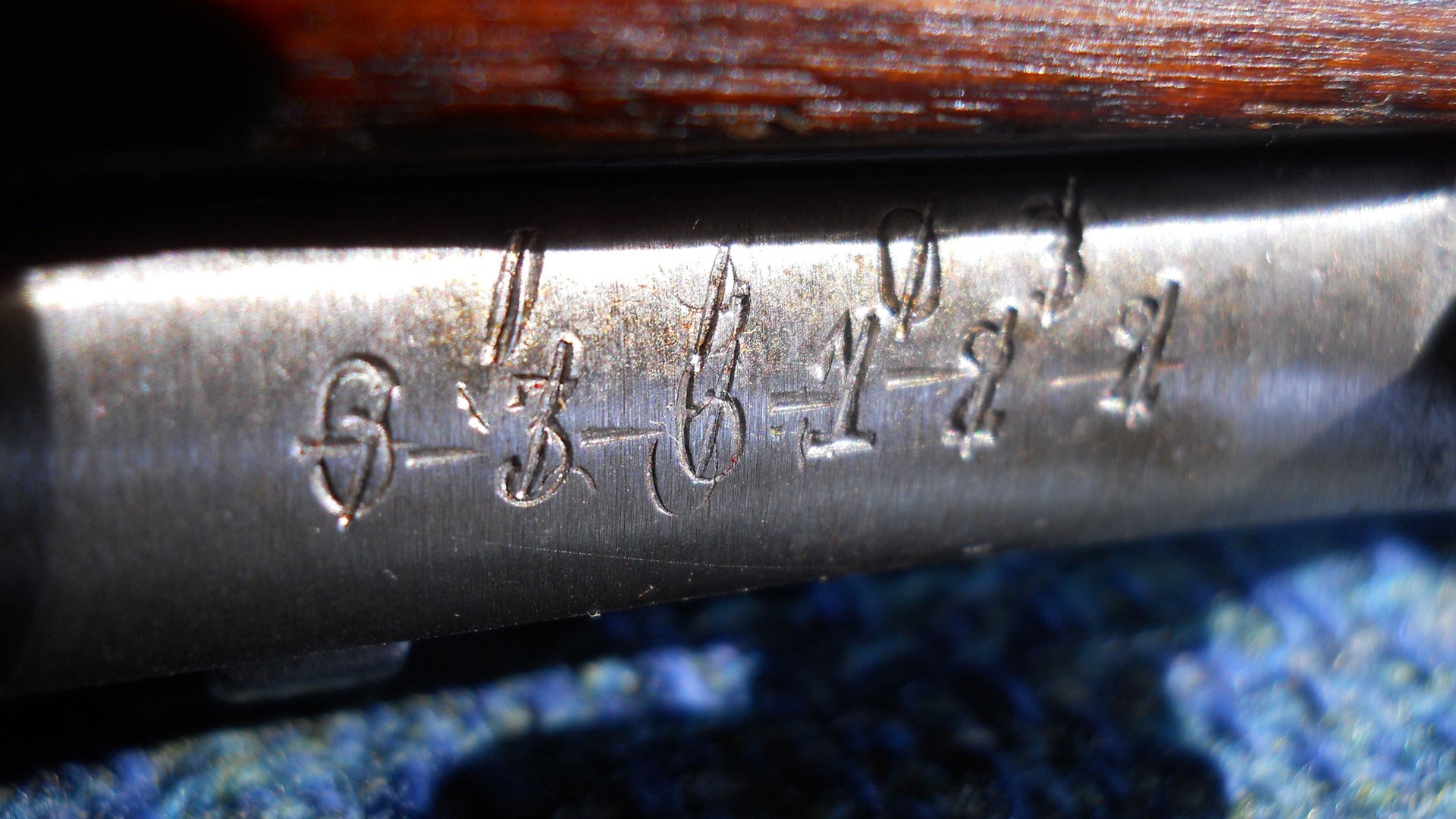
So, what tales would my rifle have to tell? It is marked with the New England Westinghouse name, as well as a Romanov czarist eagle, on its breech. It has the czarist acceptance stamp, along with a Finnish Civil Guard marking on one side of its walnut butt stock and a German “Deutches Reich” ownership stamp on the other side of the butt. On the side of the barrel shank it has the Finnish Army “SA” marking, and, finally, a “Century Arms St Albans VT” marking near the muzzle of the barrel. However, it has a Remington-made bolt, marked with an “R” in a circle and a crossed out serial number of “636122” on it, again refuting the claim that only a few more than 470,000 Remington-made rifles arrived in Russia.

barrel marking on mosin nagant rifle "SA"

The “SA” indicates Finnish Army use. Courtesy of the author.

The rifle could start out by describing the city of Springfield, Mass., where it was made in 1917 when America was either on the brink of war with Germany over the resumption of unrestricted submarine warfare and Mexican intrigues or had just entered the war on the side of the Allies. Site of the first U.S. arsenal founded in the 1790s, the city was also home to the well-known Smith & Wesson firearms company, while the Ames company, a longtime supplier of swords, knives, bayonets and more to the U.S. government, was located in a nearby town, Chicopee Falls. Other private arms companies that supplied the federal government during the War Between the States were also located there. The rifle could then tell of the harrowing sea voyage across the Atlantic, through the U-Boat blockade to one of Russia’s arctic ports, where it was unloaded for the armies of the czar. It could then tell of the conversations between the Russian soldiers huddled around a campfire on the Eastern Front, most likely somewhere between the Baltic coast and Galicia, while they discussed the breakdown of the Russian army and the political upheavals back home.

vintage finnish soldier with gas mask and mosin nagant rifle white clothing snow background

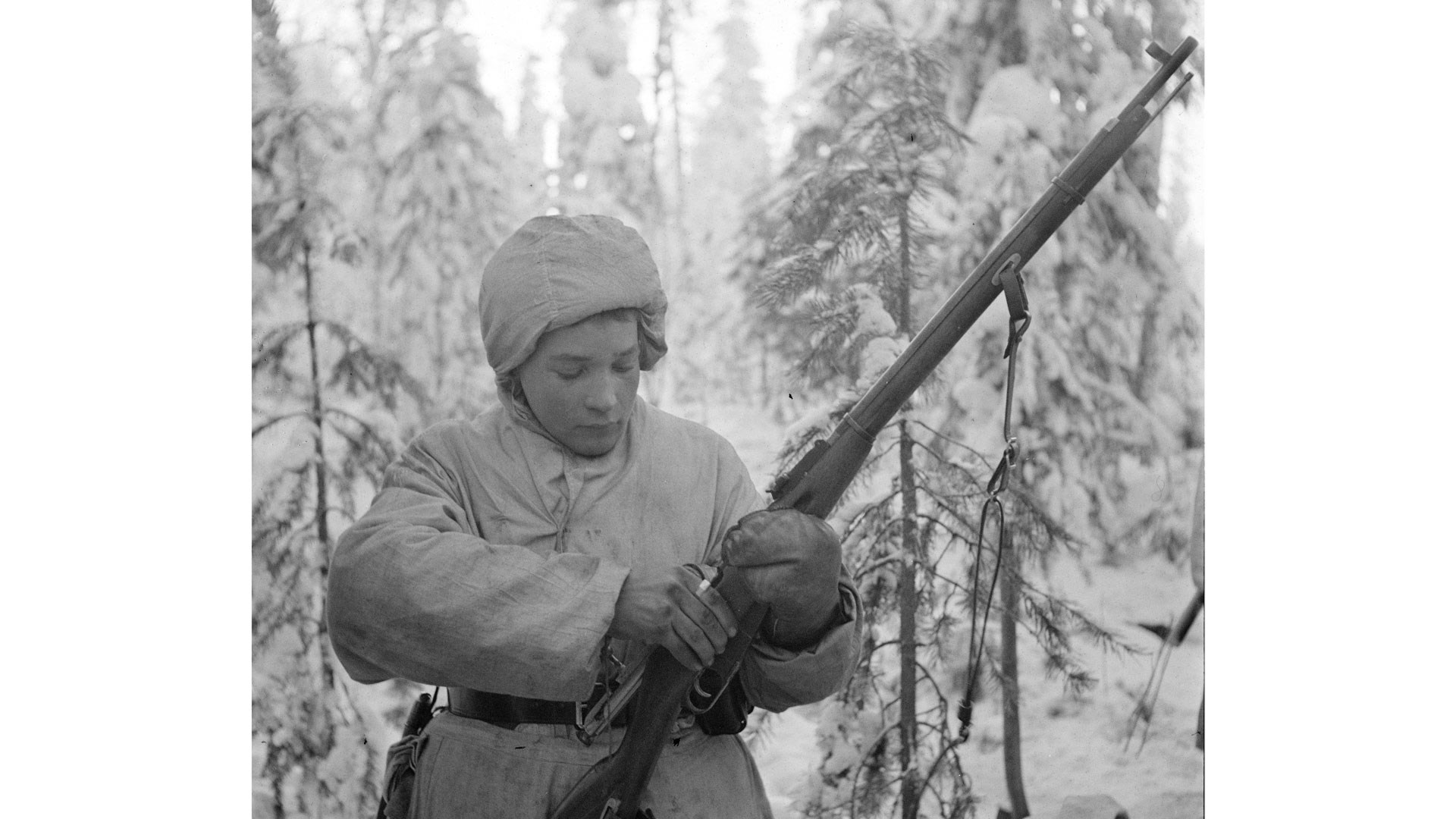
Finnish soldiers used Russian rifles alongside their own versions of the Mosin-Nagant rifle in the 1939 Winter War with Soviet Russia. Courtesy SA-Kuva, Finnish National Archives, via Tom Laemlein.

The next set of stories could be about guarding captured Russian, French, British or American prisoners of war, or perhaps the dreary duty of guarding supplies along a railway siding in Germany. The rifle may have seen service during the German navy’s mutiny in late 1918, or could have been caught up in the fighting between the Spartacists and the Freikorps during the German civil war following the end of World War I. After arriving in Finland, it could tell about the life in a small Finnish town, while a Civil Guardsman owned it in the 1920s and ‘30s. The rifle could then tell of the brave resistance of the Finns when Soviet Russia invaded their country in the bitter cold of 1939 and also tell of long service during the ensuing fighting on the Finnish border with Russia from 1941 to 1944. Somewhere along the line, it could tell about the circumstances that led to its bolt being replaced with one from another American-made rifle.

barrel stamping serial number rifle mosin nagant

The Remington-made bolt is marked with a serial number of “636122”, but the numerals have been lined out at some point in its service. The bolt on the Mosin-Nagant from Nicaragua in the Marine Corps Museum’s collection is also marked like this. Courtesy of the author.

Finally, the rifle could tell of its voyage back to America in the 1990s, after the American Gun Control Act of 1968 was amended to allow the importation of Curio & Relic arms once again into the country. The rifle ended up in northern Vermont, just a little more than two hundred miles away from its birthplace, before coming to a gun store in southern Virginia, and eventually, to my home. However, its most poignant, or disturbing, story would be about the four notches carved in its upper hand guard, representing the possible four combat “kills,” sometime during its service life.

Person in snow with white clothes laoding bolt-action mosin-nagant rifle

The Mosin-Nagant’s magazine holds five 7.62x54 mm R cartridges, which are loaded into it using a stripper clip. Courtesy SA-Kuva, Finnish National Archives, via Tom Laemlein.

Although guns can’t talk and can’t actually tell their stories, we, as collectors, can figure out their stories, and use these objects as tangible touchstones to the past, in order to illustrate the drama of history in our collections and in our exhibits at arms shows and in museums. All too often, firearms are displayed in museums with labels that read like, “Standard Russian infantry rifle of World War I, Caliber 7.62mm, Wood and Steel, Catalog Number 1983.6.1”, with no interesting story or context, or they are not included in a personal collection or a firearms show display because the gun is “atypical” of the subject. However, as this gun’s story has unfolded, it is obvious that it deserves a place among other firearms that, at first glance, one would not consider.

wood gunstock notches from war

Other Finnish rifles have been reported with “kill notches,” and sometimes with initials carved into their stocks. Carving names and initials on rifle stocks was also prevalent among the Boers during the Boer War, as well as with Confederates during the American Civil War and with Irish volunteers during the Easter Rising. Courtesy of the author.

For instance, this M1891 rifle could be included in any collection of “New England” or “Springfield” arms, and obviously in a collection of “Russian” firearms, or “World War I” guns. It could also hold a place in any collection of “German” arms, and “Winter War” and “World War II” rifles. Likewise, it could also be used to support an exhibit on the German submarine blockade of World War I, the Atlantic convoys system, the German navy mutiny of 1918 and the German civil war.

silver metal steel bolt knob stamping numbers

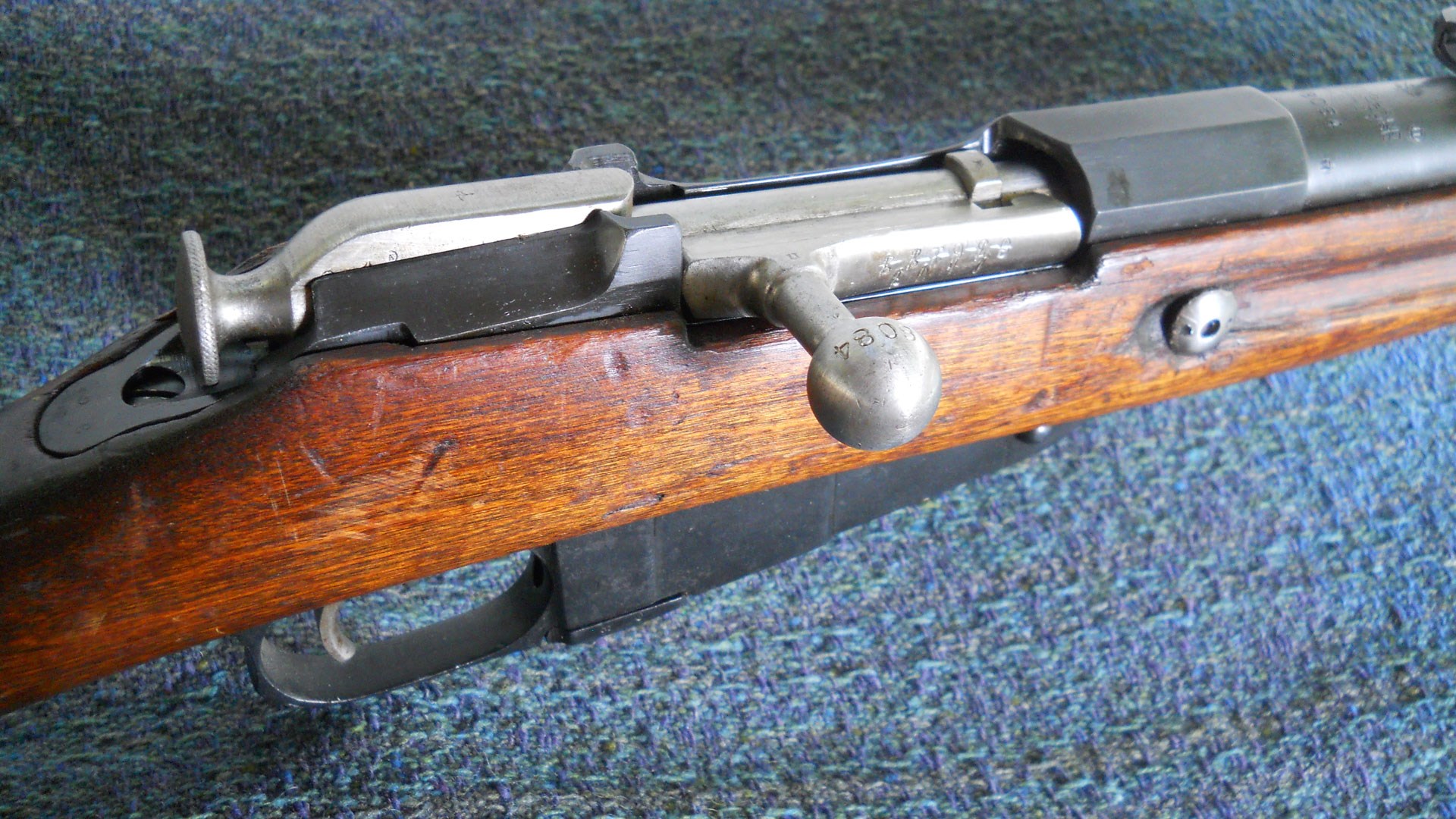
The bolt knob has had the last four digits of the original serial number applied to it, perhaps by its American importer. Courtesy of the author.

In a broader context, and using it as a “typical example” (but known not to be the case), it could have validity as an example of the guns that were sent to Ireland in 1916, like the position it had held in my former collection, due to its being “double-stamped.” Although the rifle has Finnish markings on it, it could still serve as an example of the guns that were used against U.S. Marines in Nicaragua in any collection of “USMC Arms”, and even without “U.S.” property stamps, it would not be out of place in a display of “Arms of the American Expeditionary Forces,” as long as the artifact label in a display read “rifles like this were used to train the AEF.” Even though we know it not to be the actual history of the gun, it could still serve as an example of the arms carried by the AEF’s “Polar Bears” in Russia at the end of World War I and on into the Russian Civil War—as it does now in its current home.

Thus, the answer to the question of whether or not to acquire another gun for your collection depends on how far you can “think outside the box” and justify its acquisition. Happily, for most of us, we don’t have to work too hard on this, and if you have a wad of greenbacks in your pocket and an empty space in your gun rack, you should consider getting another gun, if the price is right and it piques your interest!


The author's Mosin-Nagant rifle was featured in the NRA’s “American Rifleman” television show about the “Guns of 1914” that aired in 2014. Still accurate, it hit a 12”-diameter steel gong target at a range of 150 yards, on its first shot, when fired in front of the video camera from the off-hand position.

Monday, March 6, 2023

Monday Music "I Walk The Line" by Johnny Cash

 I am continuing my Vietnam themed Monday Music, I'm sure the Vietnam War Soldiers were walking "The Line" so it tracks in my mind to use this song, 

I always liked Johnny Cash, "The Man in Black",

My dad was a big fan of Johnny Cash, he always was playing the albums, so I remember quite a few of the songs, My dad loved the "Folsom Prison Blues"  and San Quentin.  Both were real good albums.  He would play Cash's songs along with Elvis Presley.  I grew to like the songs my Dad liked and that is the joys of being a "Daddy", you get to inflict your taste on your kid.  My son sings to my "80's" songs that I like to listen to.  One day he will do the same thing I did, inflict his taste on his kid...in the fullness of time....I don't want to be a grand-dad too soon.  Harry getting married and having a kid in his late 20's would be good.


"I Walk the Line" is a song written by Johnny Cash and recorded in 1956. After three attempts with moderate chart ratings, "I Walk the Line" became the first number one Billboard hit for Cash. The single remained on the record charts for over 43 weeks, and sold over 2 million copies.


The unique chord progression for the song was inspired by backwards playback of guitar runs on Cash's tape recorder while he was in the Air Force stationed in Germany. Later in a telephone interview, Cash stated, “I wrote the song backstage one night in 1956 in Gladewater, Texas. I was newly married at the time, and I suppose I was laying out my pledge of devotion." After the writing of the song Cash had a discussion with fellow performer Carl Perkins who encouraged him to adopt "I Walk the Line" as the song title. Cash originally intended the song as a slow ballad, but producer Sam Phillips preferred a faster arrangement, which Cash grew to like as the uptempo recording met with success.

Once while performing the song on his TV show, Cash told the audience, with a smile, "People ask me why I always hum whenever I sing this song. It's to get my pitch." The humming was necessary since the song required Cash to change keys several times while singing it.
The song was originally recorded at Sun Studio on April 2, 1956, and was released on May 1. It spent six weeks at the top spot on the U.S. country Juke Box charts that summer, one week on the C&W Jockey charts and number two on the C&W Best Seller charts. "I Walk the Line" crossed over and reached number 19 on the pop music charts.
It was performed with the help of Marshall Grant and Luther Perkins, two mechanics that his brother introduced him to following his discharge from the Air Force. Cash and his wife, Vivian, were living in Memphis, Tennessee, at the time. Cash became the front man for the group and precipitated the introduction of the group to Sam Phillips of Sun Records. In 1955 they began recording under the Sun label.
The song was re-recorded four times during Cash's career. In 1964 for the I Walk the Line album, again in 1969 for the At San Quentin album, in 1970 for the I Walk the Line soundtrack, and finally in 1988 for the Classic Cash: Hall of Fame Series album.
In 2004, Rolling Stone ranked the song at #30 on their list of the 500 Greatest Songs of All Time.

The song is very simple and like most Cash songs, the lyrics tell more of a story than the music conveys. (You've got a way to keep me on your side/You give me cause for love that I can't hide/For you I know I'd even try to turn the tide).
It is based upon the "boom-chicka-boom" or "freight train" rhythm common in many of Cash's songs. In the original recording of the song, there is a key change between each of the five verses, and Cash hums the new root note before singing each verse. The final verse, a reprise of the first, is sung a full octave lower than the first verse. According to Cash, he loved the sound of a snare drum, but drums were not used in country music back then, so he placed a piece of paper in his guitar strings and created his own unique "snare drum"
      Johnny, with the Temptations outside his door and a new wife at home, wanted the lyrics to say, "I’m going to be true to those who believe in me and depend on me to myself and God. Something like I’m still being true, or I’m 'Walking The Line.' "The lyrics came as fast as I could write," says Johnny. "In 20 minutes, I had it finished."


Sunday, March 5, 2023

Last Weekend Camping.

 We had planned a "Boy Scout Troop Shooting Weekend" and everybody bailed on us due to various reasons, I was going to be the instructor because I am NRA certified for Rifle, Shotgun and Pistol so I can teach the merit badge.  We were going to go and get the kids that didn't have the merit badge, get the merit badge.   So the Scoutmaster and Myself went anyway.....We already had the Range reserved, had the ammo from council, I had taken the day before from work so I could roll my schedule. Like we needed an excuse to go camping....and shooting....LOL


         The Arrival at Camp, 


    I slept in one of those, and ran a drop cord for power for my charger and CPAP machine....and a drop light with a "yellow" bug light, and the scoutmaster set up his hammock, he likes to hammock camp...I can't do that..My back would die, LOL


                      Getting ready to grill out......


     We then grilled the steaks, they have been marinating for 7 hours before we threw them on the grill.  We always eat well as a matter of principle, we always show the kids(not in this case, LOL) that you can eat really well if you plan properly.


           The "Garnishing" for the Steaks...

                                                                The Vegetables

                                                     What "Dinner" looked Like


    Then we set the little grill in front of us while we watched a movie, and a bit of a backstory, Both the Scoutmaster and myself are the most experienced scouters in the troop, and we both forgot to bring a jacket...and it got down to the high 50's.  So the fire was nice.  He did have a poncho liner though, and we fed logs into the little grill all night and the lid reflected heat to us and it worked.  


         We watched the Mel Gibson Movie "We Were Soldiers" and it reminded me how cool of a movie it was, especially since both of us are Army veterans, and I have more of a kinship with the Army back then than I do with the Modern Army, if that makes sense.

     The next morning,    I made my coffee, the little gizmo does work....It literally forces the hot water through the "K" cups and I have "Coffee"

                                     "Reloads" for my Little coffee press.

                               Yep Breakfest, Gotta eat good...


      We were shooting .22LR Rifles and Pistols and had a blast.  I also sighted in the Camp Rangers Savage .22LR Semi-auto with a scope.  it was a nice rifle, I should have snagged a picture of it but I didn't.  Finished shooting.  Returned to camp, packed up our stuff, and put it under the pavilion.


   We then gone to the "BlackBird Cafe" in Woodsbury Georgia, and grabbed dinner


      We then loaded the truck up and got ready to return to civilization.  We will plan another troop shooting trip, but next time, if more people come....Great!...if not....We will do the same thing.

Thursday, March 2, 2023

"Balloon Shootdown reveals new insight into U.S. and Chinese Capabilities.

I shamelessly snagged this off my work email, it was in the "Aviation Intelligence" reports I get. and It was full of some good information and worthy of "Nicking".

Chinese balloon over Modoc, Illinois

A photo of the Chinese balloon over Modoc, Illinois, on Feb. 3 reveals potentially breakthrough design features for ultra-long-endurance, lighter-than-air systems.

Credit: Frank Melliere

More than two years before a U.S. Air Force F-22 shot down a Chinese spy balloon off the coast of South Carolina on Feb. 4, Zheng Zhenfeng, an employee for Taiwan’s weather service, photographed a similar object floating high above Taipei, Taiwan, on Sept. 26, 2021.

Zheng’s boss, Zheng Mingdian, is certain the two events are connected, revealing a perhaps yearslong, high-altitude spying campaign by the People’s Liberation Army across the world using a new form of lighter-than-air technology.

  • Japan, Taiwan and U.S. targeted by Chinese surveillance balloons
  • Opaque fabric points to possible innovation


“The high-altitude spying balloons in the news have been around a long time, and [my] weather-agency colleagues took [pictures of] them two years ago,” Zheng Mingdian, executive director of Taiwan’s weather service, wrote on Facebook on Feb. 4. “Before that, there were photo records elsewhere, too, for many years.”

The bizarre five-day, 2,000-mi. journey across the U.S. of China’s apparent spy balloon revealed three important new insights: A Raytheon AIM-9X Sidewinder-armed F-22 can shoot down a floating object above 60,000 ft., U.S. officials believe Beijing has waged a yearslong aerial spying campaign with high-altitude balloons, and some experts think the Chinese vessel reveals a potential breakthrough of ultra-long-endurance, lighter-than-air technology.

The Lockheed Martin stealth fighter’s capability to down a high-altitude balloon had never been tested or possibly even conceived, but the brazen violation of U.S. airspace prompted President Joe Biden on Feb. 1 to order a shoot-down attempt, White House officials say. Some criticized the decision to allow the balloon to cross the U.S. landmass, but military officials insisted the balloon’s surveillance capabilities posed no threat to national security. Military analysts also gained ample time to study the alleged spycraft’s behavior and emissions, while the fighter-pilot community ran simulations to determine the best way to attack the unfamiliar target.

“I don’t know that they’ve tested [the] AIM-9 at that altitude,” says Gen. Glen VanHerck, the head of North American Aerospace Defense Command. “I’m not aware of any engagements against a high-altitude balloon such as this.”

The F-22 from the 27th Fighter Sqdn. did not act alone on Feb. 4. Another F-22 flew armed and ready as backup in case the first shot missed. A high-altitude balloon—even a 200-ft.-tall balloon—presents a challenging target for a heat-seeking missile, with a dim thermal signature and a helium gas void within the envelope. The F-22 appeared to aim instead for a 70-100-ft.-long (20-30-m) horizontal truss dangling from a single line beneath the balloon—VanHerck compared its length to an Embraer ERJ 135 or ERJ 145. Ground-based civilian photography revealed that the structure carried 16 solar panel arrays and three inboard stations or pods.

The heat generated by the electronic systems appeared to be enough to provide a targeting lock for the imaging infrared seeker in the AIM-9X. The height of the target—60,000-65,000 ft.—still required the missile to ascend several thousand feet from a launch point at 58,000 ft., a senior defense official says. The result was a perhaps unlikely first air-to-air kill against a balloon by the U.S. Air Force’s premier fighter.

“I’m really incredibly proud of everybody that took part in this, but the F-22 was remarkable,” VanHerck says.

Two U.S. Navy ships—the amphibious landing ship USS Carter Hall and the survey ship USNS Pathfinder—are mapping and collecting pieces of the debris from the balloon that now lie scattered over an approximately 1 mi. X 1-mi. box about 50 ft. below the surface roughly 6 mi. off the South Carolina coast.

Balloon recovery

Sailors assigned to Explosive Ordnance Disposal Group 2 recovered the high-altitude surveillance balloon off the coast of Myrtle Beach, South Carolina, Feb. 5. Credit: Mass Communication Specialist 1st Class Tyler Thompson/U.S. Navy

In the age of hourly satellite overflights and relentless cyberattacks, an inflated surveillance system slowly drifting over Alaska, Canada and the continental U.S. appeared at first to stand as an unusual—inexplicable, even—one-off event. But the story quickly grew as reports emerged of similar balloon sightings around the world, including an ongoing balloon flight over South America, previous incidents in East Asia that had gone unexplained and a newly discovered trial of previous balloon flights over U.S. territory, including Guam, Hawaii, Texas and Florida. Instead of a singular provocation, a pattern has developed of Chinese spy flights by slow-moving high-altitude balloons, which had gone apparently undetected by U.S. surveillance systems.

“I will tell you that we did not detect those threats, and that’s a domain awareness gap that we have to figure out,” VanHerck says.

Although the previous overflights above U.S. soil had been missed, the intelligence community kept track of China’s spying balloon campaign in other parts of the world. Congress was briefed about the program in August, White House spokeswoman Karine Jean-Pierre says.

“There has been a program that has been in effect,” Jean-Pierre adds. “We have kept Congress abreast on that. But I don’t have anything more to say or to share.”

In fact, the evidence for such a spy effort has been available in the public domain for several years, but the shock of the U.S. overflight helped bring it back into focus. In addition to high-altitude balloon sightings over Taiwan in September 2021 and March 2022, Japanese government officials reopened reviews of similar publicly reported overflights of Japan in June 2020 and 2021.

When a similarly spherical white balloon flew near Miyagi prefecture in northeast Japan in 2020, photos of the object showed a perhaps earlier version of the technology that entered the U.S. on Jan. 31. In that case, the dangling support truss supported 24 solar panel arrays, payloads and a crosswise boom. The latter appeared to include a set of outboard-mounted propellers. It was not clear if the propulsive devices were being used to steer the balloon or the structure housing the payload.

By contrast, images of the latest balloon captured by photographers on the ground with telephoto zoom lenses appear to show a major evolution in the design of the payload module, including one-third fewer solar panels, three inboard payload modules and no clear evidence of any propellers.

Such long-distance visual evidence contrasted with remarks by John Kirby, the National Security Council spokesman. “It had propellers,” Kirby says. “It had a rudder, if you will, to allow it to change direction.” Civilian photos provided no signs of a rudder aboard the balloon, and it is not clear how such a control surface would help steer a spherical, slow-speed object. Kirby also may have been speaking metaphorically about a rudder.

In any case, members in the high-altitude balloon community have identified potentially significant technology advances exhibited by the Chinese vessel.

The few examples of ultra-long-distance, high-altitude balloons, such as Google’s canceled Loon project, share a few common traits: a pumpkin-shaped, superpressure envelope, internal ballonet and translucent fabric.

The final item in that list is essential for regulating the temperature—and therefore pressure—inside the helium envelope. A translucent fabric allows most light to pass through the balloon without heating the helium gas inside.

But the Chinese balloon appeared to use an opaque fabric over a pumpkin-shaped helium envelope. If confirmed, China’s program may have been the first successful design to use a helium envelope covered by a fabric that reflects the Sun’s energy rather than letting it pass through, says Dan Bowen, a former balloon systems engineer at Project Loon. The result suggests a breakthrough by creating a more efficient system to regulate temperature without adding too much structural weight.

“I’m sure the rest of the world will quickly investigate this,” Bowen says in an analysis released on Stratospheric Balloon Science, his YouTube channel.

The most advanced ultra-long-endurance, high-altitude balloons seldom use propellers for directional control. Instead, such aircraft pump regular air into an internal ballonet envelope to descend or release the air to climb, Bowen says. Altitude adjustments are made to find wind currents moving in other directions. The system provides a limited capability for directional control.

U.S. researchers have worked on similar technology with the Strat-OAWL (stratospheric optical autocovariance wind lidar) device, which Ball Aerospace flew on DARPA’s Adaptable Lighter-Than-Air (ALTA) balloon in 2019. ALTA was aimed at demonstrating a high-altitude, lighter-than-air vehicle capable of windborne navigation over extended ranges and, according to DARPA, could navigate without independent propulsion by changing altitudes in excess of 75,000 ft. 

A key element of ALTA was development of a Winds Aloft Sensor, which in the case of the DARPA project could send real-time stratospheric wind measurements back to the ground. The Ball Strat-OAWL system, which dates back as far as 2004 to proof-of-concept hardware efforts, is designed to measure winds from aerosol backscatter at the 355-nanometer or 532-nanometer wavelengths.

Meanwhile, the debris recovery effort also may help answer questions about the capabilities of the Chinese balloon’s alleged surveillance payload. The decision to allow the balloon to cross the U.S. before shooting it down was based on a military assessment that the onboard sensors provided no threat, Kirby says.

“The time that we had to study this balloon over the course of a few days last week we believe was important and will give us a lot more clarity not only on the capabilities that these balloons have, but what China’s trying to do with them,” he says

Wednesday, March 1, 2023

"What We Got Right And Wrong About The War in The Ukraine"

 I saw this in a 3rd party news in my work email and it has some salient point worthy of reprints.

U.S. Air National Guard jet

The one-year anniversary of Russia’s large-scale invasion of Ukraine was marked by a torrent of commentary and events remarking on what the war has meant and speculation about what is in store. For the most part, however, there has been little reflection on how much was incorrectly assessed since late 2021, particularly by persons or institutions who were wrong. That may be one of the biggest lessons of the war that should be taken to heart in 2023 and beyond: Assessments must be better.

It is hard to measure in hindsight what the consensus was, but it is worth reviewing some of the dominant projections and views and just how wrong they were. Here are a few, for example: “Russia would not invade Ukraine.” It did. “If Russia invaded Ukraine, it would only have minor aims in the Donbas.” Its goals were far larger. “Russia would crush the Ukrainian military in a couple of weeks.” It did not.

Western anti-tank weapons such as the Lockheed Martin Javelin and Saab’s NLAW were decisive. They helped Ukraine but did not defeat Russia. Tanks were again pronounced obsolete. Yet Ukraine wants at least 300 tanks, and Poland announced major orders from the U.S. and South Korea. The value of rotary-wing aircraft also was questioned after an initial Russian helicopter assault failed. But then Poland ordered Boeing AH-64 Apaches, and the U.S. proceeded to award a Future Long-Range Assault Aircraft contract to Bell Textron.

Another projection was that sanctions and export controls would crush Russia’s economy. They have imposed costs on Russia, but it is manufacturing weapons that include Western microelectronics, and its economy is not in the gutter.

Some observers said China would not dare help Russia. But it has in minor ways, and China could provide substantially more help in 2023. Some said that Putin would not risk a broader mobilization of Russia or that he would fall. Putin has mobilized more widely, but he has not fallen. Many expected that Ukraine would not be able to mount a major counteroffensive, and yet it has. And there were worries that countries in the Middle East and North Africa would starve and Europe would freeze. Fortunately, neither has happened.

I used to work for a research director who stated that “surprises” were a Wall Street myth. Someone knew if a quarter’s shipments were going to be missed or there was a major cost overrun. A turnaround could be delivering far better results than recognized by outsiders. Bob Lutz of Chrysler discusses this in his book Guts.

“Surprises” also may be a military-geopolitical myth. The U.S. and other European intelligence communities were prescient in warning that Russia would invade. People who had observed Russian military exercises or worked with its military units could attest to its performance. Some individuals know how Russian logistics and maintenance compare with NATO practices and standards. Some know the quality of Ukraine’s officers and soldiers.

Another “surprise” is economic and defense-industrial: In the spring of 2022, analyses noted how dependent Russia’s industry had become on European and Asian machine tools. Coupled with the brain drain of Russian engineers fleeing the country, I thought its defense sector would face insurmountable problems supplying the military.

Clearly, Russia’s defense sector has struggled, but the Royal Services Institute has done excellent work documenting how Western microelectronics are still finding their way into Russian weapons. Data compiled by Matt Klein and published on his blog “The Overshoot” shows that the value of total exports at the end of 2022 were 15% below their monthly preinvasion average.

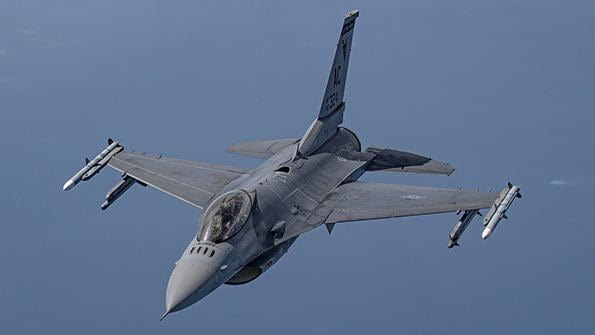
Some current and emerging narratives on the Russia-Ukraine war are worth probing. One is the provision of Western combat aircraft to Ukraine, notably Lockheed Martin F-16s. The fighters will be provided eventually, I expect, but I doubt they will be decisive in tipping the balance of the war in Ukraine’s favor.

Another narrative is that no end to the war is in sight. I don’t know how this war will end, but wars typically end in a negotiated armistice or cease-fire—the Korean War in 1953, multiple Arab-Israeli wars, Iran and Iraq in 1988 and the Desert Storm conflict of 1991 are all examples. Or they end with the total defeat and collapse of one of the combatants, such as happened in South Vietnam in 1975 and Iraq in 2003.

Surprises are part of war, as 2022 has amply demonstrated, and we are certain to see more surprises in 2023 that confound dominant narratives. Ukraine’s offensive could be highly successful in routing Russian forces. Or Ukraine could lose the armor and other kit supplied to it in a poorly executed offensive against a Russian military that might have learned from events last year.

Contributing columnist Byron Callan is a director at Capital Alpha Partne