I remembered watching this movie for the first time in the barracks in Germany where I was stationed. It was 1988 and someone had gone to the Video store near Nellingen Barracks and rented this movie. We were blown away by the portrayal of the sub. It was totally different than the movies we had seen before. The movies we had seen were American movies and they were based in the pacific and they were made during the war and shortly afterwards.
My Copy of the movie in DVD.
The only movie that I like better was "The Enemy Below" but that is another story.
“We all wanted the boat to be successful and to sink as much as possible, regardless of our losses,”
The myth of U-96 lives on to this day. Only a single living
witness knows the truth of what happened, such was the danger of life on
a Nazi submarine during the Second World War. At 103 years old,
Friedrich Grade is the last living survivor of the crew of this
legendary submarine.
His experience would have been useful material for the traveling war correspondent Lothar-Günther Buchheim’s novel Das Boot that was published in 1973 and which inspired Wolfgang Petersen’s feature film bearing the same name in 1981. Caption:
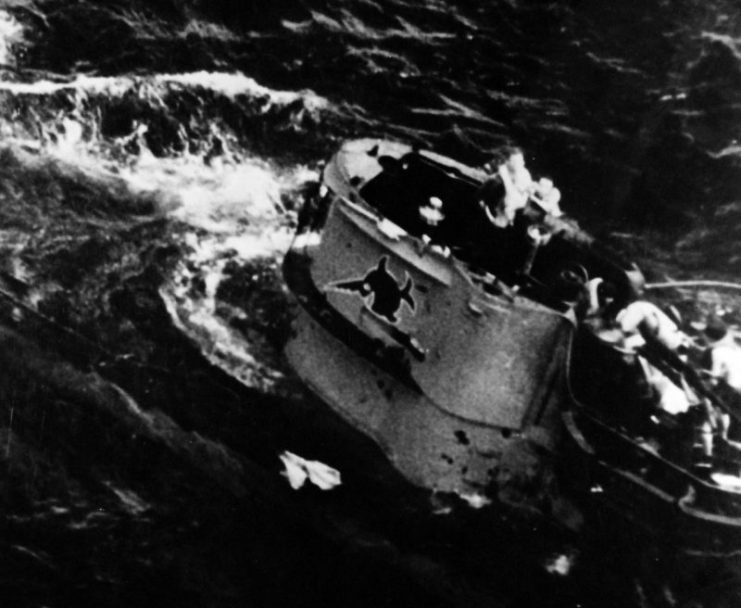
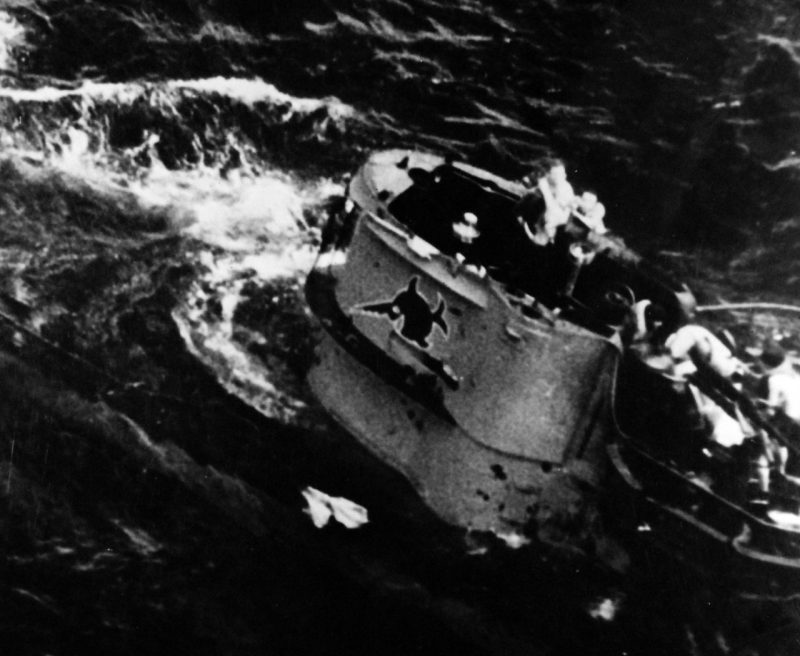
Air Attacks on German U-boats, WWII. Crew of German U-boat, U-664,
prepare to go over side of ship during attack by two Avenger aircraft
from USS Card (CVE-11), August 9, 1943. Note, the laughing sawfish
insignia on the conning tower of the 9th U-boat Flotilla. Incident
#3992. Official U.S. Navy Photograph, now in the collections of the
National Archives. (2015/8/18
Grade was offered a role in the making of the movie, but instead, he
chose to stay on the sidelines. His valuable knowledge, and, more
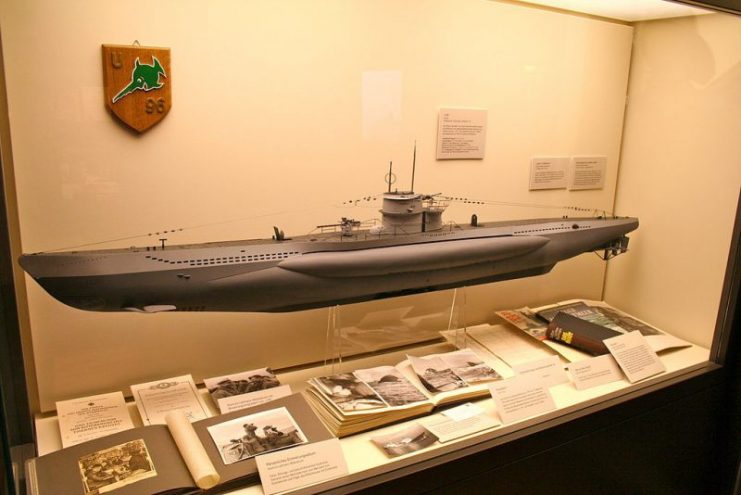
importantly, his journal, would remain a secret for many more years. Scale model of U-96.
In the early years of WW2, the success of German U-boats was initially very impressive.
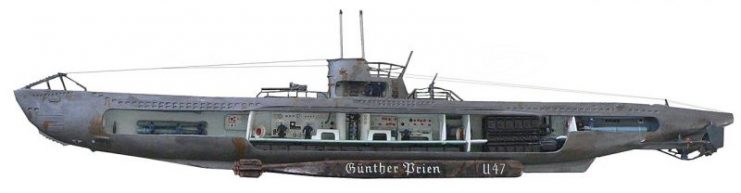
One example is that of U-47, under the command of Günther
Prien. The sub stealthily penetrated the British naval base at Scapa
Flow during the night of October 13/14, 1939. It launched a torpedo,
sinking the British battleship Royal Oak, then left the port unmolested. Kriegsmarine U-boat commander Günther Prien.
HMS Royal Oak floundered, and 833 crew members perished.
Prien and his crew were celebrated as heroes by Nazi propaganda.
HMS Royal Oak
Prien
even spoke at the Berlin Sports Palace and was photographed with Adolf
Hitler. Magazines printed stories with the families of the German
submarine commanders.
Actually, the Kriegsmarine (German Navy) had very little to oppose
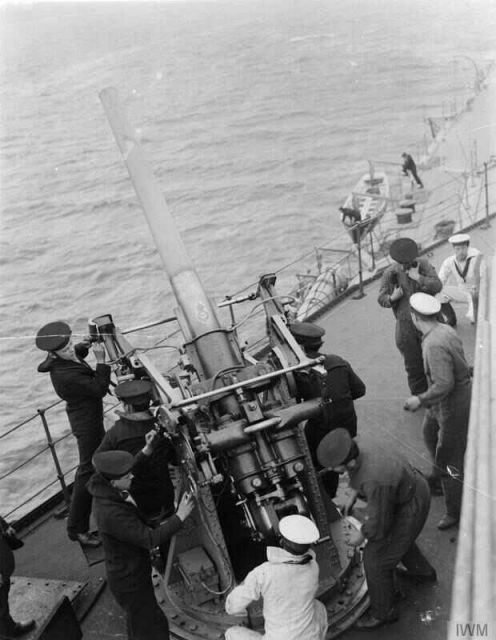
the formidable Royal Navy, but their U-boats were enormously successful. A 3 inch anti-aircraft gun in action on board the British battleship HMS Royal Oak
Massive submarine bunkers popped up all along the Norwegian and
French coasts. In a short time, the submarine fleet had sunk Allied
merchant ships amounting to 4.5 million gross registered tons. Great
Britain’s supply of military equipment and raw materials was at the
mercy of these Nazi Wolf Packs. A model of German Submarine U-47 viewed from the side.
U-96 entered service in September 1940. In December of that same
year, Friedrich Grade joined the crew as Chief Engineer. The famed
U-Boat departed on 11 missions, sinking at least 28 ships and causing
about 1,300 fatalities until early 1943.
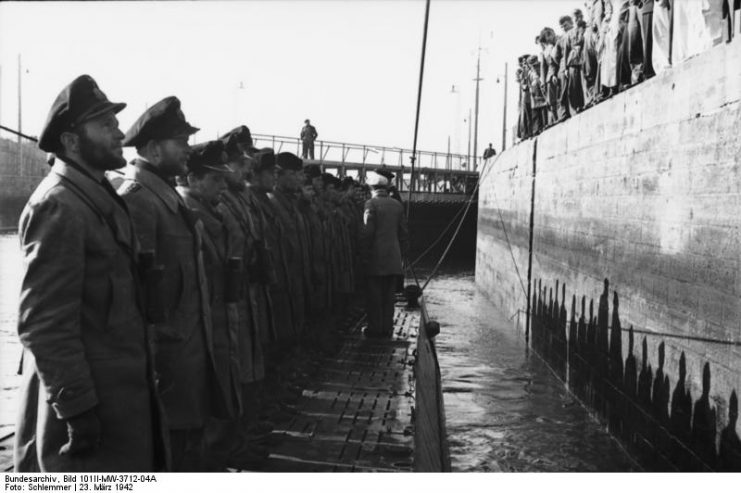
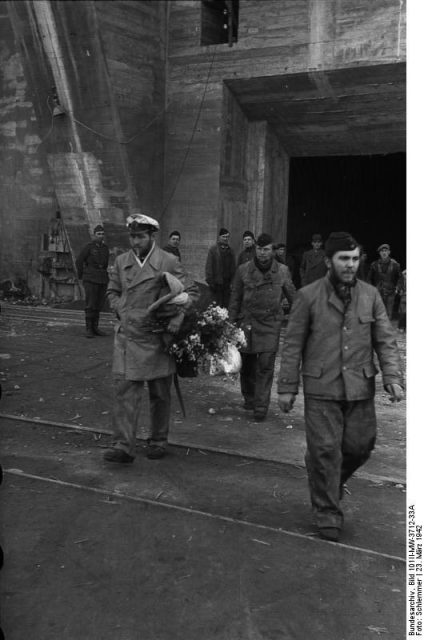
“An indescribably beautiful feeling, from a distance three torpedoes = three hits,” Grade noted on April 28, 1941, in his diary. U-96 entering St. Nazaire, crew on deck.
If these words had been discovered, it would have been the end for
Grade for breach of secrecy. However, not even Grade’s wife knew about
his journal. It remained hidden in the attic for 75 years, collecting
dust.
That day, U-96 sank two tankers and a steamer, causing 60
fatalities. “We all wanted the boat to be successful and to sink as much
as possible, regardless of our losses,” said Grade in a TV interview.
Nevertheless, he emphasized: “We were not animated by heroism or any
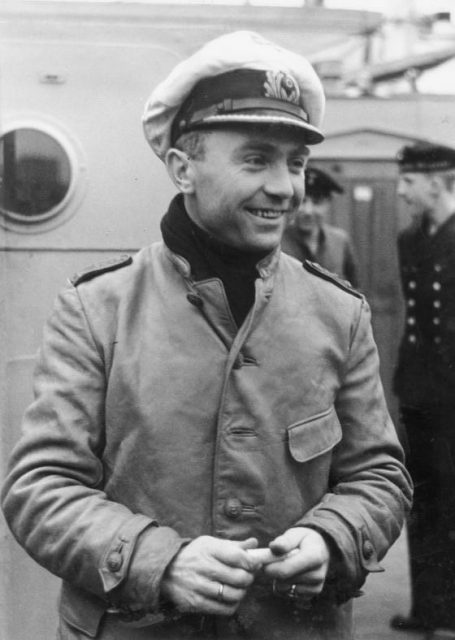
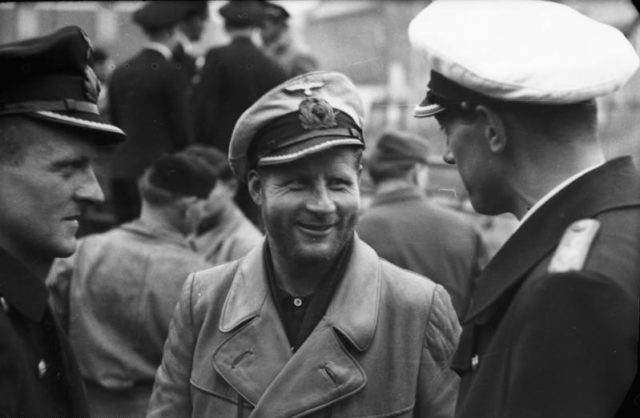
other strange thoughts.” Captain Heinrich Lehmann-Willenbrock, commander of U-96.Photo:
Grade also explained in his journal what it was like to live on U-96
where there were 45 men crowded into confined spaces and the hygienic
conditions were catastrophic. “The air stinks of diesel and is
alternately hot, cold and damp. Clothes are almost always stuck to the
body.” Positiv: “St. Nazaire”, März 1942, U 96, Kptlt. Lehmann-Willenbrock.
"Das Boot" the convoy hunt
Klaus Wennemann acts as the nameless chief engineer (“LI” for short)
in Wolfgang Petersen’s movie. It was Wennemann’s breakthrough role as an
actor. Grade thought that the resemblance with himself was excellent. Film set of Das Boot at the Bavaria Film Studios
Only the vulgar tone between the protagonists as portrayed by the
author Buchheim, who passed away in 2007, bothered Grade. He never liked
the man, who joined the crew of U-96 in the autumn of 1941 to take photographs of the U-boat in action. Film set of Das Boot at the Bavaria Film Studios.Photo:
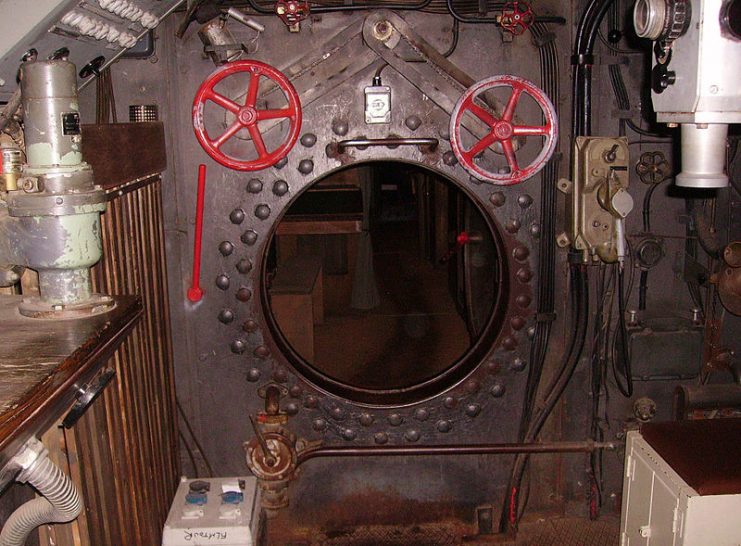
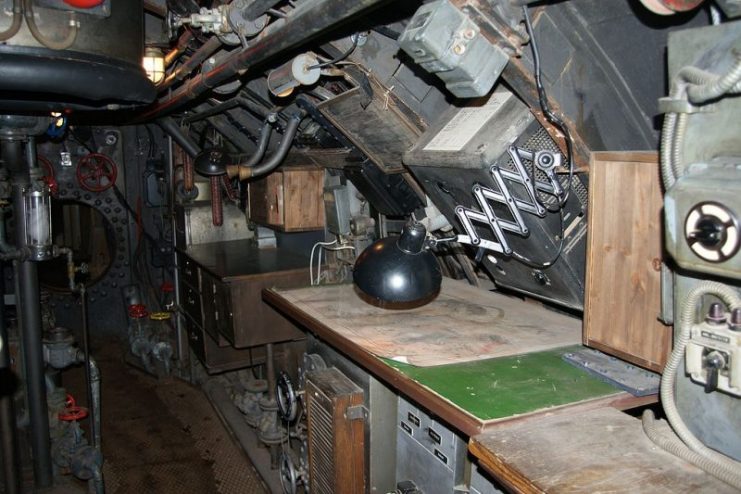
The movie does an outstanding job of showing the grubbiness of the
men’s attire and appearance. Seeing Jürgen Prochnow, the German actor
playing the submarine commandant, with his greasy dark beard and dirty
shirt is an excellent portrayal of what the crew might have looked like. Film set of Das Boot at the Bavaria Film Studios.Photo:
Having said that, the film mainly focuses on scenes that involve
action. Like, for example, the torpedoing of a merchant ship and the
ensuing flight from the escort destroyer. It is a scene that lasts for
many minutes and illustrates the sheer fright of the crew suffering
under a heavy barrage of depth charges. Film set of Das Boot at the Bavaria Film Studios.Photo:
The audience cannot help but empathize with the crew of U-96
when the submarine shudders at every explosion. The destroyer is
relentless. It never stops its search, harassing the Germans that are
the heroes of the film in this particular moment.
Then comes the silence when the explosions stop. Water is leaking
from up above, the sonar pings that had harassed the submarine are no
more. The men of U-96 wait and wait until they finally surface, revealing an empty sea. They have survived. Film set of Das Boot at the Bavaria Film Studios.Photo:
But life on a German U-boat during the Second World War was not all about the relentless pursuit of enemy destroyers. Film set of Das Boot at the Bavaria Film Studios.Photo:
For the most part, the crew pursued a life of extreme monotony
consisting of equipment maintenance, checking the torpedo weaponry,
general upkeep activities, and other essential functions that maintained
discipline and kept the men alive for as long as possible. Bavaria Filmstadt, Munich, Bavaria, Germany.
In the end, Das Boot was nominated for six Academy Awards
with the director, Wolfgang Petersen, winning the accolade as Best
Director and Best Adapted Screenplay. The movie was an excellent effort,
to say the least. Das Boot – submarine turret, Bavaria Filmstadt
A new German TV series produced for Sky Atlantic which is based on the book and the movie was released in November 2018.
Even though the series portrays the heroes of U-96 as more
refined and cleaner, it is still an entertaining take on this famous
story. Besides, it would be almost impossible to recreate Wolfgang
Petersen’s unnerving and grimy ambiance.
Sorry about the light postings...I have been working a lot of overtime and studying so it chews up a lot of my time.
I ran across this by accident and really liked it. It is to me what the original fight scene should have been with Darth Vader but Alec Guiness was at retirement age and not so spry...and yes I can relate.
Original version...
It took the people 2.5 years to remake the scene updating it with new CGI and new film angles and updated sound track and sound scores, I thought adding in the words at the end after they fought the first time on the mining planet after Obiwon cut off Anikins legs and arm....and told him that "you were supposed to be the "Chosen one", supposed to bring balance back to the force."
I know that this is an old song from the 1970's, but I don't recall hearing the song until 1991 when I had mustered out of the Army and the local rock station(which is gone now...Atlanta radio sucks..btw, that is why I like my Sirius/XM radio in the truck.) I heard the song on the way home playing in my Ford F150. Funny how that works, I heard the song for the first time in my 1991 F150 back in 1991. I decided to make it as my "Monday Music".
My 1991 F150 back in 1995
"You Ain't Seen Nothing Yet" is a rock song written by Randy Bachman and first performed by Bachman–Turner Overdrive (BTO) for the album Not Fragile (1974). It was released as a single in 1974 with an instrumental track "Free Wheelin'" as the B-side. It reached the number one position on the Billboard Hot 100 singles chart and the Canadian RPM
chart the week of November 9, 1974, as well as earning the band their
only major hit single in the United Kingdom, peaking at #2 on the UK Singles Chart, although the follow-up single, "Roll on Down the Highway", was also a minor UK hit.
Not Fragile is the third album by Canadianrock band Bachman–Turner Overdrive (BTO), released in 1974 (see 1974 in music).
It proved to be the group's most popular album (not counting
compilations), and is the only BTO album to have reached #1 on the US
Pop Album charts
But when winding up production for the album, Charlie Fach of Mercury Records
said the eight tracks they had lacked the "magic" that would make a hit
single. Some band members asked Randy, "what about the work track?"
Randy reluctantly mentioned that he had this ninth song, but didn't
intend to use it on a record. He said, "We have this one song, but it's a
joke. I'm laughing at the end. I sang it on the first take. It's sharp,
it's flat, I'm stuttering to do this thing for my brother."
Fach asked to hear it, and they played the recording for him.
Fach smiled and said "That's the track. It's got a brightness to it. It
kind of floats a foot higher than the other songs when you listen to
it."
Bachman agreed to rearrange the album sequence so the song could
be added, but only if he could re-record the vocals first, without the
stutter. Fach agreed, but Bachman says "I tried to sing it normal, but I
sounded like Frank Sinatra. It didn't fit." Fach said to leave it as it was, with the stutter.
The lyrics for the song tell of the singer meeting a "devil woman" who
gives him love. The chorus of the song includes the song's famous
stutter and speaks of her looking at him with big brown eyes and
[saying] 'You ain't seen nothin' yet. B-, b-, b-, baby, you just ain't
seen na, na, nothin yet. Here's somethin' that you're never gonna
forget. B-, b-, b-, baby, you just ain't seen na, na, nothin yet.'
I decided to post this comparison of the 03 Springfield, the M-1 Garand and the Lee Enfield. Since I have all 3 of these rifles, I thought it would be humorous.
Back to Front, my 308 Enfield, my 03A3 Springfield and my 303 Enfield.
My Garand and my 03A3 on the way to the range
My Garand and my 03A3
My Enfield. I have blogged about the Enfield several times, the Enfield was finally retired by the Canadians last year, the only rifle to be in active service over a 100 years.
All 3 of the rifles are totally different and they all have plusses and Minuses. I have a Mosin also
My Nagant, with the "Dog Collars" it is the carbine version.
I wouldn't mind getting an Ariska and a Mauser so basically I would have something from all the major combatants of WWII. Corny I know...Something about holding a piece of history in your hand.
The M1903 Springfield and the M1 Garand are undoubtedly
well-respected for the roles they played during WWII. Over the past
decades, a debate has raged among historians and gun lovers over which
of these two highly decisive WWII sniper rifles is better.
This debate seems to have become a bloodless battle with no end in
sight. However, in the video below, Paul Shull, the host of the
Smithsonian Channel’s The Weapon Hunter show, takes a look at
the two historic weapons with an exacting yet exciting shooting
challenge before drawing his own personal verdict.
Before that though, a little background information on what the two weapons stand for, and what really made them stand out.
The M1903 Springfield, officially known as the United States Rifle,
Caliber .30-06, Model 1903, served as the primary rifle of the United
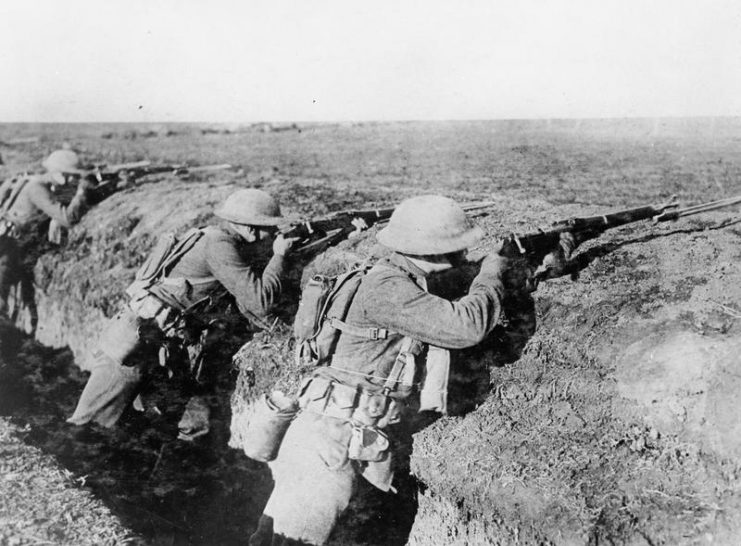
States military for the first several decades of the 20th century, seeing action in both World War I and II. US Marines with M1903 rifles and bayonets in France (1918).It
was adopted as the US military’s official bolt-action rifle on June 19,
1930, but this rifle was basically a spin-off from the Spanish Mauser
Model 1893. Due to the many similarities the Springfield had to the
Mauser, the United States was forced to pay a hefty amount in royalties
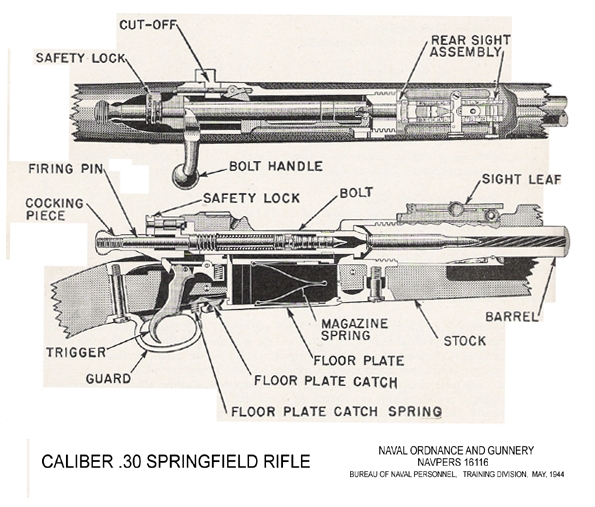
to the Mauser manufacturers. Diagram of the .30 Springfield RifleFed
by a five-round magazine, the 8.7-pound bolt-action repeating rifle was
met by the M1 Garand, which came as its official replacement. However,
the Springfield remained the standard issue rifle for the doughboys
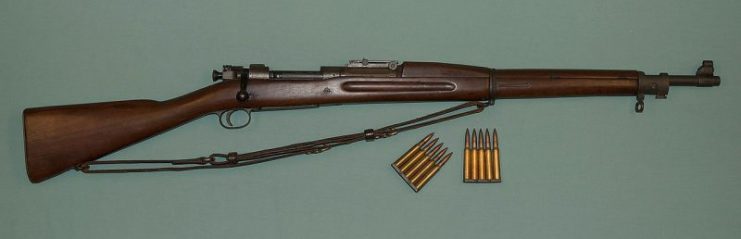
owing to insufficient supply of M1 Garand rifles. M1903 Springfield with loading clips. The
Springfield rifle was also extensively used by American snipers during
WWII, and its usage continued past the Korean War into the early stages
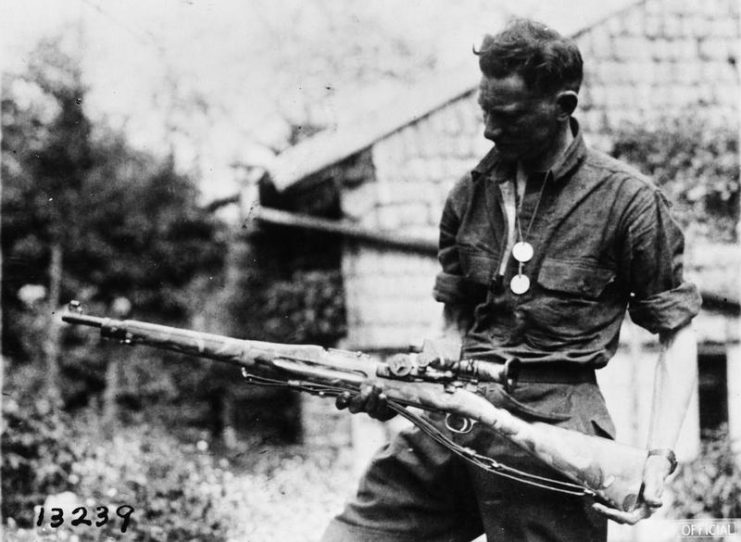
of the Vietnam War. Camouflaged M1903 Springfield sniper’s rifle with Warner & Swasey telescopic sight, in France, May 1918.The
M1903 Springfield is revered among all for its exceptional level of
accuracy. It is, in fact, often voted the most accurate sniper rifle of
WWII. An
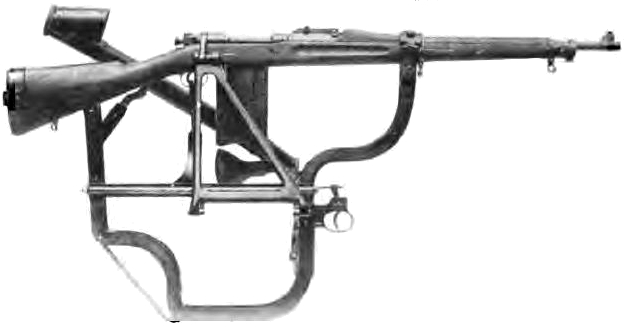
Elder-type periscope stock fitted to an M1903 (1918). Designed for
trench warfare, this enabled the shooter to fire over the parapet of a
trench while remaining undercover and protected. The rifle is also
fitted with a 25-round magazine.It remains popular today among civilians, historical collectors, competitive shooters, and military drill teams. M1903A1 made by Springfield Armory in 1930. On
the other hand, the M1 Garand, named after its designer, John Garand,
is a .30-06 caliber semi-automatic rifle. With over five million units
built between 1934 and 1957, the M1 Garand was used in WWII, the Korean
War, and also the Vietnam War where it found limited use.
The M1 Garand performed amazingly during its years of service,
earning the praise of General George S. Patton who termed it “the
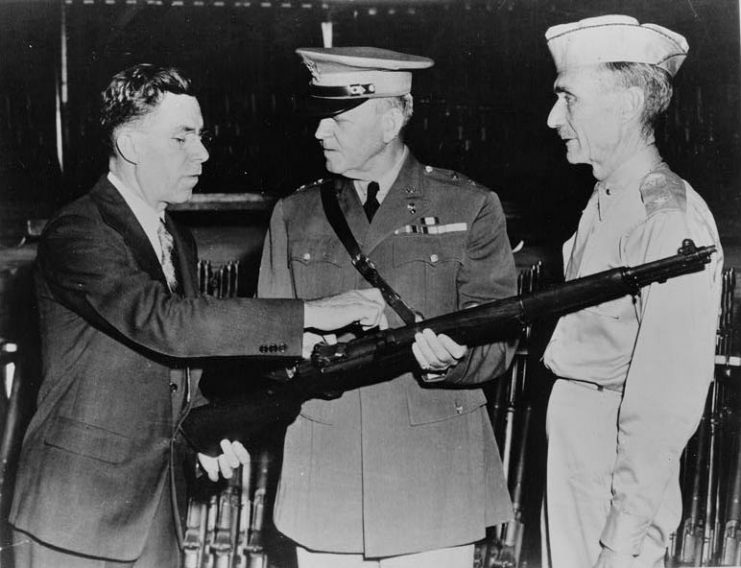
greatest battle implement ever devised.” John Garand points out features of the M1 to army generals.Officially
known by the US military as “U.S. Rifle, Caliber .30, M1,” the rifle
made its entrance into the war during the 1930s as a substitute for the
M1903 Springfield.
Weighing 9.5 pounds, the legendary rifle served American troops in
the battlefields of Northern France, taking them through the coasts of
Okinawa, the scorching heat of North Africa, and the cruel humidity of
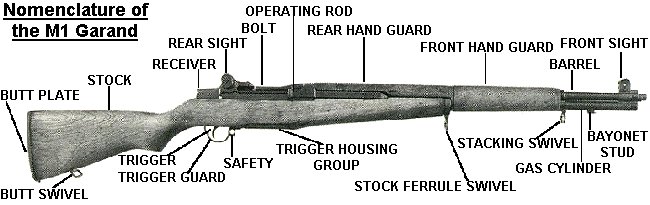
the Philippines. The M1 Garand with important parts labeledOwing
to its impressive muzzle velocity, the M1 Garand handed a significant
advantage to the Allied forces. In several ways, this 43.5-inch
fast-firing war machine was extremely instrumental in bringing victory
home to the Allies, as the bloodiest conflict in human history came to a
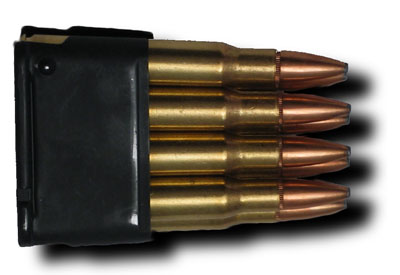
close. An M1 Garand en bloc clip loaded with eight .30-06 Springfield rounds. The
M1 Garand saw a number of copies and derivatives, such as the Japanese
Type 4 Rifle, the Italian Beretta Models, the US M14 Rifle, and the
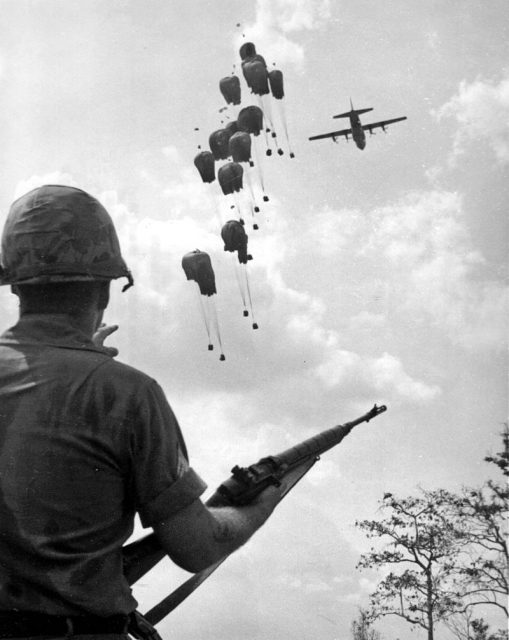
Ruger Mini-14. A U.S. soldier with an M14 watches as supplies are dropped in 1967 during the Vietnam War.
Just like the Springfield, the M1 Garand is still in use today by
civilians for target shooting, hunting, and as military collectibles. It
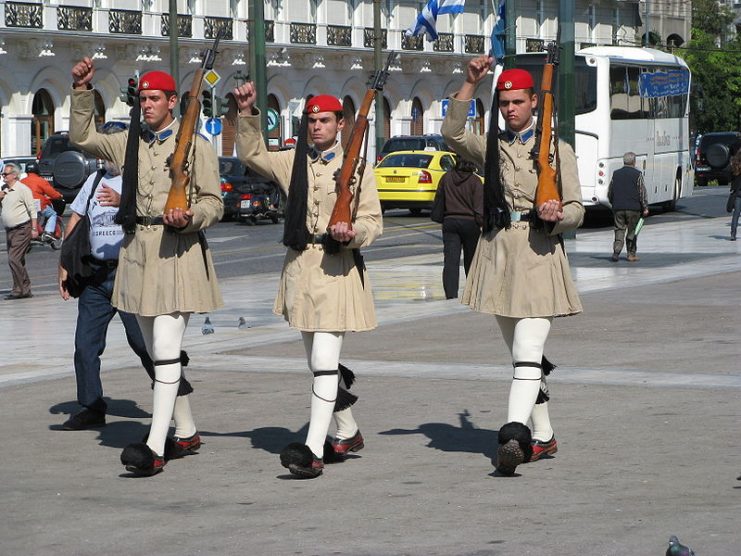
is also still employed by military drill teams and guards of honor. Evzones of the Presidential Guard in front of the Greek Parliament holding M1 Garands. Whether
the Springfield was better than the Garand or the other way round, no
definite answer has yet been found. It all remains a matter of opinion.
One group says the Springfield is better owing to its phenomenal
accuracy and reliability, while another group says it is the
faster-firing M1 Garand which boasts of a high degree of accuracy and
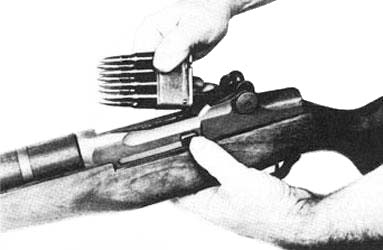
reliability as well. Unloading an M1 “en bloc” clip.During the First World War, the Springfield was the standard rifle
for the infantry, going through phases of modifications while the war
raged on. In World War II, while it was used in the jungles of
Guadalcanal, a self-loading rifle was more desirable, but the
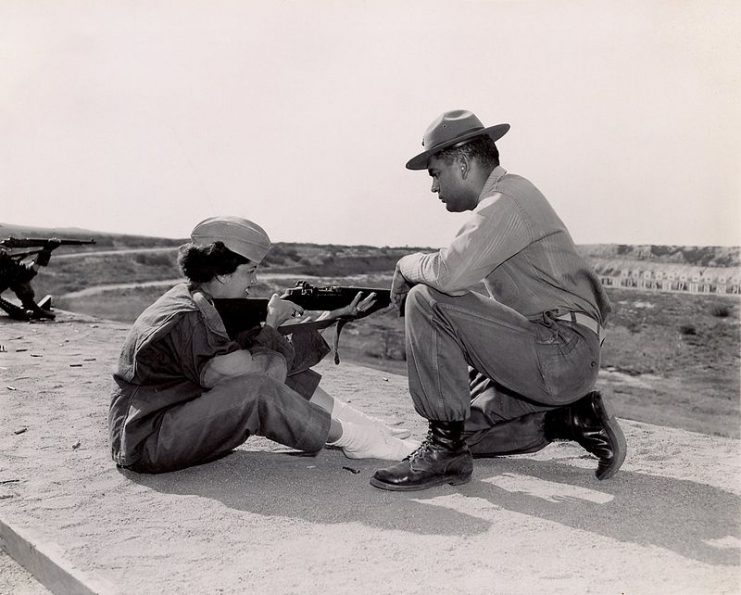
Springfield was not that rifle. Lance
Corporal Cecilia M. Giaise, the first woman qualified as a rifle
marksman (with a score of 206×250) and authorized to operate the M1
rifle. July 1961. Photo: Bobafett1129 CC BY-SA 4.0The M1 Garand and the M1903 Springfield served side by side in World
War II, and the Springfield was a favorite of the US Army Rangers who
chose it over the M1 Garand for certain commando missions. It was also
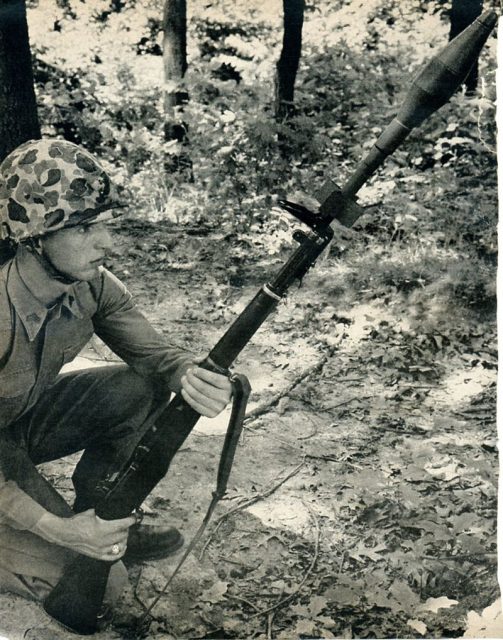
the US Army’s sniper rifle of choice. U.S. Marine preparing to fire M31 HEAT antitank rifle grenade from M1 rifle in the indirect mode with butt on the ground.1950s
The M1 Garand is actually the first standard-issue semi-automatic
rifle of the US military. With an effective firing range of 500 yards,
this weapon was heavier than the Springfield but was well loved among
its users.
I shamelessly cribbed this from ammo.com and Alex who sent me the link and permission to use it. It is very well thought out and well researched. I will be posting not as often until my school and studying is done.
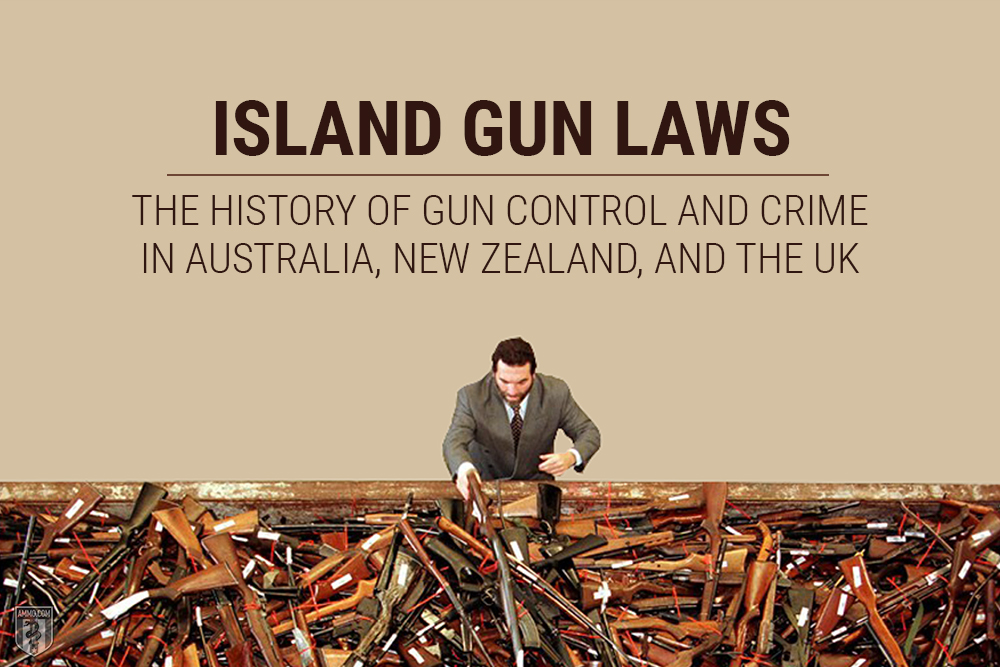
Island Gun Laws: The History of Gun Control and Crime in Australia, New Zealand, and the UK
You're free to republish or share any of our articles (either in part or in full), which are licensed under a Creative Commons Attribution 4.0 International License.
Our only requirement is that you give Ammo.com appropriate credit by
linking to the original article. Spread the word; knowledge is power!
“We know that other countries in response to one mass shooting have
managed to craft laws that almost eliminate mass shootings. Friends of
ours, allies of ours, Great Britain, Australia, countries like ours. So
we know there are ways to prevent it.”
Politics nowadays are dominated by what gets attention, because what
gets attention spreads the fastest and furthest. This is the dark side
of social media and 24/7 news, and one event in particular in the
firearms world is ground zero for this phenomenon – mass shootings.
In the wake of a mass shooting, politicians who already dislike
law-abiding Americans owning guns use the tragedy to push for additional
gun laws, irrespective of the existing laws already broken.
This is done when emotions are at their highest (and thus rational
thinking at its lowest), usually under the auspices of enacting gun laws
like those in the U.K. and Australia. President Obama's former Chief of
Staff Rahm Emanuel said it best:
"You never want a serious crisis to go to waste. And what I mean by
that is an opportunity to do things you think you could not do before."
Careful analysis of these countries’ gun control experiments actually
depicts a more nuanced picture of gun policy and crime. In fact, there
is reason to believe that gun control may have actually not had much of an impact on crime in either country – but this sort of critical thinking
takes concerted effort, and who has time for such things when politics
today are less about sound, long-term policy and more about
sensationalizing another's tragedy to advance your agenda?
Below is a guide to help American gun rights activists understand the
history of gun registration and gun control efforts in the U.K. and
Australia, the two countries which anti-gun politicians often cite as
muses for their proposed laws.
On April 28, 1996, Australia experienced a national tragedy. A
deranged murderer, Martin Bryant, went on a rampage and killed 35 people
in cold blood. In response to this atrocity, known as the Port Arthur
massacre, the Australian government undertook a heavy-handed gun control
campaign. This included a mandatory buyback program
where Australian citizens had to turn over 650,000 “assault weapons” to
the government. This program was followed up by a subsequent buyback
program in 2003.
At the center of Australia’s gun control policy following the Port
Arthur massacre was the National Firearms Agreement of 1996. Although
international media outlets portray the 1996 NFA as a ban, it was
actually a draconian form of gun control that still allowed for gun
ownership, albeit to a very limited degree. The only real bans that took
place were ones targeting so-called “assault weapons” – long-guns such
as rifles and shotguns. Handguns were still accessible to the public,
but were subject to stiff restrictions.
Events That Led to Gun Laws in Great Britain
Britain’s first gun control package passed in the modern era was the Firearms Act of 1920.
Fearing a growing wave of unrest in the aftermath of World War I,
British politicians passed this gun control law despite scant evidence
showing that crime was on the rise during that time period.
The Firearms Act of 1920 was only the beginning – as the 20th century
was a time of progressive government growth in all facets of life, and
the U.K. was no exception. After the enactment of the Firearms Act of
1920, the British government passed gradually stricter laws in 1937,
1968, and 1988. Despite having comprehensive gun control at the national
level, the homicide rate in Great Britain slowly grew from the 1950s
into early 2005.
When it came to mass shootings, British gun control efforts proved
futile. Shooting rampages in Hungerford, England and Dunblane, Scotland
received international attention, which put the island nation at a major
public policy crossroads. Like its Australian counterpart, the United
Kingdom opted for stiffer gun control.
After the Hungerford massacre, the government responded with the passage of the Firearms Act of 1988, a new gun control measure that placed draconian restrictions on rifles and shotguns. The Dunblane massacre prompted the British government to ban the possession of handguns by passing the Firearms Act of 1997.
Falling Crime Rates in the Western World
Arguably
the most popular example of foreign gun control, advocates of tougher
gun laws routinely cite Australia and its 1996 NFA law as an example of
gun control causing crime to fall. Although Australia is a nation
characterized by a low degree of crime, there’s more to Australia’s low
crime rates than gun control.
Homicide rates have been declining across
Western Europe, Canada, and the U.S. since the 1990s. Australia was not
exempt from this trend, and in fact, Australia’s falling crime was
essentially the norm for industrialized countries in the West.
Homicides were already a rare occurrence before the passage of the 1996
NFA. In sum, we can barely learn anything meaningful from slight changes
in Australian homicide rates around this time.
InWhy Crime Rates Are Falling Throughout the Western World, Michael Tonry argues the following:
“There is now general agreement, at least for developed
English-speaking countries and western Europe, that homicide patterns
have moved in parallel since the 1950s. The precise timing of the
declines has varied, but the common pattern is apparent. Homicide rates
increased substantially from various dates in the 1960s, peaked in the
early 1990s or slightly later, and have since fallen substantially.”
This same trend of declining violence was on display in the United States. American homicide rates reached a 51-year low in 2014.
During this time period, there wasn’t a gun control measure as
comprehensive as Australia’s NFA in America that we can point to in
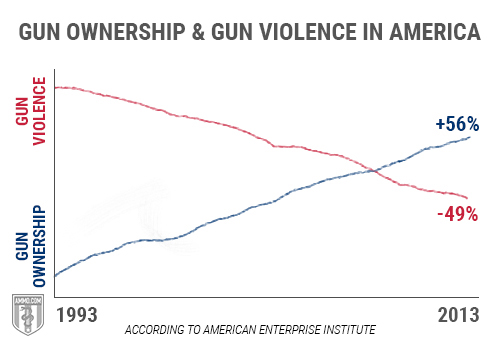
explaining this decline. In fact, American gun ownership per capita increased by 56 percent from 1993 to 2013. This was accompanied by a gun violence decrease of 49 percent.
Correlation is not causation, but this goes to show the explanations
behind crime rates are complex and are not necessarily about passing a
so-called gun control “fix.”
The Effects of Gun Control in Australia
According to gun researcher John Lott, homicide rates in Australia have been on a downtrend
since 1969. During this timeframe, the only time homicide rates
increased was from 1998 to 1999, not long after the NFA was passed.
However, Ryan McMaken
argues that Australian crime data is very spotty. He contends that the
data is not very reliable because crime was such a non-issue that the
government did not prioritize recording it. McMaken provides further
context:
“Australia is a small country, with only a few more million people
than Florida, spread out over an entire continent. In the relatively
high homicide days of the early 1990s, Australia's homicides totaled
around 300. This means in a bad crime year, in which homicides increase
by only 20 or 30 victims, it could swing overall rates noticeably.”
All in all, what we can gather is that Australia had low crime rates
well before the passage of the 1996 NFA. However, this is one part of
the story.
Australia’s gun buyback program from 1996 to 1997 was able to reduce the supply of firearms
from 3.2 million 2.2 million, but the declines in homicide or suicide
rates were not as high as many gun control advocates expected.
Interestingly enough, Australia’s gun buyback did not even stifle
civilian gun ownership. In 2010, private gun ownership was back to 1996
levels. Plus, data from 1997 to the present day show that gun ownership
in Australia has actually grown three times faster than the population.
The total number of firearms in circulation went from 2.5 million to 5.8 million.
Gun control advocates maintain that the more guns present, the more
likely crime rates will skyrocket. Crime rates were already low before
gun control came into being and continued to fall even after gun control
was implemented. Moreover, Australia still experienced an increase in
the amount of guns in the country despite the gun control laws in
effect.
Indeed, it’s hard to place what factors exactly contributed to
Australia’s decreasing homicide rates. It’s simplistic to believe that
gun control is the missing x-factor in lowering crime. Additionally, the
Australian experience shows that Australia’s decision to not completely
ban gun ownership has given some law-abiding gun owners a little bit of
flexibility in acquiring firearms.
The Australian gun control case actually looks quite bleak when
compared to the U.S.’s higher degree of gun rights over the past few
decades. From 1995 to 2006 – a time when firearm ownership was reduced –
Australia witnessed a significant increase in rapes and sexual
assaults. In400 Years of Gun Control,
author Howard Nemerov specifically pointed to numbers indicating a 21.4
percent increase in rape and sexual assault rates during this period.
On the other hand, America saw increased gun ownership during this
time, so it’s no surprise they fared better when it came to sexual
assaults, which fell by 16.8 percent. Gun ownership tends to benefit the
most vulnerable in society, like women and the elderly,
who are often overpowered in violent assaults by criminals who rely on
brute strength. With guns entering the equation, the playing field is
ultimately leveled.
All in all, gun control down under is not what it seems.
The Effects of Gun Control in the U.K.
Like
Australia, low homicide rates have been generally the norm in recent
British history. At the beginning of the 20th century, England and Wales
were already some of the safest countries in the world based on global
and historical standards.
At first glance, the gun control measures appeared to coincide with
decreases in Britain’s homicide rates, which started taking place after
2002. However, there is reason to believe that there were other factors
contributing to Britain’s falling crime rates during that period. John
Lott argues that increased policing in the U.K. is a more plausible explanation for this drop around the early 2000s.
Although Lott recognizes that the police play a crucial role in fighting crime, his research over the years has led him to the conclusion
that the police can’t always be at crime scenes to save lives. They
usually end up at the crime scene after the fact, thus demonstrating the
need for other security options at our disposal. An increased law enforcement
presence eventually hits a point of diminishing returns as witnessed in
the U.K. during the mid-2000s. Despite a substantial increase in the
police force, the murder rate was still above the pre-handgun ban rate.
Gun control advocates remain steadfast in their belief that gun
control was solely responsible for the fall in murders after 2002. Even
if we concede ground on this point, we also have to ask why gun control
was not at fault for the repeated increases
in murder rates from the 1960s until the 1990s – a time when homicide
gradually increased despite new gun control legislation being passed
throughout those decades.
We must also keep in mind that statistical figures in the U.K. should
be viewed with a certain degree of skepticism given the differences in
the way crimes are accounted for. Starting in 1967,
homicide figures in England and Wales exclude cases that don’t result
in convictions. Put simply, when no arrest for a homicide is made, which
in turn results in no conviction for the murderer, the murder is not
accounted for in statistical figures.
The U.S. has a different approach to recording homicide statistics – including cases that did not
result in murder convictions. For example, deaths caused by defensive
gun use as well as unsolved cases would be classified as homicides in
the U.S.
This makes crime rate comparisons between countries like the U.S. and
the U.K. rather tricky. When adding gun control laws and their effects
on crime rates into these comparisons, the picture becomes murkier.
Confounding variables abound which can lead to flawed interpretations of
these events. Recent data show that the U.K.’s gun control experiments
are actually causing more harm than good. Like its Australian
counterpart, which also implemented draconian gun control in the 1990s,
negative criminal trends have started to surface since new gun control
laws were enacted.
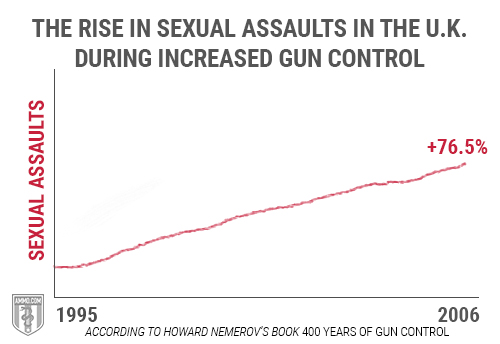
Sexual assaults have seen an alarming rise from 1995 to 2006,
specifically increasing by 76.5 percent according to Howard Nemerov’s
book 400 Years of Gun Control. All the gun control in the world has not been able to save the U.K. from steadily increasing rates of violent crime.
One particular interesting detail about crime under the country’s gun
control regime is that criminals have now changed the tools they use to
carry out their dirty deeds. Specifically, British criminals are using
knives to commit crimes. The Guardian reported on the recent knife crime wave sweeping across the U.K.:
“Police recorded 39,598 offences involving a knife or sharp
instrument in the year to December 2017, a 22% increase compared with
the previous year (32,468), and the highest number registered since
comparable records started in 2010. Gun crime rose to 6,604 offences.”
The London Metropolitan Police reports
that teenagers commit 49 percent of knife crime. On top of that, three
quarters of stabbings were committed by minorities. Breitbart also gave a lurid depiction of London’s ongoing knife rampage:
“London specifically experienced record high knife crime,
increasing by 15 percent to a total of 14,987 blade offences –
representing 38 percent of all knife crimes across England and Wales and
averaging 41 knife crimes a day.”
With questionable immigration policies that prevent assimilation and an environment that does not protect law-abiding Britons’ right to self defense, the U.K. risks sliding into social chaos.
Sadly, British politicians still believe more government control is
the answer to this problem. In the face of this stabbing epidemic,
London Mayor Sadiq Khan has advocated forknife control. One Member of Parliament Scott Mann has even floated the idea of embedding GPS trackers on all knives sold in London.
Instead of considering alternatives like tougher policing in
crime-ridden neighborhoods or even arming their citizens, elected
officials in London have created a de facto surveillance state. A report
from WorldAtlas
uncovered that London is the most surveilled city in the world with an
estimated 51,000 cameras used to snoop on London residents.
New Zealand: An Addendum
On
March 15, 2019, New Zealand faced its own Port Arthur incident. A
28-year-old Australian citizen by the name of Brenton Tarrant opened
fire on two mosques in Christchurch, leaving 50 people dead. The
shocking nature of this massacre had media talking heads around the
world on edge for the next week
In an already polarized environment in western countries, where
identity politics have strong pull, politicians were quick to make their
pro-gun control stances heard. From Alexandria-Ocasio Cortez to Bernie Sanders, U.S. members of the Democratic Party have made their calls for gun control clear. Universal background checks and so-called “assault weapons” bans are now on the table.
There is no question this event was a horrific tragedy and the
atrocious nature of the incident will forever rock New Zealand’s public
conscious. That being said, analyzing this incident and figuring out how
to go from there requires level-headed thinking. Much to the dismay of
pro-gun advocates who want to see their countries expand gun rights,
emotion tends to reign supreme in all public policy discussions.
As with the Australian and British cases, we find that New Zealand
has also witnessed the same declining crime rates trend the rest of the
West has experienced in the past few decades. In 2014, New Zealand’s
homicide rate stood at 0.9 per 100,000 people. Particularly curious, New Zealand hit a 40-year low in its murder rates in 2017 – with only 35 people being killed in the country. Murders peaked in the 1980s, with 1986 being the year with the highest total of murders, standing at 79.
It should be noted that New Zealand does feature pretty strict gun control. Gunpolicy.org notes that
in New Zealand, “the right to private gun ownership is not guaranteed
by law,” which is a stark contrast from the U.S. – which nominally recognizes it as a right.
Prospective gun owners in New Zealand must have a license before buying
a gun. Then, they must go through a universal background check of sorts
that “considers criminal, mental health, medical, addiction and
domestic violence records.”
Following the Mosque shootings, Prime Minister Jacinda Ardern immediately called for bans on semi-automatic weapons and “military-style” variants. She got her wish
a few days after the shooting, with a new ban on “assault weapons.”
Despite the New Zealand government’s push for gun owners to turn in
their firearms in the wake of the mass shooting, a paltry number of firearms have been turned in so far.
Like Australia, we cannot assume with certainty that gun control has
been the primary driver of New Zealand’s already low crime rates. The
effects of New Zealand’s new gun control laws will be an interesting
case study nonetheless.
But with the American counterexample showing how crime rates can
still decrease, even with certain jurisdictions liberalizing gun laws,
we must call into question the conventional wisdom that gun control is
the alpha and the omega of decreasing crime rates. When push comes to
shove, the New Zealand government’s newest gun control package may turn
out to be a dud that only satisfied the political class’s “do
something.”
Follow the Red, White, and Blue
The
British government will eventually have to admit that there’s only so
much it can do to fight crime. Instead, the U.K. and Australia, for that
matter, should follow in the footsteps of America and expand gun
rights. The gun rights victories that have occurred since the 1980s have
served America well.
Research from the Pew Center
in 2015, showed that the murder rate in America fell by one half – 7
per 100,000 in 1993 to 3.4 per 100,000 in 2014. In the same period, the
total number of gun deaths (numbers that include accidental deaths and
suicides) dropped by almost one-third, plummeting from 15.2 to 10.6 per
100. Additionally, the number of privately owned guns and people
carrying concealed has grown year by year.
Over the past three decades, gun laws have witnessed unprecedented levels of relaxation at the state level.
From reforms such as licensed concealed carry to permitless
Constitutional Carry, law-abiding gun owners in certain states have more
firearms freedoms than in previous decades. These numbers at least
demonstrate that looser gun laws don’t lead to chaotic episodes of
violence. Crime rates don’t suddenly explode when people are allowed to
freely own and carry firearms. The warnings of so-called Wild West scenes popping up left and right prove to be unfounded.
The Australian and British cases, on the other hand, show a more
mixed picture of countries that were already safe before passing gun
control due to political outrage. The effects of these laws are still
being discerned, however, it can be argued that they have had little
effect on impacting crime. In the British case, law-abiding citizens may
want to have expanded gun rights due to the country’s increasingly
unstable migrant crisis and the police’s inability to stop crime.
All in all, a truly free society is one that respects an individual’s right to self defense. No matter the intentions, governments have no authority to infringe upon this sacred right.
Posting will be sporatic for the next few weeks, I am having to devote a lot of time to other things and spending 2 to 3 hours a night blogging I can't spare the time right now. I am working on some certifications for work and I have to study a lot. So I apologize to my regular readers, I will be posting but it will not be regular like it has been.
I decided to do this version of "Monday Music" on the Hustle, it was very popular during the Disco era.
While in New York City to make an album, McCoy composed the song after his music partner, Charles Kipps, watched patrons do a dance known as "the Hustle"
in the nightclub Adam's Apple. The sessions were done at New York's
Media Sound studio with pianist McCoy, bassist Gordon Edwards, drummer Steve Gadd, keyboardist Richard Tee, guitarists Eric Gale and John Tropea, and orchestra leader Gene Orloff. Producer Hugo Peretti contracted piccolo player Phil Bodner to play the lead melody.
During the summer of 1975, "The Hustle" became a No. 1 hit on the Billboard Hot 100 and Hot Soul Singles charts. Billboard ranked it as the No. 21 song for 1975. It also peaked at No. 9 on the Australian Singles Chart (Kent Music Report) and No. 3 in the UK Singles Chart.
According to producers Hugo & Luigi who owned the Avco record label
that originally released "The Hustle", McCoy met with them shortly
before his death in 1979 to discuss ideas for a new, longer version of
the song, in order to appease Avco's UK and German affiliates who were
clamoring for a 12" disco single release.
The new version, clocking in at just under 6-and-a-half minutes, was
assembled posthumously as a remix, using parts of the original recording
plus new parts, including drum, Syndrum, and a "little" Moog synthesizer. It was credited to Van McCoy alone or with an unnamed orchestra, mixed by "The Mix Masters", identity unknown
It was one of those kind of days...from the no sleep the day before to a really loooong day Monday, I didn't get anything posted.....
I decided to post a "Beatles" song for my Monday Music. The influence that the "Fab Four" had on the music scene in incalculable. Many music greats since that time say that one of their main influences was the Beatles and even 50 years later they are still a factor in the music world. That alone is noteworthy since the bands that make it to the level that they did and still remain viable is telling.
Now I decided to use this song from the Beatles for my belated "Monday Music" and I am fixing to speak some heresy. With the exception of this song, I never really cared for the music for the Beatles, I viewed them as the perfect nexus of marketing, TV and talent. I don't knock the Beatles, it is a personal taste thing. Now after they broke up, the former members did a lot of their own projects and overall did quite well, I believe that the talent that they had as individuals couldn't be contained in the framework of "The Beatles". Paul and his superband "Wings", John with his solo projects and albums...Ringo and George did well, his album in the late 80's is still one of my favorites Although that song by John Lennon..."Imagine"...People play it whenever they are trying to play for some sop for "World Peace", There are a few songs that I despise, and that is one of them...perhaps it is a good song but how it is associated. Whenever it comes on the radio, the announcers get all sappy and gooey and I remembered screaming out at the radio one time "Jeez...Just shoot me...this shit sucks.......oh wait! somebody did!!". Yeah I know...tacky and lacking in taste....but I am like that sometimes.
Help! is the fifth studio album by English rock band the Beatles and the soundtrack from their film Help!. It was released on 6 August 1965. Produced by George Martin,
it was the fifth UK album release by the band, and contains fourteen
songs in its original British form. Seven of these, including the
singles "Help!" and "Ticket to Ride",
appeared in the film and took up the first side of the vinyl album. The
second side contained seven other releases including the most-covered song ever written, "Yesterday".
The American release was a true soundtrack album, mixing the
first seven songs with instrumental material from the film. Of the other
seven songs that were on the British release, two were released on the
US version of the next Beatles album, Rubber Soul, two were back-to-back on the next US single and then appeared on Yesterday and Today, and three had already been on Beatles VI.
Help! was nominated in the category of Album of the Year at the 1966 Grammys Awards, marking the first time that a rock band had been recognized in this category. In 2012, it was ranked 331st on Rolling Stone magazine's list of the "500 Greatest Albums of All Time". In September 2013, after the British Phonographic Industry changed its sales award rules, the album was certified platinum for recorded sales since 1994.
"Help!" is a song by the English rock band the Beatles that served as the title song for the 1965 film and its soundtrack album. It was released as a single in July 1965, and was number one for three weeks in the United States and the United Kingdom.
Credited to Lennon–McCartney, "Help!" was written by John Lennon with some assistance from Paul McCartney. During an interview with Playboy in 1980, Lennon recounted: "The whole Beatles thing was just beyond comprehension. I was subconsciously crying out for help".
It was ranked at number 29 on Rolling Stone's 500 Greatest Songs of All Time.
The documentary series The Beatles Anthology
revealed that Lennon wrote the lyrics of the song to express his stress
after the Beatles' quick rise to success. "I was fat and depressed and I
was crying out for 'Help'", Lennon told Playboy. Writer Ian MacDonald
describes the song as the first crack in the protective shell Lennon
had built around his emotions during the Beatles' rise to fame, and an
important milestone in his songwriting style.
In the 1970 Rolling Stone
"Lennon Remembers" interviews, Lennon said that the song was one of his
favourites among the Beatles songs he wrote. In these interviews,
Lennon said he felt that "Help!" and "Strawberry Fields Forever"
were his most honest, genuine Beatles songs and not just songs "written
to order". According to Lennon's cousin and boyhood friend Stanley
Parkes, "Help!" was written after Lennon "came in from the studio one
night. 'God,' he said, 'they've changed the title of the film: it's
going to be called 'Help!' now. So I've had to write a new song with the
title called 'Help!'."
According to McCartney, he was called in "to complete it", providing the "countermelody" arrangement, on 4 April 1965 at Lennon's house in Weybridge.
"Help!" went to number 1 on both the UK and US singles charts in late
summer 1965. It was the fourth of six number 1 singles in a row on the
American charts: "I Feel Fine", "Eight Days a Week", "Ticket to Ride", "Help!", "Yesterday" and "We Can Work It Out".At the following year's [[Ivor 0amed as the second best-selling single of 1965, behind "We Can Work It Out". "Help!" was nominated in four categories at the 1966 Grammy Awards but failed to win in any of them.
The song appears on the Help! LP, the US Help! soundtrack, 1962–1966, the Imagine: John Lennon soundtrack, 1, Love, and The Capitol Albums, Volume 2. The mono version (with different vocals and no tambourine) was included on the Beatles' Rarities LP and in The Beatles in Mono collection. The American soundtrack album included a James Bond-type introduction to the song, followed by a caesura
just before the opening lyric. No such introduction appeared on the
British soundtrack album, nor was it included in the released single in
either country.
Check out Ringo with the Umbrella
Although Lennon was proud of "Help!" and the honesty it conveyed,
he expressed regret that the Beatles had recorded it at such a fast tempo in the interests of giving the track more commercial appeal.Music critic Dave Marsh
refuted this idea, saying: "'Help!' isn't a compromise; it's bursting
with vitality … [Lennon] sounds triumphant, because he's found a group
of kindred spirits who are offering the very spiritual assistance and
emotional support for which he's begging. Paul's echoing harmonies,
Ringo's jaunty drums, the boom of George's guitar speak to the heart of
Lennon's passion, and though they cannot cure the wound, at least they
add a note of reassurance that he's not alone with his pain











 Arguably
the most popular example of foreign gun control, advocates of tougher
gun laws routinely cite Australia and its 1996 NFA law as an example of
gun control causing crime to fall. Although Australia is a nation
characterized by a low degree of crime, there’s more to Australia’s low
crime rates than gun control.
Arguably
the most popular example of foreign gun control, advocates of tougher
gun laws routinely cite Australia and its 1996 NFA law as an example of
gun control causing crime to fall. Although Australia is a nation
characterized by a low degree of crime, there’s more to Australia’s low
crime rates than gun control.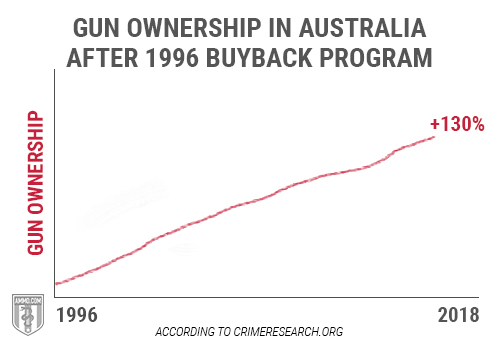 According to gun researcher John Lott, homicide rates in Australia have been on a
 Like
Australia, low homicide rates have been generally the norm in recent
British history. At the beginning of the 20th century, England and Wales
were already some of the safest countries in the world based on global
and historical standards.
Like
Australia, low homicide rates have been generally the norm in recent
British history. At the beginning of the 20th century, England and Wales
were already some of the safest countries in the world based on global
and historical standards.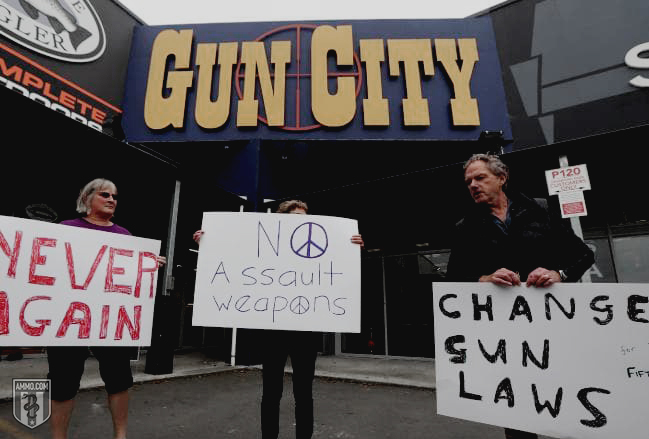 On
March 15, 2019, New Zealand faced its own Port Arthur incident. A
28-year-old Australian citizen by the name of Brenton Tarrant opened
fire on two mosques in Christchurch, leaving 50 people dead. The
shocking nature of this massacre had media talking heads around the
world on edge for the next week
On
March 15, 2019, New Zealand faced its own Port Arthur incident. A
28-year-old Australian citizen by the name of Brenton Tarrant opened
fire on two mosques in Christchurch, leaving 50 people dead. The
shocking nature of this massacre had media talking heads around the
world on edge for the next week 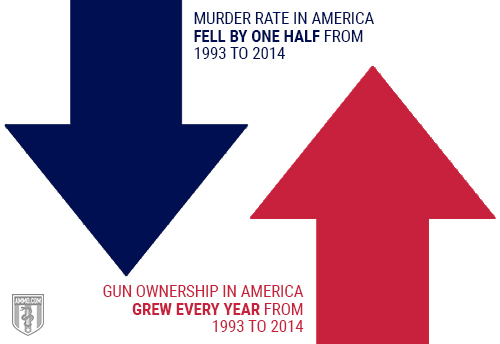 The
British government will eventually have to admit that there’s only so
much it can do to fight crime. Instead, the U.K. and Australia, for that
matter, should follow in the footsteps of America and expand gun
rights. The gun rights victories that have occurred since the 1980s have
served America well.
The
British government will eventually have to admit that there’s only so
much it can do to fight crime. Instead, the U.K. and Australia, for that
matter, should follow in the footsteps of America and expand gun
rights. The gun rights victories that have occurred since the 1980s have
served America well.


