Webster

The Constitution was made to guard the people against the dangers of good intentions." --American Statesman Daniel Webster (1782-1852)


Tuesday, October 22, 2019

The Evolution of the Iowa Class


I am still busy, but I was taking a break from studying and was doing a bit of surfing and ran across this article and thought it was very neat and it had a lot of pics I have never seen before.  I hope to continue blogging over the weekend of all goes well:)  I still would like to see one of those ships to be recommissioned but with the lethality of today's missiles I am not sure that the battleships would survive and the swarm of missiles that the Chinese  opposing force would launch.  I am a student of History and I see parallels between the Iowa's and another famous ship that represented a country and a navy during the Prewar Years.
 The "Mighty" Hood
H.M.S Hood flew the flag and was the embodiment of the British Empire during the prewar years and unfortunately by the time WWII rolled around, the Hood was very obsolete.  She was due for upgrades in Armor, fire control systems and anti-aircraft defenses in the late 1930's, but the bean counters put off the upgrades that would have most likely saved the ship when she fought the Bismark in the Battle of the Denmark Strait and was destroyed by an explosion that was endemic of the British Battle Cruisers.  The British knew of the flaw since Jutland but never fixed the problem.

From the time that USS Iowa was laid down in 1940 until today, the Iowa class battleships have been around for 78 years. During that time, the ships underwent many changes to help them adapt to the type of conflict they were engaged in. In this article, I gathered a number of photos from those years and organized them into this collection. They help to show how these warships looked throughout their long and illustrious careers.

Iowa Class Battleships From 1940 to Present

USS Iowa
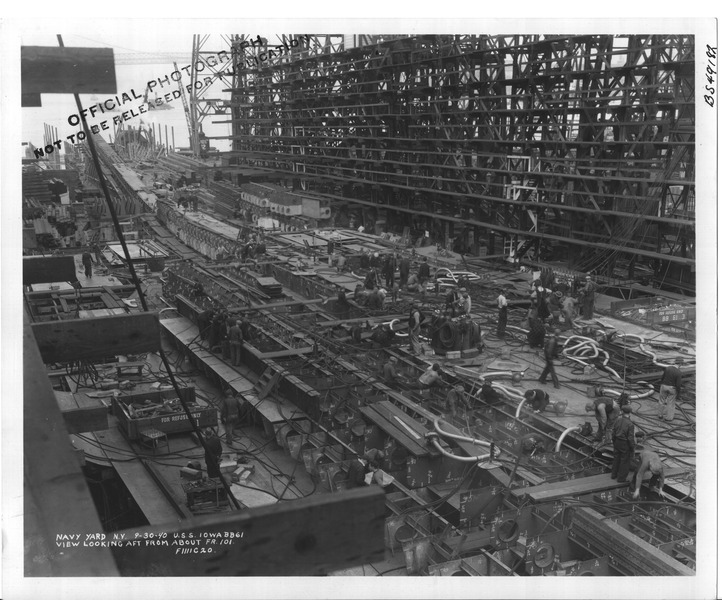
September 30, 1940. Workers lay out the bottom hull plates for the battleship USS Iowa (BB-61) about one month into her construction. Iowa would be the leadship for a new class of battleship design was free of the limitations imposed by the Second London Naval Treaty.
uss missouri
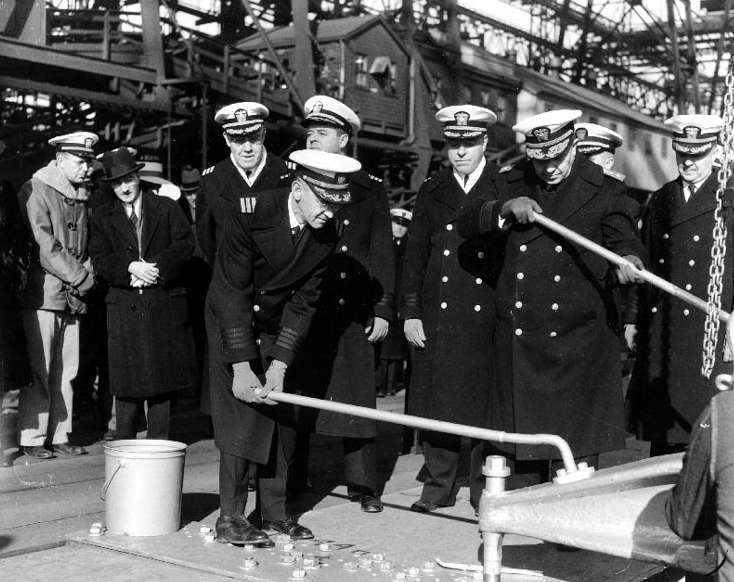
1941. The ceremonial driving of the first rivet for the battleship USS Missouri.
Iowa class battleship
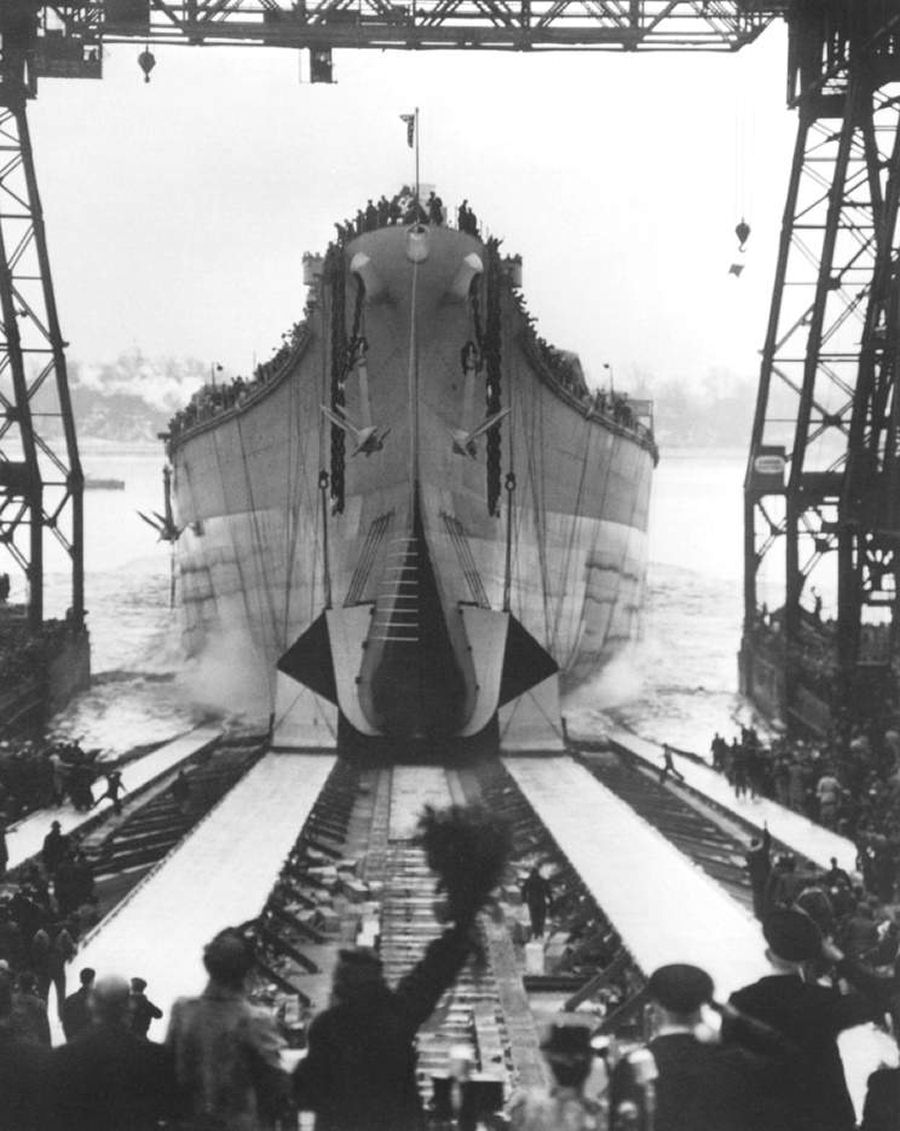
December 7, 1942. The Battleship USS New Jersey slides down the ways on the one year anniversary of the Attack on Pearl Harbor. The day that saw the loss of many battleship of the United States Navy now sees one of its most powerful take to the water.
USS Wisconsin
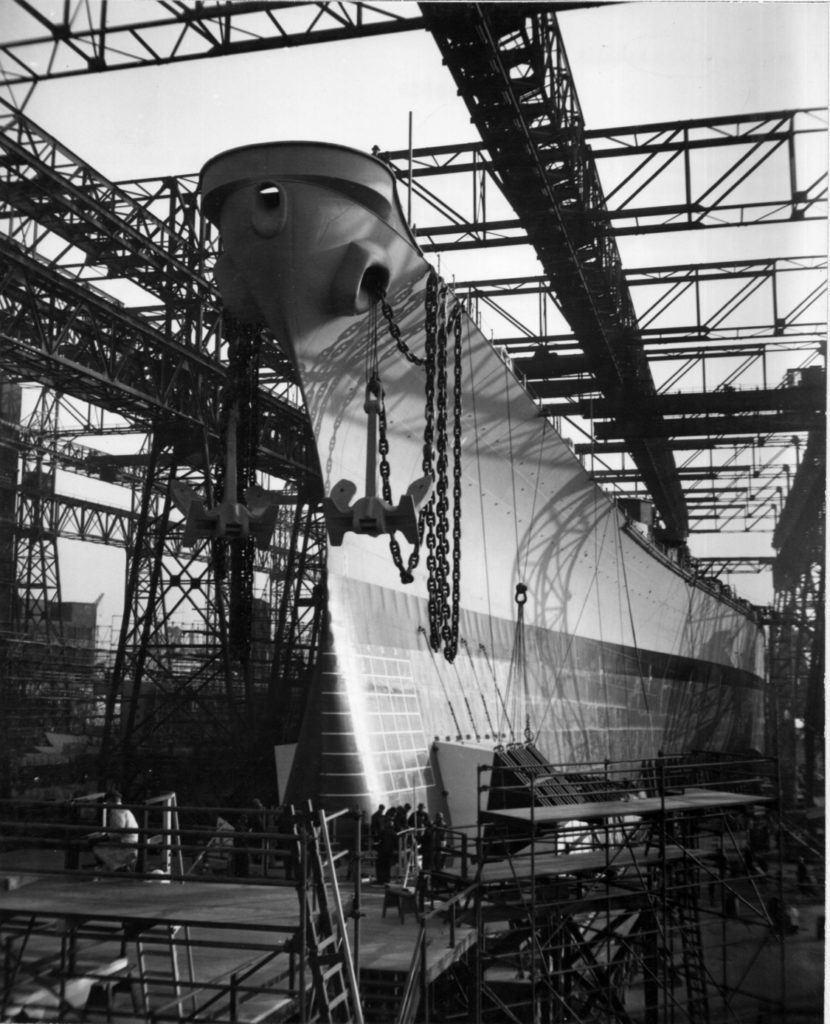
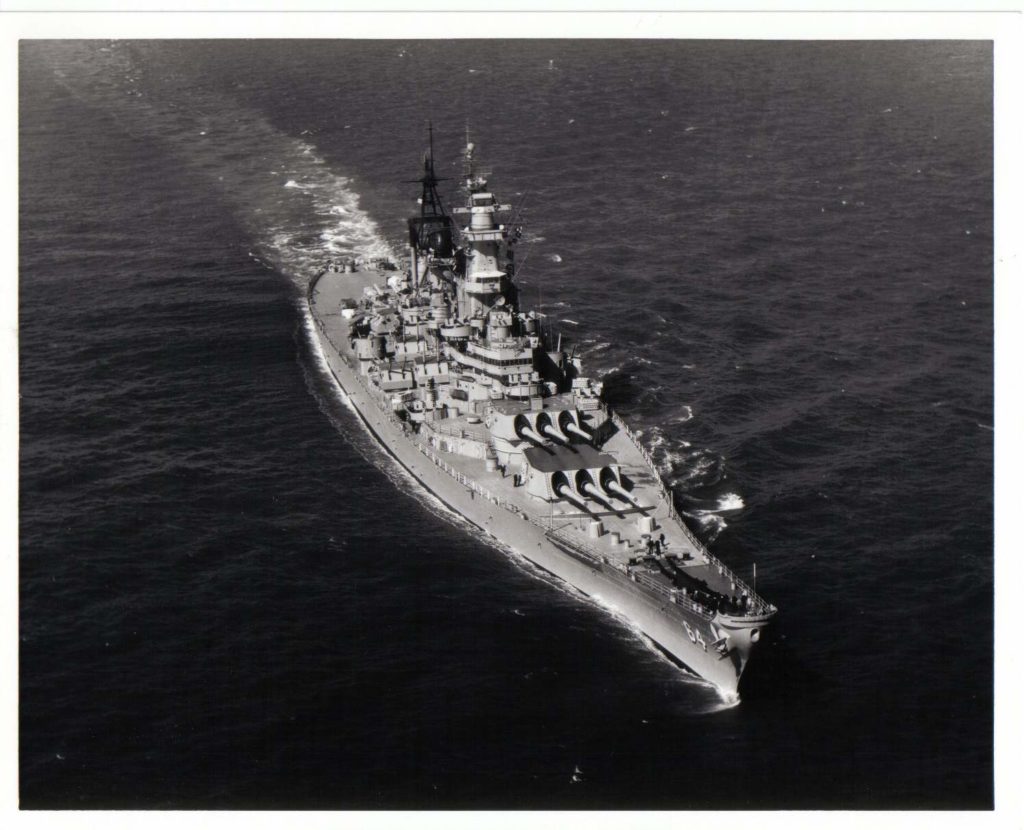
1943. The hull of the USS Wisconsin (BB-64) looks like she is ready to take to the water. In a few months she would finally slide down the ways during her christening on December 7, 1943.
Iowa class battleship
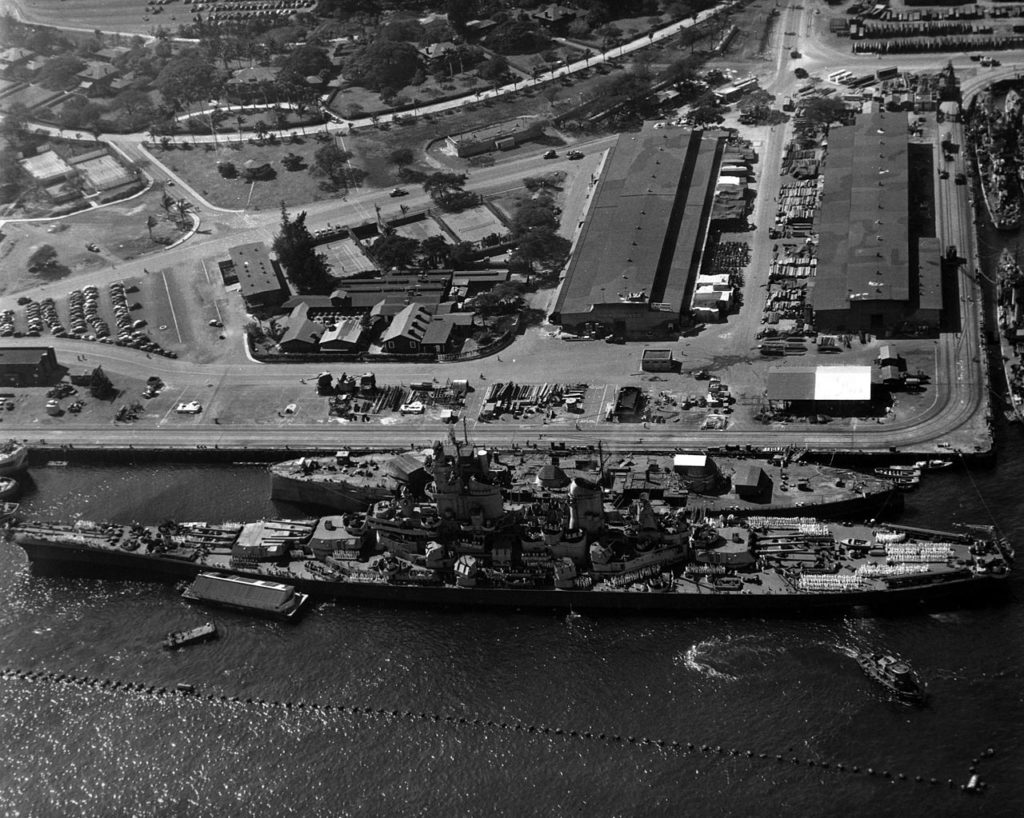
November 1944. USS Wisconsin (BB-64) ties up to the hulk of the battleship USS Oklahoma (BB-37) while stopping at Pearl Harbor. Wisconsin was 304′ longer than Oklahoma and displaced almost twice as much. Oklahoma was sunk at Pearl Harbor three years earlier. Now it was Wisconsin’s turn to go on the offensive as she headed to the front lines.
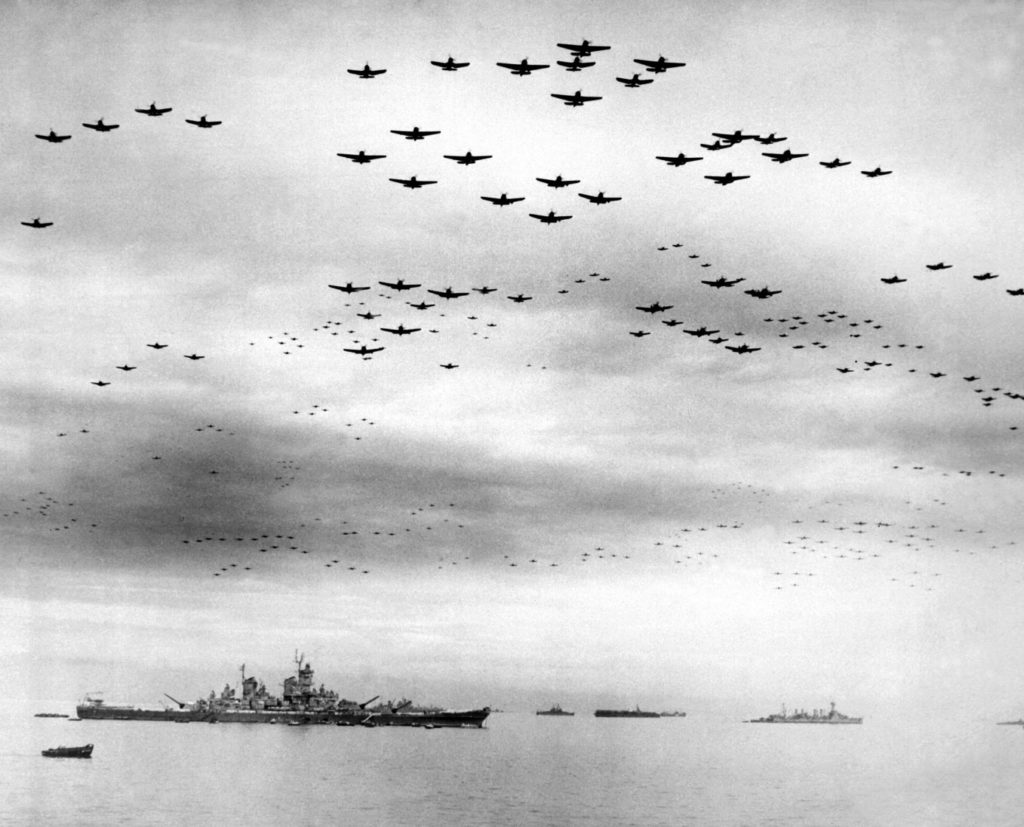
September 2, 1945. Swarms of aircraft fly over the battleship Missouri (BB-63) during the surrender to the Allies by the Empire of Japan.
uss missouri
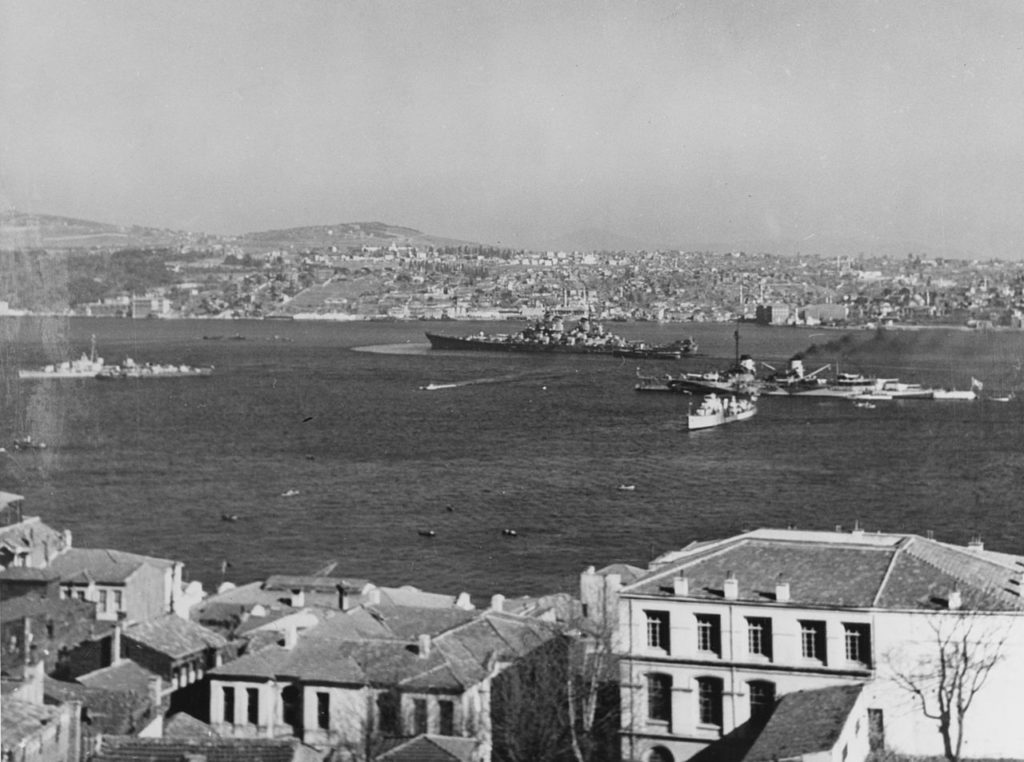
April 5, 1946. USS Missouri anchored off of Istanbul, Turkey. She brought home the body of the Turkish Ambassador Mehmet Munir Ertegun. She is accompanied by the Turkish battlecruiser Yavuz, formally the battlecruiser SMS Goeben of the Imperial German Navy.
uss iowa
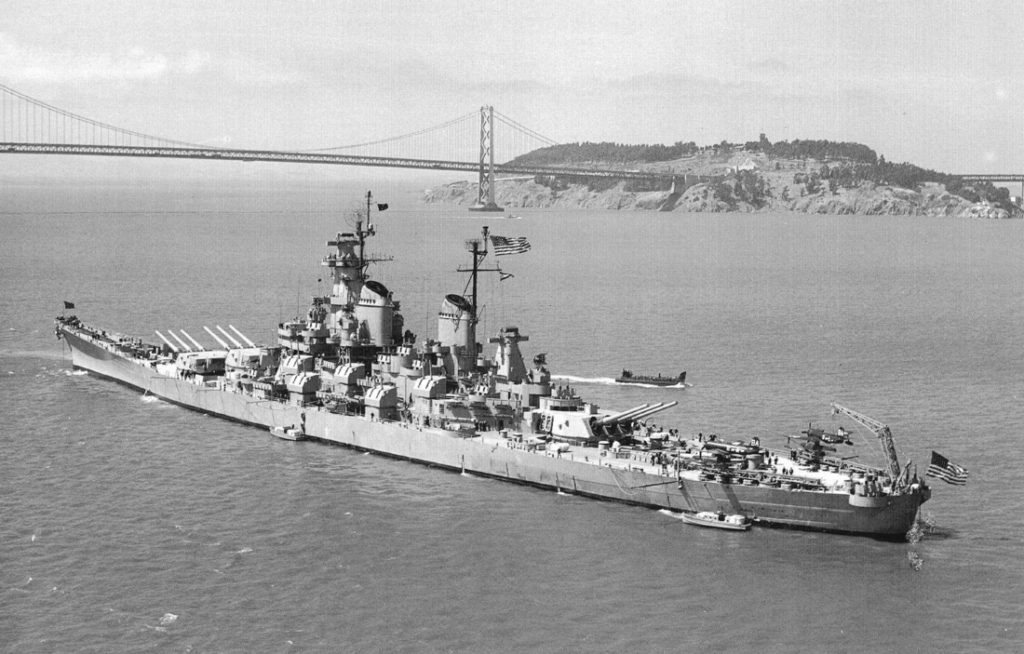
May 24, 1947. USS Iowa (BB-61) anchored in San Francisco Bay.
uss new jersey
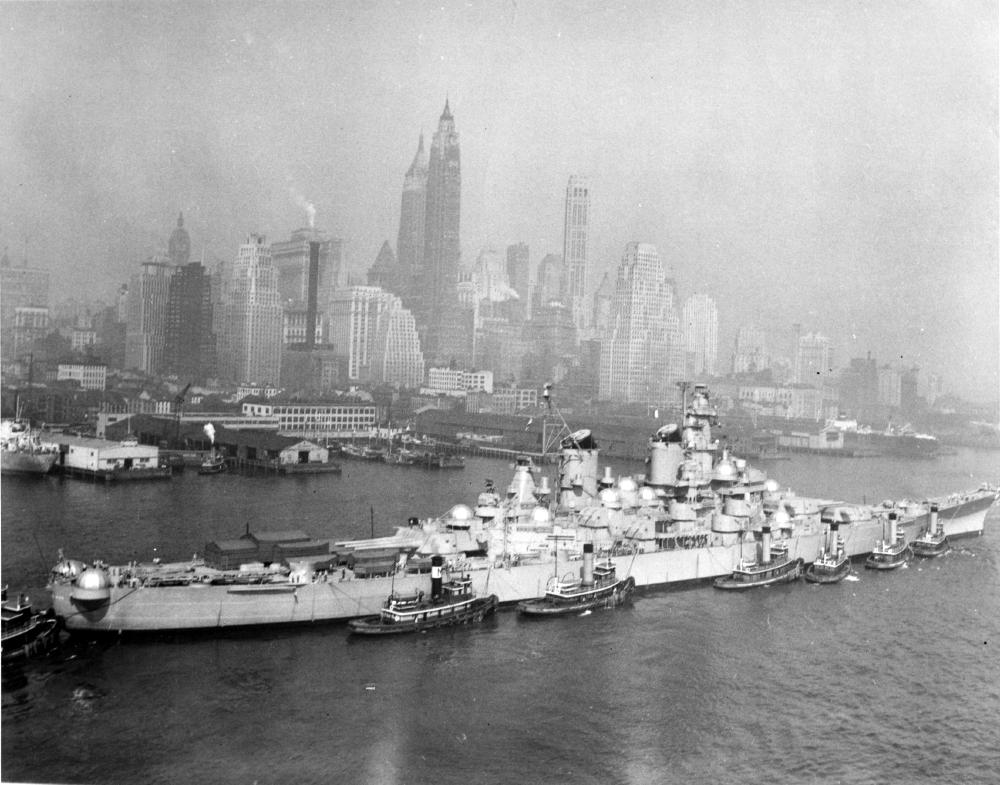
June 1948. USS New Jersey being moved from the New York Navy Yard to the Bayonne Shipyard in New Jersey for decommissioning. The dome shaped structures adorning her are covers for her 40mm anti-aircraft guns.
uss missouri
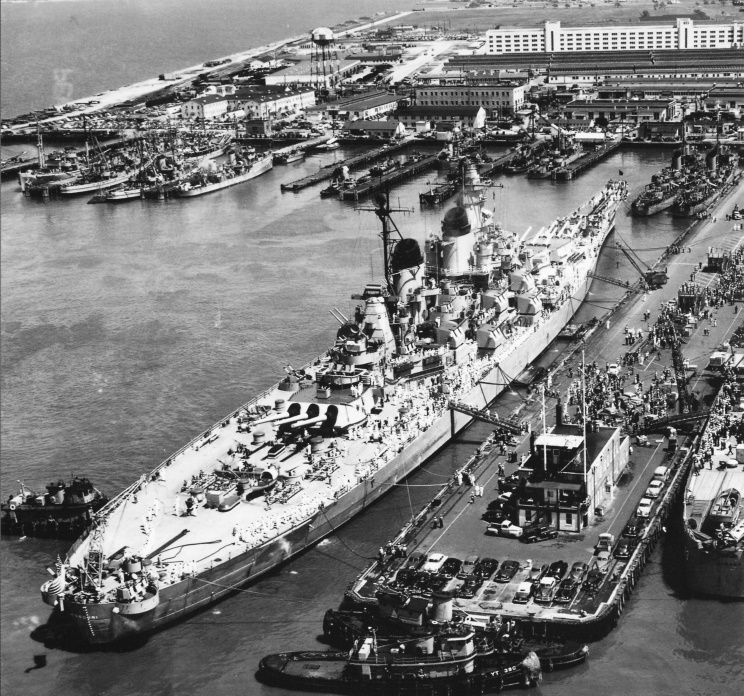
Summer 1949. USS Missouri tied up to the pier at the Norfolk Naval Shipyard. Photos like this really show off just how amazingly large these leviathans truly were.

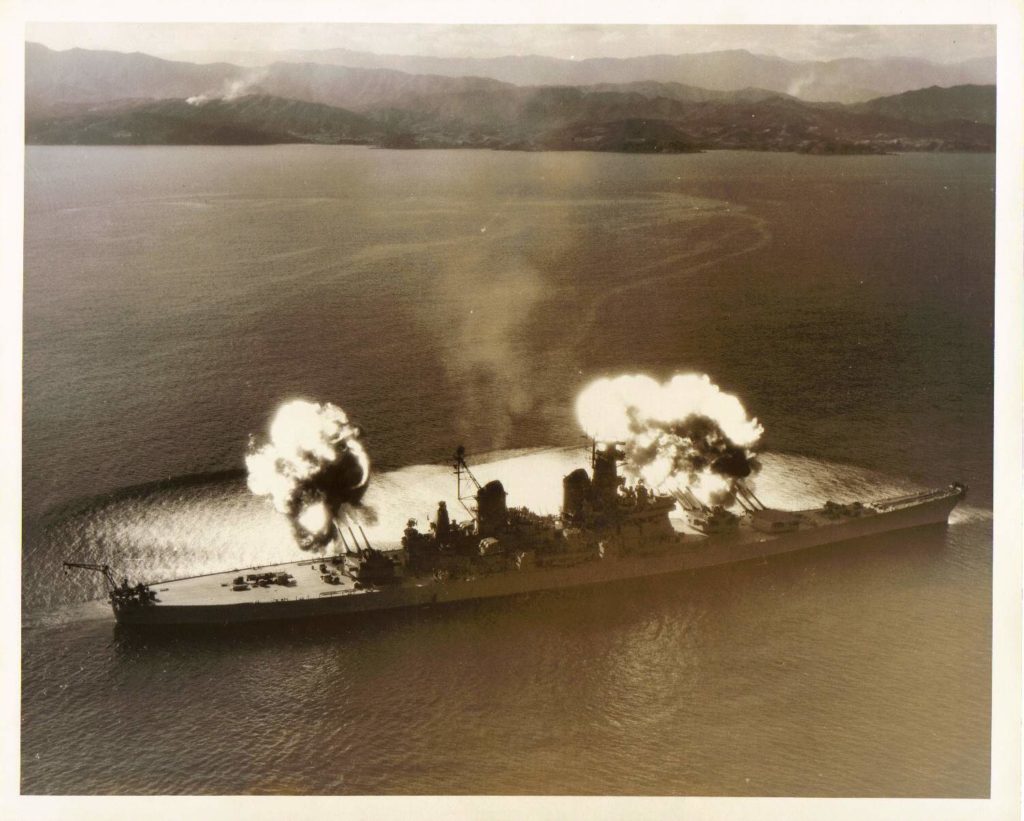
October 21, 1950. USS Missouri fires a salvo into Chong Jin, Korea. Missouri was the first battleship to arrive off of Korea and she quickly set to work pummeling targets of opportunity. The firepower of the battleships was devastating to North Korean and Chinese forces.
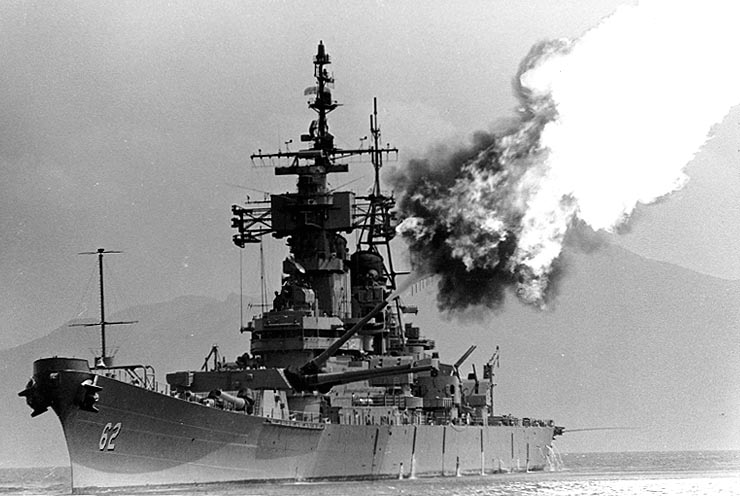
November 10, 1951. USS New Jersey (BB-62) unleashes a broadside into the region surrounding the 38th Parallel during the Korean War. A haze of smoke in the background marks the location of a previous salvo.
uss wisconsin
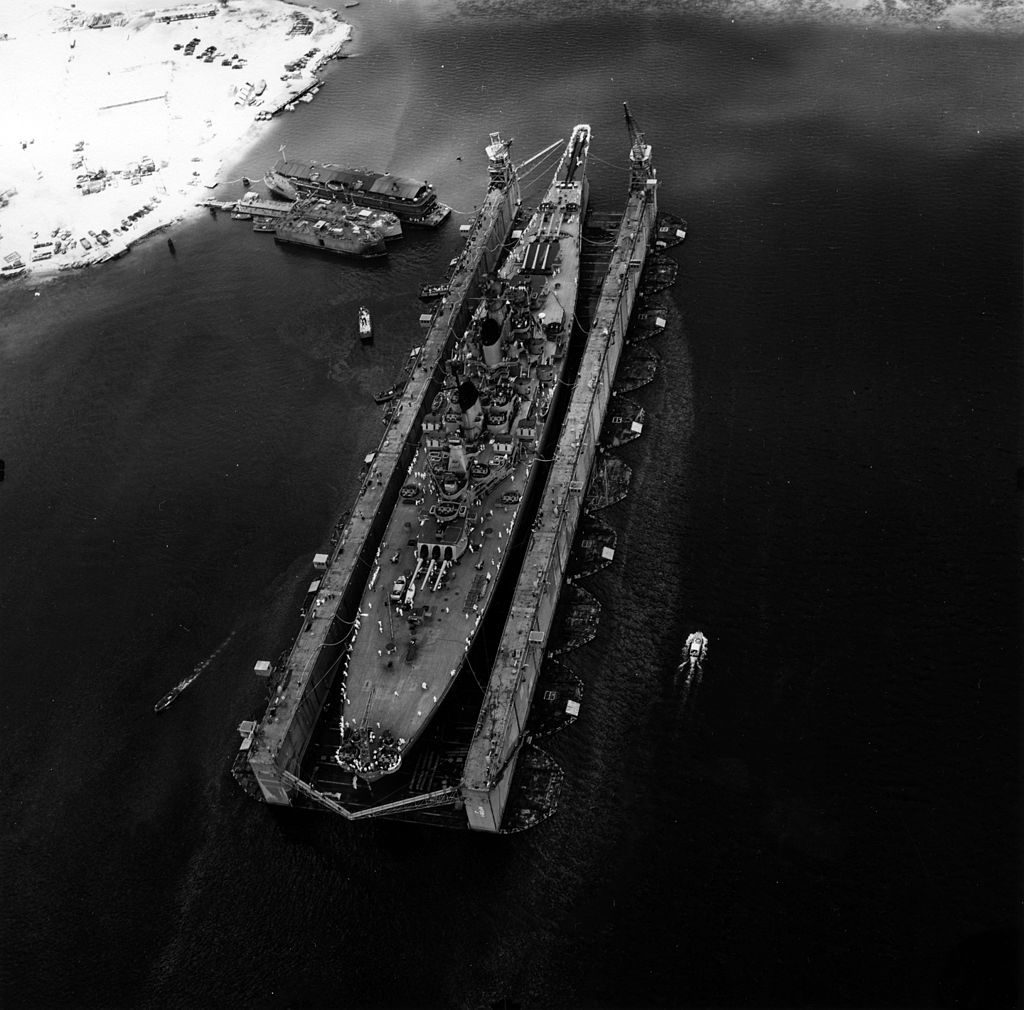
April 1952. USS Wisconsin is used to test the lifting power of the largest drydock available to the United States Navy, AFDB-1. AFDB-1, named Artisan was first used during the Second World War. It was one of the only floating drydocks capable of handling an Iowa class battleship. She was moved to Guam to serve as a forward repair base during the Korean War.
uss new jersey
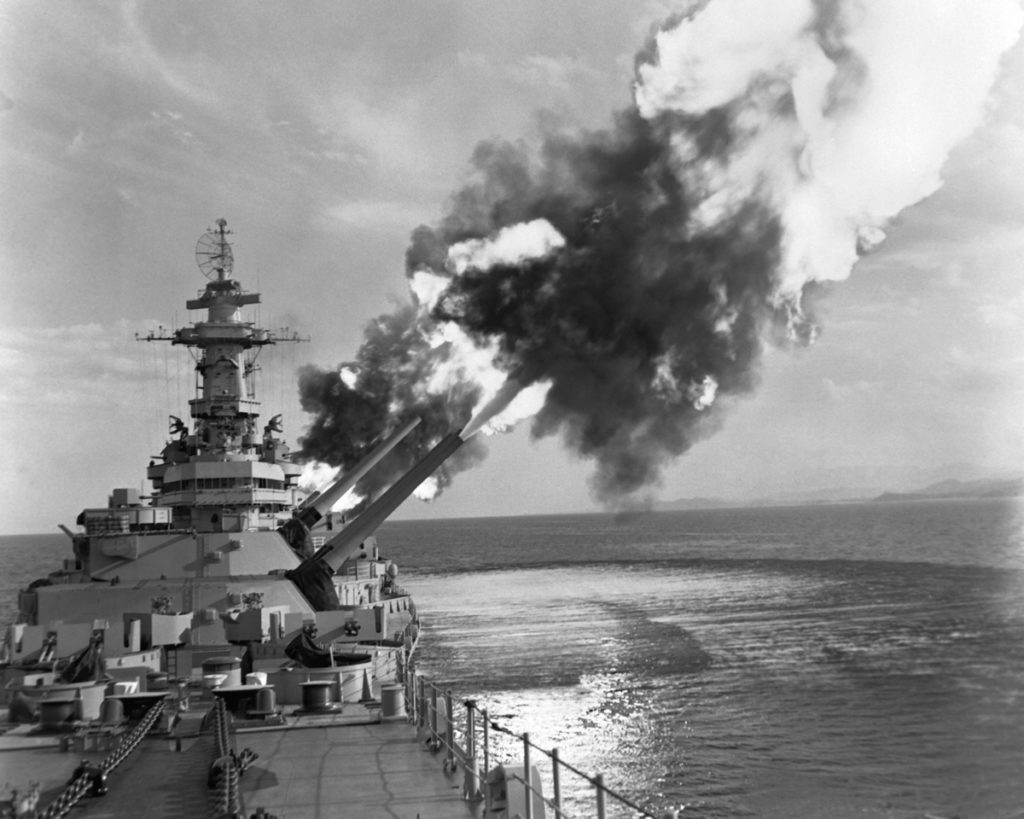
1953. New Jersey lends her firepower during the Korean War. Judging by the elevation of her 16″ guns, she is firing at extreme range. The Iowa class were capable of sending a 2,700lb shell to just over 42,345 yards (24.05 miles).
iowa class battleships
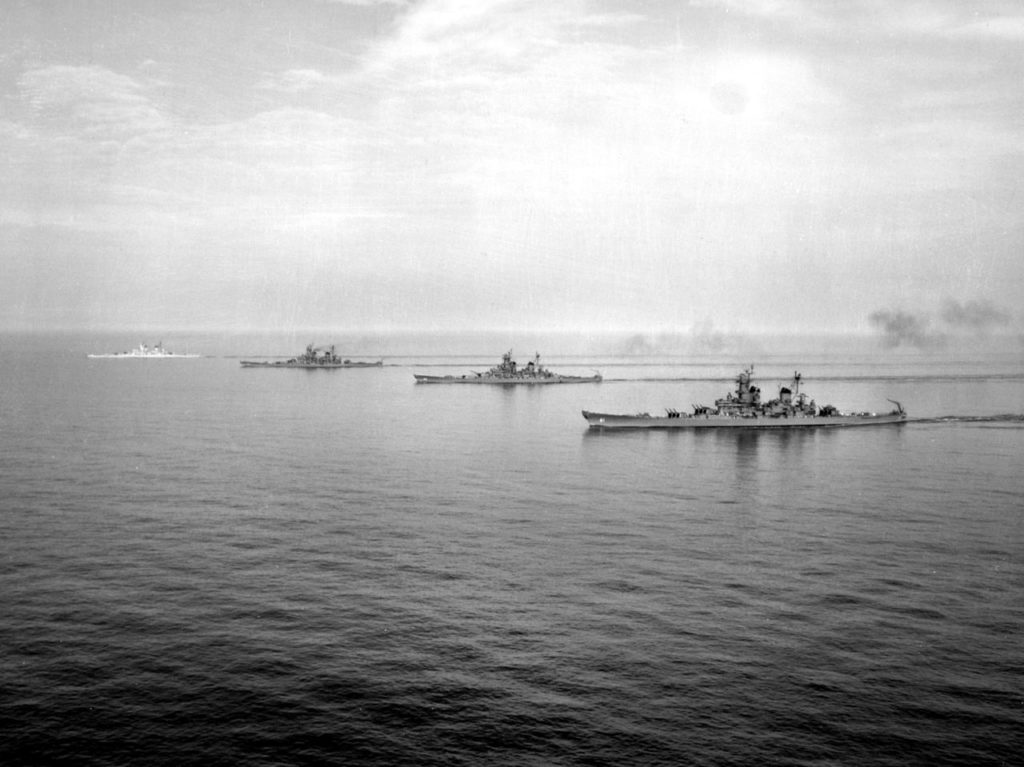
June 7, 1954. All four battleships of the Iowa class steam together as Battleship Division 2. This was the only time that all four sisters were together. The ships (from nearest to farthest) are USS Iowa, USS Wisconsin, USS Missouri, and USS New Jersey.
uss new jersey
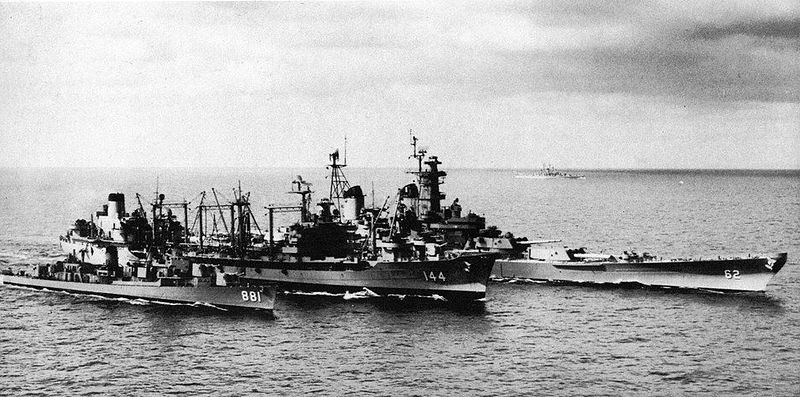
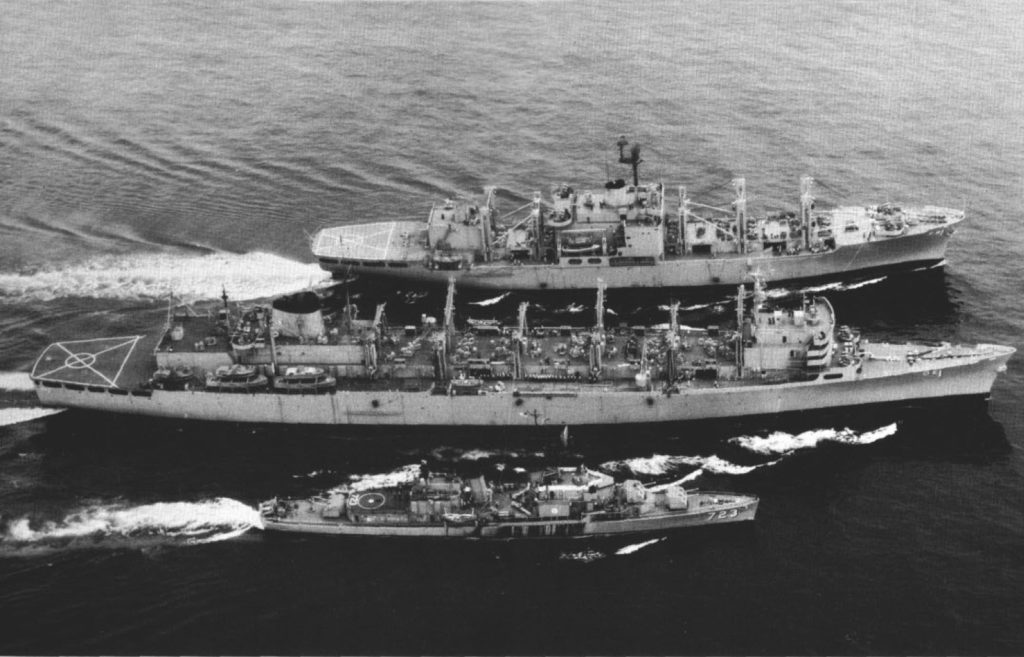
1955. USS New Jersey takes on fuel from the fleet oiler USS Mississinewa (AO-144) along with the destroyer USS Bordelon (DDR-881). New Jersey was operating in the Mediterranean Sea at this time.
uss wisconsin
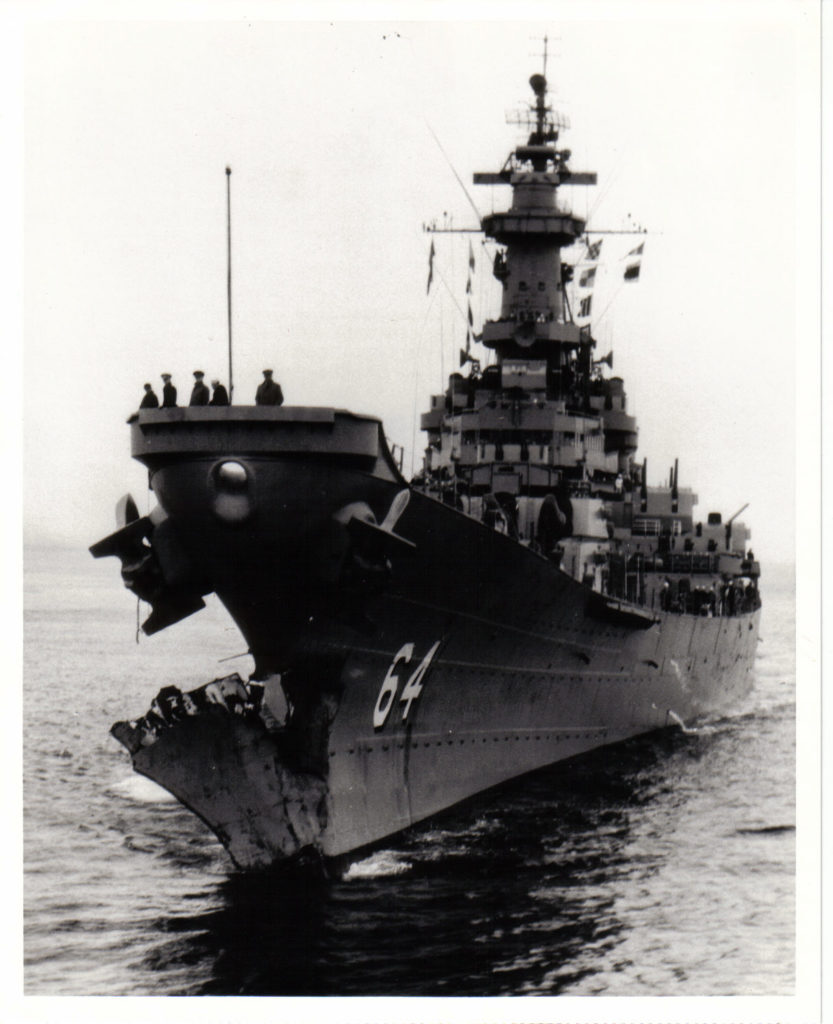
May 1956. USS Wisconsin steams to port with a chunk of her bow missing. On the sixth of May, she had collided with the destroyer USS Eaton (DD-510). Wisconsin was repaired by replacing her damaged bow with that of her never finished sister, USS Kentucky (BB-66).
uss iowa
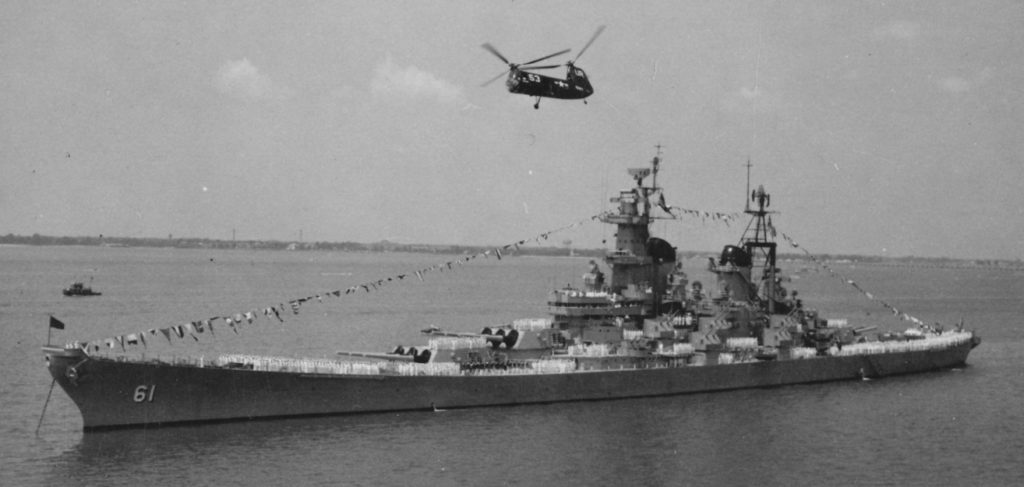
June 13, 1957. USS Iowa at Hampton Roads, Virginia. She was there to take part in the International Naval review.
uss wisconsin
1958. USS Wisconsin cruising off of Hampton Roads. This was one of the last cruises she would conduct before being decommissioned later that year.
iowa class battleships
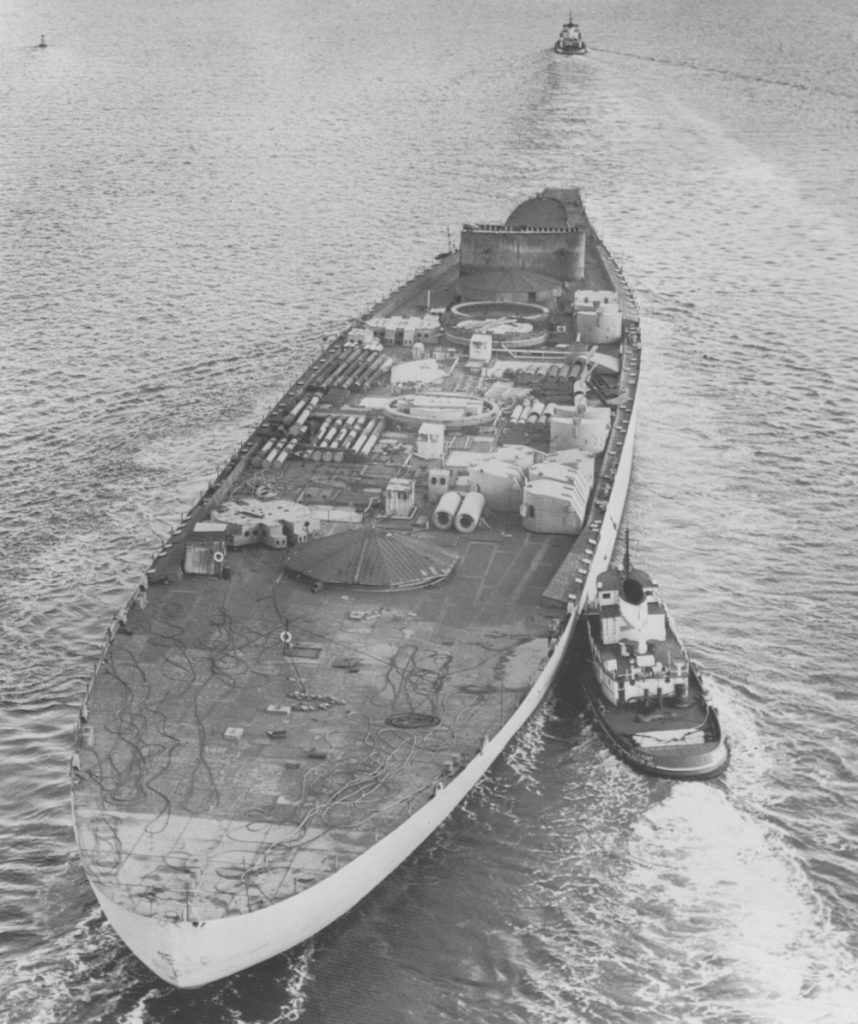
February 6, 1959. The sixth ship of the Iowa class, USS Kentucky (BB-66) is towed up the Chesapeake Bay on her way to the scrappers. Her deck is littered with unused material including 5″ gun barrels and their turrets. Kentucky and her sister, Illinois (BB-65), were both cancelled during construction.

iowa class battleships

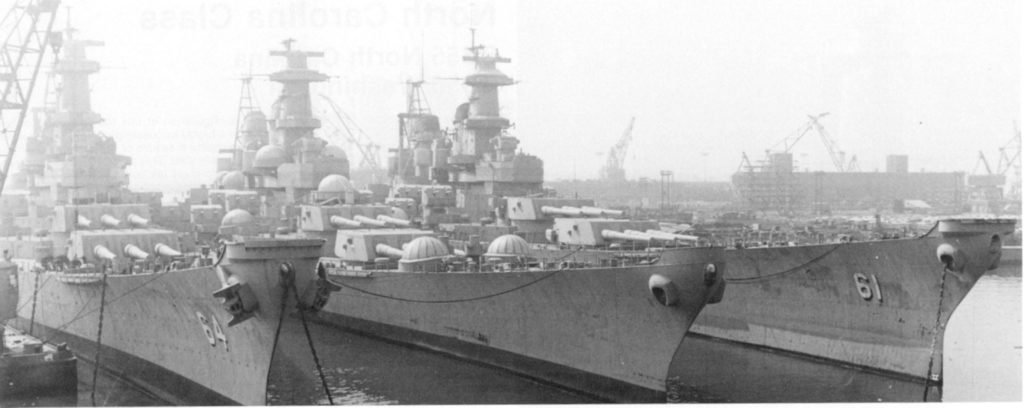
1962. Three Iowa class battleships mothballed at the Philadelphia Naval Yard. From back to front: USS Iowa, USS New Jersey, and USS Wisconsin. New Jersey was originally stored at Bayonne, New Jersey but had been moved to Philadelphia the previous year.
uss missouri

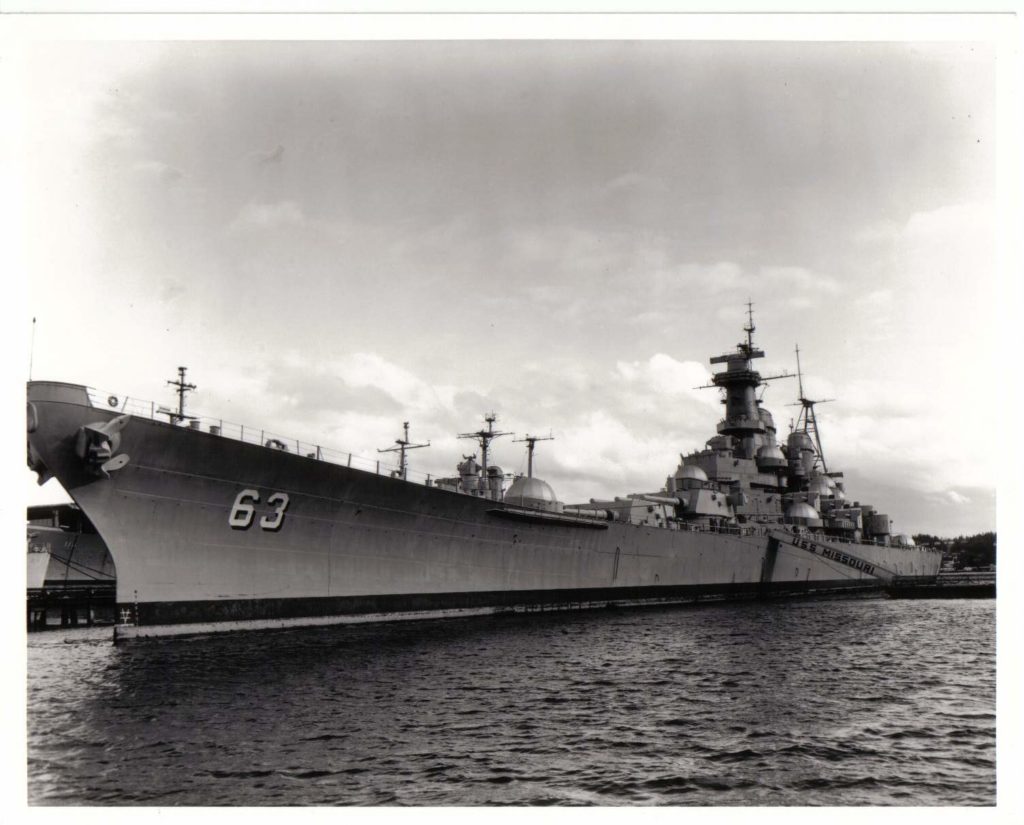
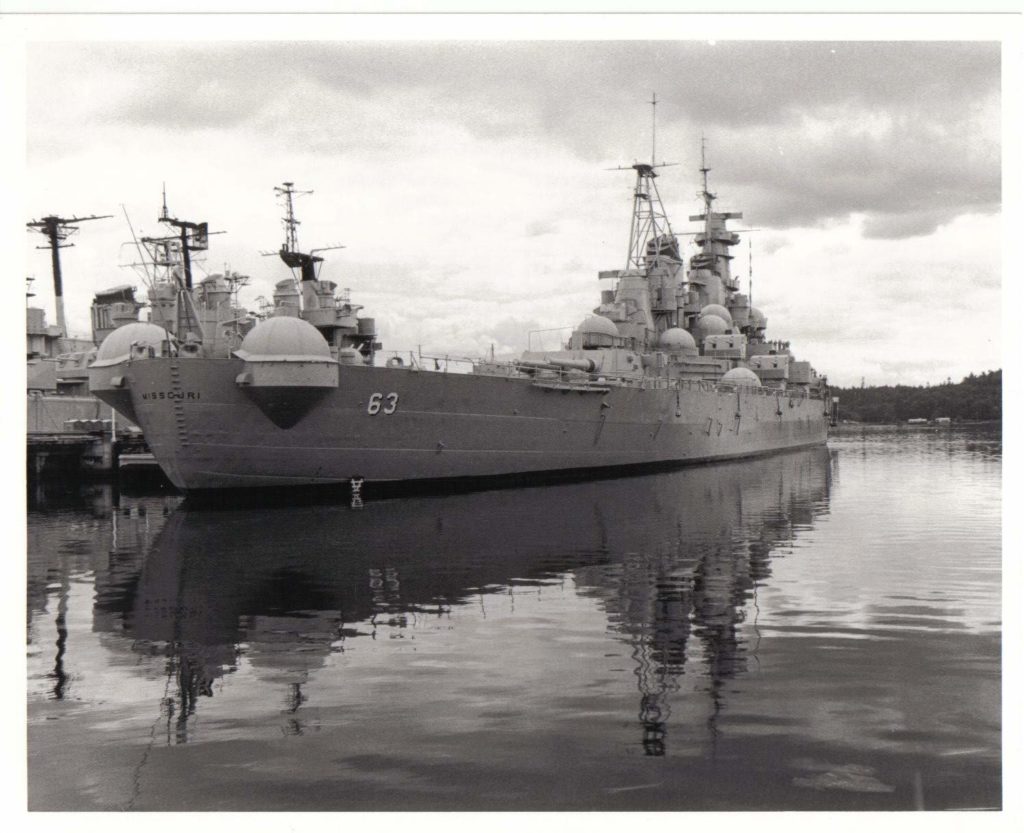
July 4, 1963. USS Missouri continues sit in mothballs at the Puget Sound Naval Shipyard. Missouri was mothballed on the West Coast while her sisters were on the East Coast.
uss missouri
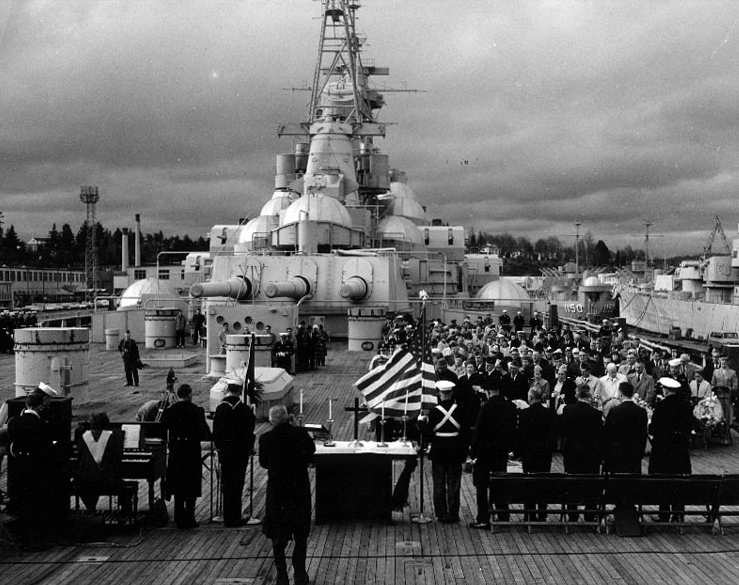
April 10, 1964. Despite her mothballed status, Missouri served as the location of the memorial service that honored General Douglas MacArthur following his passing.
iowa class battleships
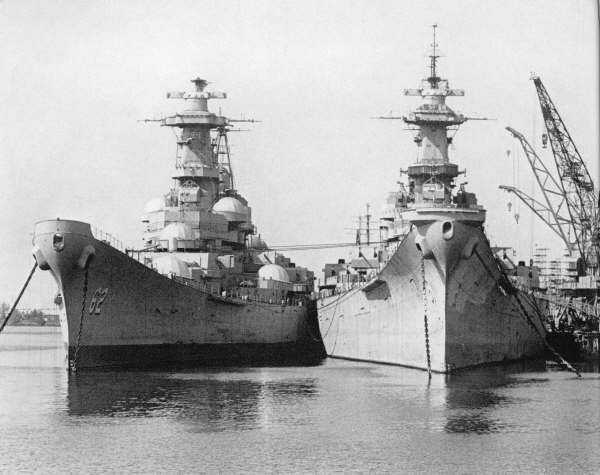
April 1965. The battleships New Jersey (Left) and Iowa (Right) tied up together at Philadelphia. Wisconsin had been temporarily moved to another location at the time.
iowa class battleships
1966. Though she as not a battleship, the fast combat support ship USS Sacramento (AOE-1) was very much related to the Iowa class. Before scrapping, the boilers and turbines of the sixth Iowa class battleship USS Kentucky were removed. Half of the power plant would be placed into USS Sacramento while the other half would go to her sister USS Camden (AOE-2).
iowa class battleships
April 1967. Three of the Iowa class sisters tied up together in mothballs. From left to right: USS Wisconsin (BB-64), USS New Jersey (BB-62), and USS Iowa (BB-61).
uss new jersey
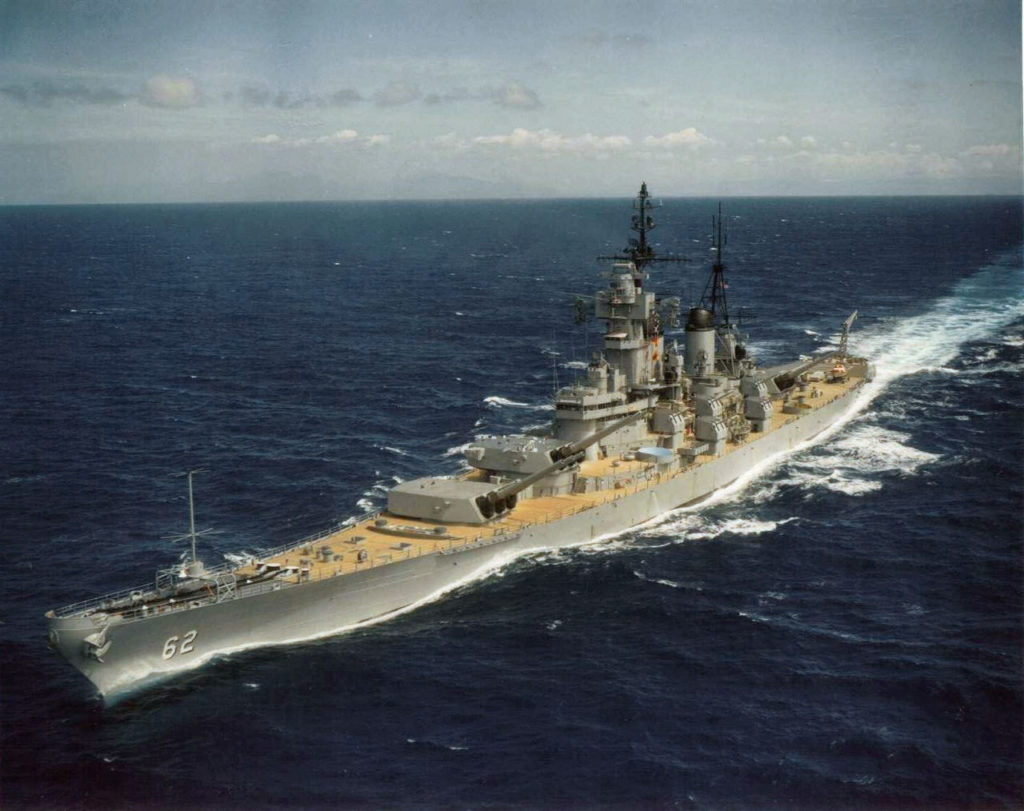
September 11, 1968. USS New Jersey cruising off of Hawaii before she would head for Vietnam. In interesting feature of this photograph is the 40mm gun tubs just forward of the 5″ guns. These were used as swimming pools by the crew. New Jersey was the only one of her sisters to have such a lavish feature!

March 1969. USS New Jersey (BB-62) fires a shell into South Vietnam during the Vietnam War. During the war, New Jersey performed brilliantly. During her brief time off Vietnam, she fired 5,688 rounds of 16 inch shells, and 14,891 rounds of 5-inch shells.
uss missouri
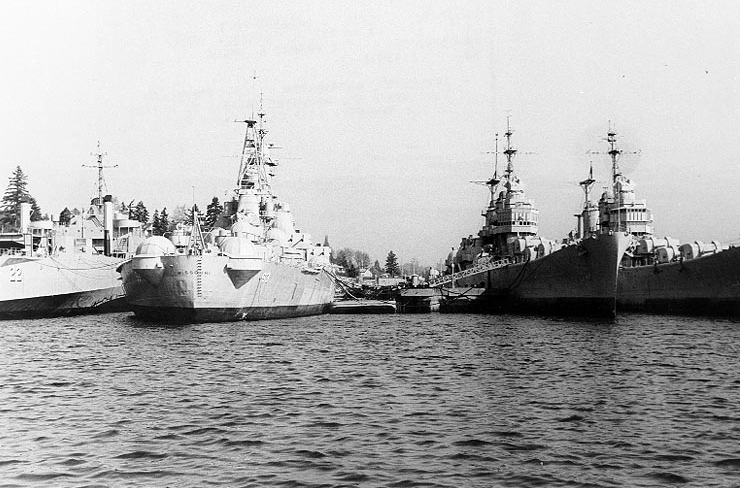
March 19, 1970. The battleship Missouri is mothballed at the Puget Sound Naval Shipyard. She is accompanied by several other ships including the cruisers Roanoke (CL-145) and Worcester (CL-144). Perhaps one of the few images showing America’s last battleships alongside its last light cruisers.

uss missouri uss new jersey

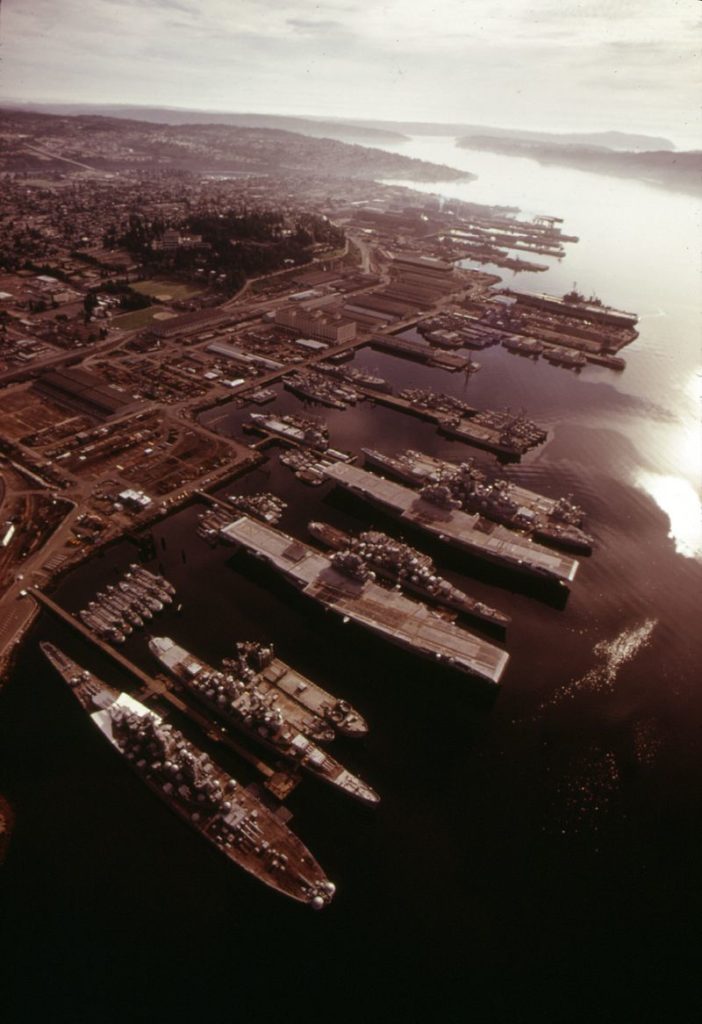
July 1974. A large assortment of mothballed ships at the Puget Sound Naval Shipyard. USS Missouri is at the bottom of the photo while her sister USS New Jersey can be seen farther up. Following her tour of service off Vietnam, New Jersey was decommissioned and placed at here.

uss missouri
1976. The battleship Missouri still quietly moored at the Puget Sound Naval Shipyard.

iowa class battleships
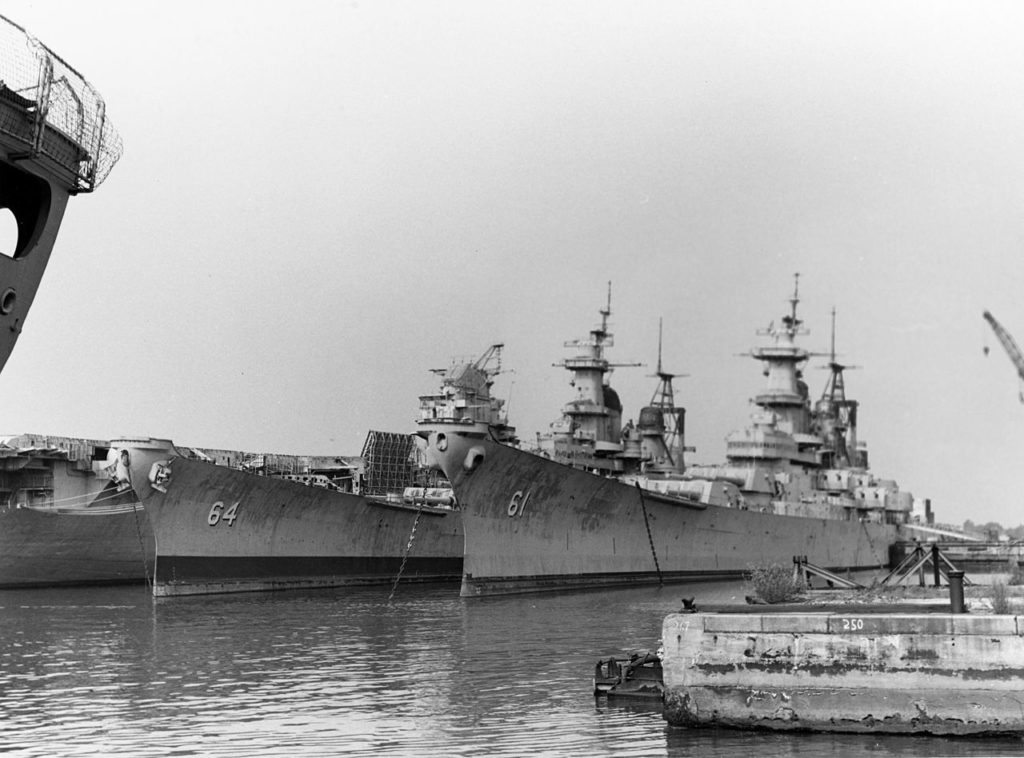
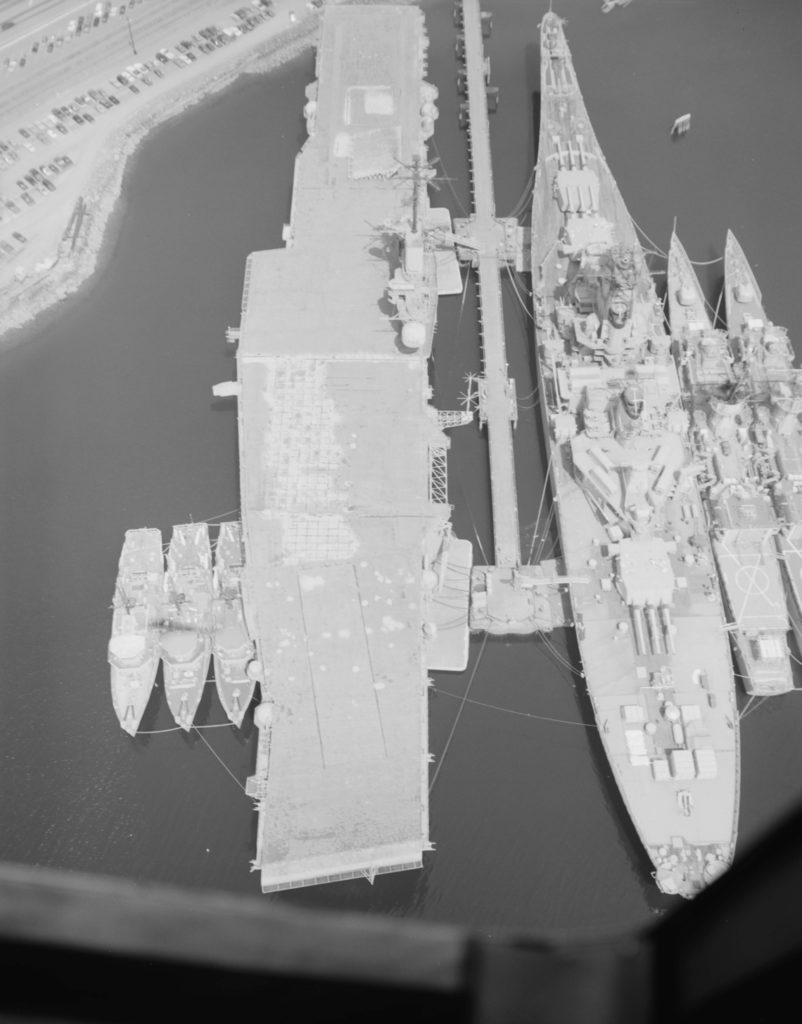
1978. USS Iowa (Right) and USS Wisconsin (Left) mothballed at the Philadelphia Naval Shipyard. Iowa was mothballed from 1958 until 1984. Wisconsin was mothballed from 1958 until 1988. They are accompanied by the aircraft carrier USS Shangri-La (CVS-38).

uss wisconsin
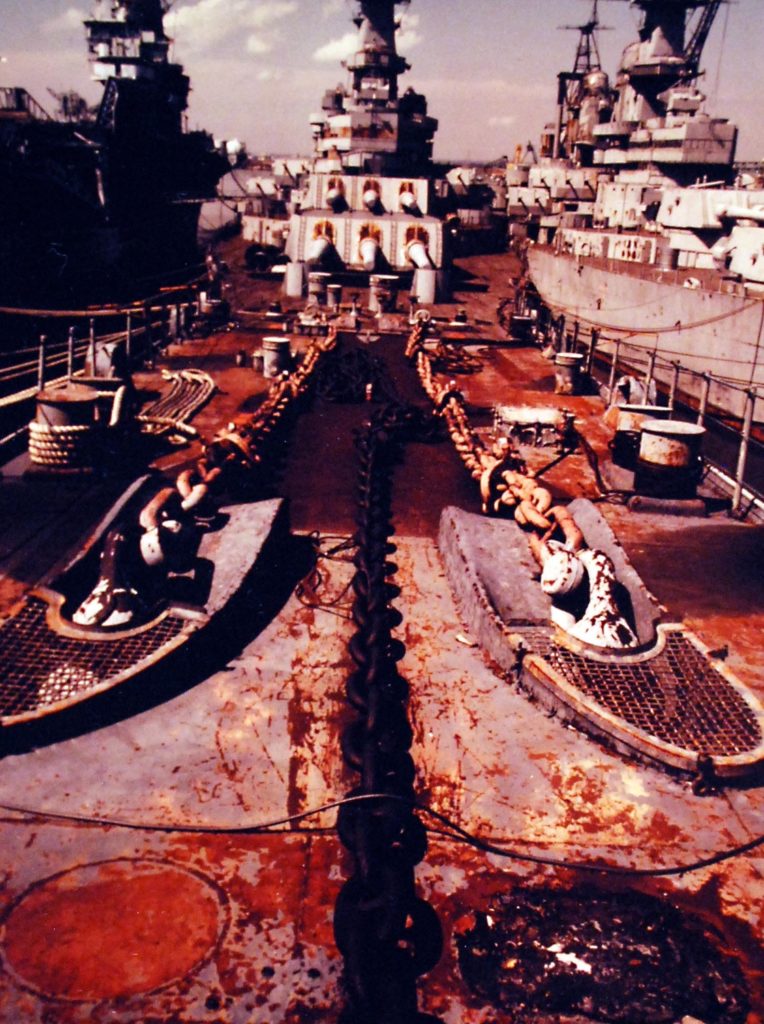
April 1980. Years of neglect are apparent in this photo taken from the bow of USS Wisconsin.
iowa class battleships
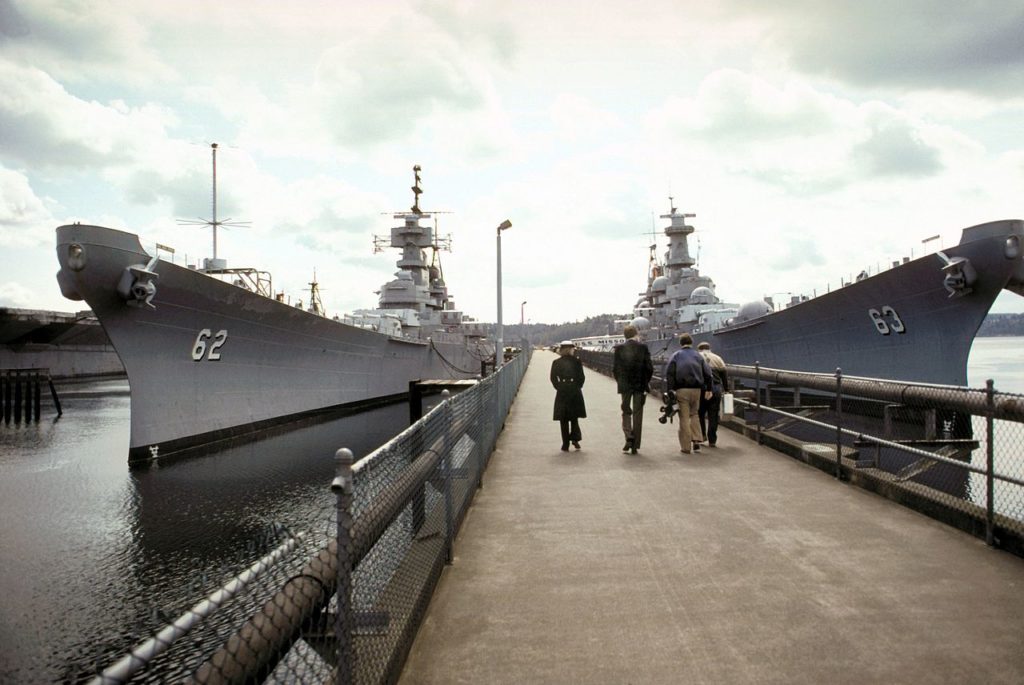
1981. The Iowa class battleship USS Missouri (BB-63) and USS New Jersey (BB-62) at Puget Sound Naval Shipyard. Due to her being reactivated for service in Vietnam, New Jersey looks very different from Missouri. 

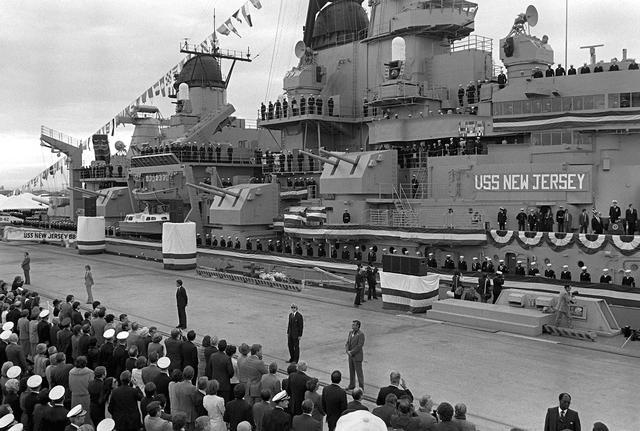
December 28, 1982. The USS New Jersey is recommissioned at Long Beach California with President Ronald Regan in attendance. The Iowa class had finally returned to service thirteen years after being decommissioned.
uss iowa
June 17, 1983. USS Iowa (BB-61) undergoing modernization at the Ingalls Shipbuilding Yard to prepare for her recommissioning. Following her modernization, she would finally be recommissioned on April 28, 1984.

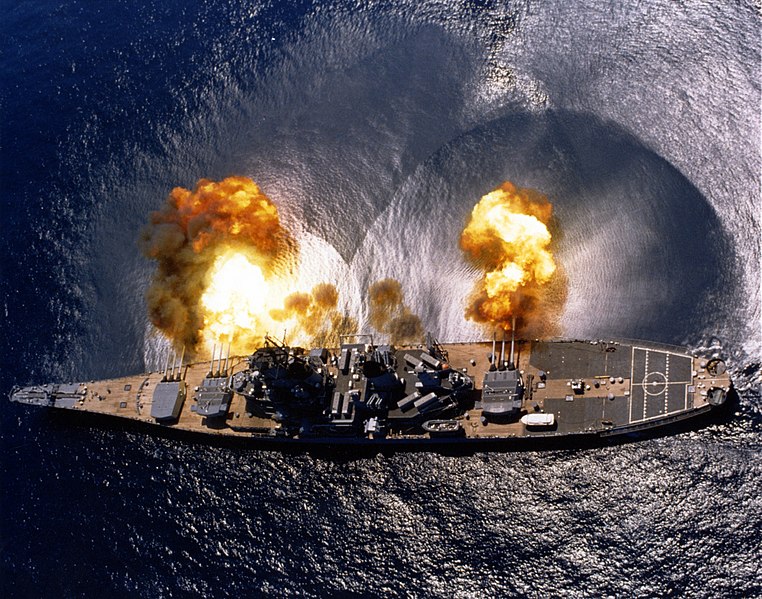
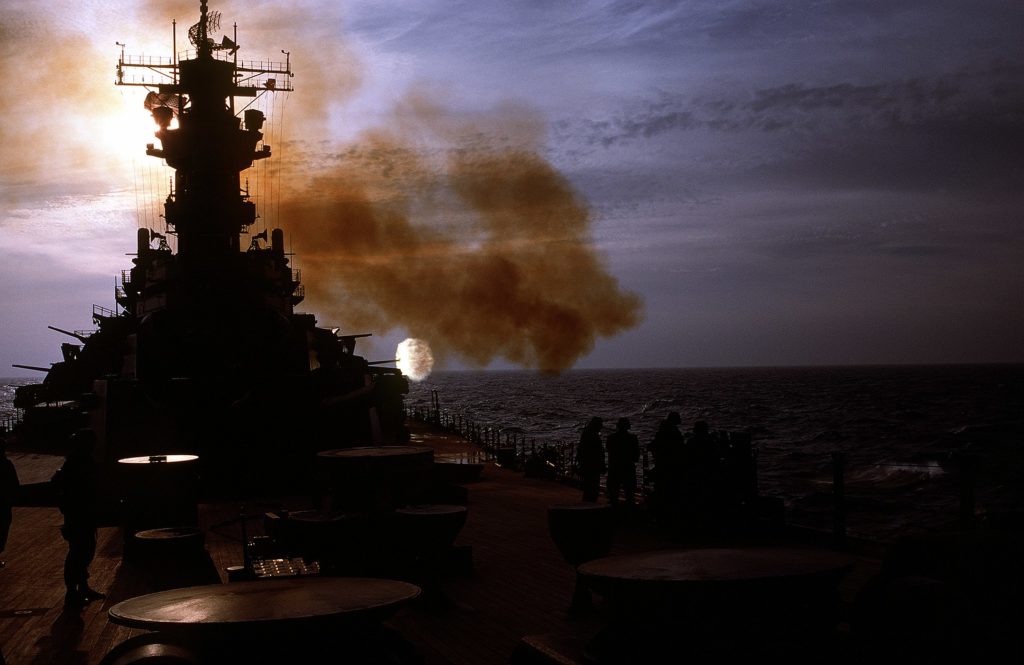
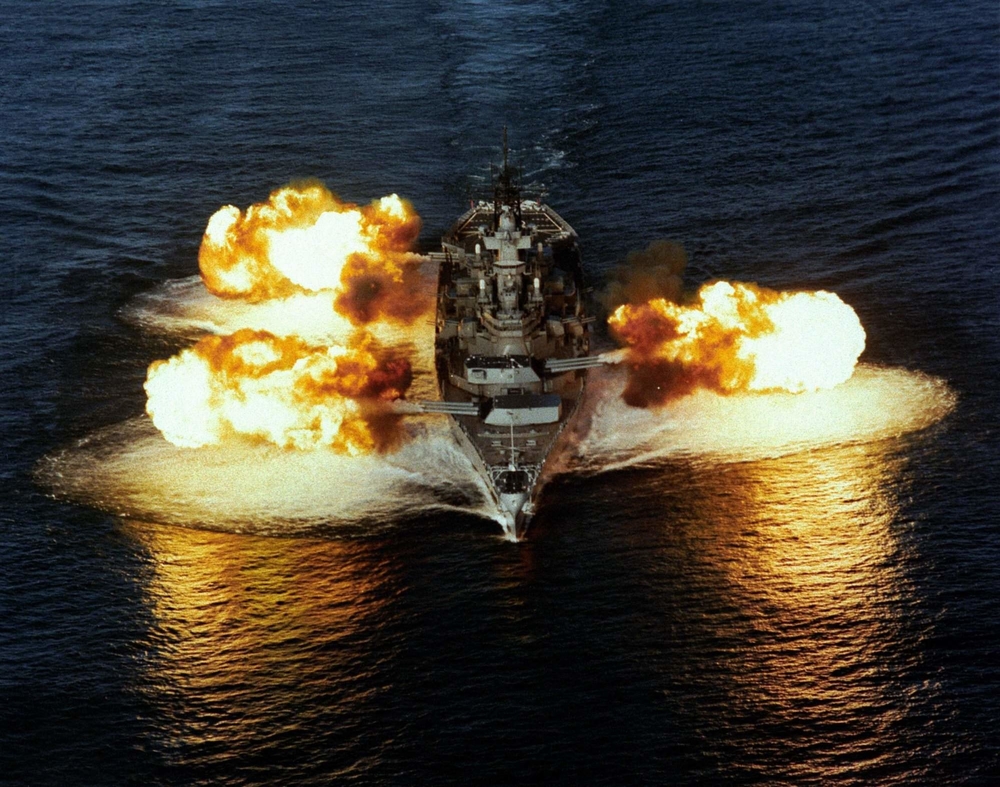
July 1, 1984. With a thunderous roar, USS Iowa demonstrates her firepower by firing all nine of her 16″/50 as well as six of her 5″/38 guns. The blast of her main guns is easily seen o the water surrounding them.
USS Iowa
November 19, 1985. USS Iowa (BB-61) uses all of her 212,000 shaft horsepower during a full power run in the Chesapeake Bay. She is kicking up an unbelievable amount of water in her wake.

December 30, 1986. USS New Jersey (BB-62) fires all of its 16″ guns during a spectacular firepower demonstration.
uss iowa
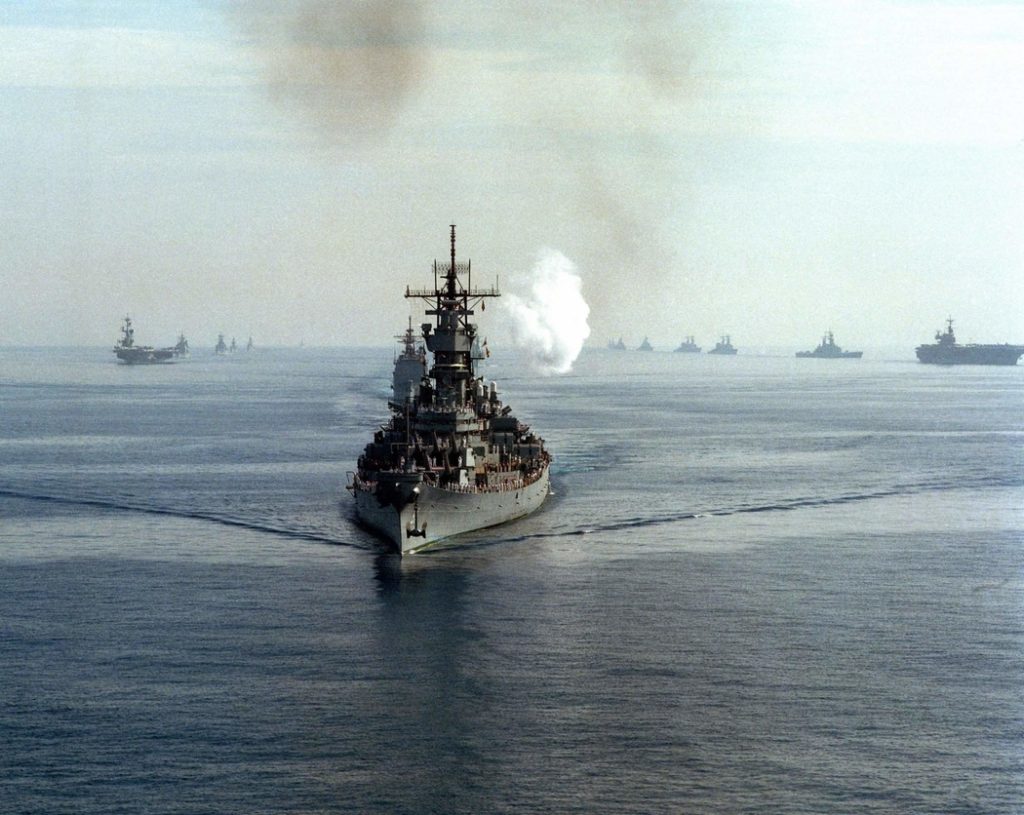
October 17, 1987. The Battleship USS Iowa (BB-61) leads the aircraft carriers Coral Sea (CV-43) and Saratoga (CV-60) plus their respective battlegroups into Augusta Bay, Sicily.
uss new jersey
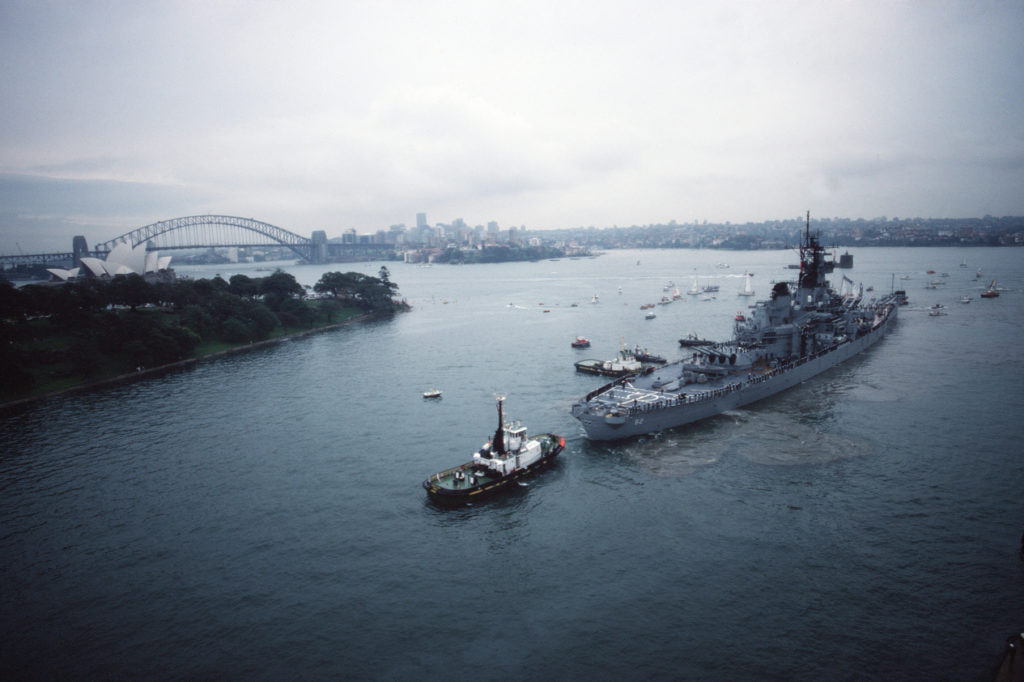
1988. Tugboats guide USS New Jersey into Port Jackson. New Jersey had arrived in Sydney to take part in the Australian Bicentennial.
uss missouri
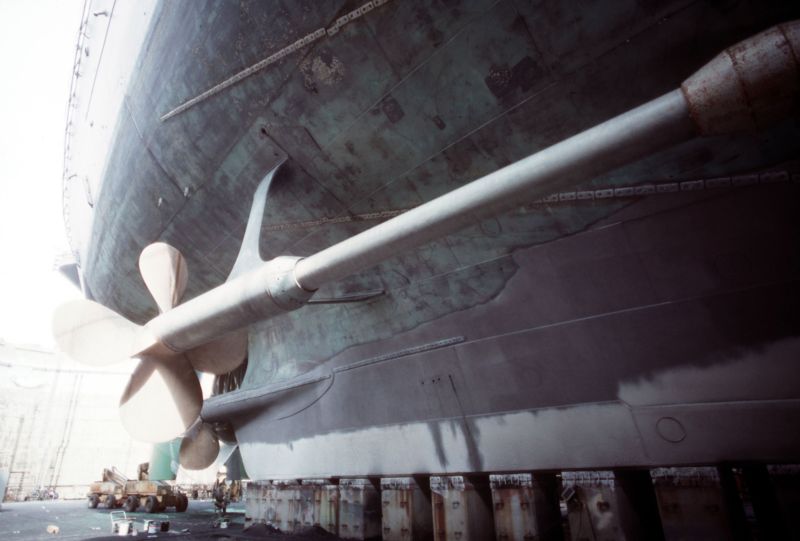
February 1, 1989. USS Missouri having her hull scrapped and other work done while in drydock. Her outer four bladed screws are 18.25′ in diameter while her inner five blades screws are 17′ in diameter. Couple with the powerful 212,000 shaft horsepower turbines, the Iowa class could exceed 32 knots.
uss wisconsin
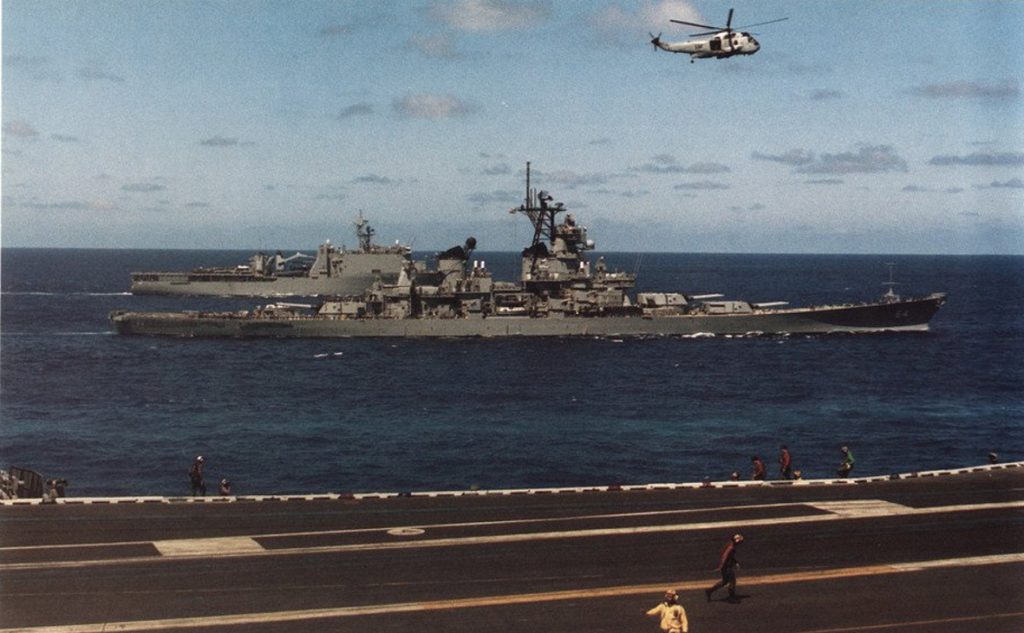
1990. USS Wisconsin steaming alongside the carrier USS Saratoga (CV-60) during their 1990-1991 deployment in the Mediterranean and Red Seas.
uss wisconsin

January 18, 1991. USS Wisconsin uses her 5″/58 secondary guns to pound targets ashore during the Gulf War. Wisconsin spent eight months in the Persian Gulf. During that time, she fired 319 16″ shells, 881 5″ shells, and 5,200 20mm rounds in addition to her 24 cruise missiles.
uss new jersey
August 1992. The battleship New Jersey is tied up to the same pier at USS Hornet (CVS-12) at the Puget Sound Naval Shipyard.

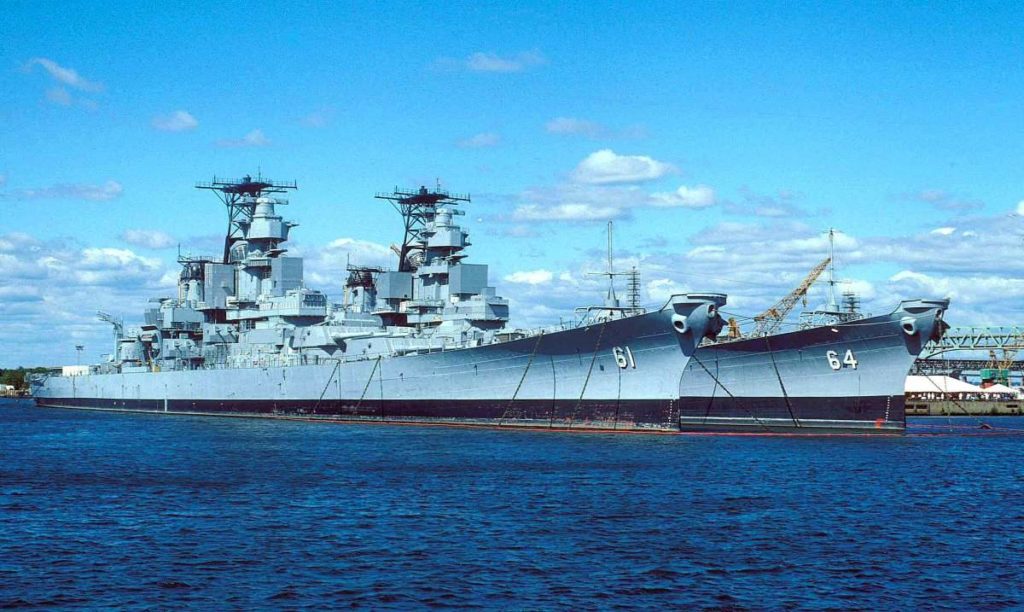
September 1993. The mothballed battleships USS Iowa (BB-61) and USS Wisconsin (BB-64) tied up together at the Philadelphia Naval Shipyard. I remembered seeing them there while we were driving in the Northeas.

iowa class battleships
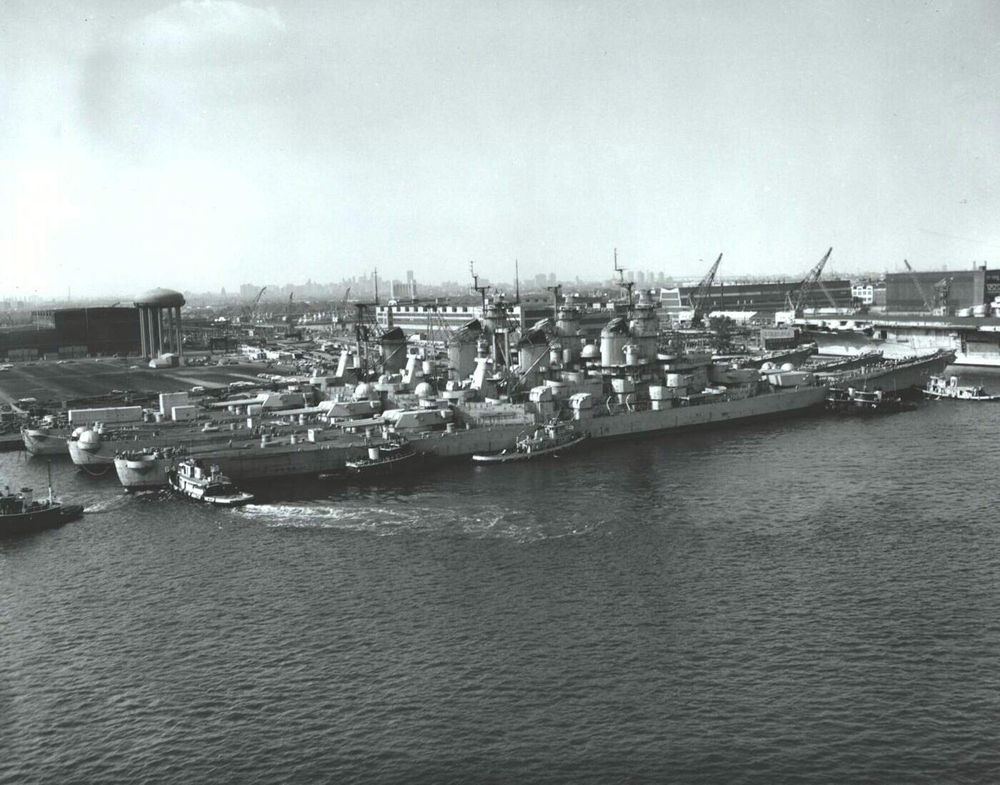
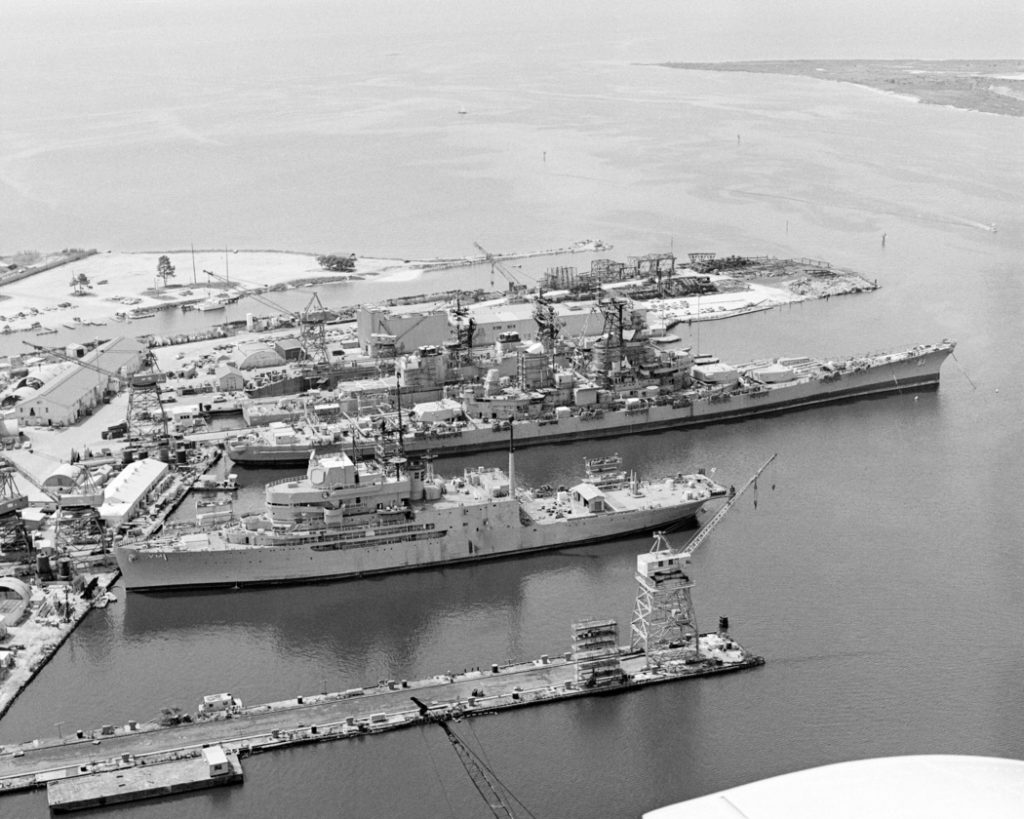
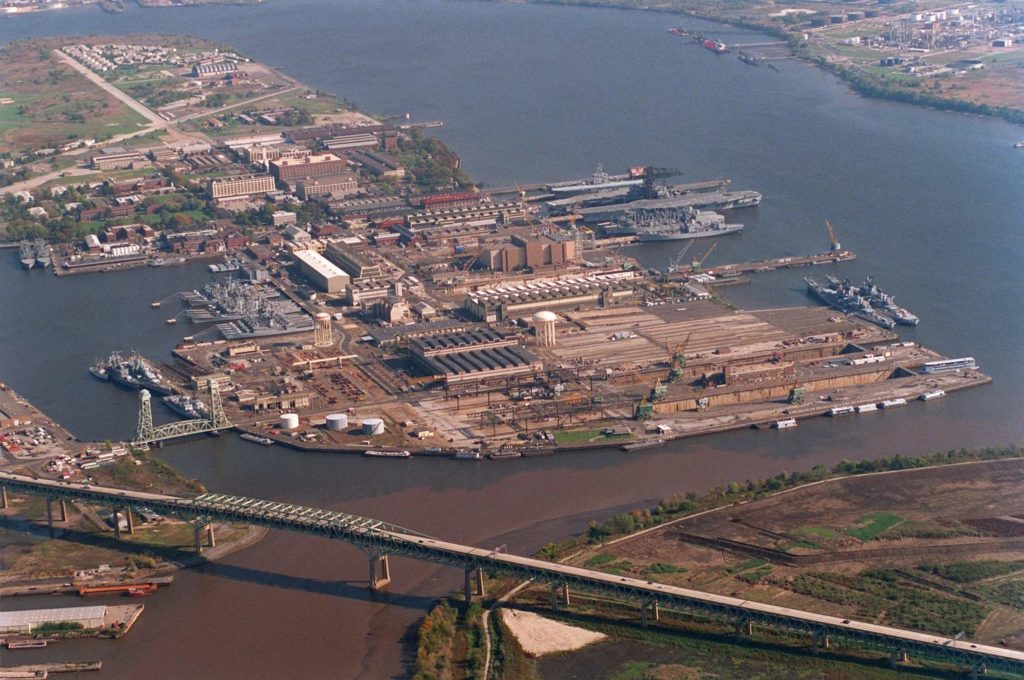
October 30, 1995. A photo of the Philadelphia Naval Shipyard along with a wide assortment of warships. Among the battleships Iowa and Wisconsin can be seen at the right. I was on that bridge when I saw the ships and I almost wrecked,  I knew what they were and so wanted to stop...but couldn't.


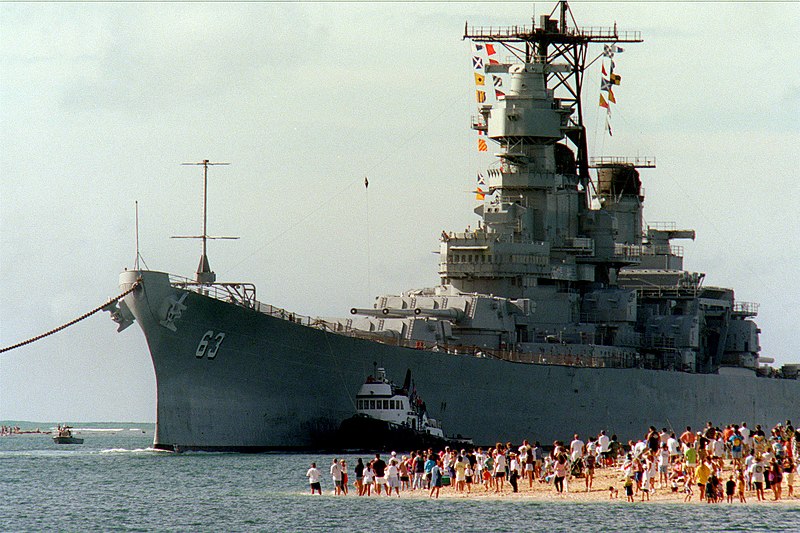
June 22, 1998. Crowds gather as USS Missouri enters the channel leading to Pearl Harbor. She was being moved to Pearl Harbor to serve as a museum ship. The location that saw the entrance of the United States into World War II would now host the vessel that saw its end.
uss new jersey
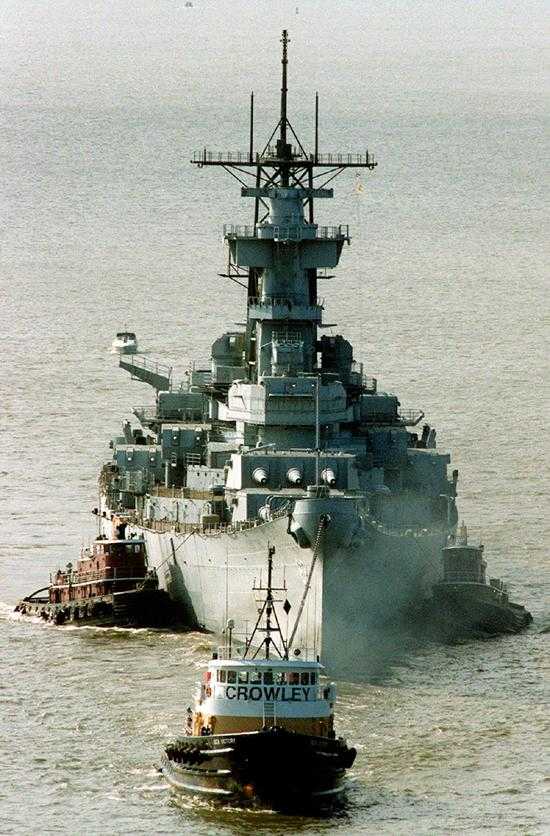
November 11, 1999. The battleship USS New Jersey is towed up the Delaware river towards the Philadelphia Shipyard. She would go on to be restored and converted into a floating museum.
uss wisconsin
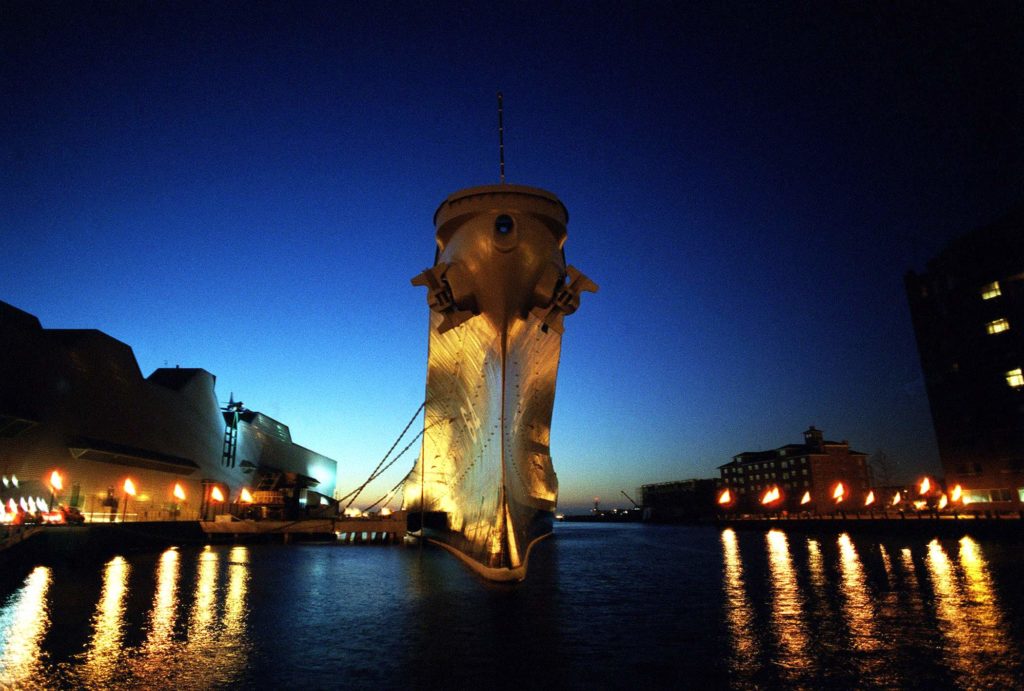
December 12, 2000. USS Wisconsin located at her new home in Norfolk, Virginia.

uss missouri

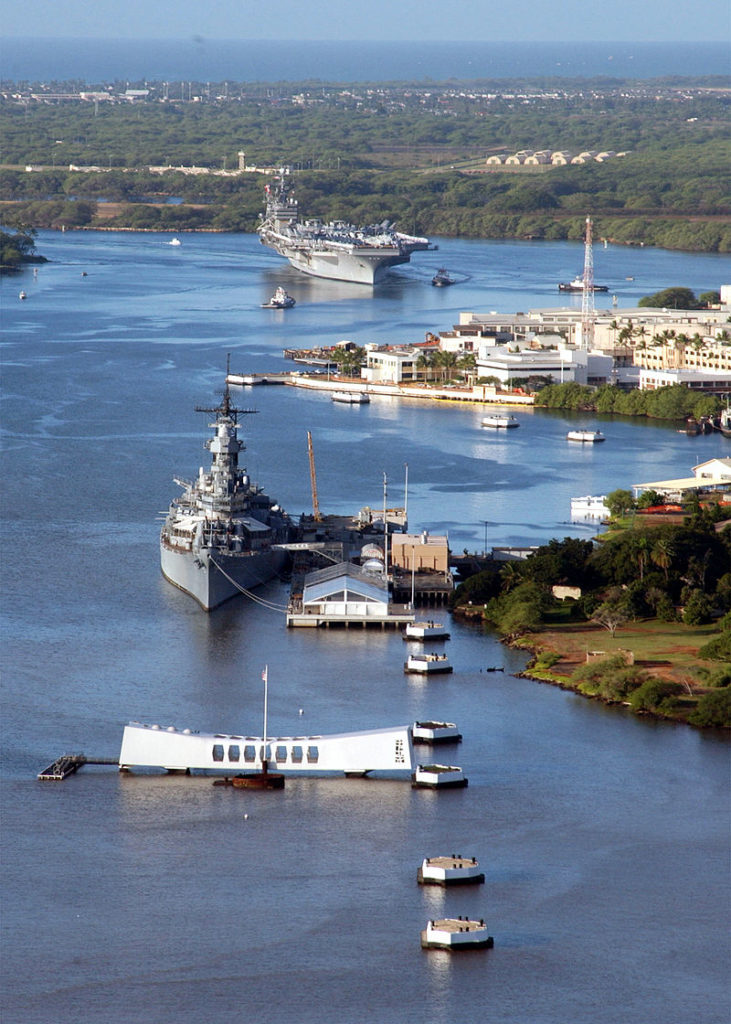
January 31, 2003. The battleship Missouri watches over the USS Arizona. In the background, nuclear powered aircraft carrier USS Carl Vinson (CVN-70) enters Pearl Harbor.

April 16, 2004. In celebration of the ship’s 60th anniversary of her commissioning, sailors from the USS Theodore Roosevelt (CVN-71)  man the rails aboard USS Wisconsin.

uss missouri

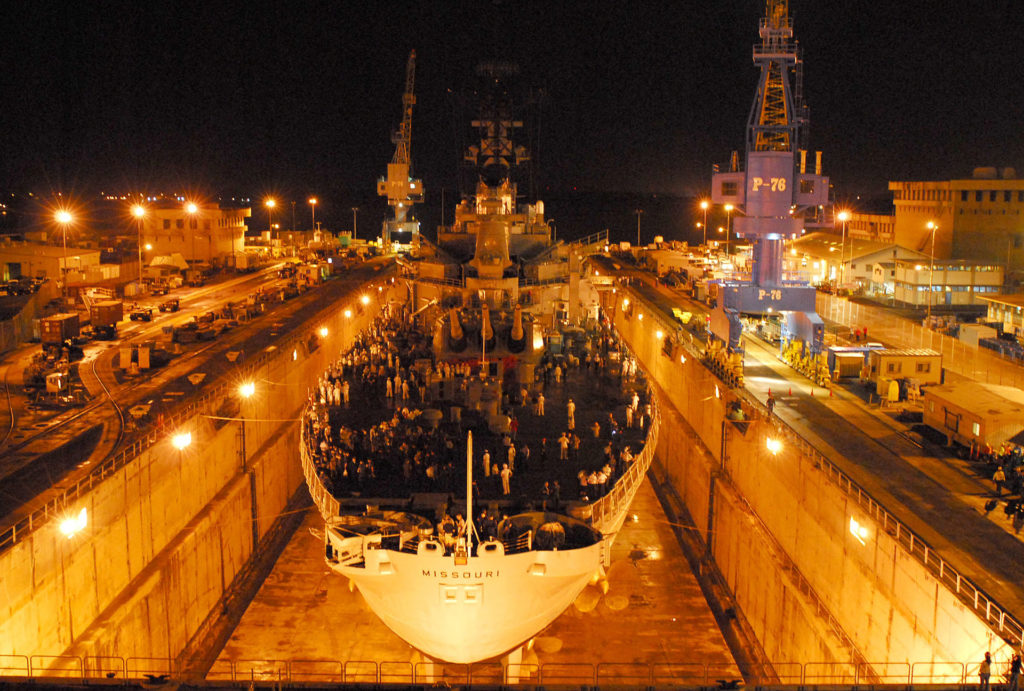
January 7, 2010. Workers work early in the morning to prepare USS Missouri for her undocking later that day. Missouri had undergone an 18 million dollar overhaul aimed at preserving her so that future generations could continue to visit her.

uss missouri
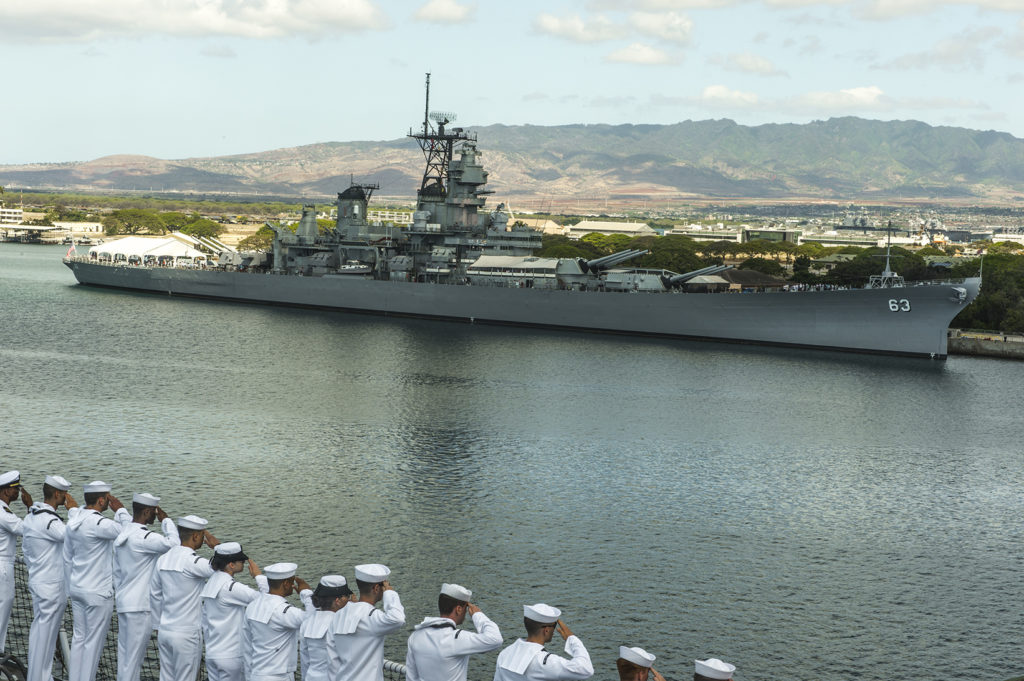
May 25, 2015. The crew renders honors aboard the USNS Mercy (T-AH-19) as they pass the battleships Arizona and Missouri.

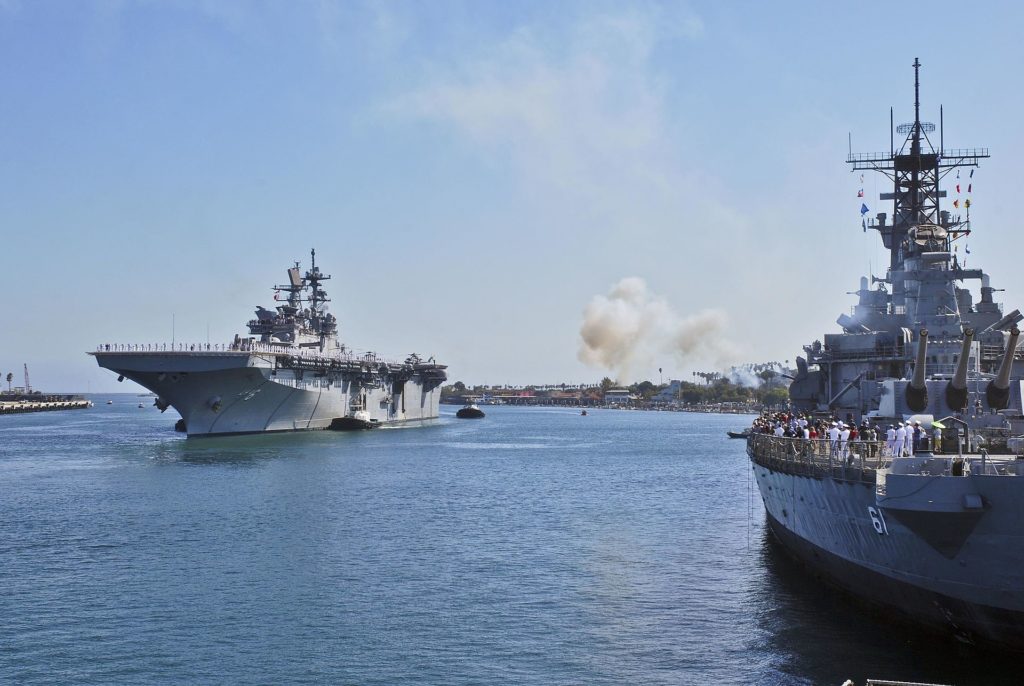
August 30, 2016. Iowa fires her secondary guns in salute to the assault carrier USS America (LHA-6) as she arrives at Los Angeles Harbor.  Though it might not look like it, at full load the Iowa (58,000 tons) displaced roughly 13,000 more tons than USS America (44,971 tons).From harbingers of war to the setting for peace. From World War II to the Gulf War. From instruments of destruction to tools of education. The Iowa class battleships have seen plenty of change throughout the years. Thanks to the dedicated people who maintain them today, we will ensure that they remain around for another 78 years.

Wednesday, October 16, 2019

"I ain't dead....Just super busy"

Sorry for not posting for the past few days, "MeatSpace" has been keeping me real busy lately.  I have started my run for my Oral and Practical which is Next week so I have been studying and of course my son needs me to help him with some projects with his truck. and of course work, and occasionally sleep.  Yesterday was switching out all his lights for LED's. after spending 15 hours at work....  I will post pics later.

Gotta use Teddy for a meme....

Saturday, October 12, 2019

Post about the Kurds...


I shamelessly cribbed this from the "GodFather" Tom Kratman.   Apparently the Neocons and the media are using President Trump's decision to pull out of Syria and the Kurds, and they all are having meltdowns"Orange Man Bad".  I am of the mindset, Obungler shouldn't have put us in the middle of the clown circus to begin with.  Sure the Kurds are allies, but which Kurds?   There are Iraqi Kurds, Syrian Kurds and Turkish Kurds.  I am not a peacenik by any means, but we can't be the worlds Policeman.  Nobody over there is our friends, well perhaps the Kuwaiti's and the Israili's.  The others.....well not so much.   The "GodFather" posted this on Facebook and it was a worthy rant.

Our Gallant Allies, the Kurds (and other fairy tales)
Ah, the Kurds. How can mere words render a proper appreciation? They’re trustworthy, loyal, helpful, friendly, courteous…um…no; no, they’re not. Oh, sure, as individuals they can be fairly boon companions, but in the main and in the mass? Not so much.
My first experience of the Kurds – rather, of how the rest of the area thinks of and feels about them – was before I’d ever met my first one. This was at a majlis, in the town of Judah (or Goodah), Saudi Arabia, sometime in December or so, 1990. Citizenship is kind of an iffy and flexible concept in that part of the world, so there were folk from Saudi, from Oman, from the Emirates. There was even one Arab who insisted he was a citizen of the Gulf Cooperation Council, since he was a fully documented citizen of so many places in the GCC. I had my doubts right up until he pulled out a bilingual ID card which, indeed, did seem to list him as a citizen of the GCC. One of the attendees had brought with him a book detailing the results of the chemical attack on the Kurdish town of Halabja by the army and air force of Saddam Hussein.
It was really heartbreaking, all those picture of gassed, dead, discolored, and decomposing Kurdish kids, who are, in fact, every bit as cute as the papers and television made them out to be. At least when they’re not dead they are. My team sergeant, Sig, and I were duly appalled and sickened.
The Arabs, though, didn’t seem to understand. To paraphrase, “What’s the problem? Don’t you understand that these were _Kurds_ who got gassed?”
At the time, I found that attitude completely inexplicable.
Fast forward a few months; we’ve incited the Kurds and Shia to rise up and overthrow Saddam. They didn’t, of course, while such an uprising would have looked difficult and might have done us some good. Oh, no; instead the Shia – whose rebellion was spontaneous, anyway – waited until it looked like the Iraqi Army was crushed and such an uprising would be easy. The Kurds – who were organized – waited even longer.
Sorry, boys, but when we offer you a quid pro quo, that doesn’t translate into “free lunch.” Moreover, when we’ve already offered someone a cease­fire it’s a bit late to try to get us to start hostilities again. In short, we owed them nothing.
Fast forward, again, to late May, 1991. I’d come home from the Middle East, hung around a while, and been sent back, this time to Operation Provide Comfort, the Kurdish Rescue, there to quasi govern a few towns, run refugee camps, coordinate humanitarian relief, and such like. While we’re waiting in the camp on the Turkish side of the border, not too far from Silopi, overwatched by a Turkish police fort on a hill, some Kurds got in position to fire at the fort such that, should the fort return fire, the Turks will be shooting at us. So much for gratitude from people you’re trying to save, eh?
Fortunately, Turkish discipline held firm and enlightened Kurdish dreams of advancing the cause of having a homeland of their own by getting their rescuers killed came to naught. After a couple of days at the camp, the crew I’m with and I are ordered forward to link up with the British Marines and their Dutch counterparts, already inside Kurdestan. We’re riding in on the back of a British Bedford Lorry, one which, based on the comfort of the ride, probably crossed the Rhine with Monty in 1945…after enduring the entire war in North Africa. If it had a suspension it was tolerably hard to see, and impossible to feel.
Sitting next to me is a Staff Sergeant Farnsworth. Farnsworth and I are both grunts, so we’re doing what grunts do when there’s nothing better to do and neither sleep nor playing cards nor reading are possible; we’re analyzing the terrain. It is fiercely rugged, with winding roads going through narrow passes between hills and mountains difficult enough to climb on foot and impossible for vehicles. Reverse slopes were of such an angle as would make defenders largely invulnerable to artillery and would make even high angle mortar fire of much reduced effect. In any case, at a certain point, looking over a particularly defensible pass, Farnsworth and I looked at each other. I no longer remember who spoke first but the conversation went like this: “If the Kurds­“ “­couldn’t defend themselves­“ “­in this kind of terrain­“ “­they don’t deserve­“ “­their own country.” And that was before we even knew how much they used mines.
*****
A little digression is in order here. As mentioned previously, Kurdish kids are adorable. (The women are also quite fetching, right up until they’re worn out, usually by age twenty-­four or so, from being used like mules, which is to say, beasts of burden, but who, unlike mules, can still bear young…and must.) Most people shy away from or are at least ignorant of the reason so many of those adorable kids died. It’s simple; the Kurds starved them to death themselves. It’s a cultural imperative among them, when times get hard, to let the little girls die of starvation (first, of course), and then the little boys. Good guess, dear reader; why, no, I didn’t like that for beans. As a matter of fact, now that you ask, I’m not much for multiculturalism, in general, either.
*****
Interestingly, before we even arrived in our area, there had been an incident – a firefight resulting in several Iraqi dead – between the British Marines and some Iraqi troops guarding one of Hussein’s palaces in that part of Iraq. I asked a British officer about it and his answer was to the effect that, “As near as we can figure, as one of our patrols was passing, two Kurds, from different positions but surely with coordination, took a shot each, close to simultaneously. One shot was at our patrol, the other at the Iraqi on the gate to the palace. Both shots missed, but the Iraqis and our men, thinking they were under attack, reacted as one would expect. We were just a lot better shots, better led, than they were. Poor bastards. One of the reasons we’re quite sure that the Iraqis didn’t shoot first was that, as our men passed, they waved at each other, as soldiers will who have no particular reasons for enmity.”
*****
The main town I ran was Assyrian and Christian, Catholic, actually, having their own rite but being in full communion with Rome. It was an experience to attend mass held in Aramaic, the language of Jesus, a memory I rather cherish despite not understanding a word of it. They are nice people, the Assyrians, seriously nice people. I’ve dealt with a lot of different kinds of foreigners, over the years, even married one, for that matter, and liked almost all of them. But the Assyrians have a special place. They’re also amazingly hardworking. They can’t defend themselves or, at least, they don’t think they can, which amounts to the same thing.
Everyone knows about the Armenian genocide. The genocide of the Assyrians, around the same time period, was about as bad and may have been worse, as a percentage of the pre­massacre population. And among the chief agents of that genocide? Of both of them, really? You guessed it, the Kurds.
I asked my Assyrian translator there, once, what he and the other Assyrians really wanted. He answered, “We’d like the British to come back and run the place, permanently. Failing that, we’d be very happy to be subjects of the American Empire, if you would just declare one. If that’s not possible, then letting the Iraqis back would be minimally acceptable. Under no circumstance, however, do we want to be under the Kurds.”
That main town was the only one in which no Kurdish babies died, of the smallish number that the Kurds didn’t let starve anyway, and the only one in which there were no political or ethnic murders in that time period. Part of that was probably my own rather forthright approach to domestic harmony – “One incident, just one, and I’ll cut off your food, medical care, and other goodies, causing all your followers to desert you for other groups and leaders I haven’t proscribed!” – but part of it, too, at least for the long term maintenance of the thing, was probably the perception among themselves that the various Kurdish groups needed one safe area in which to engage in local diplomacy, and, since this one area was peaceful, well, why not? That meant a lot of luncheons, meaning, yes, I had the chance to meet most of the bright lights of Kurdish domestic politics and self­-determination of the day. I’ve long since forgotten their names, but am pretty sure I could identify most of them in a police lineup and wouldn’t, of course, mind doing so. One in particular stands out in my mind, a rather distinguished looking middle aged barbarian who had once, over what amounts to a domestic dispute, murdered some thirty-­seven Christian men, women, and children. And then there was the day the Kurds demanded to be paid. Paid? Why, yes, we were providing free food, free medical care, free shelter, and free security, but they saw no reason not to be paid for unloading the free food and other goodies. I sent the trucks back with the food until they knuckled under.
*****
Thus, it might be better for the United States, before pinning too much hope and faith on the Kurds, to understand that they’re military imbeciles with an unearned and undeserved reputation, that their culture is barbaric, they their one talent seems to be propagandizing and manipulating liberal Western opinion, which is eager to be manipulated, anyway, that any kids who die usually do so because of their own neglect of those kids, that they have no sense of gratitude for any help you give them, that they treat women like donkeys, and that they place zero value on the lives of those who try to help them.
Why we, or anyone, would place our faith and trust in them…well, it eludes me. To help that lesson stick in your mind I offer a Kurdish National Anthem, written by my team sergeant, Sig, in a moment of complete disgust with them. Every line tells a story: (Tune: O Tannenbaum)
A voice without a hint of shame
Cries, “It’s all your fault; you’re all to blame.
We must be clothed, we must be fed
And when that’s done build our homesteads”
Chorus:
A Kurd can have no greater love
Than his brand new Kalashnikov;
O Kurdestan, my Kurdestan,
Do what you want; grab what you can.
You gave us shelter overhead
Doctors and blankets for our beds.
You’ve saved us from Iraqi raids,
Now tell us when do we get paid?
Chorus
We fought the Turks, we fought Iran
We fought Iraq for Kurdestan.
And now you’ve made us free and strong,
We’ll kill the Christians when you’re gone.
Chorus
This column is dedicated to the memory of Father Hanna Marko, of Mangesh, Iraq.

Friday, October 11, 2019

Truck Project...
Well y'all remember this truck we got for my son?
My son loves his truck, but he didn't like the grill...See the difference between my honeycomb grill and the regular grill that his truck has.
     Well we went to a junkyard where luckily for us, there was a completed honeycomb grill in a junked F150.   The Grill color was a very faded black.
Well I primed the new grill and he removed the old grill and headlight surround on his truck..

 The old grill primed, I also primed the new insert
New insert painted
New insert in the grill surround.
New grill surround and insert installed.  He was very happy with the Mod.

 Since I was painting, I decided to paint our wiper arms, they had surface rust and looked really bad, so first thing I did after priming the grill, was priming the wiper arms.
I finished painting the old grill insert
Finished the Black
Looks good.
The wiper arms look really good, far better than the old faded ones that were on there earlier.

I'm going to put the "old" repainted insert in craiglist and market place where my son can recoup the money he paid for the honeycomb grill.

    We are planning another junkyard run to see what they have in a week or so.


Monday, October 7, 2019

Monday Music "Modern Love" by David Bowie


Since I have thrown 2 of his songs under the bus, and I did mention that I would do a song from David Bowie that I do like.  Well I like this song,Granted that it is a bit campy but it plays well on the radio.   David Bowie and Bing Crosby do one of my favorite Christmas songs "Drummer Boy"

"Modern Love" is a song written and recorded by English singer-songwriter David Bowie. It is the opening track to his album Let's Dance, and was issued as the third single from the album in late 1983.


"Modern Love" was the 2nd song Bowie started recording for the album, after its title track, recorded in the first few weeks of January 1983. By the time "Modern Love" was issued as a single, Bowie's Serious Moonlight Tour was underway. The video for the song used footage of Bowie and his band performing the song from concert in Philadelphia on 20 July 1983. A live version, recorded in Montreal on 13 July 1983, was on the B-side.
As well as being a staple of the Serious Moonlight Tour, it was featured in Bowie's set at Live Aid in 1985, and in his subsequent Glass Spider and Sound+Vision tours of 1987 and 1990. It was also performed occasionally during his 2003-4 A Reality Tour. To promote the Glass Spider Tour, as part of his commitment to Pepsi for their commercial sponsorship, Bowie re-recorded the song with Tina Turner for a commercial which aired briefly in 1987.

Friday, October 4, 2019

Quick post...local goins on.

I have been busy with real life, I passed another test on the road to my A&P, I passed my "Powerplant" so all I have left is the "Oral and Practical".  This has taken a lot of time this summer to get done. 
    On a different note, I was an honored spectator where my brother from another mother gave the oath of enlistment to his son at the MEPS station. 
My Brother from another Mother first explained a few things about the delayed entry program and that "the Military is not for everyone, and if you don't want to join, please decide now rather than waste time and money in basic training."  He told me later that the recruiters hated him when he said that to the enlistee's. when he ran a MEPS station during his career but he believed that he was doing the right thing by both the enlistee's and the Service.
 Getting ready to give the oath of enlistment.
Giving the Oath of Enlistment.  His son will be going to Fort Leonard(Lost in the Woods) in Misery
Missouri then off to Fort Sills.
I remembered his son when he was 10 years old and helping me corral cub scouts at the BB ranges I used to run.  Jeez how time flies and I was honored to make the ceremony.   They say that fewer than 2% of the people in this country serve, or have served.  I consider myself fortunate and lucky to count myself in this number and that a lot of my friends have also taken the oath of enlistment.  I still even now consider my oath binding despite my getting out in 1991.


      Yes I bought myself a "new Rifle"......And Yes it is a "HiPoint"

I wanted a rifle in pistol caliber to augment my pistols, the carbine is in .40S&W like my pistols.  I would normally not buy a hipoint, although their warranty is one of the best in the industry.
 The Carbine has a good reputation,  My dad owns a 9mm version and he loved it.   I remembered a couple of years ago where some single mom ventilated 3 wanna be home invaders in Detoilet. I will take the rifle shooting next week, probably at Mack's place of employment on either Thursday or Friday and I will give my impressions at that point.

Wednesday, October 2, 2019

busier....

I am busy with stuff IRL, unfortunately the blog has to take a backseat until later this week.