Several things went on, I installed new plugs and wires on my truck trying to get it to pass emissions and I still was having problems, I kept getting the dreaded Cylinder#7 misfire. I went and changed the coilpack
Still had the problem, so at this time, I made an appointment with the shop, I couldn't keep shotgunning parts at the truck and hope I fix the problem,. Well I nursed the truck to the shop and it cost me $125 shop time for them to tell me I had the wires out of sequence. Da hell? I had checked the firing sequence, and a friend of mine checked the firing sequence and we were sure that we were spot on, but I picked up the truck and it worked fine.
Next step was the intake system as I reverted it back to original, I kept getting MAF sensor codes after installing the Cold Air Intake on my truck. My son and I had gone to a junkyard and picked up several items including a complete factory intake really cheap. We also had offered to stay and make a witness statement when a person in front of us tried to steal several items then tried to run over the employee with a golfcart trying to get away. Some people....
Video clip of the truck running after the Intake installation.
After getting my F150 to pass emissions, (3 more years until exempt) Yay !!. I went ahead and
handled the rear door, apparently it is a bad design prone to breakage. I have repaired them before. First time I replaced the cables$$$, then I found this cheap fix on ebay,
but the latest fix, they had on amazon. Installed the replacement "cap" for lack of a better word,
This metal piece replaces the plastic piece that seems to tear up and fall apart, it seems to be endemic of all extended cab trucks.
Installed metal cap after having to file a bit of the metal off.
This is what it looks like with the door put back together before the panel goes back on.
performed a function check,
then put the door together.
Next project is battery clamp I noticed when I had the truck seem to shut out on me and I couldn't figure out what the problem was.....
And the bad thing was that I changed that clamp a year ago...go figure
I removed the old clamp,
I cleaned the terminal, removing any old corrosion using a "scotchbrite pad I had to cut the old clamp off with a set of dykes,
I then I peeled and stripped the insulation back a bit, attached the new clamp to the positive wire,
then I stuck a pair of needle nose pliers through it to spread it apart, then I attached it to the positive terminal and using a brass hammer to seat the clamp.
You know you are good when the hood light illuminates.
I finished securing the clamp to the terminal. Then using the corrosion Inhibiting Spray, I coated the terminal and the wire,
I waited a few minutes between coats to allow setting time. Then I cranked the truck and then spent 10 minutes while the truck was idling trying to remember how to set the clock on my radio, lol.
I had done this before coming down with the kung-flu....again...... This is my second bout. I got sent home late last week for popping "Positive" on the weekly test I have to endure as one of the "Great Unvaxxed".
Me wrapped up in a blanket that my wife had made for me from a bunch of my Boy Scout tshirts and a couple of my "Gun" T-Shirts that I can't wear anymore because I lost soo much weight. I had gone ahead and preloaded my blog a week out in case I got really sick. I got a little sick, I had been taking Zinc a lot as part of my daily vitamins, As soon as I popped positive, I started taking "Elderberries" and "Oscillococcinum" 3 times a day, and the symptoms were not near as bad the second time around, I was more tired and lost my appetite and ran a fever for a day and that was it. I am past the heaviest part of it, now I have to build back my strength. so we will see,
I saw this in the truck in front of me today, and I had to do a doubletake...I at first thought he was a proud "Biden supporter" until I read the sticker closer....Thought it was brilliant.LOL
Stacy Abrams 2018 democratic candidate for governor and general bigot that sees "racism" in everything, and still believes that she should have been governor of Georgia but for "Racism". She campaigned for the donks in Virginia, and was instrumental in getting the "All-Star" game pulled from Georgia to Punish the State for making it harder for the democrats to "harvest Votes" and steal the Election.
Also unless you were living under a rock...The Atlanta Braves won the World Series in game Six, both Teams played well, but this was Atlanta's year...Especially when the All Star game was stripped from us by the woke Commissioner because of our "Racist"Voting laws. and got sent to Colorado that had the same voting laws......I'm sure that made sense...somewhere. And when the Woke commissioner presented the trophy to Atlanta, both the fans from Atlanta and Houston both boo'ed him. Maybe it is showing that people are tired of the "Woke" bullcrap. And when the AllStar break happened, Atlanta was Subpar .500 for the season.
I got a new book I will be starting on after I finish Mack's book I am almost done with that he loaned me. I also got the "Grant" Miniseries the same time I got "To Rescue the Republic" I always liked Grant and thought he got short shifted by History because he was an honorable man and expected everyone else to have the same ethics and they didn't.
This is my Veterans Day Post, I used this same post before and it is worthy of reposting. I honor my friends that came back and I host a glass of non-alcoholic beverage in their Honor and I know many Bloggers that will be doing the same.
This day was created originally as "Armistice Day" after the "War to end
All Wars" and people wanted to honor the veterans from that conflict.
The Day was set as 11/11/11/11th. Or November which is the 11 month,
the 11 day, the 11th hour and the 11th minute. The day was called
"Armistice Day" until after WWII, it then was called "Veterans Day."
There are 3 holidays that honor the United States Armed forces,
We have Armed Forces Day that honors those that are serving
We have Memorial Day that honors those that died in service or those of us that crossed over to Valhalla or Fiddlers Green.
And Veterans Day to me traces its lineage to those of us that stood
watch on the borders of our civilization since the days of the Romans
standing watch on the Danube to guard the frontier so those of our
people could sleep secure at night knowing that they were safe from the
bad people. Veterans like me and those like me presented a blank check
to Uncle Sam to write in any amount including our lives if necessary.
We mustered out but we know many of us that didn't make it to this stage
and that is where Memorial Day comes in and Veterans day honors those
of us that did make it and this day honors us and those like us. It is a
unique category because the veterans in our society is a small segment
like a warrior class and Veterans tend to come from family traditions,
meaning that it is a father son, uncle cousins nieces, Aunts, moms kinda
thing. This Day humbles me to a great degree because of what it means
and I will honor those of us that crossed beyond. Our job as Veterans
is to ensure that the traditions are not forgotten and passed on to the
next generations.
I clipped this from "Bill O'Reilly", this one was a good article and I thought it was a good read so I shamelessly "clipped it".
According to recent surveys, Americans don't trust the
federal government nor do they have much faith in the press. Whether
the topic is the 2020 presidential election, or the Covid vaccine, or
spending billions of taxpayer dollars to stop global warming, suspicion
reigns. And that skepticism is well placed. Back
in 2016, when Donald Trump began succeeding in his quest to become the
45th President, a nasty scheme emerged to destroy him. The
media dubbed it "Russian Collusion" and, for years, ran wild with
speculation that Russia was either helping or blackmailing Donald
Trump. Perhaps both. Here's how it worked. The FBI
was fed phony accusations by "operatives" that led to the Bureau
launching a formal investigation. Using unverified information which
turned out to be fictional, secret federal warrants were obtained that
allowed spying on the Trump campaign. Along with that, untrue
information was leaked by "anonymous sources" to the leftist media led
by the New York Times, the Washington Post, CNN, and NBC News. The
Times even won a Pulitzer Prize for covering the phony story. Not for
exposing it as bogus, but for printing the falsehoods without
attribution. One Times reporter, Maggie Haberman, reportedly wrote more
than 100 stories critical of Trump using anonymous sources. Let
me repeat: the New York Times won the most prestigious journalism award
in the world for essentially spreading false information. The
American taxpayer then picked up a $35 million dollar tab for a
"special investigation" headed by Independent Counsel Robert Mueller. The
probe found there was no verifiable collusion with Russia. But it took
two years for that to be determined. In the meantime, Donald Trump was
savaged daily in the press. Now another
investigation, this one headed by US Attorney John Durham, is finally
issuing indictments in this incredible situation. Three individuals have
been charged and the emerging picture is that the bogus Russian
Collusion story was concocted and financed by Hillary Clinton's
campaign. If true, that would be one of the most corrupt political actions in American history. Mrs.
Clinton will, of course, deny any knowledge of criminality. And she is
entitled to the presumption of innocence that Donald Trump did not
receive. Mr. Trump, himself, is rightfully furious over this whole
thing and has called for the Pulitzer committee to revoke the prize. That will never happen. Why?
Because the media industry is so corrupt that false stories no longer
matter. Not one news agency has apologized for dereliction of duty in
using a fabricated scenario to vilify and smear the Republican
presidential candidate. The lesson here is
frightening: when the national press is corrupt, devious political
players know they can get away with outright fraud and massive deceit. And
that's where we are in the United States today. Ronald Reagan once
said: "trust but verify." But verification no longer matters to a
national press infected with an ideological virus. Thus, there is no trust.
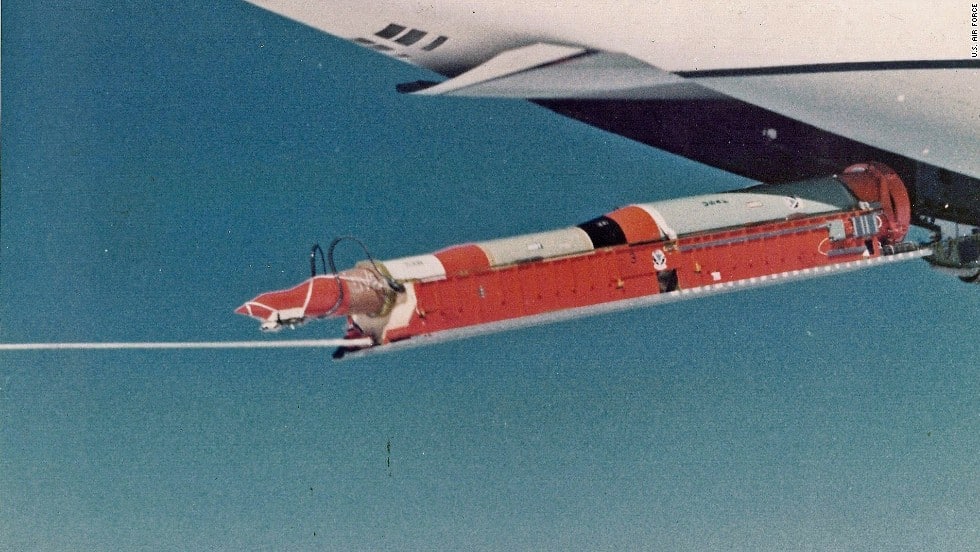
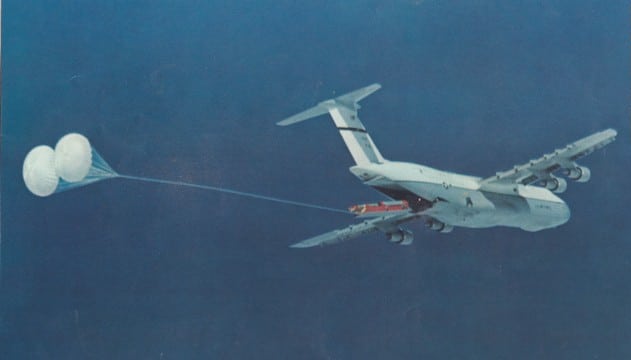
The Minuteman I ICBM, or intercontinental ballistic missile, was a
globe-spanning weapon with nearly ten times the destructive capacity of
the atomic bomb dropped on Hiroshima at the end of World War II, and in
1974, America successfully launched one out of the back of an airborne C-5 Galaxy.
As if lobbing an 87,000-pound nuclear payload out the back of an
aircraft in flight wasn’t a dramatic enough undertaking in itself, the
team responsible for history’s only air-launched ICBM were also under a
strict deadline and potentially apocalyptic pressure. While their efforts could have resulted in a new approach to leveraging America’s nuclear arsenal, actually fielding
a new capability may not have been the real aim of the program.
Instead, the entire effort may have really been about sending a message
to the Soviet Union before entering into a new round of disarmament
talks.
An 87,000-pound message. (U.S. Air Force)
In July of 1945, the United States conducted the first-ever atomic
bomb test explosion, ushering in the nuclear age with a blast equivalent
to 25,000 tons of dynamite. Four years later, in 1949, the Soviet Union
would follow suit, shifting the balance of power around the globe, and
setting the stage for a decades-long nuclear staring contest that, to
some extent, would survive even the collapse of the Soviet Union itself.
Nuclear posturing had become an integral facet of the ideological
conflict between the American and Soviet governments by 1974, with each
nation working tirelessly to field new means of leveraging or delivering
atomic, and then thermonuclear, weapons. The United States took the
technological lead, fielding a massive arsenal of advanced weapons for
their time, but what the Soviet juggernaut lacked in scientific
accomplishment, it made up for in volume. By 1974, the Soviet Union had
all but eliminated America’s technological advantage by simply fielding more of their slightly less advanced weapons.
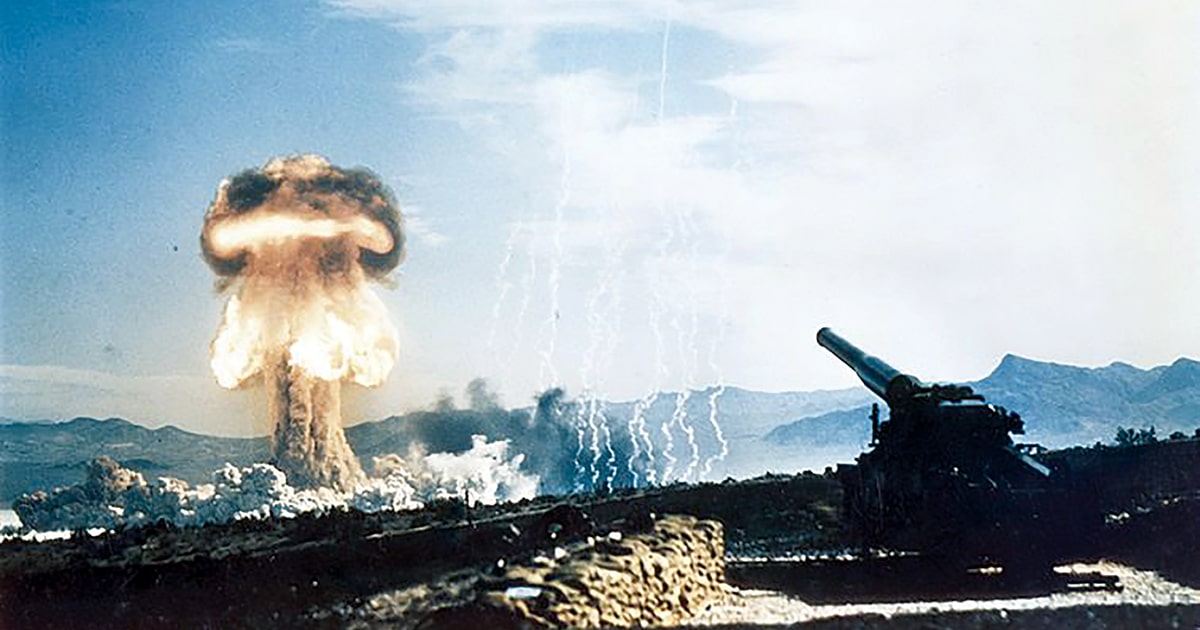
A
15-kiloton nuclear artillery round is fired from a 280-mm cannon 25 May
1953 at the Nevada Proving Grounds. (Photo courtesy of the National
Nuclear Security Administration/Nevada Field Office)
The truth is, the number of warheads in each nation’s
armories was a largely moot point by the time Secretary of State Henry
Kissinger began coordinating with his Soviet counterpart for 1974’s
Strategic Arms Limitations talks. If America and the Soviet Union were
to go to war, the collective onslaught of the two nation’s arsenals
would be enough to destroy all life as we knew it. This understanding,
known as Mutually Assured Destruction, has been credited by some as the
selfish cynicism that has–thus far–saved the world, with each nation
knowing that to incite a nuclear war would be to invite one’s own
destruction.
But MAD (as the concept is sometimes derisively known) is predicated
on maintaining that destructive balance between states, and in the
1970s, the United States had grown seriously concerned that MAD’s
equilibrium was beginning to give way. America had long since
transitioned to leaning on ICBMs as their primary means of nuclear
weapons delivery, but America’s Minuteman ICBM silos were stationary
targets with known locations the Soviets could intentionally target in a
first-strike offensive.
Despite being hardened underground facilities, America’s ICBM silos were not impervious to direct nuclear strike. (Boeing photo)
The Soviets, on the other hand, often leveraged mobile missile launchers, ICBM-firing trains,
and even experimented with using giant helicopters to relocate their
missiles quickly, to prevent the U.S. from finding and targeting them.
So as Kissinger prepared the meeting
with General Secretary of the Communist Party of the Soviet Union,
Leonid I. Brezhnev, to discuss a joint reduction in arms, he was facing
the uncomfortable reality that his opponent had the upper hand. If the
Soviets managed to wipe out America’s silo-based nuclear arsenal, it
would be extremely difficult to hold up the “mutual” part of the world’s
assured destruction with the nation’s nuclear bombs and still
fairly-new submarine-launched ballistic missiles.
Kissinger needed to re-balance the nuclear scales before the meeting with Brezhnev, and it fell to the men of the Aeronautical Systems Division at Wright-Patterson Air Force Base to do it.
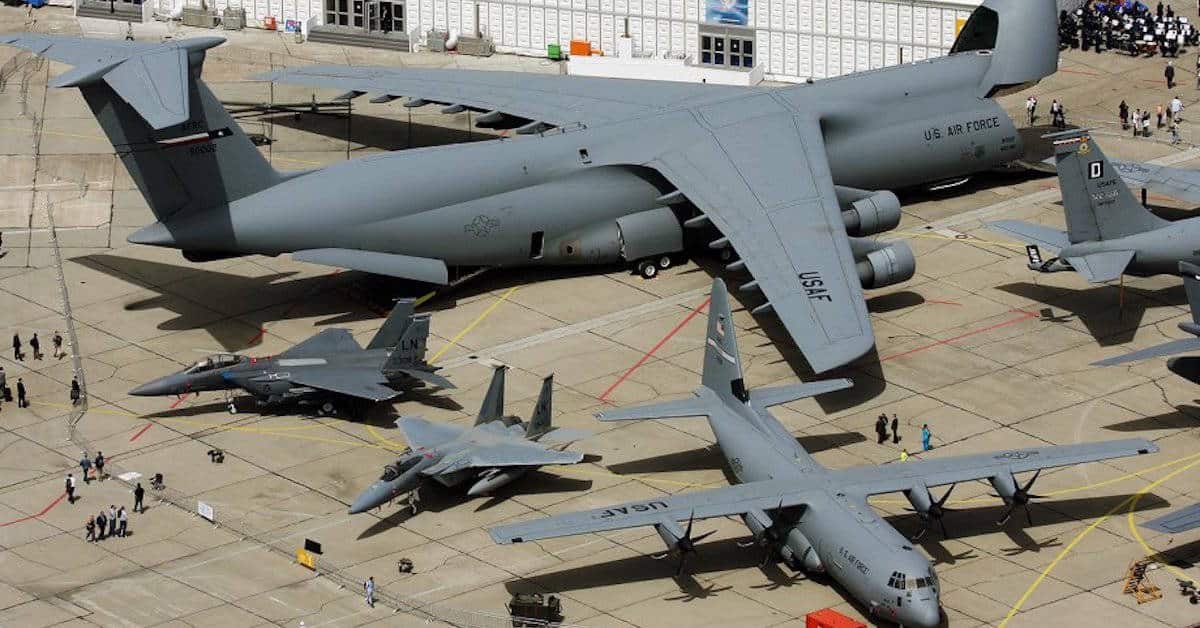
A C-5 Galaxy next to an F-15E Strike Eagle, F-15 Eagle, and C-130 Hercules. (U.S. Air Force photo)
If the Soviets knew where America’s Minuteman ICBM silos were, the
Pentagon decided they needed to find a way to keep the missiles on the
move, but merely moving the nukes wasn’t enough. They had to be
able to launch them from new locations as well. With multiple options
on the table, it wasn’t long before the idea of launching an ICBM from
the back of America’s massive new cargo transport, the C-5 Galaxy,
bubbled to surface. It was indeed crazy, but crazy wasn’t at all
uncommon throughout the Cold War.
Carrying massive payloads was quite literally baked into the C-5’s DNA right from the start of its development. It was born out of the Air Force’s CX-LHS program
aimed at fielding an aircraft large and powerful enough to carry
America’s newest tanks at the time, the 30-foot long, 50-ton M60 Patton.
When they were done, they had an aircraft that could carry two of them
5,300 miles without refueling. The aircraft offers an astonishing
34,734 cubic feet of cargo space, with the cargo bay itself stretching
further than the distance of the Wright brother’s entire first flight,
at 121 feet.
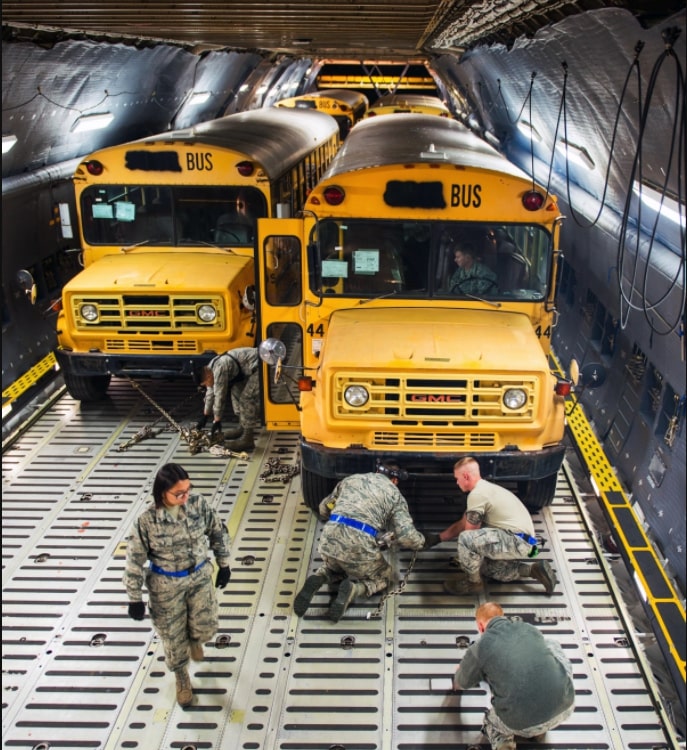
Airmen load school busses into a C-5M Super Galaxy (U.S. Air Force photo)
Perhaps most astonishing of all, the C-5 could carry more than
120,000 pounds inside that massive cavity and still get off the ground.
That’s nearly twice the payload capacity of the massive B-52 Bomber or
three times that of America’s stealth heavy payload bomber, the B-2
Spirit.
Technically speaking then, the 87,000 pounds of intercontinental
ballistic missile and its accompanying gear would be a walk in the park
for the mighty Galaxy, but there was more to it than simply getting off
the ground. In order to give Kissinger the edge he needed, they had to
prove the missile could really launch after the cargo plane released it.
U.S. Air Force photo
With just 90 days before the Strategic Arms Limitation Talks were set
to begin, the Air Force’s Space and Missile Systems Office (SAMSO)
quickly gathered a slew of engineers, aviators, and other subject matter
experts from within the military and beyond. The group immediately set
to work, pouring over the C-5 Galaxy and LGM-30 Minuteman 1 schematics,
looking for reasons the concept could work, or why it couldn’t.
“A couple of our engineers got
called to the Pentagon on a Saturday and were asked if it could be
done,” Pat O’Brien, an engineer who worked on the program at
Wright-Patterson Air Base later recounted.
The most conspicuous challenge was the drop itself. While the C-5 had
successfully dropped loads as heavy as 164,000 pounds in the past, the
loads had always been divided into four drops, limiting each to around
41,000 pounds. Each drop was conducted by opening the rear doors and
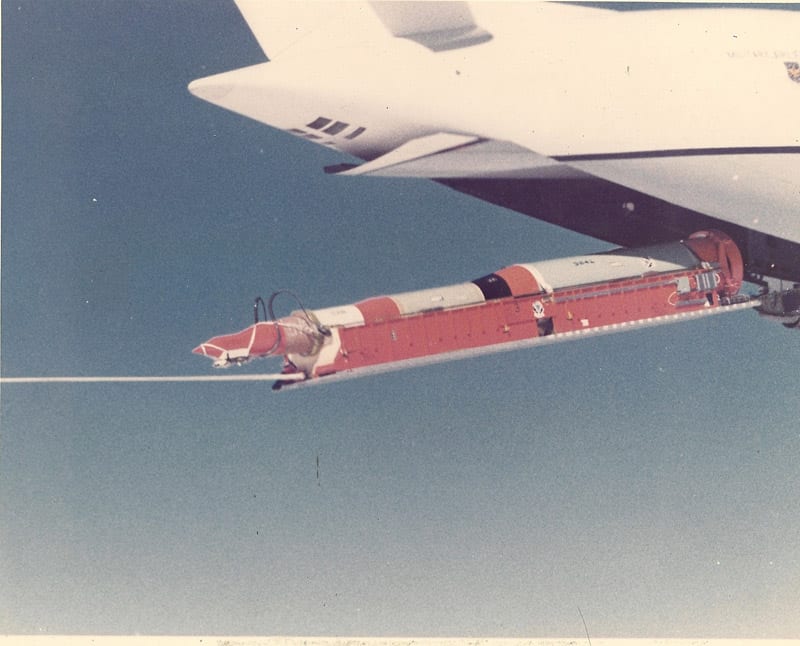
deploying drag parachutes out the back of the payload. The sled carrying
the load is then unlocked, allowing the parachutes to pull the load
safely straight out the back of the plane.
An LGM-30 Minuteman I ICBM when not being dropped by a C-5 Galaxy (U.S. Air Force photo)
While a large drop might measure 28 feet under normal circumstances,
the 87,000-pound Minuteman 1 payload (including its sled), with its
three-stage rocket engines, guidance control section, and reentry
vehicle stretched over 57 feet. If the chutes failed to successfully
drag the load all the way out of the aircraft, the C-5 would become
unbalanced and uncontrollable, resulting in a crash. If the nose of the
missile tipped too far downward on its way out, the back of the missile
would catch the top of the C-5, trapping it and, again, causing a crash.
The only way it could work is if everything went exactly according to
plan.
“The assessment was that there was a risk, a moderate technical risk, but that we could do it,” O’brien added.
Under normal circumstances, such a dangerous enterprise
would have called for a slower, more methodical approach, but there
wasn’t time for that. In fact, as testing began and failures started to
occur… the program pushed ahead anyway.
“We didn’t realize at the time it was for the SALT talks [Strategic Arms Limitation Talks], but we knew they wanted it done in a certain number of days,” O’brien said.
(U.S. Air Force)
A total of ten test flights were planned, with the first seven
dedicated to deploying increasingly heavier and longer payloads and the
final three with real missiles; only the last of which would actually
ignite its first stage engine. Two C-5 Galaxies were assigned the task
of carrying out these flights, one with the registration number 69-0027
would deploy test loads and provide backup for another C-5, registration
number 69-0014, which would deploy the live missile in the final test.
While none of the dropped missiles would be carrying a nuclear
warhead, the task was nonetheless fraught with danger. Dropping 87,000
pounds from an C-5 would rapidly shift its center of gravity and send
the plane lurching upward and forward almost instantly. If the pilots
failed to retain control, even a successful drop could result in
catastrophe. And the danger for the crew in the unpressurized
rear-cabin, riding alongside 43,500 tons of armageddon, was even
greater. In fact, they had to wear personal oxygen tanks to withstand
the thin air as they prepared the payloads for deployment and, at least
once, had to resort to emergency measures to do so.
In order to ensure the C-5 survived launching the ICBM, it would
deploy the weapon at an altitude of 20,000 feet using parachutes
attached to its nose to orient it upwards. As the missile left the
aircraft, a timed fuse on the first stage motor would begin the
countdown, igniting the missile’s engine as it fell to 8,000 feet,
arresting its downward momentum and sending the continent-spanning
weapon off to its far-flung target. For the purposes of the test,
however, only the first stage engine would fire as a proof of concept.
(Edwards AFB History Office photo)
On September 6, 1974, the first test drop of a 45,000-pound payload
was successful, with a second success just four days later. The
following test, which successfully dropped a 54,650-pound payload set a
world record for a single drop, though the record would only last until
their next test with a 66,000-pound drop.
That test, however, would end in failure, as the payload’s platform
tore through the recovery parachutes, allowing the load to free-fall to
the ground. The issue was resolved for the following test, switching to a
platform that would hang vertically, more like the missile would.
From there they moved up to an 87,320-pound platform payload–a total
weight even greater than the missile and platform to come, and for a
time to come, the heaviest single payload ever dropped by an aircraft.
The test was essential to proving the efficacy of the concept… and
unfortunately, the test was nearly a catastrophic failure.
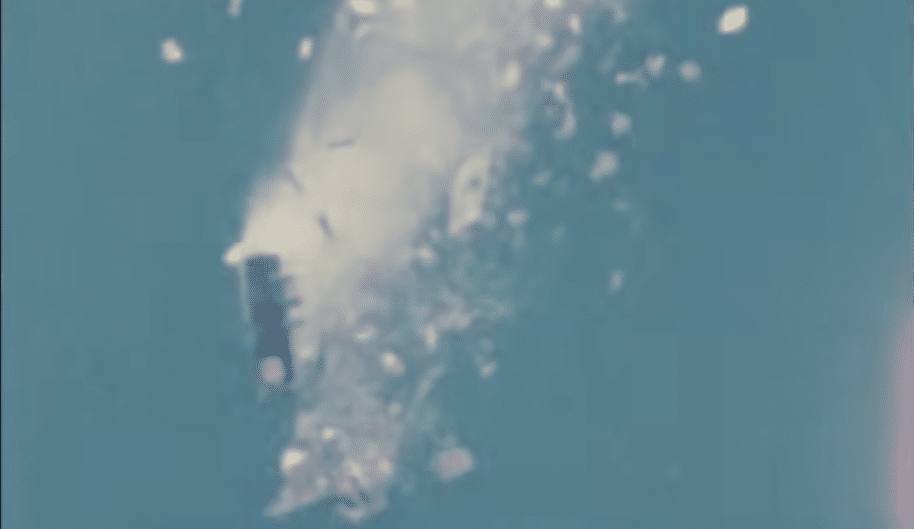
Actual image from the failed 87,320-lb platform drop test (U.S. Air Force)The payload coming apart after leaving the C-5’s cargo bay. (U.S. Air Force)
The single 32-foot extraction parachute failed to pull the load
cleanly from the aircraft, leaving it not quite stuck, but moving very
slowly out the back, creating exactly the sort of dangerous situation
the aircrew knew could lead to a crash. Fortunately, the payload
eventually fell clear, but it had been the second failure in just six
drops. A 33% failure rate, with one of those failures during the only
test with a similarly weighted payload to a real missile, might have
been enough to prompt further testing in most programs, but time was
running out.
The team decided to move forward to missile testing, adding a second
32-foot extraction parachute to hopefully resolve the problem.
On October 24, 1974, one month before the Vladivostok Summit and continued arms control talks were to take place and one month after
the nearly disastrous payload test, the C-5 numbered 69-0014 left the
runway at Hill Air Force base with thirteen men and one live LGM-30
Minuteman I intercontinental ballistic missile onboard. The group
included Lockheed’s test pilots, a flight engineer, two flight test
engineers, a pilot from the Air Force Test Pilot Center, two men from
6511th Parachute Test Group, another engineer responsible for the
missile guidance system, and a representative from the Minuteman’s
manufacturer, Boeing.
In the back, Chief Master Sergeant Elmer Hardin and Senior Master
Sergeant Jim Sims wore their personal oxygen tanks and sat on either
side of the 56-foot missile as the C-5 soared out over the Pacific.
“We were checking the rails to
make sure the locks were out, and we had a 10-minute warning to make
sure the extraction chute was hooked up properly and that the safety
line ran through the extraction cable mechanism,” Hardin recalled.
At eight minutes before the drop, the rear cargo-bay doors opened,
exposing the nose of the missile to the high altitude Pacific air. Sims
pulled the safety plug from the Minuteman and replaced it with a green
one to indicate that the weapon was armed to fire. As the countdown
approached zero, he armed the locks that would release the missile from
its sled-like cradle just as it prepared to ignite its engines.
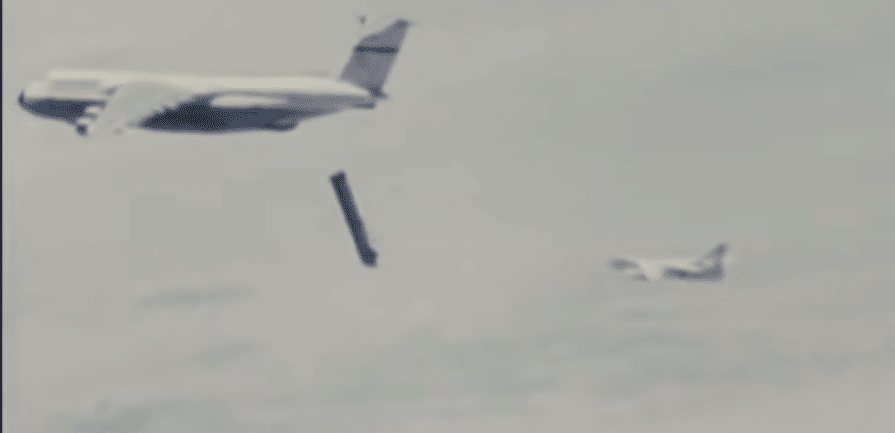
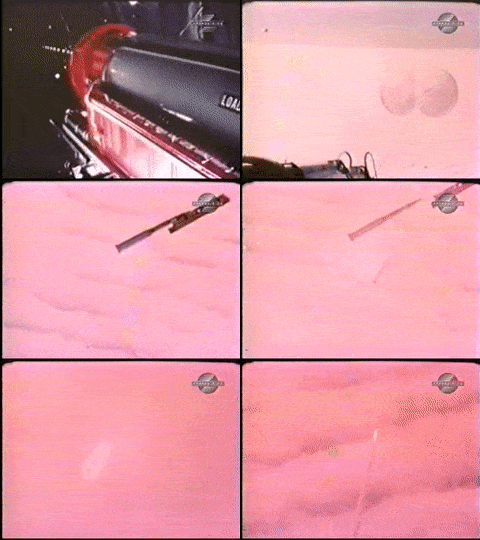
When the clock hit zero, the two 32-foot parachutes deployed, and
smooth as could be, pulled the 87,000 pound ICBM and sled from the C-5
as though it was what the aircraft was always meant to do.
“We just did a checklist, opened the doors in flight and away she went,” Sims recalled. “It was picture perfect.”
The C-5 was traveling at around 180 miles per hour when the ICBM
dropped, and the sudden shift in weight sent the plane lurching upward
and forward, now suddenly producing much more thrust and lift than was
required for the C-5 to hold its course. The pilots expertly countered
the shift, keeping the aircraft steady.
“It was like dumping out a
wheelbarrow full of water,” Sims said. “We gained some forward motion,
but [the pilots] had control of that. It was very smooth.”
The two men walked to the edge of the loading ramp, watching the
massive missile drop, held upright by a bouquet of parachutes struggling
against its immense weight. For an instant, they worried that the
missile’s engine wouldn’t fire as it continued to fall some 12,000 feet.
Then they saw a flash of light emerge from beneath the ICBM.
“I saw it fire. All at once there
was this big ball of fire. That burn stopped the missile from falling
and it came straight up,” Hardin recalled.
“We were at 20,000 feet and it passed us. It looked like a giant pencil. It was a pretty amazing thing to see.”
The first stage engine of the Minuteman I screamed through the sky to
30,000 feet, ten thousand feet above the C-5 as it flew away. Then,
when the missile’s second stage would usually fire to continue the
weapon’s trajectory, the burn ended, and the missile fell safely into
the Pacific.
They had done it, and according to Sims and Hardin, they were even
briefed that Kissinger felt he’d been given the advantage he needed as
he went into talks with the Soviets. That assertion was later
substantiated by a Federation of American Scientists report on air launched ballistic missiles, released many years later.
The effort to launch an ICBM from a C-5 Galaxy was anything but
discreet. While the U.S. Air Force had often been tight-lipped about
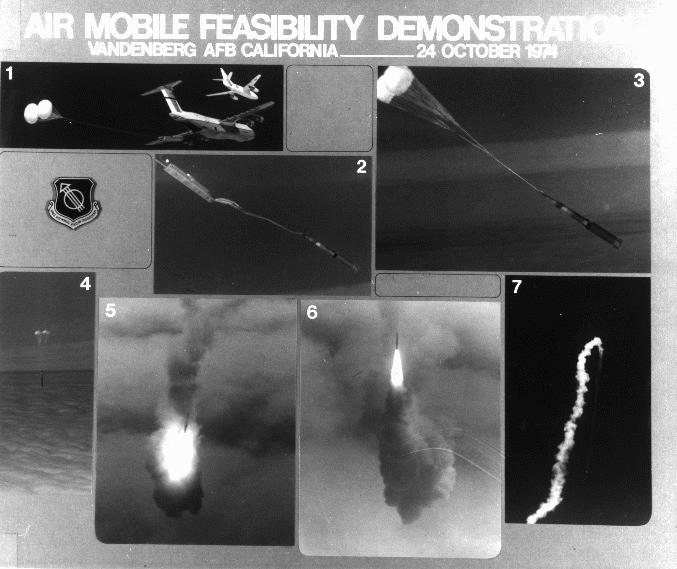
nuclear weapons programs, officials were happy to discuss the Air Mobile
Feasibility Demonstration. One could contend that the openness was
intentional to ensure Brezhnev and the rest of the Soviet government
were aware of what was a genuinely monumental strategic shift between
the nuclear powers.
Not only did the United States have more advanced nuclear weapons
than the Soviet Union, but now they could deploy ICBMs from practically anywhere.
Intercepting an ICBM means doing hihgly complex math based on launch
location and trajectory to deploy a kinetic interceptor. With no way to
pinpoint launch location, not only could the Soviets not take out these
ICBMs in a Soveit first strike, but they also couldn’t stop them if
America were to choose to take on the role of the aggressor themselves.
In an academic paper submitted to the Aerodynamic Deceleration
Systems Conference in November 1975, one year after the tests, two
officials from the Air Forces Aeronautical Systems Division, Daniel J.
Kolega and James E. Leger, used the data collected from the tests to
confirm the viability of air-launched ballistic missiles, including
intercontinental ones.
Even more astonishing, they claimed the C-5A could potential launch
multiple missiles in a single flight, which could be possible
considering the aircraft’s massive payload capabilities.
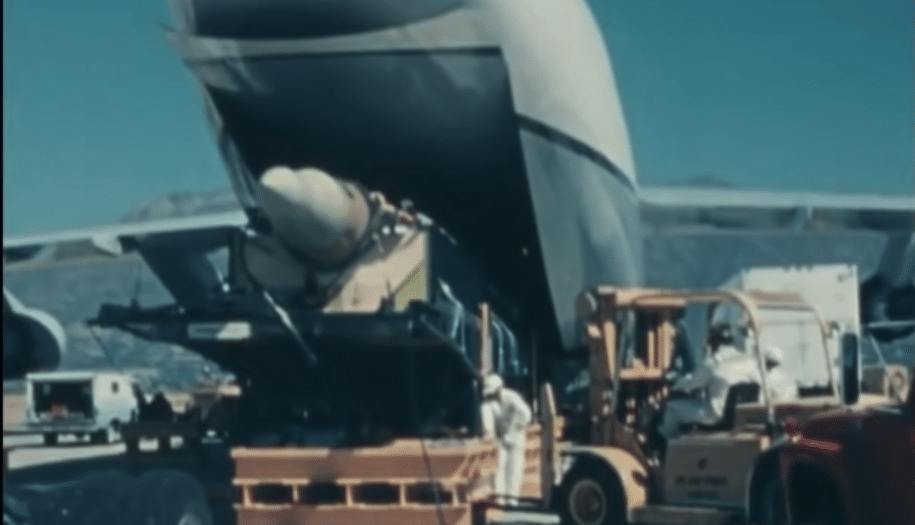
The C-5 was actually lifted to match the ballistic missile trailer height to load the ICBM. (U.S. Air Force)
“The tests also indicated that the C-5A has the capability of launching a missile that is significantly heavier that the Minuteman I and that multiple Minuteman I airdrops are also possible,” they wrote.
Today’s C-5M Super Galaxy, in fact, can carry payloads of upwards of 285,000 pounds, more than enough to carry three modern Minuteman III ICBMs at once… if this concept were ever put into service, that is.
But that might actually be why this program, despite being considered
a success, was quietly shelved after the conclusion of the 1974 summit.
What was meant by the Americans to be a second-strike fail-safe to
eliminate a Soviet advantage had also produced an incredibly daunting
first-strike capability.
Introducing this new un-answerable first-strike capability into the
delicate nuclear ecosystem of mutually assured destruction could have
been enough to destabilize the balance between nations, and in a
worst-case scenario, could even prompt the Soviets to initiate an attack
while the U.S. was still vulnerable.
Or maybe all this effort was ever about was giving Henry Kissinger the edge he needed when meeting with his Soviet counterpart
I had posted this on mewe and Gab already, and I posted my "Monday Music" earlier this morning..Just scroll down past this post and you will see my "Monday Music".
The "Vaxx" mandates boils down to "Who owns you' You or the State? Who
owns your body? who owns your soul. The central precept of Western
Civilization from its beginning with the Greeks and the Romans and the
rights of the individuals is sacrosanct. The Individual is prized where
in other systems, it matters what tribe you belong to, what family you
belong to, what race you belong to. Our American Constitution is based
on Individual rights and it is codified as such, who owns you? You Or
the State? If you want to get the Vaccine, more power to you, if you
don't that is great!. The problem is that certain people try to shame
others using the words "Public Good" the same words used by the Soviets
and other leftist to force compliance to the diktats of the state to
force compliance and this opposite to our belief system but the media
has stampeded compliance in support of the state by fear and certain people relish their
opportunity to rule others...all in the name of "The Public Good". It
all boils down to "Who Owns You".
I am still using the "what would I play if Sirius/XM would let me host a segment, and these are songs that I could play over and over again.. I will continue the "Bugaloo" theme shortly, it is still resting up in the pasture after being rode hard for the past year.
I
decided to roll with "Paint it black" It is a Rolling Stone song that
was used in the opening credits of a TV series that we GI's watched in
the barracks. We liked the realism, the attention to detail, they had
used Vietnam veterans as advisers to ensure the realism and gritty
reality...for 80's TV anyway. When the show came on, the dayroom was
full as everybody clustered around the AFN broadcast of the show. This
song is the only song by the Rolling Stones that I really liked.....We
would cheer when the soldiers would shoot up Charlie and the
firefights. The interplay of the people was very well done, we liked
the way the new LT played by Stephen Caffrey was mentored by the platoon
sergeant played by Terrance Knox. All the other guys also played well
on each other and at the end of the video, it showed the 3 soldiers
standing at attention and saluting the flag on TV at the end of the
broadcast day....when they played the national Anthem. That was
telling for me. The simple patriotism showed represented the beliefs of
the Veterans in their country..
Long Version of the Intro. Plays the complete Song
Tour of Duty is an American drama television series on CBS. It ran for three seasons from September 1987 to April 1990 as 58 one-hour episodes. The show was created by Steve Duncan and L. Travis Clark, and produced by Zev Braun. The show follows an American infantry platoon on a tour of duty during the Vietnam War. It was the first television series to regularly show Americans in combat in Vietnam and was one of several similarly themed series to be produced in the wake of the acclaimed Oliver Stone film, Platoon. The series won an Emmy Award in 1988 for Outstanding Sound Mixing for a Drama Series, and it was nominated again in 1989 and 1990.
Cast of "Tour of Duty"
Not simply an action program, Tour of Duty was also groundbreaking as it addressed the issues of politics, faith, teamwork, racism, suicide, fragging, terrorism, civilian deaths, drug abuse,
and the shattered lives and confused feelings of those troops who
finally made it home alive. The story focuses mainly on Bravo company's
second platoon under the command of 2nd Lieutenant Myron Goldman (Stephen Caffrey), and Staff Sergeant (later Sergeant First Class) Zeke Anderson (Terence Knox). The first season was filmed on location in Hawaii at Schofield Barracks. For the second and third seasons the series was filmed around Los Angeles, California in order to reduce costs. This also enabled the producers to redress a studio backlot as Saigon.
The move also meant reusing the same locations, notably a small river
with grass on one bank and woods on the other which turns up in a number
of episodes. A lot of filming was undertaken on the old set of M*A*S*H. Helicopter scenes with McKay were filmed on the ground with the rotors running. The
first season opens in 1967 and follows a standard light infantry
platoon. In the second season, the troops found themselves relocated to a
base near Saigon while conducting the typical "search and destroy" missions. Production staff interviewed in VIETNAM Magazine cited this change as a change in premise that
doomed the series, as female characters were also introduced (in hopes
of gaining more female viewership and because of the premiere of the ABC
Vietnam Army Nurses drama "China Beach" which was aimed at a more
female audience ) and the show ceased to be a realistic chronicle of
life in the field for the average line infantryman in favor of being
more romance- and action/adventure-oriented. In the third season, the remaining female character was killed off and the platoon was transferred to a SOG (Studies and Observation Group) unit under the command of Colonel Brewster—played by Carl Weathers, conducting covert operations in Vietnam and in Cambodia, culminating in the fictional version of the raid on Son Tay Prison. The third season was the show's last. In its third season, CBS moved the show to the Saturday 9:00 p.m. time slot. Being forced to compete with NBC's The Golden Girls and Empty Nest, the show's ratings dropped and the show was canceled at the end of the season.
The Intro everyone knows :)
The opening theme song was an abbreviated version of The Rolling Stones hit "Paint It, Black" that had featured in the end titles of the 1987 Vietnam War film Full Metal Jacket,
this was removed for the US DVD release. The closing consisted of an
instrumental, synthesized tune with a distinctive Asian sound mixed in
with acoustic guitar; it was performed by Joseph Conlan, and was never
released for public consumption other than in the series. That music was
used as background music for most of the series. On the US release DVD
most of the Vietnam War era popular music was replaced by instrumental
bits to cover the blank spots of music. All 3 seasons that have been released in the United Kingdom, has the complete original soundtrack including "Paint It, Black". The show was known for its classic American rock soundtrack including Creedence Clearwater Revival, Jimi Hendrix, and Jefferson Airplane. One first-season episode, "USO Down", used "live" versions of "Wooly Bully", and "We Gotta Get Out of This Place"
as performed by a USO band, the latter song being used also for ironic
comment. The songs in this episode were retained in the DVD soundtracks.
But for copyright reasons, the VHS and DVD soundtracks
of the majority of episodes were replaced with sound alikes—a move
which was widely protested by buyers, and resulted in a significantly
lower sales volume for the third-season DVD set than for the first two. In
the Netherlands, amongst other European nations, a total number of
seven albums were released, containing most of the songs featured on the
show. As a result, "Paint It, Black" was re-released as a single, again
hitting the number 1 position in the Dutch top 40 popchart in May 1990
I shamelessly "Clipped" this from "Angry Staff Officer", who my friend and fellow blogger Mack turned me onto this guy several years ago and Mack told me that he had met the guy and this guy is really angry. it is a different thought on the debacle in Afghanistan. and speaking on China, they still will profit with our disastrous pullout from that area.
Situation in August 1945 – West Point Military Atlas of WWII
By 1945 China’s “Century of Humiliation” reached maximum entropy.
Since the 1840s, centrifugal forces, including history’s worst civil
war, western concessions, and Japanese invasion, had torn China apart.
The country was split between Chiang Kai Shek’s Kuomintang (KMT) and Mao
Tse Tung’s Chinese Communists, (CCP). The KMT governed much of China’s
heartland either directly or through local warlords while the CCP had
fled to the North. The war with Japan had displaced nearly 100 million
Chinese and cost hundreds of thousands of lives. Chinese infrastructure
was woefully the rest of Asia – even the previously impressive Yellow
River dikes had been destroyed by the KMT in a desperate attempt to slow the Japanese.
American entry into World War II made China a formal ally. Through
the 1940s, the United States had relatively good standing among the
Chinese due its missionary presence, charity, and Open Door policy. Even
Mao had a broadly favorable view of the United States and would host US
liaisons known as the “Dixie Mission.”
President Roosevelt envisioned a post-war China as one of the “Big 4”
world powers and earnestly furthered the KMT’s standing with military
aid, equipment, and military trainers while basing more than 100,000
troops in China.
“We feel no program of US aid to China can possibly be effective if activated solely through [the KMT]” – John Stuart, US Ambassador to China, 1948
However, Chiang frustrated his American advisors, Generals Albert
Wedemeyer and Joseph Stillwell, who found him obstinate and unwilling to
make necessary reforms. While Chiang had a large army, his ability to
wield it was limited by incompetence, corruption, and nepotism.
First Lady Eleanor Roosevelt and Madame Chiang, February 1943 – Library of Congress
For example, the KMT could barely muster a quarter of its listed four million troops – a “ghost soldier” situation foreshadowing Afghanistan. Despite $700 million
in Allied aid, by 1945 Wedemeyer reported: “China faces economic
collapse…[Chiang] is losing support…[while] showing a loss of
flexibility and a hardening of narrowly conservative views.” As in
Afghanistan, weapons and money worsened corruption and inflation while hindering local governance.
Postwar China Policy
After the Japanese surrender in August 1945, Roosevelt’s hopes for a
post-war KMT-CCP coalition quickly ran aground. Not only was China
devastated (requiring $9 billion just to get to prewar status) but
departing US forces left Chiang with dwindling military capability
dependent on American parts, ammunition, and expertise. Moreover, the
Japanese departure enabled resumption of the KMT-CCP civil war. Early
August skirmishes escalated – by December fighting flared across 11
provinces.
The Truman Administration faced an impasse: longtime State Department
“China Hands” were skeptical about the KMT’s ability to utilize aid
while the “China Lobby,” consisting of pro-KMT Congressmen and business
leaders urged further assistance. Truman struck a middle course,
agreeing to complete agreed-upon equipment transfers but nothing more.
Truman emphasized American military assistance was not for “fratricidal warfare.” The President hoped for a CCP-KMT accord but was committed to demobilization.
To bring the parties together, Truman sent recently-retired General
George Marshall to China. Truman instructed Marshall to achieve a
cessation of hostilities by means of a “national conference of major
political elements” and insisted Chiang’s one-party government be
“broadened to include other elements.” Landing in China in January
1947, within weeks Marshall brokered a peace agreement to be monitored
by American, KMT, and CCP observers. However, after a brief sojourn to
Washington, Marshall returned to China to a ruptured peace. Chiang
launched several assaults in Marshall’s absence and the CCP resumed
guerilla attacks. Marshall spent the rest of 1946 unsuccessfully
attempting to again negotiate another peace but an attempt at a National
Assembly in November failed after a CCP boycott.
Mao with Marshall – Mission to Yenan, Carolle Carter.
Meanwhile, support for the American presence eroded. In July 1946,
CCP troops ambushed a convoy outside Tianjin, killing three Marines.
Likewise, the rape of a Beijing girl by a US Marine incited anti-American resistance. Absent the Japanese menace, the Chinese resented foreign presence.
By winter of 1946, Marshall had adopted Stillwell and Wedemeyer’s
assessment of Chiang, believing him duplicitous and far too willing to
exploit gaps in American thinking for his own ends. At his final
one-on-one meeting with Chiang, Marshall urged him to make peace with
the CCP, believing the KMT had “overestimated their ability.” Chiang rebuffed Marshall, saying the CCP would be “brought to terms within 3 months.”
However, Chiang’s advances into Manchuria instead devastated KMT
forces, who found themselves isolated to railway garrisons and under
constant attack from CCP guerrillas.
Marshall, now Secretary of State, returned home in January 1947 to a
new strategic situation. Amid the collapse of the European economy and
his growing mistrust of Soviet motives, Truman shunned further
open-ended aid to the KMT. However, the administration was split on how
to proceed. Wedemeyer believed American policy contradictory:
“it was unreasonable to insist Chiang both institute democratic reforms
and collaborate with the Communists” while denying aid. We said we
wanted a strong and independent China but refused the [KMT] material and
political aid and support without which it could not crush the
Communists.” Others, mostly at State, believed American policy hoped for
the impossible – supporting the sclerotic KMT because they were not
communist made little sense as the neither the KMT or CCP reflected US ideals or interests.
I have tortured my brain, and I can’t now see the answer… the
lasting solution of China’s problems must come from the Chinese
themselves. – George Marshall
Ironically, while the Truman Administration was split on China, had
it coalesced around an aggressive approach to the Soviets, whose support
for communist partisans in Europe pushed Truman to abandon his
pragmatism. The difference was stark.Truman denied
Chiang’s request for aid, approving only a small advisory team and
limited weapons. The next week, Truman asked Congress for aid to Greece
and Turkey and committed to defending liberalism globally in what became
known as the Truman Doctrine.
Assessment – Losing a Country?
In China, CCP successes accelerated throughout 1948, defeating the Nationalists in three campaigns, costing Chiang 1.5 million troops
through “death, injury, or defection.” The collapse was staggering:
Though in 1945 KMT forces outnumbered the CCP 1.6 million to 166,000, by
mid-1948 the forces were roughly equal in number while the CCP had the
momentum. Throughout the summer, the US officials attempted to
facilitate economic aid while simultaneously evacuating Americans. A
desperate Chiang dispatch his wife to Washington. It failed: Madame
Chiang Madame Chiang departed the White House “wearing a grim smile.” By the end of 1949, the communists ruled Beijing and Chiang was ensconced in Taiwan.
Modern recriminations about the collapse in Afghanistan are timid
compared to attacks levied after China “went red.” Senator McCarthy
called multiple Truman officials Soviet stooges and even accused Marshall of treason.
Coming on the heels of the Soviets obtaining the bomb and the Berlin
Blockade, China’s red turn appeared was another failure in an already
bad year. As in Afghanistan, Truman’s critics rarely offered solutions
beyond “stay the course.”
Nonetheless, “losing” a country prefigured in American strategic
calculus and presidential perceptions of credibility. President Johnson
cited China as he escalated the war in Vietnam saying, “I am not going to lose Vietnam! I am not going to be the president who saw Southeast Asia go the way China went.”
Modern Comparisons
As they would in Afghanistan, American efforts in China focused on
not losing rather than winning. Moreover, the mission shifted, from
placing pressure on the Japanese to securing China’s place as a global
power to prevent communist expansion. However, since the Administration
did not see a feasible way to transform the KMT into an effective
partner, Truman saw continuing marginal assistance as “demonstrating limited anti-communist resolve” without involving the United States in China’s Civil War. While Truman regretted failing to slow America’s rapid post-war demobilization,
Marshall regarded China as a lost cause in which nothing could
forestall KMT collapse, telling Congress: “A great deal must be done by
the Chinese authorities themselves…nobody else can do it for them.” Wedemeyer attributed the collapse to lack of will, telling Congress in 1950, “It is not a question of equipment. [the KMT] could have defended the Yangtze with broomsticks if they had wanted.” George Kennan distrusted the KMT so much he recommended an international commission run Taiwan rather than Chiang.
Returning to the implications of the embarrassing American departure from Afghanistan, three issues come to mind: credibility, competence, and prioritization. First, saying American credibility is at stake in Afghanistan overestimates how states view credibility
and underestimates what the US (and its allies and partners) did.
Indeed, if 20 years, trillions in spending, and thousands of lives are
not demonstrations of credibility, then what is? Moreover, calls that link Afghanistan with other US commitments not only exaggerate US commitments in degree but in kind. Afghanistan is not Taiwan or Korea or Japan; Afghanistan is a Central Asia backwater, neither a treaty ally, nor essential interest and certainly not vital to the USA.
If anything, American’s rivals will view abandoning a failing project
as indicative of a renewed American willingness to prioritize by,
finally, pivoting toward
the Pacific. Indeed, setting reasonable priorities amid competing
interests and limited power while eschewing trivial goals is what we
should expect of American statecraft. As far as perceptions US reliability and credibility, that was quickly shown to be intact by the AUKUS agreement. China’s latent attempt to join the Trans-Pacific Partnership, embrace of Han Nationalism, and aggressive “Wolf Warrior” diplomacy are not the traits of a erstwhile superpower but, as Hal Brands and Michael Beckley argue, a declining power.
Contested Control of Afghanistan Summer 2021 – New York Times
American competence, however, cannot escape scathing review
not only due to the embarrassing departure but 20+ years of poor
strategy, worse policy implementation, and, at times, outright deceit.
The abandonment of pending and approved special immigrant visa (SIV)
applicants is a moral stain and culminates years of logjams
within a program with well-known issues. Like so much in Washington,
everyone agreed it was a problem but, save for a few individuals, no
institution, party, or group was able to engender a solution . Within
Afghanistan and the broader national security apparatus billions of
dollars and years of military time was wasted building supposedly well-trained Afghan Security Forces, who collapsed against an enemy they outnumbered 10:1 and against whom they leveraged modern equipment. While some American military officers rightly deserve criticism for decades of demonstrably false “turning the corner” assessments and a flawed approach to equipping foreign forces (did the Afghan Army need UH-60 Blackhawks when their MI-17s worked well?) with US equipment, the fundamental failures lie with the National Security Establishment, Congress, and an American public
– all of whom supported, or at least acquiesced, to a 20-year program
with nebulous goals and indications of failure throughout.
Indeed, the American people were specifically asked to not sacrifice
during the “Global War on Terror.” GWOT represents the culmination of a
strand of American foreign policy that simultaneously sees Americans as
leading but apart from the world. This may be geographically true, but
as events over the last generation have shown, it is practically
implausible. In Afghanistan (and the Middle East more broadly), America
has suffered the same fate as every overstretched empire and often absolved itself of lives taken abroad
as justified simply because doing so “protected the homeland.”
Disregarding this innocent naivete, especially for foreign policy elites
who subscribed to the notion of “American seeing further” will do the nation’s interests (and budget) well. As soldier-scholar Andrew Bacevich has said, “the inverse of innocence is not guilt but awareness.”
American foreign policy cannot presume preeminence; rather the
country must use its power wisely in a manner Michael O’Hanlon calls “Resolute Restraint.”
Preeminence is one thing while being able to guarantee rapid victory
worldwide is another. The former is attainable, the latter is not.
Doubling down on global pre-eminence and seeing risk everywhere risks unsustainable security spending and counterproductive responses as the US drone program has already done.
In choosing and executing sound policy linked to realistic policy goals
while working with allies and partners generally aligned with US values
and interests, American statecraft can secure the homeland and our
interests abroad. Doing so, however, requires an accurate assessment of
what happened in Afghanistan, like China before it.