I was surfing around and saw a pic of an Iron clad and started following the linkies and decided to do a post. I remember as a kid seeing this pic, then the battle of the USS Monitor the Merrimac CSS Virginia. during the American War between the States Civil War.
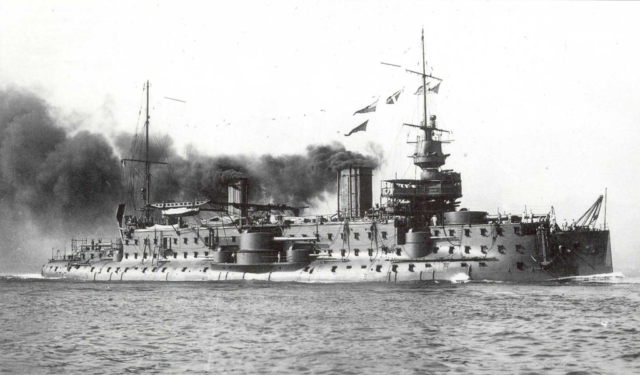
I was giving a book in 1975 that my Dad bought me called "Sea Battles of the 20th Century", The battle of the Tsushima Straits was the first battle listed and this image I remembered
Pre-dreadnought battleships were sea-going battleships built between the mid- to late 1880s and 1905, before the launch of HMS Dreadnought.Pre-dreadnoughts replaced the ironclad battleships of the 1870s and 1880s. Built from steel, and protected by hardened steel armour, pre-dreadnought battleships carried a main battery of very heavy guns in barbettes
(open or with armored gunhouses) supported by one or more secondary
batteries of lighter weapons. They were powered by coal-fuelled triple-expansion steam engines.
In contrast to the chaotic development of ironclad warships in
preceding decades, the 1890s saw navies worldwide start to build
battleships to a common design as dozens of ships essentially followed
the design of the British Majestic class.
The similarity in appearance of battleships in the 1890s was underlined
by the increasing number of ships being built. New naval powers such as
Germany, Japan, the United States, and – to a lesser extent – Italy and Austria-Hungary, began to establish themselves with fleets of pre-dreadnoughts, while the navies of Britain, France, and Russia expanded to meet these new threats. The decisive clash of pre-dreadnought fleets was between the Imperial Russian Navy and the Imperial Japanese Navy during the Battle of Tsushima on 27 May 1905These battleships were abruptly made obsolete by the arrival of HMS Dreadnought in 1906. Dreadnought followed the trend in battleship design to heavier, longer-ranged guns by adopting an "all-big-gun" armament scheme of ten 12-inch guns. Her innovative steam turbine engines also made her faster. The existing pre-dreadnoughts were decisively outclassed, and new and more powerful battleships were from then on known as dreadnoughts while the ships that had been laid down before were designated pre-dreadnoughts.
In the seventeenth and eighteenth centuries,
navies were very important. The maritime powers of Europe, particularly
England, France, Spain, the Netherlands, and Portugal, relied upon them
to protect trade routes and overseas colonies. Warships were the most
powerful weapons a state could possess. They were mostly divided into
frigates, built for speed and agility, and ships of the line, designed
for battle.
With
the invention of the steam engine in the eighteenth-century naval
warfare changed radically. The propeller greatly enhanced the speed and
maneuverability of ships. Steam-powered vessels did not have to rely on
the sail, and so engineers could think more of weaponry and protective
armour. This made armoured vessels – ironclads – possible.
French battleship Carnot underwayThe first steam-powered battleship was the French frigate Napoleon.
Launched in 1850, it was to be the vanguard of a fleet of powerful
ships of the line that would challenge the British Navy’s supremacy on
the seas. It could steam at a speed of 12 knots, ignoring the wind
altogether. It was armed like previous battleships, with 90 guns and had
no armour plating. Carnot started an arms race between
the French and British. By the end of Napoleon III’s reign, the French
Navy had 38 steam-powered wooden battleships, 28 of which were converted
sail vessels. In response, the British built 18 news ships and
converted 41 others.
During the Crimean War (1853 – 1856) The
British and French were allies against Russia, and their navies
co-operated in engagements against the Russian Black Sea Fleet and
coastal targets. Napoleon III ordered the construction of floating
batteries, armoured ships that bombarded the shore. These can be
considered to be forerunners of the first true ironclads. Russian
battleship Tsesarevich, a pre-dreadnought battleship of the Imperial
Russian Navy, docked Krondsdat, ca. 1915. Note dark wartime scheme Photo CreditTsarevitch, a Borodino-class battleship in the Imperial Russian
Navy. Commissioned in 1903, it served in the Russo-Japanese War of
1904/05. It was the flagship in the Battle of the Yellow Sea. The battle
was a strategic victory for the Japanese Fleet, and Tsarevitch was damaged and forced to port. Nemesis was
the first warship constructed with an iron hull. It can be considered a
true ironclad. The steam frigate was designed by John Laird and was
made in 1839 for the East India Company, which ruled British India at
the time. It was active in 1840 in the First Opium War against China. It
proved successful and was called the ‘devil ship’ by the Chinese. Laird
went on to build two steam frigates for the Mexican fleet: Montezuma and Guadalupe. After Nemesis, wooden hulls were being replaced with iron. However, the iron plates were still thin, and could not withstand heavy fire. French battleship Charles Martel, commissioned in 1896, epitomized the “French look” for battleships. Photo Credit U.S.S. Essexwas an ironclad of the American Civil War. It was originally a steamboat named New Era but
was refitted as a gunboat in 1861. It had 1.75-inch armour on the
forward casemate and .75 inch on the sides. It was armed with one 32
pounder gun, a 12 pounder howitzer and 4 Dahlgrens. It was involved in
the defence of Baton Rouge, Louisiana on August 5, 1862. USS Essex, Converted Ironclad, Coaling at Baton Rouge, July 1862. Redoutable and Massena Redoutable was the first battleship to be built principally from steel. It overcame the problem of armour in the designs of Nemesis
and previous ironclads Steel’s high tensile strength meant that the
hull could support thicker armour than previous vessels. The armour was
almost 14 inches thick. She was a battery and a barbette commissioned in
1878. French battleship JauréguiberryFrench
battleship Massena, commissioned in 1898, showing typical French
tumblehome, massive masts, and a plethora of long-barreled cannons.Redoutable
was a central battery and barbette ship of the French Navy. She was the
first warship in the world to use steel as the principal building
material. Photo CreditThe
SS Cordoba: Flagship of the Aragonian fleet and one of the navy’s most
recently-built ironclad ships. The Cordoba was perhaps most well-known
for being one of the first ships (as always, the record was disputed
endlessly with other seagoing navies of the day) to use steel for a
majority of its construction materials Photo CreditThe Confederacy’s French-built last ironclad was also Japan’s first: Stonewall was later renamed Kōtetsu Photo CreditCSS Stonewalla Confederate ironclad generated much fear by her enemies.
She was built in France in 1864. However, it did not remain Confederate
for long. After the Confederate defeat, the US government sold it to
the Japanese in 1869. It was Japan’s first ironclad, and it was renamed Kotetsu. USS Cairo, an example of a City-class ironclad gunboat.USS Cairo was one of the first ironclads built for the Union.
It was sunk on December 12, 1862, and was the first vessel ever sunk by a
naval mine. Massena was
again a French battleship, built in the 1890s and commissioned in 1898.
In some places it’s armour was a thick as 18 inches. It could also
support powerful guns, including 12 Modele guns ranging from 138 to 305
mm.
For all its strength and power it suffered from considerable design flaws. Its instability rendered its guns inaccurate.
The Jauréguiberry and Charles Martel are ironclads of the same class.
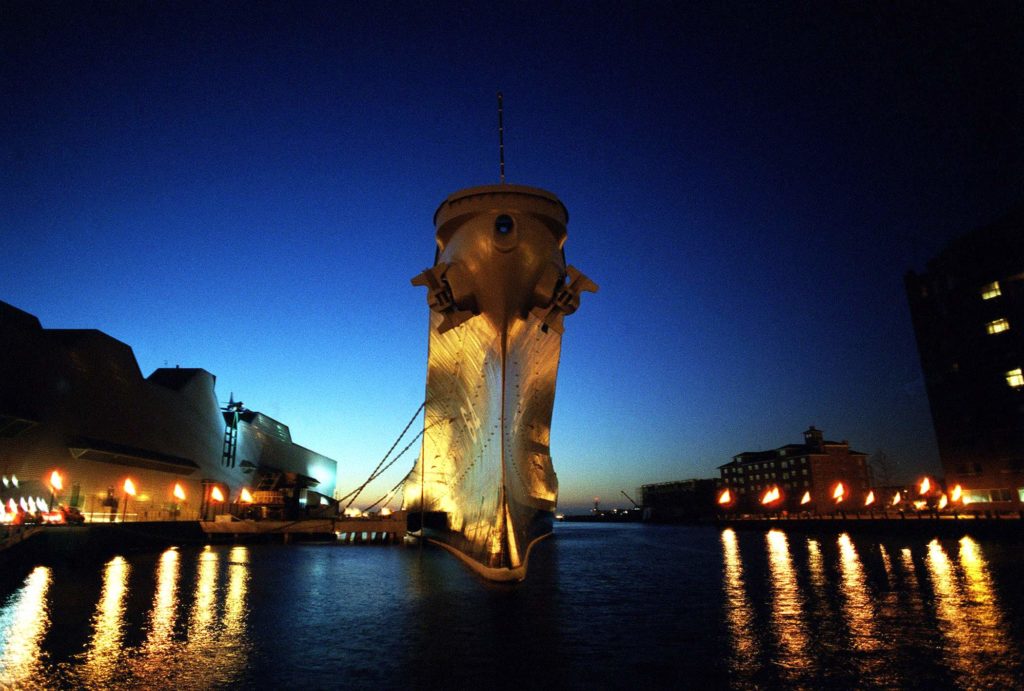
I am glad that Iowa is saved, I kinda wish that the Navy would recommission them and sail them around the world kinda like the Great White Fleet back 100+ years ago. There were 4 ships of the Iowa Class Battleships. To my knowledge there are 6 battleships that have survived the battleship age. they are the 4 Iowa class ships, the U.S.S. Alabama which is a North Dakota class battleship and the U.S.S. Texas which is a New York Class Battleship. the only commissioned Battleship is the U.S.S. Arizona which lies at Pearl Harbor.
FILE - In this Dec. 16, 1987 file …
FILE- In this Dec. 16, 1987 file …
FILE - In this July 18, 2003 file …
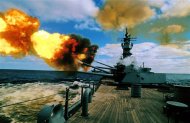
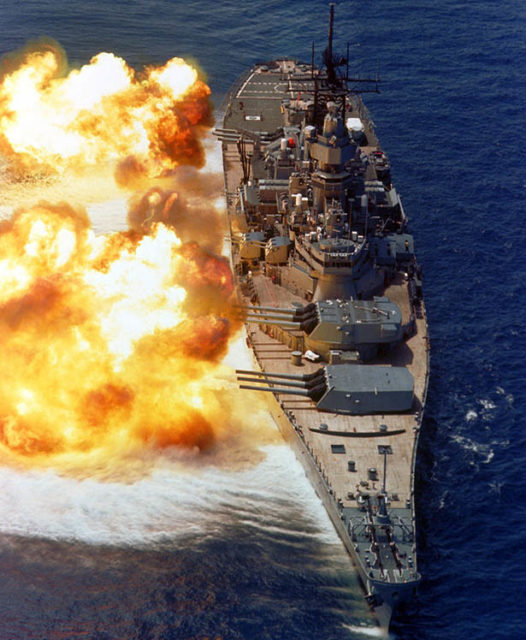
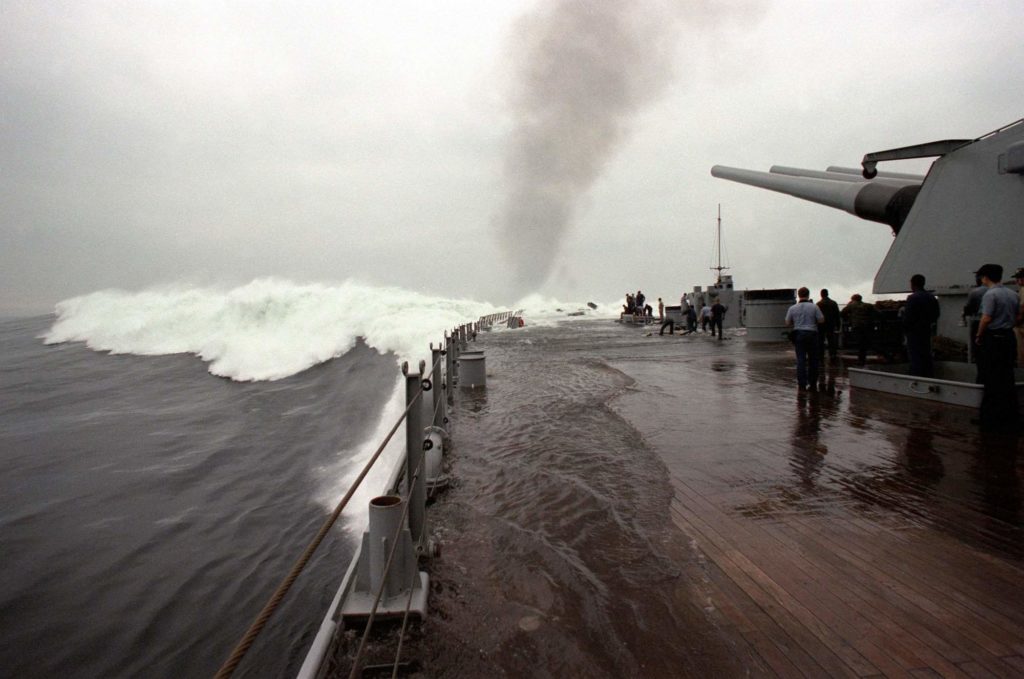
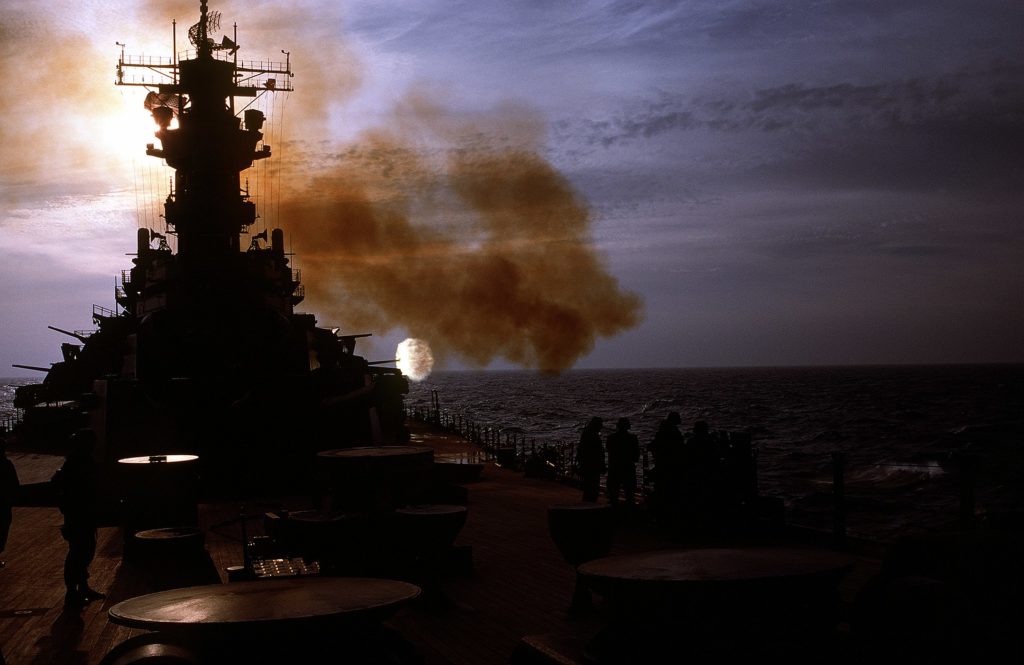
RICHMOND, Calif. (AP) — Firing its 16-inch guns in the Arabian Sea, the U.S.S. Iowa shuddered. As the sky turned orange, a blast of heat from the massive guns washed over the battleship. This was the Iowa of the late 1980s, at the end of its active duty as it escorted reflagged Kuwaiti oil tankers from the Persian Gulf through the Strait of Hormuz during the Iran-Iraq war.
Some 25 years later, following years of aging in the San Francisco Bay area's "mothball fleet," the 887-foot long ship that once carried President Franklin Roosevelt to a World War II summit to meet with Churchill, Stalin and Chiang Kai Shek is coming to life once again as it is being prepared for what is most likely its final voyage.
Not far from where "Rosie the Riveters" built ships in the 1940s at the Port of Richmond, the 58,000-ton battlewagon is undergoing restoration for towing May 20 through the Golden Gate, then several hundred miles south to the Port of Los Angeles in San Pedro. There it is to be transformed into an interactive naval museum.
On May 1, ownership of the Iowa was officially transferred from the U.S. Navy to the Pacific Battleship Center, the nonprofit organization that has been restoring the boat for its new mission.
"This means everything — it's going to be saved," John Wolfinbarger, 87, of San Martin, Calif., who served aboard the USS Iowa for almost two years in the mid-1940s and recently began giving public tours of the old ship during repairs here.
"When it gets down to San Pedro, it's going to be the happiest day of my life, like coming home!" he said, watching the mast being reattached.
For the past decade, the lead ship of her battleship class known as "The Big Stick" has sat in the cold and fog, anchored with other mothballed ships in nearby Suisun Bay. This spring, workers began scrubbing and painting the Iowa's exterior, replacing the teak deck and reattaching the mast in preparation for the museum commissioning on July 4.
Jonathan Williams, executive officer of Pacific Battleship Group, has been overseeing the project, which will exceed $4 million upon completion. Williams credited his dedicated his staff and volunteers, along with the financial contributions from the state of Iowa, for making the restoration possible.
"The U.S. Navy, MARAD (United States Maritime Administration) and the crew that mothballed the battleship over the past 22 years did an excellent job and kept the heart and soul of Iowa alive," said Williams.
"Things are on track and we are following our schedule as planned," he added. "We are trying to make sure nothing is missed as the process is complex."
The fast Iowa-class battleships, ordered by the Navy in 1939 and 1940, could travel at a speed of 33 knots. The Iowa, first commissioned in 1943 and again in 1951 and 1984, saw duty in World War II and the Korean War. It took part in escorting tankers in the Persian Gulf during the Iran-Iraq war before being decommissioned in 1990.
During World War II, when transferred to the Pacific Fleet in 1944, the ship shelled beachheads at Kwajalein and Eniwetok in advance of Allied amphibious landings and screened aircraft carriers operating in the Marshall Islands.
It was one of two ships of its class camouflaged during World War II— and it also was the only one with a bathtub, which was put in for President Roosevelt. The Iowa also served as the Third Fleet flagship, flying Adm. William F. Halsey's flag as it accompanied the Missouri at the Japanese surrender in Tokyo Bay.
A dark part of the ship's history took place in 1989, when 47 sailors were killed in an explosion in the No. 2 gun turret. After the blast, the Navy alleged a crewmember caused the explosion as a result of a failed relationship with another male crewmember. A follow-up investigation found the explosion was most likely the result of human error.
Most visitors are immediately drawn to the sight and firepower of the Iowa's nine16-inch guns, which could send an armor-piercing shell the weight of a small car 24 miles. When the ship was modernized during the 1980s, it was outfitted with Tomahawk cruise missiles, Harpoon anti-ship missiles and Phalanx gun mounts. It was also one of the first ships outfitted to carry a drone for reconnaissance flights.
Future plans for the Iowa include an interactive tour experience that will allow the visitor to experience what life at sea was like during active duty. Among the highlights will be viewing the inside of one of the main gun turrets, seeing the 17.5-inch armored conning station on the bridge and viewing Roosevelt's stateroom.
There will also be tours of secondary weapons, missiles, engineering, armor and special spaces. An ADA accessibility plan calls for an elevator to be installed from the main deck to one below for access to the main exhibit areas. The museum is scheduled to open on July 7.
I have blogged about Battleships before on my blog, I have blogged about the Yamato class Battleships before, there is something about an all gun Warship, I suppose that I am a traditionalist.
I clipped this article from the NGB
The Yamato class battleships hold a special place in naval history.
Popularly known as the biggest battleship to ever go to sea and carrying
the most powerful guns, it is little wonder why these dreadnoughts are
so endearing. However, there was so much more to these battleships that is
less known to many. In this article, we will look at five great
features of the Yamato class battleships! Without any delay, let us
begin.
The Yamato class was the first battleship to utilize 18.1″ guns as
well as the first Japanese battleship to carry triple gun turrets for
the main battery. To accommodate three of the gigantic 18.1″ (46cm)
guns, the Yamato class required an equally large turret. In addition, to
protect against the most powerful guns that the Allies could muster
would require armor of exceptional thickness. Japanese designers
lavished incredible attention to the layout of the turret. The result
was the most advanced turret design ever fitted to a Japanese battleship
as well as one of the most impressive among any navy.
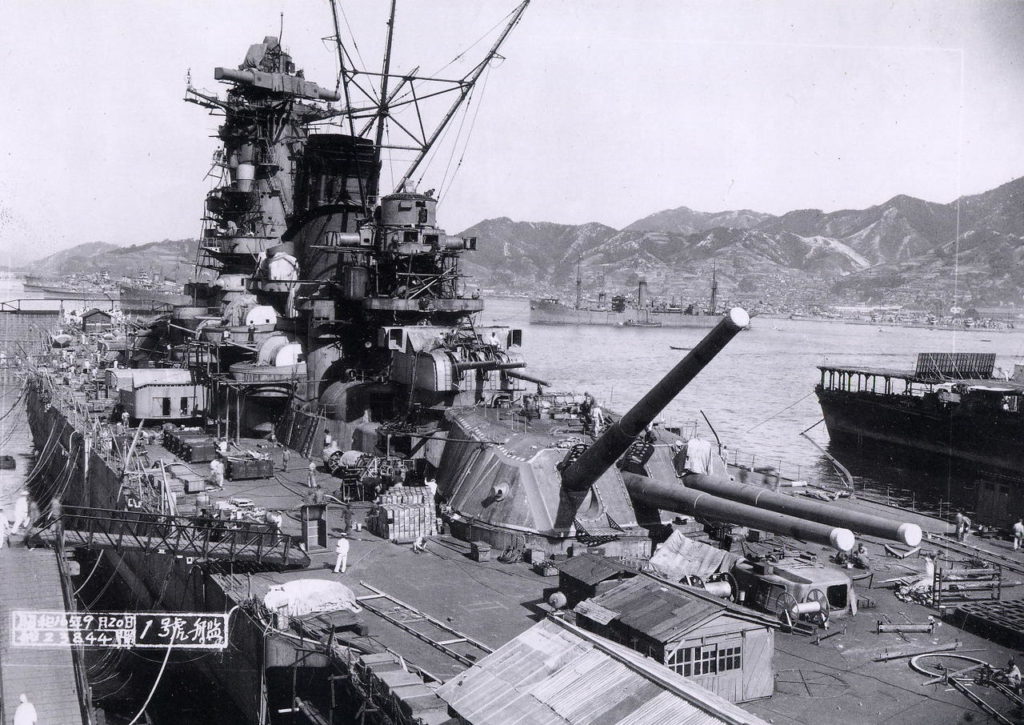
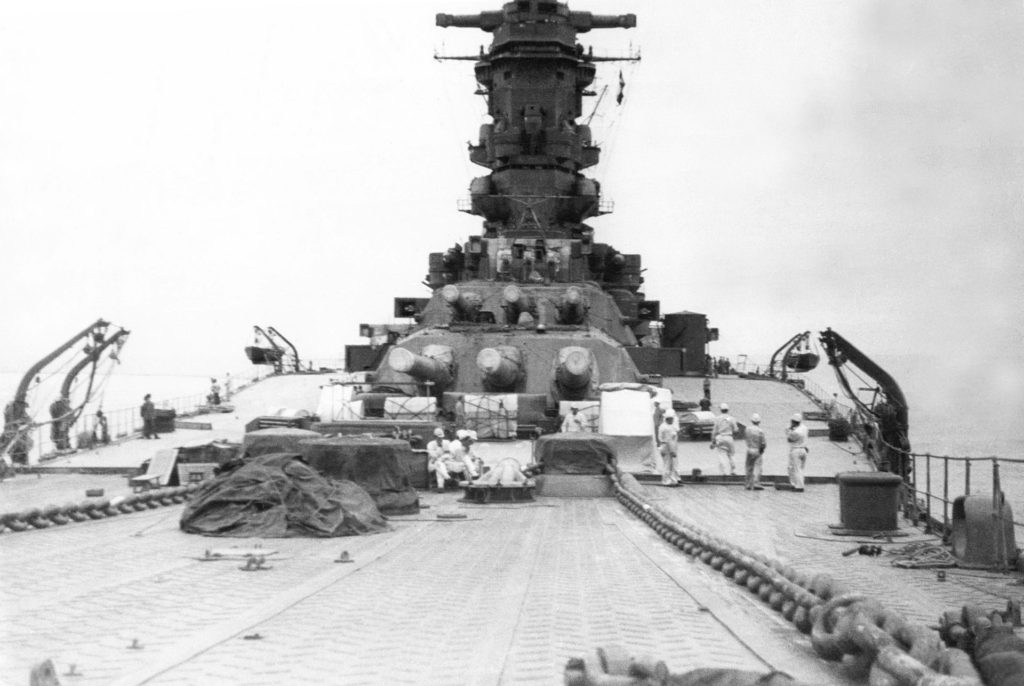
Soon to be the biggest battleship in the
world. Yamato undergoing fitting out at the Kure Naval Arsenal on
September 20, 1941. Her aft 46cm gun turret is easily seen in the
picture.
A popular description of the turrets of the Yamato class is that they
weighed more than a destroyer. At just over 2,730 tons, it is little
surprise that the biggest battleship carried the biggest turrets.
Carrying three guns that weighed over 360,000lbs apiece and a massive
slab of armor that was almost 26″ thick would result in a hefty turret.
However, despite the immense weight of the turret and the massive 18.1″
(46cm) guns inside of it, the overall size was impressively compact.
Compare the turret of the Yamato class with the American Iowa class battleships:
Yamato Class
Iowa Class
Turret Length
56′ 1″
50′ 7 1/2″
Turret Height
13′ 7″
9′ 10″
Turret Weight
2730 tons
1708 tons
Turret Armor Front
25.6″
17″ + 2.5″
Turret Armor Side
9.8″
9.5″ + .75″
Turret Armor Roof
10.6″
7.25″ + .75″
Turret Armor Rear
7.5″
12″ + .75″
Individual Gun Weight
363,000lbs
267,900lbs
Gun Length
69.3′
68′
Rate of Fire
1 round per 35 seconds
1 round per 30 seconds
Loading Angle
3 Degrees
5 Degrees
Elevation Rate
8 Degrees per Second
12 Degrees per Second
Train Rate
2 Degrees per Second
4 Degrees per Second
Despite the larger guns and heavier armor, the Yamato class turret
was not that much larger than that found on the Iowa class. That is an
impressive feat of engineering unto itself.
Even more impressive than the size of the turret was the equipment
inside of it. The Yamato class utilized a unique sliding cradle behind
each gun. The shells, weighing up to 3,218lbs, were lifted up to a tray
at the end of the cradle. The entire cradle then slid forward on rails,
moving the tray to the breech where it would be rammed inside the
chamber. Then, the cradle would retract backwards. This allowed the
powder tray to lift all six powder bags, each weighing 121.25lbs (55kg),
into position behind the breech.
A separate rammer would then ram all six charges into the chamber with a
single stroke. A person would not have to touch any of the powder bags
while loading the gun. This system reduced the number of men working
inside the turret and allowed for an excellent rate of fire of up to one
round per 30 seconds, though 35 seconds was more practical.
The Yamato class enjoyed one of the most compact turrets available to
a battleship despite the fact that it carried the largest naval guns
ever mounted to a battleship. In addition, the layout was excellent and
the equipment inside was superb. A great achievement for Japanese
designers!
As a warship designed to engage the most powerful battleships likely
to be brought against it, the Yamato class featured a tremendous amount
of armor protection. Almost 23,000 tons of armor was used on the Yamato
class and Japanese designers intensively studied the most effective
methods for utilizing this armor.
Armor Class Armour Figures
Belt:
Yamato 410mm (16.1″) Musashi 400mm (16″)
Lower Belt:
200mm (7.9″)
Traverse Bulkheads:
340mm (13.4″) – 300mm (11.8″)
Deck:
200mm (7.9″) – 230mm (9″)
Conning Tower:
500mm (19.7″)
Barbettes:
380mm (15″) – 560mm (22″)
Turrets:
Front:
650mm (25.6″)
Top:
270mm (10.6″)
Sides:
250mm (9.8″)
Yamato class were the first production battleships in Japan to adopt
the “All or Nothing” armor principle. This ensured that Armor was
maximized at the areas that needed it most while it was minimized in
less important areas of the battleship. Therefore, the most vulnerable
areas of the Yamato class (Magazines, machinery) were encased in a
heavily armored box known as a citadel. The citadel was flanked by the armored belt (16″ & angled at 20 degrees) and capped by the armored traverse bulkheads (11.8″ – 13.4″) forward and aft. The upper
section of the citadel was covered by the armored deck (7.9″ – 9″).
This armor scheme was sufficient to provide an immunity zone against
46cm (18.1″) shells at ranges between 21,800 and 32,800 yards. The deck
was designed to resist the momentum of a 1000kg (2200lb) bomb dropped
from 3,400 meters. A monstrous amount of armor to protect from some serious weaponry.
When using the “All or Nothing Principle”, the armor was to be
condensed to the vitals. Japanese designers took this a step further by
seeking ways to make the vitals even smaller, allowing for the armour
protection to be enhanced to its absolute maximum. They succeeding in
shrinking the length of the citadel to a mere 55% of the ship’s overall
length, a remarkable achievement. While this would seemingly leave 45%
of the ship’s hull exposed, Japanese designers countered this by
extensively compartmentalizing with some 1147 different compartments
(1065 below the armored deck). The citadel was also designed to provide
an immense amount of buoyancy, enough to keep the ship afloat even with
the bow and stern heavily flooded. This helped mitigate the effects of
damage to the hull, ensuring that the Yamato class could withstand
damage and keep fighting.
The Yamato class was not just protected against threats above the
waterline, they also featured the greatest underwater protection fitted
to a Japanese battleship. A torpedo belt 5.1 meters (16.7′) deep
protected the ship from torpedoes and mines. The torpedo belt was backed
by the ship’s 200mm lower belt, designed to protect against shells
striking the hull underwater (However, this feature turned out to be a
liability in practice) and act as the main holding bulkhead. Outside of
the ship’s torpedo belt, further protection against flooding was
provided by the extensive compartmentalization mentioned already.
Flooding would be contained to the compromised areas while the rest of
the hull would remain watertight and buoyant. Using her volume,
compartments, and a vast system of pumps, the Yamato class were
expected to withstand a torpedo strike and still return themselves to an
even keel despite the flooding.
A unique feature of the Yamato class was the gentle slope of the deck
in the vicinity of the forward 46cm turrets. After sloping downwards,
the deck would curve gracefully upwards again all the way to the ship’s
bow.
The bow and forward hull of the battleship Musashi. The slope of her forward deck is easily seen in this photograph.
Don’t let the beautiful lines fool you, the purpose of this bow was
more than aesthetics! The sloping deck helped reduce the height of the
turrets as well as the barbettes they rested on. Each main battery
turret, weighing over 2500 tons, could make the ship very top-heavy if
they were located higher up on the ships’ hull. The deck allowed them to
be lowered. Though the height reduction was modest, maybe only around
10′, it still contributed to the ship’s overall stability.
The deck also helped contribute to the protection of the Yamato
class. By lowering the turret height, the height of the barbettes could
also be lowered as well. This meant a reduction in the barbettes exposed
outside of the citadel, increasing protection. This also saved having
to armor taller barbettes, saving tonnage that could be used for
protection elsewhere on the battleships.
Overall, the use of a sloping deck was not particularly advanced, but
it was extremely effective and a further testament to lengths Japanese
designers were willing to go to enhance the ship’s capabilities.
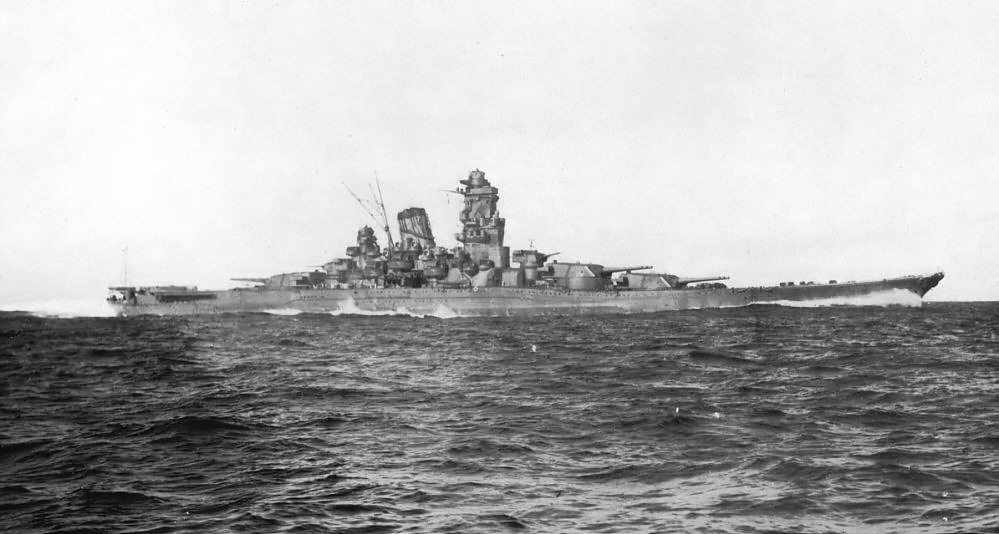
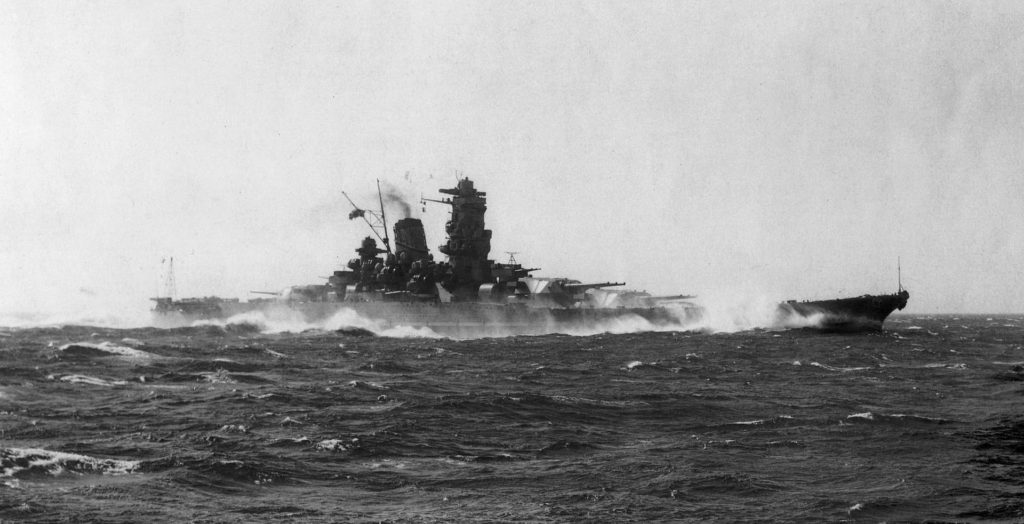
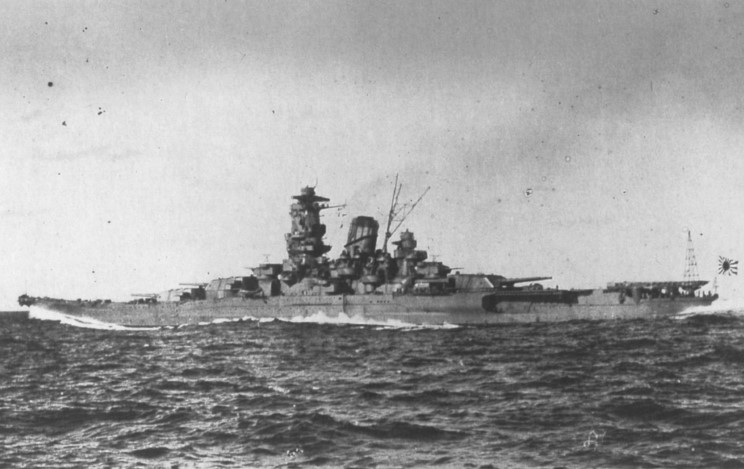
The biggest battleship is also remarkably
agile! Yamato steaming at high speed while she was undergoing trials on
October, 30, 1941.
Despite being the biggest battleship, the Yamato was relatively fast
for her gargantuan size. Generally, the phrase “biggest battleship” and
“fast” do not go well together in the same sentence. However, Japanese
designers successfully managed to squeeze every bit of speed they could
from the class.
Japan started with developing a hull that was as hydrodynamic as
possible. During the development phase, some fifty different models
tested to find the ideal hull shape. Japan went even further and applied
features such as a bulbous bow to further enhance the hull form. The
result was an extremely efficient hull of a design unique among Japanese
dreadnoughts.
The powerplant of the Yamato class was provided by twelve Kampon
boilers supplying steam (of 700 degrees) to four turbines. These
turbines each drove their own shaft connected to a screw of 6m (20′).
Though the system was rated at 150,000shp, Yamato was able to generate
153,553shp on her trials. This was enough to propel the huge battleship
to 27.5 knots. Musashi exceeded this figure when her powerplant reached
166,500shp and drove her to 28 knots.
Yamato
North Carolina
Richelieu
Bismarck
King George V
Powerplant:
150,00shp
121,000shp
155,000shp
148,116shp
110,000shp
Speed:
27.5knots
28 knots
32 knots
30 knots
28 knots
Range:
7200nmi
17400nmi
9500nmi
8870nmi
15600nmi
While the Yamato class would not be setting any speed records, they
were still impressively fast given their size. Even more importantly,
most battleships only enjoyed a knot or so advantage over the Yamato
class.
Overall, the fact the Japanese designers were able to squeeze so much
speed from the Yamato class is a major feat unto itself. Even with
massive guns and incredible amounts of armour protection, the Yamato
class was capable of achieving respectable top speed, making the ships
relatively balanced.
The Japanese Navy placed a lot of thought into the design of the
Yamato class. One area of consideration was the effect that the muzzle
blast of her 18.1″ guns would have upon equipment stored on her decks.
Japanese designers developed several innovative ways to reduce the
damage from muzzle blast. One of the most interesting methods involved
the storage of the battleship’s spotting aircraft and boats.
The stern of the battleship Musashi. Her
aircraft hangar is located between the twin catapults at the stern. The
aircraft could also be moved about the deck on a system of rails.The Yamato class utilized a lowered quarterdeck. Aircraft were
stored inside a below-decks hangar where they could be rolled via rails
to a hold located on the quarter deck. From there a crane would hoist
them out and place them on one of the battleship’s catapults or on a
system of rails mounted on the weather deck.
The ship’s boats were stored in no less than four hangars. Smaller
boats were stored in two smaller hangars mounted on either side of the
aircraft hangar. The boats would be rolled on their own system of rails
to the quarterdeck. The same crane that serviced the aircraft would also
handle the smaller boats.
Larger boats were stored in two large hangars mounted inside the
hull. A hatch could be opened that allowed the boats to be moved outside
via an overhead rail and crane system. The overhead system allowed the
boats to be moved outside the hull and lowered into the water directly.
This same system could then be used to lift the boats out of the water
and moved back inside the hull.
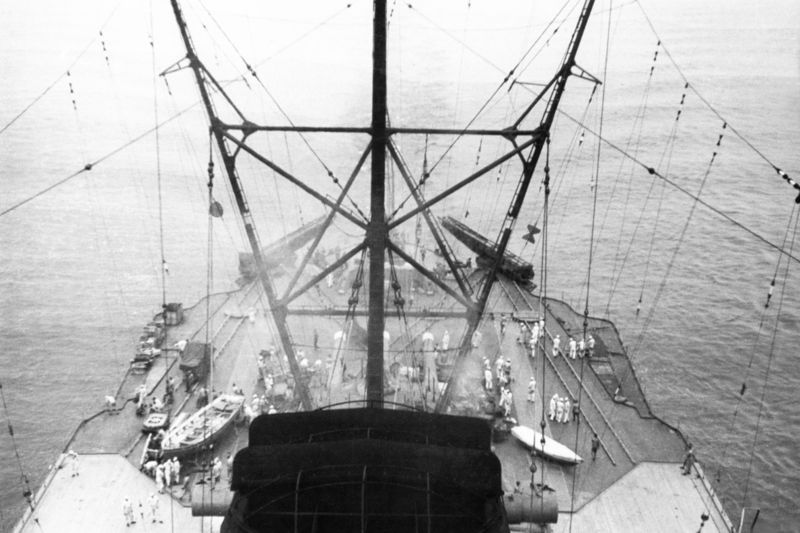
Sea trials of the world’s biggest battleship
at the time. This photo shows off one of the battleship’s boat hangars
located alongside the #3 turret.
Both the ship’s boats and aircraft, safely tucked away inside the
hangars, were granted a significantly higher level of protection than
they would be on other battleships. Though the hangars were mounted
outside the citadel, meaning they were still vulnerable to bombs and
heavy shells, they were still protected against shrapnel, aircraft
gunfire, and the elements. It also allowed the 18.1″ guns to fire
without fear of damaging the delicate equipment.
The placement of the aircraft and boats at the stern allowed for
uncluttered decks. Additional deck space allowed for more anti-aircraft
guns and other equipment to be installed. Other battleships during the
War generally had to give up their ship’s boats to free up space. The
downside to her hangars was that they consumed interior volume. However,
due to the immense size of the Yamato class, the loss of space did not
affect crew accommodations that badly, if at all.
Overall, the Yamato class might have enjoyed the most superior
accommodations for her aircraft or ship’s boats without affecting her
fighting ability
For Yamato and Musashi, they had a lot more going for their design
rather than simply holding onto the title of being the world’s biggest
battleship. They were technological marvels compared to the dreadnoughts
that came before them. Japan’s naval designers gave considerable
thought about the overall design and developed several innovative ways
to better enhance the capabilities of the class. Sadly, the quiet
careers of the ships somewhat overshadows their enormous potential.
Still, the Yamato class hold a special place in the minds of many naval
historian enthusiasts and for good reason!
I did a post on "Ironclads" and "Pre-Dreadnough" battleships, now I am posting something on "The Dreadnough" era
I have a fascination with battleships, this started with my military history back when I was in the 5th grade when while my Dad was stationed in Frankfurt got interested in WWII especially the Pacific War.
This is the cover pic on the "American Heritage" book I kept checked out from the library.
I have also posted some stories on "Battleships" on my Blog several times. I saw this article on another blog and I thought it was pretty good, I added some extra pictures and my belief that besides the IJN Kongo class, there were stories of an 18 inch gun "super battleships" that turned out to be the "Yamato" class.
The four vessels of the Iowa class were the last
battleships put to sea by the United States. In many ways, they
incorporated all of the lessons learned by the US Navy throughout the
dreadnaught age. They were powerfully armed, decently armored, and very
fast. It is no doubt due to their excellent design that they were able
to provide five decades of service to the Navy. However, for all of
their qualities, they actually represented a radical departure from the
traditional battleship designs that the US Navy had followed since the
start of the 1900s.
At the most basic level of design, a
battleship is designed around three primary aspects: firepower, armor,
and speed. On a given displacement, when one aspect is pursued, it often
comes at the expense of the others. For instance, if a battleship needs
to carry additional protection (armor), it will have to sacrifice
either weapons (firepower) or its power plant (speed). Most nations
tended to favor a particular combination of the three main aspects.
The Nevada class, the first of the heavily armed and armored standard-type battleships.
Traditionally,
the US Navy had long favored firepower and armor at the expense of
speed. This was a result of their adoption of the “standard-type”
battleships. The US wanted battleships that could easily operate with
one another in battleship divisions. Therefore, they designed all of
their ships to operate at a speed of 21 knots. With so little
displacement devoted to the powerplant, the battleships could devote
more to armor and firepower. This method of thinking dominated US
battleship design from 1911 to 1923 with five classes of battleships
being designed.
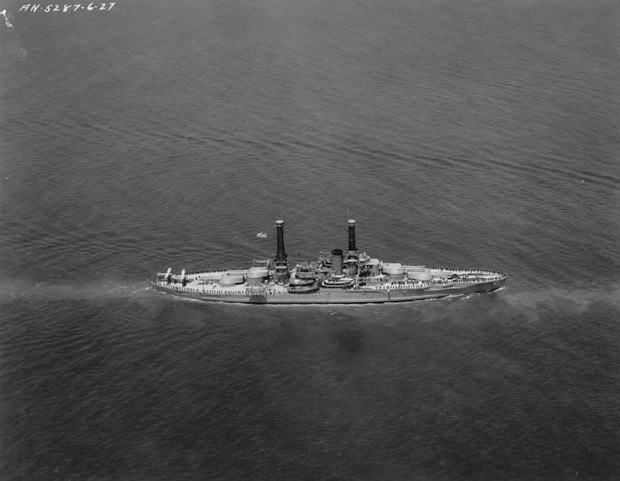
U.S.S Texas in initial form
While the US was working on the
“standard-type” battleships, other navies had been experimenting with
the so-called “fast” battleships thanks to the introduction of more
powerful power plants. These ships, starting with the British Queen
Elizabeth class, were capable of reaching speeds of up to 25 knots. Soon
designers were now looking at faster battleships to chase down and
engage the older, slower battleships. A problem with this idea was that
fast battleships were incapable of operating with slower battleships.
Battlegroups had to be broken into smaller, less effective units based
on speed. The US was aware of this and it no doubt reinforced their idea
of standard battleships as subsequent designs still remained at around
21 knots.
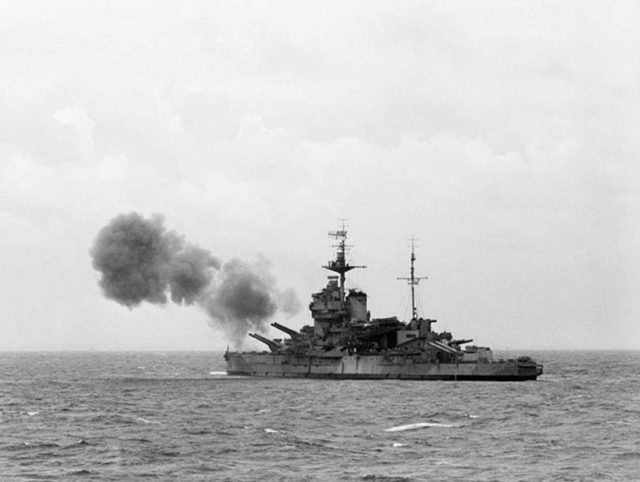
HMS Warspite, one of the Queen Elizabeth
class “fast” battleships. While being the first class of battleships to
achieve speeds of 25 knots, this was the result of more powerful
machinery rather than design.
HMS Warspite, one of the Queen Elizabeth class “fast” battleships. Photo credit: IWM
During
the 1930s, the US Navy began designing a new series of battleship that
would eventually evolve into the North Carolina class battleships. Some
would argue that the 27-knot speeds of these battleships would classify
them as fast battleships. However, it must be noted that the ideals of
the Standard-type battleship still lingered in a majority of the naval
staff. For instance, during the design process, it was repeatedly asked
why the ships had to be faster than the 21 knot limit of other
battleships. While the ships were eventually allowed a 27-knot speed, it
must be noted that this was actually the slowest of the final designs
proposed for the North Carolina class. Once again, the designers opted
for the more heavily armed and armored version. The following South
Dakota class battleships were essentially redesigns of the North
Carolinas, maintaining the same level of protection and firepower, but
in a shorter hull.
Compared to thirty years of
battleship design before them, the Iowa class was a puzzling design.
Despite being the largest and most powerful class of battleship launched
by the United States, they were basically 33-knot replicas of the South
Dakota class before them. In the words of naval historian Norman
Friedman, “Ten thousand tons was a very great deal to pay for 6 knots”.
So what motivated a such a change?
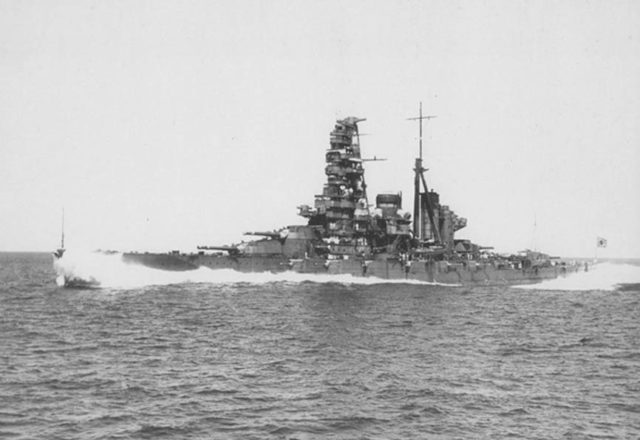
A
Kongo class battleship. The threat of these vessels was a large factor
in the design of the Iowa class. Photo credit: Kure Maritime Museum
During
the 1930s, the US Navy decided that the best way to win a war with
Japan was to make a strong push through the central Pacific. However,
such an operation would require a large chain of supply vessels. It was
thought that Japan would use its cruiser and carrier forces to harass
these supply ships, potentially stalling a US advance. The US believed
that it could counter these forces with its own cruiser and carrier
forces. However, one element of the Japanese Navy was a major cause for
concern. These were the Kongo class battleships, 30-knot vessels with
decent armor and potent 14″ guns. It was thought that the Japanese would
use these warships to smash through the US cruiser screens, allowing
attacks on the vulnerable supply ships. Not only were US cruisers at a
disadvantage against them, but the slow speed of the standard
battleships would be insufficient to bring the Kongo class to battle. To
counter this threat, the US Navy decided that it needed to create a
faster battleship.
This idea was the founding principle
behind the Iowa class. A series of design schemes were introduced
before eventually evolving into two competing designs. The first design
was drawn up by members of the Naval Board that still believed in the
armor and firepower elements. This was a larger South Dakota class
vessel with either twelve 16″ weapons or nine 18″ weapons. Like the
South Dakota class before it, it would travel at the same speed of 27
knots. The second design was a 50,000-ton fast battleship created with
the intention of being a “cruiser killer”. It was to be armed with
twelve 16″ guns and be protected from 8″ shells only. The second design
was chosen and modified into the final design of the Iowa class.
The
need for speed was a source of considerable controversy among many in
the naval board. While the armor was good compared to many battleships
used by other navies, some felt that it should have been much stronger
for a ship of 45,000 tons. The long, fine hull form needed to achieve
high speeds was also thought of as a weakness as it reduced volume
around the magazines. Lastly, the introduction of the super heavy 16″
shell was seen as problematic. Against such a powerful shell, the Iowa
class had only a 5000-yard immunity zone against its own shells, much
lower compared to other battleships. For an American battleship, the
Iowa class went into action with a level of armor protection below the
standard of typical American construction for a given weight.
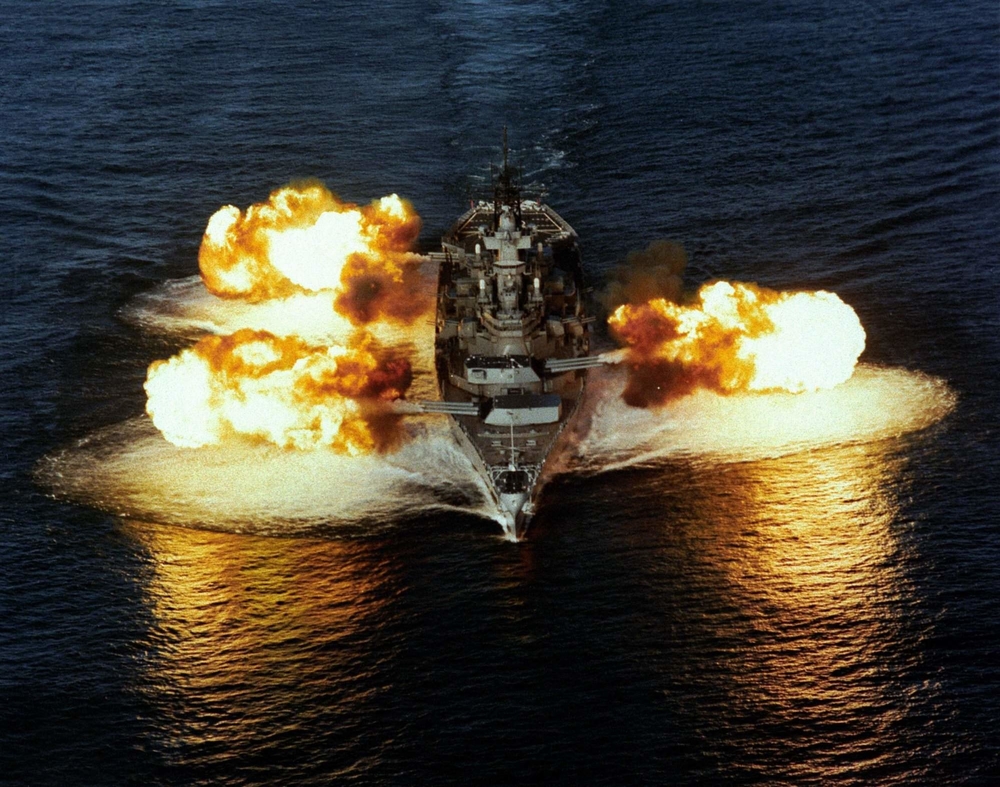
Photo of USS Iowa firing a broadside.
Conclusions
While
the armor of the Iowa class might have been lacking for a ship of its
large displacement, this is not to say that the ship was weakly armored.
It was just a departure from how the US traditionally designed their
battleships. The ship simply sacrificed armor for higher speed. In many
ways, this makes them the first and only true fast battleship. They
weren’t faster simply due to more powerful machinery, but because they
were designed from the onset to be fast. This preference for speed in no
way diminished their use as battleships. In fact, the reason why the
Iowa class lasted so long in US Naval service was due to their high
speed. They could bombard targets and fight capital ships like any
battleship, while also having the speed to easily keep pace with
carriers, providing them with valuable escorts. While the ship might
have been a niche design, overall the US was immensely pleased with the
Iowa class. The fact that the class saw service up until the Gulf War,
long past the age of the battleship, is a testament to their
effectiveness.
I am still busy, but I was taking a break from studying and was doing a bit of surfing and ran across this article and thought it was very neat and it had a lot of pics I have never seen before. I hope to continue blogging over the weekend of all goes well:) I still would like to see one of those ships to be recommissioned but with the lethality of today's missiles I am not sure that the battleships would survive and the swarm of missiles that the Chinese opposing force would launch. I am a student of History and I see parallels between the Iowa's and another famous ship that represented a country and a navy during the Prewar Years.
The "Mighty" Hood
H.M.S Hood flew the flag and was the embodiment of the British Empire during the prewar years and unfortunately by the time WWII rolled around, the Hood was very obsolete. She was due for upgrades in Armor, fire control systems and anti-aircraft defenses in the late 1930's, but the bean counters put off the upgrades that would have most likely saved the ship when she fought the Bismark in the Battle of the Denmark Strait and was destroyed by an explosion that was endemic of the British Battle Cruisers. The British knew of the flaw since Jutland but never fixed the problem.
From the time that USS Iowa was laid down in 1940 until today, the
Iowa class battleships have been around for 78 years. During that time,
the ships underwent many changes to help them adapt to the type of
conflict they were engaged in. In this article, I gathered a number of
photos from those years and organized them into this collection. They
help to show how these warships looked throughout their long and
illustrious careers.
Iowa Class Battleships From 1940 to Present
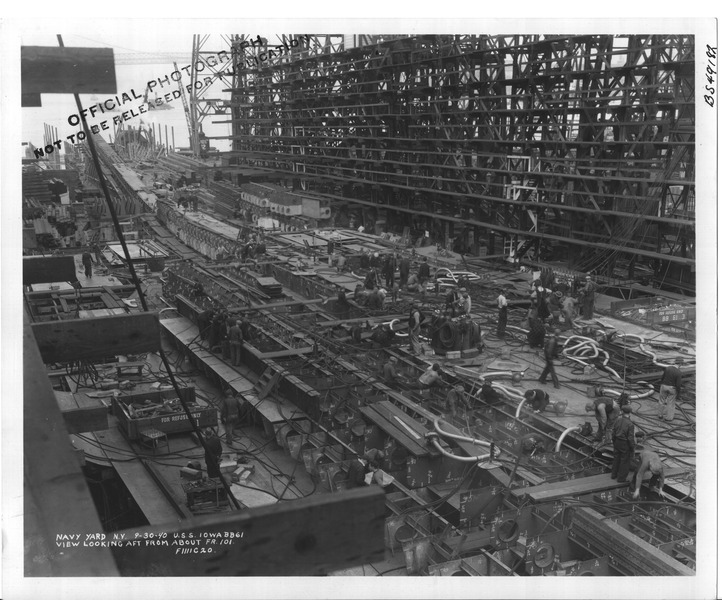
September 30, 1940. Workers lay out the bottom hull plates for the
battleship USS Iowa (BB-61) about one month into her construction. Iowa
would be the leadship for a new class of battleship design was free of
the limitations imposed by the Second London Naval Treaty.
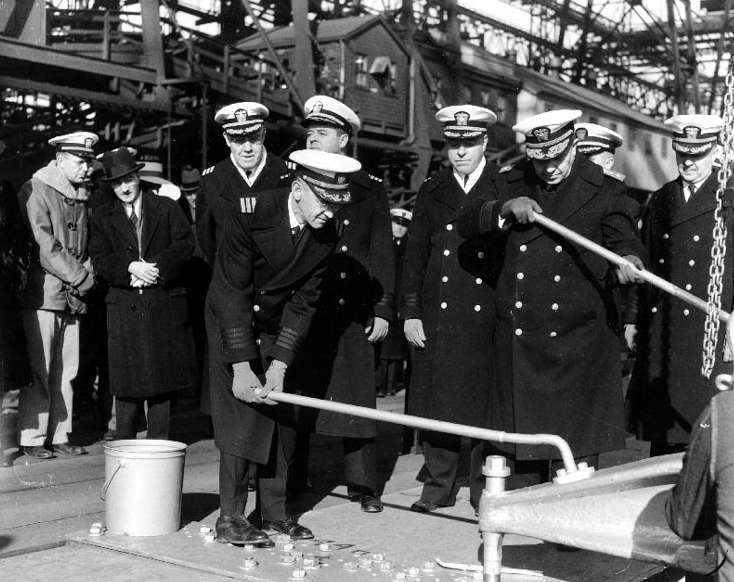
1941. The ceremonial driving of the first rivet for the battleship USS Missouri.
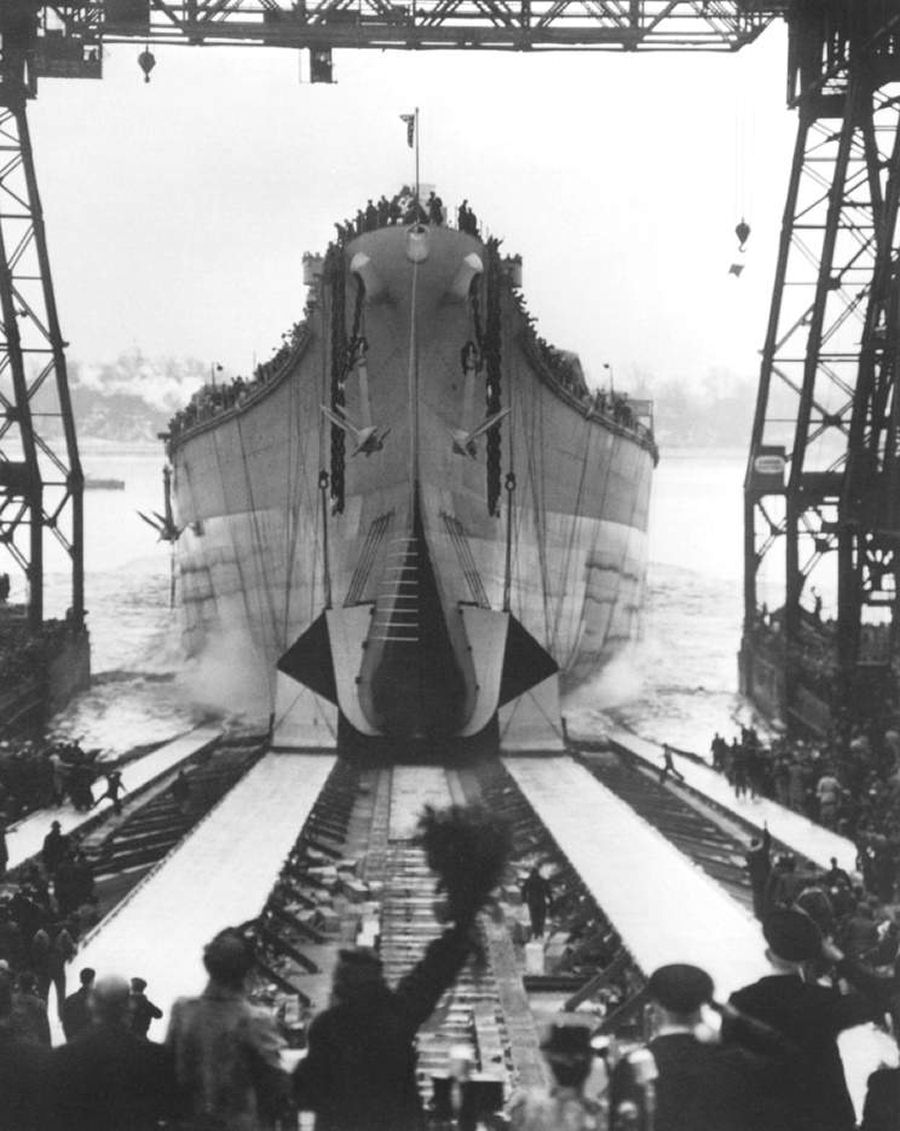
December 7, 1942. The Battleship USS New Jersey slides down the ways
on the one year anniversary of the Attack on Pearl Harbor. The day that
saw the loss of many battleship of the United States Navy now sees one
of its most powerful take to the water.
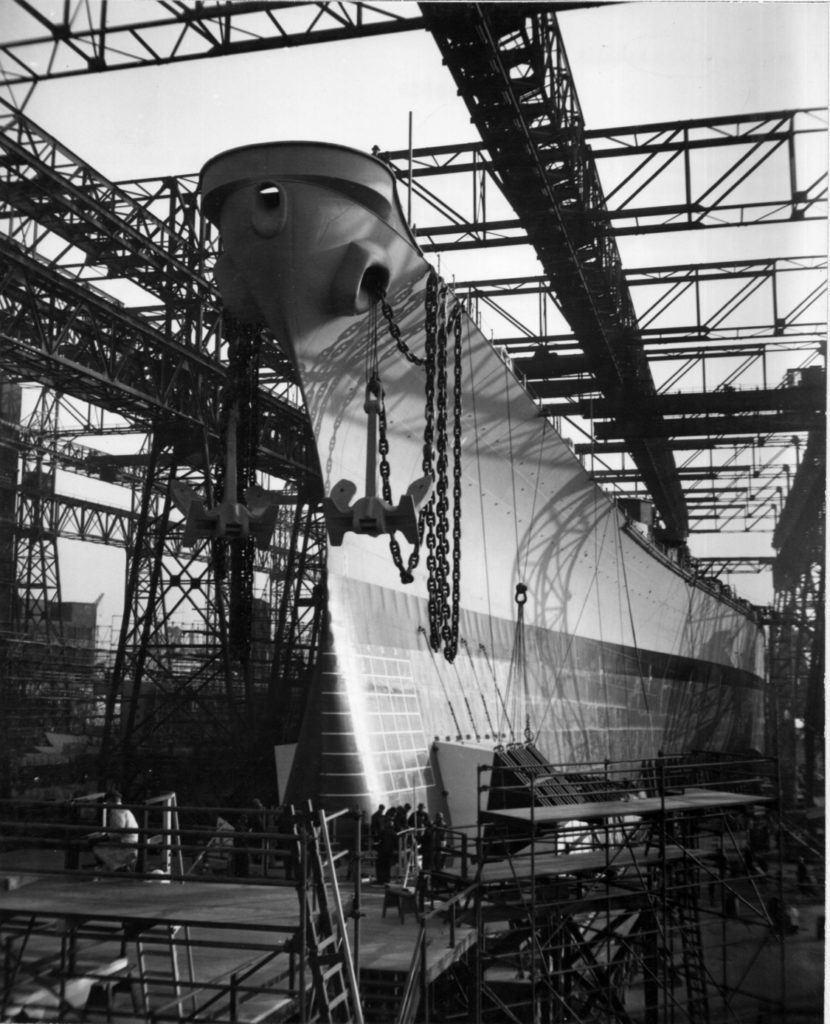
1943. The hull of the USS Wisconsin (BB-64) looks like she is ready
to take to the water. In a few months she would finally slide down the
ways during her christening on December 7, 1943.
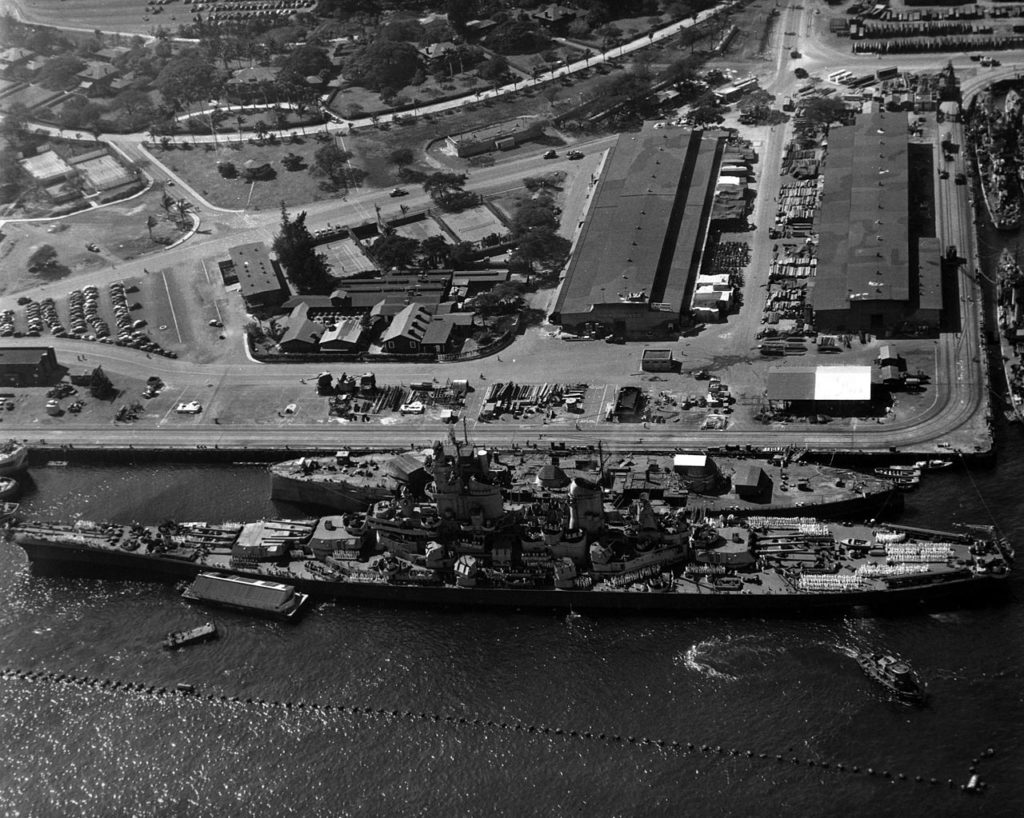
November 1944. USS Wisconsin (BB-64) ties up to the hulk of the
battleship USS Oklahoma (BB-37) while stopping at Pearl Harbor.
Wisconsin was 304′ longer than Oklahoma and displaced almost twice as
much. Oklahoma was sunk at Pearl Harbor three years earlier. Now it was
Wisconsin’s turn to go on the offensive as she headed to the front
lines.
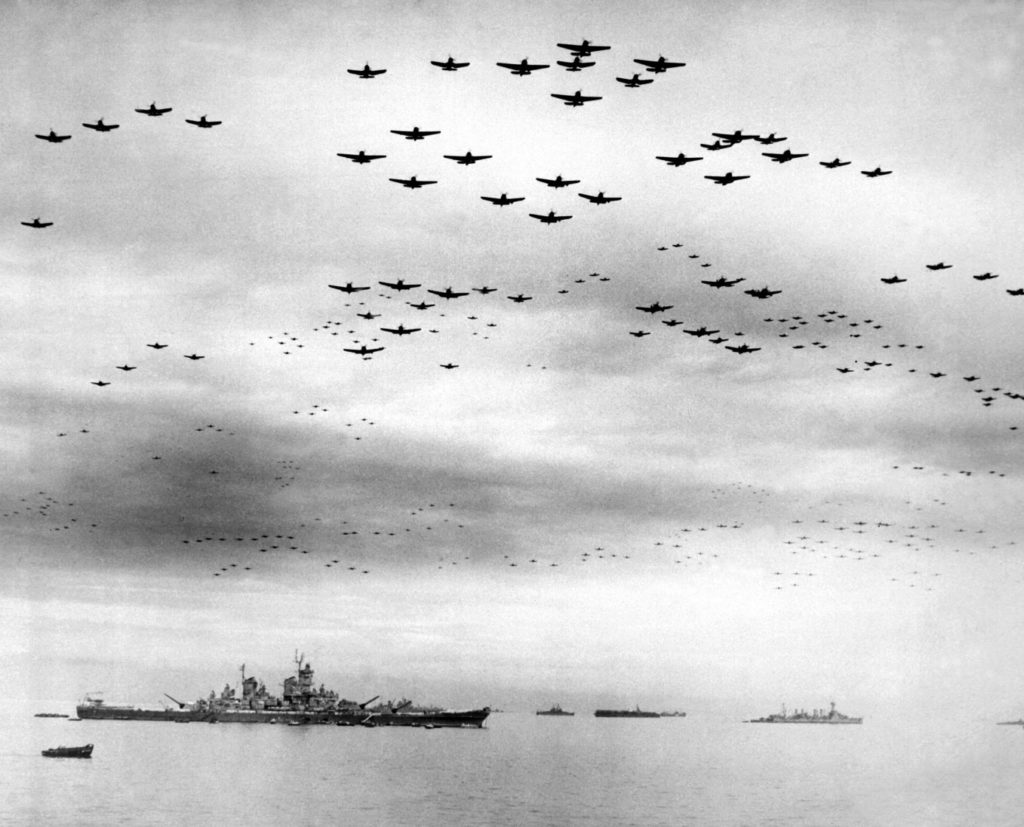
September 2, 1945. Swarms of aircraft fly over the battleship
Missouri (BB-63) during the surrender to the Allies by the Empire of
Japan.
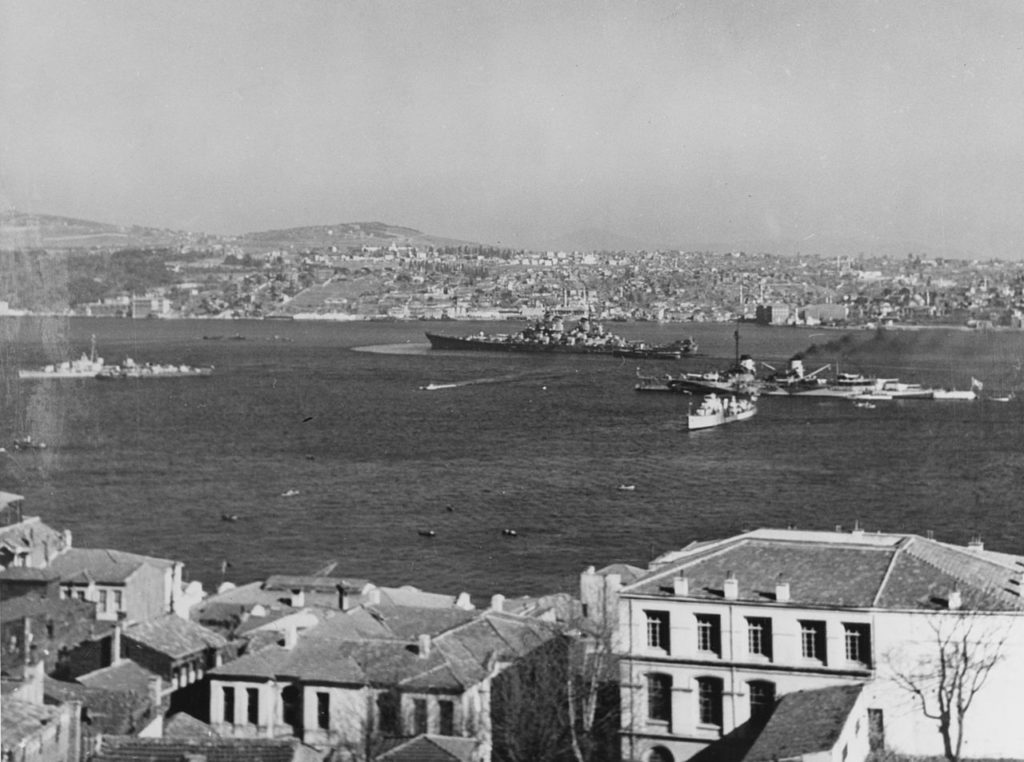
April 5, 1946. USS Missouri anchored off of Istanbul, Turkey. She
brought home the body of the Turkish Ambassador Mehmet Munir Ertegun.
She is accompanied by the Turkish battlecruiser Yavuz, formally the
battlecruiser SMS Goeben of the Imperial German Navy.
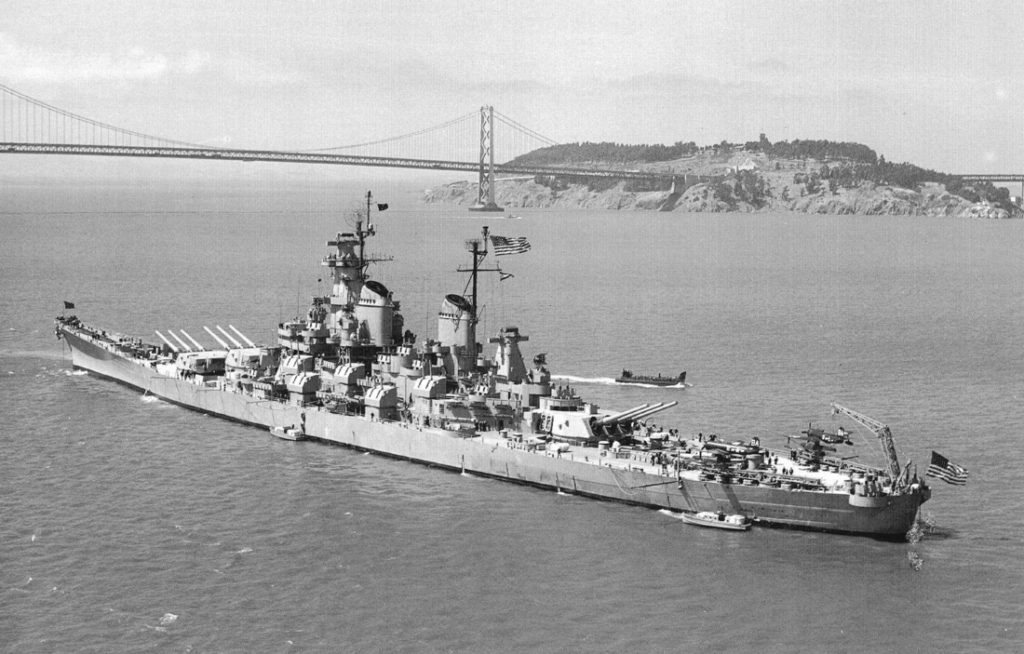
May 24, 1947. USS Iowa (BB-61) anchored in San Francisco Bay.
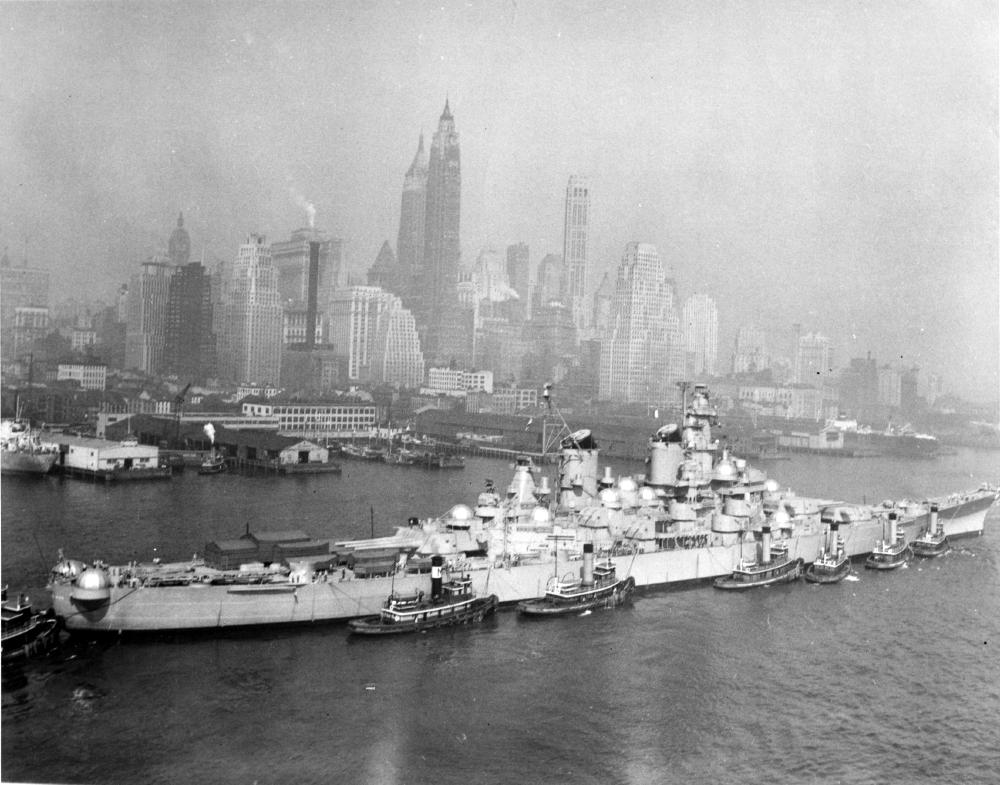
June 1948. USS New Jersey being moved from the New York Navy Yard to
the Bayonne Shipyard in New Jersey for decommissioning. The dome shaped
structures adorning her are covers for her 40mm anti-aircraft guns.
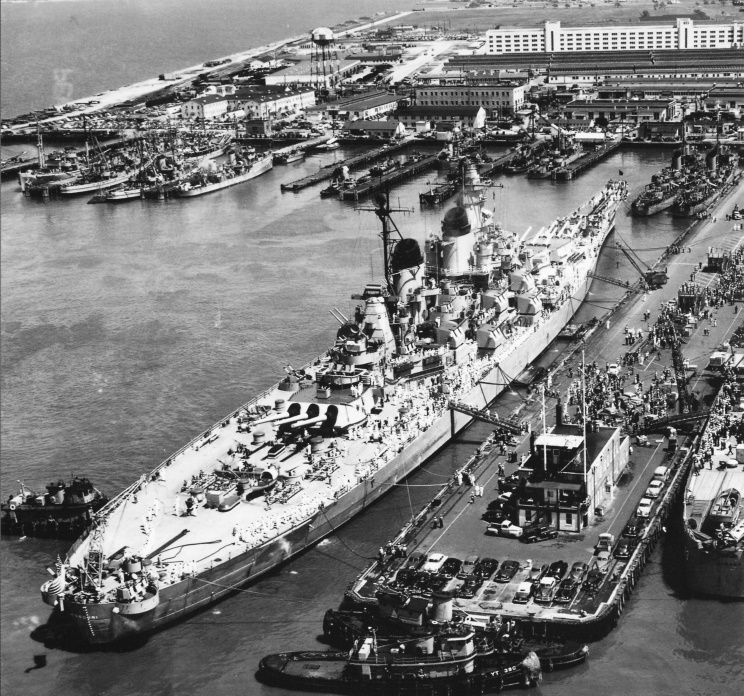
Summer 1949. USS Missouri tied up to the pier at the Norfolk Naval
Shipyard. Photos like this really show off just how amazingly large
these leviathans truly were.
October 21, 1950. USS Missouri fires a salvo into Chong Jin, Korea.
Missouri was the first battleship to arrive off of Korea and she quickly
set to work pummeling targets of opportunity. The firepower of the
battleships was devastating to North Korean and Chinese forces.
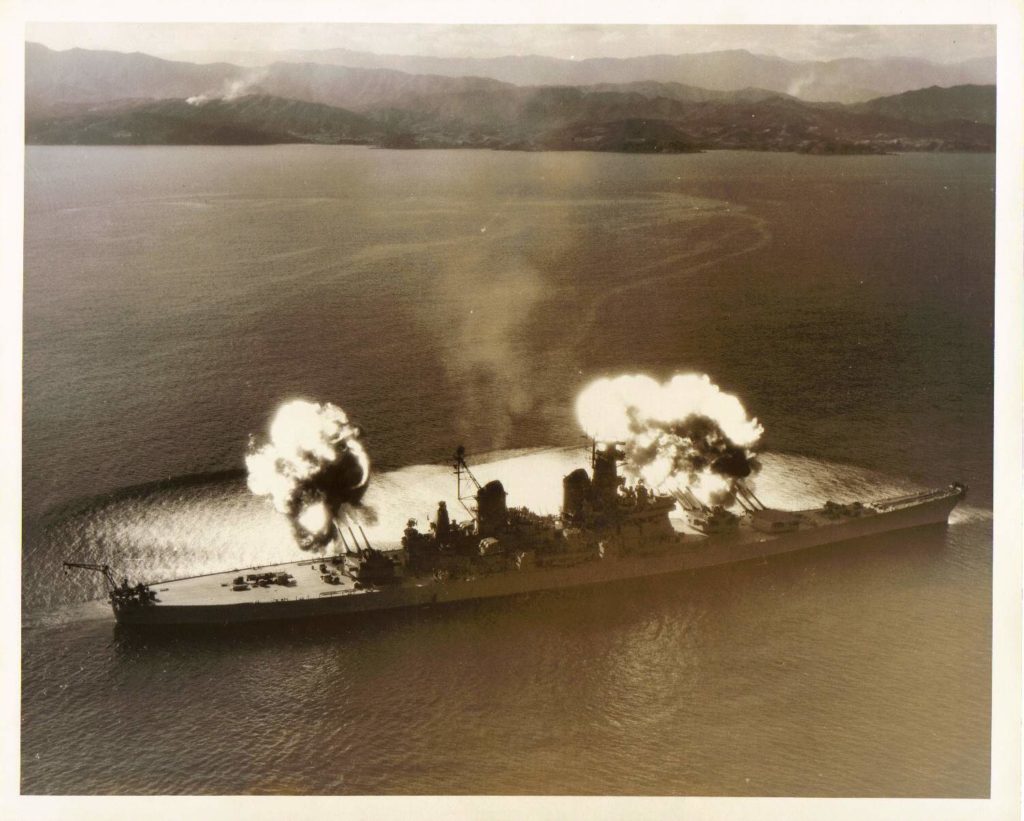
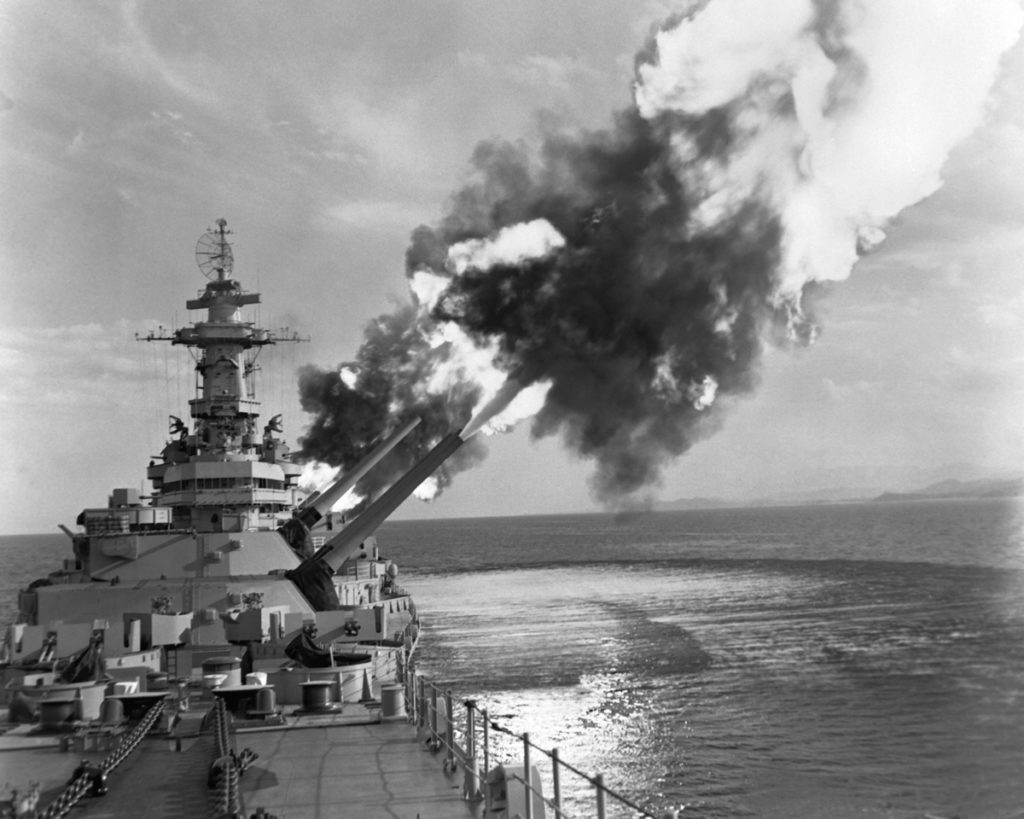
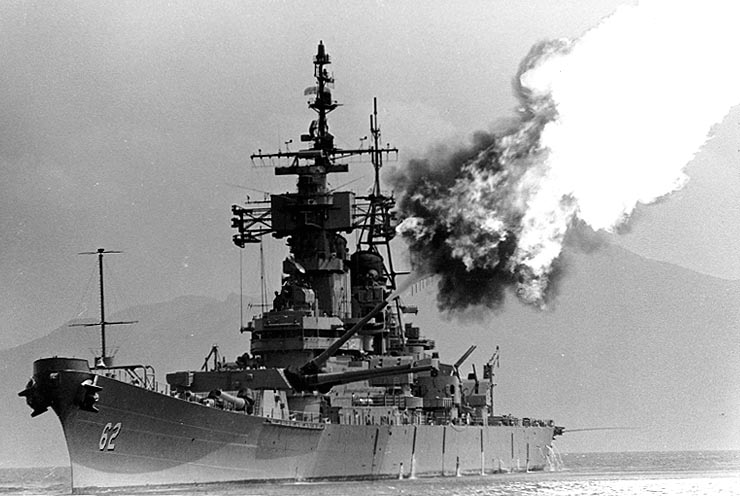
November 10, 1951. USS New Jersey (BB-62) unleashes a broadside into
the region surrounding the 38th Parallel during the Korean War. A haze
of smoke in the background marks the location of a previous salvo.
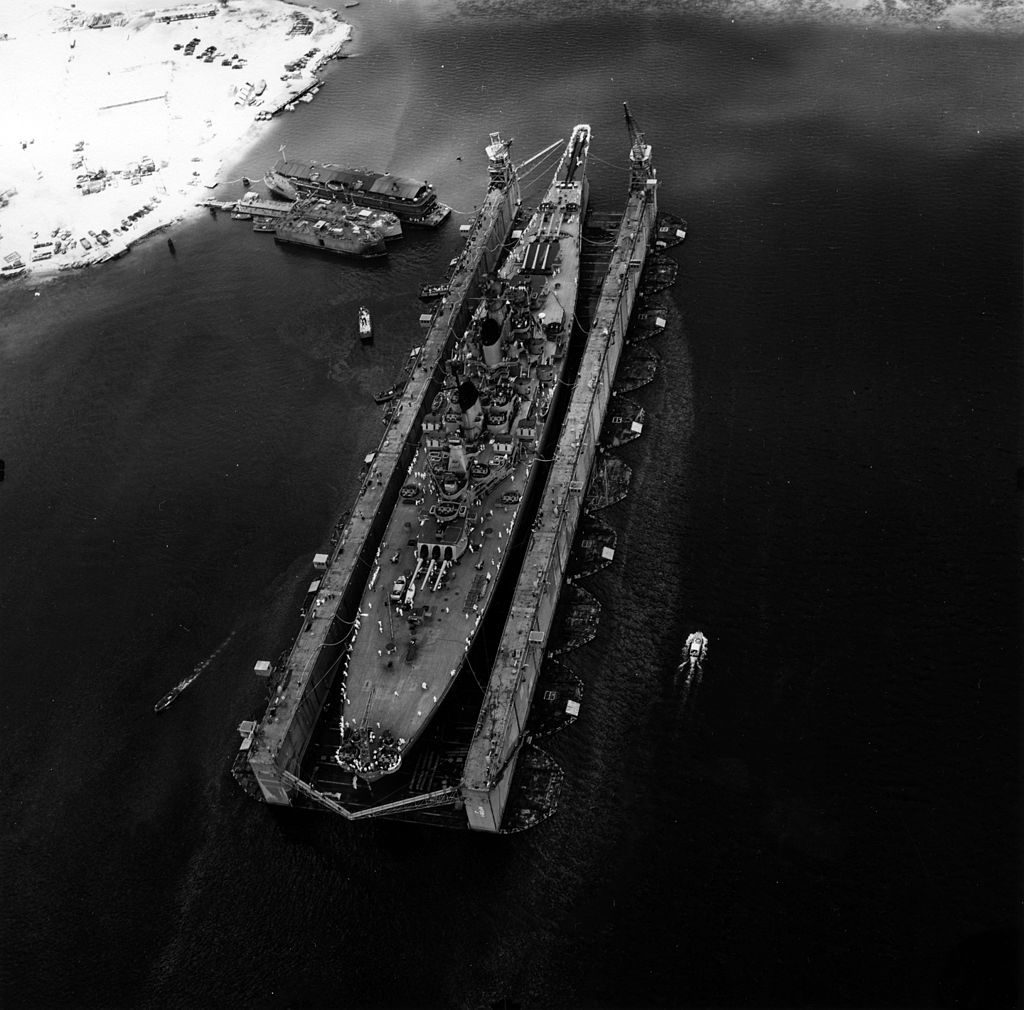
April 1952. USS Wisconsin is used to test the lifting power of the
largest drydock available to the United States Navy, AFDB-1. AFDB-1,
named Artisan was first used during the Second World War. It was one of
the only floating drydocks capable of handling an Iowa class battleship.
She was moved to Guam to serve as a forward repair base during the
Korean War.
1953. New Jersey lends her firepower during the Korean War. Judging
by the elevation of her 16″ guns, she is firing at extreme range. The
Iowa class were capable of sending a 2,700lb shell to just over 42,345
yards (24.05 miles).
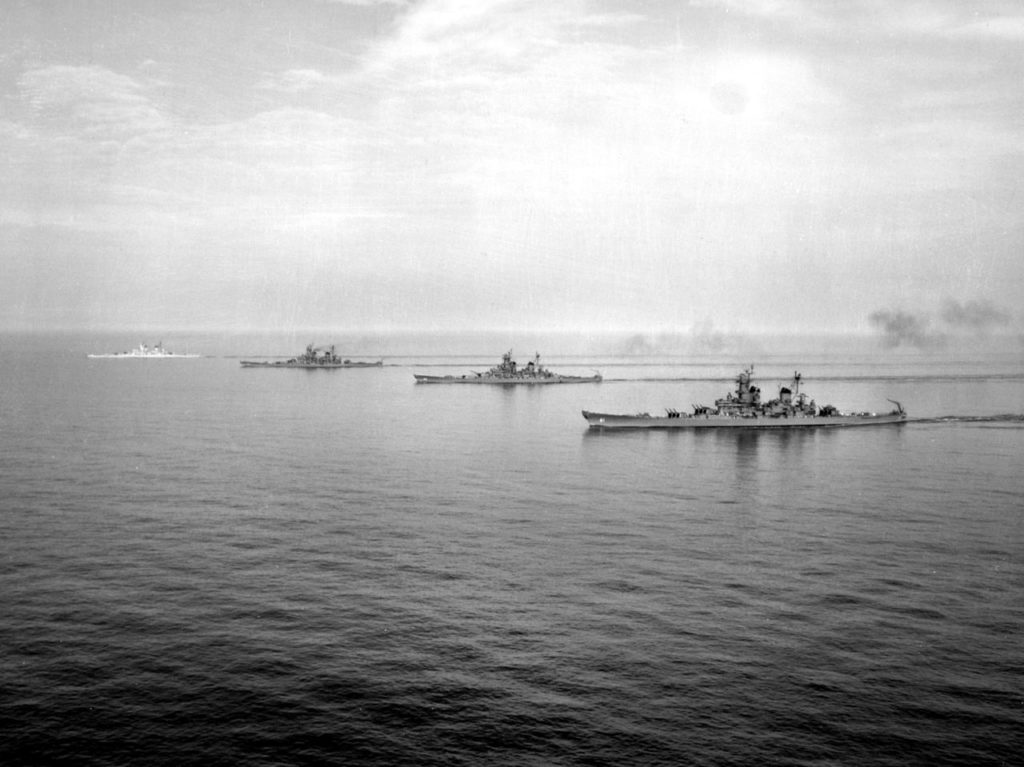
June 7, 1954. All four battleships of the Iowa class steam together
as Battleship Division 2. This was the only time that all four sisters
were together. The ships (from nearest to farthest) are USS Iowa, USS
Wisconsin, USS Missouri, and USS New Jersey.
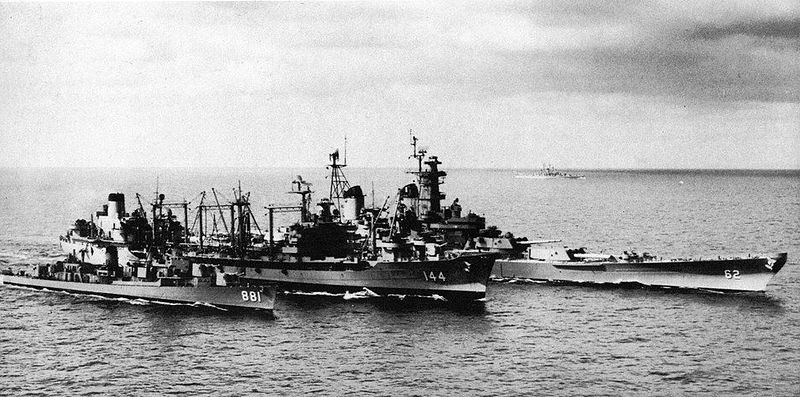
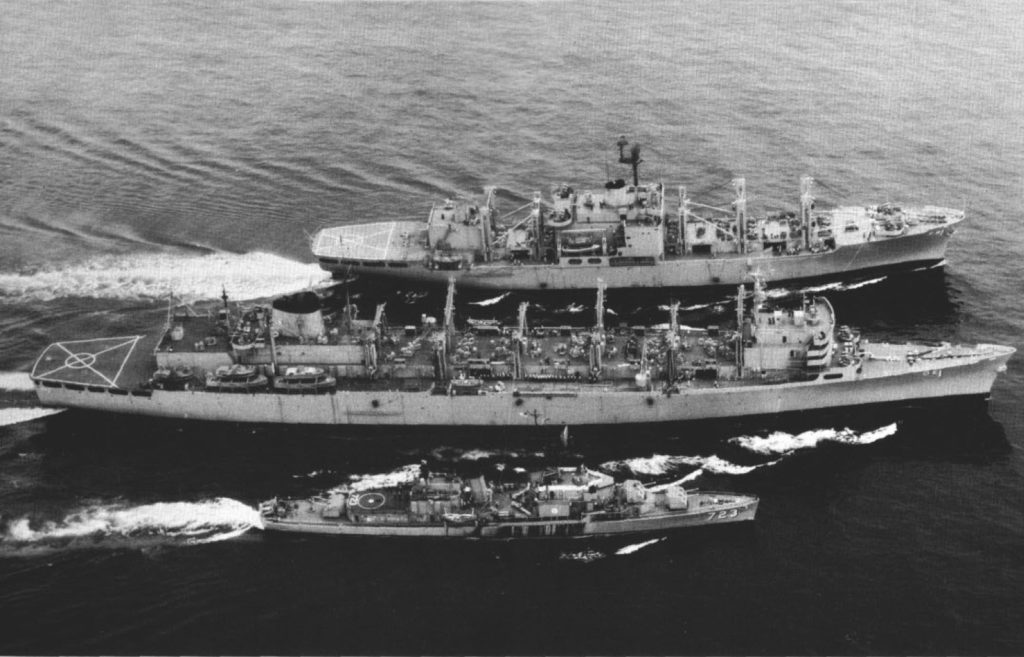
1955. USS New Jersey takes on fuel from the fleet oiler USS
Mississinewa (AO-144) along with the destroyer USS Bordelon (DDR-881).
New Jersey was operating in the Mediterranean Sea at this time.
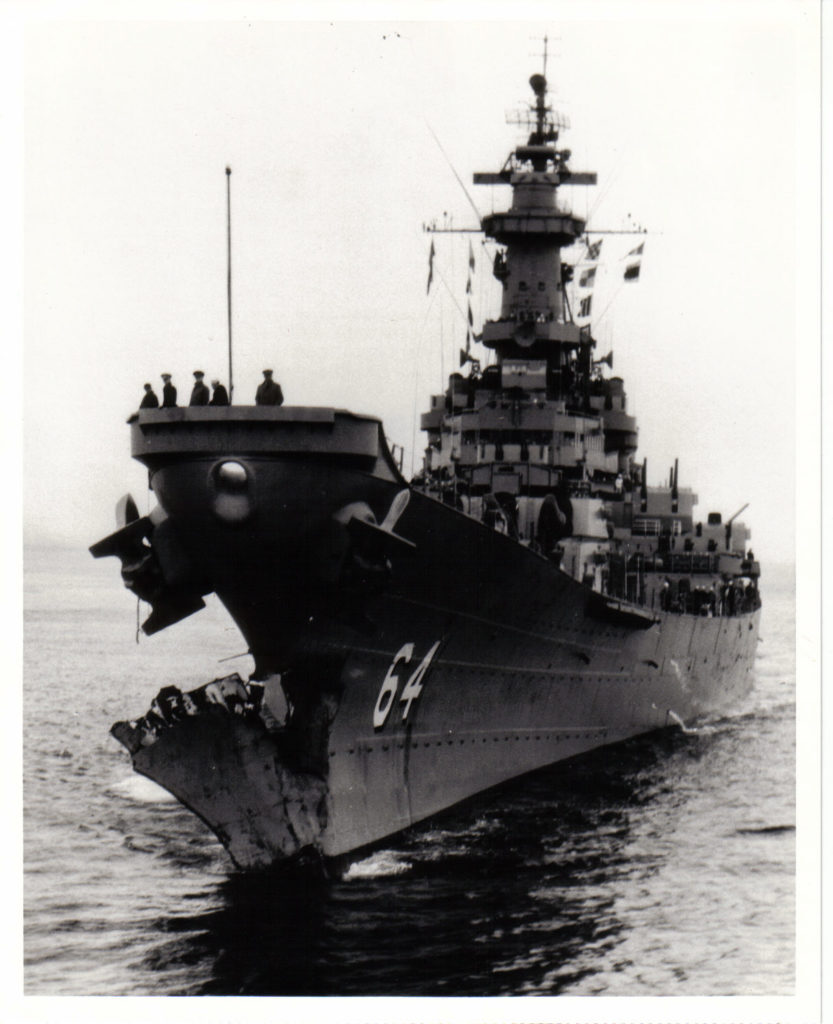
May 1956. USS Wisconsin steams to port with a chunk of her bow
missing. On the sixth of May, she had collided with the destroyer USS
Eaton (DD-510). Wisconsin was repaired by replacing her damaged bow with
that of her never finished sister, USS Kentucky (BB-66).
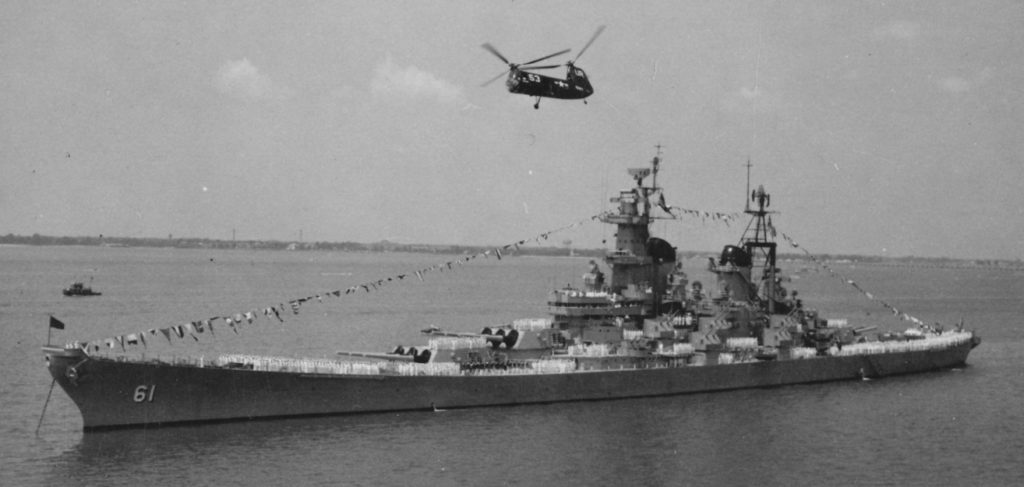
June 13, 1957. USS Iowa at Hampton Roads, Virginia. She was there to take part in the International Naval review.
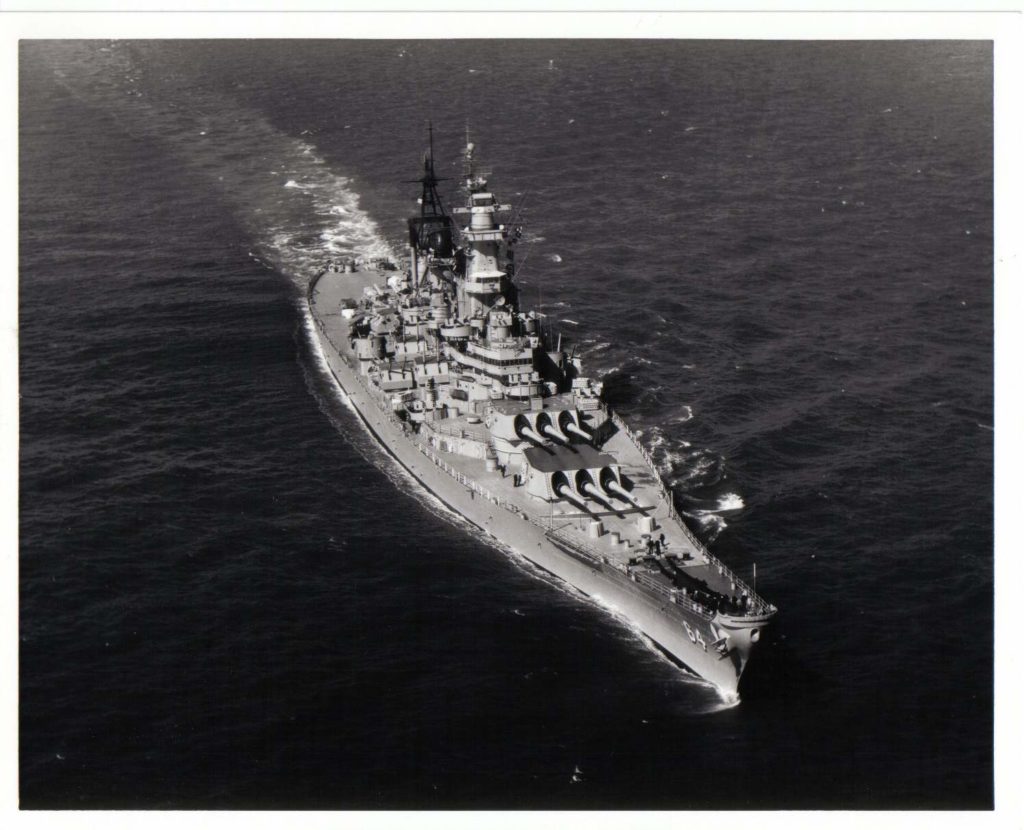
1958. USS Wisconsin cruising off of Hampton Roads. This was one of
the last cruises she would conduct before being decommissioned later
that year.
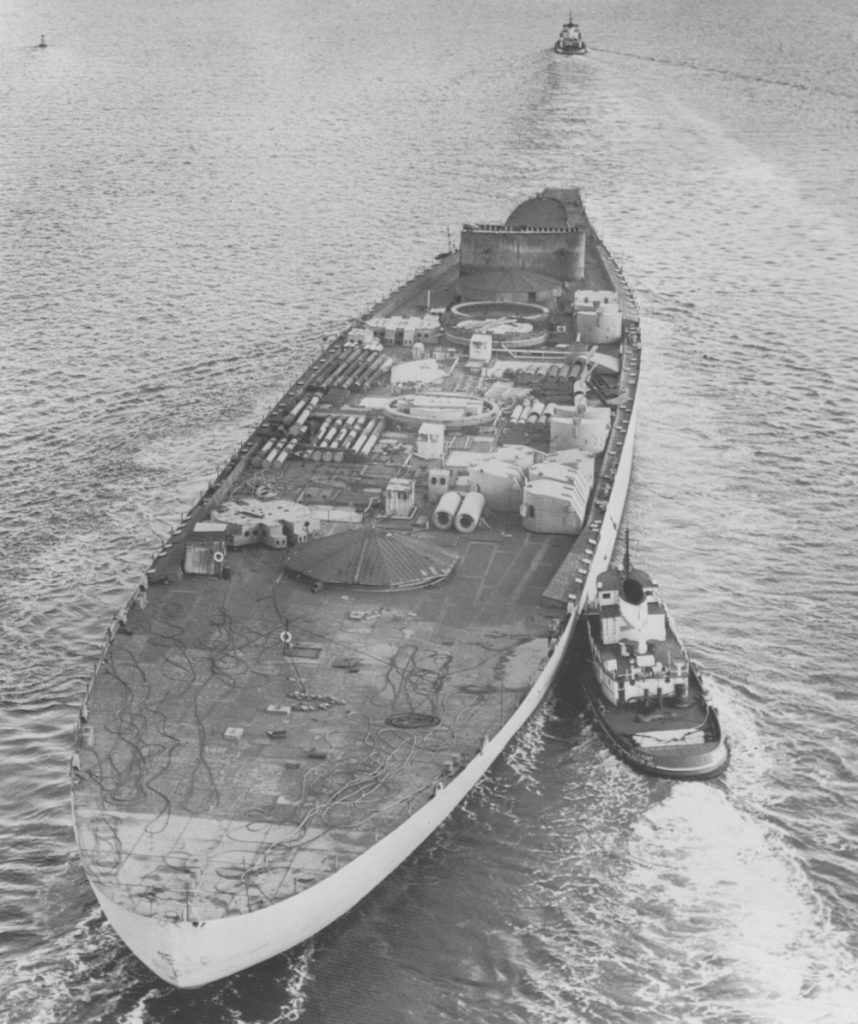
February 6, 1959. The sixth ship of the Iowa class, USS Kentucky
(BB-66) is towed up the Chesapeake Bay on her way to the scrappers. Her
deck is littered with unused material including 5″ gun barrels and their
turrets. Kentucky and her sister, Illinois (BB-65), were both cancelled
during construction.
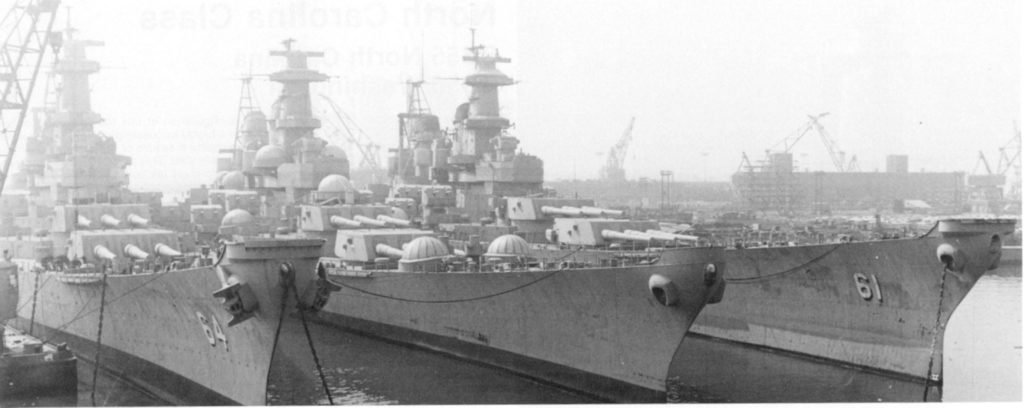
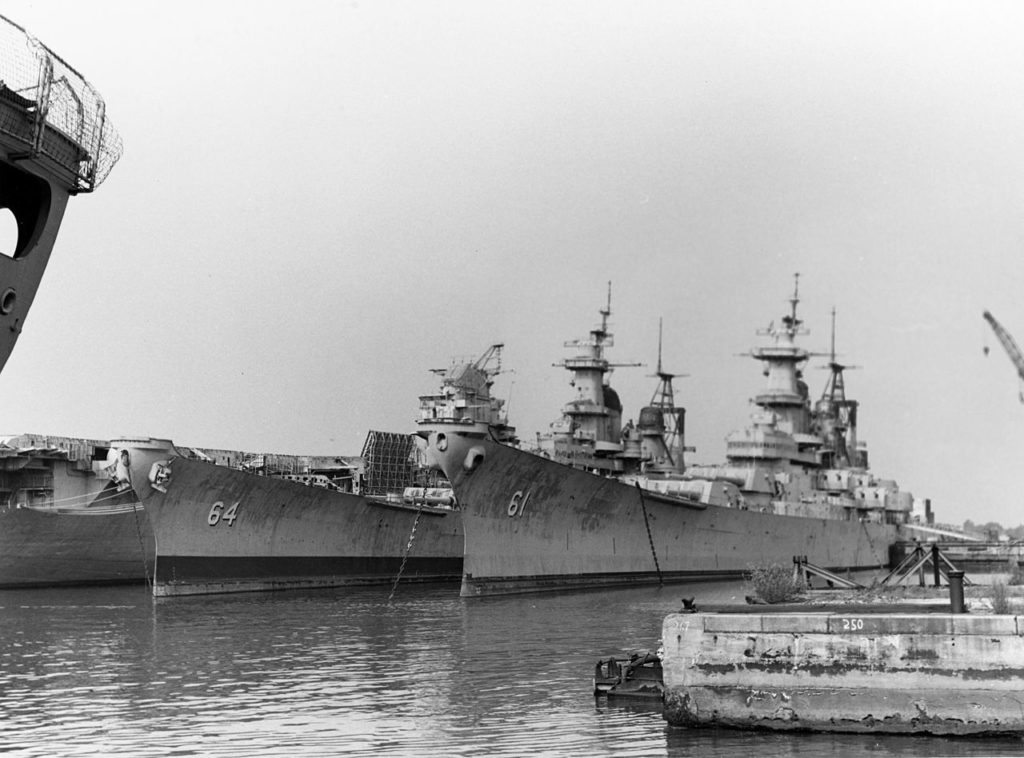
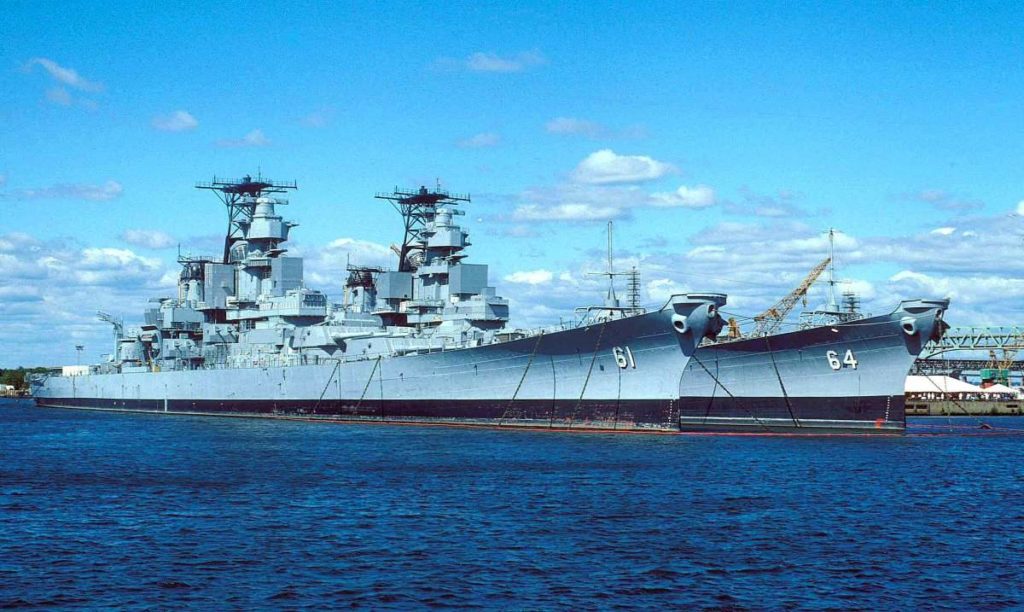
1962. Three Iowa class battleships mothballed at the Philadelphia
Naval Yard. From back to front: USS Iowa, USS New Jersey, and USS
Wisconsin. New Jersey was originally stored at Bayonne, New Jersey but
had been moved to Philadelphia the previous year.
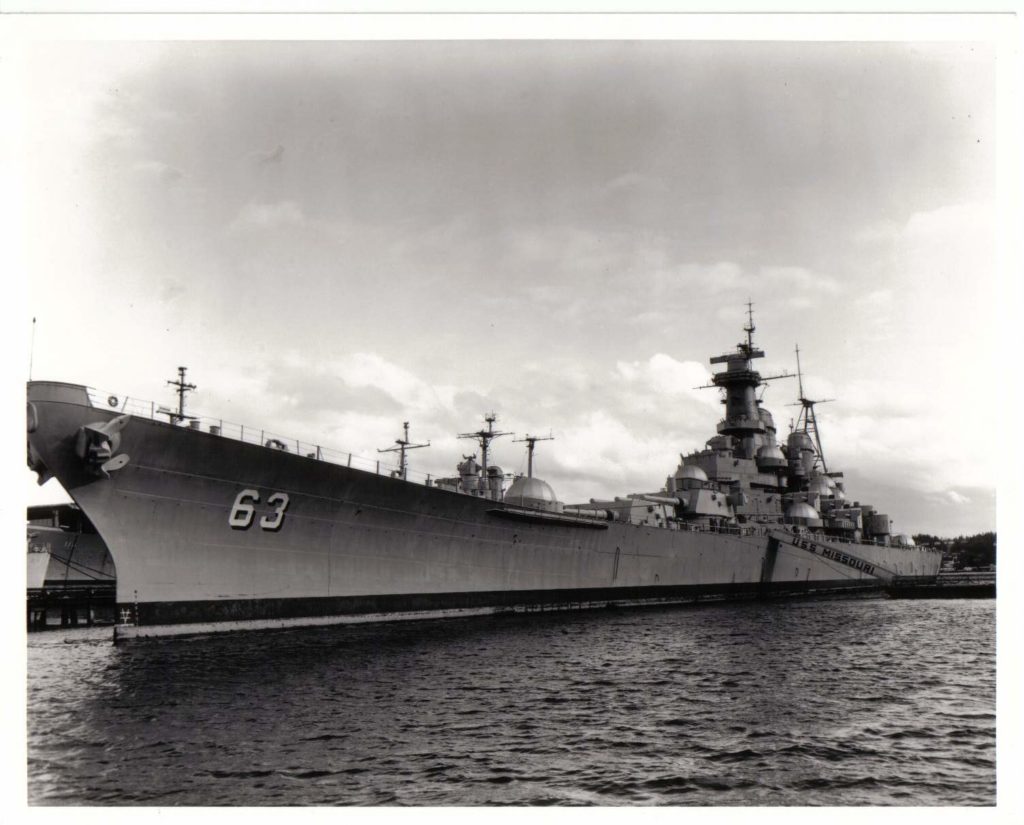
July 4, 1963. USS Missouri continues sit in mothballs at the Puget
Sound Naval Shipyard. Missouri was mothballed on the West Coast while
her sisters were on the East Coast.
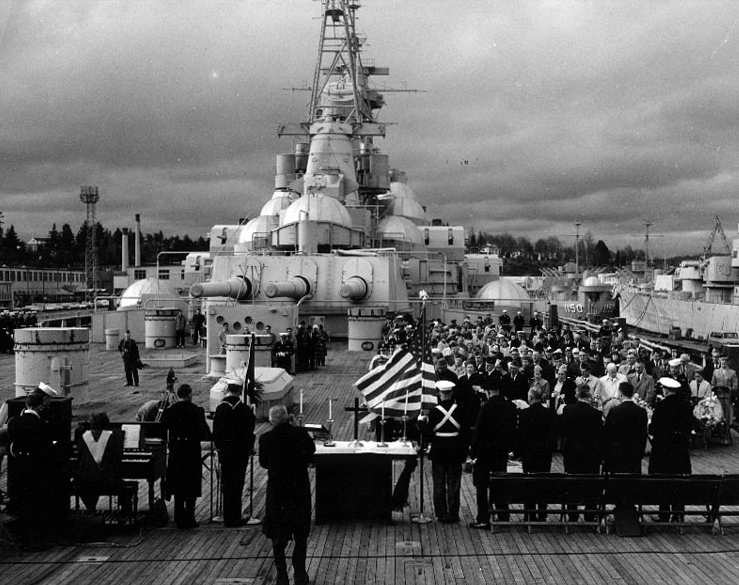
April 10, 1964. Despite her mothballed status, Missouri served as the
location of the memorial service that honored General Douglas MacArthur
following his passing.
April 1965. The battleships New Jersey (Left) and Iowa (Right) tied
up together at Philadelphia. Wisconsin had been temporarily moved to
another location at the time.
1966. Though she as not a battleship, the fast combat support ship
USS Sacramento (AOE-1) was very much related to the Iowa class. Before
scrapping, the boilers and turbines of the sixth Iowa class battleship
USS Kentucky were removed. Half of the power plant would be placed into
USS Sacramento while the other half would go to her sister USS Camden
(AOE-2).
April 1967. Three of the Iowa class sisters tied up together in
mothballs. From left to right: USS Wisconsin (BB-64), USS New Jersey
(BB-62), and USS Iowa (BB-61).
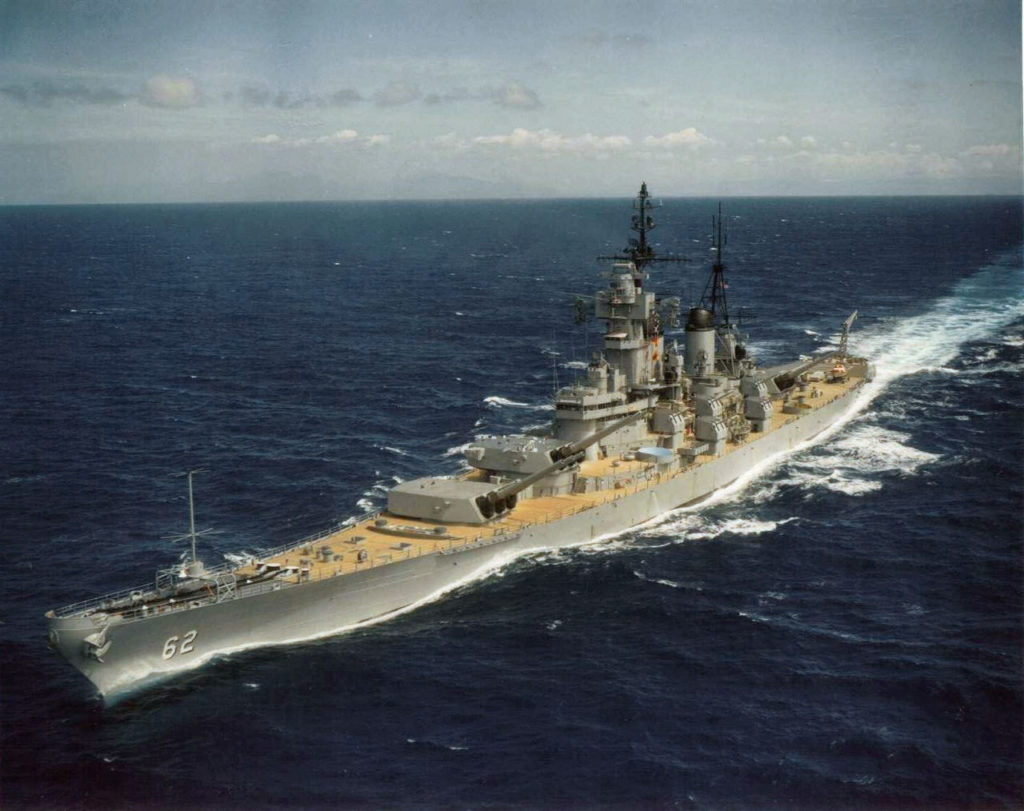
September 11, 1968. USS New Jersey cruising off of Hawaii before she
would head for Vietnam. In interesting feature of this photograph is the
40mm gun tubs just forward of the 5″ guns. These were used as swimming
pools by the crew. New Jersey was the only one of her sisters to have
such a lavish feature!
March 1969. USS New Jersey (BB-62) fires a shell into South Vietnam
during the Vietnam War. During the war, New Jersey performed
brilliantly. During her brief time off Vietnam, she fired 5,688 rounds
of 16 inch shells, and 14,891 rounds of 5-inch shells.
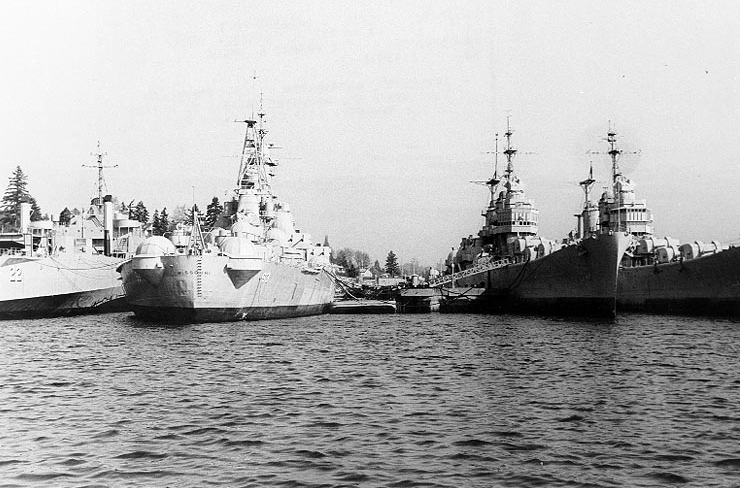
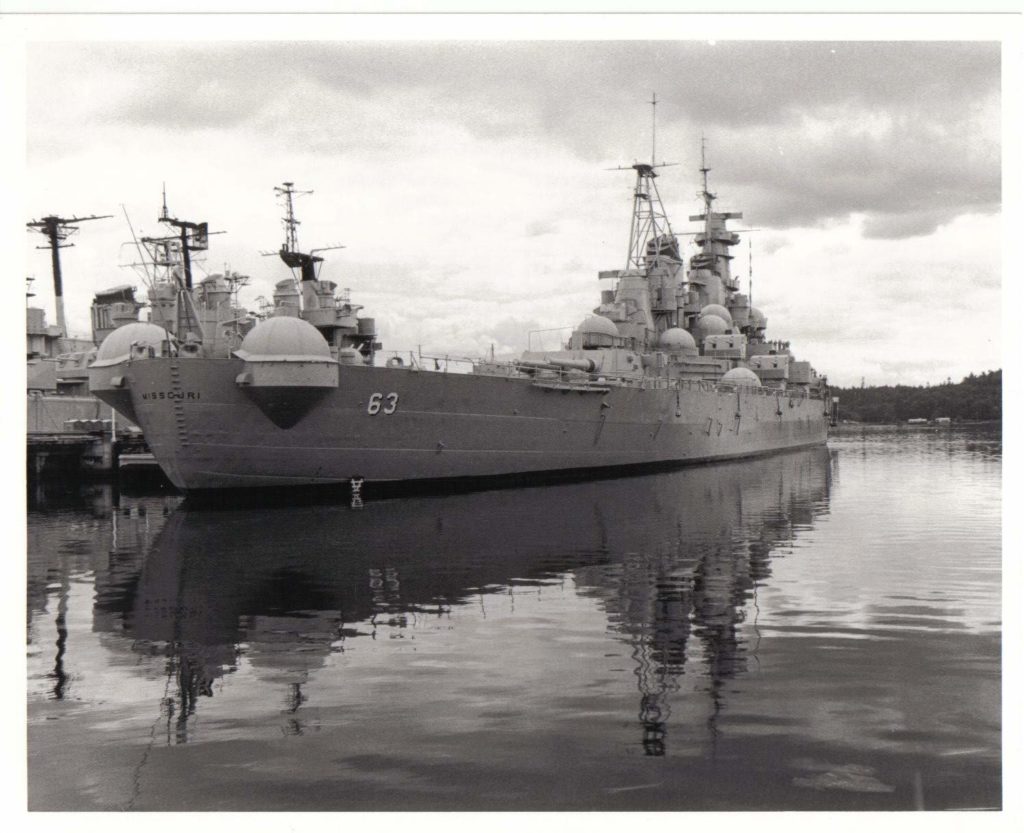
March 19, 1970. The battleship Missouri is mothballed at the Puget
Sound Naval Shipyard. She is accompanied by several other ships
including the cruisers Roanoke (CL-145) and Worcester (CL-144). Perhaps
one of the few images showing America’s last battleships alongside its
last light cruisers.
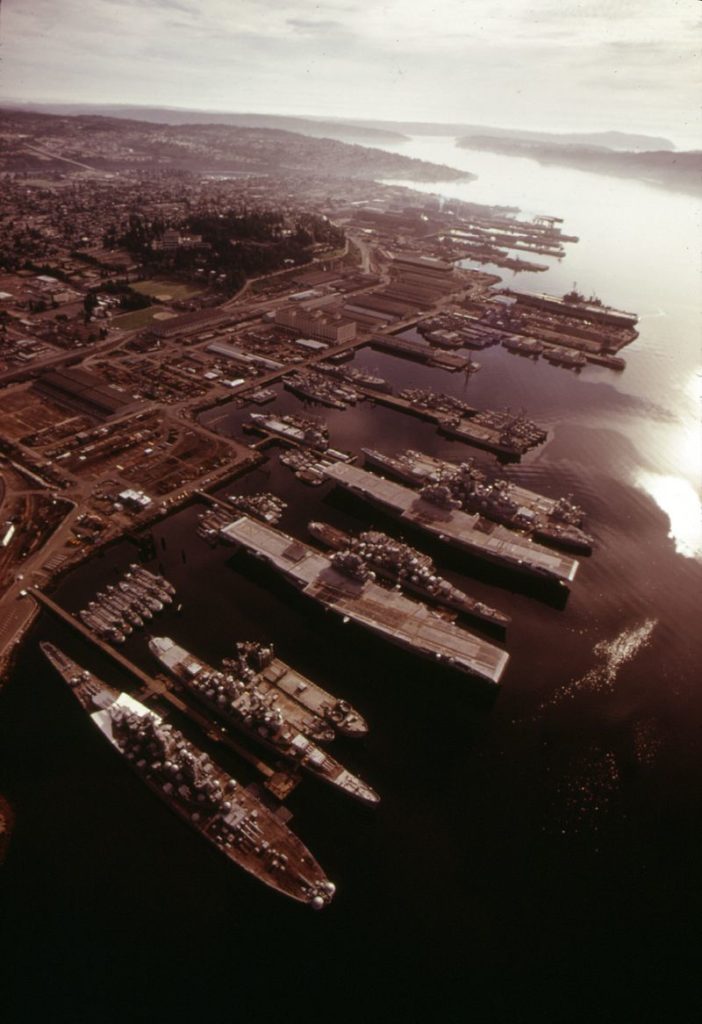
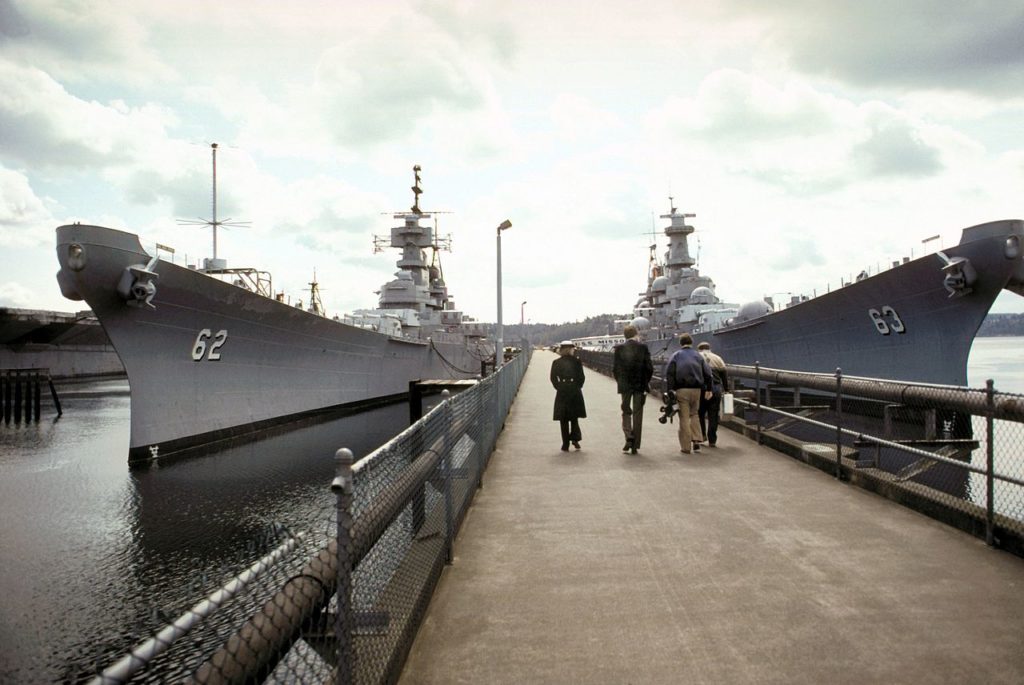
July 1974. A large assortment of mothballed ships at the Puget Sound
Naval Shipyard. USS Missouri is at the bottom of the photo while her
sister USS New Jersey can be seen farther up. Following her tour of
service off Vietnam, New Jersey was decommissioned and placed at here.
1976. The battleship Missouri still quietly moored at the Puget Sound Naval Shipyard.
1978. USS Iowa (Right) and USS Wisconsin (Left) mothballed at the
Philadelphia Naval Shipyard. Iowa was mothballed from 1958 until 1984.
Wisconsin was mothballed from 1958 until 1988. They are accompanied by
the aircraft carrier USS Shangri-La (CVS-38).
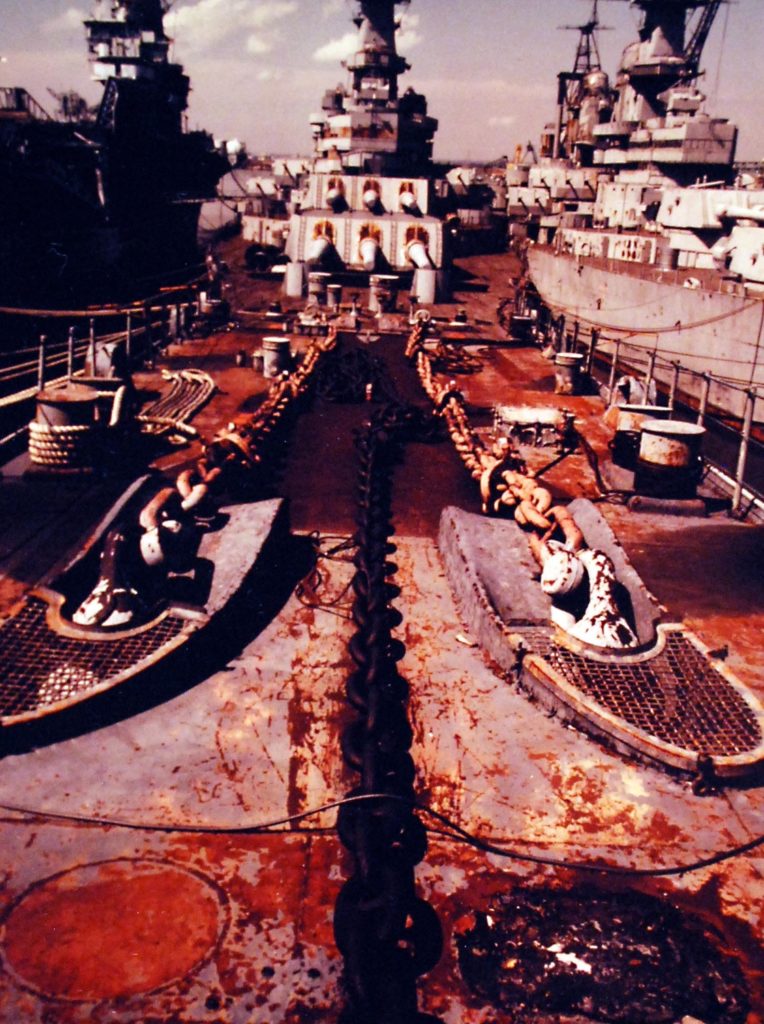
April 1980. Years of neglect are apparent in this photo taken from the bow of USS Wisconsin.
1981. The
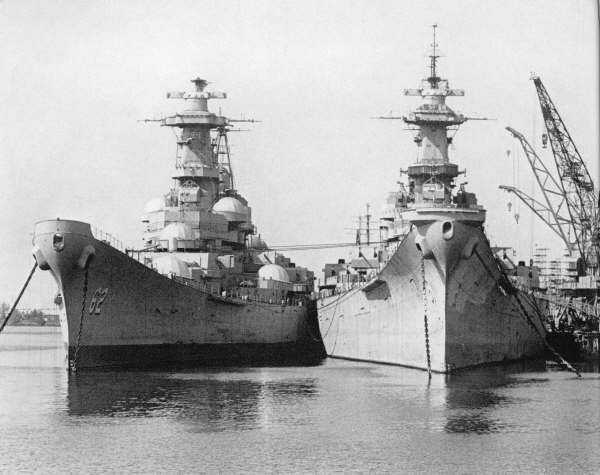
Iowa class battleship USS Missouri (BB-63) and USS New Jersey (BB-62)
at Puget Sound Naval Shipyard. Due to her being reactivated for service
in Vietnam, New Jersey looks very different from Missouri.
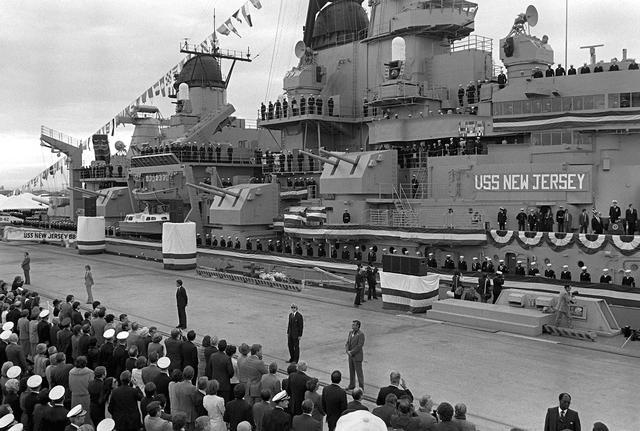
December 28, 1982. The USS New Jersey is recommissioned at Long Beach
California with President Ronald Regan in attendance. The Iowa class
had finally returned to service thirteen years after being
decommissioned.
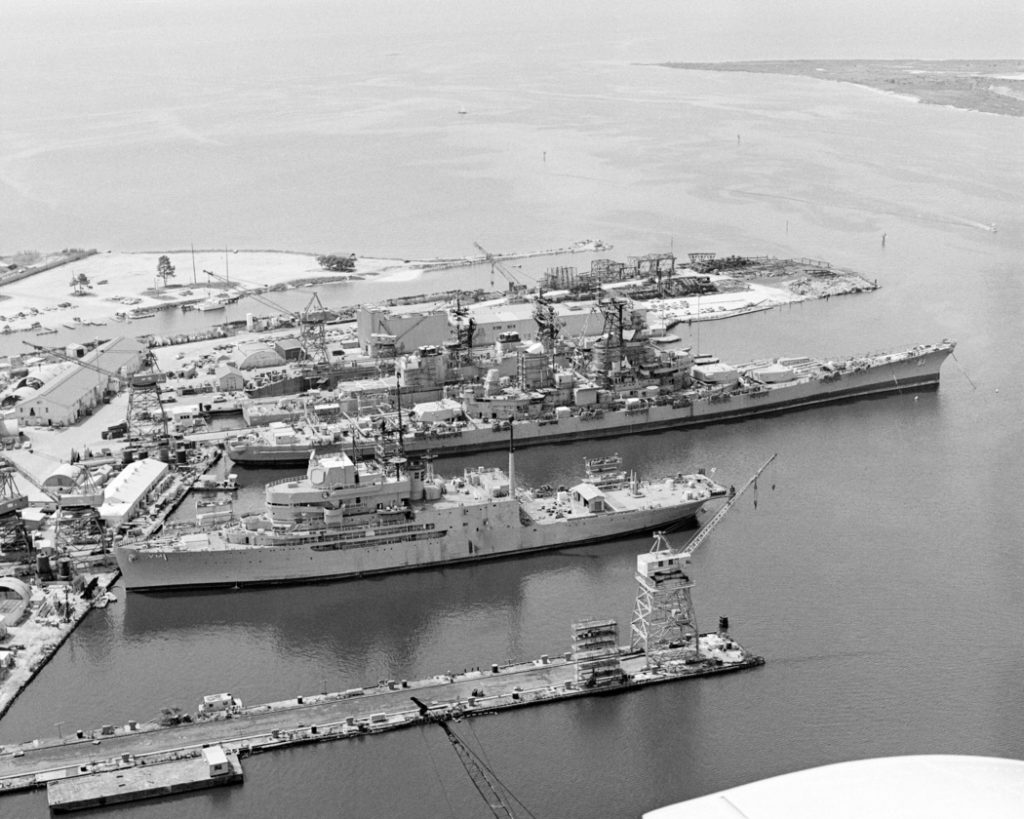
June 17, 1983. USS Iowa (BB-61) undergoing modernization at the
Ingalls Shipbuilding Yard to prepare for her recommissioning. Following
her modernization, she would finally be recommissioned on April 28,
1984.
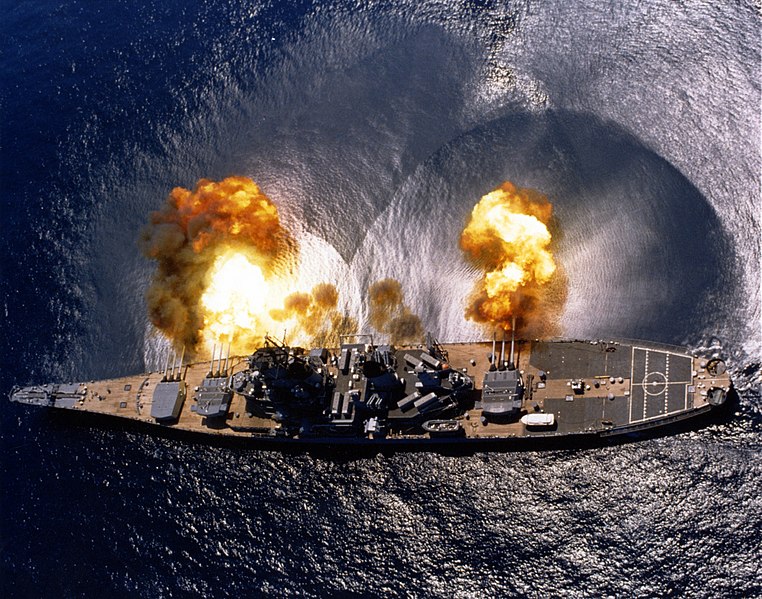
July 1, 1984. With a thunderous roar, USS Iowa demonstrates her
firepower by firing all nine of her 16″/50 as well as six of her 5″/38
guns. The blast of her main guns is easily seen o the water surrounding
them.
November 19, 1985. USS Iowa (BB-61) uses all of her 212,000 shaft
horsepower during a full power run in the Chesapeake Bay. She is kicking
up an unbelievable amount of water in her wake.
December 30, 1986. USS New Jersey (BB-62) fires all of its 16″ guns during a spectacular firepower demonstration.
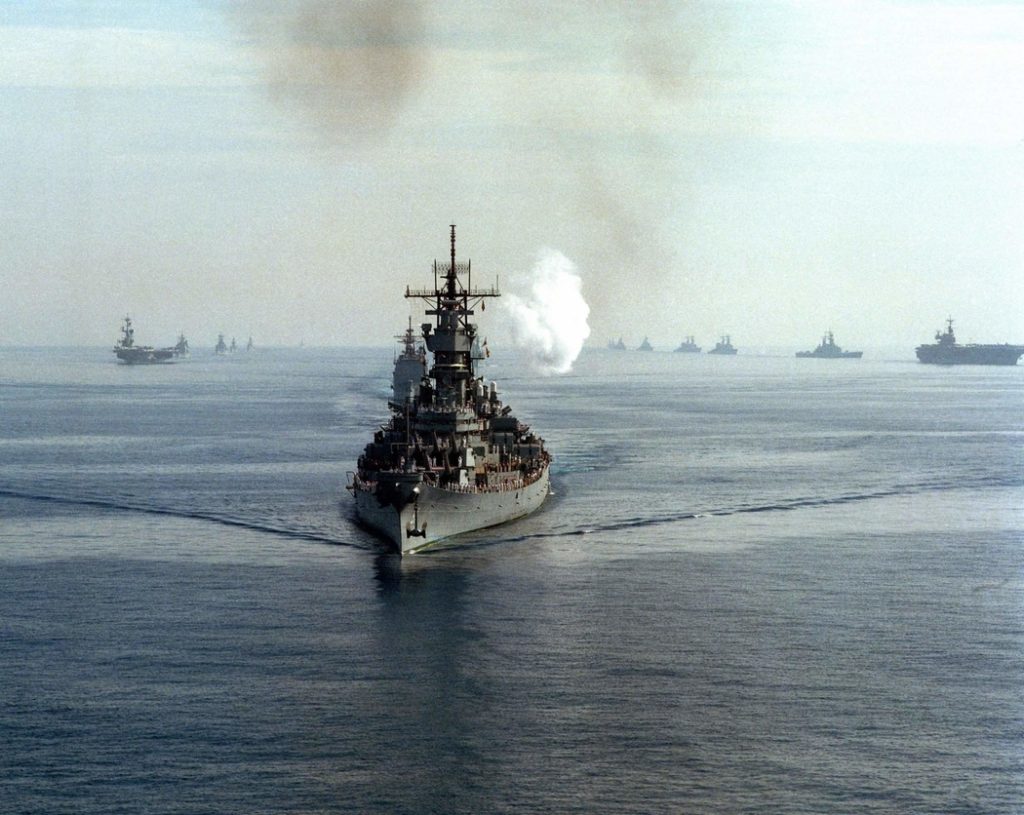
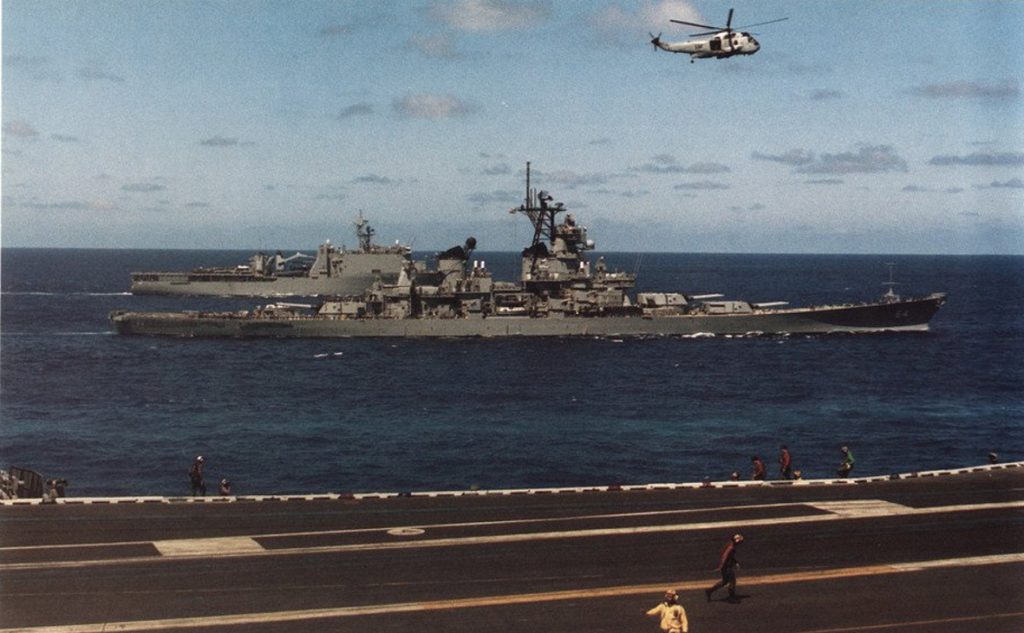
October 17, 1987. The Battleship USS Iowa (BB-61) leads the aircraft
carriers Coral Sea (CV-43) and Saratoga (CV-60) plus their respective
battlegroups into Augusta Bay, Sicily.
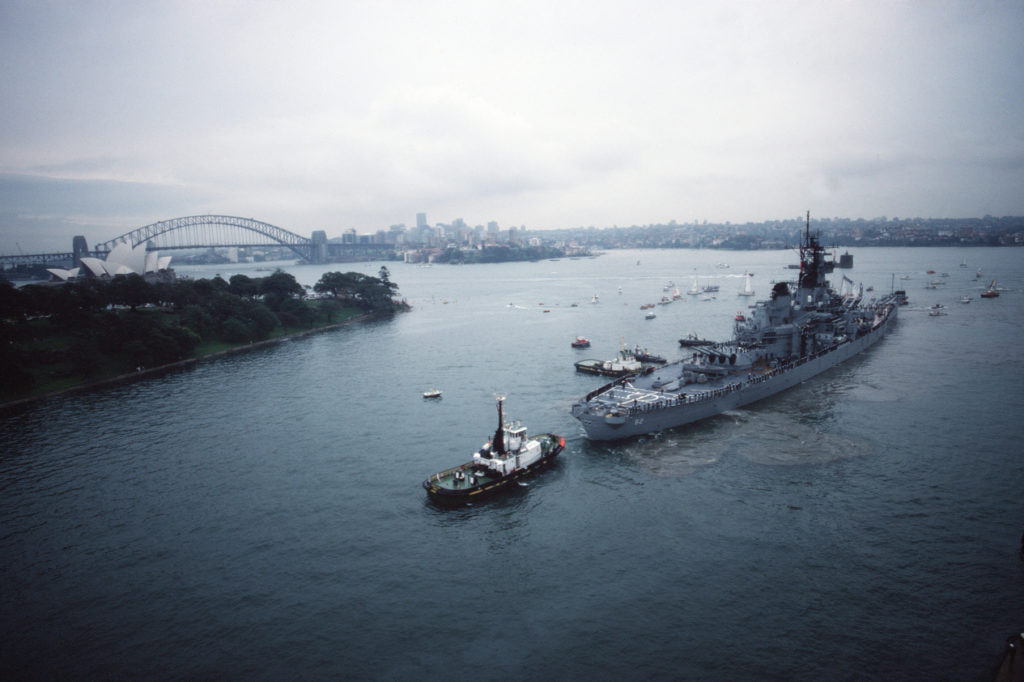
1988. Tugboats guide USS New Jersey into Port Jackson. New Jersey had
arrived in Sydney to take part in the Australian Bicentennial.
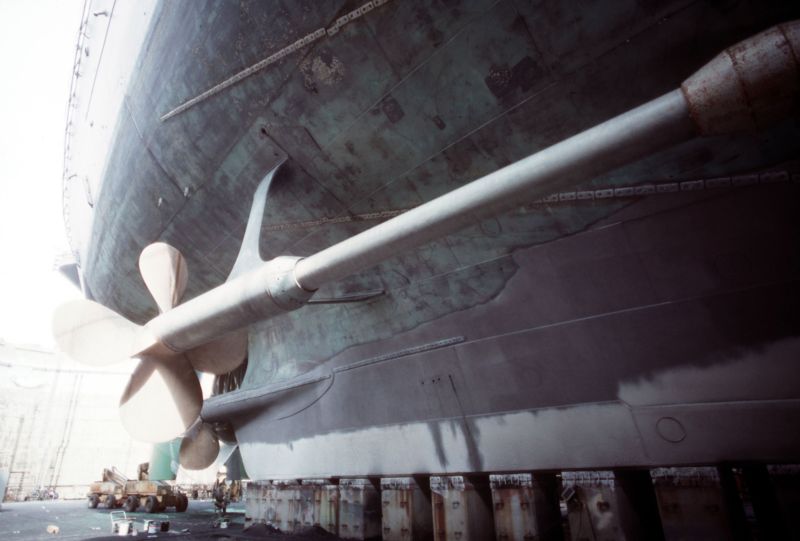
February 1, 1989. USS Missouri having her hull scrapped and other
work done while in drydock. Her outer four bladed screws are 18.25′ in
diameter while her inner five blades screws are 17′ in diameter. Couple
with the powerful 212,000 shaft horsepower turbines, the Iowa class
could exceed 32 knots.
1990. USS Wisconsin steaming alongside the carrier USS Saratoga
(CV-60) during their 1990-1991 deployment in the Mediterranean and Red
Seas.
January 18, 1991. USS Wisconsin uses her 5″/58 secondary guns to
pound targets ashore during the Gulf War. Wisconsin spent eight months
in the Persian Gulf. During that time, she fired 319 16″ shells, 881 5″
shells, and 5,200 20mm rounds in addition to her 24 cruise missiles.
August 1992. The battleship New Jersey is tied up to the same pier at USS Hornet (CVS-12) at the Puget Sound Naval Shipyard.
September 1993. The mothballed battleships USS Iowa (BB-61) and USS
Wisconsin (BB-64) tied up together at the Philadelphia Naval Shipyard. I remembered seeing them there while we were driving in the Northeas.
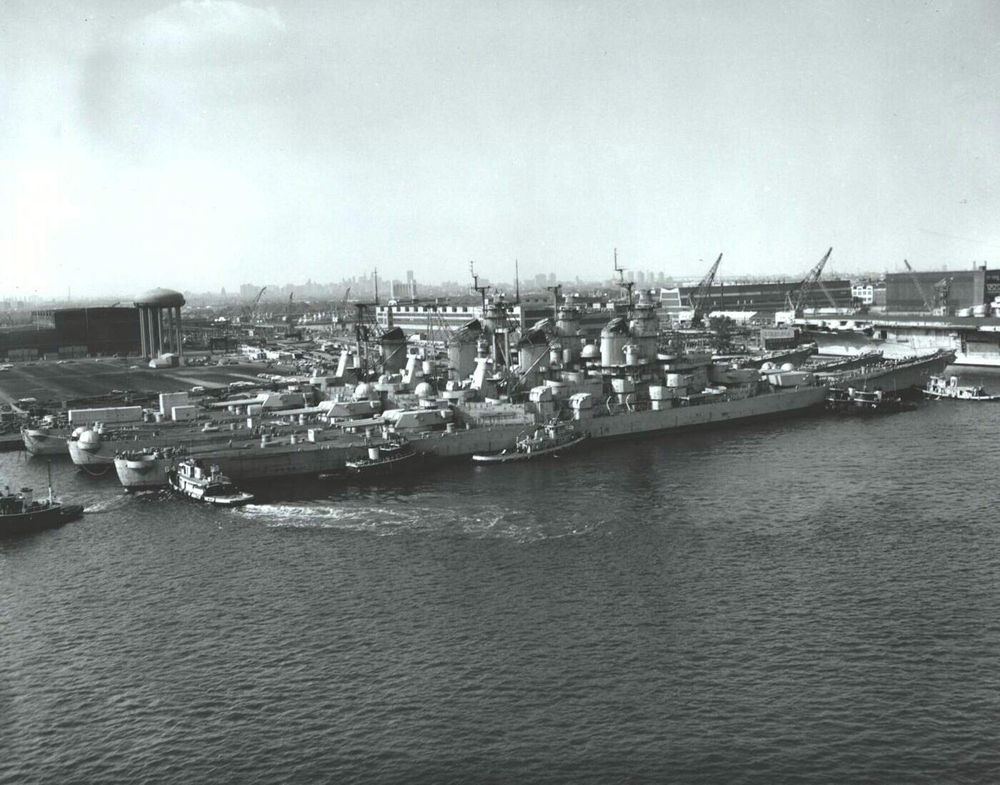
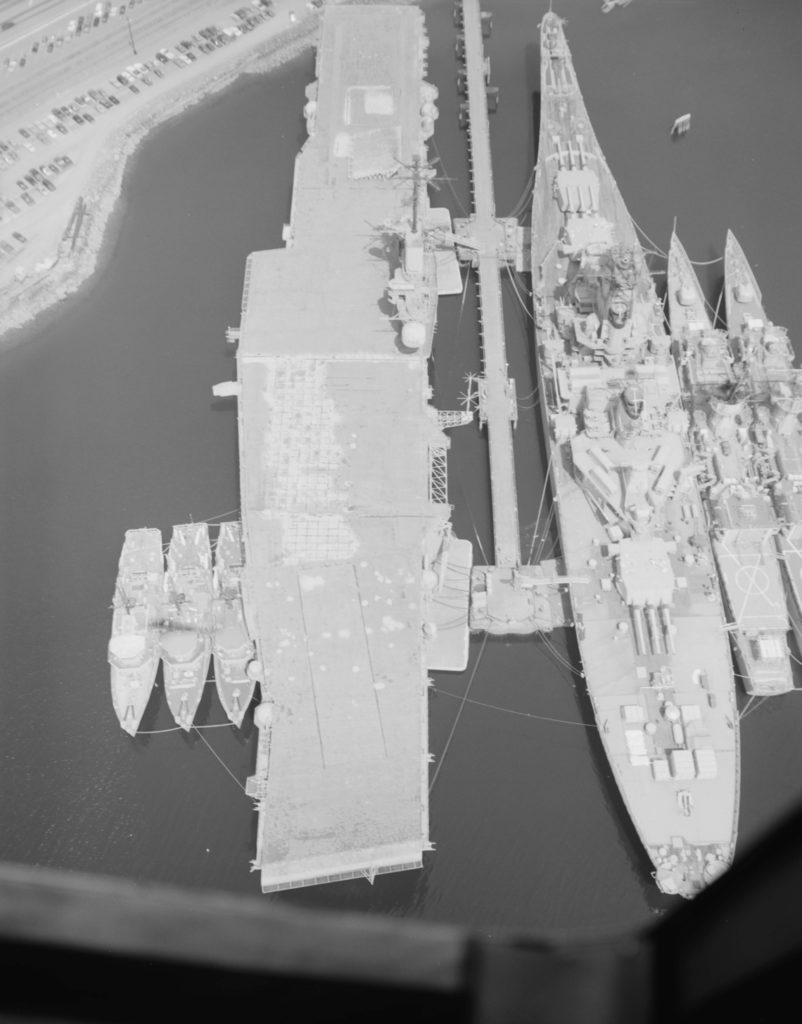
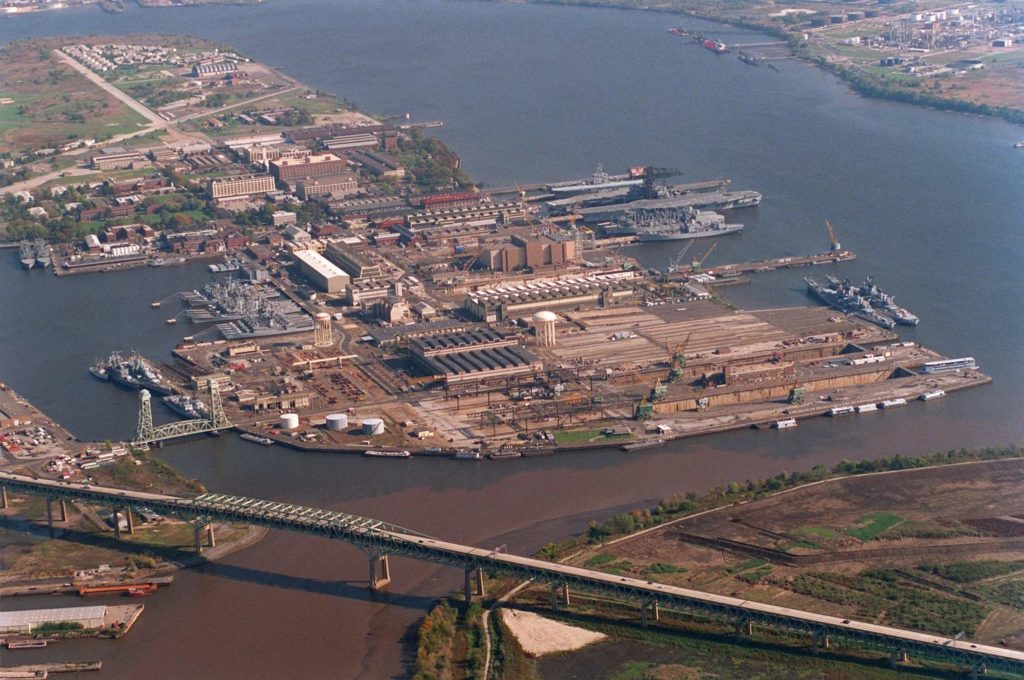
October 30, 1995. A photo of the Philadelphia Naval Shipyard along
with a wide assortment of warships. Among the battleships Iowa and
Wisconsin can be seen at the right. I was on that bridge when I saw the ships and I almost wrecked, I knew what they were and so wanted to stop...but couldn't.
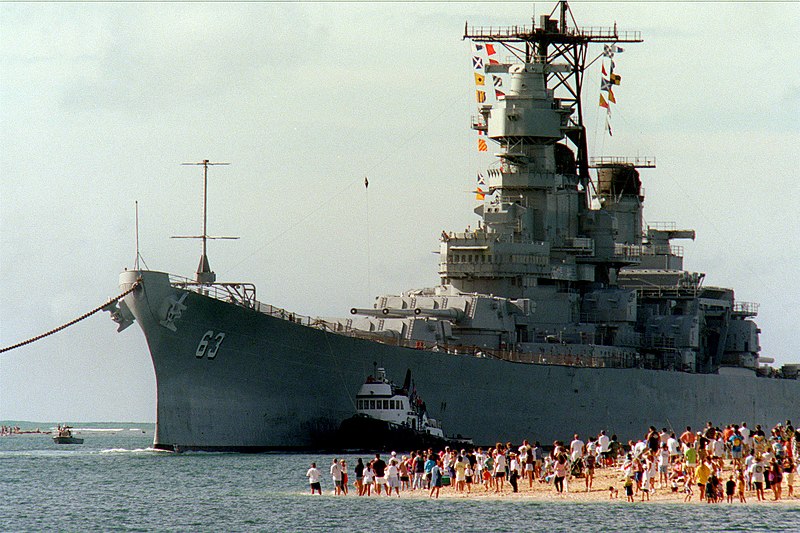
June 22, 1998. Crowds gather as USS Missouri enters the channel
leading to Pearl Harbor. She was being moved to Pearl Harbor to serve as
a museum ship. The location that saw the entrance of the United States
into World War II would now host the vessel that saw its end.
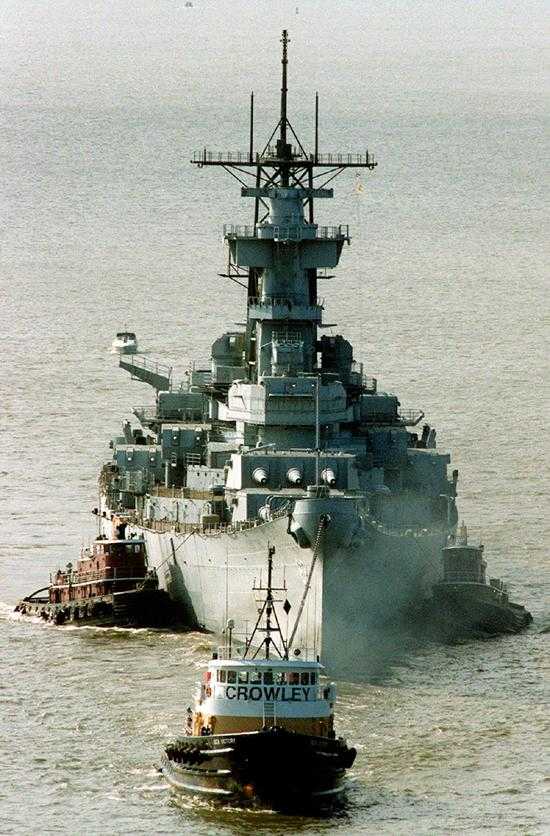
November 11, 1999. The battleship USS New Jersey is towed up the
Delaware river towards the Philadelphia Shipyard. She would go on to be
restored and converted into a floating museum.
December 12, 2000. USS Wisconsin located at her new home in Norfolk, Virginia.
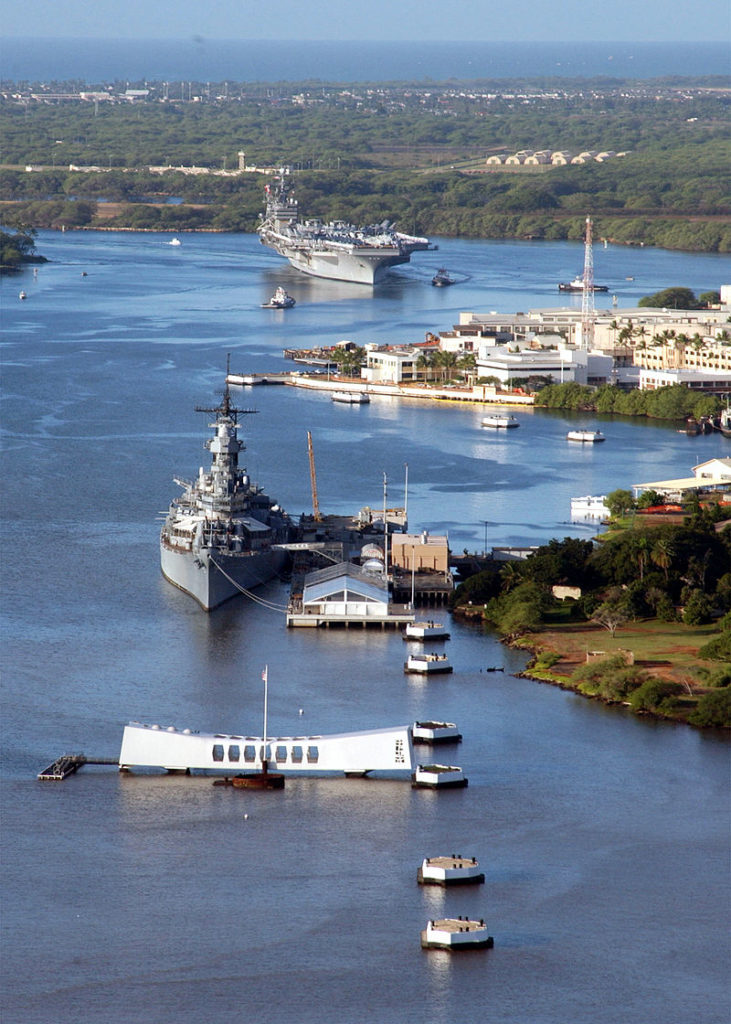
January 31, 2003. The battleship Missouri watches over the USS
Arizona. In the background, nuclear powered aircraft carrier USS Carl
Vinson (CVN-70) enters Pearl Harbor.
April 16, 2004. In celebration of the ship’s 60th anniversary of her
commissioning, sailors from the USS Theodore Roosevelt (CVN-71) man the
rails aboard USS Wisconsin.
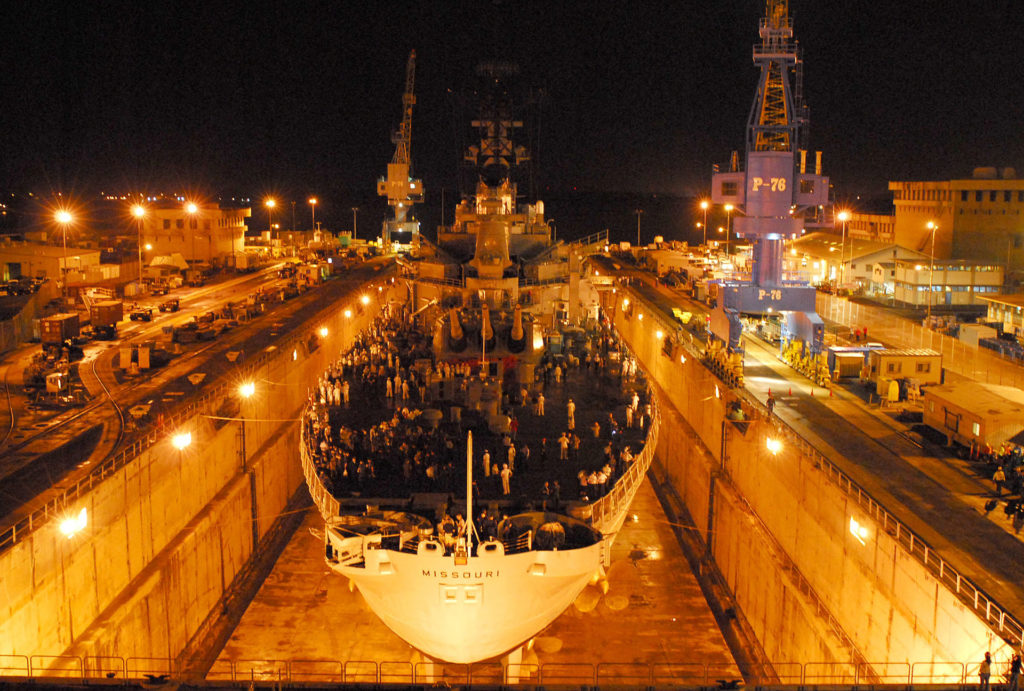
January 7, 2010. Workers work early in the morning to prepare USS
Missouri for her undocking later that day. Missouri had undergone an 18
million dollar overhaul aimed at preserving her so that future
generations could continue to visit her.
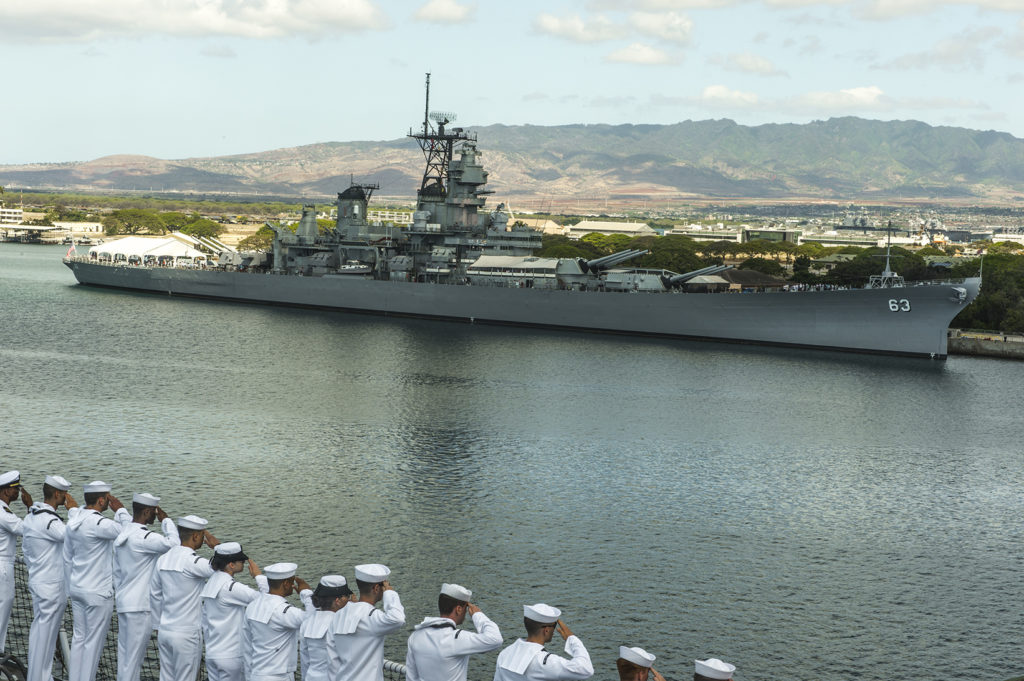
May 25, 2015. The crew renders honors aboard the USNS Mercy (T-AH-19) as they pass the battleships Arizona and Missouri.
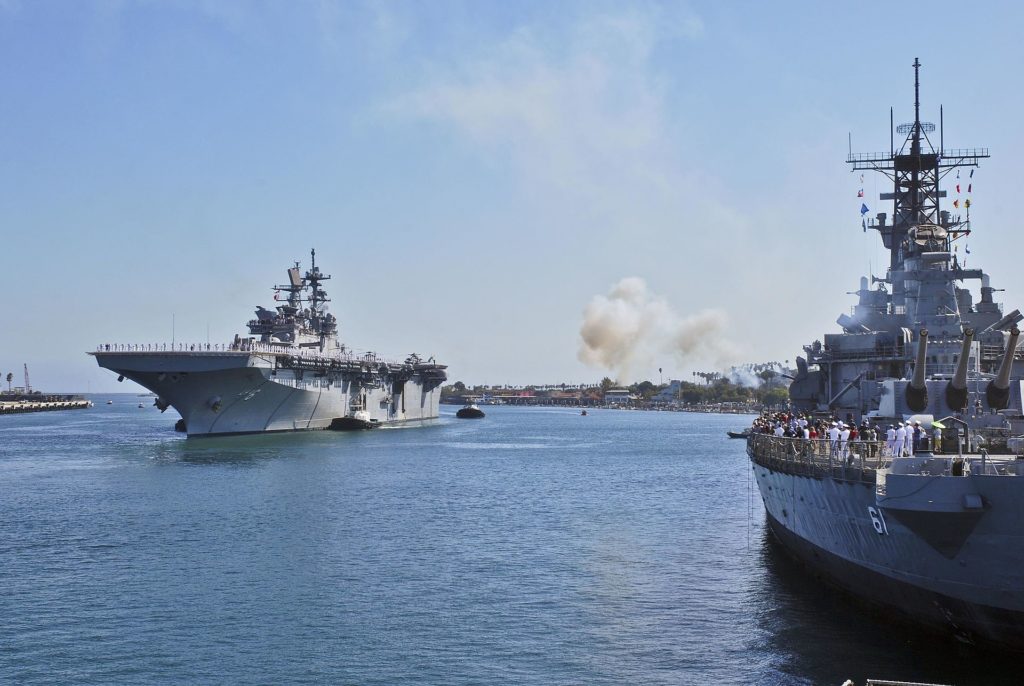
August 30, 2016. Iowa fires her secondary guns in salute to the
assault carrier USS America (LHA-6) as she arrives at Los Angeles
Harbor. Though it might not look like it, at full load the Iowa (58,000
tons) displaced roughly 13,000 more tons than USS America (44,971
tons).From harbingers of war to the setting for peace. From World War II to
the Gulf War. From instruments of destruction to tools of education.
The Iowa class battleships have seen plenty of change throughout the
years. Thanks to the dedicated people who maintain them today, we will
ensure that they remain around for another 78 years.