Webster

The Constitution was made to guard the people against the dangers of good intentions." --American Statesman Daniel Webster (1782-1852)


Showing posts sorted by relevance for query German Aircraft Carrier. Sort by date Show all posts

Friday, August 26, 2016

Graf Zeppelin, the only carrier that the Nazi's had.


  This Post took a couple of days to do, between work, sleep and work..you know how it goes.  I remembered reading about this on wiki a year or so ago.  I decided to do a post on something that didn't relate to politics but to history, something that I am a fan of.  When I was looking at the pics of the Graf, I could see the similarities with the Japanese designs but with a German twist.  I found out that the Germans had gone to Japan to examine the Japanese carrier Akagi, and the designs bear this out.  I dug out references from several location from google and "Wiki" to show pics and information on the German carrier.  The fate of the Graf showed me that the Germans suffered from "Tactical" mindset and not strategic planning.  Their equipment designs and combat tactics reflected this mindset.  If the Germans had gotten their capital ships going, the battle of the Atlantic might have had a different outcome.


The Graf Zeppelin-class aircraft carriers were four German Kriegsmarine aircraft carriers planned in the mid-1930s by Grand Admiral Erich Raeder as part of the Plan Z rearmament program after Germany and Great Britain signed the Anglo-German Naval Agreement. They were planned after a thorough study of Japanese carrier designs; nevertheless, German naval architects ran into difficulties due to lack of experience in building such vessels, the situational realities of carrier operations in the North Sea and the lack of overall clarity in the ships' mission objectives. This lack of clarity led to features either eliminated from or not included in American and Japanese carrier designs. These included a complement of cruiser-type guns for commerce raiding and defense against British cruisers. American and Japanese carriers, designed along the lines of task-force defense, used supporting cruisers for surface firepower, which allowed flight operations to continue without disruption and kept carriers out of undue risk of damage or sinking from surface action.
A combination of political infighting between the Kriegsmarine and the Luftwaffe, disputes within the ranks of the Kriegsmarine itself and Adolf Hitler's waning interest all conspired against the carriers. A shortage of workers and materials slowed construction still further and, in 1939, Raeder reduced the number of ships from four to two. Even so, the Luftwaffe trained its first unit of pilots for carrier service and readied it for flight operations. With the advent of World War II, priorities shifted to U-boat construction; one carrier, Flugzeugträger B, was broken up on the slipway while work on the other, Flugzeugträger A (christened Graf Zeppelin) was continued tentatively but suspended in 1940. The air unit scheduled for her was disbanded at that time.
The role of aircraft in the Battle of Taranto, the pursuit of the German battleship Bismarck, the attack on Pearl Harbor and the Battle of Midway demonstrated conclusively the usefulness of aircraft carriers in modern naval warfare. With Hitler's authorization, work resumed on the remaining carrier. Progress was again delayed, this time by the demand for newer planes specifically designed for carrier use and the need for modernizing the ship in light of wartime developments. Hitler's disenchantment with the performance of the Kriegsmarine's surface units led to a final stoppage of work. The ship was captured by the Soviet Union at the end of the war and sunk as a target ship in 1947.

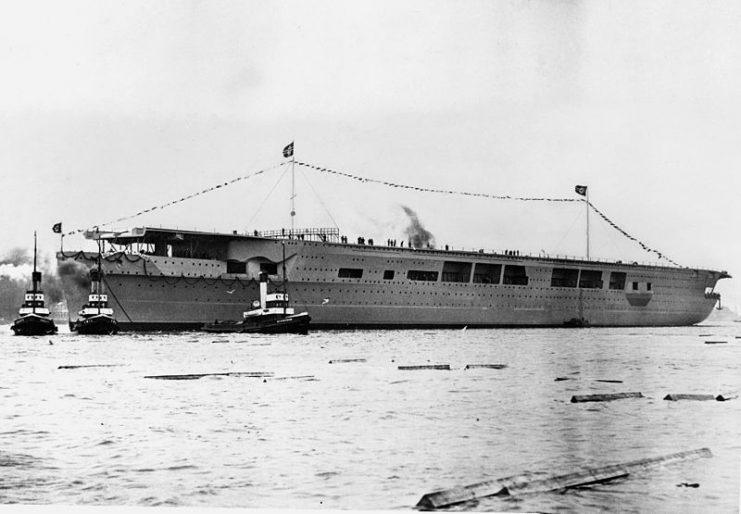
Graf Zeppelin is launched, 8 December 1938.
After 1933, the Kriegsmarine began to examine the possibility of building an aircraft carrier.[1] Wilhelm Hadeler had been Assistant to the Professor of Naval Construction at the Technical University of Berlin for nine years when he was appointed to draft preliminary designs for an aircraft carrier in April 1934. Hadeler's first design was a 22,000-long-ton (22,000 t) ship that could carry 50 aircraft and steam at 35 knots (65 km/h; 40 mph). The Anglo-German Naval Agreement, signed on 18 June 1935, allowed Germany to construct aircraft carriers with total displacement up to 38,500 tons, though Germany was limited to 35% of total British tonnage in any category of warship. The Kriegsmarine then decided to scale back Hadeler's design to 19,250 long tons (19,560 t), which would permit the construction of two ships within the 35% limit.
The design staff decided that the new carrier would need to be able to defend itself against surface combatants, which necessitated armor protection to the standard of a heavy cruiser. A battery of sixteen 15 cm (5.9 in) guns were deemed sufficient to defend the ship from destroyers. In 1935, Adolf Hitler announced that Germany would construct aircraft carriers to strengthen the Kriegsmarine. A Luftwaffe officer, a naval officer, and a constructor visited Japan in the autumn of 1935 to obtain flight deck equipment blueprints and inspect the Japanese aircraft carrier Akagi. The Germans also unsuccessfully attempted to examine the British carrier HMS Furious.
The keel of Graf Zeppelin was laid down on 28 December 1936, on the slipway that had recently held the battleship Gneisenau. The ship was built by the Deutsche Werke shipyard in Kiel. Two years later, Großadmiral (Grand Admiral) Erich Raeder presented an ambitious shipbuilding program called Plan Z which would build up the Kriegsmarine to a point where it could challenge the British Royal Navy in the North Sea. Under Plan Z, by 1945 as part of the balanced force the navy would have four carriers; the pair of Graf Zeppelin-class ships were the first two in the plan. Hitler approved the construction program on 1 March 1939. In 1938, a second carrier, ordered under the provisional name "B", was laid down at the Germaniawerft dockyard in Kiel. Graf Zeppelin was launched on 8 December 1938.
The Graf Zeppelin class's hull was divided into 19 watertight compartments, the standard division for all capital ships in the Kriegsmarine. Their belt armor was to vary from 100 mm (3.9 in) over the machinery spaces and aft magazines, to 60 mm (2.4 in) over the forward magazines and tapered down to 30 mm (1.2 in) at the bows. Stern armor was kept at 80 mm (3.1 in) to protect the steering gear. Inboard of the main armor belt was a 20 mm (0.79 in) anti-torpedo bulkhead.
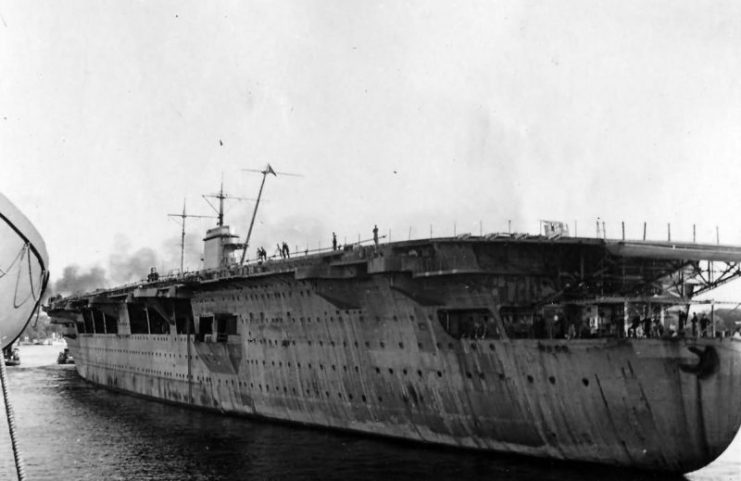
                                                                                     Graf Zeppelin at Kiel, June 1940, displaying her newly rebuilt bow. Also visible are her 15 cm casemate guns, before their removal to defend occupied Norway. The photo is marked Geheim ("secret").
Horizontal armor protection against aerial bombs and plunging shellfire started with the flight deck, which acted as the main strength deck. The armor was generally 20 mm (0.79 in) thick except for those areas around the elevator shafts and funnel uptakes where thickness increased to 40 mm (1.6 in) in order to give the elevators necessary structural strength and the critical uptakes greater splinter protection. Beneath the lower hangar was the main armored deck (or tween deck) where armor thickness varied from 60 mm (2.4 in) over the magazines to 40 mm (1.6 in) over the machinery spaces. Along the peripheries, it formed a 45 degree slope where it joined the lower portion of the waterline belt armor.
The Graf Zeppelins' original length-to-beam ratio was 9.26:1, resulting in a slender silhouette. However, in May 1942, the accumulating top-weight of recent design changes required the addition of deep bulges to either side of Graf Zeppelin's hull, decreasing that ratio to 8.33:1 and giving her the widest beam of any carrier designed prior to 1942. The bulges served mainly to improve Graf Zeppelin's stability but they also gave her an added degree of anti-torpedo protection and increased her operating range because selected compartments were designed to store approximately 1500 tons more fuel oil.
Graf Zeppelin's straight-stemmed prow was rebuilt in early 1940 with the addition of a more sharply angled "Atlantic prow", intended to improve overall seakeeping. This added 5.2 m (17 ft) to her overall length.The Graf Zeppelins' steel flight deck, overlaid with wooden planking, was 242 m (794 ft) long by 30 m (98 ft) wide at its maximum. It had a slight round down right aft and overhung the main superstructure but not the stern; being supported by steel girders. At the bow, the carriers were to have an open forecastle and the leading edge of her flight deck was uneven (mainly due to the blunt ends of her catapult tracks), but it did not appear likely that would have caused any undue air turbulence. Careful wind-tunnel studies using models confirmed this, but they also revealed that their long low island structure would generate a vortex over the flight deck in these tests when the ship yawed to port. This was considered to be an acceptable hazard when conducting air operations.[16]

Hangars

The Graf Zeppelin class's upper and lower hangars were long and narrow with unarmored sides and ends. Workshops, stores and crew quarters were located outboard of the hangars, a design feature similar to that of British carriers. The upper hangar measured 185 m (607 ft) x 16 m (52 ft); the lower hangar 172 m (564 ft) x 16 m (52 ft). The upper hangar had 6 m (20 ft) vertical clearance while the lower hangar had 0.3 m (1 ft 0 in) less headroom due to the ceiling braces. Total usable hangar space was 5,450 m2 (58,700 sq ft) with stowage for 41 aircraft: 18 Fieseler Fi 167 torpedo bombers in the lower hangar; 13 Junkers Ju 87C dive bombers and 10 Messerschmitt Bf 109T fighters in the upper hangar.


Aircraft

Bf 109T-1.
The expected role of the Graf Zeppelin class was that of a seagoing scouting platform and her initial planned air group reflected that emphasis: 20 Fieseler Fi 167 biplanes for scouting and torpedo attack, 10 Messerschmitt Bf 109 fighters, and 13 Junkers Ju 87 dive bombers. This was later changed to 30 Bf 109 fighters and 12 Ju 87 dive-bombers as carrier doctrine in Japan, Great Britain and the United States shifted away from purely reconnaissance duties toward offensive combat missions.
In late 1938, the Technische Amt RLM (Technical Office of the Reichsluftfahrtministerium or State Ministry of Aviation) requested that Messerschmitt's Augsburg design bureau draw up plans for a carrier-borne version of the Bf 109E fighter, to be designated Bf 109T (the "T" standing for Träger or Carrier). By December 1940, the RLM decided to complete only seven carrier-equipped Bf 109T-1s and to finish the remainder as land-based T-2s since work on Graf Zeppelin had ceased back in April and there appeared to be little likelihood she would then be commissioned any time soon. When work on Graf Zeppelin ceased, the T-2s were deployed to Norway. At the end of 1941, when interest in completing Graf Zeppelin revived, the surviving Bf 109 T-2s were withdrawn from front-line service in order to again prepare them for possible carrier duty. Seven T-2s were rebuilt to T-1 standards and handed over to the Kriegsmarine on 19 May 1942. By December, a total of 48 Bf 109T-2s had been converted back into T-1s. 46 of these were stationed at Pillau in East Prussia and reserved for use aboard the carrier. By February 1943, however, all work on Graf Zeppelin had ceased and the aircraft were returned to Luftwaffe service in April.
A Fieseler Fi 167, the fifth of 12 pre-production machines, banks through the clouds on a test flight.
When work on Graf Zeppelin was suspended in May 1940, the 12 completed Fi 167s were organized into Erprobungsstaffel 167 for the purpose of conducting further operational trials. By the time work on the carrier resumed two years later in May 1942, the Fi 167 was no longer considered adequate for its intended role and the Technische Amt decided to replace it with a modified torpedo-carrying version of the Junkers Ju 87D. Ten Ju 87C-0 pre-production aircraft were built and sent to the testing facilities at Rechlin and Travemünde where they underwent extensive service trials, including catapult launches and simulated deck landings. But of the 170 Ju 87C-1 ordered, only a few saw completion, suspension of work on Graf Zeppelin in May 1940 resulting in cancellation of the entire order. Existing aircraft and those airframes in process were eventually converted back into Ju 87B-2s.

Work on developing a torpedo-carrying version of the Ju 87D for anti-shipping sorties in the Mediterranean had already commenced in early 1942 when the possibility again arose that Graf Zeppelin might be completed. As the Fieseler Fi 167 was now considered obsolete, the Technische Amt requested that Junkers modify the Ju 87D-4 into a carrier-borne torpedo-bomber/recon plane to be designated Ju 87E-1. But when all further work on Graf Zeppelin was halted for good in February 1943, the entire order was canceled. None of the Ju 87Ds converted to carry a torpedo were used operationally. By May 1942, when work was ordered resumed on Graf Zeppelin, the older Bf 109T carrier-borne fighter was considered obsolete. By September 1942 detailed plans for the new fighter, the Me 155, were completed. When it became apparent Graf Zeppelin would not be commissioned for at least another two years, Messerschmitt was unofficially told to shelve the projected fighter design. No prototype of the carrier-borne version of the plane was ever constructed.
On 1 August 1938, four months prior to Graf Zeppelin's launch date, the Luftwaffe formed its first carrier-based air unit, designated Trägergruppe I/186, on Rugia Island near Burg. It was composed of three squadrons (Staffeln) and was intended to serve aboard both carriers when completed. By October, however, shipyard construction delays resulted in disbandment of the air group as it was considered too large and costly to maintain given the uncertainty over when the two vessels would be ready for sea trials. Instead, on 1 November that same year a single fighter squadron (Trägerjagdstaffel) was created, 6./186, and placed under the command of Cpt. Heinrich Seeliger. Later, a dive bomber squadron was added, 4./186, equipped with Ju 87Bs under Cpt. Blattner. Six months after, in July 1939, a second fighter squadron was formed, 5./186, under Oberleutnant Gerhard Kadow and partly staffed with pilots culled from 6./186. By August the three squadrons were reorganised into Trägergruppe II/186 under the command of Major Walter Hagen in anticipation that Graf Zeppelin would be ready for service trials by the summer of 1940.
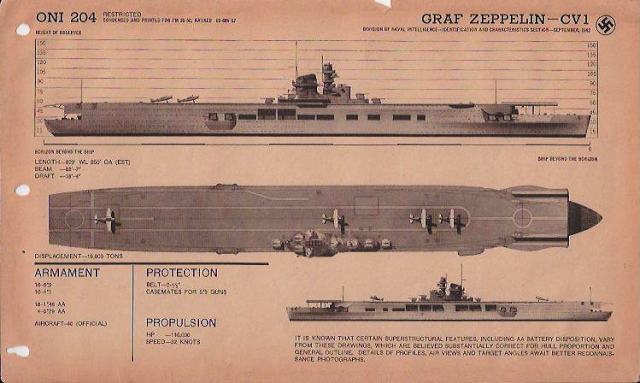


Fate after the war

In April 1943 Graf Zeppelin was towed eastward, first to Gotenhafen, then to the roadstead at Swinemünde and finally berthed at a wharf in the Parnitz River, two miles from Stettin.

There she languished for the next two years with only a 40-man custodial crew in attendance. When Red Army forces neared the city in April 1945, the ship’s Kingston valves were opened, flooding her lower spaces and settling her firmly into the mud in shallow water.
At 6pm on April 25th 1945, just as the Russians entered Stettin, commander Wolfgang Kähler radioed the squad to detonate the explosives. Smoke billowing from the carrier’s funnel confirmed the charges had gone off, rendering the ship useless to her new owners for many months to come.
The Soviets decided to repair the damaged ship and it was refloated in March 1946 and enlisted in the Baltic Fleet as aircraft carrier Zeppelin. The last known photo of the carrier is dated April 7th, 1947.


For many years, no other information about the ship’s fate was available. After the opening of the Soviet archives, new light was shed on the mystery. What is known is that the carrier was as “PB-101” (Floating Base Number 101) in February 3, 1947, until, on August 16, 1947, it was used as a practice target for Soviet ships and aircraft.
Allegedly the Soviets installed aerial bombs on the flight deck, in hangars and even inside the funnels (to simulate a load of combat munitions), and then dropped bombs from aircraft and fired shells and torpedoes at it.
By this point, the Cold War was underway, and the Soviets were well aware of the large numbers and central importance of aircraft carriers in the U.S. Navy, which in the event of an actual war between the Soviet Union and the United States would be targets of high strategic importance.
After being hit by 24 bombs and projectiles, the ship did not sink and had to be finished off by two torpedoes. The exact position of the wreck was unknown for decades.

The Wreck was discovered in 2006 by Polish researchers in the Baltic off Władysławowo, at the head of the Hel Peninsula.

Sunday, September 30, 2018

WWII German Aircraft Carriers could they have impacted the war?


 I have posted before about WWII Germany's only Aircraft Carrier.  I had blogged about that carrier back in 2016.  Now this is a "What if" if Germany had gotten their carriers into the war especially after seeing the effect that carriers were having on the war in the Pacific.   

It might be easy to throw out a discernible “no” when asking such a historical “what if” given that we know the real outcome. What if the Germans developed the atomic bomb? What if America was ready for Pearl Harbor? What if the D-Day landings had failed? Yet, military history captures the imagination in part, in that we get to live out events beyond our own time in history.
The German military was feared for many reasons in the 1930’s and 40’s, but the might of their aircraft carriers was not one of them. Germany would produce only 2 aircraft carriers, if you could actually call either a full production. Both remained in port and neither would see service.
Stern View of the Graf Zeppelin German Aircraft Carrier.
Given that we know the outcome without the carriers in action and that outcome was less than favorable to the Germans, let’s consider the alternative. Could Germany have won the battle of the Atlantic with momentum on it’s side had the aircraft carriers been pressed into service? Would allied shipping already in a state of fear over the dreaded U-boat have been given more problems than they could solve with the addition of air power at sea?
Graf Zeppelin at her launch December 1938
It can be said of war that the military leadership’s primary mission is to give the enemy more problems than they can solve. It is the premise behind combined arms exercises that bring to bear the full spectrum of military power. Air, land, and sea converge to create these myriads of problems for the enemy.
In that sense, it would be a discernible yes that the presence of German aircraft carriers in the Atlantic would have created another problem for the allies.
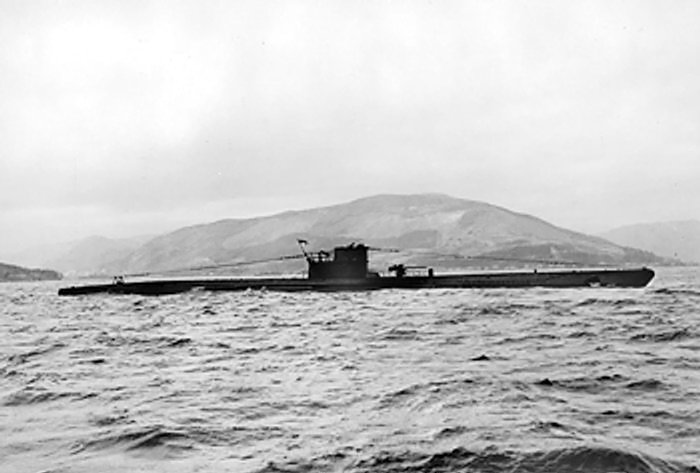
U-570 scourge of the sea to the allies during WW2
Ponder the Bismarck roaming the open seas among herds of wolfpack U-boats and the aircraft of the Graf Zeppelin soaring overhead. The Allied “problems” would now exist under, on the surface and above the sea.
The importance of aircraft carriers in the Pacific proved their strategic and tactical value. It demonstrates with certainty that Germany would have gained some strategic and tactical value had they put completed carriers to sea. Would it have been enough to win the Battle of the Atlantic?
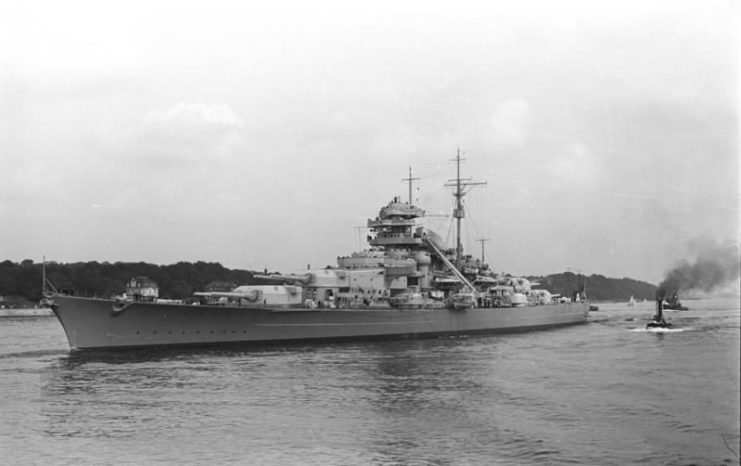
Bismarck in 1940. By Bundesarchiv,
To answer this question, one needs to discover the reason Germany decided to forgo the full production of aircraft carriers in the first place. In the 1930’s Germany did indeed put out a call for two aircraft carriers the first of which would be the Graf Zeppelin launched on December 8, 1938.
The 2nd designated Flugzeugtrager B would follow but would quickly find itself scrapped. Neither saw functional service and the reason boiled down to a limit in resources and a change in priorities.
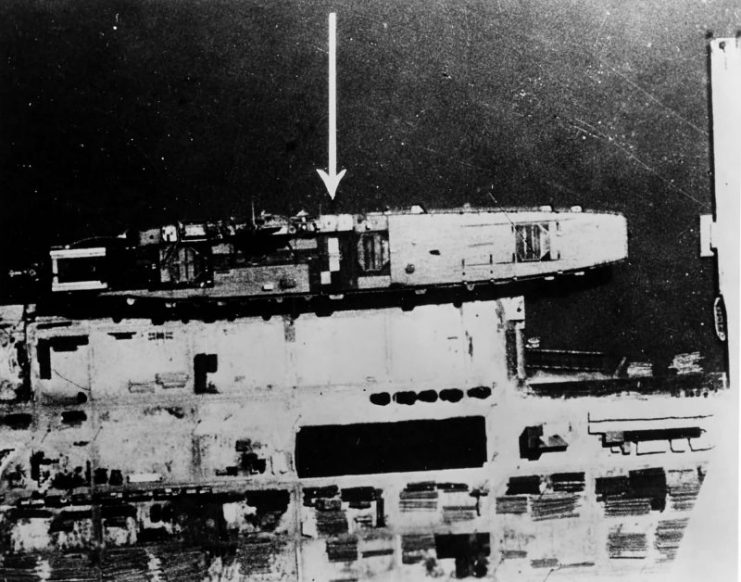
RAF reconnaissance photo showing Graf Zeppelin at Gotenhafen – 6 February 1942
With Germany’s rapid advance on the ground throughout Europe there was an emphasis placed on coastal guns and shore defenses. Moreover, there was a reported shortage of anti-aircraft guns that would be necessary to defend the ship.
As the war pressed on, a shortage of pilots further stretched resources to the limits and by 1943 the new head of the Kriegsmarine, Karl Donitz, ordered the program scrapped. Whereas the presence of aircraft carriers in the Atlantic would have indeed created a new problem for the Allies to solve, it would have most certainly pulled resources from other parts of Germany’s losing war effort.
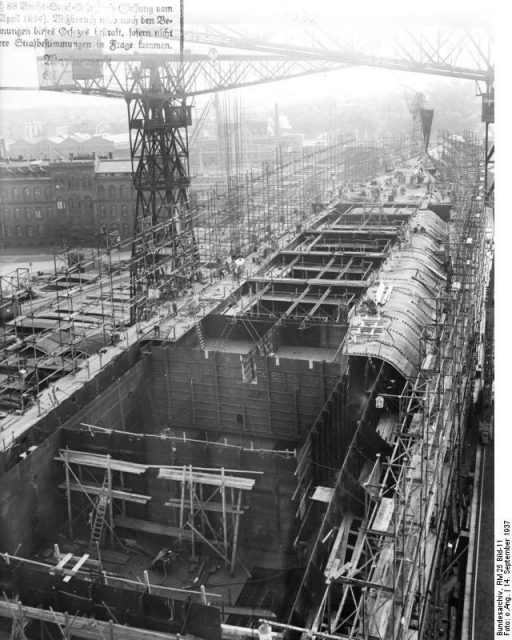
Flugzeugträger B under construction. By Bundesarchiv 


In the end, the quality of both the Graf Zeppelin and the Flugzeugtrager B would have fallen far behind that of the Allied Navies. Unless one hopes to imagine a fantastic scenario where Germany would have produced 5 to 8 carriers in a world where they lacked the resources to produce 2, the point seems moot.  By 1942, the Americans and Japanese were far ahead of the Germans in quality of their carriers and the numbers.
German aircraft carriers roaming the Atlantic would have most certainly caused problems and won its fair share of victories, but the fate of the war itself would have been sealed.
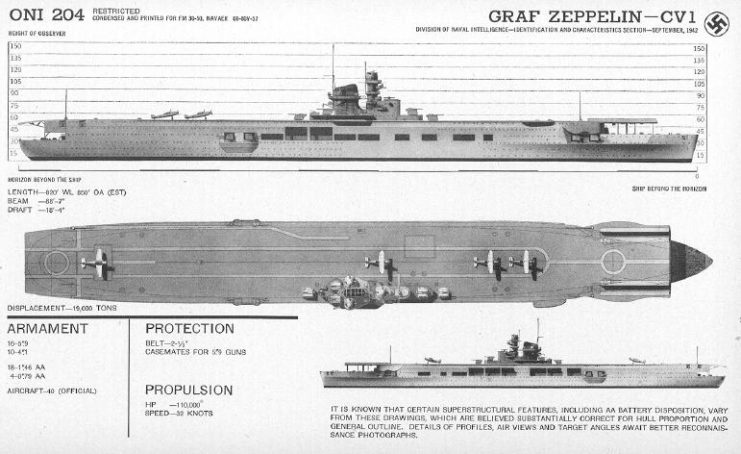
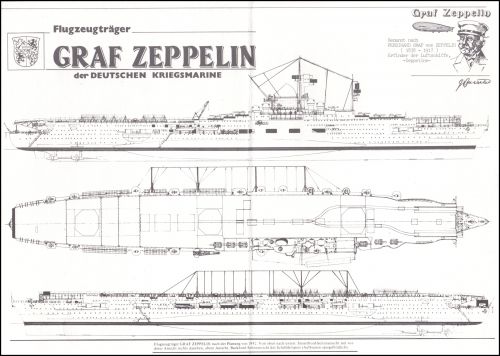
Drawing depicting the Graf Zeppelin
In the end, the Graf Zeppelin and the Flugzeugtrager B would have found companionship at the bottom of the Atlantic with the famed Bismarck. To have won a battle is not to have won the war. When one considers the Battle of the Atlantic as the sum of events from 1939 to 1945, it doesn’t appear that the outcome would have been any different If Germany had hoped to compete in the Atlantic with carriers, 1938 was far too late to have launched its first. The victory in this scenario again goes to the Allies and modern divers would have two new ghost ships in the Atlantic in which to explore

Wednesday, December 2, 2020

When WWII ended, What happened to the weapons?

 I know several people including myself that owned WWII era weapons, 

,  I find it interesting to hold a piece of history in my hands and wonder if those rifles could talk, what kind of story could they tell.  I also owned a wartime Nagant made in the Izhevsk arsenal made in 1942 right after they moved it across the Ural mountains to keep it from getting captured by the Fascisti invaders 

and of course a Garand....until that tragic Kayak and canoe accidents *sniff*

World War II ended 75 years ago – so what happened to the hundreds of millions of weapons that were made for it?

World War II was like no other war: it was warfare on an epic and global scale.

War Production 1939 to 1945 (estimated)

Major weapons groups & System Total

  • Tanks, self-propelled artillery, vehicles: 6 million
  • Artillery, mortars, anti-tank guns: 8 million
  • Aircraft: 850,000
  • Missiles: 45,000
  • Ships: 55,500
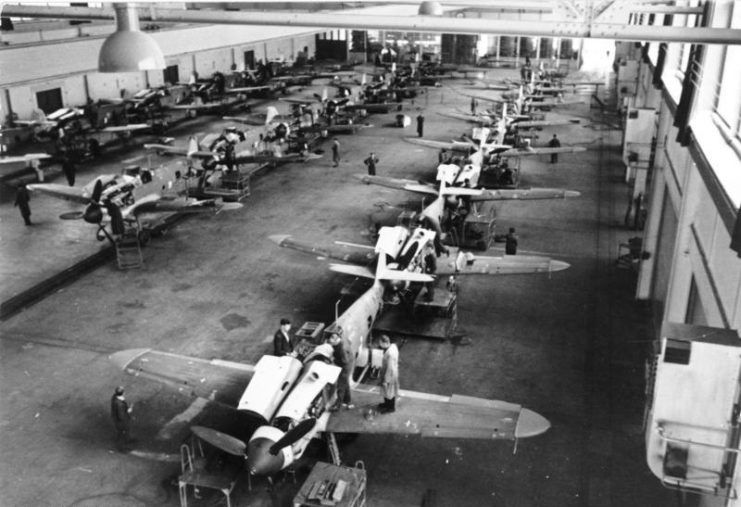
Assembly line of Messerschmitt Bf 109G-6s fighters in a German aircraft factory. By Bundesarchiv – CC BY-SA 3.0 de
Assembly line of Messerschmitt Bf 109G-6s fighters in a German aircraft factory. By Bundesarchiv –

What probably set this war apart from other conflicts was the rapid pace at which technology progressed throughout it.

For instance, at the start of the war, most sides were using prop-driven fighter aircraft such as the French De.520 monoplane.


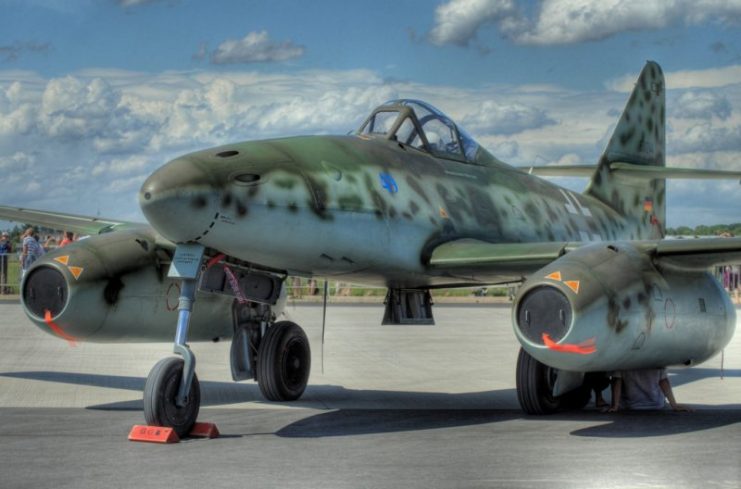
Dewoitine D.520. Photo: PpPachy / CC BY-SA 3.0But by the end of the conflict, aircraft such as the jet-powered German Me 262 and British Gloster Meteor were entering service and becoming the norm, thus hailing in the postwar dominance of jet propulsion in air warfare.

Messerschmitt Me 262 B1-A.Photo gravitat-OFF CC BY 2.0
Messerschmitt Me 262 B1

Dewoitine De.520 C.1 compared to the Me 262 A-1a [Percentage Increase]

Maximum speed: 347 mph (560 km/h) 559 mph (900 km/h ) +61%

Rate of climb: 2,820 ft/min (853 m/min) 3,900 ft/min (1,200 m/min ) +38%

Service ceiling: 33,000 ft (10,000 m) 37,565 ft (11,450 m ) +14%

Range: 777 mi (1,250 km) 652 mi (1,050 km) -16%

What actually happened to all this weaponry after the war? Well, the answer is not as straightforward as you might think.

Many of the new types of weaponry which appeared during the war were produced to meet varying needs and specifications. Because they’d been built to such specialist requirements, they rapidly became outdated. This resulted in a huge amount of equipment being scrapped when the fighting was done.


German equipment destroyed in the Mont Ormel area, waiting to be scrapped near the Dives River-Valley

Many vehicles, aircraft, and ships were sold for scrap, being stripped of valuable parts and being melted down as metals like aluminum could be re-used.

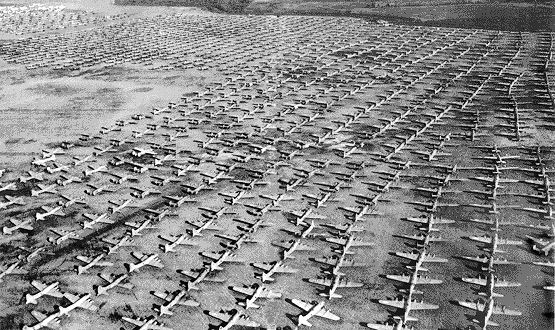
The numbers involved were truly staggering. Between 1945 to 1946, around 5,500 aircraft were scrapped at Kingman Air Force Base in Arizona alone.

Acres of World War II aircraft in storage, awaiting their fate at Kingman, 1946.

In Germany, the scale of the scrapping was on a similar if not a more intense scale as the ravaged economy was in desperate need of raw materials.

German military aircraft in the yard of a German aluminum works at Grevenbrioch. The wrecked planes will be broken up for scrap.

In addition, a lot of the Allied weaponry was scattered around the world and it was simply too expensive to ship it all home.

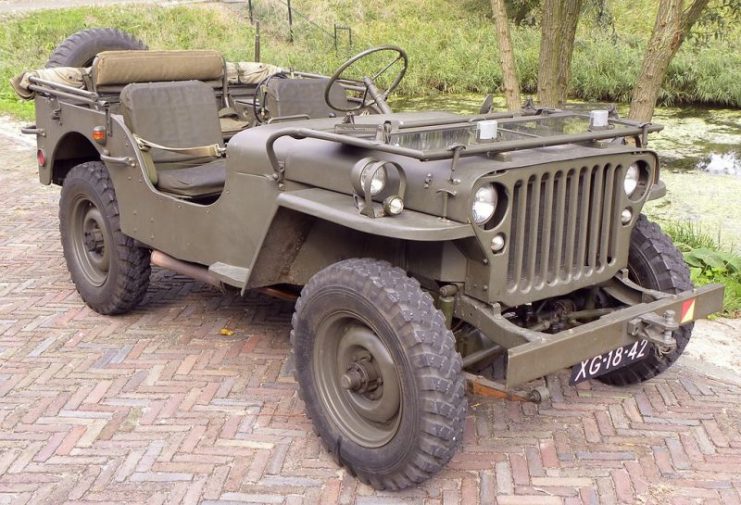
A 1943 Willys Jeep, the basis for the design of jeepneys. Photo: Joost J. Bakker / CC BY 2.0
A 1943 Willys Jeep, the basis for the design of jeepneys. 

Such a large number of American Jeeps were left behind in the Philippines that a whole new type of public transport was created by converting them into small buses called ‘Jeepneys.’ I'm sure that OldNFO among others have seen those vehicles in their travels.

A typical jeepney. Photo: Lawrence Ruiz – CC BY-SA 4.0
A typical jeepney. 

In the case of Libya and Tunisia, there were so many military vehicles left abandoned on the battlefield that recovering them as scrap actually helped the economies of these countries to recover after the war.

Most often, a lot of the equipment used in battle had been destroyed beyond repair. Ships and aircraft were particularly prone to this. A ship sinking a thousand feet to the seabed or an aircraft crashing into the ground at 400 miles per hour was normally completely useless.

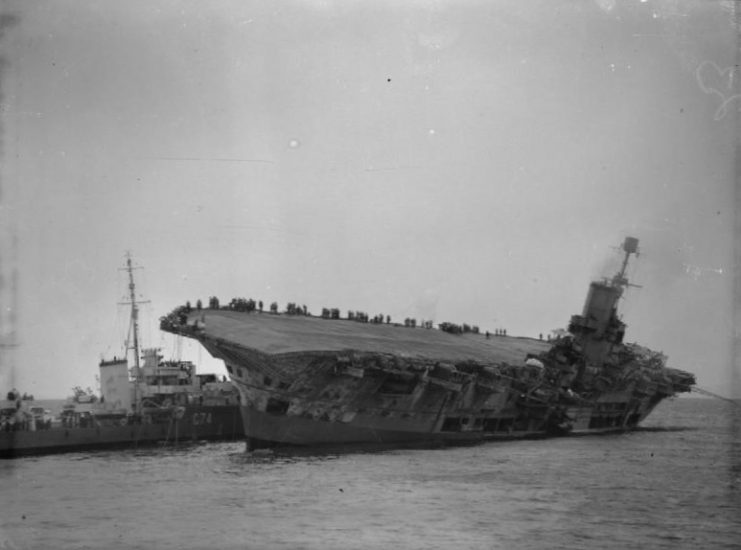
The HMS Ark Royal, a British Aircraft Carrier, was torpedoed off Gibraltar by the Germans in 1941. It now rests on the seabed at a depth of around 3,300 ft (1,000 meters).

Legion moving alongside the damaged and listing Ark Royal to take off survivors

Tanks were a different matter altogether. They could often be recovered from the battlefield, repaired and put back into service quickly. However, by the end of the war, most of these tanks were thoroughly worn out and nearly unserviceable.

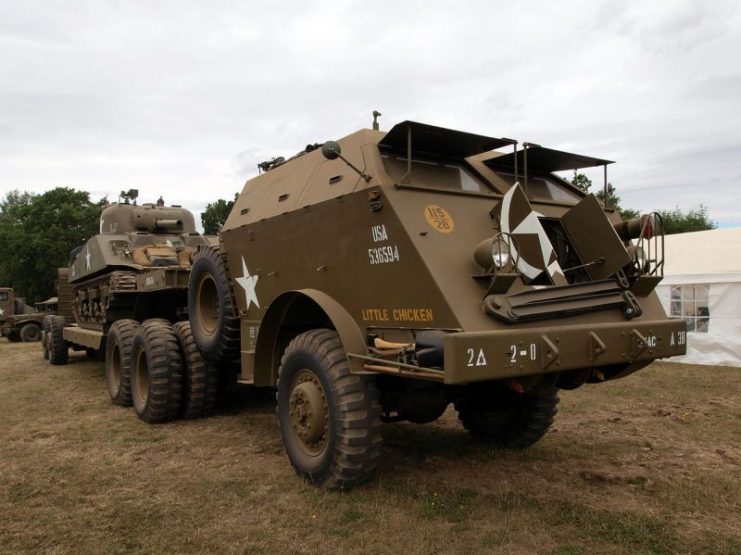
M25 Tank Transporter Dragon Wagon.

There was also a common problem in that production of many World War II designs had stopped years ago. So vehicles, ships, and aircraft were either getting too old to be adequately maintained, or were no longer effective in a fast-evolving battlefield.

Type 3 Chi-Nu tanks of the 4th Tank Division, with a few Type 3 Ho-Ni III self-propelled guns among them.

This was particularly true of the German and Japanese equipment, as most of their production capability and infrastructure had been destroyed by the mass bombing campaigns of World War II. This rendered most of their military equipment impractical to use after the war.

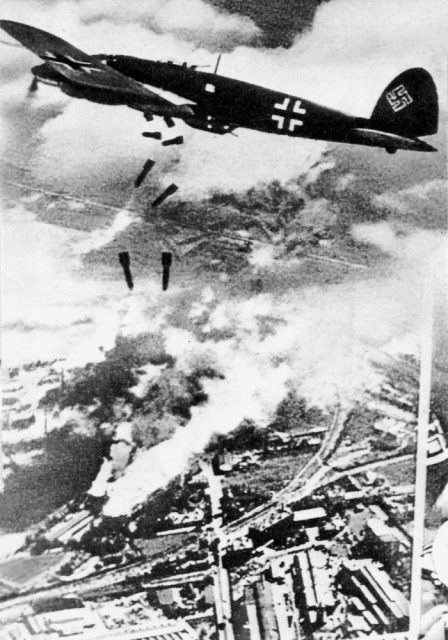
German Heinkel He 111 planes bombing Warsaw, Sep 1939.

At the end of the war, most German aircraft had been destroyed, were in a bad state of repair, or had been deliberately disabled by their crew. There was also a reluctance by countries to use Axis equipment as such weapons were seen as former tools of oppression and hatred.

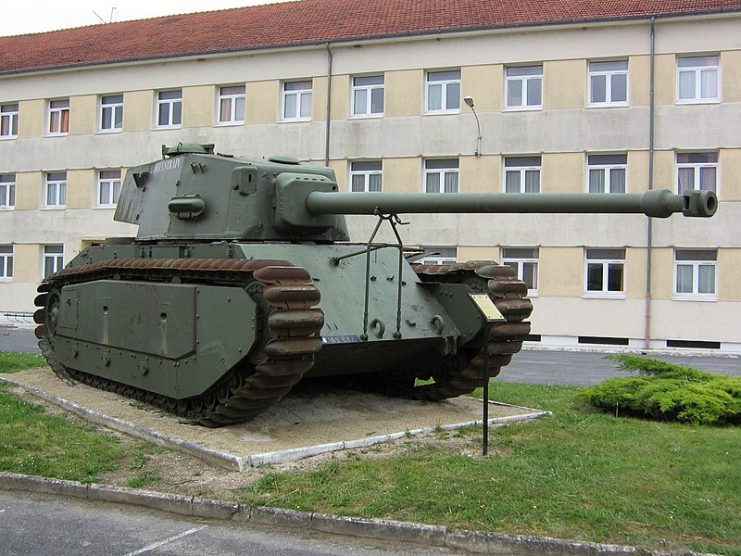
Despite that, there were instances where Axis equipment was used out of necessity or desperation. The French used a number of German Panther tanks from the end of the war until 1949, at which point the much delayed (and ultimately very unsuccessful) home-produced ARL-44 heavy tank replaced them.

ARL 44 at Mourmelon-le-Grand. By The shadock – CC BY-SA 3.0
ARL 44 at Mourmelon-le-Grand. 

The Lebanese brought a handful of Italian SM 79 medium bombers due to their ties with Italy and the fact they were inexpensive to buy after the war. But the aircraft quickly fell into disuse as they were old and poorly maintained.

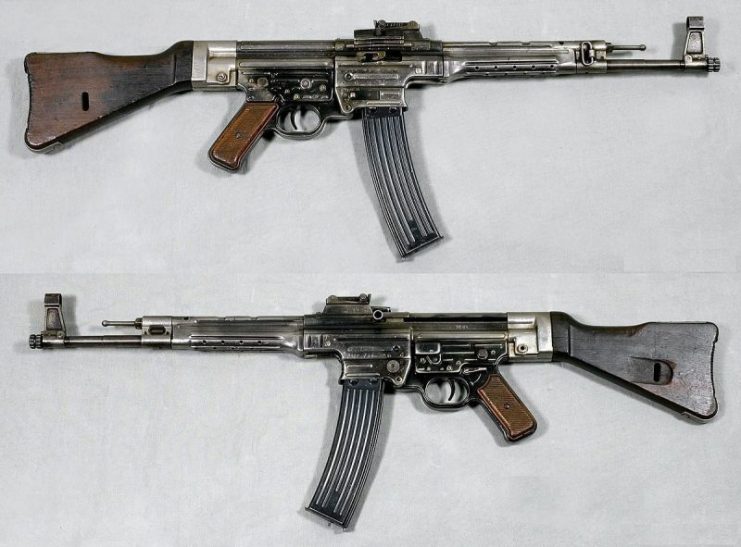
The Sturmgewehr 44 Assault rifle was a ground-breaking German design. It arose out of a war-time need for an infantry rifle that was more compact, semi-automatic, and with a large magazine capacity at the expense of a lesser range. The weapon later went on to have a significant influence on the development of the Russian AK-47 assault rifle.

The Sturmgewehr 44 Assault rifle. A soldier demonstrates the transitional MP 43/1 variant. By Bundesarchiv – CC BY-SA 3.0 de
The Sturmgewehr 44 Assault rifle. A soldier demonstrates the transitional MP 43/1 variant. By Bundesarchiv 

Few survived the war as only a limited number were made and the 7.92×33mm caliber made it impractical for widespread post-war military service. But it was used for a number of years afterward by the East German Paramilitary Police.

The STG 44 was also used by the East German Paramilitary Police Force until 1962. However, such uses of Axis weaponry was the exception rather than the rule.

Often the method to prolong the use of World War II munitions was to upgrade them so that they remained relevant and effective.

MP44 (Sturmgewehr 44), Germany.

Many armored fighting vehicles proved to have very adaptable designs. They were often modified or upgraded to give them a second life and extend their usefulness.

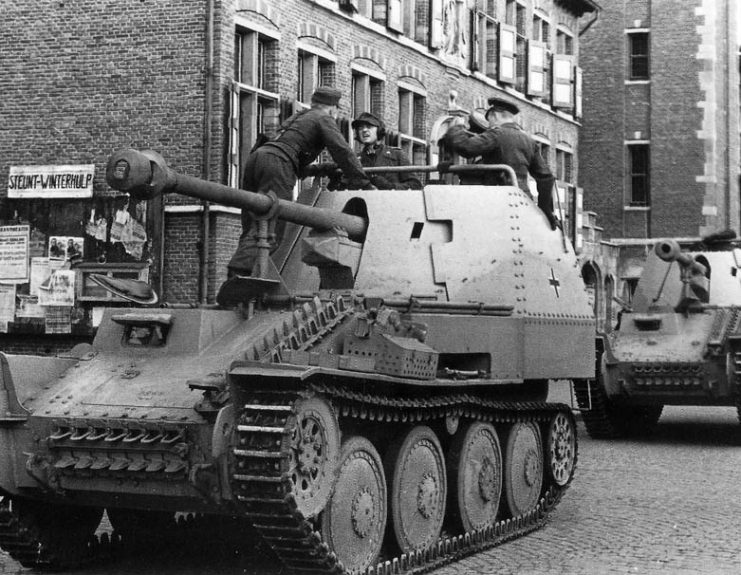
This trend started during World War II, and a good example was the Czech-supplied Panzer 38(t) which was later rebuilt and turned into the German Tank Destroyer Marder III. The modifications extended its useful service life for another few years although, like many designs, the Marder III had reached the limit of its potential by the end of World War II.

Marder III Ausf. M tank destroyer.Photo: Bundesarchiv, Bild 101I-297-1729-23 / Kurth / CC-BY-SA 3.0
Marder III Ausf. M tank destroyer

A precedent had been set, and some weaponry proved to have such great potential that it was continually upgraded, often reaching the pinnacle of its design potential long after the war years.

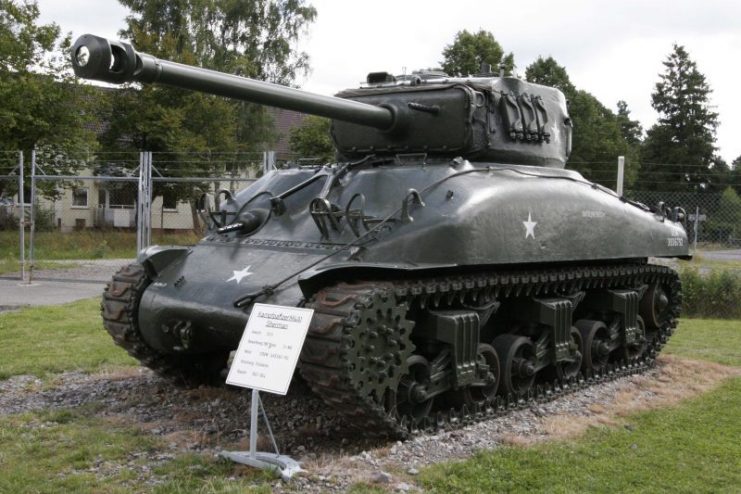
A prime example of this was the American M4 Sherman tank, which was still being upgraded decades after it was first produced.

Sherman M4A1(76). Photo: Baku 13 / CC By-SA 3.0
Sherman M4A1(76). 

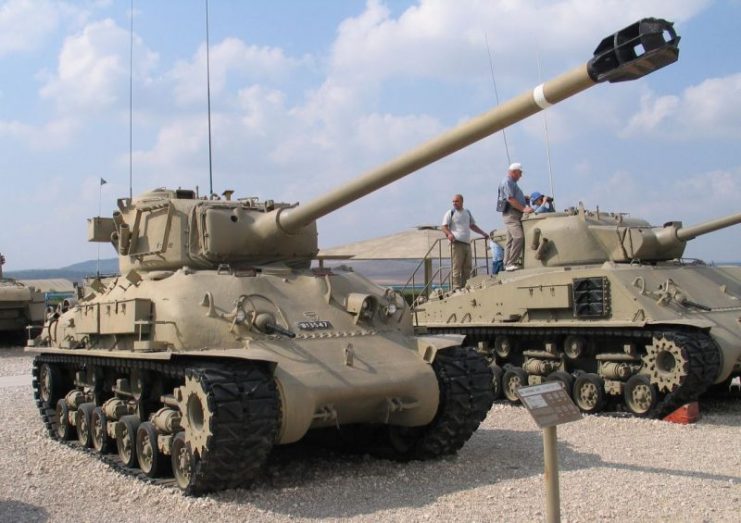
Even as late as the early 1960s the tank was being modified by the Israelis, who upgraded 180 surplus American Sherman M4A1s. They added a shortened version of the powerful French 105 mm F1 gun, as well as giving it a new, improved suspension and engine.

Sherman M-51. Photo: Bukvoed / CC BY 2.5
Sherman M-51. 

The new tank was given the designation M-51 and nicknamed the “Super Sherman.” It proved highly effective against the more modern Soviet-built T-54, T-55, and T-62 tanks the Arab army was using.

The M-51 was eventually phased out of Israeli service in the 1980s. They sold 100 to the Chilean army who used them until 1999 when they were replaced by Leopard 1s.


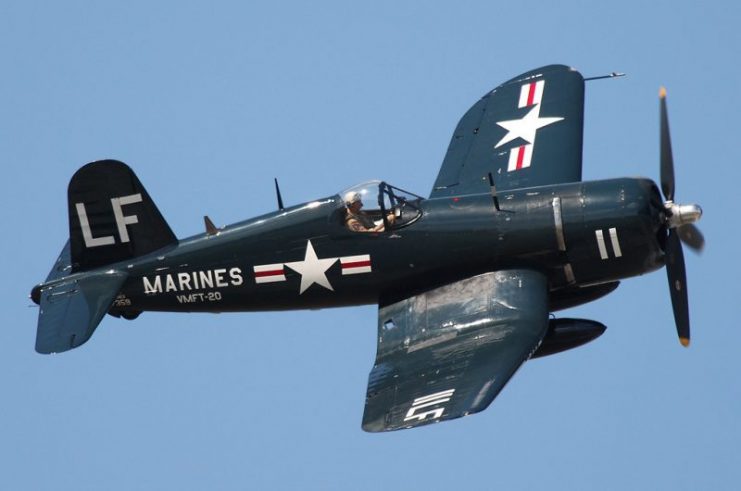
Some designs were so good and well made that they soldiered on for years to come with few, if any, modifications. The classic Russian T-34/85 medium tank and the F-4U Corsair naval fighter airplane fell into this category.

The F-4U Corsair was still being produced for years after the war, with production only ending in 1953. After that, the aircraft was slowly phased out of military service until 1976 when the El Salvador Air Force completely replaced it.


Vought F4U Corsair. Photo: Gerry Metzler / CC BY-SA 2.0
Vought F4U Corsair.

As ships were both costly and time-consuming to build, as well as being very labor intensive to run, many were disregarded after the war. However, some ships, like the USS Iowa, were maintained.

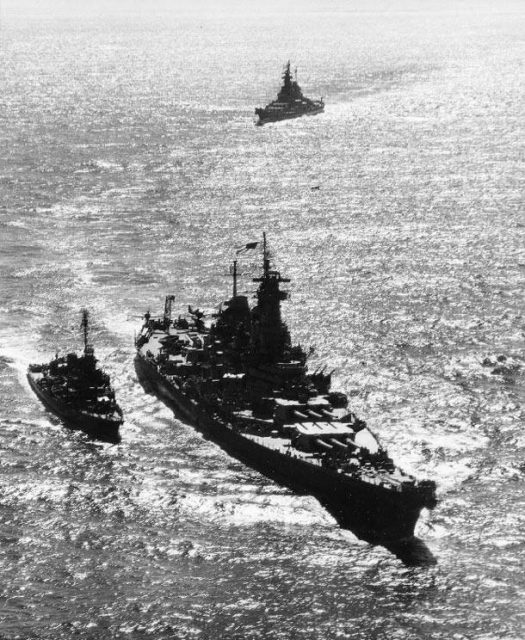
The Iowa was a 58,400 ton American Battleship which was continually updated and kept in service on and off until 1990 before entering the naval reserve and, eventually, in 2011, becoming an official Museum ship.

USS Missouri leading USS Iowa into Tokyo Bay, Japan, 30 August 1945. Note destroyer USS Nicholas in escort.

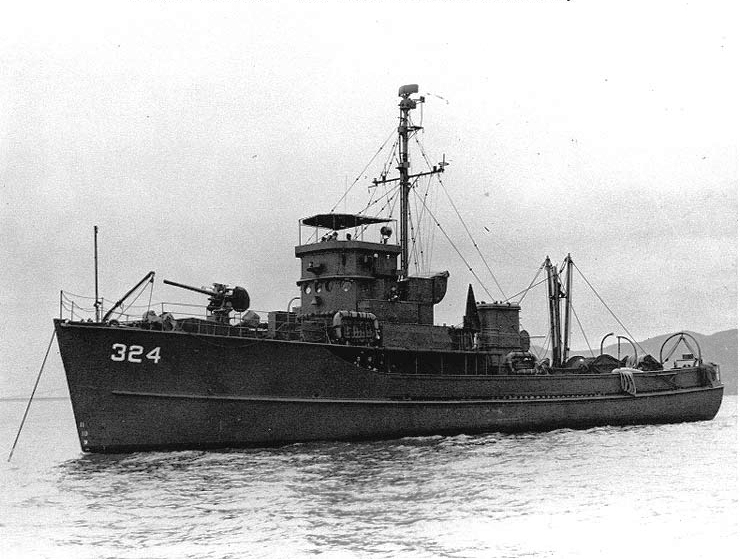
Very few military boats were sold to private individuals, but it is interesting to note that actor, John Wayne, bought a former World War II American YMS-1-class. It was a 136 ft long Yard Mine Sweeper and he ran it for the last 17 years of his life.

It was said that the ship was so expensive to run that it nearly bankrupted him several times and he had to take on extra movies to be able to pay to keep it running.

USS YMS-324 in San Francisco Bay, c. 1945–46

On the other hand, many weapons were so badly designed in the first place that they were scrapped as soon as possible and were never used post-war.

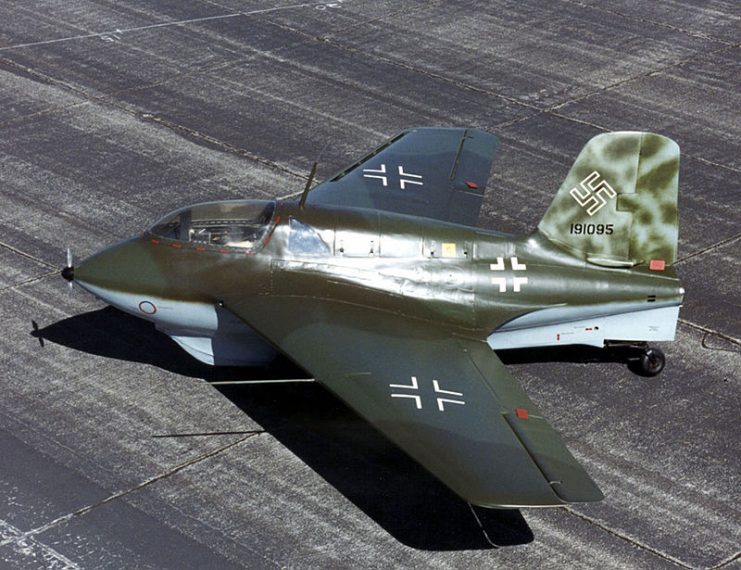
This was the case for both the German Me 163 Komet Jet Interceptor and the Italian Breda 6.5mm Model 30 light machine gun. This gun was prone to over-heating and jamming as well as having no carrying handle, a small magazine capacity, and a barrel changing issue.

A German Messerschmitt Me 163B Komet rocket-propelled fighter (s/n 191095) at the National Museum of the United States Air Force, Dayton, Ohio (USA).

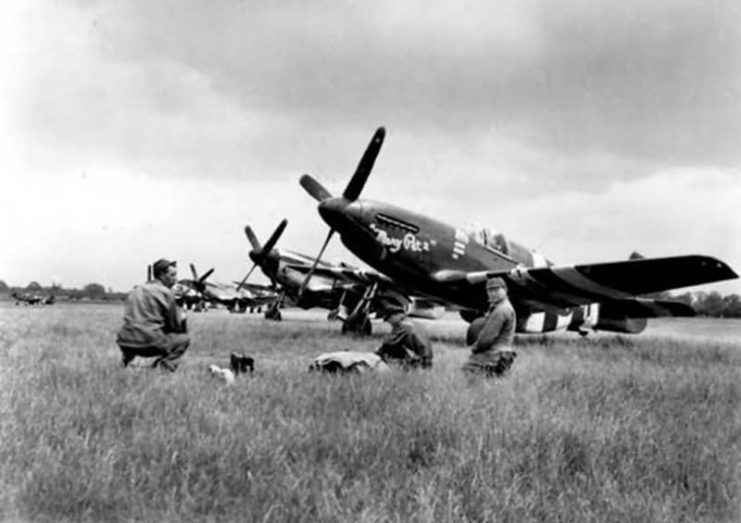
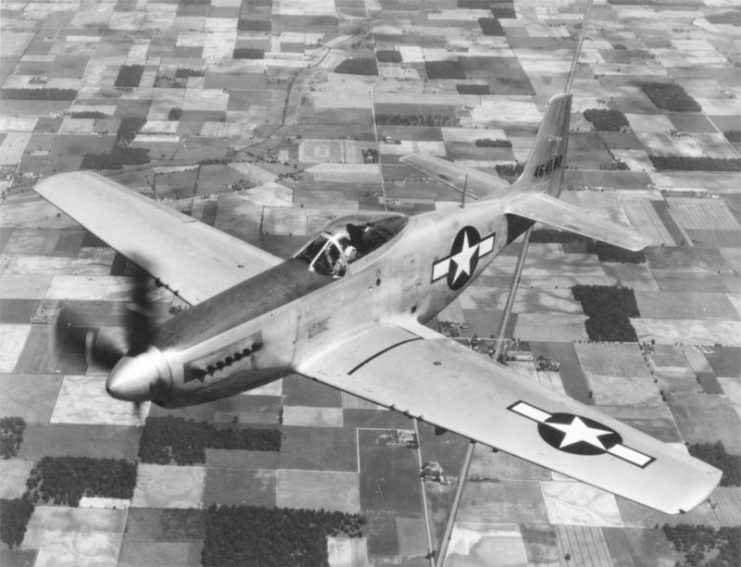
Some World War II surplus stock was very attractive to buy as it was in plentiful supply and the designs were combat proven. Such stock had the added bonus of being readily available and often at very affordable prices. For instance, a lot of third world countries bought World War II aircraft like the American P-51 Mustang for counter-insurgency duties.

North American P-51 Mustang of 354th Fighter Group D-Day 1944.

Such surplus stock could even be cannibalized for spare parts to keep a weapon that was out of production running for years.

A lot of small arms were so robustly built for the demanding environment of the battlefields that they were able to be kept in use for a very long time. They also proved popular on the civilian market because they often were extremely simple to operate – they were designed to be so because mostly they were used by conscripts or poorly trained troops.

Mustang P-51H
Mustang P-51H

As such, a lot of the small arms from World War II had long military careers after the war. The American M3 sub-machine gun was used until recently by the Philippine Army, and the British Bren light machine gun was only finally phased out of service from the Irish Army Reserves in 2006.

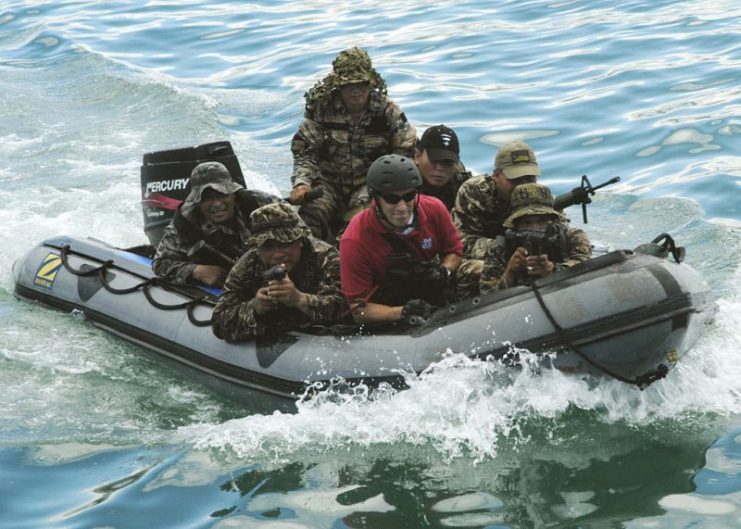
Philippine Naval Special Warfare Group members. Two of them are armed with M3.

Some weapons are just so well designed or eminently suitable for updating that they have stayed in service up to the present day. The M1 Garand rifle and the Colt M1911A1 automatic handgun are two excellent examples.

One firearm which provided itself to be exceptional was the American M1 Garand .30 caliber semi-automatic rifle.

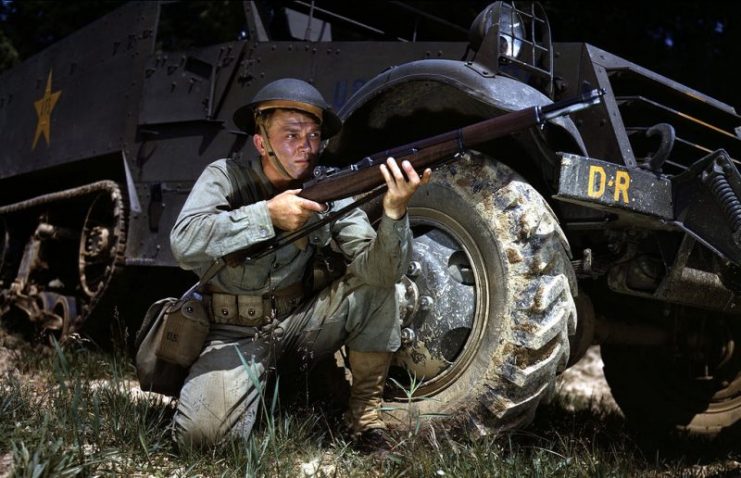
World War II Infantryman, kneeling in front of M3 Half-track, holds and sights an M1 Garand rifle. Fort Knox, Kentucky, June 1942.
World War II Infantryman, kneeling in front of M3 Half-track, holds and sights an M1 Garand rifle. Fort Knox, Kentucky, June 1942. Posed Propaganda shot for the studios and Life Magazine.

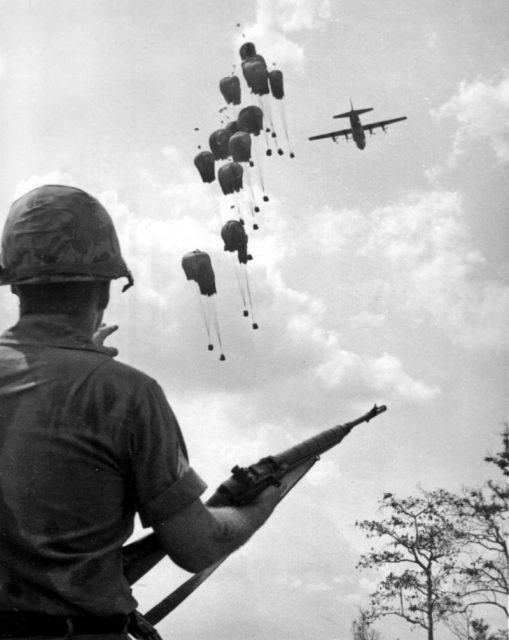
After the war, it found a new market, at first in its original form before continuing in front-line service after being modified to become the M14 rifle 7.62 mm, selective fire automatic rifle. This gun stayed in the American Army and Marine Corp service until 1964, when it began to be replaced by the M-16 5.56mm automatic rifle.

A U.S. soldier with an M14 watches as supplies are dropped in 1967 during the Vietnam War.

World War II second-hand small arms were popular for decades. It is a sad fact that the weapon used by Lee Harvey Oswald in 1963 to kill the American President, JFK, was a war surplus Italian Carcano Model 91/38 rifle, that he had bought by mail order for just $12.98 ($299 at Classic Firearms.com at present time and eligible for C&R.)

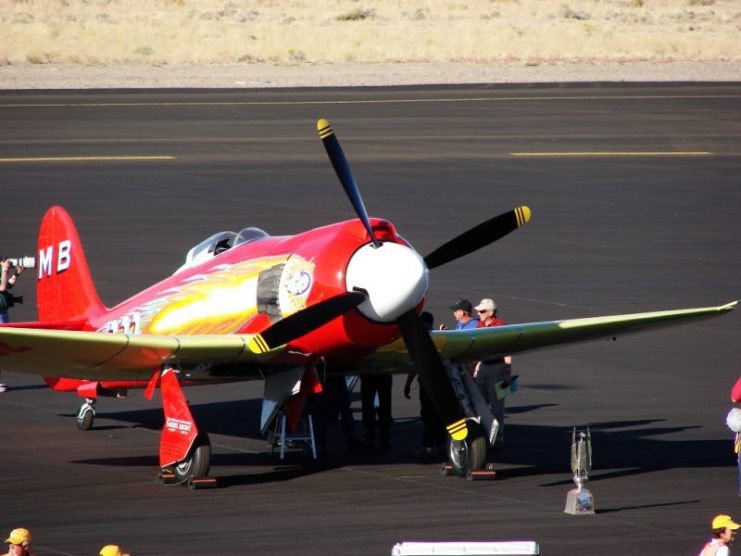
Some of the ex-military equipment of World War II was put to more unusual but still practical use. For instance, since 1964, the now world famous Reno Air Races in Nevada, United States, has included a category called “Unlimited Gold” which is solely for World War II aircraft.


Hawker Sea Fury. September Fury at the Reno races. Photo: Calyponte / CC BY-SA 3.0
Hawker Sea Fury. September Fury at the Reno races.

The 2018 winner of this class was a British TMK 20 Sea Fury which had a course average speed of 418 mph (over 673 kph). Other participants were F-8F Bearcats and P-51D Mustangs.

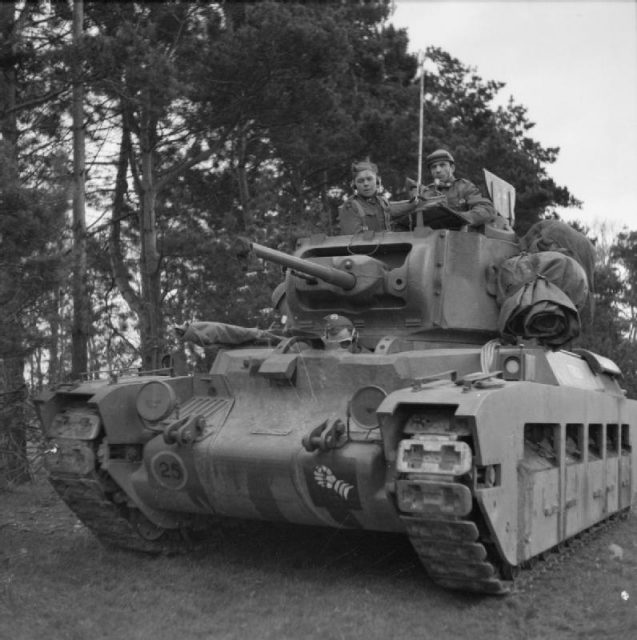
Some military vehicles were converted to agricultural use. This was particularly the case in Australia. The turrets were taken off British Matilda tanks and bulldozer blades were added, while Sherman tanks were used to help plow fields.

British Matilda II tank.

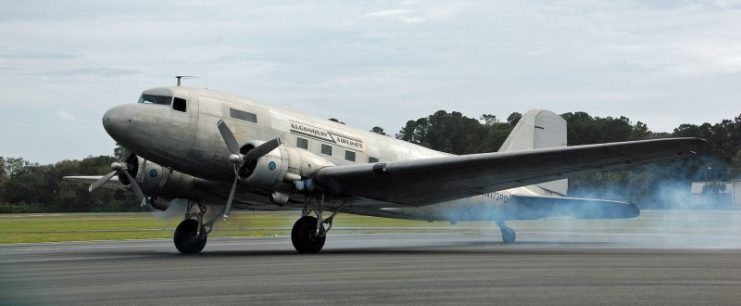
While many aircraft found new leases of life well into the 1950s and 60s as trainers, target tugs, or transporters, the American DC3 Dakota military transporter is still used today as a cargo carrier in some South American countries.

A 1944 Douglas DC-3C (2015). Photo: Bubba73 (Jud McCranie) / CC BY-SA 4.0
A 1944 Douglas DC-3C (2015).

The Canadian naval World War II cargo ship, the Cromwell Park, was subsequently used to create an artificial reef in Rivera Beach, Florida. The ship had been sold for commercial shipping in 1946 and renamed the Harmac Vancouver. Later, it was sold on again, this time to a Greek company where it was renamed Amaryllis.

In 1965, the ship was trying to take shelter from a hurricane when it ran aground on the East Coast of Florida in the United States. In 1968, the ship was towed to a spot that was 85 feet (almost 26 meters) deep and sunk to make a permanent artificial reef.

An M22 Locust, American light tank at Bovington Tank Museum in the UK.

Over 70 years later, these weapons are still around is a testimony to their enduring design and ingenuity.