Webster

The Constitution was made to guard the people against the dangers of good intentions." --American Statesman Daniel Webster (1782-1852)


Showing posts sorted by relevance for query graf Zeppelin. Sort by date Show all posts

Friday, August 26, 2016

Graf Zeppelin, the only carrier that the Nazi's had.


  This Post took a couple of days to do, between work, sleep and work..you know how it goes.  I remembered reading about this on wiki a year or so ago.  I decided to do a post on something that didn't relate to politics but to history, something that I am a fan of.  When I was looking at the pics of the Graf, I could see the similarities with the Japanese designs but with a German twist.  I found out that the Germans had gone to Japan to examine the Japanese carrier Akagi, and the designs bear this out.  I dug out references from several location from google and "Wiki" to show pics and information on the German carrier.  The fate of the Graf showed me that the Germans suffered from "Tactical" mindset and not strategic planning.  Their equipment designs and combat tactics reflected this mindset.  If the Germans had gotten their capital ships going, the battle of the Atlantic might have had a different outcome.


The Graf Zeppelin-class aircraft carriers were four German Kriegsmarine aircraft carriers planned in the mid-1930s by Grand Admiral Erich Raeder as part of the Plan Z rearmament program after Germany and Great Britain signed the Anglo-German Naval Agreement. They were planned after a thorough study of Japanese carrier designs; nevertheless, German naval architects ran into difficulties due to lack of experience in building such vessels, the situational realities of carrier operations in the North Sea and the lack of overall clarity in the ships' mission objectives. This lack of clarity led to features either eliminated from or not included in American and Japanese carrier designs. These included a complement of cruiser-type guns for commerce raiding and defense against British cruisers. American and Japanese carriers, designed along the lines of task-force defense, used supporting cruisers for surface firepower, which allowed flight operations to continue without disruption and kept carriers out of undue risk of damage or sinking from surface action.
A combination of political infighting between the Kriegsmarine and the Luftwaffe, disputes within the ranks of the Kriegsmarine itself and Adolf Hitler's waning interest all conspired against the carriers. A shortage of workers and materials slowed construction still further and, in 1939, Raeder reduced the number of ships from four to two. Even so, the Luftwaffe trained its first unit of pilots for carrier service and readied it for flight operations. With the advent of World War II, priorities shifted to U-boat construction; one carrier, Flugzeugträger B, was broken up on the slipway while work on the other, Flugzeugträger A (christened Graf Zeppelin) was continued tentatively but suspended in 1940. The air unit scheduled for her was disbanded at that time.
The role of aircraft in the Battle of Taranto, the pursuit of the German battleship Bismarck, the attack on Pearl Harbor and the Battle of Midway demonstrated conclusively the usefulness of aircraft carriers in modern naval warfare. With Hitler's authorization, work resumed on the remaining carrier. Progress was again delayed, this time by the demand for newer planes specifically designed for carrier use and the need for modernizing the ship in light of wartime developments. Hitler's disenchantment with the performance of the Kriegsmarine's surface units led to a final stoppage of work. The ship was captured by the Soviet Union at the end of the war and sunk as a target ship in 1947.

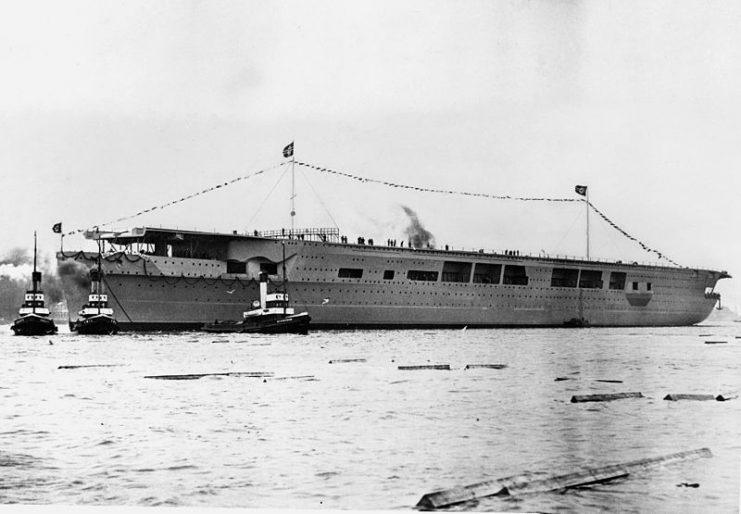
Graf Zeppelin is launched, 8 December 1938.
After 1933, the Kriegsmarine began to examine the possibility of building an aircraft carrier.[1] Wilhelm Hadeler had been Assistant to the Professor of Naval Construction at the Technical University of Berlin for nine years when he was appointed to draft preliminary designs for an aircraft carrier in April 1934. Hadeler's first design was a 22,000-long-ton (22,000 t) ship that could carry 50 aircraft and steam at 35 knots (65 km/h; 40 mph). The Anglo-German Naval Agreement, signed on 18 June 1935, allowed Germany to construct aircraft carriers with total displacement up to 38,500 tons, though Germany was limited to 35% of total British tonnage in any category of warship. The Kriegsmarine then decided to scale back Hadeler's design to 19,250 long tons (19,560 t), which would permit the construction of two ships within the 35% limit.
The design staff decided that the new carrier would need to be able to defend itself against surface combatants, which necessitated armor protection to the standard of a heavy cruiser. A battery of sixteen 15 cm (5.9 in) guns were deemed sufficient to defend the ship from destroyers. In 1935, Adolf Hitler announced that Germany would construct aircraft carriers to strengthen the Kriegsmarine. A Luftwaffe officer, a naval officer, and a constructor visited Japan in the autumn of 1935 to obtain flight deck equipment blueprints and inspect the Japanese aircraft carrier Akagi. The Germans also unsuccessfully attempted to examine the British carrier HMS Furious.
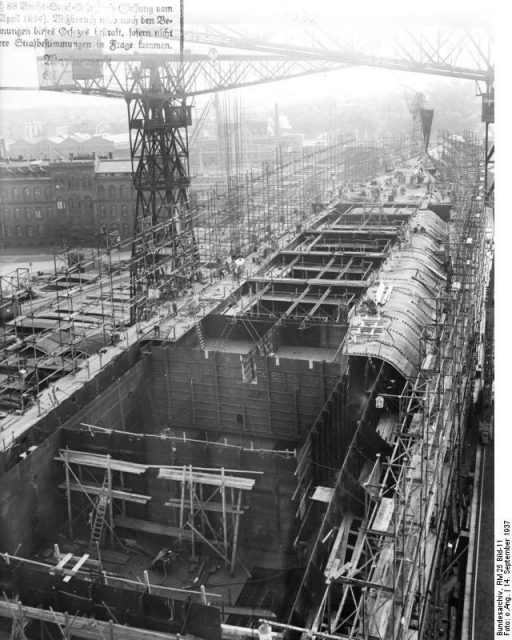
The keel of Graf Zeppelin was laid down on 28 December 1936, on the slipway that had recently held the battleship Gneisenau. The ship was built by the Deutsche Werke shipyard in Kiel. Two years later, Großadmiral (Grand Admiral) Erich Raeder presented an ambitious shipbuilding program called Plan Z which would build up the Kriegsmarine to a point where it could challenge the British Royal Navy in the North Sea. Under Plan Z, by 1945 as part of the balanced force the navy would have four carriers; the pair of Graf Zeppelin-class ships were the first two in the plan. Hitler approved the construction program on 1 March 1939. In 1938, a second carrier, ordered under the provisional name "B", was laid down at the Germaniawerft dockyard in Kiel. Graf Zeppelin was launched on 8 December 1938.
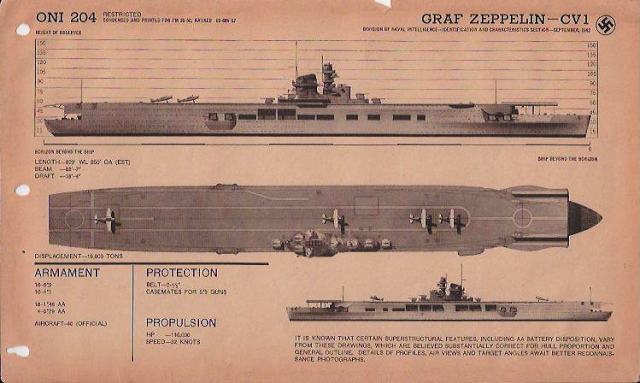
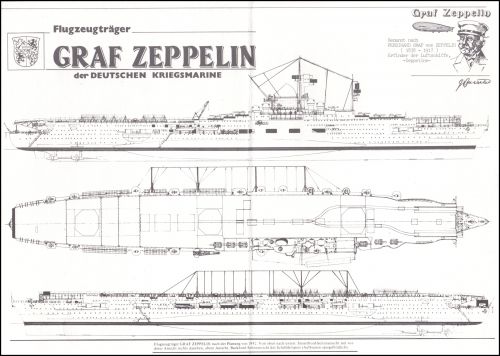
The Graf Zeppelin class's hull was divided into 19 watertight compartments, the standard division for all capital ships in the Kriegsmarine. Their belt armor was to vary from 100 mm (3.9 in) over the machinery spaces and aft magazines, to 60 mm (2.4 in) over the forward magazines and tapered down to 30 mm (1.2 in) at the bows. Stern armor was kept at 80 mm (3.1 in) to protect the steering gear. Inboard of the main armor belt was a 20 mm (0.79 in) anti-torpedo bulkhead.
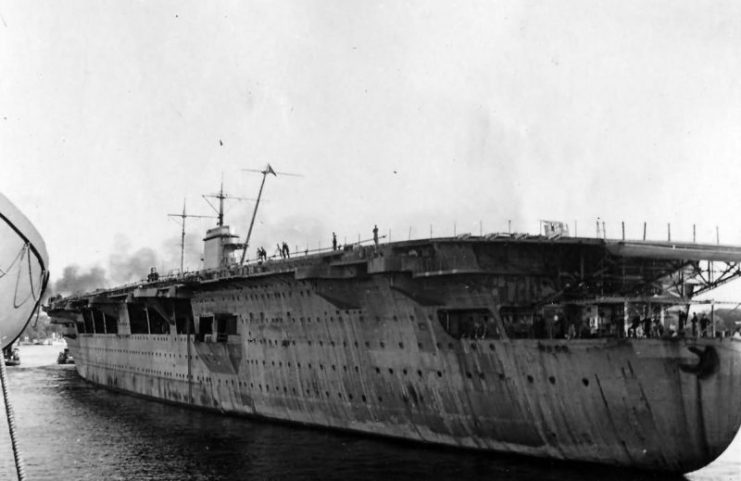
                                                                                     Graf Zeppelin at Kiel, June 1940, displaying her newly rebuilt bow. Also visible are her 15 cm casemate guns, before their removal to defend occupied Norway. The photo is marked Geheim ("secret").
Horizontal armor protection against aerial bombs and plunging shellfire started with the flight deck, which acted as the main strength deck. The armor was generally 20 mm (0.79 in) thick except for those areas around the elevator shafts and funnel uptakes where thickness increased to 40 mm (1.6 in) in order to give the elevators necessary structural strength and the critical uptakes greater splinter protection. Beneath the lower hangar was the main armored deck (or tween deck) where armor thickness varied from 60 mm (2.4 in) over the magazines to 40 mm (1.6 in) over the machinery spaces. Along the peripheries, it formed a 45 degree slope where it joined the lower portion of the waterline belt armor.
The Graf Zeppelins' original length-to-beam ratio was 9.26:1, resulting in a slender silhouette. However, in May 1942, the accumulating top-weight of recent design changes required the addition of deep bulges to either side of Graf Zeppelin's hull, decreasing that ratio to 8.33:1 and giving her the widest beam of any carrier designed prior to 1942. The bulges served mainly to improve Graf Zeppelin's stability but they also gave her an added degree of anti-torpedo protection and increased her operating range because selected compartments were designed to store approximately 1500 tons more fuel oil.
Graf Zeppelin's straight-stemmed prow was rebuilt in early 1940 with the addition of a more sharply angled "Atlantic prow", intended to improve overall seakeeping. This added 5.2 m (17 ft) to her overall length.The Graf Zeppelins' steel flight deck, overlaid with wooden planking, was 242 m (794 ft) long by 30 m (98 ft) wide at its maximum. It had a slight round down right aft and overhung the main superstructure but not the stern; being supported by steel girders. At the bow, the carriers were to have an open forecastle and the leading edge of her flight deck was uneven (mainly due to the blunt ends of her catapult tracks), but it did not appear likely that would have caused any undue air turbulence. Careful wind-tunnel studies using models confirmed this, but they also revealed that their long low island structure would generate a vortex over the flight deck in these tests when the ship yawed to port. This was considered to be an acceptable hazard when conducting air operations.[16]

Hangars

The Graf Zeppelin class's upper and lower hangars were long and narrow with unarmored sides and ends. Workshops, stores and crew quarters were located outboard of the hangars, a design feature similar to that of British carriers. The upper hangar measured 185 m (607 ft) x 16 m (52 ft); the lower hangar 172 m (564 ft) x 16 m (52 ft). The upper hangar had 6 m (20 ft) vertical clearance while the lower hangar had 0.3 m (1 ft 0 in) less headroom due to the ceiling braces. Total usable hangar space was 5,450 m2 (58,700 sq ft) with stowage for 41 aircraft: 18 Fieseler Fi 167 torpedo bombers in the lower hangar; 13 Junkers Ju 87C dive bombers and 10 Messerschmitt Bf 109T fighters in the upper hangar.


Aircraft

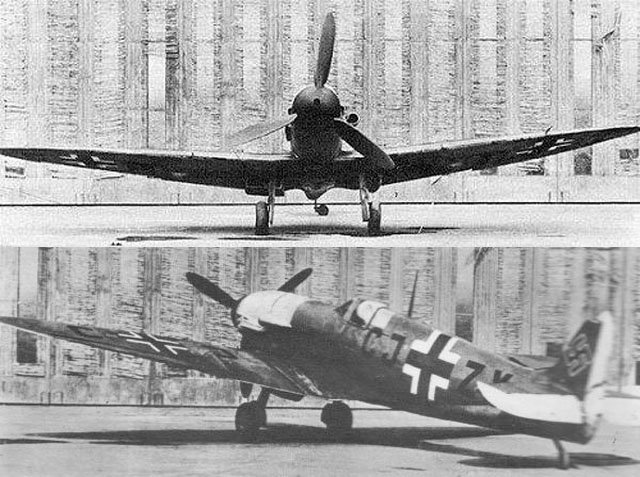
Bf 109T-1.
The expected role of the Graf Zeppelin class was that of a seagoing scouting platform and her initial planned air group reflected that emphasis: 20 Fieseler Fi 167 biplanes for scouting and torpedo attack, 10 Messerschmitt Bf 109 fighters, and 13 Junkers Ju 87 dive bombers. This was later changed to 30 Bf 109 fighters and 12 Ju 87 dive-bombers as carrier doctrine in Japan, Great Britain and the United States shifted away from purely reconnaissance duties toward offensive combat missions.
In late 1938, the Technische Amt RLM (Technical Office of the Reichsluftfahrtministerium or State Ministry of Aviation) requested that Messerschmitt's Augsburg design bureau draw up plans for a carrier-borne version of the Bf 109E fighter, to be designated Bf 109T (the "T" standing for Träger or Carrier). By December 1940, the RLM decided to complete only seven carrier-equipped Bf 109T-1s and to finish the remainder as land-based T-2s since work on Graf Zeppelin had ceased back in April and there appeared to be little likelihood she would then be commissioned any time soon. When work on Graf Zeppelin ceased, the T-2s were deployed to Norway. At the end of 1941, when interest in completing Graf Zeppelin revived, the surviving Bf 109 T-2s were withdrawn from front-line service in order to again prepare them for possible carrier duty. Seven T-2s were rebuilt to T-1 standards and handed over to the Kriegsmarine on 19 May 1942. By December, a total of 48 Bf 109T-2s had been converted back into T-1s. 46 of these were stationed at Pillau in East Prussia and reserved for use aboard the carrier. By February 1943, however, all work on Graf Zeppelin had ceased and the aircraft were returned to Luftwaffe service in April.
A Fieseler Fi 167, the fifth of 12 pre-production machines, banks through the clouds on a test flight.
When work on Graf Zeppelin was suspended in May 1940, the 12 completed Fi 167s were organized into Erprobungsstaffel 167 for the purpose of conducting further operational trials. By the time work on the carrier resumed two years later in May 1942, the Fi 167 was no longer considered adequate for its intended role and the Technische Amt decided to replace it with a modified torpedo-carrying version of the Junkers Ju 87D. Ten Ju 87C-0 pre-production aircraft were built and sent to the testing facilities at Rechlin and Travemünde where they underwent extensive service trials, including catapult launches and simulated deck landings. But of the 170 Ju 87C-1 ordered, only a few saw completion, suspension of work on Graf Zeppelin in May 1940 resulting in cancellation of the entire order. Existing aircraft and those airframes in process were eventually converted back into Ju 87B-2s.

Work on developing a torpedo-carrying version of the Ju 87D for anti-shipping sorties in the Mediterranean had already commenced in early 1942 when the possibility again arose that Graf Zeppelin might be completed. As the Fieseler Fi 167 was now considered obsolete, the Technische Amt requested that Junkers modify the Ju 87D-4 into a carrier-borne torpedo-bomber/recon plane to be designated Ju 87E-1. But when all further work on Graf Zeppelin was halted for good in February 1943, the entire order was canceled. None of the Ju 87Ds converted to carry a torpedo were used operationally. By May 1942, when work was ordered resumed on Graf Zeppelin, the older Bf 109T carrier-borne fighter was considered obsolete. By September 1942 detailed plans for the new fighter, the Me 155, were completed. When it became apparent Graf Zeppelin would not be commissioned for at least another two years, Messerschmitt was unofficially told to shelve the projected fighter design. No prototype of the carrier-borne version of the plane was ever constructed.
On 1 August 1938, four months prior to Graf Zeppelin's launch date, the Luftwaffe formed its first carrier-based air unit, designated Trägergruppe I/186, on Rugia Island near Burg. It was composed of three squadrons (Staffeln) and was intended to serve aboard both carriers when completed. By October, however, shipyard construction delays resulted in disbandment of the air group as it was considered too large and costly to maintain given the uncertainty over when the two vessels would be ready for sea trials. Instead, on 1 November that same year a single fighter squadron (Trägerjagdstaffel) was created, 6./186, and placed under the command of Cpt. Heinrich Seeliger. Later, a dive bomber squadron was added, 4./186, equipped with Ju 87Bs under Cpt. Blattner. Six months after, in July 1939, a second fighter squadron was formed, 5./186, under Oberleutnant Gerhard Kadow and partly staffed with pilots culled from 6./186. By August the three squadrons were reorganised into Trägergruppe II/186 under the command of Major Walter Hagen in anticipation that Graf Zeppelin would be ready for service trials by the summer of 1940.


Fate after the war

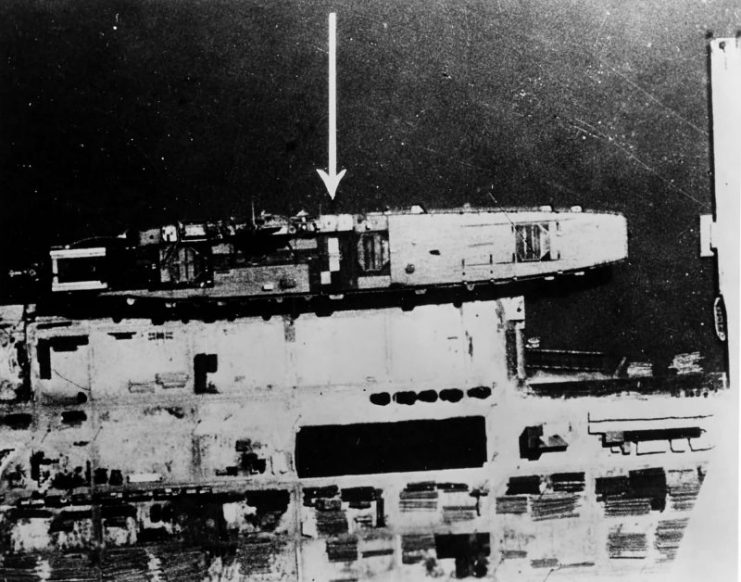
In April 1943 Graf Zeppelin was towed eastward, first to Gotenhafen, then to the roadstead at Swinemünde and finally berthed at a wharf in the Parnitz River, two miles from Stettin.

There she languished for the next two years with only a 40-man custodial crew in attendance. When Red Army forces neared the city in April 1945, the ship’s Kingston valves were opened, flooding her lower spaces and settling her firmly into the mud in shallow water.
At 6pm on April 25th 1945, just as the Russians entered Stettin, commander Wolfgang Kähler radioed the squad to detonate the explosives. Smoke billowing from the carrier’s funnel confirmed the charges had gone off, rendering the ship useless to her new owners for many months to come.
The Soviets decided to repair the damaged ship and it was refloated in March 1946 and enlisted in the Baltic Fleet as aircraft carrier Zeppelin. The last known photo of the carrier is dated April 7th, 1947.


For many years, no other information about the ship’s fate was available. After the opening of the Soviet archives, new light was shed on the mystery. What is known is that the carrier was as “PB-101” (Floating Base Number 101) in February 3, 1947, until, on August 16, 1947, it was used as a practice target for Soviet ships and aircraft.
Allegedly the Soviets installed aerial bombs on the flight deck, in hangars and even inside the funnels (to simulate a load of combat munitions), and then dropped bombs from aircraft and fired shells and torpedoes at it.
By this point, the Cold War was underway, and the Soviets were well aware of the large numbers and central importance of aircraft carriers in the U.S. Navy, which in the event of an actual war between the Soviet Union and the United States would be targets of high strategic importance.
After being hit by 24 bombs and projectiles, the ship did not sink and had to be finished off by two torpedoes. The exact position of the wreck was unknown for decades.

The Wreck was discovered in 2006 by Polish researchers in the Baltic off Władysławowo, at the head of the Hel Peninsula.

Sunday, September 30, 2018

WWII German Aircraft Carriers could they have impacted the war?


 I have posted before about WWII Germany's only Aircraft Carrier.  I had blogged about that carrier back in 2016.  Now this is a "What if" if Germany had gotten their carriers into the war especially after seeing the effect that carriers were having on the war in the Pacific.   

It might be easy to throw out a discernible “no” when asking such a historical “what if” given that we know the real outcome. What if the Germans developed the atomic bomb? What if America was ready for Pearl Harbor? What if the D-Day landings had failed? Yet, military history captures the imagination in part, in that we get to live out events beyond our own time in history.
The German military was feared for many reasons in the 1930’s and 40’s, but the might of their aircraft carriers was not one of them. Germany would produce only 2 aircraft carriers, if you could actually call either a full production. Both remained in port and neither would see service.
Stern View of the Graf Zeppelin German Aircraft Carrier.
Given that we know the outcome without the carriers in action and that outcome was less than favorable to the Germans, let’s consider the alternative. Could Germany have won the battle of the Atlantic with momentum on it’s side had the aircraft carriers been pressed into service? Would allied shipping already in a state of fear over the dreaded U-boat have been given more problems than they could solve with the addition of air power at sea?
Graf Zeppelin at her launch December 1938
It can be said of war that the military leadership’s primary mission is to give the enemy more problems than they can solve. It is the premise behind combined arms exercises that bring to bear the full spectrum of military power. Air, land, and sea converge to create these myriads of problems for the enemy.
In that sense, it would be a discernible yes that the presence of German aircraft carriers in the Atlantic would have created another problem for the allies.
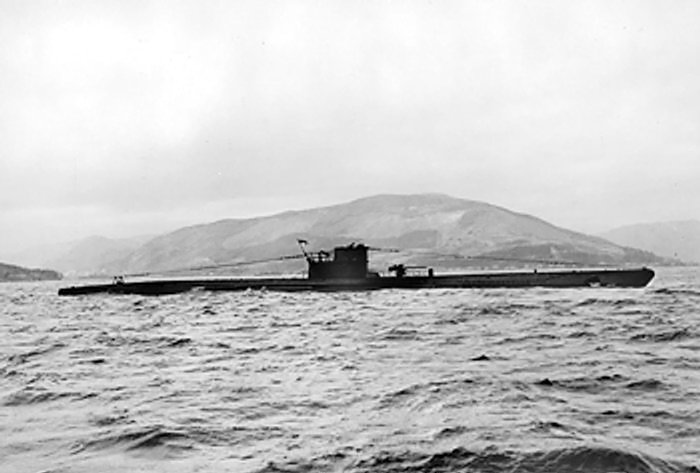
U-570 scourge of the sea to the allies during WW2
Ponder the Bismarck roaming the open seas among herds of wolfpack U-boats and the aircraft of the Graf Zeppelin soaring overhead. The Allied “problems” would now exist under, on the surface and above the sea.
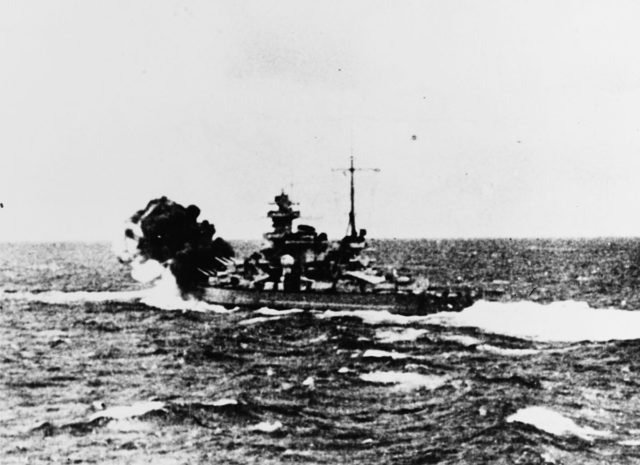
The importance of aircraft carriers in the Pacific proved their strategic and tactical value. It demonstrates with certainty that Germany would have gained some strategic and tactical value had they put completed carriers to sea. Would it have been enough to win the Battle of the Atlantic?
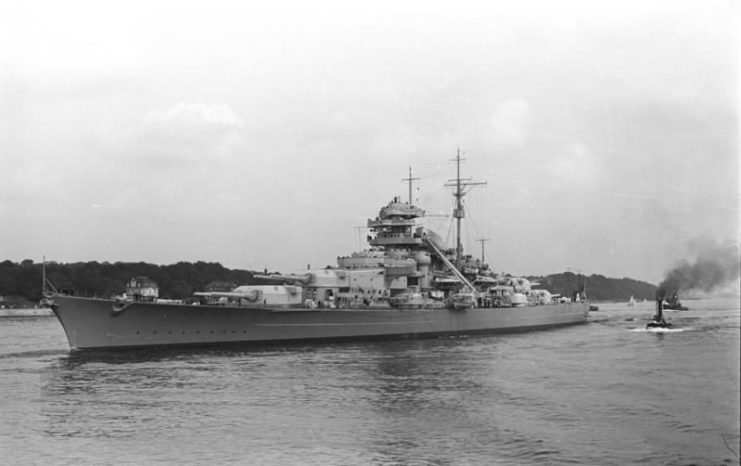
Bismarck in 1940. By Bundesarchiv,
To answer this question, one needs to discover the reason Germany decided to forgo the full production of aircraft carriers in the first place. In the 1930’s Germany did indeed put out a call for two aircraft carriers the first of which would be the Graf Zeppelin launched on December 8, 1938.
The 2nd designated Flugzeugtrager B would follow but would quickly find itself scrapped. Neither saw functional service and the reason boiled down to a limit in resources and a change in priorities.
RAF reconnaissance photo showing Graf Zeppelin at Gotenhafen – 6 February 1942
With Germany’s rapid advance on the ground throughout Europe there was an emphasis placed on coastal guns and shore defenses. Moreover, there was a reported shortage of anti-aircraft guns that would be necessary to defend the ship.
As the war pressed on, a shortage of pilots further stretched resources to the limits and by 1943 the new head of the Kriegsmarine, Karl Donitz, ordered the program scrapped. Whereas the presence of aircraft carriers in the Atlantic would have indeed created a new problem for the Allies to solve, it would have most certainly pulled resources from other parts of Germany’s losing war effort.
Flugzeugträger B under construction. By Bundesarchiv 


In the end, the quality of both the Graf Zeppelin and the Flugzeugtrager B would have fallen far behind that of the Allied Navies. Unless one hopes to imagine a fantastic scenario where Germany would have produced 5 to 8 carriers in a world where they lacked the resources to produce 2, the point seems moot.  By 1942, the Americans and Japanese were far ahead of the Germans in quality of their carriers and the numbers.
German aircraft carriers roaming the Atlantic would have most certainly caused problems and won its fair share of victories, but the fate of the war itself would have been sealed.
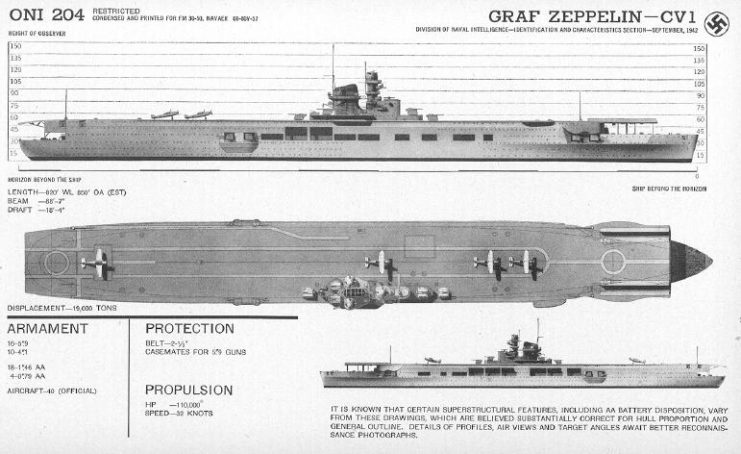
Drawing depicting the Graf Zeppelin
In the end, the Graf Zeppelin and the Flugzeugtrager B would have found companionship at the bottom of the Atlantic with the famed Bismarck. To have won a battle is not to have won the war. When one considers the Battle of the Atlantic as the sum of events from 1939 to 1945, it doesn’t appear that the outcome would have been any different If Germany had hoped to compete in the Atlantic with carriers, 1938 was far too late to have launched its first. The victory in this scenario again goes to the Allies and modern divers would have two new ghost ships in the Atlantic in which to explore

Thursday, July 5, 2012

Airships...Classic and modern

I ran across this webpage about a modern Zeppelin "Eureka"    The difference between a Zeppelin and the blimp you see circling the sports stadium is construction.  The blimp is basically a big balloon, the air sac is the structure.  On the Zeppelins there is a semi-rigid frame to support the the air sacs.  Before the Hindenburg desaster. their was talk of huge airships plying the wind between Europe and the United States.  Even the U.S. Navy had 2 airships that they could launch airplanes from the U.S.S. Akron and the U.S.S. Macon  When most people think of zeppelins this is what they they think of...more info here

Hindenburg (LZ-129)

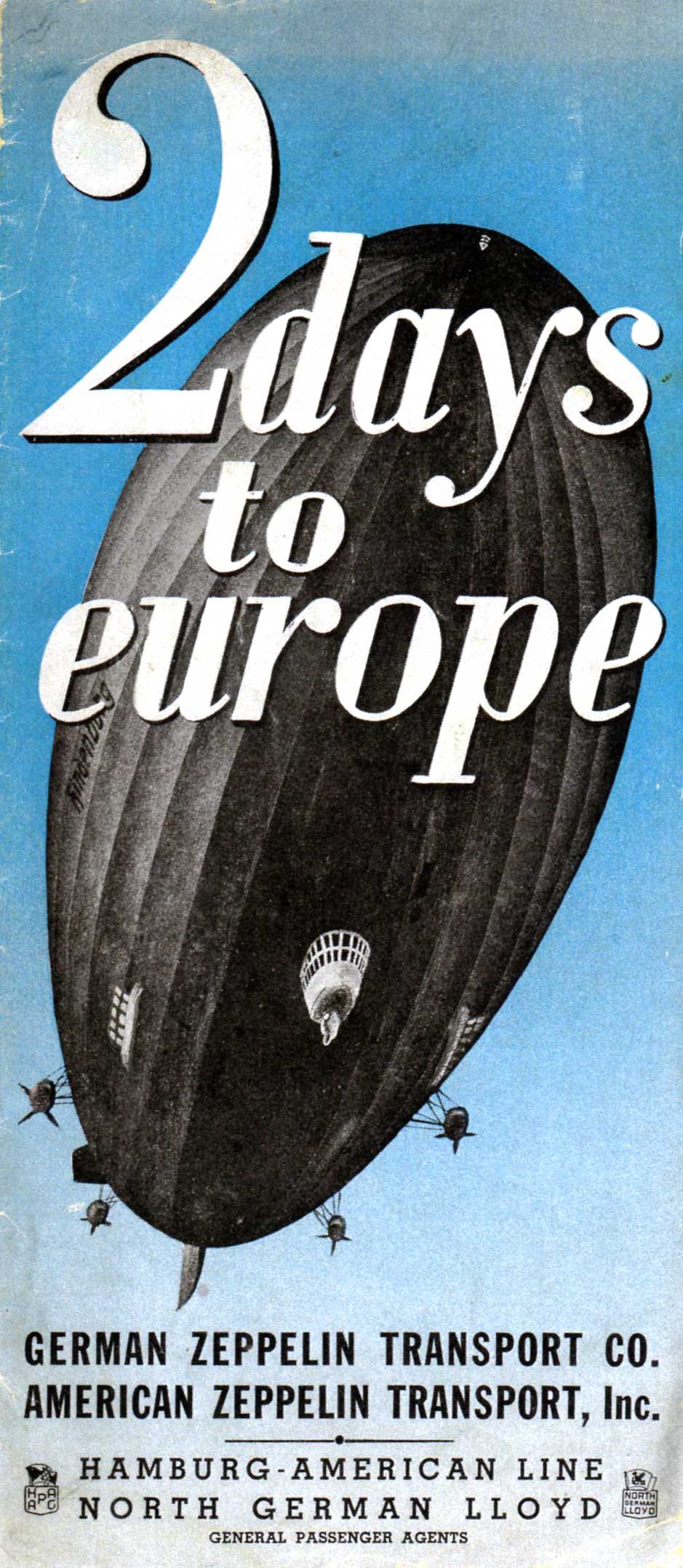
2-days-to-europe-cop-webThe Hindenburg was the first airliner to provide regularly scheduled service between Europe and North America.
While the airship is better remembered for the fiery Hindenburg disaster of 1937 than for its many technological achievements, it was the fastest and most comfortable way to cross the Atlantic in its day.

Hindenburg Directory

Hindenburg: A Detailed History

Dining Room of Airship Hindenburg. (click all photos to enlarge)
Click to learn more about Hindenburg's Passenger Decks

Origins of the LZ-129 Hindenburg

The astounding success of the Graf Zeppelin had proved the viability of long range passenger transportation by airship, and by the late 1920′s, Hugo Eckener and the Zeppelin Company  were enthusiastic about building a fleet of ships specifically designed for intercontinental passenger transportation.
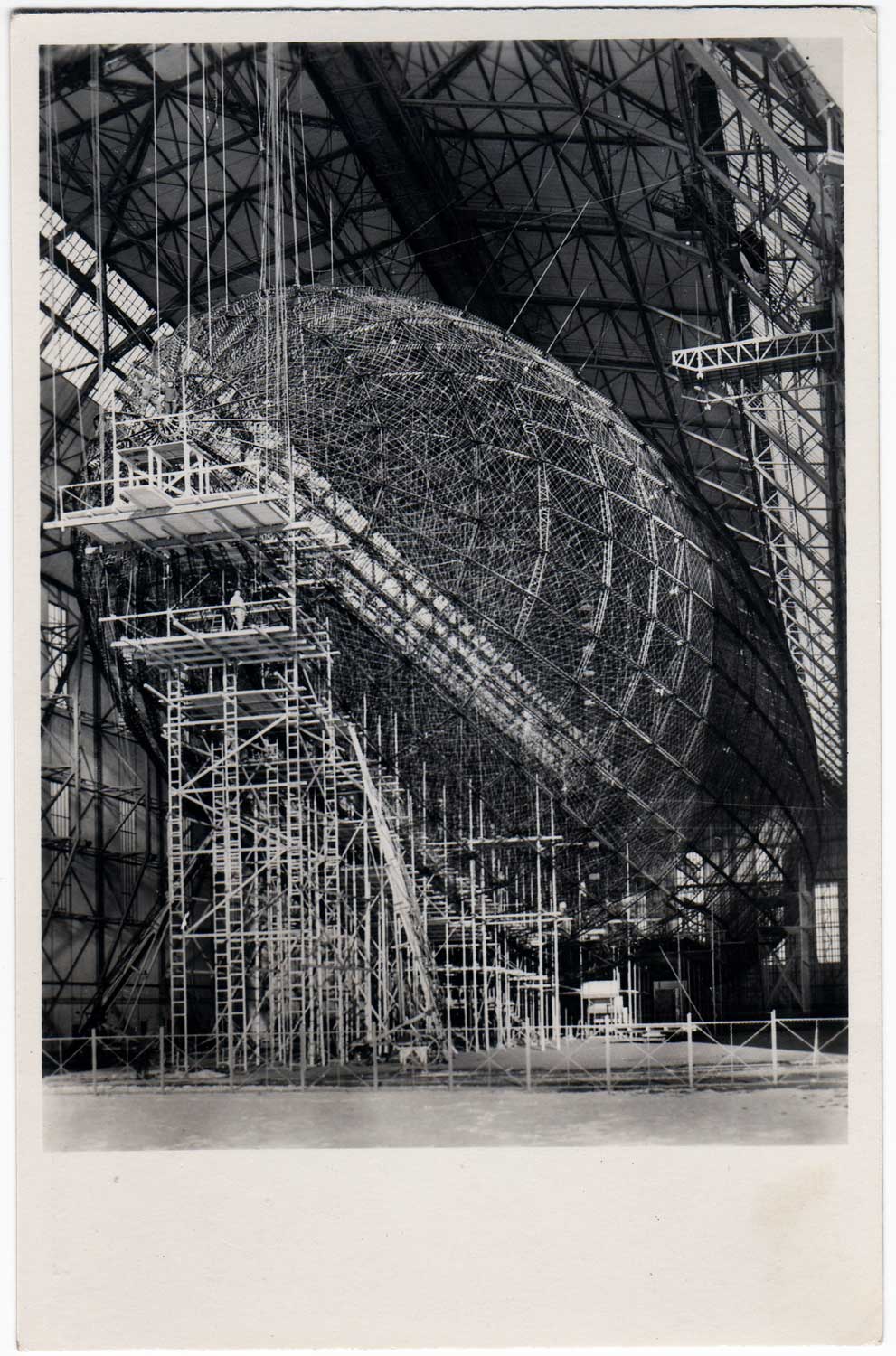
Hindenburg under construction
Airship Hindenburg under construction.
The ship originally planned for this role was LZ-128, which it would have been 761 feet long and lifted by 5,307,000 cubic feet of hydrogen.  But the fiery crash of the British airship R-101 in October, 1930 (in which passengers and crew were killed by the hydrogen fire that followed the crash, rather then by the impact itself) convinced the Zeppelin Company to alter its plans and develop a ship capable of being lifted by helium.
Helium is heavier than hydrogen, and therefore provides less lift, so a helium airship must be larger than a hydrogen airship to carry the same payload. The plans for the 5.3 million cubic feet LZ-128, therefore, were abandoned in favor of a design for a much larger ship, the 7 million cubic feet LZ-129, later to be named Hindenburg.
Eerily — in light of later events — the Zeppelin Company purchased 5,000 kg of Duralumin from the wreckage of the British R-101 and used the metal to fabricate components for the Hindenburg.
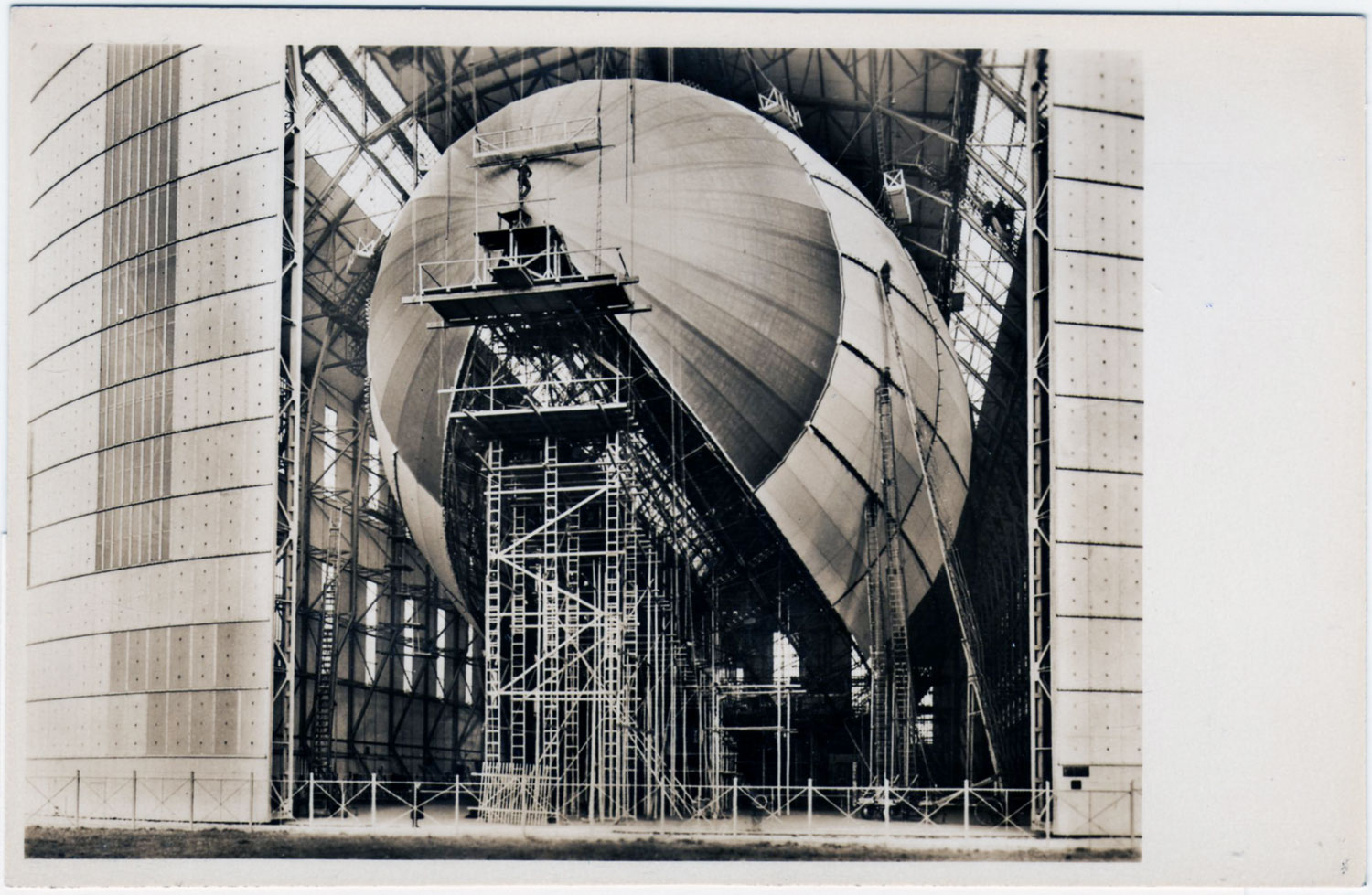
Airship Hindenburg under construction
Airship Hindenburg under construction.
When completed, LZ-129 was 803.8 feet long, with a diameter of 135.1 feet, and a total gas capacity of 7,062,000 cubic feet of hydrogen.
Size comparison between LZ-129 Hindenburg and Boeing 747
Hindenburg and Boeing 707
LZ-129 and its sister ship, LZ-130, are still the largest objects ever to fly.

   Read more here


Here is a modern Zeppelin the "Eureka"  the webpage is here   There are a lot of good pics of San Francisco and Oakland.


Our trip started out with a preflight briefing, security screening, then a ride out to the private section of the Oakland airport. There, we watched the arrival of the Eureka airship!


Not to be confused with a Blimp, the Eureka has a rigid internal structure. So even with the helium removed, it will retain its general shape.


Airship Ventures started operating the Eureka out of Moffett Field in November of 2008. At 246 ft long, it is the largest airship in the world.


That's our pilot Katherine 'Kate' Board. She is the only female Zeppelin pilot in the world. I believe she's British.


Eureka's 2 main engines are mounted high above the gondola, attaching to the airship's internal bracing instead. This reduces engine noise and vibrations in the cabin, and also allows for an impressively unhindered viewing experience.


The 3rd engine is mounted aft, where it drives 2 propellers. One helps control yaw (like a helicopter tail rotor), and the other pitch. The one pointed down in the picture can be swiveled upwards, where it acts as a pusher propeller during normal flight.

Saturday, February 8, 2020

The Zeppelin Accident at Echterdingen and the "MesserSpit"

 I was stationed at Stuttgart Army Airfield for 3 and a half years, I got sent there in 1987 after doing a tour with the 1st Infantry Division(FWD) at Cooke Barracks at Geoppingen. SAAF was a good place to be and it was a a good tour and during that time we got sent to the Persian Gulf.  I used to run 10K a day, I would run parallel to the road then cut cross country and work my way back to the gate.  It took me a smidge over an hour.  I used to run past the memorial and I never stopped, I wish I had, but back then I always figured "one day" and as much of a history nut that I am that I didn't do that.  It is on my bucket list to go back to Stuttgart and check out my old haunts and see how things look and visit one of my friends that lives over there and works at the "FlugPlatz"   Here is some pics and information that I saw on "google" about the Zeppelin Monument. 

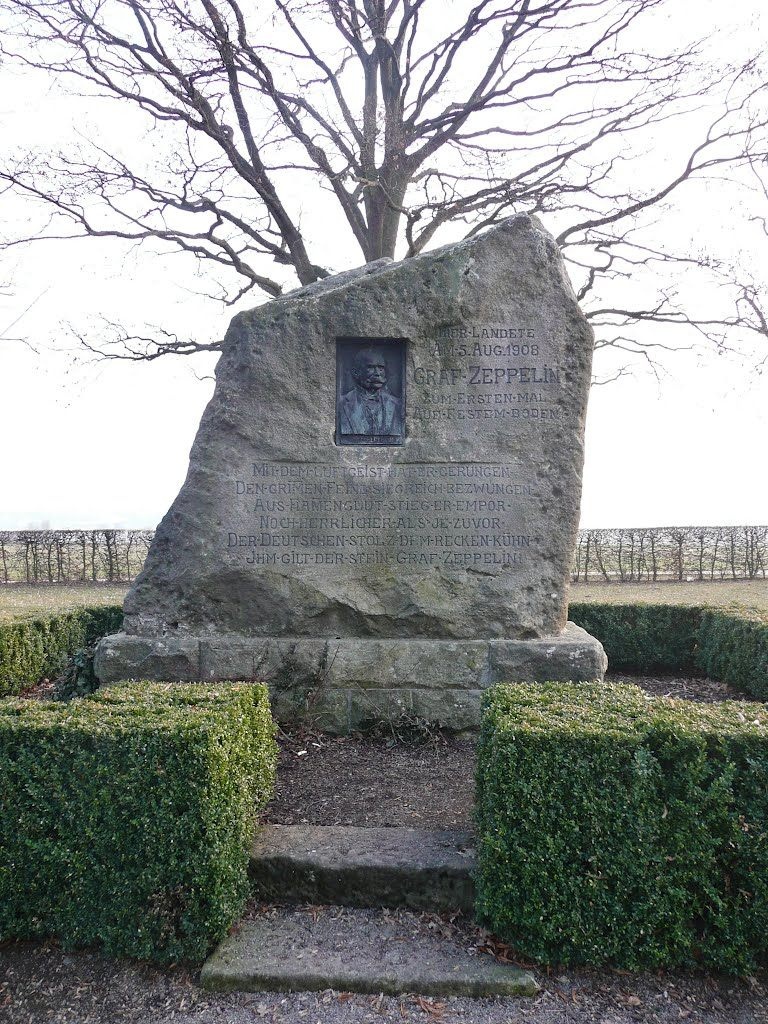
Here is the monument to the LZ-4 is at Echterdingen where the LZ-4 met its fateful accident.
Echterdingen, LZ-4 Monument
LZ-4 Monument at Echterdingen. Photo credit: Undetermined


The memorial was erected in 1908. The monument is decorated with bronze plaques, a portrait of Graf Zeppelin on the front and a rising eagle on the back. In addition to the portrait an inscription reads: "Here Count Zeppelin landed for on solid ground for the first time on the 5th of August 1908." The inscription under the portrait reads: "He struggled long and hard with the Spirit of the Air Successfully vanquished the grim opponent. From a sea of flames he rose up More magnificent than ever before. To the pride of Germans he soared up courageous; To him is set in stone (the name) Count Zeppelin!" (thanks to Alastair Reid for the translation). The back shows a rising eagle and the inscription: "As through the dark clouds of the Aar rises to the golden light, so by tribulation and need the hero struggles to victory."
The monument is located at (Lat Lon) 48.681222 009.180318.(You can cut and paste this on "google Maps" and see a map of the location and the area.

On July 1, 1908, Ferdinand von Zeppelin’s fourth airship, LZ-4, made a record-breaking 12-hour flight over Switzerland.  The German government promised financial support if Zeppelin’s ship could make a full 24-hour endurance flight and the count agreed to the challenge.
LZ-4 leaving its hangar on the Bodensee for the 24 hour test flight that ended in the crash at Echterdingen.
LZ-4 leaving its hangar on the Bodensee for the 24 hour test flight that ended at Echterdingen.
LZ-4 departed its floating hangar on the Bodensee on August 4, 1908 but was forced to make an emergency landing in a field at the town of Echterdingen the next day.  The ship was pulled from its temporary mooring by a sudden storm and destroyed when its hydrogen ignited.
Wreckage of LZ-4 at Echterdingen
LZ-4 Wreckage at Echterdingen
Rather than losing faith in Count Zeppelin’s work in response to the crash, the German public rallied behind his efforts.  Germans contributed 6 million marks for the construction of a new airship in what became known as the “Miracle at Echterdingen” and the enthusiastic support of the German people gave new life to the zeppelin enterprise.  The next 30 years of zeppelin development was made possible by the Miracle at Echterdingen.
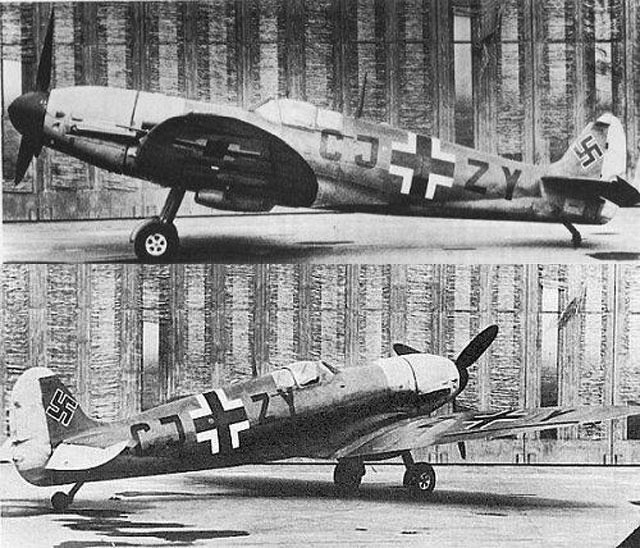
    While I was reading up on Echterdingen, apparently my post in the 1980's was a test site for the Luftwaffe, they experimented with a captured Spitfire.  I remembered seeing the flooded entrances to the underground bunkers that had tunnels connecting all the kasernes around Stuttgart to protect them from the Allied bombings.  They also hid a bunch of industry in the tunnels to protect
Spitfire Vb (EN830/NX-X) fell into German hands late in 1942. On November 18th while being flown by P/O Bernard Sheidhauer of the Free French Air force, attached to 131 “County of Kent” Sqn RAF, he and his No.1
P/O Henri de Bordas had been on a “rhubarb” (an RAF World War II code name for operations by aircraft seeking opportunity targets).
Making land fall at St Aubin sur Mer they picked up and followed the Caen to Cherbourg railway attacking several targets along the way. During the mission they were met by flak and purposely avoided Carentan because of the concentration of flak in the area.
Over the small town of Ecausseville, de Bordas lost sight of his partner, he continued to circle for as long as he could, but to no avail. He returned to Westhampnett. Scheidhauer’s aircraft had suffered some sort of damage and started to lose fuel. By mistake he headed west instead of north, after crossing a stretch of water he sighted land which he mistakenly thought was the Isle of Wight.  Picking out a suitable field he place his aircraft down into a wheels up landing. Coming to rest in a field of turnips close to Dielament Manor, Trinity.
Climbing from the aircraft he was met by locals who informed him of his navigational error, he was in fact in German Occupied Jersey and not the Isle of Wight.  Scheidhauer tried to destroy the aircraft, he attempted to acquire some fuel to set fire to it, but there was none, he smashed the instrument panel as best as he could and gave away various items of equipment to the gathering crowd of locals.
The Germans arrived after about 20 minutes and he was taken prisoner, ending up at Stalag Luft 111. He was later murdered by the Gestapo for his part in the ‘Great Escape’.
En830 was dismantled and shipped to mainland Europe. It reached Echterdingen without guns and ammunition, with the gun ports closed. The radio equipment had been replaced with ballast, but it still had its original Merlin 45 engine. Several flights were made by Daimler-Benz pilots before conversion was attempted. A decision was made to replace the instruments and the entire electrical system with standard German equipment, because the Luftwaffe used a 24 volt system, whilst the RAF used a 12 volt standard.
A 3.0 m. diameter Bf.109G propeller was added, together with the carburetor scoop from a Bf.109G.
After a couple of weeks, and with a new yellow-painted nose, the Spitfire returned to Echterdingen. Pilot Ellenreider was the first to try the aircraft. He was stunned that the aircraft had much better visibility and handling on the ground than the Bf.109. It took off before he realised it and had an impressive climb rate, around 70 ft. (21 m.) per second. Much of the Spitfire’s better handling could be attributed to its lower wing loading.
The Spitfire’s wing area was about 54 sq. ft. (5m²) greater than that of the Bf.109. The Messerschmitt was faster at low altitude, but at 11,000 ft. the speeds evened out. The DB 605A engine gave better performance, according to the test group, than the Merlin, which was rated 150 hp below the DB 605A. It gave this “MesserSpit” a ceiling of 41,666 ft. (12700 m.), about 3,280 ft. (1000 m.) more than a Bf.109G with the same engine and 5,166 ft. (1475 m.) more than that of a Spitfire Mk.V.
After a brief period at Rechlin verifying the performance data, the modified Spitfire returned to Echterdingen to serve officially as a test bed. It was popular with the pilots during and after work hours. MesserSpit career ended on 14th August, 1944, when a formation of US bombers attacked Echterdingen, wrecking the Spitfire. The remains of the Spitfire Messerschmitt hybrid were scrapped at the Klemm factory at Böblingen

Wednesday, July 30, 2025

The Zeppelin Accident at Echterdingen and the Captured Spitfire and some musing from my time there in the 1980's


I was talking to a couple of my Army buddies and we got to talking about where we were stationed and I had recalled the "Zeppelin Monument" and the area.

 I was stationed at Stuttgart Army Airfield for 3 and a half years, I got sent there in 1987 after doing a tour with the 1st Infantry Division(FWD) at Cooke Barracks at Geoppingen. SAAF was a good place to be and it was a good tour and during that time we got sent to the Persian Gulf.  I used to run 10K a day, I would run parallel to the road then cut cross country and work my way back to the gate.  It took me a smidge over an hour.  I used to run past the memorial and I never stopped, I wish I had, but back then I always figured "one day" and as much of a history nut that I am that I didn't do that.  It is on my bucket list to go back to Stuttgart and check out my old haunts and see how things look and visit one of my friends that lives over there and works at the "FlugPlatz"   Here is some pics and information that I saw on "google" about the Zeppelin Monument. 

Here is the monument to the LZ-4 is at Echterdingen where the LZ-4 met its fateful accident.

Echterdingen, LZ-4 Monument
LZ-4 Monument at Echterdingen. Photo credit: Undetermined


The memorial was erected in 1908. The monument is decorated with bronze plaques, a portrait of Graf Zeppelin on the front and a rising eagle on the back. In addition to the portrait an inscription reads: "Here Count Zeppelin landed for on solid ground for the first time on the 5th of August 1908." The inscription under the portrait reads: "He struggled long and hard with the Spirit of the Air Successfully vanquished the grim opponent. From a sea of flames he rose up More magnificent than ever before. To the pride of Germans he soared up courageous; To him is set in stone (the name) Count Zeppelin!" (thanks to Alastair Reid for the translation). The back shows a rising eagle and the inscription: "As through the dark clouds of the Aar rises to the golden light, so by tribulation and need the hero struggles to victory."
The monument is located at (Lat Lon) 48.681222 009.180318.(You can cut and paste this on "google Maps" and see a map of the location and the area.
 was pulled from its temporary mooring by a sudden storm and destroyed when its hydrogen ignited.


    While I was reading up on Echterdingen, apparently my post in the 1980's was a test site for the Luftwaffe, they experimented with a captured Spitfire.  I remembered seeing the flooded entrances to the underground bunkers that had tunnels connecting all the kasernes around Stuttgart to protect them from the Allied bombings. Apparently "Organization Todt" had filled a lot of the tunnels with explosives so rather than try to disarm all the various boobytraps, the allies just filled them with water.  They also hid a bunch of industry in the tunnels to protect them.  I recall going to the U.S Hospital in Bad Canstantt (We called it Bad C) and there were 4 stories above ground and 3 stories below ground and tunnels going to other kasernes around Stuttgart.  I never been in them, but that was the "rumor" anyway.  They did have the rooms stocked up in case of war with the Soviets.  I personally didn't have a good impression of the U.S. Army hospital at Bad C, a friend of mine was riding his bike and got into an accident with a German on the "Economy.  Well the German "Krankenwagon" took him to the hospital at Bad C, and he walked in under his own power, and the people there told him to just sit down and wait.  after several hours after being blown off by the staff at the front desk, he finally went to the front desk and told the NCO there, "I don't feel well" and passed out.  THey finally took him back and discovered that his liver was separated in the accident, and he bled to death internally.  His remains were shipped back to the world, we raised money so his German girlfriend/fiance could go with him to be buried.  His parents called their congresscritters and launched a "Congressional".  We were pissed.  I remember telling several of my friends, "if I get hurt, take me to a german hospital, I don't trust the quacks at Bad C".  the others said the same thing.   Funny, the things I remember.  I still know his name but I will not post it here.

And a WWII Story.

Spitfire Vb (EN830/NX-X) fell into German hands late in 1942. On November 18th while being flown by P/O Bernard Sheidhauer of the Free French Air force, attached to 131 “County of Kent” Sqn RAF, he and his No.1
P/O Henri de Bordas had been on a “rhubarb” (an RAF World War II code name for operations by aircraft seeking opportunity targets).
Making land fall at St Aubin sur Mer they picked up and followed the Caen to Cherbourg railway attacking several targets along the way. During the mission they were met by flak and purposely avoided Carentan because of the concentration of flak in the area.
Over the small town of Ecausseville, de Bordas lost sight of his partner, he continued to circle for as long as he could, but to no avail. He returned to Westhampnett. Scheidhauer’s aircraft had suffered some sort of damage and started to lose fuel. By mistake he headed west instead of north, after crossing a stretch of water he sighted land which he mistakenly thought was the Isle of Wight.  Picking out a suitable field he place his aircraft down into a wheels up landing. Coming to rest in a field of turnips close to Dielament Manor, Trinity.
Climbing from the aircraft he was met by locals who informed him of his navigational error, he was in fact in German Occupied Jersey and not the Isle of Wight.  Scheidhauer tried to destroy the aircraft, he attempted to acquire some fuel to set fire to it, but there was none, he smashed the instrument panel as best as he could and gave away various items of equipment to the gathering crowd of locals.
The Germans arrived after about 20 minutes and he was taken prisoner, ending up at Stalag Luft 111. He was later murdered by the Gestapo for his part in the ‘Great Escape’.

En830 was dismantled and shipped to mainland Europe. It reached Echterdingen without guns and ammunition, with the gun ports closed. The radio equipment had been replaced with ballast, but it still had its original Merlin 45 engine. Several flights were made by Daimler-Benz pilots before conversion was attempted. A decision was made to replace the instruments and the entire electrical system with standard German equipment, because the Luftwaffe used a 24 volt system, whilst the RAF used a 12 volt standard.
A 3.0 m. diameter Bf.109G propeller was added, together with the carburetor scoop from a Bf.109G.
After a couple of weeks, and with a new yellow-painted nose, the Spitfire returned to Echterdingen. Pilot Ellenreider was the first to try the aircraft. He was stunned that the aircraft had much better visibility and handling on the ground than the Bf.109. It took off before he realised it and had an impressive climb rate, around 70 ft. (21 m.) per second. Much of the Spitfire’s better handling could be attributed to its lower wing loading.

The Spitfire’s wing area was about 54 sq. ft. (5m²) greater than that of the Bf.109. The Messerschmitt was faster at low altitude, but at 11,000 ft. the speeds evened out. The DB 605A engine gave better performance, according to the test group, than the Merlin, which was rated 150 hp below the DB 605A. It gave this “MesserSpit” a ceiling of 41,666 ft. (12700 m.), about 3,280 ft. (1000 m.) more than a Bf.109G with the same engine and 5,166 ft. (1475 m.) more than that of a Spitfire Mk.V.
After a brief period at Rechlin verifying the performance data, the modified Spitfire returned to Echterdingen to serve officially as a test bed. It was popular with the pilots during and after work hours. MesserSpit career ended on 14th August, 1944, when a formation of US bombers attacked Echterdingen, wrecking the Spitfire. The remains of the Spitfire Messerschmitt hybrid were scrapped at the Klemm factory at Böblingen

Tuesday, December 28, 2021

JU-87 Stuka, the Symbol of Nazi Germany Air Superiority


Stuka, The Dive Bomber That Terrified the Allies – Perhaps no weapon was as closely associated with the Nazi German in early in World War II as the Stuka dive bomber, infamous for howling, near-vertical dive attacks on warships, battlefield targets, and defenseless civilian communities like merciless birds of prey.

However, the Stuka’s reputation did not survive the war it helped kick-off as it proved less and less survivable in the face of capable opposition.

The dive bomber was a solution to a timeless challenge in military aviation: how to ensure weapons dropped by fast-moving aircraft land anywhere near a point target like a warship, artillery battery or fortification. Precision was an especially big problem in an era where tactical aircraft could carry only light, unguided bombs.

In the early 1930s, German World War I ace and stuntmen Ernst Udet was impressed by American F11C Goshawk fighters he saw perform steep dive-bombing attacks.  Upon joining the Nazi Party in 1933 he imported two Goshawks for test-flying and insisted the fledgling Luftwaffe develop a specialized dive bomber—an aircraft that could withstand the strain of pulling out of steep dives without smashing into the ground or ripping its wings off


Engineer Hermann Pohlmann of the Junkers company devised a two-seat monoplane with fixed landing gear covered by spiffy ‘spats’ and distinctive inverted gull-wings that helped lift the fuselage high enough off the ground to accommodate its large propeller. In addition to two rifle-caliber machineguns in the wings, the radio operator had a rearward-facing gun to protect against enemy fighters.

Powered by a Jumo 211 engine, the Ju 87 beat out competing models in an aircraft design competition and saw initial combat-testing in the Spanish Civil War in 1938-1939. The Stuka was slow with a maximum speed of 200-240 miles per hour in level flight and had a short combat radius of only 245 miles. It typically carried a single 551-pound bomb under the fuselage (released by a crutch-like dispenser to avoid hitting the propeller) and four 110-pound bombs under the wings.

Stuka pilots spotted targets through a floor window, then rolled their aircraft completely around into a dive as steep as 90 degrees. Underwing dive brakes would extend automatically, controlling diving speed to just over 350 miles per hour, buying the pilot time to line up his attack using controls switched to ‘dive mode’ and lines etched into canopy side to judge his dive angle.

Special propeller-sirens on their landing gear called Trumpets of Jericho produced an infamous howling sound intended to terrorize bystanders on the ground.  However, the sirens were later removed as they reduced speed by 5-10%.

Pilots typically released bombs at just 1,500 feet and then engaged an automated system to yank the Stuka upwards. This was vital, as such dives exerted five to six times the force of gravity on the pilot, constraining blood flow to the brain and causing temporary “grey-outs.”

Even the purpose-built Stuka was not immune to the dangers of this method of attacks. Two weeks prior to the invasion of Poland, thirteen Stukas and their crews were lost in training at Neuhammer when fog caused them to misjudge a dive.

The Luftwaffe fielded 336 Stukas at the onset of World War II and lost only 31 in the Polish campaign. They launched the first strikes of World War II and claimed the first air-to-air kill when a Stuka pounced on a Polish P.11 fighter taking off. When Polish forces counterattacked at the River Bzura with some success, Stukas and Panzers reacted swiftly to crush the threat.

The Ju 87B was the primary early-war model, but there were also folding-wing Ju 87C torpedo/dive bombers for the never-completed carrier Graf Zeppelin, and longer-range Ju 87Rs. 


The Stuka’s precision made it a deadly anti-ship weapon. Stukas sank most of the Polish Navy, crippled two cruisers and destroyed several Allied destroyers and sloops and during the invasion of Norway, and harried vessels evacuating Allied troops at Dunkirk.

Over 400 Stukas served as ‘flying artillery’ in the Battle of France and the Low Countries, helping forward units beyond the reach of artillery support, such as German paratroopers and fast-moving Panzer divisions, by knocking out artillery concentration, heavy British and French tanks units, and fortifications like Belgium’s Ebe- Emael that could impede their advance.

Despite the Stukas’ tactical utility, they were also associated early on with terror attacks on civilians. In 1938, three pre-production Ju-87A models were ‘combat tested’ in Spain by attacking villages of no military value, killing 38 civilians. Over Poland, Stukas obliterated 70% of the buildings in the town of Wielun despite it being devoid of military targets. In France, Stukas notoriously strafed columns of refugees, driving them into the path of Allied columns.

However, dive bombers are extremely slow and vulnerable when pulling out of a dive. Stuka losses were initially tolerable because German fighters had achieved air superiority over their foes.  Even then, roughly 120 Stukas were lost over France and the Low Countries.

The Stuka’s limitations caught up with it during the ensuing Battle of Britain—the campaign to destroy the Royal Air Force in preparation for a German amphibious landing. Stuka units were tasked with knocking out British Chain Home early warning radars, and coastal convoys and airfields.

But the RAF’s modern Spitfire and Hurricane fighters were tough adversaries on their home turf, assisted by radar and the buffer of the English Channel.  In just three weeks in August, the Luftwaffe lost 51 Ju 87s—including 16 in one day. The Stuka had to be withdrawn from the fight.

Battle for the Eastern Front:

Still, the Ju 87 remained successful in theaters where aerial opposition was weak, such as the Balkans, Mediterranean and Russia in 1941-1942. Stukas ravaged Allied forces in Yugoslavia, sank numerous British warships off Crete, destroyed much of the Soviet air force on the ground in June 1941, and blunted counterattacks by heavier Russia tanks. Germany also exported Stukas to allies including Bulgaria, Italy and Romania.

By early 1942 the improved Ju-87D model phased in boasting a more powerful Jumo 211J engine boosting range, speed and bombload. It also featured a streamlined canopy and nose, a twin-barrel MG-81Z tail gun, and additional armor plates. 


To stem the thousands of tanks pouring out of Soviet factories, in 1943 there followed the tank-busting Ju-87G model, armed with a long-barreled 37-millimeter automatic cannon pod under each wing with a magazine of six tungsten high-velocity shells. These could penetrate Allied tanks if they struck the vulnerable top or rear armor.

Pilot Hans-Ulrich Rudel claimed in his memoire Stuka Pilot to have destroyed 519 tanks, sunk the battleship Marat, and shot down 52 aircraft mostly while flying a Stuka. While Rudel’s claims are surely exaggerated given the tendency for tremendous over-claiming of air-to-ground kills during World War II, another statistic is equally telling: Rudel was shot down or crash landed 32 separate times.

The swan song of the Stuka came in July 1943 at the titanic tank battle at Kursk. Stuka Geschwaders 1, 2 and 3—half equipped with cannons—launched massive airstrikes on Soviet tank units alongside Fw-190 fighter bombers and Hs-129 anti-tank aircraft.

However, Soviet Il-2 Shturmovik bombers also claimed huge successes against German tanks at Kursk. Though superficially similar to the Ju 87, the Shturmovik was more heavily armored and had forward-facing cannons, ad even acquired a reputation for hunting Stukas.

Demise of the Dive Bomber:

Growing Allied air superiority made Stuka operations more and more perilous. Even American fighter pilots seeing their first action shot down dozens of Stukas over North Africa and Italy.

By 1944, the dive-bomber was largely replaced by far more survivable and hard-hitting ‘jabos’: robust, high-speed fighter bombers like the Fw-190F with maximum speeds exceeding 300 or 400 miles per hour.

While their high-speed, low-altitude attacks were not as precise a dive-bombing, late-war fighter bombers had punchier rockets and forward-firing cannons or .50-caliber machineguns to strike point targets and could carry heavier bombs to blast area targets. Most importantly, they weren’t sitting ducks when enemy fighters showed up.

By 1945, the Luftwaffe had only 100 operational Stukas out of around 6,000 built. These continued to harry Russian armies entering Germany, scoring occasional successes due lapses in Soviet air superiority. Only three intact Ju 87s survive today.

The Stuka played an important role in the Wehrmacht’s early campaigns, knocking out obstacles to the relentless advance of German Panzer divisions with precision strikes. But white-knuckle dive-bombing tactics proved a dead end when facing significant aerial opposition. Though the Stuka led a respectable second career as a cannon-armed tank buster, the infamous warplane was doomed to be replaced by more versatile and survivable fighter-bombers.


Friday, July 14, 2017

The Sinking of the German Battleship Scharnhorst

I know, I know...Why is an Army guy into Naval History, I don't know except it is an interest that I have had since Elementary school.  Last year in August I had posted about the only German Aircraft carrier the DKM Graf Zeppelin and the fate of that ship.  I honestly believed that if Hitler had waited until 1945, the Germans would have had a fleet to rival what Britain had, but Hitler rushed to war before the Wehrmacht was ready, due to luck and poor Alllied planning, the Germans were successful in the beginning.


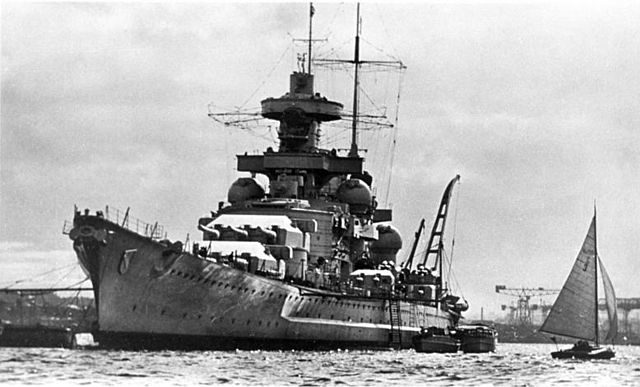
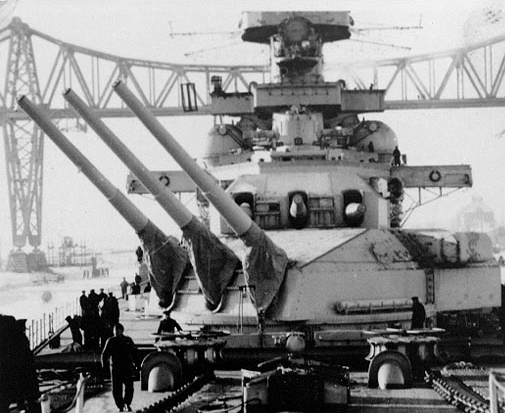
Scharnhorst was a German capital ship, alternatively described as a battleship and battlecruiser, of Nazi Germany's Kriegsmarine. She was the lead ship of her class, which included one other ship, Gneisenau. The ship was built at the Kriegsmarinewerft dockyard in Wilhelmshaven; she was laid down on 15 June 1935 and launched a year and four months later on 3 October 1936. Completed in January 1939, the ship was armed with a main battery of nine 28 cm (11 in) C/34 guns in three triple turrets. Plans to replace these weapons with six 38 cm (15 in) SK C/34 guns in twin turrets were never carried out.

Scharnhorst and Gneisenau operated together for much of the early portion of World War II, including sorties into the Atlantic to raid British merchant shipping. During her first operation, Scharnhorst sank the auxiliary cruiser HMS Rawalpindi in a short engagement (November 1939). Scharnhorst and Gneisenau participated in Operation Weserübung (April–June 1940), the German invasion of Norway. During operations off Norway, the two ships engaged the battlecruiser
Scharnhorst firing against HMS Glorious.S
 Scharnhorst firing against HMS Glorious.
HMS Renown and sank the aircraft carrier HMS Glorious as well as her escort destroyers Acasta and Ardent. In that engagement Scharnhorst achieved one of the longest-range naval gunfire hits in history.

It was wholly dark. In the sea north of Tromsø in Norway, the great German battleship Scharnhorst was on a mission to sink an Allied supply convoy bound for Russia.
Unknown to the German command, the convoy’s British escort, led by Admiral Sir Robert Burnett and Admiral Bruce Fraser, had successfully intercepted the Scharnhorst’s radio communications. They were fully aware of the Scharnhorst’s plan to sink the convoy.
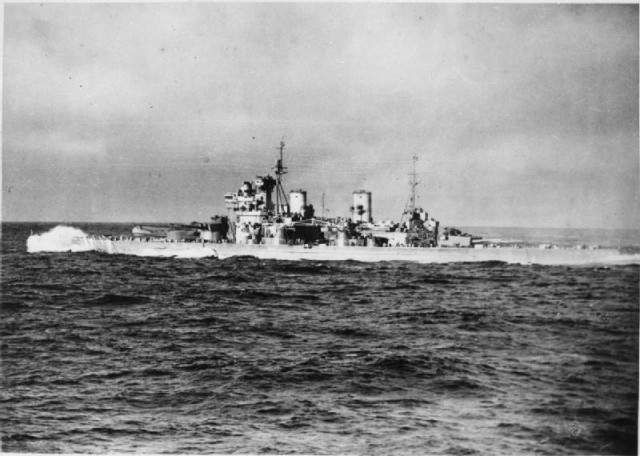
It was the day after Christmas. On the north sea, December 26th, total darkness reigned for most of the day. The British Admiral Fraser commanded from the HMS Duke of York, a powerful and heavily armed battleship. Supporting the Duke of York were the Cruiser Jamaica and four destroyers.

Admiral Burnett had three cruisers under his command, HMS Sheffield, HMS Belfast, and HMS Norfolk.
In preparation for the attack, Scharnhorst had been placed in a position of readiness, on the path of the convoy. Admiral Burnett was aware of her position and put his three ships between the convoy and the expected direction of attack. Admiral Fraser, meanwhile, maneuvered his command to the southwest of Scharnhorst’s position, to block her escape.
The Scharnhorst had was accompanied by five destroyers. Her commander, Konteradmiral Erich Bey, now arrayed these in a line in front of Scharnhorst, screening her as he prepared to engage the convoy. The order to go to battle stations barked out over the Scharnhorst’s loudspeakers, and her crew of almost two thousand men prepared for the assault.

Scharnhorst in port. Photo Credit.
Scharnhorst in port. Bundesarchiv – CC BY-SA 3.0 de

The German command was completely unaware of the presence of the British fleet. In an attempt to avoid detection, the radar systems on the Scharnhorst had been turned off. When the thunder of the Belfast’s first salvo tore through the darkness, it was a complete surprise. Minutes later, the Norfolk engaged. In this initial engagement, the Scharnhorst suffered two direct hits.
She returns fire from the hindmost of her three massive gun turrets, but with little effect. Her forward radar capability had been destroyed, and she immediately increased her speed and attempted to disengage from the British cruisers.


Scharnhorst in port during the winter of 1939–1940
Scharnhorst in port during the winter of 1939–1940.

The maneuver failed. British radar capability was well advanced in comparison to Germany, and an hour after the first exchange of fire the Belfast had picked up Scharnhorst in a position to the northwest of the convoy. The three cruisers immediately closed with the Scharnhorst and began to fire.


Scharnhorst had been equipped with two radar systems, one fore, one aft. The forward radar was in pieces, but the aft radar picked up the British ships, and Scharnhorst returned fire at their position from all three of her gun batteries. In the darkness, the cruiser Norfolk took two direct hits.
Another turn, another increase in speed. The Scharnhorst, still intent on her mission, attempted again to escape the destroyers and find the convoy. Admiral Burnett backed off with his damaged cruisers but kept the Scharnhorst in the sights of his radar. Admiral Fraser began to move toward the rest of the fleet with the HMS Duke of York.
After some time searching unsuccessfully for her target, the Scharnhorst gave up the chase. The screen of destroyers was dismissed, and the Scharnhorst set course for her base in occupied Norway. But the British were not so easily put off.


Duke of York in the Arctic escorting a convoy
Duke of York in the Arctic escorting a convoy.
HMS Duke of York picked up the Scharnhorst on radar and began to follow her. Half an hour later Belfast came within range and lit up the darkness with a volley of star shells. Their glaring light showed up the great bulk of the German battleship, alone now that her screen of destroyers had been sent back to port, and the Duke of York immediately began the bombardment.
Within ten minutes of opening fire, the Scharnhorst’s forward gun turret was completely disabled. Within half an hour, the turret had taken two more direct hits. The Scharnhorst was on fire, and the crew were forced to flood the forward magazine in a desperate attempt to avoid a crippling explosion. The next hit punched through the Scharnhorst on her starboard side and exploded in the foremost of her three boiler rooms. Her engines now crippled and her forward gun turret destroyed, the Scharnhorst began to flee.

In the damaged boiler room, the crew worked frantically to repair the damage. The repairs allowed her to increase her speed somewhat, and she rained shell fire on the Duke of York from her aft gun battery as she made haste to escape the battle. The Duke of York‘s firing radar was damaged, and Admiral Fraser pulled his damaged ship back and gave the order to cease fire.


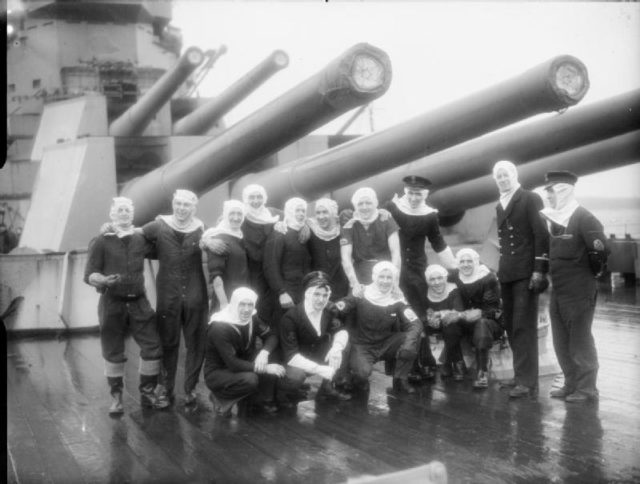
Members of HMS Duke of York's gun crews at Scapa Flow after the Battle of North Cape.
Members of HMS Duke of York‘s gun crews at Scapa Flow after the Battle of North Cape.
Two of Fraser’s four destroyers were ordered to close in for the kill, and they did so, firing a volley of torpedoes after the limping Scharnhorst. She took four direct hits along her length, and slowed to only twelve knots, a fraction of her normal speed. She had put some distance between her and the Duke of York, but seeing how the Scharnhorst was now placed, Admiral Fraser gave the order for his Battleship to close in again.
On the Scharnhorst, the remaining crew were ordered to attempt the retrieval of ammunition from the crippled forward turrets. There was an air of terror and desperation as they ran back and forth, the aft gun turret being now their only hope of self-defence against the onslaught of the British. Their efforts were in vain. The cruisers Jamaica and Belfast closed ahead of the Duke of York, and their torpedoes had little difficulty finding their mark.
The Scharnhorst began to list to starboard. Admiral Fraser gave the order to withdraw some short distance, and at 19.45 hours the Scharnhorst’s bows sank under the water. Steam and smoke gushed from the holes in her armor as the freezing north sea poured in to claim her. She disappeared under the waves.
In the darkness, the British ships moved in to attempt a rescue, but in all, less than forty of the Scharnhorst’s crew of 1968 were saved that night from the cold, black waters of the North Sea

 HMS Belfast moored at the River Thames in London, she is a museum ship