I didn't know anything about this until i was surfing around and ran across this story, I had Blogged about the Lockheed Constellation before and I considered it a very pretty graceful airplane.
As the war came closer in 1939, the legendary General Henry ‘Hap’
Arnold had the thoughtfulness to contemplate a list of specifications
for the designing of a heavy bomber capable of flying a heavy bomb load
of 8 tons over a long distance of 5,000 miles. A committee was formed
(with Charles Lindberg as a member) to study the options that emerged
with the awesome technological progress that had been made in the mid
and late 1930’s in aero-engines and airframe construction methods. New
all-aluminum planes arrived that allowed for an unparalleled upscaling
of speed and payloads by the stretching of aircraft to ever-bigger
dimensions.
As the war broke out in
Europe in May 1939, Arnold requested all major American aircraft
builders to submit their designs for a long distance heavy bomber. Next
to Boeing and Douglas (both most successful in the manufacturing of
their then-modern transports), also Lockheed stepped in as a contender.
The Burbank-based company had the Lockheed L-049 in a conceptual phase
ready and used that plan as the template for their Heavy Bomber L-249
project. Photo
above shows an artist’s impression of the Lockheed L-249 aka the XB -30
long distance heavy Bomber project, based on the Constellation.The
outcome never really materialized in the shape of a prototype plane or
even a full-scale mockup. Only a smaller-scale model was made and what
we can show here is based on that ‘paper plane’ with a number of
Artist’s Impressions to get some idea of how basically a beautiful
design based on the Constellation was studied for a conversion into an
armed aircraft with a bomb-bay for 8 tons of bombs and a half a dozen of
gun turrets to keep the enemy fighters at bay. The
photo above depicts the first built Lockheed Constellation, in Military
colors known as the C-69. While designing had started in 1939 with
Kelly Johnson in the design team, this aircraft made her maiden flight
by early 1943. It was due to her peculiar lines
and shape an outstanding aircraft, high on her legs, a very elegant
design with a feature as no other plane had: look at the hull shape in
the photo, in there is probably not one equal cross-section. No bulkhead
has the same shape and dimension as the previous one, due to that
longitudinal ‘female-like’ curved lines on top and bottom. With the
competition aircraft as the DC-4 and later the DC-6/7, their fuselages
are more like straight tubular structures with a parallel lining and
more constant cross-sections. Whatever the reason, for many ( including
myself, having flown in the plane as an 11 years-old kid in the 1950’s
to/from Indonesia). the Constellation was and is the ‘Queen of the
Skies’, even with all her “caprices”. Not the most dependable aircraft
but surely one of the most attractive aircraft designs ever made.
The
plan Lockheed had for converting the Constellation was not so bad, the
wing design was basically an extended Lockheed P-38 Lighting wing and
proven to be a very efficient wing profile. With the sleek lines of that
dolphin-shaped fuselage, the first Constellation (in Military
designation the C-69) was arguably the fastest cargo transport that
existed by 1943. Imagine, that aircraft had a cruise speed of well over
500 km/ h (340 mph), which made her faster than the earlier model Zero
fighters. On top, the aircraft had novel features as a pressurized
fuselage that allowed for comfortable flights with a much higher ceiling
to fly (24,000 feet), hydraulically boosted controls and de-icing
systems. Photo above shows another artist’s impression of the Lockheed XB-30 heavy bomber that never was. In
camouflage colors, armed with 6 gun turrets and at a high speed flying
well over 24.000 feet altitude, she was faster in the books than many
enemy fighters when she was designed, but by the time she could have
appeared in the skies over continental Europe in 1944/ 1945, she would
have been no match anymore for the German fighters as the jet-powered
Me-262. Even the rear turret’s 20 mm canon would be of little avail
against such fast flying fighters that were well armed with equal
weapons.
But in spite of all the easy-to-adapt features of the
L-049 concept, the XB-30 Bomber was a spin-off that never took off, the
plan soon stalled. Why was that? A couple of reasons: Boeing, the
competitor from Seattle had better cards in their hands. Their Mega
Bomber project named the XB-29 was much further in development and that
counts BIG time when a war has broken out! Boeing’s Superfortress (a
very appropriate name, taking advantage of its most successful
predecessor, the B-17 Flying Fortress) used the same brand new big
radial engines as were foreseen for the Lockheed XB-30, the Wright
Duplex Cyclones
Photo
above (photo Frank C. Muller) shows details of the brute, the Wright
Duplex Cyclone radial engine (hence R-3350) with a displacement of 3350
cu in (55 liters from 18 cylinders with superchargers, cranking out in
their first year of operation in 1941 some 2,200 hp, later up to over
3,000 hp). This machine was a very complicated
piece of High Tech for that time and most unreliable at the beginning of
its long career. It took Wright many years in developing the
heat-resistant materials required to withstand the staggering
heat-buildup in the cylinder heads, where high-octane fuel and
supercharging/ turbocharging of the cylinders took their toll. Cooling
was a major problem, aggravated often by the tight fitting of engine
cowlings that were primarily designed for reducing drag.
The
military aircraft that used this engine during the 1940’s (B-29 and
Convair’s B-36 Peacemaker) all had their fair share of the heat buildup
of this engine that often was the reason for engine explosions or sudden
engine fires that could seriously hamper the operations of the Bomber
Fleet aircraft.
The thermal and mechanical stress on this engine asked for ever-better
alloys to be developed with ever-better lubricants, feeding the zillion
moving/ rotating parts of such machine with oil for cooling and lubing.
It must have been a horror music box for the mechanics. Every day, they
listened to the Sound of Music from that engine until a little rattle or
some smoke was detected that came out as a dissonant. OMG, piston ring
broken or exhaust valve burnt? The machine had a reputation for eating
its own valves and the wrench jocks could only wonder what the muck was
going on inside those 18 red-hot furnaces aka the combustion chambers.
As the first puff of white smoke came from the exhaust stacks, they knew
there was another day of wrenching coming their way
But with all adjustments made, this complex radial engine never came
even close to the shadow of the reliability of the Jet-engine that came
into the market in civil Airliners by the late 1950’s.
Just a funny note, I happen to be checking the stats and I have crossed over the 1 million views, something like 1.13 million views since 2011 when I started blogging to avoid getting screwed on Facebook or some of the other social media because I am very careful about my employer and don't want to get burned by some SJW on a mission because I said something that went against the grouphivething that is prevalent today. I am honored that people come over to my little corner of the internet to read my various brain squeezings, rants, musings and other squirrel moments. I am truly humbled. And this is where I choose to talk, vent, post things that I really like and interest me and most social media operates on 10 second soundbites where blogging can give me pages to talk, vent, muse, discuss and whatever I want. Well Monday Music is the one regular feature of my blog, I have something like 293 post on Monday Music. I do bounce around from historical post which I like, to politics and 2nd amendment issues or sometimes just to talk about what I am thinking about. I have no intent of giving up blogging for it gives me an outlet.
I remember when this song hit the airwaves, I was stationed in Germany and on maneuvers when this song came on AFN on the top 40 countdown and I heard it was Cher and I was thinking "Wow", this is a pretty neat song. I remember Cher from the Sonny and Cher show and her song "Gypsies, Tramp and Thieves", and some other songs in the 1970's that my Dad liked to listen to and I also did on the radio. I was stunned later on when I was at the PX at Robinson Barracks in Germany and saw the video on MTV Europe. I was thinking "Damm, for an older women, she looked real good. You gotta keep in mind, I was in my early to mid 20's back then and if a women that looked like that came on to me, I would definitely consider it. I remember reading something a few years ago about Cher, if there was a nuclear war and the only things that would survive is cockroaches and Cher. That women has survived where many others have faded away, she has remained relevant for a career that spanned decades, that is no mean feat considering how fickle the music scene is.
"If I Could Turn Back Time" is a song recorded by American singer and actress Cher. Written by Diane Warren and co-produced along with Guy Roche, the pop rock track was included on Cher's nineteenth album, Heart of Stone (1989). The song was released July 1989 as the second North American and first Europeansingle release from the album. The song also appears on the greatest hits compilations The Greatest Hits (1999) and The Very Best of Cher (2003). In 1989, it was certified Gold by the RIAA for the sales of 500,000 copies. Sales haven't been updated since. In November 2011, Billboard reported the digital sales of "If I Could Turn Back Time" to be 394,000 in the US.
Highly successful around the globe, "If I Could Turn Back Time" was
seen as a major comeback for Cher in the late 1980s. It charted at
number one in Australia and Norway, and reached number three in the
United States and number six in the United Kingdom, respectively. It
also became Cher's second consecutive solo number one hit on Billboard's Adult Contemporary chart. Gary Hill of Allmusic retrospectively wrote that the song "has a crunchy texture to it, albeit in a poppy, '80s Starship sort of arrangement."
The music video for "If I Could Turn Back Time", directed by Marty Callner, takes place on board the battleshipUSS Missouri. It depicts Cher and her band performing a concert for the ship's crew. The video was filmed in Los Angeles on July 1, 1989, while the ship was stationed at the former Long Beach Naval Shipyard
at Pier D. In the video, the band plays on the foredeck, and the ship
is rigged with spotlights, light racks and strobes. Cher's son, Elijah Blue Allman, only twelve at the time, appears as one of the band's guitarists (he wears dark glasses and a Jimi HendrixT-shirt).
Cher's outfit for the original video, a fishnet
body stocking under a black one-piece bathing suit that left most of
her buttocks and flanks exposed, proved very controversial, and many
television networks refused to show the video. MTV
first banned the video, and later played it only after 9 PM. A second
version of the video was made, including new scenes and less overtly
sexual content than the original. The outfit and sexual nature of the
video were not expected by the US Navy when they had originally granted permission for filming. The USS Missouri
liaison, Steve Honda, asked Callner to prevent Cher from wearing the
outfit when he saw it on-set, but Callner refused. The Navy also
received criticism for the video, and has since refused to allow any
music videos to be filmed aboard its ships.
In 2003, Cher released her Living Proof: Farewell Tour concert on DVD which included an official "If I Could Turn Back Time" remix video
This is another post from "Art of Manliness, I usually don't run "lifted" articles close together, but I have been very busy with work, gotta get the Overtime while I can, I will be changing to a dayshift toward the end of next month and I will become a daywalker.
It will be a different experience for me since I have been a nightstalker since I hired on with my present employer 11 years ago.
Yes that is me blogging, LOL.
I am unsure what the overtime will be like once I transition to my new shift, so I believe in striking while the iron is hot.
I saw this article and I read it and it sounded like something that would be useful to my fellow readers and bloggers. I am all about survival skills, you never know what may cause a "human Stampede" the next time you are out and about, the things mentioned here are worthy of filing away in the corners of your mind,
By Patrick Hutchison on Mar 23, 2018 11:55 am
In 2010, a tragic human stampede occurred during a festival in Phnom
Penh. When thousands attempted to cross the suspension bridge that
served as the festival’s primary entry, the bridge began to sway under
the excessive weight, panic set in, and a rush to get off the bridge
began. 347 people died in the resulting crush of bodies.
What happened in Phnom Penh is an extreme example, but human
stampedes are by no means uncommon. When gunfire erupts in a club or a
fire breaks out during a concert, people flood toward exits in order to
escape danger. People have even been trampled trying to get into stores
on Black Friday.
Getting caught in a stampede can easily be deadly if you don’t know
what to do. With a little preparation and some evasive tactics, you can
avoid being one of the people who doesn’t make it out.
Be Prepared
The best way to survive a human stampede is to adequately evaluate
your surroundings long before the stampede ever begins. If you’re
attending a large event with lots of people, make sure you know where all
the available exits are. At a club, this might mean knowing where the
fire exits and rear entry exits are located. In addition to identifying
exit doors, be aware of alternative exits, like accessible windows.
Take Cover
If the only immediate danger is the stampede itself (rather than some
other emergency, like a fire), try and reach some area of cover. At an
indoor venue, this might be a side hallway or closet. Outside, look for
trees, vehicles, or anything large that you can climb on/atop to protect
yourself from the force of the crowd.
Keep Moving
If you can’t take cover, keep moving. Resisting the force of the
crowd will only tire you out and conserving energy is critical to
surviving a stampede. But, this doesn’t mean you should go in the exact
direction of the crowd. Moving diagonally with the flow of the crowd
will bring you to the edge of the stampede where it’s less likely that
you’ll end up stuck at a chokepoint, like a doorway.
Arms Up
Contrary to popular assumption, getting trampled isn’t the only way
people die in a stampede. As a stampede moves forward, people can get
stuck standing up as the pressure of the crowd intensifies all around
them. In time, this pressure can become so great that it crushes people,
preventing them from being able to breathe. If your arms are up near
your chest, it allows you to push out against this pressure and make
space so you can breathe.
Avoid Choke Points
Choke points are any space that restricts the flow of the stampede.
Doorways, hallways, and bridges are all perfect examples. While those
narrow spaces lead to exits, they also represent the most dangerous
place to be in a stampede. If at all possible, avoid getting trapped
near a choke point where the force of the stampede will inevitably
increase exponentially as more and more people pack toward it.
Look for Hidden and Non-Obvious Exits
Humans are creatures of habit. In most cases, people will rush for the same doorway or gate that they used to enter the venue.
When a fire broke out at The Station night club in 2003, most people
rushed towards the main exit — the same doorway they had used to enter
the club. A human stampede consequently clogged the narrow hallway
leading to the door and blocked the exit, causing many of the 100 deaths
that would result from the fire.
As mentioned above, you should always scope out alternative exits
when you arrive somewhere, and if an emergency occurs, that’s the time
to make use of them. Windows and fire exits are good things to look for
if you’re inside a building. If you’re at an outdoor event, don’t
hesitate to scale fences or go over temporary barriers if it means you
can escape the main flow of the stampede. Illustrations by Ted Slampyak
The post How to Survive a Human Stampede appeared first on The Art of Manliness.
I was gravely disapointed in the GOP for passing that boondoggle called a budget yesterday,
The last time the GOP did this crap, it cost them congress in 2006. I wonder if they have forgotten what it was like to be a minority party. As I understand it, Trump was pissed but signed it anyway, the democrats were ecstatic, they had their funding for planned parenthood and a host of other fundings for their pet constituencies. There was an increase for the military funding that was surely needed since the cupboard was pretty bare, it kinda reminds me of the early 80's where it took several years of flush spending for the logistics to get caught up with demand and the new gear hit the troops. That being said, there was no money for the wall or other things that President Trump wanted. I fear that the GOP just pissed off their base who will stay home this election cycle and hand the congress to the democrats by their fiscal irresponsibility.
Saw this on Facebook....very true
Friends, it’s important that we conservatives remember the difference
between a “mistake” and a “betrayal”. In our political system, Congress
- not the president - controls spending. The sole power the president
has is to shut the government down by vetoing the entire spending bill.
When you’re trying to operate a nation, that’s not a long term practical
solution, particularly if you believe that rebuilding the military is a
crucial necessity. The real miscreants here are the ever-execrable Paul Ryan and Mitch McConnell. THEY are responsible for this pork-laden spending fiasco, not the president.
In the areas that the President DOES have authority over - judicial
appointments, regulatory agencies, foreign policy - Trump has been more
effective than any conservative president in history. So don’t let
McConnell and Ryan torpedo a president that that they despise far more
than Schumer and Pelosi. And don’t let them play YOU.
I also heard that the kids that were all about protesting the 2nd amendment are butthurt about the new security procedures that were implimented at their school
Parkland Student Complains Clear Backpacks Infringe On His Constitutional Rights
On Friday, Marjory Stoneman Douglas High
School left-wing activist David Hogg complained that the school's new
policy of making students use only clear backpacks after spring break
infringes on his "First Amendment rights." Grabien News
reported "Hogg appeared Friday at a gun control forum with Axios's Mike
Allen," where he launched into varying off-topic political tirades,
advocating for far-left Democratic positions.
After attacking
American's Second Amendment rights for over a month, calling the NRA
"child murderers," Hogg complained about having to use clear backpacks
at school.
Hogg claimed that the decision by Democratic Broward County officials
violated his "First Amendment rights" as he also cited potential
embarrassment for students going through "their menstrual cycle" because
of their "tampons and stuff."
"It’s unnecessary, it’s
embarrassing for a lot of the students and it makes them feel isolated
and separated from the rest of American school culture where they’re
having essentially their First Amendment rights infringed upon because
they can’t freely wear whatever backpack they want regardless of what it
is," Hogg said.
"It has to be a clear backpack," Hogg continued.
"What we should have is just more policies that make sure that these
students are feeling safe and secure in their schools and not like
they’re being fought against like it’s a prison.”
Darn, having to suffer because of one douchecanoe....Now you know how the rest of us feel.
And finally, the Austin bomber blew himself up. Funny there is no backstory on him, If the guy was a Christian conservative white male it would be all over the news trying to link him to Trump. I guess from the media silence, it must be one of the "protected class".
It has been busy here at Casa De Garabaldi from work, to the storm and we had a tree fall down..
My 2+ story Leland Cyprus tree fell down...into the neighbors yard...
On top of the camaro...what a circus...The car is on the side of the house because the owner of the car who is the son of the homeowner is in the pokey for a gas and run, speeding, and other charges and the Police had to extract him out of the car. So I have to deal with that also.....Sheesh.
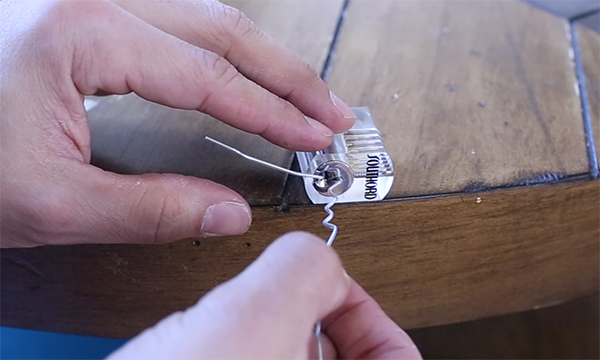
I snagged this from "Art of Manliness, I get their emails in my inbox and they have some good stuff in the articles, I saw this article and thought it was an excellent article to pass around.
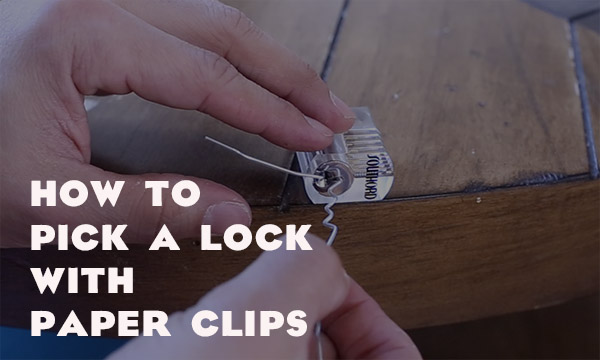
How to Pick a Lock With a Paper Clip
So you know how to pick a lock
with a tension wrench and rake. This is an incredibly useful skill,
which will allow you to get in your house if you get locked out without
having to call a locksmith, and will also allow you to help others
who’ve become locked out. You might even need to pick the lock of a door
behind which someone is incapacitated and in need of emergency help.
But, what do you do if you find yourself needing to pick a lock, but you don’t have your lock picks on you?
You use the manly art of improvisation and MacGyver yourself out of this tough spot with nothing but paper clips and pliers, of course.
Picking a lock with paper clips works pretty much the same way as
picking a lock with a traditional tension wrench and rake. You just need
to turn two paper clips into those two very same tools, and then pick
the lock with them like you’d normally do.
Below I show you how.
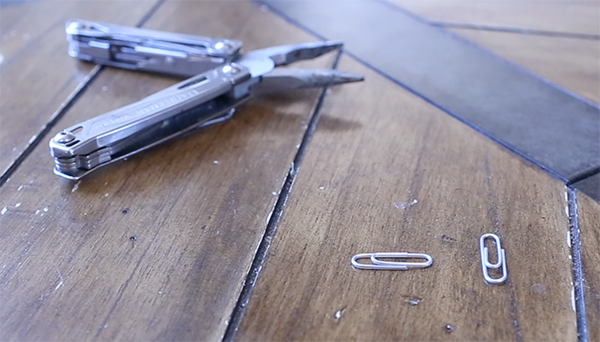
What You’ll Need
2 metal paper clips — the sturdier the better. Don’t use plastic paper clips. They’ll just break.
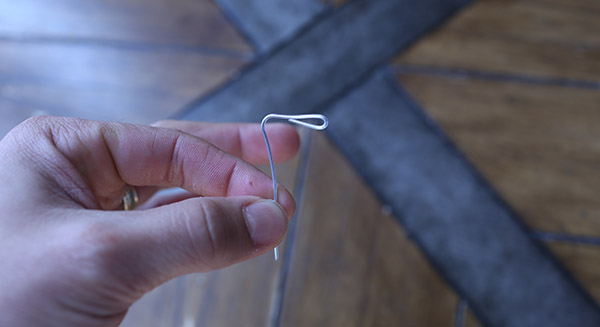
Straighten out one of your paper clips but leave one end still bent.
Squeeze those two parts together. This is the part that will go in the
lock. Using your pliers, bend the long, straight end of the paper clip
90 degrees to form the handle of the tension wrench.
Make Your Rake
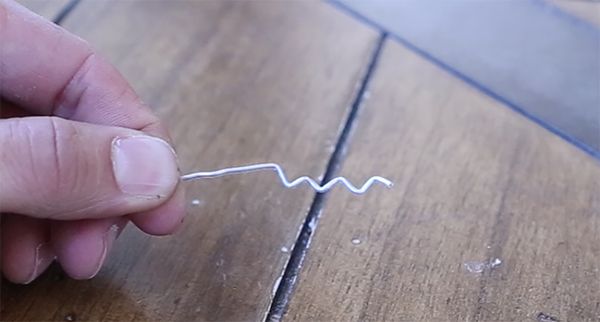
Straighten out the second paper clip. Pinch the end of the paper clip
with the pliers and bend the long part 90 degrees to form the first
ridge in the rake. Move the pliers down on the long part of the paper
clip, and bend again at 90 degrees. Keep doing this until you have 3
ridges in the paper clip.
Pick Your Lock
With your jerry-rigged lock picking set, you’re ready to pick your tumbler lock. Just follow the instructions in our how to pick a lock article.
Warning: Paper Clip May Break Inside Your Lock
Paper clips aren’t very sturdy and may break while inside your lock.
This happened to me while working on one of the doors to my house. Now
I’ve got to replace the lock. Doh! Because of this vulnerability, using a
paper clip to pick a lock should be a last resort. It’s far better to
keep a real lock pick set on you. You can get one at SERE Pick.
I shamelessly clipped this from Angry Staff Officer, I got turned to this guy by "Mack" a good friend and commenter. ASO usually uses Star Trek or Star Wars references and common culture and puts a military flair on it. This guy is good so I shamelessly clip his stuff and put it on my blog.
Army Hair Throughout the Ages
It was Ben Franklin who wrote, “He who neglects his hair neglects his country.”
Well, all right, he never did say that but he would’ve had he thought
of it, because Ben understood the importance of a well put together
coiffe of hair.
The military has undergone some variations on its way of thinking
about hair for men. Back in the early days, it was cool to have long
hair. Hell, if you didn’t want to have long hair you’d have to get a
wig! And for those who couldn’t afford the fancy up-dos, there was
always the fallback of bear grease and flour to rub through your locks.
Might not smell the best – and it would attract flies – but damn if you
didn’t look dashing. Dope hair makes dragoons cry. Fact.
Then came the 1800s and the glorious manes disappeared, replaced by
as many sideburns as you could pack on your face without allowing them
to develop into actual facial hair. It was a pretty good time as men’s
hair goes – lots of flow. “Check out this chill ass map, brah”
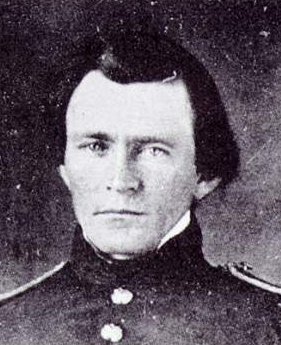
Except for maybe young U.S. Grant and his…whatever it is that he had going on there. Is this a..half mullet? A hullet?
By the time the Civil War hit, however, it was all beards, all the
time. The more beards, the better. Stack beards on beards, the masses
said, and the generals on both sides obliged. Ambrose Burnside went one
better and connected his whole face with sideburns, a look that left
little in the way of confidence in his abilities. The man appeared to
have gone into hiding and was peering out behind the bushes, which is
perhaps why he failed so miserably at Fredericksburg: he simply couldn’t
see what was going on. Never go full sideburn defilade.
Alpheus William’s mustache was always trying to get away, so he nailed it down so as to have it with him always. “Quick, boys, seize the shoulders!”
Most didn’t seem to care too much what was going on up top – both in
the hair situation and the brain department, as it would turn out.
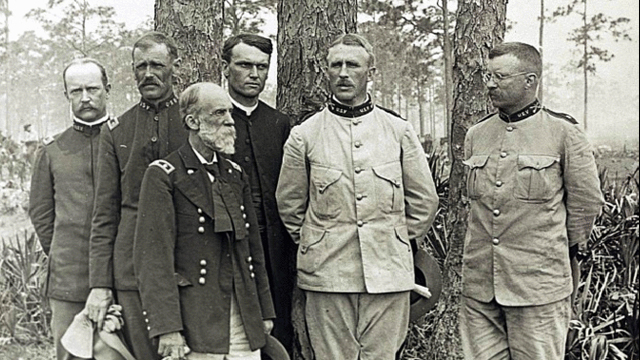
By the time we get to 1898 and the Army’s foray into making war in
places where the climate will kill you faster than the natives, most of
the beards have vanished. A few holdovers can be seen, all exclusively
sported by Civil War veterans who refused to realize that 50 years of
military service doesn’t mean you’re a genius – it means you’re ancient
as hell and need to retire. The de rigueur hair style at this point
becomes the mustache. It was as if President McKinley had called for a
wall of mustaches to face off against the Spanish, for they sprouted
from every field grade and general officer’s face faster than disease
spread through the troops stationed in Cuba. Mustaches for dayssssss…except for General Beardy McBeardface Wheeler.
World War I saw the complete and final death of the beard for the
majority of all troops, for the simple reason that if you had a beard –
well, you were gonna die because your gas mask wouldn’t seal. That said,
the ‘stache refused to go away and reigned supreme on the Western
Front. It was paired with a short, cropped haircut. Why? Because while
the ladies love glorious flowing locks, so do lice. And the ratio of
lice to available women in the trenches was pretty much 1 billion to
one, so off the hair went. Clean cut, mustached, with nice high collars
that made it difficult to look from side to side, the officers of 1918
cut a dashing figure. Well, you know, the ones that weren’t covered in
mud. Unless you were at GHQ, in which case, no mud for you.
By World War II, Army officers had caved to the popular pressure of
what a soldier should apparently look like: shaven, with a cropped
haircut that was usually some variation of a fade or cropped top. Boring
ol’ hairstyles, and yet the owners did some damn fine work. Of course,
in the frost of the Ardennes or the humid jungles of New Guinea, the
niceties of grooming faded into the background. And in sustained combat,
the beards came back – although never officially. And some people decided to go for Mohawks. There’s always one.
Following World War II, Army hair got all regulated and whatnot. The
current regulation, AR 670-1, is pretty vague about the limitations on
male haircuts, as long as they are well-groomed and present a neat and
orderly appearance. Naturally, there’s all sorts of disparities when it
comes to officers of today and their hair style of choice.
You’ve got the highly motivated ones with high and tights, who you
look askance at and ask them why they didn’t go join the Marine Corps
and get it over with. Then there’s the “my entire personality is the
Army which is why my haircut is so bland and buzzed” type. Of course
aviators have the “I woke up like this” hair, which takes the meaning of
good order and discipline to the limit. And then you’ve got the younger
generation of officers – myself included – who believe that “Yes,
Virginia, you can be an Army officer and have good hair.” With trimmed
sides and a comb-able top that falls within Army regs – yet still causes
sergeants major to go into fits – we are reclaiming the heritage of
Army hair. Captain Swenson’s hair is just…perfect.
Although I draw the limit at bear grease.
The Roman Republic was a magnificent entity. It had its problems, as
all governments do, but the men served it proudly and it took many
decades before power was continually seized by the likes of Sulla and
Caesar. The Republic’s heyday was during and just after the second Punic
War, taking advantage of the experiences gained to conquer more of the
Mediterranean. This great success was largely due to an earlier set of
epic wars, much closer to home for the Romans. These were the Samnite
Wars of 343-290 BCE.
Rome’s position before the Samnite Wars is almost laughable. They had
fairly recently conquered their great rival city of Veii, less than ten
miles away. They had expanded after that, taking down the Latin League
and extending south down the coast.
Here the Romans first ran into the Samnites. The Samnites were native
to the mountains and hills of south-central Italy and prided themselves
on being fierce warriors. The rough hill people were able to bully
neighboring tribes, and they grew their influence in the area. A victim
of the Samnite’s bullying, the Campanians, centered on the city of
Capua, appealed to Rome for help. Rome intervened on behalf of the
Campanians and the wars began.
The wars lasted over 50 years, with three distinct wars and peace
between each. During these wars, the Romans grew tremendously as a state
and a growing territorial empire. Here are a few ways the Romans grew
from the wars:
Expansive Building Projects
All roads lead to Rome, right? Well, Roman roads had to start
somewhere, and that happened to be right in the middle of the Samnite
wars. The Appian Way was the first true road built out from the city,
with the exception of some older Etruscan roads going north. It wasn’t
just a flat packed dirt road, nor was it simply paved, the Romans
started with the highest of standards from the very beginning.
Starting with packed earth, layers of fine and coarse crushed rock
were added with a slight ridge in the middle. Slabs of rock were fit
like a jigsaw puzzle forming a smooth surface with drainage down to
ditches if needed. Roman roads were smooth and dry, great for rapidly
transporting armies, especially those utilizing pack animals and wagons,
which would be most armies by this point in time.
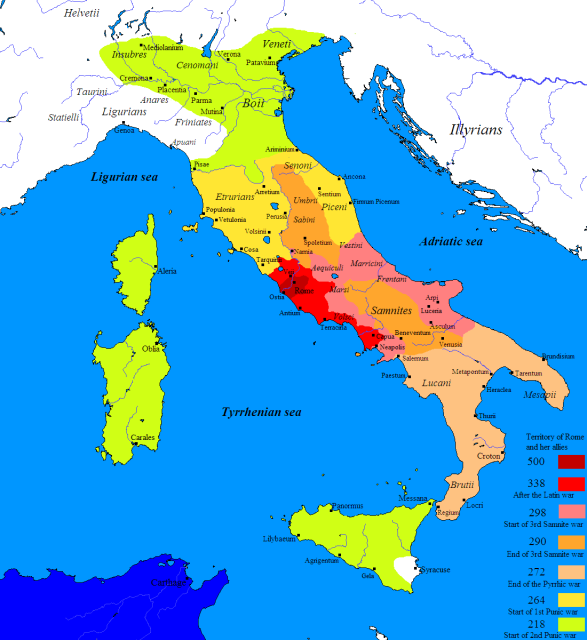
The growth of Roman territory, note the small size at the start of the Samnite Wars.
Roman roads were especially important during the Samnite War as the
only other routes south to their allies went dangerously close to a
malarial swamp.
In addition to the roads, the first aqueduct was built during the
same time. Appius Claudius actually spearheaded both projects (hence
Appian way and Aqua Appia) and was a great example of the Roman educated
elite doing their best to serve Rome. The Roman population was quickly
outgrowing their access to fresh water, and the construction of the
aqueduct was a monumental feat of engineering requiring both arches and
tunnels to reach Rome.
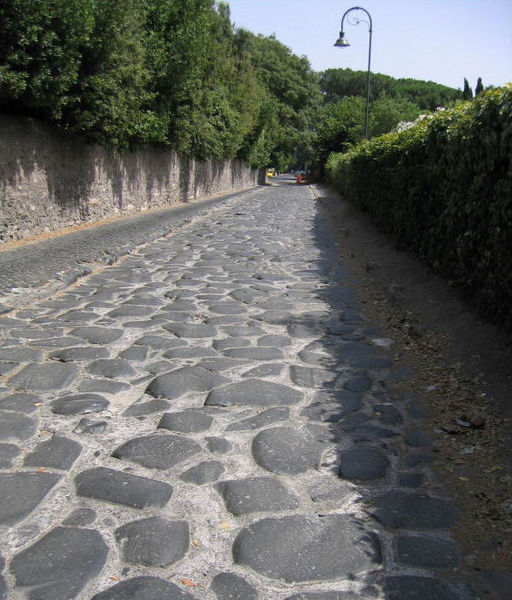
The Appian Way still carries traffic today. Paul Vlaar – CC BY-SA 3.0
The aqueduct allowed Rome to thrive even through a long period of
warring and the solution to the water troubles was so effective that
Rome had several aqueducts by Augustus’ day, and he even built one to
make a lake for mock naval battles.
Facing Tremendous Odds
The Romans and the Samnites had roughly equal power at the start of
the wars, with Rome perhaps having a larger population and Samnium
having a slight edge in military power. Soon the Romans began facing
enemies everywhere, however, and faced a long uphill battle.
The Samnites were joined by the Etruscans, the former rulers of Rome,
but still powerful. The Romans were situated right between the Samnites
and Etruscans, forcing a two-front war. The Latin League also rebelled
early on, causing problems at the doorstep of Roman homeland. At some
points, the Romans even had to face Gauls, their most hated and feared
enemy since Rome’s first capture.
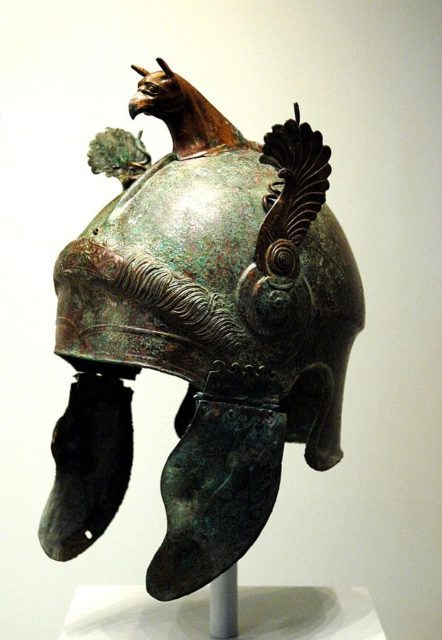
A ceremonial Attic helmet typical of many found in Samnite tombs, ca. 300 BC. davide ferro – CC BY-SA 2.0
Part of Rome’s solution to facing enemies in every direction was the
formation of Roman colonies. These full Latin rights colonies spread the
true and trusted Roman influence. This was initially done to create a
Roman presence on the southern side of the swamp between Latium and
Campania so Rome could have a presence without having to constantly
cross swampland.
Facing such odds, and in different directions gave the Romans an
early understanding of strategic positioning. Having to march through
hostile territory instilled the importance of marching camps and knowing
how far from the enemy or allied armies a force was.
Map of the Third Samnite War. ColdEel & Ahenobarbus – CC BY-SA 3.0
The humiliating defeat at the Caudine Forks, where the Romans were
simply trapped and forced to surrender, instilled a sense of situational
awareness in the Romans. We can see this later in such engagements as
the Battle of Telamon; with the exception of Hannibal, the Romans were
not often fooled in wartime.
Upgrading the Army
Livy is the most complete source for the Samnite Wars, writing
centuries after the events. We just don’t know much about the individual
battles, but it does seem that the Romans developed their distinctive
fighting style over the course of the Samnite Wars.
The Romans had initially fought in loose warbands, with heroic
fighters standing out. they soon adopted the Greek phalanx style as it
was simply more effective in larger battles. The phalanx was a solid
style of combat but had a few problems in rough terrain. This was
painfully evident when the Romans fought in Samnite territory and found
their lines would crack and break as they attacked on hilly terrain.
The actual change of style is difficult to follow, but the Romans
emerged from the Samnite Wars wielding a different sort of army. Forming
three lines, with the youngest in the front and veterans in the rear.
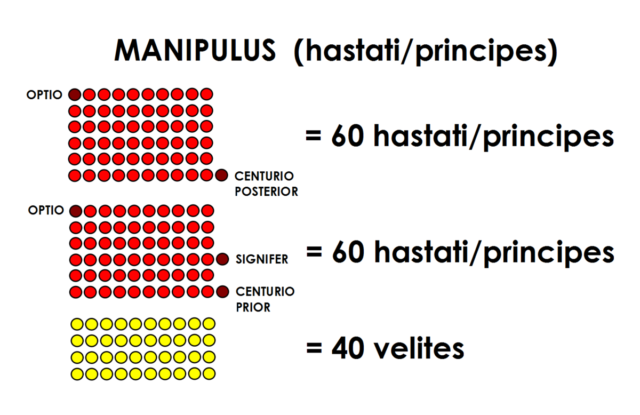
The manipular formation formed a checkerboard pattern when viewed from
above, with large gaps within the three lines.
Manipulus formation. Cristiano64 – CC BY-SA 4.0
This variable formation allowed Roman armies to adapt to any terrain
and any type of attack, as long as they had the right officers and
generals leading them. More fighting led to better leadership, which
allowed the formation to work like a well-oiled machine.
This new army faced a powerful foe in Pyrrhus of Epirus, a man hoping
to be the Alexander of the West. Pyrrhus attacked the Romans with a
professional army under established leadership. The Romans took two hard
shots but inflicted so much damage and gained valuable experience so
that the third large battle was a decisive victory, ousting the talented
commander.
Moral Strength
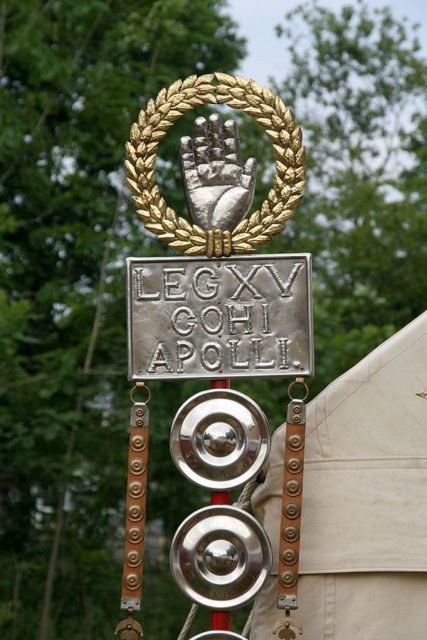
Manipulus symbol. MatthiasKabel – CC BY-SA 3.0
Above all, the Samnite Wars gave the Romans a sense of grit and
determination that is difficult to measure. Battles went down to the
wire, and victory was far from certain. Though far from established
fact, Livy records one instance where the Romans charged a Samnite
position in battle several times with frustratingly little success. The
Romans organized a frenzied last charge before nightfall and finally
broke the Samnites. The Samnites were later said that they fled because
of the eyes of the Romans, which seemed to blaze, with their frenzied
glare and furious expressions.
In another battle, the Romans faced a combined army of Samnites,
Etruscans, Gauls, and Umbrians. The Romans’ decisive victory despite
overwhelming odds in this battle actually broke the alliance of the
above-mentioned states. This was a titanic struggle, just on a regional
scale, and gave the Romans the tools they would need to conquer and rule
the entire Mediterranean.
I was driving home from work and I was listening to the 70's on 7 on my Sirius/XM, I had changed it up from my usual 80's on 8 that I normally listened to. I guess I wanted to change things up a bit.
I remember the first time I heard this song, it was the mid to late 70's and the Disco movement was huge, and yes I admit, I do like Disco, I guess that is why I like New Wave in the 80's, something about the synthesizers, and the many ways that you can play something, and you were limited by your creativity. Well anyway, when I heard this song, it sounded so cool and so futuristic it was on a league by itself.
Before "I Feel Love", most disco recordings had been backed by acoustic
orchestras, although all-electronic music had been produced for decades.Giorgio Moroder and Pete Bellotte's innovative production of this disco-style song, recorded with an entirely synthesized backing track, utilizing a Moog synthesizer, spawned imitators in the disco genre and was influential in the development of new wave, synthpop and later techno. Moroder went to work on the song with Bellotte in his Musicland Studios in Munich. "We wanted to conclude with a futuristic song," he said, "and I decided that it had to be done with a synthesizer.
According to David Bowie, then in the middle of recording of his Berlin Trilogy with Brian Eno,
its impact on the genre's direction was recognized early on; "One day
in Berlin ... Eno came running in and said, "I have heard the sound of
the future." ... he puts on "I Feel Love," by Donna Summer ... He said,
"This is it, look no further. This single is going to change the sound
of club music for the next fifteen years." Which was more or less
right."
Music critic Vince Aletti
wrote that, "The pace is fierce and utterly gripping with the
synthesizer effects particularly aggressive and emotionally charged." He
went on to predict that the track "should easily equal if not surpass"
the success of "Love to Love You Baby" in the clubs.
In a 2017 feature on the song's 40th anniversary for Pitchfork, music journalist Simon Reynolds
reflected that "I Feel Love" had a significant impact on music across
all genres for the next decade, including rock-leaning genres such as post-punk and new wave, and subsequent sub-genres of the electronic dance music style the song had pioneered, including Hi-NRG, Italo disco, house, techno, and trance. Reynolds also posited "If any one song can be pinpointed as where the 1980s began, it’s "I Feel Love." Mixmag ranked the song number 12 in its 100 Greatest Dance Singles Of All Time list in 1996, adding:
"Whenever, however you hear this tune, it's guaranteed to make you
smile, shut your eyes and trance out. The first electronic disco
masterpiece, disco diva Donna and Moroder's finest, trippiest moment.
Whether it's Derrick May or Carl Craig slipping Patrick Cowley's
deliciously psychedelic 1982 remix into their techno sets, or Masters at
Work climaxing a four deck set with last years garaged-up remake, or
just some bloke in a bow tie playing the original at your brother's
wedding, this record is timeless. And priceless."
Slant Magazine ranked the song 1st in its 100 Greatest Dance Songs-list in 2006, adding:
"No longer would synthesizers remain the intellectual property of
prog-classical geeks. And, separated from its LP context and taken as a
Top 10 single, it didn't just suggest the future, it was the future.
Cooing ascending couplets of an almost banal ecstasy, Summer's breathy
vocals still dwelled in the stratosphere of her own manufactured
sensation."
In 2011, The Guardian's
Richard Vine ranked the release of "I Feel Love" as one of 50 key
events in the history of dance music, proclaiming it "one of the first
to fully utilise the potential of electronics, replacing lush disco
orchestration with the hypnotic precision of machines". Mixmag ranked it #19 in its 2013 '50 Greatest Dance Tracks Of All Time
I have commented repeatedly that the people that want to gut our 2nd amendment rights are perfectly happy to let the government have guns and these people whom are statist and believe that the government is all knowing and all doing and is this benevolent master, they have this parent child relationship with the government. I and many like me view government as a necessary evil and our founders put checks and balances in the system including the 2nd amendment to prevent the government from "getting to big for their britches" to use a southernism.
The elitist are pushing the latest shooting to try to disarm the
American people, especially the middle class, the bulwark against the
elitist that would try to rule be imperial fiat. In a lot of countries,
there are the very rich and the poor, there are no middle ground. in
those countries, the rule of law is the same, there is one rule for the
rich and one rule for the "great unwashed". The middle class is a check
on the unfettered desires of the 1%ers that do desire to rule because
they are "our betters". I first heard of the 4 post of our political
system from a now retired talk show host by the name of Neal Boortz.
After the recent shootings, this is a reminder of what can
happen if tyranny disguised as the "caring liberals" makes an
appearance.
I had posted this back when I first started blogging. I will repost
since it is pertinent to today's discussions on government and
overreach. The 4 boxes of the American political system work like
this:
1. The Soapbox : I can stand on a soapbox and
criticize the power structure and the politicians and not get thrown in
jail and sent to a gulag or get asked "Where do you want your remains
sent to?"
2. The Ballot Box: I can vote for whomever I want
without fear of being thrown into prison for supporting the "Wrong
candidate" or being wrapped in a tire and set on fire.
3. The jury box: I can feel confident that the rule
of law will apply equally to everybody without regard to station in
life. and due process isn't being asked "which ear do you want the
bullet?
4. Cartridge box: You open the 4th one when the others are threatened and get the first 3 back.
I clipped this off faceplant,
Liberal idiot
stridently insists that the AR-15 round is uniquely powerful and
terrible. I explain that muzzle energy is the commonly accepted metric
for determining how powerful a round is. And that the AR-15’s .223 round
has 60% less muzzle energy than the .30-06 and 30-40% less than other
common deer hunting rounds.
Liberal idiot then insists that the .223 round is much deadlier because it’s much faster. I explain that the muzzle energy
formula takes velocity into account and that the .223 has about the
same velocity as most deer hunting rounds and is only about 10% faster
than the .30-06.
Liberal
idiot then insists that the .223 round is especially deadly because it’s
a lighter round (!). Speechless, I start to explain that muzzle energy
directly correlates to mass, so a round that’s half as heavy will have
half the muzzle energy, assuming the same velocity.
Then I stop, bid him adieu and delete his messages. And hope my IQ recovers by Monday.
Folks, THIS is the degree of stupidity we’re dealing with. They
literally know NOTHING about guns and aggressively refuse to learn even
the most basic facts. We can’t reason with people who are intentionally
and insistently uninformed. And any Republican Quisling who makes nice
with these fanatics should be kicked out of the party.
I have heard the same thing about the more modern "jeep", the M151 series, like what I drove in Germany and my Dad drove in Vietnam. Mine was made by Ford Motor Company in 1970 according to the data plate. I wish I could have bought her from the division property book officer when we turned them in in 1987 for Humvees. Yeah the Humvee looked badass but we still liked the Jeep.
A young man reading one of the magazines like Boy’s Life or Popular
Science in the 40s or 50s might have come across an exciting
advertisement. ‘Army Surplus Jeeps. Only $50’.
All you had to do was send away $20 (about $200 the US in today’s
money), and you’d be given a good deal on a Jeep or another piece of
army surplus equipment. I saw the same thing or a variation of the same scam involving the M151 series vehicles.
Sounds too good to be true? That’s because it wasn’t. It was a scam.
The scammers weren’t buying Jeeps for people. Rather they were sending
pamphlets with information on how to bid at government auctions. And the
same information was available from the U.S. Government for free! And
even then, very few complete Jeeps were available for sale. Most Jeeps
were scrapped, leaving only spare parts for sale. Jeep production line. The crated Jeep – it wasn’t that common to crate them – it was expensive.
But who would want a Jeep anyway? They carried a 1/4 ton, they were a
four-wheel drive vehicle. Nevertheless, it was advertised as a great
boon to civilians. With the end of the war in sight, Popular Science
began encouraging the market for surplus Jeeps by running a contest in
March 1945. It really is a great sight though.
The magazine encouraged readers to offer their ideas on the theme
‘how I’ll use surplus goods’. It was suggested that the Jeep could be a
tractor, a power generator, a truck, a pick–up. Everyone had to have a
Jeep! And they have become very popular with civilians, both for work
and recreational use, right up to the present time. Worth a small fortune in today’s money.
But it wasn’t army Jeeps that answered the demand, but rather Jeeps
designed for civilian use. The first CJ, or Civilian Jeep, was produced
in 1941 and was called the CJ2A. And Jeeps like the Wrangler and
Cherokee are popular as family vehicles nowadays. Crated JeepsOne of the best designs of the war.
Of course, the Jeep wasn’t built for civilians. It had an important
military purpose. The military needed a tough vehicle that could carry
heavy loads, pull heavy objects and move quickly over rough ground.
648,000 Ford GPW’s and Willys MB’s were built during World War II – 15
percent of military vehicles produced were Jeeps. The Jeep was used by
every branch of the U.S military, with an average of 145 assigned to
each infantry regiment.
Reading for shipping.
But to return to these old advertisements – they promised that they
would send you in a Jeep boxed up in a crate. How did they get that to
work? Well, it didn’t. Again, it was a scam to try and get the reader’s
money. It is true that the Army did crate complete Jeeps for shipment to
U.S. forces and countries like Britain and the Soviet Union. However,
it was a costly and time-consuming exercise which was done only when
necessary. Jeeps lined up in France awaiting shipment to the Pacific Jeep graveyard – Okinawa
It is doubtful if any crated Jeeps remained in the United States to
be sold to civilians after the war. Dealers and organizations have
offered substantial amounts of money for anyone who can produce a Jeep
in a crate. So far, no money has changed hands.
So if you do want a Jeep, you’d be better off going to your local car dealer.