Webster

The Constitution was made to guard the people against the dangers of good intentions." --American Statesman Daniel Webster (1782-1852)


Thursday, September 20, 2018

More background on the forced resettlement of white farmers in South Africa.

I had done a couple of articles on South Africa, mostly the Boer wars and of course Rhodesia that got legislated away after Jimmy Carter and the spineless craven leaders in England since Rhodesia used to be part of the commonwealth and part of colonial England caved to the communist pressure.  Alex at Ammo.com had sent me this article and he gave me permission to copy it in its entirety.  I enjoyed the article for it gave a lot of back story on the issues going on right now.

Originally posted here, over at Ammo.com

Land Reform and Farm Murders in South Africa: The Untold Story of the Boers and the ANC
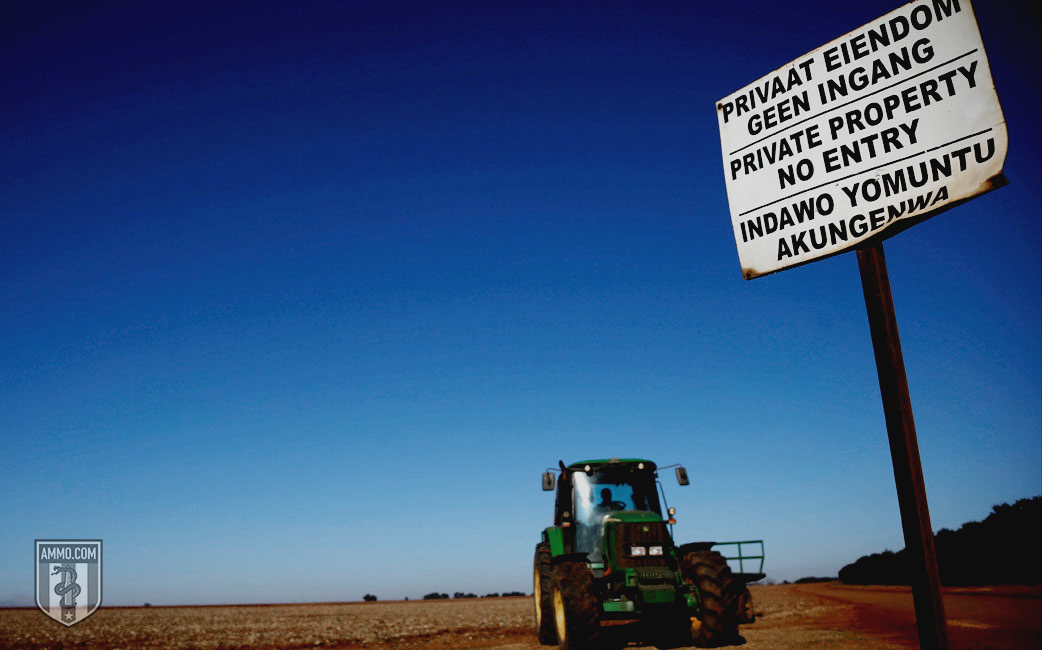
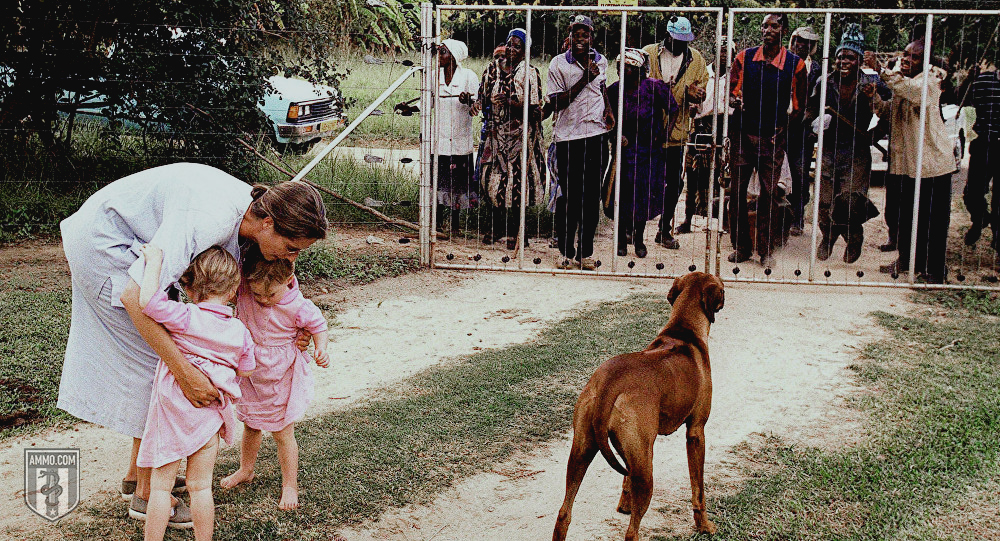
The Untold Story of South African Land Reform and Farm MurdersSouth African farm murders have long been a niche cause on the Internet, and the country has made headlines again due to a South African government plan to seize the land of white farmers under the guise of “South African land reform.”
News of these farm murders and land seizures have gained steam with the release of Lauren Southern’s documentary Farmlands. And United States President Donald Trump has brought even more attention to the plight of Afrikaners with his tweet that he would be looking into the South African land and farm seizure.
Most people don’t know much about the history of South Africa beyond the simplistic propaganda of the 1980s – white South Africans bad, ANC good. The history and current situation of South Africa, however, is much more complex.

Defining Terms: Who Are the Key Players?

Before going any further, terms should be defined and the key players identified:
  • ANC: The African National Congress, the leading party in South Africa since the end of apartheid.
  • Afrikaners: Dutch-, German- and French Huguenot-descended white South Africans who primarily speak a language called Afrikaans.
  • Bantu: A group of black South Africans including the Xhosa (of which Nelson Mandela was a member) who originally lived in the northeast of the country.
  • Boers: A subset of Afrikaners who still lead a rural and agricultural existence.
  • Democratic Alliance: Currently the second-largest party in the South African parliament, the Democratic Alliance is a broad-based centrist party that is comparatively economically liberal for South Africa. It enjoys broad, multiracial support, though it is most popular among all racial minorities – white, Coloured and Indian. Its black supporters are often derided as “clever blacks” by ANC supporters.
  • EFF: The Economic Freedom Fighters, a far-left political party in South Africa that has pushed the South African government to seize land from white farmers. Sometimes derisively called “Everything for Free,” the EFF is the third-largest party in South Africa, but is poised to become the second.
  • Khoisan: A popular name for the original inhabitants of most of the territory now known as South Africa. This is not an ethnic designation, but a linguistic one. These are who the Dutch settlers first encountered.

A Brief History of South Africa: From Early Settlement to the Boer War

To understand the current situation in South Africa, it is important to first understand the country before, during and after apartheid.
South Africa’s modern history begins with the Dutch East India Company, which established trading posts for sailors along the coast. Dutchmen soon started settling the area, with little, if any, conflict with the native Khoisan population. Dutch settlers, however, quickly came into conflict with the Dutch East India Company’s authoritarian rule.
Freedom-seeking Dutch settlers moved north starting in the 17th Century. In 1852, Boers founded the South African Republic (known as the “Transvaal Republic”) and then the Orange Free State in 1854. These are called “Boer Republics” and they, in turn, came into conflict with both southward-expanding Bantu tribes (most notably the Zulu, who were in the process of conquering other nearby Bantu tribes) and the British Empire.
White South Africans” are typically treated as a monolith, but there are two main, distinct groups: The Afrikaans-speaking Afrikaners and the English-speaking British. Indeed, there were intense hostilities between these two groups, especially after the Second Boer War when the Boer Republics were reforged as British colonies.
Telling the Afrikaners to “go home” is a nonsensical statement. They are not Dutch. They do not hold Dutch passports, nor would they at any point have been welcomed back by the Kingdom of the Netherlands. In many regions of South Africa, the Afrikaners have been around longer than the Bantus and have a stronger claim on the land, having purchased it from Khoisans. On the other hand, traditionally Bantu land was conquered from other Bantu tribes or taken by the Bantus from the Khoisans.

A Brief History of South Africa: The Boer Wars
The Untold Story of South African Land Reform and Farm Murders“The Boer Wars” refers to two wars between the Boer Republics and the British Empire, but mostly the second one. The first was a rout for the Boers and left the British Empire with egg on their face. They would not be embarrassed a second time.
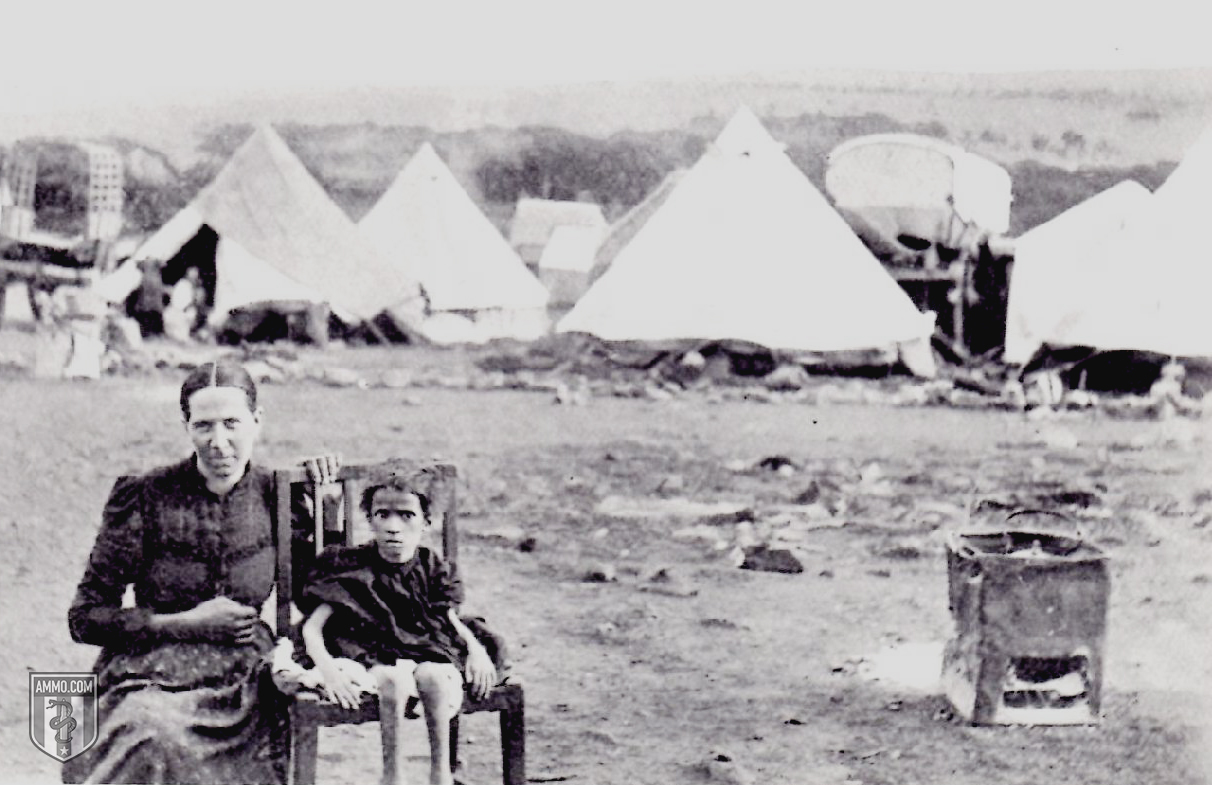
The first concentration camps were built for Boers. Not just any Boers, but primarily the wives and children of Boer Commandos (irregular guerilla troops) fighting the British Empire. The strategy was simple: Lock up their women and children, and they will lose their will to fight.
It worked. Adding insult to injury, the most publicized photo of the concentration camps, a picture of seven-year-old Lizzie van Zyl nearly starved to death, was touted in the British press as evidence of parental neglect by the Boers. There was great international outcry against the British during the Boer War, but it never amounted to much.
Boer Republics were reconstituted as British colonies. In 1910, three British colonies were unified as the Union of South Africa. After World War I, South West Africa, today known as Namibia, was administered effectively as a fifth province of South Africa, but for obscure reasons never integrated. South Rhodesia voted on membership, nearly joining, but the argument that it would become “the Ulster of Africa” proved too powerful. The history of South Africa is largely that of a rebellious and unhappy British Dominion until 1948.

A Brief History of South Africa: Enter Apartheid
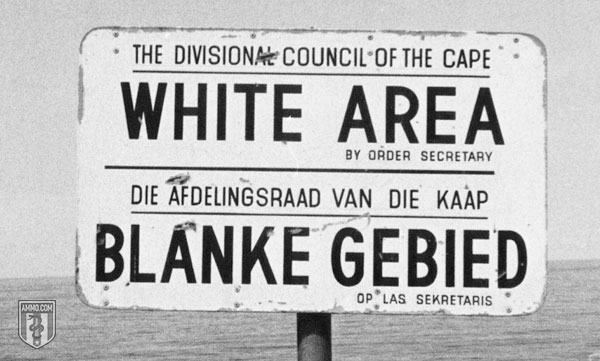
The Untold Story of South African Land Reform and Farm Murders“Apartheid” is an Afrikaans word meaning “separateness.” It was a series of laws drafted beginning in 1948, after the success of the Afrikaner-heavy National Party in the national elections. There was a split in the party between those who favored apartheid as it happened versus those who favored complete separation, including parallel governance. The former won out in no small part due to a thirst for cheap black labor.
Most people know the basics of apartheid, but they are worth going over briefly here: South Africans were classified into one of four racial categories: white, black, Coloured (a non-pejorative term in South Africa, meaning roughly “mixed race”) and Asian or Indian. In 1949, mixed marriages were outlawed with cross-racial intercourse outlawed the following year. In 1953, amenities were segregated by law. Increasingly, the blacks of South Africa were segregated into townships and Bantustans, the latter being nominally independent “homelands” for Africans. This meant that as foreign nationals, in the eyes of the Union of South Africa, they were required to carry documentation to work in South Africa and needed to leave after they were done.
Coloureds, who had the vote, were slowly disenfranchised. Indians and other Asians were never allowed to vote.
Between the end of World War II and the declaration of a republic in 1961, internal politics were dominated by the division between conservative republican Afrikaners and liberal monarchist British whites. Apartheid enjoyed greater support among Afrikaners and less among British South Africans. British Prime Minister Harold Macmillan's "Wind of Change" speech increased support for apartheid among British South Africans because of a sense of abandonment by the homeland. Many were upset at being forced by the British government to choose between South African and British citizenship and passports.
Still, none of this amounted to what the National Party hoped to achieve – a cohesive and united white South African identity. Support for apartheid was always tepid among British South Africans.
It is certainly true that notions of racial superiority were a prime motivator for apartheid, but there was another factor in play: Communism. The Suppression of Communism Act was passed by the first apartheid government, banning any Communist organization. The Act took a broad view of what constituted “Communism.” However, given the infiltration of mass movements, particularly in the developing world at the beginning of the Cold War, this is perhaps less cynical than it is commonly made out to be. The Act was used to suppress the African National Congress, something we will talk about in detail later.
Finally, it’s worth mentioning that Afrikaner society is fundamentally and deeply conservative. Pornography and gambling were illegal in apartheid-era South Africa. Most businesses could not open on Sundays. Abortion, homosexuality and reproductive education were tightly regulated. There was no television until 1976, as this was believed to be immoral and a vehicle of Communism. English-language programming was seen as a threat to Afrikaans culture.

A Brief History of South Africa: The Rise of the ANC and Nelson Mandela
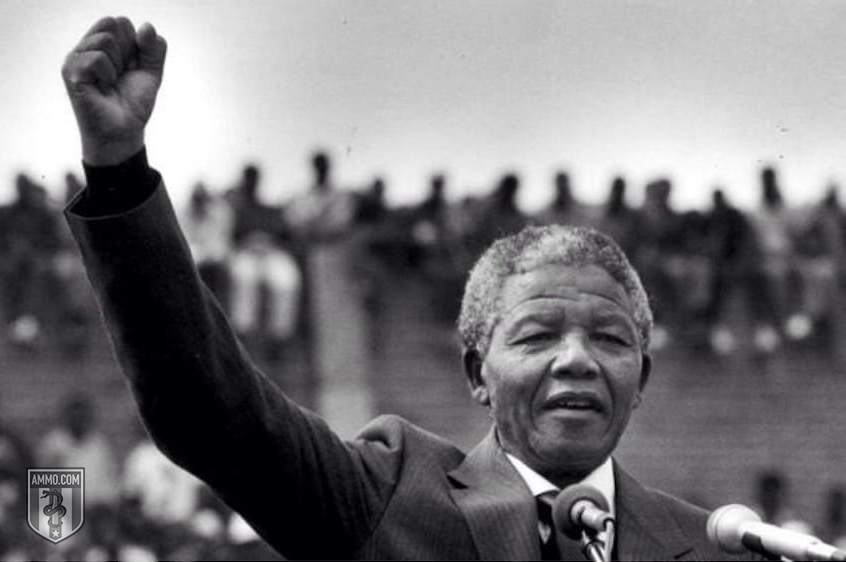
The Untold Story of South African Land Reform and Farm MurdersThe Suppression of Communism Act was the instrument used to outlaw the African National Congress. While the ANC is typically thought of as a democratic-liberal organization, this is simply not true.
The ANC’s closest ally was the South African Communist Party. Indeed, Nelson Mandela, the face of anti-apartheid resistance, was not only a member of the SACP, he served on its Central Committee, something he denied for decades. The SACP has never to this day contested its own candidates in South Africa, instead fielding their people on ANC slates.
What’s more, the SACP partnered with the ANC in forming Umkhonto we Sizwe (“Spear of the Nation”), the paramilitary wing of the anti-apartheid movement.
The average person on the street likely thinks that Nelson Mandela was imprisoned simply for being black or opposing apartheid. In fact, he was imprisoned for a bombing campaign carried out by Umkhonto we Sizwe, of which he was the head. In fact, Nelson Mandela was convicted of 193 acts of terrorism. He was offered his freedom multiple times on the simple condition that he condemn terrorist attacks against the apartheid regime. He refused every time.
The ANC was not the only organization in South Africa opposed to apartheid. Many white South Africans saw the system as unsustainable. However, outside of South Africa, the situation was largely posed by the media as a question of “apartheid forever or the ANC.”
The ANC and its allies in the Communist Party and the trade union congress COSATU (known as the tripartite alliance) were not the only alternative to the ruling National Party and thus apartheid. The Progressive Federal Party was the main parliamentary opposition to apartheid, which, as the name implies, was in favor of a federated South Africa. The New Republic Party was likewise in favor of power sharing and oriented toward reconciliation with the Commonwealth.
The New Republic Party and the Progressive Federal Party were also bitter enemies. The New Republic Party was a conservative party denounced as racists by the Progressive Federal Party. The Progressive Federal Party was a liberal party derided by the NRP with the nickname “Packing for Perth,” due to the impression that their members were all emigrating to Australia. Two-thirds of South African whites supported some sort of federalism or power sharing, but moderate elements never received any international support.
Nor was the ANC the sole representative of South African blacks. Zulu nationalists, currently represented by the Inkatha Freedom Party, were often bitter enemies of the ANC by the 1980s. Many black South Africans served in the police force and other aspects of the government, leading to the rise of a barbaric form of retribution known as “necklacing.” This is filling a tire with gasoline, hanging it around the neck of a suspected collaborator or political opponent, and lighting the tire on fire. Death can take several hours.
Winnie Mandela, then-wife of Nelson Mandela, declared that "With our boxes of matches, and our necklaces, we shall liberate this country.” This caused the ANC to create some distance between itself and her, but ultimately she was given further positions in the movement and the ANC government.

A Brief History of South Africa: The ANC in the Saddle
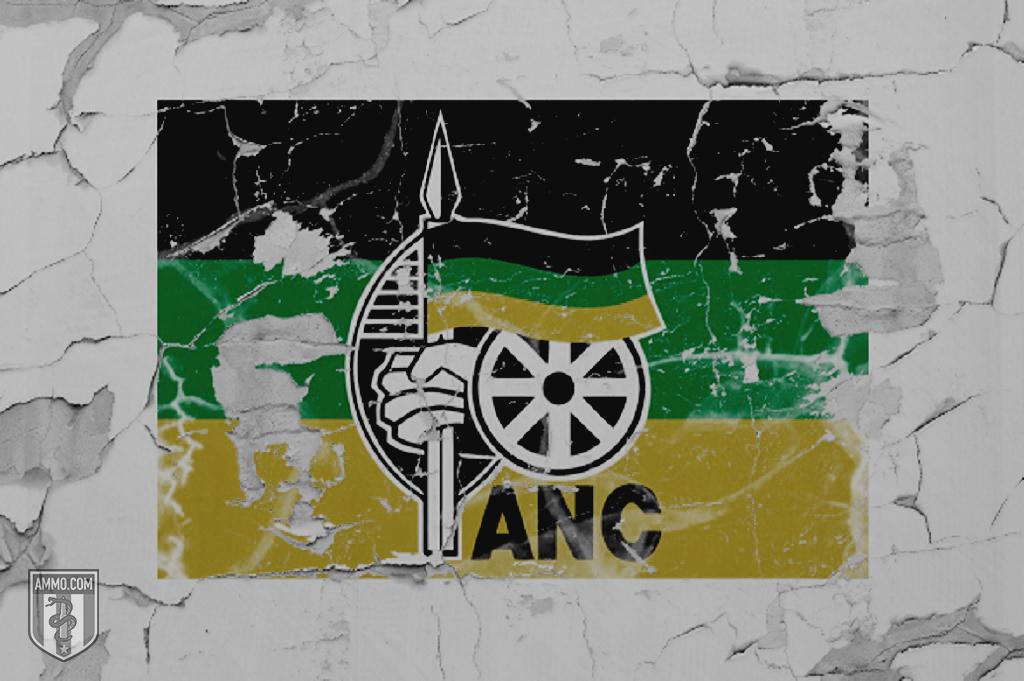
The Untold Story of South African Land Reform and Farm MurdersIn 1994, the African National Congress took power in South Africa. At this time, its paramilitary organization was integrated into the country’s regular defense forces. Convicted bomber Robert McBride, praised by no less than IRA terrorist Martin McGuinness, is the Executive Director of the Independent Police Investigative Directorate. Touted as the “Rainbow Nation,” the fall of apartheid in South Africa was part of an overall feeling of optimism throughout the world surrounding the Fall of Communism.
However, not everything was roses in the new Republic of South Africa. The Truth and Reconciliation Commission was an attempt to lay bare the crimes of the apartheid regime. The tribunal, which did not dispense with sentences, but merely sought to find the truth, has been criticized for not dispensing any justice. Neither former National Party government members nor ANC partisans were punished by the Commission.
The elephant in the room at all times was an overwhelming increase in the crime rate. The term “rape gate” entered popular parlance as South Africans installed panic room doors on their bedrooms. Crime is the main reason for emigration from South Africa. The 2013 murder rate was seven times that of the United States, the 11th highest in the world. Between 2005 and 2015, over 200,000 South Africans were murdered – this in a country of about 50 million. There were over 17,000 murders in 2013 alone. Compare this to just over 14,000 in the United States during the same year, despite the fact that South Africa’s population is approximately equivalent to two states – California and Texas.
This is only the official murder rate. Many suspect that the rate is higher, due to a disengagement from formal policing and a reliance upon private security firms. Quality of public services has likewise deteriorated, with rolling blackouts being the norm in South Africa.
The ANC presides over what is potentially the largest welfare state in the world, according to economist Mike Schussler in 2010. Six percent (3.3 million South Africans) of the population pays 99 percent of the taxes, while 31 percent (16.4 million) receive social grants. This means there are five South Africans receiving welfare for every one paying taxes. 71 percent of South African children live in houses where no adult is employed.
South Africa has a sweeping affirmative action quota program. Employee demographics must, under the South African Employment Equity Act, represent the racial demographics of South Africa as a whole. This means that, for example, the national power company was pressured to fire a number of skilled white engineers, while the country was going through rolling blackouts. The country currently has a labor shortage of approximately 800,000 skilled workers.
The affirmative action program has not lead to a significant increase in the number of skilled black technical workers. In 1994, 15 percent of black South Africans held skilled technical positions. In 2014, this percentage had increased to 18. Meanwhile, between 1992 and 1997, the number of skilled technical degrees dropped by 13 percent while the number of degrees in public administration and social services skyrocketed by 199 percent.
Finally, the specter of corruption has hung over the ANC regime. Scandals surrounding the ANC government have included bribery in arms deals, the abolition of a task force dedicated to organized crime and corruption, sexual misconduct including criminal charges, and using government and civil organizations to fight its political opponents, particularly those in the Democratic Alliance.

What Are the South African Farm Murders?
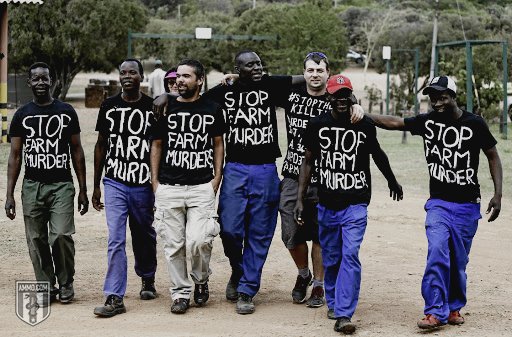
The Untold Story of South African Land Reform and Farm MurdersIt is currently twice as dangerous to be a South African farmer than a South African police officer. The murder rate among South African farmers is three times that of the standard murder rate in South Africa, which is already one of the highest in the world.
The government claims the motives for the farm attacks are robbery. However, this does not pass muster. Farm attacks frequently include raping the female members of the household – including young children – while forcing the male members of the household to watch. The victims are often then tortured to death in front of each other. Farmers claim police response to these attacks is sluggish at best and nonexistent at worse. The government stopped collecting statistics about farm murders in 2008.
What’s more, the attacks on white farmers in South Africa tend to have pitched levels of brutality about them. Without getting too lost in the weeds of the grizzly details, it’s worth mentioning some of the more grotesque attacks on farmers at least in passing:
  • In 2012, a 12-year-old boy was drowned in boiling water after watching both his parents murdered and his mother raped.
  • A 56-year-old grandmother was gang raped during a robbery netting approximately $2,000.
  • Five men sexually assaulted a woman in front of her 5-year-old son over the course of an hour and a half.
  • Over the course of six hours, a woman was tortured by having her skin cut off, raped and had her feet power drilled.
  • A 66-year-old man was beaten to death in front of his wife. She escaped being gang raped by saying that she had HIV.
  • Bedridden Alice Lotter, 76, and her daughter Helen, 57 were tortured to death over several hours, including by being stabbed in the genitals with a broken glass bottle. One had one of her breasts removed while still alive. “Kill the Boer” was painted on the wall in their blood.
  • Knowledge Mandlazi went on a killing spree in 2014, murdering five whites and stating that “My hate for white people made me rob and kill." He held up his middle finger to surviving victims in the courtroom.
Another common form of attack is the land invasion. In one example, 100 men began squatting land. The farmer did the sensible thing and left. Who could blame him in the kind of environment described above?
Far from being a “white nationalist conspiracy theory,” farm attacks have been reported on and denounced by Human Rights Watch and former Australian Prime Minister Tony Abbot. Afriforum, a wing of Christian trade union Solidarity, likewise reports on farm attacks regularly.

What Is Behind the South African Farm Attacks?
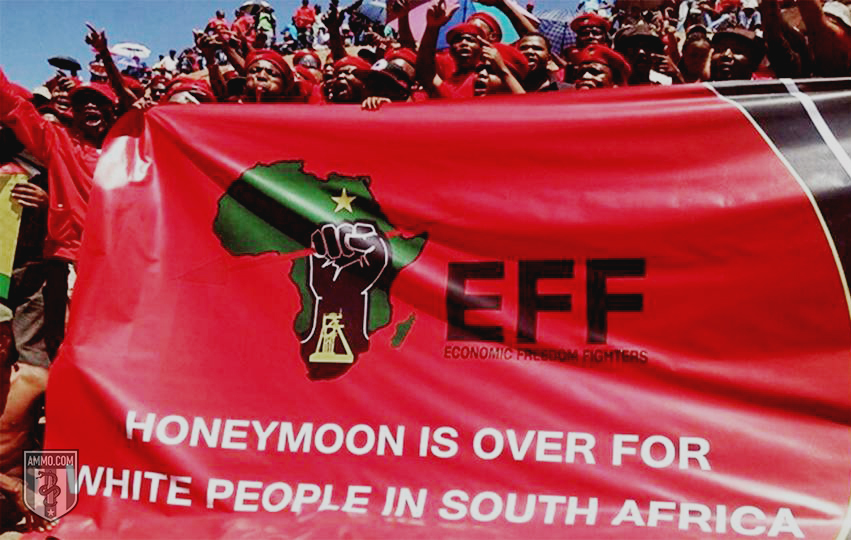
The Untold Story of South African Land Reform and Farm MurdersAnti-white racism is a popular current in mainstream South African politics. The song “Kill the Farmer, Kill the Boer” is still publicly sung, despite this being declared a hate crime. The traditional means of protecting rural South Africans, the commando units, were disbanded in 2003, leaving many South African farmers with no protection.
Anti-white rhetoric in South Africa is very real and very mainstream. Here are a few examples:
Compare this with the woman sentenced to three years in prison for calling someone a “kaffir.” It’s not surprising that some South Africans have begun getting trained by Israeli commandos to protect themselves and their property.

What Are the Farm Seizures?

The Untold Story of South African Land Reform and Farm MurdersThe South African Constitution has recently been amended to allow for Soviet-style expropriations of farms without compensation. Zulu lands are specifically exempted.
This is a bit nonsensical for two reasons. Many white South Africans have been in South Africa longer than most Americans have been in America. Second, the dominant black ethnic group, the Bantus, doesn’t have a strong claim to most of the land in South Africa – the Khoisans would, but they sold it to the Boers or had it conquered by the British. This is as if the U.S. government started seizing land from white families in upstate New York traditionally belonging to the Iroquois and giving it out to the Cherokee.
Still, despite the fact that farm seizures are precisely the means by which Zimbabwe ended up in such a failed state, there seems to be no stopping farm seizures in South Africa. Perhaps worst of all, there are rumors that South Africa’s banks intend to collect mortgage payments even after properties have been confiscated.
In the final analysis, the farm seizures in South Africa aren’t just about dispossessing an unpopular, market dominant racial minority – though that would be disturbing enough. It’s also a threat to South Africa’s incredibly fragile democracy. The ANC is a dominant party with little chance of losing elections and thus, little reason to behave accountably. Add to this the lack of a broad-based middle class with a vested interest in strong property rights, and you have a recipe for kleptocracy and starvation.

Bibliography

Wednesday, September 19, 2018

When Porche tried to build a "Jeep" for the West German Military.


I shamelessly clipped this from Car and Driver.  I thought it was a neat article especially since I have been posting a bunch of articles during Postwar Germany, I thought it kinda tied in with them.


When West Germany was formed out of the ashes of Hitler's Third Reich in 1949, responsibility for its defense fell to the Western Allies. As tensions with Stalin's Soviet Union only seemed to be increasing, it was decided that the Bundesrepublik Deutschland should be allowed to arm itself, leading to the formation of the Bundeswehr, a new German defense force, incorporating a new army, a revived Luftwaffe, and a naval service simply referred to as Marine. The new service needed a Jeep, a role that had been largely performed during World War II by the Beetle-based Kübelwagen. DKW's awkward-looking Munga won the competition to serve as light-duty mobility for German troops, beating out upstart sports-car manufacturer Porsche's very interesting Jagdwagen.
Known by its Porsche type number, 597, the Jagdwagen (literally, "hunting car") pulled a page from the Volkswagen playbook. Where Ferdinand Porsche's Kübelwagen borrowed heavily from his design for the VW Beetle, his son Ferry used his company's 356 in much the same way. Given that the 356 itself can be seen as a radical evolution of the Beetle, it's not a stretch to claim that the Kübelwagen and the Jagdwagen trace their roots to the same seed.
But while the VW had Nazi win-at-all-costs fanaticism and the industrial might of the state-owned KdF-Stadt at Fallersleben behind it, Porsche's company had only its Stuttgart works and contract production at Karmann available, likely making the Jagdwagen a more expensive proposition, especially from the perspective of a relatively new government in the midst of rebuilding a nation.
However, for the expense, there was real capability on offer. Its 356-derived 50-hp flat-four engine was connected to a five-speed transmission, but that wasn't the end of it. The front wheels were capable of engaging with the powertrain on the fly. Given all-wheel traction, a short wheelbase, and generous approach and departure angles, the Jagdwagen was capable of climbing a 65 percent grade

Early prototypes, introduced in January 1955, featured a very high sill without doors, giving the Jagdwagen a measure of amphibious capability, although its motorboat capabilities weren't developed to the extent of the Kübelwagen’s fishy-flutter cousin, the World War II–era Schwimmwagen, which featured a propeller. Later prototypes from 1957 favored ease of ingress and egress over amphibious prowess, and they were equipped with doors.
Weighing in at a mere 1874 pounds, the flyweight military vehicle offered impressive dynamics for its day, but the Bundeswehr ultimately determined that the nifty Jagdwagen and its Goliath co-competitor were less a match for the country's needs than the simple, dumpy Munga from DKW. Nevertheless, it stands as the first Porsche-branded vehicle with four driven wheels. Porsche's Stuttgart facility had assembled four-wheel-drive Schwimmwagens during the war years and had developed the all-wheel-drive Cisitalia Grand Prix car shortly after the war.
Of the 71 Jagdwagens constructed, roughly 50 examples are known to exist still. And today, of course, the remnants of DKW are part of Audi, Porsche's sister brand in the Volkswagen Group portfolio. Porsche didn't build another vehicle with four driven wheels until the all-mod-cons 959 of the 1980s, but today it largely sustains itself building sport-utility vehicles such as the Cayenne and the Macan, the latter of which is based on Audi’s Q5.
Without the Munga-contract money that flowed into Ingolstadt bolstering Auto Union's postwar fortunes, today's Audi might never have existed, there might have been no Volkswagen Golf, and Porsche might well have wound up having to develop the Macan from scratch. Which, if we're honest, probably would've been just fine with Porsche.

Tuesday, September 18, 2018

Musings and intemperate thoughts.....In other words....normal stuff...

Apparently in the Brett Kavanaugh hearing, Senator Diane Feinstein presented to the committee an accusation from a women that Brett Kavanaugh was "Inappropriate" 35 years ago and for this reason he should be disallowed.

     I have several issues with this...Senator Feinstein got this information back in June and waits until now to "ambush" the judge on his confirmation week.  This reeks of shamelessly political opportunism.  Holy crap! They’ve dug up some Dimocrat activist who claims that Kavanaugh assaulted her when he was in high school! High school! Can you believe that crap? At least Anita Hill was somewhat credible but this "activist" keeps changing her story. First there were four boys involved, then there were two boys involved. She can’t remember the exact date. If she was so traumatized she would remember the date. This is just typical Dimocrat tactics. By the way, how are those assault accusations against Keith Ellison going? They are far more credible than these charges against Kavanaugh The person that made the accusation originally made the comment that she didn't want to come forward...until now.....Dianne Feinstein got the information back in June and the accuser spent that time scrubbing her social media profiles.....but well the Internet is "Forever" and here is some of the stuff that we found out about the accuser....
   This is really lame and screams "Desperation"   but this will give a couple of the "Never Trumpers" on the GOP side an excuse not to vote for Kavanaugh.  This is a normal play by the democrats and they get away with this crap all the time because the republicans are too spineless to call them on it.   Judge Kavanaugh denies this as does his friend that is named in this, but the #metoo movement is all over this and they control the media outrage machine.

     On a different note, President Obama is making his rounds trying to pump up the democrats for the 2018 mid term election and take credit for the Trump economy.  It is kinda funny that President Trump has been president for almost 2 years and the economy started spooling up after he got elected and took off after he got sworn in.  If I recall the latest numbers, the economy is roaring along at 4.1%, something that the petulant boy king said was impossible while the jobs went overseas.  Now jobs are coming back because of the business friendly climate where a bunch of onerous regulations were wiped out. but this hasn't stopped him from trying to glom credit where credit isn't due...because it is all about him...
On a different note, it came out that John"Flipper" Kerry has been shuttling from Europe and Iran trying to save the Iran nuke deal and shaft the Trump presidency....again...
Remember President Obama used the same line in 2012 with the Russian President Medvac and the

sycophantic media glossed over that part as they championed his reelection campaign against Mitt Romney.


     We have Hurricane Florence hit the Carolina coast and there have been cases of looting and many people are pulling pulling together to help each other out showing the best of Americans....although the media has been caught exaggerating the effects of the hurricane for ratings...
and pushing Global cooling..Er Global warming, er climate change so the weather can change as weather is supposed to and the climate change devotee's can claim all the credit to support their agenda.  because they support climate change because it is environmental marxism  and the media and democrats are communist at heart.

Monday, September 17, 2018

Monday Music "The Boys of Summer" by Don Henley

I decided to change things up a bit, I will run the next few "Monday Music" with my favorite songs, the songs if they ever would let me run a segment on Sirius/XM or something and they would want me to play some of my favorite songs.    The "Boys of Summer" came out in early 1984 and it became my favorite song, replacing Manfred Mann Earth Band "Blinded by the light" and it was my favorite song until this one came along about a decade later.  This song has stood the test of time for me, it still is my favorite song, I can listen to it over and over again, there are only a few songs that I can do that with.  I will run "My favorite songs" theme for the next month or so.


"The Boys of Summer" is a song released in 1984 by former Eagles vocalist and drummer Don Henley, with lyrics written by Henley and music composed by Henley and Mike Campbell.
It is the lead track and first single from Henley's 1984 album Building the Perfect Beast and reached the top five in the United States as well as the top position on the Top Rock Tracks chart. The song's music video won many awards. "The Boys of Summer" was also performed live by Henley with the reunited Eagles; such a version is included on the group's 2005 Farewell 1 Tour-Live from Melbourne DVD.


Henley's song has a haunting rhythm and timbre, cemented by Campbell's 1-7-5 repetitive riff over a vi-IV-V-IV chord pattern. Superficially, the song appears to be about the passing of youth and entering middle age, with the theme of 'summer love' apparent in the choruses, and of reminiscence of a past relationship.
In a 1987 interview with Rolling Stone, Henley explained that the song is more about aging and questioning the past—a recurring theme in Henley's lyrics (cf. "The End of the Innocence", and "Taking You Home".
In an interview with NME in 1985, Henley explained the 'Deadhead sticker on a Cadillac' lyrics as an example of his generation selling out:
"I was driving down the San Diego freeway and got passed by a $21,000 Cadillac Seville, the status symbol of the Right-wing upper-middle-class American bourgeoisie – all the guys with the blue blazers with the crests and the grey pants – and there was this Grateful Dead 'Deadhead' bumper sticker on it!"
In an interview with Knoxville.com, Neil Giraldo, Pat Benatar's guitarist and husband, says that Henley came in the studio while he was in the process of recording the song "Love Is a Battlefield" using an up tempo beat, and asked Giraldo if he could steal the sound for use in his song, "The Boys of Summer", to which Giraldo gave his permission.
 
"The Boys of Summer" reached number 5 on the Billboard Hot 100 and topped the Billboard Top Rock Tracks chart for five weeks. It was also a hit in the United Kingdom, reaching number 12 on the UK Singles Chart. A re-release of the single in 1998 also reached #12.
In 1986, Henley won the Grammy Award for Best Male Rock Vocal Performance for the song.
"The Boys of Summer" was ranked #416 on Rolling Stone magazine's list of The 500 Greatest Songs of All Time.


The music video to "The Boys of Summer" is a French New Wave-influenced piece directed by Jean-Baptiste Mondino. Shot in black-and-white, it shows the main character of the song at three different stages of life (as a young boy, a young adult and middle-aged), in each case reminiscing about the past relationship. This is shown during the line "A little voice inside my head said don't look back, you can never look back" at which point, each of the three people look back in turn. The young boy in the video, played by seven year old Josh Paul, resembles a young Don Henley. The girl in the music video is played by Audie England. The cutaways of the "boys" jumping in the air appear to have been influenced by the 1938 film Olympia. Interspersed with these scenes are segments of Henley miming the words of the song while driving in a convertible. At its conclusion, the video uses the post-modern concept of exposing its own workings, as with a wry expression Henley drives the car away from a rear projection screen.
The video won the Video of the Year at the 1985 MTV Video Music Awards (leading Henley to comment at the Awards the following year that he had won for "riding around in the back of a pickup"). It also won that year's awards for Best Direction, Best Art Direction, and Best Cinematography. The Best Direction award was presented to Mondino by Henley's then-former Eagles bandmate Glenn Frey.

Saturday, September 15, 2018

Fighting that continued after the surrender of WWII

This is part of my series of articles that I have written in the past about postwar Germany right after the end of WWII and before Germany was formed as a republic in 1951.  The surrender didn't happen immediately, there were cases of German U-boats that didn't know of the surrender until weeks later.


It’s easy to imagine that once World War II officially ended, the defeated Germans forces were so anxious to get home that they dropped their guns where they stood, stripped off their uniforms, and quickly surrendered from exhaustion, hunger, and stress.
Not quite.


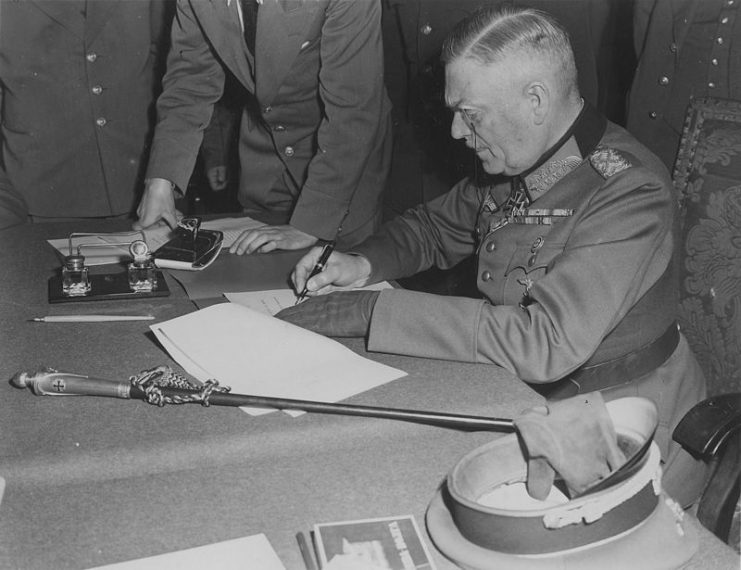
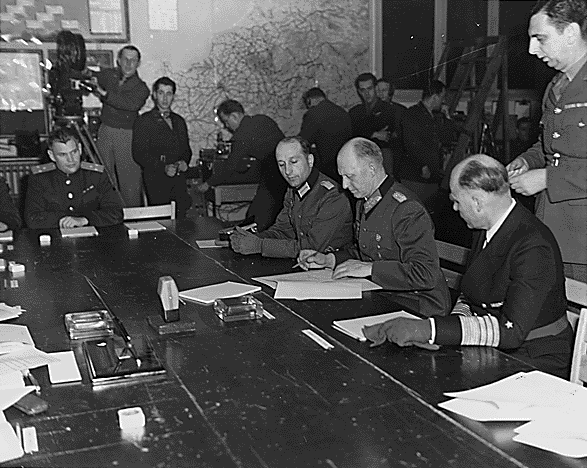
Many German soldiers were caught by surprise when Hitler’s second in command, Karl Donitz, signed the instrument of unconditional surrender in Berlin in 1945. By then, as we know, Hitler himself was dead of a self-administered cyanide dose in his bunker, along with his mistress, Eva Braun.

But trying to stop a war in its tracks is a little like coaxing a hippo into doing a pirouette: impossible. In reality, it took months for the war to end. In some cases, Germans were terrified of surrendering to the Russians, from whom they feared the worst treatment. In total, the surrender took four months to go fully into effect and halt all skirmishes.
Field Marshall Keitel signs German surrender terms in Berlin 8 May 1945

General Alfred Jodl signing the capitulation papers of unconditional surrender in Reims.


When the fighting ceased on the Russian front, many German soldiers raced to reach Allied forces, fearing the Soviets would be merciless in their treatment of POWs. Along the coast of Gdansk, they fought not for Hitler anymore, but for their very lives. Finally, they had to surrender to the Red Army in early May.

 Captured German battle Standards displayed on Red Square after the Surrender.
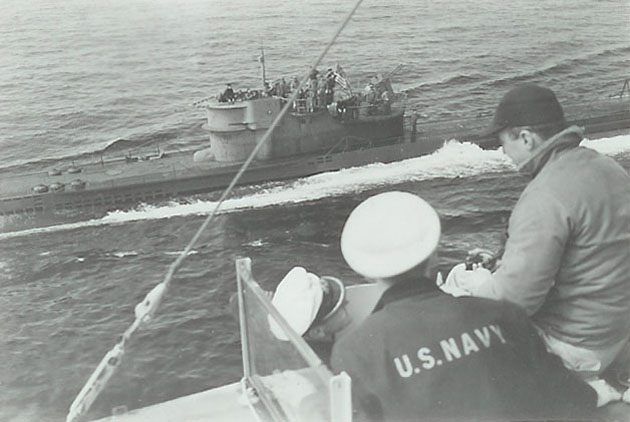
As the Germans retreated, brief but fierce battles broke out on the Balkan and even on some occupied Greek Islands. As news of the Allied victory spread, men serving on the German U-Boat 234, loaded with half a ton of uranium intended to aid the Japanese, headed for America instead. Its captain, Johann-Henrich Fehler, was terrified of being caught by the British or Canadians and felt the U.S. would be less harsh in its treatment of his crew. Two Japanese men on board killed themselves, rather than face detention in a POW camp.
U-234 surrendering. Crewmen of Sutton (DE-771) in foreground with Kptlt. Johann-Heinrich Fehler (left-hand white cap)


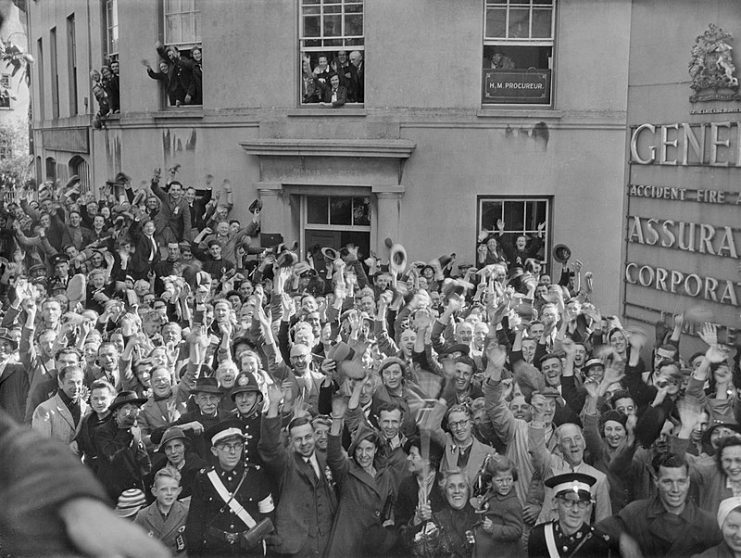
Another incident that took place rather slowly was the British recapture of the Channel Islands. Churchill was in no rush to round up the Germans, who had occupied the islands since their invasion in 1940, saying “let them starve.” Eventually, there was a peaceful surrender in mid-May.
Crowds of people gathered outside the General Assurance Corporation building in St Peter Port, Guernsey to welcome the British Task Force sent to liberate the island from German occupation, 10 May 1945.

The bloodiest incident that took place after Germany’s defeat was a mutiny on the Dutch isle of Texel.
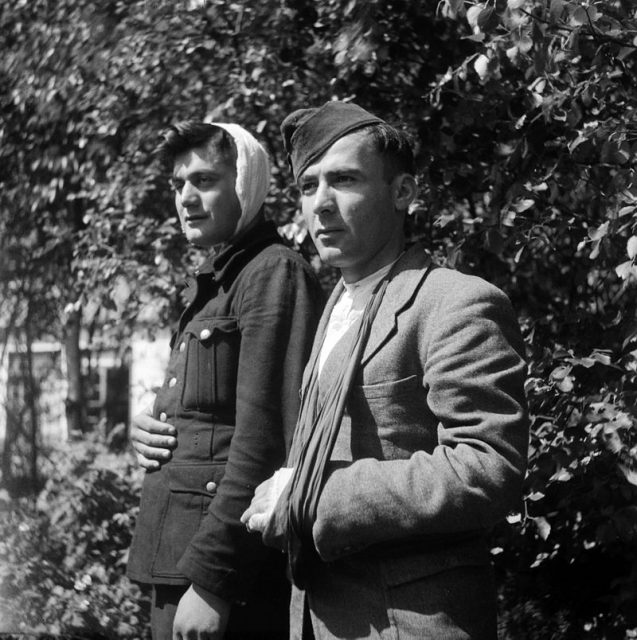
Germany had forced some Georgian citizens into service during the war, as part of its Atlantic Wall Defence Force. However, on April 5th, the Georgians launched a mutiny in an effort to shed themselves of Germany’s control. Resisters killed 800 German soldiers while they slept.
Two wounded Georgian soldiers at Texel in 1945
This infuriated the Germans, who sent 2,000 troops to the island to squash the rebellion. And squash it they did, at the cost of 565 Georgian men, 120 Dutch citizens, and 812 German soldiers. The long-awaited Allied invasion finally happened on May 20th.


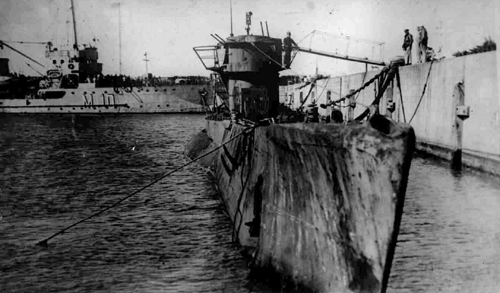
Perhaps the best-known individual from the war’s conclusion is U-Boat Captain Heinz Schaffer, who wrote a book about his exploits, “U-977 – 66 Days Under Water.”
Schaffer was given the unappealing assignment of steering his sub to Britain in a suicide mission designed to destroy all the British boats he could before he himself was destroyed. But when he got word that Germany was defeated, he headed instead for Argentina, where he hoped to find asylum. Unfortunately for him, the Argentine government immediately turned him over to the Americans, who kept the sub as a kind of macabre war memento.
Germany submarine U-977 in Mar del Plata.1945
 
An almost humorous incident took place on Bear Island, in the Arctic. A small group of German soldiers had been sent there to set up a weather station, but when their radio transmission failed, they could not stay in touch. Finally, a small band of Norwegian sealers found themselves in the curious position of being surrendered to, four months after the war was declared over.

Last but not least is Japanese operative Hiroo Onoda, who must be included in any round up of the final events of World War II. Onoda was sent to the Philippines to hinder the enemy in any way he could. He heard about his country’s defeat in a timely fashion but decided he wanted no part of it. Instead, he chose to keep undermining the Allies and so he headed for the hills to escape. He managed to hide there until 1974 when a Japanese official finally went to the Philippines to retrieve him.
Japanese imperial army soldier Hiroo Onoda (R) offering his military sword to Philippine President Ferdinand E. Marcos (L) on the day of his surrender, March 11, 1974.
 

Thursday, September 13, 2018

The AR-10 an innovative design given a new lease on life.

I shamelessly clipped this from "Gun Digest".  I remember the first time I saw the AR-10, it was in a magazine called "Military Rifles" from either Guns and Ammo or American Rifleman.  I had bought the magezine in the early 1980's, and they had a bunch of rifles in there from the AR-15 to the M-14, the BM-59, the FN-FAL and the AR-10.  They talked a bit  about the rifles and people said good things about the rifle but it never got picked up by the Military to replace the M-1 and the M-14.  From the book it mentioned the cost factor and that the M-14 was already approved and the U.S Army didn't want to go through another weapons trials.  I thought the rifle looked a bit beefier than the AR-15 at the time in the magazine, remember the M16A2 and its descendants weren't even in development, this was the early 1980's.  I am glad the AR-10 is making a comeback, it to me shows the genius of Eugene Stoner and the modular design of his rifle. 


Once nearly forgotten, the AR-10 has risen to become a military and civilian favorite.

The history of the AR-10 and varients:

  • Eugen Stoner designed the AR-10 in 1955.
  • Competed against M14 and FAL to replace the M1 Garand as U.S. Military’s battle rifle.
  • Failed to in part due to a barrel ruputure.
  • Refined, the rifle saw action with a number of other militaries.
  • Languished from early 1960s to mid 1990s until Knight Armament dusted off the design.
  • Stoner aided design in what became the SR-25.
  • Rifle was enhanced for long-range shooting and partial AR-15 compatibility.
  • The U.S. Military adopted it designated as Mk11 Mod 0.
  • Later varient, Model M110 SASS, replaced the M24 Sniper Weapon System.
The winds of change have swept across the AR world in recent years. No longer simply content with enhanced the way one pitches 5.56 NATO ammunition, shooters have scoured the market for new, bigger and meaner cartridges to feed their beasts.

LeatherwoodM1000-2-Lead
Rifle is the Armalite AR-10 NM with Leatherwood M1000 ART Scope.
For the AR-15, this is a relatively new trend that has resulted in some interesting options – 300 Blackout, 6.8 SPC, .224 Valkyrie. However, caliber flexibility is nothing new to this branch of the black rifle family. The AR-15’s bigger and older brother has been doing it for years.
With more room to work in the receiver, the AR-10 has historically proven more supple when breaking the bonds of its original chambering – .308 Win./7.62x51mm NATO. Aiding its cause, the number of cartridges to come down the line based off the venerable .308 that were naturals in adapting to the semi-automatic rifle – the .260 Rem. and 7mm-08 come to mind. However, those are just the tip of the iceberg with the highly malleable platform.
Capable of digesting everything from a short- to long-action cartridges, the AR-10 has chewed through ammunition as diverse as the iconic .30-06 to modified .45-70 Govt., and even .338 Lapua Magnum. Definitely an asset in a landscape where shooters demand specific rifles, calibers and configurations to meet their purposes. Hence, the AR-10 continues to gain traction with those who demand specific tools for their jobs, be it for whitetail season or a long-range shooting match.
Though, the AR-10 climbing star is a bit surprising. Despite boasting the attributes many modern shooters go to great lengths to explicitly search out, the rifle has had to rise from its own ashes to reach its current popularity. Hard to fathom, but just before the turn of the century the AR-10 was all but set to become a footnote in firearms design.

AR-10 Development

To know the AR-15 is to somewhat know the AR-10. Their stories are somewhat similar, though the larger-caliber direct-impingement rifle’s tale began earlier and was more definitive. At least in terms of its attempt at becoming the U.S. Military’s battle rifle.

AR-10-Hist-7
Left side view of “Hollywood” AR-10 prototype. Note the gas tube situated on the left of the barrel. Photo: Imgur
Designed by Eugene Stoner in 1955 and produced by ArmaLite, a subsidiary of Fairchild Engine and Airplane Corporation, it was the company’s attempt to replace a legend – the M1 Garand. It was a vast departure from previous rifle designs, not simply for embracing a unique operating system – what Stoner described as “expanding gas system instead of the conventional impinging gas system”– but also for materials used.
Aluminum alloy receiver and woven fiberglass grip, stock, handguards, even in the dawning of the “Space Age,” must have seemed a galaxy away, particularly to the more traditional ordinance officers. The advanced design and materials, however, endowed the AR-10 with unique properties – not least among them weight. The rifle was nearly 2-pounds lighter than most Garands, a welcome attribute given military mobility had grown in and since World War II.
The two hand-build guns of the fourth prototype submitted to the trials were very similar to the AR-10s we know today, including a non-reciprocating charging handle and hinge upper and lower receivers. Additionally, they fed from the original waffle-pattern 20-round magazine (named such for the structural pattern pressed into them). This is the pattern the most widely used magazines are based off today, such as Magpul’s SR/LR PMAGs.
ArmaLite, to Stoner’s objection, pushed the cutting-edge aspects of the rifle too far in the submitted prototypes, proving the AR-10’s downfall. In particular, it’s aluminum-steel composite barrel, the first of its kind, burst during the 1957 torture test. The failure marred the AR-10 for the remainder of the trials and the rifle never recovered in the eyes of the military, even with ArmaLite replacing them with steel barrels after the incident.

Newly-manufactured-waffle-pattern-magazine-from-Brownells.
Newly manufactured waffle-pattern AR-10 magazine from Brownells.
It must have been a bitter pill for Stoner to swallow, given his rifle had won high marks up to that point. Gun writers of the time noted testers were impressed with his creation, even going so far as to say it was the best battle rifles ever put through its paces at the Springfield Armory. High praise, especially since it was up against other legendary rifles, such as Fabrique Nationale’s FAL and the trial’s eventual winner the M14.
The AR-10 didn’t go down in the annals of U.S. Military history itself, however, it still left its mark. A scaled-down version of the design, what we know as the AR-15, was submitted to the military trials and was eventually adopted by the military, designated as the M-16 in the mid-1960s.

Service History

Despite missing its opportunity to serve as the U.S. Military’s primary arm, the AR-10 nevertheless saw its share of action. ArmaLite licensed the design to the Dutch manufacturer Artillerie-Inrichtingen, where variations found their way into military service on every continent, the first being in Africa.
Sudan bought the first batch of Dutch-made AR-10s – 2,500 of them – in 1958. This rifle, known logically as the Sudanese model, featured a flash suppressor instead of the original muzzle compensator, a fluted steel barrel to reduce weight, bayonet lug, sight graduations in Arabic and a steel butt plate. Additionally, the gas tube was moved from the left of the rifle to the top in the configuration familiar today.
Artillerie Inrichtingen manufactured AR-10.
Artillerie Inrichtingen manufactured AR-10. Photo: Wikipedia
The other well-known configuration named for a nation who purchased it was the Portuguese model. Procured in 1960, the rifle included a telescoping charging handle that doubled as a forward assist and also featured beefed up locking lugs (enhancing the bolt’s strength), improved extractor and simplified three-position gas regulator. Additionally, it had a chrome-lined barrel to help resist fouling and erosion, a feature that would eventually become standard on the early military versions its little brother – the AR-15.
Other countries – Guatemala, Burma, Italy, Cuba – purchased the rifle, but it perhaps saw the most live action in Africa. In Sudan, it was used by the country’s special forces until 1985 and was employed against guerrilla forces and clashes with neighboring countries. The AR-10 was also a mainstay in the Sudanese Civil Wars. In Portuguese hands, it fought nearly 13-year Portuguese Colonial War in Angola, Guinea-Bissau and Mozambique.
Despite gaining some international military traction, the ArmaLite focused on to what it believed to be its more gifted child – the AR-15. The move left the AR-10 to languish from early 1960 on through the 1990s.
The design’s prospected lightened near the mid 1990s, when Knight Armament teamed up with Eugene Stoner to resurrect the AR-10. However, the focus of the rifle changed somewhat, from battle to sniper rifle. Pegged as the SR-25 (Stoner Rifle), the revamped design featured a number of accuracy enhancements, including a longer heavier barrel. Furthermore, it was 60-percent compatible with the ubiquitous Mil-Spec AR-15 making it easier to manufacture and maintain.
AR-10-Hist-1
U.S. Marine Maj. Gen. Douglas V. O’Dell shoots a 7.62mm KAC (Knight’s Armament Company) SR-25 sniper rifle.
The SR-25 caught the attention of the right people. Eventually, it was adopted by the United States Special Operations Command and designated as the Mk11 Mod 0 sniper rifle. More recently, the U.S. Army replaced its long-toothed M24 Sniper Weapon System with an evolution of the Mk11, the M110 SASS (Semi-Automatic Sniper System).
In some respects, the rifle had come full circle, though it took a half century. But the long, strange trip in the U.S. Military’s hands didn’t end up simplifying the AR-10 for the civilian world. If anything, it most likely complicated matters much more.

Pattern Differences

The AR-10’s scant military service has done more than belated its embrace by the greater shooting world. It’s made the modular system a plum mess when it comes building, upgrading and maintaining a system – modular – which shooters have become accustomed to picking and placing parts on. The difficulty lies in there is really not one AR-10.
In essences, it’s a misnomer to call anything but the AR-10 – the ArmaLite AR-10 – an AR-10.
Receivers
Top, ArmaLite AR-10 pattern lower receiver. Bottom, DPMS or LR-308 pattern lower receiver.
It is a trademarked variation of Eugene Stoner’s original rifle and is only compatible with a certain pattern of firearms built to similar specs. In the case of the ArmaLite AR-10, these are Knight’s Armament, LaRue Tactical, Eagle Arms and Mega Arms. Luckily, there is only one other dominant pattern of the rifle out there, the DPMS or LR-308. Examples of players on this team include Palmetto State Armory, Aero Precision, CMMG, Fulton Armory, Falkor and JP Enterprises.
The most notable difference is at the heart of each pattern, their receivers. The AR-10 upper and lower receivers have an angular rear cut, while the LR-308 has an elliptical one. This, for the most part, makes each incompatible with the other – though there are inadvisable exceptions to the rule. Same goes for all the parts – which tend to only play nice with others of their own kind. Furthermore, there are some AR-15 parts that function on its bigger brother – helpful given their abundance – but not all. If that’s not complex enough for you, there are highly proprietary renditions of the original ArmaLite AR-10 that are absolutely anti-social with the rest of the larger-caliber rifle world.
In short, perhaps more than any other modern modular system, the AR-10 – or LR-308, if you like – takes more consideration. Is one particular pattern better than another? Depends on what better is. If it is to stay true to Stoner’s original vision, then the ArmaLite AR-10 might be the better bet. If it is greater access to a variety of upgrades and parts, then you might consider the LR-308.

Rifle’s Present And Future

Mil-Spec spoiled us. As long as your carbine or a part has those two little abbreviations then the world is your oyster. A matter of finding what you like to enhance your AR-15 and simply installing it on your carbine. That’s quite a luxury. Not one shared by the AR-10 or LR-308 or any other variation completely, but close enough that they remain among the most flexible and versatile rifles available today.
AR-10-Hist-2
CMMG Mk3 .308.
True enough, a CQB carbine an AR-10 will not make and that’s OK. Because of the rifle’s talents at mid- to long-range more than makes up for this shortcoming. The U.S. Military realized this with the adoption of the M110 SASS, which not delivers laser-like accuracy, but also brush-fire fast follow-up shots. For civilian shooters, this translates to a superior rifle for a number of applications – from hunting to long-range competitions. Even general plinking is kicked up a notch with an AR-10, LR-308 or what have you.
Furthermore, the AR-10 caliber selection is unparalleled. In addition to the previously mentioned chamberings, the rifle is available in 6.5 Creedmoor, .22-250 Rem., .300 Win. Mag … the list goes on and on. And it keeps getting better with new and innovative ammunition such as Wilson Combat’s .458 HAM’R coming out every year. A trend likely to continue into the foreseeable future.
The AR-10 might have been a late bloomer, but has proven as talented as the rest of Stoner family.


Tuesday, September 11, 2018

September 11...

September 11th 2001 was 17 years ago, I can't believe that it has been soo long.  To me it was like last year.  I still remember the rage and anger I felt when I saw the 2nd plane crash into the tower.   It was the worst loss of Americans since Pearl Harbor for a single event.   That day fundamentally changed America and I am not sure for the better.


I will Never Forget.

Monday, September 10, 2018

Monday Music "Still in Saigon" by Charlie Daniels Band


I would have continued my "soundtrack" run but I heard this song and  I had totally forgotten about this song it kinda faded away.  It was the first of what I called the "Vietnam songs"in the  1980's that I recall.  Vietnam was a taboo subject for a while the wounds that the conflict left on the American Psyche was deep.  We had won the battles but lost the war because we as a nation had lost the will to fight it thanks to the media and the hippies and the antiwar movement that was funded by the communist party and liberal donors.  it took several years before Vietnam could be discussed outside of the veterans.  My Dad is a Vietnam Veteran, he did a tour in 1968 and dealt with the tunnels of Cu-Chi and the Tet Offensive, then he returned in 1972 for a second tour.   For a while especially in the 1970's, the Vietnam vet was portrayed as crazy or dangerous.  The specter of Vietnam dogged every use of the Military or any support during the 1980's, from Grenada, to Beirut, to Honduras and Nicaragua.  The Ghost of Vietnam were finally laid to rest during Desert Storm.


"Still in Saigon", is a song written by Dan Daley and performed by the Charlie Daniels Band and released on their 1982 album Windows. It was written by Daley in May 1981.

The song is an effective portrayal of the plight of the American Vietnam veteran a decade after the war; it was part of an early 1980s wave of attention to the subject, presaging treatments such as Bruce Springsteen's "Born in the U.S.A." and "Shut Out the Light", Billy Joel's "Goodnight Saigon", Huey Lewis and the News' "Walking on a Thin Line", Paul Hardcastle's "19" and somewhat later Steve Earle's "Copperhead Road".

The story is told ten years after Daniels, as the protagonist, faced being drafted into the Vietnam War. Though he could have avoided being sent (either by escaping to Canada as a war protester, or choosing to stay in school under a student deferment), believing he was "brought up differently/I couldn't break the rules" elected to go ahead and serve.
He remained in the military for "thirteen months and fifteen days", with the latter portion ("the last ones were the worst") taking an emotional toll on Daniels ("one minute I'd kneel down and pray/The next I'd stand and curse"). The emotional problems only worsened upon his return, as he came home to a bitterly divided family – his war-protesting younger brother labels him a "killer" while his father calls him a "vet". Moreover, he began to exhibit signs of post-traumatic stress disorder (PTSD) resulting from his service (constantly looking behind doors for the enemy, and exhibiting flashbacks during the rainy summer season); symptoms which ten years later continue to plague him.


Friday, September 7, 2018

Panther Tank


I consider the Panther Tank the all around best German Tank, it had the armor to stand up to the T34/85 and of course the undergunned American Tanks like the Sherman. The later tanks like the Pershing were better armed and of course the American Tank destroyers were better armed.  The British Shermans called the "Firefly" had the excellent British 17 pounder gun(76 mm) The Panther was developed in response to the T34 tank that the Germans ran across right after they started Operation Barbarossa and to their shock discovered that their Panzer Mark III and Panzer Mark II's were woefully undergunned and the few Panzer Mark IV's had the 50 MM gun and it had problems.  The Germans had to use the legendary 88 to take out the better armed Soviet Tanks. 
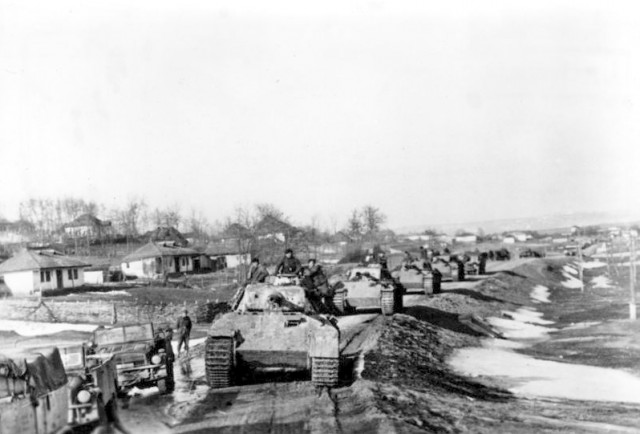


The German Panther tank was deployed during the Second World War in the European Theater, between the years 1943 and 1945. It saw action on both the Eastern and Western fronts, and is widely hailed as one of the best tanks designed and produced during the conflict.
The Panther was the third most-produced German armored fighting vehicle, after the Sturmgeschütz III assault gun/tank destroyer at 9,408 units, and the Panzer IV tank at 8,298 units.
They proved to be extremely popular, and as a result more than 6000 Panthers were built for the German military. More surprisingly, however, is the fact that nine of these tanks were built by the British Army between 1945 and 1946. This alone is a testament to the high quality of these remarkable war machines

There were three main version of the Panther – versions D, A and G – with each new version incorporating significant improvements. There were also the artillery spotter, recovery, and Commander versions.
The full name was the Panzerkampfwagen V Panther and it had the ordnance inventory designation of Sd.Kfz. 171. However, on 27 February 1944, Hitler ordered that the Roman numeral “V” be deleted from the designation.
This wan’t the only way in which Hitler was directly involved with the tank’s design. The Panther was originally meant to weigh 30 tons, but the Nazi Leader demanded extra armor and a heavier gun and so it ended up weighing almost 50 tons.


Bundesarchiv_Bild_183-J24359,_Rumänien,_Kolonne_von_Panzer_V_(Panther)
Panther tanks of the Großdeutschland Division advance in the area of Iaşi, Romania in 1944 .Bundesarchiv – 
Hitler later ordered a Panther II which would feature more armor while still maintaining the same gun, one prototype of which prototype was captured by the Americans. The project was quietly cancelled in mid-1943.
Although weighing a great deal, they could still move at a considerable pace. The later models had a top speed of 46km/h, roughly as fast as the Tiger and slightly faster than the Sherman tank.
These powerful tanks could be used to devastating effect on the battlefield. One of the top German Panther commanders was SS-Oberscharführer Ernst Barkmann of the 2nd SS-Panzer Regiment “Das Reich”. By the end of the war, he had some 80 tank kills claimed.
The Panther tank uses an engine very similar to the one used in the Tiger Tank, with an average life of 1500 hours. The Panther tank came into service after the Tiger tank, the Panther being first used in combat in July 1943 in Kursk whereas the Tiger was first used in Leningrad in December 1942.


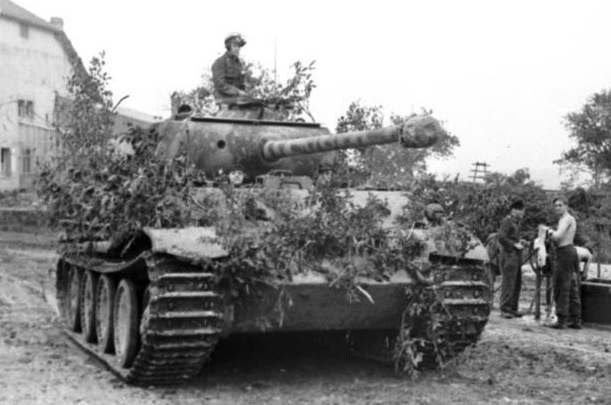
Nordfrankreich, Panzer V (Panther) mit Infanterie
Panther tank with bush camouflage in Northern France, 1944. Bundesarchiv – 

Panther tanks were captured on certain occasions and put to use by Germany’s enemies. At least two Panthers were commandeered by the Polish resistance in the early days of the Warshaw uprising, although they were immobilized after several days due to lack of fuel, and were then set on fire.
Russian troops also captured several Panthers, turning them against the Nazis along the Eastern Front. They abandoned them once the tanks broke down, however, as they were deemed too complicated and too difficult to repair.
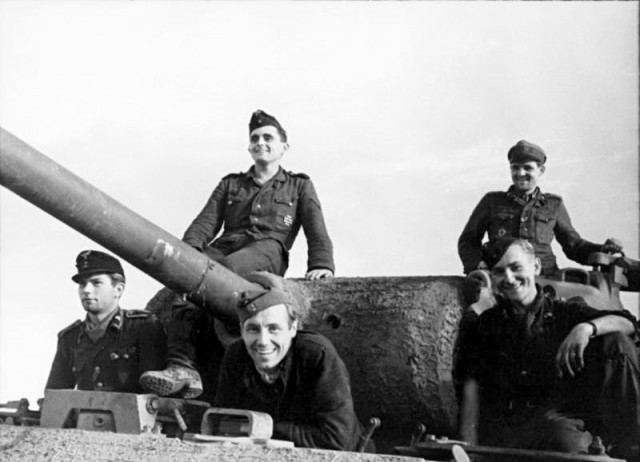
The Panther had a 7.5 cm main gun that could carry 40 rounds of anti-tank ammo and 39 high explosive shells. It also had two MG 34 machine guns with 5100 rounds of ammunition. The tank needed a crew of at least five men, including a commander, driver, gunner, loader, radioman and machine gunner.

Bundesarchiv_Bild_101I-244-2323-06A,_Ostfront-Süd,_Panzersoldaten
A Panther crew. Bundesarchiv – 
The Panthers saw a great deal of action during their years in service. At their peak in September 1944 there were 552 Panthers operational on the Eastern Front, out of a total of 728. Later, during the Battle of the Bulge, the Germans used 400 Panther Tanks, five of which were disguised to look like American M10 Tank Destroyers. They did this by welding on additional plates and applying US-style camouflage paint and markings.
There are thought to be five surviving Panthers in running order, two of which were built by the British Army. There are a lot more non-runner Panthers out there in museums, as monuments or in the hands of private collectors.
The last operational report dated March 15, 1945, lists 361 operational out of 740 Panther tanks.
 Postwar Use :
Although a technologically sophisticated vehicle, the Panther's design had a very limited influence on postwar tank development. The French postwar AMX 50 tank prototype was indirectly influenced by it through the Entwicklung series, but never entered series production. It is claimed that the Panther was arguably a forebear to the modern main battle tank.
The Panther itself also saw some limited use outside the German military, both before and after 1945.


 British officers ride on a captured Panther tank in Italy June 1944, with early "letterbox" hull gun aperture

During the war, the Red Army employed a number of captured Panthers. These were repainted with prominent Soviet emblems and tactical markings to avoid friendly fire incidents. Unlike captured Panzer IVs and StuGs, the Soviets generally only used Panthers and Tigers that had been captured intact and used them until they broke down, as they were too complex and difficult to transport for repair. Panzer IVs and StuGs, on the other hand, were so numerous in terms of spare parts and easy to repair that they could be used over a much longer period in combat conditions.
During March–April 1945, Bulgaria received 15 Panthers of various makes (D, A, and G variants) from captured and overhauled Soviet stocks; they only saw limited (training) service use. They were dug down, with automotive components removed, as pillboxes along the Bulgarian-Turkish border as early as the late 1940s. The final fate of these pillbox Panthers is unknown, but sources indicate that they were replaced and scrapped in the 1950s.
In May 1946, Romania received 13 Panther tanks from the USSR. They were initially used by the 1st Armoured Brigade, but in 1947 the equipment was ceded to the Soviet-organized "Tudor Vladimirescu Division", which was transformed from a volunteer infantry division into an armoured one. The Panther tank was officially known as T-V (T-5) in the army inventory. These tanks were in poor condition and remained in service until about 1950, by which time the Romanian Army had received T-34-85 tanks. All of the tanks were scrapped by 1954. The tanks were different models: Ausf A, Ausf D, and Ausf G.They were shown to the public in 1948, during the 1 May parade in Bucharest, painted with Romanian markings. Until 1950, the T-V (T-5) was the heaviest tank available to the Romanian Army.
 Batalion Zośka armored platoon on a captured German Panther, 2 August 1944.

During the Warsaw Uprising, the Polish Home Army captured and used two Panther tanks. One, nicknamed Magda, was used by Batalion Zośka's armored platoon under the command of Wacław Micuta to liberate the Gęsiówka concentration camp.
One captured vehicle (named "Cuckoo") also saw service with the British Coldstream Guards for some time.
Germany sold Japan a single Panther along with a Tiger in September 1943; by the time it was ready in 1944, it was impossible to ship due to Allied naval interdiction.
In 1946, Sweden sent a delegation to France to examine surviving specimens of German military vehicles. During their visit, the delegates found a few surviving Panthers and had one shipped to Sweden for further testing and evaluation, which continued until 1961. The tank is on display in the Deutsches Panzermuseum in Munster.
After the war, France was able to recover enough operable vehicles and components to equip the French Army's 503e Régiment de Chars de Combat with a force of 50 Panthers from 1944 to 1947, in the 501st and 503rd Tank Regiments. In 1947, the French War Ministry wrote an evaluation of them entitled Le Panther 1947. These remained in service until they were replaced by French-built ARL 44 heavy tanks.
The last 'production' Panthers were produced at the factory by German staff just after the end of World War II under the supervision of the Royal Electrical and Mechanical Engineers (REME) using available components. 9 Panthers and 12 Jagdpanthers were produced and shipped back to Britain for post-war trials. A complete Panther and a complete Jagdpanther produced this way are now at the Bovington Tank Museum, Dorset, with brass plates on them, explaining their history.