Webster

The Constitution was made to guard the people against the dangers of good intentions." --American Statesman Daniel Webster (1782-1852)


Thursday, May 24, 2018

The U.S. Army at Belleau-Woods

I shamelessly clipped this from the Angry Staff Officer, yep, Blame Mack for this.  Until recently, I thought the picture below the introduction was of U.S marines.  I heard differently a couple of years ago.  The Marines have a great marketing dept and it has been woven into our culture, "call the marines".  I remember reading stories about how different the U.S Army and Marines are, the Marines have this "Devil Dog" or leatherneck persona and well then there is the U.S Army.  Both have different missions and serve different parts of the National Defense umbrella that serves the United States. 


We Were There Too: the US Army at Belleau Wood

Two days before the beginning of the Meuse-Argonne Campaign – the largest and bloodiest battle in American history – the New York Times ran a letter from an Army infantry officer who was then serving in France:
The troops that took Vaux  
An advertising agency is a good thing at times, but when the advertising agency misrepresents its goods there is a possibility of it becoming a detriment to the advertiser. There are a few organisations in France that really do not need an advertising agency- their work has been honourable enough to speak for itself. There are two regiments of Marines in France and they are part of my division and I know their service has been honourable, let us say just as glorious as many other infantry organisations of the United States Army that are now in France.
But from time to time, and very often too, certain papers in the United States write as if certain organisations were doing the whole thing alone over here. For example, in your pictorial issue of Aug. 11, 1918, you show a picture of the town of Vaux, France, and announce that this town was stormed by the marines. Now, as I am in command of the battalion that actually took Vaux and as we are all very, very proud of her reputation and of her high standard as a shock outfit, will you kindly correct this error? Also, out of respect for the high standard of veracity The New York Times has ever maintained, please remember that there are today over 1 750 000 American troops abroad, and about 6 000 of them are marines in the two excellent regiments the Navy Department has sent over.
George C Bowen, Major,
9th Infantry, HQ 2nd Battalion
Sept. 24, 1918
With the shots of the First World War far from over, the question of who had accomplished what in this most recent conflict was already a hot one.
For the first state dinner of his presidency, President Trump could hardly have picked a better candidate in this centennial year of U.S. combat action in World War I: President Macron of France. And for a gift to the United States, Present Macron could hardly have picked a better symbol: a sapling from Belleau Wood, or as it is now known, Bois de la Brigade de Marine (Wood of the Marine Brigade).
After World War I, a grateful French nation gave the ground of Belleau Wood to the United States – as well as all the land containing American cemeteries – and changed the name. It was now named in honor of the Marine Brigade which had fought so hard to take the two square kilometer wooded height in the heady days of June, 1918 when it was rumored that all that stood between Paris and the dreaded Hun was the thin line of Marines.
And as well they should. And well should the Marines be proud of their 5th and 6th Regiments and 6th Machine Gun Battalion, which formed the Marine Brigade, part of the Army’s 2nd Division. Well should the Marines still visit the site yearly and pay honor to the Leathernecks that went before them.
But this piece is not for the Marines; it is not to take anything away from them. This is for the Army. Specifically, the 2nd Infantry Division. And the message is this: step up, didn’t you know you were there too?
Because while the saga of the Marines is well-told and familiar to most who know anything about World War I, the 2nd Division – and the Army as a whole – have seen fit to sit back and let the Marines take ownership of the entire Belleau Wood affair. Which is unfair to the Soldiers of the 9th, 23rd, and 7th Infantry Regiments, the 4th and 5th Machine Gun Battalions, the 12th, 15th, and 17th Field Artillery Regiments, the 2nd Trench Mortar Battery, the 1st Field Signal Battalion, and the 2nd Engineer Regiment – some 18,000 troops in all..
This is their story.
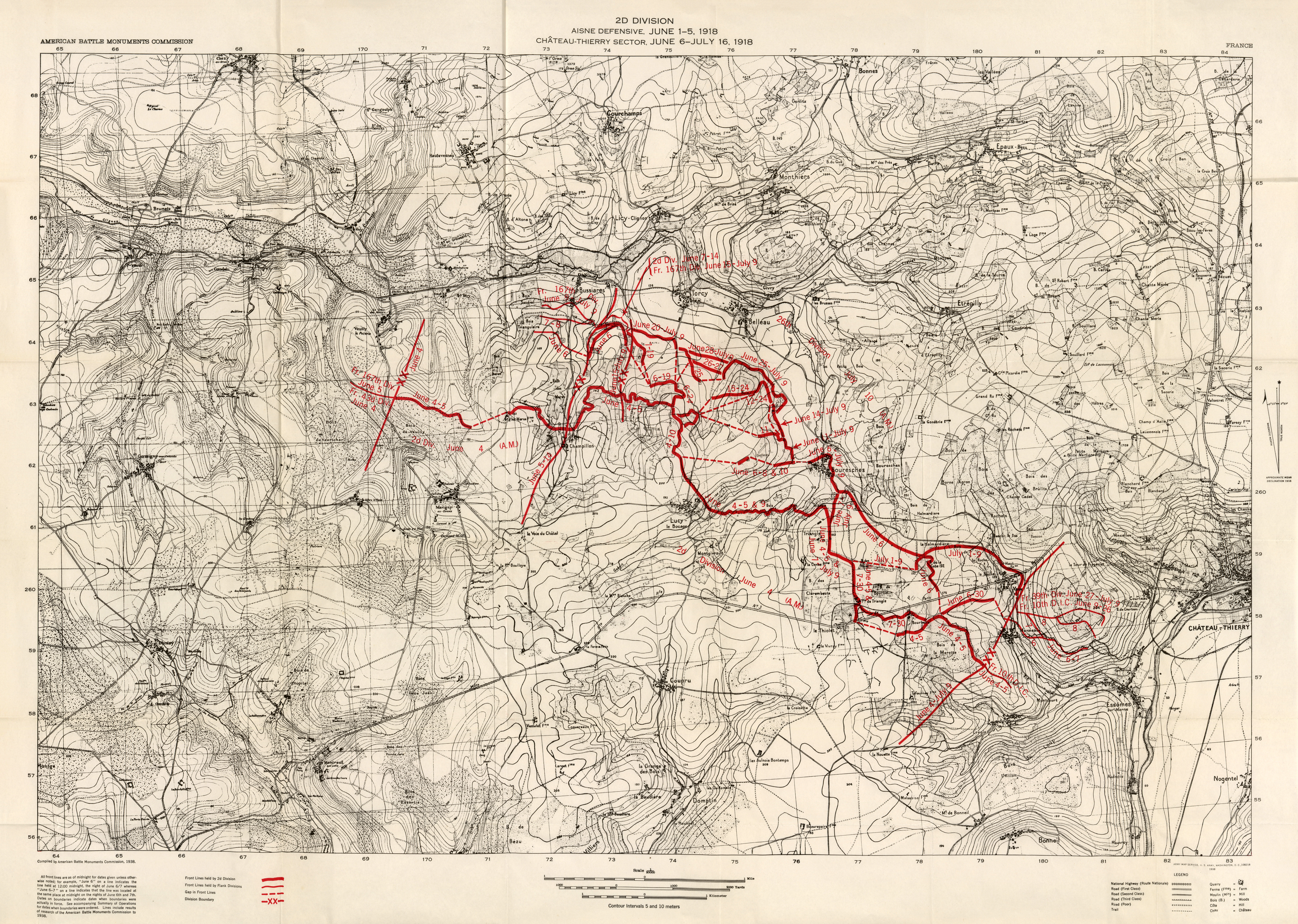
By June 5, 1918, the 2nd Division’s lines had finally stabilized after several hectic days of relief and defense during the waning hours of the Aisne Defensive (Map of sector – use this to navigate the sometimes complex battlefield). In that time, the infantry and machine gun units of the division had been thrown into the line where needed as the Germans advanced and the French slowly withdrew, fighting for every town and wood. With a lull, the US and French were able to reorganize their front. On the left, near Champillon, the French 167th Division extended its lines to allow the 5th Marines to consolidate around the Bois de Champillon and close up to the 6th Marines near Lucy-le-Bocage, south of Bois de Belleau. The Marine Brigade was now situated to strike at the German defenses in Bois de Belleau from the west and south, catching the height in a vice grip.
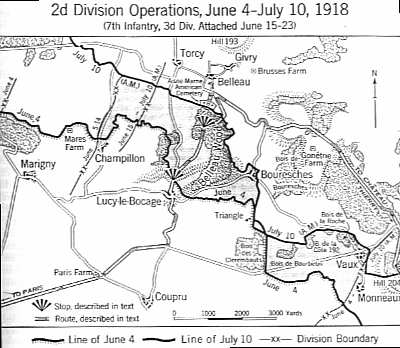
Belleau Wood Map
Just northeast of Lucy-le-Bocage is the town of Bouresches, less than a two kilometer distance. The town controls a number of roads that provided access to both German and U.S. lines of supply. One kilometer south of Bouresches is Triangle and one and a half kilometers south of that tiny community is the small village of Le Thiolet. Two battalions of the 23rd Infantry took over the line from Triangle to Le Thiolet, facing almost due east. The 9th Infantry occupied the front running east from Le Thiolet to Bourbetin down into the woods of the Bois de la Morette where they linked the division’s right flank to the French 10th Colonial Infantry Division.
The front was a mess of wheat fields, small towns, and woodlots, with parallel ridges facing each other. It was virgin territory, the ground as-yet unscarred by trenchlines and shell holes. This would all change in the coming month.
The division’s artillery was arrayed behind the lines in support of both infantry brigades. Two 75mm regiments provided direct support to the embattled Doughboys, while one regiment of 155mm heavy guns delivered the long-range punch needed on the World War I battlefield. The hardy 2nd Engineers would be piecemealed out to the Marines and Infantry alike to aid them in their attacks. When not digging in, the engineers fought alongside the Marines as infantry.
The 2nd Division had been given two missions: capture the height of Bois de Belleau and the nearby town of Vaux. The height was in the sector of the Marine Brigade while Vaux lay far to the right, nearly on the dividing line between the French and the 2nd Division. The division took it one thing at a time and made the Bois de Belleau the priority mission. Vaux would have to wait.
On June 6, the Marine Brigade began their attacks on the Bois de Belleau and Bouresches, accompanied by the 2nd Engineers. One of the engineer battalion commanders had the following to say about what he learned in this operation (full account here):
Serving with infantry as infantry, has two very considerable advantages. It gives the engineers more prestige than anything else they can do. After the infantry discovers that engineers can fight, they are usually much more willing to cooperate on engineer work, and line and staff officers are usually more willing to recognize the value of an engineer regiment. Furthermore, the effect on the morale of the men is excellent, it makes them easier to handle on any work that has to be done under fire. But the practice must not be carried to such an extreme as to seriously interfere with the work the engineers must do.
The 2nd Battalion, 2nd Engineers assisted the 5th Marines in taking Hill 142 and played a vital role in its defense, fighting off German counterattacks. The 1st Battalion accompanied the 6th Marines into Belleau Wood where they took part in the first assaults.
At the same time, at around 6 pm, the 1st and 3rd Battalions of the 23rd Infantry advanced from their positions to come just south of the road leading from Bouresches to Vaux, a distance of about a kilometer, in an attempt to cut Bouresches off from German reinforcement. About two hours after advancing, the 3rd Battalion was hit with a heavy counterattack in the vicinity of Cote 192, where they suffered extreme losses. Just after midnight, both battalions were given the order to withdraw to their starting positions.
To the right, the French 10th Colonial Division surged forward against a German height and the 9th Infantry extended their lines further to the right to support this assault. 2nd Battalion, 9th Infantry advanced east of Bourbetin, seizing a height above the Bois de la Morette where they dug in, expecting an enemy counterattack at any moment.
From this point until July, the Infantry Brigade had little of note occur. But that didn’t mean they did nothing. Holding a front line position meant aggressively patrolling the front, sending out raids to keep the enemy off balance, digging in, and sucking up an insane amount of enemy artillery shells. Which is what the 9th and 23rd did for most of June, gradually extending their lines to the left to allow the Marines to consolidate around Bois de Belleau.
On June 7, the 2nd Engineers assisted the two companies from the 5th Marines in the seizure of the woods southwest of the village of Torcy. These clearing operations were meant to close the loop around Bois de Belleau. The 2nd also assisted the 6th Marines in taking Bouresches and 110 engineers held the front lines with the Marines, fighting off German counterattacks. Over on the right flank, the Germans attempted to break through the 23rd Infantry around Triangles, striking the left flank of the 9th Infantry as well. This assault – taking place just after midnight on June 8 – was repulsed. Dawn attacks in Bois de Belleau by the 6th Marines and 2nd Engineers did little to advance the front. The troops were pulled back to allow artillery to soften the targets.
Like most of the US divisions, the 2nd Division came to war with forty-eight 75mm guns, twenty-four 155mm guns, and twelve six inch trench mortars. These all began to play on the small area of Bois de Belleau, high explosive shells shattering trees and burrowing into the earth before exploding in gouts of fire and shock. Much of June 9 and 10 was spent in pulverizing the German positions in the woods, trying to seek out and destroy the hidden machine gun nests. In all, the division fired 40,000 shells in this preparation. The guns fired their last salvos before transitioning to a creeping barrage on June 11 to support the Marines as they attacked from Lucy-le-Bocage. The Marines got into the woods and lodged a foothold, reinforced by Companies D and F, 2nd Engineers.
June 12 was another busy day for the artillery, again pounding known and suspected German positions on the Bois de Belleau. All units participated in defeating a German counterattack on June 13. Company D, 2nd Engineers was deep in the woods with the Marines when the counterattack happened and all soldiers dropped their shovels to help fight off the attack. 1st Lieutenant Lyman Chase of Company D, 2nd Engineers then led his platoon in a successful assault on a German machine gun position.
On June 14, the front was adjusted to allow the Marines to again compress their forces around the Bois de Belleau. All three battalions of the 23rd Infantry went into the line, taking over the eastern edge of Bois de Belleau and the entirety of Bouresches from the 5th Marines and extending down to Tuilerie de Triangle, where they connected with the 9th Infantry. The following day, the front of the 2nd Division again compressed, for the same reason. The French 167th Division on the left relieved troops from the 6th Marines, allowing both Marine regiments to consolidate their shrinking battalions. The 23rd Infantry fought off a weak German counterattack on the east edge of Bois de Belleau and at Bouresches.
But after ten days of near-constant advancing in terrible conditions, confronted by a determined, well-trained, veteran foe, drenched in gas, the Marines needed a break. They had suffered more casualties than the Marine Corps had ever suffered in all of its previous battles, combined. Enter the 7th U.S. Infantry Regiment, on loan from the 3rd Division. All three battalions went into line from June 16-17 replacing the Marine Brigade in Bois de Belleau. From this time until June 21, the regiment ground away at the stubborn German defenders, slowly bringing the lines closer in on the wooded hillock. In attacks both with and without artillery preparation – attempting to use surprise – the 7th was unable to get much farther than the Marines. But they kept the pressure on the Germans, never allowing them time to improve their forward positions. In addition, these 5-7 days gave the Marine Brigade time to fill their depleted ranks with replacements, get some breath, and rearm for the final push.
On the night of June 23-24, the Infantry Brigade was hit with a German gas attack; mustard gas shells mixed with high explosives caused over four hundred casualties and necessitated the evacuation of many wounded. The commander of the 23rd Infantry’s machine gun company wrote to the regimental command post: “After the gas attacks last night and this morning I have not enough men to man my guns and hold the position.”
Local attacks continued in Bois de Belleau, but with little to no progress. This changed on June 25. From 3 am to 5 pm, the three artillery regiments of the division pulverized the northern sector of Bois de Belleau. When the barrage lifted, five companies of Marines assaulted through in heavy fighting that lasted into the night. But the artillery had done its work well – this time the Marines took and held the ground. Mopping up operations remained, but the 2nd Division had finally taken their main objective.
But all their work wasn’t done yet. There still remained the problem of the village of Vaux which was a German-held town poking down into US and French lines. It interrupted lines of supply and communication and prevented the Allies from being able to get a good line of sight into German lines. It would have to be taken. But taking it would be no easy matter, since the Germans were holed up in all eighty-two of the strongly-built stone houses. Fortunately, the French knew the stonemason who had worked on all the houses and he was able to provide drawings of each building. Aerial reconnaissance revealed some German machine gun positions. Soon they were able to get a good idea of what they were up against.
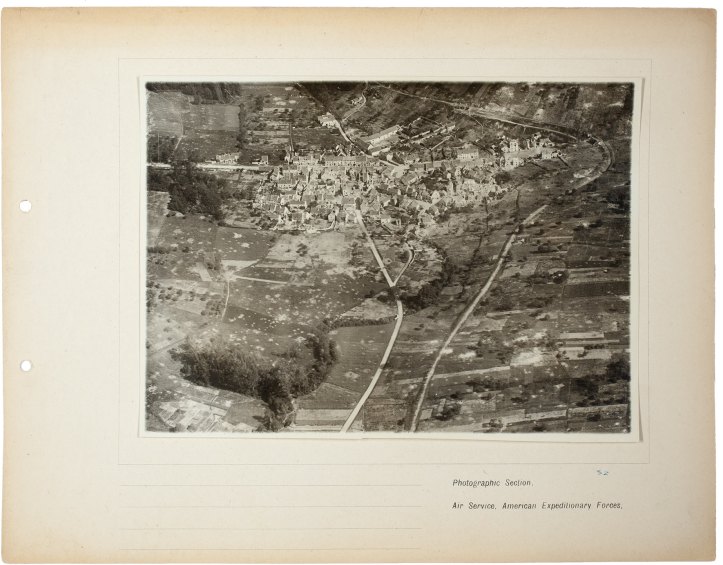
AIC_1977.708
Aerial recon photo of Vaux
For the infantry brigade, cooped up to the south of the Marines, this would finally be their chance strike back. For most of June, they just had to sit and take it as their lines were saturated with gas and pounded with artillery. Now it was their turn to see if they were as good as their Marine brethren.
The artillery began a twelve hour bombardment at 5 am on July 1, the barrels of the well-worked guns now pointing towards Vaux, just to the front of the Infantry Brigade. They were joined by twelve batteries of French artillery, all pounding Vaux and the daunting Hill 204 to the east, which was the French objective. At around 2 pm, four batteries of US artillery fired mustard gas behind the objective to prevent reinforcements from moving in. But this fire was not without answer: the German guns fired about 33,000 shells around Vaux that day in an effort to break up the expected attack. They were unsuccessful.
volume-xii.jpg
Assault on Vaux (2nd Division.com)
At 5 pm on July 1, the US barrage grew in intensity as the infantry assembled in their jumping-off positions. With three minutes to 6 pm, the barrage transitioned to a rolling roar of shells, clearing the way for the infantry. The 2nd Battalion, 9th Infantry crashed into and rolled over the German defenders in Vaux, taking 440 prisoners, while the 3rd Battalion, 23rd Infantry seized the tree-covered heights to the left of the town. The Germans attempted to wrest Vaux away from the 9th Infantry on the morning of July 2 but were soundly defeated, losing another 141 prisoners. With Bouresches and Vaux now in friendly hands, the left flank of the division was secure from German assault. They had set the stage for the next piece of the operation: counterattack.
The execution of taking Vaux had been near flawless. The 2nd Division had learned from the bloodbath on June 6 when the Marines rushed into the meat grinder without waiting for artillery preparation. The attacks of June 25 and July 1 demonstrated that with adequate planning and preparation, relatively small numbers of troops (1-2 battalions) could take and hold ground with acceptable casualty levels. Ground which larger numbers of troops would find impossible to take without losing significant numbers of troops.
By Independence Day, the 2nd Division could now hand off a secure piece of the line to the incoming 26th Division. They had taken over the dominating heights and vital supply lines needed for the US to be able to continue the advance against the strategically important Etrepilly Plateau. But it had come at a severe cost. The 9th Infantry had come out of it the best, with 158 dead. The 23rd Infantry had 307 dead. The 5th Marines, 421; the 6th, 215. The 2nd Engineers had 121 men killed. In its three or four days of combat, the 7th Infantry had 93 men killed. And of course, there were many thousands of wounded. All told, the division had suffered nearly 8,000 casualties in one month of combat.
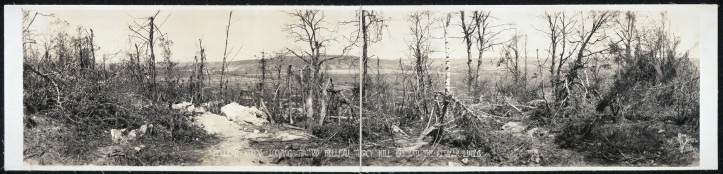
Belleau Wood, LOC
Belleau Wood after the battle (Library of Congress)
Today, Belleau Wood stands as a visible example of America’s commitment to the war. The operation was truly “joint,” between the Army and the Marines – with Navy corpsmen. All branches fought side-by-side to complete the mission, with one Marine saying, “Say, if I ever got a drink, a 2d Engineer can have half of it! – Boy, they dig trenches and mend roads all night, and they fight all day!”
And yet…when you go to Belleau Wood, you’ll see pretty much everything dedicated to Marines. Almost anyone who visits is there for the story of the Marines. If you look really hard next to the Aisne-Marne American Cemetery, you can find a small marker to the 2nd Engineers, and there’s another hiding in Belleau Wood. Across the street from the cemetery is the 26th Division Church, dedicated to the division that took over from the 2nd and drove the Germans back nine miles. But that doesn’t get much play.
And because the Marines overshadow the Army in the battle, it often impacts the historiography of the battle. Take the iconic photo of the battle used as the cover photo for this piece – four visible Americans, two manning a 37mm gun, one slowly rising to his feet, one charging forward, bayonet fixed. All amidst a blasted hellscape. Devil Dogs at work. Except they’re not. They’re members of Headquarters Company, 23rd Infantry Regiment. Yet it is constantly shared as a Marine Corps photo.
And then there’s the Devil Dog fountain.
A stop for every Marine who visits Belleau Wood, the Devil Dog fountain is part of an old chateau in the town of Belleau, destroyed after the war. The fountain is in the shape of a German mastiff head since the chateau’s owner was probably Alsatian. Marines, seeing this after the war, called it providential, that this was their very own devil dog (although Marines, not Germans, developed the term, it caught on very quickly). Why did they not see this until after the war? Because Belleau was inside German lines in the time that the 2nd Division occupied the sector and would remain so until July 18, eight days after the last elements of the 2nd Division left.
So as we approach the centennial of the intense combat in June, I’d remind the 2nd Division and the U.S. Army that Belleau Wood is your battle as well. Stand next to our Marine Corps comrades and be proud of what the Doughboys and Leathernecks accomplished against stiff odds 100 years ago, just as we do today.

Tuesday, May 22, 2018

The Dornier Do 335, a very unique airplane and a piece of history.

Several years ago I and my son went to the Udvar Hazy museum right outside Dulles and it was full of interesting airplanes, Here is my son back in 2012 at the Museum.  I had Blogged about the place several times.
I remembered seeing this weird Piston airplane with the pusher and puller configuration there and I remembered the plane, I had an airplane model of that same airplane in the 70's.  I thought it was some concept airplane or something until I actually saw her at the Museum.  I was surprised and the image brought back memories.  That was a unique airplane and it survived.


Air power first became a significant part of warfare during WWI, but it was in WWII that it came to the forefront. Long range bombing allowed nations to attack each other’s industrial bases. Fast attack fighters let them fight back. Air power was used to support ground offensives and challenge enemy power at sea.
Following the fall of France, the war in the west was largely between Britain and Germany, and air power was central.
The armies of the two nations were facing each other on the ground in North Africa. The Germans had support from the Italians, and the British were aided by imperial forces and ex-imperial Allies. The North African war did not directly threaten Britain or Germany. The air war did. This made it crucial both in strategy and for morale
The RAF and the Luftwaffe initially approached the war with very different mindsets.
Successes late in the First World War had shown the Germans the value of sharp, decisive tactical strikes. Air support had played a part, with the German air force bombing and strafing Allied targets as the German infantry made breakthroughs in their spring offensive.
That experience fed into the Blitzkrieg tactics used by Hitler a generation later. The primary role of the Luftwaffe was to cooperate with the army, helping to achieve success on the ground. It was how they had been used in the swift conquest of Poland.


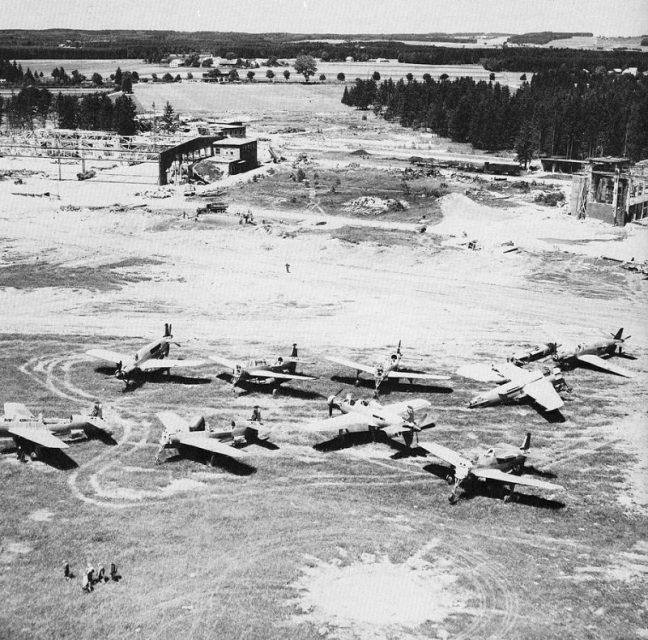
Do-335s on the apron at Oberpfaffenhofen
The RAF, on the other hand, were geared toward acting independently from the army. Bomber Command provided a long-range strike force capable of targeting the enemy at home. Fighter Command provided support for the bombers and defense for the homeland. The Trenchard doctrine, which had dominated since the previous war, stated heavy bombing alone could win a war if the RAF committed to it.
In the end, both sides used elements of both strategies. Plans to invade Britain forced the Luftwaffe to become a long-range strike force, acting independently of the army in the Battle of Britain and the Blitz.

During the Second World War, the Dornier company was building a radically different airplane, the Do 335 Pfeil (“Arrow”).

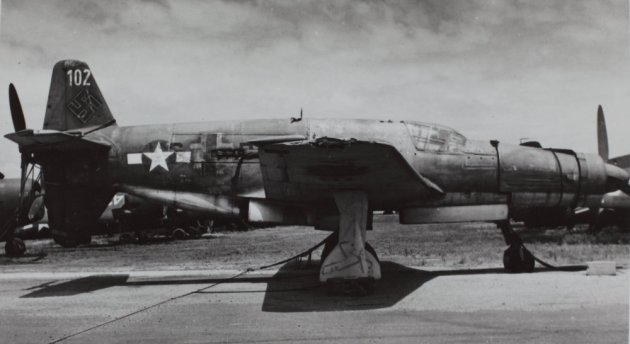
Dornier Do 335
Having a unique “push-pull” layout and a reduced aerodynamic drag of the in-line alignment of the two engines; one at the front of the plane, and one in the tail.
The Do 335 was one of the fastest piston-engine airplanes of the war, being capable of reaching speeds of 474MPH. The first prototypes were delivered in May 1944, and they were quickly taken into production. However, as happened so often with the Nazis miracle weapons, that was far too late in the war to change the tide.


Dornier Do 335 Pfeil (Arrow) in the National Air and Space Museum, Steven F. Udvar-Hazy Center, Washington DC. Photo Credit
Dornier Do 335 Pfeil (Arrow) in the National Air and Space Museum, Steven F. Udvar-Hazy Center.   Go see it
In January of 1945, the first planes were delivered to the frontline units, but when the factory was overrun in April of that year, only 11 had been completed.
The first combat encounter of the Do 335 was claimed by French ace Pierre Clostermann when he intercepted one in April 1945. Clostermann was leading a flight of four Hawker Tempests from No. 3 Squadron RAF over northern Germany when they saw a Do 335 flying at maximum speed at treetop level.
The German pilot reversed course after spotting the Allied fighters and managed to escape, even though the Tempest had a top speed of 432 MPH.
Only one Do 335 survived the war; it was taken intact in the factory on 22 April 1945 and transported to the United States for testing and evaluating.


After these tests, it was left to rot outside for years until it was first donated and later transported to the National Air and Space Museum. By a strange quirk of fates, in 1974 the plane was transported back to the factory in Germany to be restored. Some of the men who built it in April 1945, were now restoring her; what are the odds of that happening.
After restoration, the plane remained in Germany until 1986 when it was transported back to the United States. You can now visit her in the Steven F. Udvar-Hazy Center of the National Air and Space Museum.

Monday, May 21, 2018

Monday Music "Short People" by Randy Newman

I remember when this song hit  in 1977 while I was living in Alabama near Anniston in a place called "Saks", that was the name for the area where my parents had a house.  I was going to Saks Middle school and this song was huge, everyone was singing it.  Granted it would have been called "Offensive" now because people don't have a sense of humor and their skins are too thin.  Back then all us kids knew the lyrics and used them on each other.  Key kids are cruel, it is the way it is.  I heard the song on my "70's" on 7 on my Sirius/XM when I changed the channel from the "80's" on 8 to get away from the David Bowie song, "Lets Dance" that I despise.  Nothing against David Bowie, but that song didn't do it for me.

"Short People" is a song by Randy Newman from his 1977 album, Little Criminals. The verses and chorus are lyrically constructed as a prejudiced attack on short people. In contrast, the bridge states that "short people are just the same as you and I." Newman interprets the song to be about "prejudice" as was widely thought, but added that it was "about a lunatic." As with many of his songs such as "Rednecks", Newman wrote the song from the point of view of a biased narrator. Like Dire Straits' 1985 hit single, "Money for Nothing", which used the same lyrical technique, the song was misunderstood by many listeners who wrongly assumed that it reflected Newman's personal viewpoint.


Newman would later grow to dislike the song and its success, eventually calling it a "bad break", a "novelty record like The Chipmunks", and said it caused him to receive several threats regarding its misinterpreted message. He said, "I had no idea that there was any sensitivity, I mean, that anyone could believe that anyone was as crazy as that character. To have that kind of animus against short people, and then to sing it and put it all in song and have a philosophy on it." However, it ended up being included on almost every one of his greatest hits albums.

Although Newman had never charted a single before, and his previous album, Good Old Boys, had been his third to reach the Billboard 200, "Short People" soon gained attention as a novelty song. The song consequently became a major hit on radio peaking at No. 2 on the Billboard Hot 100 for three weeks; it was kept from reaching No. 1 by Player's "Baby Come Back" and the Bee Gees' "Stayin' Alive". It became a Gold record.
The song follows a basic musical formula with bass and drums centering on Newman's catchy pop piano line in the key of A major. A small brass section and an electric guitar occasionally rise into the mix and conga drums (played by Los Angeles-based session musician Milt Holland) also feature prominently in the song.
In 1978, state of Maryland delegate Isaiah Dixon attempted to introduce legislation making it illegal to play "Short People" on the radio. He was advised by Assistant Attorney General Francis B. Burch that such a law would be a violation of the First Amendment.


The song was performed by actor James Coco on a 1978 episode of The Muppet Show. Other television shows to feature the song include Ally McBeal, The Adventures of Jimmy Neutron: Boy Genius, Doogie Howser, M.D., The Cleveland Show, and The Simpsons.[citation needed]
A MADtv sketch parodying Newman's songwriting abilities also made references to the song.
The Side Street Ramblers performed a version of this song, in reference to the height difference between their lead and bass singers (5' and 6'5" respectively).
In the film Semi-Pro, Will Ferrell sings the song on the bus. It is also featured in the 1994 feature-length adaptation of The Little Rascals.
This song is heard on a Toy Story sing-along cassette tape.
The song is mentioned in a list of Michael Scott's favorite Bruce Springsteen songs in The Office episode "Crime Aid". None of the songs mentioned were actually performed by Springsteen.
In 2009, the song was parodied by conservative political satirist Paul Shanklin as "Old People" with Shanklin doing a voice impersonation of American President Barack Obama on the health care reform debate in the United States.
Andrew Hansen, an Australian satirical comedian, also performed this song on the comedy show Good News Week. Initially in the show he disclaimed the lyrics stating that he didn't hate short people—it was Randy Newman's lyrics (a reference to a skit he earlier participated in that questioned the legitimacy of charities for sick children and caused him, and his group The Chaser, to be temporarily suspended from television). Later in the show he performed the song again with his own lyrics referring to Adolf Hitler, Centrelink and popular television personalities including the show's host Paul McDermott.

Friday, May 18, 2018

How to Evade in the Wild and AD&D

I pulled this off the "Art of Manliness", I have used stuff from them before and it is a cool website full of what I call "Old School" knowledge or traditional knowledge that isn't taught anymore because it is "traditional" and not "stylish" as Dirty Harry said in one of his movies. 
    The first time I was exposed to this stuff in great detail was when I was playing "Advanced Dungeons and Dragons" 2nd edition,in high school thank you very much and I had at the time a Real Jerk for a DM(Dungeon Master, he is the guy that provides the background and encounters for your group), well anyway we were running away from a group of Orc's that were pissed that we raided their village and were real intent on catching us and roasting us over an open fire.  Well the party leader decided to split every one up and we had to make a break for it on our own and meet at a predetermined place in a couple of weeks after the Orc's got over being pissed off.

 The Orc's after my party according to the DM's description
.
    Well I had to describe in great detail how I evaded the Orc's following me...I am a voracious reader especially of frontier life and Indians(Feather not dot) and how they tracked their prey and how they evaded the hunting parties of the red coats sent to wipe them out.  I had to describe in great detail how my character evaded the Orcs's from the stream crossing, to stepping on rocky ground to climbing trees and moving from tree to tree to avoid leaving any spoors on the ground and my human scent.  From using stepping backwards and planting false trails to throw them off. the brush behind me to mask my foot prints...Well the end results I was one of 4 out of 10 that survived....That DM was a dick, hey what can I say, I was part of the "Society of Creative Anarchism" in school where I got my geek on besides being an JROTC kid and on the Chess Club, the academic bowl and the debate team.

     I got seriously into Gaming when I was in the Service, Most of the people in my unit gamed, and you try to have a gaming session drunk on German beer...Lots of fun.  We also played when we were in the field, and had a bit of time.  I enjoyed it and played a lot until I got out in 1991 and didn't really play after that, was too busy working a job and surviving.   Now I haven't played in many years and I do miss it, but the game has changed so I just don't have the time to get creative like that, I blog now so you poor readers have to put up with me in the blogging world, LOL.
   
    Reading this article reminded me of that long ago gaming session and what I had to do as a character to escape.


A few years ago we published an article on how to track a human in the wild. But what do you do if the shoe is on the other foot, and you’re the one being hunted?
If for whatever reason you find yourself evading a band of marauding outlaws in some dystopian future, you’ll want to implement counter-tracking measures to evade them.
Even if you never end up being the one pursued (and I hope you never do because that means something has gone terribly wrong in your life), understanding counter-tracking measures will make you a better tracker as you’ll know what to look for in targets trying to evade your pursuit.

You Can Run, But It’s Really Difficult to Hide

The ultimate goal of counter-tracking is to evade your enemy and get to safety.
But understand that a talented tracker knows the counter-tracking measures you might use and will still likely be able to find you.
In real life manhunts through the wilderness, the hunted is almost invariably found. If the fugitive is wily, it might take a few days longer before he’s captured, but he’ll ultimately be nabbed.
Exceptions exist, of course, like the clever hermit who managed to live in the Maine woods, and commit 1,000 burglaries, while avoiding detection and the searches of law enforcement for almost 30 years. In general, though, the old saying is true, “You can run, but you can’t hide.” When you’re dealing with seasoned, dedicated trackers, counter-measures will at best probably only give you a little extra time on the lam.
Of course, you may not be pursued by expert trackers — marauding bands of baby-eating barbarians are often rank amateurs in this department. In which case the following counter-tracking measures may accomplish the goal of helping you make a clean getaway. They can be broken down into three main categories: leaving no trace, staying out of sight, and employing deception.

1. Leave No (or as Little) Trace as Possible

In our article about tracking a human, we highlighted several indicators that trackers use to find their target. When you’re the one being pursued, you have to reverse-engineer them, so to speak; you have to know what not to leave behind to avoid tipping off the tracker to your trail.
Don’t leave detritus behind. If you’re escaping and evading, be extremely conscious of not leaving behind any discarded objects. Food wrappers, clothing, and gum are just a few of the things a tracker will be looking for. Be especially cognizant of unintentionally discarded items — sometimes when you pull your hands out of your pockets, stuff comes out with them.
Don’t leave your biological waste behind. Trackers will also be looking for biological evidence of your presence, specifically blood, feces, and urine. If you’re bleeding, make sure you’re bandaged, so you don’t leave a trail. When you take a wiz or a dump, make sure to cover it up when you’re done. Of course, covering up your waste creates evidence of a ground disturbance (more on that in a bit), which a seasoned tracker will be looking for, too. Do your best to make your cat hole look as natural as possible.
Avoid “honeypots.” Expert tracker John Hurth calls soft, impressionable areas of ground that readily capture tracks “honeypots” because they leave so much information behind. Mud, sand, soft dirt, and snow are examples of honeypots. Long grass can also be a honeypot because the tracker will be able to see the trampled, bent grass that you walked through. Avoid honeypots and do your best to stick to hard, rocky surfaces.
If you’re escaping and evading in snow or in a sandy desert, avoiding honeypots will be difficult, but it is possible to minimize the trace you leave behind. If you’re evading on snow-covered ground, try to move only when new snow is actually falling from the sky. The falling snow plus the wind will erase your tracks. Same thing for sandy environments. Try to travel when the wind is blowing so that your tracks are blown away.
Avoid disturbing the environment. Besides looking for footprints, a tracker will also be looking for disturbances in the environment. If you’re walking in a wooded area with lots of leaves or pine needles on the ground, you won’t leave much in terms of footprints, but if you’re not careful, you’ll still leave behind evidence in the form of snapped twigs and overturned leaves.
Besides disturbances on the ground, trackers will be looking for aerial disturbances like broken cobwebs and broken tree branches. If there’s a cobweb between trees, go under it or around it. As you pass by low-hanging tree limbs, try not to bend or break them. Make sure clothing or other items don’t get hung up in tree branches. Also avoid scuffing trees.
Keep a low auditory profile. Trackers will not only be looking for visual indicators, but listening for auditory ones. So be as quiet as possible. Move like a ninja.
Don’t be smelly. A tracker will use all of his senses, including his nose, to find you. The smell of smoke can lead trackers to you, so avoid making fires if possible. Lotions, soaps, food, and body odor also give off scents that can reveal your presence.

2. Stay Out of Sight

Besides being aware of the traces you leave behind, to successfully evade a pursuer you quite naturally don’t want them to see you!
But here’s the rub: moving objects are easier to spot than stationary ones.
So how do you keep moving without being seen?
Here are a few tips drawn from Army field manual FM 21-76: Survival, Evasion, and Recovery.
Camouflage yourself. Unless you’re wearing camo, you’ll need to use your surroundings as a natural disguise. Survival expert Creek Stewart gave a pretty detailed tutorial on how to do this a few years ago — you essentially plaster yourself with mud and leaves. Keep in mind that when you collect materials for your camouflage, you don’t want to get them all from the same location. That will just create a big disturbance in the environment, clearly indicating your trail.
Camouflaging is a bit trickier in snow and desert environments. You don’t have that much flora and fauna to use to conceal yourself. Do your best with what you’ve got.
Move when visibility is lowest. If you don’t want your pursuers to see you, only move when visibility is low: nighttime, stormy weather, dust storms, snow storms, etc.

Avoid silhouetting. Silhouetting occurs when you move in front of the skyline at night. There’s just enough light to create a silhouette of your profile, making you stick out like a sore thumb. To avoid silhouetting, stay off of ridges and the tops of hills. When you move, stay low to the ground, making sure there’s something in your background (like trees) besides the sky.
Use natural cover. As you move, stay close to natural cover like trees, shrubs, and bushes. This may require low crawling. As you stay close to natural cover, be cognizant of not disturbing things too much. First rule of evasion: don’t leave a trace!

3. Deception Practices

No matter how much you work to hide your tracks, you’re still going to leave them. To evade your pursuers, you’ll need to implement some deception tactics to throw them off your trail.
Again, expert trackers know these deception techniques and will consequently be on the lookout for signs of them. While, at best, they’ll simply slow an expert pursuer down, they could throw an amateur entirely off your trail.
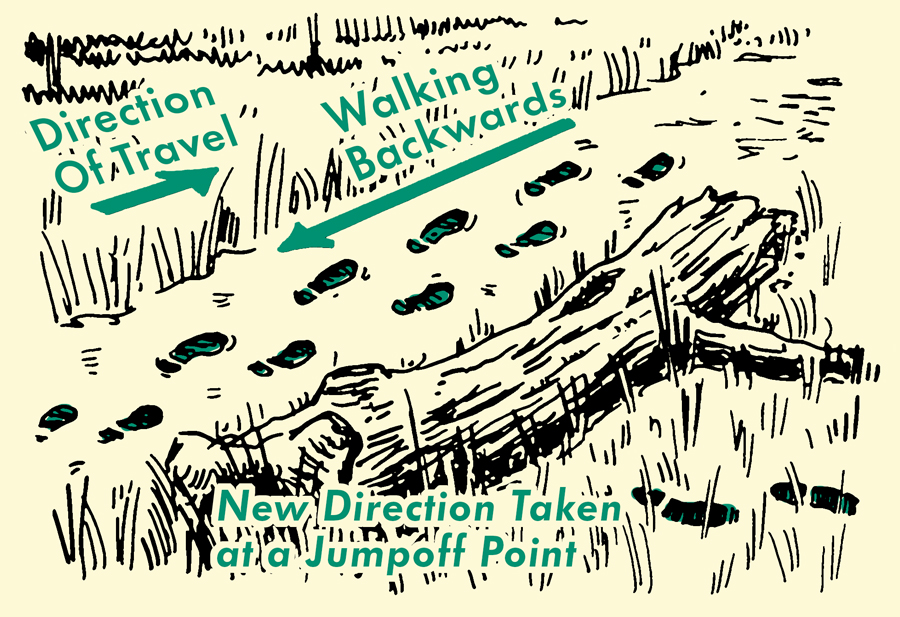
Walk backwards. A common deception tactic is to walk backwards. When you do so, the prints of your feet point in one direction, but you’re moving in the opposite direction. If it works, your pursuers will follow the route your toes point towards.
The problem with this deception technique is that a good tracker can detect it by looking at your footprints: a shortened stride and a more pronounced and deeper imprint on the heel give the ruse away.
They’ll also be looking for which direction gravel and dirt are being dragged in relation to the print. If you’re walking backwards, the dirt will be dragged in the direction you’re actually walking, not the direction you’re trying to make them think you’re walking.

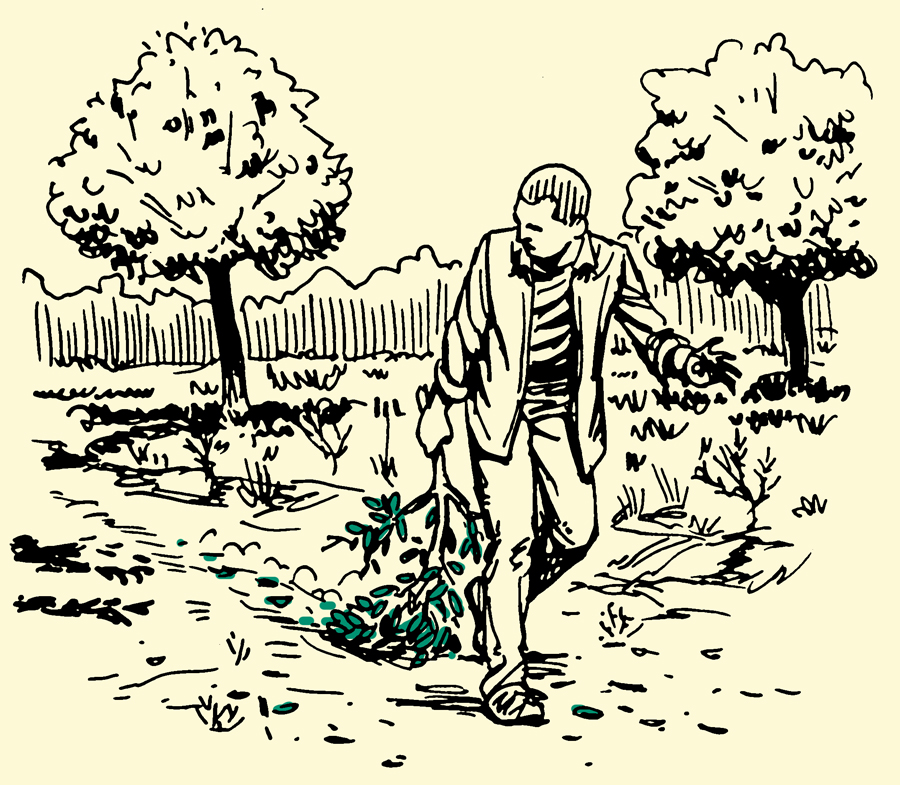
Brush away your tracks. If you’re walking on ground that leaves footprints, you can brush them away as you walk to hide your trail. This could be done by rigging a piece of carpet or a leaf-covered branch around your waist, so it drags behind you, sweeping away your footprints as you walk.
Of course, this tactic can be noticed by a well-trained tracker. For example, they’ll likely notice the outline of the edges of the carpet that you’re dragging along.
Walking in a stream. Running water will allow you to walk without leaving footprints, as the moving water will erase whatever prints you may leave in the stream or river bed.
Be aware that honeypots exist near stream beds. The mud that you’ll encounter as you enter and exit a stream will readily capture your tracks.

Doubling back. Doubling back is when you walk and leave a trail in a general direction, but then walk backward over your track to a jump-off point. If all goes according to plan, your trackers will follow your initial line of tracks and bypass your jump-off point.
Unseasoned trackers will eventually realize you’ve doubled back when they reach the point where your prints suddenly stop. Seasoned trackers will likely figure it out earlier by seeing the dirt that’s being pushed backward on your forward-facing prints, indicating that you’re walking backward on your tracks. The other issue with doubling back is that if you don’t walk perfectly backward over your footprints, you’ll just leave another set of prints behind. But the technique, done well, can buy you some extra time.
As you can see above, evading a tracker is hard. Damn hard. But with a bit of cleverness and a lot of luck, you just might be able to successfully escape and evade those who hunt the most dangerous game.
________________________
Sources:
Combat Tracking Guide by John Hurth
Tracking Humans by David Diaz

Wednesday, May 16, 2018

Some Musings..

I have finished my killer schedule where I work 4 days straight 12 hour day, did my Boy scout stuff and survived.  I normally try to have stuff in the scheduler thingie but wasn't able to pull it off this time.  I decided to post about a couple of things...First off I saw where President Trump pulled us out of the Iran Nuclear deal.....Funny how that Pen and Phone thing bites you in the butt...
I guess when you decide to circumvent the constitutional process and figured that Felonia Von Pantsuit* would replace you and ensure your legacy does have some drawbacks....
                                                                                                                                    *Hillary Clinton
 The Europeans are aghast that the Cowboy Americans are acting without the guidance that the Europeans were used to with the Obama administration.    In my mind President Trump did the right thing, The Iranians are duplicitous and from what I heard what was the final straw for President Trump was that John Kerry was meeting with Iranian officials trying to circumvent the authority of the President in foreign matters, I keep hearing the word "Logan Act" so I will wonder if "Flipper" will be held to the same standards as us "dirt people" or he will skate like Hillary has because the rules don't apply to the political class.
    Speaking of the Middle East, President Trump keeping another campaign promise opened the U.S embassy in Jerusalem, something the last 3 prior presidents said that they would do but didn't for fear of pissing off the perpetually outraged "Palestinians". 
Well the Perpetually outraged Palestinians did as we figured they would, they went nuts, trying to crash through the border from Gaza to Israel and getting a bunch of them shot for their effort.  People were trying to break through so they can kill Israeli citizens.  And people wonder why the the IDI defended their border?

The US mainstream media of course supported the Palestinians and Trashing President Trump.

    On a different note, A favorite author was dis-invited to a gamercon because the SJW's got stirred up and the Con organizer caved like the French did in 1940 and then doubled down on stupid by running his lame note to the vendors, you can read the updated info  here.   The SJW's did the same thing to John Ringo a month ago.  There is a phrase running around..."Get woke, Go broke".  The people that are caving to the SJW zealots are hoping for the problem to go away, but all this appeasement does is encourage it, ask Chamberlain how the Munich Summit worked out.   A year later Germany started WWII and Chamberlain was disgraced.  These Cons will whither away as the people that want to meet their favorite authors and spend their money at the vendor stalls will no longer make an appearance and the entire community suffers because of the perpetually outraged will have run off the paying customers.  I think only "LibertyCon" is unaffected by all this drama.

Monday, May 14, 2018

Monday Music "Open Sesame" and "Misled" by Kool and the Gang

I decided to roll with Kool and the Gang, I was riding home and on my motorcycle sound system the song came on "Open Sesame" by Kool and the Gang.  Back in 1977/1978 I was one of the producers of our 6 grade play and it was based on historical events, and I used several songs from the sound Track from Saturday Night Fever in the Play and one of the songs I used was "Open Sesame" from Kool and the Gang.  I went with a visual story with music to back it up.  I was told later on I raised the bar on subsequent productions.   I was never told "I couldn't" so I went with my gut and it went well.  I sometimes wonder if my life would be different if I had pursued that avenue instead of the direction that my life has taken.  Naa I am happy with my life that I have now with no regrets.  I went with a 2fer from Kool and the Gang, one song from the 1970's and one song from the 1980's...There is symmetry there, LOL


Open Sesame is the eighth studio album by the funk band Kool & the Gang, released in 1976. The album yielded the hit title track, "Open Sesame", which achieved some success, first as a top ten R&B single, then later as part of the Saturday Night Fever soundtrack. "Super Band" also reached the R&B top twenty. The album was the second of two albums released by the band in 1976.

 I couldn't find out any real information on this song except it was in "Saturday Night Fever and it was at the height of the "Disco Movement.".   I do like the sheer pageantry of the video's This was before the advent of "Professional" video's and music video's varied depending if the band was willing to make a video clip.


Emergency is the sixteenth studio album by the American band Kool & the Gang, released in 1984. It ultimately became the group's biggest selling career album, earning Double Platinum status in America, Platinum in Canada, and Silver in the UK.

The album produced four US top 20 hit singles including "Fresh" (US #9); "Misled" (US #10); the title track "Emergency" (US #18); and the album's biggest hit, the million-selling "Cherish" (US #2). "Fresh", "Misled", and "Cherish" also cracked the top 40 in the UK reaching #11, #28, and #4 respectively while "Emergency" only reached #50 in that country.

 "Misled"

Saturday, May 12, 2018

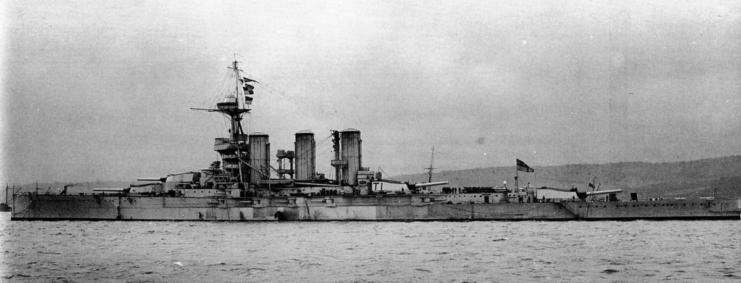
Battlecruisers....

I have blogged extensively about Battlecruisers, like I said, this is funny coming from an Army guy, what can I say.  I was fascinated by combat ships since I was a kid.  I will add the most famous battlecruiser in the world, the HMS Hood.  People forget that the Hood was a battlecruiser, and she exemplifies the attributes of a battlecruiser and the weaknesses that ultimately sank her  when she went up against the biggest battleship the Germans had, The SMS Bismark.   I had fun doing research on this post :)

HMS HOOD
Their capabilities allowed them to fill three roles. They could work with the dreadnoughts in the main battle fleet, adding extra firepower. They could form the heart of smaller squadrons, or they could act independently, their speed and firepower enabling them to contribute to the war without support from other ships.


HMS Shannon, a Minotaur-class armoured cruiser, 1908–09.

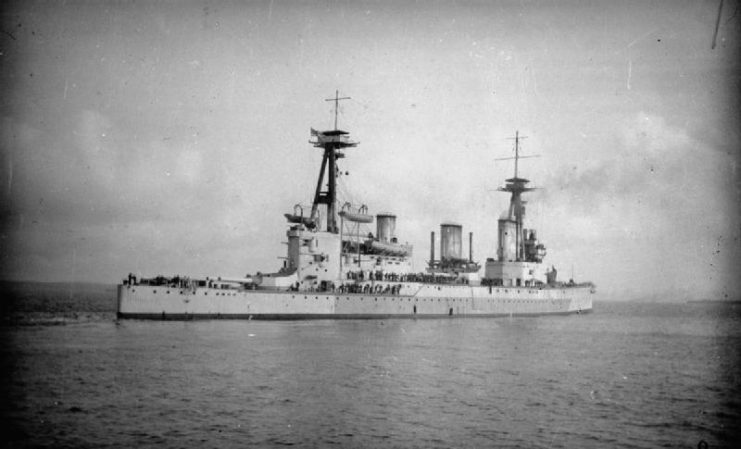
In 1909, the Royal Navy was the first to launch battlecruisers. The faith the British placed in the ships was reflected in their names – the HMS Indomitable, Inflexible, and Invincible. They had a displacement of 17,250 tons, similar to the original HMS Dreadnought, but thinner armor to allow for greater speed. Each one carried eight 12-inch guns, just short of the ten 12-inch guns carried by most dreadnoughts.
The first batch of battlecruisers was followed by another set of three carrying similar weapons. Then a process of escalation began, as the designers tried to fit them with ever-greater firepower. The HMS Tiger, a unique battlecruiser laid down in 1912, carried eight 13.5-inch guns. The Renown and Repulse, launched at the height of the war in 1916, had six guns each, but they were powerful 15-inch weapons.
By 1917, the Royal Navy had built 12 battlecruisers, more than any other nation.


HMS Tiger at anchor, 1916–17.

Britain’s first battlecruisers were designed and begun in secret, during the naval arms race. Even when they were launched, not every nation rushed to imitate Fisher’s innovation. By the start of the war, only Britain, Germany, and Japan had battlecruisers in action.
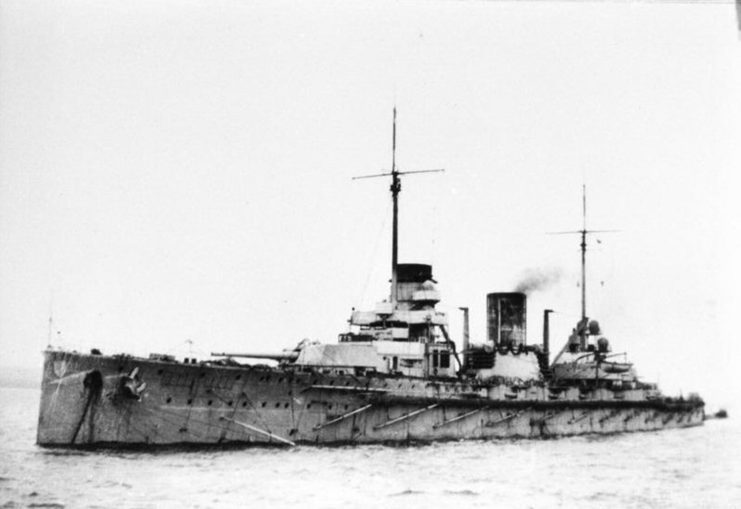
SMS Moltke
The First German battlecruiser was completed in 1910, and several more were produced during the years that followed. While sticking with the broad outline laid out by Fisher, the Germans brought a slightly different approach to battlecruisers. They placed less emphasis on speed and firepower, giving their battlecruisers instead better armor than the British ones. Their first battlecruisers carried 11.1-inch guns although ships built later had the 12-inch guns the British had started with.
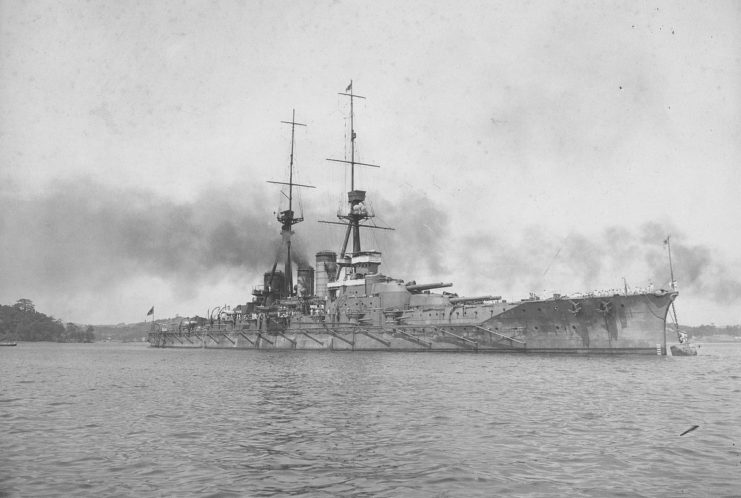
The Japanese could not afford to produce as many ships as other powers, so they chose to focus on quality over quantity. Their Kongo-class battlecruisers had their design changed to incorporate 14-inch guns. They also had slightly heavier armor than the British ships. The first Japanese battlecruiser was built in Britain while they were allies; later ships were produced in Japan.


Imperial Japanese Navy battlecruiser Haruna at Yokosuka, Japan.

At first, the battlecruisers were successful. At the Battle of Heligoland Bight in August 1914, they turned the tide of battle in favor of the British by sinking three German light cruisers. While on detached service in the Falklands in late 1914, the HMS Inflexible and Invincible sank two less-powerful German cruisers, confirming their role as destroyers of light ships.
German battlecruisers were sent out on some successful independent expeditions. They bombarded towns on the British east coast, raising concerns among the British public about the Royal Navy’s ability to protect them. The Germans gave a battlecruiser, the SMS Goeben, to the Ottoman Empire. It contributed to bringing the Turks into the war and helped them fight against British and Russian fleets.


Goeben in port, date unknown.

However, the successes concealed problems with the battlecruiser design.
One of the biggest issues was that the captains of the ships regarded them as suitable ships of the line. With their large size, heavy armament, and impressive label, commanders mistakenly tried to use them in straight fights against dreadnoughts and other battlecruisers. Their armor, reduced to increase their speed, was not designed to withstand the sort of guns those ships carried.
In May 1916, the Battle of Jutland laid the truth bare for all to see. Single salvos of shells proved enough to sink three British battlecruisers, the Indefatigable, the Invincible, and the Queen Mary. Each was blown apart and sent into the depths. On the German side, the Lützow was sunk, and other battlecruisers limped home.

 SMS Seydlitz steaming home severely damaged after Jutland
A combination of good seamanship and precautions introduced to contain explosions stopped more from being lost.
Battlecruisers had faced a major battle, and their weakness had been exposed.


British battlecruiser HMS Indefatigable underway in coastal waters just before the Battle of Jutland.

Fortunately, another machine emerged to serve part of the role filled by battlecruisers. The growth of naval aviation created an alternative way of providing reconnaissance for battle fleets.
No more battlecruisers were lost during WWI, as both sides learned the lessons of Jutland and used them appropriately. The Royal Navy used the Royal Navy Air Service with Sopwith Pups and also non Rigid Airships to provide reconnaissance for the Home Fleet during the blockade. 


Following the war, there was still some interest in building battlecruisers, although with a different design. Then the Washington Naval Treaty of 1922 brought a halt to the naval arms race, and interest in battlecruisers evaporated. By the time naval power began to grow again, designers had moved on to improved options.
Ultimately, battlecruisers were too vulnerable for ships of their size and firepower.

Thursday, May 10, 2018

NRAAM 2018 AAR

I attended my second NRAAM in the great city of Dallas;
I flew into Love field on Saturday morning and flew out Sunday Morning.   I learned a few things...First off I should have planned a Friday trip and return on Sunday Trip.  I couldn't change the airline tickets,  I bought these tickets at a huge discount and the flip side is that once I buy them, they are set in concrete.   Because of that I couldn't change my hotel room either.  Oh well, lesson learned on the planning side, I was trying to go as cheep as I can and as the phrase goes "Penny wise, pound foolish".   Next year I will plan on 2 nights.
      Well anyway I met the "GodFather" Old NFO at NRAAM, now let me tell you...That guy knows EVERYONE, if he don't know you, I betcha he knows someone that knows you.  I also met a bunch of other people like Lawdog, you know the same guy that came up with the "Cake Meme" that I use on a regular one...Lemme find it for you...
Yeah, that one...He says that he gets a bunch of hate mail on it.  To me that shows how effective it is when the liberal gungrabbers are butt hurt.  I also have bought both of his books and let me tell you, the story on the books are tame to meeting the guy in person.  He is truly a class act and a slightly warped sense of humor .
     As far as the venue goes, I and my son walked through Dallas, caught the "DART" or the Dallas area rapid transit  system and it was laid out differently and man everyone was nice and friendly to us, especially when it was obvious that we are "out of towners".  Unlike the sullen indifference I get here in the ATL.  I was looking for protestors, where were the protestors?..I was expecting to get swarmed by antifa or some of the other idiots, and with the exception of a couple of police on the corner all I saw were the members headed into the convention center.   I was armed, I had for the trip bought a little Pelican case to transport my pistol.  I had read up on the rules, I being a GA CCW permit holder, Texas recognized my permit so I could carry on the rail system, and in the convention center.
    The convention center had the usual big names there...
The crowd was a bit different this time, I and several other bloggers noticed it.  the crowd wasn't a bunch of older white males, nothing against older white males, I happen to be one.

  It was a bit different, there were a bunch of women there, and according to Lawdog, one lady was giving the Glock rep fits about their gun policies and she was articulate, and reasonable but she had that guy squirming.   He was pleased, you can read about it and others on his blog. 
     I and my son walked around and ran across this place, again...
he and I got a T-shirt, the only place that I am aware that you got "free" T-shirts.  Swag was far lower this year than last year, don't know what is up with that.    I did buy a couple of things, I was talking to the guy running this vendor stall..
 And I was checking out the actions on these rifles and they were like glass and they were Mosin Nagant rifles, I was shocked.  The guy running the booth told he how he did it, he had explained that the rifles were buried in Russian cosmoline for 70 years in many cases and the metal had absorbed the cosmoline.  He told me how he got the cosmoline and how he polished the action up on the Mosin Nagant rifles,   I will try what he suggested in a few weeks when I have my Honey do list knocked down.  I did buy some stripper clips for $20 and he gave me some new set screws that accepted the hex key vs the older ones that used the flat tip screw driver.  To me the advice was worth the $20 so I had no problem buying the stripper clips for my Mosin.
I also bought a regular magazine for my Smith Sigma, I have a couple of magazines but they are the "capped" 10 round magazines.   I may try to experiment and grind the stop off the  capped magazine.
     I also saw some furniture that was "unique", and I wonder of the spousal unit would think of this addition if I had bought it.
     
I suppose I could move it to the dog house.....LOL   Well anyway I also saw this for people wanting to keep their pistol within easy reach....
There is a pistol strapped under the Steering column.

The NRAAM was an enjoyable visit,  We did have to help Old NFO find his car, he was gracious to give my son and I a ride so we didn't have to use the transit system.  I met some new people at a place the bloggers congregated at after the meet..
It is what I call a "Beer Bar", Since I don't drink, I just ordered "Tea" and we did damage to the assorted, breads, cheese, salami and pretzels.   It was a good get together and I talked to people that I have met online and never in person until now.   We were there for a while swapping stories and having a good time   I really enjoyed the camaraderie and I am looking forward to Indianapolis 2019.  This time I will plan my trip better, LOL