Webster

The Constitution was made to guard the people against the dangers of good intentions." --American Statesman Daniel Webster (1782-1852)


Tuesday, January 14, 2020

When to upgrade your AR Pattern Rifle.


I have an article from Jay with Minuteman Review. He had asked me if he could contribute an article and I said "Sure", I have done that for "Eric@ammoman,com a few times.   I had checked out the website and it is full of information that might prove useful for my readers.  I had a heck of a time getting pics for the Assorted AR's.  I originally used "google" but the amount of antigun crap and propaganda was annoying.  I wound up using "DuckDuckGo" with the exception of all the advertising I had to deal with but I didn't have to wade through the anti-gun crap. .  I had to try this with my Chrome Browser, my "Pale Moon was giving me trouble with this.


Reasons to Upgrade Your AR-15
The AR-15 is one of the widely sought-after weapons among shooting enthusiasts, regardless of the bad name it has been given as a result of featuring in the Newtown/Aurora shootings. This rifle-style gun remains the all-time suitable firearm for home defense – this is because it is legal and lethal, provided that the owner uses it properly.
In the words of some dudes, “the AR-15 is America’s Gun, the rock star of weapons, and the symbol of the nation’s freedom.” These words bring back the Second Amendment to mind – “the right to bear arms should not be infringed.”
One of the appealing things about the AR-15 is that you can replace almost every part of the gun – quite a desirable feature. As a result, the gun is versatile as well as a fully customizable weapon. With tons of AR-15 upgrades available, you can be sure of constructing your own unique and personalized rifle.

The AR-15 is quite versatile, which is partly the reason for its popularity. And, many manufacturers of firearms offer this assault-type gun. Truth be told – all AR-15 out there are not created equal – this is a vital fact you should bear in mind. In essence, you will find both high-end versions and low-quality versions in the market, depending on the brand. An upgrade is a great way to boost a lower version rifle and maximize a higher-version rifle. Of course, you should expect to pay a much higher price for the higher-end models and versions.


The big question is, why should you upgrade your AR-15 rifle? 
Uniqueness: There are tons of other rifles in this category that look like your AR-15. So, if you are like some of us who love uniqueness even up to our gears, you would want to customize your rifle to make it unmistakably yours. But, that’s just a minor reason to upgrade your AR-15.

Versatility: One of the major reasons you would highly consider an upgrade of your rifle is to make it more versatile than it is presently. By customizing and

personalizing your AR-15, you can transform it from a plain rifle to a multi-caliber, force-multiplying and sharp-shooter. The good news is that there are extensive arrays of upgrade options to choose from.
Appearance and Ergonomics
Another good reason to retouch your assault-type rifle is to achieve improved feel and appearance. For instance, some lower-priced AR-15 rifles do not offer comfy grip due to poor ergonomic design. But, with a grip upgrade, you can improve the ergonomics and entire appearance of your rifle.

Typical/Best Examples of Upgrades You Can Accomplish on Your AR-15
#1: Optics
One of the meaningful and key upgrades you can make on your AR-15 is optics upgrade. Going for a cost-effective optics can mean a lot when it comes to enhancing your rifle. For instance, if you have poor eyesight, you may not perform optimally with iron sights. Just get ready to spend a bit more on a decent optics upgrade – it is worth the extra cash anyway. With a little over $130, you can accomplish a decent optics upgrade on your AR-15 – some brands cost more. Some of the options to choose from include red-dot, holographic sights, and reflex.

#2: The Grip
The grip is also a meaningful upgrade that anyone can accomplish on an AR-15 rifle. The feel of the rifle in your hands is a huge factor when it comes to whether or not you will enjoy a greater level of comfort on the shooting range. So, if your rifle feels bland, boring and uncomfortable, your mind will be focused more on the discomfort than the shooting task you want to accomplish, ultimately disrupting your shooting accuracy.
This is why you should consider grip upgrade on your AR-15 – in fact, it is one of the most popular upgrades that shooting enthusiasts accomplish on their AR-15. It’s a great way to enhance your shooting experience. So, before you step out, you need to decide on what you are more comfortable with – a more rigid or
smoother piece of hardware.
Another important factor in accomplishing a desirable grip upgrade on your rifle is your choice of material. For instance, would you rather prefer polymer to rubber, without or with a fiberglass reinforcement, provided that it perfectly suits your shooting style? Also, you may want to consider an appropriate color based on your individual preference.
You can also go for custom grip models available in different types – e.g. pistol grips, angled and vertical fore-grips, magazine well grips, and handstops. There are tons of benefits that come with a new grip. For instance, you can find models that enhance recoil absorption, lowering muzzle climb. Consequently, you can increase successive shot accuracy. So, think things through and consider all the factors mentioned when going for grip upgrade on your AR-15.

#3: Triggers
When it comes to triggers, there are extensive options to suit every shooter’s preference – straight or curved, long or short. Your trigger finger ultimately determines when the barrel releases a round. As a result, trigger is a common AR-15 upgrade among shooting enthusiasts.
With a perfect trigger, your finger will feel comfortable, resulting in consistent shooting accuracy with your AR-15. Another feature you should look out for when choosing a trigger is a comfy level of resistance. You would want to use your rifle in any given scenario and environment without restriction – so, it’s important you go for a very durable trigger.
If you are using your rifle for home defense, the single-stage triggers would aid firing as soon as you pull the trigger – it won’t fail. And, for competition shooting, the two-stage triggers are more desirable. They are also great for recreational shooting. Here’s the bottom line; you should consider the dominant task you want to accomplish with your AR-15 before choosing a trigger.

#4: Barrels
Upgrading to a longer or shorter barrel depends on the major task you want to 


use your rifle for, as well as your shooting style. You may also want to choose between a lighter or heavier barrel.
Some shooting enthusiasts are attracted to longer barrels since they offer an improved accurate shot. On the other hand, many go for a shorter barrel because it offers versatile shooting experience.
For home intrusion and self-defense purposes, you should go for a barrel you can maneuver with ease – the shorter barrel is a perfect fit in this case. Besides, with a shorter barrel, you can shoot faster. On the other hand, if your major purpose is to accomplish accurate shot groups, you should rather settle for the longer barrels.
In conclusion, it is also worthwhile to consider AR-15 upgrade on stocks, anti-rotational pins, rail systems/free-floating hand-guards, muzzles, and slings. Indeed, most parts are better when upgraded. 

Monday, January 13, 2020

Monday Music "For Those About To Rock....We Salute You" by AC/DC

I am continuing my run of "Bugaloo" songs, you know the songs that you would play if you saw this setting up outside your door.
   This discussion came about on one of my Facebook group, "Monster Hunter International, Hunters Unite".  The discussion was, what would be your Bugaloo Song when the alphabet agencies came for you.


For Those About to Rock (We Salute You) (referred to as For Those About to Rock on its cover) is the eighth studio album by Australian hard rock band AC/DC. It was the band's seventh internationally released studio album and the eighth to be released in Australia. It was released on November 23, 1981.

Released in 1981, the album is a follow-up to their highly successful album Back in Black. For Those About to Rock has sold over four million copies in the US. It would be AC/DC's first and only No. 1 album in the U.S. until the release of Black Ice in October 2008. In their original 1981 review, Rolling Stone magazine declared it to be their best album. In Australia, the album peaked at No. 3 on the Kent Music Report Albums Chart.

"For Those About to Rock (We Salute You)" is a song by the Australian hard rock band AC/DC. The song was first released on AC/DC's eighth studio album For Those About to Rock We Salute You in 1981, and later as a single in 1982. The single's B-side contains an edited live version of "Let There Be Rock", recorded in Landover, Maryland, in late 1981. The video to "For Those About to Rock (We Salute You)" was filmed at that same concert.
The song was later included on AC/DC's first soundtrack album, Who Made Who, released in 1986 for the Stephen King film Maximum Overdrive.
The title and central lyric of the song are based on an ancient salute used by Roman prisoners to be executed in the Colosseum, "Ave, Caesar, morituri te salutant" ("Hail Caesar, we who are about to die, salute you."). However, Angus Young later said that the inspiration for the cannons came from a very different source. The band was cutting the first recordings of the song on the same day as Princess Diana of Great Britain's televised wedding. Angus recalled that "someone had the wedding on in the next room ... we were playing that part of the song when the cannons were going off and we paused a second and went 'hmmm ... that actually sounds pretty good. This coincidence also led to a cannon being featured on the cover of the album and single, as well as life-sized Napoleonic cannons becoming a regular stage prop at AC/DC concerts. The cannons fired in the song are mixed with exploding fireworks. However the actual takes were recorded later the next month as the mobile truck used to record the album (Mobile One) was being used to record Peter Gabriel's 4th eponymous album during the marriage of Charles and Diana.
AC/DC have often used the song to close live concerts, such as Live at Donington and No Bull as well as on their live CD AC/DC Live. It is also the song that concludes the most recent tour, Rock or Bust.

Sunday, January 12, 2020

Coal Torpedo


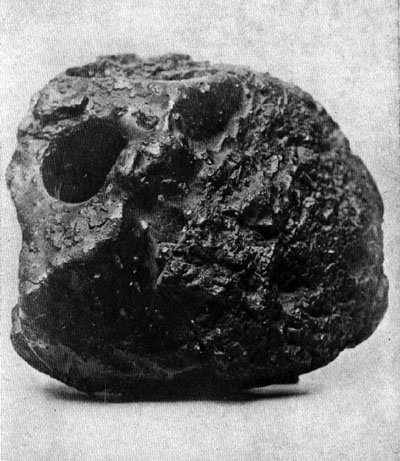
An Example of a Coal Torpedo Captured by the Union after the fall of Richmond.

Throughout the entirety of the American Civil War, the Confederate Navy was hopelessly outmatched by the Union Navy. Union warships enacted a blockade of the Confederate coast that placed a stranglehold on Confederate trade. Though they attempted to counter the might of the Union Navy through production of advanced warships, they could not overcome the sheer numbers of Union warships. Thus, they turned to a more indirect method of attacking Union shipping. This secret weapon of the confederacy was the coal torpedo.
secreet weapon of the confederacy
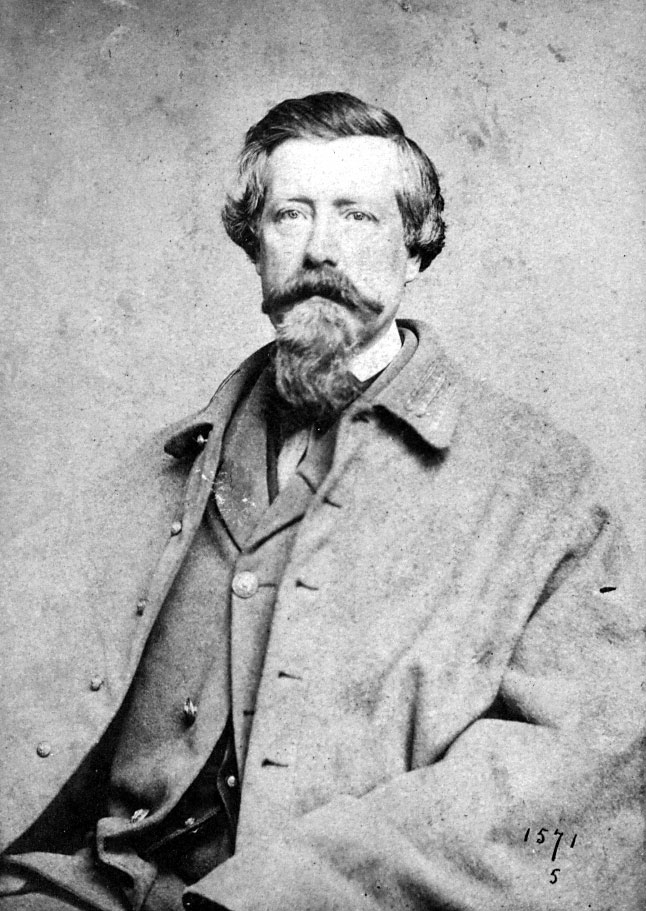
In 1863, Thomas Edgeworth Courtenay developed a weapon he called the coal shell. The weapon was simple enough, both in design and function. An explosive device would be produced in the size and shape of a lump of coal. These devices could be easily dispersed in coal piles behind Union lines by Confederate agents. Should a stoker shovel one of these explosives into the firebox of a ship or steam engine, the device would explode. While the amount of explosives inside the bomb was not enough to destroy the target outright, it had enough force to damage the steam boiler it was feeding. These boilers, under immense pressure, would explode violently if sufficiently damaged. The boiler explosion would be enough to disable locomotives and ships if not outright destroy them. Best of all, the bomb would leave no trace of its use.

Courtenay wrote Confederate President Jefferson Davis in November of 1863 to explain his plan. Davis, realizing the potential of the device, agreed to the project. Davis ordered his Secretary of War to arrange for immediate production of coal shells. Production would be carried out by the 7th Avenue Artillery shop in Richmond, Virginia.

Manufacturing these bombs turned out to be surprisingly easy, no different than that of explosive shells. A piece of real coal was used to create a mold. This mold would then be used to create a realistic looking casing for the bomb. Once explosives were placed inside the casing, the bomb was coated with coal dust to further add to the disguise.

Though Courtenay continued to call his invention the Coal shell, the were more commonly known by the name coal torpedo. At this point in history, the phrase torpedo referred to a wide range of explosive devices, nothing like the torpedo we are familiar with today.

Courtenay was hoping that his new invention would allow him a chance to collect a bounty on Union shipping that the Confederate government was offering. However, as a civilian he was illegible. In response, the Confederate Government, formed a new secret service corps of which Courtenay was given command.

This secret service corps would not remain secret for long. Only one month later, a courier was captured by the crew of a Union Gunboat. As luck would have it, he was carrying a letter from Courtenay that gave an in-depth description of the coal torpedo. This information was quickly sent to Admiral David Porter. Porter reacted quickly, making sure every vessel knew of this new weapon. In a order to his men, he wrote that,
“The enemy have adopted new inventions to destroy human life and vessels in the shape of torpedoes, and an article resembling coal, which is to be placed in our coal piles for the purpose of blowing the vessels up, or injuring them. Officers will have to be careful in overlooking coal barges. Guards will be placed over them at all times, and anyone found attempting to place any of these things amongst the coal will be shot on the spot.”

To make matters worse, the Union Navy knew full well who was behind the coal torpedo. Seeking refuge, Courtenay convinced President Jefferson Davis to allow him to travel to England. Safe from Union soldiers, Courtenay could continue to direct his secret service corps from across the Atlantic Ocean without fearing the consequences of his capture.

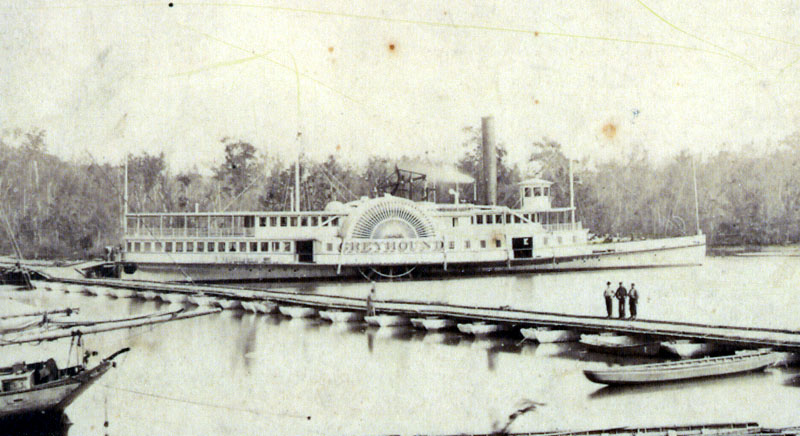
Despite the difficulties in directing a campaign from across the Atlantic Ocean as well as the Union forces being aware of his weapon, Courtenay achieved some success with the coal torpedo. The steamer Greyhound is believed to be one of the victims of the coal torpedo.
secret weapon of the confederacy

In November 1864, the crew of the Union steamer Greyhound, headquarters of General Benjamin Butler, caught some suspicious people aboard the vessel. After evicting them from the ship, the Greyhound traveled down the James river. On November 27, the ship was destroyed by a boiler explosion, forcing the crew to abandon ship. Admiral David Porter believed it to be the work of the coal torpedo.

Earlier that year, the steamer USS Chenango also suffered a boiler explosion while sailing south along the East Coast. Though she did not sink, she was out of commission for a year.

Other uses of the coal torpedo is harder to find. Prior to the fall of Richmond, all documents on the use of the weapon was burned. However, during the last year of the Civil War, a noticeable increase in boiler explosions occurred. Many were due to mysterious or uncertain circumstances. It is safe to say that the coal torpedo is a likely suspect for a few of these explosions.
coal torpedo
Following the end of the Civil War, Courtenay stayed behind in Europe. He attempted to sell his coal torpedo to any government that was interested. However, he failed on every attempt. He eventually returned to the United States with no sales of his innovative weapon.
During this time however, the steamboat Sultana was destroyed after three of her four boilers exploded on April 27, 1865. At the time she was carrying over a thousand former prisoners of war back home from Confederate prison camps. 1,192 people were killed, making it one of the deadliest maritime disasters in United States history. Years later, Confederate saboteur Robert Louden claimed to have planted a coal torpedo aboard the Sultana. However, this claim remains controversial and the official explanation remains that the boilers exploded due to improper water levels inside the boil

Though Courtenay was unable to profit from the coal torpedo. It reappeared several times throughout history. During World War II, both the Axis and the Allies attempted to use coal torpedoes to sabotage the other. Years later, during the Vietnam war, CIA operatives made plans to utilize coal torpedoes to sabotage North Vietnamese locomotives. The coal torpedo did not change the tide of the Civil War, but Courtenay’s innovative weapon lived on.

Saturday, January 11, 2020

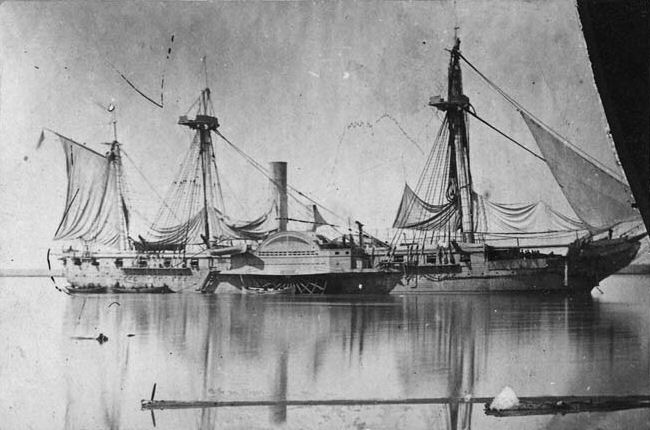
C.S.S Manassas an oddity or the Future


I had blogged a bit about the CSS Virginia the best known of the Confederate Ironclads, the confederacy used a myriad of ships to turn into ironclads to challenge the Federal navy


C.S.S Manassas


From the very onset of the Civil War, the Confederacy knew they were overmatched by the industrial might of the Union. The Union Navy operated with near impunity along the shores of Confederate territory. Seeking a way to challenge this mighty foe, the Confederacy tried many new and unconventional tactics. In addition to boobytraps and privateers, the Confederacy was also mindful about the recent emergence of ironclad warships. At a time when a majority of navies were made up of wooden sailing ships, the ironclad seemed like an invulnerable beast, able to decimate fleets of wooden warships with impunity. Thus, the Confederate Navy attempted to bolster its fleet with numerous ironclads. Though many were completed and several went on to make a name for themselves, none were as radical in appearance than the CSS Manassas. Her very appearance was enough to have Union forces describe her as a “Hellish Machine”
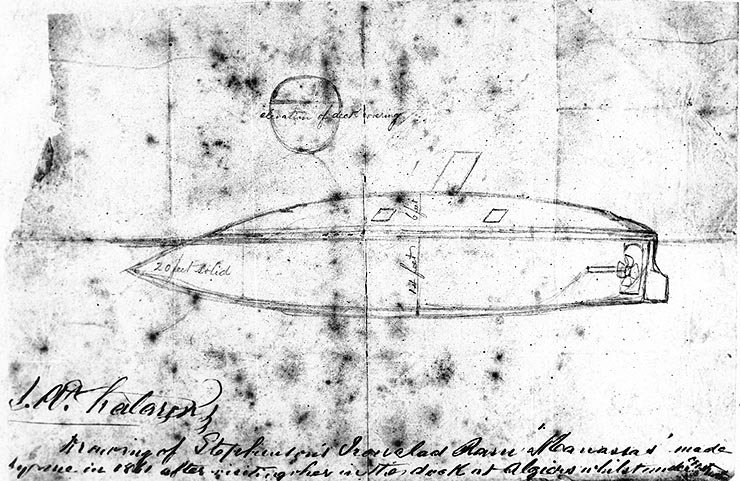
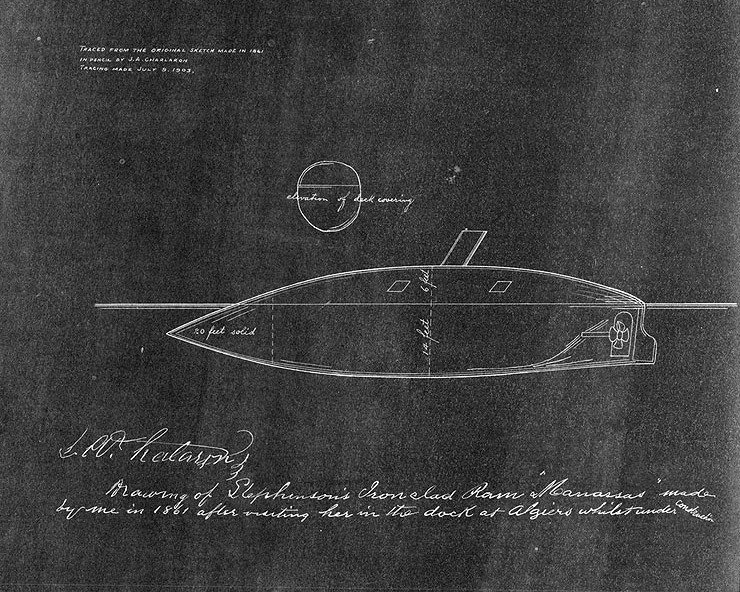
A pencil sketch of Manassas made by an observer during her construction.
Before she was a terrifying beast on the Mississippi River, CSS Manassas was an unassuming icebreaking steam tug named Enoch Train. She was designed and built by James Curtis, a shipbuilder from Medford, Massachusetts known for his clipper ships. [2] Enoch Train was launched in 1855 and spent the next six years traveling up and down the coast of the United States. She happened to be off the coast of Louisiana in April 1961 when the Civil War broke out. It was here that she was captured by the Confederate ship Ivy, then operating as a privateer out of New Orleans. Enoch Train was taken to Louisiana and immediately taken over by a group of investors keen on turning her into a privateer. Taken to Algiers, Louisiana, the Enoch Train was cut down and modified into an ironclad ram.
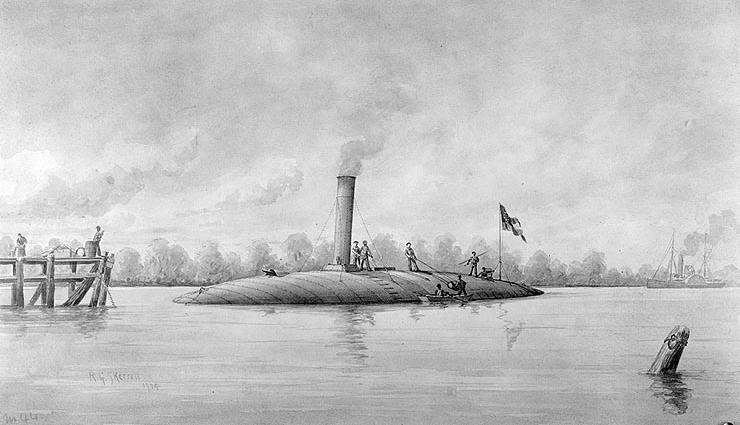
Enock Train emerged from her rebuild with little resemblance to her original design. She was cut down to the waterline and covered with an impressive convex layer of iron armor 1.25″ thick. The unusual shape invoked the image of a turtle shell protruding from the water and just like a turtle, the design was very well armored indeed. Though the armor was relatively thin at 1.25″ (For reference, the famous CSS Virginia had armored sides of 4″ over 24″ of wood), the steep slope of the armor, along with its shape, made it extremely difficult for enemy shot to penetrate. In addition, the crest of this iron turtle shell was only 6′ above the waterline. Not only was this ironclad extremely hard to penetrate, she was a difficult target to even hit.
Outside of her radical armor, the ironclad was modest. A smaller ship, she was only about 128′ in length with a beam of 26′ Intended to operate from the Mississippi, the ship’s draught was reduced to 11′. She was steam driven, propelled through the water by twin screws. Only one gun was equipped, a 64-pounder. The gun could only fire forward and was protected inside the hull by a large armoured shutter. However, this gun was only a secondary armament as the primary weapon was a ram jutting out from the ship’s stem. With her armor, it was expected that the ironclad could steam into the fray and ram opponents at her leisure.
When construction was completed, the ironclad was commissioned on September 12, 1861 as the privateer Manassas. Unfortunately for the investors behind Manassas, they would never get to enjoy the fruits of their labour. George R. Hollins, commadore of the small Confederate fleet tasked with protecting the lower Mississippi, was desperate to bolster his meager fleet. Aware of the construction of the Ironclad, he ordered a crew to seize control of the ship. Following her commissioning, the ship was immediately appropriated by the Confederate Navy as the warship CSS Manassas, the first Ironclad to enter service with the Confederacy. Hollins was aware of powerful Union warships gathering in the lower Mississippi and it was hoped that the radical ironclad would be enough to balance the scales. Manassas would be put to the test during the Battle of the Head of Passes, a mere month after she was first commissioned.
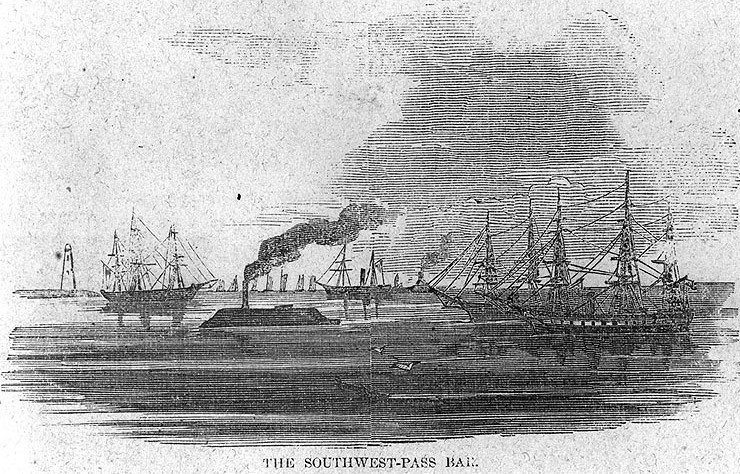
     As part of the Union blockade strategy, the crucial Confederate port of New Orleans was a priority target. Due to its location on the Mississippi River, the Union fleet only had to block the river’s mouth to effectively cut the Confederacy’s largest city off. The problem was that the Mississippi river branched off into three different directions as it emptied into the Gulf of Mexico. This area of divergence was known as the Head of Passes and it allowed Confederate ships to circumnavigate the Union warships. To secure this strategically important location, the commander of of the Mississippi blockade squadron, Captain William McKean, dispatched four warships under Captain John Pope to secure the Head of Passes and establish a fortication.
     The Union ships at the Head of Passes were led from USS Richmond, a very large and powerful steam-powered sloop. She was supported by two sailing sloops, Vincennes and Preble. Water Witch, a small steam-driven sidewheeler, was also available for support. Though capable of acting as a gunboat, she was primarily there to tow the sailing sloops in the event of no available wind. Captain Pope commanded the group from the USS Richmond. Despite the fact that his flagship had more firepower than the entirety of the Confederate fleet, Pope was an ineffective leader and rather cowardly, the exact opposite of Hollins. On October 9, he contemplated abandoning the Head of Passes after the gunboat CSS Ivy conducted an ineffectual bombardment on the Union ships.
Commodore Hollins could not allow the Union to control the Head of Passes. The area would provide the Union with a perfect position to launch an invasion fleet upon New Orleans. He had to launch a preemptive attack before more Union Warships arrived or the fortification was completed. Thus, he took control of the Manassas and marshalled the rest of his fleet At his command, Hollins had the ironclad Manassas and six small gunboats, Calhoun, Ivy, Tuscarora, McRae, Pickens, and Jackson. On October 12, 1861, the tiny Confederate fleet moved out before dawn and headed downriver with Hollins commanding from Calhoun.
Hollins organized his fleet with Manassas in the lead. She would carry out the opening attack by ramming the anchored Richmond. Once Richmond was crippled, the Confederate gunboats would deploy three fire rafts to drift downriver. The rafts were chained together and it was hoped that they would ensnare the Union Warships. Though it was possible for the Manassas to be caught by these fire rafts, Hollins was willing to sacrifice his most powerful warship if it meant the destruction of the Union fleet. Hollins would wait behind with his gunboats, waiting for the opportunity to mop up the remaining enemy forces.
     As Manassas steamed downriver to engage the ships, she picked out Richmond and began accelerating. She was spotted by Preble, anchored ahead of Richmond. The warship promptly opened fire on the interloper. However, all of her rounds sailed over Manassas and the Confederate Ironclad continued on her collision course. In the darkness, she was barely visible and only the sparks from her stack stood out. No doubt, the crew of the Union warships were bewildered by this fire-belching contraption as it bore down on the seemingly helpless Richmond. Her aim true, Manassas crashed into the side of Richmond. However, it was at this point that everything went to hell.
Unknown to the Confederates, the coal barge Joseph H. Toone was tied alongside USS Richmond. As Manassas rammed the Union ship, she also collided with the barge, lessening the impact. Though Richmond was damaged, she was in no danger of sinking. Manassas came out considerably worse. The impact knocked one of her engines loose, cutting her power. In addition, it caused her hull to buckle, allowing water to enter the hull. To make matters worse, the momentum of Manassas carried her along the hull of the Union warship and she briefly became trapped between the warship and the barge. Luckily, the impact caused the Toone to break away from Richmond and, in the process, free Manassas.
Free, but damaged, Manassas turned away and tried to escape upriver. She fired off rockets to signal the deployment of the fire rafts. (One rocket was knocked over and ended up shooting inside the Ironclad, ricocheting about inside.) As Manassas made her escape, Union gunners began finding their mark and one managed to knock the ironclad’s stack off. Luckily for the damaged ironclad, the arrival of the fire rafts and shelling by the gunboats caused the Union ships to panic. Cutting their lines, the Union warships retreated downriver. Manassas continued moving upriver while the gunboats pursued the fleeing Union fleet. In the confusion, the Union ships ventured out of deeper water and all warships except Prebel grounded themselves on a river bar. However, they still exchanged fire with the Confederate gunboats and by ten o’clock that morning, Hollins decided to pull back. Taking the damaged Manassas in tow, the victorious Confederate fleet sailed back to Fort Jackson.
     As Manassas underwent repairs, word of the Battle of the Head of Passes began to make the rounds. The defeat of a vastly superior Union Navy proved to be a source of embarrassment for the North. Though the Confederacy did not accomplish much with the exception of causing the Union to fall back, the victory provided excellent propaganda.
In the confusion of the battle, the Union Navy appeared to have placed more blame on Manassas than their own ineptitude. The sudden appearance of the alien-looking craft ingrained itself on the Union fleet during the battle. John Pope wrote back to his superiors, stating that, “Everyone is in great dread of that infernal ram. I keep a guard boat out upriver during the night.” [1] Over the next couple of months prior to the Battles of Fort Jackson and St. Philip, the Union Navy continued to fear the strange ironclad guarding the Mississippi River.
In stark contrast, the Confederacy was tremendously disappointed by the Manassas. Though she was intended to sink Union warships with impunity, she emerged from the battle as the most damaged warship. She proved to be too lightly built for her intended role. In addition, she was too slow to keep up with Union warships. Even the sailing vessels were able to outrun Manassas as they retreated downriver. Her turning radius was also horrible, preventing her from effectively using her primary weapon. Despite her ineffectiveness, the Confederacy was so short on warships, she was officially purchased within two months.
      One month after the battle, the Union Navy began developing plans to assault New Orleans directly. As the largest city in the Confederacy, capturing it would deal a fatal blow. While the Confederacy had originally devoted numerous resources towards the defense of the city, the deteriorating war situation led to the slow removal of resources so they could be sent elsewhere. New Orleans lost many of their defensive guns and soldiers. The primary defense of the city was soon left to the Confederate fleet and two forts downriver of the city named Fort Jackson and Fort St. Philip. Manassas and the rest of the Confederate fleet were kept at the ready for the next several months until the following Spring when the Union Fleet began making their move.
Commodore Hollins, though renowned for his heroic victory at the Battle of the Head of Passes, could not impress upon his superiors the danger that New Orleans was in. Once he heard reports that the Union Navy was in the process of moving its ships into the Mississippi River, he attempted to get permission to launch another preemptive attack on the Union while they were vulnerable. Instead of getting permission, Hollins found himself recalled to Richmond. Command of the Confederate fleet fell to John Mitchell, a considerably less capable leader. To make matters worse, the Confederate Navy and Army could not agree on how to command their forces. By April 18 1862, the Union Warships under Commodore David Farragut were moving upriver and the Confederates had to go into battle with their piecemeal forces.
From April 18 to April 24, the Union Navy attempted to use mortar ships to bombard forts Jackson and St. Philip into submission. However, following the ineffective bombardment, Farragut decided to simply run the gauntlet and invade the city directly. At 3:00 am, the Union ships arranged themselves into formation and began heading upriver. The Confederate warships arranged themselves just behind the forts, ready to attack the Union fleet at first light.
css manassas
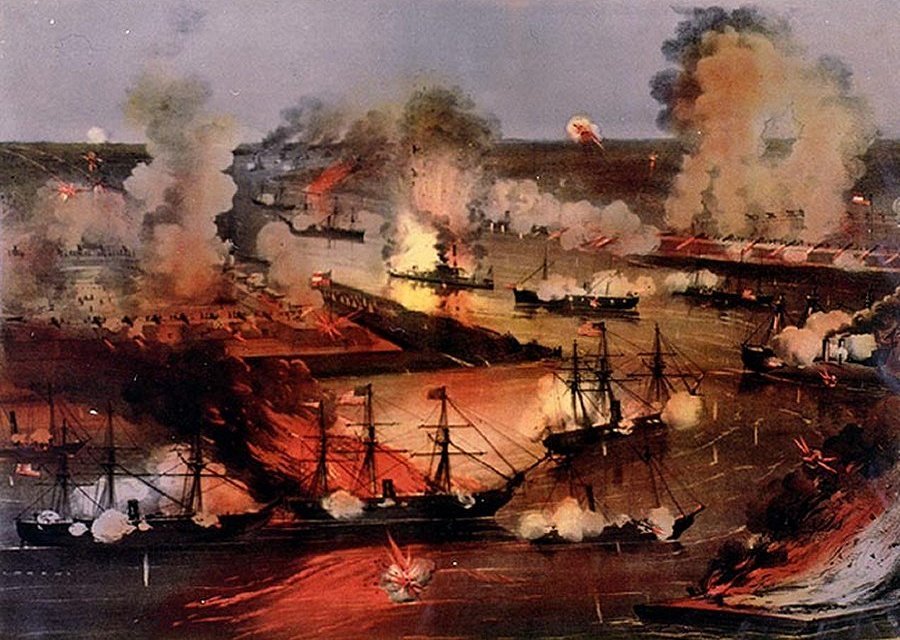
A lithograph of the Battle of Fort Jackson and Fort St. Philip. CSS Manassas is at the right of the picture, engaging a Union Warship.
As soon as the Union Warships began steaming past the forts, the Confederate warships began their attack. Manassas was one of the first warships to engage the Union fleet. However, her first attempt was thwarted as the Confederate forts began to shoot their own ironclad. Manassas immediately came about and moved up-river to get out of range of the forts. Though the Confederate ships could have counterattacked at an opportune time, the poor command structure prevented this. Instead, the battle line fell apart and the Confederate ships attacked at random. This would be the downfall of Manassas a short time later.
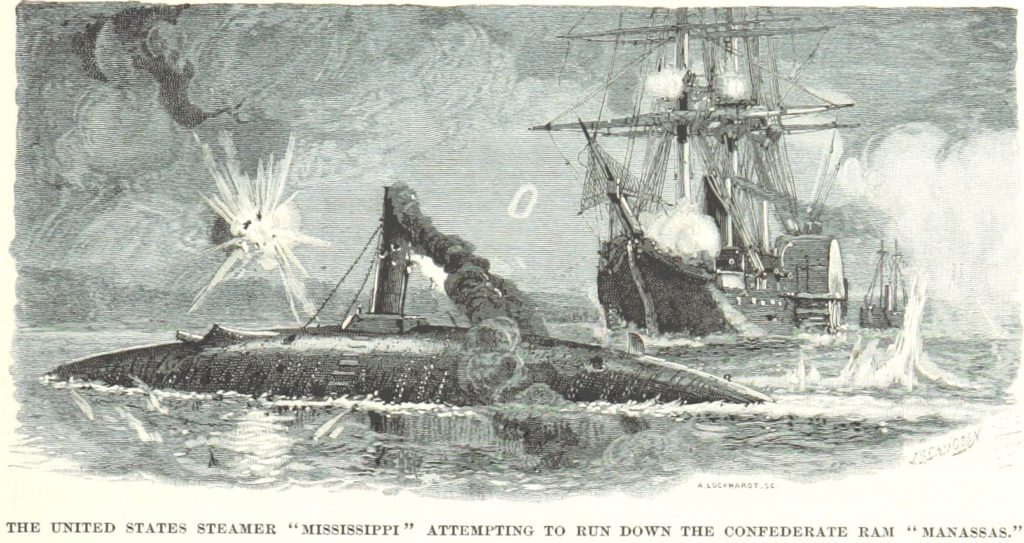
Once safe from friendly fire, Manassas positioned herself for a run on USS Pensacola. As she approached the ship, the larger Union ship avoided the attack and fired upon the Ironclad. However, the broadside was ineffective and Manassas continued fighting. She next spotted USS Mississippi and accelerated. She managed to ram Mississippi, but her momentum caused her to scrape along the hull of the Union frigate. She did manage to fire a round into the Union ship, dealing minor damage. She then attacked the sloop of war USS Brooklyn. Manassas rammed Brooklyn and fired into the ship, inflicting serious damage though ultimately not fatal.
The frigate USS Mississippi
After breaking away, Manassas turned and began following the Union ships upriver. However, as she approached the Union ships, USS Mississippi broke formation and headed towards the ironclad, intending to give Manassas a taste of her own medicine. Faced with the possibility of being rammed, Manassas quickly turned and managed to avoid the frigate. However, her evasive manoeuvre caused her to run aground. Stuck and helpless, she was then viciously attacked by Mississippi. The Union warship poured broadside after broadside into the hapless ironclad, causing fires to break out. The order to abandon ship was given and Manassas was left a burning wreck.
Once Manassas was abandoned, Mississippi moved on. However, the ironclad somehow broke free and floated downriver. Her burning wreck drifted to the secondary line of Union ships. It was proposed to secure her wreck for examination, but those hopes were dashed when Manassas suddenly exploded in a burst of fire. Her mangled hulk then sank under the water, bringing an end to the Confederacy’s first Ironclad. The rest of the Confederate ships fell to the Union Fleet in short order. The City of New Orleans was then attacked the following day, falling soon after.

Thursday, January 9, 2020

The Case against Starbuck(the character, not the coffee shop)

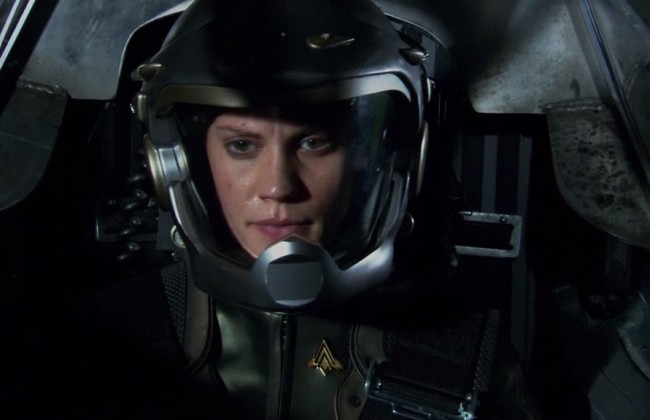
I am a huge fan of BattleStar Galactica, both the classic 1970's version and the remake that showed up in the "oughts".  I liked most of the characters of the remake, but I had a problem with Starbuck, something about the character grated on me, I knew that character represented was a "hot dog" character, very A+ personality and very cocky and arrogant.  I guess it was the arrogance that I had the biggest issues.  I read this article from Angry Staff Officer.  I got turned on to this guy by my friend Mack who actually met the guy and according to Mack, the guy is a character.


The Case Against Starbuck: Why Talent is Not Enough

                For anyone who watched television in the early 2000s (oh, woe be upon us before the era of on-demand, streamable drama), Battlestar Galactica was a staple of the weekly line up. For anyone who was not an avid fan, the show featured an ensemble cast and their struggle against the Cylons, a race of overgrown toasters with guns. And to a young and fiery Lieutenant, one particular character stood out among the crowd: Lieutenant Kara “Starbuck” Thrace was a talented and fiercely loyal Viper pilot, confident in her skills, and willing to fight for the things she felt were right. While these traits made her a hero, her character flaws were what made her so captivating: cocky, aggressive, and undisciplined, she made as many problems as her talented flying solved. It made for great television, but in retrospect, I’m thrilled not to have been a member of her squadron.
                Thinking back on Battlestar Galactica, I see Starbuck as an example of a character who makes for great television despite being a terrible example of an officer and one from whom we can learn. Being in the modern military requires more than bravado and talent in the cockpit; it requires a leader with the emotional intelligence (EQ) to maintain and lead a cohesive team. For my counterparts in sister services, never fear, this analogy applies to both officers and enlisted as well as Airman, Soldiers, Sailors, and Marines.
                Early in the series, Starbuck’s stock in trade is her superlative talent in her ship; no one can claim to be better. However, her exceptional skill bred a level of cockiness that makes her hard to work with, but, in time of war, her leadership is willing to overlook her bad attitude to keep her flying. Again, this all makes for great television, but I feel sorry for the rest of the pilots in her unit. Those pilots who have to see Starbuck’s misbehavior either ignored or rewarded by leadership, even when they’re throwing her in the brig for insubordination. This values mismatch is the kind of toxic leadership that destroys morale.
                So, why pick on Starbuck? Surely the American military has had mavericks before? Of course, they have; both Billy Mitchell and John Boyd immediately come to mind. Both men are considered mavericks, both undeniably skilled at what they do, but both were also regarded as abrasive and managers, not true leaders. Both men’s careers stopped far short of the potential each possessed. That is because when luck runs out, we must fall back on good leadership. Many of Starbucks exploits succeeded due to luck; it’s not a good story otherwise. But, in a real-life scenario, when luck runs dry, good leadership, a sound plan, and a cohesive team are what helps you survive.
                Fortunately for viewers, the show’s creators wrote Starbuck as an evolving character. That evolution highlights when her talent and bravado are no longer enough. In later episodes, when sidelined by a knee injury, Starbuck does as all good CGOs do, she moves into an FGO role as a planner. In this new role, one that doesn’t depend on technical skills, she realizes that her amazing skills in the cockpit only go so far, in the new role she needed EQ to build, maintain, and lead a team. In true television drama fashion, she still manages to save the day, but in the real world, this isn’t always the case.
                I have been fortunate enough to have taught at the USAF Weapons School, a school designed to produce tactical experts in their respective weapons systems. It aims to train the best tacticians to be expert tactical instructors as well. However, despite the tactical focus, it is often referred to as a “leadership school disguised as a tactics course.” Had there been a Viper Mark II division at the Weapons School, undoubtedly, Starbuck would have attended, but just as unquestionably, she would have washed out. Why? Because this is the real world and talent may get you into Weapons School, but the ability to build, maintain, and lead a team gets you out as a graduate.
                This analogy holds for many education and training opportunities the military offers, as well as working within your primary unit. No one likes the loud mouth Captain whose skill has carried them this far, but they can’t lead their way out of a paper bag. Who would follow someone who can fly the jet but does not care enough to ask their flightmates how they feel between combat missions? We have a name for managers with low EQ: toxic leaders.
                Battlestar Galactic will always hold a place in my heart, as will Kara “Starbuck” Thrace. But reflecting on her from the perspective of a leader, I can see the flaws in the hero I so adored. Her lack of EQ hindered her has a leader; it alienated friends, lovers, and coworkers. Her skillful flying and shooting were not enough to overcome her abrasive nature and when given leadership positions, she rarely found success. Many still view EQ as “too touchy-feely,” but if you can’t build and maintain a team, how can you expect to lead one?

Enjoy what you just read? Please share on social media or email utilizing the buttons below.

About the Author: Kera Rolsen is a B-52 Electronic Warfare Officer in the U.S. Air Force. She has deployed both with the B-52 and at the CAOC, graduated from and taught at the USAF Weapons School, and is a graduate of the School of Advanced Air and Space Studies. She is currently the Director of Operations for the B-52 Formal Training Unit. She can be found on Twitter @KeraRolsen and is known to be “awesomely dorky.” The views expressed are those of the author and do not necessarily reflect the official policy or position of the Air Force or the U.S. government.

Tuesday, January 7, 2020

Restoring Boeing's Luster

I shamelessly cribbed this from one of the reports that I get in my email at work.  This is from Aviation week intelligence Network

From the Editor: Restoring Boeing’s Luster 

Boeing CEO Dennis Muilenburg at Congressional hearing fall 2019
Credit: Olivier Doulier/AFP via Getty Images

What would have happened if Boeing’s CEO had rushed to Ethiopia last March to stand beside his Ethiopian Airlines counterpart after the crash of a 737 MAX that claimed 157 lives? If at that early moment he had delivered in person a message of contrition and deep sorrow for the victims and their families? If his company decisively had asked operators to stop flying the MAX out of an abundance of caution until investigators learned more about what caused the second crash of the aircraft in less than five months?
If Dennis Muilenburg had done all that, might he still have his job—and might one of corporate America’s greatest crises have been avoided?
Our industry desperately needs a strong Boeing, and just a year ago it appeared to have one. Muilenburg was Aviation Week’s Person of the Year for 2018, and with good reason: A push into the lucrative aftermarket business was accelerating and major Pentagon contract wins were rejuvenating its defense business. Profits were soaring, and the company’s stock value had more than tripled in three years as Boeing returned mountains of cash to shareholders.
Yes, investigators were probing the crash of a Lion Air MAX in Indonesia that had taken 189 lives, but operational issues, not fundamental flaws in the airliner’s design, were seen as the most critical links in the accident chain. The FAA had determined the aircraft was safe to fly while Boeing devised a software fix for its Maneuvering Characteristics Augmentation System (MCAS).
Then it all changed. Boeing’s public image was battered as it came to light that most airline pilots did not even know of the existence of the MCAS, which triggered both crashes. Boeing’s timelines on the MAX’s return to service proved overly optimistic again and again, vexing customers. Hundreds of undelivered 737s filled up the parking lots near Boeing Field. Relations with the FAA grew testy. And a firestorm of media coverage—some fair, some overly sensational—painted a picture of a company being run by sharp-elbowed and tone-deaf lawyers. The contrition came, but it was late and sometimes appeared calculated.


Muilenburg was fired on Dec. 23 and will be succeeded on Jan. 13 by longtime board member David Calhoun. But his departure hardly will cure what ails Boeing. The company still has to get the MAX back into service. When that will happen is anyone’s guess. It also needs to figure out a next-generation airplane design to compete with Airbus, which has had phenomenal sales success with the Neo, particularly the A321 version.
There are two broader issues at play: culture and governance. Numerous industry veterans believe Boeing’s culture has been infected with arrogance and an emphasis on profits and shareholders over engineering excellence and innovation. The company’s website boasts that Boeing has returned nearly $50 billion to shareholders in dividends and share repurchases over the past five years. Would it not have been better to reinvest some of that in cutting-edge products? Muilenburg, who spent his entire career at Boeing, did not create that culture. He is a product of it. Remember that his mentor, former CEO Jim McNerney, promised “no more moonshots” after the bills for the 787’s delays started mounting.
It is hard to foresee meaningful reform if Boeing’s governance is not fixed. Muilenburg may be gone, but the board of directors that presided over this mess is still in place and sorely needs an overhaul. Can we really expect anything different if the same group keeps calling the shots in the boardroom? Former Continental Airlines CEO Lawrence Kellner, the board’s new chairman, has work to do.
Calhoun, the new CEO, is capable and respected. He spent 26 years at GE and ran its aircraft engines business. He has served on Boeing’s board since 2009 and was a finalist for the CEO position before McNerney got the job. However, that was 15 years ago, and Calhoun has not worked a day job in aerospace since he left GE to run Neilsen in 2006. At 62, will he stay for the long haul? Or will he stabilize the company and groom a younger successor who can take over in 1-2 years and guide Boeing toward making its next momentous decision: when to launch a next-generation narrowbody airliner?
The aviation industry needs a robust, responsible Boeing. It needs a vibrant, reliable competitor to Airbus, and safe and sustainable new aircraft. It is time for some more moonshots.
—Joe Anselmo, Editor-in-Chief 

Monday, January 6, 2020

Monday Music "Were not gonna take it" by Twisted Sister

I am continuing my run of songs that one would play when you look at your house exterior camera and you see this forming up by your door.
   You get ready for the main event, grab your favorite rifle, get the tannerite stuffed fake dog on the Rumba ready for action.  Crank up the stereo and ...
  This discussion started on a facebook post in "Monster Hunter Nation" Hunters Unite  a group of people that are fans of the books by Larry Correia.   The discussion started "What song would you play as your "Valhalla" song and there were many to choose from.  I thought it would be a great idea for my Monday Music" that I have been doing almost since I have started blogging back in 2011

   I decided to go with "Twisted Sister We are not going to take it anymore."   This song was very popular when I was in the service especially when we had to have a G.I party...Those that were in the service would know the reference.  We would have several stereo's in the quad play this very loud while we were cleaning.   Even now when I hear it, I automatically look for the floor buffers.
                                                     Here are some more details of the song.


 "We're Not Gonna Take It" is a 1984 hit song by the American heavy metal band Twisted Sister from their album Stay Hungry. The song was first released as a single (with "You Can't Stop Rock & Roll" as the B-side) on April 27, 1984. The Stay Hungry album was released two weeks later, on May 10, 1984. The single reached number 21 on the Billboard Hot 100 singles chart, making it Twisted Sister's only Top 40 single. The song was ranked number 47 on 100 Greatest 80's Songs and number 21 on VH1's 100 Greatest One Hit Wonders of the 80s.
The song premiered in San Bernardino in 1984, along with many other songs from Stay Hungry.
The song was written by vocalist Dee Snider. As influences for the song, he cites the glam rock band Slade, the punk band Sex Pistols, and the Christmas carol, "O Come, All Ye Faithful".
The song is notable for its popular music video directed by Marty Callner, with its emphasis on slapstick comedy, where a parent gets the worst of the band's mischief. Controversy arose when the depiction of the family in the video caused a public outcry long before the "explicit lyrics" warning was placed on records, cassettes, and CDs. This led to the formation of the Parents Music Resource Center, co-founded by Tipper Gore (who later became Second Lady of the United States). Mark Metcalf, the actor portraying the father in the video, had previously played Neidermeyer, the ROTC student commander in National Lampoon's Animal House (1978). In a reference to his role in the film, Metcalf says in the video, "A Twisted Sister pin? On your uniform?!". Snider himself can also be heard cursing and swearing the question "A pledge pin? On your uniform?" at the end of the song.

 
VH-1's series True Spin explains the song as simply an anthem of teen rebellion, but Snider appeared saying that he was happy that long after he's gone, "any time that the team is down by two, or somebody had a bad day at the office, they're gonna stand up and sing We're Not Gonna Take It".
 

Saturday, January 4, 2020

Todays Adventures...

Well I got started kinda early, and my first stop was traditional stop..
Kraznovian Franchise, they are everywhere spreading the joys of "Waffles"

 I left there and headed to Lowes to take some stuff that I bought before Christmas and it didn't work and I wasn't dumb enough to take them back right after Christmas.  I than went Academy to make use of some gift cards and picked up ammo for my EBR and my new pistol.
Beretta Model 81 in 32 ACP.  
I will be going to Mack's place of employment and running the pistol as well as the Hi Point Carbine that I bought late last year.  I also might bring a couple of long guns, I will see.
I am fixing to get started after stopping at another stop on my rounds.  The weather was cooperative,although windy and it even buffeted me a bit on my motorcycle.
I am back in the Garage, I had a bunch of stuff that I needed to get done today.   I then started getting ready to do an upgrade on my truck.
I proceeded to lay out the stuff for the new mod, I am installing a cold air intake on my F150
Here the truck is ready, I have already disconnected the battery, and placed the stepstool in case I needed it(I needed it, LOL)
    Overall the instructions were clear, although the vehicle they used was set up differently than my truck.  It took a bit of ingenuity before I was finished.
The results after my taking the truck for a test drive was a bit quicker response than before.  With the truck breathing better, there is a bit of horsepower increase and perhaps a bit better fuel economy.  Although if one drives a truck, fuel economy is lower on the priority list.  I will get some more aluminum and see if I can enclose it a bit more.
     My tools are home from work, so it made the mod easier to work, although my stuff is SAE and not metric.  The reason for this is that my employer has instituted total tool control, basically you can't use your own tools on the airplane.  The tools are issued by the employer and controlled.  This is an industry standard now.  We are not happy, we used our own tools, and knew how to use it.  Our maintenance record is far better than anybody else, our planes left earlier than scheduled, we had the lowest maintenance cancellations in the industry.  We were proud of that fact.  Apparently when other groups from overseas would visit, the shock of "they are using their own tools!, the Horror,!".   The tour guides which I am one of would just say "the system works for us, and our maintenance  record speaks for itself."  Our internal monologue would be "We are Americans, we have been to the moon, what the heck have y'all do? ride our coatails?, well screw off."  We would not say that of course, but that was the thought process,

Thursday, January 2, 2020

When the Old becomes new, like Warship Bows and designs

Greek Trireme

     I first seen inverted bows on the ancient Greek and Roman warships, their offensive weapons was the reinforced bow and it had a bronze ram that would be used to strike the opposing ship amidship below the waterline to sink it.  The Ancient ships also had archers, and other melee  weapons to prevent their ship from being boarded.
     Since then, when sail became the prevalent modes of movement and ships relied less on slaves and oars, the ship designed changed to the raked bow for added speed and efficiency.

 The epitome of sail and speed.  The American Clipper ship.

     Rams and inverted bows started making an appearance during the War against Northern Aggression, er the War between the States er known as the American Civil War.


   The Confederate warship C.S.S Virginia was built on the hull of the U.S.S. Merrimac that was at Norfolk Virginia when Virginia seceded from the Union and the confederates seized the U,S Naval yard.  The crew was unable to sail the Merrimac out of the harbor so they torched the ship to prevent capture.  The Confederates raised the hull and designed a while new warship and they used the ram and the low profile because they hoped technology would give them an edge against the much larger federal navy.  The C.S.S. Virginia was equipped with armor and the low design was to make the ship harder to hit with the guns of the times.  The ship also had a ram on the front of the ship to puncture the federal ships below the waterline.  The Virginia handled poorly and wasn't fast, the damaged engines from the Merrimac never developed full power due to the immersion of the sea while the ship was submerged.  But with the sloped armor, it was impregnable to the cannons on the federal ships.


The Battle of Hampton Roads.
After the Virginia successfully attacked the blockade squadron and sank the U.S.S. Cumberland and it shocked the world, the cannonshots bounced off the hull of the Ironclad and she rammed the Cumberland like the ancient Greek Triremes of old.  The North had heard of the Ironclad being build and an eccentric inventor presented an idea for a new kind of warship that was all iron and steam powered.  The ship was build and the design was totally unlike any ship built before and was nicknamed "Erickson's folly".  The North rushed the ship down to Hampton Roads to save the blockade fleet.  The U.S.S. Monitor arrived a day late and stopped the Virginia from going after the rest of the ships of the flotilla.  Tactically it was a draw, but strategically it was a Union Victory.  The design of the Confederate Ironclad harkens back to a design of old.
U.S.S. Olympia berthed in Philadelphia as a museum ship, shows the Inverted Bow that was prevalent for the times.
When one thinks of the bow on a warship, they typically think of the traditional raked bow that 
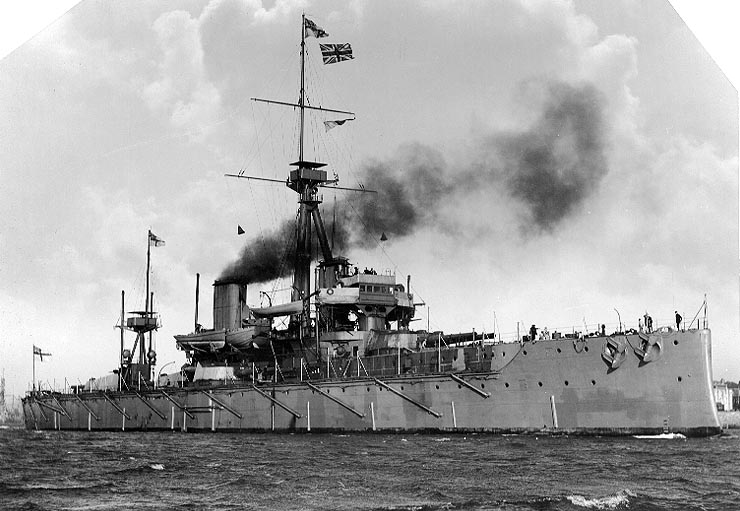
However, a lesser known bow was a common sight on warships during the late 19th century and early 20th century. This was the inverted bow, also known as the reverse bow or ram bow. Due to its bizarre appearance, being almost a polar opposite from a traditional raked bow, the reverse bow is relatively unknown. In this article we will describe the benefits of this peculiar bow, why it was used, and why it eventually went away.
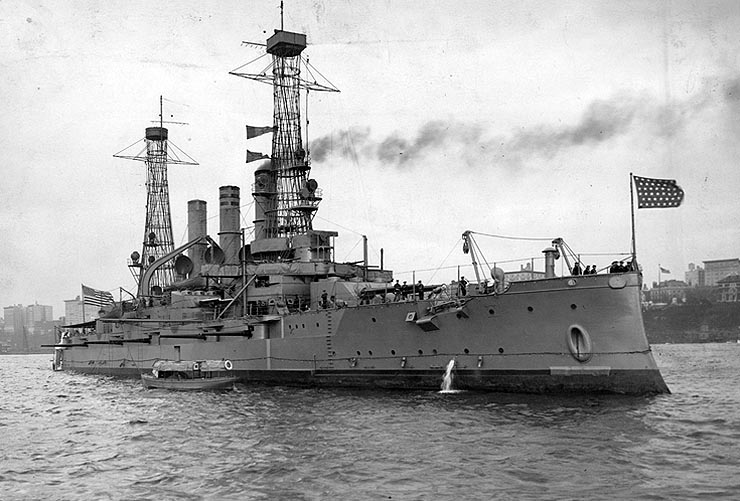
Simply put, an inverted bow is a bow where the farthest point is not the top as in a traditional bow, but rather at the vessel’s waterline. Inverted bows evolved from the earlier axe bow (A bow that’s farthest point is near identical throughout the entire height of the bow) that equipped a majority of the earliest steam powered ships. The Inverted bow added several advantages over the axe bow that we will look at below.


inverted bow
The pre-dreadnought battleship USS New Hampshire (BB-25).
However, a lesser known bow was a common sight on warships during the late 19th century and early 20th century. This was the inverted bow, also known as the reverse bow or also ram bow. An
Inverted bows can improve a ship’s performance in several ways. All of which were largely due to hydrodynamic reasons.
First and foremost, inverted bows maximize a ship’s length, improving its length to beam ratio. A higher length to beam ratio often directly translates into a higher speed. Ships, especially larger ships with displacement hulls, must move their bulk through water. Drag caused by the hull can sap performance. However, water flows around a longer, thinner hull much more easily as it produces a lot less drag than a shorter, beamier hull. Inverted bows added an extra bit of length to the hull, reducing drag and increasing performance
Due to their design, inverted bows also have a finer shape forward, letting them cut through the water easier. As a ship moves through the water, it creates a wave of water at the front of the hull. The larger the ship, the larger the wave. The larger the wave, the more energy it takes to push it. Thus, these bow waves rob power from the ship, adding weight that it must push. An inverted bow can more easily cut through this wave rather than push it along. It is for this reason that inverted bows typically produce a much smaller bow wave compared to traditional ones.
As we saw above, inverted bows help increase the efficiency of a ship’s hull. This was important during the late 19th Century and early 20th Century. Ships were getting larger and faster, but powerplants struggled to make the needed power to push these ships through the water. A powerplant alone might not have the power needed to propel a hull through the water at a desired speed, but the addition of an inverted bow might be enough to increase the efficiency of the hull, reducing the power needed to achieve the required speed. In short, they helped compensate for weaker engines and less efficient hulls.


inverted bow

HMS Dreadnought sporting an inverted bow. The dreadnoughts of the Royal Navy utilized inverted bows until the 1920s.
Inverted bows were not without considerable drawback. Due to their design, inverted bows have less buoyancy forward compared to a traditional bow. As water pushes against a traditional bow, its greater buoyancy makes the bow want to ride over waves. It’s the exact opposite for inverted bows. Without this added buoyancy (and coupled with its finer entry) inverted bows tend to cut through or even push down under water/waves.
The second downside to an inverted bow is that it makes for an extremely wet ship. Traditional raked bows can help direct spray outwards and away from the ship, helping to keep it drier. Due to the design, inverted bows have none of this capability. Water and spray can easily travel over an inverted bow and directly on deck, shipping a substantial amount of water onto the vessel. This is made even worse by the fact that inverted bows tend to push down into the water, increasing the amount of water thrown onto the ship.
It was the quest for a dryer, more seaworthy ship that saw the demise of inverted bows. Water had already posed a problem for metal warships due to corrosion or even interfering with the warship’s operation. In the early 20th Century, warships were becoming more advanced and started to carry more delicate equipment for purposes such as fire control. Throwing excess amounts of water onto this equipment caused severe problems. To remedy this issue, warship designers soon began equipping their designs with more aggressive bows featuring a more raked stem and greater flaring (Examples: American Clipper bow or German Atlantic bow).


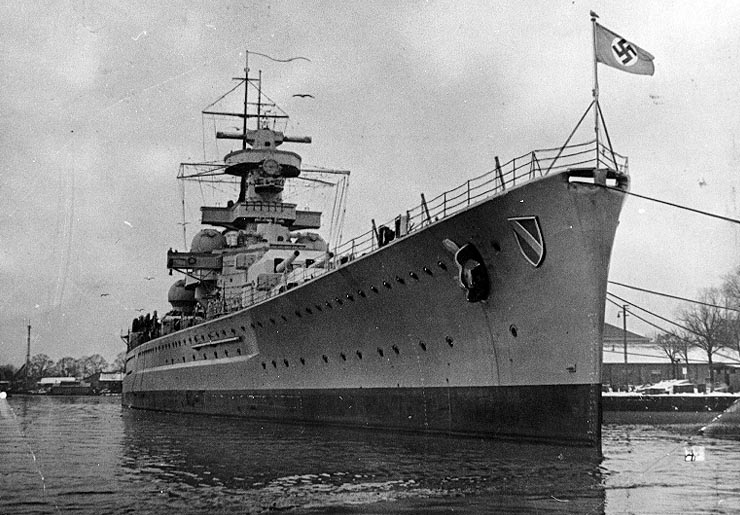
The German battleship Scharnhorst following her commissioning. She was originally built with a simple straight stem.

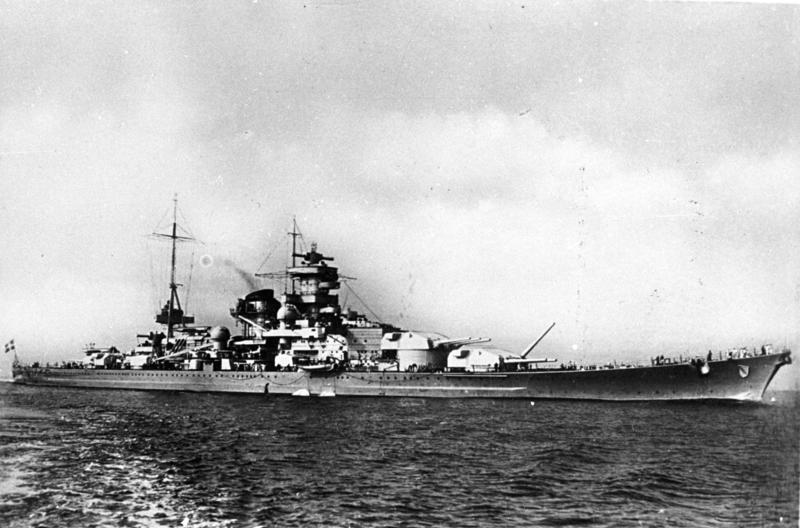
Scharnhorst following her modification. Her bow was reconstructed with greater rake to reduce spray and improve sea-worthiness. Bundesarchiv, 
At the same time, powerplants were becoming both more powerful and more compact. Warships could sacrifice the advantages in speed that an inverted bow provided by compensating with a more powerful powerplant. In addition, more compact powerplants allowed designers to wrap a smaller, more efficient hull around them.
The final end of the inverted bow came with the slow adoption of the bulbous bow. First trialed on Delaware class dreadnoughts, the bulbous bow was a largely unknown concept at the time and more of an experiment than anything else. The bulbous bow was directly inspired by the inverted bow and how it reduced drag. It was found that, just like an inverted bow, a bulb at the bow can reduce the bow wave of a ship. Though a traditional, raked bow would produce a larger bow wave, the fitting of a bulb would cause the wave to be considerably reduced. This allowed a warship to enjoy the benefits of a raked stem while still incorporating the advantages of an inverted bow.

 Though it looked as if inverted bows had disappeared into the history books, they have begun making a slight comeback in modern warship design. I wonder what the Radar Profile would look if they employed modern material on the CSS Virginia design, how it would fare?


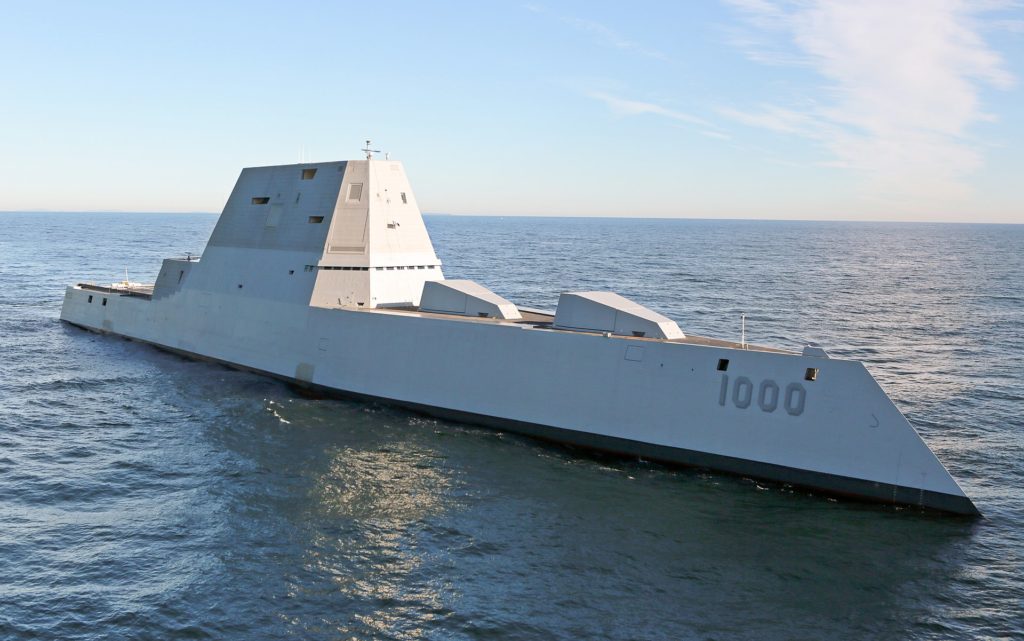
Over 100 years since the United States began using raked bows on its large warships, the Zumwalt class destroyers have reintroduced the inverted bow.The Zumwalt class destroyers of the United States Navy feature an incredibly aggressive inverted bow. The choice of inverted bow was largely due to reducing the ship’s radar signature, making it a stealthier ship. However, just like on the warships of old, the bow is also intended to cut through the sea easier, increasing efficiency. Of course, this bow design is being scrutinized by many as a step backwards in design. Only time will tell if the inverted bow still holds a place in modern warship design. 
 

Tuesday, December 31, 2019

Happy New Years to everyone


I am listening to the Sirius/XM play down the best music from the 1980's, I got off work a bit early so I can get on the computer.   I have some interesting thoughts for the new year.
    2020 besides sounding like an old News show promises to be an interesting year, first off I would like to see Trump reelected, and watch the snowflakes really melt down. 
     Seriously I wish you and yours a Happy and fruitful New Year full of Joy, family and fellowship
From me and mine....
   And one more thing....