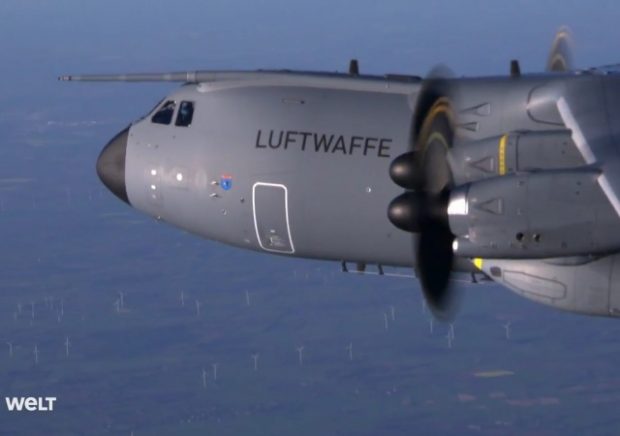
I have blogged in the past about the unreadiness of the German Army and Military in general. I remember right after the end of the cold war, the German Army was well trained and well equiped, their tank was on par or slightly better than our M1 and their other vehicles were also first rate. But the 25 years since then the German military has changed and it reflects the new progressive values that are popular in Europe. I can't say too much, I see our military doing some of the same stuff. The stupidity has lessened under Trump but when Obama was president, I saw many attempts to convert the military or subvert the military with the values of the progressive movement basically being feminist heavy, or LGBTEIEIO interest not what I call "War fighter interest". I am sure that the Russian and Chinese don't have this problem.
Posted by Vijeta Uniyal
Thursday, January 31, 2019 at 11:00am
“Less than 50 percent of the Bundeswehr’s tanks, ships and aircraft were available at any one time.”
While German Chancellor Angela Merkel has
clamored
for an EU army, the country’s military continues to deteriorate as a
fighting force. The German armed forces, or the Bundeswehr, are
underequipped, demoralized and running out of recruits,” an official
report
reveals.The military was relying on civilian
helicopters for tactical troop transport and the soldiers on the
battlefield lacked even the basic equipment such as body armor and
overalls, the annual report published by the German parliament’s
military commissioner, Hans-Peter Bartels, said. The report
found
that “often less than 50 percent of the Bundeswehr’s tanks, ships and
aircraft were available at any one time, either for training or
operational purposes.”
Things look just a grim on the recruitment front. “The government has
promised 198,500 active personnel by 2025, up from the current 181,000,
but the number of new recruits dropped from 23,000 in 2017 to 20,000
last year,” the report
disclosed.
German state broadcaster
Deutsche Welle reported the details of the annual parliamentary inspection:
The biggest problem that Bundeswehr soldiers complained
about was the lack of equipment, despite repeated government promises,
dating back to a 2014 NATO summit, of a change in direction. That does
not count as a surprising development, considering the barrage of poor
press the German military has been facing.
Heavy machinery was a particular concern: [Hans-Peter] Bartels found
that often less than 50 percent of the Bundeswehr’s tanks, ships and
aircraft were available at any one time, either for training or
operational purposes.
“Spare parts are still missing; maintenance in industry is dragging;
the training programs are suffering,” Social Democrat Bartels said. “An
absolute must is the acceleration of procurement.” (…)
Another worry for the Defense Ministry is the stagnation of its
post-conscription recruitment drive, which began after Germany scrapped
national service in 2011. Though the Bundeswehr is expanding overall
(the report found a net gain of 4,000 professional soldiers), most of
these were won by extending existing contracts. In other words, the
German military is aging.
The government has promised 198,500 active personnel by 2025, up from
the current 181,000, but the number of new recruits dropped from 23,000
in 2017 to 20,000 last year.
While the army is in a state of grave disrepair, the country’s first
female Defence Minister and Merkel’s confidant, Ursula von der Leyen, is
busy promoting diversity and ‘multiculturalism’ in the military.
As German business daily Handelsblatt
reported
in January 2017: “Defense Minister Ursula von der Leyen has invited
senior officers from Germany’s armed forces, the Bundeswehr, to a
groundbreaking workshop on sexuality.” The workshops titled “Dealing
with sexual identity and orientation in the Bundeswehr” included eminent
speakers such as the minister herself and “a sex therapist who supports
transsexuals in the army.”
As laudable as these cosmetic efforts may be, they do nothing to enhance the combat readiness or boost troop morale.
Minister von der Leyen’s efforts to “open the army up to minority
groups” hasn’t been a great success either. In recent years, the
Bundeswehr has
caught
24 Islamist infiltrators in its ranks. At least 29 Bundeswehr soldiers
have traveled to Syria and Iraq to fight for the Islamic State.
The findings are a vindication of President Donald Trump, who has
repeatedly asked Germany and other NATO members to increase their
defense spending up to two-percent of their economic output. He
tweeted
in July 2018: “Germany just started paying Russia, the country they
want protection from, Billions of Dollars for their Energy needs coming
out of a new pipeline from Russia. Not acceptable! All NATO Nations must
meet their 2% commitment, and that must ultimately go to 4%!”
Currently, the United States
contributes
4.2 percent of its GDP to NATO, compared to just 1.2 percent chipped in
by Germany. In 2017, the U.S. “accounted for 51.1 percent of the
allies’ combined GDP and 71.7 percent of combined defense expenditure,”
Virginia-based
Defense News reported. In addition to that, over 35,000 U.S. troops are stationed in Germany to bolster Europe’s military preparedness.
Under Chancellor Merkel’s watch, however, the Germany army has other
pressing issues at hand than border security or defense preparedness. In
wake of the 2015 migrant crisis, thousands of German soldiers were
whisked off to build migrant shelters, making it the largest domestic
deployment of the postwar ear. The county is busy
converting army barracks into migrant camps.
The annual defense report glaringly highlights the fatal flaws in
Germany’s military armor. Perhaps Chancellor Merkel should take a pause
from her saber-rattling about an EU army and invest in the Bundeswehr
for change.
The military was relying on civilian
helicopters for tactical troop transport and the soldiers on the
battlefield lacked even the basic equipment such as body armor and
overalls, the annual report published by the German parliament’s
military commissioner, Hans-Peter Bartels, said. The report
found
that “often less than 50 percent of the Bundeswehr’s tanks, ships and
aircraft were available at any one time, either for training or
operational purposes.”
Things look just a grim on the recruitment front. “The government has
promised 198,500 active personnel by 2025, up from the current 181,000,
but the number of new recruits dropped from 23,000 in 2017 to 20,000
last year,” the report
disclosed.
German state broadcaster
Deutsche Welle reported the details of the annual parliamentary inspection:
The biggest problem that Bundeswehr soldiers complained
about was the lack of equipment, despite repeated government promises,
dating back to a 2014 NATO summit, of a change in direction. That does
not count as a surprising development, considering the barrage of poor
press the German military has been facing.
Heavy machinery was a particular concern: [Hans-Peter] Bartels found
that often less than 50 percent of the Bundeswehr’s tanks, ships and
aircraft were available at any one time, either for training or
operational purposes.
“Spare parts are still missing; maintenance in industry is dragging;
the training programs are suffering,” Social Democrat Bartels said. “An
absolute must is the acceleration of procurement.” (…)
Another worry for the Defense Ministry is the stagnation of its
post-conscription recruitment drive, which began after Germany scrapped
national service in 2011. Though the Bundeswehr is expanding overall
(the report found a net gain of 4,000 professional soldiers), most of
these were won by extending existing contracts. In other words, the
German military is aging.
The government has promised 198,500 active personnel by 2025, up from
the current 181,000, but the number of new recruits dropped from 23,000
in 2017 to 20,000 last year.
While the army is in a state of grave disrepair, the country’s first
female Defence Minister and Merkel’s confidant, Ursula von der Leyen, is
busy promoting diversity and ‘multiculturalism’ in the military.
As German business daily Handelsblatt
reported
in January 2017: “Defense Minister Ursula von der Leyen has invited
senior officers from Germany’s armed forces, the Bundeswehr, to a
groundbreaking workshop on sexuality.” The workshops titled “Dealing
with sexual identity and orientation in the Bundeswehr” included eminent
speakers such as the minister herself and “a sex therapist who supports
transsexuals in the army.”
As laudable as these cosmetic efforts may be, they do nothing to enhance the combat readiness or boost troop morale.
Minister von der Leyen’s efforts to “open the army up to minority
groups” hasn’t been a great success either. In recent years, the
Bundeswehr has
caught
24 Islamist infiltrators in its ranks. At least 29 Bundeswehr soldiers
have traveled to Syria and Iraq to fight for the Islamic State.
The findings are a vindication of President Donald Trump, who has
repeatedly asked Germany and other NATO members to increase their
defense spending up to two-percent of their economic output. He
tweeted
in July 2018: “Germany just started paying Russia, the country they
want protection from, Billions of Dollars for their Energy needs coming
out of a new pipeline from Russia. Not acceptable! All NATO Nations must
meet their 2% commitment, and that must ultimately go to 4%!”
Currently, the United States
contributes
4.2 percent of its GDP to NATO, compared to just 1.2 percent chipped in
by Germany. In 2017, the U.S. “accounted for 51.1 percent of the
allies’ combined GDP and 71.7 percent of combined defense expenditure,”
Virginia-based
Defense News reported. In addition to that, over 35,000 U.S. troops are stationed in Germany to bolster Europe’s military preparedness.
Under Chancellor Merkel’s watch, however, the Germany army has other
pressing issues at hand than border security or defense preparedness. In
wake of the 2015 migrant crisis, thousands of German soldiers were
whisked off to build migrant shelters, making it the largest domestic
deployment of the postwar ear. The county is busy
converting army barracks into migrant camps.
The annual defense report glaringly highlights the fatal flaws in
Germany’s military armor. Perhaps Chancellor Merkel should take a pause
from her saber-rattling about an EU army and invest in the Bundeswehr
for change.